



A straight bob looks simple until you cut one.
A half inch can change the whole mood. Too short, and the line can feel severe. Too long, and the shape loses the clean edge that makes a bob worth wearing in the first place. That’s why straight bob haircuts are never just “one look.” They’re a whole family of cuts built around where the ends land, how the part falls, and how much weight the hair carries at the perimeter.
The good ones do more than sit there. They sharpen a jawline, make fine hair look thicker, tame bulky ends, or give thick hair a cleaner fall. The bad ones usually miss on proportions, not style. The front is too heavy. The nape is too short. The fringe fights the face instead of framing it.
What makes a straight bob so appealing is that it can be precise without feeling fussy. Clean lines, blunt ends, a little polish, maybe a bit of bend at the front if the hair needs it. Some versions are soft and wearable; others look a little sharper and more editorial. That range is the fun part. And it’s exactly why the first haircut in the chair matters so much.
1. The Classic Chin-Length Straight Bob
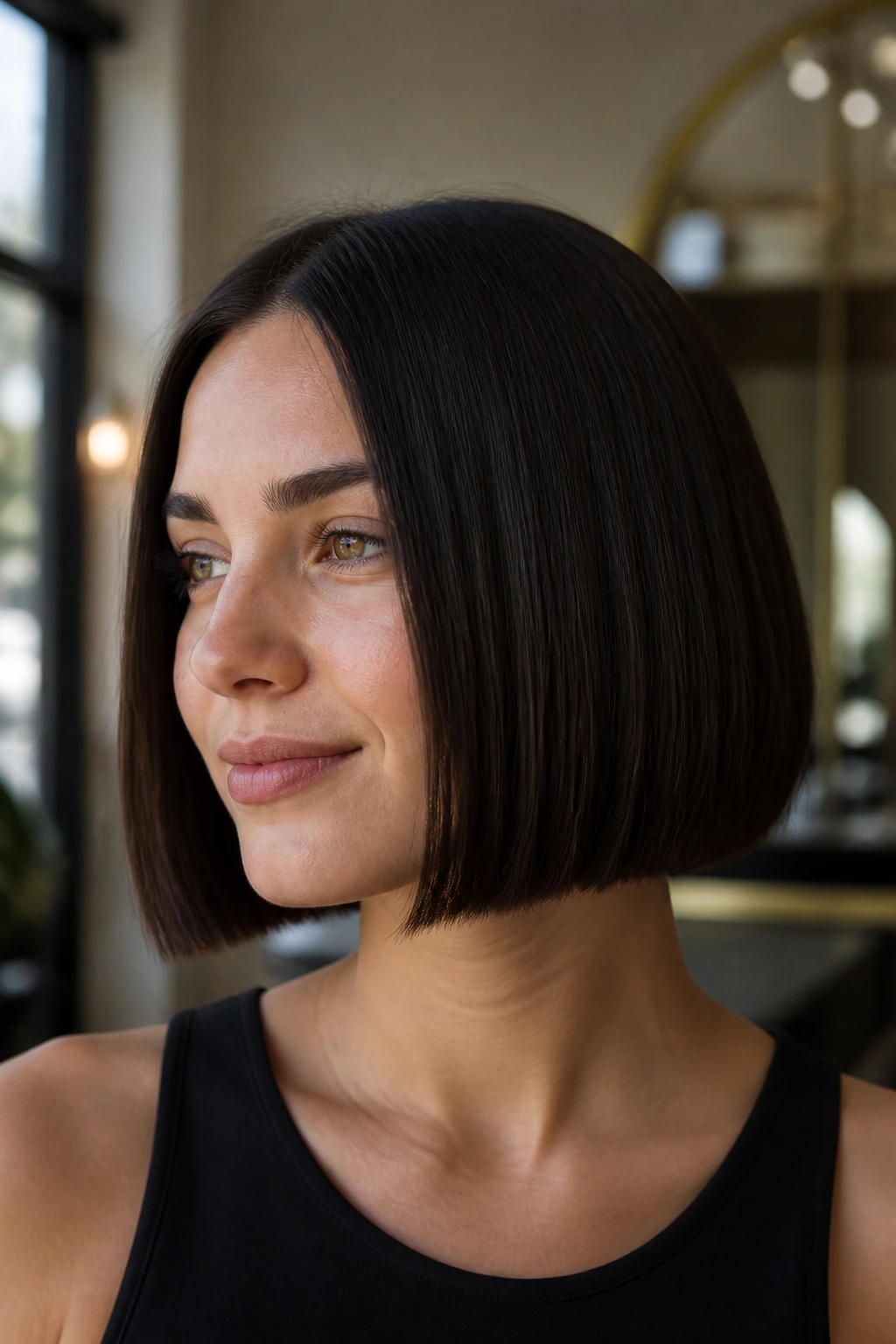
A chin-length straight bob is the cut people think of first, and for good reason. It lands right where the face starts to shape itself, so the ends feel intentional instead of random. When the line is clean, it gives you structure fast. No fluff. No extra noise.
This version works especially well on fine hair because the blunt edge makes the ends look denser. Thick hair can wear it too, but the stylist has to control the bulk inside the shape or the bottom starts to bloom outward. That’s where the cut can go from crisp to puffy in one wash.
Ask for one length at the perimeter and keep the interior layering minimal. If your hair naturally bends under, leave a touch more length than you think you need. A chin-length bob that’s slightly too short tends to kick up at the jaw and become annoying fast.
2. The Collarbone Straight Lob With a Center Part

Long enough to tuck, short enough to count as a bob. That balance is why the collarbone lob keeps coming back into rotation.
Why the Middle Part Changes the Mood
A center part makes this cut feel longer and calmer. It pulls the eye straight down the face, which is useful if you want a softer frame without adding waves or a lot of styling work. The collarbone landing spot also helps because the hair has room to move before it hits the shoulder.
That little bit of space matters. Hair that lands exactly on the shoulder often flips in ways you did not ask for.
- Ask for blunt ends with very little internal layering.
- Keep the front just slightly longer than the back.
- Dry it smooth with a paddle brush if you want a flat finish.
- If your hair is thick, remove weight from the interior, not the ends.
Best for: anyone who wants a bob that can be tucked, pinned, or worn loose without feeling too short.
3. The Glassy Straight Bob
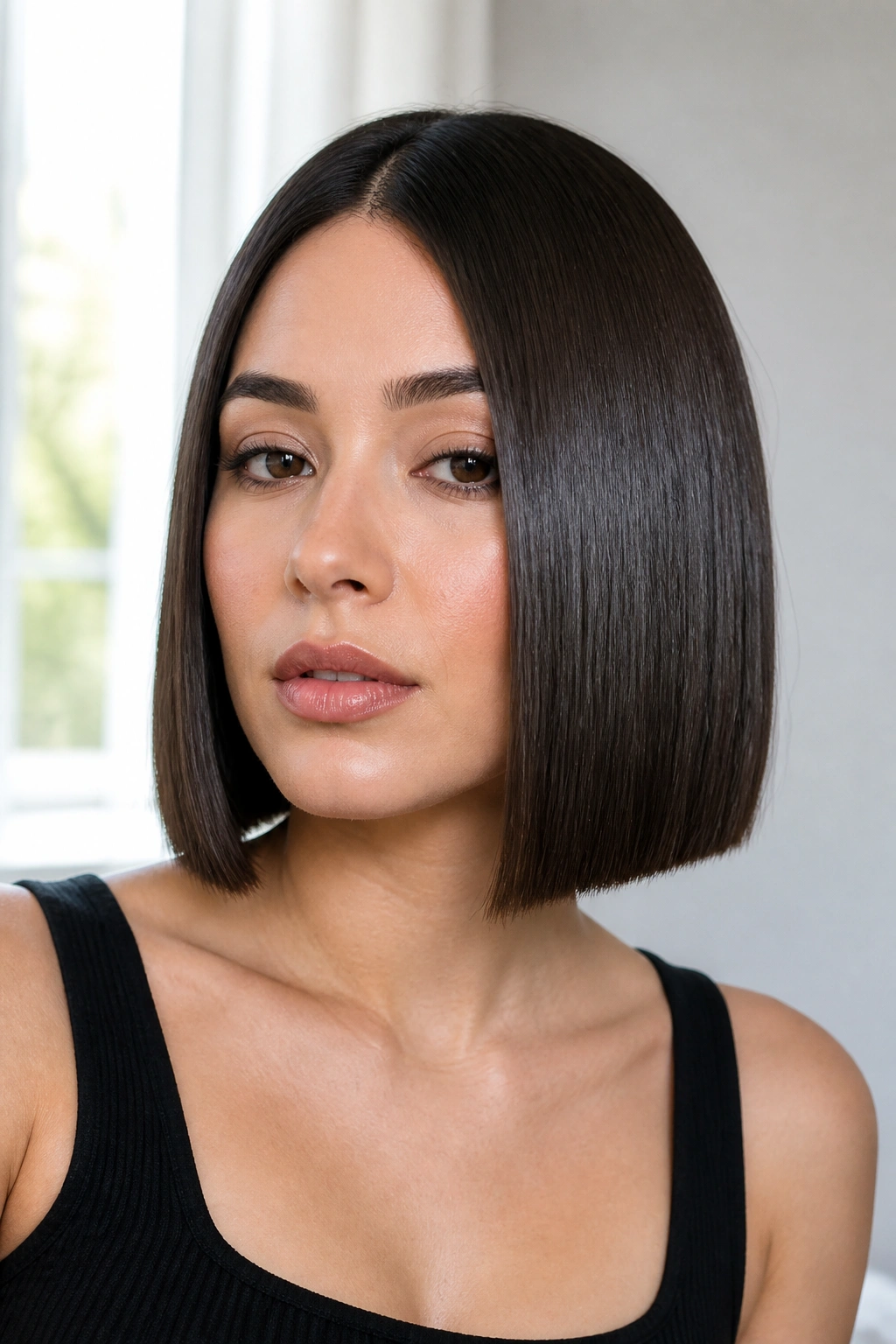
Shiny hair, hard line. That’s the whole appeal here.
A glassy straight bob is all about reflection and precision. The ends are cut clean, the surface is smoothed down, and the finish looks almost polished with a seal on it. It’s the haircut equivalent of a fresh white shirt: simple, but only if the fit is perfect.
I like this style on hair that already behaves well with a blow-dryer or flat iron. It does not hide much. Flyaways show. Uneven ends show. If your hair is frizz-prone, this cut can still work, but the styling has to be more disciplined.
The payoff is a sharp silhouette that makes color look richer and highlights look clearer. It also gives straight hair a more expensive feel, which sounds silly until you see it in the mirror. Then it makes perfect sense.
4. The Side-Part Straight Bob With Crown Lift

Why does a side part change a bob so much? Because it breaks the symmetry before the cut even starts moving.
A side-part straight bob adds lift at the crown and a little swing through the front. That makes it a strong choice if your hair falls flat on top or if a center part makes your face look wider than you want. The shift in part creates an instant diagonal line, and diagonals are friendlier than people think.
How to Ask for the Shape
Tell your stylist you want the weight kept toward the bottom, but with enough softness near the part to avoid a helmet effect. The cut should still read as straight and clean. It just needs a bit of bend in how it sits.
- Best on medium to fine hair
- Good for round or square faces
- Works well with a quick root lift blow-dry
- Needs a trim before the corners start to turn awkward
A side part can be a tiny change with a big payoff. Tiny. Still worth it.
5. The A-Line Straight Bob

This is the bob that looks quiet from the front and smarter from the side.
An A-line straight bob is shorter in back and gradually longer toward the front. That forward angle gives the neck more room and keeps the face from looking boxed in. The difference between a subtle A-line and a dramatic one is only a couple of inches, but those inches do a lot of work.
I prefer the softer version. A steep angle can feel dated fast, and it can make the whole cut look try-hard. A gentle A-line is cleaner. It also grows out better, which matters more than people admit when they’re sitting in the salon chair pretending they’ll be back in four weeks.
If you want movement without layers, this is the cut to consider. It has shape without chasing volume all over the place.
6. The French Bob With a Soft Fringe

Picture a short, jaw-skimming bob with a little fringe and a slightly undone finish. That’s the charm here.
The French bob is short enough to feel playful, but not so short that it turns into a novelty. The fringe matters just as much as the bob itself. When the bangs sit around the brows or brush the top of the lashes, the whole cut gets a softer edge. Too blunt, and it can look heavy. Too wispy, and it loses the point.
What Makes It Work
The best French bobs have a little air at the ends. Not curls. Not a wave set in stone. Just enough bend to keep the cut from reading rigid.
- Keep the length around the jaw or just below it.
- Ask for fringe that can be worn piecey or swept aside.
- Avoid over-thinning the bangs.
- Let the ends sit a little imperfect.
This is one of those cuts that looks better when it’s not overstyled. A touch of texture is enough. More than that and it starts losing its charm.
7. The Micro Straight Bob

Short. Direct. A little bold.
A micro straight bob sits just below the ear or right around the jawline, and it has a lot of attitude for such a small cut. It clears the neck, shows off earrings, and makes the bone structure do most of the talking. If you like hair that feels neat and slightly graphic, this is a strong pick.
The downside is obvious: it grows out fast, and there’s nowhere to hide. Every millimeter matters. That’s the tradeoff with a micro bob. You get a clean, striking shape, but you also sign up for more maintenance and more honesty from the mirror.
I like this cut on straight hair that lies flat without much effort. It also works well if you want to shed bulk and make the whole head feel lighter. Not everyone wants that. Fair enough. But if you do, the micro bob is hard to beat.
8. The Invisible-Layer Straight Bob

This is the one for thick hair that needs help without looking obviously layered.
Instead of visible choppy pieces, an invisible-layer bob uses internal weight removal so the outer line stays clean. The result is smoother movement and less bulk at the bottom. You still get the straight bob shape, but it behaves better when you dry it and less like a block.
That hidden structure is the trick. A blunt bob on dense hair can sit like a shelf. Nice in theory. Heavy in real life. Internal layering keeps the silhouette tidy while making the inside of the cut lighter and easier to manage.
If you hate the look of layers but your hair feels too full in one-length cuts, this is the compromise that actually works. Ask for the outline to stay strong and the weight to come out from underneath.
9. The Asymmetrical Straight Bob

One side slightly longer than the other sounds dramatic on paper. In real life, it can be surprisingly wearable.
An asymmetrical straight bob gives the face a diagonal line that feels modern without shouting. The longer side can soften a square jaw, and the shorter side keeps the shape from dragging. It’s a good cut for someone who wants movement but does not want curls, waves, or visible texture.
What to Watch For
The key is subtlety. A tiny asymmetry feels chic. A huge one starts looking like a styling accident unless the whole look is built around it.
- Keep the difference modest, usually under 1.5 inches.
- Let the shorter side hit above the jaw, not mid-cheek.
- Use a clean blow-dry so the line stays readable.
- Pair it with a side part if you want extra dimension.
This cut looks best when the edges are sharp and the styling is calm. No need to pile on more drama. The angle already does enough.
10. The Straight Bob With Curtain Bangs

Can bangs soften a bob without stealing the whole show? Yes, and curtain bangs are the answer.
A straight bob with curtain bangs gives you face-framing without the bluntness of a full fringe. The bangs split in the middle and drift toward the cheekbones, which makes the haircut feel open instead of boxed in. It’s a nice option if you want a little softness around the eyes but don’t want to commit to daily bang styling.
The shape works best when the bangs are kept long enough to sweep back. Too short and they can look clunky with a straight bob. Too heavy and the whole front goes flat. That sweet spot around the cheekbone is where the cut starts to make sense.
This is a smart choice for people who like to change their part often. The bangs can go center, side, or loose, and the bob still holds its shape.
11. The Blunt Straight Bob With Heavy Fringe

There’s nothing delicate about this one, and that’s exactly why it works.
A blunt straight bob with a heavy fringe has real presence. The fringe sits full across the forehead, and the bob line underneath stays solid and even. Together, they make a strong rectangle of hair that reads polished, even a little severe—in a good way if you like structure.
This cut flatters longer faces especially well because the bangs shorten the forehead visually. It also works when the hair is naturally straight and dense, since the fringe needs enough body to hold its line. Thin hair can wear it, but the bangs need careful cutting or they start to look stringy.
Not everyone wants that much front weight. Fine. If you do, ask for the fringe to sit just at the brows and keep the bob line simple. The haircut already has enough personality.
12. The Tucked-Behind-the-Ear Straight Bob
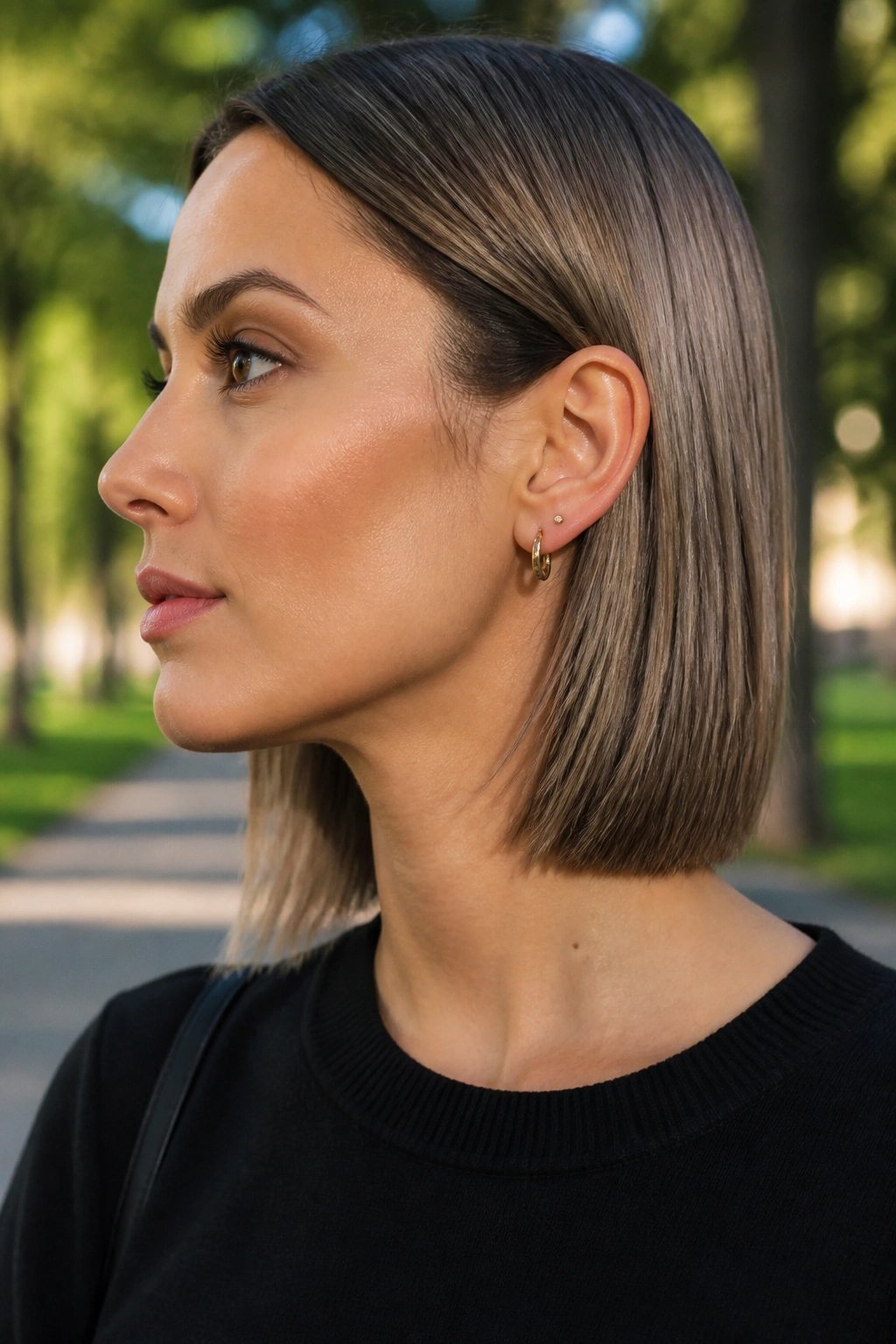
Some cuts are built for movement. This one is built for restraint.
A tucked-behind-the-ear straight bob gives you a clean side profile and a little bit of ease. The front pieces should be long enough to tuck without fighting back, which means the bob usually lands around the jaw or slightly below it. You get a tidy look that still feels modern, especially when the ears are visible and the neckline is clean.
I like this haircut for people who wear earrings, glasses, or a lot of simple clothes. It lets those details show. The cut itself becomes part of the frame, not the whole event.
It’s also a practical shape on busy days. Tuck one side, let the other fall, and you’ve got a different mood without changing the haircut at all. That’s not a gimmick. It’s just useful.
13. The Boxy Straight Bob

If soft edges bore you, this is the one with some backbone.
A box bob keeps the silhouette square at the bottom and side-to-side. It does not taper much. It does not flirt with softness. The line stays clean and deliberate, which makes the cut feel strong even when the styling is minimal.
Why It’s Not the Same as a Blunt Bob
A blunt bob can still be rounded a little at the ends. A box bob stays more geometric. The sides feel fuller, the base feels flatter, and the whole shape looks more architectural.
- Best on straight, dense hair
- Good for strong jawlines and narrow shoulders
- Needs careful trimming to avoid puffing at the ends
- Works well with a center part or deep side part
This cut will not flatter everyone, and that’s fine. Some haircuts are supposed to have opinions.
14. The Inverted Straight Bob

A little lift in back changes everything.
An inverted straight bob is shorter at the nape and longer at the front, but the stacking in the back is usually more noticeable than on an A-line. That gives the crown a bit more shape and makes the head look fuller from the side. It’s a useful cut for fine hair that needs a boost or for anyone whose hair lies flat in the back no matter what they do.
The trick is not to overstack it. Too much graduation in the nape and the style starts looking bulky instead of sleek. A cleaner inverted shape keeps the back tucked in and lets the front fall where it should.
If you want the bob to have some lift without curling the ends every morning, this is one of the better bets. It has structure built in. That saves time.
15. The Rounded Straight Bob
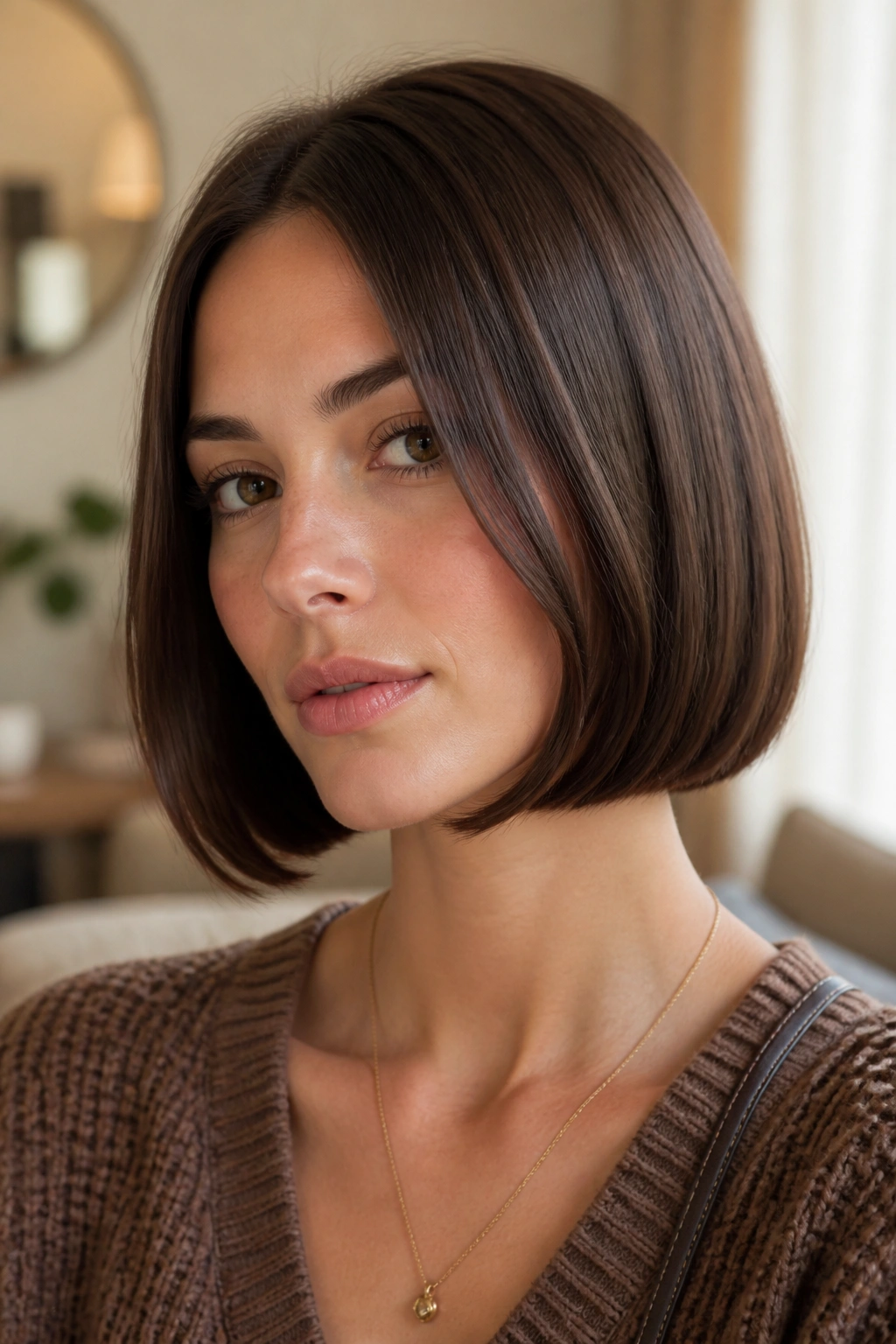
This one feels softer the minute it moves.
A rounded straight bob curves gently under at the ends instead of stopping in a hard line. The shape is still straight in the sense that it doesn’t rely on waves or curls, but the perimeter is softened enough to take the edge off angular features. It’s the bob for someone who likes clean hair without wanting the look to feel sharp enough to cut paper.
What It Feels Like in Real Life
The best rounded bobs sit close to the head and bend inward near the jaw. They don’t puff out at the ends. They hug the face in a way that feels neat, almost tailored.
That means the blow-dry matters. A round brush or a hot brush helps the ends turn just enough to show the curve. If the ends flip out, the whole cut loses its point.
This is a nice choice when you want polish but not stiffness. A little softness can go a long way.
16. The Shoulder-Skimming Straight Bob
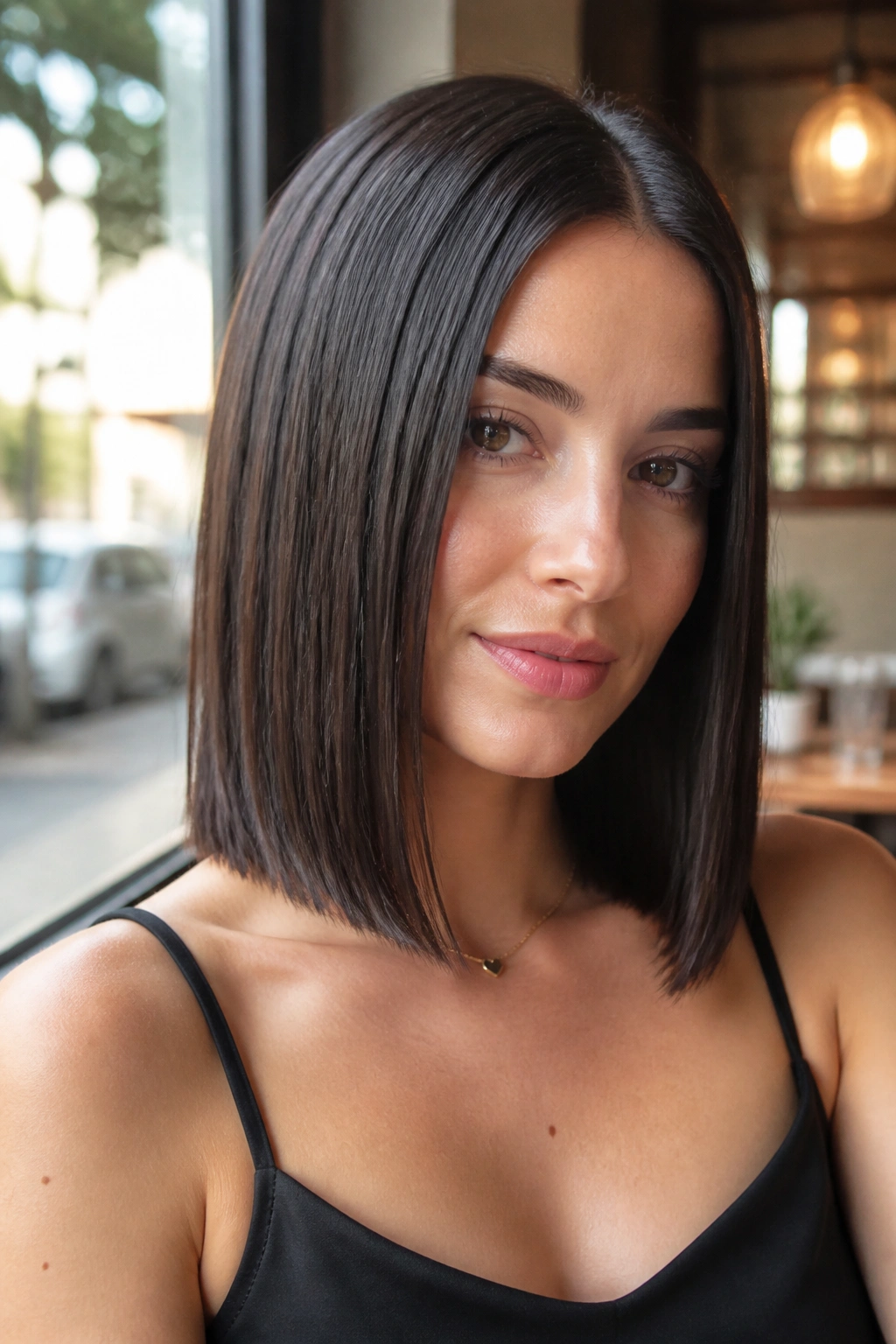
Right on the shoulder is where a bob gets moody. A little above it, and things calm down.
A shoulder-skimming straight bob is longer than the classic bob but shorter than most lobs, which gives it room to swing without getting heavy. It’s a very practical length because you can still clip it back, but it doesn’t feel like long hair pretending to be a bob. The line remains visible, and that’s the whole job.
The key is placement. If the ends sit directly on the shoulder, they often kick outward or bend weirdly by the end of the day. Ask for the cut to land slightly above or below that line so the hair can fall cleanly instead of fighting fabric and bone structure.
This is one of the easiest straight bob haircuts to live with if you like options. It dries fast, pulls into a low knot when you need it, and still looks intentional loose.
17. The Deep Side-Part Straight Bob With Face-Framing Pieces

A deep side part changes the whole face. That’s not a dramatic claim. It’s just true.
This version of the straight bob adds a heavier sweep on one side and keeps a few face-framing pieces around the cheekbone or jaw. The result is a little more drama than a center-part bob, but without tipping into anything fussy. If your face is round or you want to soften fullness around the cheeks, the diagonal line helps a lot.
What Makes It Different
The face-framing pieces are not there to create layers everywhere. They’re there to give the front some movement so the part doesn’t feel too severe.
- Keep the front pieces long enough to graze the cheekbone
- Let the shorter side fall smoothly instead of overblending it
- Use a flat brush or paddle brush for a sleek finish
- Avoid too much thinning at the face, or the line will lose strength
I reach for this look when someone wants a bob that feels a little dressed up without changing the cut entirely. The part does most of the work.
18. The Razor-Free Straight Bob
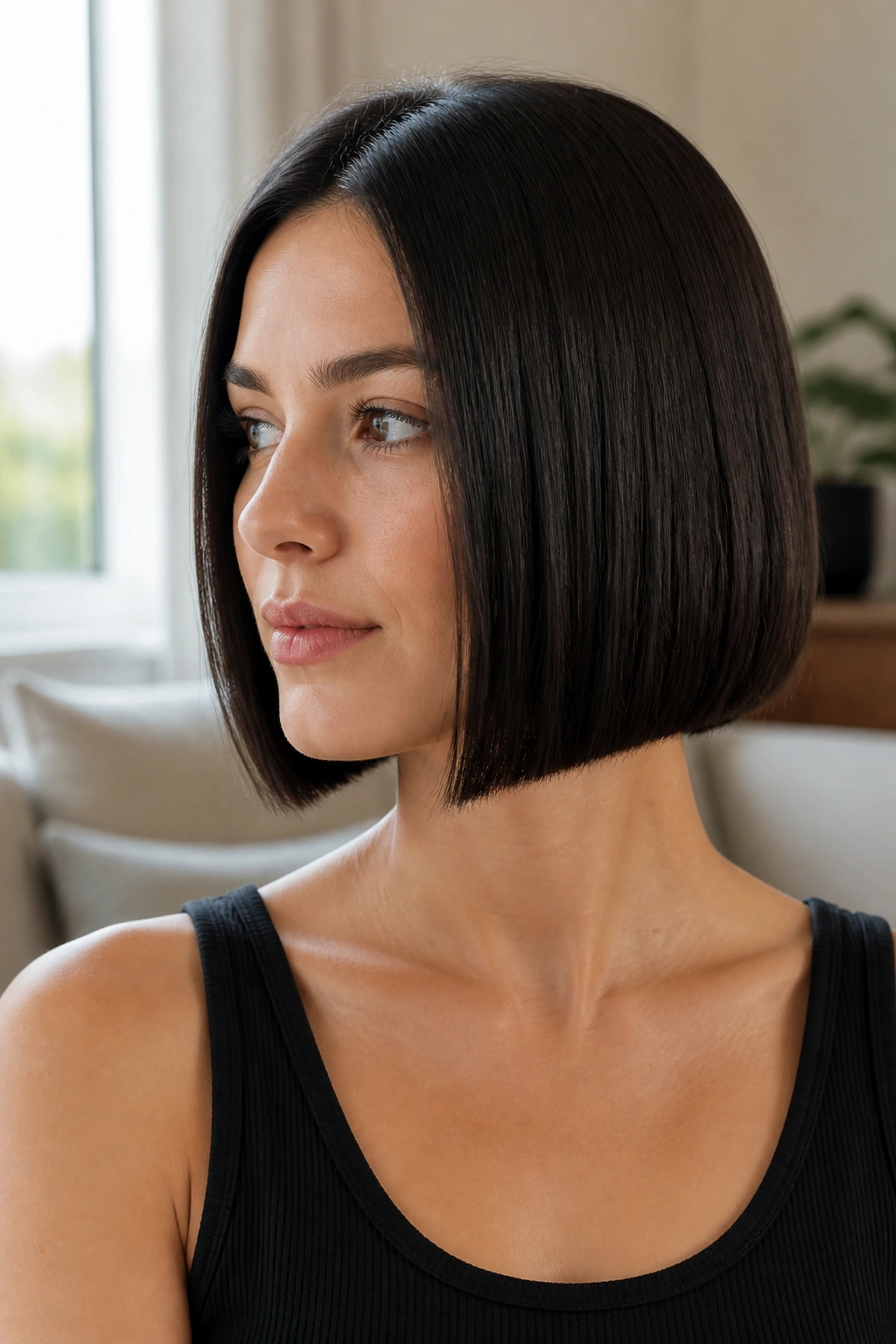
A clean scissor cut can make a bob look denser and calmer than a razor ever will.
Razor cutting has its place, but on straight hair it can sometimes soften the edge more than you want or leave the perimeter looking wispy. A razor-free straight bob keeps the ends solid, which is especially helpful if your hair is fine, frizzy, or prone to frayed-looking tips. The line stays neat. The shape lasts longer between trims.
That doesn’t mean the haircut has to feel stiff. It just means the shape is built with control instead of texture. When the ends are cut cleanly, they reflect light in a better way and the whole bob reads thicker.
If you’ve ever had a bob that looked good on day one and messy by day ten, this is probably the fix worth asking about. The tool matters more than most people realize.
19. The Straight Bob With a Subtle Undercut
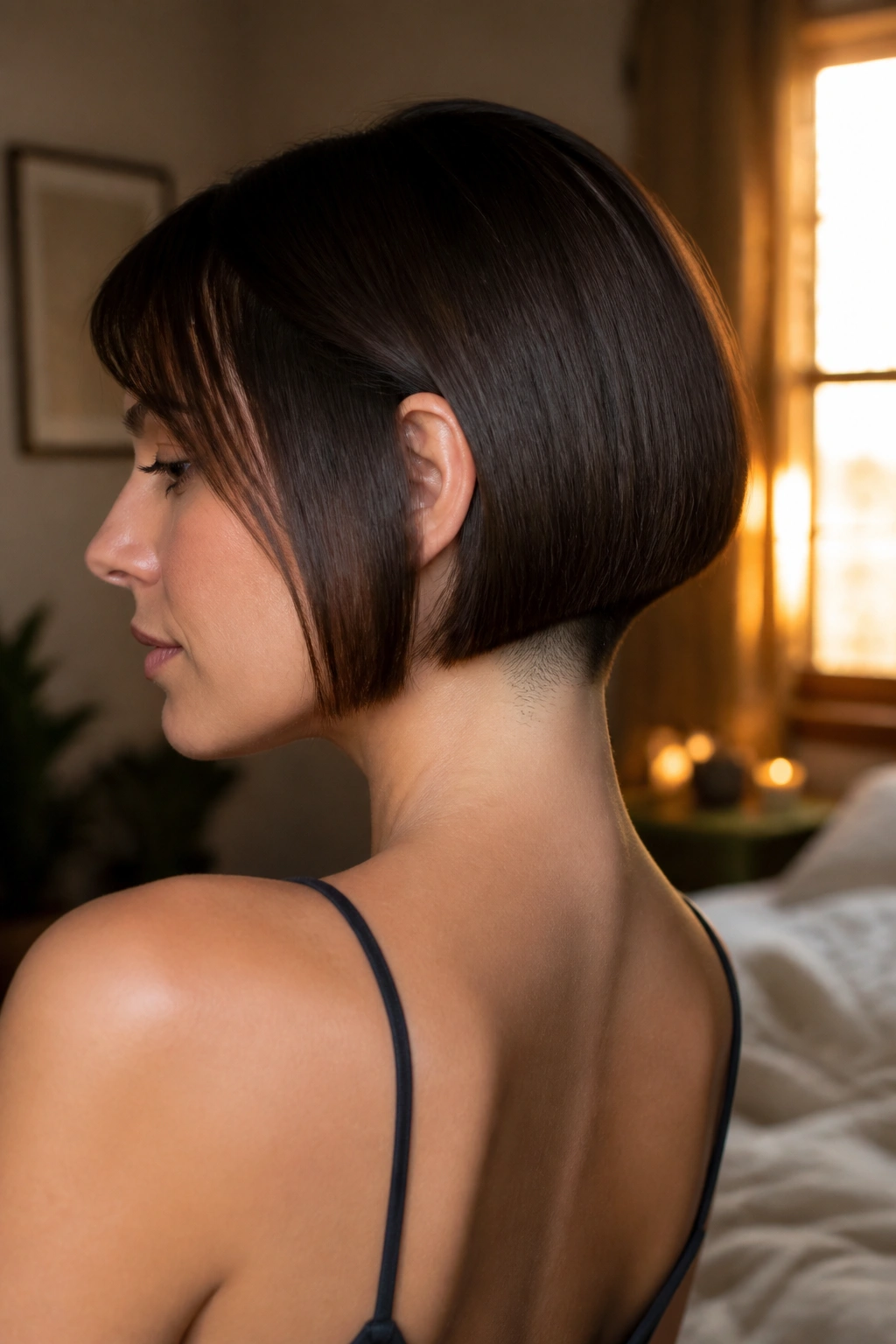
Thick hair can be gorgeous and exhausting at the same time. This cut is for the exhausting part.
A subtle undercut removes bulk under the top layers, usually at the nape or around the sides, while keeping the bob looking normal from the outside. That means you still get a straight perimeter, but the hair lies flatter and dries faster. If your bob tends to balloon at the bottom, this is one of the cleanest ways to calm it down.
I’ve always liked this option for dense hair because it solves a real problem without changing the visible shape much. You get less heaviness. Less puff. Less triangle effect. Nobody has to know unless you show them.
Signs You Might Want One
- Your bob takes forever to dry
- The bottom feels bulky even after a trim
- Your neck gets hot under the hair
- The shape spreads out instead of falling down
That’s the kind of haircut logic that makes life easier, not just prettier.
20. The Long Straight Lob With Minimal Layers
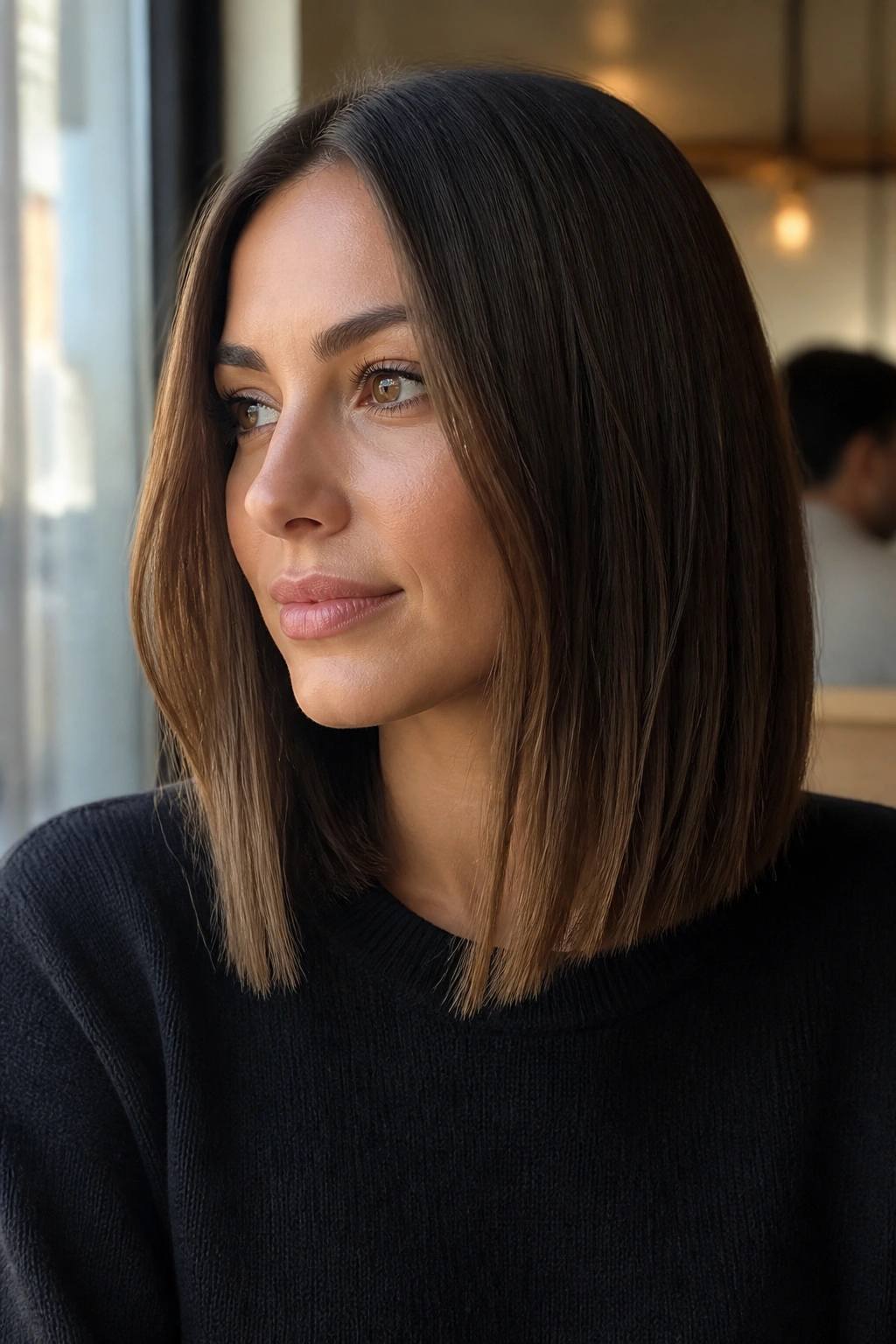
If you want one bob that plays well with almost everything, this is the one I’d point to first.
A long straight lob with minimal layers sits around the collarbone or just below it, so it has enough length to tuck, braid, clip, or leave alone. The perimeter stays blunt enough to look intentional, but the extra length keeps it from feeling too strict. It’s one of the few cuts that can look polished on a clean blow-dry and still behave when you air-dry it and walk out the door.
The beauty here is flexibility. You can wear it center-parted and sleek, pull it into a low knot on rushed mornings, or give the front a slight bend with a round brush if you want softness. That range is why so many people come back to it after trying shorter bobs that need more babysitting.
If you’re unsure where to land, this is the safest place to start without getting boring. And honestly, there’s nothing wrong with that.
