



A good bob never begs for attention.
It just lands.
The line sits where it should, the neck looks cleaner, and the whole haircut feels more deliberate than half the styles that try harder. That is the charm of classic bob haircuts: they solve a real problem. You get shape, movement, and a haircut that still looks like a haircut when you wake up late and dry it in a rush.
What makes a bob work is not mystery. It’s placement. A few inches up or down can change everything — chin, jaw, collarbone, nape — and the same goes for the end shape. A blunt edge feels sharp. A curved finish feels softer. Layers change the weight. Bangs change the mood. Hair that looks flat in one version can suddenly look expensive in another, and I do mean expensive in the plain, practical sense: like someone paid attention.
The trick is matching the cut to the hair you actually have, not the hair you wish showed up every morning. Fine hair likes different shaping than thick hair. Straight hair can hold a crisp line. Curly hair needs room to breathe. That is where bob haircuts get interesting, because the shape is simple but the details are doing a lot of work.
The same haircut can look crisp, soft, polished, or a little undone, depending on where the weight sits and how the ends are handled.
1. Chin-Length Blunt Bob
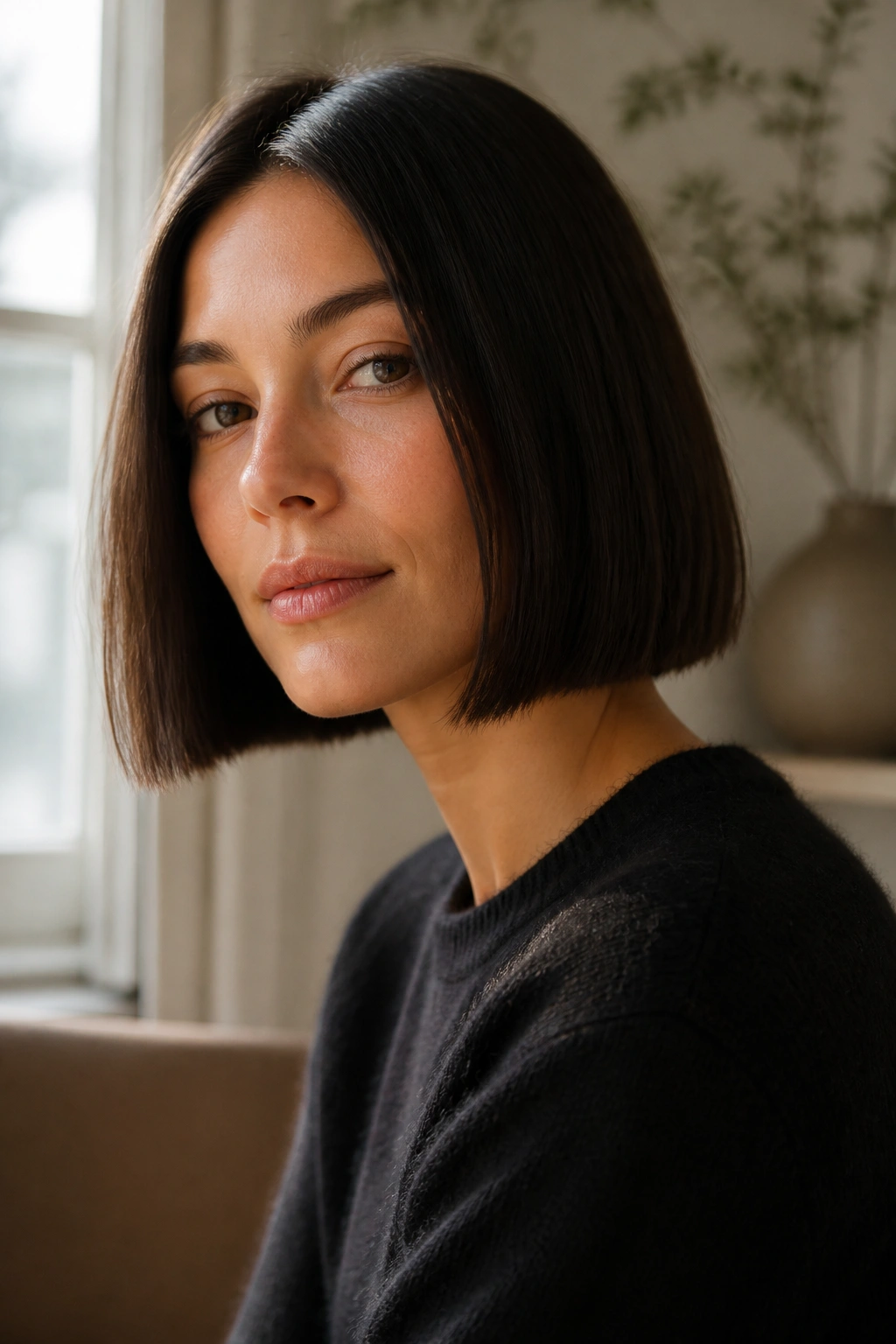
A chin-length blunt bob is the haircut version of a clean white shirt. Nothing fussy. Nothing hidden. The line lands right around the chin, the ends are cut straight across, and the result is tidy in a way that never feels dated.
Why It Works
The chin is a smart stopping point because it gives the face a frame without swallowing the neck. If your hair is fine, this cut can make it look fuller at the bottom. If your hair is thick, the blunt edge keeps all that density under control instead of letting it balloon.
- Ask for the ends to sit at or just below the chin.
- Keep the perimeter one length, with no heavy layering.
- Style it smooth with a flat brush or a quick pass of a flat iron.
- Trim every 5 to 6 weeks if you want the line to stay sharp.
Tip: If your jaw is very square, ask for the front to be a touch longer than the back. That tiny change softens the whole thing without losing the shape.
2. French Bob
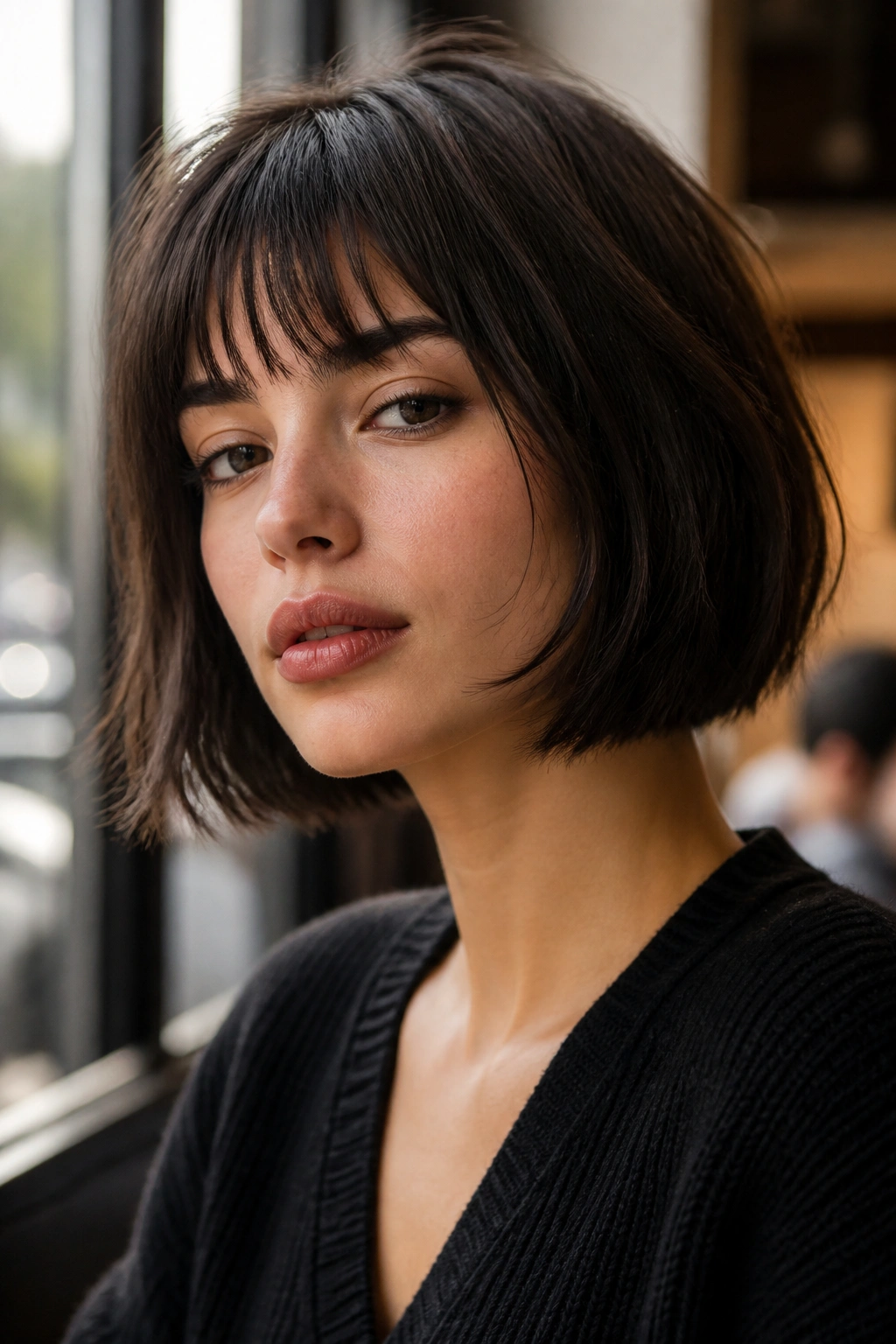
Why does a French bob keep showing up in salons, magazines, and on women who somehow look finished even when they’re wearing a sweater and lip balm? Because it has attitude without the noise.
This cut usually sits a little shorter, often around cheekbone to jaw length, and it likes a soft fringe or piecey bangs. The ends are not bone-straight and severe. They have a slight bend, which makes the whole style feel lived-in. That little bit of movement matters. Too polished, and it starts looking costume-y. Too messy, and you lose the charm.
How to Wear It
A French bob looks best when you let the texture show. Air-dry it if your hair bends naturally. If it’s straight, bend the ends with a 1-inch iron and rake through with your fingers, not a brush.
- Keep the fringe light, not heavy.
- Leave a little texture at the ends.
- Use a small amount of mousse or styling cream.
- Don’t flatten it into submission.
This is the bob for someone who likes hair that looks a little clever without trying too hard. There’s a reason it keeps lasting.
3. Italian Bob
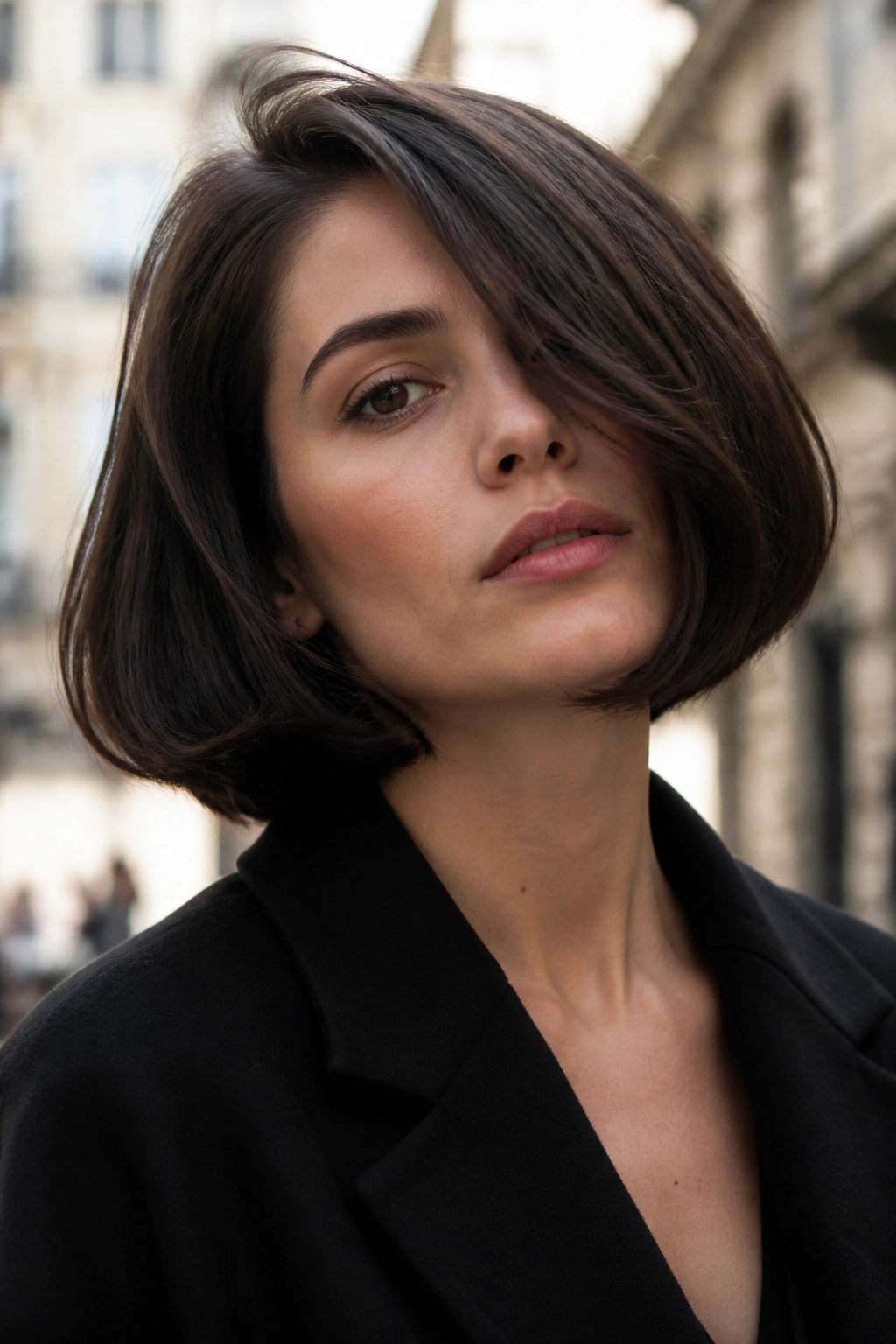
The Italian bob is the fuller, swingier cousin in the family. It usually sits around the jaw or just above the shoulders, and it keeps more length and weight than a French bob. That weight is the point. It gives the cut a plush, rounded feel that moves well when you turn your head.
I like this one on hair that can hold volume without frizzing into chaos. There’s enough length for a proper blowout, but not so much that the cut starts feeling heavy. The shape often works best with a side part or a soft middle part, and the ends usually get a slight bevel so they don’t hang dead straight.
If you want a bob that feels rich rather than sharp, this is a good place to start. It can be sleek, but it never needs to look severe. The whole appeal is that it swings.
4. A-Line Bob

Picture the haircut from the back of the neck to the front of the jaw: short, then a little longer, then longer still. That is the A-line bob, and it has been around long enough to earn its keep.
The Shape in Real Life
The angle gives the cut motion even when your hair is still. It also helps hair fall away from the face instead of bunching around the cheeks, which is why people with fuller hair often love it. The back stays neat, and the front gives you enough length to tuck behind an ear or curve toward the collarbone.
What to Ask For
- Shorter at the nape, longer toward the front.
- A soft angle, not a dramatic point.
- Ends that are clean, not choppy.
- Optional light layering if your hair is thick.
A sharp A-line can look chic. A softer one can look easier to wear every day. I usually prefer the softer version because it grows out more gracefully, and growth-out matters more than people admit.
5. One-Length Bob

A one-length bob sounds plain, and that is exactly why it works. No hidden layering. No dramatic angle. No extra tricks. The outline is the story, and the story is a clean, even line that sits with purpose.
This cut is especially good if your hair has a lot of texture and you want the ends to look dense instead of wispy. It can also make fine hair look fuller, because all the weight sits in one place. The haircut needs a careful eye, though. If the line is off by even a little, you see it. That is the tradeoff. The payoff is a bob that feels calm and precise.
Best For
- Straight or slightly wavy hair
- People who like low-fuss styling
- Anyone who wants a neat, graphic edge
One-length bobs are the kind I trust on busy mornings. A quick blow-dry and a touch of serum is often enough.
6. Inverted Bob

The inverted bob is what happens when the back gets shorter and the front gets more length, but with a little more drama than the A-line version. The angle is usually steeper, so the cut looks more sculpted from the side.
That’s the difference that matters. An A-line can feel soft and wearable. An inverted bob has more presence. The crown often gets a bit of lift, and the nape sits close to the head, which is useful if you want shape without a lot of styling time.
If your hair tends to puff out at the back, this cut can be tricky unless the layering is handled well. Too much removal at the crown and it goes lumpy. Too little and the angle disappears. A good stylist will check the balance dry, not only wet. That part makes a difference.
7. Stacked Bob
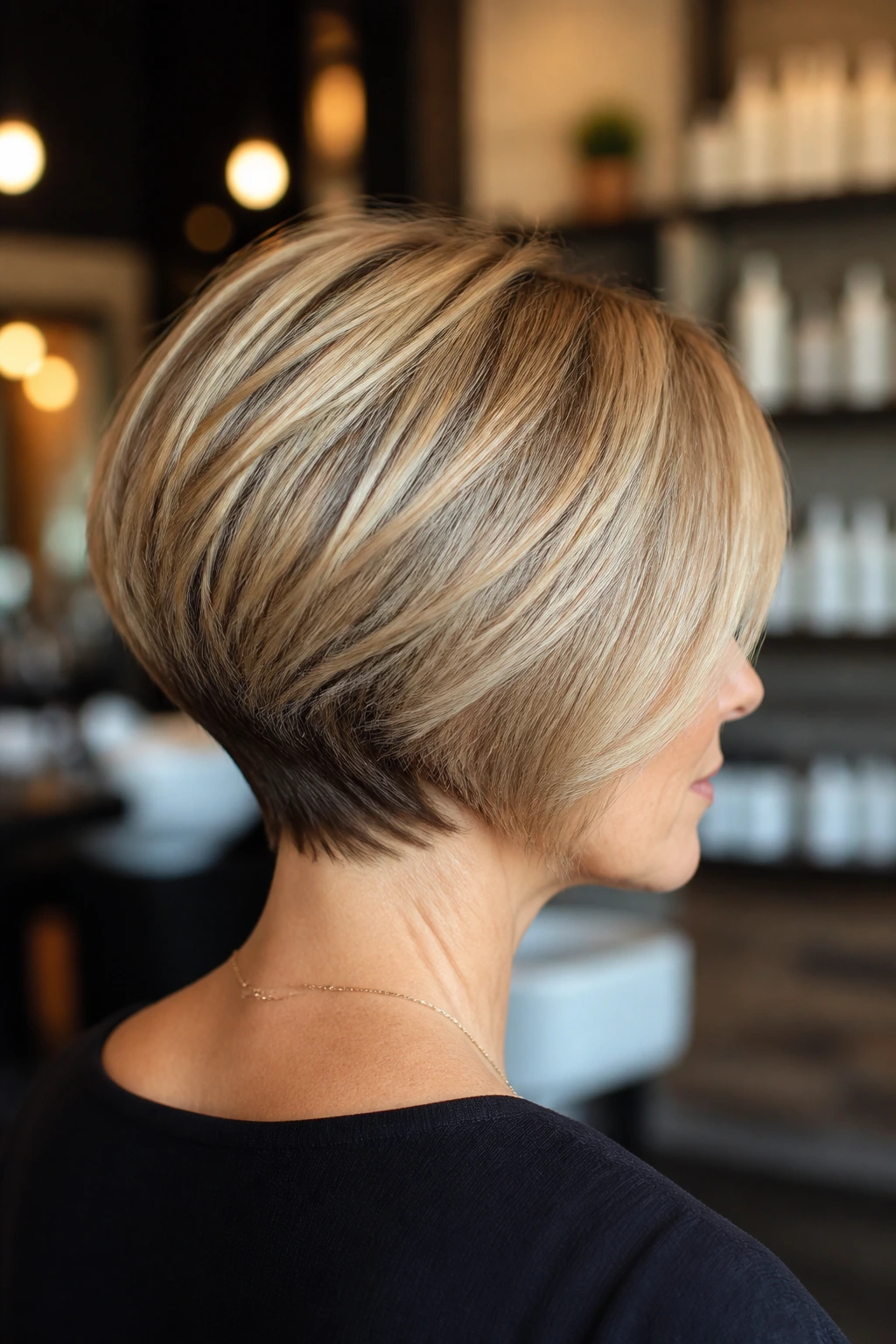
A stacked bob gets its lift from short, layered pieces at the back of the head. The crown looks full, the nape looks compact, and the whole cut has a little built-in height.
Why It’s Worth Asking For
This is a solid option if your hair falls flat at the back and never seems to stay in place. The stacked layers push weight upward, so the hair doesn’t collapse as easily. On thick hair, the cut can take some bulk out. On fine hair, it can create the illusion of volume where you want it most.
What to Watch For
- The back should be stacked, not chopped.
- The transition to the front should stay smooth.
- Too many short layers can make it look round in a bad way.
- A round brush helps at the crown.
My take: this is one of those cuts that needs a skilled hand. A bad stacked bob looks puffed up. A good one looks clean and lifted.
8. Rounded Bob
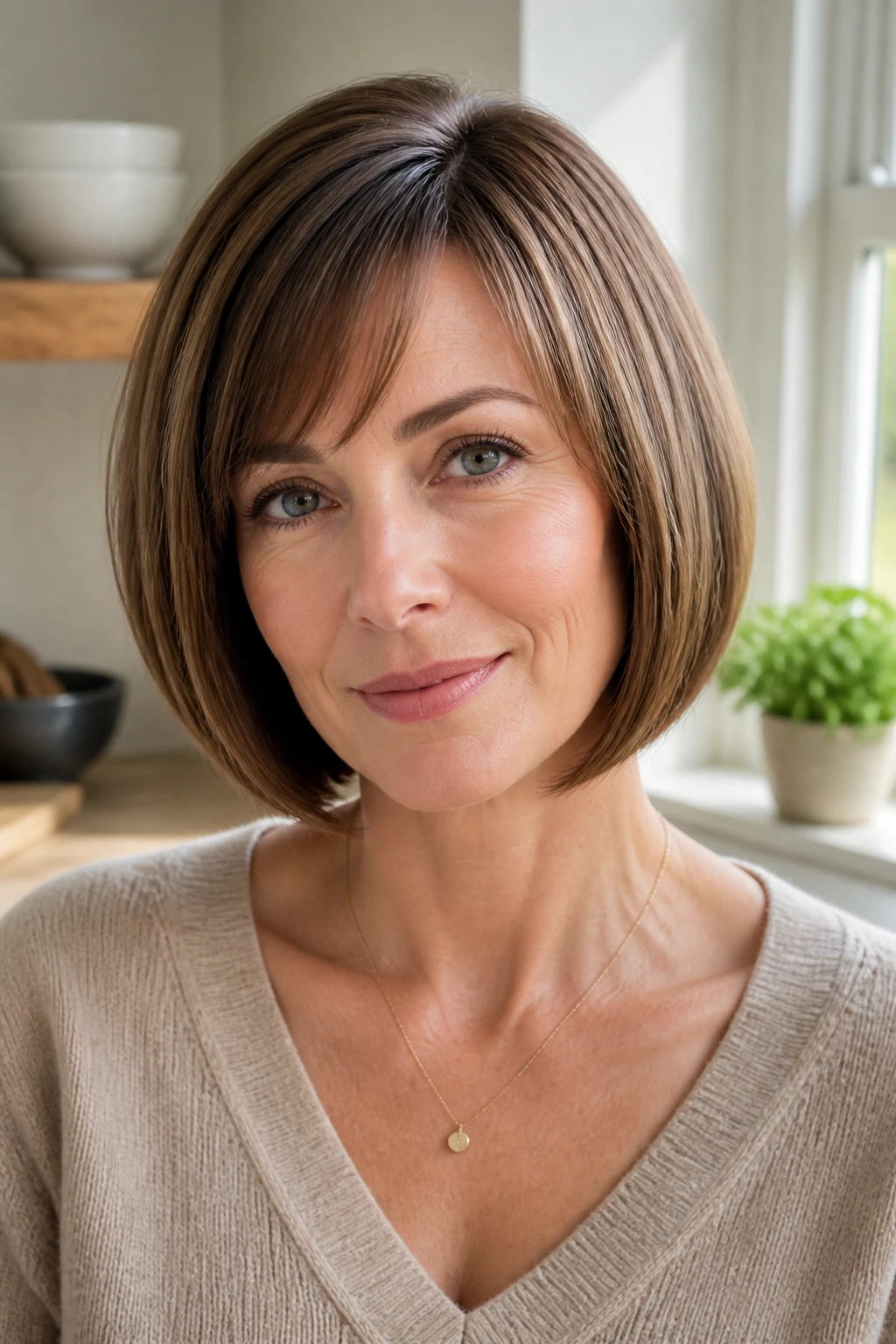
A rounded bob curves gently around the head and neck, which gives it a softer outline than a blunt cut. It feels classic in a very specific way — almost tailored, but not stiff.
The curve is what gives the shape its charm. Instead of hanging straight down, the ends tuck in slightly, so the bob follows the line of the jaw. That makes it useful if you want a bit of polish without sharp corners. It can also be a nice choice for straight hair that needs a more deliberate shape than air-drying alone can give.
This is not the bob for someone chasing messy texture. It wants a bit of control. A blow-dry with a medium round brush, a nozzle on the dryer, and a little patience at the ends will do most of the work.
The finished result reads neat from every angle. That’s a strong trait, even if it sounds boring on paper.
9. Center-Part Bob

A center-part bob is one of the cleanest-looking cuts you can wear. The symmetry is the point. It splits the face down the middle and lets the haircut do all the balancing.
That can be flattering in a very quiet way. A middle part makes the outline look deliberate, and it often highlights the jaw, cheekbones, and eyes more than a side part does. It’s also an easy way to make a simple bob look more modern without changing the cut itself.
The catch is that the center part exposes everything. Cowlicks, uneven growth, a dry patch near the hairline — all of it shows. If your hair wants to fall there anyway, great. If not, you may need a little root lift or a quick bend at the ends to keep the shape from looking flat.
I like this one on straight or softly wavy hair. It has a cool, spare look that never needs much dressing up.
10. Side-Part Bob

A side-part bob is the softer sibling of the center-part version. Shift the part over by an inch or two and the whole haircut changes. The forehead looks a little narrower, one side gets more lift, and the bob gains movement before you even touch a styling tool.
That tiny shift is useful. If one side of your hair refuses to cooperate, a side part can hide the worst of it. If your face feels long, the asymmetry can soften that length. If your hair is fine, the extra root height at the part gives you a little more body where it counts.
Styling Note
- Start the part while hair is damp.
- Blow-dry the roots in the opposite direction first.
- Flip the front pieces back into place.
- Finish with a light spray, not a heavy one.
A side-part bob looks especially good when the front pieces brush the cheekbones. It’s a small detail, but it changes the whole mood.
11. Jaw-Length Bob
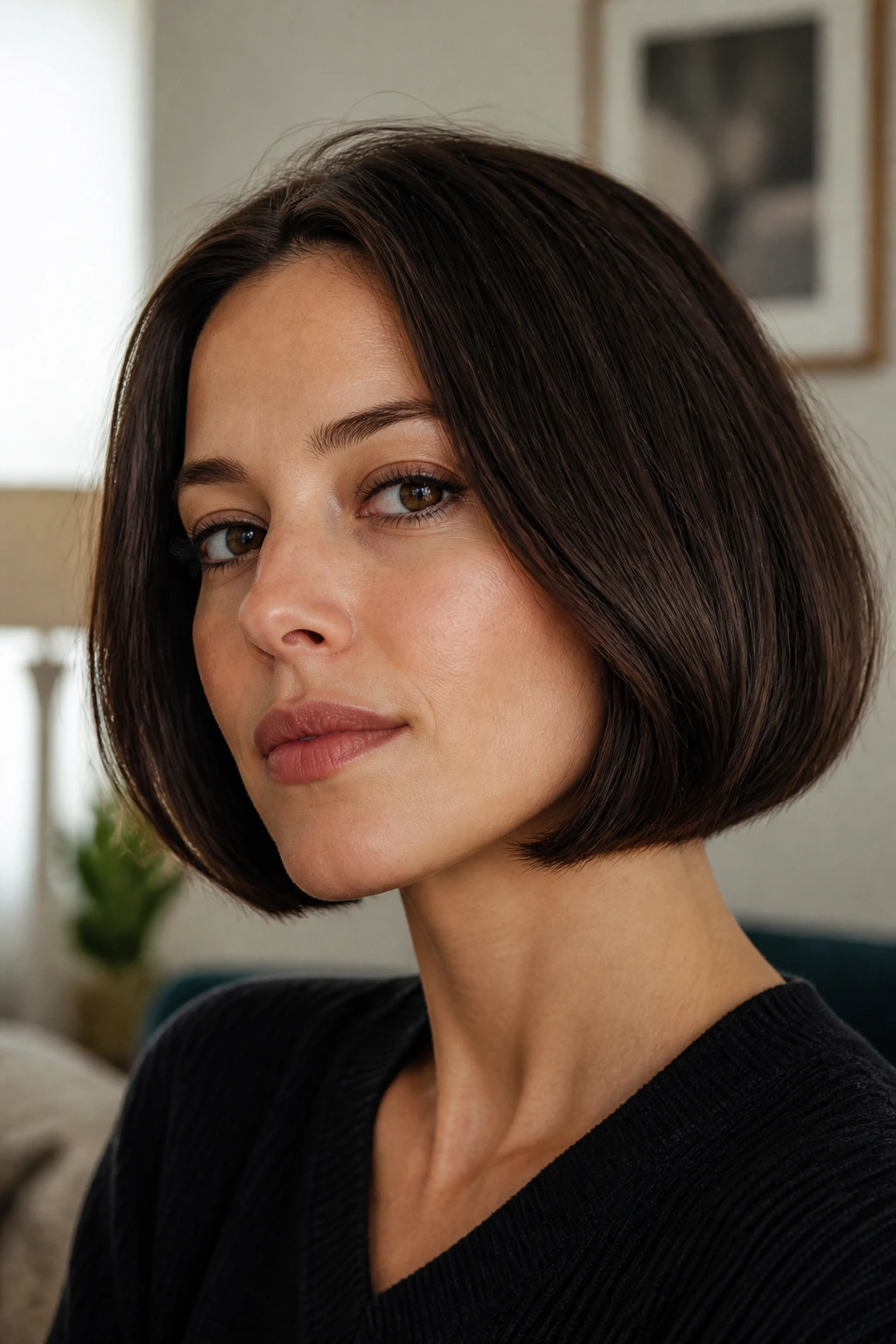
A jaw-length bob sits right where the name says it should, and that placement gives it a strong, face-framing effect. It’s a little more assertive than a collarbone bob and a little less severe than a chin-length blunt cut.
The line matters here because the jaw is one of the most visible parts of the face. If the cut lands cleanly, it can sharpen the silhouette. If it lands in the wrong place, it can make the jaw look wider than it is. That is why this version deserves more thought than people usually give it.
The safest move is to keep the ends a touch softer around the corners of the face. That softens the edge without losing the crisp length. I also like this bob with a tucked ear or a half-tuck. It shows off the line and keeps the shape from feeling boxy.
12. Collarbone Bob
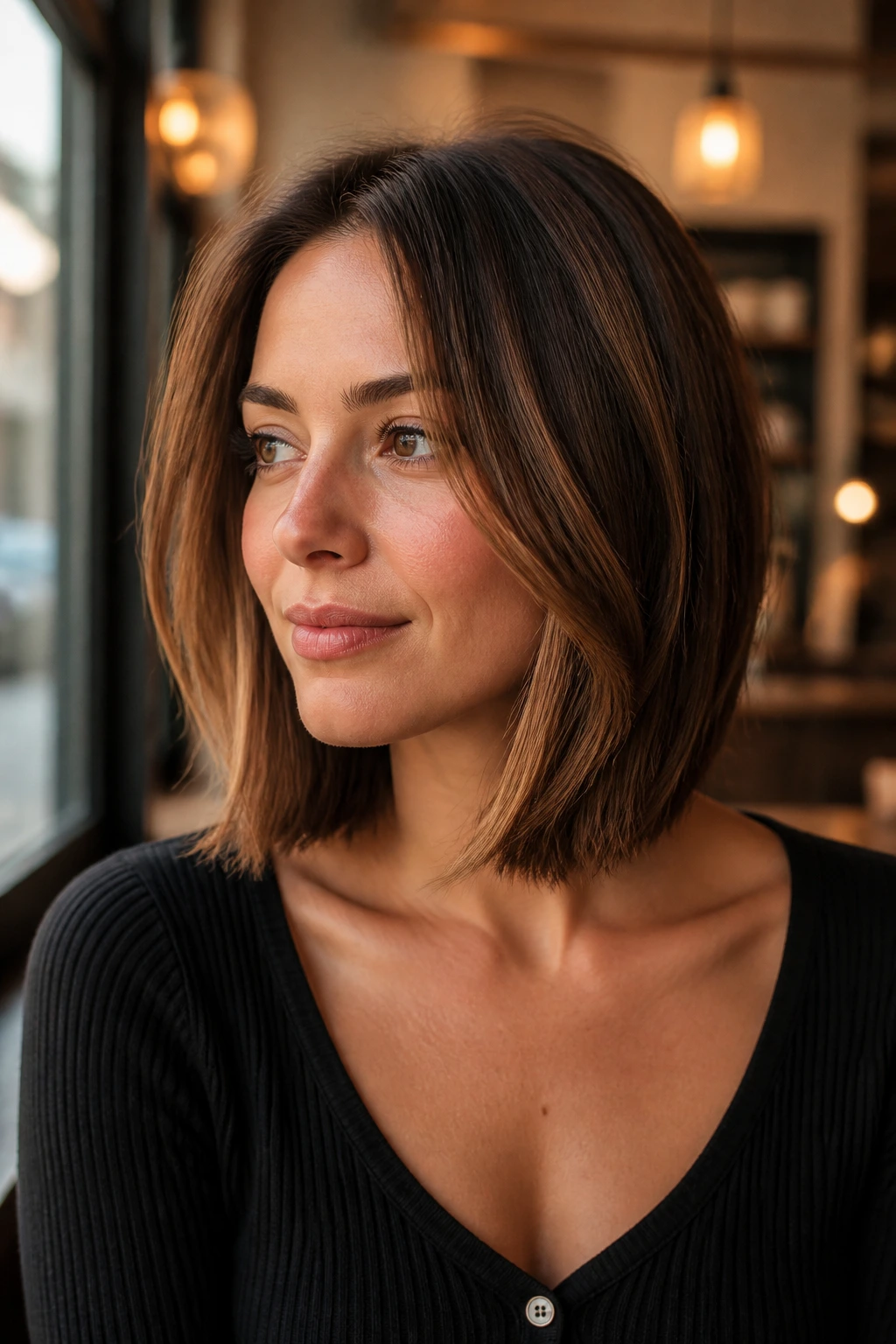
If I had to pick the most forgiving bob for first-timers, it would probably be the collarbone bob. It gives you the bob shape without the shock of a shorter cut, and it has enough length to tie back, tuck, clip, or bend with a curling iron.
That little bit of extra hair makes life easier. You can wear it sleek one day and loose the next. It grows out well, which is a bigger deal than most people realize. A chin-length bob can start feeling awkward fast if you miss a trim. A collarbone length usually gives you a little more breathing room.
This version works especially well if your hair is thick, because the extra length can keep the ends from flipping out too much. It also suits anyone who wants to test the bob shape without committing to a very short cut. Practical. Straightforward. Hard to argue with.
13. Wavy Bob
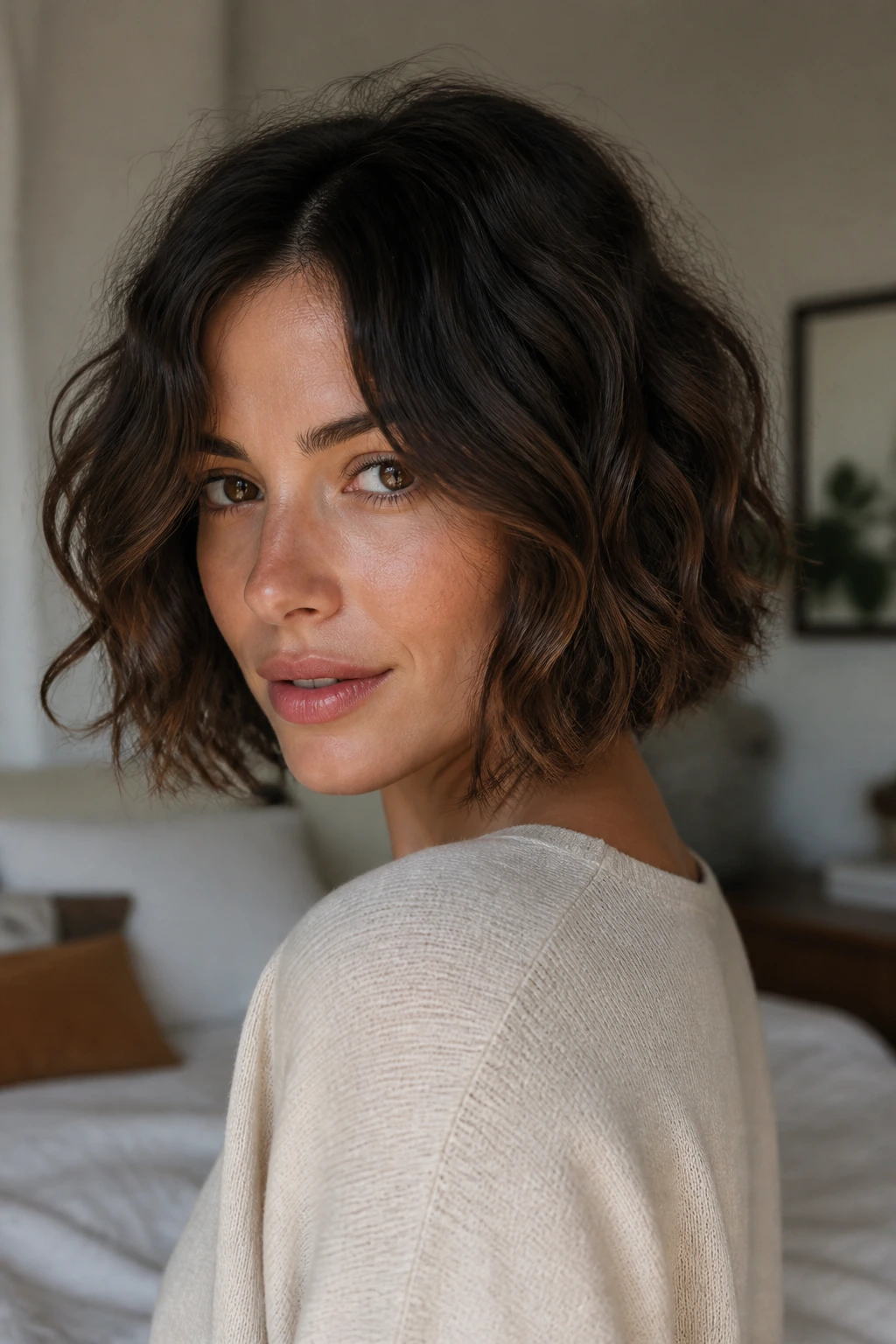
A wavy bob is one of the easiest ways to make a bob feel relaxed without losing the structure that makes the cut work in the first place. The shape stays clean, but the texture does the softening.
How to Get the Wave Right
Don’t aim for perfect beach waves. That look can go sideways fast and start reading dated. A better approach is a loose, uneven bend, with a few straight ends left out so the hair doesn’t look overdone.
- Use a 1-inch curling iron or wand.
- Wrap sections in alternating directions.
- Leave the last 1 inch of each section out.
- Break up the curls with your fingers, not a brush.
The best wavy bobs look touched, not fussed with. They have a bit of movement near the cheeks and a little swing at the ends. If your hair already has a natural wave, this is one of the most flattering cuts you can choose because it works with the texture instead of fighting it.
14. Curly Bob

A curly bob needs respect. That sounds dramatic, but I mean it. Curly hair does not behave like straight hair, and cutting it as if it does leads to a triangle, a shelf, or a shape that looks good only when it’s pinned back.
The better approach is to let the curls speak for themselves. The length should usually be a little longer than you expect once it dries, because curls spring up. The outline can be rounded or softly tapered, depending on how tight the curls are. A dry cut often helps because you can see the real shape as it sits on the head.
Practical Details
- Don’t stretch curls while cutting.
- Ask for shape, not just length.
- Keep some weight at the bottom so the ends don’t frizz out.
- Use a diffuser on low heat.
A good curly bob has bounce, not bulk. That’s the line I care about.
15. Layered Bob
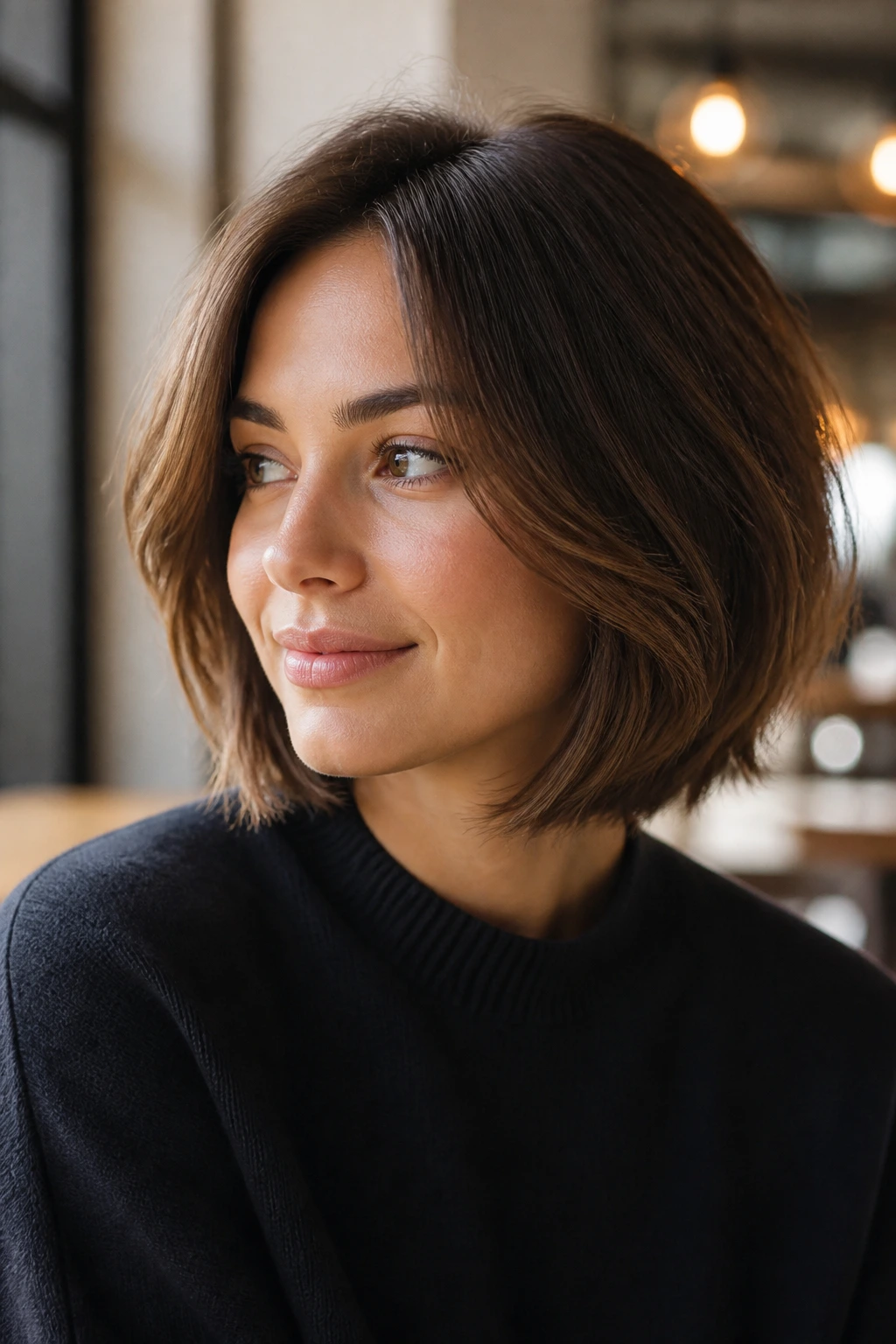
A layered bob is the answer when a blunt line feels too heavy but you still want the haircut to read as a bob. The layers can be subtle or more obvious, but the point is to create movement inside the shape.
This is a smart cut for thick hair that needs relief. It can also wake up hair that falls limp around the face. The danger is over-layering. Too many short pieces and the bob stops looking clean; it starts looking frayed. A good layered bob keeps the perimeter intact and removes weight in the right places only.
I tend to like this cut when the layers are mostly hidden until the hair moves. That way you get softness without losing the outline. If you want a bob that plays nicely with a round brush, this one is worth considering. It gives you a little lift without demanding a full styling session.
16. Textured Bob
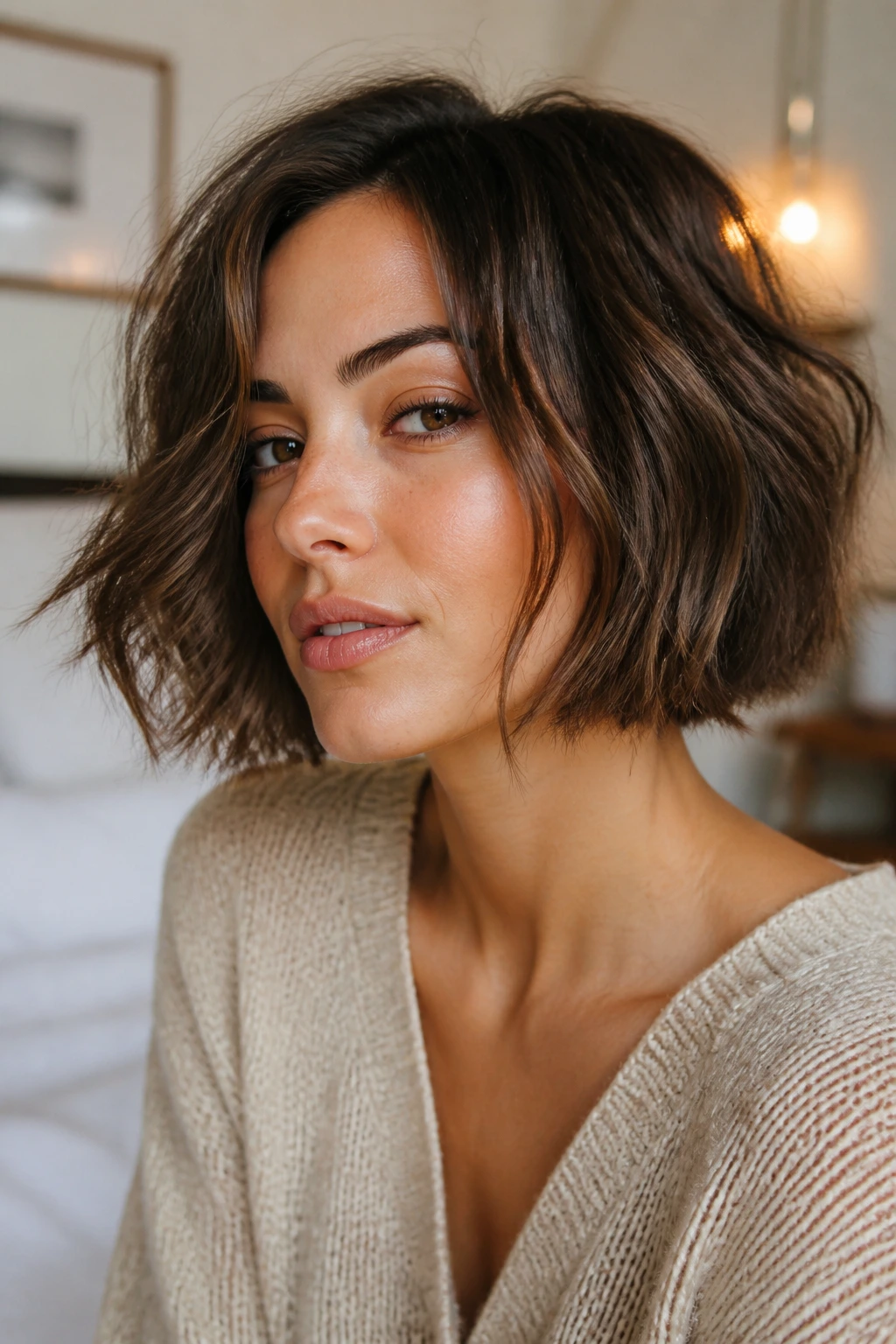
A textured bob is about piecey ends, airy movement, and a less strict finish. It’s not the same thing as a layered bob, even though people mix them up all the time. Layers change the structure. Texture changes the surface.
That distinction matters. You can have a blunt bob that’s textured at the ends, and you can have a layered bob that still looks smooth. Texture is about how the hair moves and separates once it’s styled. It tends to work well if you like that slightly undone look, but you still want the haircut to hold its shape by itself.
Good Texture Usually Means
- Ends that are softened, not shredded.
- A light styling cream or mousse.
- A few bends with a wand, not a full curl pattern.
- Fingers through the hair after drying.
This cut can save fine hair from looking too helmet-like. It can also stop thick hair from feeling too heavy. A little goes a long way.
17. Feathered Bob
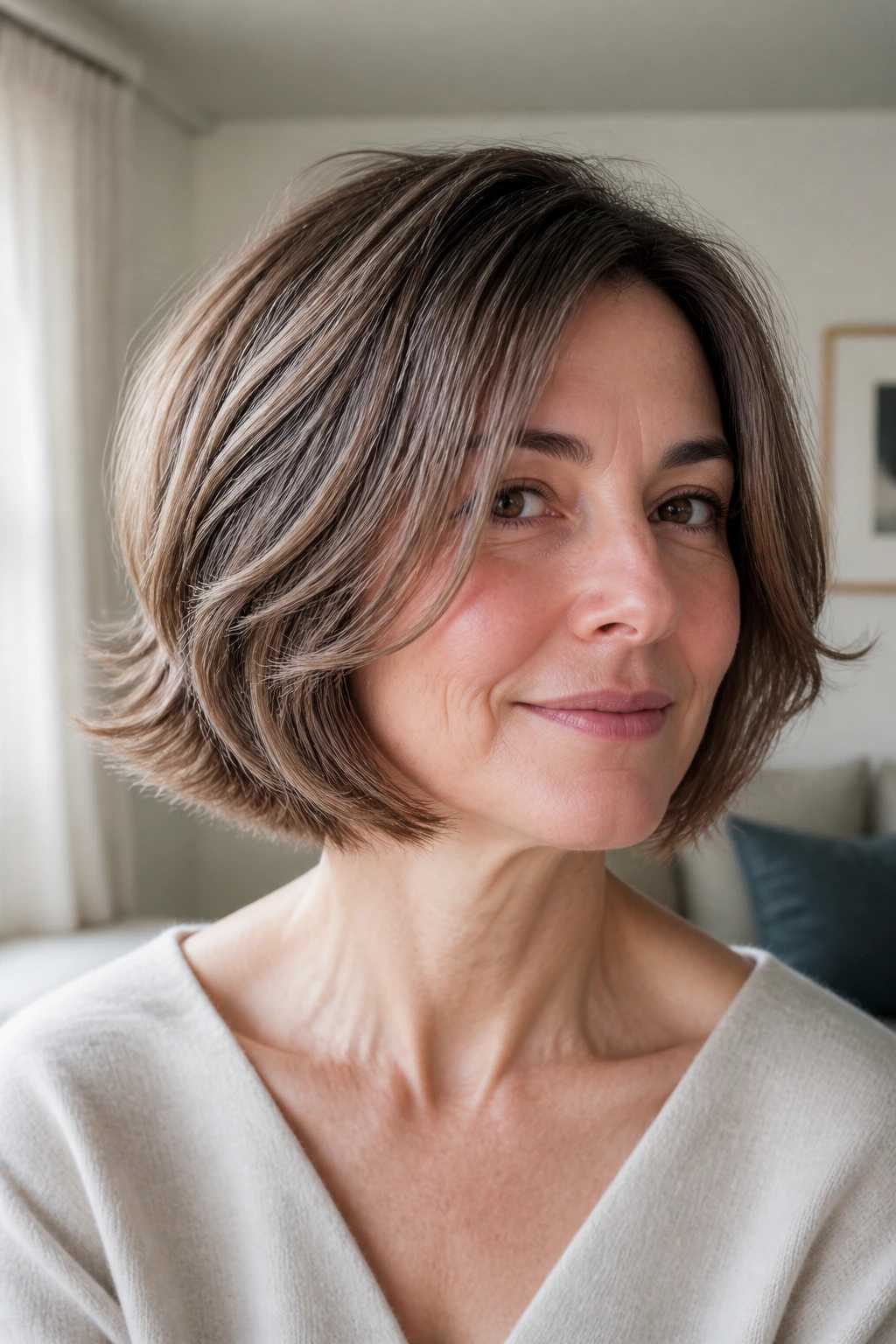
A feathered bob has soft, wispy ends that move away from the face instead of sitting as one solid block. It has a little 1970s energy, but it can look completely current when the layers are kept controlled.
The feathering helps the haircut breathe. Around the cheeks, that softness can be flattering because it breaks up a heavy line. Around the ends, it keeps the cut from looking blunt in a way that feels too formal. The trick is to feather, not thin out. There’s a difference. Thinning shears can wreck the shape if they’re used carelessly.
I like this version on medium-density hair that needs motion but not a full shag. A round brush, a bit of bend away from the face, and a light shine cream can make the whole cut feel polished without flattening it.
18. Blunt Bob With Bangs

A blunt bob with bangs is bold in the simplest possible way. Straight perimeter, straight fringe, clear shape. It doesn’t hide what it is, which is half the appeal.
The bangs change the math. They bring the focus up to the eyes and can make the whole haircut feel more compact. If the fringe is heavy, the result is dramatic. If it’s lighter and slightly broken up, the cut feels softer and easier to live with. I usually prefer a fringe that brushes the brows or sits just above them, because it grows out more gracefully and does not turn into a constant trim emergency.
Watch For
- Bangs need regular trimming.
- Straight fringes show cowlicks fast.
- A blunt edge and heavy fringe can feel dense on very thick hair.
This bob is not shy. If you like a haircut with a little bite, it delivers.
19. Side-Swept Bang Bob

A side-swept bang bob is one of the easiest ways to soften a bob without changing the whole cut. The fringe falls diagonally across the forehead, so the face gets some movement and the haircut feels less rigid.
That diagonal line is useful because it can break up a strong forehead or add shape to a rounder face. It also grows out in a less awkward way than a blunt fringe. You can pin it back, split it, or let it fall into the cut. Useful. Flexible. Hard to dislike.
The best side-swept bangs are not huge. They should feel like part of the haircut, not a separate curtain dropped on top of it. Ask for a long diagonal that blends into the front layers, especially if your hair is thick enough to hold a lot of weight.
20. Curtain Bang Bob

A curtain bang bob softens the front without closing off the face. The bangs split in the middle and fall to either side, usually grazing the cheekbones or jaw. It’s a good pairing because both the bob and the fringe can move.
How It Sits
Curtain bangs look best when they are a little longer than people expect. Too short and they kick up awkwardly. Too long and they start acting like side pieces. The sweet spot is often around the cheekbone, with the shortest point at the center and longer pieces blending toward the jaw.
A round brush makes this shape easy to handle. Pull the bangs up and away from the face, then curve them out slightly at the ends. That little bend keeps them from flattening straight down.
If you want a bob that feels softer around the eyes and less strict at the hairline, this one earns its place.
21. Asymmetrical Bob
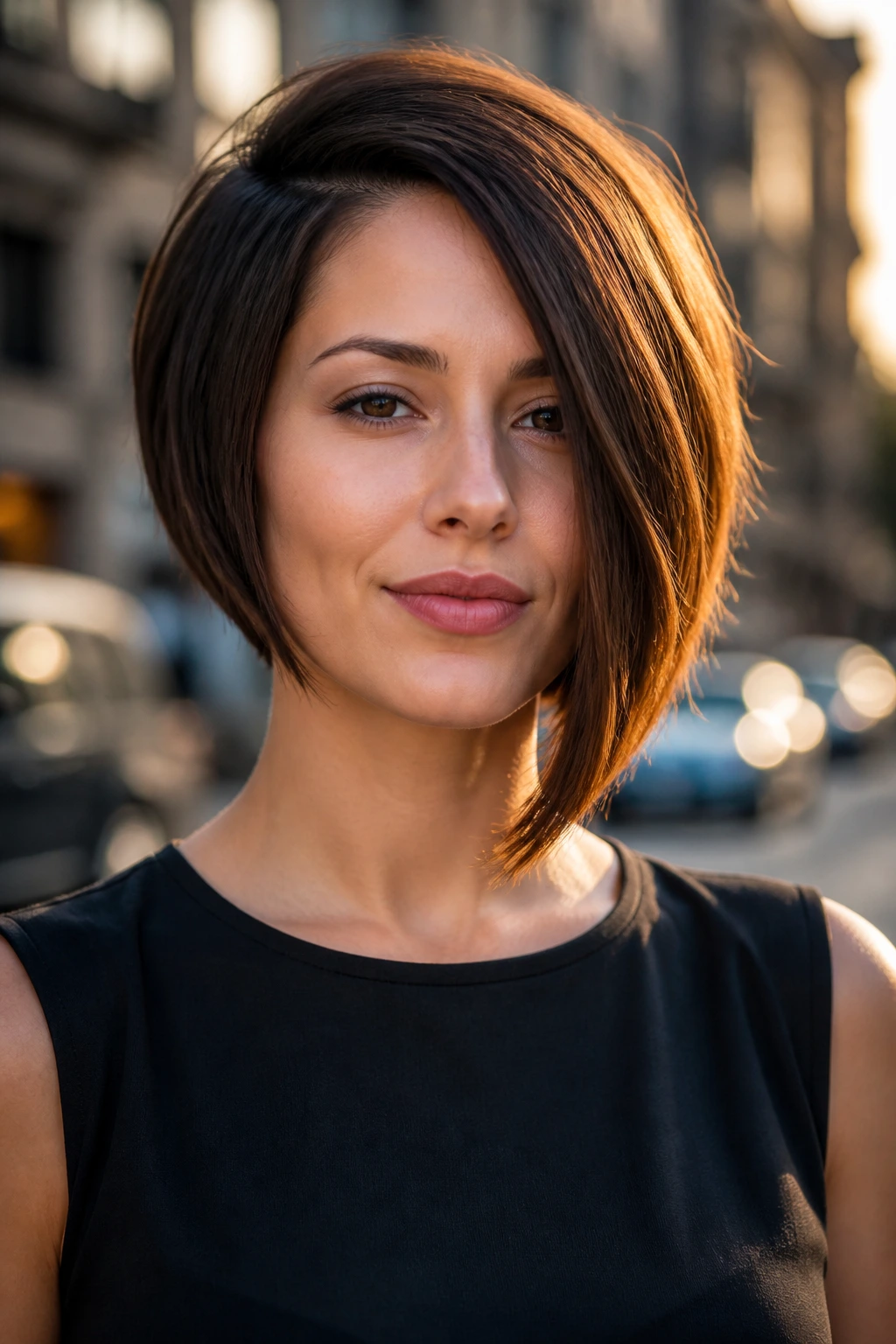
An asymmetrical bob is cut so one side is slightly longer than the other. Not wildly longer. A subtle difference is usually enough. The point is to create a line that feels a little unexpected without tipping into costume territory.
That offset can sharpen the face and make the haircut feel more dynamic from the front and side. It works especially well on straight hair, because the line shows clearly. If the texture is too chaotic, the asymmetry can disappear before anyone notices it.
The cut does ask for confidence. It looks best when the lengths are deliberate and the ends are clean. A sloppy asymmetrical bob looks accidental, and that is not the goal. Ask for the longer side to be only slightly longer — often by less than an inch or two — so the shape stays wearable.
22. Shaggy Bob
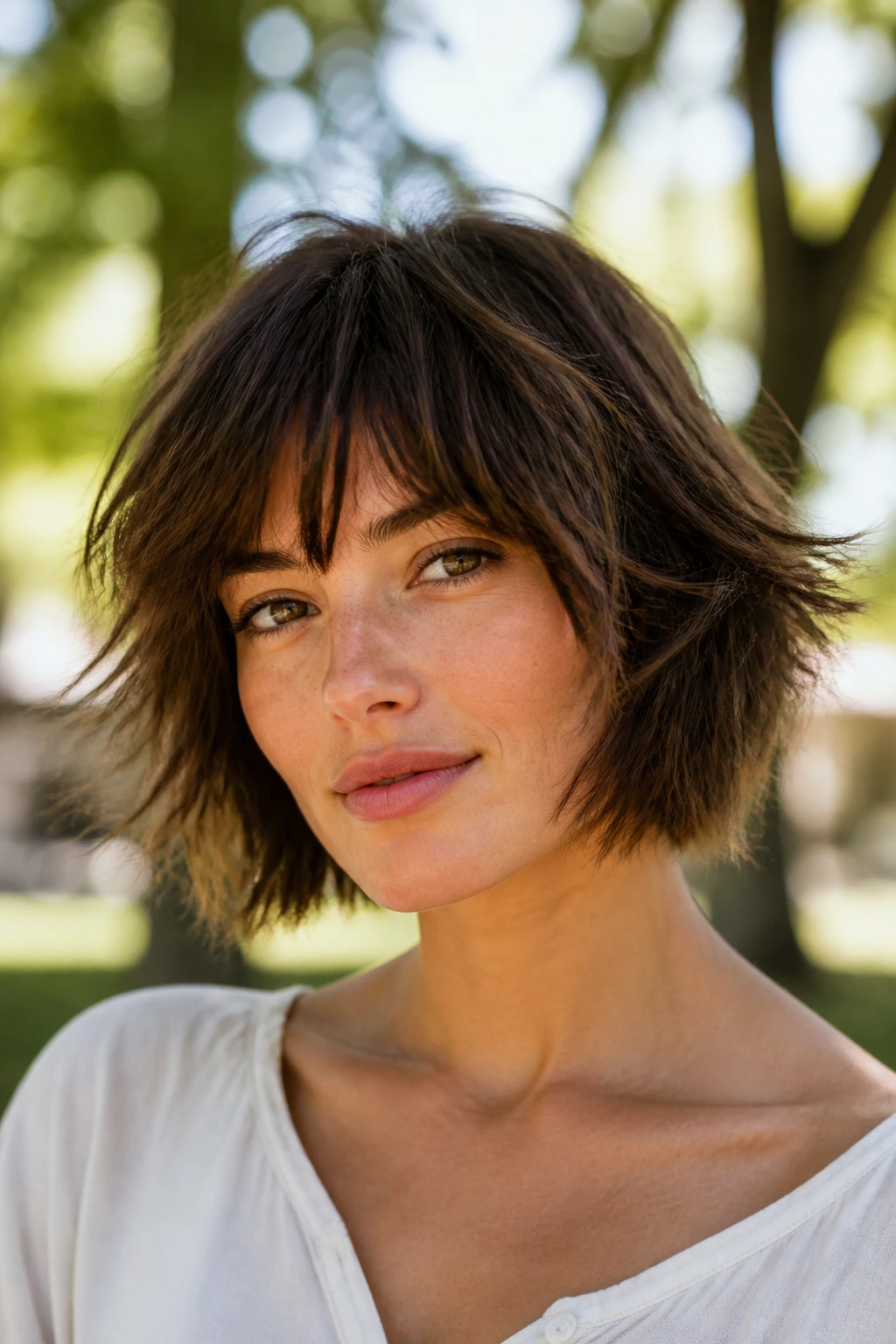
A shaggy bob takes the neatness of a bob and gives it a rougher edge. The layers are lighter, the ends are less rigid, and the whole thing feels more casual.
It’s a good choice if you want movement without a sleek finish. The haircut can be especially nice on wavy hair that gets puffy if it’s cut too bluntly. The shaggy treatment removes some of that bulk while keeping the shape visible. Too much shag, though, and the bob disappears. That’s the balance to watch.
What Makes It Work
- Keep the outline at chin or collarbone length.
- Let the layers stay airy.
- Use a texturizing spray sparingly.
- Avoid over-drying the ends.
This one suits people who like hair with a little mess in it. Controlled mess, though. There’s a line.
23. Box Bob

A box bob is sharp, square, and straight at the sides. It has a graphic feel that can look very strong on the right head shape. The shape is compact, almost architectural, and it tends to show off dense, straight hair beautifully.
I think the box bob works best when the ends are crisp but not stiff. If the cut is too perfect, it can look helmet-like. A tiny bit of bevel at the ends helps it sit naturally around the jaw and ears. That’s usually all it needs.
This is not the most forgiving bob, which is part of the fun. It rewards a clean cut and regular trims. If you like precision and you don’t mind hair that makes a statement even when you’re doing nothing to it, this one has a strong case.
24. Ear-Length Bob

The ear-length bob is short, neat, and a little cheeky in the best way. It sits above or right around the ears, which makes the neck look longer and the face look more open.
Why People Keep Coming Back to It
Short bobs like this can feel fresh without being fussy. They show off earrings, necklines, and bone structure. They also dry fast, which is not a small thing. The tradeoff is maintenance. You will notice growth sooner than with longer bobs, and the shape needs a trim before it starts to lose its edge.
Best When
- You want a clean neckline.
- Your hair is straight or slightly wavy.
- You like a cut that feels light around the ears.
- You don’t mind keeping up with trims.
This cut has an honesty to it. There’s nowhere for the shape to hide.
25. Pageboy Bob

A pageboy bob has that smooth, rounded finish that tucks under at the ends, often with bangs or a full fringe. It is one of the most classic shapes in the bunch because it gives you structure without the hard edge of a pure blunt cut.
The underturned ends are doing a lot of the work here. They keep the outline soft and contained. The look is neat, almost glossy, and it suits people who want a bob that feels finished even on a normal Tuesday. A round brush or large rollers can help set that curve, especially if your hair tends to kick outward at the ends.
I like the pageboy bob when someone wants polish but not severity. It has a little retro flavor, but not so much that it feels like a costume from a decade party.
26. Old Hollywood Bob
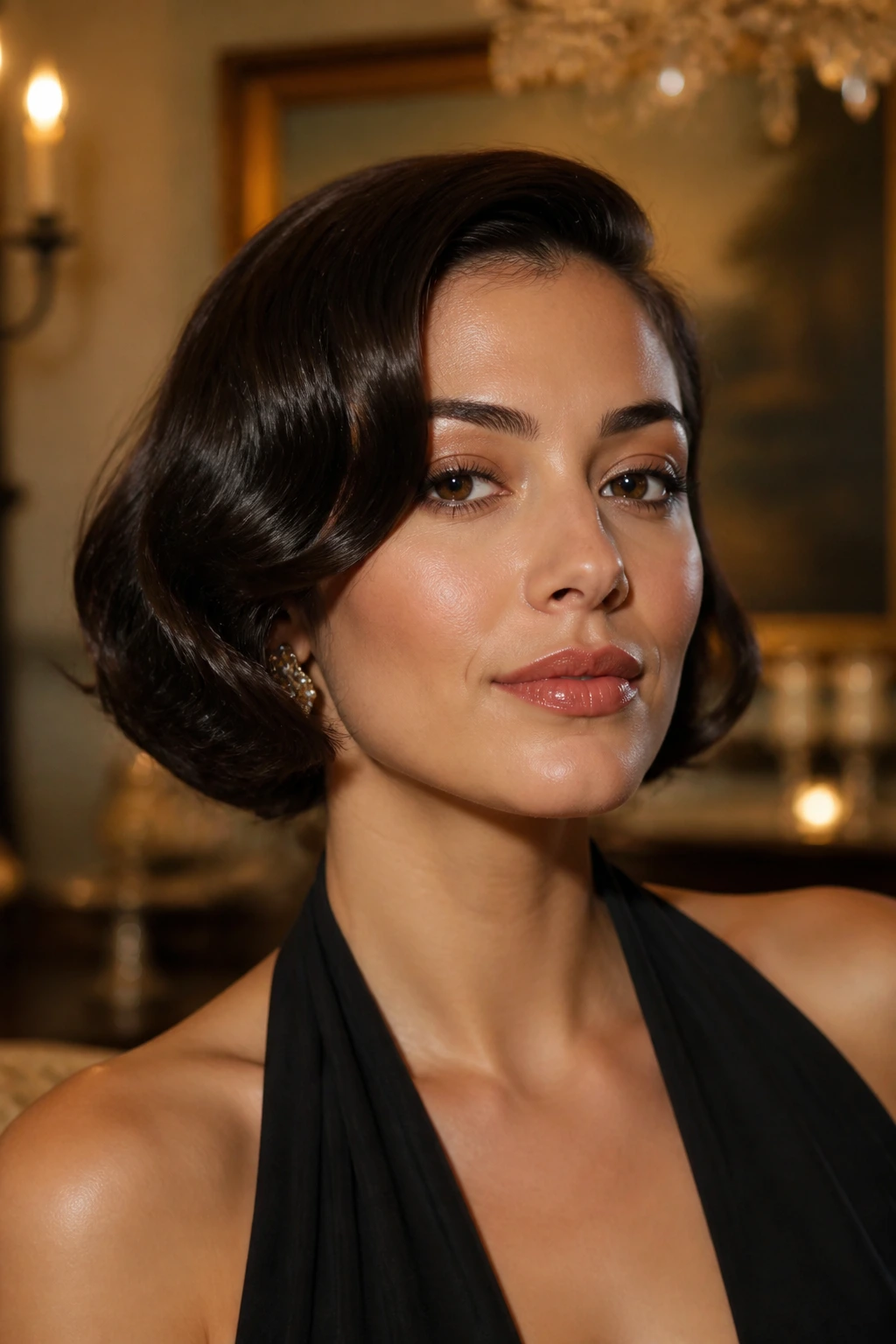
The Old Hollywood bob is about shape, shine, and a side part with soft, brushed waves. It’s more about styling than cutting, but the haircut still matters because the base needs to support that smooth, sculpted finish.
Think chin to jaw length, usually with enough weight to hold a wave after it’s brushed out. The ends should look deliberate, not fluffy. A 1-inch iron, a setting spray, and a boar-bristle brush can do a lot here. So can a good blow-dry with the front pieces directed away from the face.
This is one of those styles that can make simple clothes look more put together. It doesn’t need sparkle. It needs clean lines and glossy hair. That’s the whole deal.
27. Micro Bob
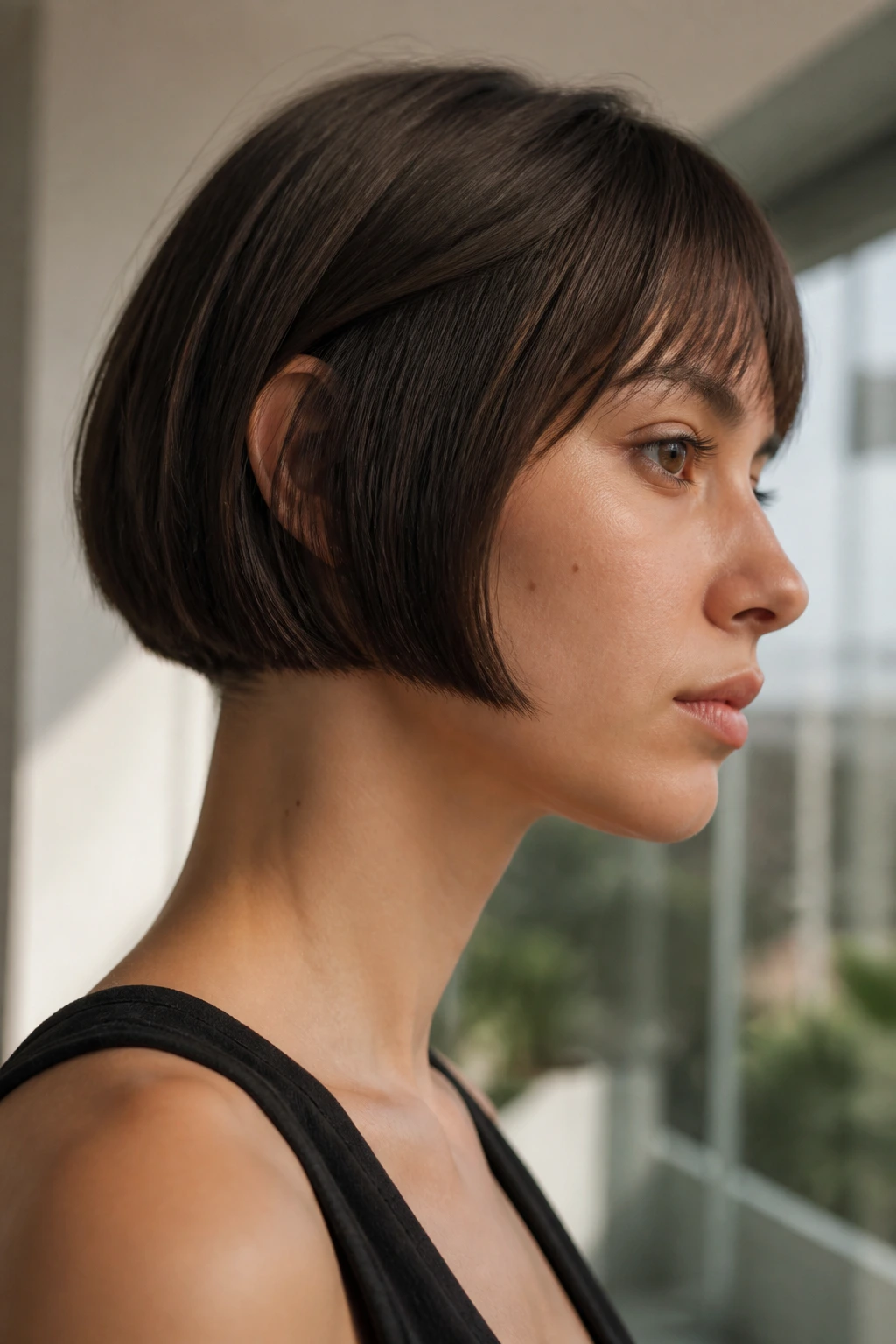
A micro bob is very short, often hovering around the cheekbone or just below the ear. It’s the most daring one on this list, but it still counts as a classic because the shape itself is clean and simple.
The cut looks strongest when the edges are precise and the weight stays compact. A micro bob can be a dream on straight hair because the line reads clearly. It can also be a nice way to show off a strong jaw or long neck. The downside is obvious: you have less room to hide bad growth, and it asks for regular shaping.
Think About These Before You Cut
- How often you’ll trim it.
- Whether your hair flips outward at short lengths.
- If you like your ears exposed.
- Whether you want a bold line or a softer one.
A micro bob is not a compromise cut. It knows what it is.
28. Graduated Bob
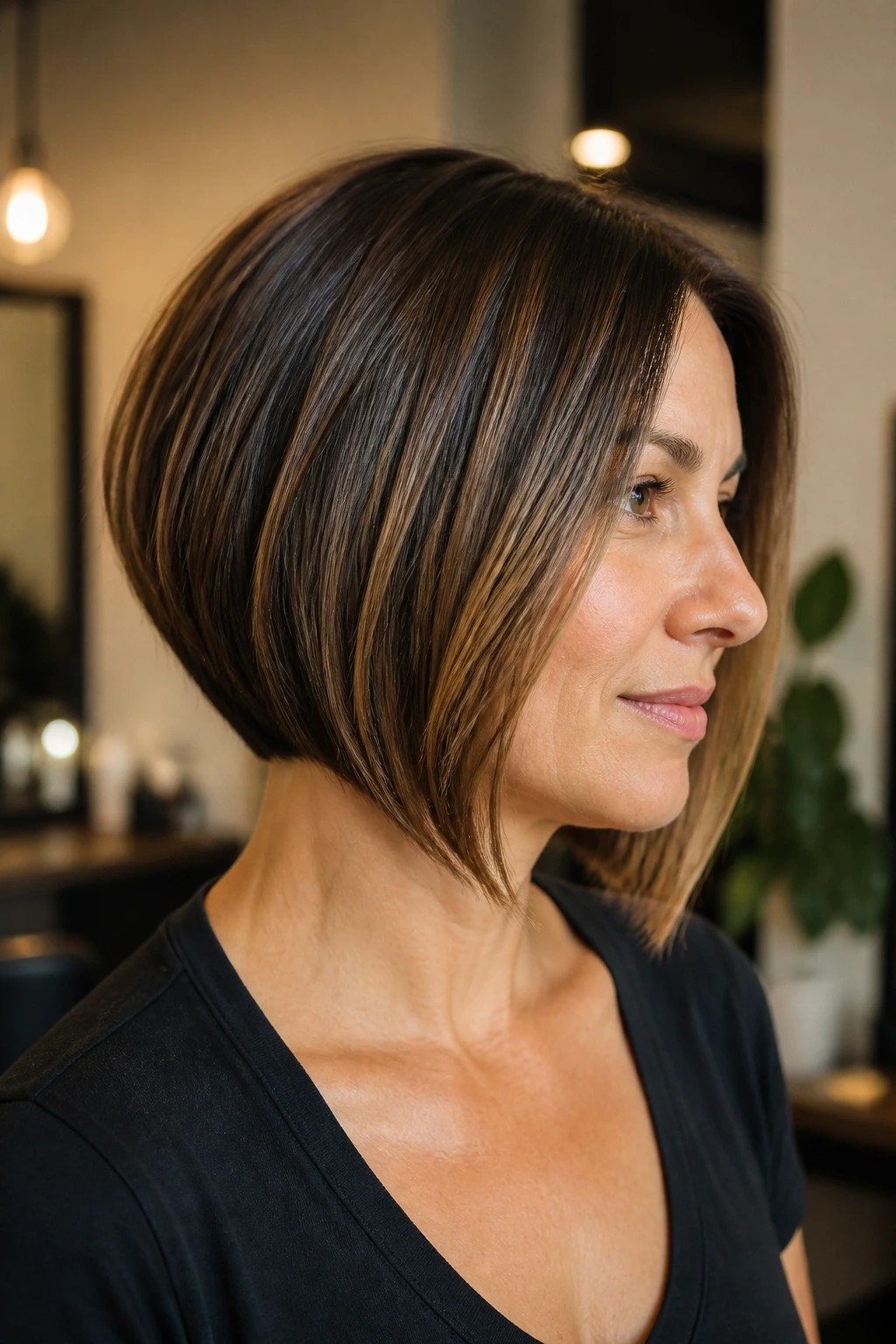
A graduated bob sits between a stacked cut and a softer A-line. The back is shorter, the front is longer, and the graduation creates a clean change in length without making the whole thing look severe.
That middle ground is why I like it. It gives shape to the back, movement through the sides, and enough length in front to tuck or bend. It can make fine hair look fuller and thick hair feel lighter, provided the graduation is controlled. Too much stacking makes the crown rise too high. Too little and the cut loses its shape. A good graduated bob finds the spot in between.
It’s the kind of bob that stays dependable over time. Not flashy. Not needy. It grows out in a way that still looks intentional, which is more useful than people admit.
The nicest bob haircuts do not fight your hair. They work with its habits, then clean up the edges so the shape feels like a choice.
That is why these cuts stay around. They are flexible enough to wear straight, waved, brushed, or air-dried, and they do their best work when the length lands in the right place for your texture and your face. Get that part right, and the rest gets easier.
