



Curly lobs can rescue hair that has been sitting at that awkward shoulder length where it flips out, puffs up, and refuses to choose a shape. The curly lob haircut sits in a sweet spot: long enough to keep movement, short enough to hold structure, and practical enough that medium hair doesn’t feel weighed down.
What makes this cut worth paying attention to is not the length alone. It’s the way the outline, layers, and fringe work with the curl pattern you already have. A blunt hemline on a loose wave behaves nothing like a layered lob on dense ringlets, and that difference matters more than most salon photos admit.
I’ve always liked curly lobs because they respect shrinkage instead of fighting it. A curl can spring up an inch or three after the hair dries, and if the shape was planned without that in mind, the cut ends up shorter at the sides or boxier at the bottom than anyone wanted. That’s why the best versions look calm but never flat. They have room to move.
Some of the ideas below are soft and face-framing, some are sharper, and some are built for hair that carries too much bulk through the mids and ends. Pick the shape that fits your curl type, then look at how much styling you’re actually willing to do on a weekday morning. That part matters more than people like to admit.
1. Soft Shoulder-Grazing Curly Lob
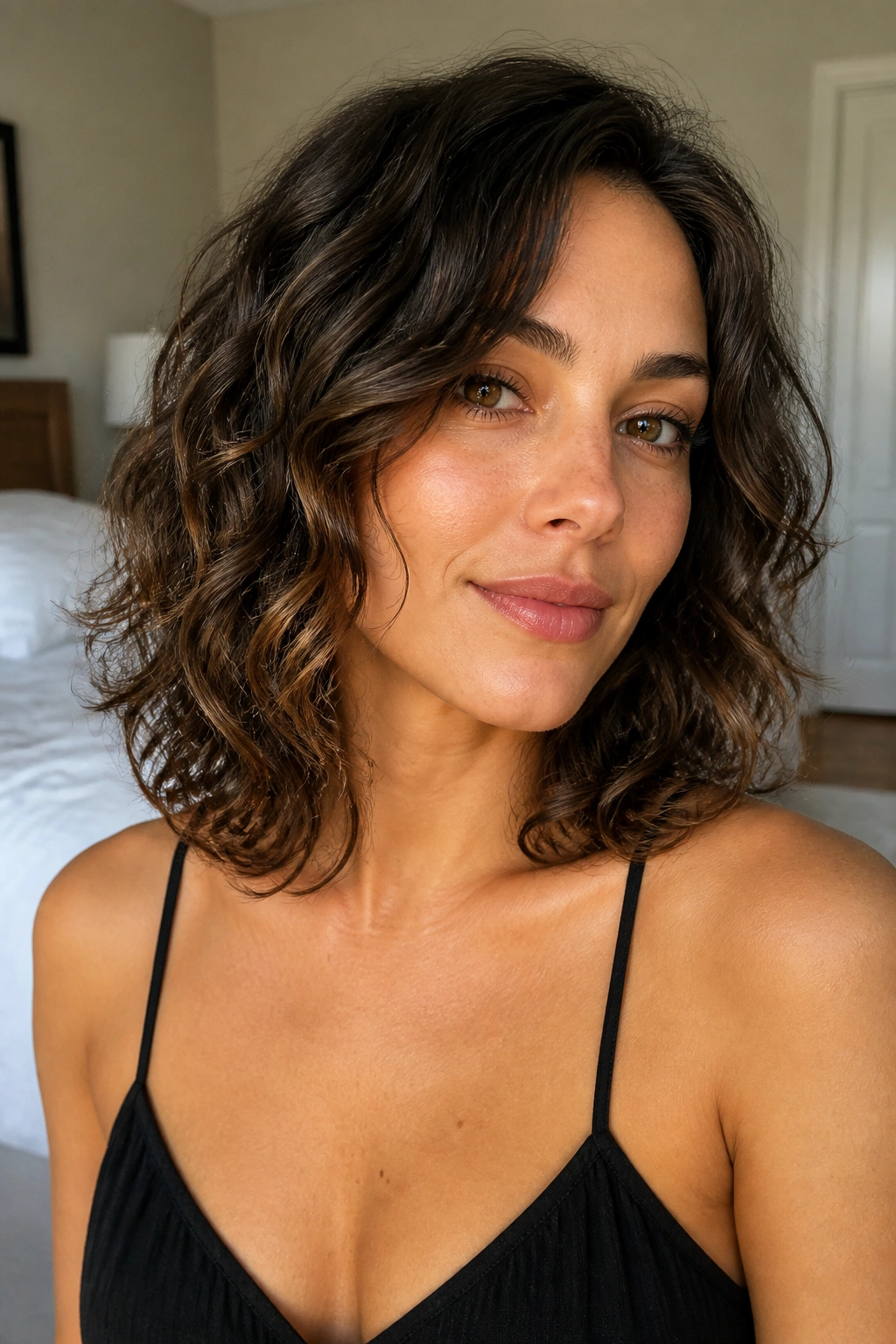
A shoulder-grazing curly lob is the safest starting point, and I mean that in a good way. It gives medium hair a clean outline without forcing the curls into a stiff box, which is exactly where a lot of mid-length cuts go wrong.
Why this shape works so well
The length sits close to the collarbone, so the curls have room to spring without turning into a triangle. The shape also leaves enough weight at the bottom to keep the cut from puffing out too high around the cheeks.
Ask for soft, long layers that begin below the chin, not short choppy ones. That keeps the silhouette loose and gives the ends a little swing. A stylist who cuts curly hair dry can see where the curl lands, which helps a lot here.
- Best for loose curls, waves, and soft ringlets
- Keeps medium hair from feeling boxy at the sides
- Works well with air-drying or diffusing
- Looks neat even when the curls separate a little
Tip: ask for the cut to land slightly longer than you think you want. Curly hair rises when it dries, and a half-inch of extra length can save the whole shape.
2. Blunt Curly Lob with Clean Ends
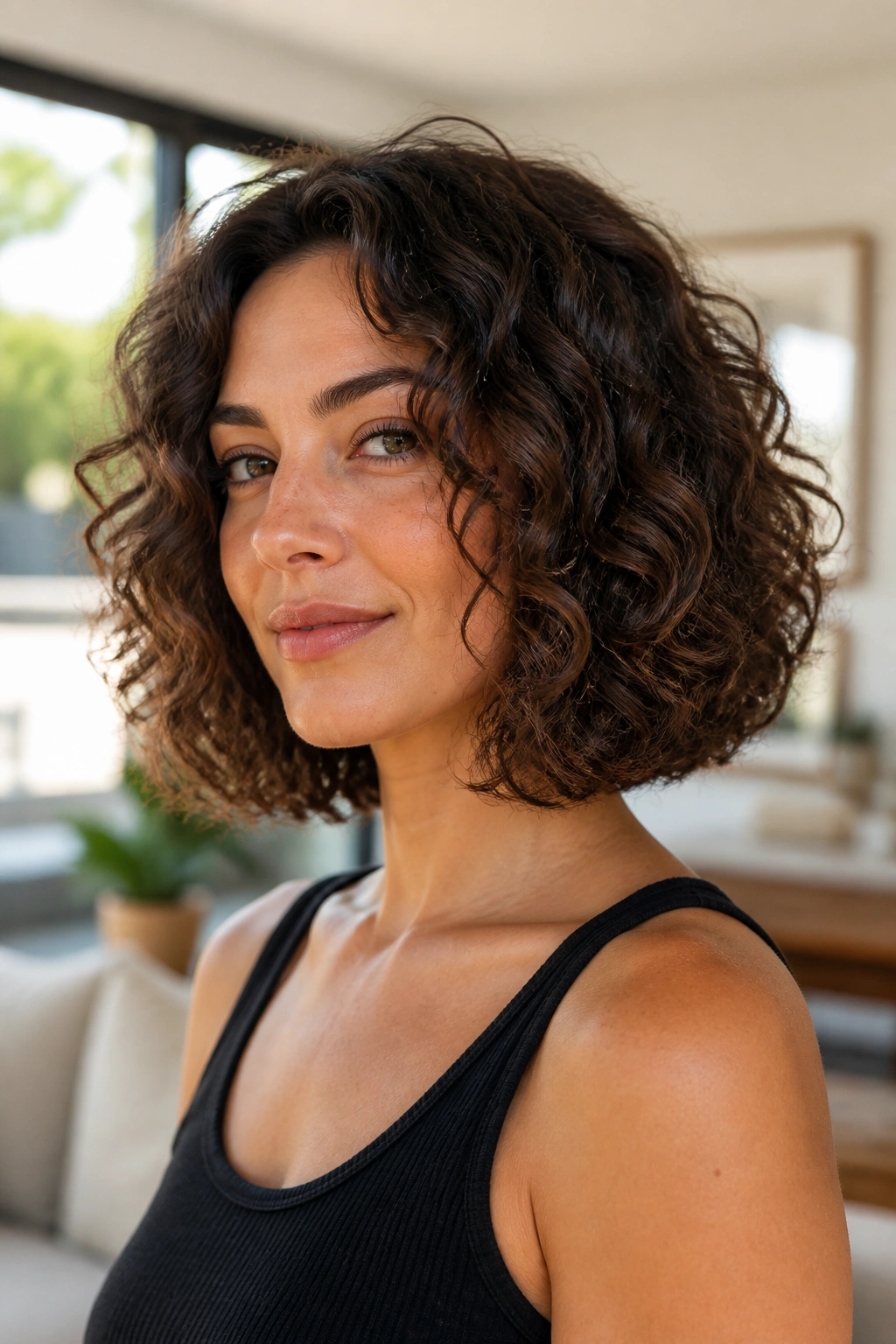
A blunt curly lob can look sharper than a layered one, and that’s the point. On medium hair with enough density, a clean perimeter gives the curls a strong edge and makes the whole cut feel deliberate.
This cut is especially good if your curls clump into clear, defined pieces. The ends line up into a heavier baseline, which helps the shape stay full instead of frizzing out along the bottom. It can look expensive without trying to look fancy. I know that sounds like a magazine line, but it’s true here.
The catch is simple: blunt doesn’t mean heavy everywhere. If the interior is left too bulky, the lob starts to sit like a helmet. A good stylist usually keeps the outside line solid and removes just enough weight inside to stop the bulk from bulging.
This version is not the friendliest choice for damaged ends. If your hair is frayed or dry, the blunt line can make that wear more obvious. But when the curl pattern is healthy and the density is decent, it looks crisp, modern, and tidy without feeling severe.
3. Face-Framing Curly Lob with Curtain Pieces

Why does this style soften so many faces? Because the front pieces change the eye line before the rest of the cut even registers. A curly lob with curtain-style face framing pulls attention inward, then lets the back stay a little fuller and more relaxed.
How to ask for it
Tell your stylist you want the shortest face pieces to start around the cheekbone or just below it, with the longest front pieces landing near the collarbone. That range keeps the face frame visible when curls shrink, which matters more than people think.
A cut like this is useful if your curls tend to fall heavy around the jaw. The front layers open that area up. They also help if your hair pulls forward and hides your cheekbones, which happens a lot with medium-length curls that have too much one-length weight.
- Keep the face frame soft, not sharp
- Let the front layers blend into the sides
- Use a side or center part depending on where the curl falls best
- Trim the front pieces a little more often than the rest if they grow fast
One small detail: if the front layers are too short, they can pop out in the wrong direction after wash day. That’s where a lot of otherwise nice curly cuts go sideways.
4. Angled Curly Lob
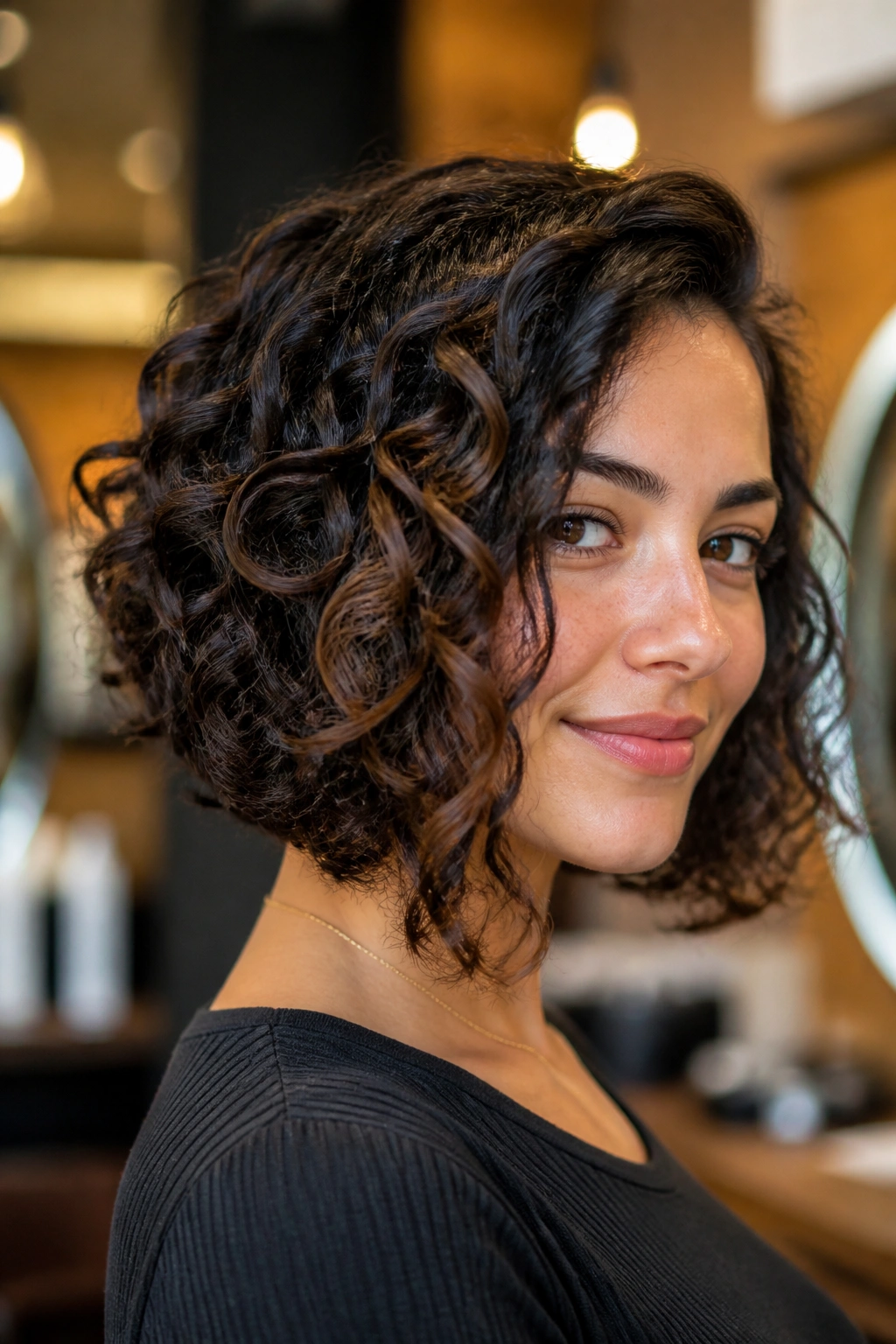
If your hair balloons at the sides, an angled curly lob can solve more than one problem at once. The slight forward tilt gives the cut a cleaner line from back to front, so the shape feels intentional instead of round in every direction.
I like this cut on medium hair that carries weight through the back and underneath. A little shorter in the nape and a little longer in front, it gives the curls somewhere to fall. The result is less mushroom, more movement.
What makes the angle work
The front pieces are usually cut 1 to 2 inches longer than the back. That sounds subtle, and it is. On curly hair, subtle changes show up clearly once the curls dry.
- Good for thick or medium-dense curls
- Helps heavy ends sit better around the collarbone
- Can make the face look a touch longer
- Needs a stylist who knows how to balance curl shrinkage on both sides
The downside is upkeep. Angled curly lobs need their shape refreshed more often, because uneven growth shows faster than it does in a straight-across cut. If you’re the kind of person who likes to forget about your haircut for a while, this one may annoy you. If you like your curls to look shaped, though, it’s a strong choice.
5. Curly Shag Lob

The curly shag lob is for people who want movement first and polish second. It has a lived-in feel, lots of air between the layers, and enough break in the outline to stop medium hair from sitting in one heavy mass.
This is the cut I reach for when someone says they want their curls to look lighter without losing length. The shag lob usually keeps the perimeter around the shoulders or collarbone, then breaks the interior into softer, uneven layers. That extra space lets curl clumps spring up instead of pushing against each other.
It can be gorgeous on 2C through 3B textures, especially if your hair has a little frizz that wants somewhere to go. The shape disguises that frizz better than a strict blunt line does. And it has a nice, slightly messy energy that works whether you diffuse or air-dry.
The trade-off is that a shag can go wrong fast if it’s over-thinned. Too many tiny layers and the ends start to look wispy, not airy. The best curly shag lobs still have some weight left in the bottom half. Without that, the cut loses its shape by lunch.
6. Rounded Curly Lob
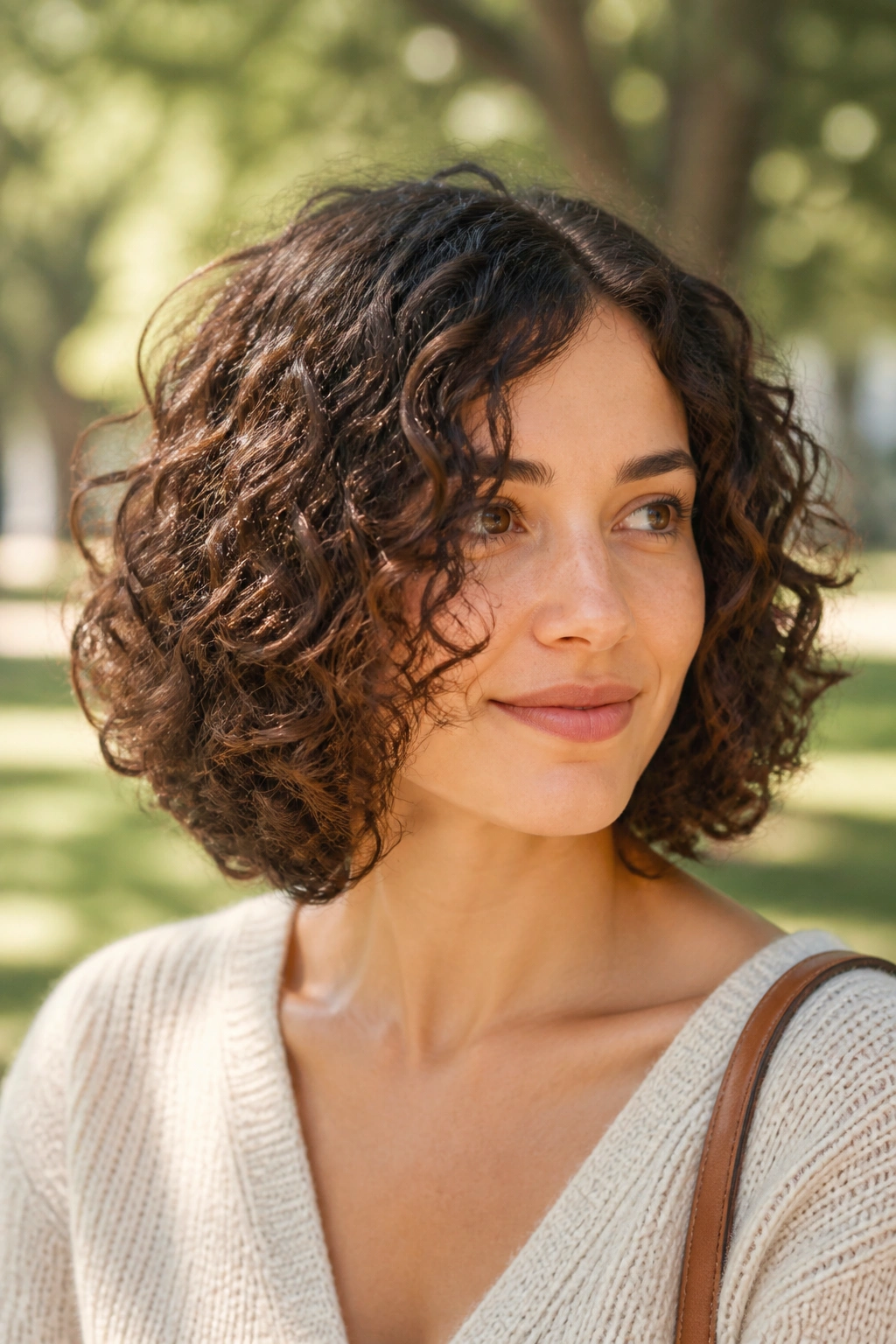
A rounded curly lob gives you balance, not drama, and there’s a lot to like in that. Instead of going square or choppy, the silhouette curves gently around the head so the curls sit in a soft dome that feels full but not puffed out.
This shape is especially nice if your curls already have decent body and you do not want extra width on the sides. A rounded lob keeps the mass distributed more evenly, which makes the cut feel neat from every angle. It also works well when the ends are healthy and the curl pattern is fairly consistent from root to tip.
Unlike a blunt lob, this version does not depend on one strong horizontal line. The shape is built by layering with restraint. You get fullness where the curls naturally want to land, then a subtle taper toward the bottom so the cut doesn’t look blocky.
It’s one of the easier curly lob ideas to live with because it grows out without getting weird fast. The shape stays readable for a while. That matters if you’re not getting regular trims every few weeks.
7. Side-Part Curly Lob
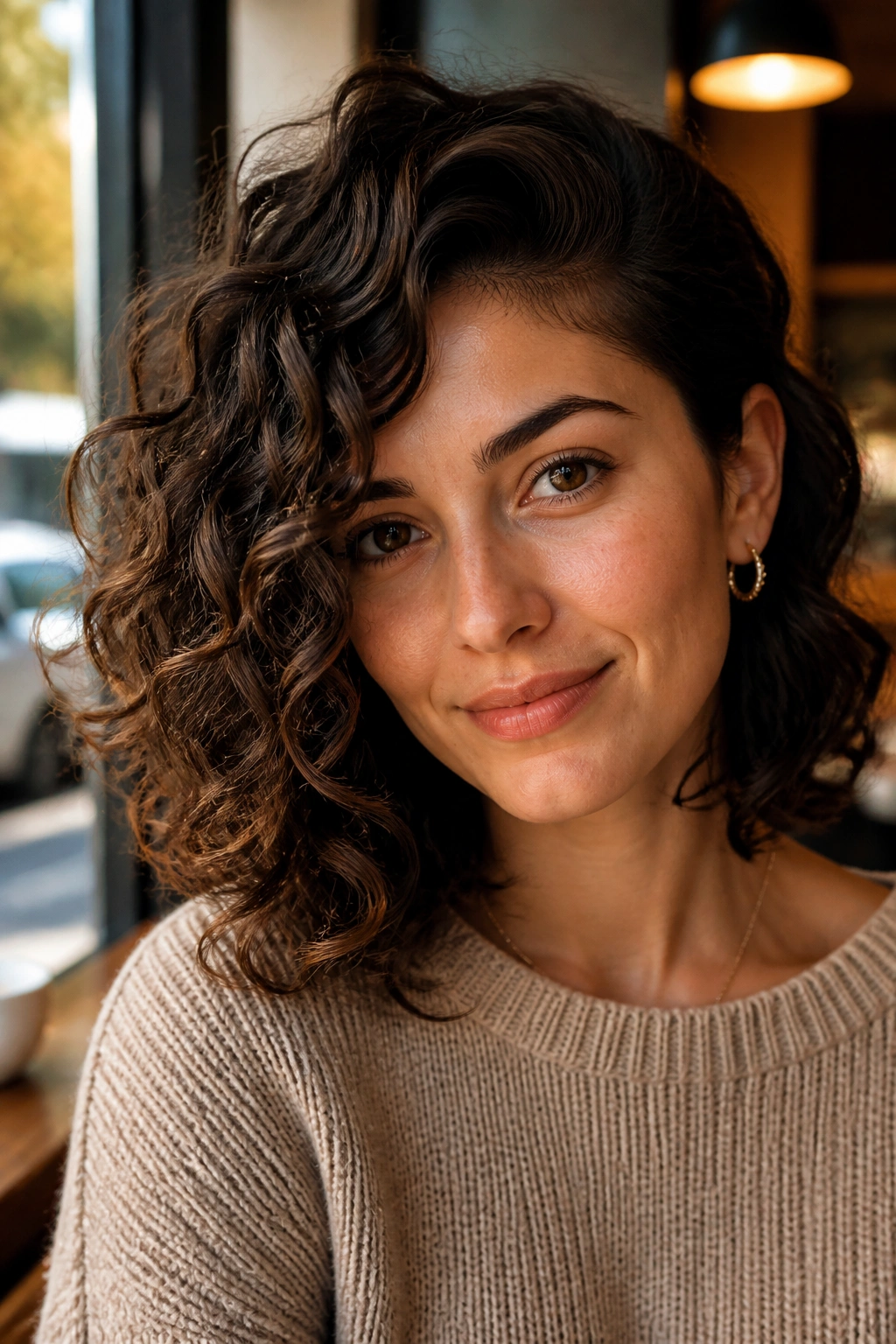
A side part can change a curly lob more than a new product ever will. Move the part an inch or two and the whole haircut starts behaving differently, which is handy when one side of your hair lies flatter than the other.
Picture a medium-length curl pattern that always collapses near the temples. A side part lifts that area and gives the top more height, while the heavier side gets a little more visual weight. The result feels less symmetrical, but more alive.
What to ask for
- Keep the part flexible, not carved in stone
- Leave enough length around the front so the heavier side can tuck behind the ear
- Ask for soft layers near the crown if the top sits too flat
- Keep the perimeter clean so the part change does not make the cut look messy
This cut works well if you have one strong cowlick or a curl pattern that leans hard in one direction. It can also help soften a long face, since the diagonal line breaks up the vertical stretch.
There is one catch. A side-part lob can feel lopsided if the front is too short or too aggressive. The best version looks casual, not accidental. Small difference. Big effect.
8. Center-Part Curly Lob
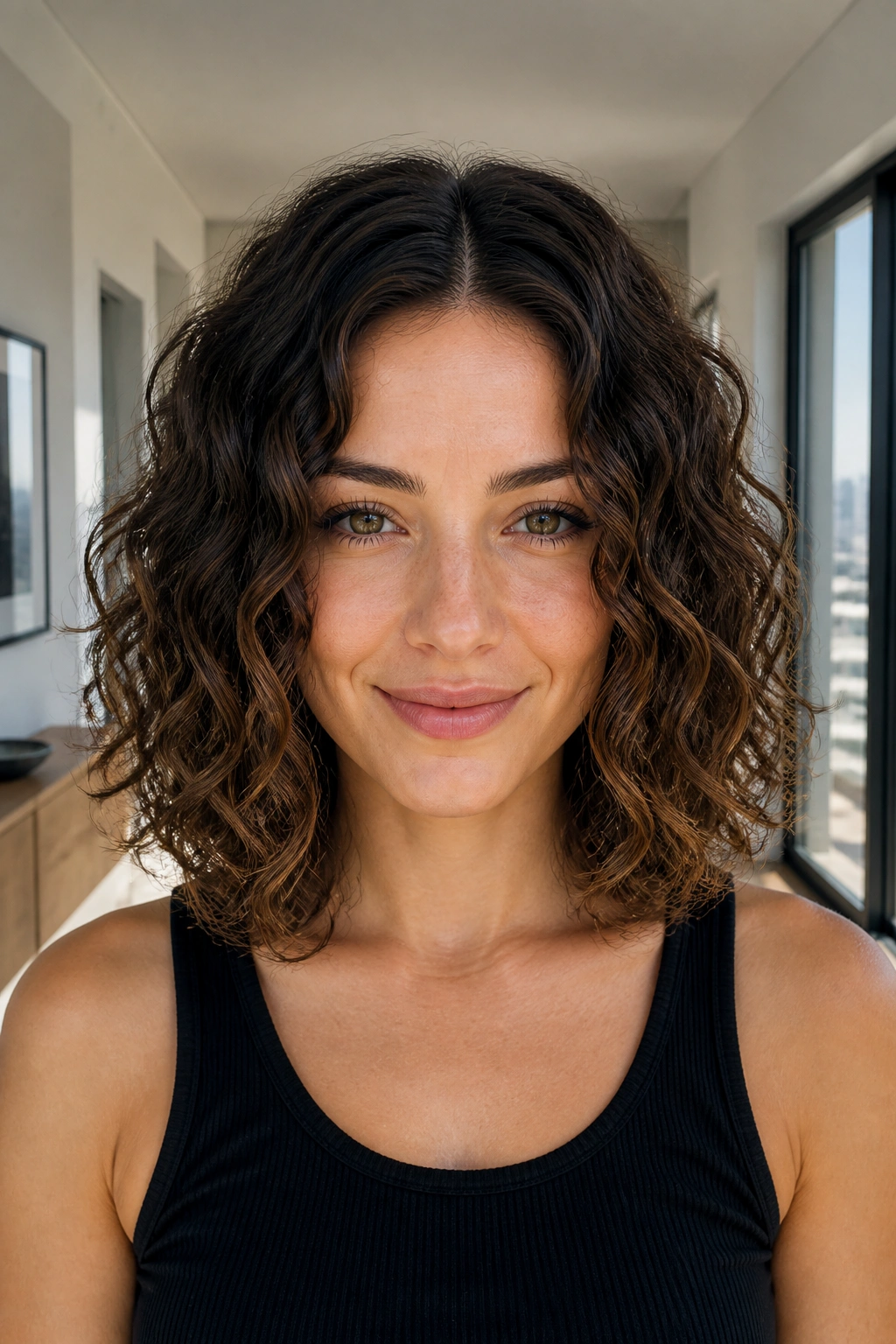
A center part can calm a curly lob without taking away its shape. That sounds backward if you’re used to thinking of center parts as strict, but on medium hair with curls, the symmetry can actually make the texture look cleaner.
This cut works best when the curls are balanced from one side to the other and the face can handle a little more vertical line. It gives both sides equal room, which is useful if your hair naturally separates into even curl clumps. The result feels steady, almost quiet, and that can be a nice contrast to hair that already has plenty of texture.
I like this version on oval and heart-shaped faces because it lets the curls frame the cheeks without crowding the jaw. It also makes the lob look longer, which is helpful if your hair sits just above the shoulders and you want to keep the length reading as medium rather than short.
The weak spot? A center part can expose sparse roots or a flat crown more easily than a side part. If that area is a problem, ask for a little lift around the top instead of piling layers everywhere. That’s the better fix.
9. Curly Lob with Curly Bangs
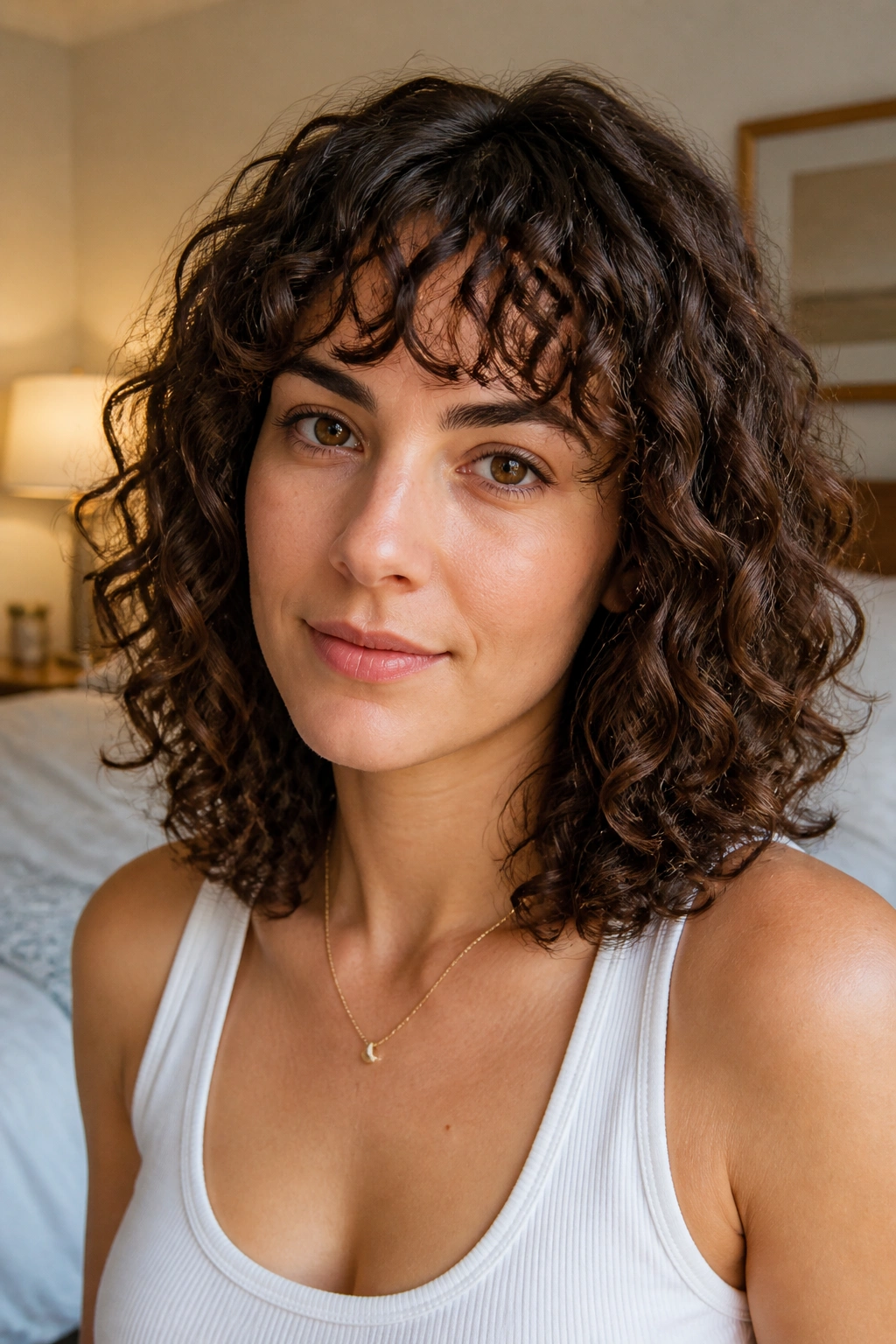
Can curly bangs work with a lob? Absolutely, but only when the fringe is cut for the curl pattern you actually have. A good curly fringe can make a medium-length lob feel fresh and a little playful. A bad one can disappear into the rest of the haircut by the next wash.
What to know before you commit
Curly bangs need enough density to stand on their own. If the front is too sparse, the fringe will split and sit awkwardly on the forehead. If the front is dense, a shaped fringe can look soft and full without feeling heavy.
- Ask for the bangs to be cut dry so the curl sits where it naturally falls
- Leave extra length for shrinkage, especially if your curls are springy
- Keep the sides blended into the lob so the fringe does not look pasted on
- Plan for more frequent trims on the front than on the rest of the cut
This style looks especially good with medium hair that has a lot of personality and does not mind some attention near the eyes. It also works well if you want to shorten the face a little without touching the overall length.
Small warning: curly bangs are not a lazy choice. They need care. If you hate touching your hair between washes, this may become annoying fast.
10. Bottleneck Bangs with a Curly Lob

Bottleneck bangs sit between curtain bangs and a full fringe, and that middle ground works nicely with curly lobs. The center is shorter, the sides are longer, and the shape opens the face without boxing it in.
Unlike a full curly bang, bottleneck fringe grows out with less drama. That’s a real benefit, because curls do not always behave politely once bangs start getting longer. The staggered shape gives the fringe more room to blend into the front of the lob instead of dropping in one hard line.
This cut is good when you want softness around the forehead but do not want to commit to a blunt bang that demands constant trimming. It also helps if your curls are dense in the front but finer at the temples, since the longer sides can cover the lighter areas.
I’d choose this version over a straight-across fringe for most medium hair. It’s easier to wear on days when the curls are uneven, and it does not punish you if the weather gets humid. That alone makes it more practical than it sounds on paper.
11. Internal-Layered Curly Lob for Thick Hair
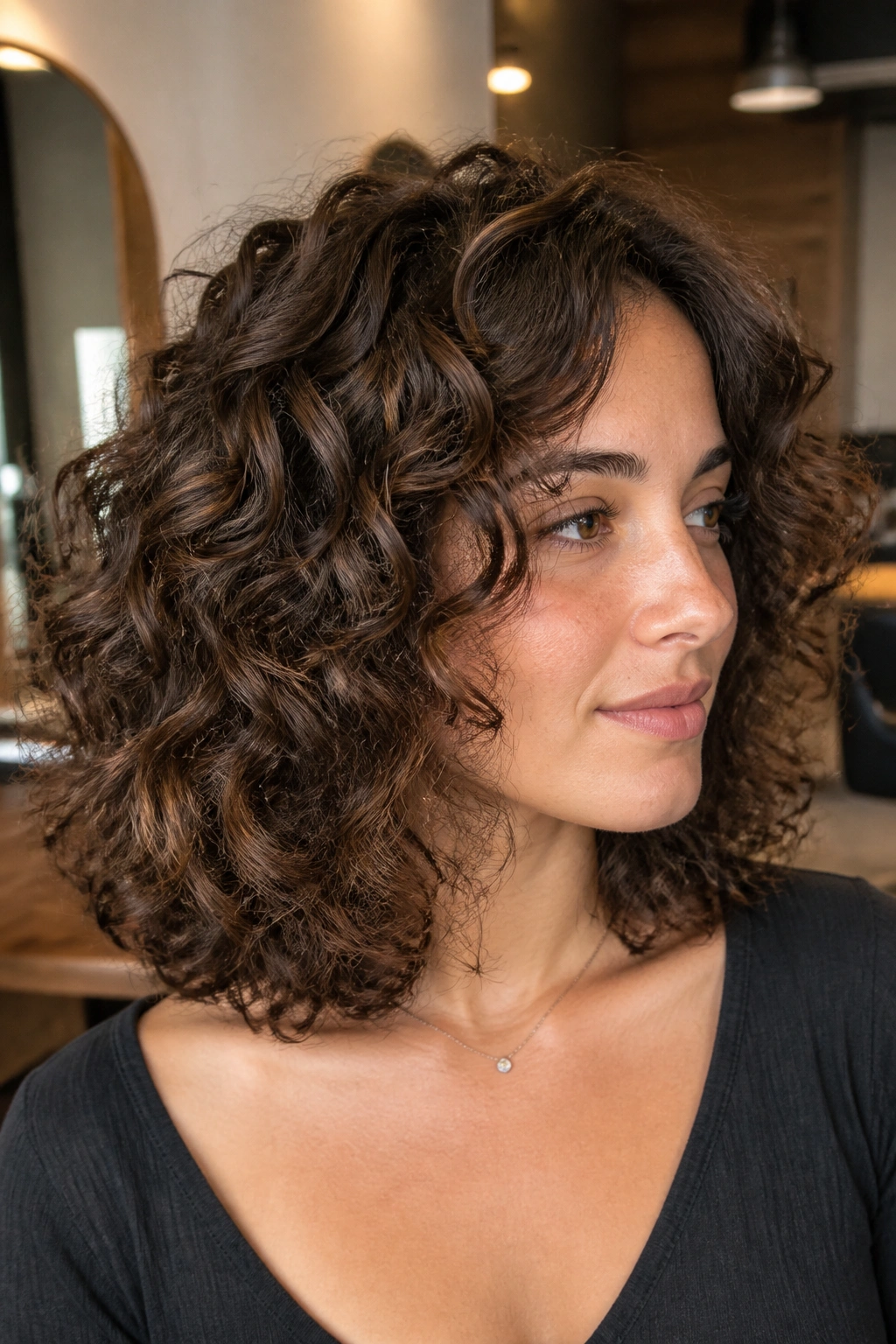
Thick curly hair needs weight removed in the right place, not everywhere. That is where internal layers earn their keep. Instead of carving up the outer line, the stylist takes bulk out from inside the cut so the lob sits lighter and moves better.
If your medium-length curls feel wide through the mids but you still want a clean outline, this is the shape to ask for. The outside stays readable. The inside gets air. That difference matters a lot when you have a lot of hair and not much patience.
Ask for these details
- Keep the perimeter fairly full so the shape does not look frayed
- Remove bulk from the interior with long, controlled layers
- Avoid aggressive thinning shears unless your stylist knows exactly how your curls react
- Check the side profile before leaving the chair, because thick hair can hide extra volume there
The best thing about internal layers is how they change the feel of the haircut without shouting about it. The lob still looks like a lob. It just stops standing away from the head like it has its own opinions.
Dense curls can be stubborn. This cut gives them fewer reasons to fight.
12. Low-Layer Curly Lob for Fine Hair
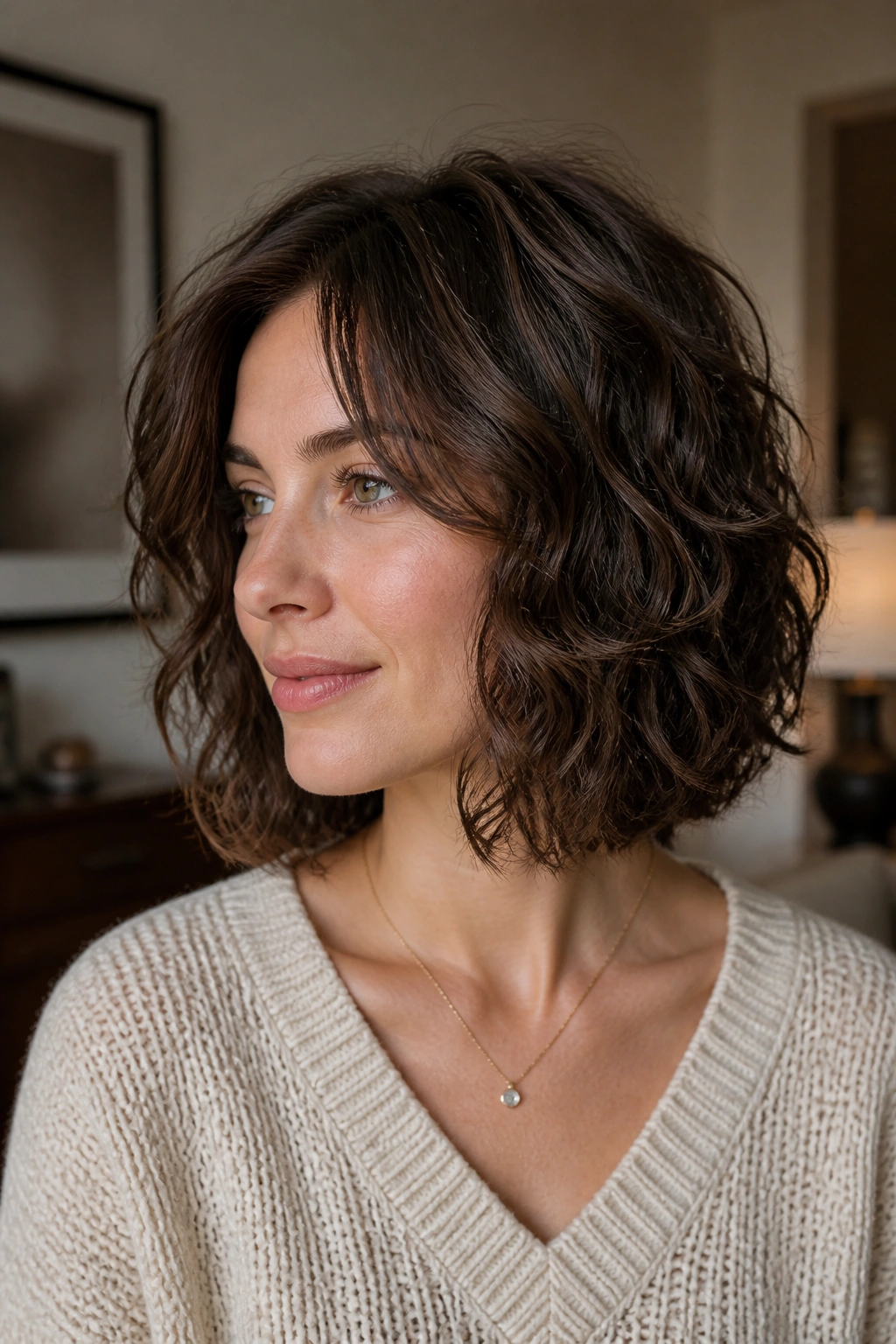
Fine curls usually look better with fewer layers than people expect. Too much layering can make the ends look see-through, which leaves the whole cut feeling thin even when the hair is healthy.
A low-layer curly lob keeps the bottom line strong and uses only a little shaping near the front or crown. That gives the hair enough structure to hold a clean shape while still allowing the curl pattern to move. It is a smarter choice than a shag if your goal is fullness.
I’d be careful with heavy thinning here. Fine hair can lose body fast, and once the weight is gone, there is no product that can fully fake it back. A blunt-ish outline with a few soft pieces around the face usually does more for this hair type than a pile of short layers ever will.
This is one of those cuts that looks better the simpler it is. The texture does the work; the haircut just stays out of the way.
13. Tapered Curly Lob for Tighter Curls
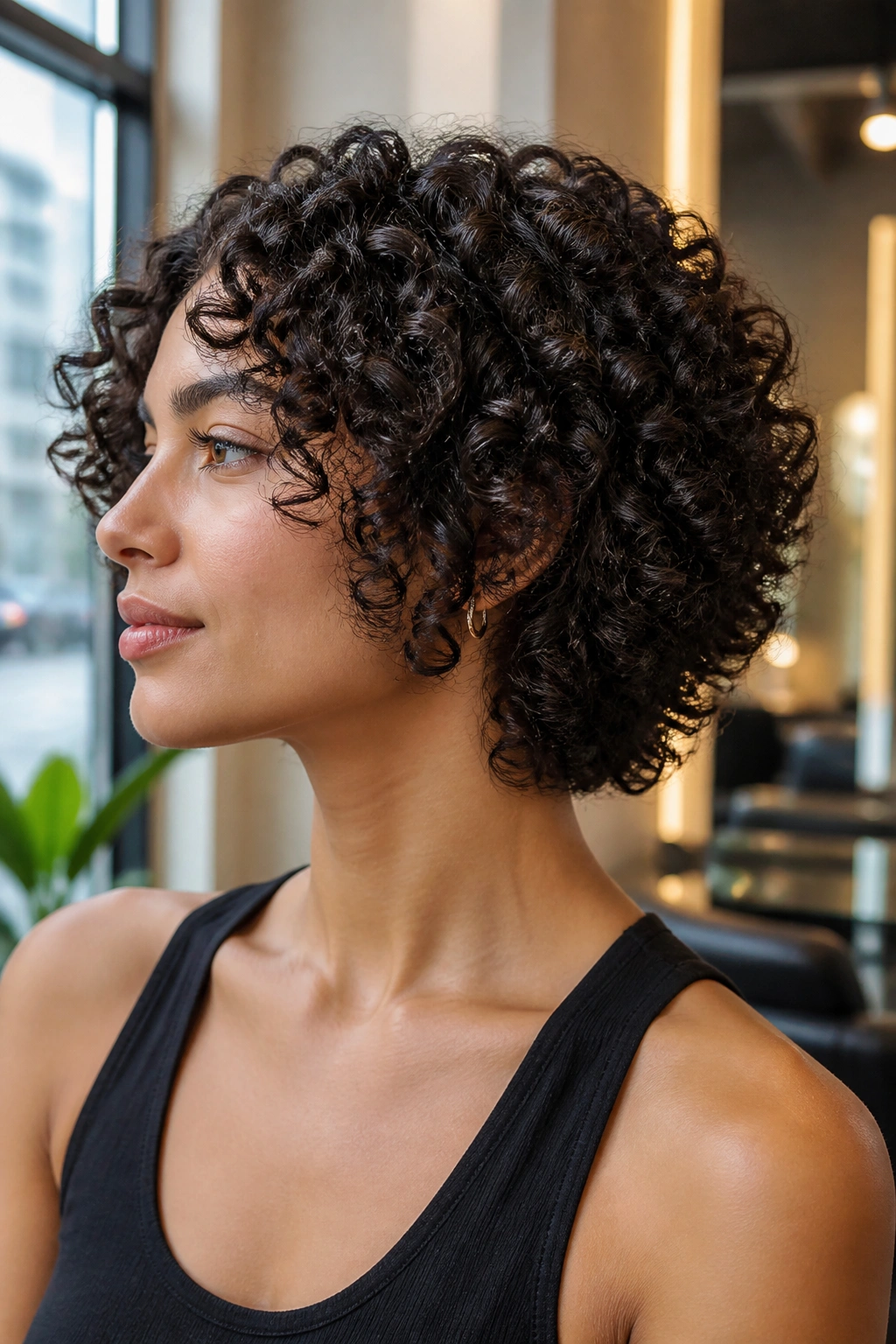
What does a tapered curly lob actually solve? Mostly shape control. Tight curls can build width fast around the sides and bottom, and a gentle taper helps the cut stay balanced instead of turning round in the wrong way.
Why the neckline matters
The nape can get bulky if the cut ends at one flat, heavy line. A tapered finish narrows that area so the curls sit closer to the neck, while the sides keep enough length to show off the curl pattern. That contrast keeps the lob from looking heavy at the base.
- Best for tighter curls with good density
- Helps the cut sit neatly against the neck and shoulders
- Keeps the sides from flaring too wide
- Works well with a rounded or slightly forward shape
I like this on medium hair that needs shape more than length. It gives definition without forcing the curls into a hard-edged bob. The taper also makes the grow-out look softer, which is handy because very tight curls can shift shape quickly between trims.
A tiny detail makes a big difference here: the stylist should check the cut from the back while the curls are dry. Wet hair can hide too much.
14. Asymmetrical Curly Lob
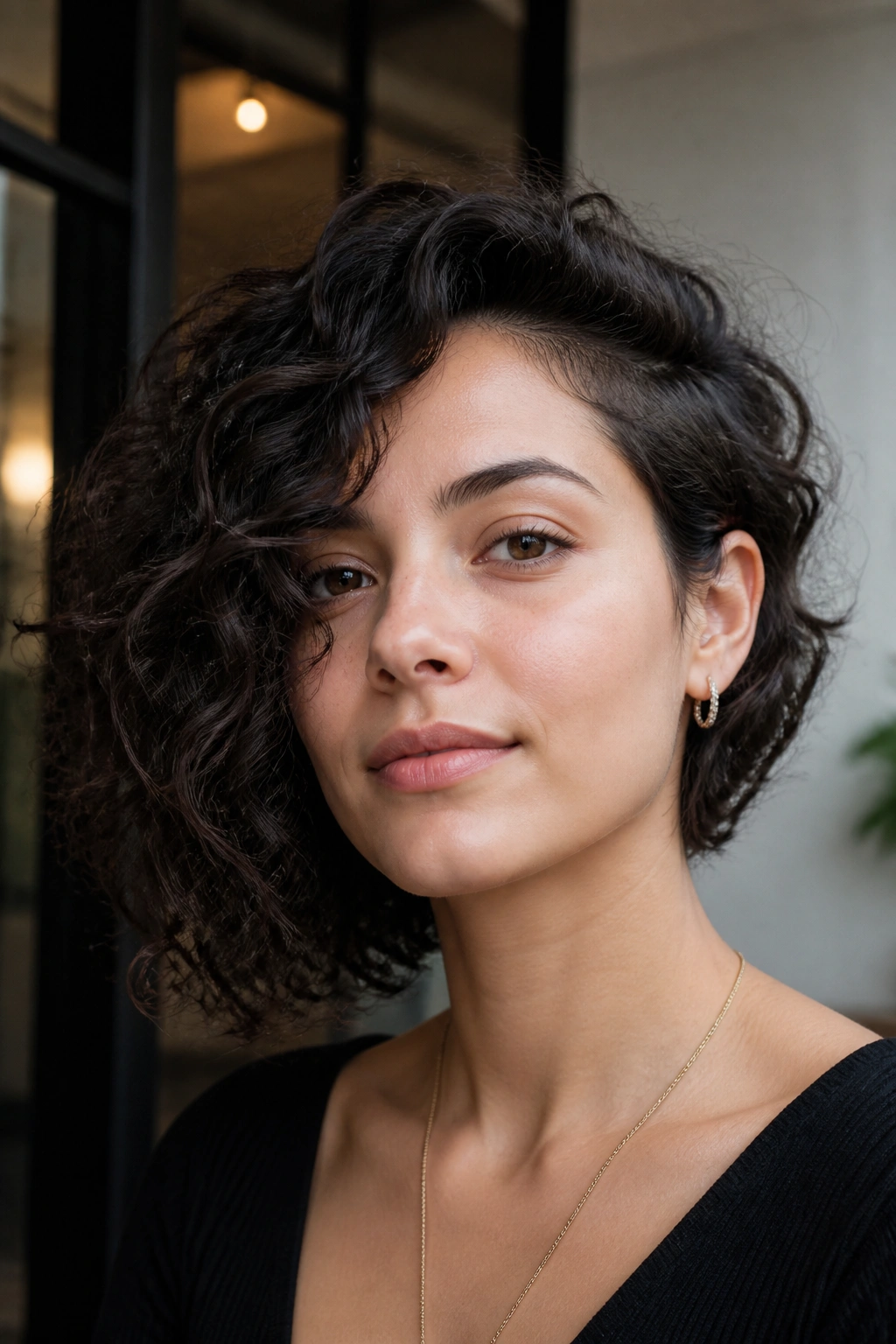
An asymmetrical curly lob is the boldest cut in this group, but it does not have to look wild. A difference of even 1 to 2 inches between the two sides is enough to create movement without making the haircut feel theatrical.
This cut works well if your curls already fall unevenly. Rather than fighting that, the asymmetry uses it. One side can skim the jaw or collarbone while the other sits a bit shorter, which gives the silhouette some motion every time you turn your head.
It’s a nice choice for medium hair that needs personality more than simplicity. The asymmetry can sharpen the face, especially if you wear glasses or like one side tucked behind the ear. It also photographs in a way that makes the curl pattern look more layered, even when the haircut itself is not overloaded with layers.
The downside is maintenance. The difference in length shows sooner as the hair grows, and that can make the cut feel less tidy after a while. If you like a haircut that stays neat with very little upkeep, skip this one. If you like shape and a little edge, it’s a strong option.
15. Low-Maintenance Wash-and-Go Curly Lob
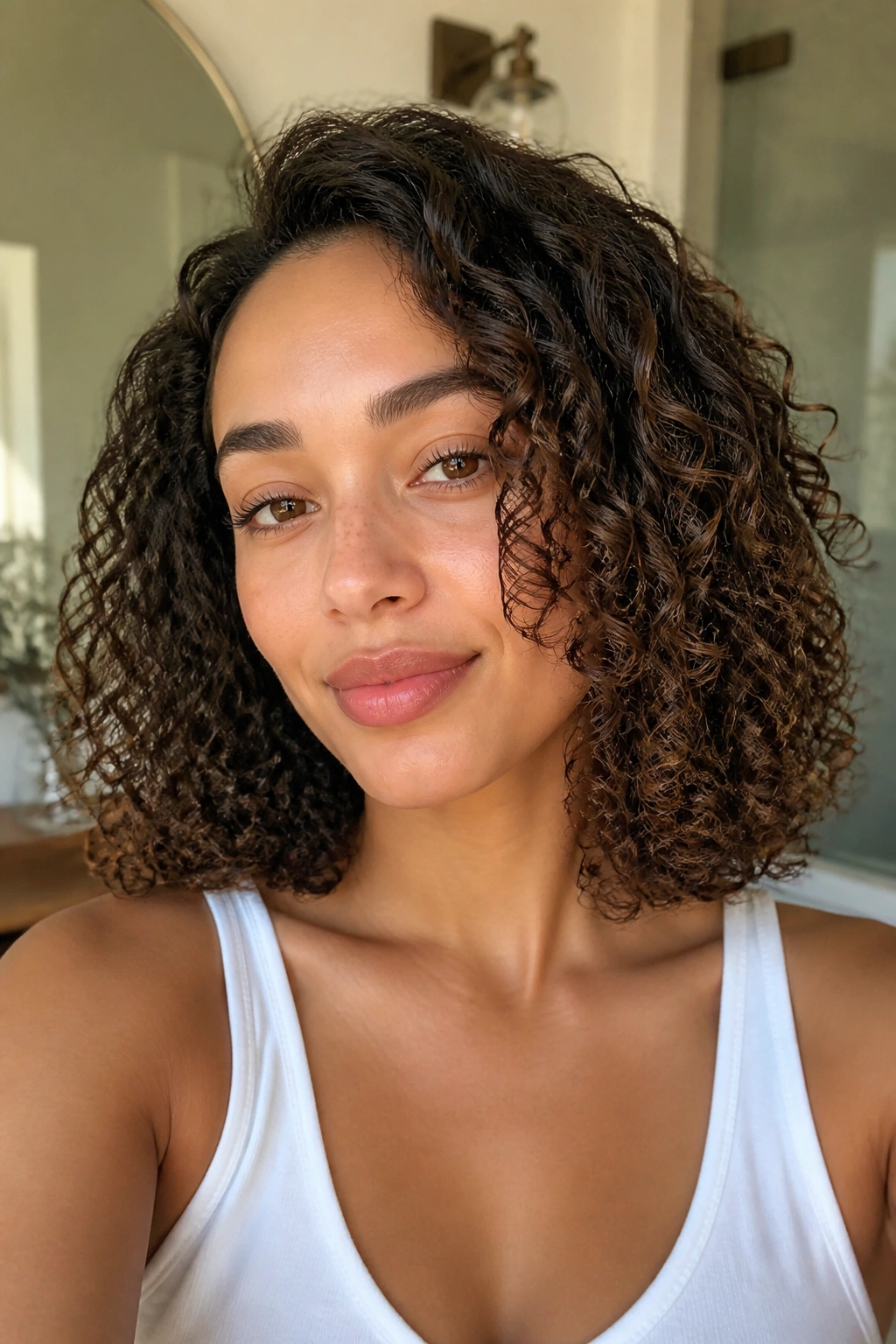
A wash-and-go curly lob is the version I’d point to first for anyone who wants a haircut that behaves on ordinary mornings. It keeps the shape simple, the layers soft, and the outline easy to air-dry without a long styling ritual.
This cut is usually built around a balanced length near the collarbone, with gentle face-framing pieces and just enough internal shaping to stop the bottom from feeling heavy. Nothing about it screams for attention. That’s the charm. It lets the curl pattern take over without asking you to manage six different layers before breakfast.
I like this option for people who live in the real world, which is most of us. You may diffuse on special days, air-dry on busy ones, and twist a few front pieces with your fingers when they dry oddly. Fine. The haircut should still hold together. A good wash-and-go lob does.
If you’re showing a stylist photos, bring ones that match your curl density, not just your curl type. That matters. A loose 2C lob and a dense 3B lob can look like cousins in pictures, but they do not behave the same once the water hits them. Pick the shape that fits your routine, your shrinkage, and the amount of time you’re willing to spend with a diffuser in your hand. That’s the part that decides whether the cut becomes a favorite or just another salon experiment.
