



A good asymmetric bob changes the whole mood of a haircut. One side grazes the jaw, the other side slips a little longer, and suddenly the face looks sharper, softer, or more balanced depending on how the cut is built.
That’s the part people miss. An uneven bob is not just a styling trick or a little haircut drama. Done well, it shifts where the eye lands first. It can slim a round face, soften a strong chin, bring out cheekbones, or make fine hair look fuller because the shape carries so much of the work.
A bad one looks accidental. A good one looks intentional in that quietly expensive way haircuts sometimes do. The difference usually comes down to where the shortest piece hits, how the front angles toward the collarbone, and whether the stylist leaves enough movement around the face to keep the cut from feeling severe.
A good asymmetric bob does that.
1. The Chin-Skimming Asymmetric Bob
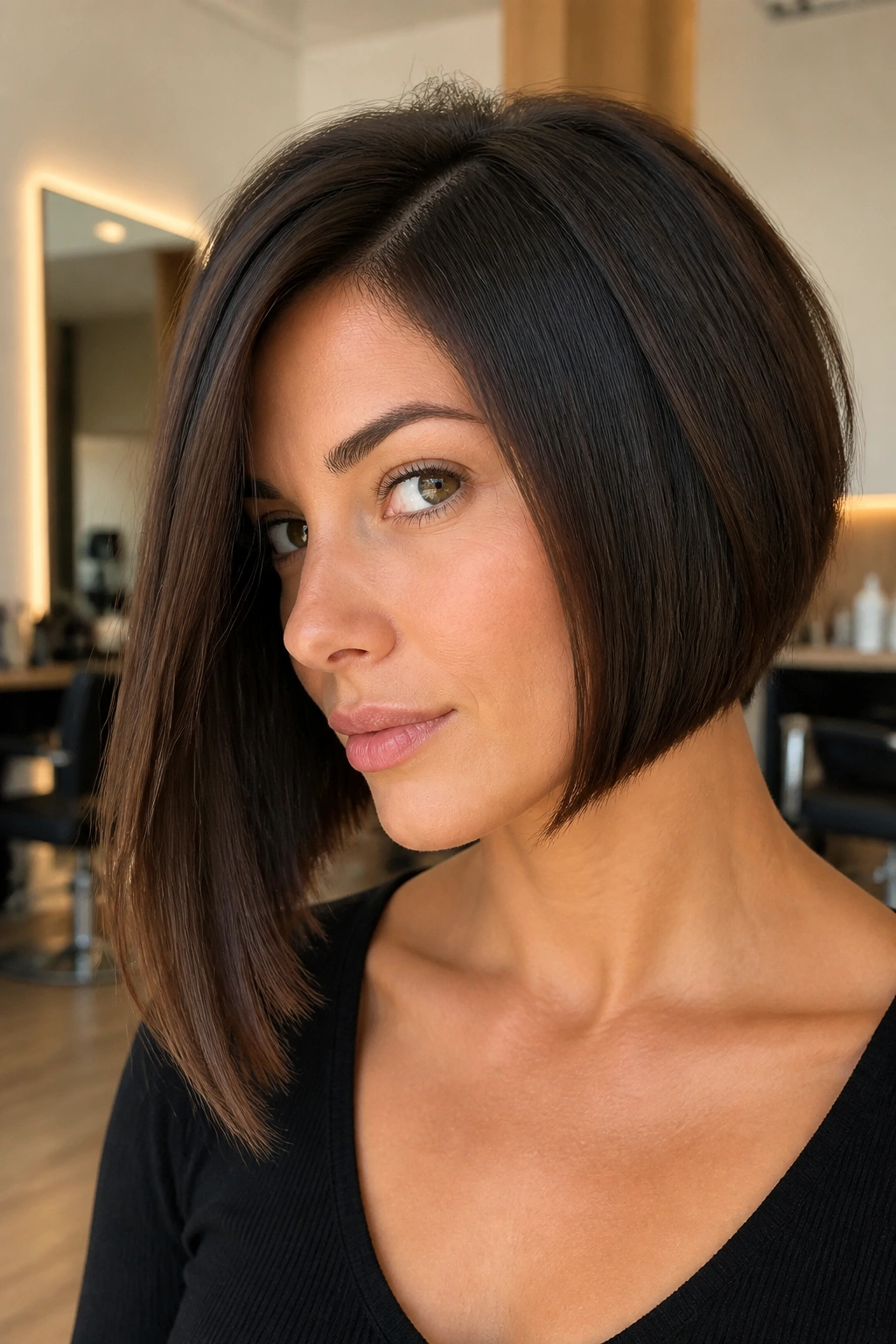
Picture the version that sits right at the jaw on one side and drops just below the chin on the other. It’s one of the easiest asymmetric bob haircuts to wear because the difference is visible without being fussy, and it gives the face a clean frame almost immediately.
Why it works
The chin is a useful anchor point. When the shorter side lands there, it sharpens the lower face; when the longer side slides past it, the line feels softer and more relaxed.
This cut is especially nice if you want movement near the cheeks without committing to a shaggy finish. Ask for a soft bevel at the ends so the bob curves inward a little instead of jutting out.
- Best for oval, heart, and soft square faces
- Works well on straight or slightly wavy hair
- Easy to style with a 1-inch round brush and light smoothing cream
- Looks good tucked on the short side and loose on the long side
My favorite part: it looks polished even when you do almost nothing to it.
2. The Jaw-Length Side Sweep
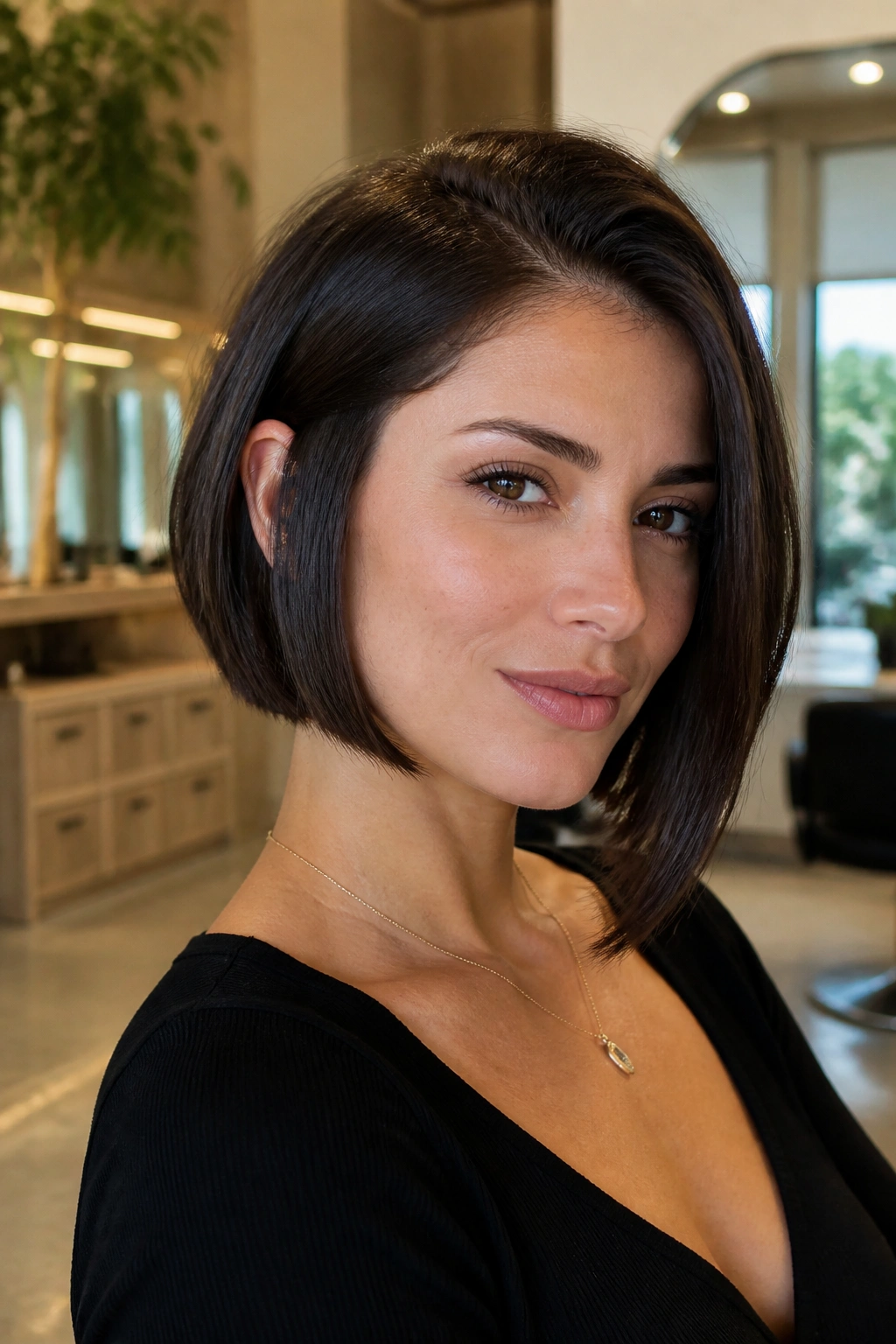
This one is blunt in the back, then angles down toward the front so the longer side sits right around the jaw. It’s a sharp haircut, but not a harsh one. The side sweep keeps it from looking boxy.
Bold cuts like this do a lot of facial framing on their own. If your hair tends to fall flat around the sides, the angle gives you a stronger outline, which makes the whole face look more defined.
You do need a stylist who knows how to balance the weight. If the front is too long and the back too short, the cut can feel disconnected. If the line is clean, though, this is one of those bobs that looks even better after a day or two of wear.
A little serum on the ends helps. So does a deep side part. It exaggerates the asymmetry and makes the haircut look deliberate instead of merely uneven.
3. The Collarbone Bob with Longer Front Pieces
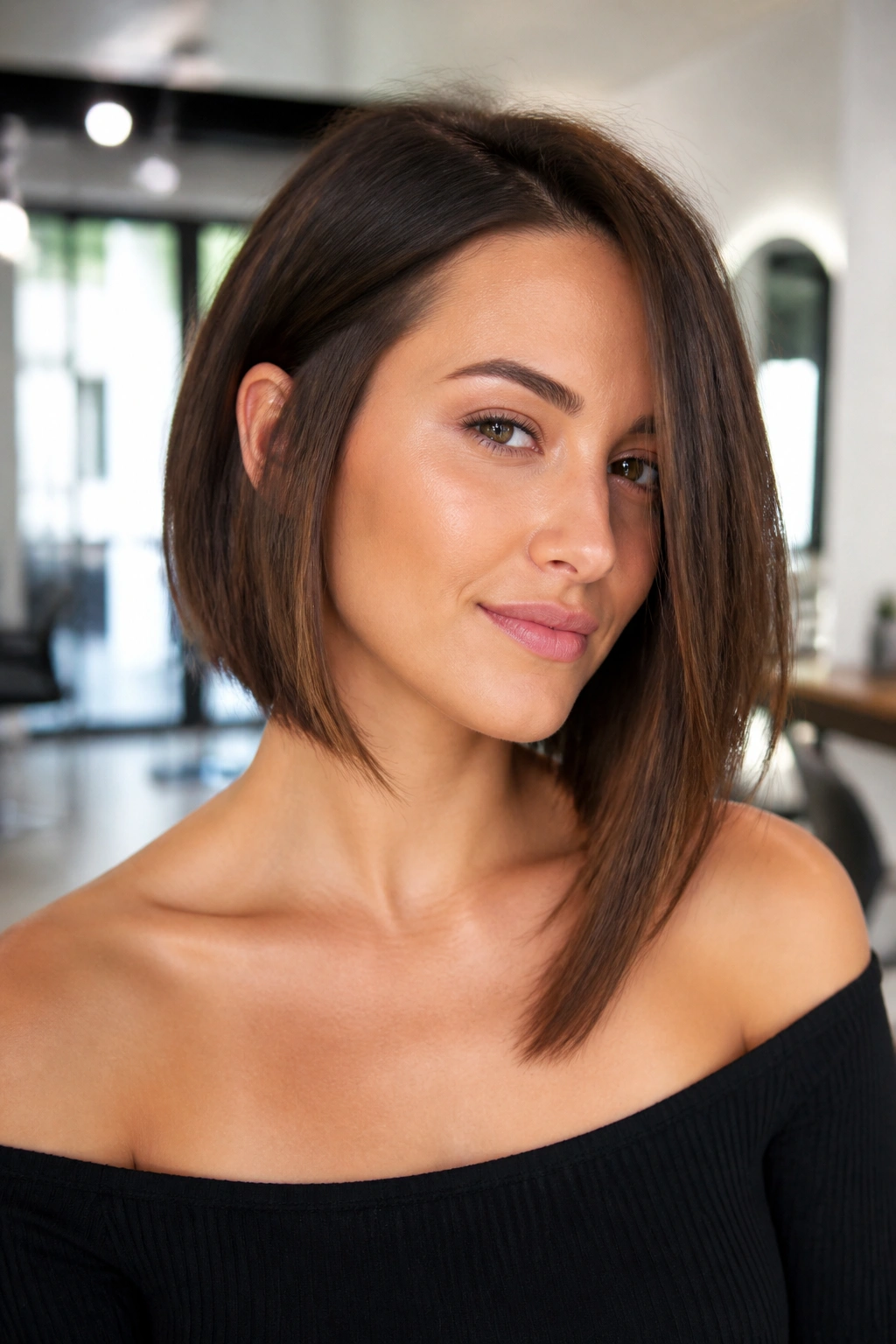
Ever notice how some bobs feel too short the second you leave the salon? This one avoids that problem. The back sits near the nape, while the front pieces drop toward the collarbone, so the haircut keeps some swing and a little length around the face.
What makes it different
The collarbone length gives you room to tuck, wave, or flatten one side behind the ear without losing the overall shape. That matters more than people think. A bob that sits too high can make the jaw look wider; this one tends to elongate the neck instead.
It also gives a nice soft frame for people with stronger cheekbones. The longer front pieces draw the eye downward, which keeps the cut from feeling top-heavy.
How to wear it
- Blow-dry with a paddle brush for a smooth finish
- Curl only the front pieces under slightly for a soft bend
- Use a light hold spray if your hair slips out of shape by midday
- Ask for one side to fall 1 to 1.5 inches longer than the other for visible asymmetry
It’s the bob I’d hand to someone who wants shape, but not a haircut that feels precious.
4. The Deep Side-Part Sleek Bob
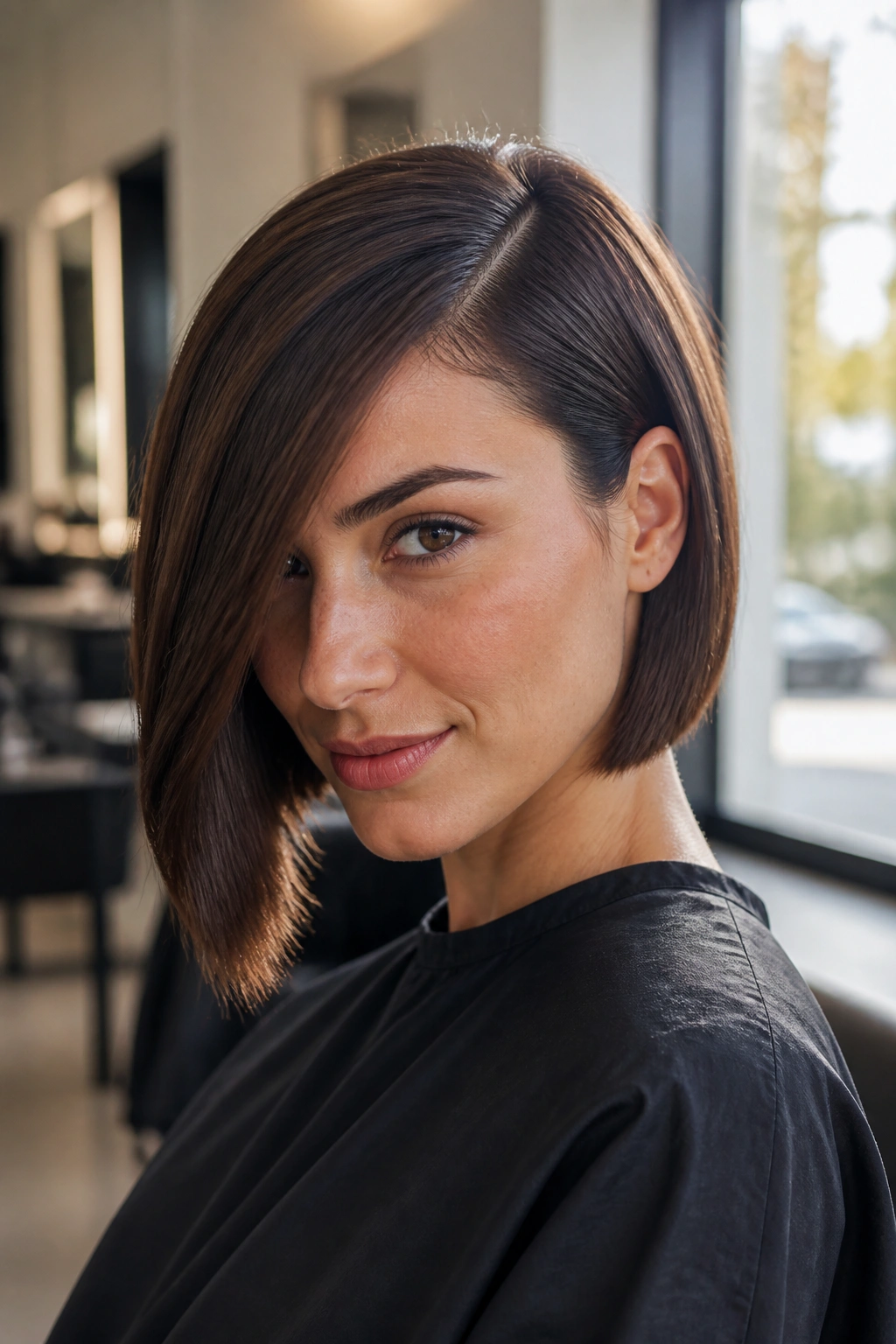
A deep side part changes everything. Seriously. The haircut itself may not be wildly uneven, but once the part shifts far to one side, the asymmetry wakes up and the face gets framed in a much more dramatic way.
This version works best when the ends are crisp and the surface is smooth. Think flat ironed, tucked, and glossy—not stiff, not shellacked, just controlled. The longer side drapes across the cheek, while the shorter side opens up the forehead and lifts the whole look.
I like this on straight hair because the line stays clear. On wavy hair, you can still make it work, but the texture needs some discipline from a round brush or a smoothing blowout.
A clean side part also helps if one side of your face feels stronger than the other. The eye lands where you want it to land. That’s the real trick.
5. The Textured French Bob with an Uneven Edge

The French bob usually has that short, cheeky shape that sits around the mouth or jaw. Add asymmetry, and it stops feeling sweet in a predictable way and starts feeling a little cooler, a little less polished, which is exactly why I like it.
The shape that makes it special
One side is kept close to the cheekbone, while the other side extends just enough to break the symmetry. The ends are often chipped or lightly razored, so the line doesn’t look heavy.
A small bend at the ends helps a lot here. You don’t want a puffy triangle. You want the hair to curve softly inward and sit close to the face.
Quick styling notes
- Use a salt spray only at the roots if you want grit
- Add a pea-sized amount of cream through the mids
- Dry with fingers first, then refine with a small round brush
- Leave the fringe slightly imperfect; that’s the point
This cut is good for people who like a face-framing bob that feels a little undone on purpose.
6. The Rounded Bob for Softer Jawlines
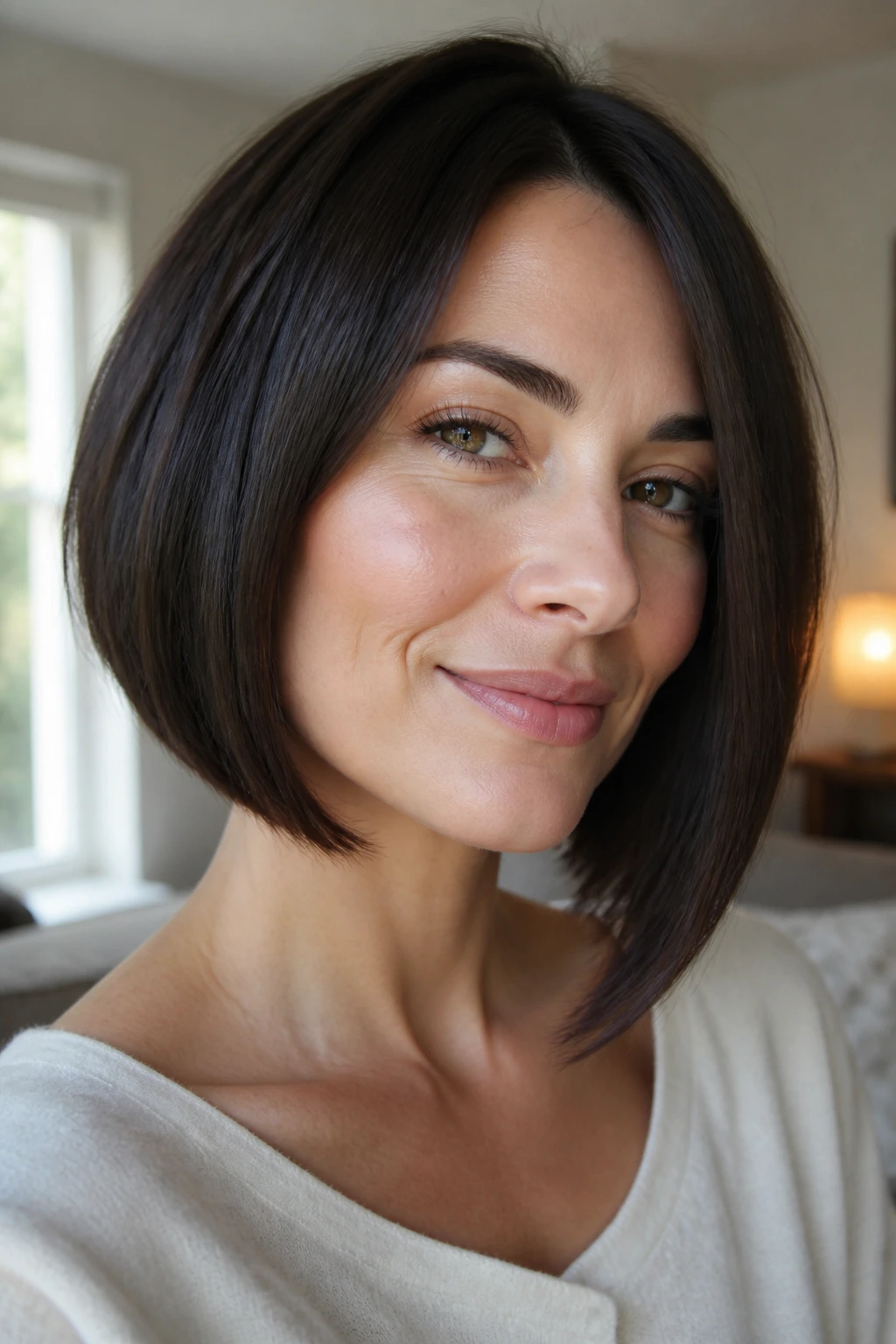
A round face often needs a little vertical pull, and that’s where this cut earns its keep. The shorter side opens near the cheek, while the longer side drops below the chin, creating a line that makes the face look longer and slimmer.
Unlike a blunt bob that ends exactly at the widest part of the face, this shape keeps the eye moving. That movement matters. It prevents the haircut from widening the cheeks, which is the one mistake I see over and over with bobs on round faces.
The ends should be curved, not flared. A tiny inward bevel at the front is enough. If the stylist layers too much, the cut can puff out around the cheek and lose the clean frame you wanted in the first place.
Best of all, it works with a little wave. You do not need poker-straight hair for this. You just need a front angle that respects the jawline.
7. The Wavy Lob-Bob Hybrid

If you live somewhere between a bob and a lob, this is your lane. The back sits shorter, the front stays longer, and the wave pattern adds softness around the face so the asymmetry feels easy rather than severe.
One reason this cut works so well is that waves break up the line. A flat asymmetric bob can look architectural, which is great if you like that. The wavy version feels more casual and has a bit more bounce when you turn your head.
A shoulder-skimming front is useful if you wear glasses or have a wider forehead. The longer pieces can drop around the temples and give the face a gentler outline.
Best styling move: twist the front sections around a curling wand in alternating directions, then shake them out with your fingers. That keeps the look loose, not overdone.
8. The Blunt Back, Long Front Bob
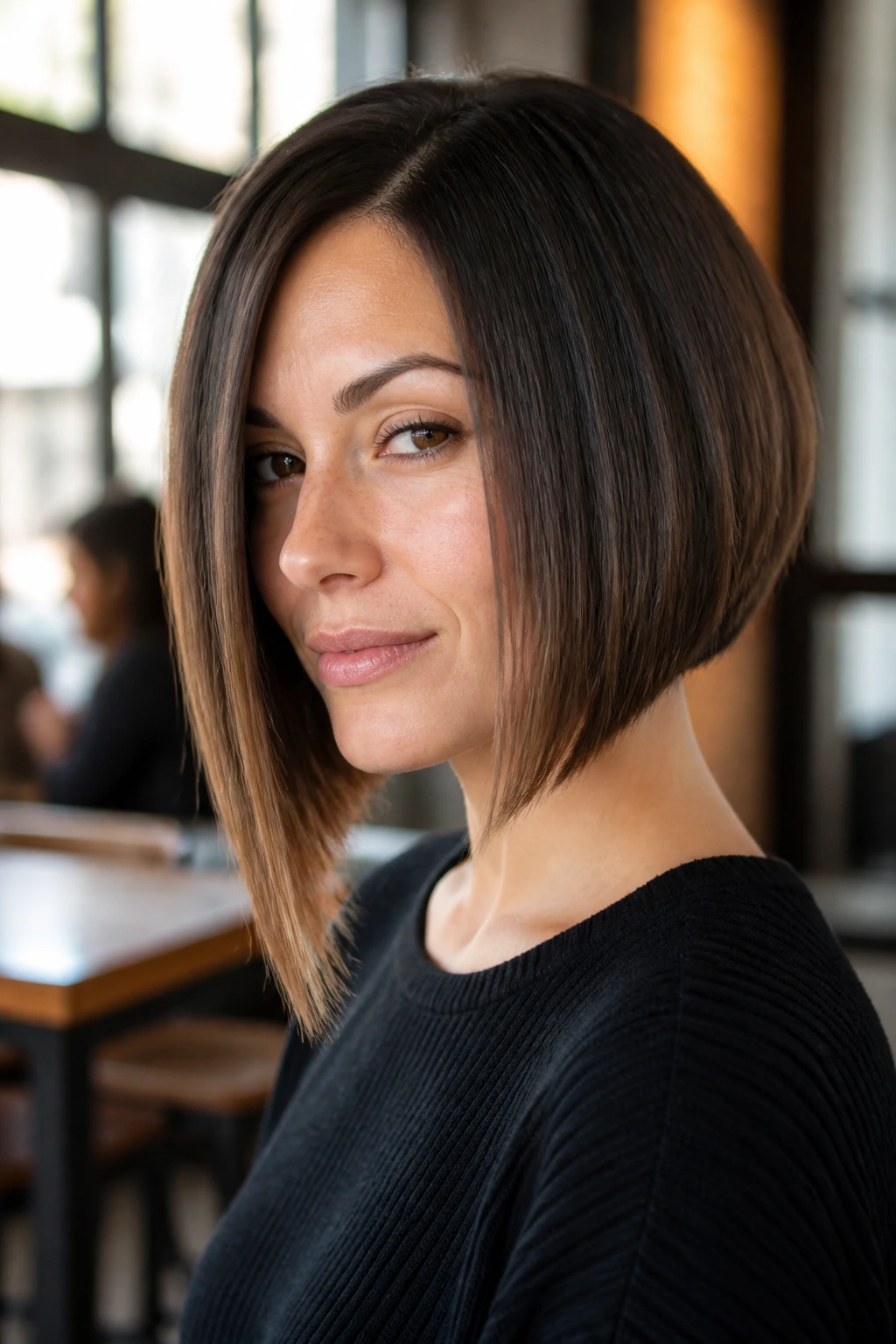
This cut has attitude. The back is blunt and compact, while the front stretches forward in long, clean pieces that frame the cheeks and jaw. It’s a strong shape, and I mean that in the best way.
The contrast is what makes it interesting. Without that sharp difference between back and front, the haircut would just be a standard angled bob. With it, the face gets a built-in frame that feels almost like contouring with scissors.
You’ll want straight or slightly bent hair for this one, because the shape is part of the appeal. Too much texture can blur the line. A smooth blowout keeps the front pieces swinging in the right way.
And yes, it grows out nicely. That matters. A lot of sharp bobs look good only on day one. This one keeps some life as it settles.
9. The Curly Asymmetric Bob
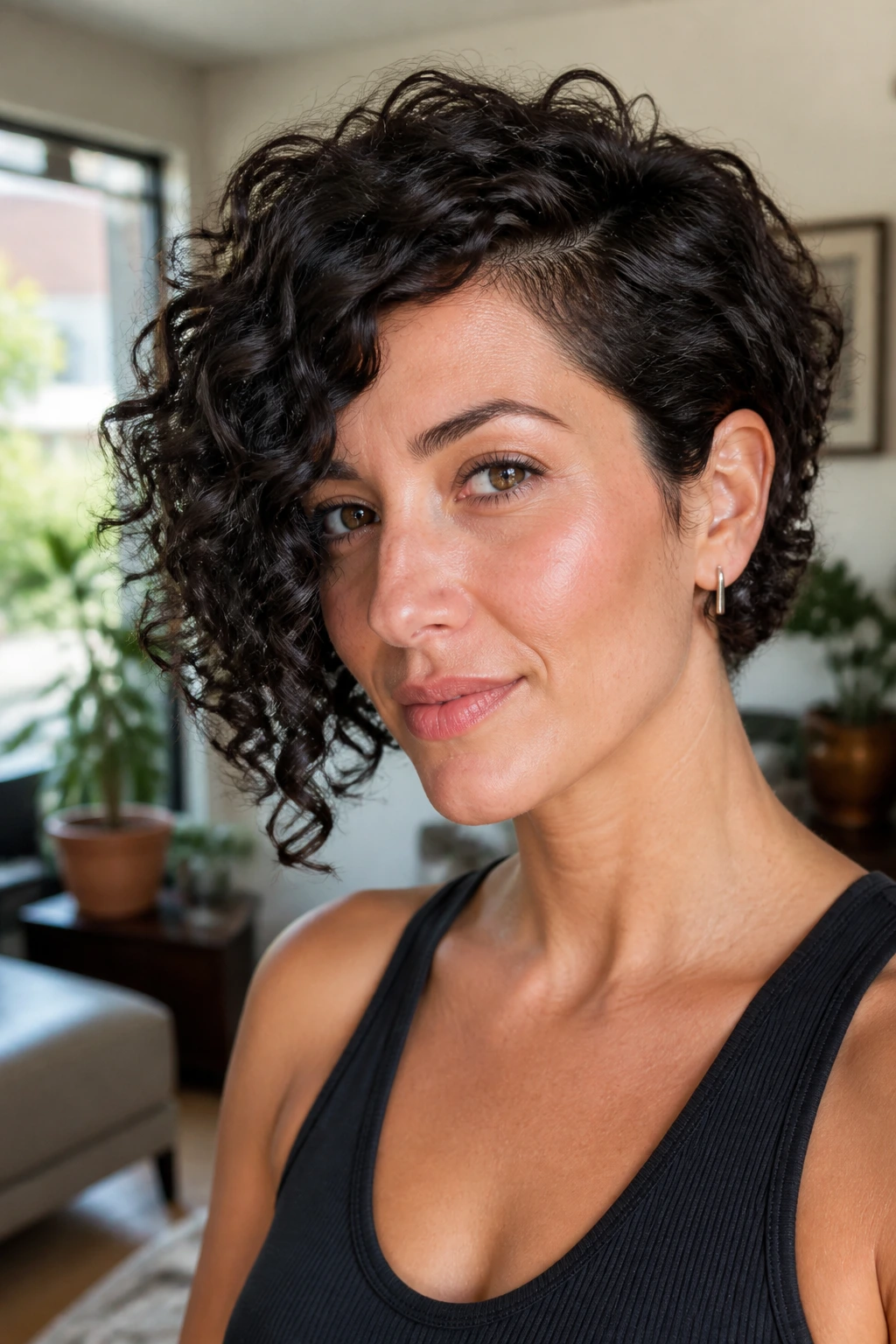
Curly hair and asymmetry are a better match than many people assume. The different curl lengths create movement, and movement is exactly what makes the face-framing pieces feel alive instead of static.
How to shape it
The shorter side should usually land somewhere between the cheekbone and the jaw, while the longer side can hang lower without looking heavy. The trick is leaving enough length for curl shrinkage. If you cut too aggressively, the bob can spring up more than you expected.
A good curly asymmetric bob is usually cut dry or mostly dry, because curl pattern matters more than raw length. Wet curls lie.
What to ask for
- Balanced layers that follow the curl pattern
- A longer front on the side where you want more frame
- Soft shaping around the cheekbones
- No thick shelf of weight at the bottom
This is one of those cuts that looks expensive when it’s shaped well and messy when it isn’t. There’s not much middle ground.
10. The Micro Bob with One Longer Side

Short hair can still frame the face. Actually, it can frame it more aggressively because there’s less hair competing for space. A micro asymmetric bob usually sits somewhere between the ear and the jaw, with one side left a little longer to soften the effect.
That longer side is the whole game. It stops the cut from reading as severe, and it gives your features a place to rest. Without it, the micro length can feel blunt and almost helmet-like.
I like this on people with delicate features or strong brows. The haircut leaves the face exposed, so the asymmetry has to do the framing work. Add a side part and a tiny bit of tuck behind one ear, and the shape becomes much more interesting.
Not for everyone. If you want low-contrast, this is not your cut. If you want something crisp and clean that shows off the neck and jaw, it’s a sharp choice.
11. The Choppy Razor-Cut Bob
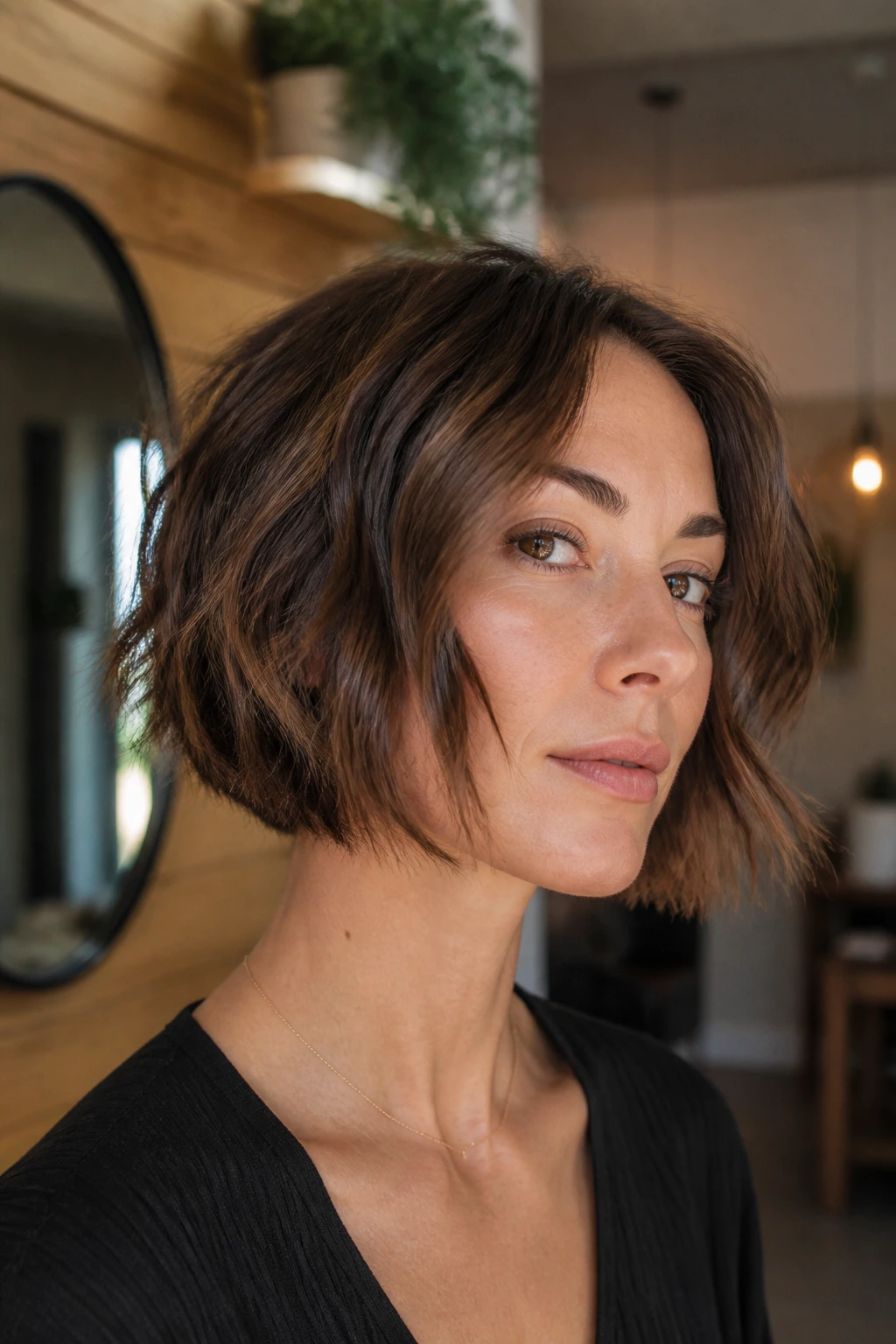
Razor-cut hair has a different feel. The ends are softer, a little airy, and that makes this asymmetric bob look less hard-edged than a blunt cut. If your hair is thick or tends to look heavy in a straight line, this can be a relief.
The face-framing pieces should be kept a touch longer than the back, but the magic is in the texture. The razor gives you that broken edge that moves when you turn your head. It’s not choppy in a messy way. It’s choppy in a lived-in way.
Best for hair that resists shape
- Medium to thick straight hair
- Slight wave that needs light structure
- People who hate a stiff, round bob
- Anyone who wants motion without a lot of layering
A sea salt spray or matte texture paste can help, but use a small amount. Too much, and the ends look dry instead of airy.
12. The Asymmetric Bob with Curtain Fringe

This is one of my favorites, partly because it solves a common problem: some asymmetric bobs frame the lower face well but leave the forehead feeling a little bare. A curtain fringe fixes that.
The fringe softens the top of the haircut, while the longer side pieces keep the line moving downward. That combination can be especially flattering on longer faces because it adds width at the cheek area and shortens the look of the forehead a bit.
The fringe should blend, not sit like a separate piece. If it’s cut too bluntly, it fights the asymmetry instead of working with it. A soft center opening keeps the whole haircut relaxed.
You can wear this one sleek or slightly messy. Either way, the face gets the frame from two directions—through the fringe and through the uneven bob line.
13. The Stacked Asymmetric Bob
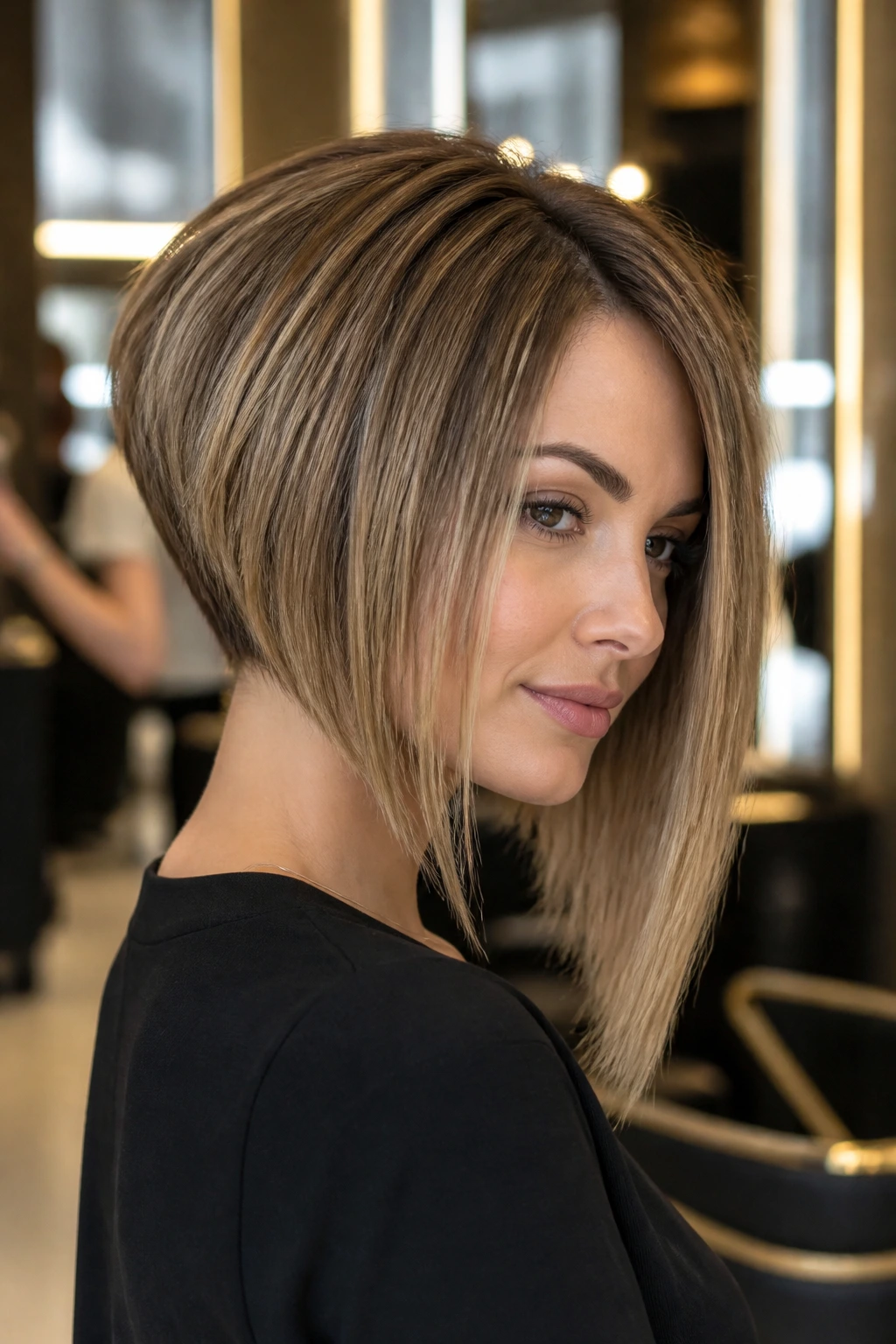
A stacked bob builds volume through the back, which is useful if your hair collapses at the crown. Add asymmetry to that shape, and you get height in the back plus length in the front, which is a strong combo for framing the face and lifting the profile.
The cut is all about angle. The nape is shorter, often visibly shorter, and the front pieces angle down enough to keep the look balanced. If the stack is too high, the haircut can feel dated. If it’s placed well, it gives you shape without stiffness.
This version works especially well on fine hair because the back stacking creates the illusion of thickness. The front then does the framing, so the haircut has both lift and softness.
A round brush is your friend here. Blow-dry the back upward for volume, then smooth the front down and forward. That contrast is the point.
14. The Glass-Hair Asymmetric Bob
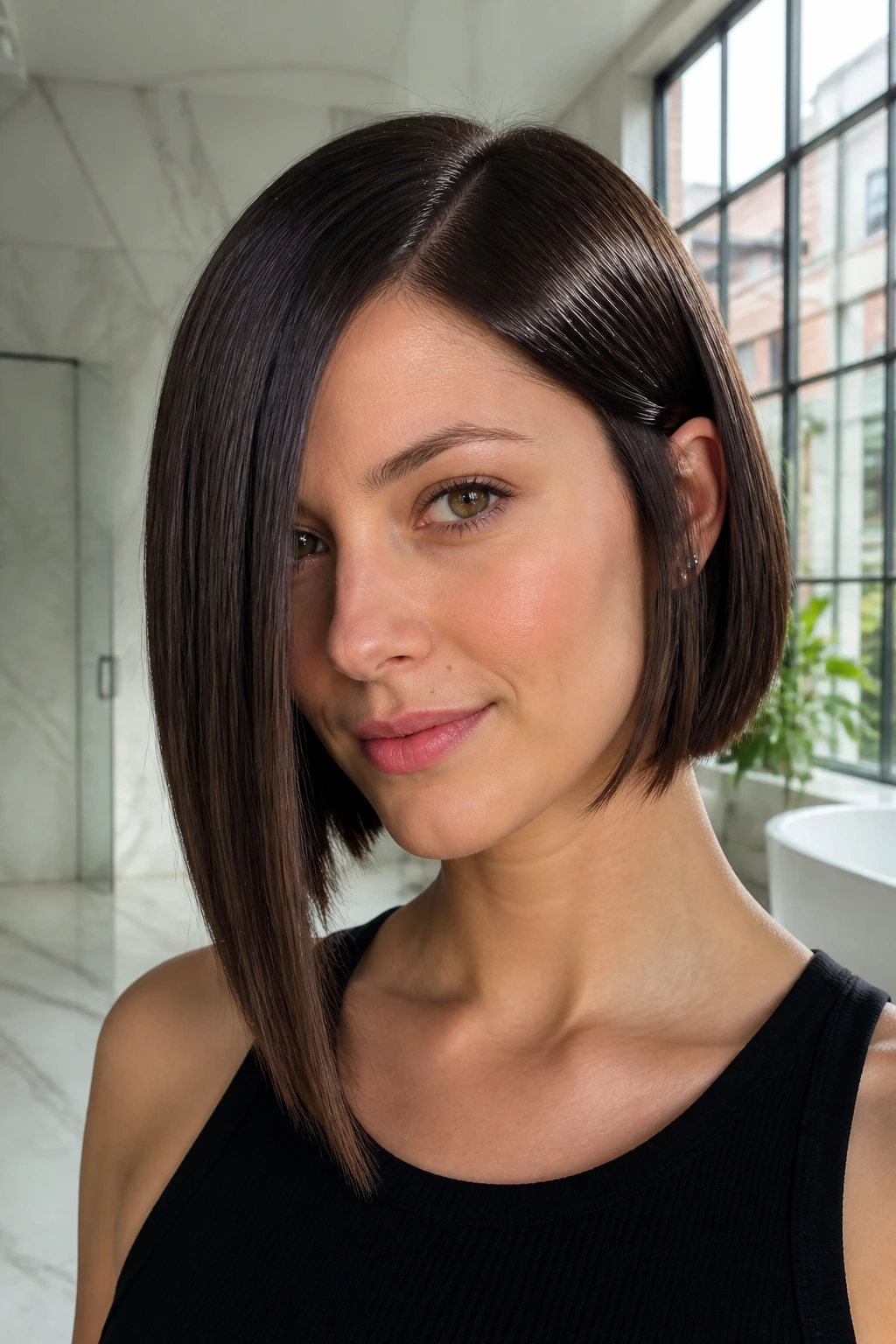
Glass hair is all about shine and a smooth surface. Add an angled shape, and the result looks crisp in a way that’s hard to fake. The line of the cut becomes the main feature, which is why this one is so good for showing off a precise asymmetrical shape.
One side usually falls a little longer at the front, but the cut should still feel sleek from root to end. Any rough layering will show. Any uneven ends will show. That’s part of the appeal, honestly. It rewards precision.
If your hair is naturally frizzy, this can still work, but you’ll need a good blowout, heat protectant, and a flat iron pass on the outer layer. Keep the iron moving. Don’t clamp and drag.
Shiny bobs can look severe if the angle is too sharp. A slight bend at the ends keeps the face looking softer and prevents the haircut from turning boxy.
15. The Soft A-Line Bob
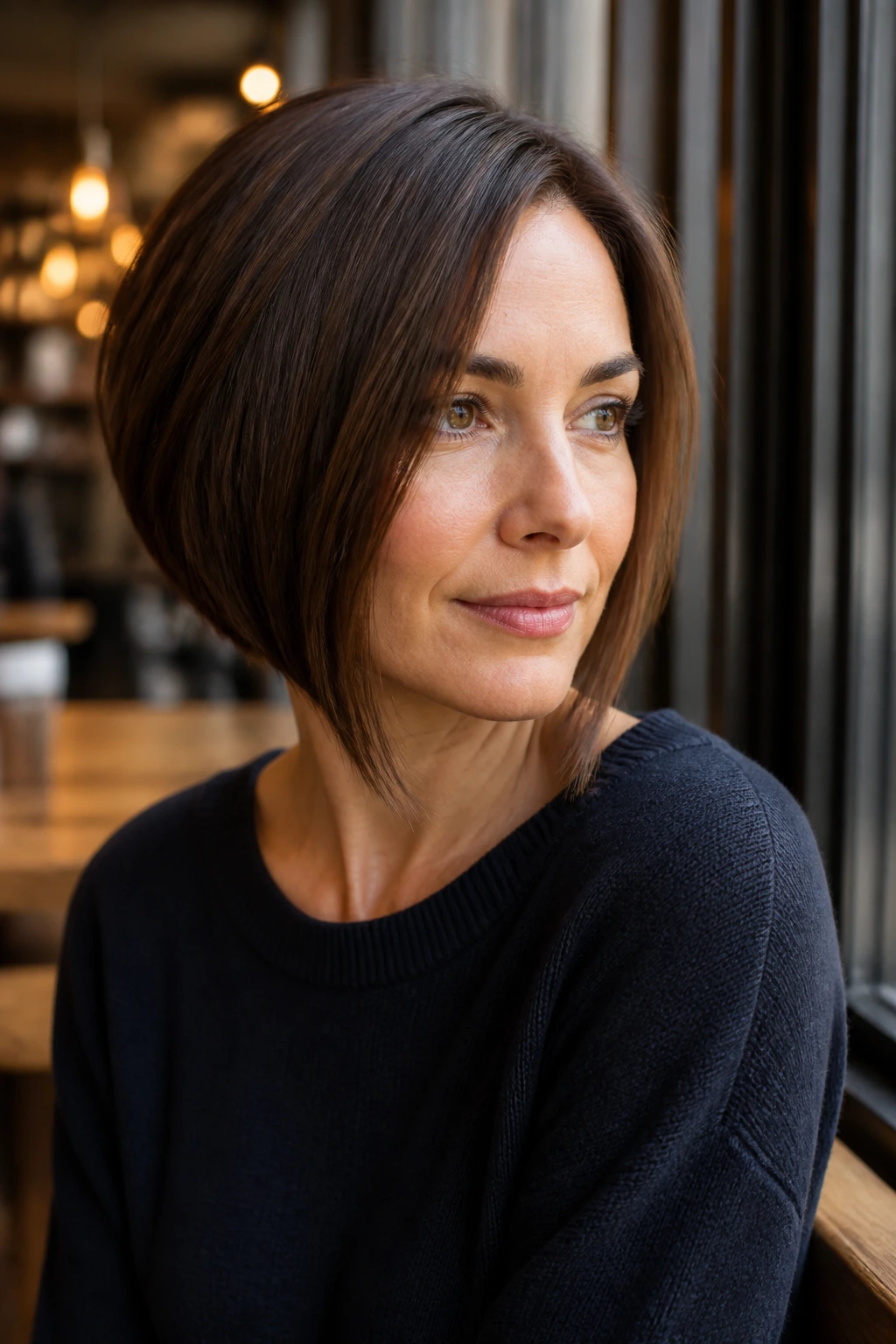
An A-line bob is shorter in back and longer in front, which already creates a nice frame. Add a subtle asymmetry, and the front pieces can angle toward the jaw in a way that feels flattering without shouting for attention.
Why people keep coming back to it
Because it works. The shape hugs the head at the back, then opens around the face. That means it can slim the cheeks, lengthen the neck, and still leave enough hair to tuck behind one ear.
It also grows out gracefully. The line gets a little softer over time, but it does not collapse into something shapeless.
Styling notes
- Use a lightweight blow-dry cream
- Direct the front pieces forward while drying
- Tuck one side behind the ear for a cleaner asymmetrical line
- Add a small wave only at the ends if you want more softness
If you want a first asymmetric bob and you are nervous about going too far, start here.
16. The Wet-Set Sculpted Bob
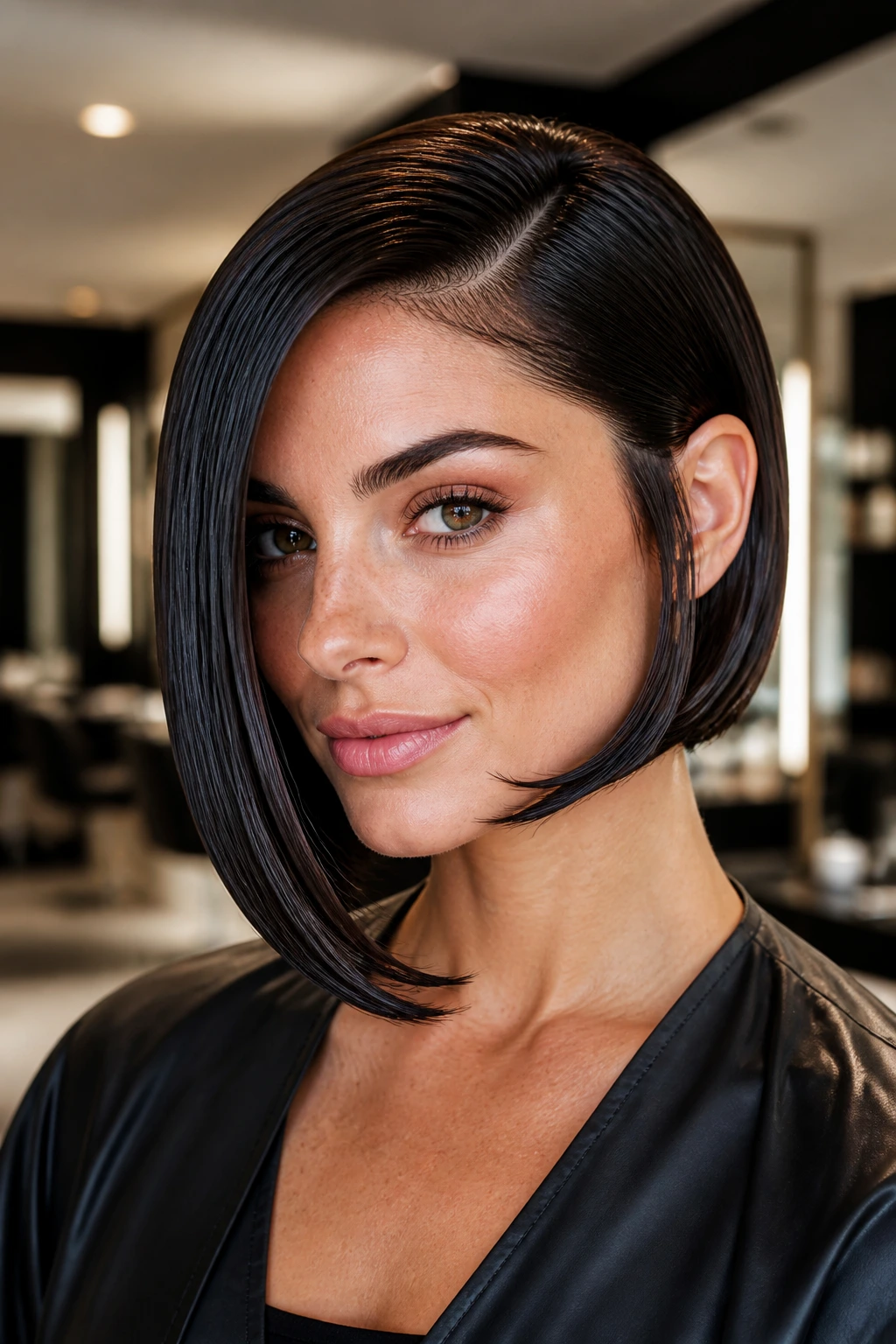
This one is for people who like hair with a little drama. A wet-set bob uses rollers, setting lotion, or a strong blowout technique to hold the shape, then lets the asymmetry read almost like sculpture around the face.
It can feel old-school in the best way. The curved front pieces hug the cheeks, and the shorter side gives the haircut a strong contour. If you have a strong jaw or a broad forehead, that kind of controlled shape can be a real win.
The finish matters a lot. You want the hair to hold a bend, not look crunchy. Use a setting product sparingly, and brush it out once it cools so the shape feels soft.
This isn’t a lazy haircut. It rewards a little effort. But when done well, it has that neat, polished look people notice right away.
17. The Inverted Bob with Face Framing
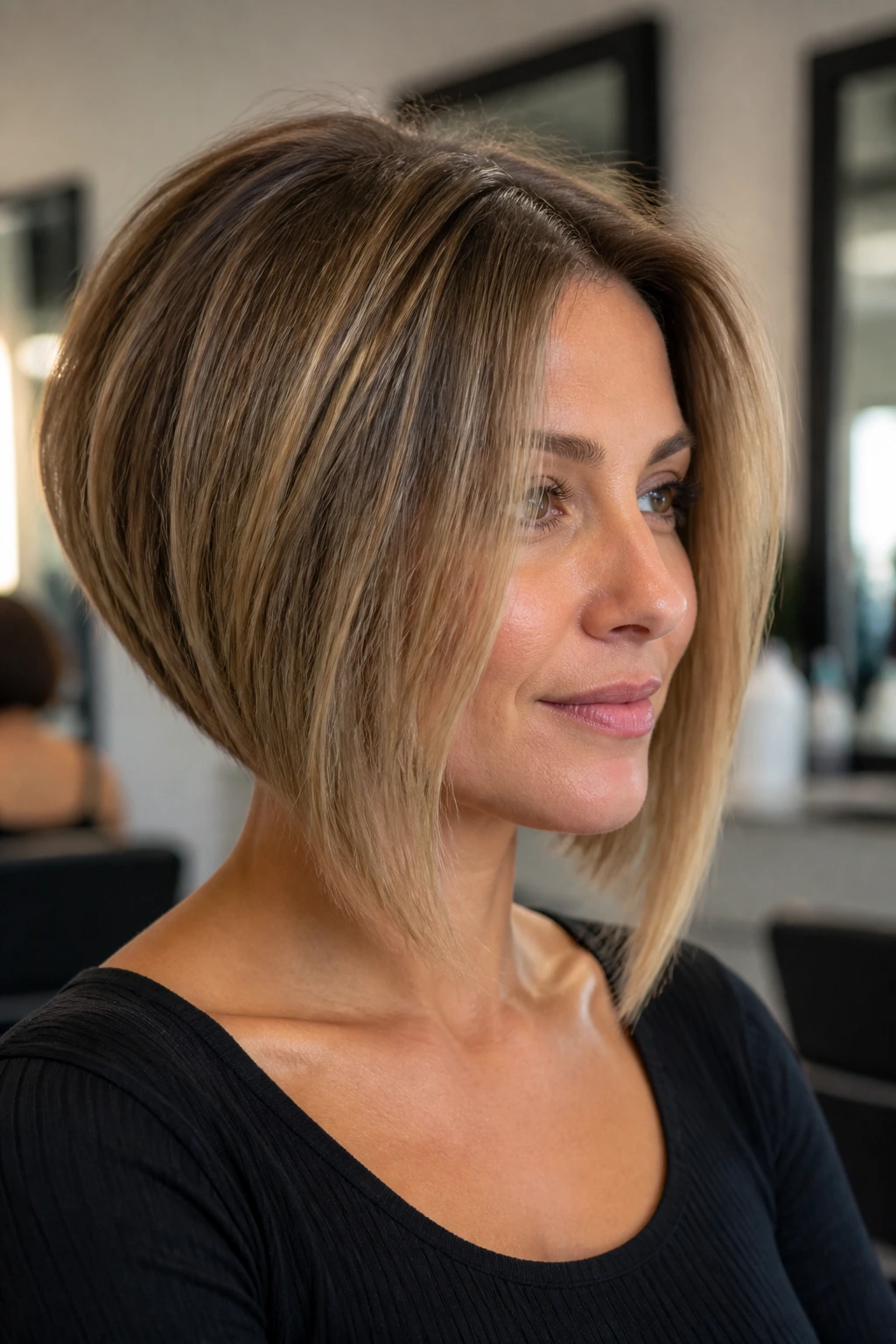
An inverted bob leans dramatic by design. The back is shorter and curves up toward the crown, while the front drops longer and skims the face. Once you add asymmetry, the cut gets an extra layer of movement that makes the face look slimmer and more defined.
The angle is doing a lot here. It directs the eye forward and down, which can be especially flattering on square or round faces. The longer front pieces act almost like little curtains around the jaw.
What to ask your stylist
- A shorter, stacked back
- One front side left noticeably longer
- Soft graduation instead of a hard shelf
- Enough length in the front to tuck or wave
I like this cut on hair that can hold shape. Fine hair often does well because the structure creates body. Thick hair can wear it too, but the removal of bulk has to be done carefully.
18. The Bob with Peekaboo Highlights
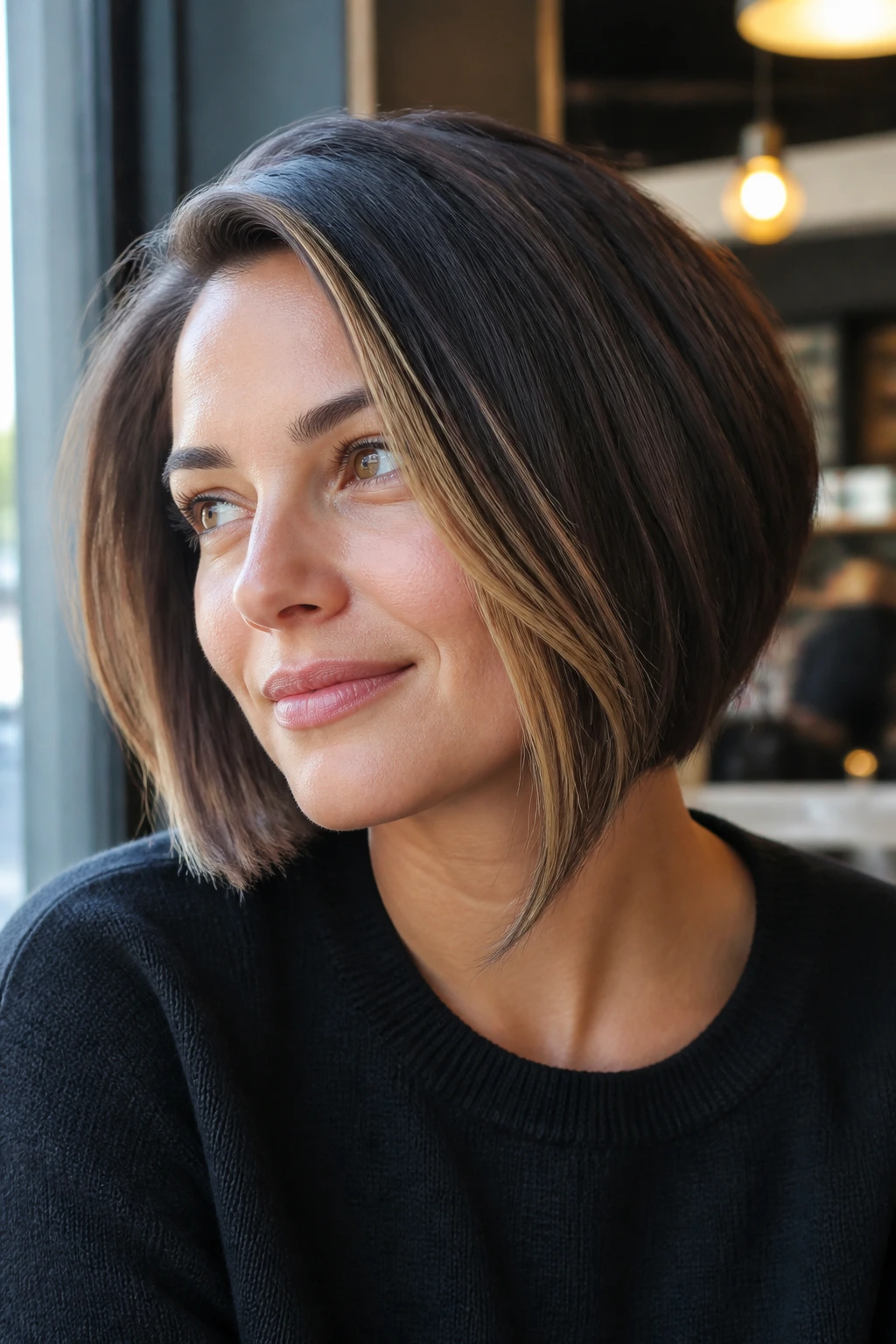
Hair color can change how a haircut frames the face, and this is one of the easiest examples to prove. Peekaboo highlights placed on the longer front side pull attention exactly where you want it, especially if the base color is darker or more muted.
The haircut itself can be simple: chin length on one side, a little longer on the other, maybe with soft texture at the ends. The color does the extra work by brightening the front pieces and making the asymmetry more visible.
This is a smart option if you want a face-framing bob but don’t want the cut to carry every bit of the visual interest on its own. The contrast from color can also make fine hair look thicker around the face because light and shadow create more shape.
Keep the highlight placement strategic. Too much light everywhere and the frame gets messy. A few well-placed ribbons near the front do the job.
19. The Tousled Asymmetric Bob for Fine Hair
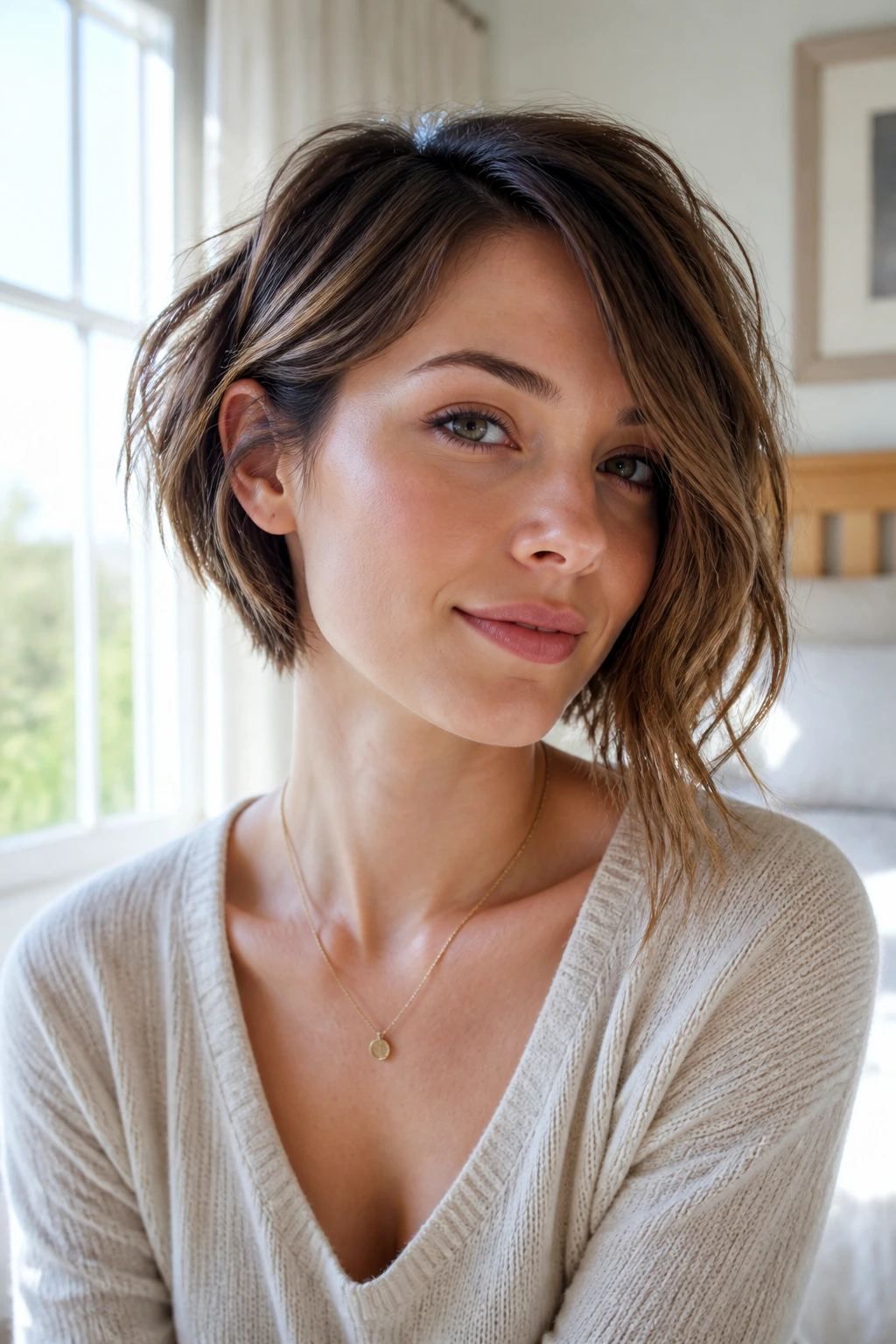
Fine hair can look flat fast, which is why a tousled asymmetric bob is such a useful cut. The uneven lengths create movement, and the texture keeps the ends from lying too close to the head.
The texture recipe
Start with a root-lifting mousse on damp hair. Dry the roots first, then bend the mid-lengths around a small wand or straightener just enough to break up the line. Finish with a dry texture spray at the ends.
That little bit of disorder gives the haircut more body than a sleek version would. The longer side should still be obvious, though. If the texture gets too wild, the asymmetry disappears.
Why it flatters fine hair
- The uneven line makes the shape feel fuller
- The front pieces frame the cheeks instead of hanging limp
- Light texture helps the hair resist collapse
- The cut looks good with a slight second-day bend
It’s the kind of bob that gets better after you stop fussing with it.
20. The Dramatic Side-Heavy Bob
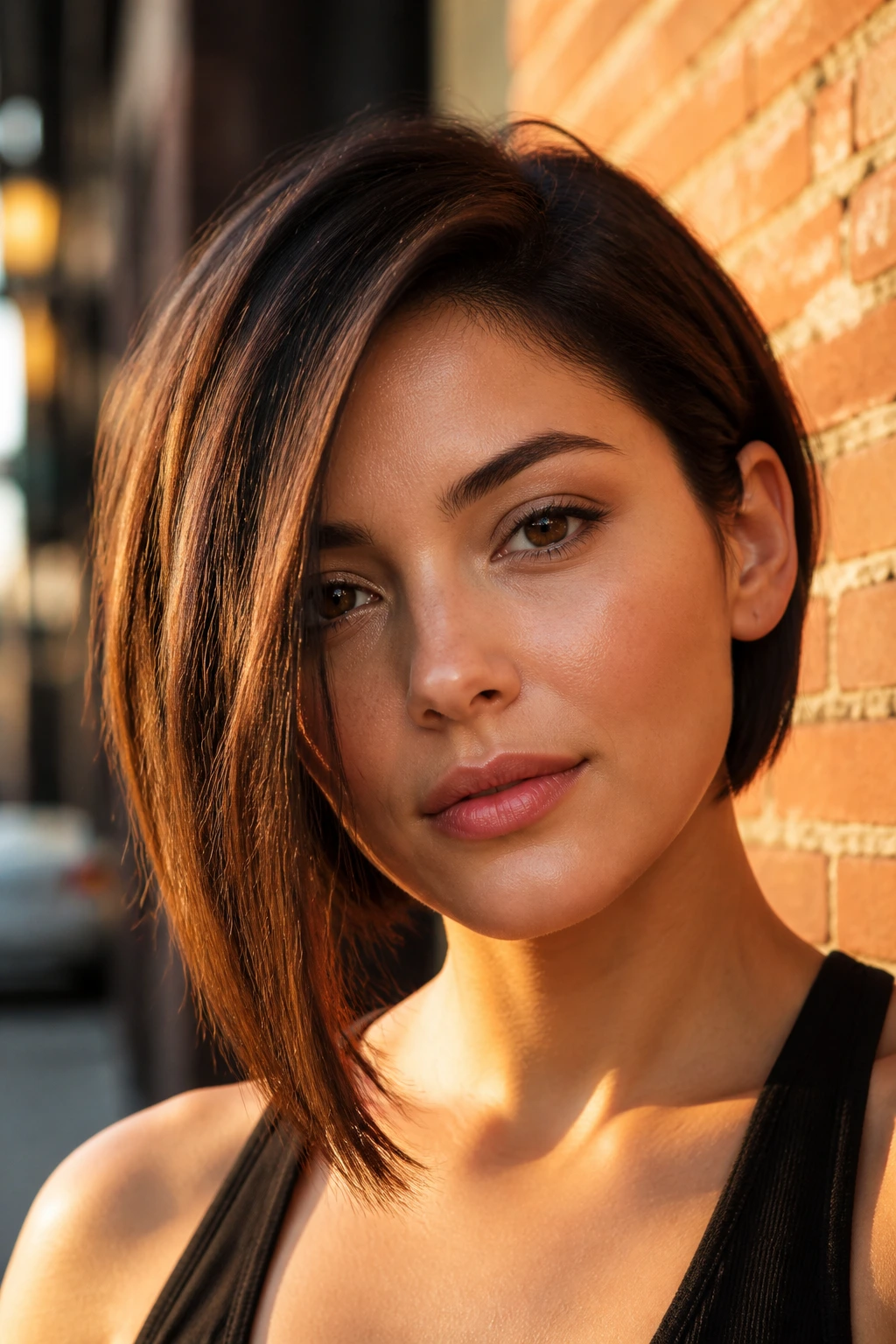
If you want the most visible asymmetry, this is it. One side stays close to the jaw or cheekbone, while the other side stretches much lower, sometimes close to the collarbone. It’s bold, and it frames the face with real purpose.
The key is balance. The long side needs enough weight to drape well, or the cut will look stringy. The short side needs enough length to avoid feeling chopped off. When those two things line up, the haircut can make the eyes and cheekbones pop in a way that’s hard to ignore.
I’d call this the statement version. It’s not subtle. It does not try to be subtle. That’s fine.
Wear it sleek for a sharper line, or tuck the short side behind the ear and leave the long side loose for a softer finish. Either way, the face gets a strong diagonal frame, which is the whole reason to choose it.
Final Thoughts
A great asymmetric bob is less about being edgy and more about being smart. The angle, the part, and the way the front pieces sit against the cheeks all matter more than people think.
If you want the safest place to start, go for a softer angle around the chin or collarbone. If you want more drama, push the difference farther and keep the finish sleek. Either way, the best face-framing bob is the one that makes your features look like they belong there, not like they were hidden by the haircut.
