



Thin hair loves a sharp line.
That’s why asymmetric bob haircuts for thin hair work so well when the cut is done with a little nerve. The uneven shape gives the eye something to follow, and that diagonal line can make strands look fuller than they are. A boring, even bob can sit there and go limp by noon. A slanted one has a better chance of looking awake.
There’s one detail worth getting right from the start: thin hair is not always the same as fine hair. Fine hair means the strands themselves are small; thin hair usually means there’s less of it on the head, or both things are happening at once. That matters, because the wrong layers can make the ends look see-through fast. The right asymmetry does the opposite. It keeps the shape clean and gives you movement without stealing too much bulk.
I keep coming back to that balance because it’s the whole trick. Too much chopping, and the ends fray out. Too little shape, and the haircut collapses. The styles below land in the sweet spot, with enough structure to add body and enough irregularity to keep the cut from feeling flat.
1. Chin-Length Asymmetric Bob for Thin Hair
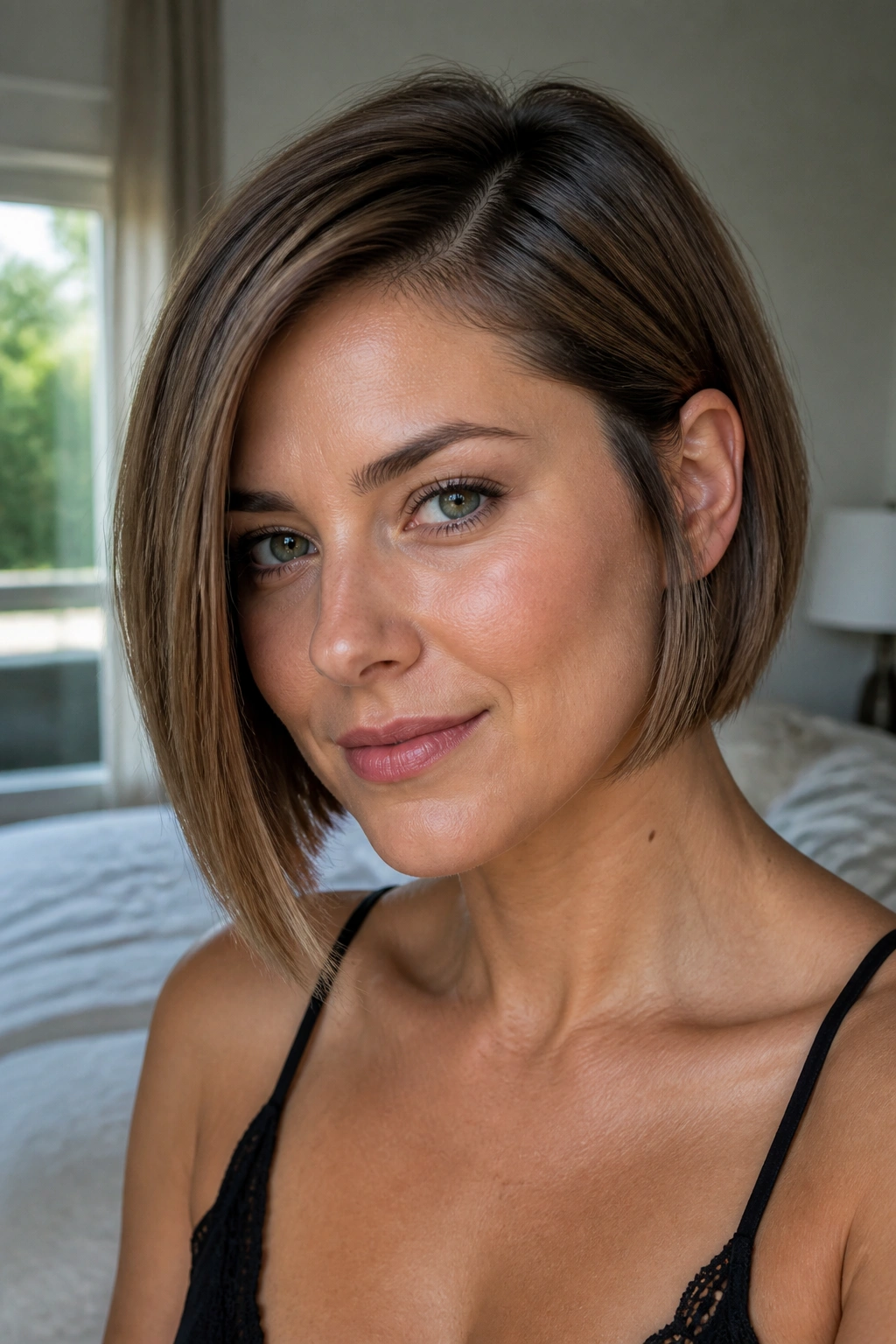
This is the safest place to start. A chin-length asymmetric bob gives thin hair a hard-working outline without dragging the ends too far down the neck, where they can look sparse. One side can skim the jaw while the other falls a touch lower, and that slight difference makes the whole cut feel fuller than a straight, even bob.
Why it works
The chin is a strong visual landmark. When the shorter side hits there, the face gets a clean frame, and the longer side adds a little swing. That diagonal line creates the illusion of density because the eye reads shape before it reads individual strands.
Ask for a blunt perimeter with only a few soft internal layers. Too many layers at this length turn the ends wispy fast. A side part helps, but keep it gentle. A deep part can be nice, yet it can also expose too much scalp if the hair is very sparse at the crown.
- Best for oval, heart, and long faces
- Works well with a round brush or a 1-inch curling iron
- Keep the length difference subtle: about 1 to 1.5 inches is usually enough
Pro tip: Blow-dry the shorter side forward first, then sweep it back. That little bit of tension helps the edge sit clean instead of puffing up in random places.
2. Long-Front, Short-Back A-Line Bob
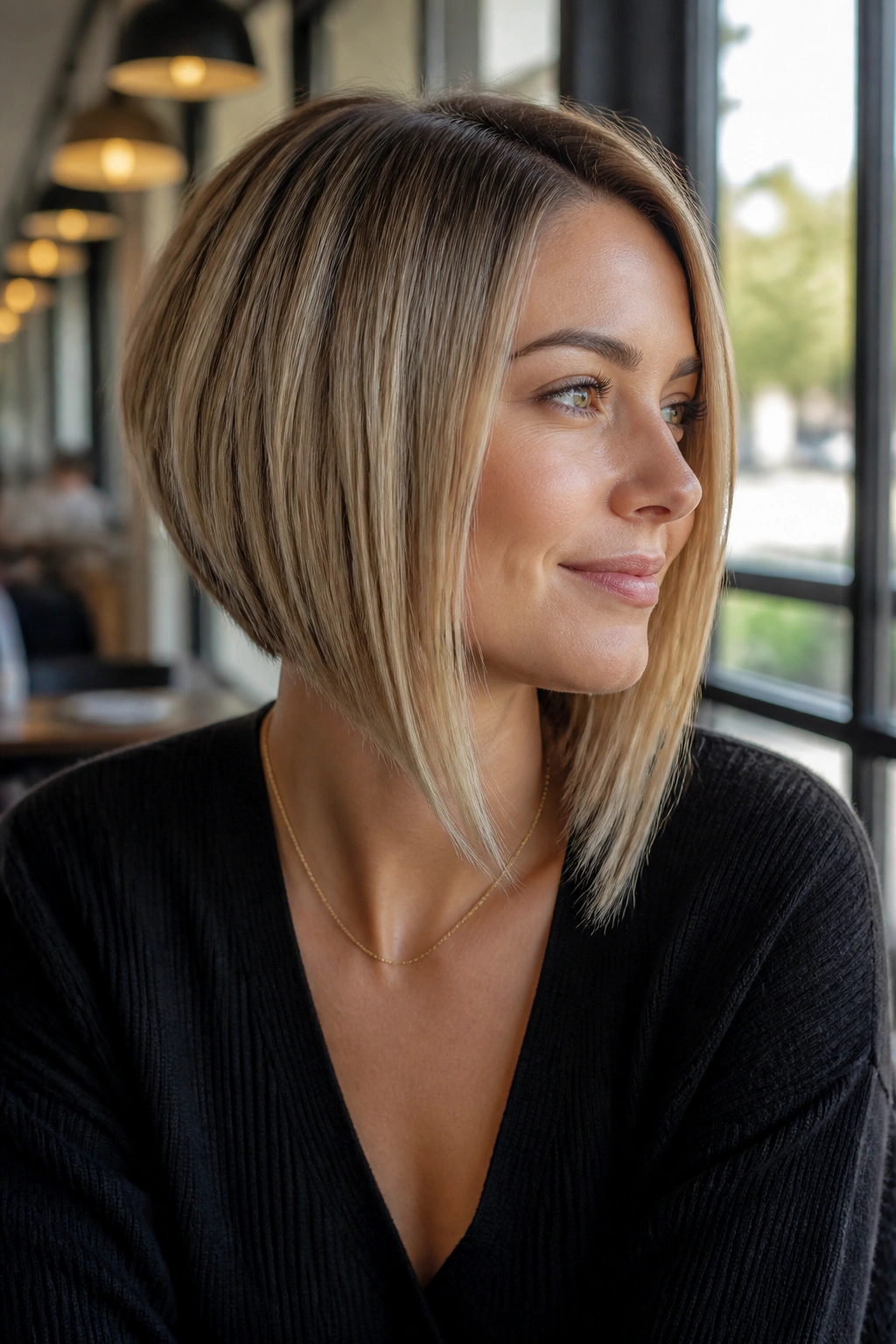
Ask for a soft A-line if you want the back to feel light and the front to do the visual work. The shorter nape gives lift, while the longer front pieces make thin hair look like it has more substance than it really does. It is a good cut when you want a bob that feels polished but not severe.
The key is keeping the angle controlled. If the front drops too far, the haircut starts to look stringy. If the back is cut too short, the whole shape can feel narrow through the neck. A good version usually has a modest angle, not a dramatic wedge. You want movement, not a cliff.
This shape also grows out nicely. That matters more than people admit. Some bob haircuts look sharp for ten minutes and then turn awkward. A gentle A-line keeps its line longer, which is useful if you do not want to be in the salon every five weeks.
For styling, I’d keep this one smooth. A light volumizing mousse at the roots and a bend at the ends is enough. The cut already does a lot of the work.
3. Soft Stacked Asymmetric Bob
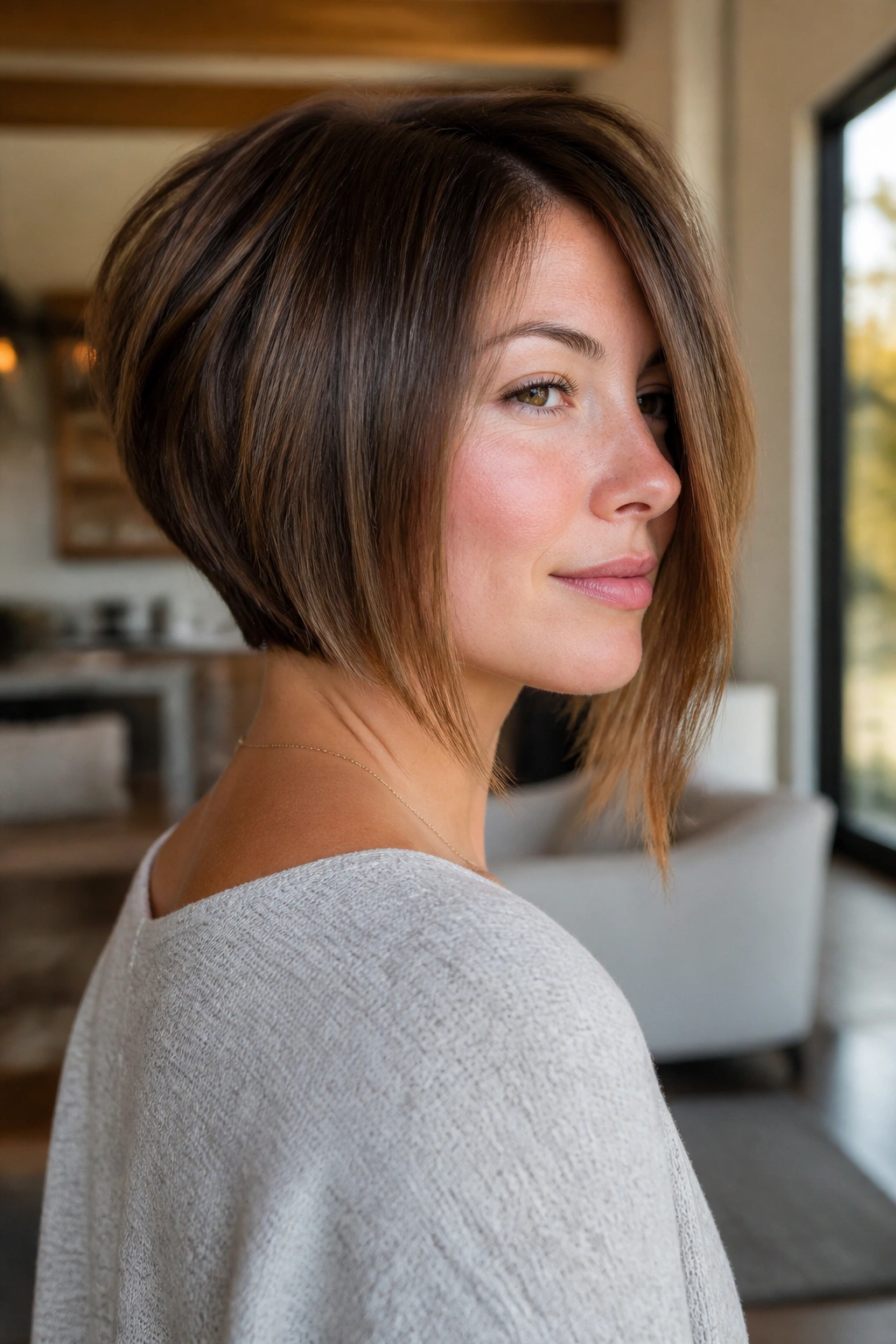
A stacked bob can be a lifesaver for thin hair that goes flat at the crown. The back is slightly graduated, which means the hair is cut so each layer sits a bit higher than the one below it. That creates lift where you need it most.
But there’s a catch. Too much stacking can look bulky in the back and too thin in the front. So the best version keeps the back compact and the front pieces longer and softer, just enough to hold the asymmetry without making the haircut feel helmet-shaped.
What to ask for
- Shorter, stacked layers at the nape
- Longer front pieces that graze the cheek or jaw
- Point-cut ends to soften the line
- Minimal thinning shears, if any
I like this cut on hair that collapses after air-drying. The stack gives the back a small built-in boost, so you are not fighting gravity all day. A light root spray helps, but the shape itself is doing the real job.
A stacked asym bob is not the right pick if your hair is already very fragile at the crown. In that case, too much graduation can expose the scalp. Keep it subtle.
4. Blunt Asymmetric Bob With Deep Side Part
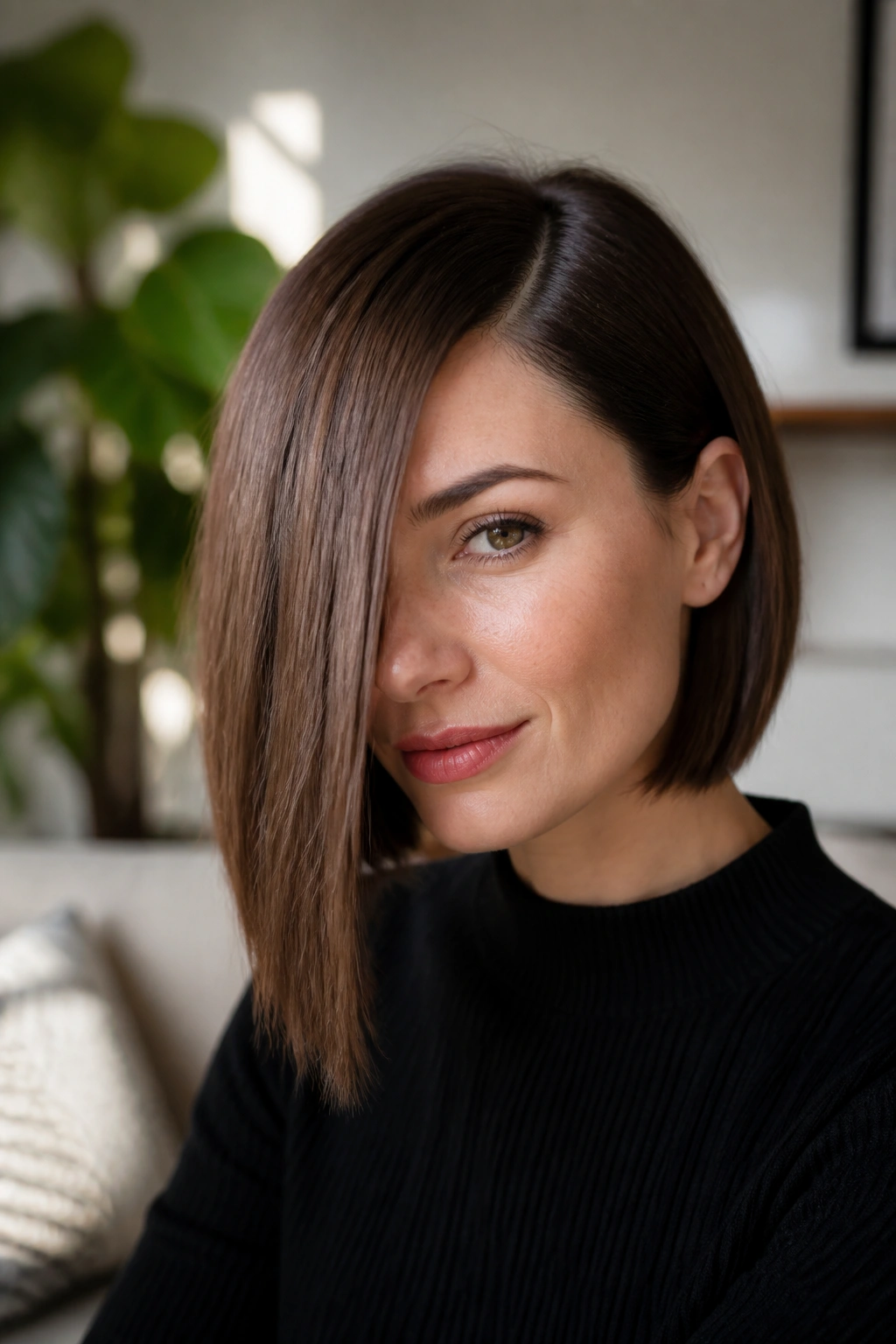
A blunt edge can make thin hair look thicker right away. That is the main reason this cut keeps showing up in salons. The clean perimeter gives the ends more visual weight, and the deep side part throws the line off-center in a way that feels deliberate, not fussy.
There is a strong opinion here: people often add layers to thin hair too fast. Sometimes the better move is the opposite. Keep the ends blunt, keep the inside fairly quiet, and let the asymmetry come from the part and the length difference. That gives you fullness without shredding the outline.
A deep side part also helps create lift at the root. Hair naturally wants to bend away from the heavier side, so the smaller side sits flatter and the larger side feels fuller. It sounds minor. It isn’t.
If your hair is pin-straight and fine, this cut is one of the better bets. Blow-dry it smooth, tuck the shorter side behind the ear, and let the longer side fall forward. That small asymmetry is enough.
5. Tousled Wavy Asymmetric Bob
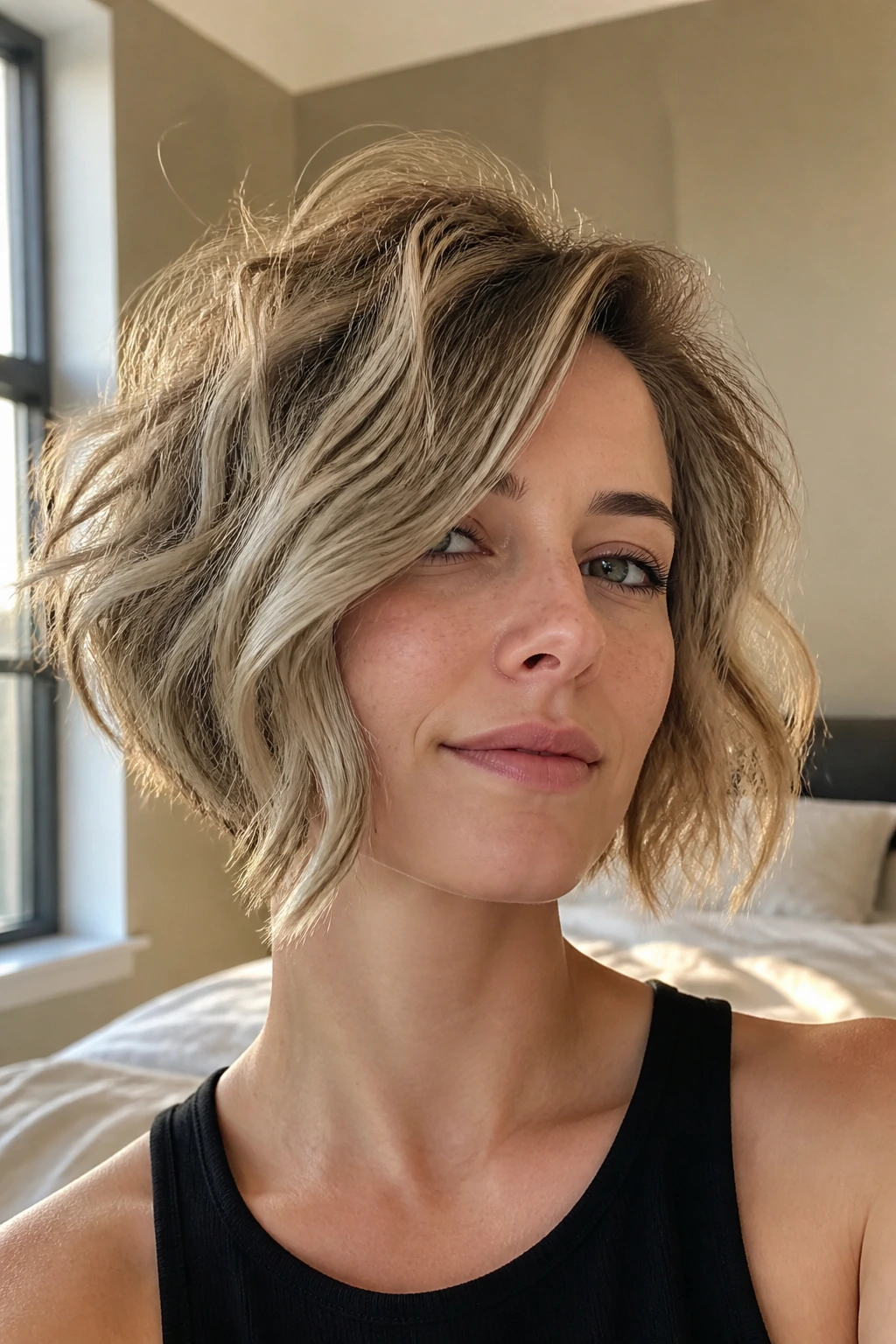
A little bend changes everything. On thin hair, a tousled asymmetric bob can make the ends look fuller because the waves break up the line in a way that feels airy, not sparse.
The trick is not to curl every piece into the same shape. That makes the hair look overdone and can actually reveal how little density is there. Alternate the direction of the bends. Curl one section away from the face, the next toward it, and leave the last inch of each piece out of the iron. That gives you a softer, less uniform finish.
The styling rhythm
- Start with a heat protectant and a light mousse
- Use a 1-inch iron or wand
- Keep the wave loose, not bouncy
- Finish with dry texture spray at the mid-lengths
I prefer this version when the haircut needs a little softness around the jawline. The waves make the asymmetry feel natural, almost like the hair fell that way on purpose. It is also one of the easiest cuts to refresh on day two with a mist of water and a little scrunching.
Do not overload it with oil. Thin hair drinks up light product fast, and too much shine cream makes the whole thing look wet in the wrong way.
6. Asymmetric Bob With Curtain Bangs

Curtain bangs are sneaky good on thin hair. They create face framing without committing to a heavy fringe, which means you get softness at the front without losing too much volume at the top. Paired with an asymmetric bob, they keep the haircut from looking too sharp.
The best curtain bangs for this shape start around the cheekbone and open in the middle or just off-center. That gives the face a little lift and guides the eye toward the longer side of the bob. You get movement in two places at once, which helps if your hair tends to lie flat against the head.
This cut works well when you want some forehead coverage but do not want a thick wall of hair. Thick bangs can swallow thin hair whole. Curtain bangs are lighter. They split the difference.
I’d keep the rest of the cut fairly clean. If the ends are too chopped up, the bangs and the bob start competing for attention. You want one conversation, not two. A soft bend at the ends and a little root lift at the fringe area are usually enough.
7. Jawline-Grazing Sleek Bob
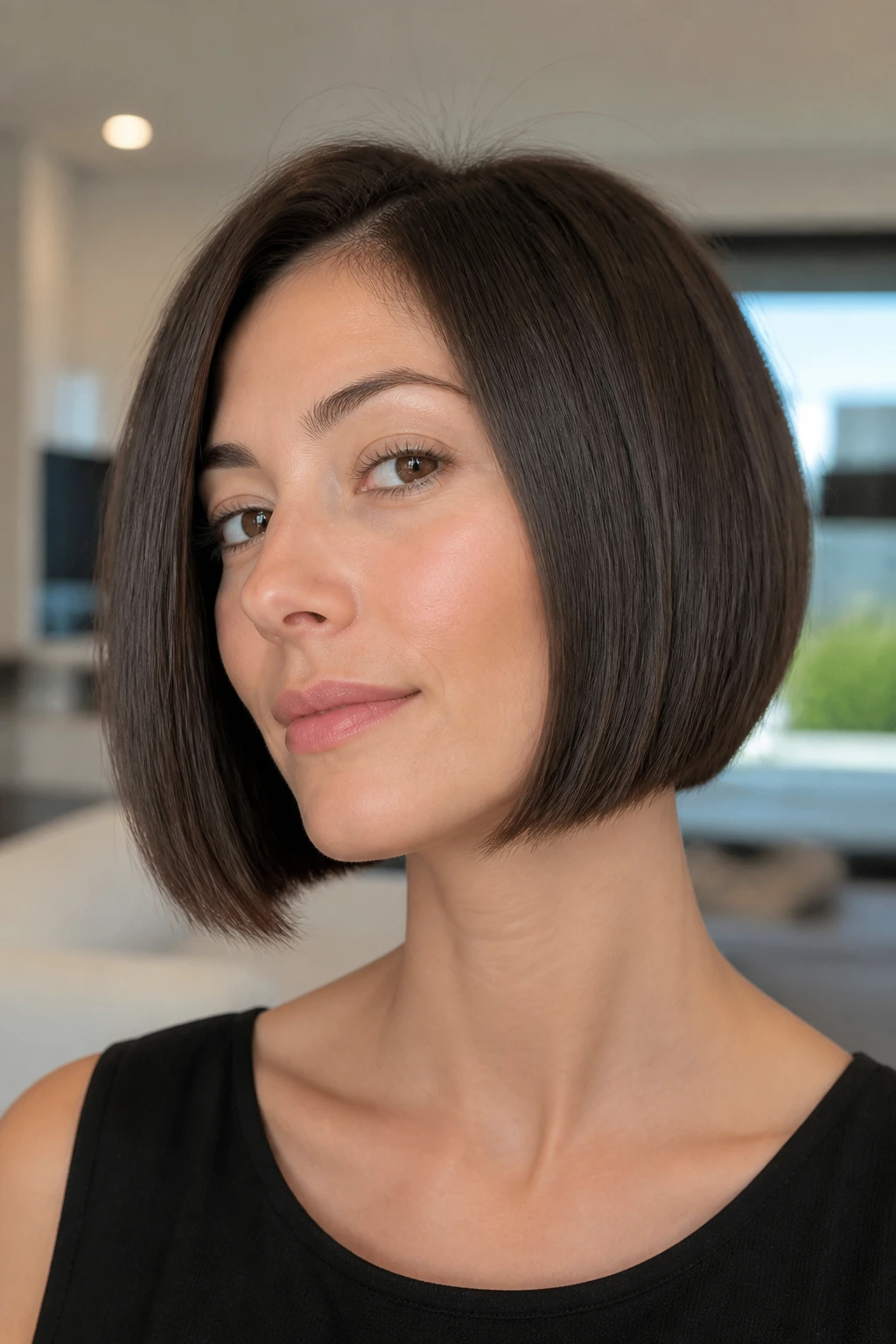
A jawline-grazing bob is sharp in the best way. It hugs the face, which makes thin hair read as neater and denser, especially when the perimeter is kept crisp.
What sells this cut is control. The ends sit right where the jaw turns, and that creates a clean frame that looks intentional even if the hair itself is fine. You do need a tidy blowout or flat iron pass, though. If you skip that step, the shape can lose its edge fast.
This is one of the better asymmetric bob haircuts for thin hair when you like a polished look. It does not rely on fluff or big styling. It relies on line. A touch of smoothing cream, a round brush, and a bit of tension at the crown are enough to keep it from going limp.
One warning: if your hair has a lot of cowlicks around the temples, this cut can flip out in annoying ways. A stylist who knows how to control growth patterns will save you a headache.
8. Collarbone-Length Asymmetric Lob
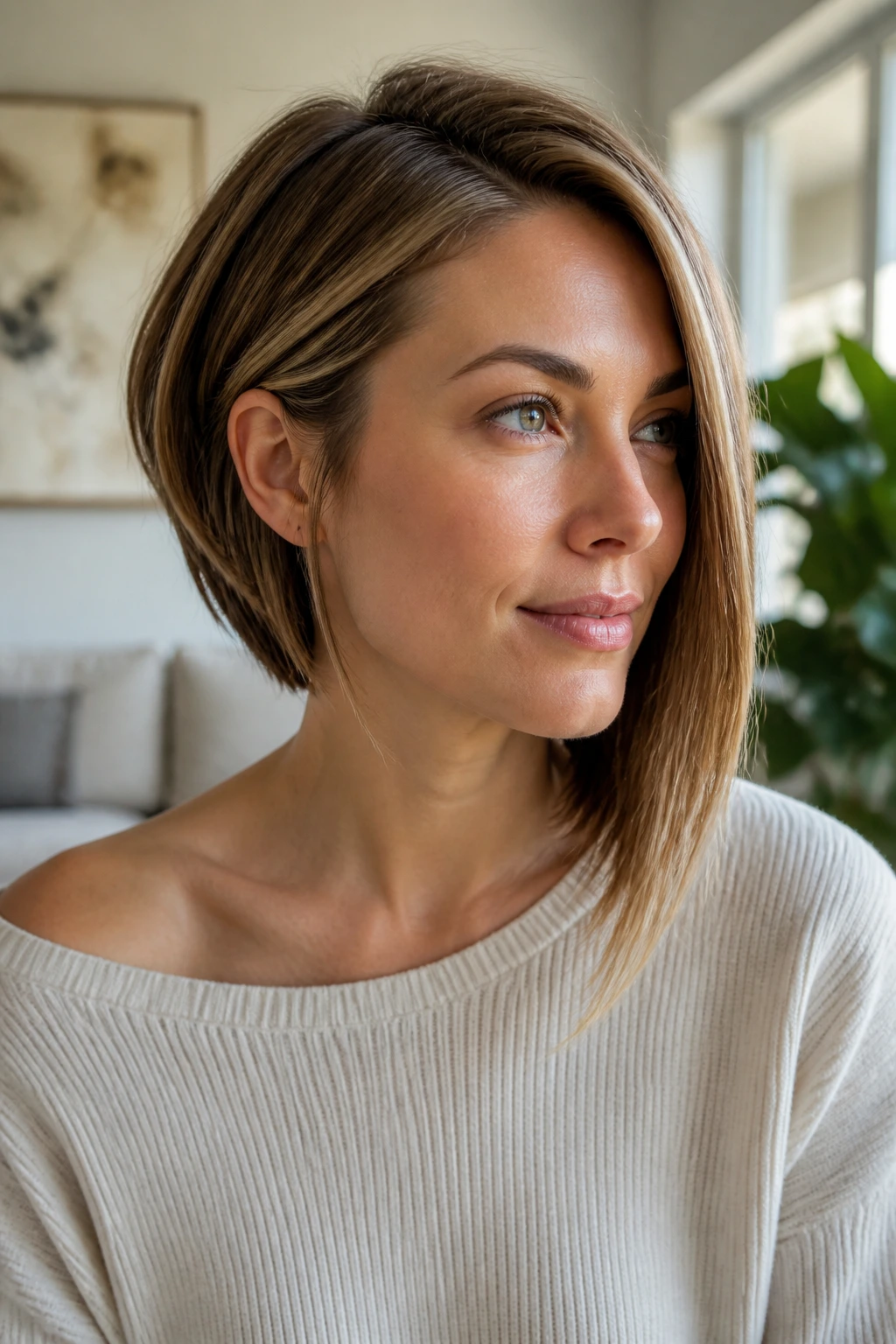
If you want a little more length, this is the move. A collarbone-length asymmetric lob gives thin hair enough weight to stay in place, but not so much that it drags down the shape. The longer side can brush the collarbone while the shorter side sits a bit higher, which keeps the silhouette interesting.
This cut is useful for people who like to tie their hair back sometimes. A true chin-length bob can feel too short for that. A lob gives you room. It also grows out with less drama, which is handy if you are not someone who loves constant trims.
Who it suits
- People with fine hair that feels fragile at shorter lengths
- Anyone growing out a bob without wanting a mushy shape
- Faces that need a little vertical line, especially round or square shapes
The styling is flexible, too. Wear it sleek on workdays, then bend the ends with a curling iron for a softer look. I’d avoid over-layering this version, because the extra length already gives movement. Too many snips and the ends start to look thin again.
It is a practical haircut. Not boring. Just sensible in a good way.
9. Textured Shaggy Asymmetric Bob
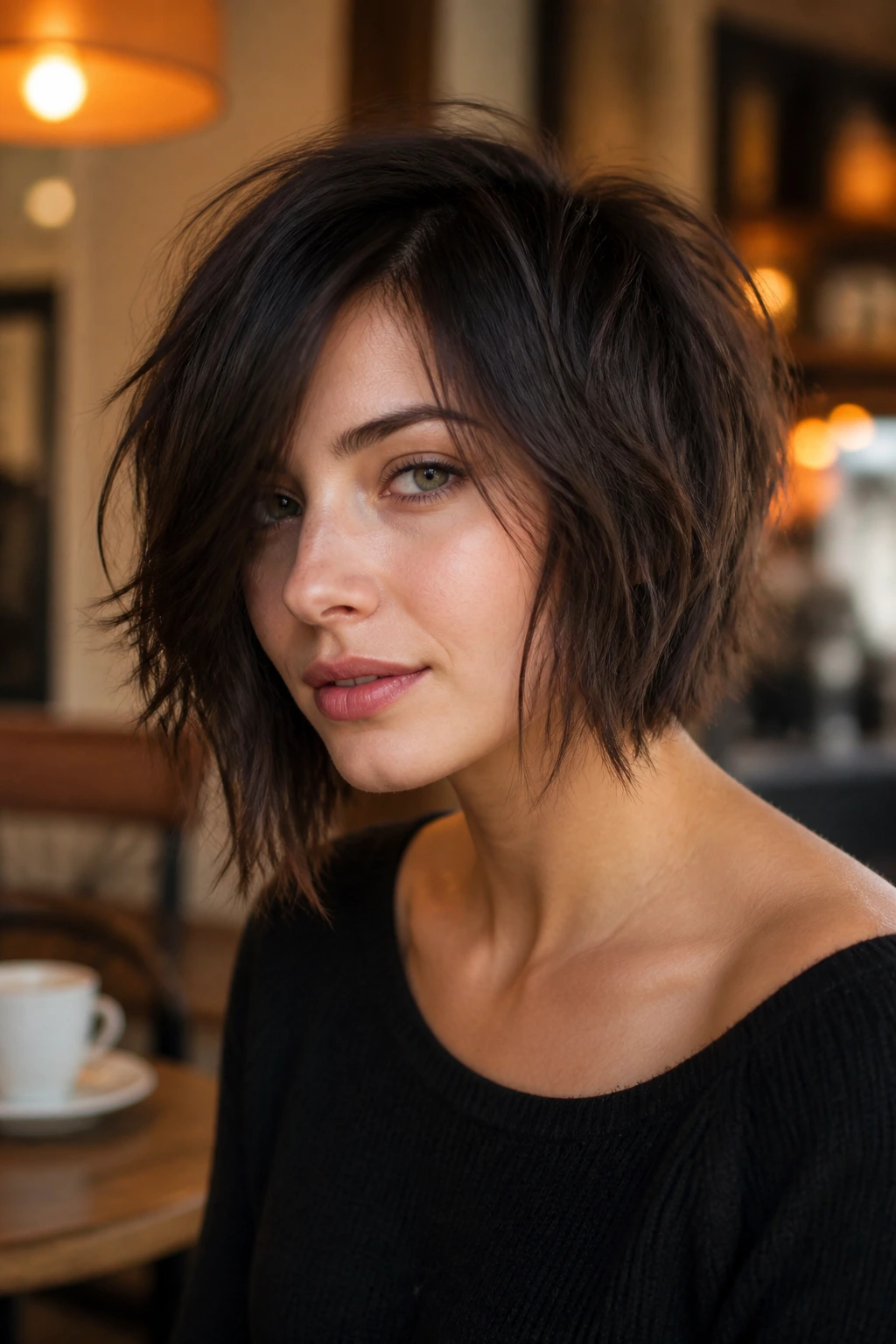
A shaggy bob sounds like a lot of texture, but on thin hair, the right version can look lively instead of messy. The key is keeping the internal layers soft and the ends piecey, not shredded.
This cut suits hair that falls flat the minute it dries. A bit of unevenness gives it life. The longer side can carry more weight through the front, while the shorter side gets a little lift and movement. It feels younger, but not childish. There’s a difference.
I would not ask for a heavy shag here. Thin hair can only give away so much density before it starts to look see-through. The better approach is a few broken-up pieces around the face and a slightly irregular edge. That way the cut looks textured without looking empty.
A matte styling cream works better than glossy serum on this one. Gloss can make the thinner areas more obvious. Texture spray at the roots and a quick scrunch with the fingers usually gives enough separation.
10. Inverted Bob With Hidden Layers
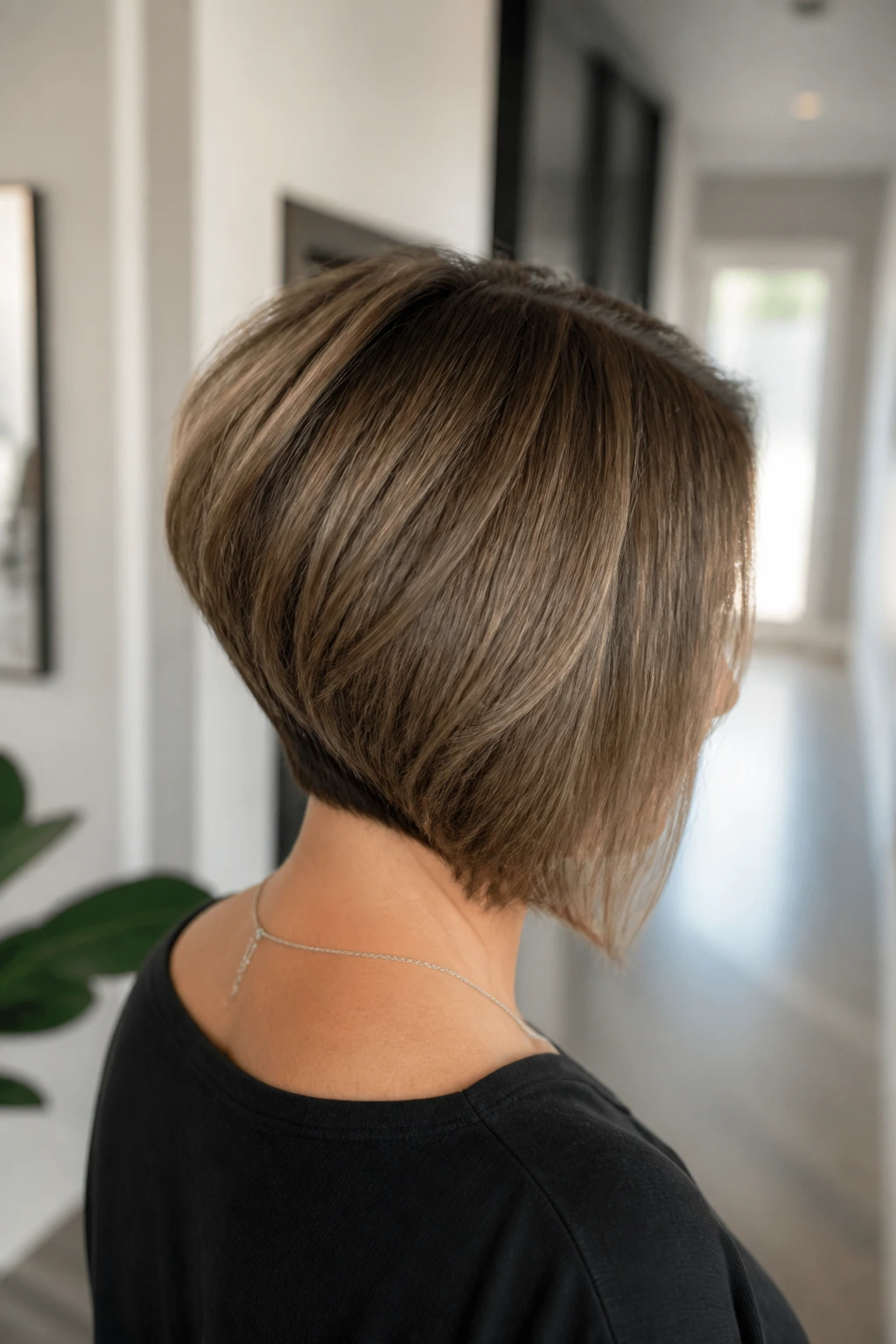
Hidden layers are one of my favorite tricks for thin hair. They build shape inside the haircut without making the outer line look chopped up. That matters because the perimeter is where thin hair gets its visual strength.
An inverted bob is shorter in the back and longer in the front, but the real magic is in the interior. A stylist can cut subtle layers under the top section so the crown gets support. You keep the clean outside shape and still gain lift where the head starts to flatten.
This style is especially useful for straight hair that falls like a sheet. Straight strands show every flaw, so the haircut has to do the work. Hidden layers let the hair move a little more when you turn your head, which makes it look less stiff.
The downside? If the layers are cut too high, the back loses too much density. Then the shape feels hollow. Ask for internal graduation, not choppy surface layers. That one phrase makes a difference.
11. Side-Swept Fringe Asymmetric Bob
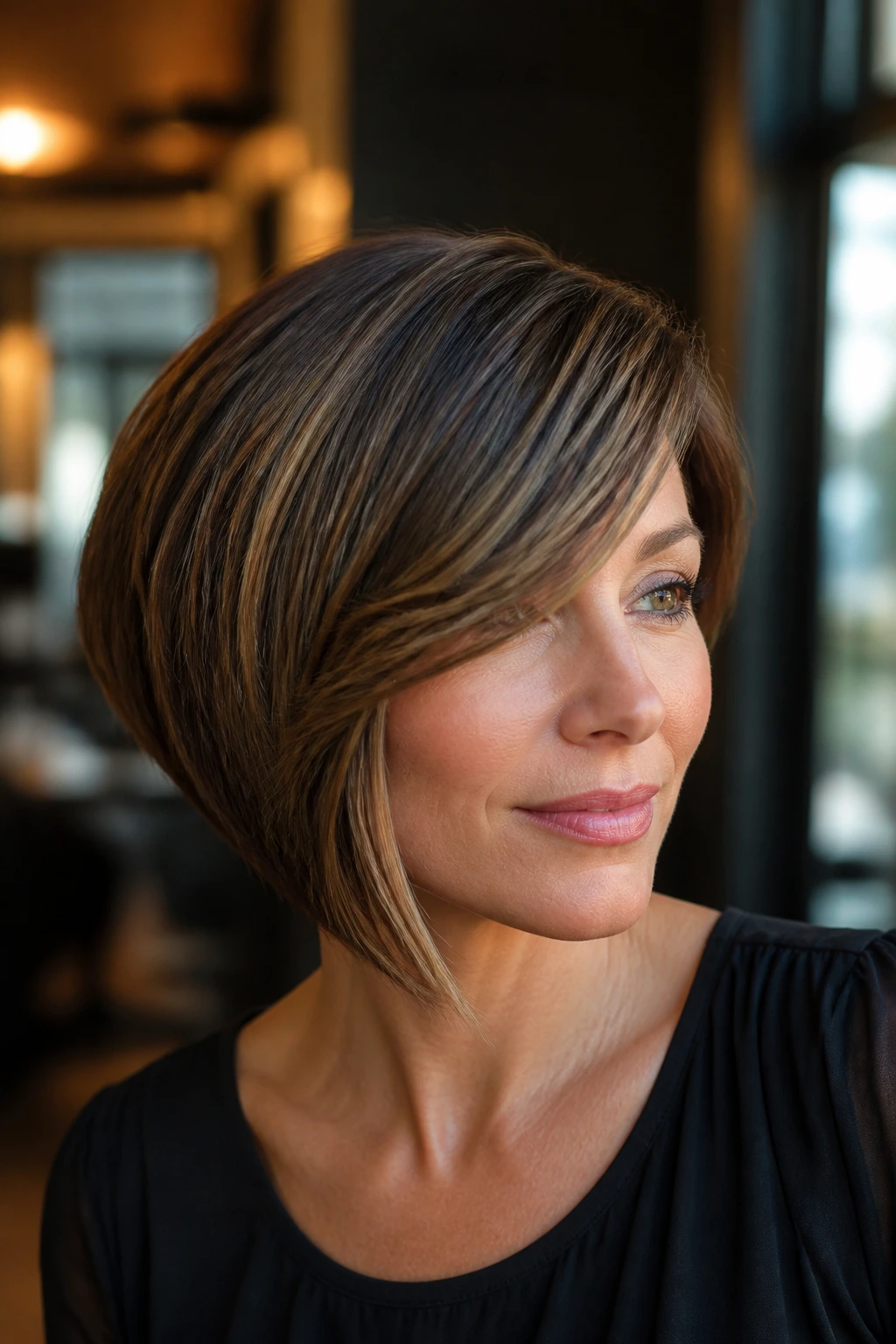
A side-swept fringe softens a strong bob line without hiding the face. That is a big deal on thin hair, because you often need the front to feel lighter, not heavier.
The fringe should move with the longer side of the bob, almost like the haircut is flowing in one direction. That creates a natural link between the bangs and the asymmetry. It feels finished. A straight-across fringe can work too, but it usually asks more from thin hair than I’d like.
Side-swept bangs are also forgiving if you have a cowlick near the front. They can be trained more easily than blunt bangs, and they do not need perfect symmetry to look good. A small round brush and a quick blast of warm air usually tame them.
If you like face framing but hate the idea of full bangs, this is probably the sweet spot. It gives the haircut personality without turning the whole front heavy.
12. French Bob With Uneven Length

A French bob can be charming, but on thin hair it has to be handled carefully. The classic version is short and cheeky, with a line that feels casual rather than stiff. Add a slight asymmetry, and it gets a little more modern and a little less precious.
I would keep this one just below the cheekbone if your hair is very fine. Too short, and the ends can look sparse. A tiny bit of uneven length helps the shape breathe, especially when paired with a natural side part and a whisper of texture through the ends.
This is not the haircut for someone who wants a lot of volume at the crown. It is for someone who likes a neat, face-opening shape that does not need a lot of fuss. Air-dried hair can work here, but it should land in soft bends rather than flat strands.
A French bob can look expensive in the right hands. It can also look like it was cut in a hurry. The difference is in the line. Crisp, not harsh.
13. Razor-Cut Asymmetric Bob
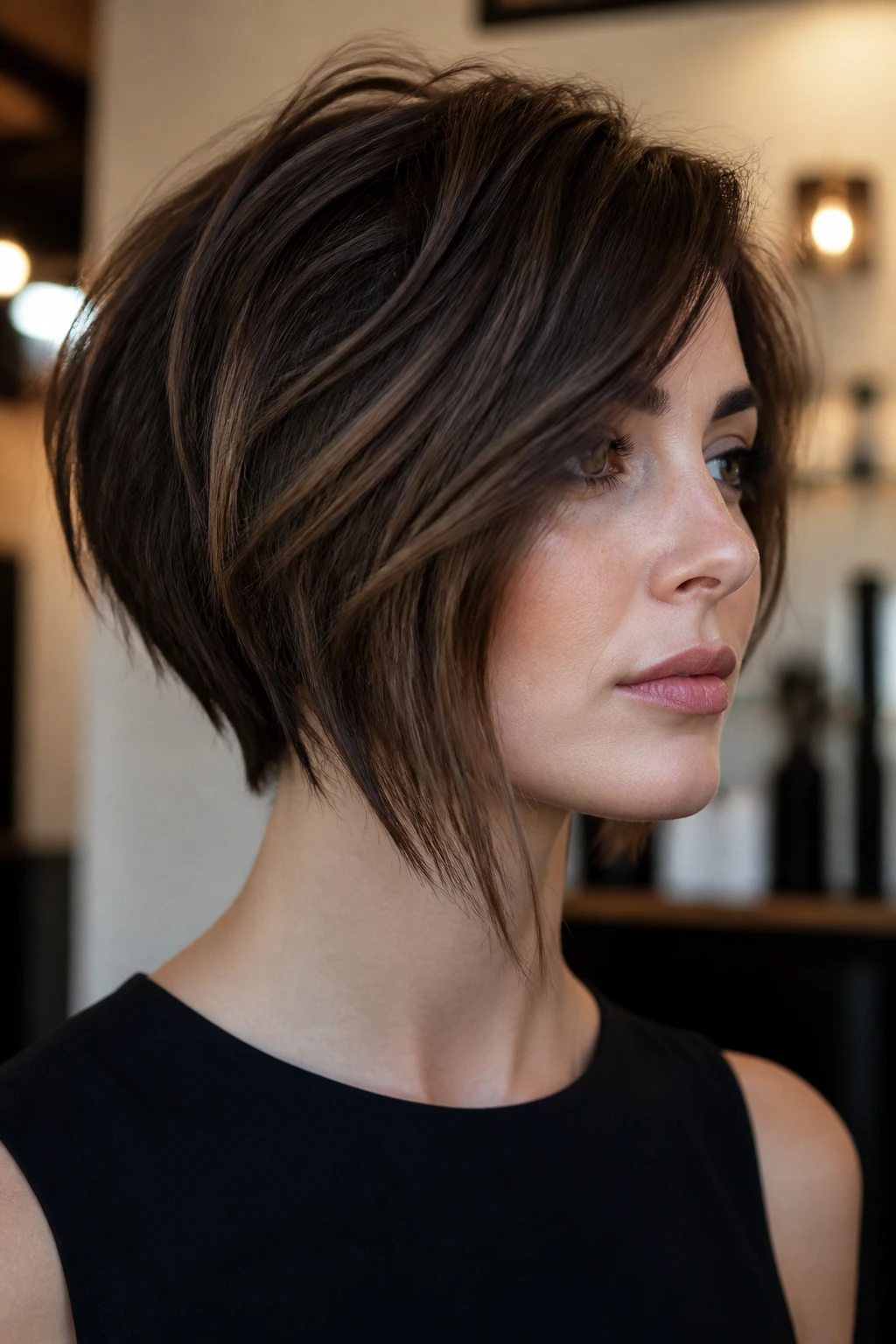
A razor cut gives the ends a softer finish, which can help thin hair move a little more freely. Instead of a hard, blunt edge, you get a feathered outline that feels lighter.
That softness can be a gift, but it is not for everyone. If your hair is already fragile, over-razoring can leave the ends too wispy. That is the part people get wrong. A razor should refine the shape, not shred it into dust.
When it makes sense
- Your hair is fine but not fragile
- You want texture without bulky layers
- You like a slightly undone finish
- You style with cream or spray, not heavy oil
I like this version on straighter hair that needs movement around the jaw and cheek. It gives a little swing without requiring strong curls or waves. A razor-cut asymmetric bob can also make the longer side fall more softly, which stops the shape from looking blocky.
If you try this, choose a stylist who knows how to use a razor sparingly. A heavy hand ruins the whole point.
14. One-Sided Tuck-Behind-Ear Bob for Thin Hair
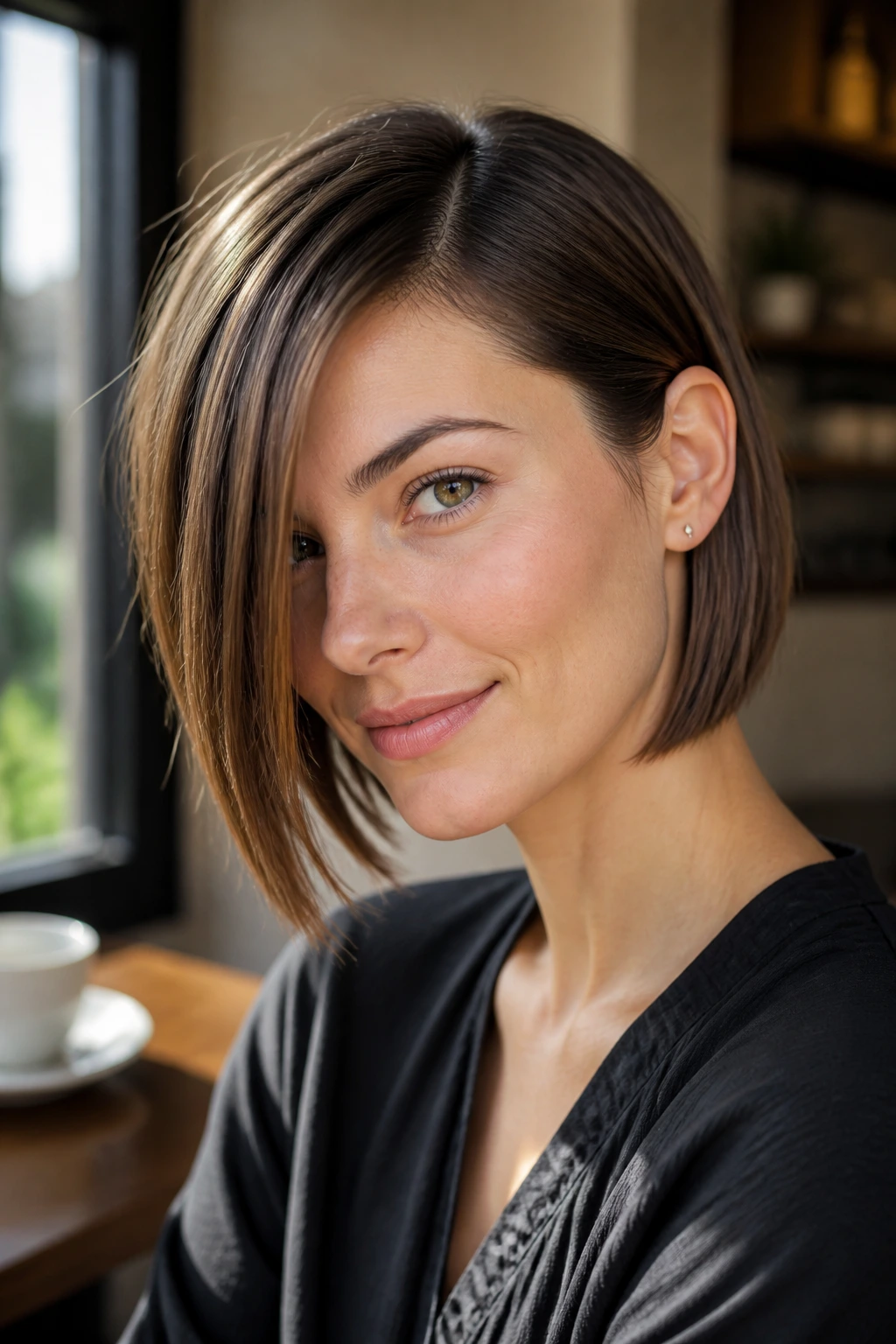
Sometimes the haircut is only half the story. A one-sided tuck can create instant asymmetry, and thin hair often benefits from that simple visual trick. The shorter side sits snugly behind the ear, while the longer side stays forward and fuller.
The cut itself should support the styling. That means enough length on the tucked side to stay in place, but not so much that it collapses into the neck. You want the ear tuck to reveal one cheek and let the other side keep its weight.
I like this option for people who want a low-drama change. It does not scream “new haircut,” but it still changes the face shape. It is also easy to maintain because the styling choice becomes part of the design.
A light root lift on the untucked side helps the difference read more clearly. Without that, the haircut can flatten into one shape and lose the point. Small change. Big effect.
15. Asymmetric Bob With Nape Undercut
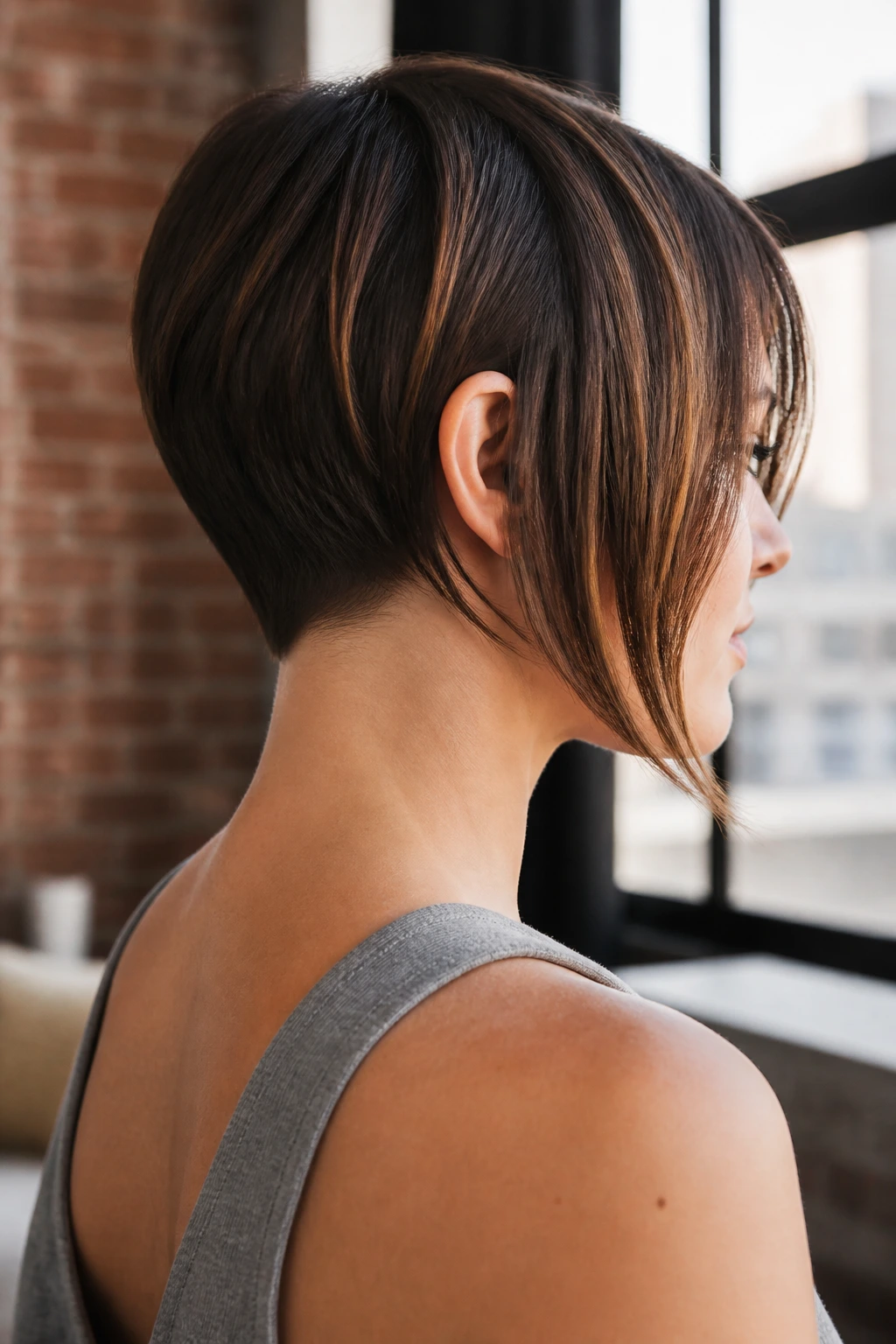
An undercut sounds aggressive, and sometimes it is. But a very small nape undercut can work on thin hair when the lower back section is dense enough to create bulk without dragging the rest of the cut down. That is a narrow use case, but it exists.
The idea is to remove hidden weight from the neckline so the longer front sections sit better. It can make the top layer feel lighter and more mobile. The problem comes when the hair is truly sparse. Then an undercut removes too much body and can expose the scalp in a way you probably do not want.
This is the section where honesty matters more than enthusiasm. If your hair is delicate all over, skip it. If you have a lot of puff at the nape and the rest of your hair is fine, a tiny hidden undercut might solve the weird triangle shape you keep fighting.
It also grows out fast. That can be annoying, but it’s better than living with a bottom-heavy bob that refuses to sit right.
16. Feathered Asymmetric Bob
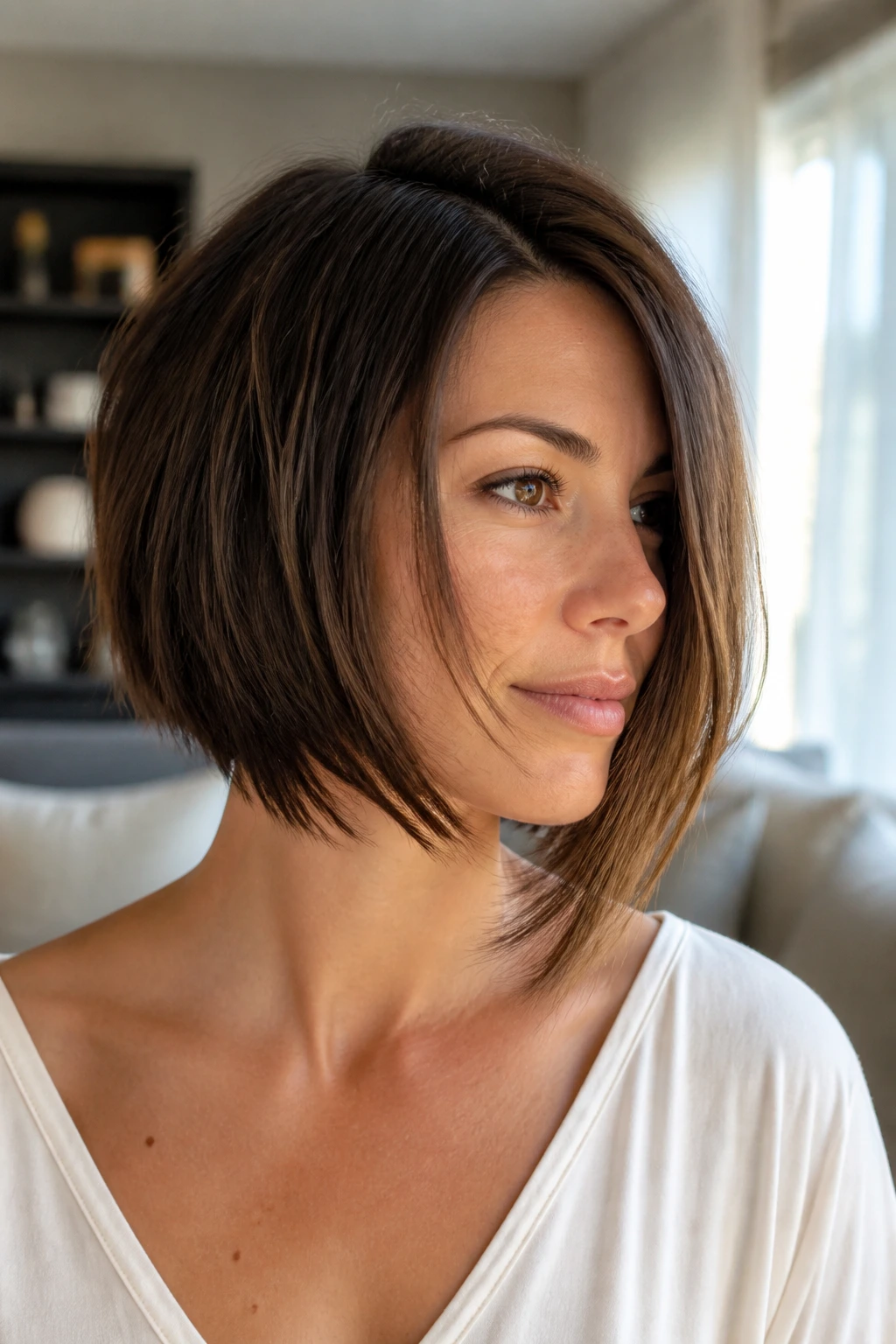
Feathering gives the ends a light, fluttery finish that can soften thin hair without making it disappear. The pieces move a little more, and that movement keeps the cut from feeling stiff.
This works best when the feathering stays near the perimeter and around the face. If a stylist feathers too far up, the hair can lose its density and start looking broken up. The goal is softness at the edge, not a cloud of short layers.
A feathered asymmetric bob suits people who want a friendlier shape than a blunt cut. It looks less graphic, more natural. That can be a relief if hard lines tend to expose the thin spots in your hair.
I’d style this one with a light cream or lotion, not a paste. You want separation, not grit. A tiny bend at the ends is enough. The feathers do the rest.
17. Curly Asymmetric Bob
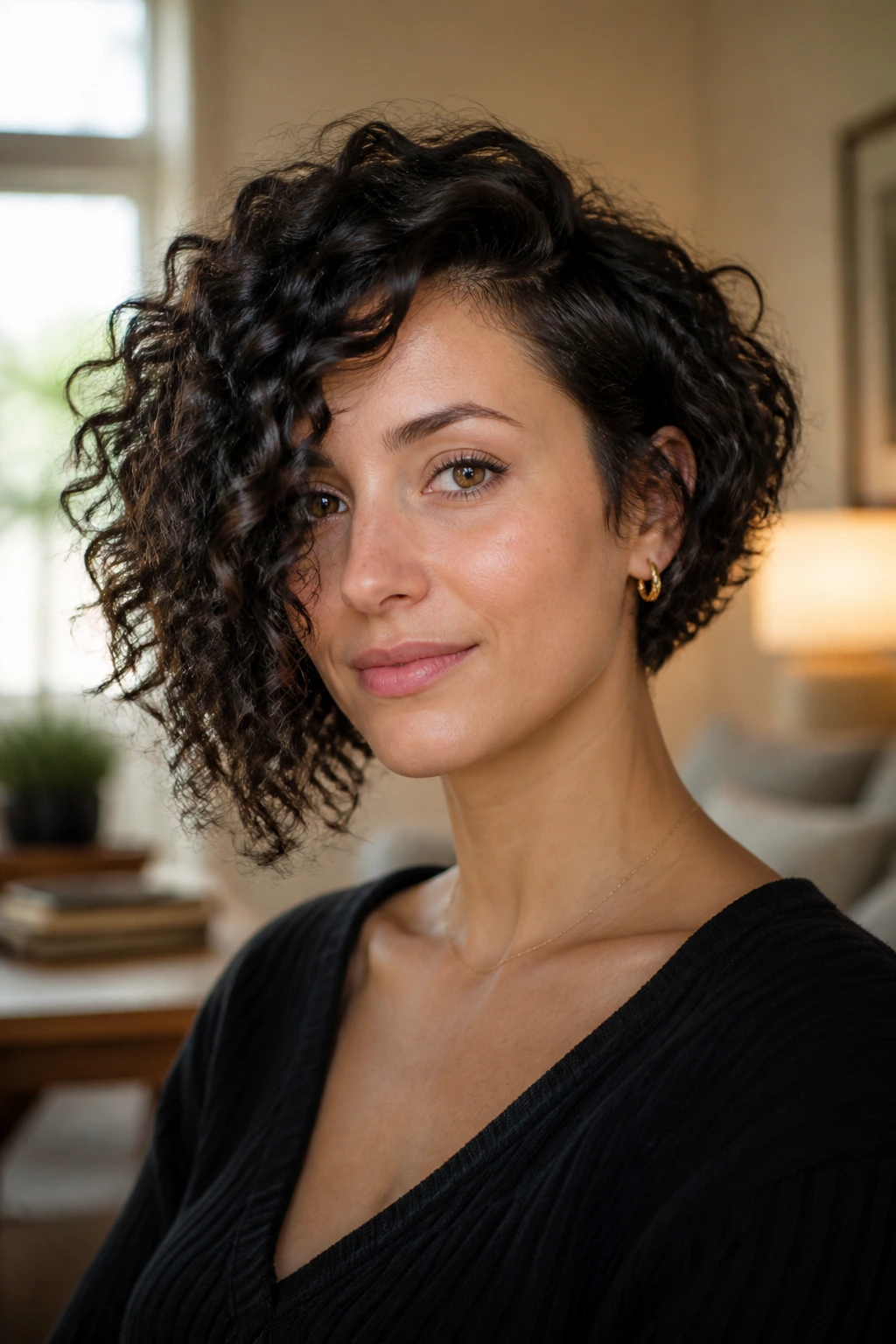
Curly hair and asymmetry make a good pair when the cut respects shrinkage. A curly bob that is longer on one side can look balanced and full, especially if the stylist cuts it dry and watches how the curls actually sit.
Here’s the part people miss: curly thin hair is not the same as straight thin hair. A curl can look fuller than it really is, but it can also collapse in patches. The asymmetry helps by giving the curl pattern a clear shape to fall into. One side can carry a little more length, which keeps the silhouette from becoming a round puff.
How to ask for it
- Dry cut, or at least cut with curl pattern in mind
- Slightly longer front on the side with looser curls
- Minimal thinning, especially near the crown
- Enough length for the curls to spring, not shrink into nothing
This cut is beautiful when it’s left alone. Scrunch in leave-in conditioner, let it air-dry or diffuse on low, and do not keep touching it while it sets. Curly hair hates that.
18. Air-Dried Asymmetric Bob
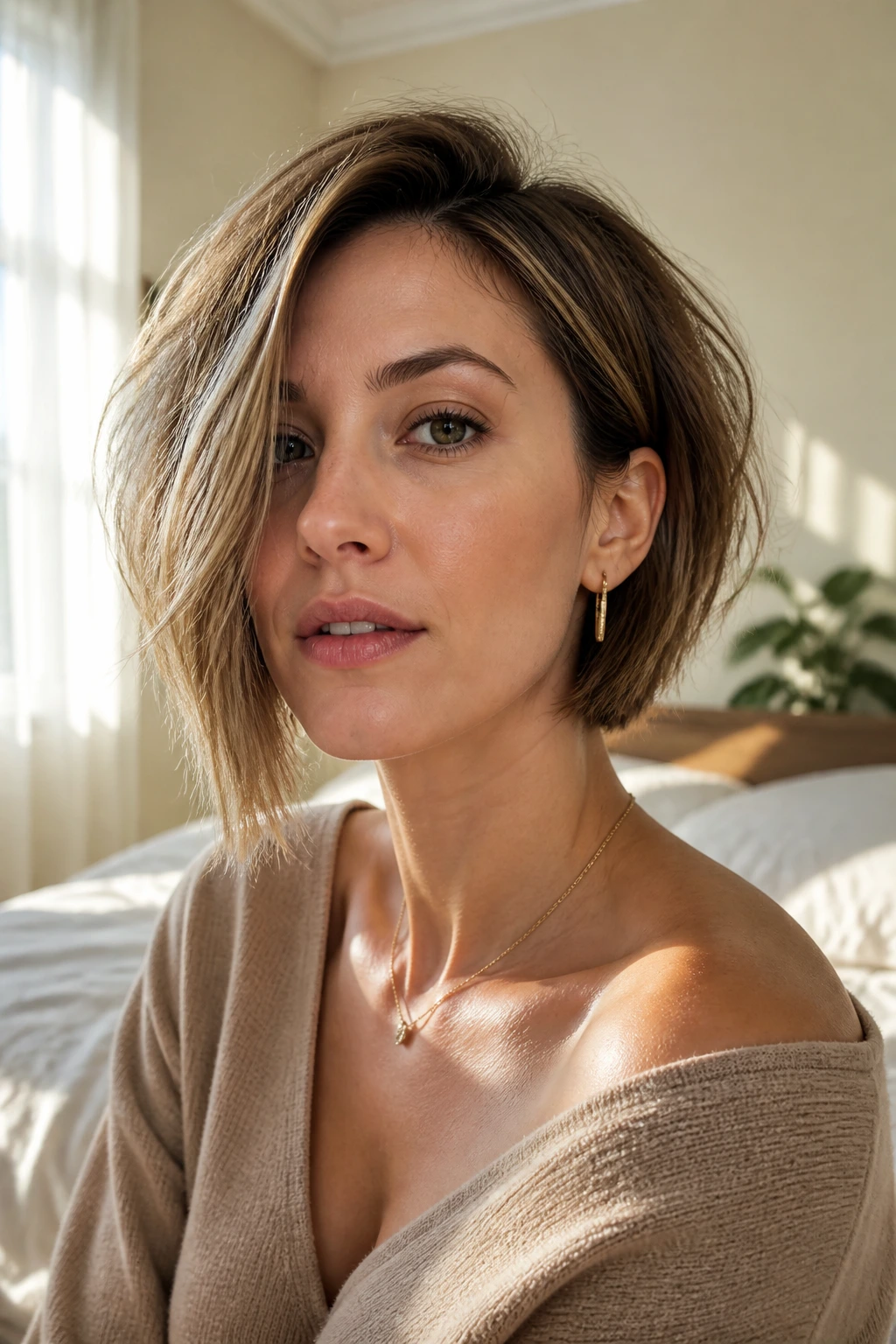
If you do not want to heat-style your hair every morning, the haircut has to do more of the work. An air-dried asymmetric bob can handle that, but only if the shape is built with the drying pattern in mind.
Thin hair often dries flat at the roots and fuzzy at the ends. A slightly longer front and a shorter back can solve part of that because the shape keeps moving even when the hair is not brushed into place. A little natural bend becomes a feature instead of a flaw.
I’d ask for soft internal shaping and a perimeter that still looks clean when it dries on its own. If the line is too chopped, air-dried hair can look scrappy. If it is too blunt, it can look heavy at the bottom and lifeless at the top.
Use a light mousse or foam on damp hair, then twist a few front pieces in opposite directions while they dry. It is a small trick, but it helps the asymmetry show up without a blowout.
19. Glassy Straight Asymmetric Bob
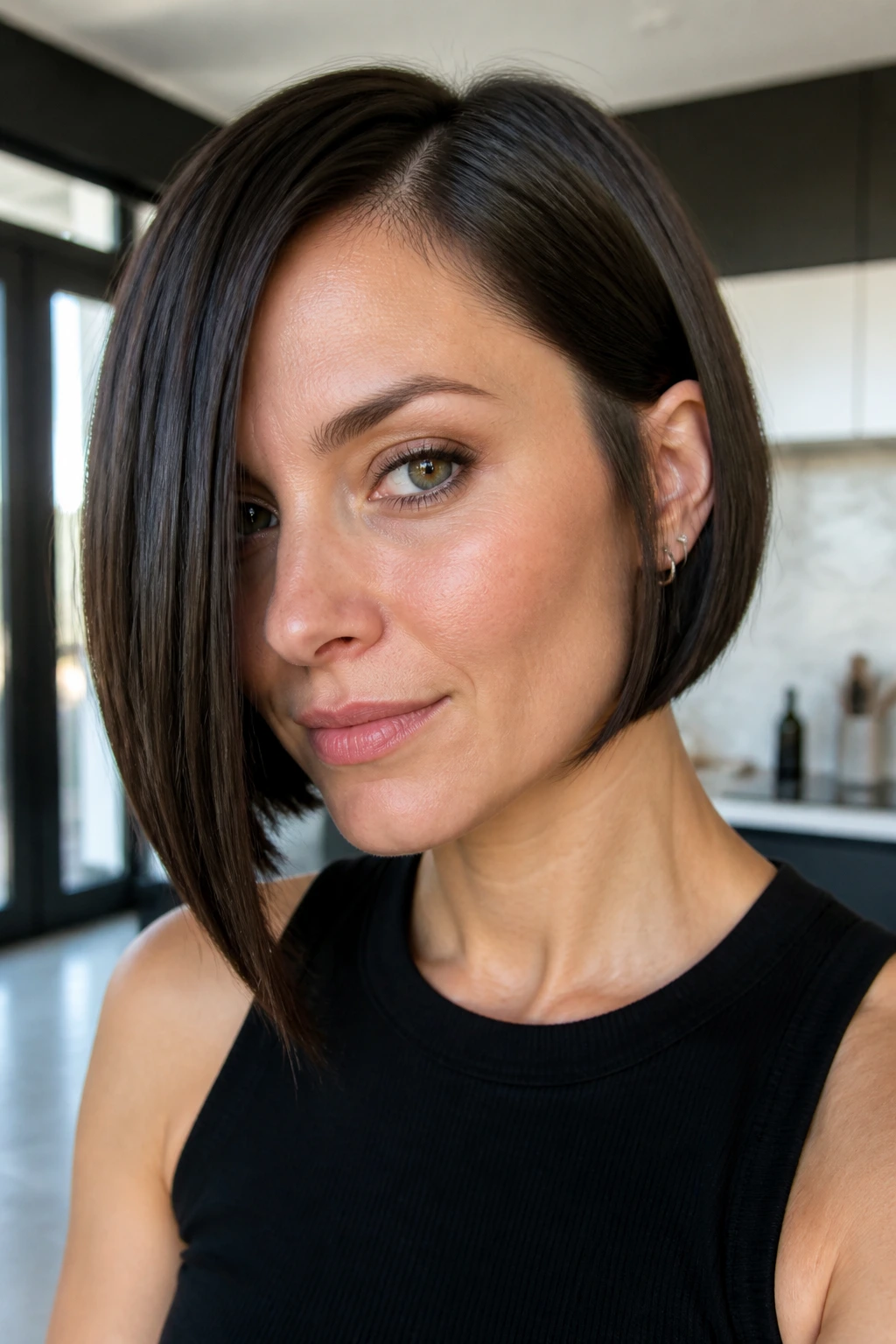
A sleek bob can look almost architectural on thin hair. The shine does a lot of the talking, and the asymmetry keeps the finish from feeling too severe.
The danger here is obvious: straight hair shows every weak point. So the cut needs a clean perimeter and a careful part. The longer side should fall with purpose, not just hang there. That usually means a slightly tucked back shorter side and a smooth front line that lands at the cheek or jaw.
A flat iron can help, but one pass is enough. Too much heat makes fine hair limp and brittle-looking. I prefer a smoothing cream at the mid-lengths and a tiny amount of serum only on the ends. More than that, and the haircut starts to look wet in a bad way.
This is a strong choice if you like crisp clothes, sharp earrings, and a hairstyle that feels polished without extra puff. It is not casual. It is clean.
20. Angled Bob With Face-Framing Pieces

This cut adds shape where people actually look first. The angled bob gives you the slant, and the face-framing pieces soften the front so the haircut does not feel severe.
I like this version on round or square faces because the front pieces create a bit of length near the cheek and neck. Thin hair often benefits from that kind of visual stretch. It gives the face a little more vertical line while still keeping the bob structure.
The framing pieces should be subtle. Too much layering around the face makes the ends look thin, which defeats the point. The angle should remain the star, and the front bits should just guide the eye.
If you want to style this quickly, use a medium round brush and direct the front away from the face. That tiny bend keeps the angle visible. A heavy curl would fight the shape, and a flat finish can make it feel too stark.
21. Piecey Asymmetric Bob
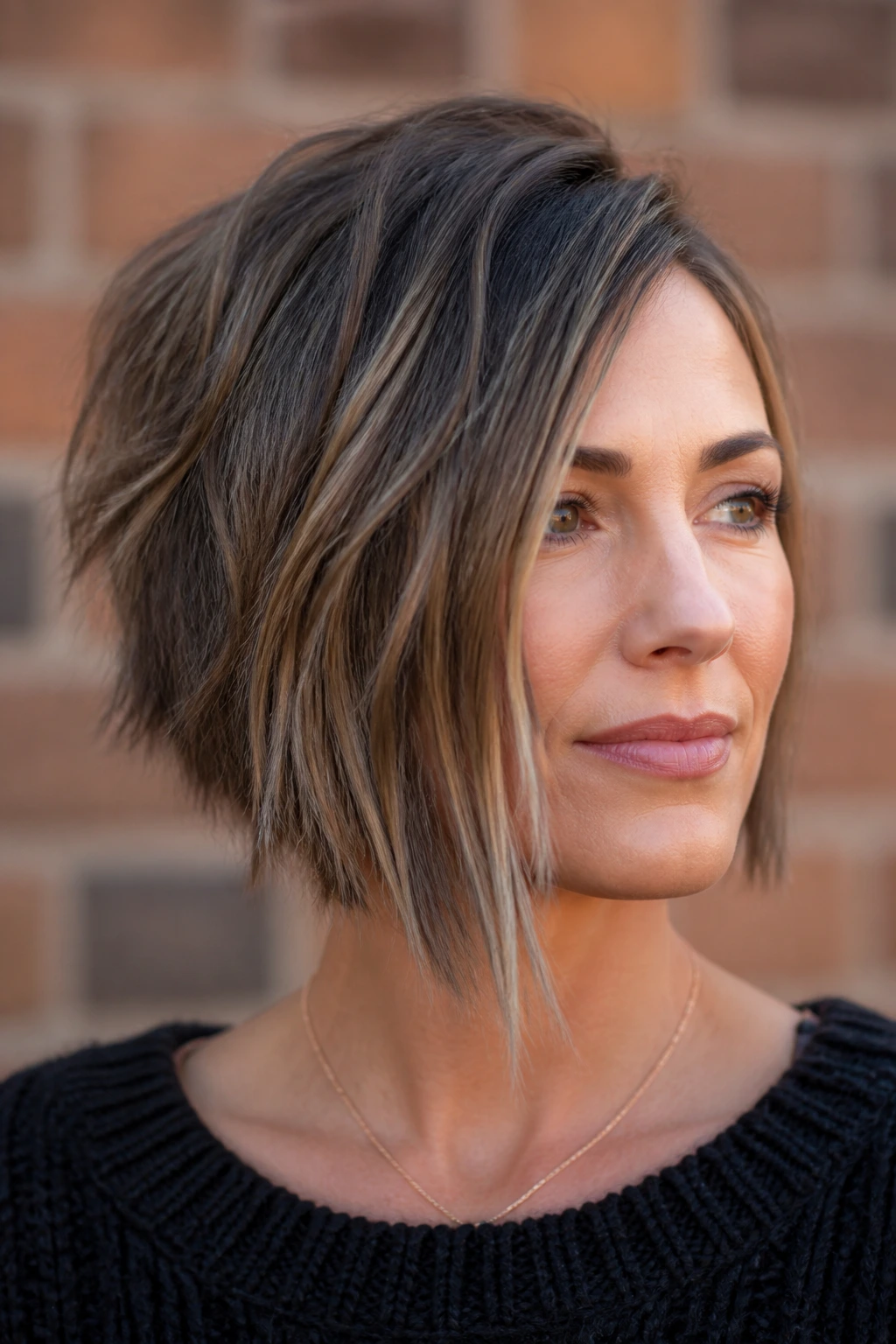
Piecey hair sounds casual, but it is not the same thing as messy hair. On thin strands, a piecey asymmetric bob can create texture without removing too much weight from the cut.
The best version uses separation at the ends. A bit of wax or paste pinched through random sections can make the hair look fuller, because the eye sees multiple shapes instead of one flat sheet. That’s useful when the density is low and you need the hair to suggest more movement.
This is one of those styles where product choice matters a lot. A sticky, heavy cream will clump the hair and expose gaps. A light wax warmed between the fingers gives a better result. Start small. You can always add more.
Piecey bobs work best when the haircut underneath is tidy. If the shape is already weak, styling tricks won’t save it. The haircut still needs a clean base.
22. Asymmetric Bob With Micro Layers
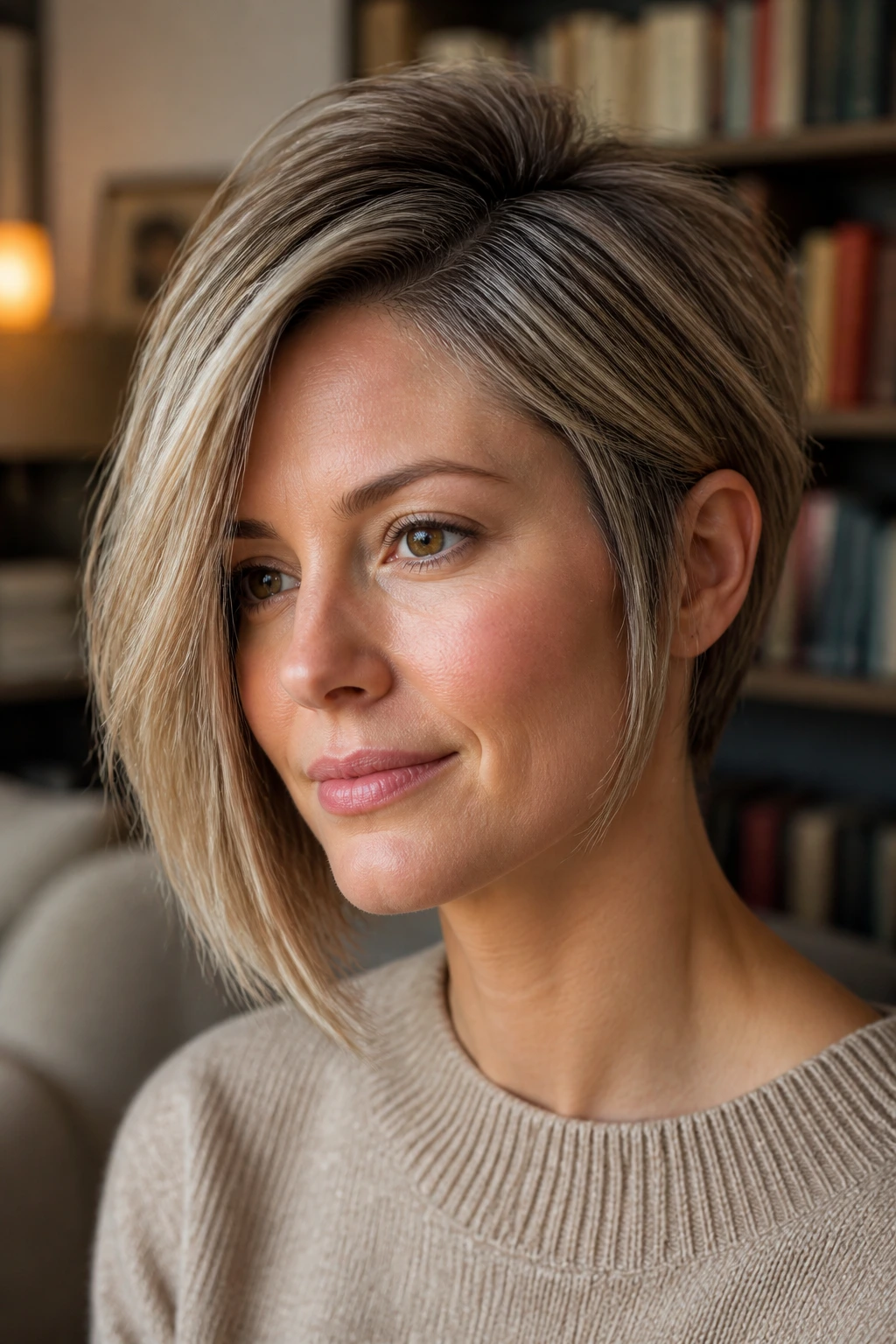
Micro layers are tiny, almost invisible layers cut inside the shape. They can help thin hair move without making the outline look thin, which is the whole problem with too many obvious layers.
The point is not to create big steps. It is to take a little weight out of places that make the hair collapse. A few careful snips can help the crown lift and stop the ends from hanging too heavily on one side.
This style is best for someone who wants a bob that still reads as a bob. The perimeter stays strong. The internal structure does the quiet work. It is a very good option if your hair is straight and slips flat within an hour of styling.
I would not let a stylist go wild here. Micro layers should stay micro. If you can see them easily, they are too big.
23. Chin-Skimming Bob With Soft Bend
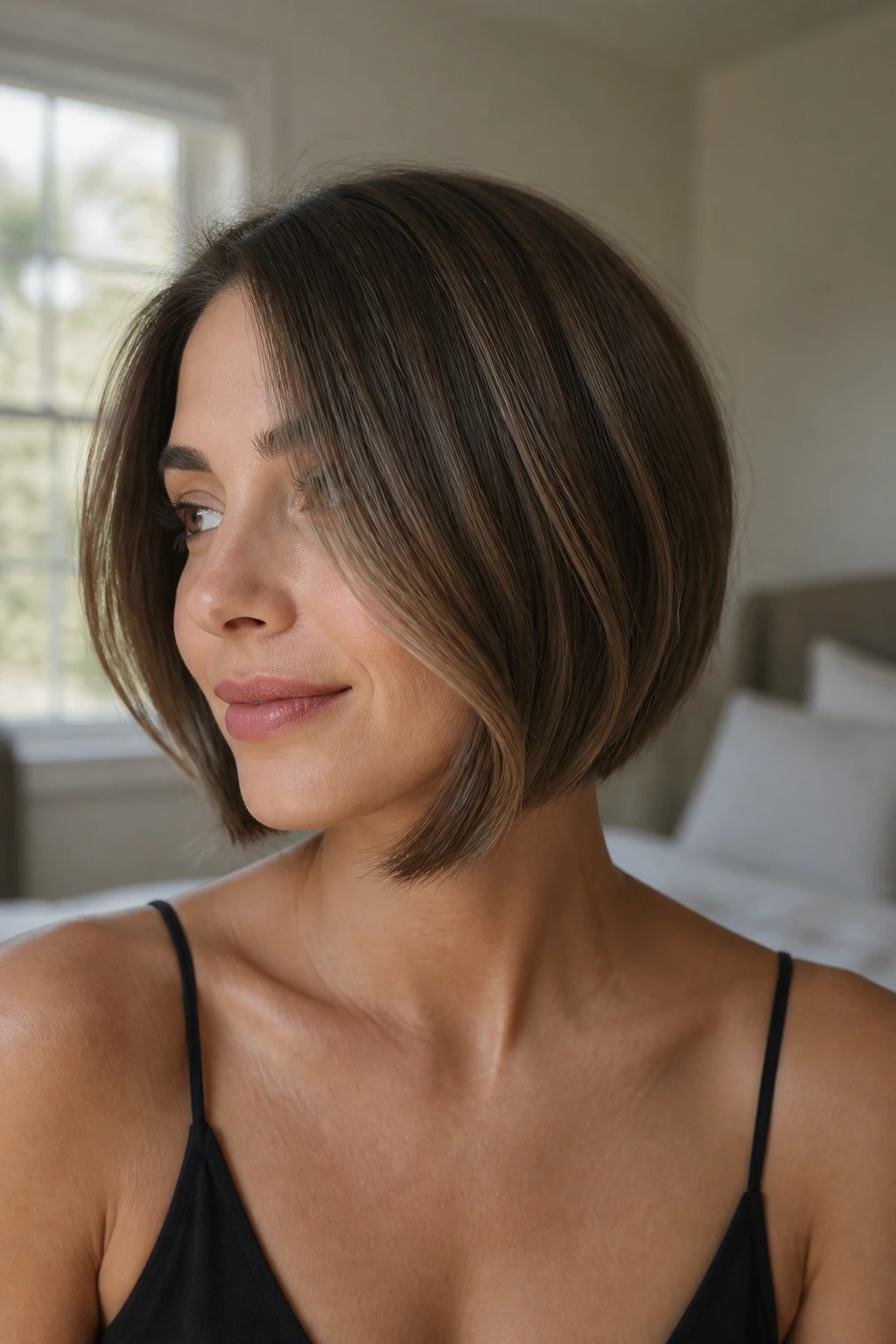
A soft bend at the ends can make thin hair look thicker because the movement stops the eye from seeing every strand separately. A chin-skimming asym bob gets that effect without needing a lot of heat or product.
The front can angle down slightly longer on one side, while the rest of the bob stays close to the jaw. That makes the haircut feel light but still controlled. It is a nice middle ground if you want something softer than a blunt bob and less fluffy than a wave.
I like this cut with a 1.25-inch curling iron or a round brush. You are not making curls. You are making a bend. That’s a different thing, and it matters. A bend gives shape without shrinking the length too much.
This one is especially good for people who want a haircut that plays nicely with glasses, earrings, and simple makeup. It frames the face without demanding a lot.
24. Asymmetric Bob With Peekaboo Highlights
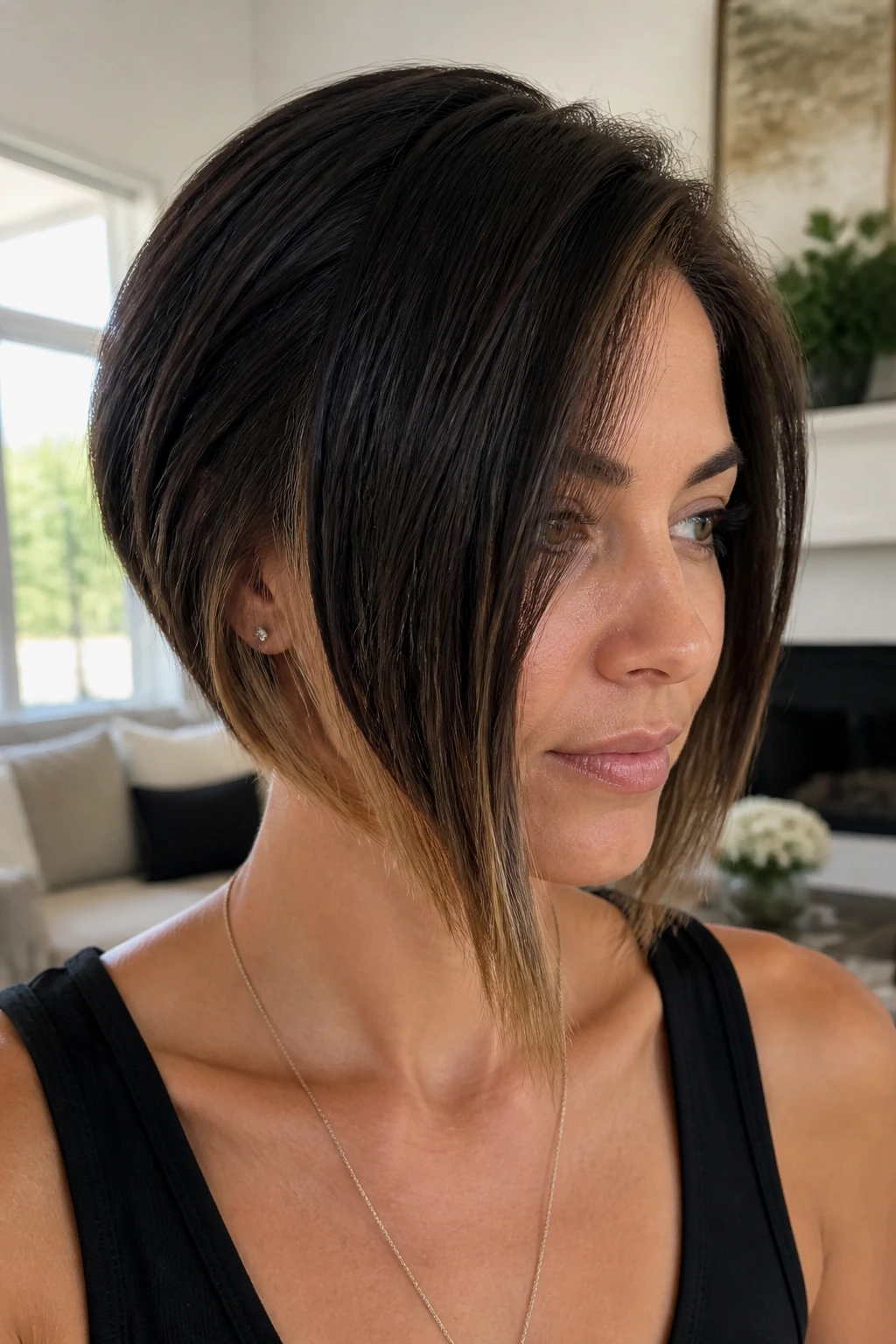
Color does not replace a good cut, but it can make an asymmetric bob read fuller. Peekaboo highlights placed under the longer side create depth, which helps thin hair look less one-dimensional.
The smartest version keeps the light pieces fine and scattered. Thick, stripey highlights can expose the density problem instead of hiding it. A few well-placed lighter ribbons under the top layer catch the eye and make the movement feel richer.
This is a good choice if your hair is flat but not fragile. The color contrast adds visual texture, and the asymmetry gives those lighter pieces a path to follow. The haircut and color end up doing different jobs, which is exactly what you want.
I’d avoid going too light on the shortest side. The contrast can make the asymmetry too obvious and draw attention away from the haircut’s line. Keep the brighter pieces where the length is strongest.
25. Rounded Asymmetric Bob
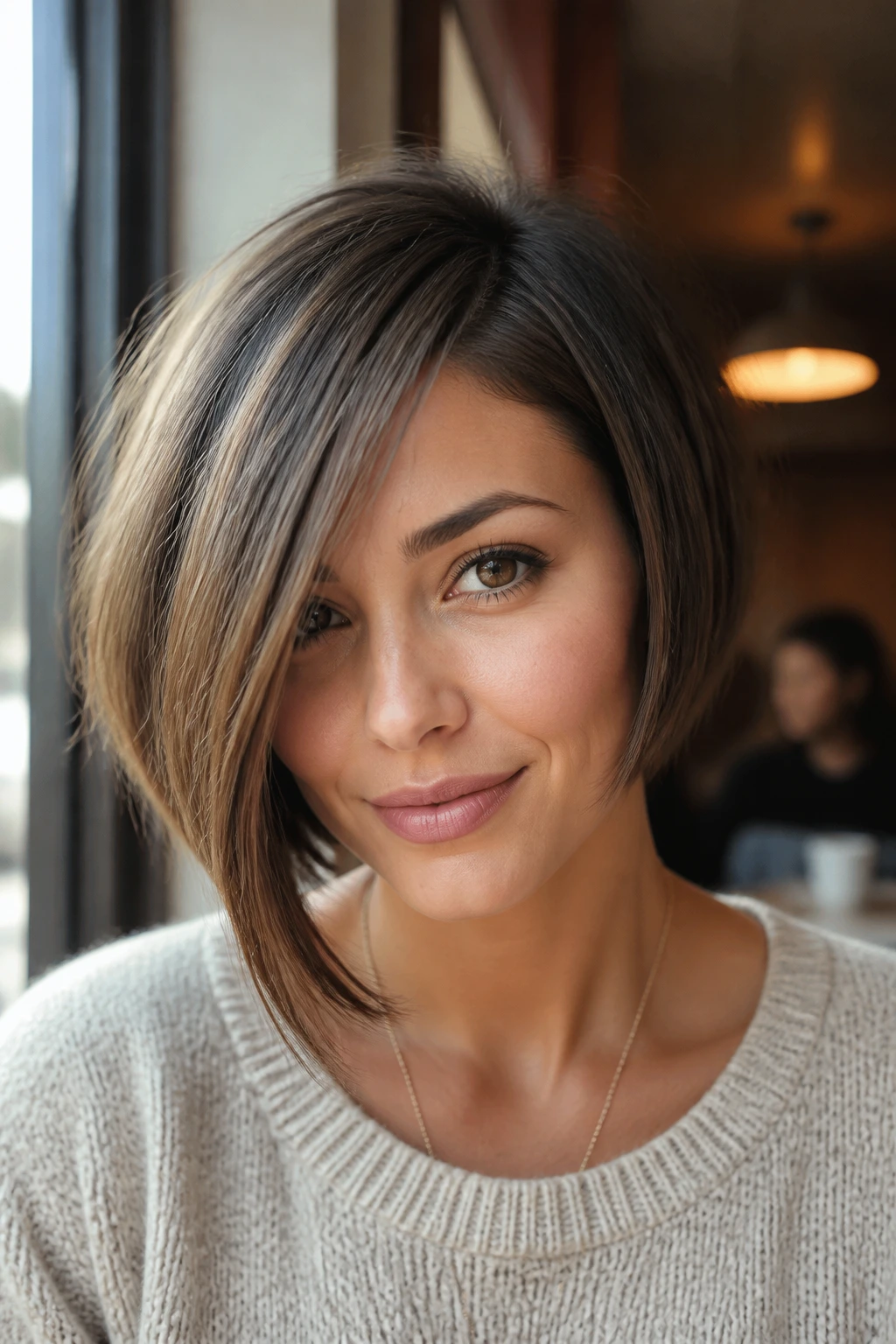
A rounded bob is softer than the sharp, angled versions, and that softness can be kinder to thin hair. The curve keeps the ends from looking stringy, especially if the hair naturally wants to fall forward at the sides.
This shape works well when you want a bob that feels full around the cheek and jaw. The asymmetry comes through the longer front side, but the overall silhouette stays curved instead of pointy. That can be flattering on wider faces or on anyone who feels chopped edges are too harsh.
I would keep the layers light. The round shape already gives the hair some lift. If you add too much texturizing, the curved outline loses its body and starts to look ragged.
A rounded asymmetric bob usually looks best with a soft blow-dry and a brush that turns the ends under just slightly. It is a small move, but it keeps the shape dense and neat.
26. Asymmetric Bob With Side Bangs
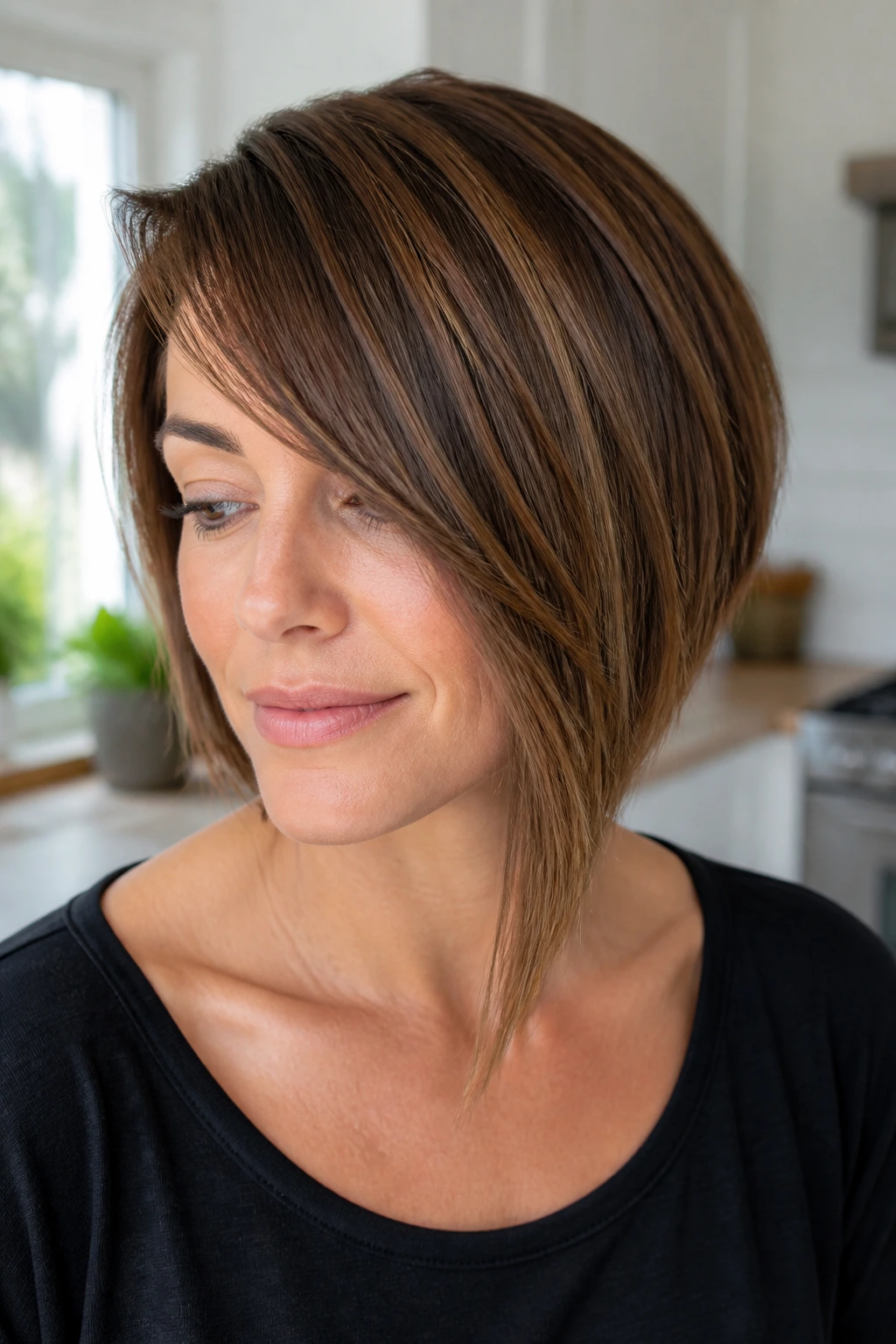
Side bangs and asymmetry make sense together. The bangs create a diagonal line across the forehead, and the bob carries that line downward. Thin hair often looks better when the haircut has one clear direction instead of a lot of competing pieces.
The fringe should be long enough to blend into the front of the bob. Short side bangs can be cute, but they can also disappear in fine hair. A longer sweep gives more control and more visual weight. It also grows out better, which is never a bad thing.
This cut is helpful if you want to hide a high forehead or soften strong brows. The bangs pull attention where you want it, and the bob keeps the rest of the look grounded. It is a useful combo, not a gimmick.
Styling is easy enough. Blow the bangs sideways with a small brush, then tuck or leave the shorter side depending on the mood. It changes the face shape fast.
27. Sleek Wet-Look Asymmetric Bob
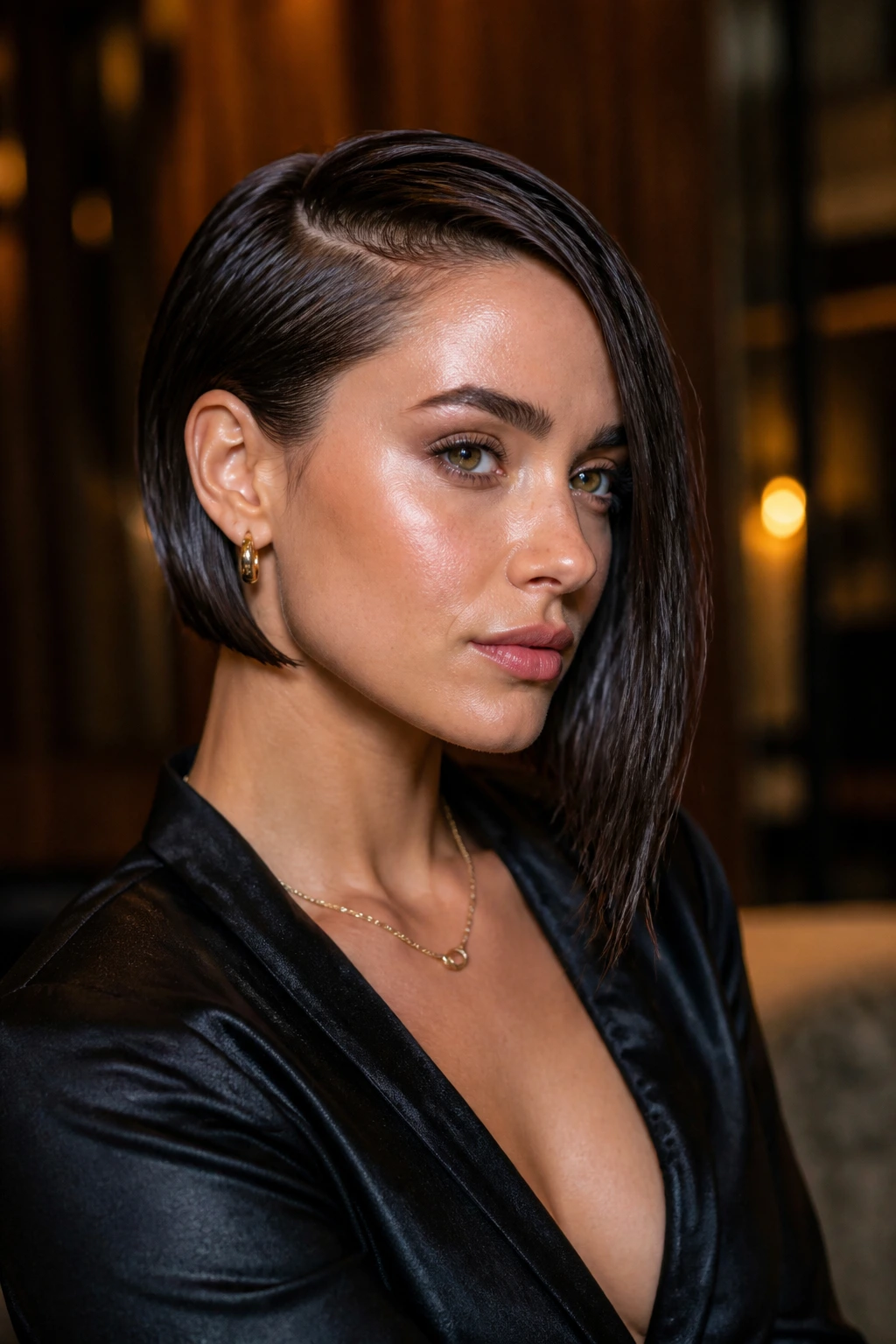
A wet-look bob is not an everyday cut for most people, but it can be a smart styling choice for thin hair when you want the shape to look controlled and deliberate. The slick finish keeps flyaways down and makes the asymmetry feel sharp.
The catch is that this look can expose scalp more than other styles if the hair is very sparse at the top. So I’d use it when the cut is already strong and the front density is decent. A gel or styling cream with hold is better than a heavy oil. Oil separates thin strands in a way that can look greasy fast.
This style works especially well for evening events or days when humidity has done you no favors. The haircut holds its line, and the product keeps the ends together. It is clean, dramatic, and slightly cool in the old-school sense.
If you try it, comb the longer side forward and flatten the shorter side back. That contrast is the whole point.
28. The Low-Maintenance Asymmetric Bob for Thin Hair
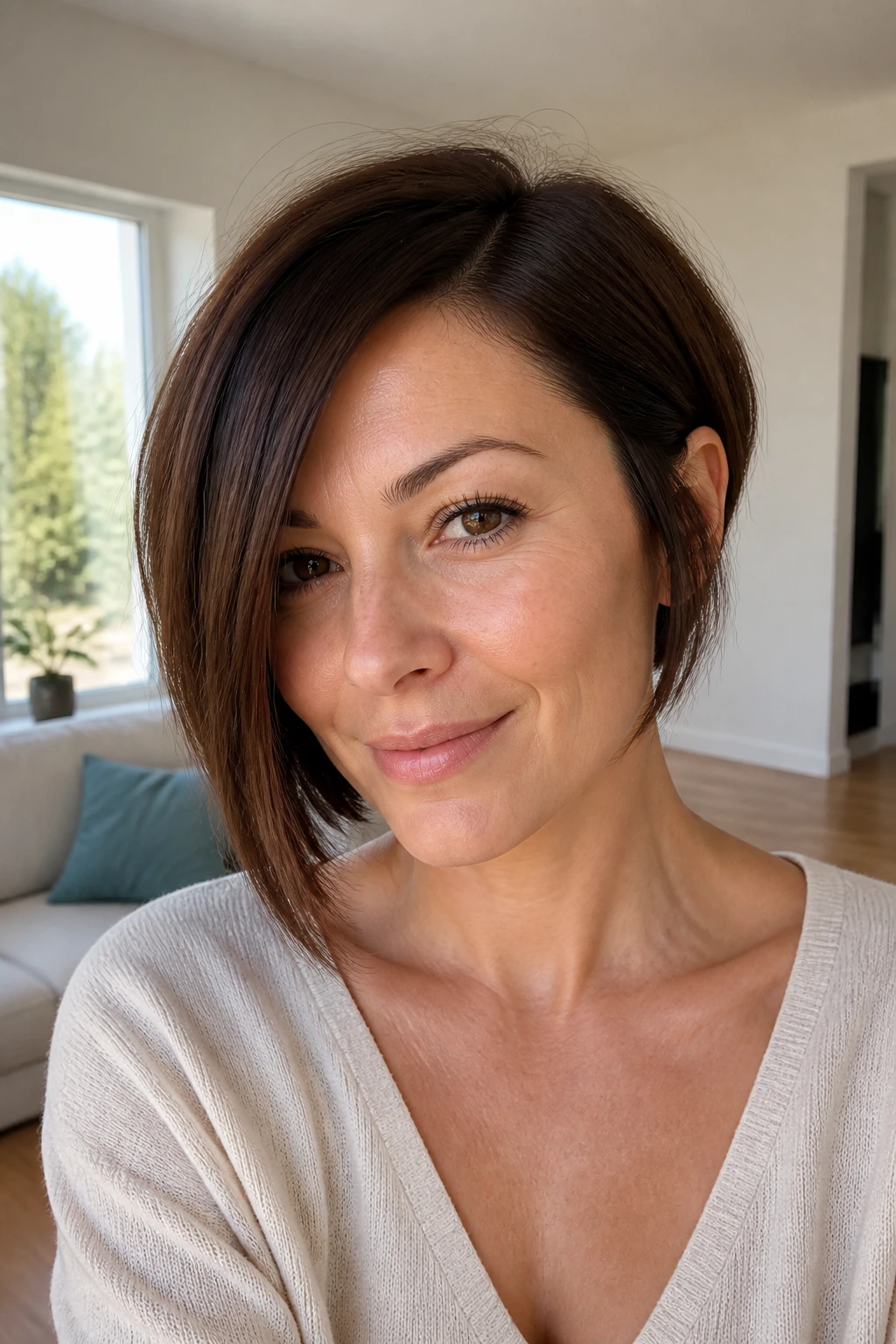
If you want the easiest version to live with, pick this one. It is a soft asymmetric bob with enough length to grow out cleanly, enough shape to stay interesting, and not so many layers that the ends go airy after one wash.
The stylist should keep the perimeter fairly strong, then add just enough internal shaping to stop the haircut from feeling heavy. The asymmetry can be subtle—one side a little longer, one side a little more tucked in. That restraint is what makes it low-maintenance. It does not scream for a perfect blowout every morning.
I like this version for people who are busy, a little lazy about styling, or simply tired of haircuts that need constant babysitting. You can air-dry it, rough-dry it, or give it a quick bend with a brush and move on. The cut still looks like itself.
And that is the whole point, really. A good asymmetric bob for thin hair should make your hair look easier to wear, not harder. The best one is the one that still behaves after a long day, a bad sleep, or a skipped styling step.
