



A bob can look expensive or awkward in the span of a half-inch. That’s the part people forget.
The best bob haircuts are not really about cutting hair short. They’re about choosing where the line sits, how the ends fall, and whether the shape works with your face and texture instead of fighting them. A clean bob at the jaw feels sharp. A softer collarbone bob feels easier. Both can look fresh, but they send very different messages.
Short hair is not always easy hair. A blunt edge can make fine hair look fuller, while thick hair often needs a little internal shaping so it does not puff out like a triangle. Bangs change the whole read of the cut. So does the part. So does whether the ends are polished, feathered, or left a little piecey.
The good news is that modern bob haircuts have room to breathe. They can be sleek, shaggy, rounded, angled, curly, airy, or brutally clean. And the right one usually has less to do with chasing a trend and more to do with getting a shape that looks good on your actual head, on your actual mornings, with your actual brush.
1. Blunt Chin-Length Bob

A blunt chin-length bob is the haircut people think of when they want hair that looks sharp without looking fussy. The ends sit in one clean line, usually right around the chin, and that line does a lot of heavy lifting. It makes fine hair look denser. It makes straight hair look polished. It also puts the face front and center, which is either a blessing or a dare, depending on your mood.
Why It Looks So Clean
The magic is in the perimeter. A straight, even edge gives the eye one place to land, so the haircut reads as crisp instead of messy. If your hair is naturally straight or only slightly wavy, this is one of the easiest bob haircuts to keep looking neat.
- Ask for a line that hits just below the chin if you want a softer feel.
- Keep the ends blunt, not wispy.
- Blow-dry with a paddle brush or a flat brush for the smoothest finish.
- Use a light serum, about a pea-sized amount, only on the mid-lengths and ends.
Tip: If your neck is short, ask for the bob to skim the jaw rather than sit exactly on it. That tiny shift can keep the cut from feeling boxy.
2. French Bob With Bangs

A French bob with bangs does one thing better than most cuts: it makes hair look styled even when it is not trying very hard. The length usually lands between the cheekbone and the jaw, and the fringe brings the whole thing into focus. It has attitude, but not the loud kind.
Short fringe changes the balance. The eye goes straight to the face, which is why this cut feels so lively in photos and in real life. It suits people who like a little softness around the forehead and do not mind some maintenance on the bangs, because bangs do need attention. They always do.
You can air-dry this cut for a slightly undone feel or blow-dry the fringe first and let the rest fall where it may. A round brush on the bangs, then a quick bend through the ends with a one-inch iron, is usually enough. Leave the crown a little flat and the shape starts to feel effortless instead of overworked.
3. Italian Bob
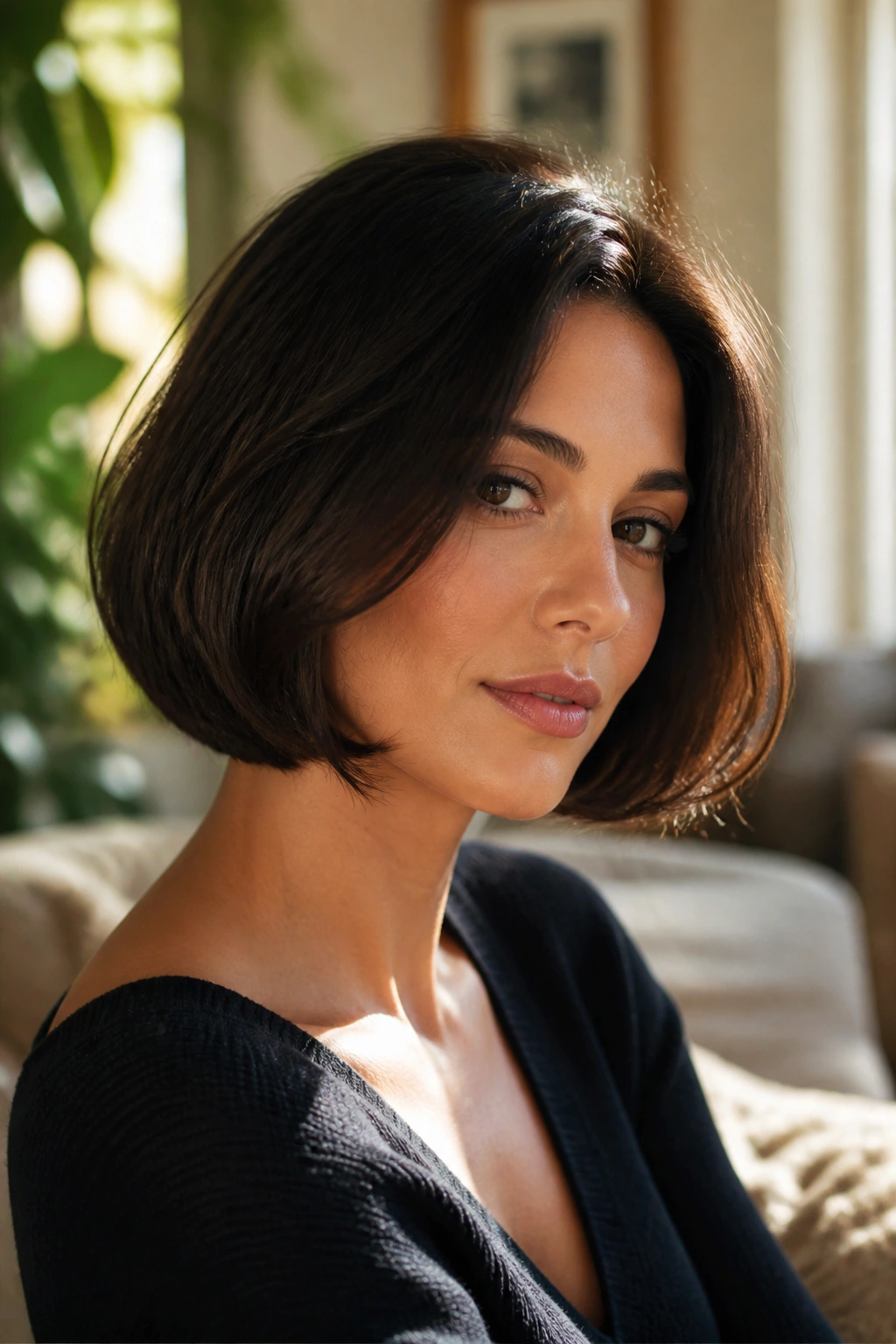
Why do Italian bobs look so expensive? Because they lean into fullness instead of trying to flatten everything down.
This cut usually sits a touch longer than a classic chin bob, with soft volume at the sides and ends that turn in just enough to make the shape feel lush. It is not stiff. It is not severe. The best versions have a little air around the face and a bit of swing when you move.
What Makes It Different
The Italian bob is all about body. You want the roots lifted and the ends rounded, not pinned flat to the head. A large round brush, a blow-dryer with a concentrator nozzle, and a medium-hold mousse at the roots can do most of the work.
It suits medium to thick hair especially well, because the hair has enough weight to hold that glossy curve. If your hair is fine, you can still wear it, but you will want a light volumizing product and a cut that avoids too much thinning near the bottom.
How to style it: rough-dry to about 80 percent, then smooth the top layer with a brush and let the ends tuck under a little. Do not chase perfection. The charm is in the movement.
4. A-Line Bob
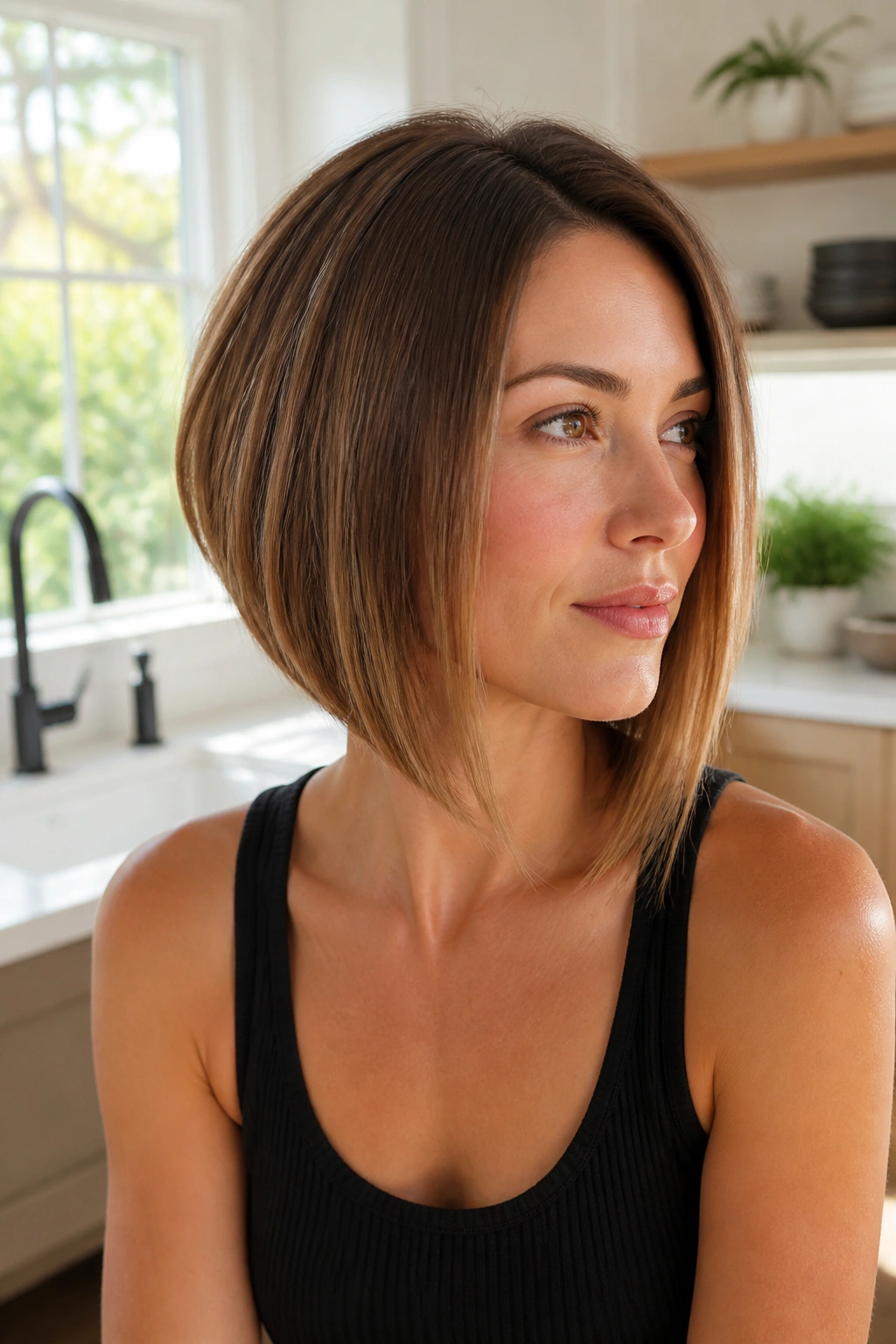
Picture hair that is slightly shorter in the back and longer toward the front, and you have the A-line bob in a nutshell. It is one of those cuts that sounds technical but wears easily once it is cut right.
If your hair keeps flipping out at the nape, this shape can help. The longer front pieces give the cut some swing, while the shorter back keeps the neckline tidy. It looks especially good on straight to softly wavy hair, where the angle can actually be seen.
- Ask for a gentle angle if you want something subtle.
- Ask for a stronger drop in the front if you want drama.
- Keep the graduation soft if your hair is thick.
- Use a flat iron only on the front pieces when they need a little polish.
Watch for this: if the angle is too steep, the haircut can start feeling dated fast. A soft slope usually reads fresher and easier to wear.
5. Inverted Bob

The inverted bob is the A-line bob’s sharper cousin. It carries more lift at the back, more length at the front, and a little more attitude all around. When it is cut well, it gives the head shape and makes the jawline look stronger.
It also shows every mistake. No sugarcoating that.
The reason this haircut still works is simple: it creates structure without needing a lot of styling. The back sits close enough to the head to keep things neat, while the front drapes down and softens the look. That contrast is what makes it feel modern.
You do need regular trims, though. Once the back grows out too much, the angle loses its point and the whole shape starts looking like it missed its appointment. If you want a cut that stays clean, this one asks for a little commitment.
6. Layered Bob

A layered bob is the answer when a blunt bob feels too solid. It keeps the bob shape, but breaks up the mass so the hair can move. That matters a lot if your hair is thick, heavy, or wants to puff at the ends.
Unlike a blunt bob, this cut does not rely on one hard line. Internal layers remove weight from the middle and bottom, which helps the hair fall better and dry faster. The result can feel lighter without turning into a shag.
What To Ask For
- Soft internal layers if you want movement without choppy ends.
- Face-framing pieces if you want the front to bend around the cheekbones.
- Minimal layering at the crown if your hair is already flat up top.
- A dry-cut or curl-by-curl approach if your texture is wavy or curly.
A layered bob is a good compromise cut. It gives thick hair room to breathe, but it still looks tidy enough for someone who hates messy ends. That balance is the point.
7. Textured Bob
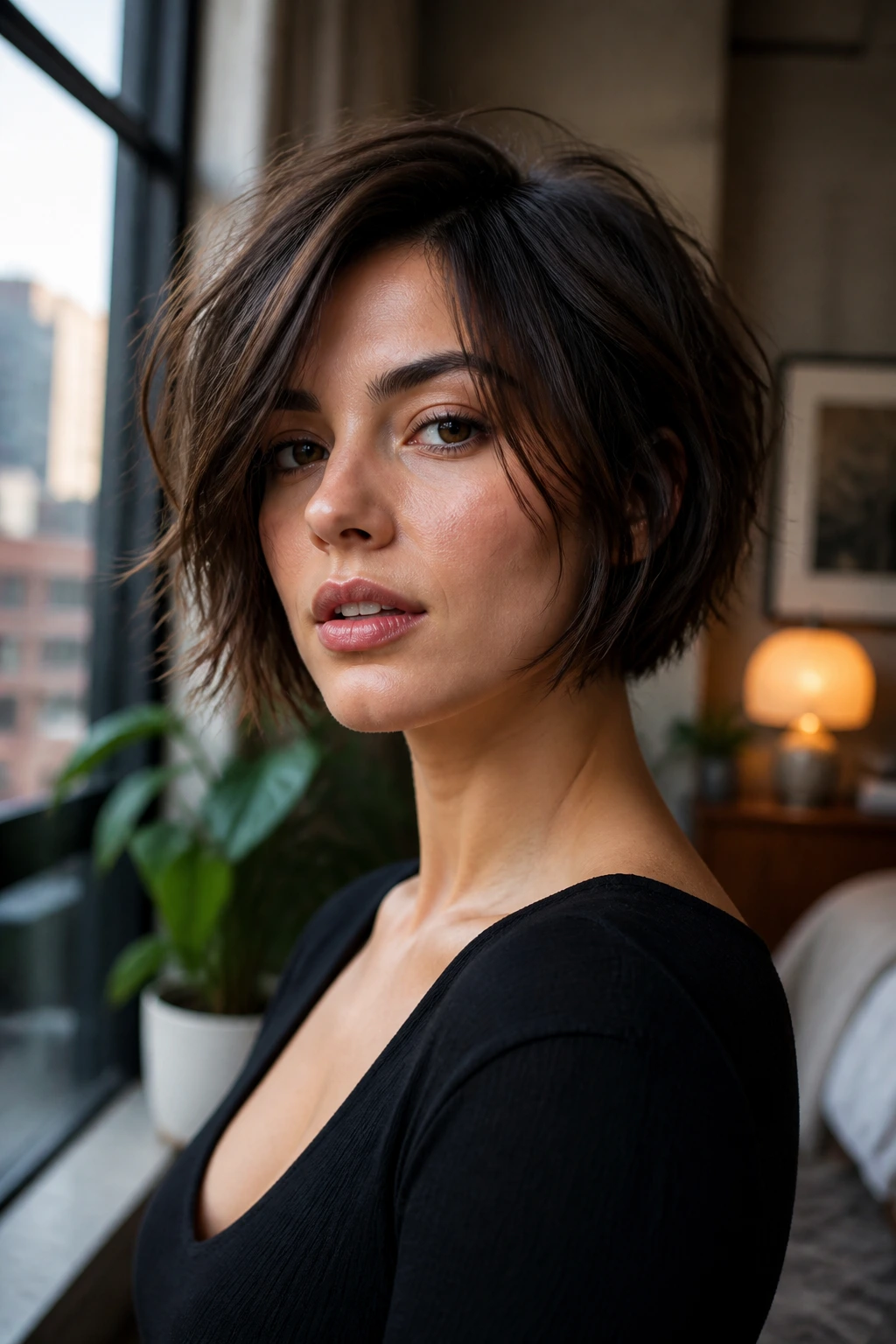
A textured bob is what happens when the haircut stops pretending hair should behave like a helmet. The ends are softened, the shape has a little roughness, and the whole thing looks better when it is not too neat. That is the appeal.
Why It Feels Easy
Texture takes the edge off a bob that might otherwise look too severe. A stylist will often point-cut the ends or slice into the bottom edge so the lines do not sit like a ruler across the jaw. It works well for hair that has some natural wave, but it can also help straight hair feel less rigid.
- Use a texturizing spray on dry hair, not wet hair.
- Scrunch the ends with your hands after drying.
- If the top looks too flat, lift small sections at the crown with a curling iron for a 1-inch bend.
- Skip heavy oils near the ends; they can collapse the texture.
The trick is not to overdo it. A little separation is enough. Too much, and you end up with a cut that looks like it forgot to be finished.
8. Wavy Bob

A wave softens a bob faster than almost anything else. It takes the hard line of the cut and loosens it just enough to feel easy, which is why wavy bob haircuts are so common for people who want movement without losing shape.
The best part is that you do not need perfect curls. A loose bend through the mid-lengths can make the whole haircut feel lighter. If your hair already has wave, a diffuser and a small amount of curl cream may be all you need. If it does not, a one-inch iron and alternating directions through the sections will do the job.
Leave the ends a touch straighter if you want the style to feel fresh rather than pageant-y. That tiny detail matters. Too much uniform curl can make a bob look dated fast.
9. Curly Bob

Curly bobs work best when the shape is cut for curl, not against it. That means the stylist needs to see how your curls sit when they are dry and where they spring up once they lose water. Cutting curly hair wet and hoping for the best is a gamble I would not take.
Why does this cut look so good when it is done right? Because it lets the curls form a clear silhouette instead of collapsing into one bulky mass. Rounded shaping around the perimeter helps the curl pattern stack in a way that looks intentional without making the head look wide.
How To Keep the Shape
Start with a leave-in conditioner, then a curl cream or gel, using about a nickel-sized amount per section if your hair is shoulder length. Diffuse on low heat until the hair is about 80 percent dry, then stop touching it. Seriously. That last part makes more difference than people want to admit.
A curly bob is at its best when it keeps some spring. If the curl is brushed out too much, the cut loses the shape that makes it special.
10. Shaggy Bob
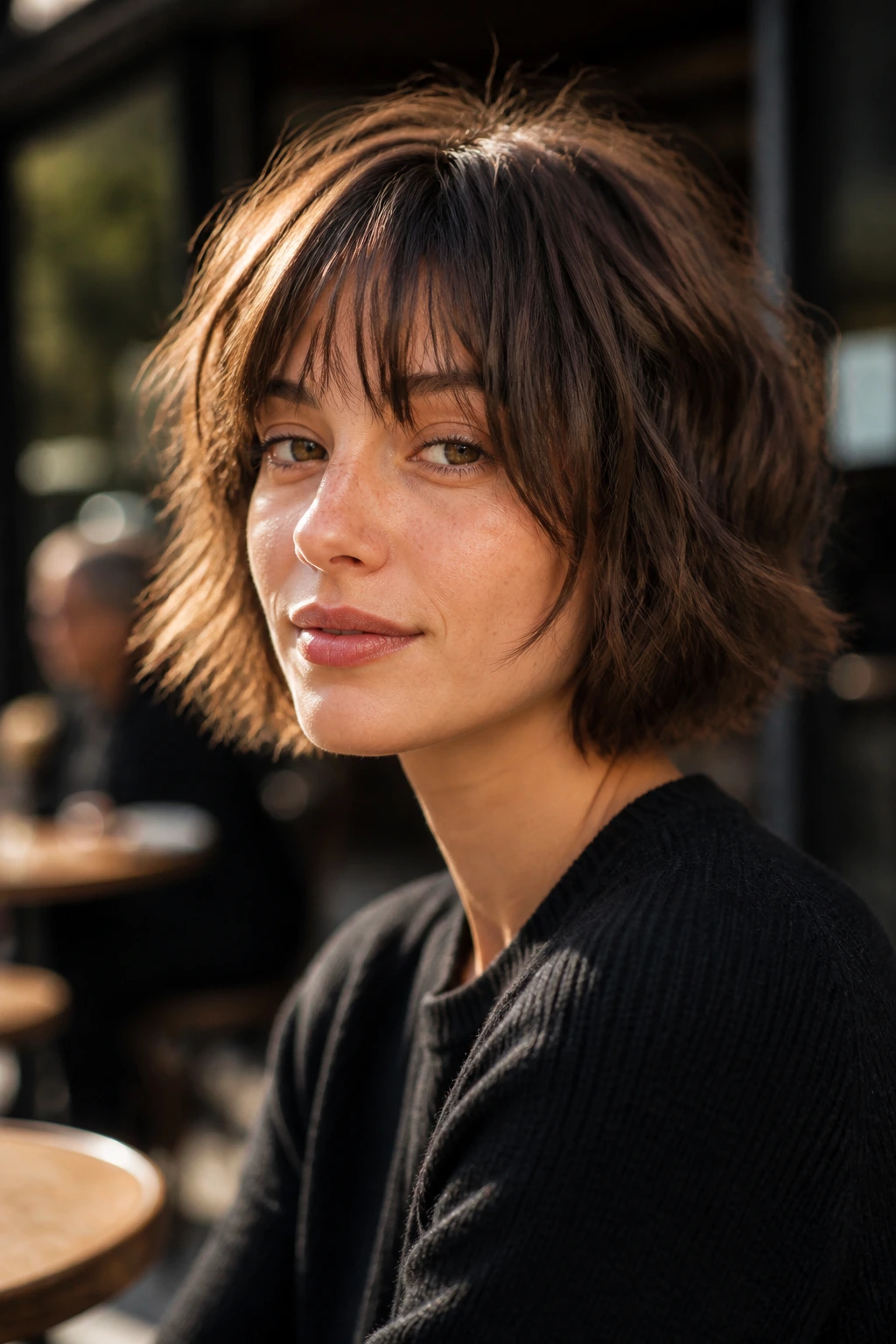
A shaggy bob has one job: make the haircut feel lived-in instead of rehearsed. The layers are more visible, the ends are softer, and the fringe often comes with a little piecey movement. It is a good cut for anyone who wants a bob but does not want the whole thing to feel too precise.
This is the haircut I think people underestimate. It can look casual in the best way, but the structure still matters. If the layers are too short, it turns frizzy. If they are too long, the shape gets lazy. The sweet spot is a bob that keeps a clear outline while letting the inside move around.
- Best for hair with wave or bend.
- Works well with a dry texture spray.
- Needs a little air-dry time to shine.
- Looks better slightly imperfect than over-smoothed.
If your style leans relaxed, this one is hard to beat.
11. Box Bob
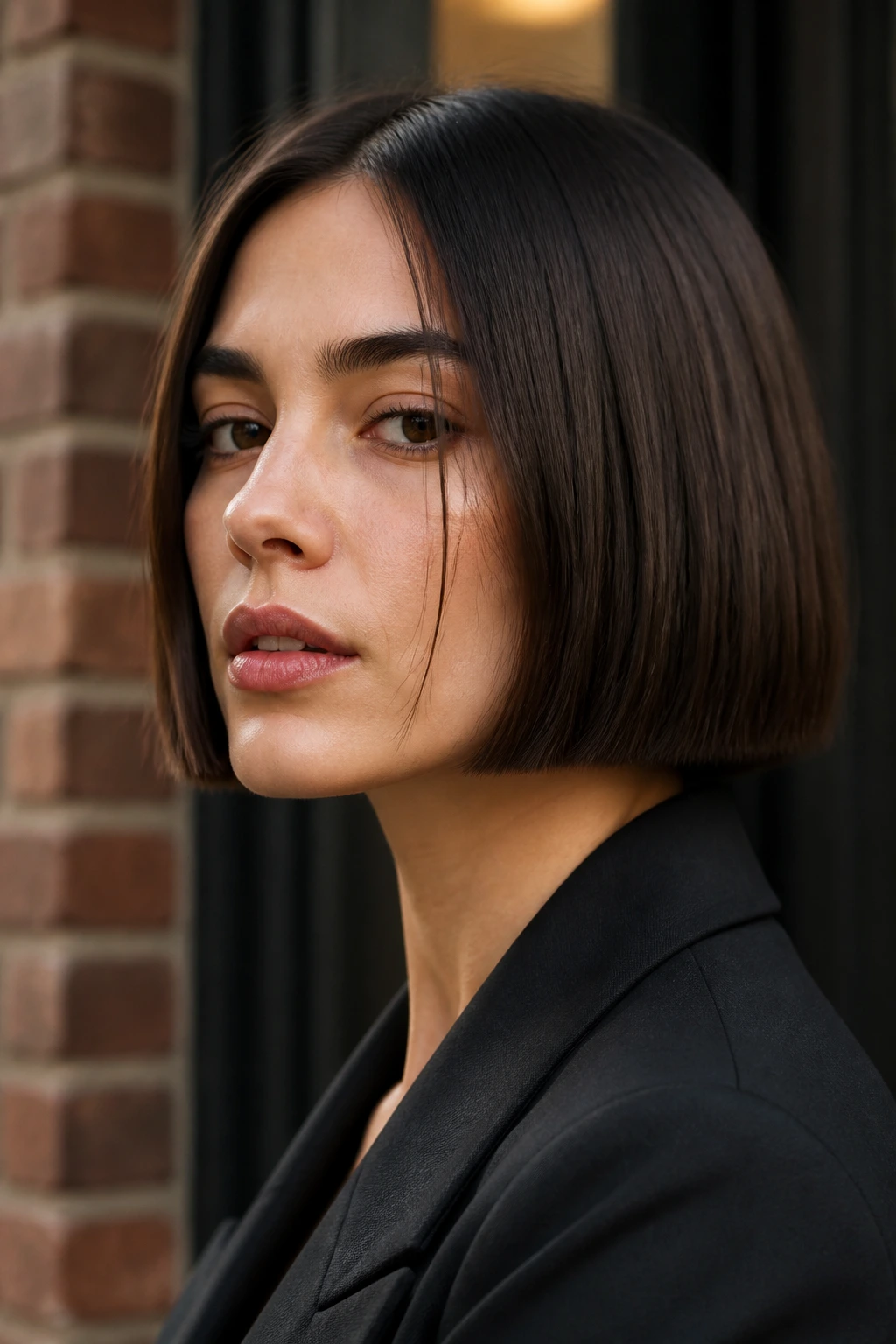
A box bob is blunt in a different way. The outline feels square, the sides hold more width, and the whole haircut reads as solid and graphic. It is not soft. That is the point.
The shape can be gorgeous on straight hair because the edges stay visible. It also works when you want the jawline to look a little stronger. The downside? If your hair is very thick and not trimmed carefully, the box shape can get bulky fast. A good stylist will remove weight inside the cut without breaking the outer line.
The box bob looks best with a smooth finish, a center or soft side part, and very little fluff at the ends. If you want airy and undone, this is not your cut. If you want crisp and deliberate, it is right in the pocket.
12. Sleek Center-Part Bob

A center-part bob is pure clean lines. It can feel modern in a quiet way, mostly because nothing about it is trying to shout. The middle part puts the face in balance, and the straight sides let the haircut sit close and neat.
Unlike a textured bob, this one depends on polish. A flat iron, a smoothing cream, and a light touch at the roots are usually enough. You want the hair to move as a single sheet, not split into a hundred tiny pieces. That is what gives the cut its sharpness.
Best for straight to slightly wavy hair. Best for people who like a put-together look with minimal fuss. If your face is long, the middle part can be lovely, but the length of the bob matters; a chin-grazing or just-below-chin cut usually feels softer than one that sits too high.
13. Side-Part Bob

A side part does something oddly powerful to a bob. It adds lift where the hair wants to lie flat and creates a gentle sweep across the face, which can make the whole haircut feel less severe in one move.
What Makes It Different
The asymmetry is subtle, but you feel it. One side gets more volume. The other side follows the line of the cheek and jaw. That little imbalance keeps the cut from feeling flat, especially if your hair naturally falls toward one side anyway.
- Use a tail comb to set the part while hair is damp.
- Blow-dry the root opposite the part first for more lift.
- Tuck one side behind the ear if you want the cheekbones to stand out.
- Keep the ends blunt or slightly beveled so the part stays the focus.
A side-part bob is one of the easiest ways to make a short cut feel fresh again without changing the length. Sometimes that small shift is enough.
14. Collarbone Bob

The collarbone bob, or lob, is the safest way to go short without feeling short. It skims the collarbone, which gives it enough length to tie back, tuck, or wave without a lot of drama. That is why so many people keep coming back to it.
It is also one of the least temperamental bob haircuts. If your face shape changes a little with the part, fine. If your styling takes ten minutes instead of thirty, also fine. The cut holds up because the length gives it room to fail gracefully.
I like this length for people who want shape but are nervous about commitment. It grows out cleanly. It works with straight, wavy, and even loose curly textures. And if you want it to look more styled, a soft bend through the mid-lengths is enough. No need to overthink it.
15. Jaw-Grazing Bob

Why does a jaw-grazing bob look so strong? Because it lands right where the face changes shape. The cut sits close enough to the jaw to frame it, but not so long that it disappears into the shoulders.
That makes it a little bolder than a collarbone bob. It also means the exact length matters. Half an inch can change the whole feel. A cut that ends a touch above the jawline can look sharper, while one that hits just below it can feel softer and easier to wear.
How To Make It Work
If you have a wide jaw or a square face, adding a soft bend or side part can keep the line from feeling too rigid. If your hair is fine, blunt ends help it look fuller. If it is thick, a small amount of internal weight removal keeps it from ballooning out at the bottom.
This is a cut with opinions. It knows what it is doing.
16. Rounded Bob

A rounded bob curves inward around the ends so the shape follows the head instead of flaring away from it. The result feels polished, but not stiff if it is cut with a light hand. It is a nice middle ground for someone who wants neatness without the hard edge of a blunt bob.
The roundness matters most at the sides and nape. A stylist might leave the crown a bit fuller and then taper the length so the edges bend under. On straight hair, a round brush can reinforce the shape. On wavy hair, a smoothing cream and a quick bend with a blow-dryer usually do the job.
- Best for medium-density hair.
- Easier to keep smooth than a heavily layered bob.
- Looks tidy even when it is slightly grown out.
- Can feel heavy if too much length stays at the bottom.
If you like hair that sits calmly and does not fight your clothes, this cut earns its keep.
17. Stacked Bob

A stacked bob builds height in the back by layering the hair shorter at the nape and leaving more length toward the front. You can feel the shape from the side before you even look in the mirror. That’s the whole point.
It gives fine hair a lift and takes some bulk out of dense hair near the back of the head. The line can be soft or dramatic, depending on how much stacking the stylist builds in. The dramatic version has a sharper slope. The softer version still looks tidy but feels less architectural.
The haircut does need maintenance, though. Once the back grows out, the stacked effect starts to lose its shape and the profile gets flatter. If you like a cut that stays crisp between appointments, this one rewards that effort. If you hate trims, maybe skip it.
18. Asymmetrical Bob
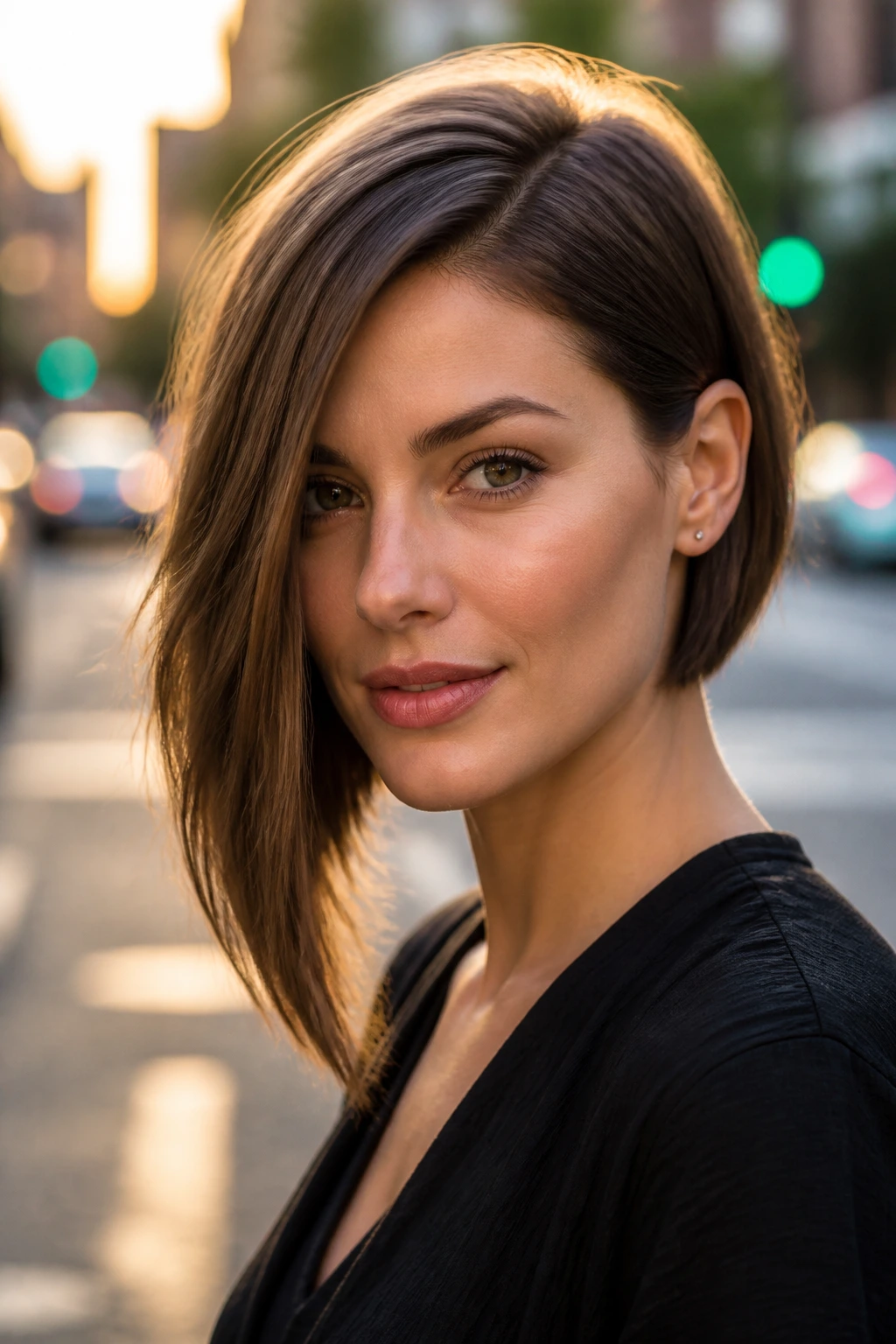
One side longer than the other. That’s the short version, and honestly it’s enough to explain why this cut still works.
The asymmetrical bob feels modern because it breaks the expected shape without turning into a costume. The longer side can skim the jaw or collarbone while the shorter side opens up the face. That difference gives the haircut motion even when the hair itself is straight.
It looks best when the length difference is clear but not cartoonish. A subtle asymmetry is easier to wear day to day. If the contrast is too extreme, the cut can start to read more fashion-week than practical. For most people, that is a tradeoff they do not need.
Best for: anyone who wants a bob with a little edge and does not mind a shape that is a touch less classic.
19. Micro Bob

A micro bob is short enough to feel a little daring, usually sitting around the cheekbone or just below the ear. It can be sharp, playful, and honestly very chic when the proportion is right. It is also the kind of haircut that makes earrings work harder.
Who It Suits
This cut suits straight to slightly wavy hair best, because the line needs to stay visible. If your hair is very curly or very dense, a micro bob can puff outward unless it is shaped carefully. The shorter the cut, the more every millimeter counts.
- Ask for a neckline that stays neat.
- Keep the ends blunt if you want thickness.
- Use a lightweight cream, not a heavy balm.
- Trim every 4 to 6 weeks if you want the length to stay crisp.
The micro bob has no patience for half-measures. Done well, it looks fresh and sure of itself.
20. Lob

The lob is the bob for people who like options. It is long enough to tuck behind the ears, long enough to braid in a hurry, and short enough to feel like an actual haircut. That balance is why it never really goes away.
It tends to be the easiest bob haircut to live with. You can wear it straight, add loose waves, or let it air-dry if the cut is layered correctly. It works for fine hair when you want fullness at the ends, and it works for thick hair when the weight is cleaned up near the bottom.
The main thing is proportion. If it sits too close to the shoulders without any shape, it can look tired. A little bevel at the ends or a face-framing layer keeps it awake. Small fix, big difference.
21. Graduated Bob

A graduated bob looks a lot like a stacked bob at first glance, but the graduation is softer and often more blended. The back is shorter, yes, but the layers are built in a way that lets the hair fall more smoothly from back to front.
Why choose this over a blunt cut? Because it creates shape without making the haircut feel blocky. Graduation adds lift at the crown and still gives the front enough length to soften the face. It is a good choice if you want a bob that has structure but not too much edge.
The best versions use careful internal layering so the back does not feel heavy. You want the profile to be tidy, not bulky. And if you wear glasses, this cut can sit nicely with frames because it keeps the line away from the temples just enough to avoid crowding.
22. Razor-Cut Bob

A razor-cut bob has softer, airier ends because the hair is cut with a razor instead of only with scissors. That changes the texture of the edge right away. The haircut looks a little lighter, a little more piecey, and a little less blunt.
It is a smart choice for hair that feels heavy in a traditional bob. The razor can remove weight without making obvious layers, which gives the hair movement while keeping a clean outline. On very fine or fragile hair, though, too much razor work can leave the ends looking thin, so this is one of those cuts that needs a steady hand.
- Ask for soft ends, not shredded ones.
- Use a small amount of styling cream.
- Blow-dry with your fingers first, then smooth the top layer.
- Avoid over-brushing once it is dry.
A razor-cut bob works best when it looks touched, not overdone.
23. Choppy Bob
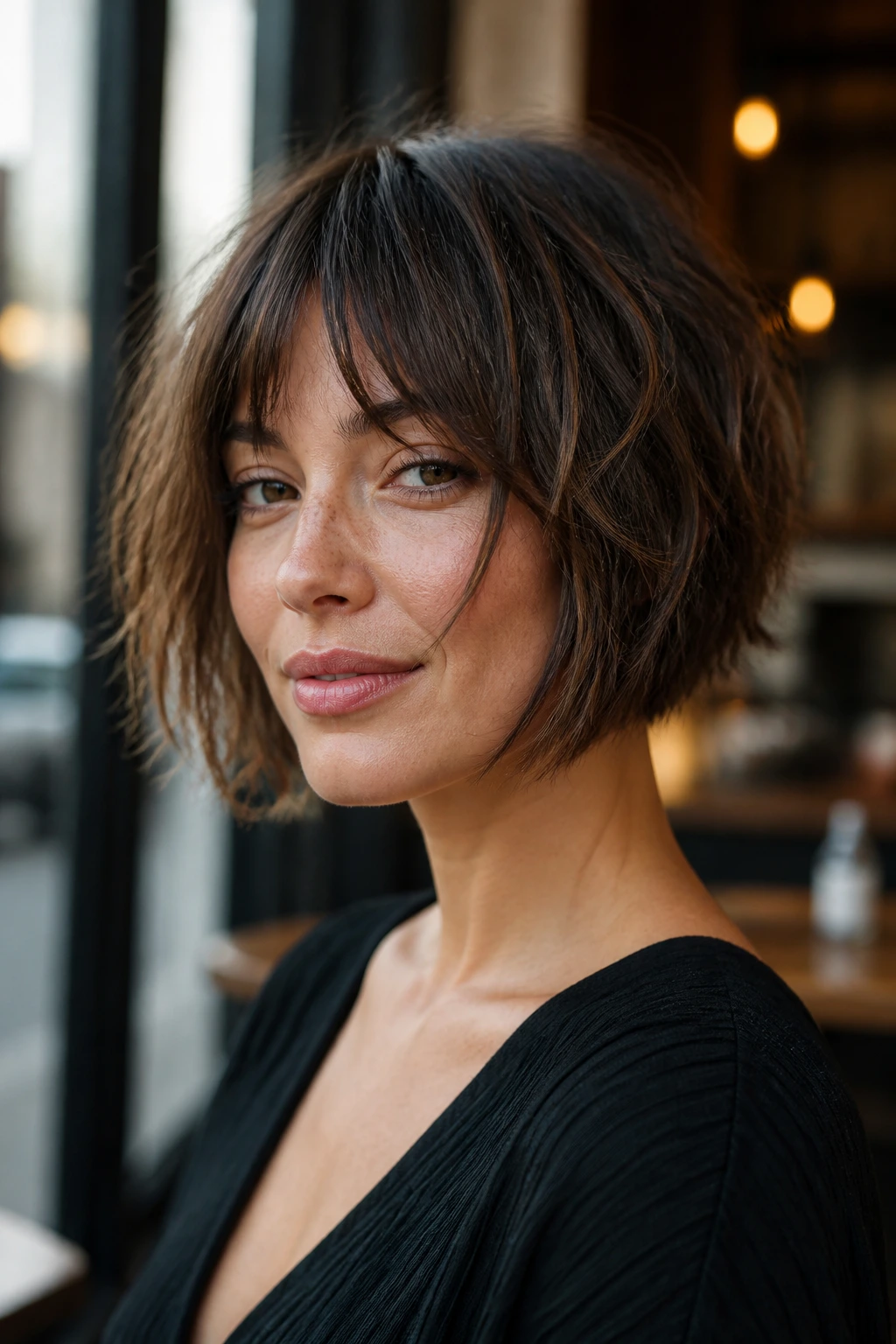
A choppy bob is the cousin of the textured bob, just with more visible piece separation. The ends are uneven on purpose, which gives the haircut a bit of bite. It is a good fit if you like hair that looks like it has some movement even on a lazy day.
The important part is balance. Too much choppiness can make the cut look broken. Too little, and it just becomes another layered bob. The sweet spot is a shape that still reads as bob, but with little shifts in length that make the eye move across it.
This is one of the easiest cuts to style with a little matte paste or dry texture spray. Warm a pea-sized amount in your hands, then pinch sections of the ends. That’s enough. The hair should look separated, not crunchy. Nobody needs helmet hair in 2026 or any other year.
24. Undercut Bob

An undercut bob hides or shows a shorter section beneath the top layer of hair. Sometimes it is only at the nape. Sometimes it runs a little higher. Either way, it removes bulk where thick hair tends to balloon out, and that alone can change the whole shape.
Unlike a traditional bob, this one can feel unexpectedly light. The top layer still gives you the bob outline, but the undercut keeps the weight from building in the wrong spots. That makes it useful for dense hair, especially if the nape gets hot or puffy.
Who should get one? People with thick hair who want a cleaner fall and do not mind a slightly edgier feel. Who should skip it? Anyone who wants a very soft grow-out, because undercuts can be a little awkward as they come back in. Not impossible. Just a little annoying.
25. Curtain-Bang Bob

Curtain bangs can change a bob more than a full fringe sometimes, because they frame the face without sealing it off. The center opens gently, the sides fall along the cheekbones, and the haircut gets a softer front edge without losing the bob shape.
Why It Works
Curtain bangs are useful when you want movement around the face but do not want to commit to a heavy forehead line. They also grow out more kindly than blunt bangs, which is one reason people keep returning to them.
- Blow-dry the bangs first with a round brush.
- Keep the shortest point around the brow or upper cheekbone.
- Let the rest of the bob stay simple.
- Use a light styling cream so the fringe does not separate too much.
This is a good pick if you want your bob to feel a little more relaxed and a little less severe.
26. Bottleneck-Bang Bob

A bottleneck bang starts narrow at the center and opens out toward the sides, which gives the forehead a soft frame without covering too much of it. Paired with a bob, it looks a little lived-in and a little editorial at the same time.
The shape matters because it helps the fringe blend into the haircut instead of sitting on top of it. That makes the bob feel more connected. If your face is shorter, the opening around the eyes can keep the style from closing in. If your face is longer, the middle length can help balance the proportions.
This cut likes a bit of movement, not a frozen blowout. A small round brush and a bend at the cheekbone usually work better than a super-smooth, hard curl. The fringe should look soft enough to touch, not pasted into place.
27. Side-Swept Bob

A side-swept bob has a fringe or front section that arcs across the forehead and then melts into the rest of the cut. It softens strong features, gives a little lift at the roots, and makes short hair feel less blunt around the face.
Why choose this over a center-part bob? Because it changes the mood fast. A side sweep can make a bob look gentler, more romantic, or simply easier if your hair has a stubborn cowlick near the front.
The key is keeping the sweep light. If the front is too heavy, it can drag the whole haircut down. A medium-hold spray at the roots and a quick blast from the blow-dryer usually keeps it in place without turning it stiff. Let it move a little. Hair looks better when it can shift.
28. Tucked Bob
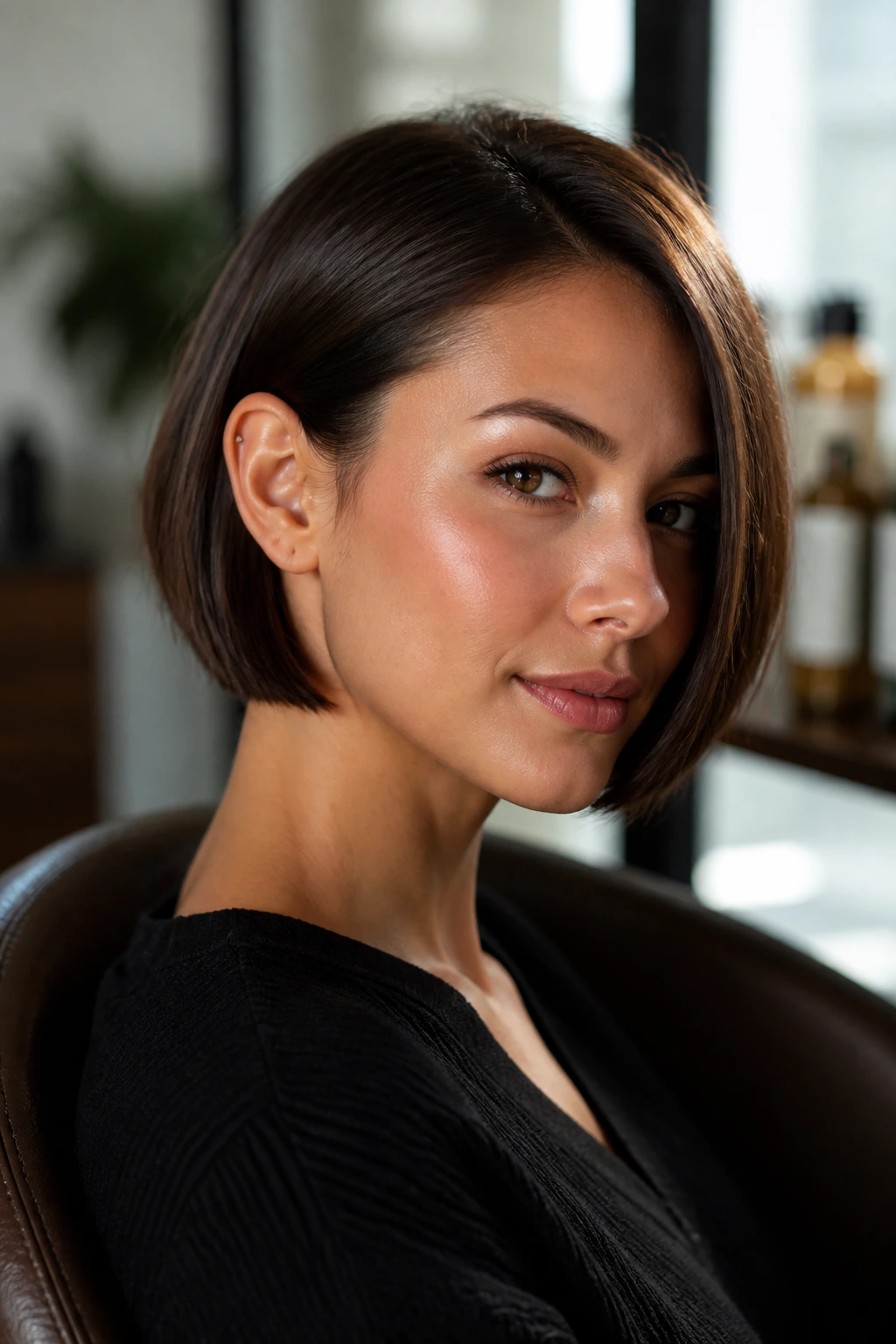
A tucked bob is not a separate cut so much as a shape trick that makes a bob feel current. One or both sides are tucked behind the ears, which exposes the jaw, shows off earrings, and makes the neckline look cleaner.
How To Wear It
The trick works best when the bob has enough length to stay tucked without popping out every five seconds. A chin-length bob, a collarbone bob, or a slightly layered bob usually handles it well.
- Put a small amount of smoothing cream near the sides before drying.
- Tuck the hair while it is still warm from the dryer.
- Use a bobby pin under the hair if it keeps slipping.
- Leave one side tucked and the other loose if you want a less formal look.
A tucked bob feels especially good on days when you want to look put-together fast. No complicated styling. Just a small shift.
29. Air-Dried Natural Bob

An air-dried natural bob is built for real life. It depends on the cut being shaped to the hair’s own bend, wave, or curl, so you do not have to spend twenty minutes forcing it into something else. That is a relief, honestly.
The haircut should be planned around how your hair dries on its own. If it flips at the ends, the cut can account for that. If it bends at the cheeks, the layers can be placed to work with it. If it puffs around the crown, the weight distribution can be adjusted. That’s why this style lives or dies in the hands of the person doing the cutting.
Use a leave-in conditioner on damp hair, scrunch once, and leave it alone. If one side dries flatter than the other, resist the urge to keep touching it. That battle is usually lost before it starts.
30. Wet-Look Bob

A wet-look bob leans glossy, slick, and a little dramatic. It is the kind of finish that makes a simple haircut feel deliberate because the shine does the talking. On straight or softly wavy hair, it can look strong without needing much shape beyond the cut itself.
Unlike a fluffy blowout bob, this one depends on product and placement. A gel or styling cream is applied from roots to ends, then combed through so the strands lie close together. The finish should look damp, not greasy. That difference matters more than people think.
Best for evenings, events, and days when you want a sharper edge. It is not the easiest everyday style if your hair frizzes fast, but it does make a bob feel instantly different. A middle part keeps it sleek. A side part makes it a little softer. Either way, the shine is the point.
Final Thoughts
A bob works when the shape and the texture stop arguing with each other. That sounds simple, but it is where most haircuts go sideways. A blunt bob on thick hair can feel too heavy. A layered bob on fine hair can disappear. The cut itself is only half the story.
The other half is behavior. Does your hair want to bend under, flip out, swell up, or fall flat by lunchtime? Pick a bob that works with that, and mornings get easier fast. Pick one that fights your texture, and you will spend your time fixing it instead of wearing it.
The cleanest bob haircuts are the ones that look like they belong to the person wearing them. Not borrowed. Not forced. Just right enough that you stop fussing with your mirror and get on with the day.
