



A blunt bob can look polished for five minutes and boxy for the rest of the day. Layered bob haircuts fix that by moving weight around, building bend into the ends, and keeping the cut from sitting like a cap.
The best layered bob is not the one with the most layers. It is the one with the right layers in the right place. A few hidden cuts around the cheekbone can make fine hair lift, while a heavier perimeter keeps thick hair from turning puffy at the ends.
That small shift changes everything. One bob swings when you turn your head. Another hugs the jaw. Another grows out with almost no drama, which is the dream if you hate living at the salon chair.
The 22 cuts below cover the whole range — stacked, feathered, shaggy, razor-cut, angled, curly, sleek, and a few that sit right between a bob and a lob. The first one is the easiest place to start, because it explains the whole game fast.
1. Soft Chin-Length Layers
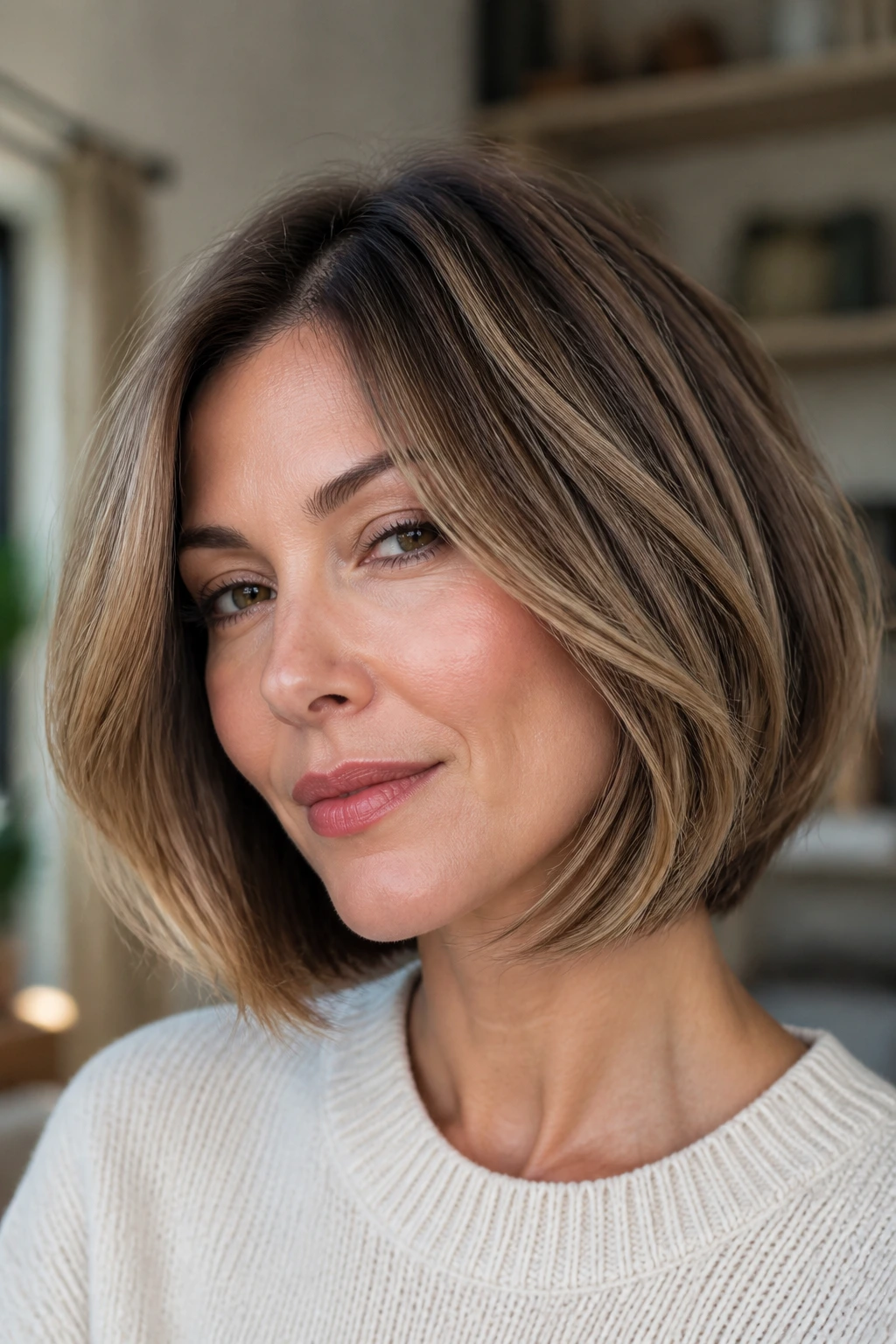
A chin-length bob with soft internal layers is the cleanest entry point into movement without losing shape. It keeps the outline tidy, but the inside has enough texture to stop the haircut from hanging there like a block.
Why it works
The shortest pieces live inside the cut, not on the outer edge, so the bob still reads as a bob. That matters. You get bend near the jaw and a little swing around the face, yet the perimeter stays strong enough to hold its line when you tuck one side behind your ear.
This version suits straight to slightly wavy hair especially well. Fine hair gets a little lift, and thicker hair keeps a neat silhouette without needing heavy styling every morning. A quick pass with a 1-inch round brush or a flat iron bend at the ends is usually enough.
- Best for hair that needs subtle movement, not big volume
- Ask for layers that start around the cheekbone, not high at the temples
- Keep the ends blunt enough to preserve the shape
- Use a light smoothing cream, not a heavy oil
Small tip: If the layers begin too high, the bob can lose its jawline and start looking wispy. That is the point where a tidy cut turns fussy.
2. Stacked Layered Bob With a Rounded Nape
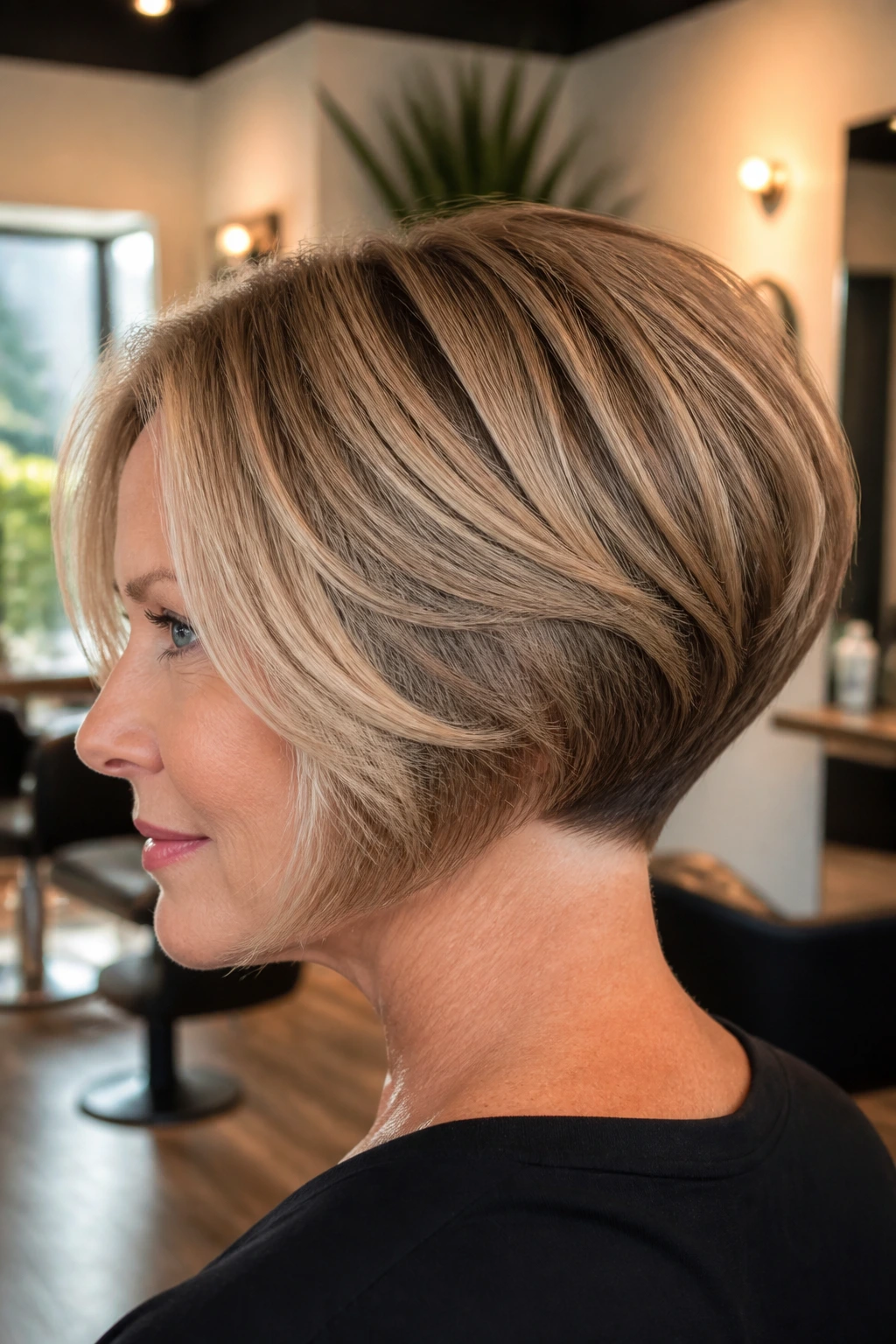
The stacked bob earns its lift at the back. The nape is cut shorter and the layers rise up through the crown, which creates that rounded shape people either love immediately or quietly decide they need after one blowout.
This version works because it changes the profile. From the side, the back looks compact and the front stays a little longer, so the haircut feels sculpted instead of flat. If your hair lies close to the head and refuses to keep volume, this shape gives you something to work with.
There is a catch, though. Too much stacking can flare out and make the back look like a shelf. A good cut stops before that happens, keeping the graduation soft enough that the bob curves, rather than kicks out. That is the difference between a polished stacked bob and one that feels dated the minute it dries.
Tell the stylist you want lift at the crown, not width at the sides. That one sentence saves a lot of regret.
3. French Bob With Choppy Ends

Want a bob that looks a little undone in the best possible way? A French bob with choppy ends gets there fast. It usually sits around lip to cheekbone length, and the texture is broken up just enough to keep the line from feeling stiff.
What makes it feel French
The ends are soft, but not feathered into nothing. There is still a shape there. The cut works because it leaves enough weight around the perimeter while taking out a touch of bulk through the inside, which gives the hair that easy bend people associate with a low-effort finish.
It is a good match for natural wave, but straight hair can wear it too. The trick is not to over-style it. A little texture spray, a rough dry with fingers, and a bend at the mid-lengths are enough. If you spend 20 minutes trying to make it look casual, the cut starts to fight you.
How to wear it
- Air-dry for a looser finish
- Use a light texturizing mist at the mid-lengths
- Tuck one side behind the ear for an easy shift in shape
- Leave the ends touchable, not crunchy
The charm here is in the unevenness. Not mess. Unevenness.
4. Long Layered Lob With Face-Framing Pieces
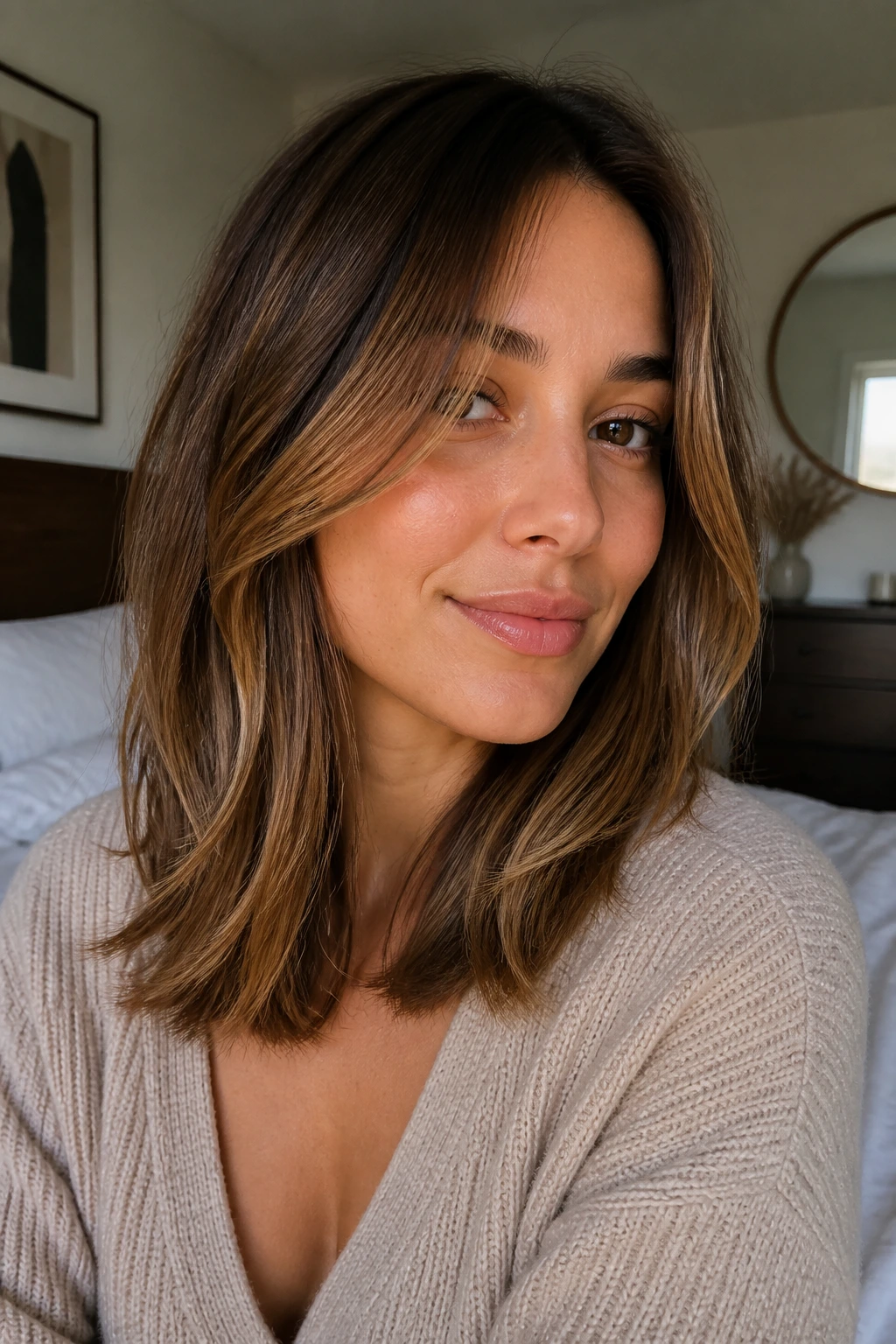
A long bob can get heavy fast, especially when all the weight sits at the front. Face-framing layers solve that by pulling the eye upward and letting the cut move around the collarbone instead of hanging like one solid curtain.
This is the version I recommend to people who want versatility more than drama. You can wear it straight, wave it with a curling iron, pull it into a small clip, or let it fall naturally on a day when you do not want to think about hair at all. The length gives you options; the layers keep it from feeling sleepy.
A blunt lob is neat, but a layered lob has more life in it. The front pieces can graze the cheekbones, the sides can skim the neck, and the back can stay just a touch shorter so the whole shape folds inward a little. That inward fold matters. It keeps the haircut from widening at the ends.
If you like a middle part, this one is especially flattering. The face-framing layers do the work that bangs would do, but without the commitment.
5. Angled Bob With Graduated Layers

Picture a clean diagonal line from the nape to the front. That is the angled bob, and the graduated layers give it motion without breaking the silhouette.
The beauty of this cut is its direction. The back sits shorter and tighter, then the length opens toward the front, which naturally lengthens the neck and adds a little sharpness around the jaw. It is a strong shape, but not a loud one.
Who it suits
- People who want a bob with a clear profile
- Straight or slightly wavy hair that can hold a line
- Anyone who likes a cut that looks deliberate even on a simple blow-dry
The graduation should be subtle enough that the layers blend, not stack into separate steps. If the angle is too steep, the cut starts to look severe. If it is too soft, you lose the whole point. A good angled bob lives in that middle space where the front still feels light and the back keeps its structure.
A round brush under the ends is usually enough to make the shape read properly.
6. Razor-Cut Layered Bob for Thick Hair
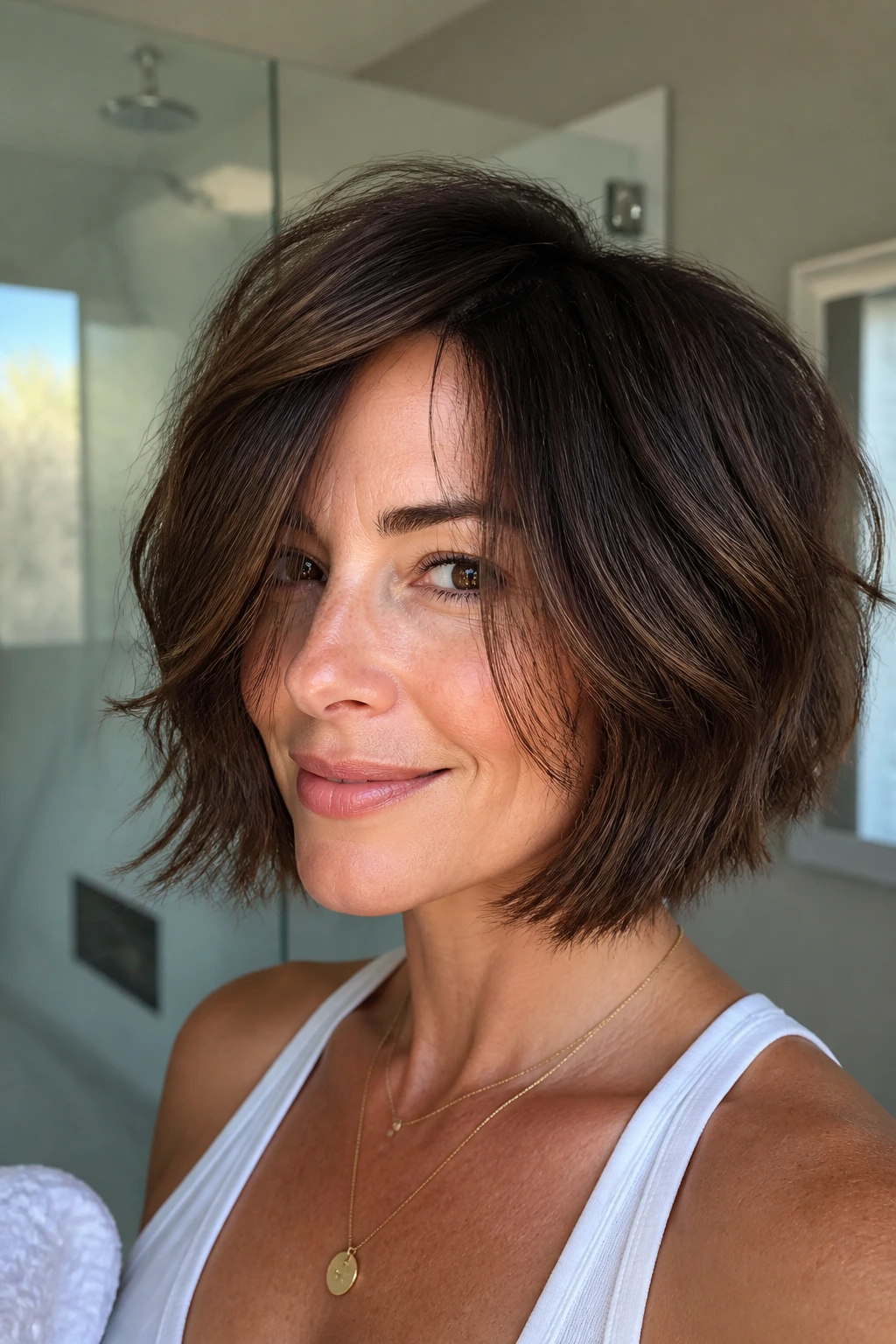
A razor-cut layered bob is not for every head of hair. On thick, healthy hair, though, it can be a lifesaver. The razor softens the ends and removes bulk in a way that scissors do not always do as smoothly, which helps the cut move instead of sitting heavy and wide.
Where the razor belongs
The best razor work happens inside the shape, not right at the edge if the hair is fragile. That matters a lot. Thick hair can handle some soft slicing, but dry or over-processed hair may fray if the blade is used too aggressively. A good stylist knows when to stop.
This version is especially useful if your hair grows out into a triangle. You know the look: flat at the crown, bulky at the sides, and stubborn at the bottom. Razor layering can pull some of that weight out while leaving the perimeter clean enough to frame the face.
A little anti-frizz cream goes a long way here. Too much product makes the airy ends collapse.
If you want movement without the puffy edge that thick hair sometimes gets, this is one of the smartest layered bob haircuts on the list.
7. Feathered Bob With Airy Ends
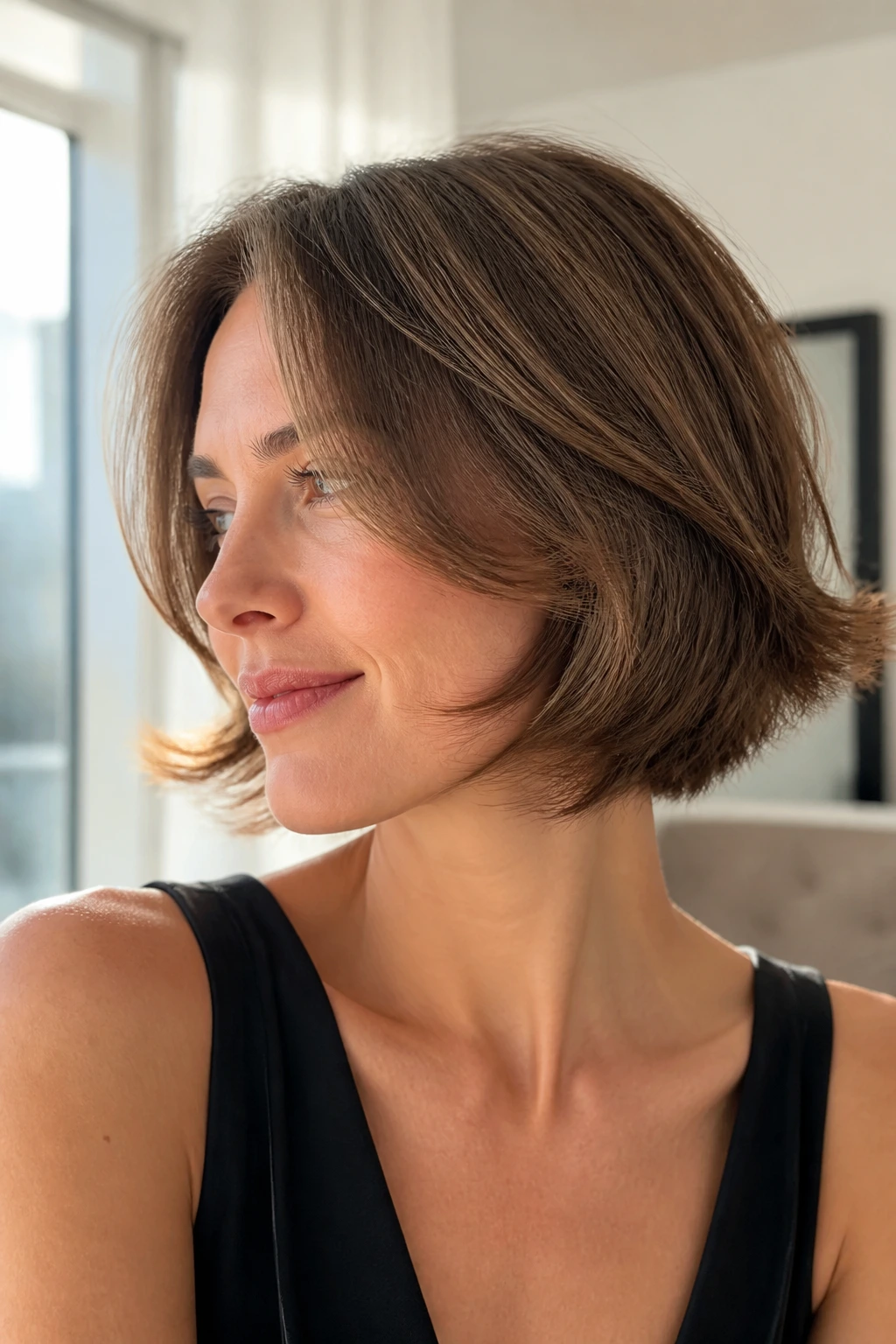
Feathered layers still work because they give a bob a softer finish than blunt chopping ever can. The ends flick instead of sitting flat, and the whole cut looks lighter around the cheeks and neck.
There is a specific feel to this shape. It moves when you turn your head. It brushes the jaw instead of clinging to it. And when it is blown out with a round brush, the edges have that curved, airy finish that makes the cut look styled even when you did not spend long on it.
A feathered bob is especially kind to hair that gets bulky at the bottom but still needs some body near the crown. Ask for layers that taper gradually through the side sections, then keep the bottom line soft enough to hold the shape. If the feathering is too aggressive, the hair can look thin at the edges. That is not the goal.
A mousse at the roots and a little heat at the ends are enough. Leave the rest alone.
8. Curly Layered Bob
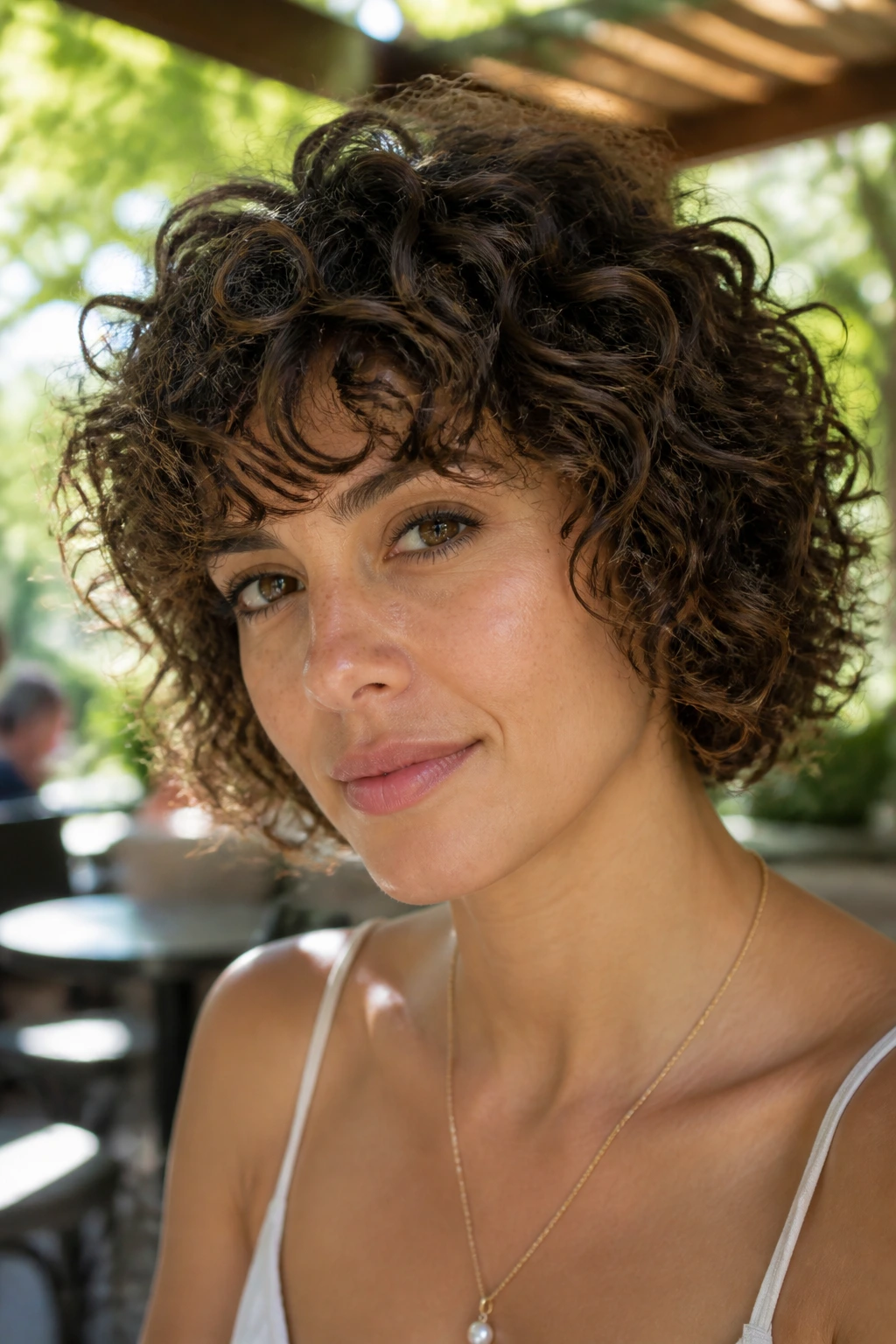
Curly bobs are not small versions of straight bobs. They need their own shape, because curls shrink, spring, and bunch in ways that surprise people who only look at the hair when it is wet.
What to ask for
- Cut the curls in their natural state, or as close to it as possible
- Keep more length at the bottom so the bob does not balloon
- Use longer layers around the crown to let the curl pattern rise
- Avoid too much thinning near the ends, which can create frizz
The smartest curly layered bob follows the curl rather than trying to flatten it. That means the stylist should watch how each section springs back before deciding where to remove weight. A curl that lands at the chin when wet may sit far shorter once it dries. That is not a mistake; it is the whole game.
Use a cream with hold, scrunch gently, and let the shape form without constant touching. If the curls need refreshment later, a mist of water and a pea-size amount of product is usually enough. The goal is definition, not stiffness.
9. Wavy Bob With Internal Layers and a Middle Part

Some layered bobs are all about the finish. This one is about the structure you do not see right away. Internal layers sit inside the cut and give the hair room to bend, which is why a wavy bob with a middle part can look relaxed without losing its outline.
The middle part keeps the shape balanced, and the hidden layers keep the sides from puffing out. That combination matters if your hair has a loose wave that drops by midday. You want enough support inside the cut that the waves still land in soft bends instead of collapsing into one flat sheet.
A sea-salt spray can help, but I like a cream with a little hold better for this cut. Salt spray is fine when you want grit. Cream is better when you want the wave to look smooth and deliberate. The ends should still move. They should not feel crunchy or overworked.
One small rule: keep the wave loose. The bob should look like hair with shape, not hair that spent an hour pretending not to be styled.
10. Layered Bob With Curtain Bangs
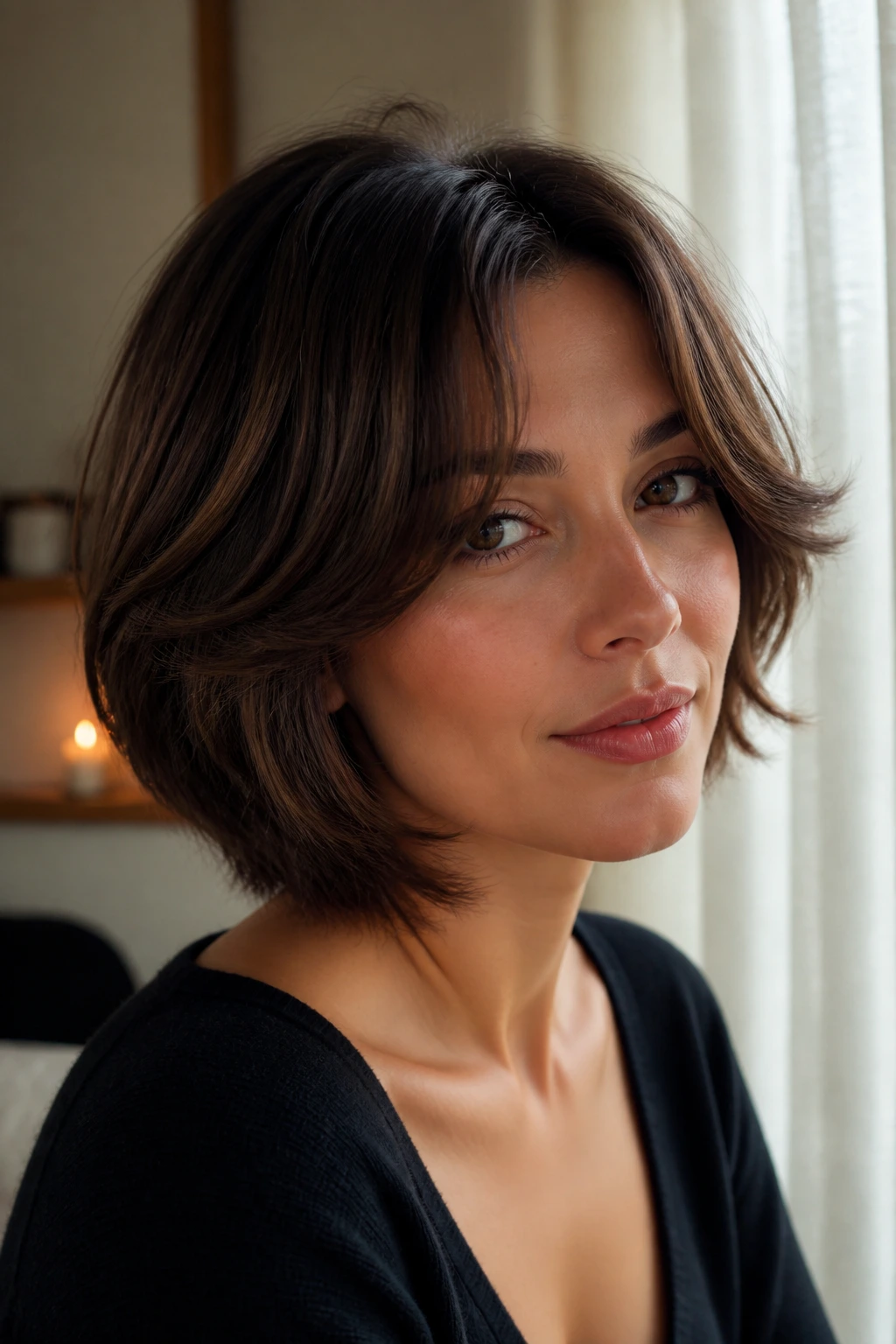
Curtain bangs can rescue a bob that feels too one-note. They open the face, soften the forehead, and blend into the side layers so the cut feels finished from every angle.
The bang length matters more than most people think. If the shortest point lands around the bridge of the nose and the outer corners fall toward the cheekbones, the fringe folds nicely into the rest of the haircut. Shorter than that, and the bangs can feel separate from the bob. Longer than that, and they start acting like grown-out pieces instead of part of the design.
The bang length that matters
A layered bob with curtain bangs works especially well when the hair is straight or only a little wavy. The fringe can sweep open, the sides can curve inward, and the whole style gets that easy frame around the face. It is also one of the few bob shapes that gives you softness at the front without losing edge at the ends.
For styling, aim for a blow-dry that bends the bangs away from the face for a second, then lets them fall back. Too much brushing makes them flat. Too much heat makes them stiff. A light touch wins here.
11. Asymmetrical Layered Bob
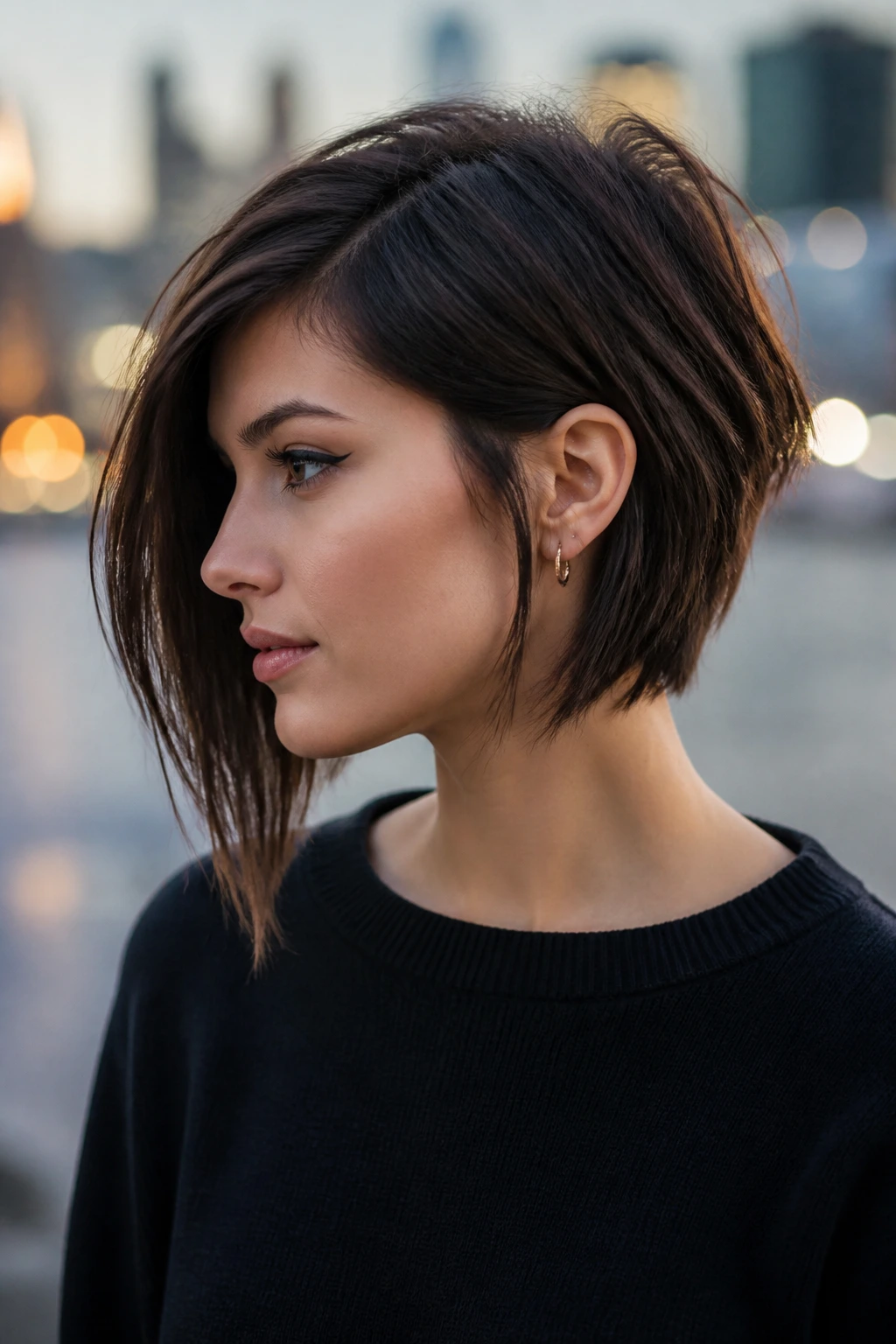
Asymmetry looks best when it is restrained. A half-inch or inch of difference between one side and the other is enough to change the whole mood of the haircut without making it feel theatrical.
This bob works because the uneven length creates movement before you even style it. One side can graze the jaw while the other sits a touch longer, and the layers help the shape keep its balance. When done well, the cut looks intentional from the front, side, and three-quarter view. That is harder than it sounds.
There is a reason I like this version for people who wear one side tucked behind the ear. The asymmetry becomes visible without needing extra work. It also helps soften a strong jaw or a very square outline, since the eye keeps traveling across the shape instead of stopping at one blunt edge.
Keep the difference modest. Too much contrast and the haircut starts to fight the face.
12. Pixie Bob With Crown Layers
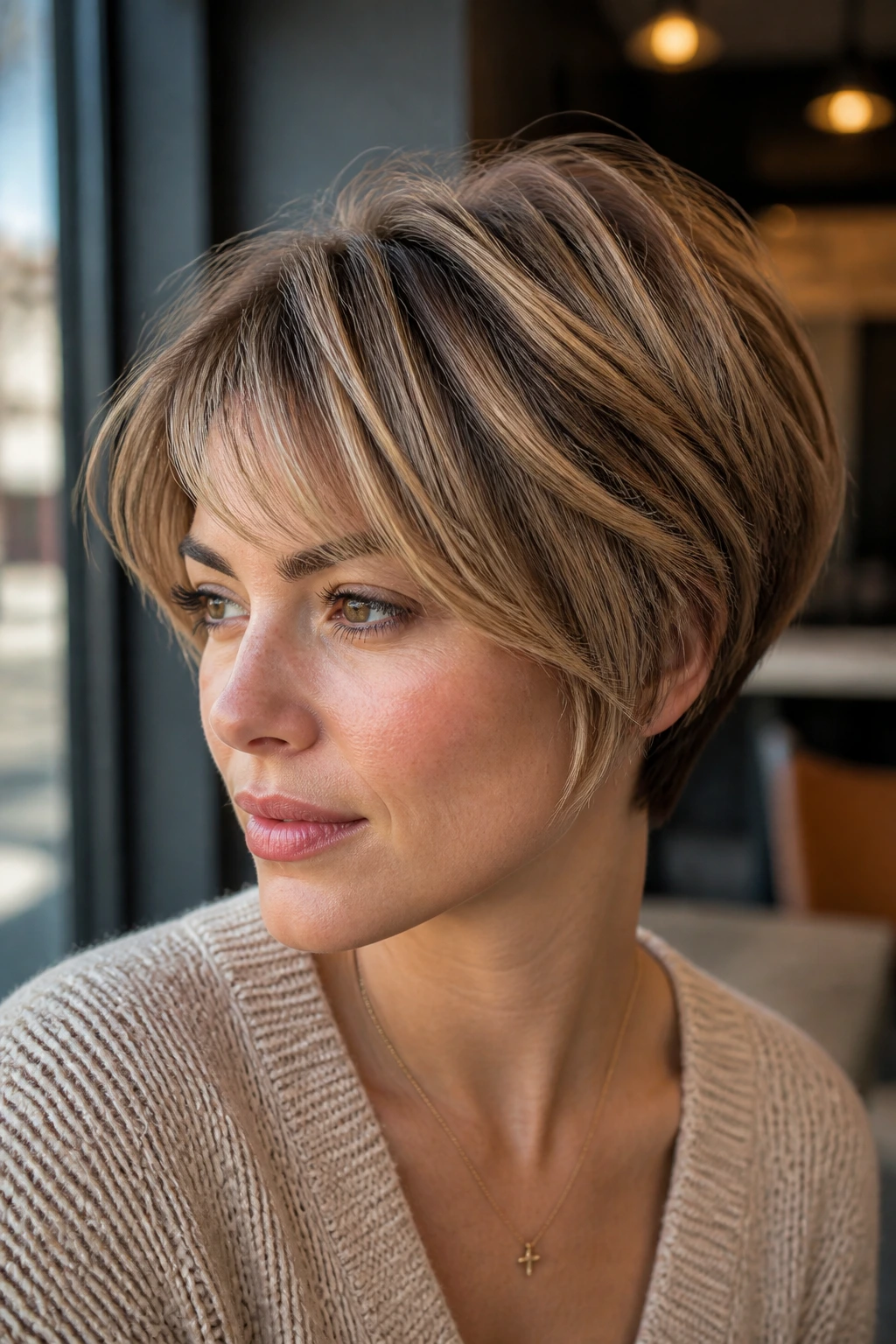
A pixie bob sits between a crop and a bob, and that middle ground is exactly why it works for so many people. The nape stays short, the crown gets lift, and the sides keep enough length to feel like a bob instead of a full pixie.
The sweet spot
This cut is for anyone who wants the neck to feel lighter without losing the softness of longer pieces near the face. It dries fast. It styles fast. And it can look sharp with almost no effort if the crown has the right amount of layering built in.
The trick is keeping the top long enough to move and the back short enough to show the shape. If the crown is too short, the cut loses its bob-like presence. If the nape is too long, the whole thing goes mushy. The balance is delicate, but once it lands, the silhouette feels fresh and clean.
A little paste at the ends and a quick lift at the roots are enough. You do not need much more.
13. Blunt Bob With Hidden Layers

People think blunt bobs and layers do not belong together. They do, if the layers stay hidden. That is the quiet strength of this haircut: the outline stays crisp, while the inside gets enough relief to move.
This is one of the smartest options for straight hair that tends to hang heavy. The perimeter gives you that neat edge along the jaw or chin, and the invisible layers stop the cut from feeling like a block. The result is a bob that looks clean in a mirror and still bends when you walk.
Why the hidden layers help
- They remove weight without breaking the outline
- They keep the crown from collapsing
- They let thick hair sit flatter at the sides
- They make straight hair look less rigid
Tell the stylist you want the shape to read blunt from the outside. That detail matters. If the internal layering gets too aggressive, the haircut stops looking sleek and starts looking uneven. Hidden layers are about control, not drama.
14. Inverted Bob With Strong Back Shape
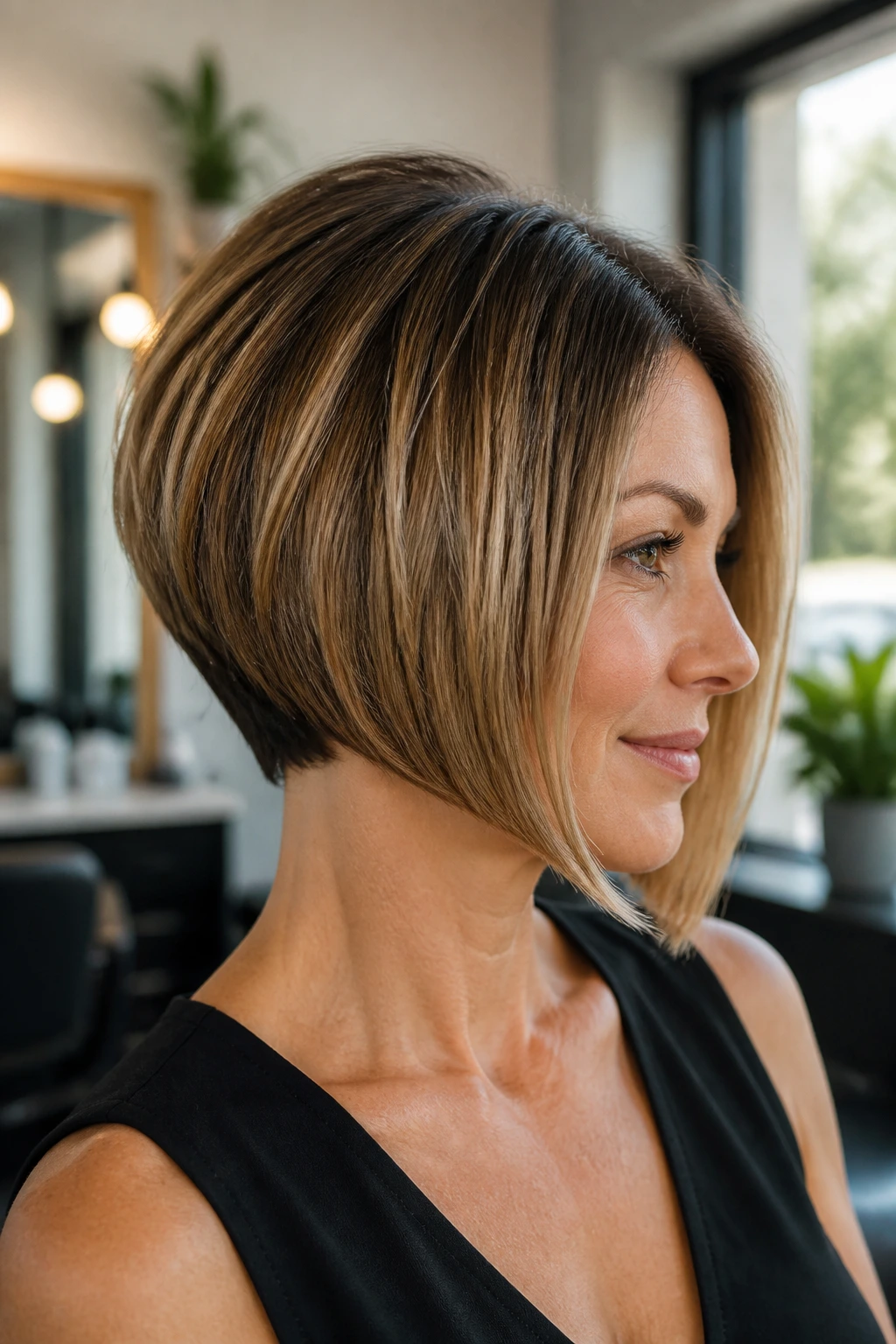
The inverted bob is sharper than the stacked bob because the front length pushes forward more clearly. You get a shorter back, a longer front, and a strong angle that gives the haircut a visible direction.
That angle changes the way the face reads. The neck looks longer, the jaw gets a cleaner line, and the whole silhouette feels more sculpted. It is especially effective on straight to slightly wavy hair, since those textures hold the angle without too much fuss.
The back should still have some graduation, but the real story is in the front sections. They should sweep toward the chin or just below it, depending on how bold you want the cut to feel. If the line is too severe, the style can take over the face. If it is too soft, you lose the personality of the cut.
A flat brush or paddle brush works well here. Keep the ends smooth and let the angle speak for itself.
15. Shoulder-Skimming U-Shaped Lob
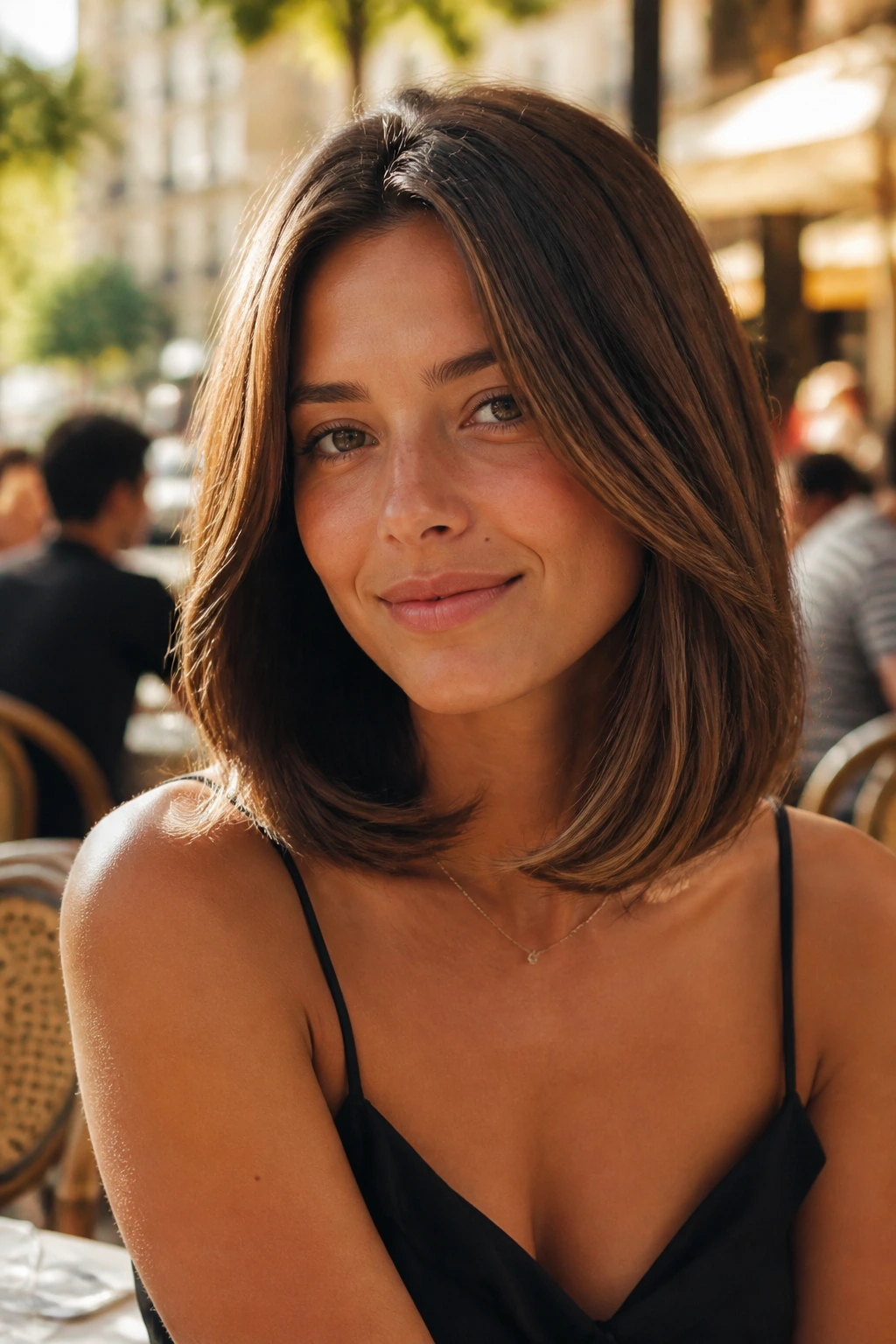
A shoulder-skimming lob with a gentle U-shape gives you room to move without losing much length. The center sits a little longer than the sides, so the hair folds around the shoulders instead of kicking out in a hard line.
This shape is underrated because it behaves well in real life. It can be worn straight, bent, clipped back, or waved with a big iron. The U-shape keeps the ends soft, and the layers stop the length from feeling heavy through the mids. You get motion, but not that frayed, over-textured look some long cuts fall into.
It is especially nice if you are growing out a shorter bob and do not want a awkward stage. The shape stays polite as it grows. That alone is worth something.
If you like movement but still want enough hair to pull into a low ponytail, this is one of the most forgiving layered bob haircuts in the bunch.
16. Layered Bob for Fine Hair That Needs Lift
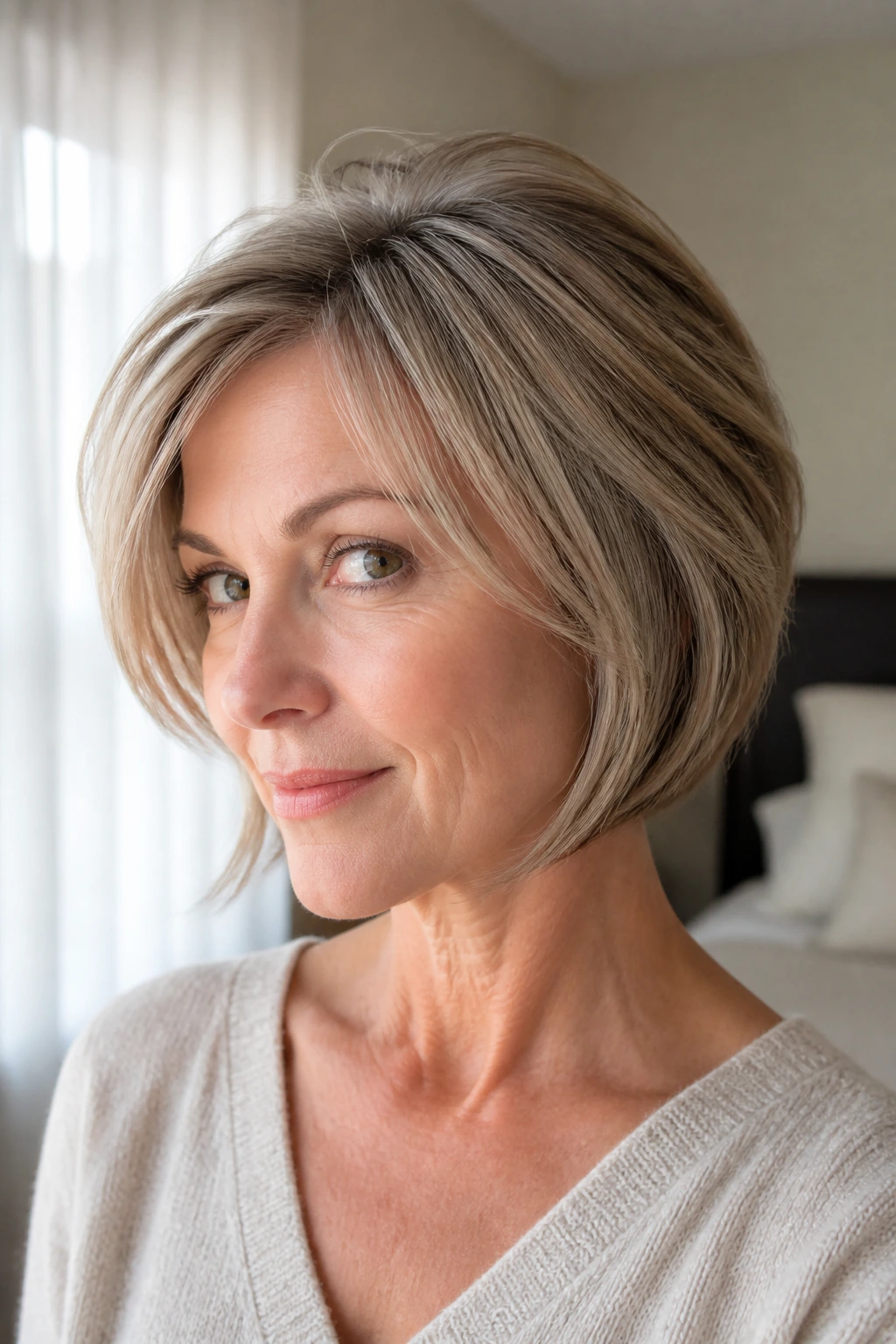
Can layers make fine hair look fuller? Yes — if they are placed with restraint. Fine hair needs lift at the crown and movement near the ends, not a pile of short pieces that leave the perimeter too thin.
What to skip
- Too many short layers around the bottom
- Heavy razoring that makes the ends look see-through
- Over-texturizing at the crown, which can expose the scalp more than you want
The smartest cut keeps the ends blunt enough to hold weight and adds softness above that line. Think of it as a bob that has been air lifted in the right spots, not shredded into shape. A little root mousse, a round brush at the crown, and a soft bend at the ends can make the difference between flat and lively.
This cut works beautifully with side parts and subtle face-framing pieces. It does not need much. Fine hair usually looks better when the layers are quiet and the shape is disciplined. That is the piece people miss.
17. Layered Bob for Coarse Hair With Weight Removal
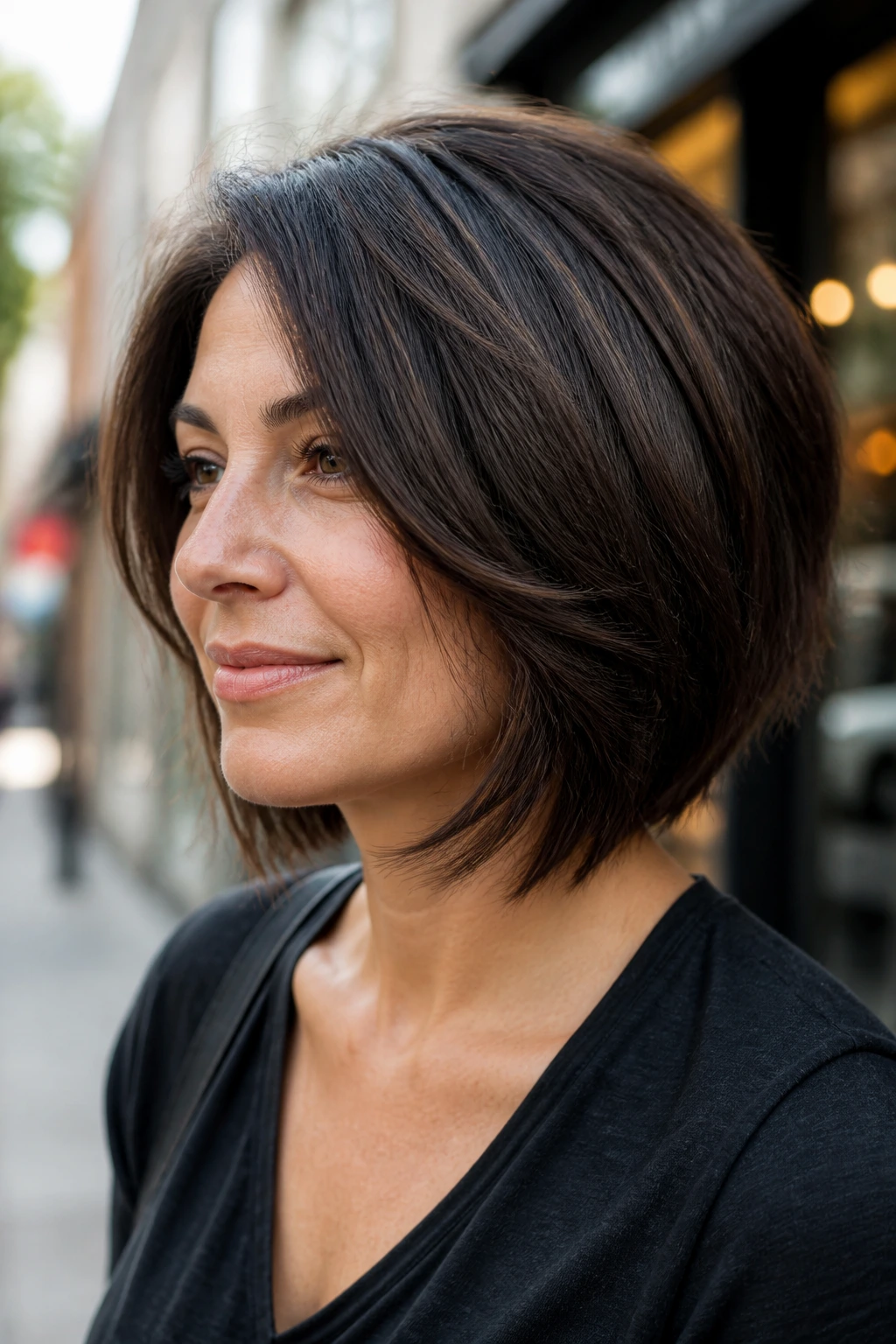
Coarse hair does not need more texture. It needs smart weight removal. That sentence saves a lot of bad haircuts.
Coarse strands can hold shape, but they also bulk up fast if the layers are not placed well. The goal is to remove some of the density inside the cut while keeping the outside line clean enough to keep the bob from puffing out. Done well, the hair moves without losing its strong outline.
What to ask for
- Internal layers that reduce bulk around the mid-lengths
- A perimeter that stays full enough to frame the face
- Soft point cutting at the ends, not aggressive thinning
- A blow-dry cream that controls puffiness without flattening the body
A coarse-haired bob often looks better when the layers are longer and more gradual. Short pieces can spring up and widen the shape, which is the last thing you want around the cheeks. Keep the weight where you need it and remove it where the hair tends to swell.
Humidity will still have opinions. That part does not go away. But a thoughtful cut gives you far better odds.
18. Shaggy Bob With Piecey Layers

A shaggy bob is the unrulier cousin of the layered bob haircut, and that is exactly why people love it. The layers are broken up into piecey sections, the ends feel loose, and the whole style looks better with a little mess than with too much polish.
This cut thrives on texture. Air-dry it with a curl cream or diffuse it with a soft hold mousse, then rake through the ends with a tiny bit of matte paste. The goal is separation, not shine. If every strand sits neatly in place, the shape loses its edge.
A shaggy bob can be a smart answer for hair that sits between straight and wavy. It gives the wave somewhere to go, and it does not ask for perfect symmetry. That said, it still needs a perimeter. If the bottom gets too wispy, the cut stops feeling deliberate and starts feeling overgrown.
This is the bob I would choose if you like movement but do not want anything fussy.
19. Side-Swept Fringe Layered Bob

Side-swept bangs are underrated because they soften a bob without cutting a hard line across the forehead. They blend into the rest of the haircut more quietly than blunt bangs and give the face a slanted frame that feels easy to wear.
The side-swept fringe also helps if you dislike a center part but do not want full curtain bangs. It lets the hair travel across the forehead and into the side layers, which makes the cut feel longer and a little more relaxed. That movement is especially helpful if your jaw is strong or your forehead feels wider than you want to balance.
A layered bob with a side fringe tends to work well on straight and wavy hair. The fringe can be blown with a small round brush, then left soft rather than sealed into a hard curve. I would avoid cutting the fringe too short; the whole point is for it to blend, not announce itself.
If curtain bangs feel too open and blunt bangs feel too heavy, this is the middle road.
20. Collarbone Bob With Razored Face Frame
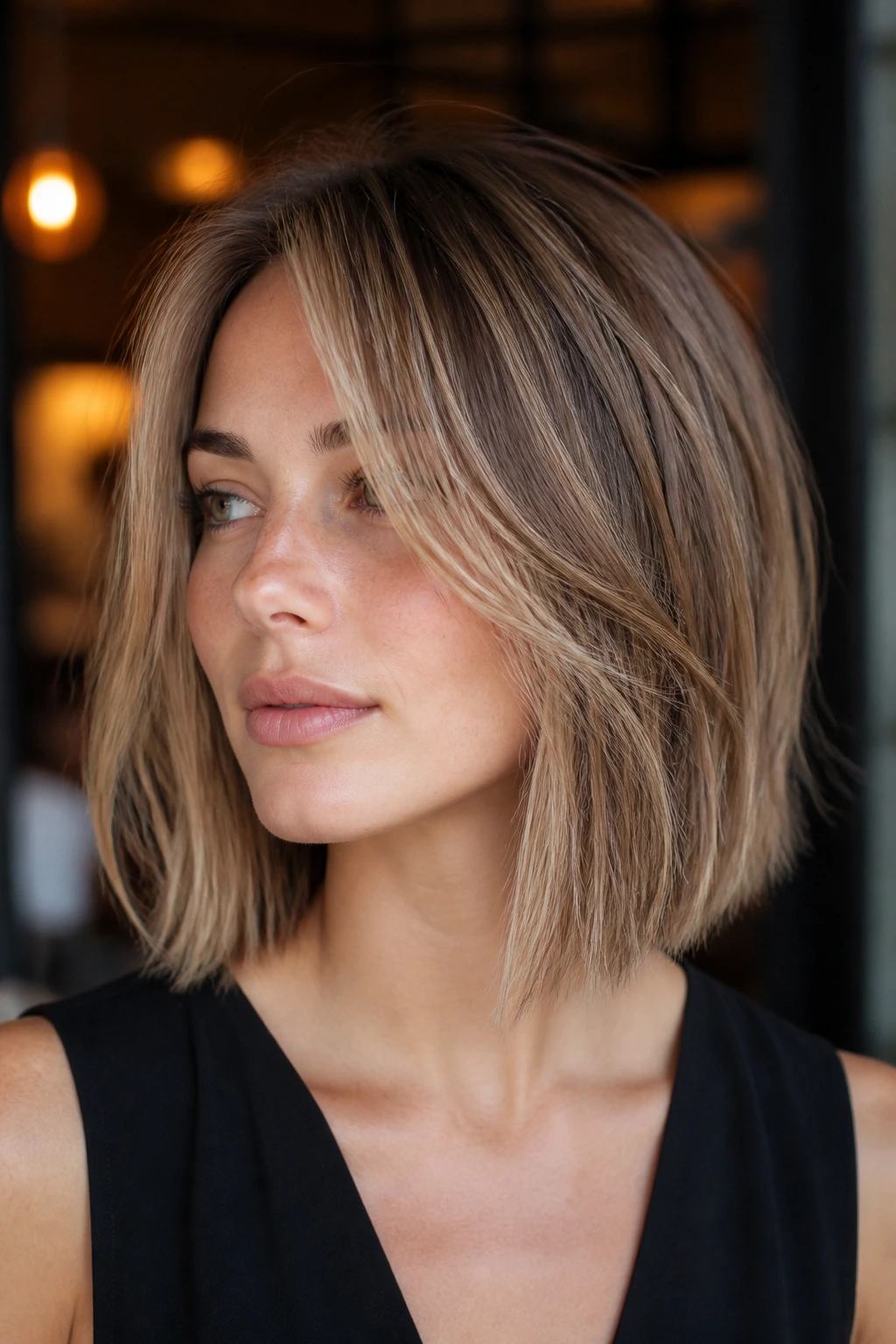
A collarbone-length bob with razored face framing gives you room to move and a little extra air around the face. The length sits long enough to feel soft, but the razor work keeps the front from hanging there in one heavy sheet.
How to style the bend
Start with a heat protectant and dry the front sections away from the face using a round brush. Then add a gentle bend at the ends with a 1-inch curling iron or flat iron, making sure the curve sits low rather than tight. You want a soft fold, not a curled-under helmet.
The face-framing pieces should be the lightest part of the cut. That is what keeps the lob from feeling blocky around the collarbone. The back can stay smoother and a little heavier so the shape holds.
This is a strong option if you are growing out shorter hair but still want the cut to look intentional. It also plays nicely with necklaces, turtlenecks, and those days when you want hair that skims the shoulder instead of landing in one obvious line.
21. Sleek Layered Bob With a Bevel
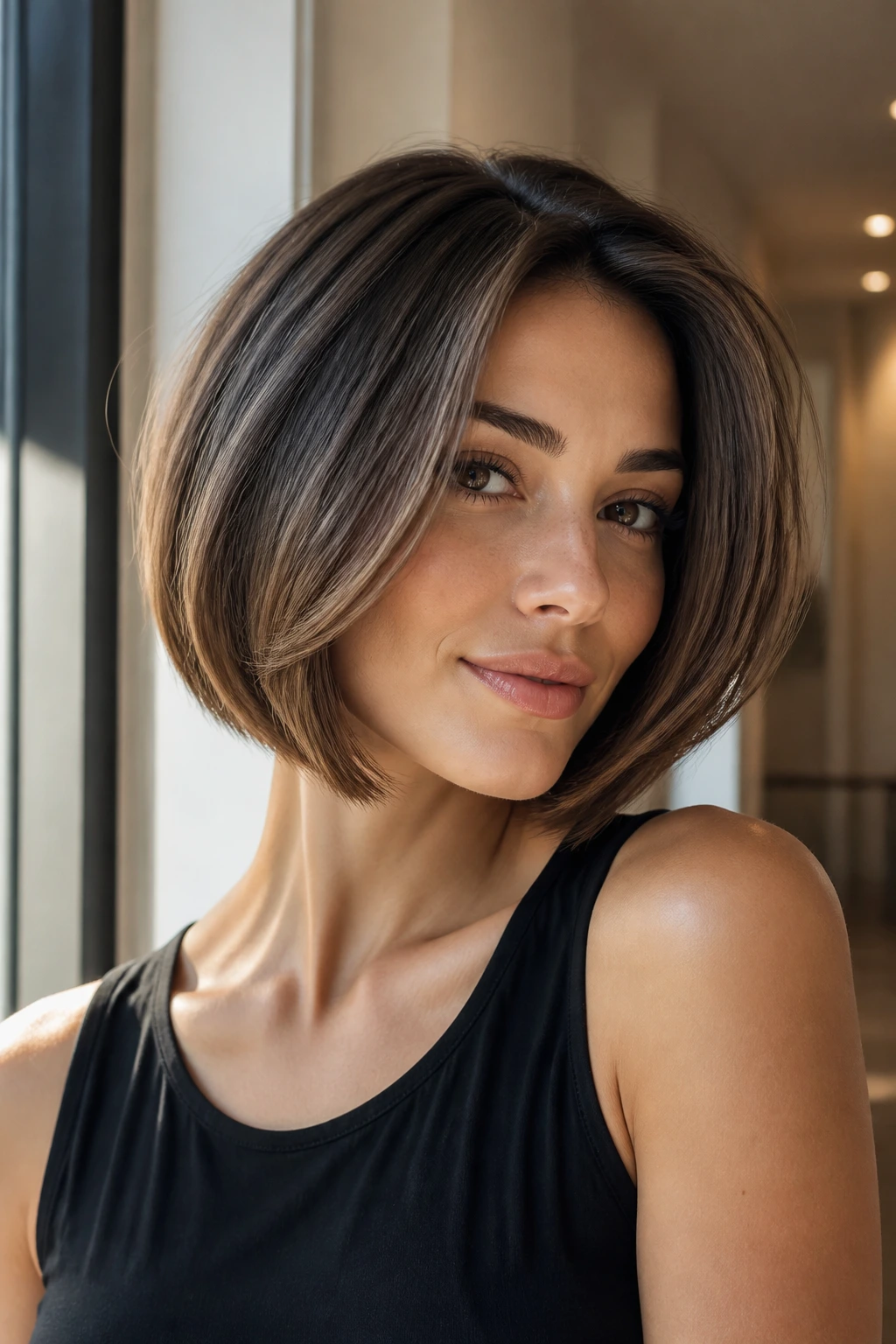
A sleek layered bob is not the same thing as a flat bob. The difference is the bevel — that slight underbend at the ends that makes the cut look finished instead of pressed to the head.
This style needs control. A blow-dry with tension, a flat brush, and a light smoothing cream can shape the hair so it bends inward at the edges while still moving through the mid-lengths. The layers stay quiet, but they help the hair sit close to the head without losing body near the crown.
That little lift matters. It keeps the bob from turning severe. A perfectly straight outline can be harsh on some faces, while a beveled edge softens the whole look just enough to make it easier to wear every day.
If you like polished hair and do not want a lot of texture showing, this is a solid pick. It pairs well with sharp side parts, tucked ends, and clean finishes. No fuss. Just shape.
22. Air-Dried Layered Bob With Natural Movement

Air-drying is where a layered bob earns its keep. If the cut was built well, the hair should fall into shape without needing a round brush, a curling iron, or a long argument with the mirror.
The key is balance. The layers need to be long enough that the hair does not puff, but light enough that the waves and bends have room to show up. A little leave-in cream, a touch of mousse at the roots, and a microfiber towel are often enough. Scrunch a few front sections if they need help, then leave the rest alone.
This works especially well for people with loose waves or soft curls who want a haircut that behaves on busy mornings. It is also forgiving when you grow it out, because the shape stays readable even as the length changes. That matters more than people admit.
If you want one layered bob that feels easy, flattering, and low-maintenance without looking lazy, start here. It still has shape when you do nothing. That is the whole point, really.
