



A bob can look polished in the safest possible way—or it can look sharp enough to feel like a decision, not a compromise. The difference usually lives in the perimeter, the fringe, and whether the ends were left blunt, chopped, or shaved a little tighter than expected.
That is why edgy bob haircuts keep winning over women who are done with soft, predictable hair. A little asymmetry changes the mood. So does a hard line at the jaw, a hidden undercut, or bangs that fall in a way that makes the whole cut feel more deliberate and less precious.
The good part is that edge does not always mean short. Sometimes it means a chin-length bob that swings when you walk. Sometimes it means a lob with rough ends and a deep side part. Sometimes it means color doing half the work while the cut stays clean and the contrast does the talking.
If your last few cuts felt safe, the fix is probably smaller than you think. The right bob is mostly about shape, weight, and movement, so start with the blunt micro bob—the one that tells everyone you’re not interested in playing it safe.
1. Blunt Micro Bob with a Hard Edge
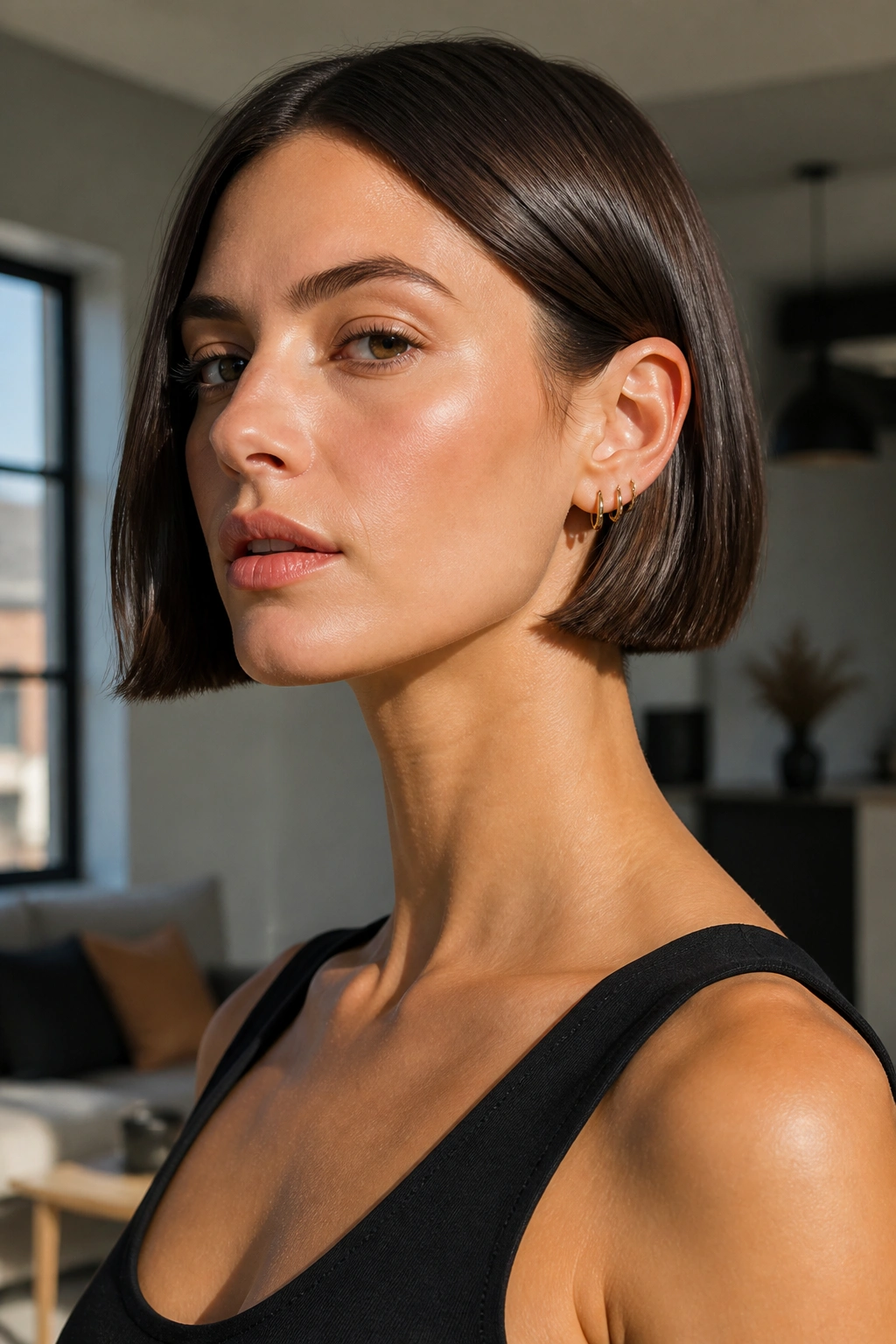
A micro bob that stops at the jawline has a different attitude from a softer chin-length cut. The hem sits straight, the ends stay crisp, and the whole shape feels intentional the second you tuck one side behind your ear.
Why It Feels Sharp
The line does most of the work here. Ask for a clean perimeter with minimal layering, because the point is to keep the bottom heavy and the outline visible.
- Length lands just below the ear or right at the jaw.
- Ends are cut with scissors, not heavily razored.
- Straight to slightly wavy hair shows the shape best.
- A quick pass with a flat iron keeps the edge crisp.
Tip: If your hair frizzes in humidity, keep the length a touch longer than chin level. That extra half inch helps the bob keep its line instead of puffing out.
The micro bob looks especially good when the front is tucked behind one ear and left full on the other side. Small move. Big payoff. It makes cheekbones look more obvious and gives the whole cut a little bite without adding drama for the sake of it.
2. Asymmetrical Bob with a Deep Side Part

An asymmetrical bob is the fastest way to make a bob feel less polite. One side sits a little longer, the part shifts off-center, and the cut suddenly has tension in it. That tension is what makes it interesting.
The beauty of this shape is that it does not need a wild color or a lot of product. A deep side part creates lift at the crown, while the longer side gives your face a diagonal line that feels sharper than a straight perimeter. If your hair tends to fall flat, this cut gives it a built-in angle to follow.
I like this one on people who want edge without losing polish. It can look sleek for work and slightly rebellious after dark, which is more useful than a lot of haircuts people call “versatile.” Keep the shorter side only a little above the jaw if you want the difference to feel subtle. Push the gap bigger if you want the cut to read from across the room.
Bring a photo. Then say whether you want a soft difference of about half an inch or a louder one that makes the eye stop and look.
3. Choppy Shag Bob with Piecey Ends
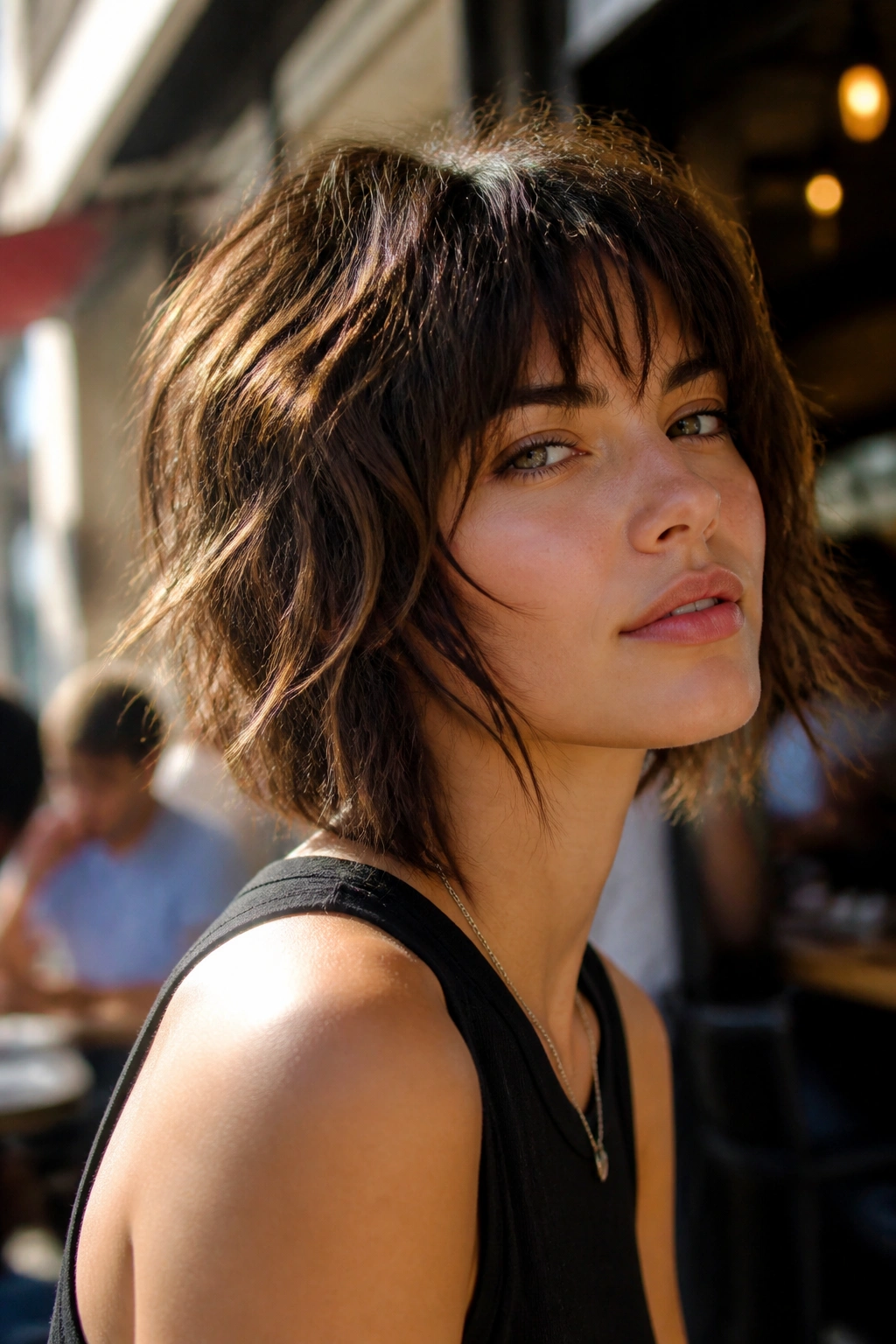
Why does the choppy shag bob look cooler than a neat layered bob? Because the uneven ends break the shape apart and keep it from looking too done.
The cut works by removing bulk in scattered places instead of carving a perfect outline. That makes it especially good if your hair sits heavy or if you hate the helmet effect. The perimeter still reads as a bob, but the surface has movement and a little disorder, which is exactly what gives it attitude.
How to Style It
A little mousse at the roots helps. So does rough drying with your fingers instead of brushing everything smooth. If your hair is wavy, scrunch it lightly and let a few sections dry on their own; if it is straighter, bend random pieces around a curling iron and leave the last inch out.
- Best when the layers start around the cheekbone.
- Looks strongest with a center part or slightly off-center part.
- Texture spray beats heavy cream here.
- The ends should feel piecey, not fuzzy.
A choppy shag bob is not fussy. That’s the whole point. It wants to look like you ran out the door with good taste and zero interest in pretending it took an hour.
4. Undercut Bob with a Hidden Nape
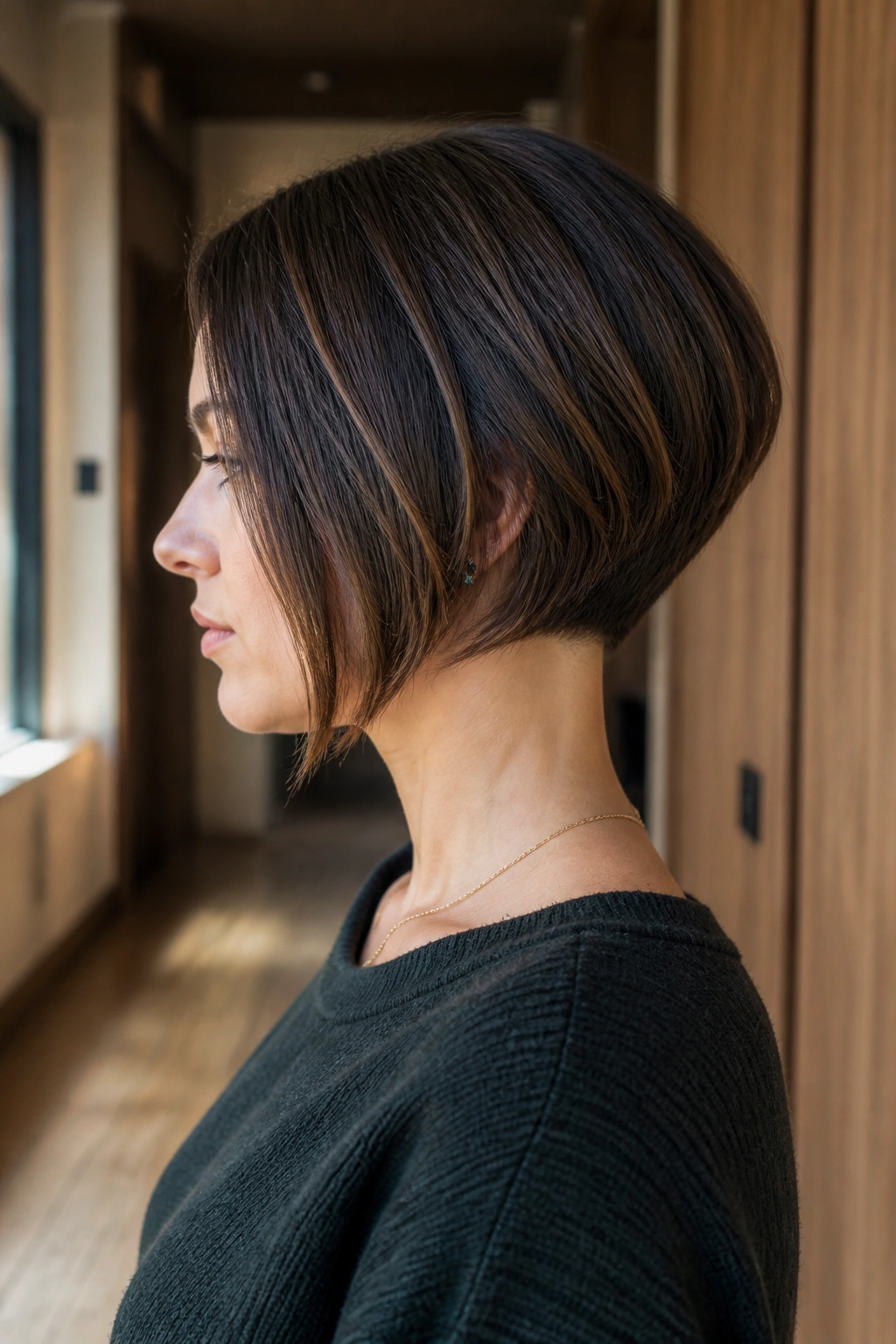
Picture a bob that looks clean from the front and a little rebellious from the side. That’s the hidden undercut bob, and it has one of the best payoffs of any edgy cut.
The undercut sits low at the nape, usually tucked under the top layers so it stays invisible until you move your hair. It takes weight out of thick hair, opens up the neck, and gives the top half more lift without making the whole style look too thin. For people with dense hair, this can feel like cutting out the dead weight and keeping the good part.
What to Tell Your Stylist
- Keep the top layers long enough to cover the shave.
- Ask for a softly graduated nape, not a bulky shelf.
- Decide how hidden you want the undercut to be.
- Plan on trimming the shaved section every few weeks if you want it crisp.
There is something satisfying about this cut. It looks composed when you wear it down, then suddenly a little tougher when you sweep it up. That tiny reveal is the whole trick.
5. French Bob with Baby Bangs
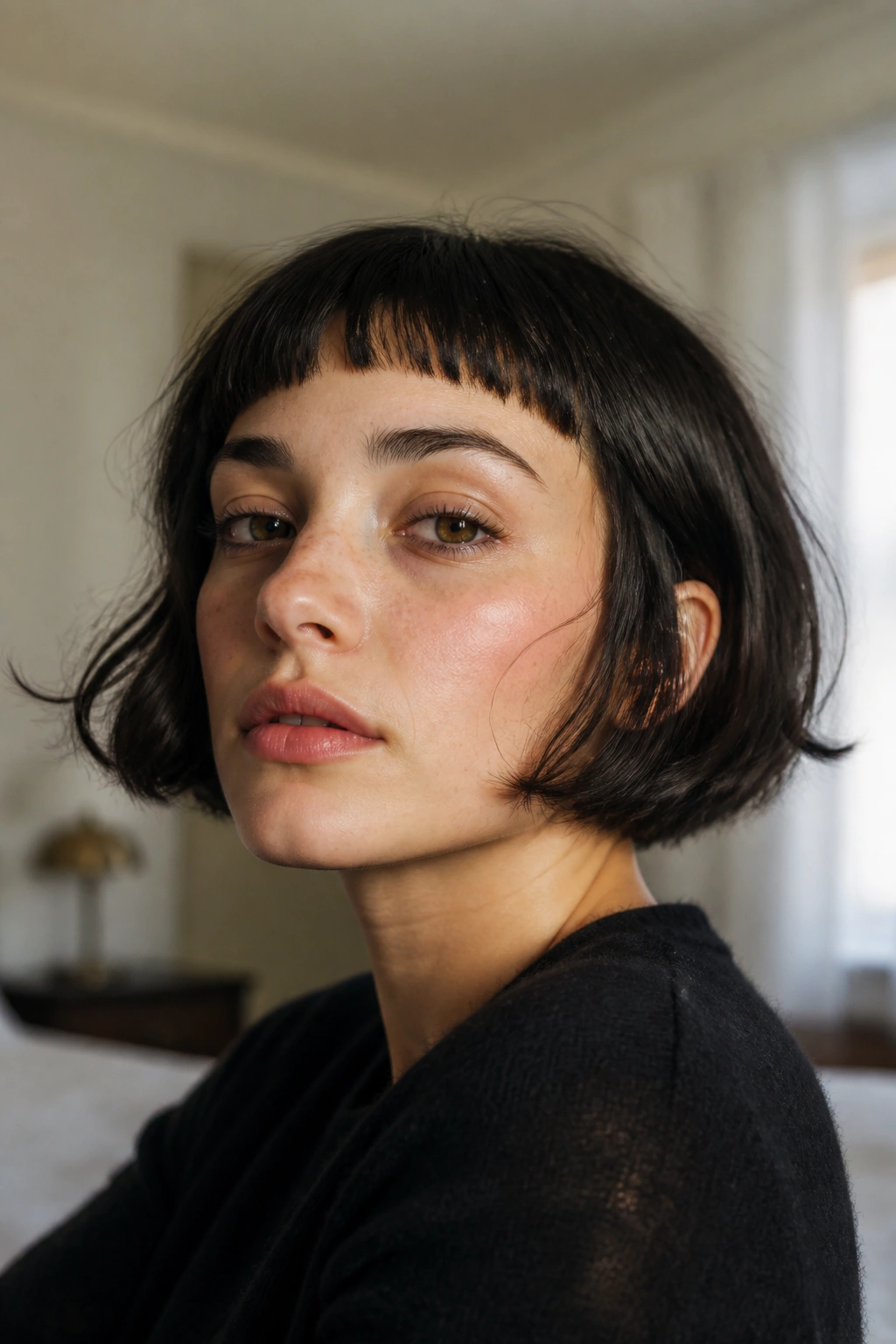
The French bob with baby bangs has a sharp little mood that never feels generic. It sits around the jaw or a touch higher, and the short fringe changes the whole face frame in one shot.
This cut works because it leaves almost no waste. The length is compact. The bangs are short. The line at the bottom stays tidy. All of that creates a shape that feels confident without trying to look delicate. A French bob can be worn sleek, but I prefer it with a slight bend and a bit of separation in the fringe. Too perfect and it gets stiff.
The baby bangs are the make-or-break piece. They should sit high enough to show forehead, not so high that they look accidental. If your hairline is uneven or your forehead swirls wildly, go a little longer and softer at first. Short fringe grows out fast, but the first cut needs a steady hand.
This is a strong choice if you like hair that has an opinion. It does not ask for much volume. It asks for shape.
6. Razor-Cut Bob with Wispy Ends

Unlike a blunt bob, the razor-cut version moves when you walk. The ends are softened with a razor or texturizing technique, which takes away the heavy bottom line and gives the cut a lighter, airier feel.
That softness is useful if your hair is straight and thick, because a hard line can sometimes make thick hair look boxy. It also helps fine hair look less severed at the ends. The key is restraint. A razor can make hair look chic, or it can make it look frayed if it is used carelessly. The good version has shape first, texture second.
This cut is especially good when you want something edgy but not severe. A blunt bob says, “I made a choice.” A razor-cut bob says, “I made a choice and I still like moving.” The difference sounds small. It isn’t.
Ask for wispy ends with the bulk kept through the middle. That keeps the bob from collapsing into a fluff ball. If the stylist starts removing too much weight everywhere, stop them. You want movement, not weakness.
7. Curly Bob with a Rounded Shape
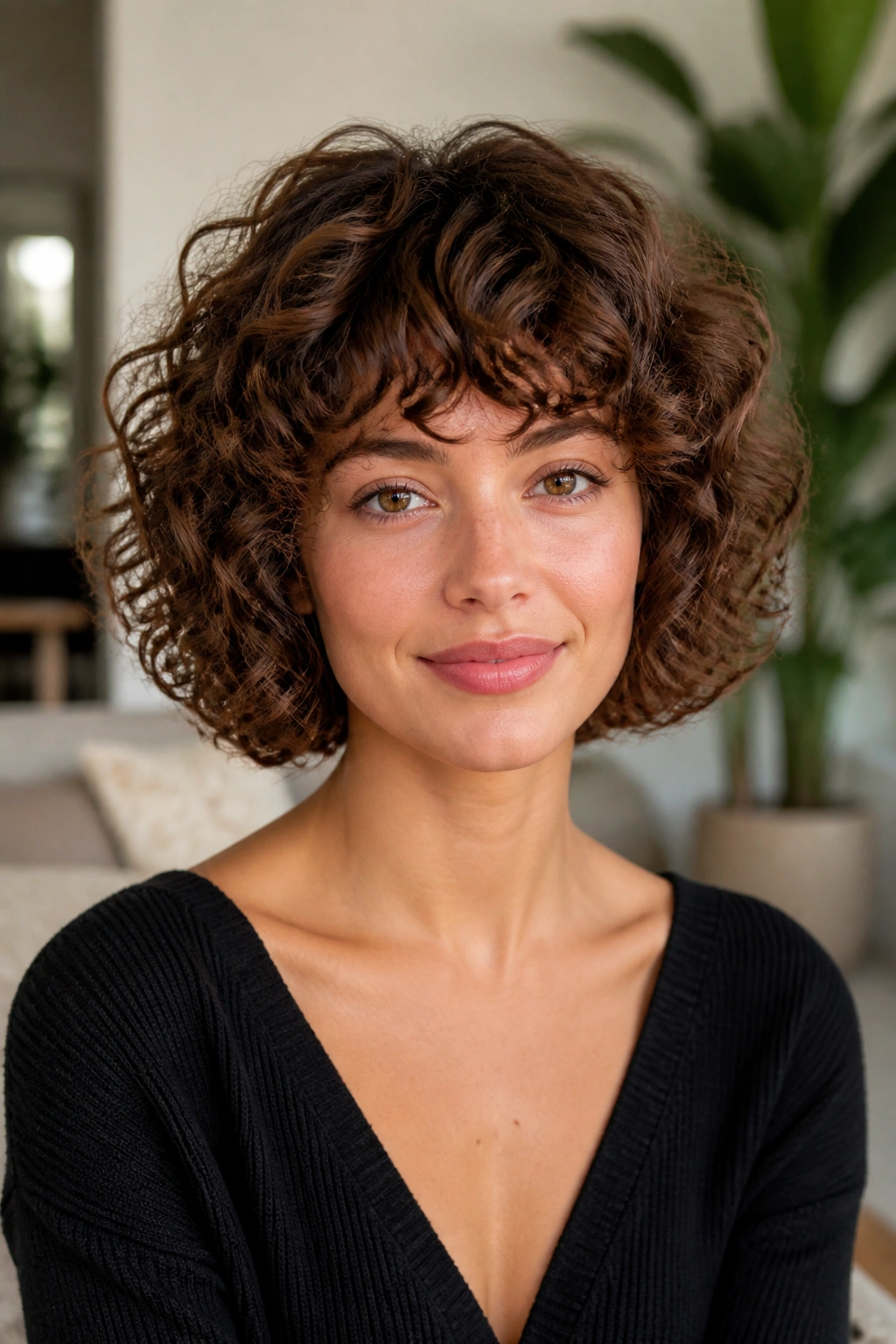
A curly bob gets edgy when it stops fighting the curl pattern and starts shaping around it. The rounded version keeps the perimeter soft while the interior is cut to control bulk and encourage bounce.
Why the Curve Matters
Curly hair rarely looks good when it is cut as if it were straight. The shrinkage changes everything. A curl that lands at chin length when wet may jump an inch or two higher once dry, so the shape has to be planned for that bounce.
A rounded bob avoids the dreaded triangle. The top should have enough internal shaping to keep the sides from blooming out like a bell, while the ends stay full enough to keep the curls springy. Dry cutting is often the better move here because the stylist can see how each curl sits in real life.
Styling Notes
- Use a leave-in on damp hair, not soaking wet hair.
- Scrunch in gel from the ends upward.
- Dry with a diffuser or let it air-dry untouched.
- Trim every 8 to 12 weeks if the shape puffs out.
This is one of those cuts that looks expensive when it is done well and messy when it is not. The difference is usually in the shaping, not the product.
8. Stacked Bob with a Sharp Nape
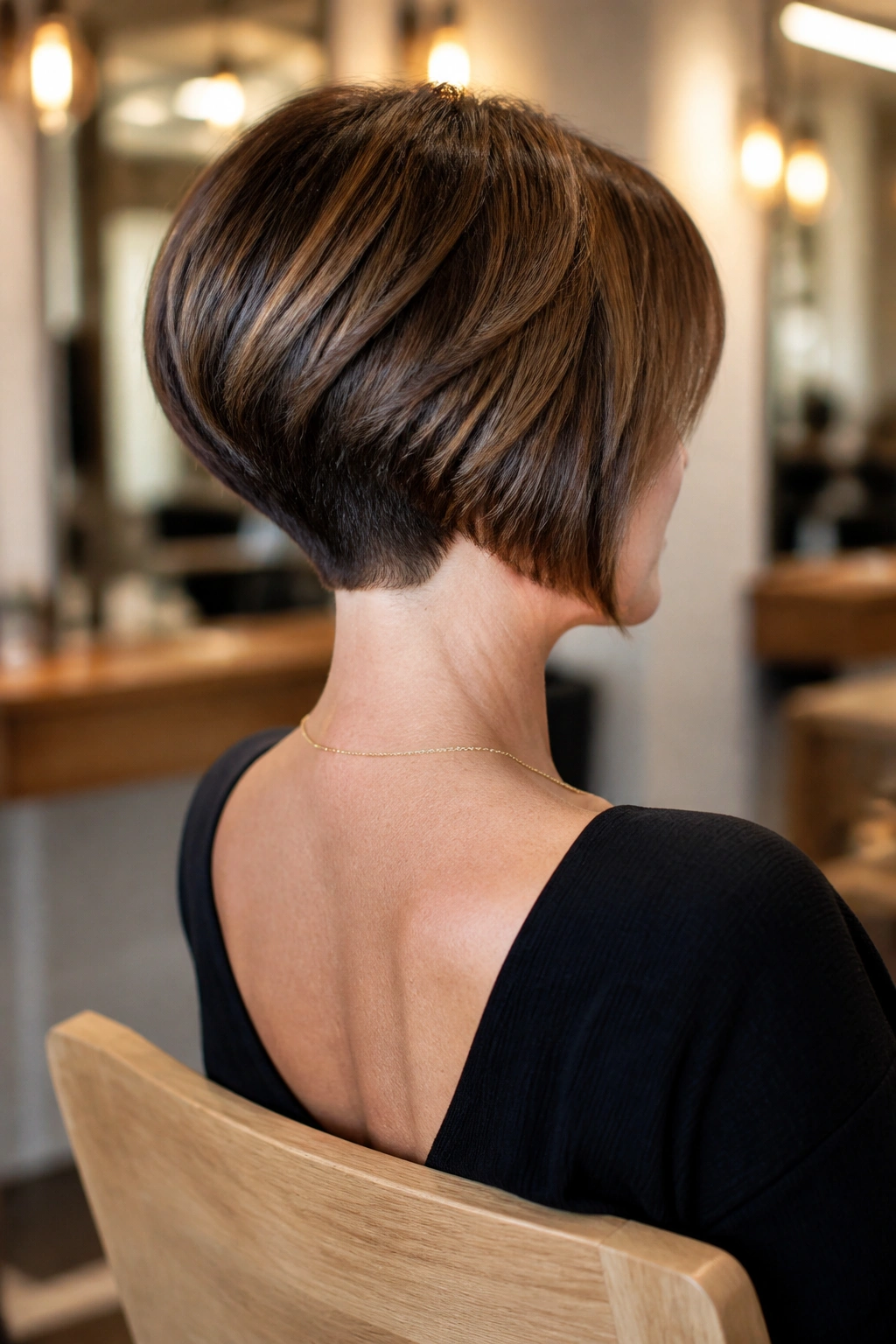
A stacked bob is a volume trick with a backbone. The back is graduated so the nape sits shorter, then the layers stack upward to create lift and a rounded silhouette. It is one of the cleanest ways to make fine hair look fuller without relying on endless styling.
The shape gives the crown some air and keeps the back from hanging limp. That matters more than people think. A bob can lose all personality if the back drags down and the front carries all the weight. Stacking fixes that by building a stronger line through the back of the head.
This cut can look polished or edgy depending on how sharp the nape is kept. A tighter nape and a bit of separation in the top layers make it feel modern. Blow-dry it with a small round brush and aim the back upward first; once the foundation is set, smooth the top over it. That is the difference between a stacked bob that looks full and one that looks puffy.
I like this one for people who want structure. It has no interest in being lazy.
9. Wavy Bob with Piecey Ends
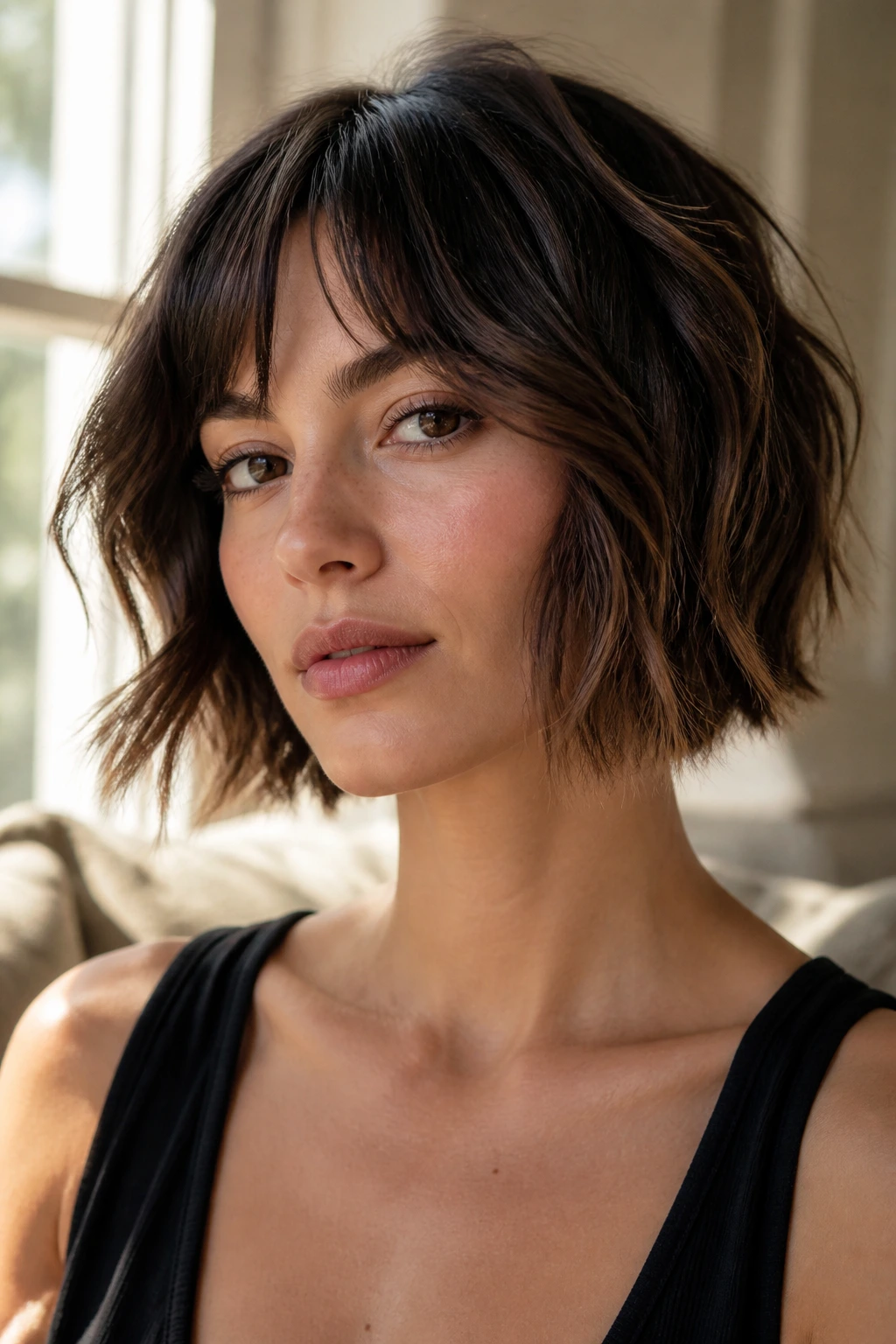
Why do piecey ends make a wavy bob look cooler than a soft, uniform wave? Because the separation keeps the cut from turning into one big blur of hair.
The shape here is relaxed, but it is not random. You want the ends to bend in different directions just enough to show the layers. The result feels a little undone, a little lived-in, and far less precious than a polished curl pattern. It is the kind of bob that looks good when it catches a breeze, which is saying something without turning into fluff.
How to Get the Most From It
Start with damp hair and a light mousse or wave cream. Then twist 1-inch sections away from your face while drying, or wrap them loosely around a medium iron and leave the last inch out. Once it cools, rake your fingers through it and stop before the texture disappears.
- A center part gives it a sharper edge.
- A side part makes it feel more casual.
- Light texture spray works better than heavy oil.
- The cut should graze the jaw or upper neck.
This is an easy one to live in. It looks good a little messy, which saves time and keeps the haircut from feeling precious.
10. Wet-Look Slicked-Back Bob
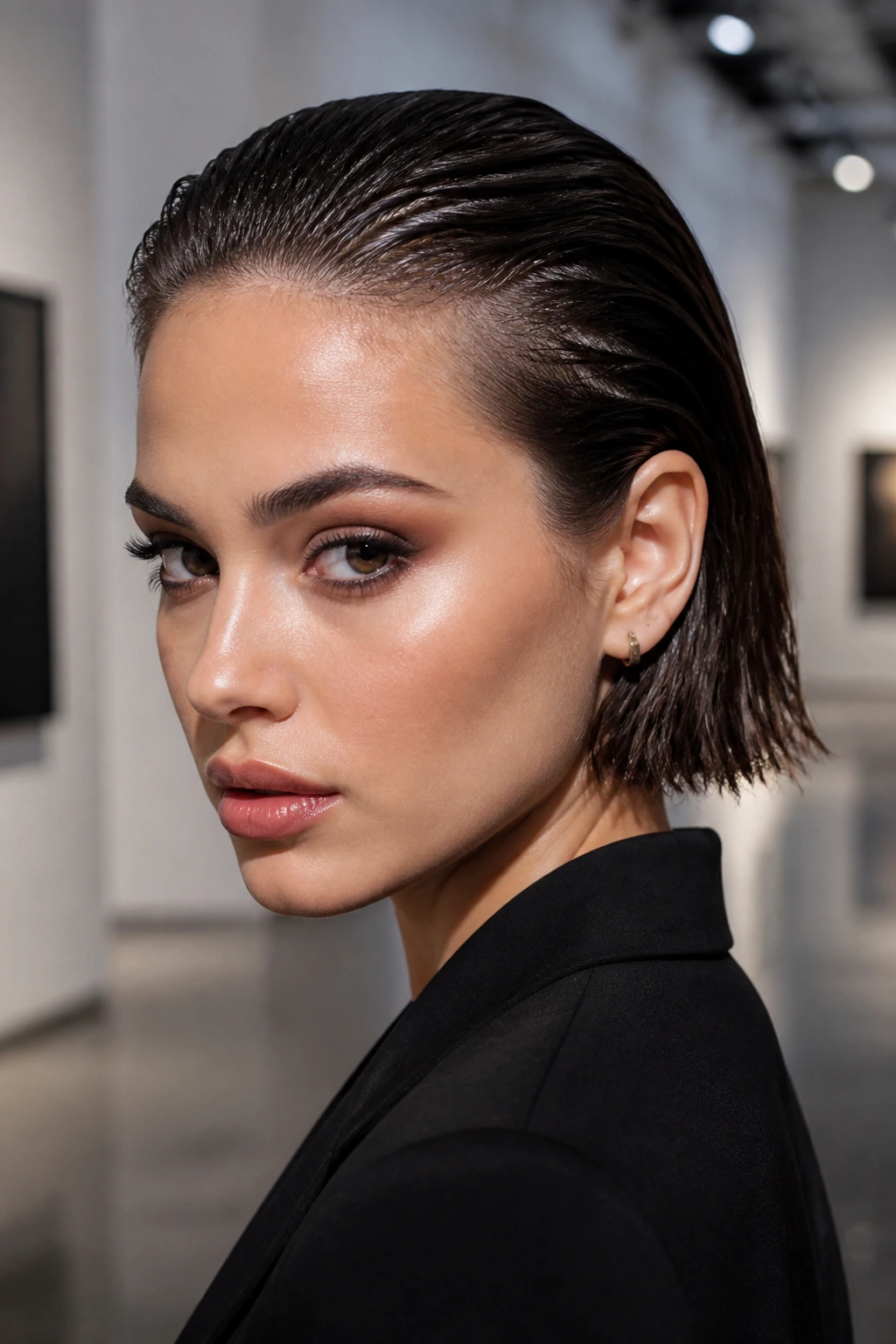
A slicked-back bob has no patience for softness. The hair is combed straight away from the face, saturated with gel or cream, and left with a glossy finish that feels dramatic without needing extra length.
It is the bob for nights out, gallery openings, and days when you want the haircut to do the talking before you do. The trick is to keep the sides smooth and the part deliberate. If the top is too fluffy or the ends are too separated, the look loses its whole point.
Here’s the part people miss: the wet look works best when the bob itself is already clean. A rough perimeter plus slick styling can look muddy. A neat cut gives the product something to sit on. You want shine, not grease.
What Helps It Hold
- Strong-hold gel at the roots and through the top.
- A fine-tooth comb to flatten the hairline.
- A little shine serum on the ends.
- Tuck one side behind the ear if you want asymmetry.
This style is bold, but not complicated. It just refuses to pretend.
11. Split-Dye Bob with a Clean Center Part
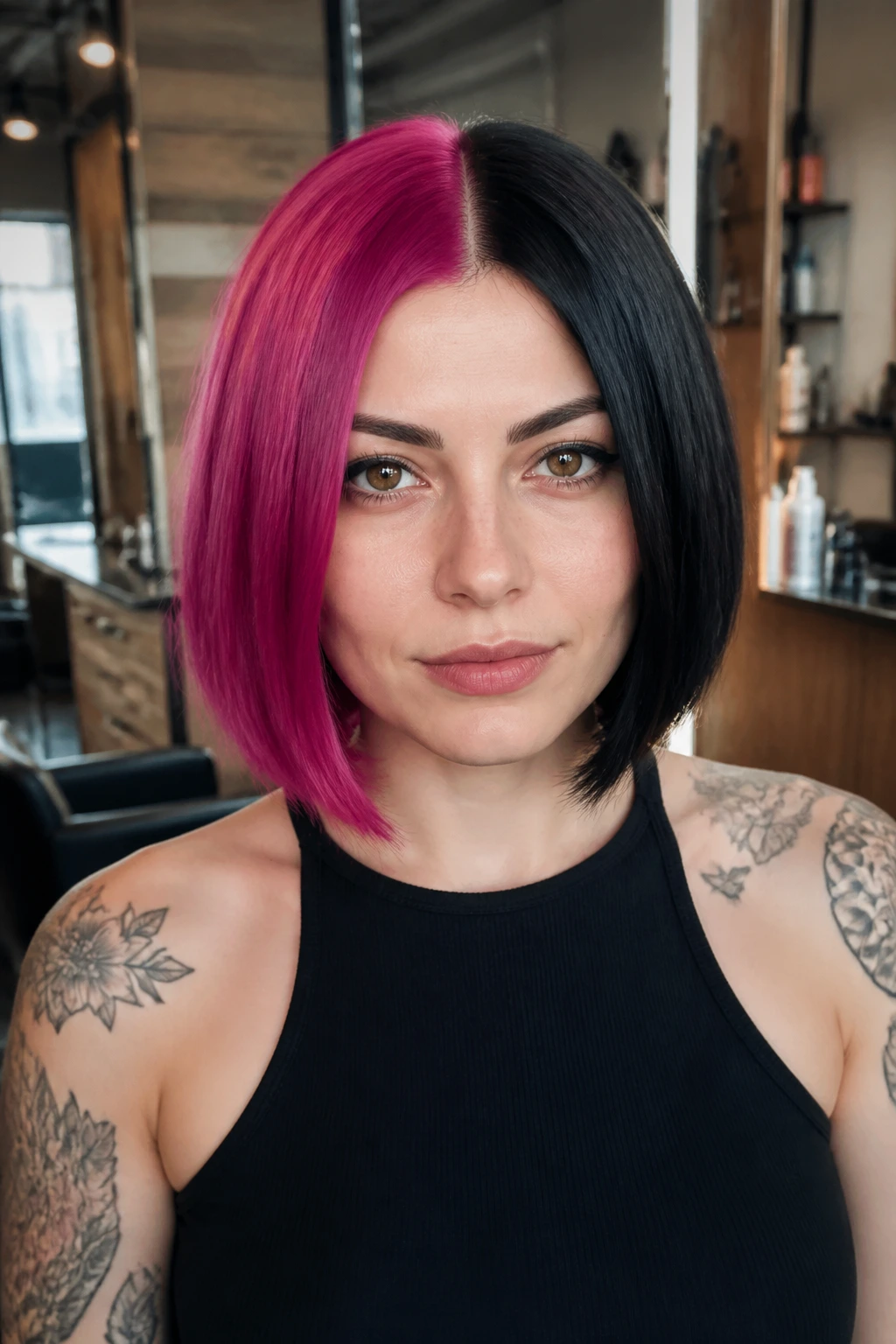
A split-dye bob is one of those cuts that looks louder than it is. The shape stays simple, but the color does the heavy lifting by dividing the head into two distinct halves or sharply contrasting panels.
The center part matters here because it gives the color a straight axis. That line makes the whole haircut feel graphic. If the bob itself is chin-length or a touch longer, the color contrast becomes even stronger because there is enough surface for the split to register. Too much layering can blur the effect, so keep the cut fairly clean.
This is not a low-maintenance choice, and that is worth saying plainly. Roots show faster. Toners need upkeep. Faded contrast can look cool for a while and then turn patchy if it is neglected. But when the color is fresh, the look has real punch.
Keep the ends blunt or just lightly textured. A busy cut and a loud color can fight each other. Let one of them lead.
12. Bob with Peekaboo Bangs

Unlike full fringe, peekaboo bangs let you change the mood without committing to a face-full of hair. The bangs sit longer, often grazing the cheekbone or one eye, and they can be tucked, swept, or left loose depending on how much edge you want that day.
That flexibility is why this cut works for a lot of people who are curious about bangs but not ready to live with a blunt wall across the forehead. The bangs soften the face, the bob keeps the shape crisp, and the whole thing lands in a place that feels playful instead of severe. Nice balance. Not boring.
I would tell someone to keep the rest of the bob fairly clean if they choose this fringe. Too many layers can make the bangs disappear. A smoother perimeter gives the fringe a place to stand out. If your hair is fine, the peekaboo effect can make it look fuller at the front; if your hair is thick, it keeps the fringe from feeling heavy.
Bring photos that show both wearability and drama. That matters more than explaining it in vague words.
13. Collarbone-Grazing Lob with Choppy Layers
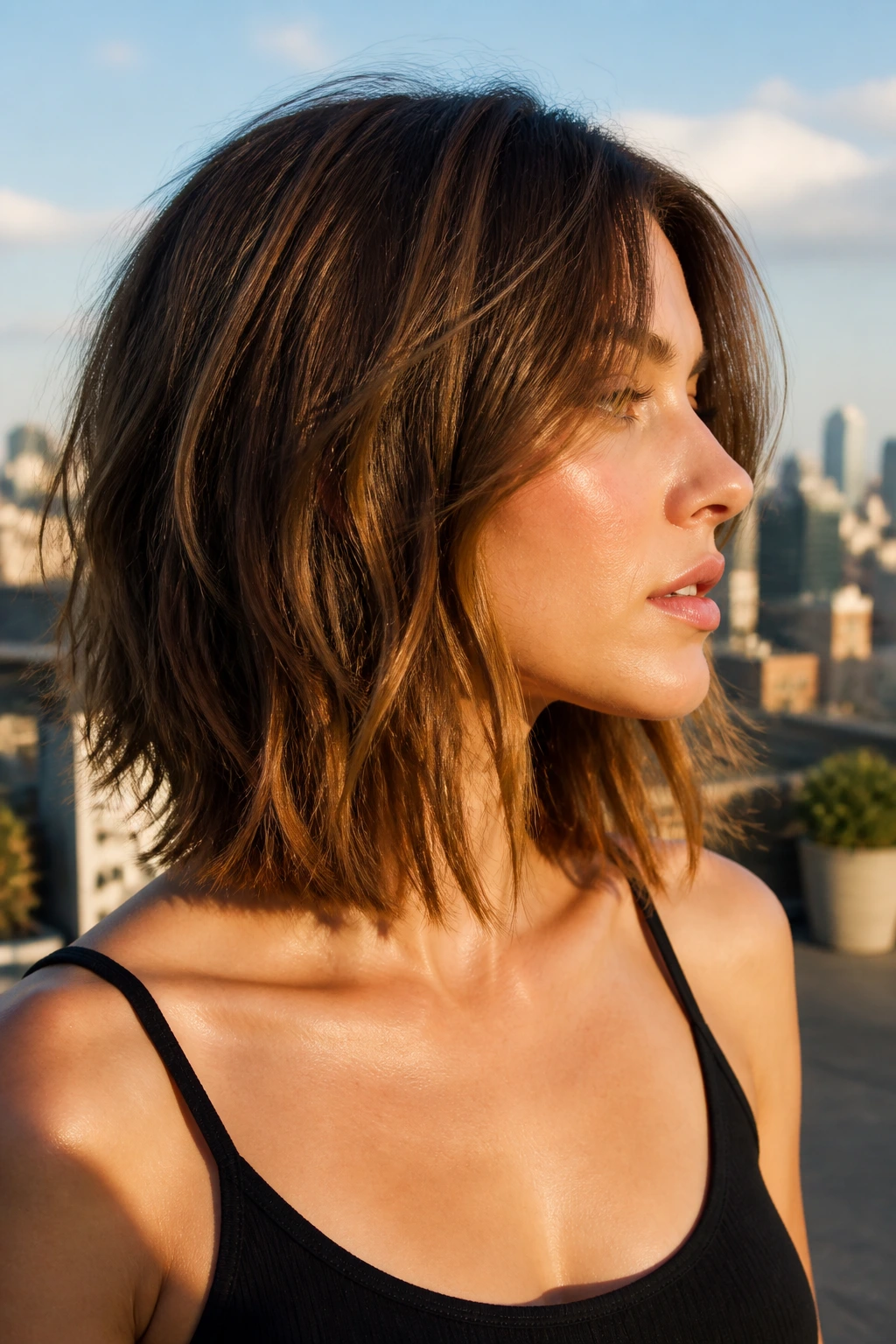
A lob can still be edgy. It just needs a little less politeness at the ends.
Why the Length Matters
The collarbone is a useful place for this cut because the hair moves when you turn your head, brush it behind one shoulder, or clip it up. That movement gives the lob a more casual edge than a perfectly straight shoulder cut. The choppy layers keep it from reading as safe or static.
This version is a good fit if you want to keep some length but hate hair that sits like a sheet. Ask for broken-up ends and interior layers, not soft feathering everywhere. The difference matters. Feathering can blur the line; choppy layers keep it awake.
Styling Clues
- Bend the front pieces away from the face.
- Leave the ends a little undone.
- Use a medium-barrel iron if you want movement.
- Dry shampoo at the roots can keep it from lying flat.
A lob like this is a smart middle ground. It still feels grown-up, but it does not have to feel safe.
14. Jaw-Length Box Bob
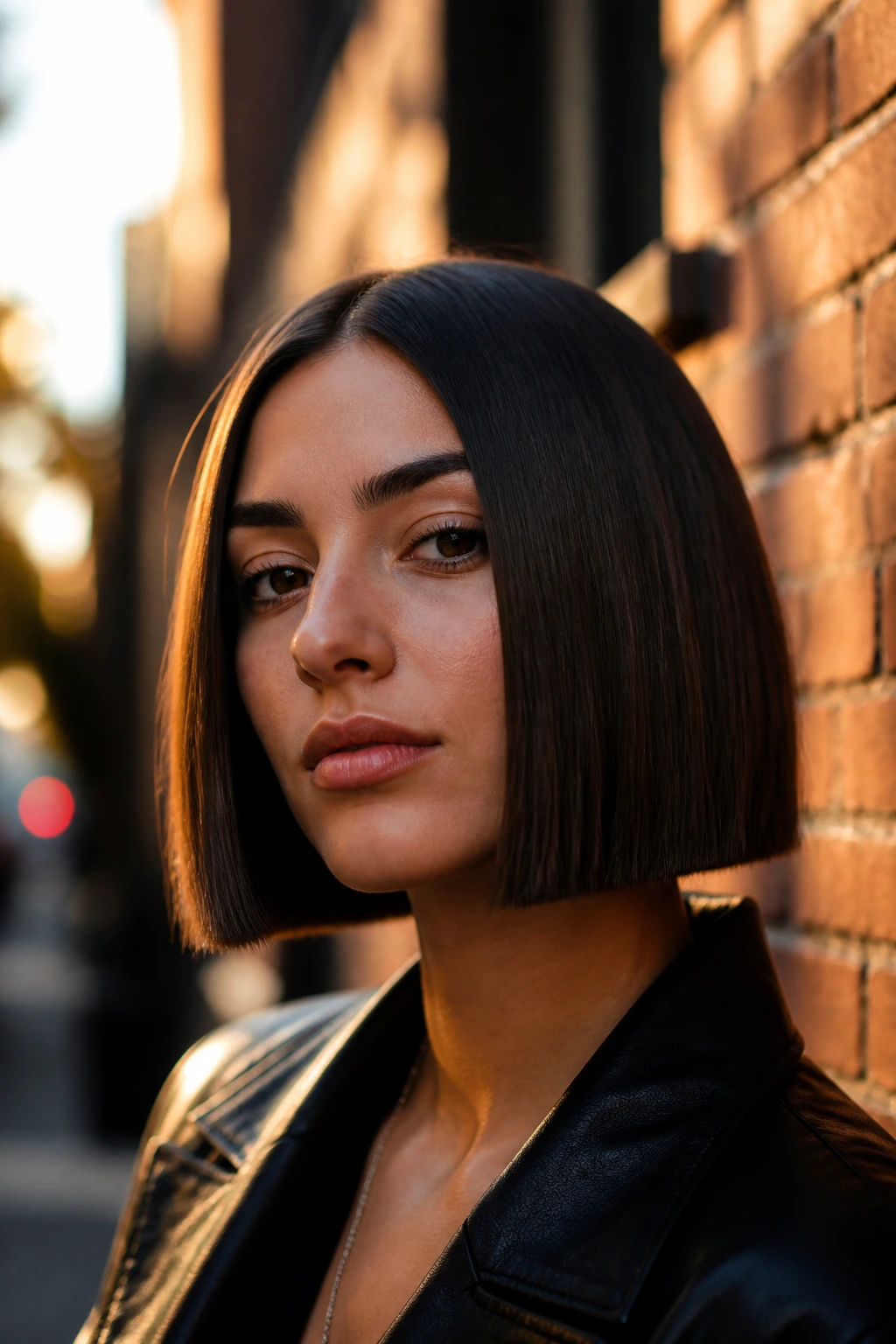
The box bob is architectural. It sits close to the jaw, keeps a squarer outline, and makes no effort to disappear into softness. If you want a haircut that reads as clean from across the room, this one has the right kind of presence.
The magic is in the corners. They should feel deliberate, not rounded off too much. That creates a frame around the face that can look strong on sharper features and surprisingly flattering on softer ones, too, because it adds definition where there may not be much. A good box bob has weight at the sides and control at the ends.
This cut does not need much styling, which is part of its appeal. Blow it smooth, tuck one side, and let the line do the rest. If your hair bends or flips at the jaw, you may need a slight bevel under the ends so it does not kick out awkwardly. That tiny adjustment makes a bigger difference than most people expect.
If you like clothes with structure, this is the haircut version of that instinct.
15. Bixie-Bob Hybrid
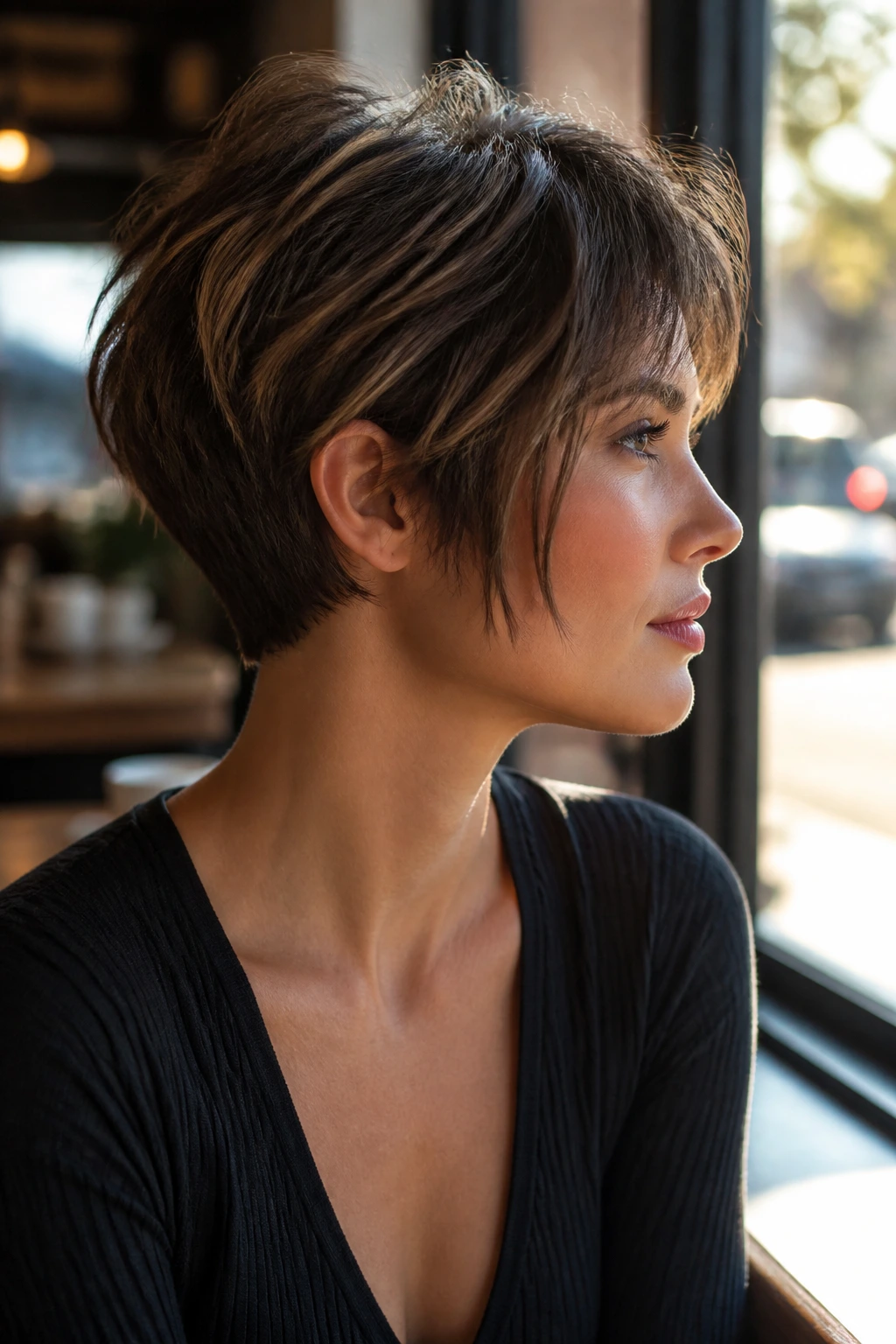
What happens when a bob gets a little shorter, a little choppier, and a little more cropped at the back? You end up with a bixie-bob hybrid, which sits somewhere between a pixie and a bob without fully becoming either one.
That in-between quality is the charm. The top stays long enough to brush forward, sweep to the side, or rough up with paste. The back and sides are shorter, which gives the cut lift and a slightly rebellious line around the ears and nape. It has that cool, slightly unfinished look people are often chasing when they say they want something different.
How to Wear It
Wear it sleek if you want the shape to look sharp. Wear it messy if you want the texture to show. The same cut can do both, which is why it works for people who want short hair but are nervous about losing all their options.
- Shorter at the nape.
- Longer at the crown and front.
- Needs a small amount of styling paste or cream.
- Trim every 4 to 6 weeks to keep the shape alive.
It is not a timid haircut. That’s the point.
16. Inverted Bob with Long Front Pieces
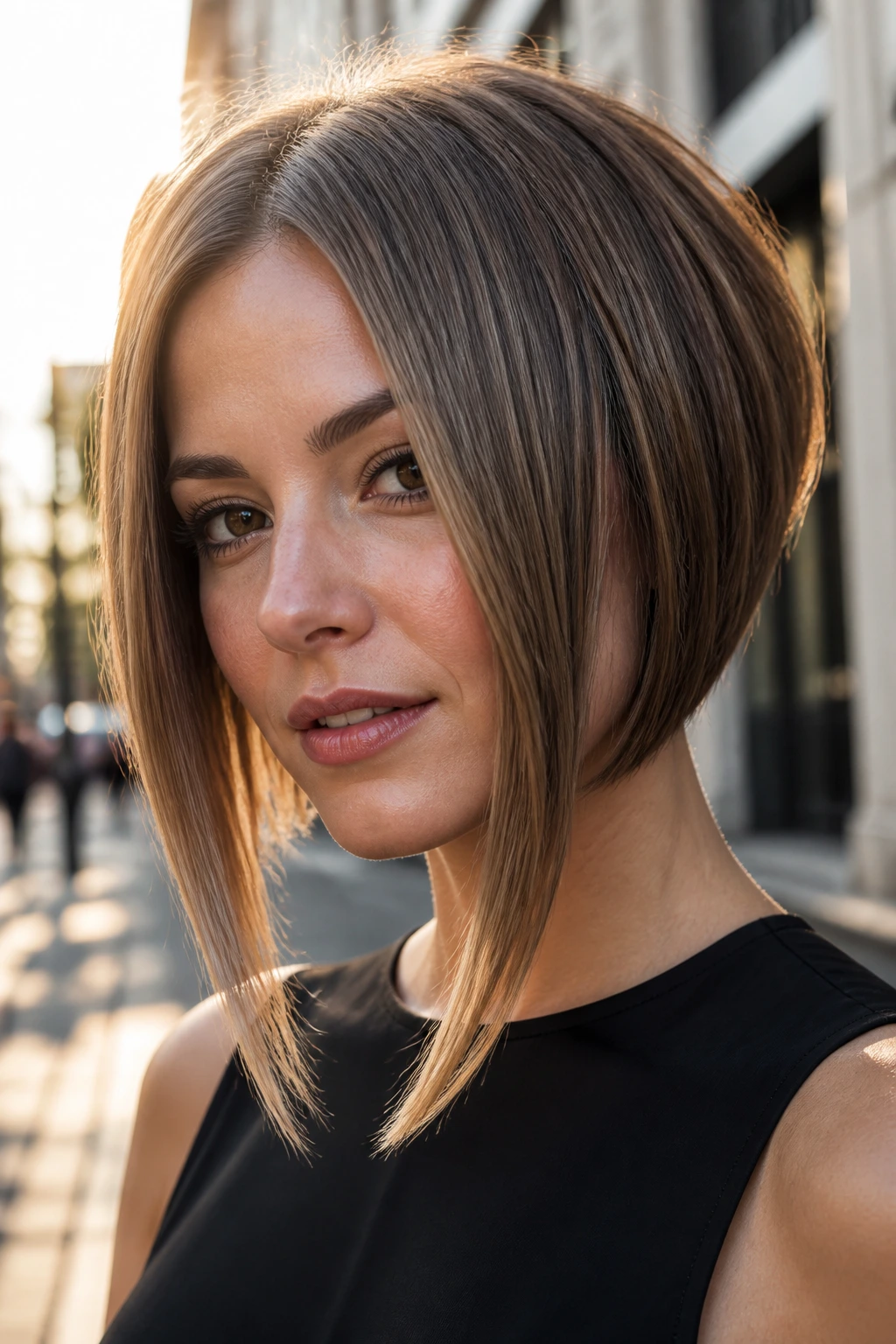
An inverted bob gives you a clean angle from back to front. The back is shorter, the front drops longer, and the whole cut creates a line that pulls the eye forward. It is one of the most useful shapes if you want edge without wrecking the polish.
The long front pieces matter because they soften the sharp angle enough to keep the cut wearable. Without them, the bob can read too stacked or too severe. With them, the shape looks intentional and a little dramatic, which is a nicer problem to have. This is especially good on round or fuller faces because the front pieces create vertical lines that lengthen the face visually.
A round brush is your friend here. Dry the back first, then pull the front forward and under. If you want it to feel more modern, leave the front ends a touch piecey instead of curling them into a perfect bevel. That small change keeps the haircut from slipping into office-safe territory.
It’s a neat cut. But not a meek one.
17. Wolf Bob with Airy Layers
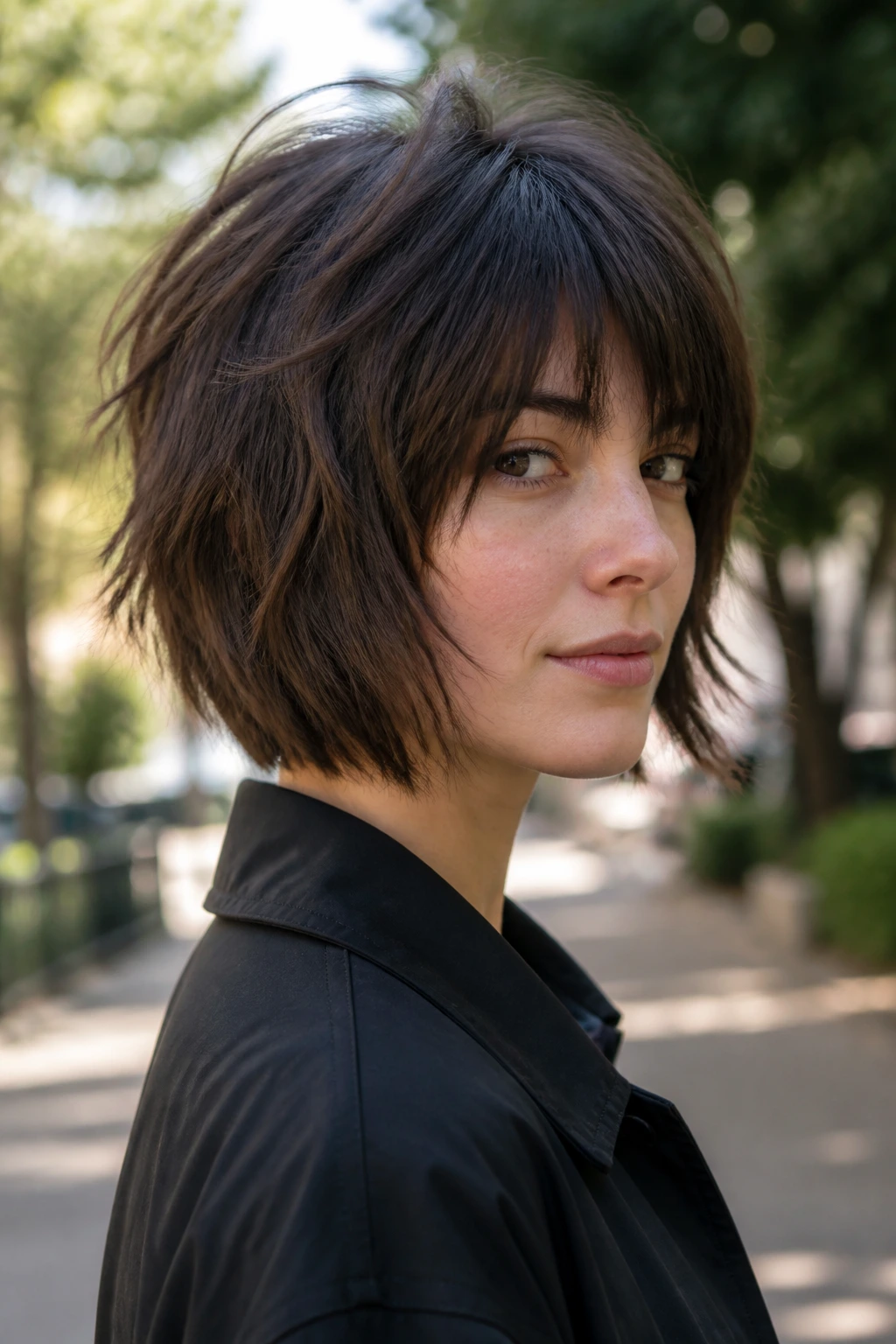
The wolf bob is what happens when a shag and a bob have enough sense to stop halfway. The crown gets lift, the layers stay airy, and the ends look broken up enough to keep the shape from feeling too neat.
This cut loves texture. It also loves hair with a little natural body, because the airy layers need some movement to show up. On thicker hair, the wolf bob can remove weight in a way that feels freeing. On fine hair, it can look a little sparse if too much is taken out, so the cutting hand needs to stay controlled.
I think the best version keeps the perimeter somewhere around the jaw or just above the shoulders, then uses softer layers through the crown and sides. That gives the haircut a lived-in feel without making it look like a grown-out mistake. The fringe can be short, long, or absent entirely. That flexibility is useful.
If a classic bob feels too tidy, this is the cut that adds a little edge without forcing you into full rock-and-roll territory.
18. Color-Blocked Bob with a Bold Money Piece
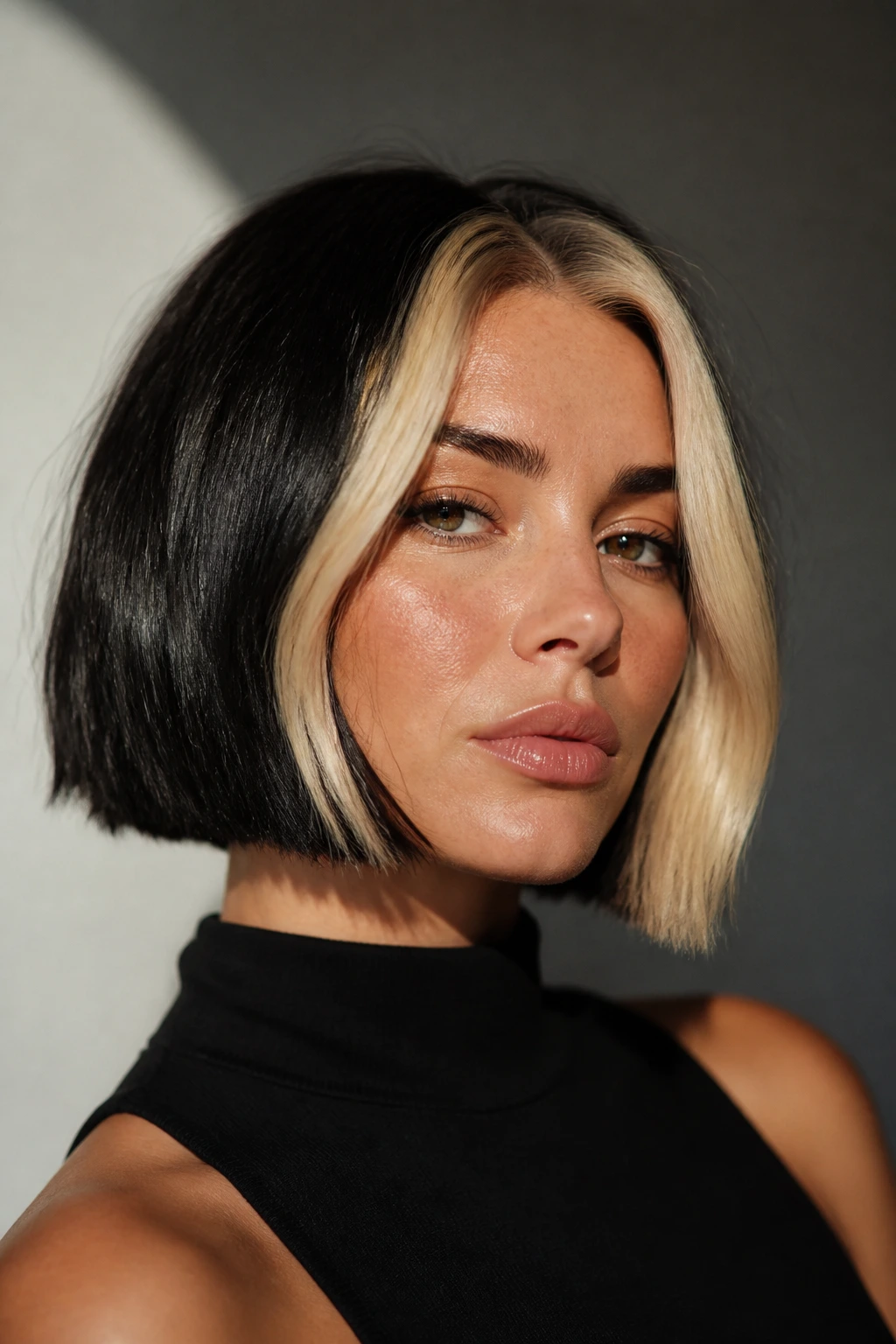
Unlike a cut-only bob, the color-blocked version gets its attitude from contrast. A bold money piece around the face, a chunk of lighter tone under the surface, or a split panel through the front can change the whole mood of a simple shape.
The nice thing about color blocking is that it lets the cut stay easy. You do not need a wild perimeter if the color already has structure. A blunt bob with a bright front section looks stronger than the same cut with random highlights scattered everywhere. That’s because the eye reads the division instantly. Clean shape, clean contrast.
What to Watch For
- The front panels should be placed where they frame the face, not just where they’re easy to paint.
- Keep the base cut smooth enough to show the contrast.
- Ask how the color will look when the hair is tucked or pinned.
- Plan for maintenance, because sharp contrast grows out fast.
This is for someone who likes a little drama and doesn’t mind the upkeep that comes with it. Easy it is not. Worth it, though, when done well.
19. Textured Bob with Micro Fringe
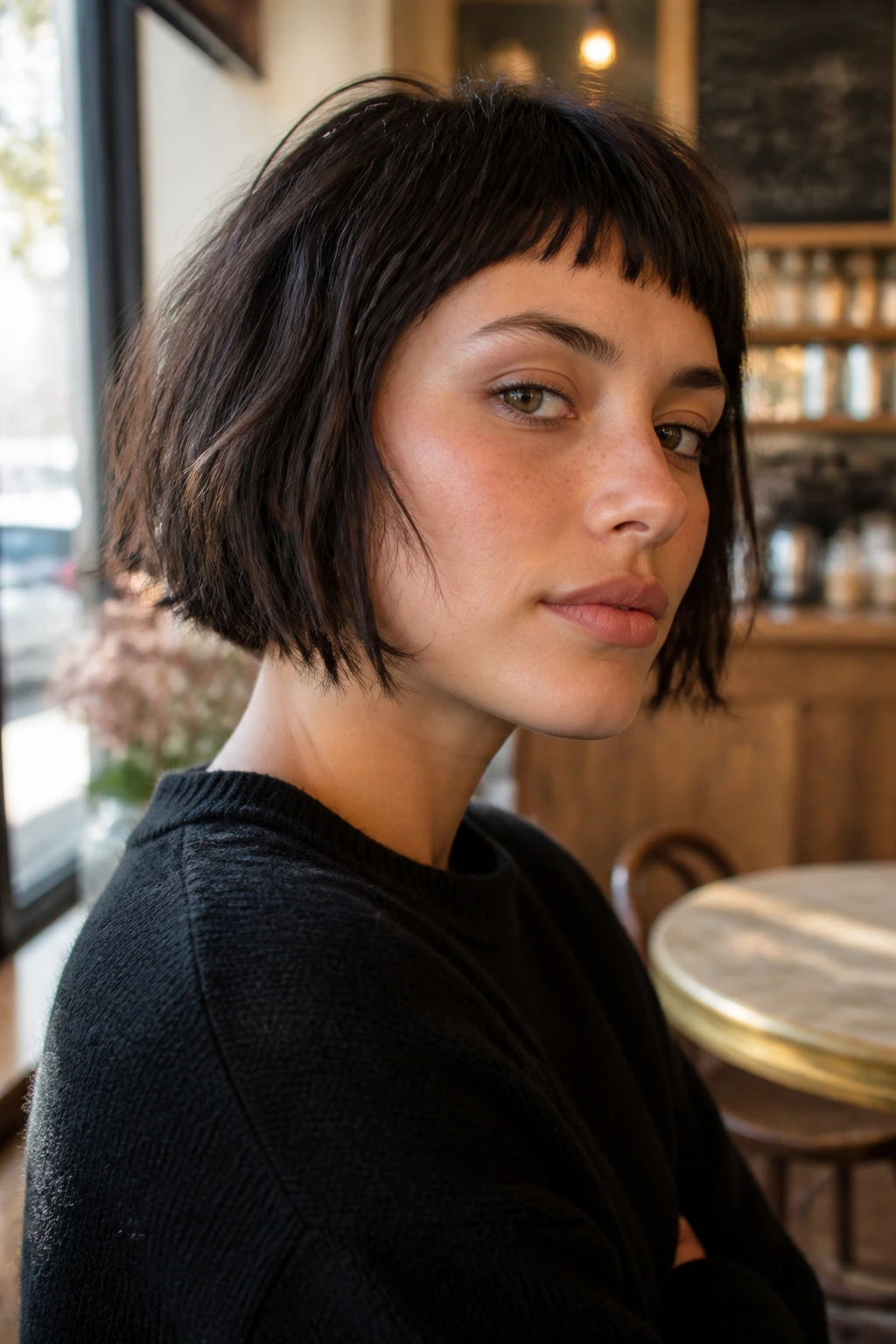
A micro fringe changes the whole personality of a textured bob. The fringe sits short enough to show forehead, while the rest of the cut stays rough and piecey so the top and bottom don’t feel too neat together.
Why It Works
The short fringe creates a graphic line, and the textured bob underneath keeps the look from becoming precious. That push and pull is what makes it interesting. If both the fringe and the body of the cut were soft, the style would lose its edge. If both were severe, it could look harsh. This version lands in between.
This cut suits people who like contrast near the face. It also suits anyone whose glasses tend to fight longer bangs. A micro fringe sits above the frames and lets the face stay visible. That sounds like a small detail, but small details matter a lot here.
Quick Styling Notes
- Use a matte paste on the fringe if it needs separation.
- Keep the bob’s ends rough, not fluffy.
- Blow-dry the fringe first so it sets in place.
- Trim the bang line often; short fringe grows out fast.
This is not a background haircut. It wants attention, and it knows it.
20. Tapered Bob with Tucked-In Ends
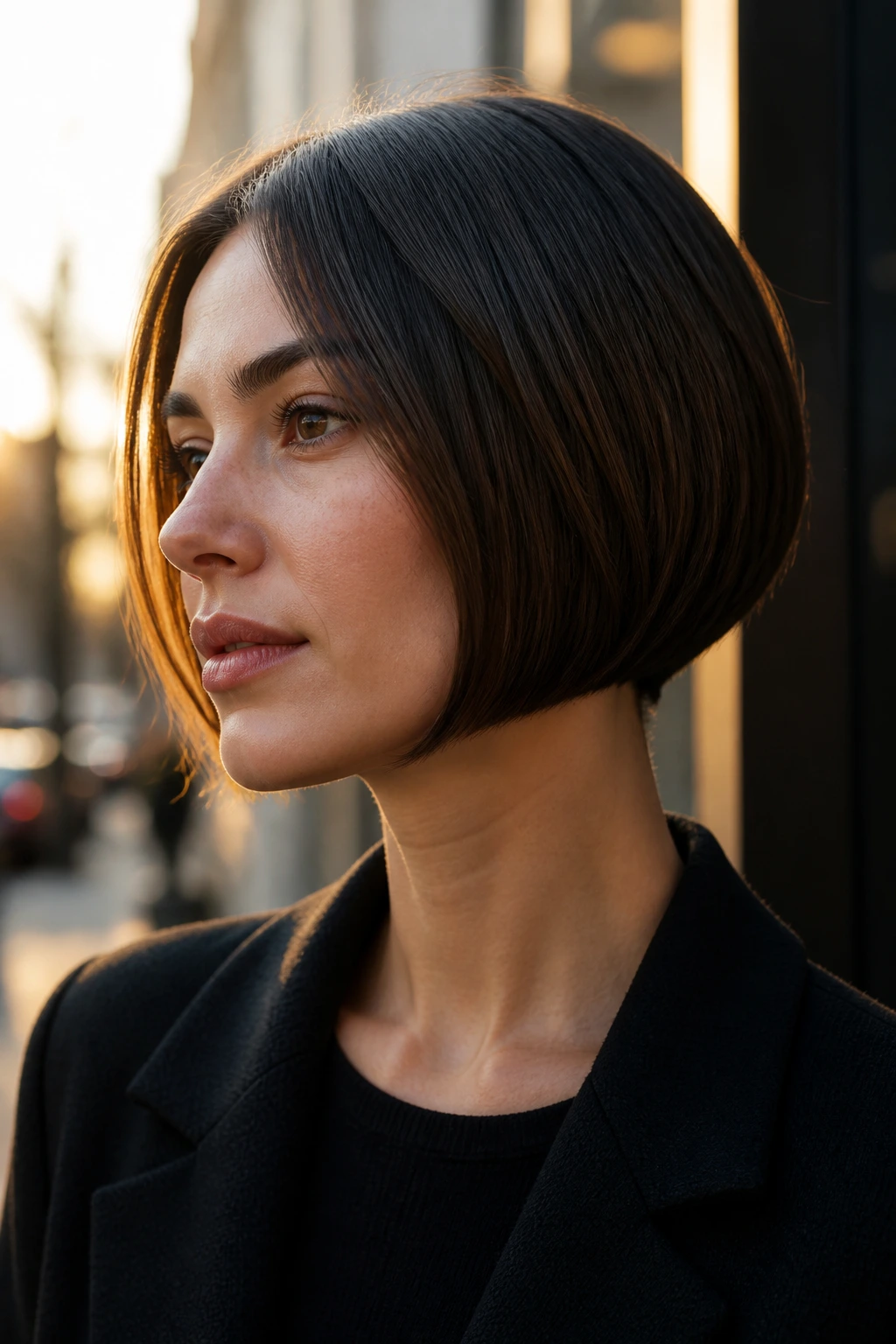
A tapered bob is one of the smartest choices if you want edge that still looks neat. The back narrows softly toward the nape, the ends tuck inward, and the whole cut sits close to the head without feeling flat. It has shape, but not fuss.
The tucked-in finish matters more than people realize. It gives the bob a clean underside and keeps the perimeter from flipping out at the wrong moment. That makes the cut feel controlled, which is useful if you want a sharper look without going full razor or undercut. It also works well with collars, scarves, and high necklines because the hair stays close to the body instead of fighting the clothes.
This is a strong choice for women who want something edgy but still polished enough for daily life. The line can be made a little sharper with a flat iron, or left softer with a round brush so the ends curve under in a gentle way. Either way, the silhouette stays tidy.
Bring a reference photo and say what you mean by edge. Sharp? Cropped? Choppy? Those words change everything. A good bob lives in the details, and the details are where the attitude shows up.
