



A cheek-length bob is one of those cuts that looks simple from far away and then gets weirdly specific once you sit in the chair. The difference between a bob that sits at the cheekbone and one that lands an inch lower can change the whole mood of your face. It can sharpen a soft jaw, make curls springier, or turn fine hair from flat to airy in one snip.
That’s why cheek length bob haircut ideas are worth taking seriously. This length sits in a sweet spot: short enough to feel fresh, long enough to tuck, bend, wave, or smooth depending on the day. It also gives your stylist room to play with shape, which matters more than most people think. A few millimeters higher or lower around the front can make the cut look sleek, cozy, tough, or French and cool without trying too hard.
I’ve always liked this length because it doesn’t pretend to be one thing. It can be polished for work, messy for weekends, and sharp enough to look intentional even when you’ve barely done anything to it. And because the cheek-length bob lands so close to the face, it puts the emphasis exactly where you want it: eyes, cheekbones, lips, earrings, glasses. All of it.
So if you’re weighing a change and want something that feels current without chasing a look that will annoy you after three mornings, these 15 cheek-length bob haircut ideas are the ones I’d actually consider first.
1. The Clean Jawline Bob

This is the version I’d point to first if you like a cut that looks tidy even when you air-dry it badly. The front sits right around the cheek, then curves into a crisp line that skims the jaw. It feels decisive. No mush. No wandering ends.
The reason it works is simple: a clean shape gives the eye a place to stop. When the perimeter is smooth, the whole haircut reads sharper and more expensive, even if your styling routine is minimal. It’s especially good on straight or slightly wavy hair that holds a line without much fight.
Why It Flatters So Fast
A jawline bob is nice on faces that want a little structure near the lower half. Rounder faces often look more defined with this cut, and heart-shaped faces usually get a nice balance from the width near the cheeks. If your hair tends to puff out at the sides, this shape can still work — you just want the ends softened a touch so they don’t kick out like a helmet.
- Ask for the length to hit the upper jaw or just below the cheekbone.
- Keep the perimeter blunt, but not boxy.
- A light bevel under the ends helps the shape fold inward.
- Works best with a center part or a soft off-center part.
Best styling move: bend the front with a flat iron for 3 to 4 seconds per section, then leave the back alone. That small contrast gives the cut some life.
2. Soft Layered Cheek-Length Bob

If a blunt bob feels a little too stern for you, this is the gentler version. The shape is still short and neat, but the interior has soft layers that remove bulk and keep the ends from looking heavy. It has a little movement when you walk, which sounds small until you see it in a mirror.
What I like about this cut is that it doesn’t scream for attention. It sits quietly and does its job. On thicker hair, those layers stop the bob from ballooning out at the sides. On medium-density hair, they make the ends look lighter and a bit more lived-in.
The trick is to avoid over-layering. That’s where some bobs go wrong. Too many short pieces near the crown and suddenly the shape gets fluffy in a way that looks dated fast. A few soft internal layers are enough.
Where It Makes the Biggest Difference
This version is especially useful if your hair bends weirdly at the ends or if you hate the blocky feeling of one-length cuts. It’s also a nice choice if you wear your hair tucked behind one ear often. The layers keep the tuck from puffing up into a lump.
- Best for medium to thick hair
- Good if you want movement without losing the bob line
- Easy to style with a round brush or a rough blow-dry
- Tolerates natural texture better than a glassy blunt cut
A little mess works here. That’s the point.
3. The Micro-Ended Blunt Bob
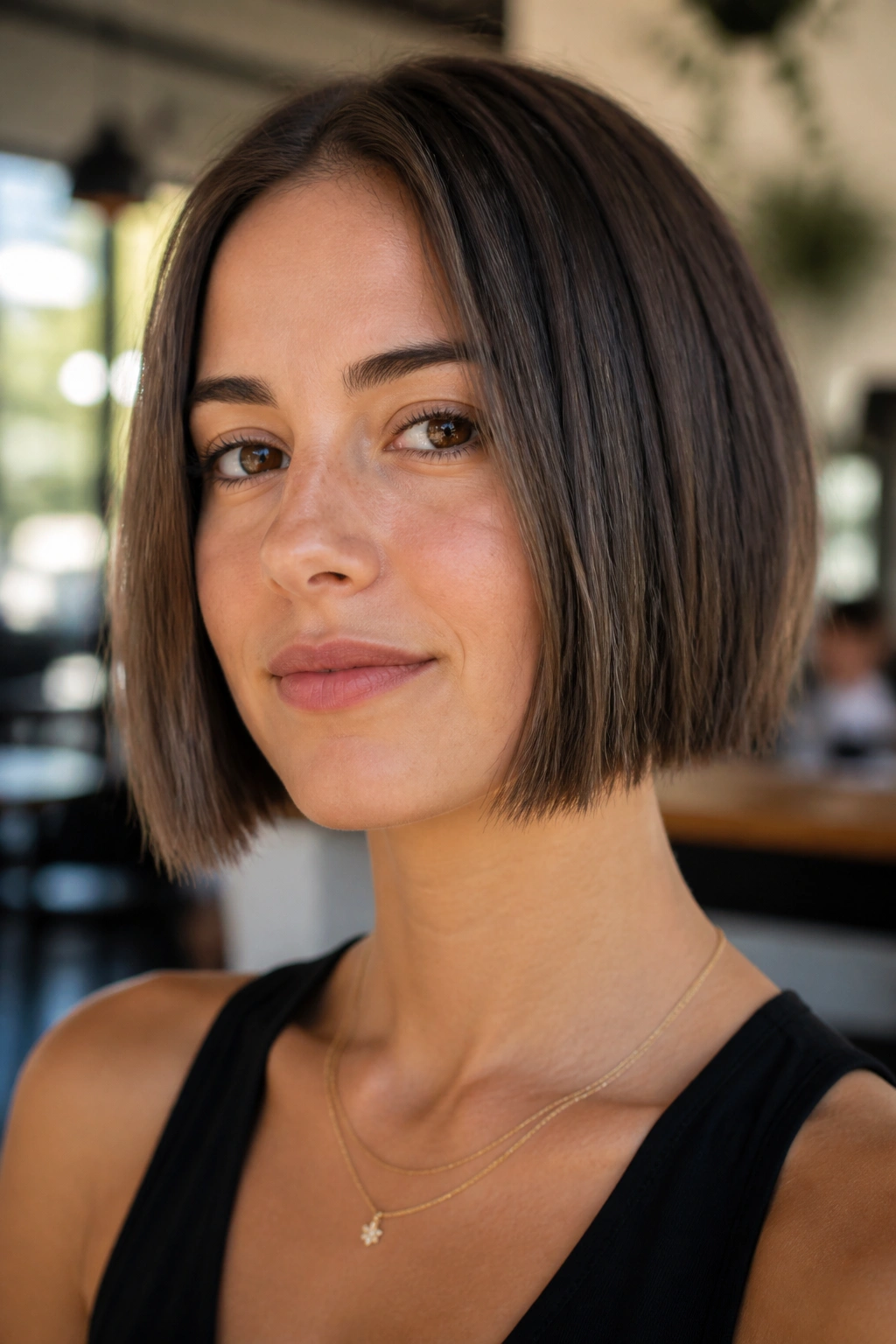
This one has attitude. The outline is blunt, but the ends are lightly chipped or micro-textured so the cut doesn’t feel stiff. It lands at cheek length and gives off that polished-but-not-fussy vibe people try to fake with too much styling cream.
The beauty of this haircut is that it looks deliberate from every angle. From the front, it reads sleek. From the side, it has that tiny bit of softness that keeps it from looking carved out of cardboard. If your hair is naturally straight, this is a strong option because it makes the most of the hair you already have.
What Makes It Work
A micro-ended blunt bob is basically a cleaner version of a full blunt cut. Instead of a hard, heavy edge, the stylist point-cuts the tips so the line moves a little. That helps the haircut sit better against the cheekbones, especially if you have strong features and don’t want the cut to feel too severe.
This is also one of the best cheek length bob haircut ideas if you like earrings, bold lipstick, or glasses. The haircut doesn’t compete. It frames.
One caution: if your hair is very thick and coarse, ask for the underneath to be debulked a little. Otherwise the bob can kick out at the ends and lose the sleek shape you’re paying for.
4. The Side-Part Bob With One Tucked Side

A side part can change everything. Same length, same haircut, different mood. Shift the part off-center and tuck one side behind the ear, and the whole bob suddenly feels more grown-up, more directional, a little less precious.
I love this version for people who want short hair but don’t want to look overly severe. The asymmetry softens the face and gives you a place to show off an earring or the line of your cheek. It also helps if one side of your hair grows flatter than the other, which is more common than people admit.
Why the Side Part Matters
The side part adds height at the roots near the front, which can be a gift if your hair lies flat. It also creates a diagonal line across the face, and diagonal lines are more forgiving than straight ones. They make the cut feel a bit longer on one side without actually changing the length.
- Tuck the lighter side behind the ear.
- Use a flat brush at the roots for lift.
- Keep the visible side smooth, not puffy.
- A light serum on the tucked side keeps flyaways down.
This cut is excellent for workdays when you want to look like you tried, even if you didn’t. Honestly, that’s half the appeal.
5. The Curly Cheek-Length Bob

Curly hair and cheek-length bobs have a slightly dramatic relationship. When the cut is right, the curls stack into a lively shape that sits near the face and makes the whole style feel bouncy and bright. When the cut is wrong, it can turn into a triangle. So yes, the shape matters.
The best curly bob at this length keeps enough weight in the lower half to stop the curls from springing outward too much. A stylist who knows curls will usually cut it dry or mostly dry, because curly hair lies to you when it’s wet. That sentence could save someone from a bad haircut.
What to Ask For
If your hair has a strong curl pattern, ask for the length to be checked in its natural state. You want the cheek-length point to sit where the curls actually rest, not where they hang wet. That usually means a little more length than you expect.
- Keep the perimeter rounded, not square.
- Add shape around the front, especially near the cheekbone.
- Avoid heavy layering at the crown unless your hair is dense.
- Use a cream or gel that forms a soft cast, then break it once dry.
This cut shines when the curls are hydrated and defined. Dry curls can look a bit wild at this length, which some people love. If that’s you, even better.
6. The French-Inspired Tousled Bob

There’s a reason this cut keeps showing up in salons and on sidewalks. It has that easy, slightly undone shape that looks like you cut your hair in a tiny apartment near a café and somehow got it exactly right. It’s cheek-length, a little airy, and not too perfect.
What makes it different from a standard bob is the finish. The ends are softer, the volume sits a bit lower, and the whole shape has a lived-in bend rather than a straight blowout sheen. It’s not messy in the lazy sense. It’s messy in the good sense, which takes more work than people think.
A Small Cut With a Big Mood
This bob is best if your hair naturally has a wave or if you can create one with a 1-inch iron. The shape doesn’t need big curls. It needs bends, a rough side part, and ends that don’t sit perfectly flat. That little imperfection is the entire charm.
- Works well with dry shampoo at the roots
- Better on hair with some natural movement
- Looks good with a soft fringe or grown-out bangs
- Pairs nicely with second-day texture
If you want a bob that feels more relaxed than precise, this is a strong candidate. It also hides a bad hair day better than the glassy versions. That alone matters.
7. The Angled Cheek-Length Bob
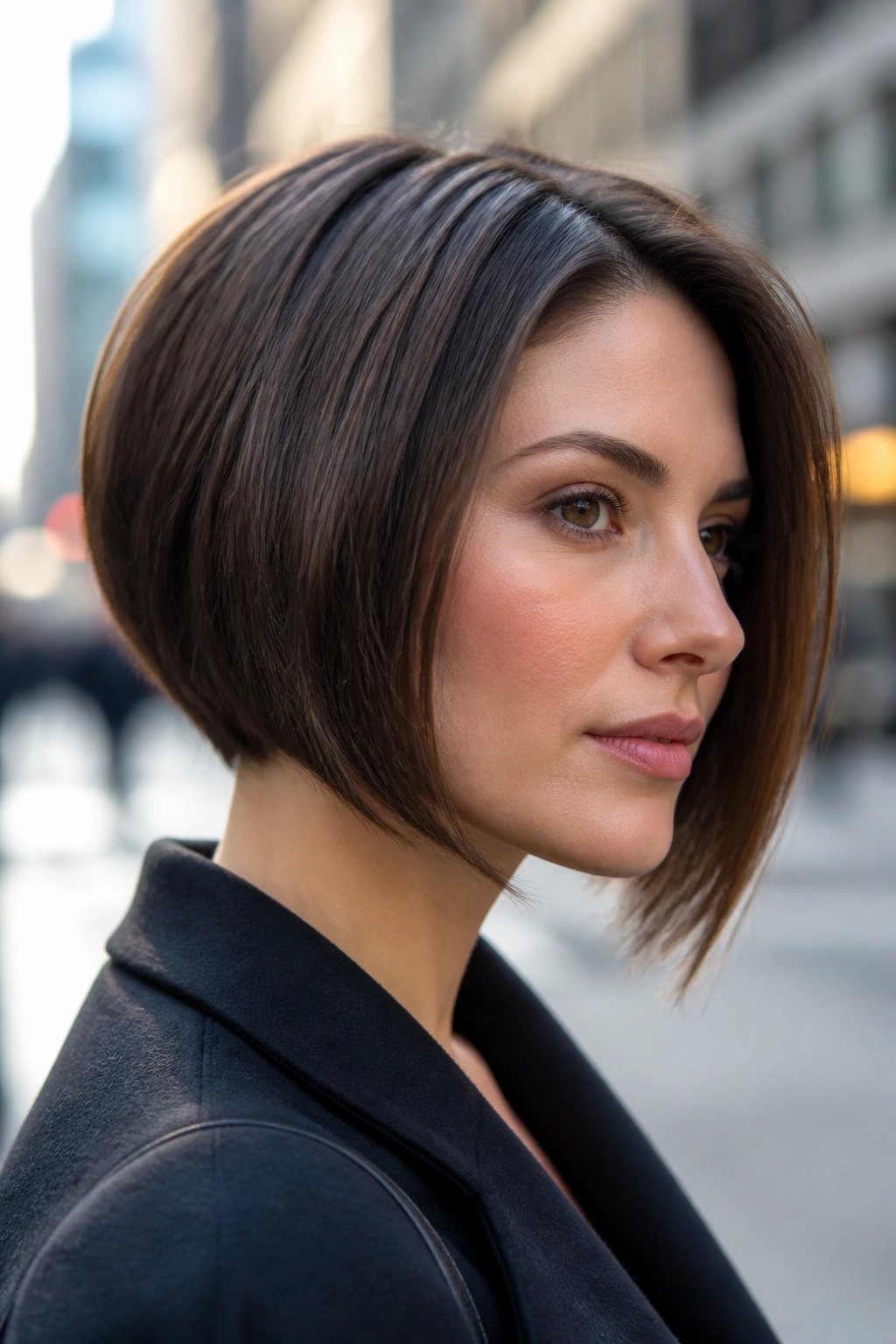
An angled bob gives you motion even when the hair is still. Shorter in the back, slightly longer in the front, it creates a subtle forward sweep that makes the cheekbone area look intentional and clean. I’d call it the sharpest option on this list.
The angle works because it creates a visible line of movement across the face. That line draws the eye down and forward, which can be especially flattering if you want more definition around the jaw. It’s a little architectural without being fussy.
Who This Cut Loves
This shape tends to work well on straight, fine, or medium hair because the angle shows clearly. Thick hair can wear it too, but the back may need internal removal so it doesn’t get heavy. If the back is too bulky, the angle disappears and the whole haircut just looks uneven.
A good angled bob should look crisp from the side and still soft enough near the front that it doesn’t feel severe. The difference is in the balance. Too steep, and it starts looking dated. Too mild, and you lose the point of the cut.
Best with: blow-dried straight hair, a tucked side, or a smooth wave at the front.
8. The Cheek-Length Bob With Curtain Bangs

Curtain bangs and a cheek-length bob make a very useful pair. Together, they create a face frame that doesn’t rely on long layers or a lot of styling. The bangs break up the forehead, the bob lifts the cheek area, and the whole cut feels softer without losing shape.
This is one of those styles that looks more complicated than it is. That’s good. You want a haircut that gives you value without requiring a full styling routine every morning. Curtain bangs do a lot of the visual work here, especially if they blend into the front of the bob instead of sitting like a separate piece.
Why People Keep Coming Back to It
The longer fringe can help if you’re not ready for full bangs but still want something around the eyes. It also lets the bob feel less severe at cheek length, which is useful if your features are already sharp. If your face is narrow, the curtain shape opens things up without making your forehead the whole story.
A few things make this combo work:
- Keep the bangs long enough to split naturally.
- Ask for the shortest pieces to hit around the brow or upper cheek.
- Style the fringe away from the face with a round brush or Velcro rollers.
- Don’t over-thin the bang area; it needs enough body to sit right.
This cut grows out well, too. That matters more than people admit.
9. The Air-Dried Wavy Bob
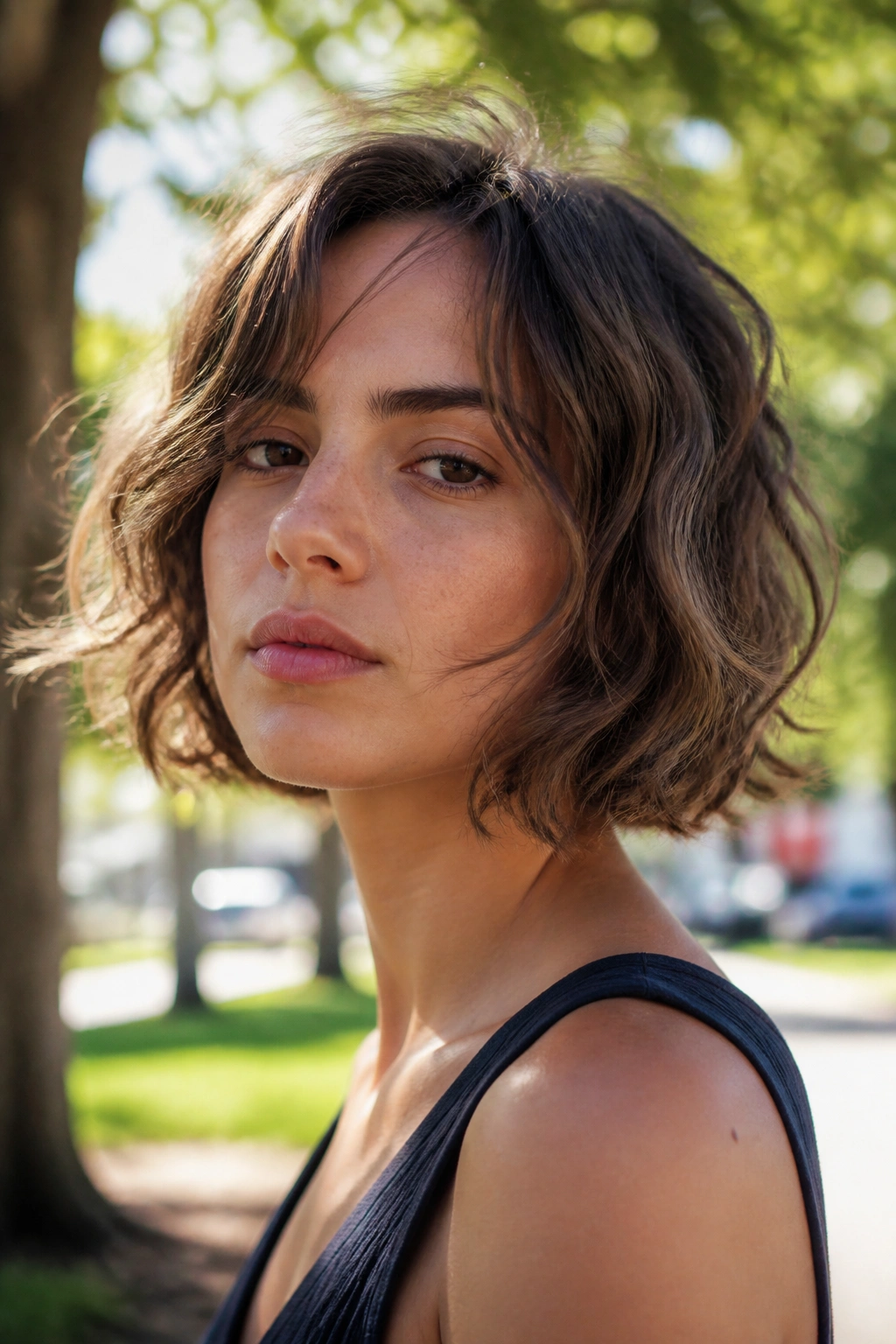
Some cuts need a blowout to look good. This isn’t one of them. The air-dried wavy bob is built to look better when the texture is imperfect, which makes it one of the most practical cheek-length bob haircut ideas if you live in the real world and don’t want to fight your hair every day.
The shape usually sits a little looser than a blunt bob, with ends that can flip or bend without ruining the style. It works because the cut has enough structure to hold the general outline, but enough softness to let the wave do its thing.
What to Tell Your Stylist
Ask for a bob that follows your natural bend pattern. If your hair waves near the front and not the back, the haircut needs to account for that. A good stylist will watch how your hair dries and place the length where the wave looks best, not just where the ruler says it should go.
The styling part is pleasantly boring.
- Scrunch in a light cream on damp hair.
- Let it dry mostly on its own.
- Touch only the front pieces with a diffuser or a hand twist.
- Break up any crunchy bits with a drop of oil.
This is the cut for people who like polish but not effort. The hair should look touched, not tortured.
10. The Boxy Bob With Rounded Ends

A boxy bob sounds harsh, but the rounded finish keeps it from looking stiff. The overall outline is square and full, yet the ends curve inward just enough to soften the shape. That little curve changes everything.
I like this version on denser hair because it keeps the fullness where you want it. If your hair tends to go flat at the roots but bulky at the ends, the boxy shape can actually make that imbalance look intentional. It gives the cut weight, which can feel luxurious instead of heavy when done well.
The Shape That Needs a Good Hand
This is not the haircut to trust to someone who only likes light layers and airy ends. It needs control. The goal is a strong silhouette with softened corners, not a puffball. The rounded tips should fold toward the neck or jaw, depending on your head shape.
If you want the look, be precise:
- Keep the perimeter strong and even.
- Add just enough internal removal to stop the bulk.
- Round the ends with a brush or flat iron curve.
- Use a cream, not a spray, if your hair is coarse.
This cut looks especially good with structured clothes. A blazer, a square neckline, a sharp collar — it all makes sense together.
11. The Chin-To-Cheek Gradient Bob
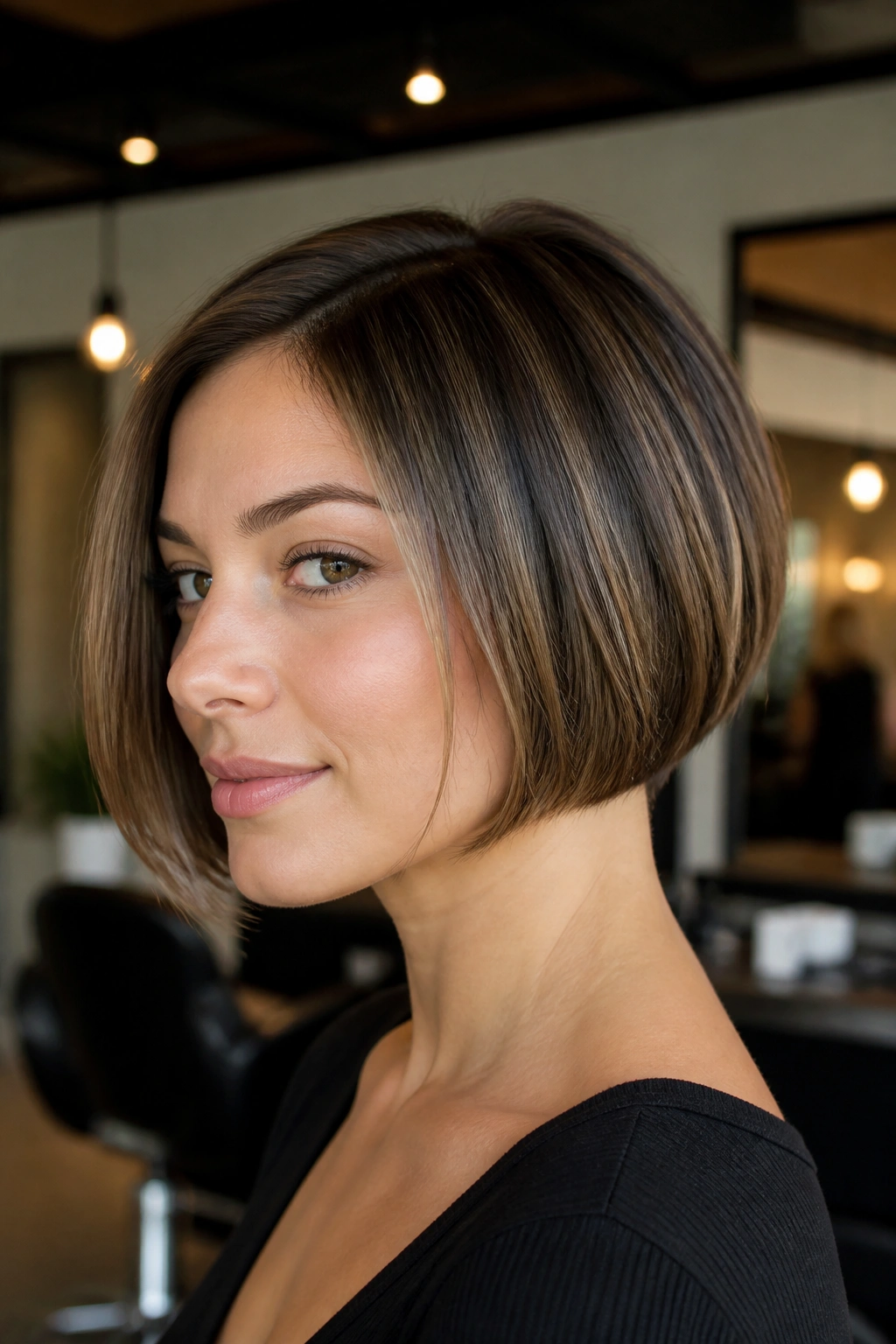
This one starts a little shorter near the nape and slips forward to hit the cheekline in front. It creates a gentle gradient rather than a sharp angle, which makes the haircut feel softer than a classic angled bob but more shaped than a one-length cut.
That subtle transition matters. It lets the front act like a face frame while the back stays neat and compact. If you like clean lines but don’t want the haircut to look too strict, this is a smart middle ground.
Why the Gradation Helps
A gradual shape can be easier to wear on thick or coarse hair because it removes some of the weight without making the front look wispy. It also gives you a little lift at the back, which can help the whole cut sit better on the head. Flat bobs can drag. This one usually doesn’t.
- Great for people who wear hair behind the shoulders
- Good if you want a shape that looks different from every angle
- Helps emphasize the cheekbones
- Works with blow-dried volume or soft natural texture
The thing I like most is that it doesn’t shout. It just looks well considered, which is a more useful quality than hype.
12. The Asymmetrical Cheek-Length Bob
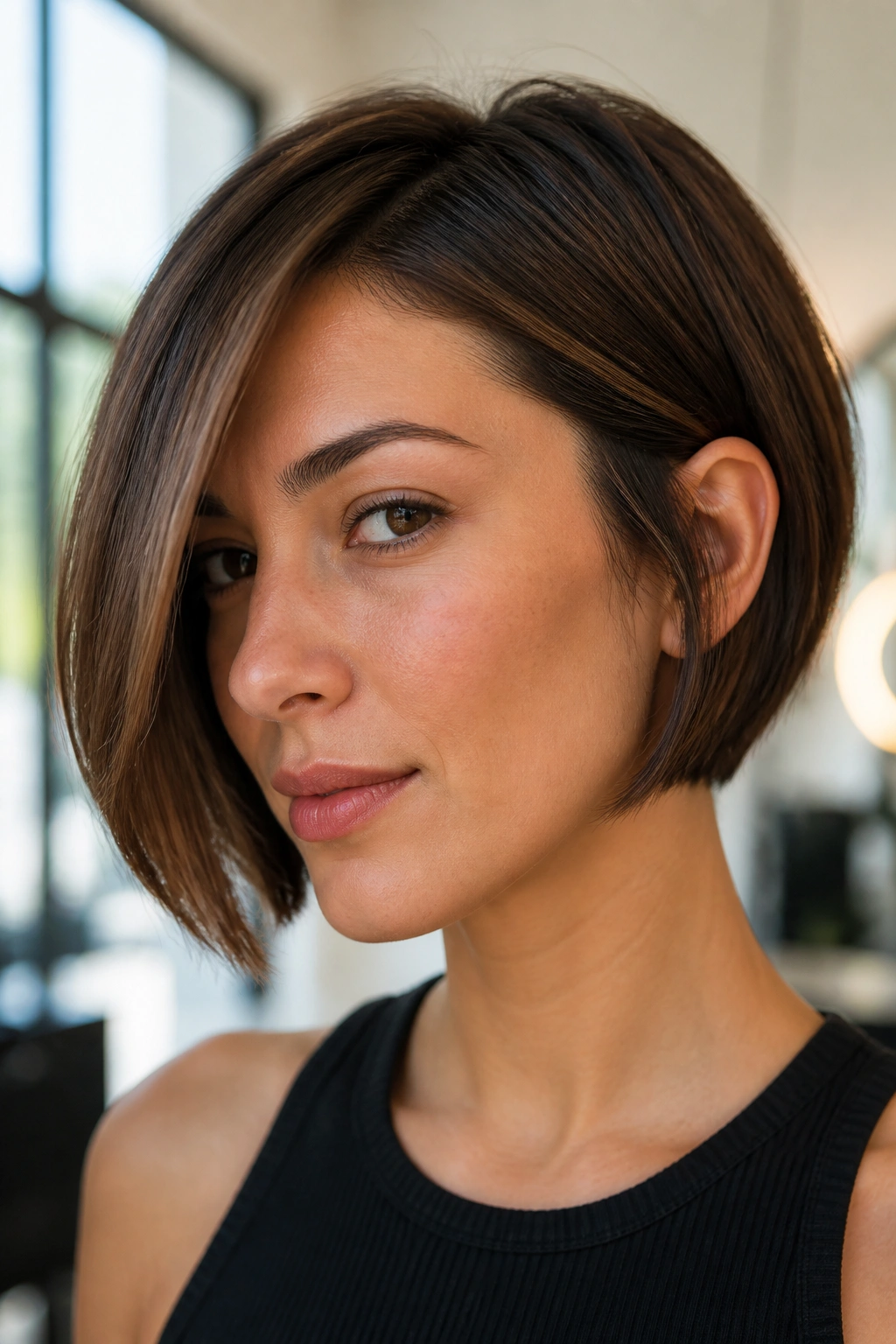
Asymmetry can be a cheap trick when it’s done lazily. When it’s done well, though, it gives a bob real personality. One side sits slightly longer, the other side lifts or tucks in. That tiny imbalance can make the whole haircut feel modern without trying to be edgy for its own sake.
This cut is a good match for people who want short hair but don’t want a shape that reads plain. The asymmetry creates movement, and movement is half the job with a cheek-length bob. Without it, the length can sometimes feel static.
Where It Works Best
The best asymmetrical bob usually keeps the difference subtle — maybe half an inch to an inch between sides, not a dramatic geometric cut. The front pieces can follow the face line while one side gets a slightly deeper curve. That small difference is enough.
It’s especially flattering if you naturally part your hair the same way every day. The asymmetry will feel less forced and more like an extension of how your hair already wants to sit. If you have a strong jaw or a prominent chin, the offset line can soften the center of the face in a nice way.
A blunt asymmetrical bob can go wrong fast if the ends are fuzzy. Keep the line crisp. That’s the whole point.
13. The Feathered Fringe Bob
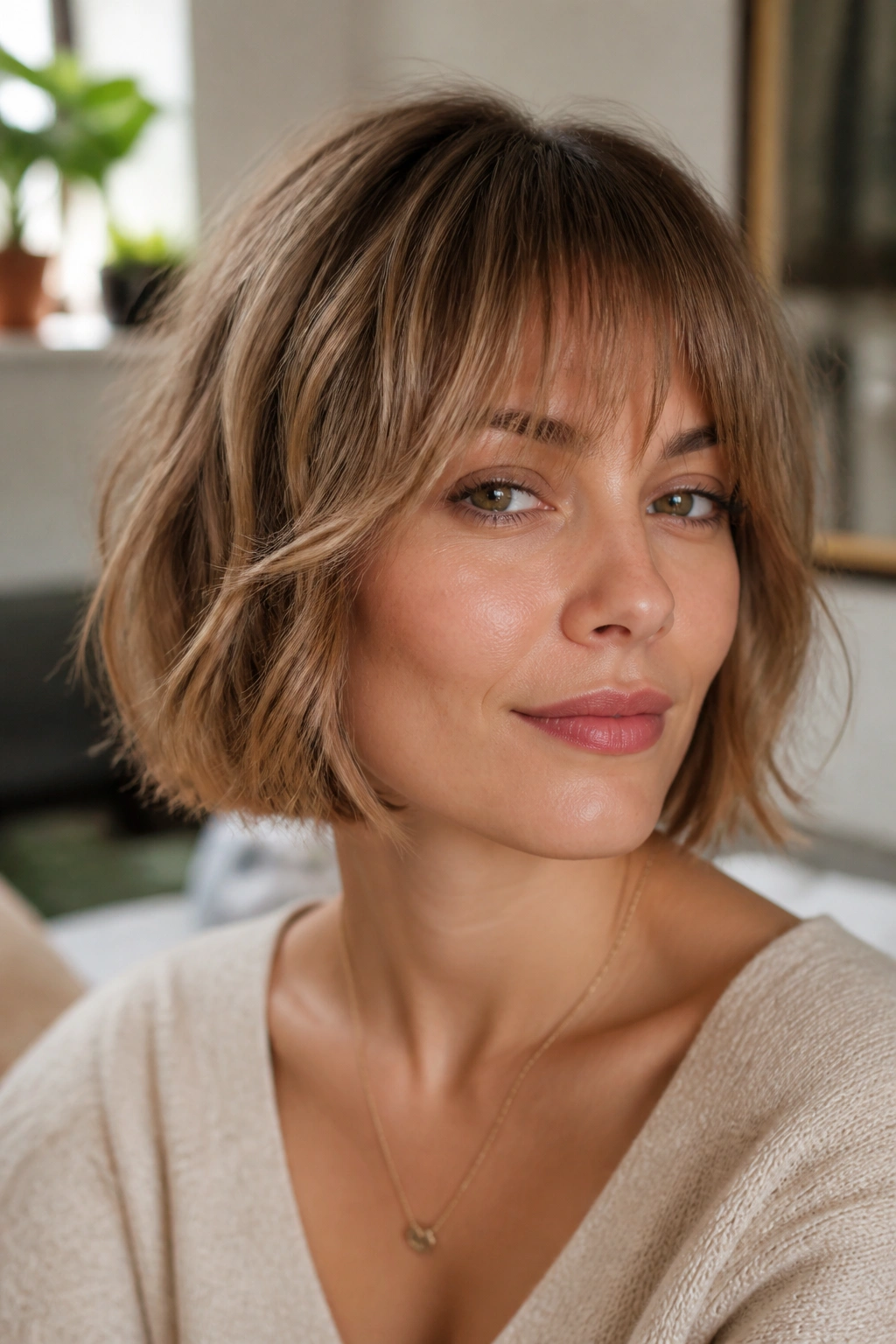
A feathered fringe can change a cheek-length bob from neat to airy in one move. The fringe doesn’t sit heavy on the forehead. Instead, it breaks apart into soft pieces that skim the brows or temples, which gives the haircut a lighter feel around the eyes.
This is a good choice if you like bangs but hate the idea of a thick, straight fringe. Feathering takes pressure off the face. It also stops the bob from feeling too compact, especially if the length is sitting right at the cheek and could otherwise read a little dense.
Why the Texture Matters
The feathered pieces help the front of the haircut move. They also make the bob easier to grow out, which matters if you get bored fast. I’ve seen this style work particularly well on straight-to-wavy hair with medium density. Very fine hair can do it too, but the fringe needs to stay light, or you end up with see-through ends that look tired.
- Keep the fringe longer at the outer corners
- Ask for soft point-cutting, not a blunt chop
- Style with a small round brush or fingers
- Let the ends of the bob stay slightly textured for balance
This cut can look romantic or sharp depending on how you style the fringe. That flexibility is the whole reason to choose it.
14. The Textured Bob for Fine Hair
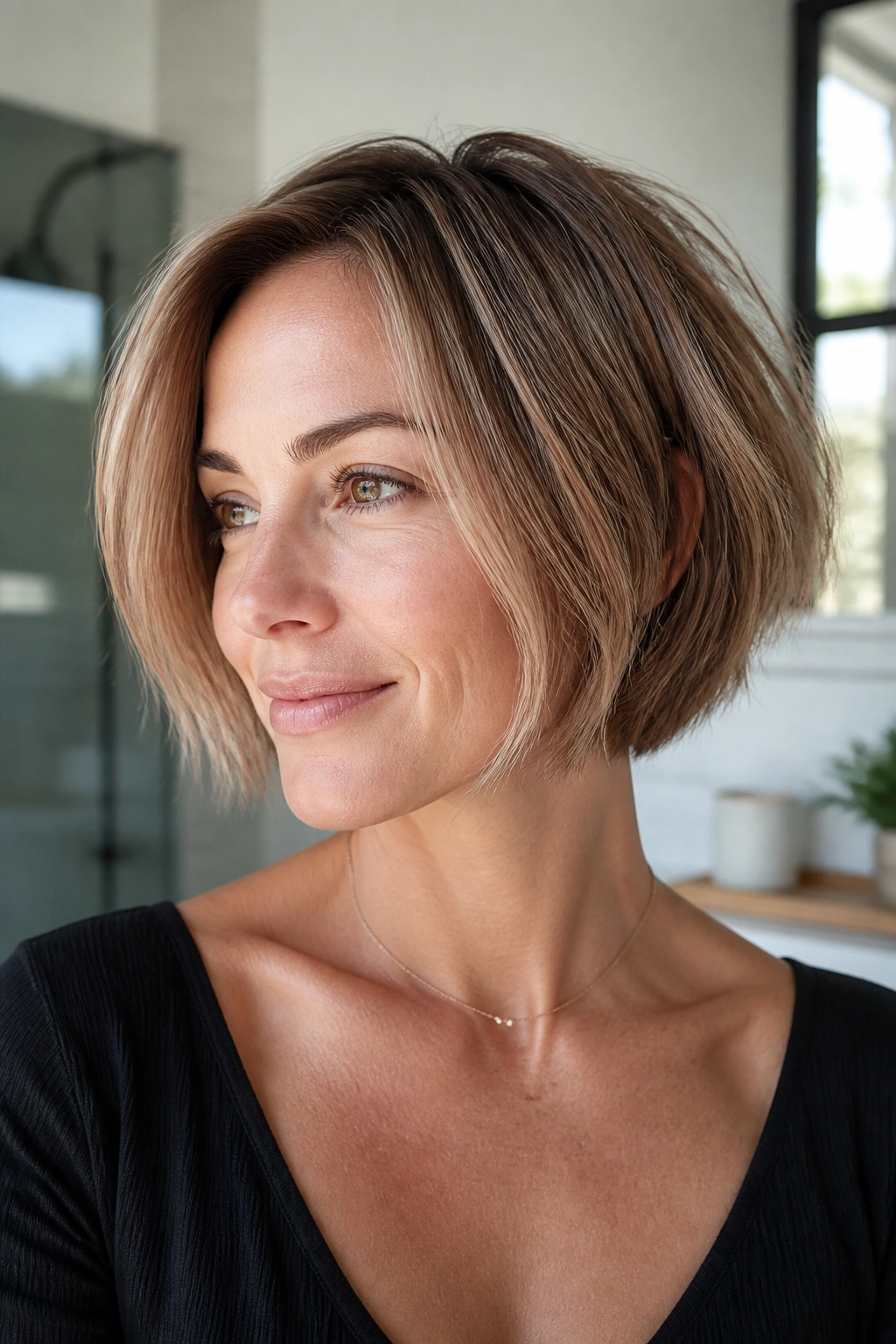
Fine hair and cheek-length bobs can be tricky, but when the cut is shaped right, the result looks fuller than long hair ever did. Texture is the key. Not chaos. Texture. There’s a difference, and it matters.
You want enough piecey movement to stop the hair from lying flat against the scalp, but not so much layering that the ends go thin and scraggly. The right textured bob makes fine hair look light, airy, and a little thicker at the perimeter, which is exactly where it needs help.
The Small Details That Make It Work
A stylist should keep the weight line strong enough to create the illusion of density. Then they can add a few internal slices to stop the hair from collapsing. That balance is delicate. Too much thinning, and the ends disappear. Too little, and the hair sits in one flat sheet.
This style usually does well with:
- A root-lifting mousse on damp hair
- A rough blow-dry with fingers or a vent brush
- Soft bends created with a flat iron, not curls
- A dry texture spray at the crown, used sparingly
Fine hair often looks best when the cut is a little shorter than you first expect. Cheek length gives the ends enough body to show up. That’s the part people miss.
15. The Sleek Glass Bob
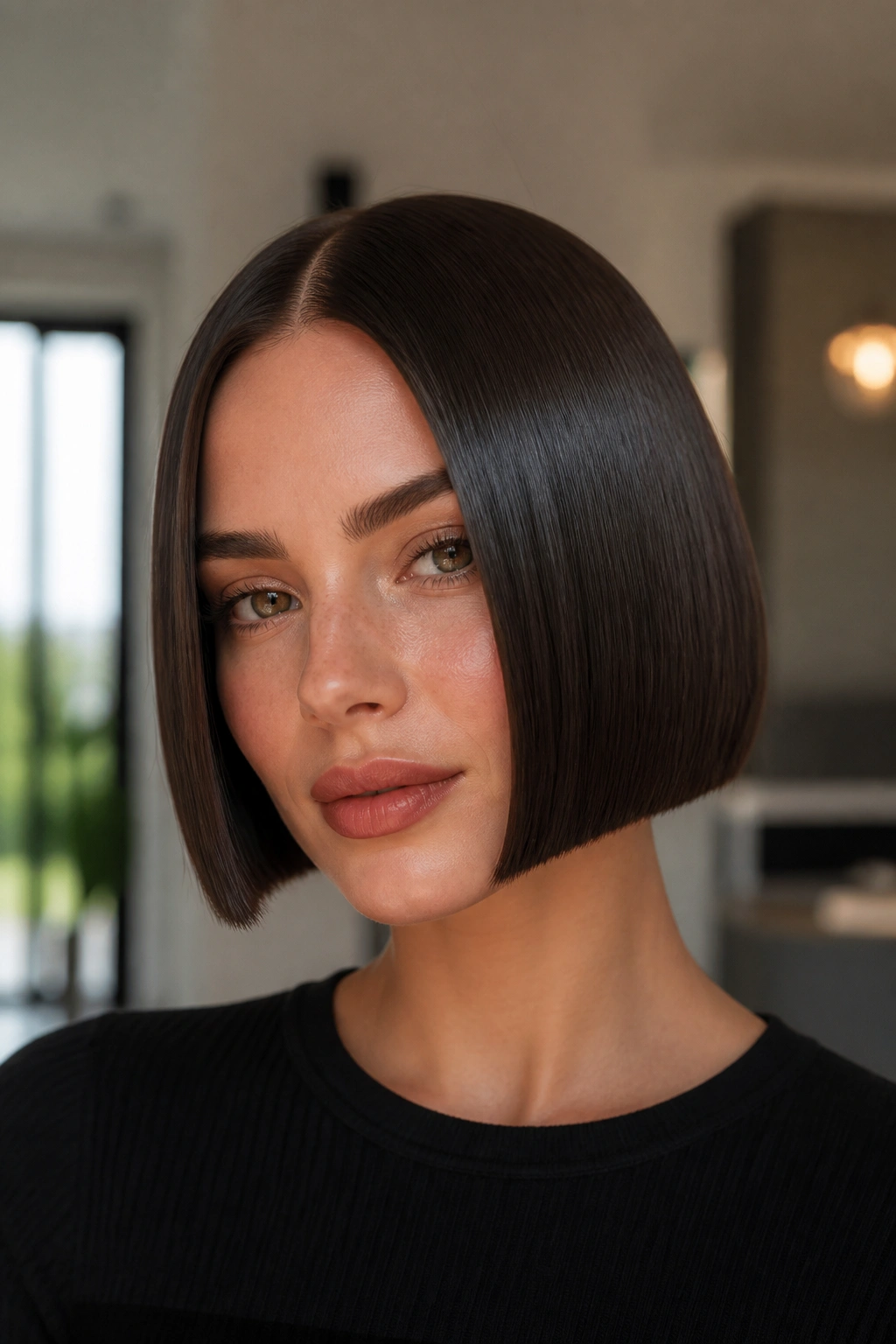
If you like sharp lines and clean shine, this is the one. The sleek glass bob at cheek length has a smooth surface and a controlled shape that reflects light in a very direct, almost mirror-like way. It’s polished, yes, but more importantly, it’s disciplined. Every strand has a job.
This cut can look incredibly modern on straight hair, especially when the ends are kept blunt and the part is precise. It works because there’s nowhere for the shape to hide. The line has to be good. The finish has to be clean. No soft excuses.
What It Takes to Keep It Looking Right
Glass-like shine comes from prep, not magic. Start with a smoothing shampoo and conditioner, then use a heat protectant before blow-drying with tension. A paddle brush or flat brush helps flatten the cuticle so the hair sits smooth. If you skip that step, the style loses its point fast.
A few things help:
- Blow-dry in small sections
- Use a flat iron on low to medium heat
- Finish with a pea-sized amount of anti-frizz serum
- Keep the part exact and the ends straight
This is the bob I’d pick for a night out, a formal event, or any day you want the haircut to do the talking. It’s not soft. That’s the charm.
Final Thoughts
Cheek-length bobs work because they sit in a useful place, not a decorative one. They can sharpen, soften, lift, or frame depending on the outline you choose and the way your hair naturally behaves. That’s a lot of range for such a small change.
The best cut is the one that matches your texture, your styling habits, and your tolerance for maintenance. A sleek glass bob and a curly cheek-length bob may live in the same length zone, but they ask very different things from your hair. Pick the version that fits your real routine, not the one that only looks good in a saved photo.
And if you’re on the fence, start with the shape that gives you the most flexibility. Hair grows. Bad bangs don’t last forever.
