



Thick hair can make a bob look rich and full, or it can turn the whole shape into a blunt little helmet if the cut is off by even half an inch. That is the part people underestimate. Bob haircuts for thick hair need more thought than a quick chop, because weight, bulk, and density all change how the line sits against the jaw, neck, and shoulders.
A good bob does not fight thick hair. It uses the density. Some cuts lean on a sharp perimeter. Others carve out bulk from underneath. A few work because they leave the weight right where thick hair behaves best, instead of trying to strip it away until the shape goes stringy and sad.
Thickness is a feature, not a problem. Seriously. When the cut is right, thick hair gives a bob that plush, expensive-looking outline that fine hair usually has to fake with styling.
So the real question is not whether you can wear a bob. It is which bob shape will keep your hair looking intentional, light enough to move, and full enough to feel like your hair instead of a style fighting for its life.
1. The Blunt Chin-Length Bob for Thick Hair

A blunt chin-length bob is the simplest answer, and that is exactly why it works. Thick hair has enough body to make a clean line look strong instead of flat, and a chin-length cut keeps the ends from flaring out into that triangle shape nobody asked for.
The trick is precision. The perimeter should sit even all the way around, with maybe the tiniest bit of undercutting at the nape if your hair grows out heavy there. If the stylist takes too much weight from the interior, the ends can puff. If they leave too much, the bob turns boxy. There is a narrow sweet spot, and thick hair rewards it.
Why It Works on Dense Hair
A blunt line gives thick hair a place to stop. Without that hard edge, the bulk has nowhere to go but sideways.
- Best for straight to slightly wavy hair that wants structure.
- Good if you like air-drying and still want the ends to look neat.
- Strong around the jaw, where thick hair can otherwise widen the face.
- Needs trimming about every 6 to 8 weeks to keep the line crisp.
Ask for a dry check at the end. Thick hair shrinks and shifts as it dries, and a bob that looks clean when wet can sit a full inch shorter once it settles.
2. The Rounded Bob That Hugs the Jaw
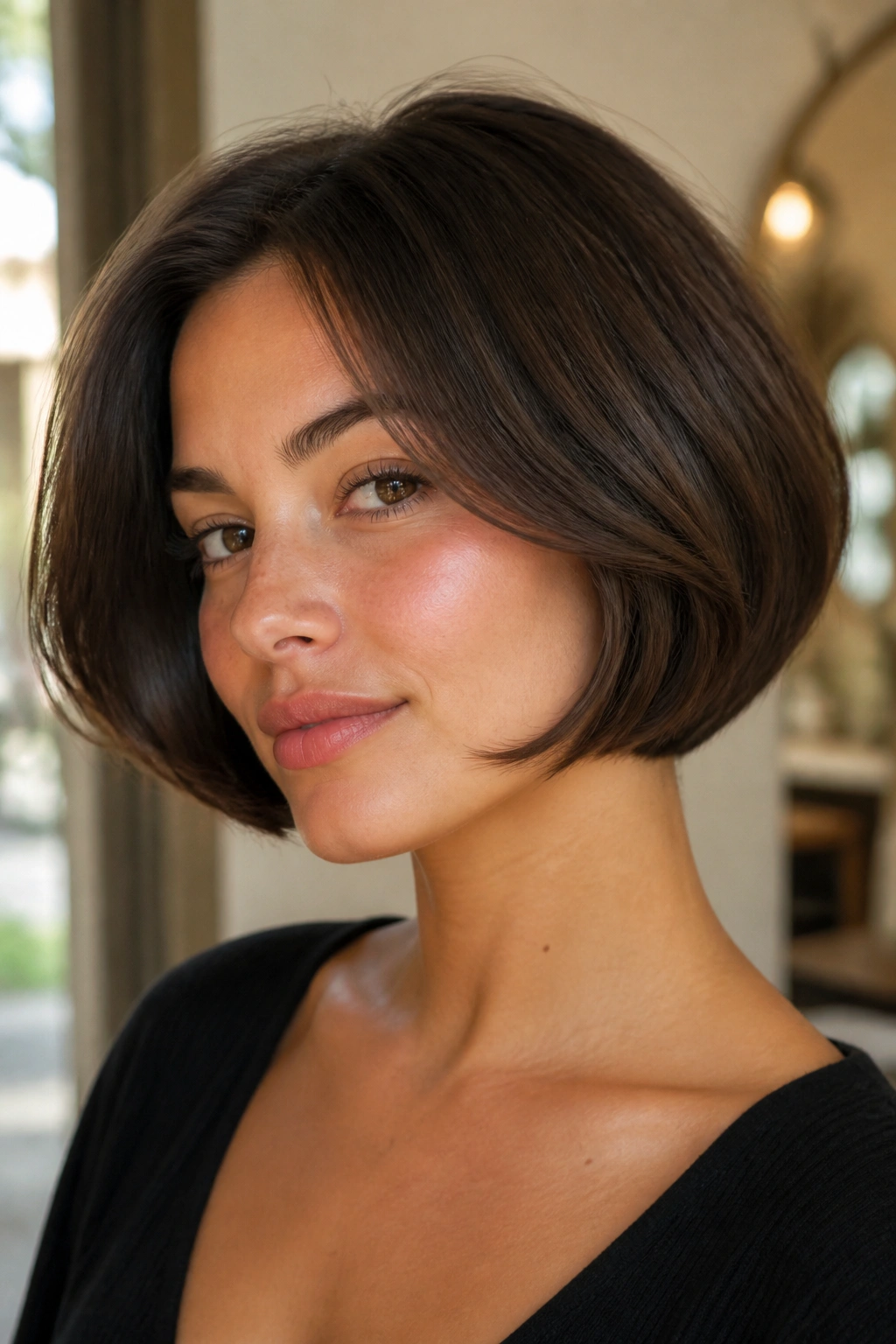
Why do some bobs feel soft and expensive while others feel like a block? Shape. A rounded bob curves slightly under at the ends, which makes thick hair sit closer to the head instead of fanning out at the sides.
I like this cut for anyone whose hair grows out with a lot of width around the cheeks or lower face. The silhouette feels polished without being stiff. It also works well if your hair has natural bend, because the curve can happen with less styling than a dead-straight bob demands.
The Shape to Ask For
Tell the stylist you want the outline to tuck in gently at the bottom, not flip out. That one sentence matters.
A rounded bob usually looks best when the internal weight is controlled, not chopped to pieces. Too many short layers can create a bubble shape, and that is not the same thing. The goal is a smooth arc from temple to jaw, with the ends sitting a touch under.
If you wear glasses, this shape is especially nice. The curve keeps the hair from crowding the frames.
3. The A-Line Bob That Keeps the Front Long

An A-line bob is a smart move when thick hair feels too wide at the back. The shorter nape removes bulk where it tends to stack up, while the longer front pieces stretch the outline and make the whole cut look leaner.
This one gives you shape without the severe angle of a dramatic inverted bob. It is a calmer version. The front still sweeps forward, which can slim the jaw and soften a square face, but the back stays neat and controlled.
What Makes It Different
Unlike a blunt bob, an A-line cut uses length as a visual tool. The front pieces draw the eye down, and that matters when dense hair wants to expand horizontally.
- Good if your hair is thick at the crown and nape.
- Works with straight, smoothed, or softly waved hair.
- Easier to tuck behind one ear without losing the shape.
- Needs careful balancing so the front does not get stringy.
If your hair is coarse, ask for the front to stay thick enough to look full. Over-thinning the front is a common mistake, and it makes the ends look weak rather than lighter.
4. The Stacked Bob That Lifts Heavy Hair

If thick hair collapses at the crown and swells at the bottom, a stacked bob can fix that fast. The shape is built with graduated layers in the back, so the nape sits snug and the crown gets a little lift without needing a round brush every morning.
This is the cut I think people underestimate. It looks practical on the rack, then turns out to be one of the best shapes for dense hair because it removes weight where hair tends to sit flat and heavy.
What to Ask For at the Salon
A stacked bob needs control, not random layers. Ask for a graduated back with a compact nape, then keep the top layers long enough to avoid a choppy halo.
- Shorter layers at the back of the head for lift.
- A smooth transition into the sides.
- Minimal texturizing near the crown.
- A clean neckline so the cut grows out neatly.
It does ask for styling. A quick blow-dry with a small round brush helps the back hold its shape. If you want a wash-and-go cut with zero effort, this is probably not your favorite. If you want shape that stays visible from every angle, it is a strong one.
5. The Inverted Bob With a Stronger Angle
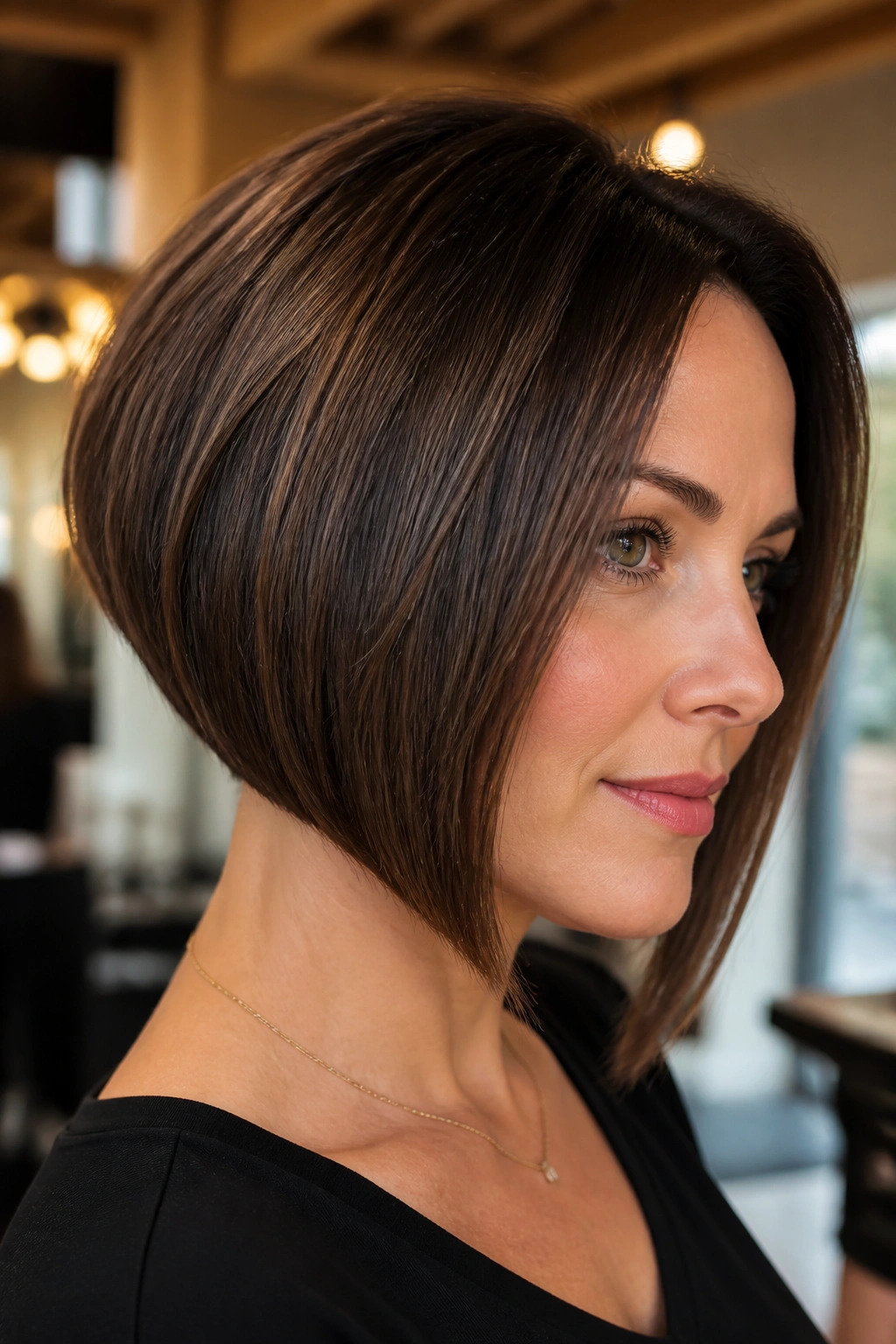
The inverted bob is for someone who wants the back to disappear a little and the front to do the talking. It is more sculpted than an A-line and less soft than a rounded bob, which makes it a good match for thick hair that tends to feel dense through the nape and sides.
The front length gives your face room, and the sharper angle keeps the cut from feeling heavy. Thick hair can handle that drama. Fine hair often cannot.
A lot of people confuse inverted and stacked bobs. They are cousins, not twins. The stacked bob is about graduation in the back. The inverted bob is about that visible slope from short back to long front. If your hair is very thick, the inverted version can look cleaner because the shape reads more from the profile.
This cut shines when you like a neat finish. It can be blow-dried smooth, tucked one side, or worn with a side part for a little asymmetry. I would not choose it if you hate regular trims, though. The angle looks best when the ends are sharp and the lines are fresh.
6. The Collarbone Lob for Thick Hair

A collarbone lob is the safe bet that is not boring. It keeps enough length to control thick hair, but it still falls in the bob family, which means you get movement without the bulk sitting right at the jaw.
This length is useful when you want your hair up sometimes. You can clip it, tuck it, braid pieces back, or wear it loose without feeling trapped by a too-short cut. Thick hair at this length also dries faster than longer hair, which sounds minor until you stop spending twenty minutes wrestling a round brush every morning.
When thick hair goes too short, it can balloon. A lob avoids that by keeping some weight at the ends. That weight helps the shape fall.
You can wear it sleek or wavy. You can also let it air-dry with a bit of cream and still look finished enough for real life. If your hair is dense but not coarse, this is one of the easiest shapes to live with. It is the haircut version of a good white shirt: not flashy, but it gets worn a lot.
7. The Textured Bob with Point-Cut Ends

A textured bob works when thick hair feels too blunt in the wrong way. Point cutting softens the ends by cutting into the edge at a slight angle, which breaks up the heavy line without turning the whole cut wispy.
That detail matters. A lot. Thick hair does not usually need aggressive thinning. It needs strategic softening. Point-cut ends keep the line present while taking away that dense shelf effect that can happen around the chin.
What to Ask Your Stylist
Ask for texture where the hair needs movement, not everywhere. That usually means the perimeter and maybe a few interior sections near the cheekbones.
- Point cutting at the ends instead of heavy razor work.
- Light internal weight removal, especially if the hair is coarse.
- Longer layers around the front if you wear it wavy.
- No over-thinning at the crown, which can make thick hair frizzier.
This cut is especially good if your hair has a natural wave. The texture gives the shape room to bend. On very straight hair, it can still work, but it needs a little more styling so the ends do not flip out in odd directions.
8. The French Bob With Soft Bangs

The French bob sits shorter, usually around the lip to cheekbone zone, and thick hair gives it real presence. On the right face shape, it looks airy around the cheeks and strong at the edges, which is a nice mix if you like a haircut with personality.
The charm of this cut is in the balance. The line is short, but the bangs and perimeter keep it from feeling severe. On thick hair, that softness matters because the cut can otherwise land too blunt and boxy. A little movement around the fringe keeps it human.
This one is not for every hair texture. If your hair is very coarse and sticks out at the temples, you may need more shaping than the classic version allows. But if your hair bends naturally or you like a lived-in finish, it can be a joy.
Short. Sharp. A little undone. That is the whole point.
9. The Box Bob for Straight Thick Hair

A box bob has a square, graphic outline, and on thick straight hair it looks deliberate in a way that thinner hair can struggle to hold. The sides sit fairly even, the ends stay blunt, and the whole shape reads as solid and polished.
This is the cut for people who do not want a lot of fluff. No dramatic graduation. No obvious layering. Just a strong geometric line that makes thick hair look controlled.
The downside is obvious: if your hair has a lot of wave or bends hard at the ends, a box bob can turn into a puffed-out rectangle unless you style it. On straight hair, though, it is clean and powerful. It also grows out in a visible but tidy way, which some people prefer over cuts that lose their shape fast.
If you want a bob that looks expensive without looking overworked, this is one of the most convincing shapes in the group.
10. The Layered Bob for Thick Hair With Face-Framing Pieces
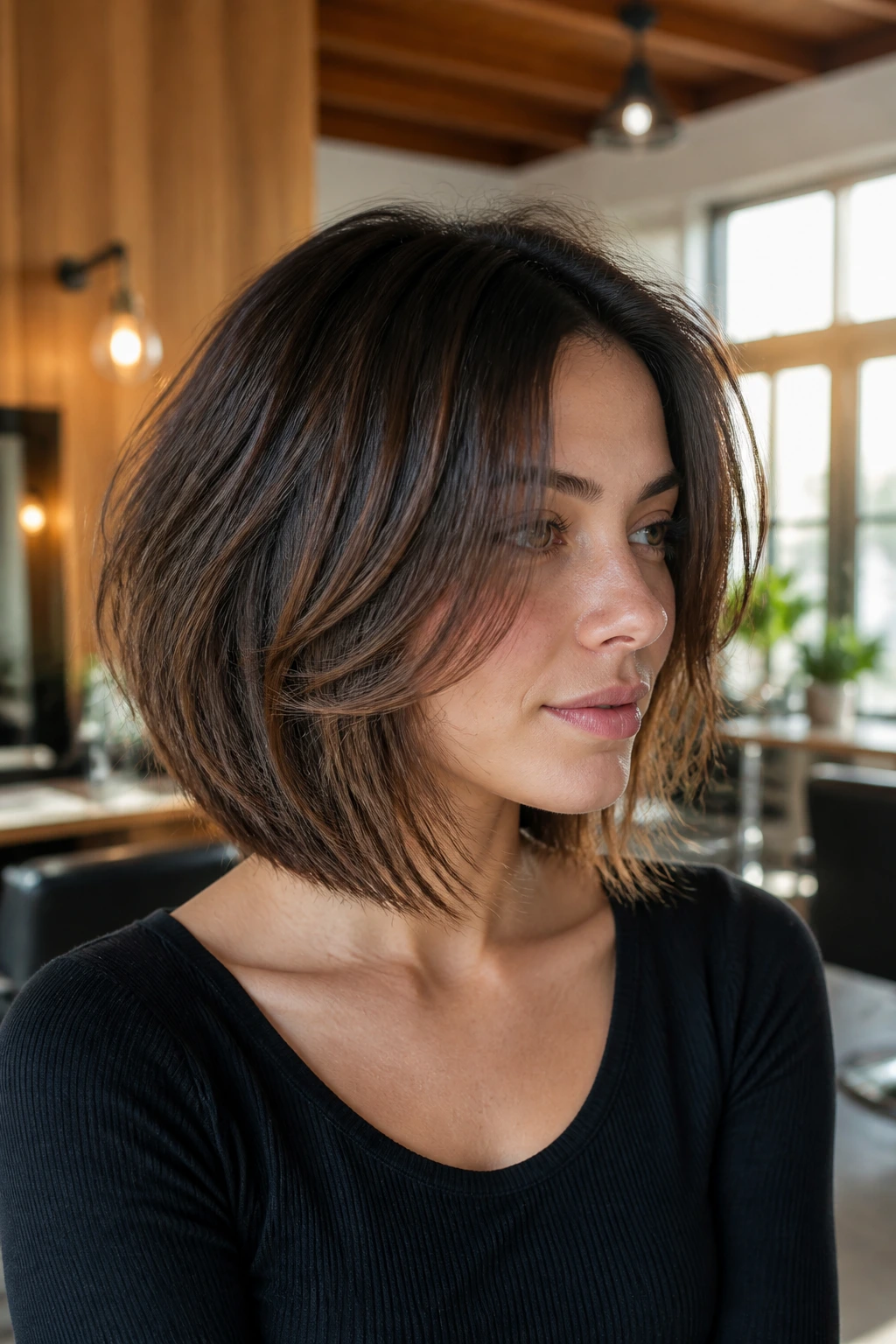
Layers are tricky with thick hair. Too many, and you get frizz and puff. Too few, and the cut sits like a heavy block. The best version is usually a layered bob for thick hair with face-framing pieces that begin below the cheekbones, not right at the temples.
That starting point keeps the front soft without stripping away the bulk that gives thick hair its body. I like this cut for square or round faces, because the front pieces can narrow the face a little while the back stays full.
Where the Layers Should Start
If the layers start too high, you can end up with the dreaded triangle. If they start too low, the cut can feel bulky through the sides.
- Cheekbone-length pieces for softness.
- Longer internal layers that remove weight from the middle, not the surface.
- A perimeter that still feels solid.
- Enough length to tuck behind the ears without losing the shape.
This is one of those styles that depends heavily on the haircutting hand. A good stylist will leave you with movement. A rushed one will leave you with chopped-up ends and regret.
11. The Undercut Bob That Removes Hidden Bulk
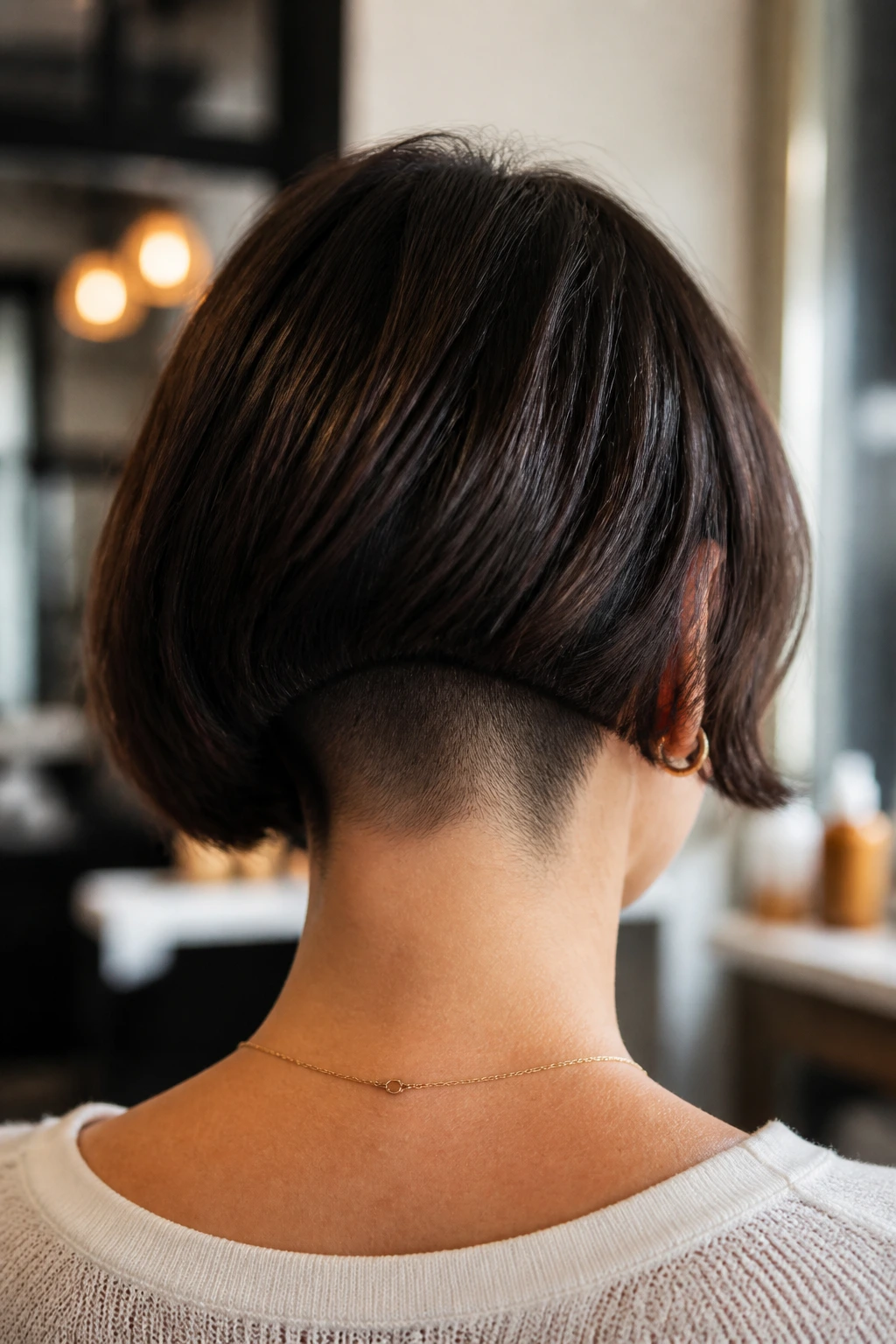
This one is not subtle. An undercut bob removes some of the hidden thickness beneath the top layer, usually at the nape and sometimes behind the ears. For very dense hair, that can make the difference between a bob that sits neatly and one that feels like a heavy block on your neck.
The best part is that the undercut stays mostly invisible when the hair is down. You get less bulk, less drying time, and a cleaner neckline, but you do not have to commit to a visibly shaved style unless you want to.
It does come with maintenance. Grow-out can be awkward if you wait too long between trims, and you need a stylist who knows how to hide the removal so the top layer still drapes well. Still, if your hair is thick enough to eat up bobby pins and feel hot by midday, this cut can be a relief.
This is the practical rebel in the group.
12. The Wavy Bob With Invisible Layers

How do you keep thick wavy hair from turning into a mushroom? Invisible layers. That is the short answer.
The cut keeps the outside line smooth, but weight is removed from inside the shape so the wave can move without ballooning. You do not see sharp steps in the haircut. You feel the difference when the hair dries and settles instead of puffing out at the cheeks.
How to Air-Dry It
If you want this bob to behave, put a little effort into the drying stage. Not much. Just enough.
- Work a lightweight curl cream or mousse through damp hair.
- Scrunch from the ends upward for 20 to 30 seconds.
- Let it air-dry without touching it too much.
- If needed, diffuse on low heat until the roots are dry and the ends feel soft, not crunchy.
The main mistake is overloading thick wavy hair with heavy cream. It sounds moisturizing, but it can weigh down the top and make the ends separate in odd ways. Keep the product light, and the invisible layers do the rest.
13. The Side-Part Bob That Builds Lift Fast

A deep side part can change a thick bob more than a lot of people expect. It shifts weight off the center, adds height at the crown, and breaks up the width that thick hair sometimes creates around the face.
That makes this cut useful when your hair naturally falls in one direction or sits a little flat at the roots. You do not need a dramatic haircut to get movement. Sometimes the part does the heavy lifting.
A side-part bob also softens strong facial symmetry. If your face feels long, the swept-over side can add width. If your face feels wide, a longer side panel can carve a slimmer line through the cheek.
I especially like this shape on hair that refuses to stay flat on top. A side part gives the crown a little lift without forcing the cut into a stacked shape you may not want.
14. The Center-Part Sleek Bob
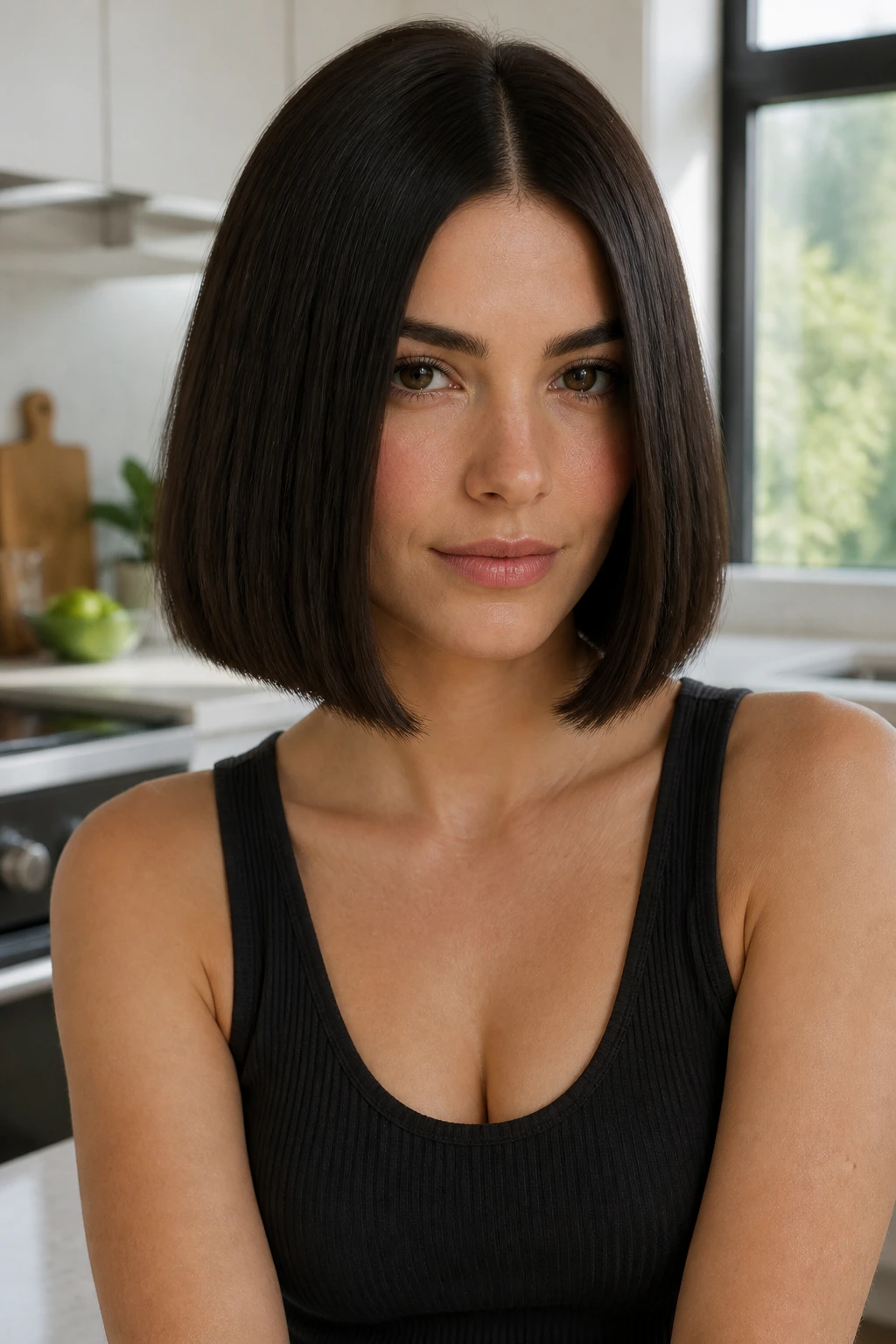
A center part looks crisp on thick hair when the cut itself is clean. If the ends are blunt and the line is even, the middle part draws a straight vertical path down the face, which can feel sharp in a good way.
This style is the opposite of fussy. It works best when the hair is smooth, the perimeter is sharp, and the movement is quiet rather than piecey. Thick hair gives the style enough density to stay solid, which is why the look can feel so balanced.
What Keeps It from Looking Heavy
The part alone is not enough. The finish matters.
- Blow-dry with a flat brush to keep the sides close to the head.
- Use a heat protectant and a smoothing cream if your hair swells in humidity.
- Keep the ends blunt or only lightly beveled.
- Avoid too much layering near the front, or the center line loses its strength.
If your crown has a stubborn cowlick, this style can be annoying. That is the tradeoff. But on hair that already falls naturally in the middle, it looks calm and deliberate.
15. The Curly Bob That Respects Shrinkage

Curly thick hair needs a different kind of bob. Cutting it wet and hoping for the best is how people end up with a shape that feels two inches shorter on one side and oddly boxy on the other. A curly bob works best when the cut is planned around shrinkage, bounce, and the way each curl group sits.
The hair should be shaped in a way that allows the curls to stack, not fight each other. That often means leaving more length than you think you need. A curl that looks chin-length when wet can spring up to the cheekbone once it dries.
Length Math Matters
Do not guess. Hold a few curls dry and decide where you want the finished shape to sit.
- Leave extra length if your curl pattern is tight.
- Ask for a dry cut or curl-by-curl shaping if the stylist uses that method well.
- Keep face-framing curls a touch longer than the rest.
- Check the shape from the side, not only the front.
A curly bob can be soft, springy, and full of life when it is cut well. When it is not, it looks lopsided fast. There is no polite way around that.
16. The Shaggy Bob for Thick Hair That Wants Movement

Some thick hair wants to behave. Some wants to live a little. A shaggy bob makes room for the second type.
The layers are more visible here, but the goal is still control, not chaos. You get piecey ends, movement around the face, and a looser outline that keeps dense hair from feeling too formal. On hair that bends or waves, this cut can look fantastic with little more than a rough dry and a bit of product.
The catch is styling taste. If you love clean lines and crisp edges, a shag bob may feel too undone. If you prefer a haircut that looks good with a little mess in it, this one is hard to beat.
I would keep the shortest pieces around the cheekbone or just below, never hacked so high that the shape starts resembling a mullet. That line between relaxed and sloppy is thin. A good cut knows where it is.
17. The Curtain-Bang Bob

Curtain bangs are a clever way to break up thick hair at the front without committing to a full fringe. They split away from the face, which softens a dense bob and keeps the front from feeling too heavy across the forehead.
This pairing works because the bangs add shape where thick hair often feels bluntest. The bob keeps the bottom line clean, and the curtain fringe keeps the top from looking like one solid wall of hair. It is a nice fix for people who want face framing but do not want to trim a straight bang every three weeks.
The best curtain bangs for thick hair usually start around the cheekbone and taper into the bob. If they are cut too short, they can poof up and demand too much styling. Longer is safer here. Also, and this matters, they should blend into the sides instead of sitting like two separate curtains that never met the rest of the haircut.
18. The Soft Graduated Bob for Thick Hair
If you want one shape that sits between blunt and stacked, this is the one I keep coming back to. A soft graduated bob removes enough weight at the back to stop thick hair from mushrooming, but it keeps the line gentle enough that the cut still feels wearable every day.
It is a useful middle ground. The nape stays neat, the crown gets a little lift, and the sides taper in a controlled way instead of dropping like a curtain. On dense hair, that balance is gold.
What Makes It a Safe Bet
A soft graduation gives the stylist room to shape the head without overcutting the ends.
- Good for thick hair that feels heavy at the neckline.
- Works on straight, wavy, or slightly coarse textures.
- Easier to grow out than a sharply angled bob.
- Leaves enough length to tuck, clip, or smooth behind the ears.
If you are unsure which bob to try first, this is a sensible starting point. It is structured, but not severe. Polished, but not stiff. And that matters more than people admit, because the best bob is the one you can live with on a rainy Tuesday, not only the one that looks polished in the salon mirror.
The Bottom Line

Thick hair can carry almost any bob shape, but the best cuts respect weight instead of fighting it. A blunt line gives you strength. A graduated or stacked shape gives you lift. A lob gives you breathing room when you want less maintenance and more length.
The smartest move is to match the haircut to how your hair actually behaves. If it swells, remove bulk in the right places. If it falls flat, build shape at the crown. If it waves, let the texture do some of the work. That is where bob haircuts for thick hair stop being generic and start looking like they were made for you.
