



Long hair changes the rules. Once your coils, braids, twists, or extensions reach past the shoulders, styles start behaving differently — some look richer, some sit heavier, and some fall apart faster if the roots are too tight or the parts are sloppy. For Black female hairstyles for long hair, the real win is not finding something “cute.” It’s choosing a style that respects density, shrinkage, edge health, and how much time you actually want to spend dealing with your hair every morning.
A good long-hair style should do a job. Protect the ends. Frame the face. Give you movement without turning into a tangle by day three. Sometimes all three. The best looks on long hair tend to be the ones that let the length work for you instead of fighting it — and yes, there’s a difference between a style that looks gorgeous in a chair photo and one that still looks clean after a week of sleeping, commuting, and living your life.
The styles below lean practical, polished, and honest about maintenance. Waist-length braids are not the same thing as a silk press on dense 4C hair. A curly sew-in behaves differently from a twist-out on stretched hair. Long hair gives you more room to play, but it also punishes weak hold, heavy buildup, and tension at the hairline. Start with the first one if you want the safest place to begin.
1. Waist-Length Knotless Box Braids
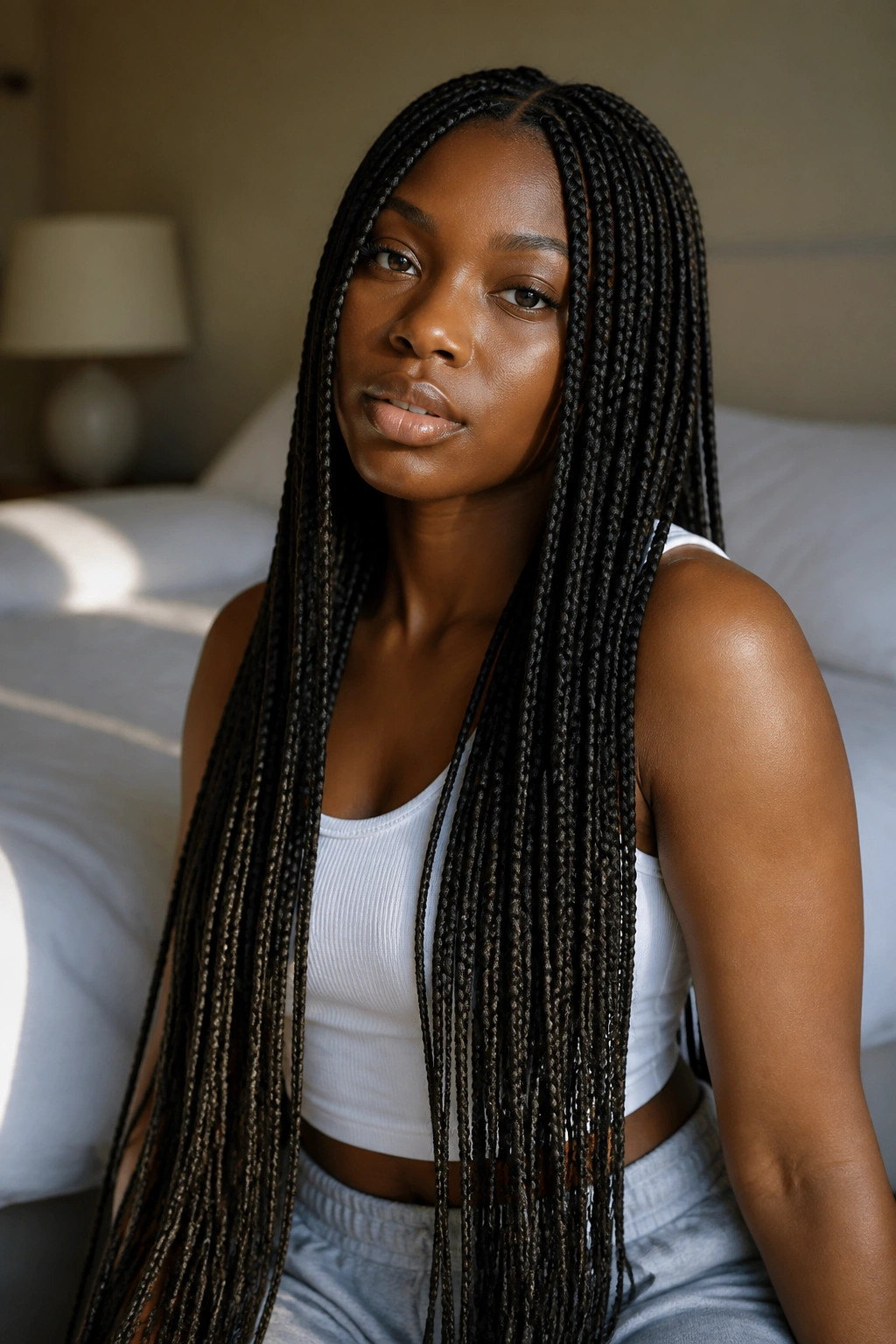
Knotless box braids are one of the easiest long-hair styles to wear well because they sit flatter at the scalp and move more naturally than a heavy knot braid set. On waist-length hair, that lighter base matters. You get the length, the swing, and the clean parting without that stiff, helmet-like feel that some braid installs pick up after a few days.
Why they work so well on long hair
The braid can travel, which sounds odd until you see it. Long hair gives the finished style enough weight to hang neatly, so the parts read cleaner and the ends don’t puff up as fast. I like this style best when the goal is “I want to look done” without needing to do much once the braids are in.
- Ask for small to medium parts if your hair is dense; oversized sections make long braids feel bulky.
- Choose light braiding hair so the ends do not drag on your neck.
- Use a satin bonnet at night and a little mousse on the lengths when they start looking fuzzy.
Best move: refresh the braid line, not the whole head. A tiny bit of scalp oil and a careful rewrap is usually enough.
2. Fulani Braids with Beads

Fulani braids bring a lot of shape to long hair without needing a full head of extra bulk. The center braid, side cornrows, and bead details give the style movement from every angle, which is exactly why it looks so good on length. Long hair helps the braids hang instead of sticking out.
What makes this look stand out is the balance between structure and decoration. The braids create a clear pattern, and the beads do the talking at the ends. You can go subtle with one or two rows of beads, or lean into the look with more pieces and a sharper middle part. Either way, the style reads as intentional, not busy.
A small warning: beads add weight. Too many at the ends can pull, especially if your hairline is already sensitive. I’d keep the bead count controlled and use lightweight acrylic beads rather than heavy wooden ones unless you want the extra drag. The style is also loud in the best sense — it makes a statement without needing a complicated install.
3. Feed-In Cornrows into a Low Ponytail
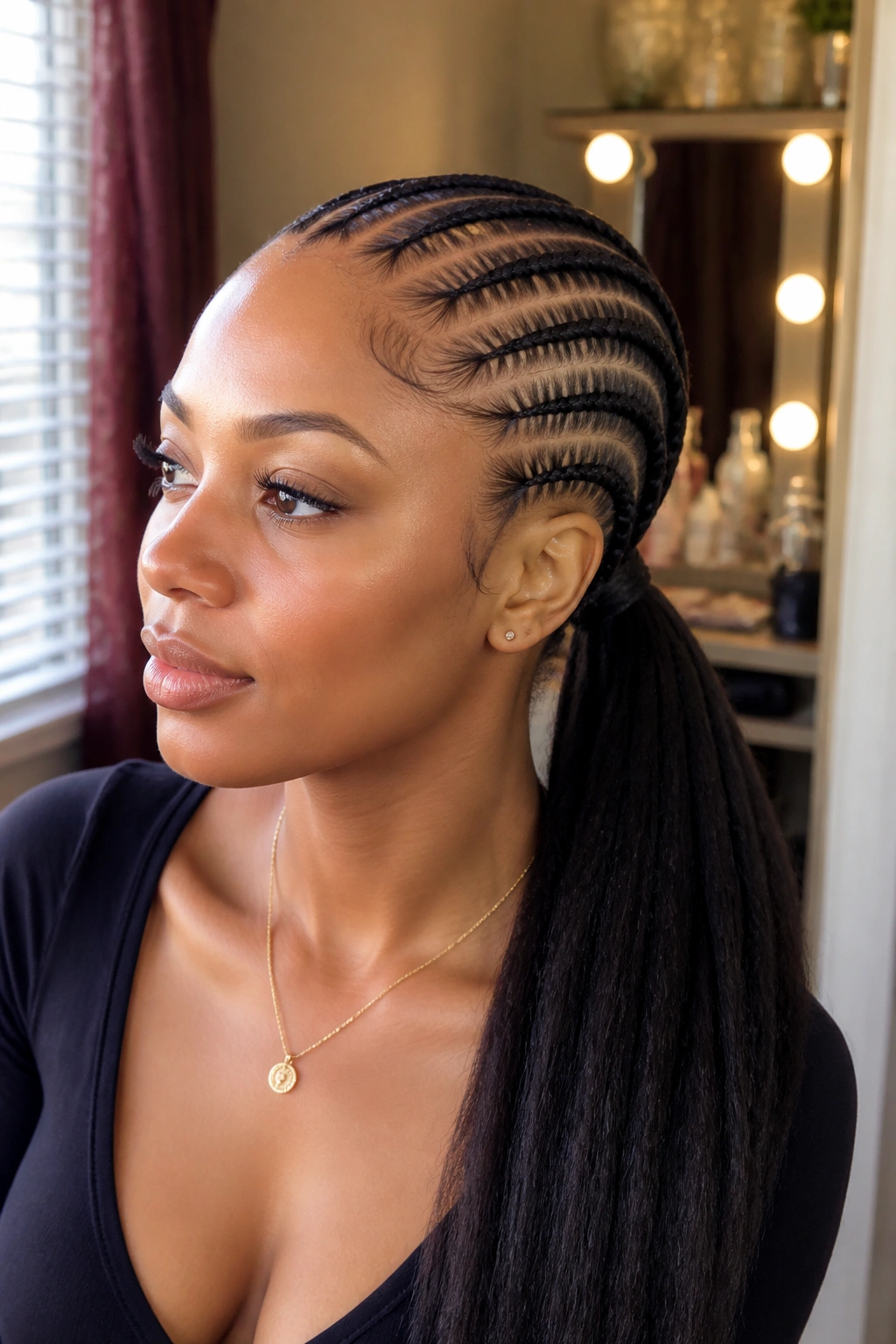
Feed-in cornrows into a low ponytail are the kind of style that quietly looks expensive. The braid pattern stays close to the scalp, so the hairline stays neat, and the ponytail gives you length without the bulk sitting all over your shoulders. On long hair, the result can look sleek and sculpted instead of stiff.
A lot of people underestimate how much the ponytail finish changes the whole mood. Keep it low and the style feels polished. Raise it just a little and it gets sharper. Add wrapped hair around the base and it looks finished instead of just tied back. That’s the difference between a rushed style and one that feels planned.
What to ask for
- Tapered feed-ins at the front so the braids start slim and clean.
- A ponytail base that sits at the occipital bone or slightly lower.
- Enough length in the ponytail to curl, wrap, or braid if you want extra shape.
Skip the heavy edge control if your scalp gets flaky. A soft-hold gel and a good brush usually do more than a thick paste that cakes by day two.
4. Lemonade Braids Swept to One Side
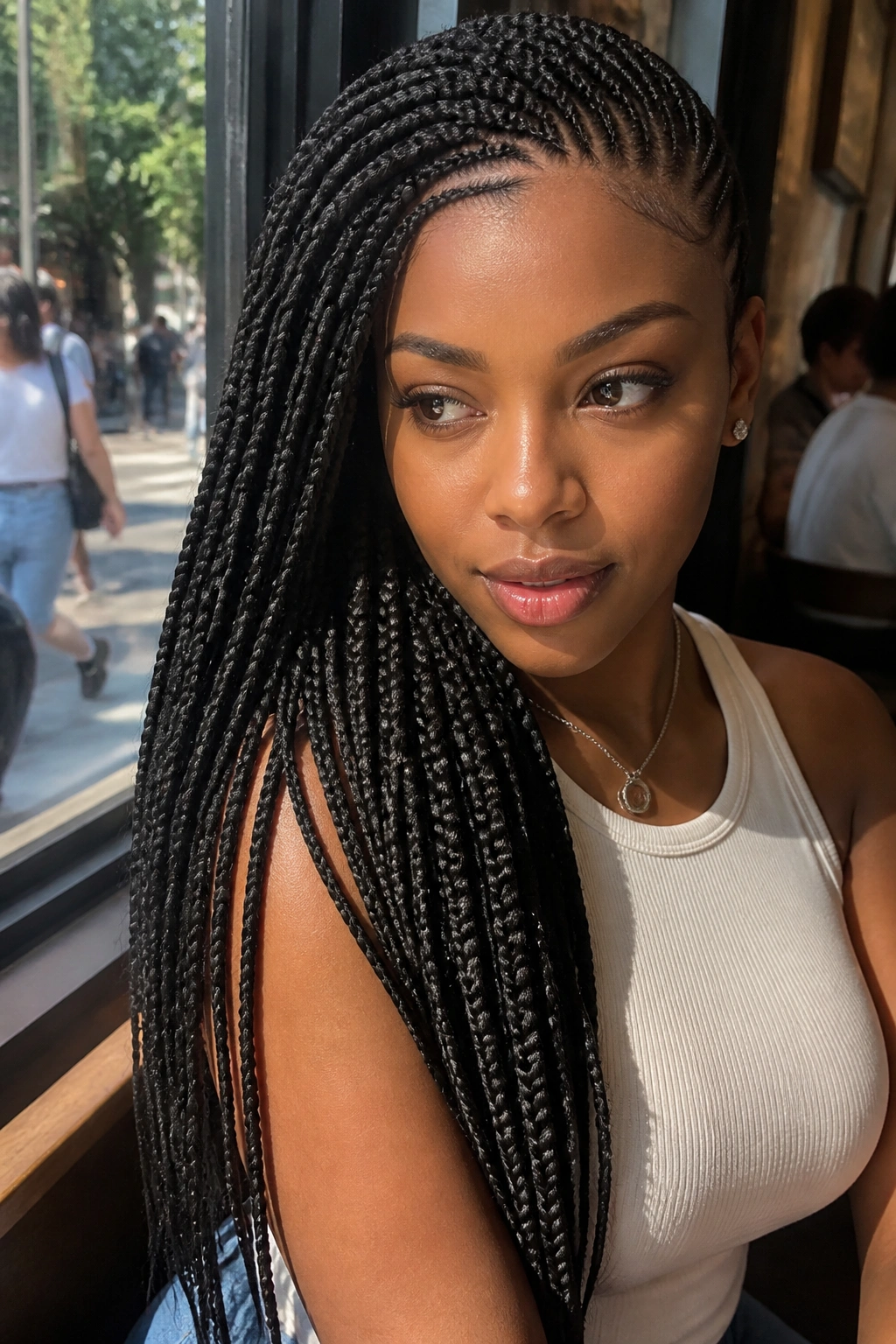
Lemonade braids are a strong choice when you want drama without adding much extra styling time. The side-swept direction gives the face a clean line, and long hair makes the whole shape look even richer because the braids have somewhere to fall. Shorter lengths can feel cute. Long lengths feel deliberate.
This style works best when the parting is crisp and the braids are fed in evenly from front to back. If the braid size changes too much, the side sweep starts to look messy instead of bold. The best versions have a smooth start, a clean arc over the scalp, and ends that move together instead of fighting each other.
There’s a catch, though. Side-swept braids can put more pressure on one side if the install is too tight. That pressure shows up fast around the temple and the nape. So I’d rather see a slightly looser braid tension and a sharp part than a painfully tight set that looks good for one day and then becomes a problem.
5. Goddess Braids with Curly Ends
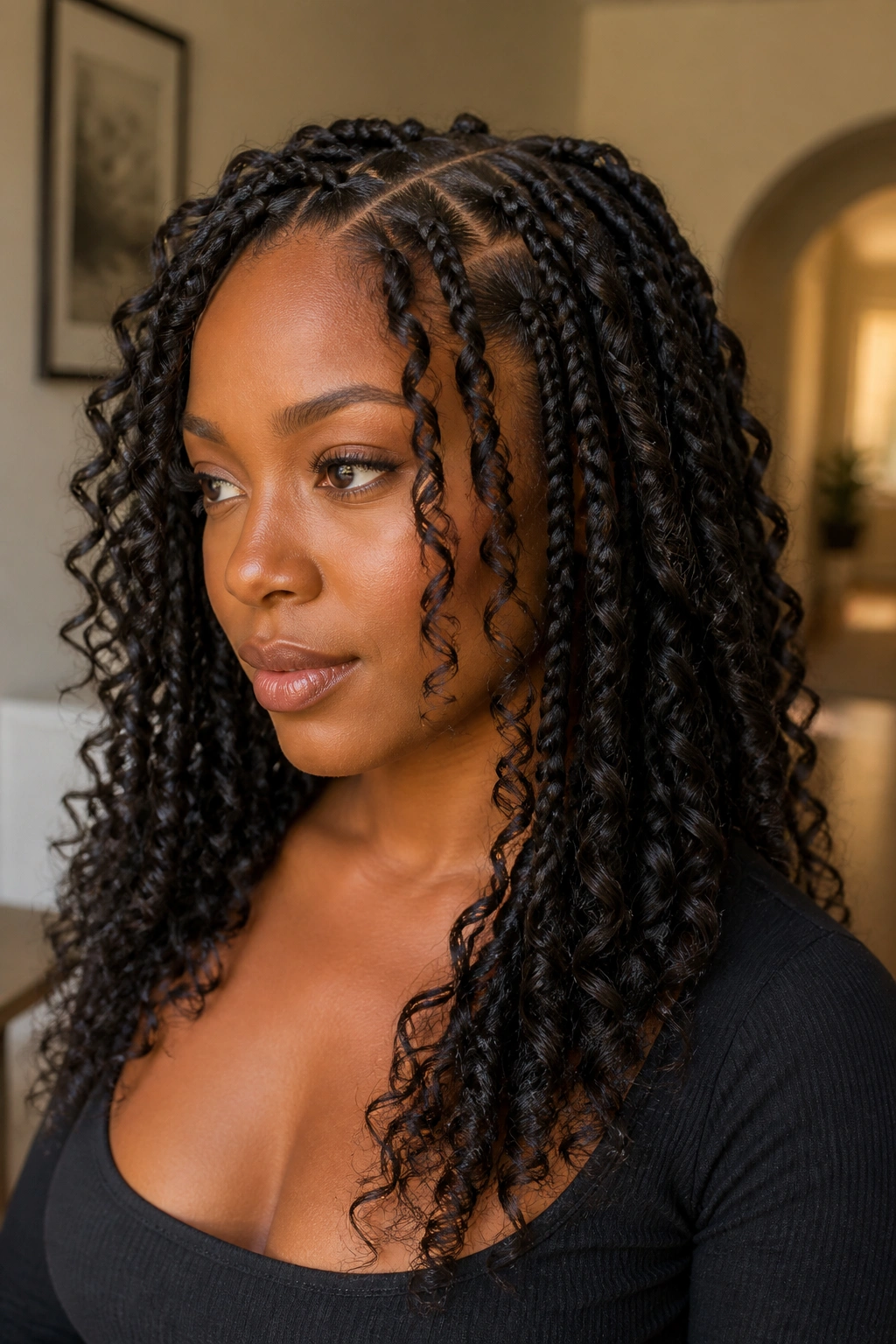
Goddess braids give long hair a little softness that box braids sometimes skip. The braid itself is thick and smooth, but the curly ends break up the line and keep the style from feeling too severe. That mix is the whole point. It reads elegant without looking frozen.
Long hair makes the curls at the ends more noticeable, which is why this style lands so well on length. The braids have enough body to hold their shape, and the loose curls give you movement when you walk, turn, or toss one side back. If your hair is dense, this is a smart way to show it off without letting it all hang loose.
I prefer goddess braids when the event calls for something a little dressed up — a work function, church, a dinner, even a wedding if the braids are neat enough. Keep the curly ends hydrated with a light mousse, not heavy cream. Heavy product makes the curls stringy. That is not the look.
6. Jumbo Senegalese Twists
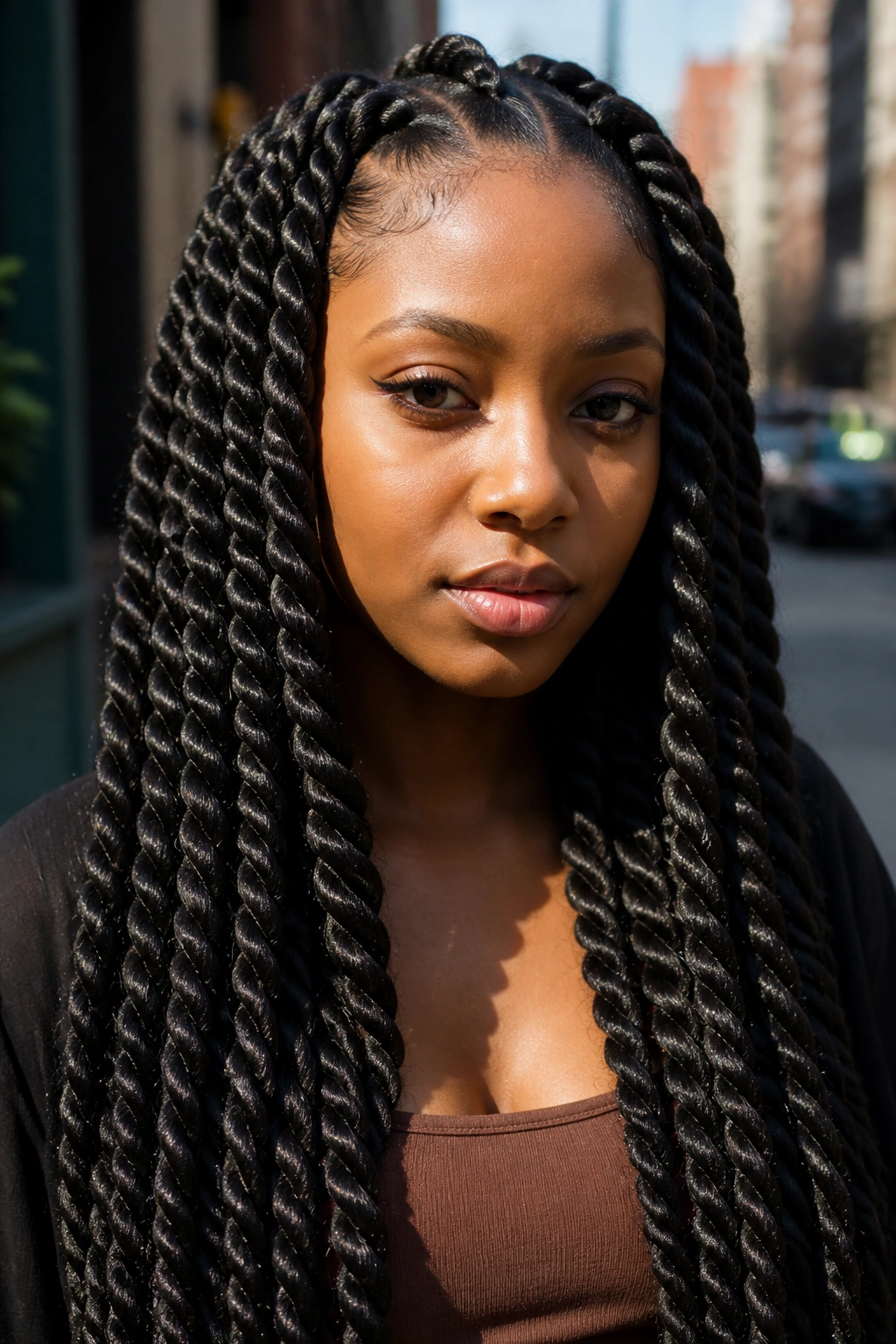
Jumbo Senegalese twists are the kind of style that looks simple until you see them installed well. The rope-like twist pattern gives long hair a smooth, glossy line, and the bigger size means you get full coverage without sitting in the chair forever. They also have a softer movement than box braids. I like that.
Unlike box braids, twists don’t look as rigid at the ends, which matters on long hair because the length already gives you enough visual weight. A jumbo set can feel bold and relaxed at the same time. If the twists are too thick, though, they can feel chunky at the roots and tip forward in awkward ways, especially around the hairline.
How to make them look better longer
- Keep the parting neat; twist styles show sloppy sections fast.
- Use a satin scarf or bonnet every night so the twist pattern stays smooth.
- Refresh the ends with a tiny amount of foam when they start to frizz.
My take: jumbo twists are best when you want a style that looks finished but does not scream for attention.
7. Passion Twists
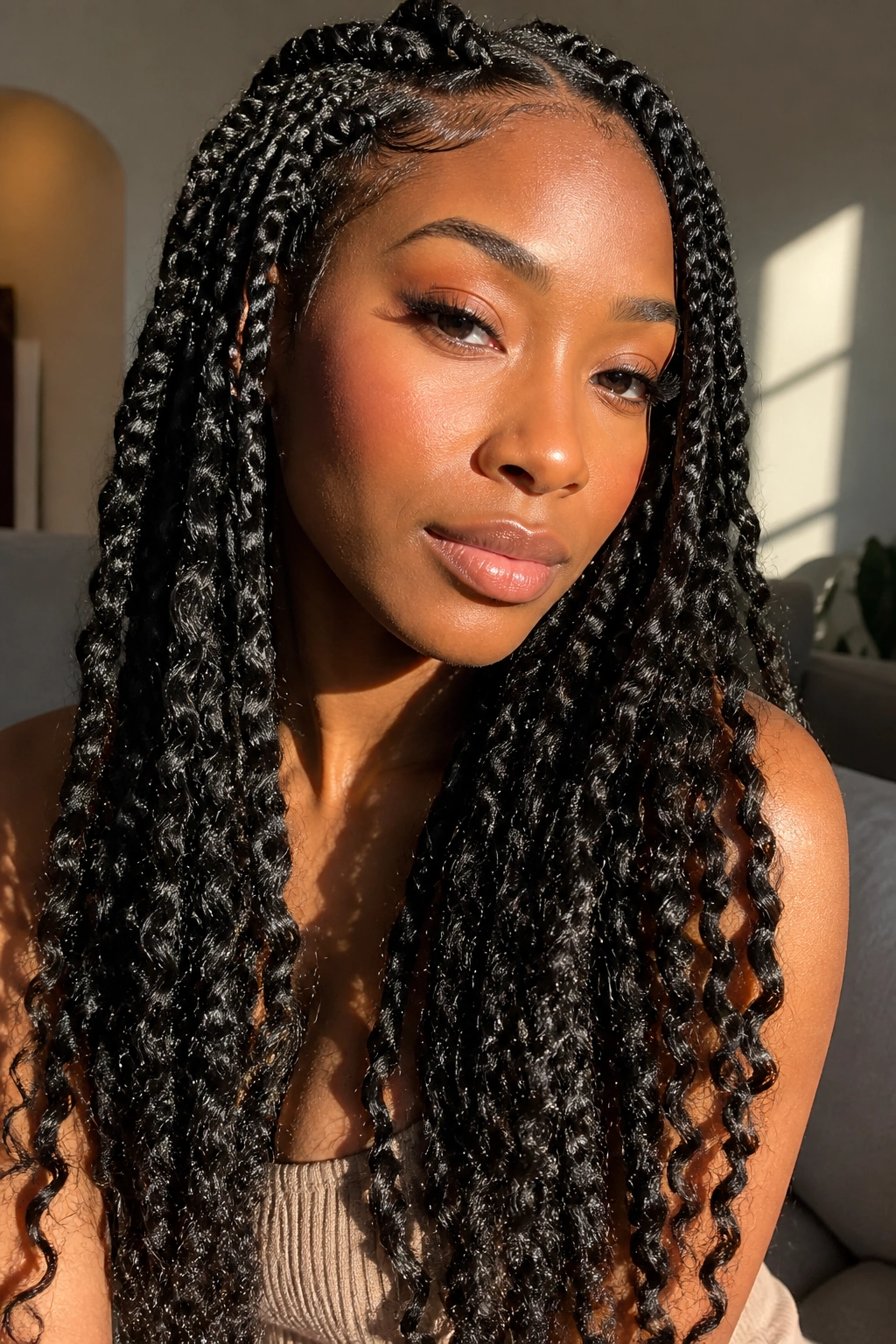
Passion twists have that airy, springy look that people either fall for immediately or ignore until they see them in motion. Long hair gives the style room to breathe. The twists hang with a little bounce, and the textured finish makes them feel less formal than Senegalese twists and less heavy than many braid sets.
The secret to a good passion twist install is not stuffing too much product into the base. You want grip, not slime. A clean part, a soft twist tension, and evenly separated hair pieces make the style look polished. If the install starts tight and crunchy, the twist pattern loses that loose, undone feel that makes the style work in the first place.
They’re also a nice choice if you like a softer silhouette around the face. You can wear them down, pull them into a half-up look, or tie them low without losing shape. One small thing: they frizz faster than people expect. That’s part of the texture. If you want a perfectly neat style forever, this is not it.
8. Marley Twists Pulled into a Half-Up Style
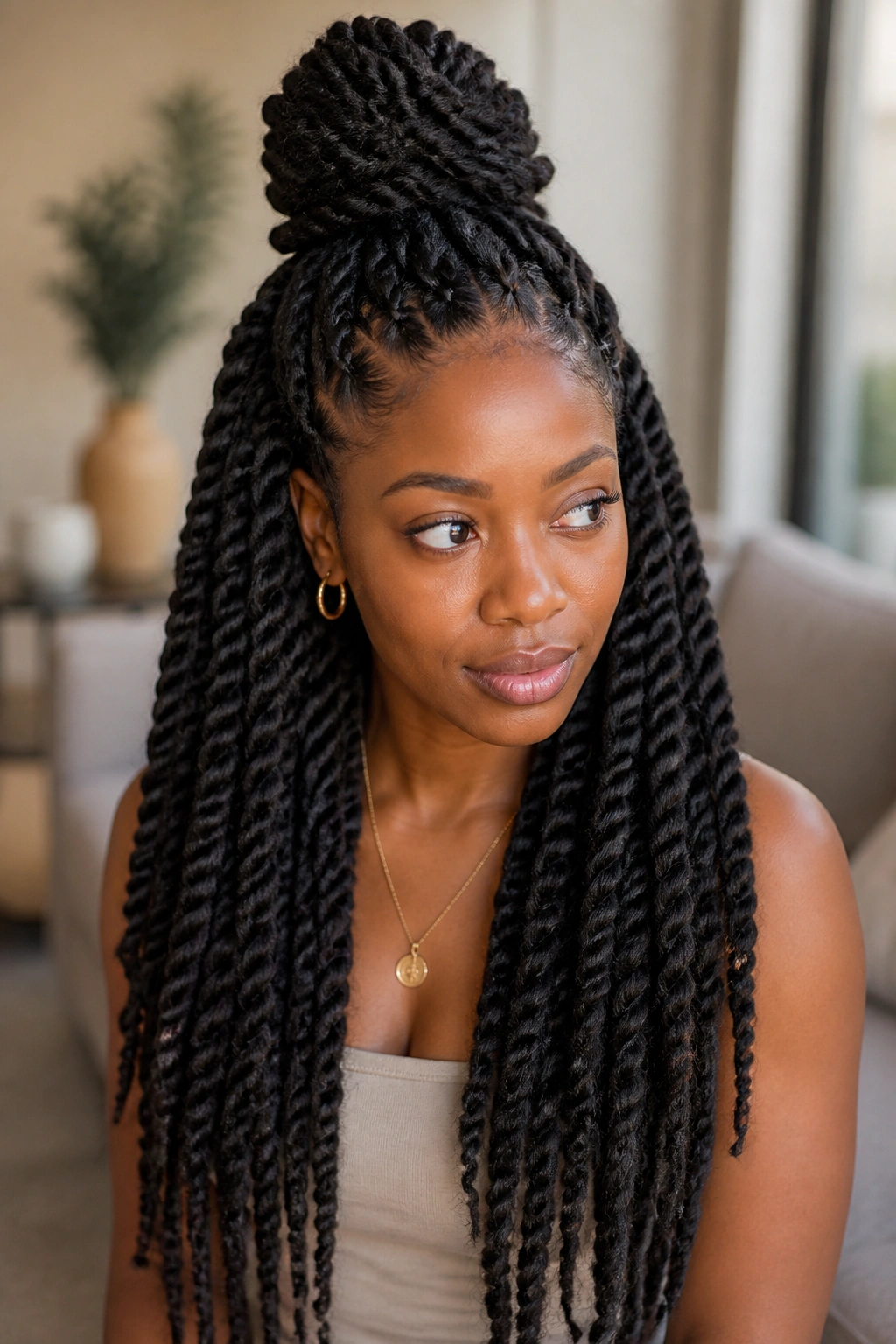
Marley twists have a thicker, more textured finish that flatters long hair because the style never looks too slick or too precious. Pulled into a half-up shape, the look gets a little height at the crown and a lot of movement through the lengths. It’s casual, but not lazy.
The half-up version is especially useful if your hair is long enough to hit your shoulders, back, or waist. You get to show off the length while keeping some of it off your neck. That matters more than people admit. A full-length twist set can feel warm and heavy. Split it in half, and the whole thing suddenly wears easier.
What I like here is the flexibility. You can make the top section a top knot, a clip-up puff, or a simple tied section wrapped with one twist for detail. If the twists start to fuzz after a few days, don’t fight every strand. Smooth the roots, separate the ends gently, and let the texture do what it does.
9. Faux Locs with Loose Curls
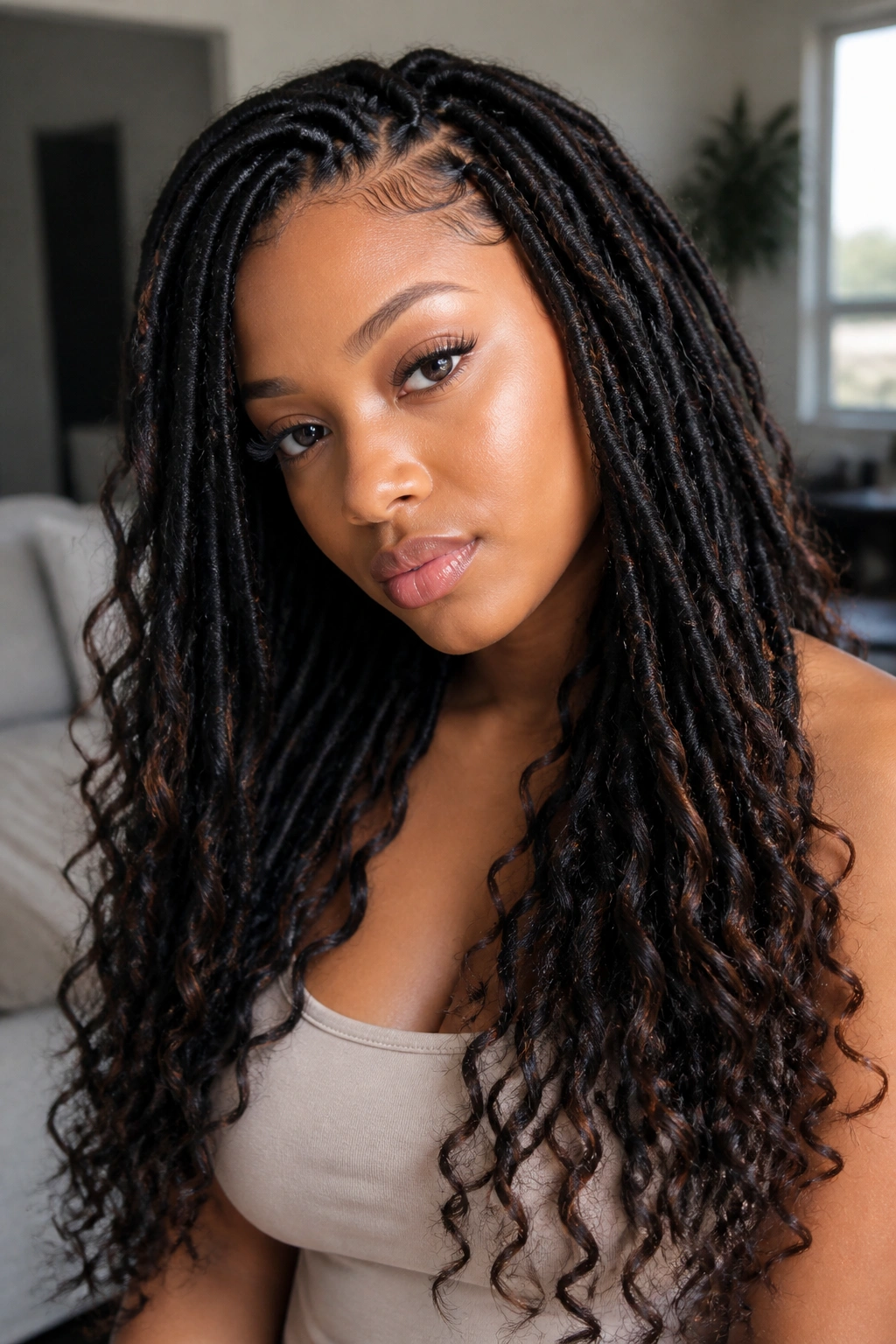
Faux locs look especially good on long hair because the length gives the locs a little drama without needing extra decoration. They already have texture built in, so the style feels full even before you add curly accents or wrapped pieces. When done neatly, faux locs read as bold and protective at the same time.
The loose curl version is my favorite because it softens the hard line of the locs. A few curls hanging at the ends or around the face keep the style from feeling too heavy. That contrast matters. If every strand is locked down and stiff, the style can look flat. Add movement, and it wakes up.
What to watch for
- Don’t install them too tightly at the root.
- Keep the wrapped sections even so the locs do not look lumpy.
- Ask for a curl pattern that matches your vibe — loose, spiral, or soft wave.
A good faux loc set should look intentional from the front and still move when you turn your head.
10. Crochet Braids with Curly Length
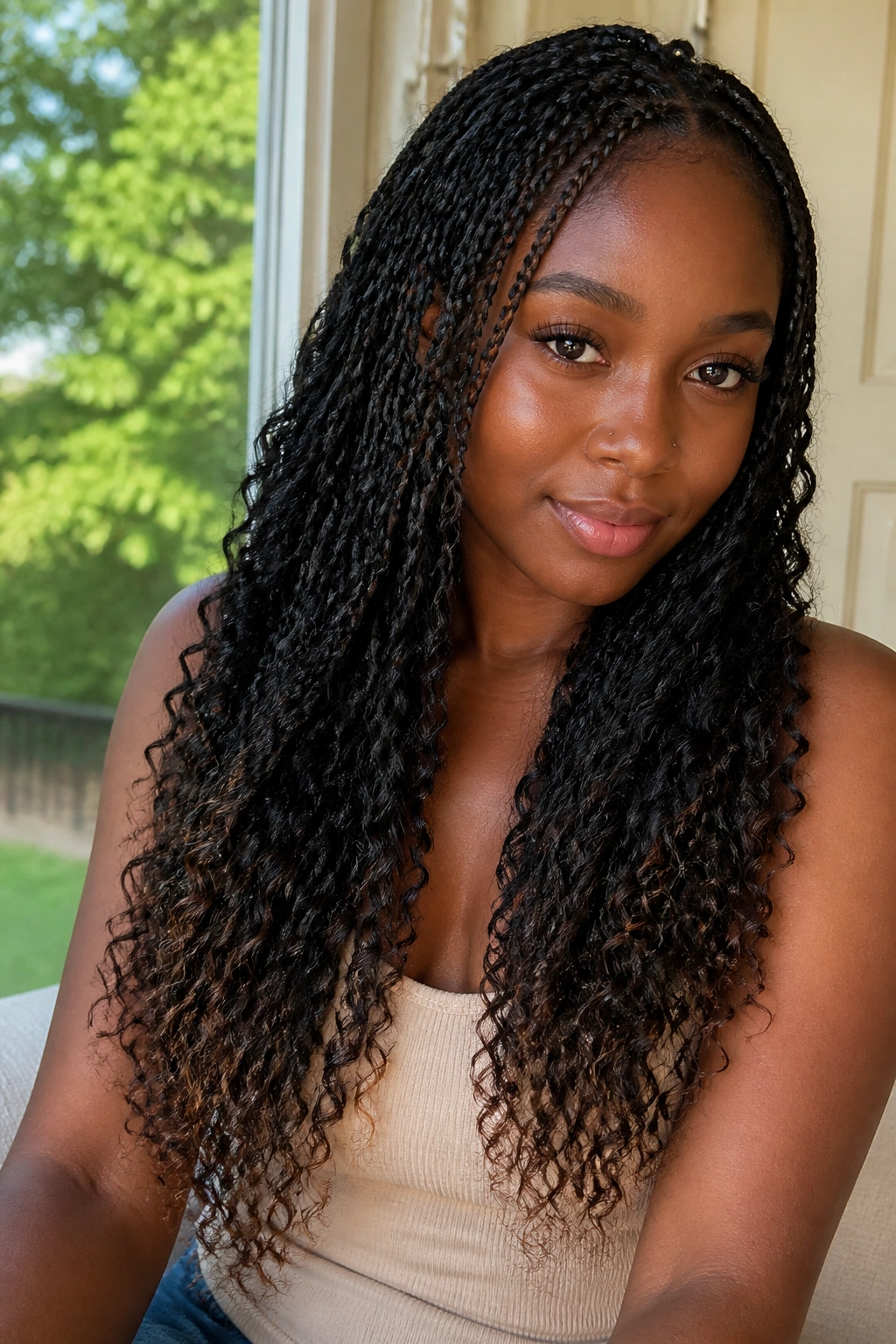
Need a long style that does not ask for an all-day appointment? Crochet braids are hard to beat. The install is usually faster than a full braided set, and the finished look can be as curly, wavy, or textured as you want. Long crochet lengths give you fullness around the face and down the back without putting every strand of your natural hair under tension.
The trick is to keep the base clean and flat. If the cornrow foundation is bulky, the whole style sits awkwardly. A neat braid base lets the curly hair fall naturally and keeps the finish from looking top-heavy. That’s where crochet styles either shine or fail.
I like this option for people who want volume without fuss. It can be a bob, waist-length curls, or loose ocean waves if that’s the mood. The downside is obvious: crochet hair can tangle at the ends faster than a braid style, especially if the fibers are soft and curly. Finger-detangle early, not after a week of neglect.
11. Wash-and-Go on Long Natural Hair
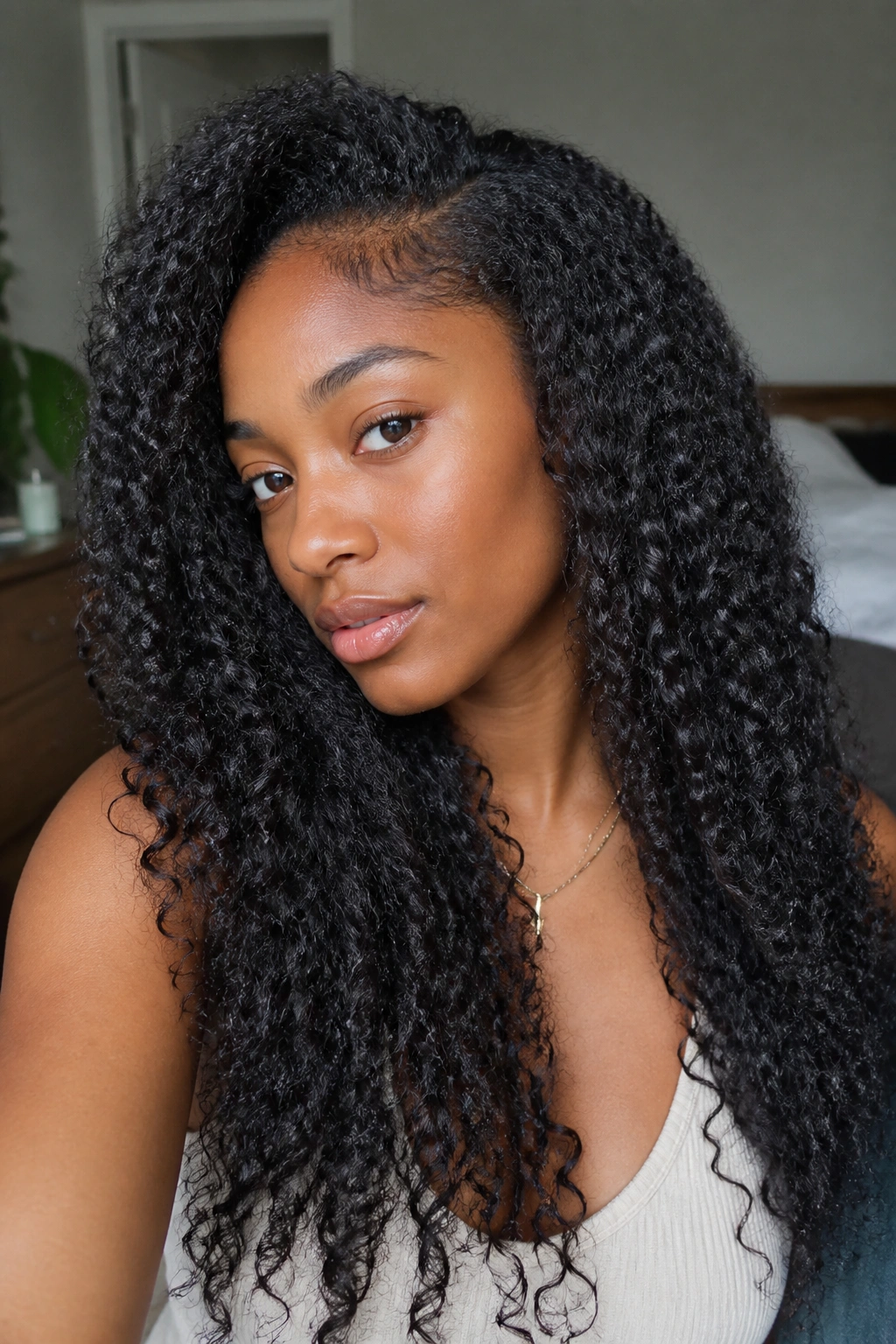
A wash-and-go on long natural hair is not “wash and leave.” Anyone who has tried that on dense coils knows better. The real work happens in the detangling, the product layering, and the drying. When it’s done well, though, the shape is gorgeous — full, soft, and honest about the texture you actually have.
What makes it hold shape
The hair needs enough definition at the roots and enough weight at the ends to stretch the curl pattern down. That means a good leave-in, a curl cream or gel that suits your texture, and a sectioning method that keeps the curls clumped instead of frayed. A diffuser can help, but air-drying works too if you have the patience.
- Work in small sections so the product reaches the roots.
- Use a denman brush, finger coils, or prayer hands if your curls need help clumping.
- Don’t touch it while it dries. Seriously. That’s how you get frizz.
Long natural hair with a clean wash-and-go looks effortless. It isn’t. But the result can be worth every minute.
12. Defined Twist-Out on Stretched Hair

A twist-out on stretched hair gives you more length and less shrinkage than a fresh-out-the-shower style. That’s the whole appeal. You still get the texture, but the curl pattern opens up a bit, which is especially flattering when the hair is long enough to show body and shape instead of collapsing inward.
Compared with a wash-and-go, a twist-out usually looks softer at the ends and a little fluffier around the crown. I prefer it when you want volume without the crisp, gel-heavy finish that some wash-and-gos need. The hair also tends to separate more nicely if you let the twists dry fully before unraveling. Half-dry twist-outs are a mess. They look cute for ten minutes and then fall apart.
A good way to keep this style clean is to twist in consistent size sections and oil your fingers lightly when separating. Too much oil kills the definition. Too little and you create frizz from the start. A middle ground works best.
13. Braid-Out with Side Part and Volume
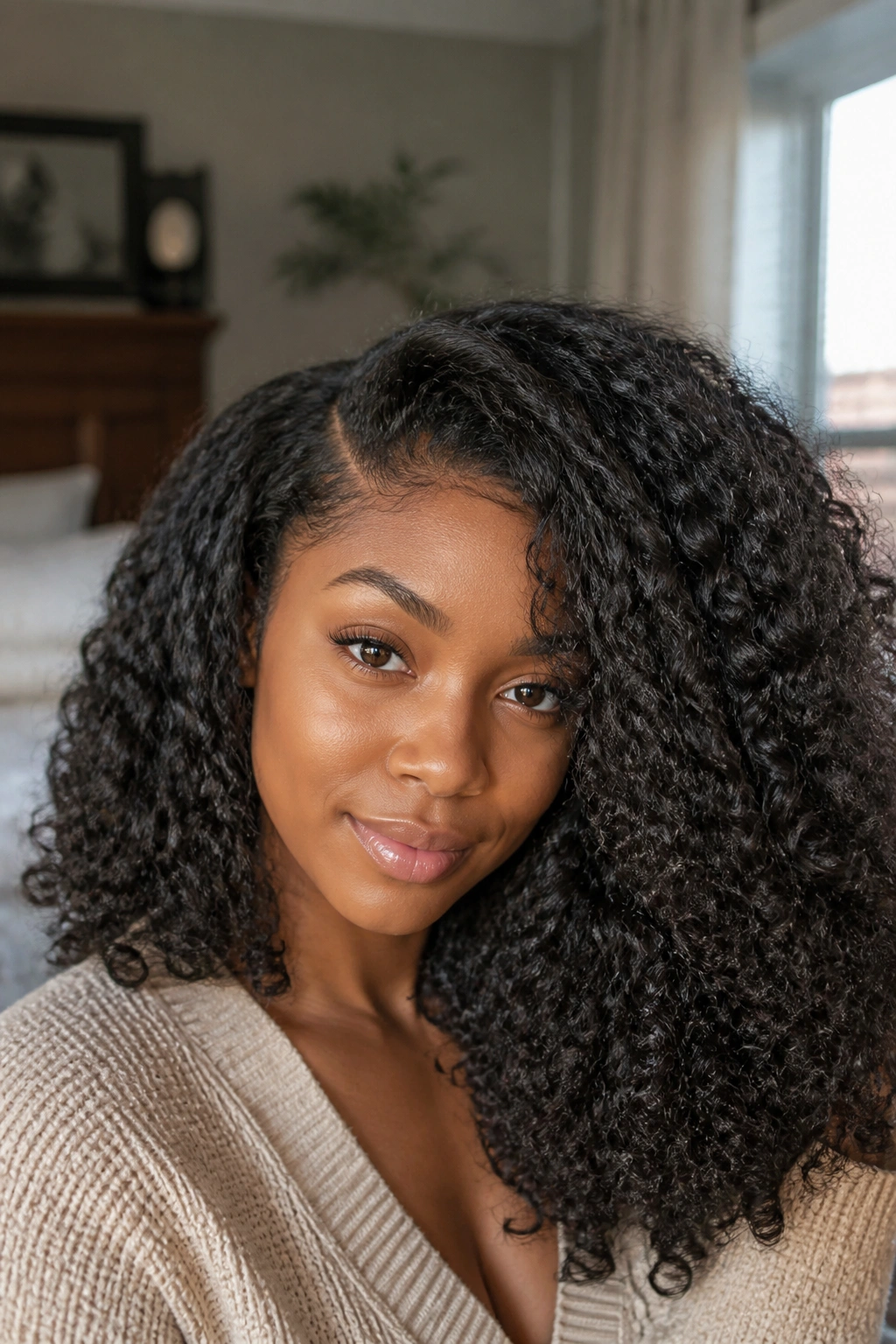
Braid-outs are the less defined, more airy cousin of the twist-out. On long hair, that extra softness can be a gift. The braid pattern stretches the hair enough to show length, but when you unravel it, the result has a fuller, more cloud-like look than a tight twist set.
The side part changes everything. A deep part gives height at the crown and frames the face without forcing the style to look symmetrical. Long hair holds that shape well because there is enough weight for the braid-out to fall in a believable way. Shorter hair can puff up in odd spots. Long hair usually settles better.
Use this style when you want volume with a little movement, not a super defined curl pattern. Braid-outs also age in a nice way over two or three days if you keep the roots refreshed. Once the definition loosens, the style does not collapse. It just gets bigger. That is a good thing here.
14. High Puff with Laid Edges
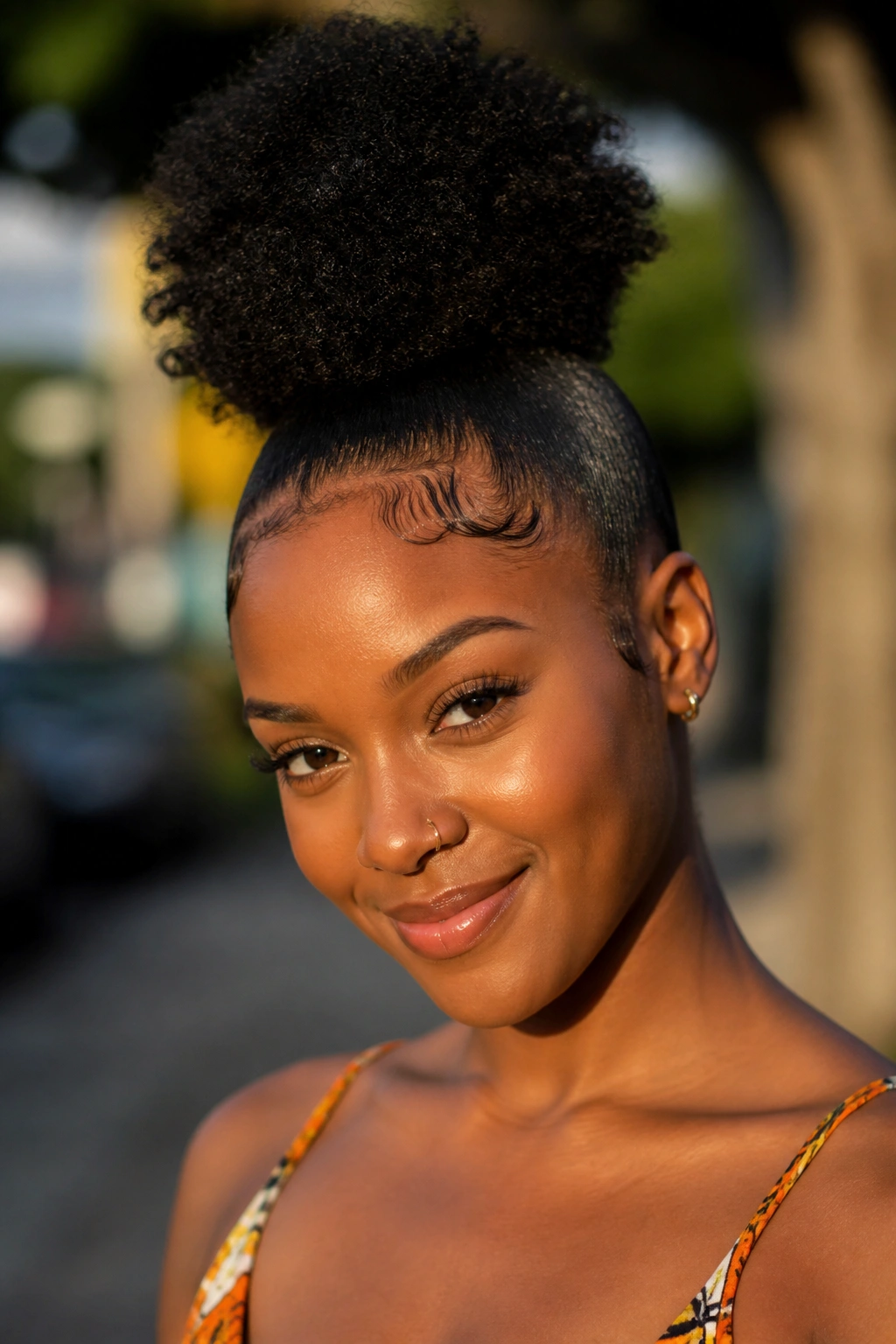
A high puff on long hair can look huge in the best sense. The length helps the puff rise high and full instead of sitting low and flat, and that shape gives the face a lift without needing extensions or extra pieces. It is one of the fastest styles on this list, which honestly counts for a lot.
The biggest mistake people make is flattening the front too much. A puff should still look like hair, not a tight helmet. Brush the sides smooth, gather the crown, and let the puff keep some softness. The edges can be neat, but they do not need to be glued down like a runway. Heavy edge control tends to crack and flake anyway.
This look is strongest when the hair has some stretch before it goes up. A little blow-drying or banding at the roots makes the puff sit higher. If your hair is fresh from a wash and shrunk tight, you’ll still get a puff, but it will sit smaller and more compact.
15. Low Puff with Braided Front
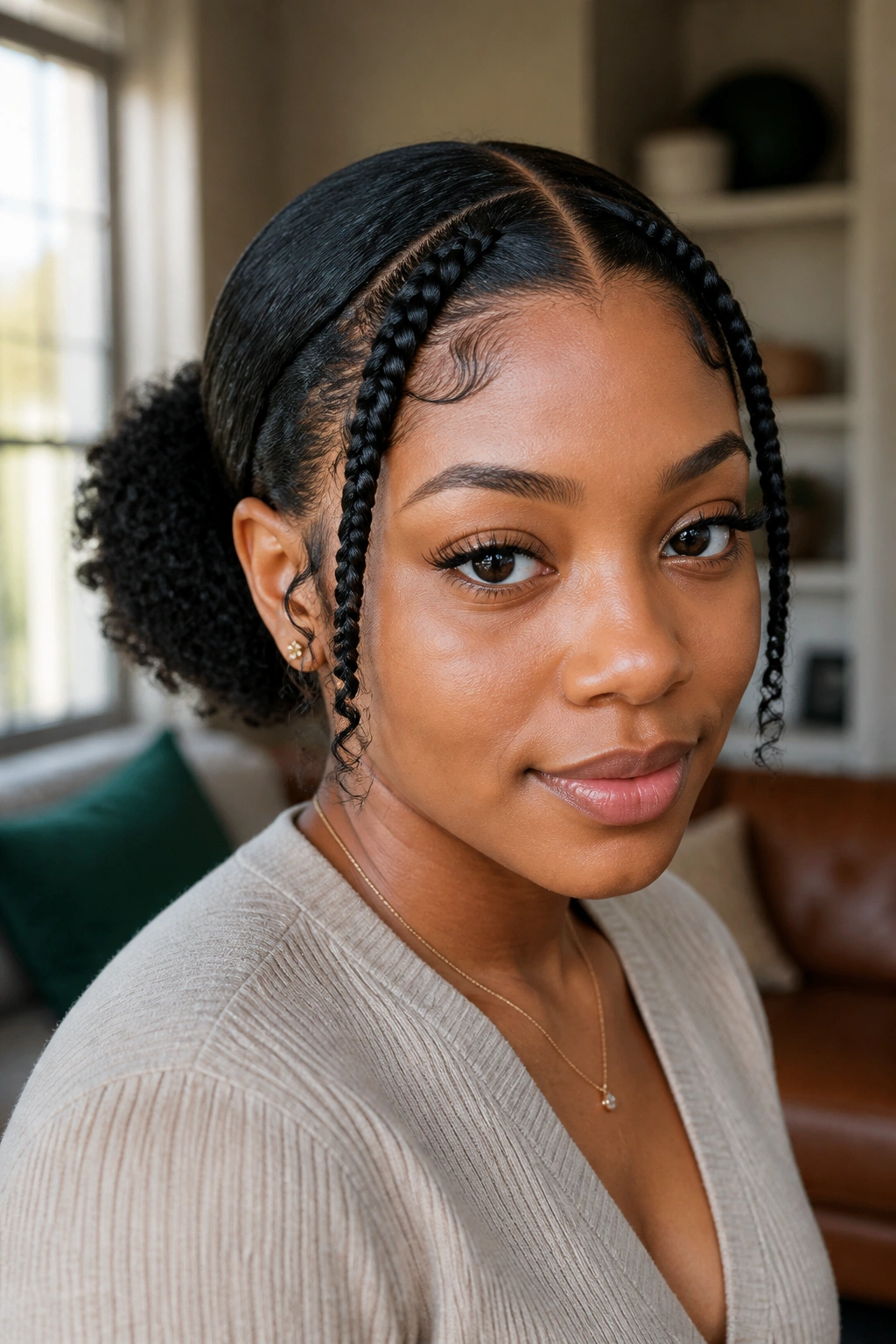
The low puff is underrated. People chase height all the time, then end up with headaches and sore edges. A low puff keeps the style soft at the nape while a braided front section gives the look some polish. On long hair, the puff has enough volume to feel full even when it sits low.
Why this version is easier to wear
The braid across the front acts like a frame. It gives shape to the hairline and keeps the style from looking like a quick tie-back. You can go with one braid, two slim braids, or a braided crown that merges into the puff. Each choice changes the mood a little.
- Use a soft scrunchie or silk tie so the base does not crease too hard.
- Keep the puff loose enough to move.
- Smooth the front with a light gel, not a thick paste.
This is the kind of style I’d trust on a busy week when I want something neat without turning my scalp into a battlefield.
16. Sleek High Ponytail
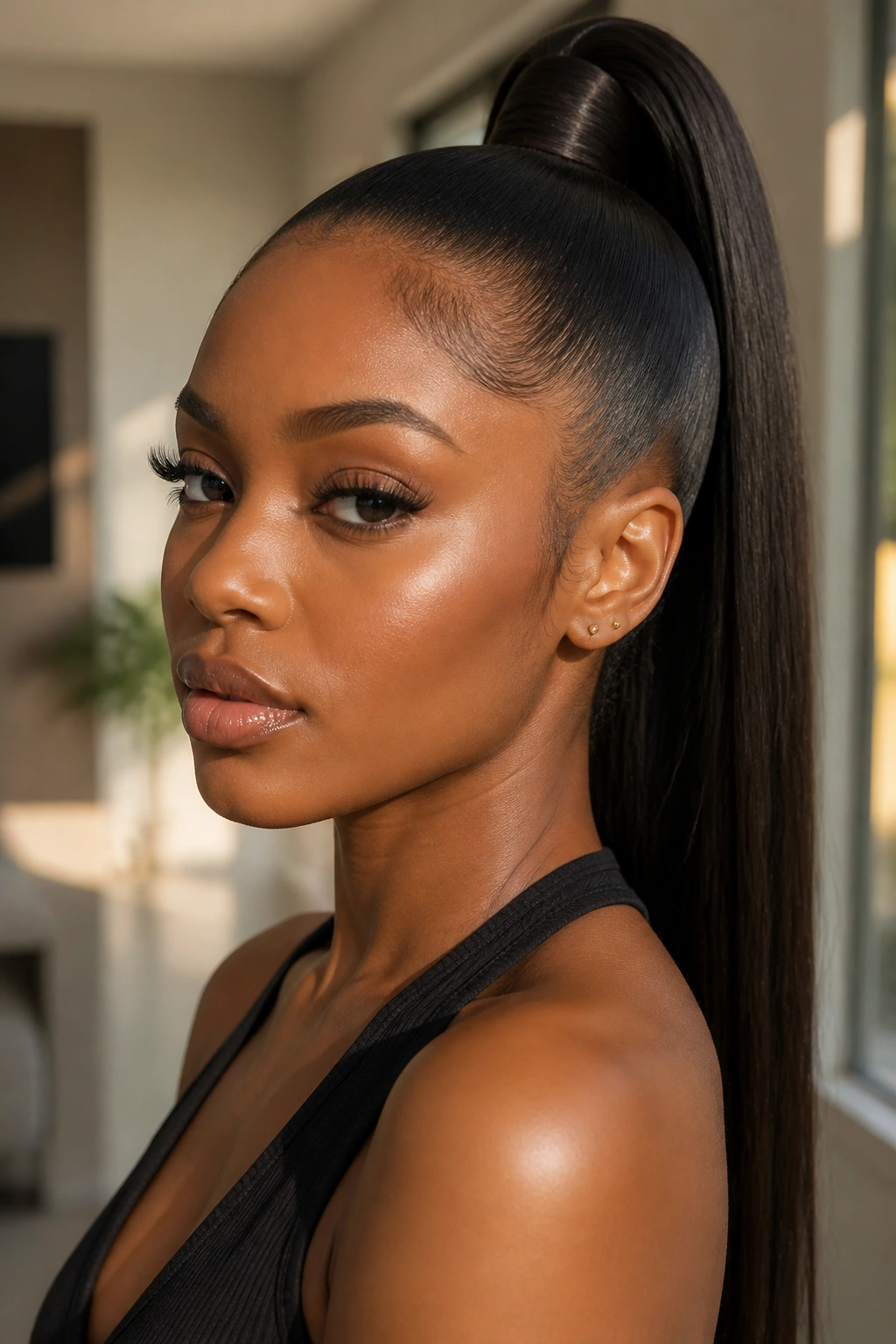
A sleek high ponytail on long hair is pure shape. The pulled-up base lengthens the face, shows off the cheekbones, and turns the ponytail itself into the main event. On Black hair, it works best when the hair is stretched smooth first, whether with heat, blowout tension, or a well-laid gel method.
The important part is the line at the front. If the base is bumpy, the whole ponytail loses that sharp look. Brush upward in sections, secure it tightly but not painfully, and wrap a small strand around the base for a cleaner finish. A ponytail that just “happens” is fine. A ponytail with a controlled base looks expensive.
There is one catch. The tighter the ponytail, the more pressure on the scalp. If you feel pulling at the crown, loosen it. A style should not come with a headache attached. Long hair gives you enough weight that the ponytail will still swing even when the base is a little softer.
17. Braided High Ponytail
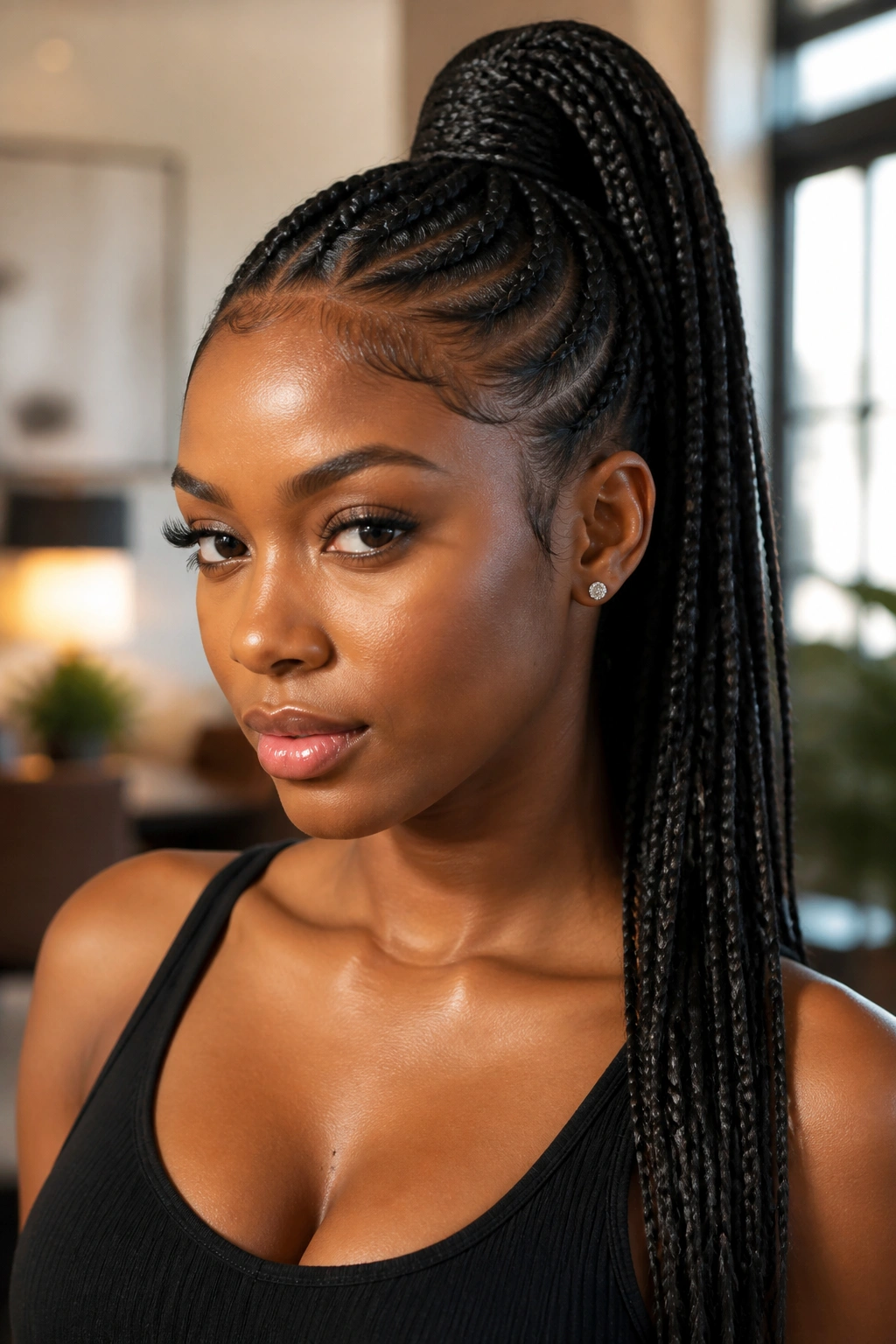
A braided high ponytail is what you wear when you want the height of a ponytail and the security of braids. The braided length keeps the ponytail structured, so it does not puff out as quickly or tangle as badly as loose hair can. On long hair, the effect is bold without being fussy.
What makes this style useful is how it behaves during the day. Once it’s set, it stays in place. You can wear it with one braid, multiple braids gathered into one ponytail, or feed-in sections that merge at the crown before the length falls. The braid pattern gives the ponytail a clear shape from the front and the back.
A high braided ponytail is a good choice if you like your hair out of your face but still want length on display. It’s also a clean option for events where you need movement without constant touch-ups. Keep the base wrapped, the baby hairs minimal if you like them, and the braid ends sealed so they don’t unravel at the first sign of humidity.
18. Low Bun with a Middle Part
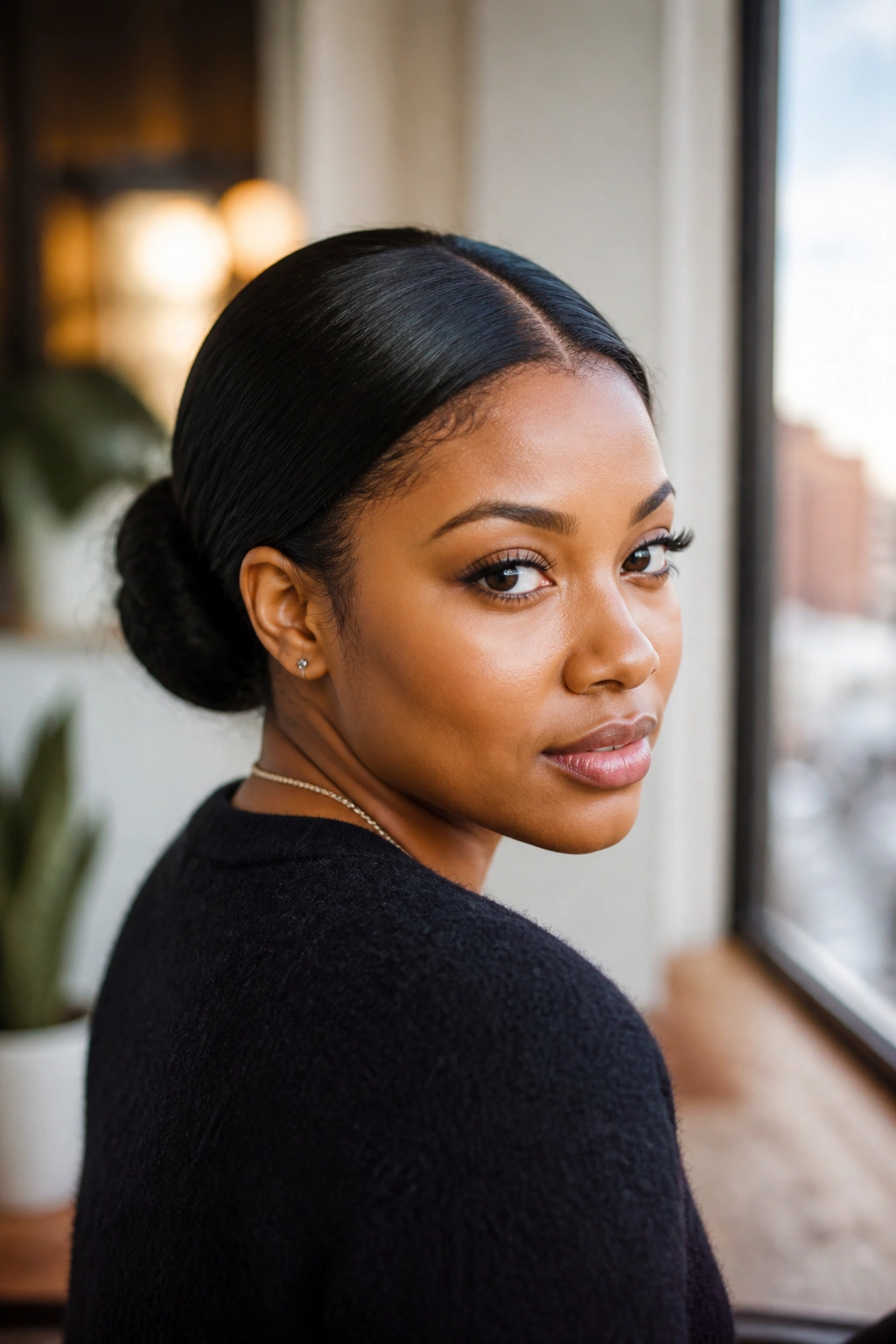
A low bun with a middle part is not flashy, and that is exactly why it works. The center part makes the face look balanced, while the bun keeps everything tucked away and controlled. On long hair, the bun can be thick enough to look sculpted instead of flat.
This style depends on clean sections. If the part is crooked or the smoothing is patchy, the whole look gets sloppy fast. But if the front is neat and the bun sits snugly at the nape, it looks polished enough for work, dinners, and events where you want your hair to behave. The key is restraint. Don’t drown it in gel. Don’t stack too many pins in one spot. Keep it tidy and let the shape do the work.
I also like this style for days when your ends need a break. Tucking long hair into a bun protects the oldest parts of the strand, which is where breakage usually starts creeping in.
19. Cornrow Chignon
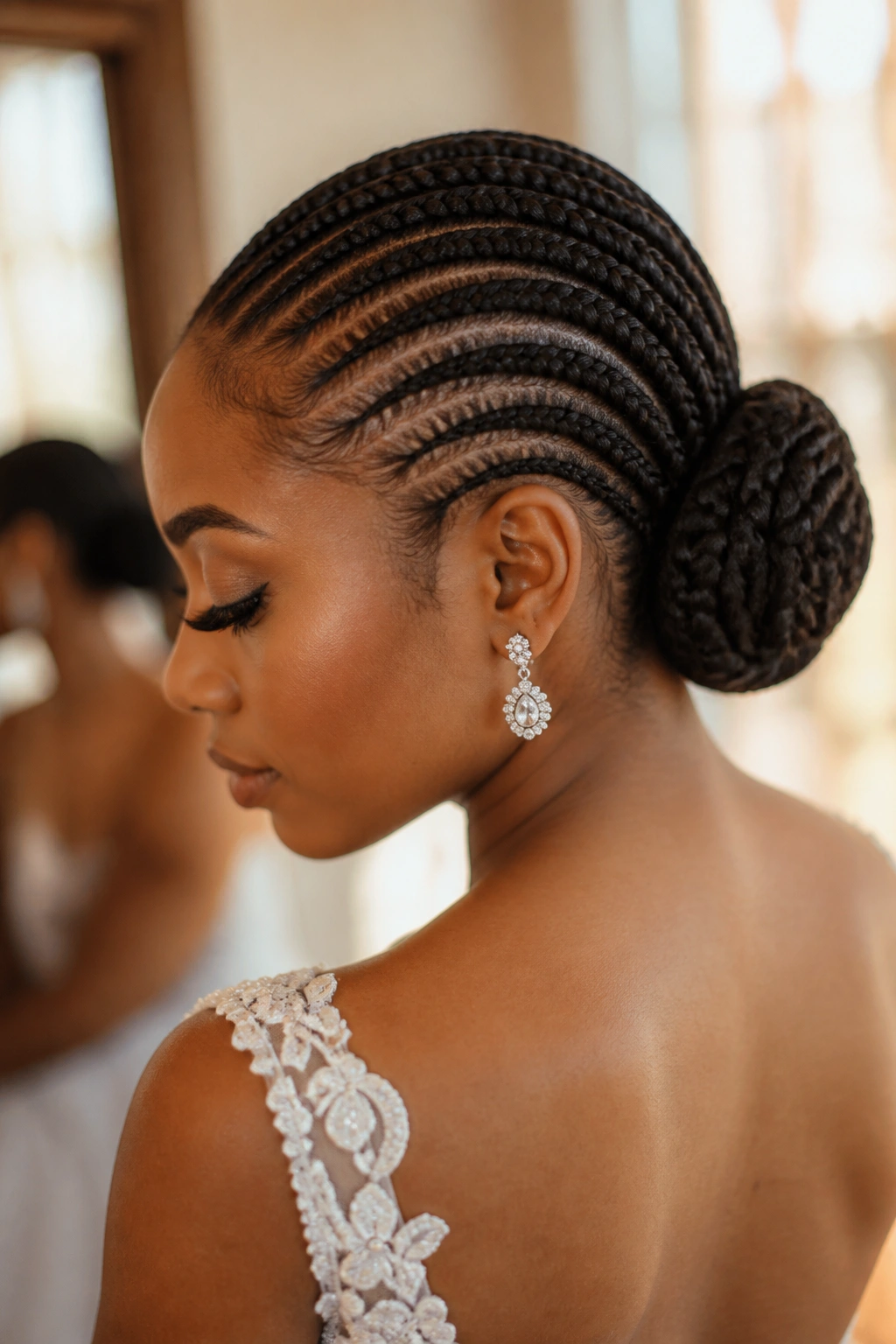
A cornrow chignon looks formal without feeling stiff. The braids build a smooth base across the scalp, then the bun or tucked roll sits at the nape like a finished shape instead of an afterthought. Long hair gives the chignon more body, which keeps it from looking pinched.
This style is a strong pick for weddings, church, graduations, or any moment where you want a neat neckline and a clear silhouette. The cornrows help keep the front secure, and the chignon can be wrapped tight or left slightly fuller depending on how dressed-up you want it. The best versions are balanced. Too tight at the scalp and the whole thing looks unforgiving. Too loose and it loses the clean line that makes it work.
A good stylist will usually keep the braid direction flattering to your face shape. That matters more than people think. Cornrow direction changes how the bun sits, and the bun changes how the whole style reads from behind.
20. Bantu Knots with Hanging Length
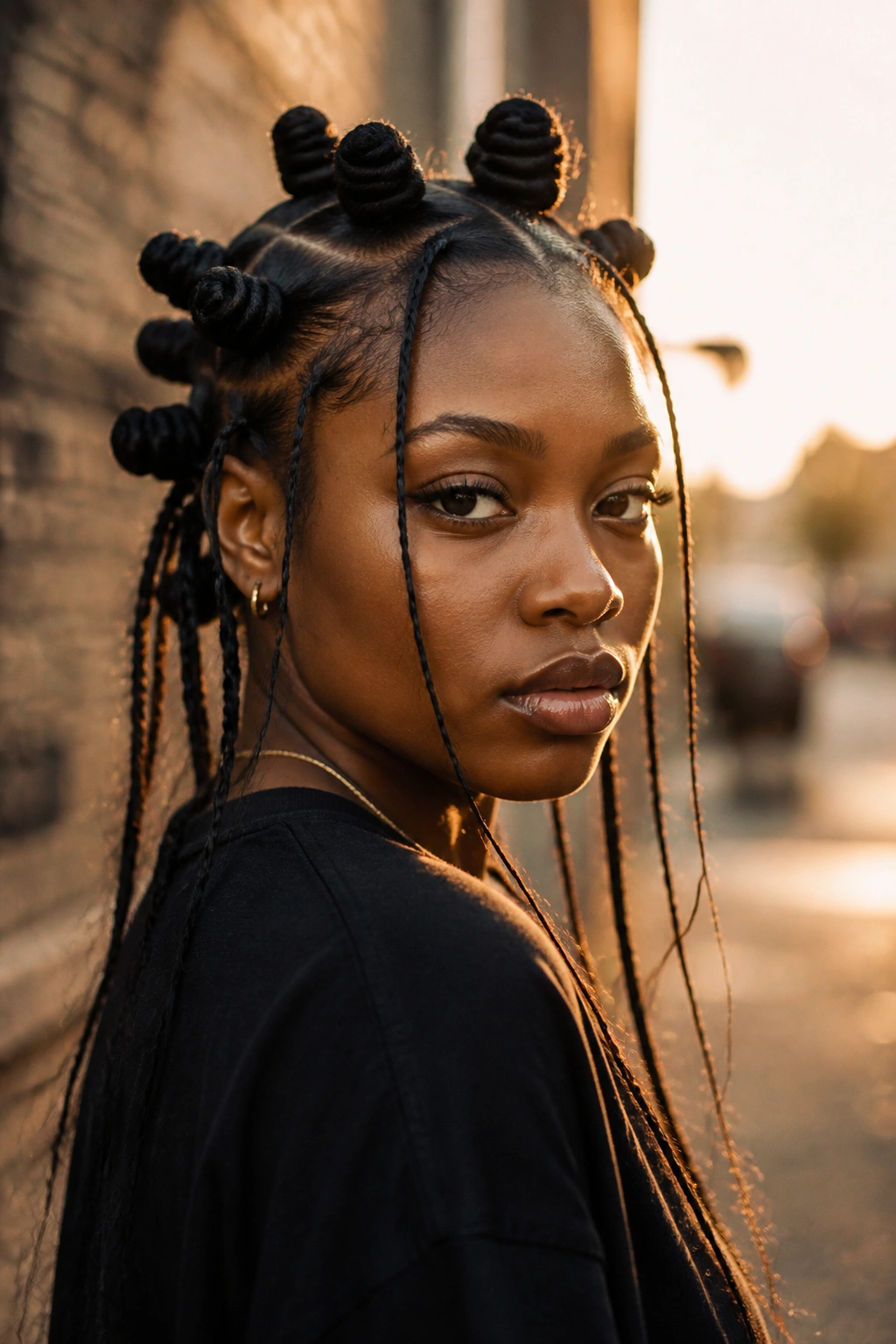
Bantu knots are having a moment, but they’ve never really left. On long hair, they can be worn as a full set, a half-up look, or a style with some length left hanging for contrast. That mix of tight knot shapes and free hair gives the style an edge that feels playful and strong at the same time.
Why the hanging-length version stands out
Full Bantu knots are sculptural. Add hanging length, and the style becomes less rigid and more wearable for everyday life. The contrast between the knots and the loose sections keeps the head shape interesting from every side.
- Keep the knots even in size so the pattern reads cleanly.
- Stretch the loose sections if you want the hanging hair to blend better.
- Use a firm hold product only at the base; the rest should stay soft.
The style is a little more maintenance-heavy than it looks. If the knots are twisted too tightly, they can leave a sore scalp. If they are too loose, they unravel. There is a sweet spot, and it’s narrower than most people expect.
21. Half-Up, Half-Down with Curly Ends
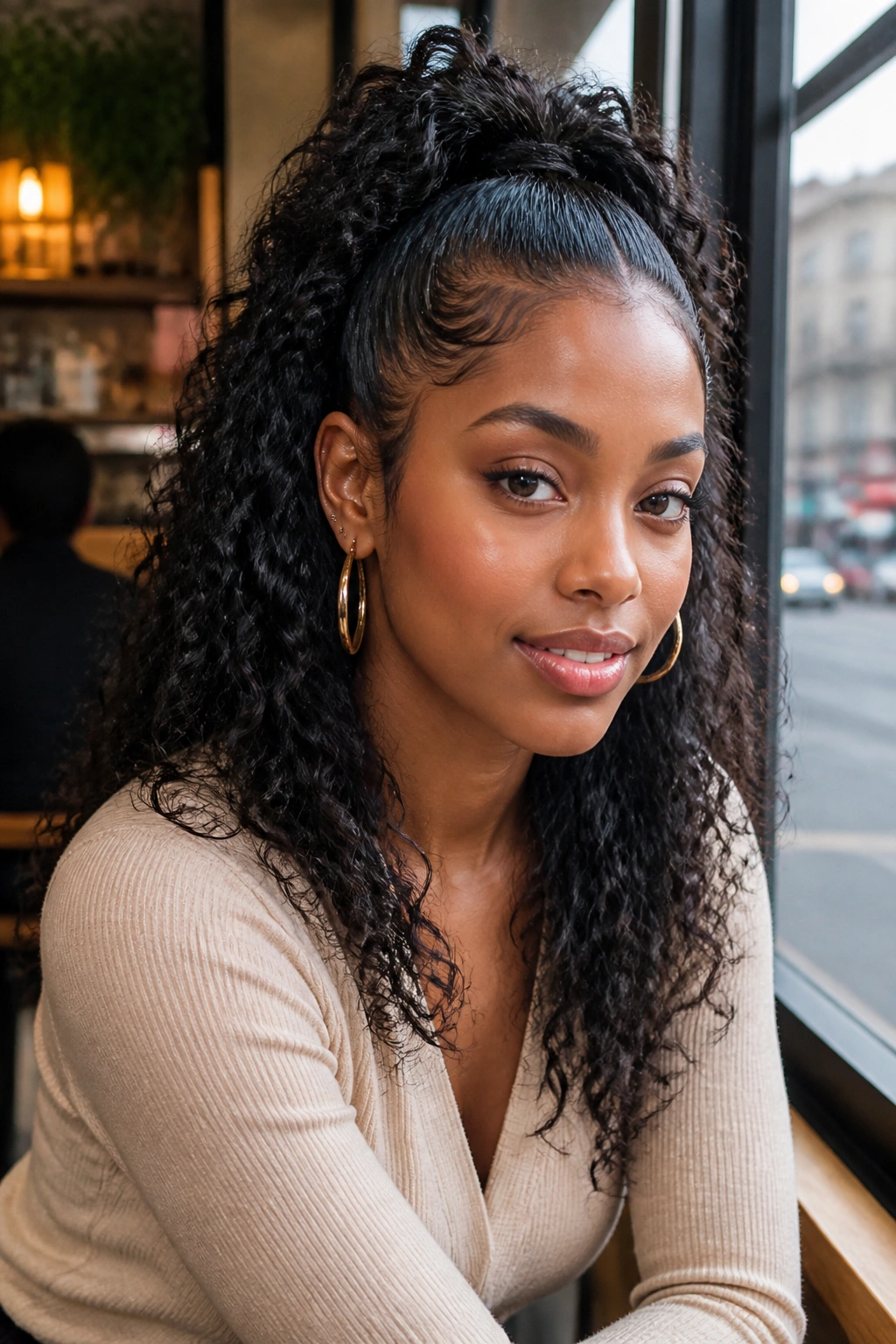
Half-up, half-down styles work beautifully on long hair because they let you show length without dealing with all of it at once. Curly ends give the style movement, and the pulled-up top section keeps the face open. It is one of those looks that can go casual or dressed-up depending on how neat the top half is.
The curly ends matter more than people think. They break up the long vertical line, which stops the style from looking too heavy. If the hair is natural, you can create the effect with a twist-out, braid-out, or defined curls. If it is an extension style, soft barrel curls or flexi-rod ends do the job.
A good half-up style should not feel like a compromise. It should feel like the most useful version of long hair on a given day. Pin the top section too tight and it loses softness. Leave it too loose and the style slides. Keep enough tension to hold, but not enough to pull.
22. Silk Press with Flipped Ends
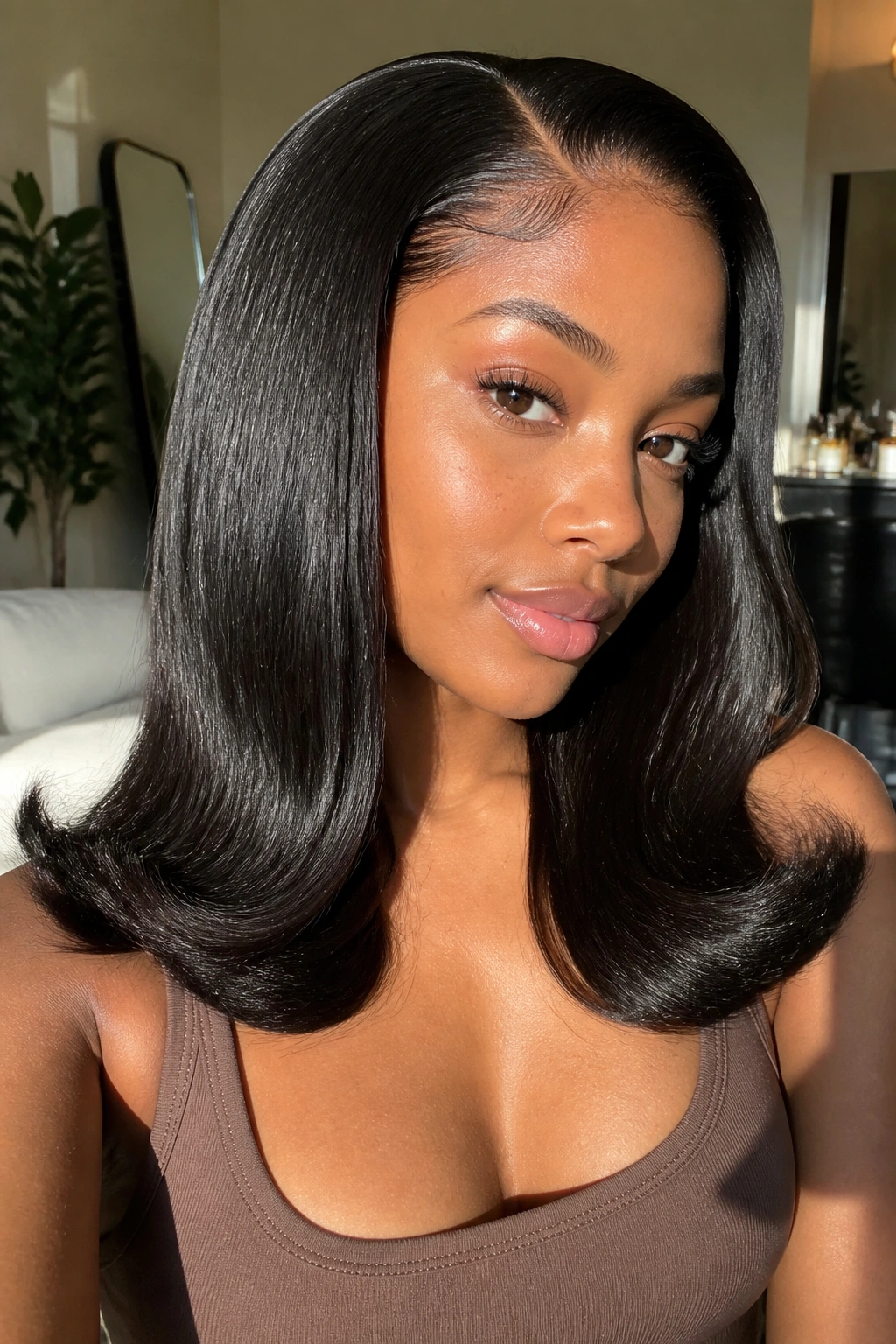
A silk press with flipped ends is one of the cleanest ways to show off length on Black hair when heat styling is on the table. The straight finish reveals every inch, and the flipped ends keep it from looking flat or severe. That tiny bend at the bottom changes the whole mood.
The important part is preparation. Heat protectant is not optional, and the hair needs to be thoroughly dry before the pressing begins. Any leftover dampness can make the result puffy or uneven. Long hair also needs sections that are small enough for the heat to reach evenly. Big sections are where people get frustrated, because the outside looks smooth while the inside stays bulky.
Humidity is the obvious enemy here. A silk press can look beautiful and still be high-maintenance if the weather is doing too much. That’s fine. Just know what you’re signing up for. If you want a style that keeps a crisp outline for days, the silk press rewards careful wrapping and quick hands.
23. Straight Sew-In with Layers
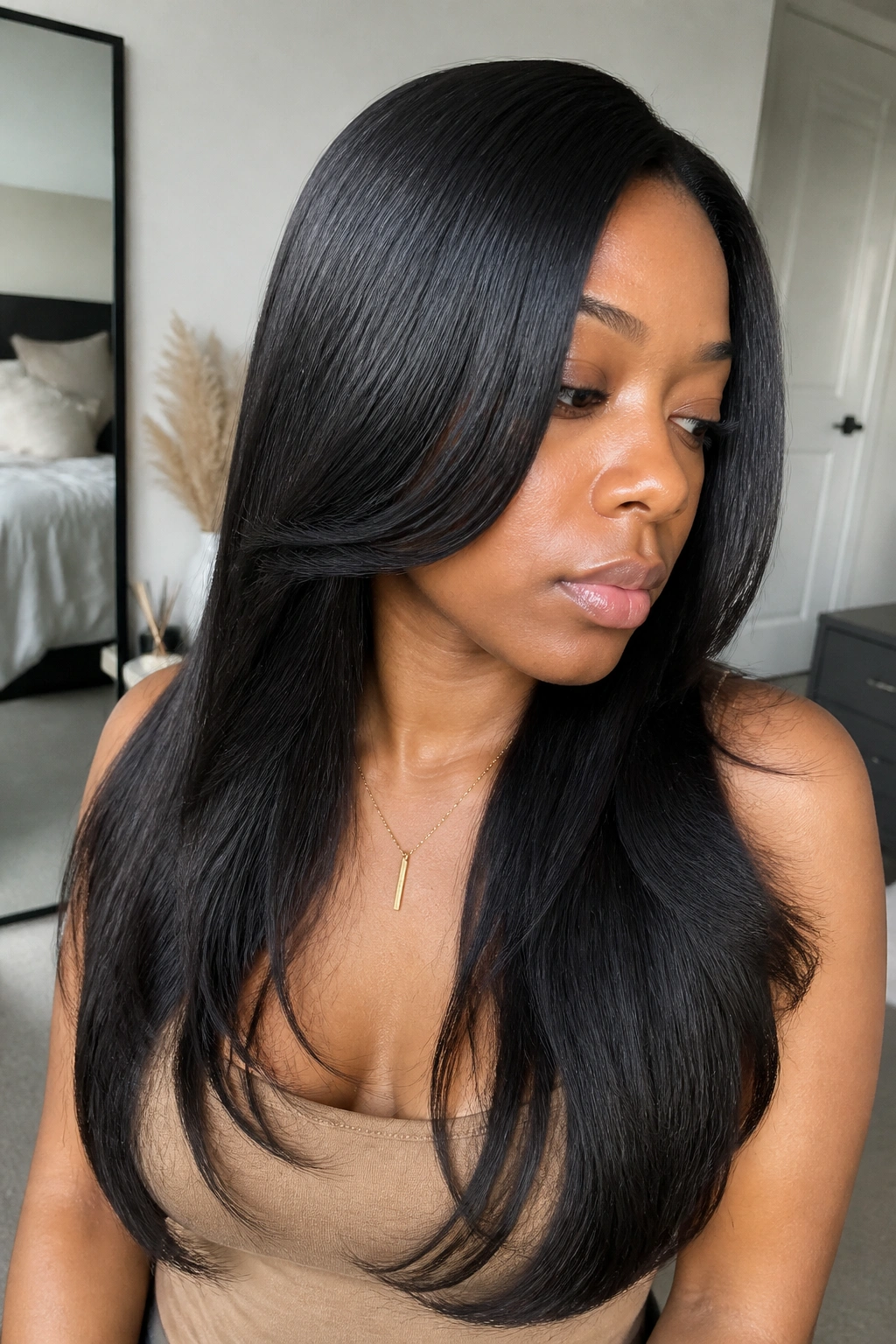
A straight sew-in with layers gives long hair a controlled, glossy shape without asking your own leave-out to do all the work. The layered finish keeps the lengths from hanging like one blunt curtain, which is a common problem with straight installs that are cut too evenly. Layers make the hair swing.
What I like here is the consistency. Once the install is set and the part is clean, the style stays neat with far less daily effort than a silk press. You can choose a middle part, side part, or deep side part, and the layers will change how the front falls around the face. That part matters. The wrong cut can make the whole install look heavy at the ends.
A good sew-in should blend enough to look like one smooth shape, but not so much that it starts destroying the leave-out. If your natural hair needs constant flat-ironing to match, the style can become a lot of work. A closure or frontal solves some of that, though it changes the feel of the install.
24. Deep Side-Part Curly Weave
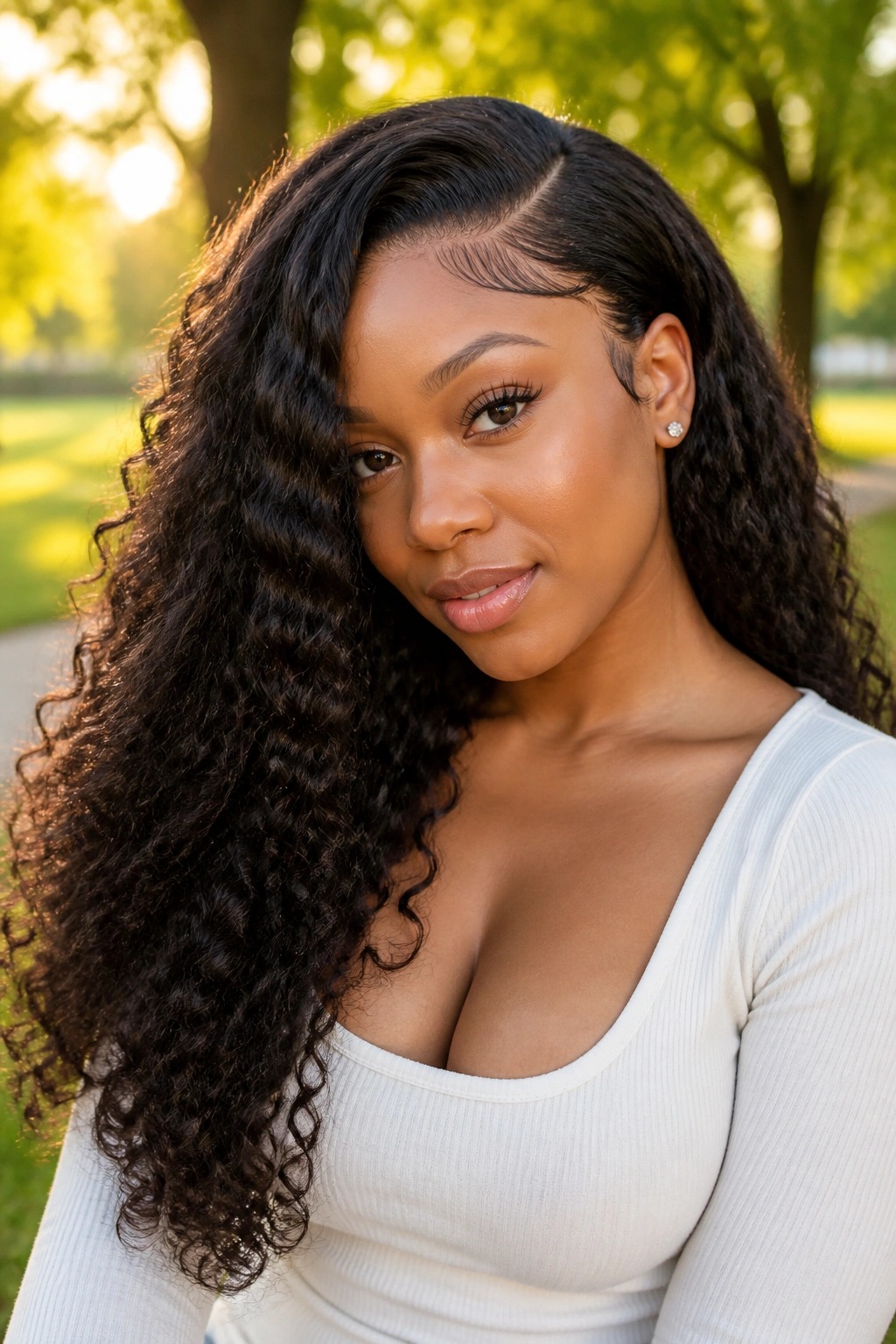
Deep side-part curly weave is pure volume, and on long hair it can be a lot of fun. The side part gives the curls direction, while the length gives them room to spread out instead of piling up around the face. When the curls are soft and layered, the style has movement from the root to the ends.
This one is less about neatness and more about shape. A deep part creates instant lift on one side, which means the curls can frame the face in a flattering way without getting too symmetrical. If the curls are too tight, the style can look busy. If they are too loose, the shape drops. You want a curl pattern that holds but still bends when you touch it.
- Choose a curl size that matches your face shape.
- Keep a wide-tooth comb away from the ends unless you want big frizz.
- Refresh with foam and finger shaping, not a heavy cream that collapses the pattern.
It’s one of those styles that looks best when you stop overhandling it. Touch less. Let it sit.
25. Bubble Ponytail on Long Hair
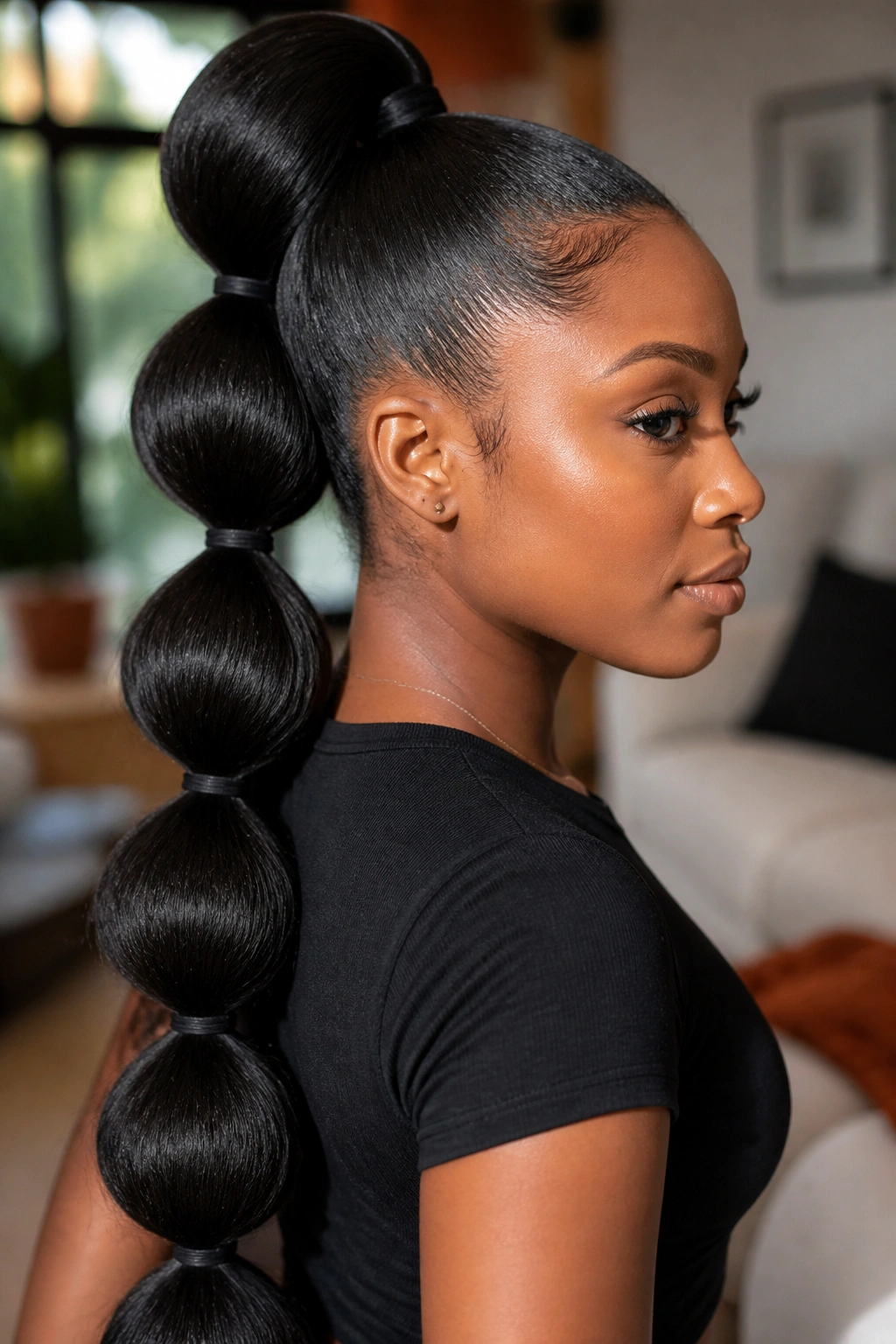
A bubble ponytail is the sort of style that turns length into a feature instead of just a measurement. The base stays smooth, then the ponytail gets segmented with ties every few inches, creating little rounded sections that look sculpted and playful. On long hair, those bubbles have enough room to stack without looking cramped.
The best part is how much control you get over the final shape. You can make the bubbles tight and even, or leave a little slack for a softer look. Use clear elastics or small wrap ties, and space them about 3 to 4 inches apart if the hair is very long. Too close together and the bubbles lose their shape. Too far apart and the style starts to sag.
This is a strong option when you want something fun but still neat enough to wear out anywhere. It works on stretched natural hair, pressed hair, or extension ponytails. And because the structure comes from the ties, not from perfect texture, it survives a little wear without falling apart. That makes it one of the most practical long-hair looks on the list.
