



A side ponytail on long hair can look lazy or expensive depending on one thing: where you place it. The best side ponytail hairstyles for long hair do not rely on length alone; they lean on parting, tension, and the way the hair falls over one shoulder. Get those three details right, and even second-day hair starts to look deliberate.
Long hair makes side ponytails a little tricky because the weight pulls down the crown and exposes every crooked section near the elastic. A ponytail set too low can collapse into your coat collar; one set too high can feel fussy unless the crown has enough lift and the ends are shaped. A good side ponytail works with the head shape, not against it.
Placement is the whole game.
Some of these styles are neat and glassy. Others want bend, braids, ribbons, or a little mess. That is the useful part, honestly — each version solves a different problem, whether your roots are flat, your hair is slippery, or you need something that survives a long day without looking wilted by lunch.
1. Sleek Side Ponytail for Long Hair
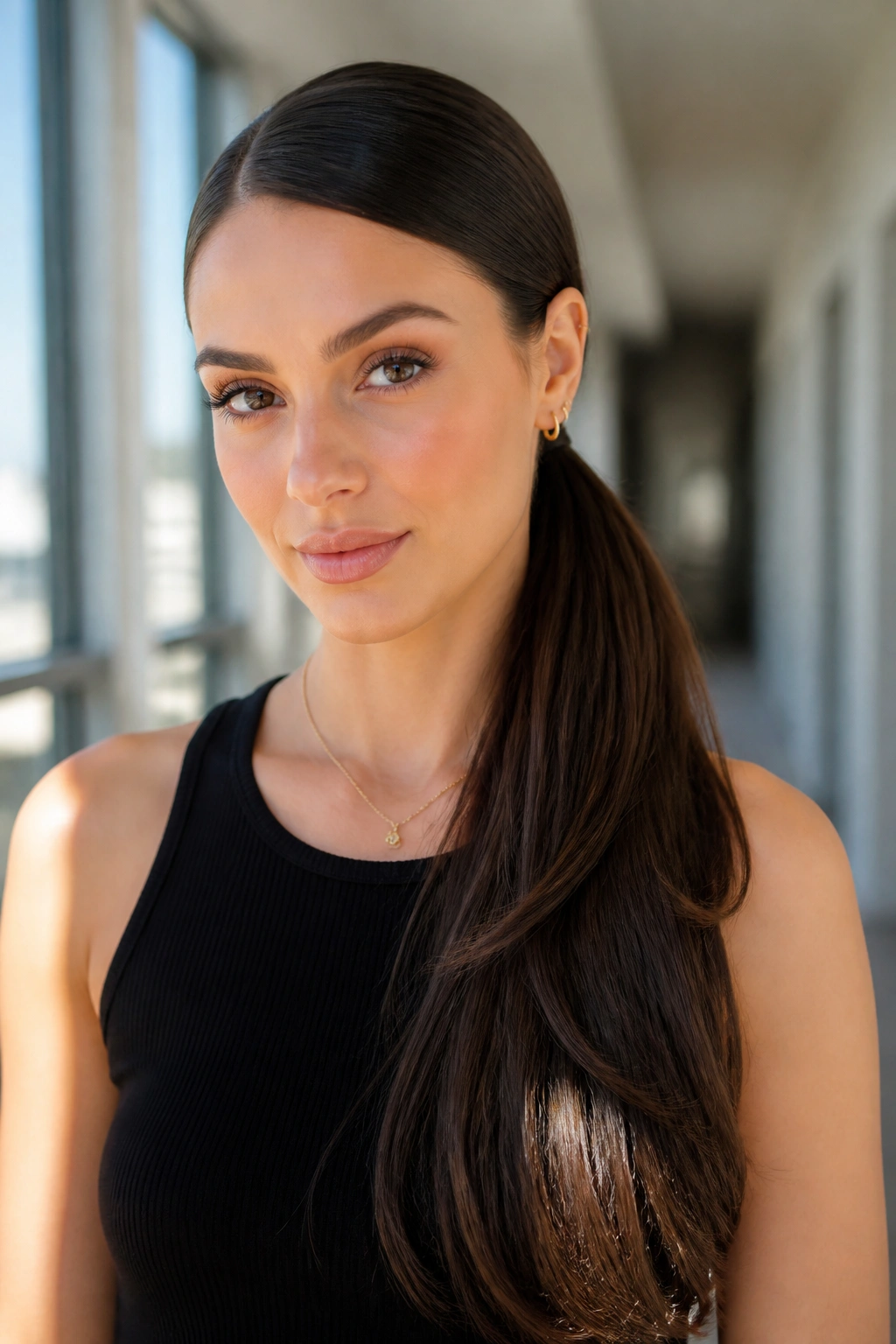
A sleek side ponytail for long hair is the cleanest place to start because it makes long hair look controlled without killing the length. The finish should feel smooth from the part line to the elastic, with the tail lying neatly over one shoulder.
How to Keep It Sharp
Use a fine-tooth comb to draw the part first, then brush the hair toward the chosen side in one direction only. A small amount of smoothing cream on the top layer helps tame flyaways, but don’t flood the roots or the crown will look greasy.
- Place the elastic just behind the jawline, not under the ear.
- Wrap a thin section of hair around the elastic and pin it underneath.
- Run a flat iron over the tail if the ends puff out.
- Finish with a light mist of shine spray from arm’s length.
Best for: polished outfits, straight hair, and days when you want the style to look crisp, not casual. Simple. That’s the appeal.
2. Deep Side Part Side Ponytail
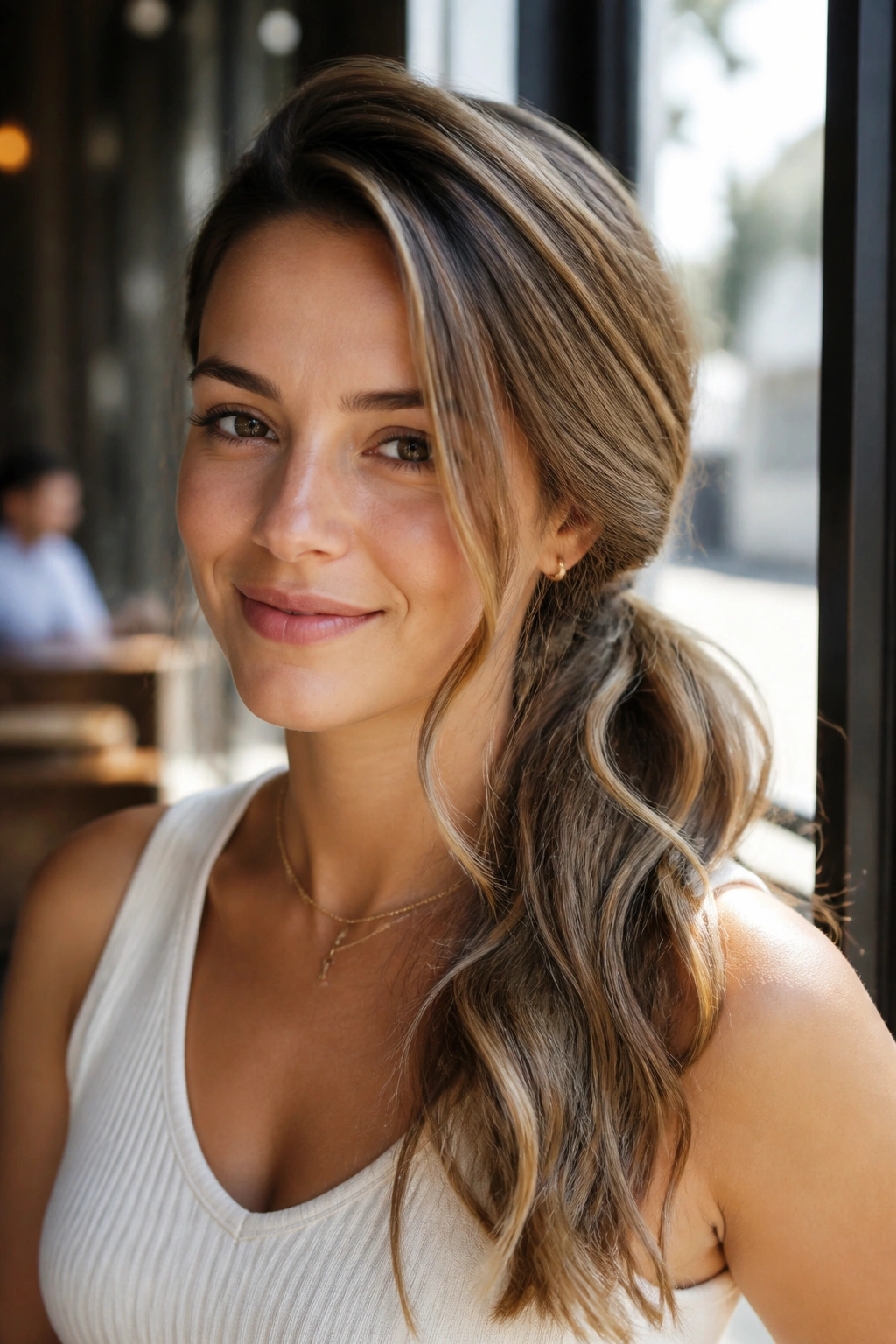
The deep side part changes the whole mood. It gives the ponytail more shape before the tie even goes in, which is why this version works so well when your hair feels a little flat at the roots.
Start the part several inches off center, then comb the heavier side across the forehead without pulling it tight. Gather the ponytail on the same side as the deeper section so the front sweep stays soft instead of looking pinned in place. That little arc across the top does a lot of work.
If your face is round, the deep part creates a longer line. If your face is square, it softens the jaw a bit. And if your hair naturally falls to one side anyway, stop fighting it. Let the hair choose the direction once in a while.
It’s a tiny move. Big payoff.
3. Soft Curled Side Ponytail
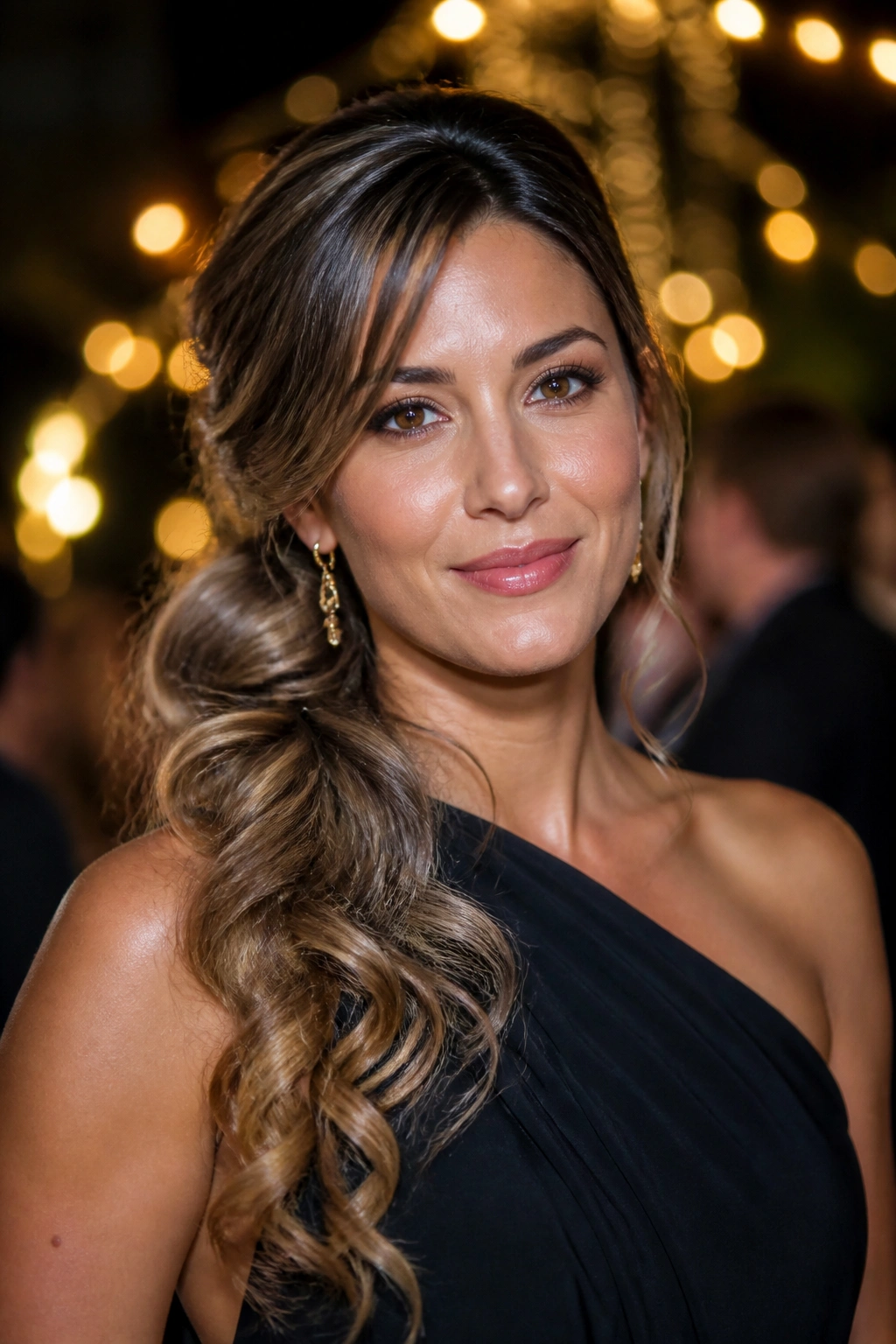
Why do curls make a side ponytail feel more finished? Because the ends move. Straight hair can work, sure, but a soft curl gives long hair that swishy, touchable shape that reads as styled even when the rest of the look stays simple.
Curl Direction Matters
Curl the sections away from your face with a 1-inch curling iron, then let the curls cool fully before you brush them out. If you skip the cooling step, the shape falls apart faster and the tail loses its body.
A good trick is to leave the first 2 inches near the roots straighter, then start the bend below that. It keeps the crown from puffing up too much and stops the ponytail from looking like a cloud.
A soft side ponytail like this works especially well for date nights, dinners, and event photos because the curve of the hair catches light in a natural way. Not stiff. Not overdone. Just enough movement to keep the shape alive.
4. Braided Side Ponytail
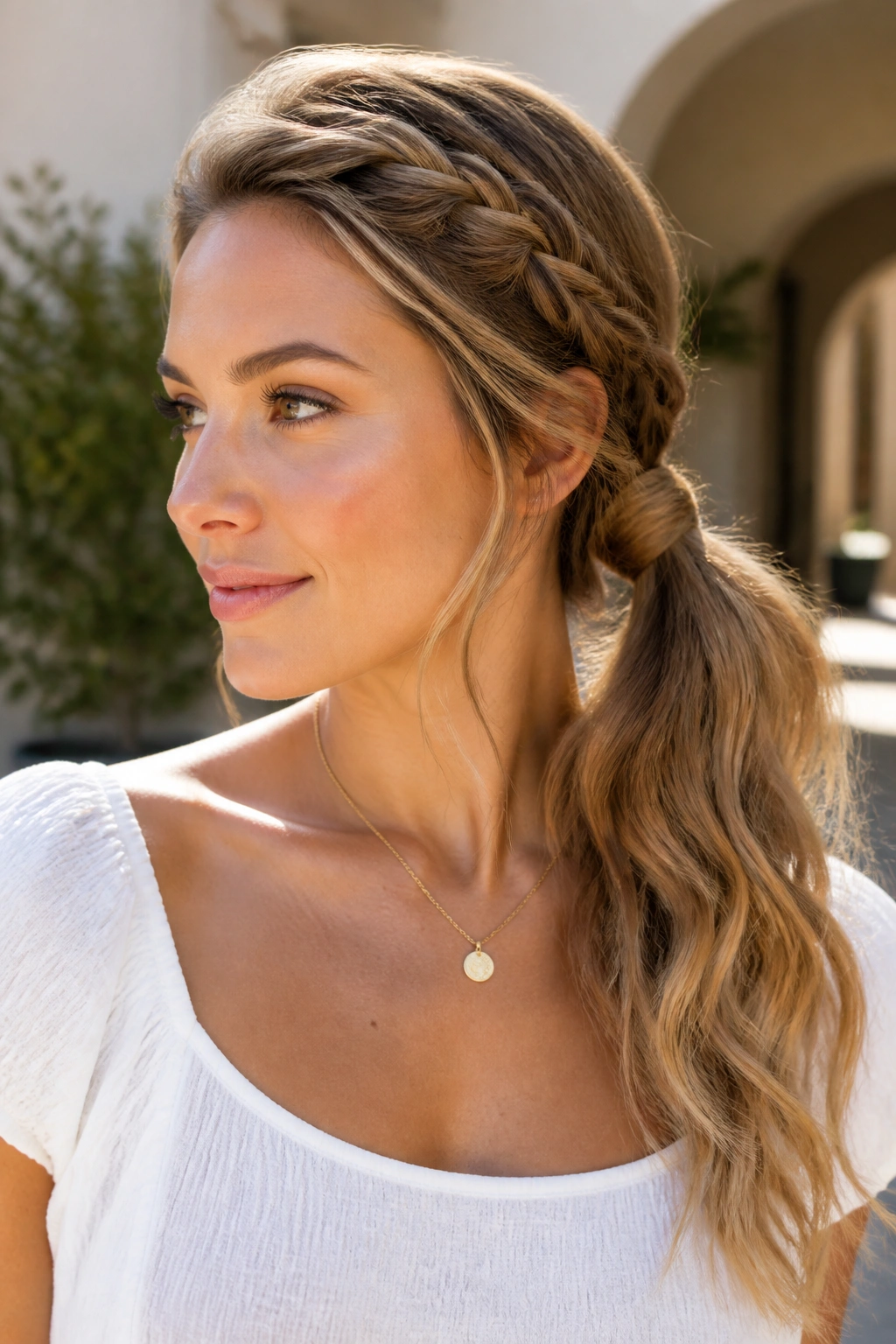
Wind, commuting, and slippery hair all push me toward a braid. A braided side ponytail holds longer than a loose tail, and long hair gives you enough length to make the braid look full instead of skinny.
You can braid the full ponytail once it’s gathered, or start with a small braid from one temple and feed it into the side tail. The second version looks a little softer around the face, which I prefer when the rest of the hair is smooth.
- Use a clear elastic first, then braid the tail.
- Keep the braid loose enough to pancake gently with your fingers.
- Secure the end with a second elastic so the braid does not unravel.
- Pull a few strands loose near the ear if you want less severity.
What I like here is the balance: the front stays neat, but the braid gives the style some grip and texture. It is one of the easiest side ponytail hairstyles for long hair when you need the look to survive weather and movement.
5. Bubble Side Ponytail
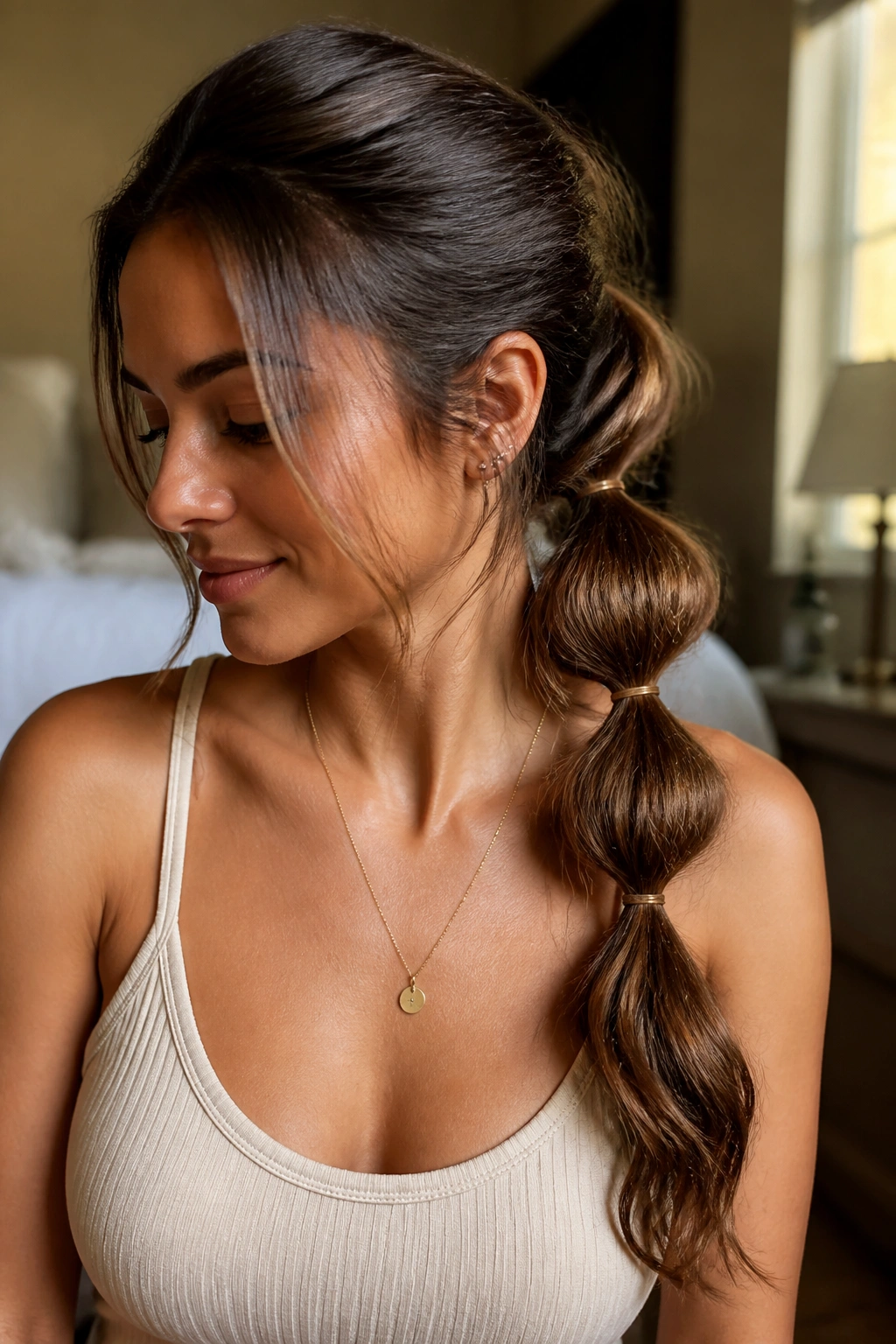
A bubble side ponytail looks playful, but it also solves a real problem: very long hair can sag when it hangs from a single elastic. The bubbles break up the weight, so the ponytail keeps its shape instead of dropping into one heavy rope.
Start with a side ponytail tied securely at your chosen spot. Then add small clear elastics every 2 to 3 inches down the tail, spacing them evenly all the way to the end. Gently tug each section outward to form rounded puffs, but stop before the hair starts to look over-stretched.
No braid required. That’s the charm.
This style works especially well when the hair is thick or very straight, because the bubbles give the tail more life without needing a lot of heat. It also looks good with sleek roots, which makes the contrast a little sharper and cleaner than people expect.
If you want it to feel less youthful, use elastics that match your hair color and keep the bubbles modest rather than oversized.
6. Twisted Side Ponytail
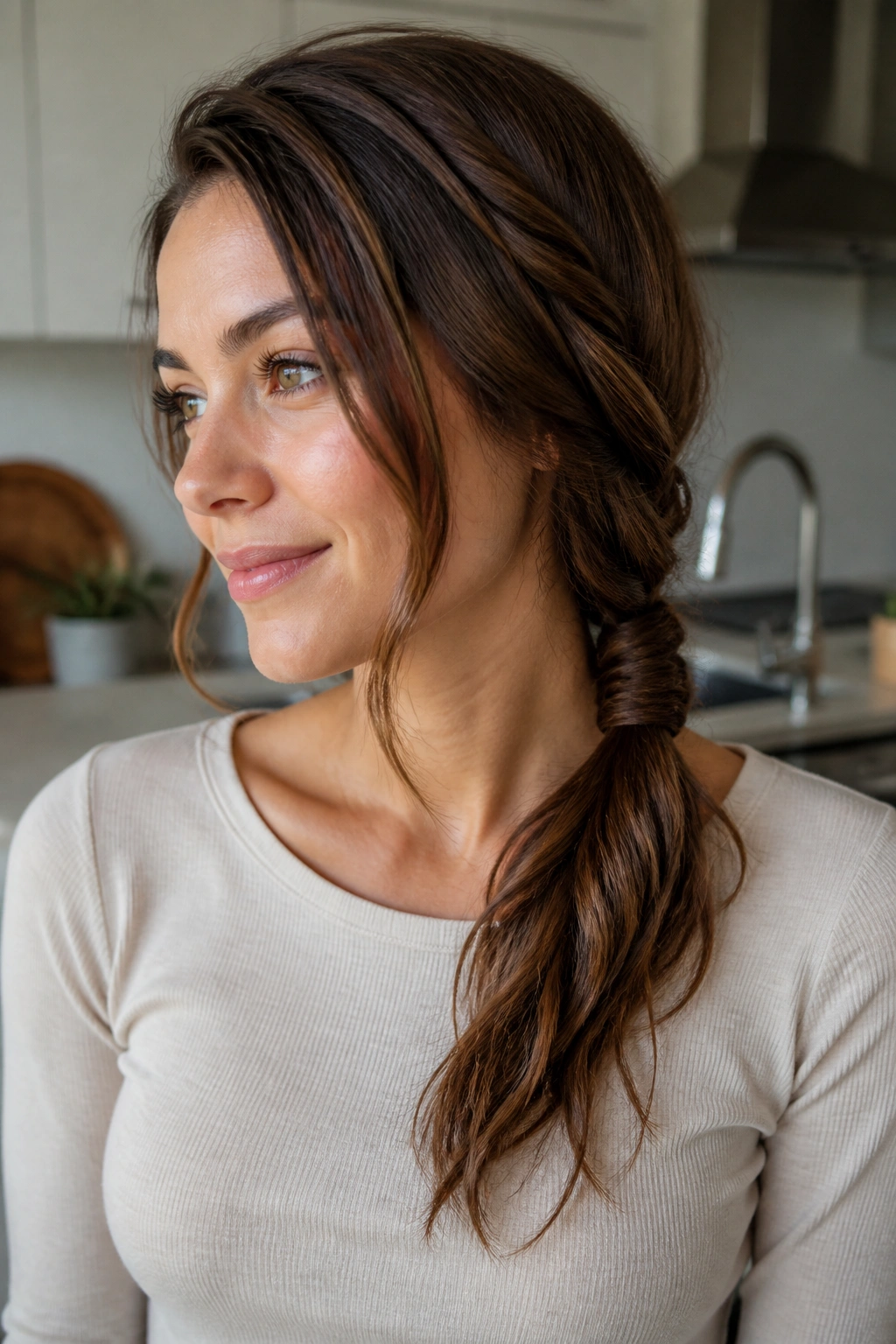
Unlike a braid, a twisted side ponytail reads softer and takes less time. It is a smart pick when you want texture but do not want to sit there weaving sections for ten minutes.
Divide the hair into two sections, twist them separately toward the same direction, then twist those two pieces around each other before gathering everything to one side. The motion creates a rope-like effect that still feels relaxed. On long hair, the twist shows best when the sections are even and the tension stays steady.
Who It Suits Best
This style is especially good for fine hair because the twist adds shape without demanding a ton of density. It also works on hair that is in-between clean and day-two, which is the state most of us live in more often than we admit.
Keep the twist slightly loose near the front so it does not pull the hairline back too hard. Then let the tail fall forward over one shoulder. It looks calm, quick, and a little softer than a braided version.
7. Wrapped-Base Side Ponytail
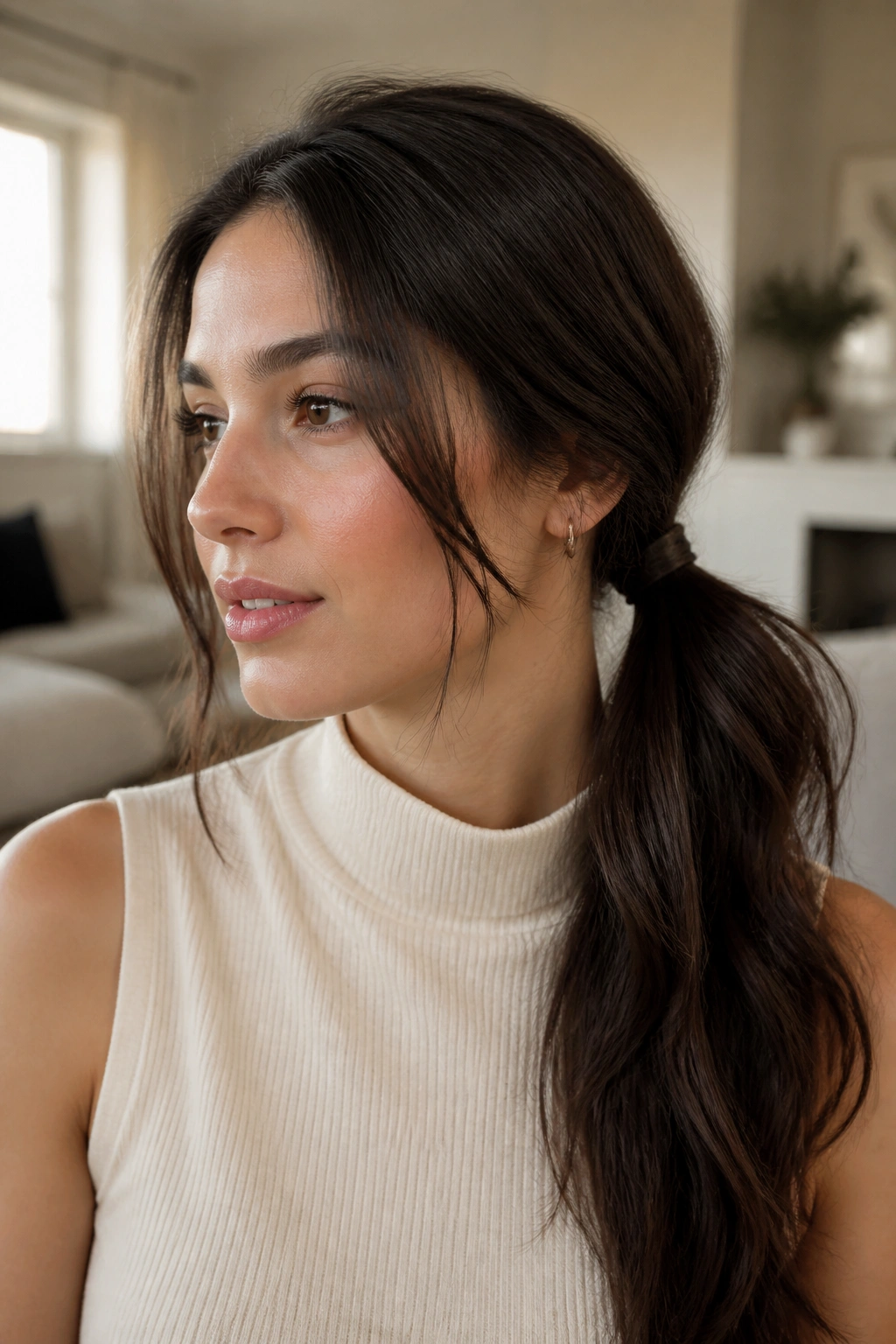
A wrapped base is the cheapest way to make a ponytail look deliberate. One thin strip of hair wrapped around the elastic hides the hardware and gives the whole style a cleaner finish, which matters more than people think.
The Hidden Detail
Take a section of hair about 1/2 inch wide from under the ponytail, smooth it flat, and wrap it around the elastic until the band disappears. Pin the end underneath the ponytail with a bobby pin that matches your hair color. If your hair is slippery, cross two pins in an X shape so the wrap stays put.
This style is nice because it works with almost any texture. Straight hair looks sharper. Wavy hair looks softer. Curly hair gets a nice contrast between the controlled base and the fuller tail.
It is a small fix, but the visual payoff is real. The eye stops seeing the tie and starts seeing the shape.
8. High Side Ponytail with Volume
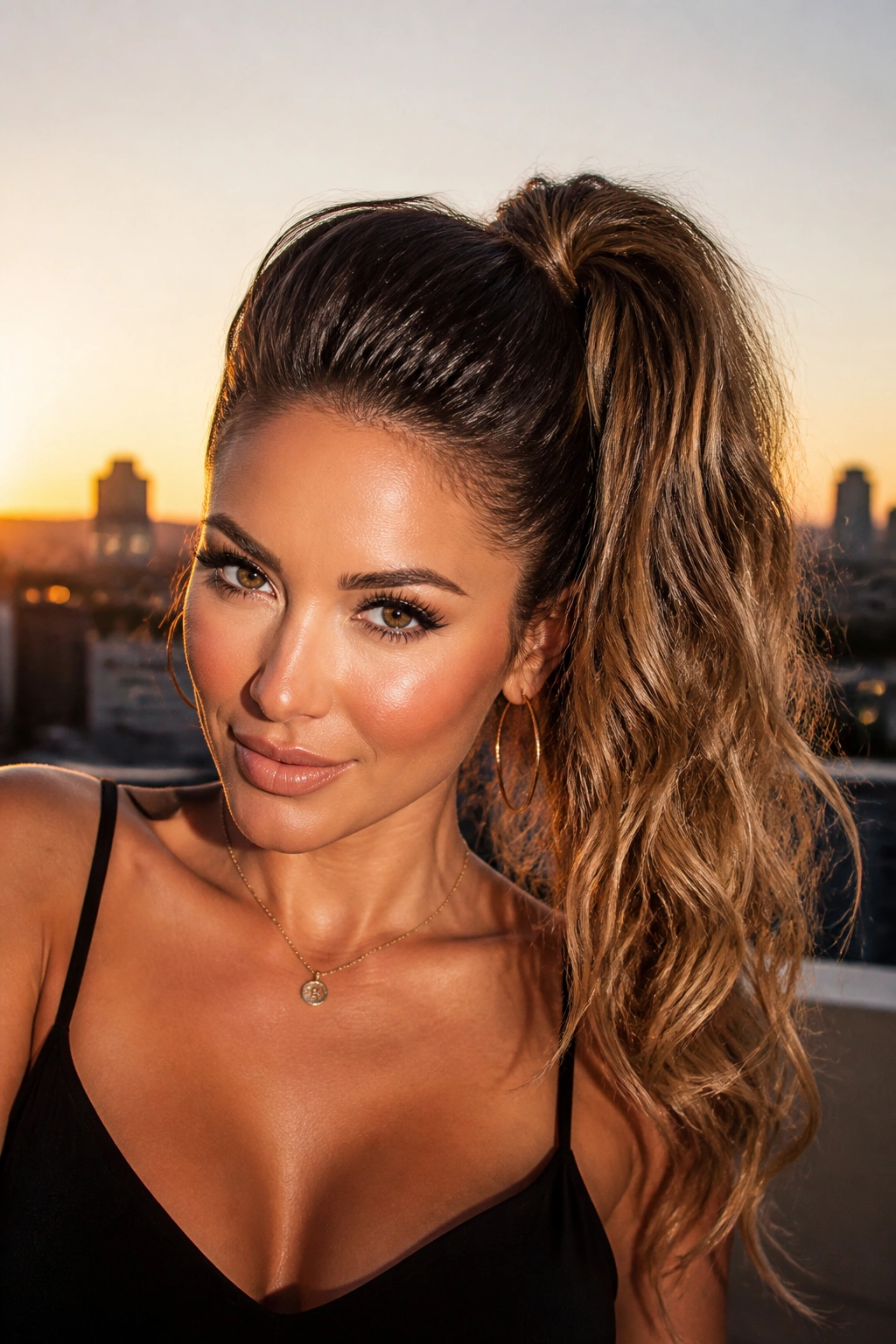
A high side ponytail with volume is the bolder cousin in the family. It lifts the hairline, opens the face, and keeps long hair from dragging everything downward.
Tease the crown lightly at the roots, then smooth only the outer layer so the height stays soft rather than puffy. Gather the ponytail near temple level on one side, not at the back of the head. That placement keeps the style energetic and a little dramatic without turning it into a cheerleader moment.
Flat roots kill this look. If your crown lays down too quickly, mist a little texturizing spray underneath before you lift the hair. It gives the elastic something to grip, which makes the ponytail sit higher and last longer.
This is a good option for nights out or outfits with a strong neckline. The higher point lets the tail swing more freely, and long hair gets the room it needs to move.
9. Messy Textured Side Ponytail
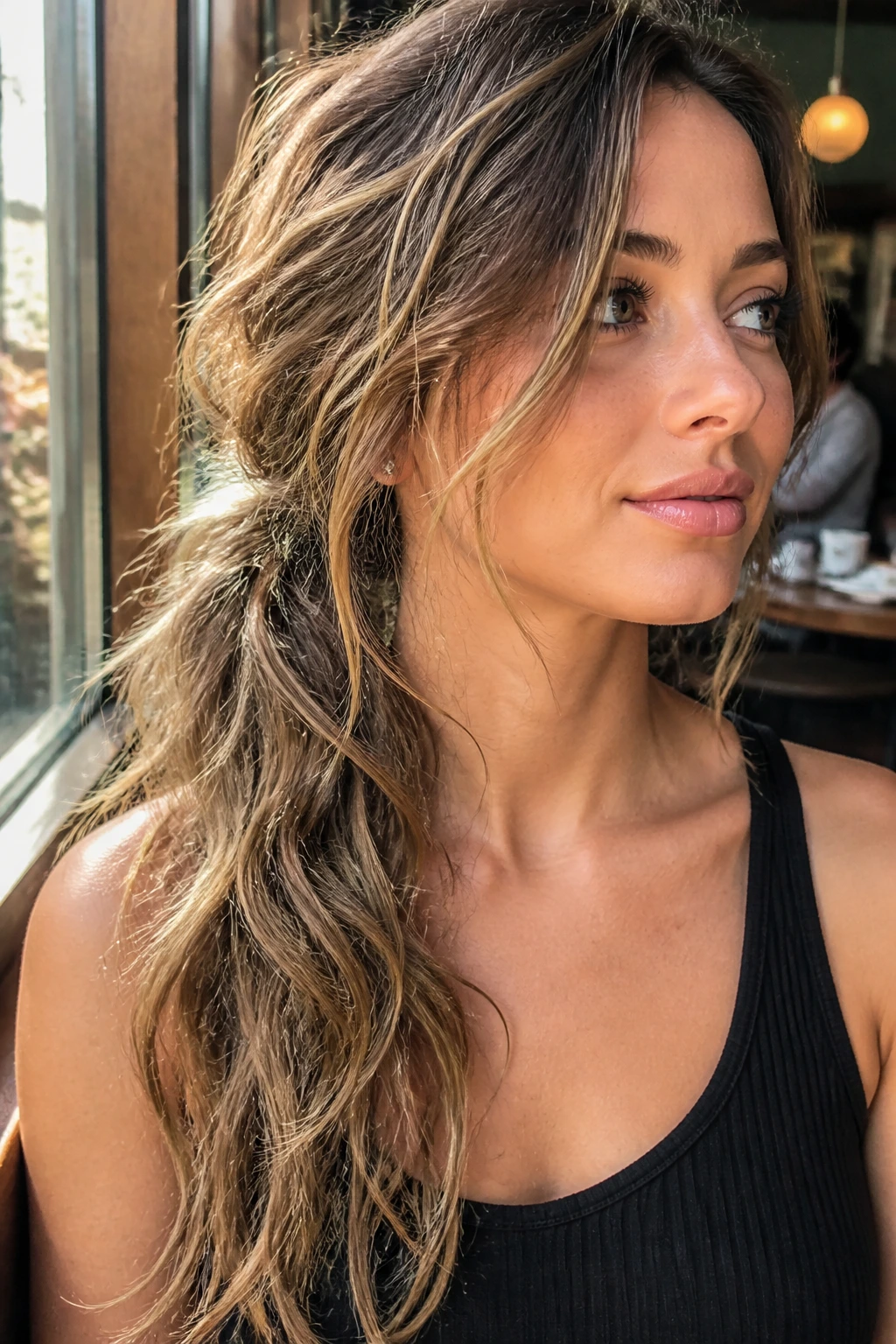
Messy does not mean careless. A messy textured side ponytail still needs shape, or it ends up looking like you gave up halfway through the mirror.
Start by adding bend through the mid-lengths with a flat iron or curling wand, then rake the hair with your fingers instead of brushing it out completely. Gather it loosely to one side, leaving a few pieces around the face and some lift at the crown. A light texture spray on the lengths helps the pieces separate instead of clumping together.
You want the surface to look touched, not stiff. That means skipping heavy hairspray until the very end, and even then using only enough to keep the front from frizzing.
This version is nice when you want a side ponytail that feels casual but not sloppy. It works with jeans, knits, and loose dresses because the texture keeps the style from looking too severe.
10. Ribbon-Tied Side Ponytail
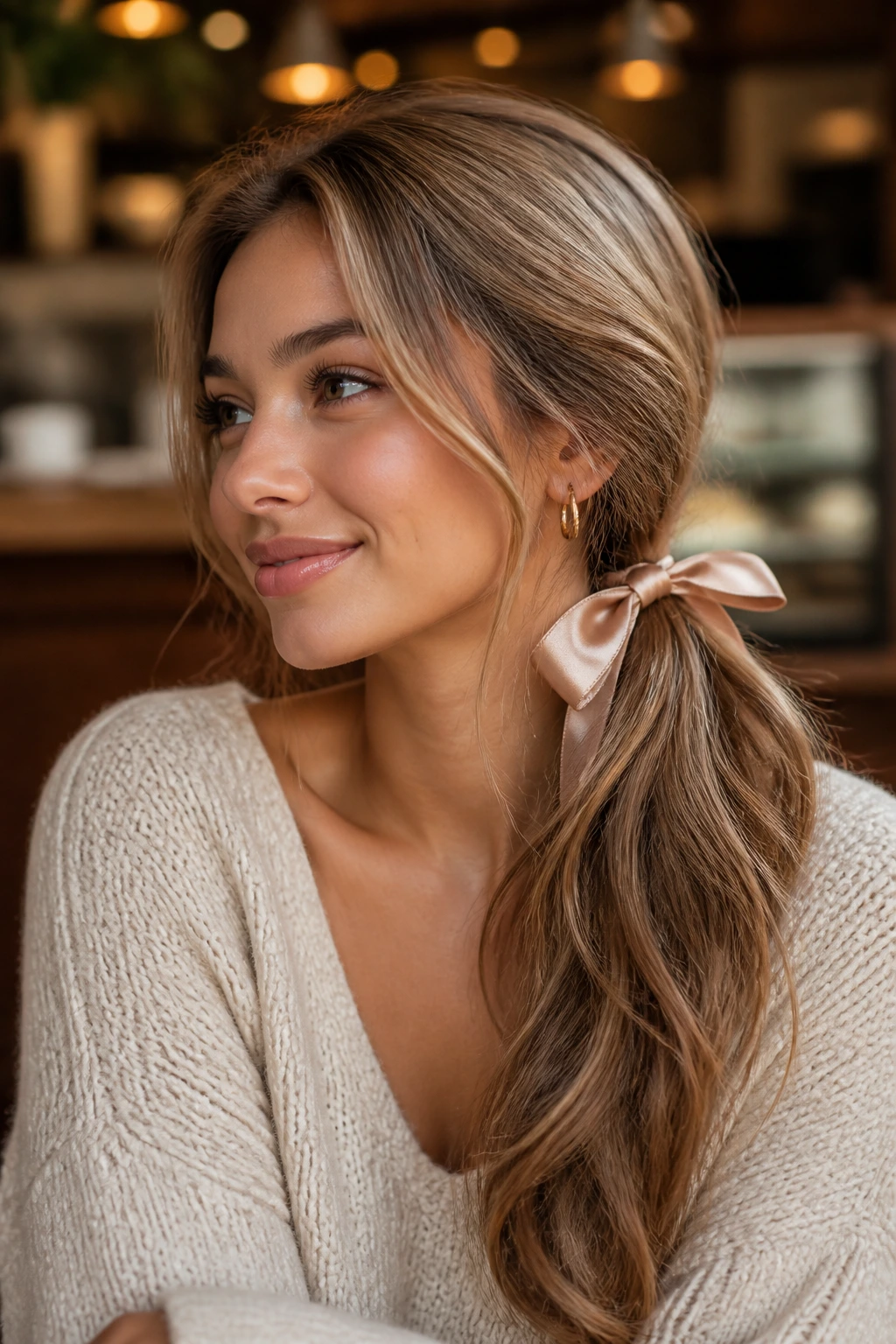
A 1-inch ribbon can change the whole feel of a side ponytail. Ribbon-tied styles add color, softness, and a little old-school charm without needing complicated styling.
Pick a ribbon with enough width to show from the front. Satin gives a smoother, more polished look, while grosgrain has a bit more grip and stays tied better. Tie the ribbon over the elastic, then knot it under the tail so the bow sits where people can actually see it.
- Choose a narrow ribbon for fine hair.
- Use a wider ribbon for thick ponytails.
- Keep the bow slightly off-center so it follows the side placement.
- Let the ribbon tails hang long if you want a more relaxed finish.
This style works for birthdays, lunches, and days when you want the hair to feel a little dressed up without committing to a full updo. It also makes simple straight hair feel intentional fast.
11. Scarf-Wrapped Side Ponytail
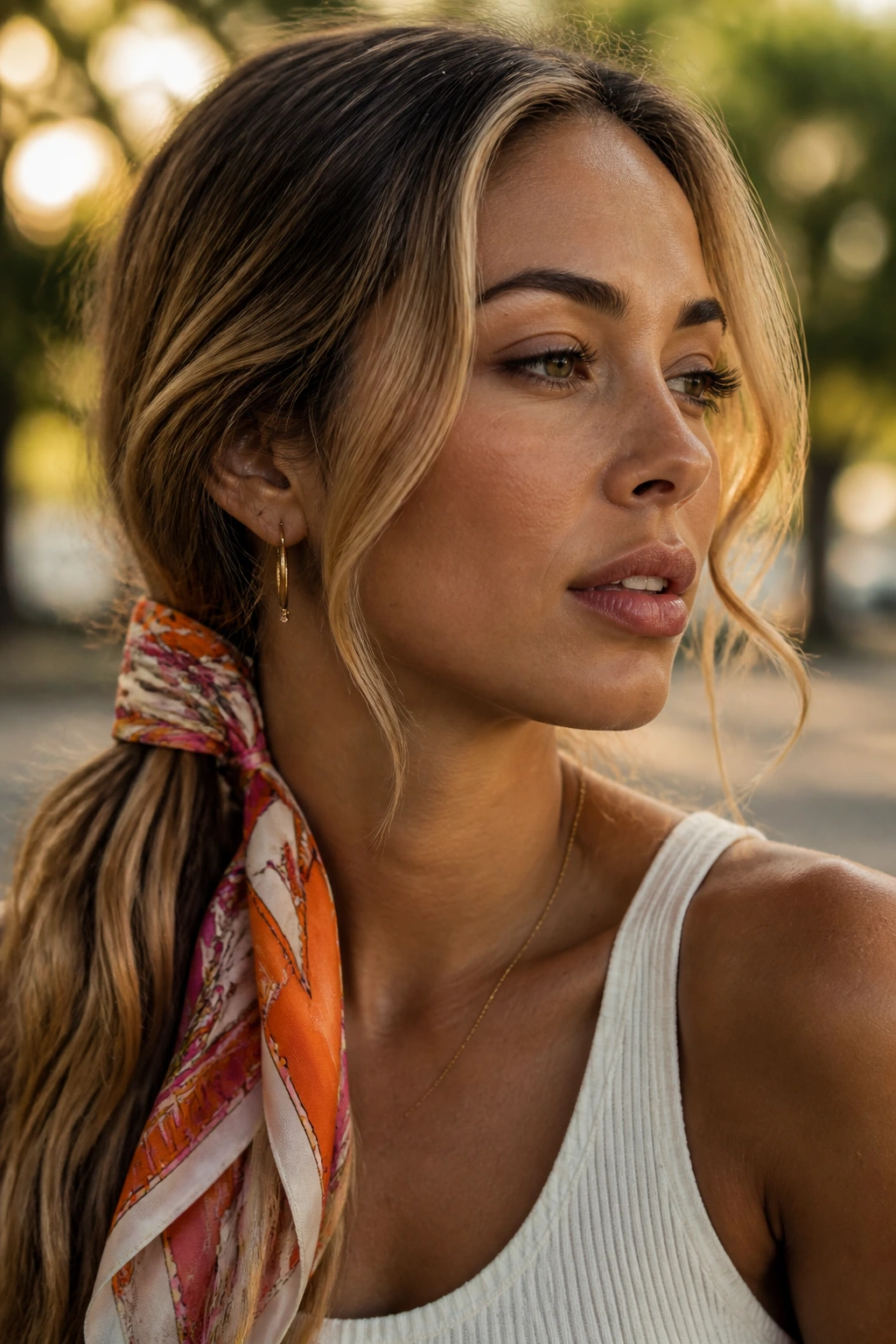
A scarf gives you more color and more coverage than a ribbon, which is why I reach for it when the hair itself is not cooperating. The scarf-wrapped side ponytail hides a lot — a rough elastic, a thin tail, even the mismatch between freshly washed roots and drier ends.
Fold a silk or cotton scarf into a long strip, then wrap it around the base of the ponytail once or twice before tying it into a knot. If the fabric is slippery, secure the ponytail with a small elastic first and use the scarf as the visible layer on top.
The best part is the movement. As the hair shifts over one shoulder, the scarf breaks up the shape in a way that feels relaxed but still styled. It works especially well with loose waves, though straight hair can look sharp with it too.
Keep the scarf ends shorter if you want the look to stay clean. Long trailing tails are fun, but they are not always practical.
12. Fishtail Side Ponytail
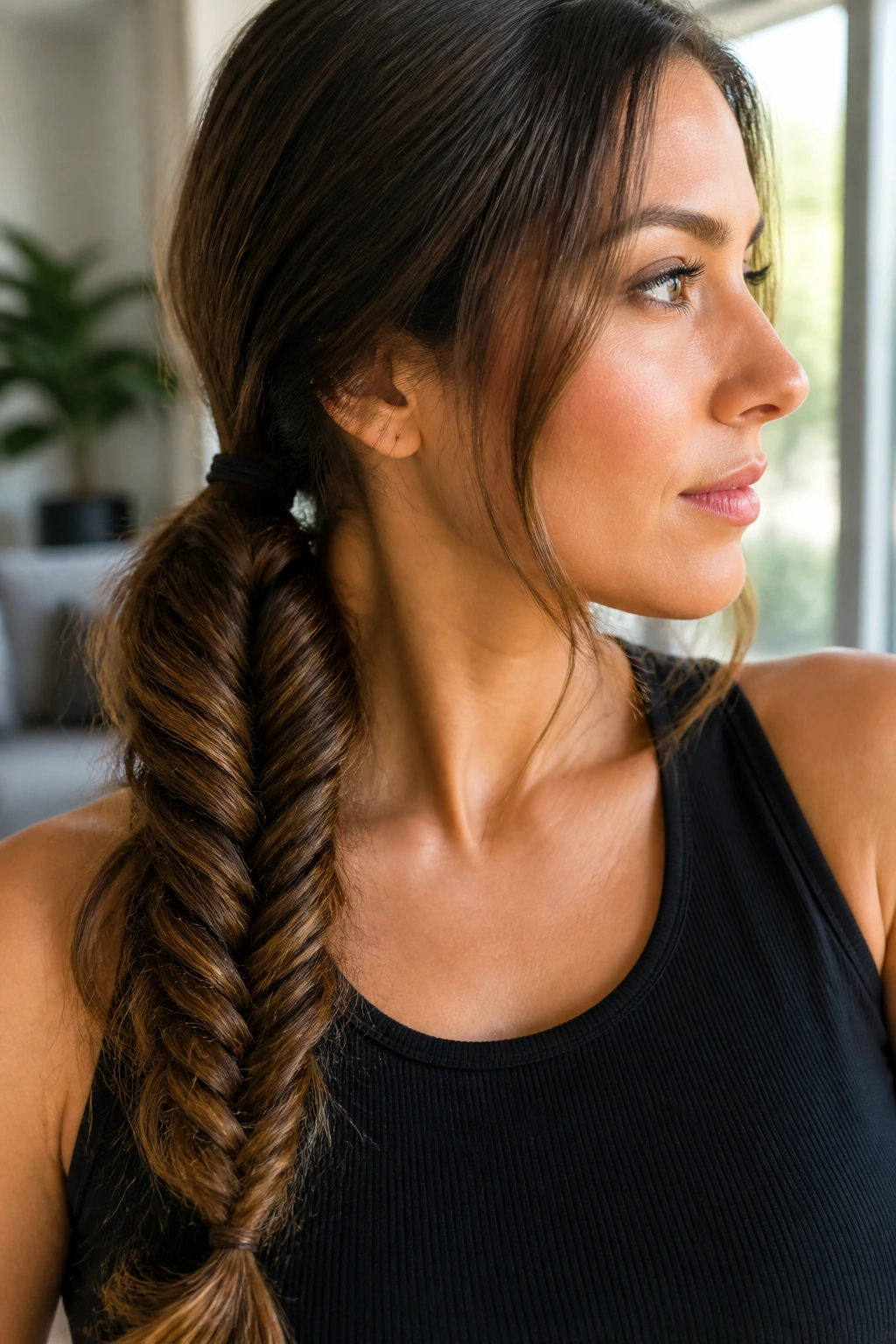
Why does a fishtail braid make a side ponytail look more dressed up? The weave is narrower, tighter, and more detailed than a regular braid, so the eye keeps finding new lines inside it.
Start the fishtail just below the elastic rather than braiding all the way from the top. That keeps the crown smoother and avoids a bulky knot near the side of the head. Split the tail into two sections, then pull tiny pieces from the outer edge of each side and cross them over. Small sections matter here. Big ones turn messy fast.
How to Keep It Tidy
- Use slightly textured hair so the braid grips better.
- Tighten the first 4 to 5 passes more firmly than the rest.
- Pancake the braid only after you have tied the end.
- Stop pulling if the braid starts to look fuzzy.
This is one of those side ponytail hairstyles for long hair that looks more complicated than it is. Once your fingers learn the pattern, it becomes oddly satisfying.
13. Half-Braid Into Side Ponytail
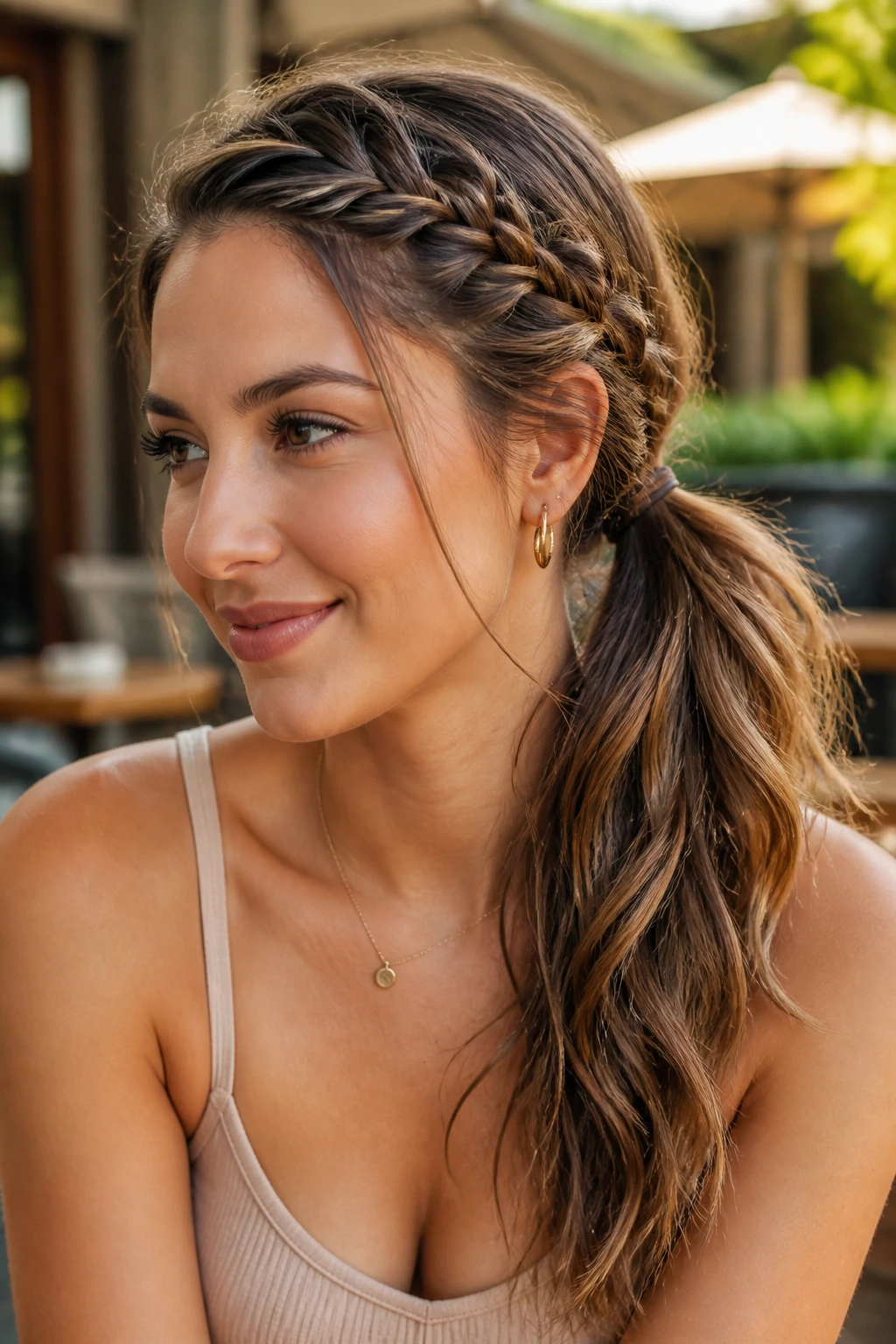
A half-braid into a side ponytail is the answer when you want braid detail but not a full braided tail. It gives the front section something interesting to do, while the rest of the hair stays loose and full.
Braid one side from the temple or hairline back toward the ear, then gather that braid into the side ponytail with the rest of the hair. The braid acts like a built-in accent, which is handy when the lengths are thick and you do not want to add more layers of styling on top.
This version works especially well on long hair with lots of density because the braid helps control the front without making the ponytail look small. If the ends are uneven, that is not a problem. The looseness at the back hides a lot.
- Braid only the front third for a subtle look.
- Braid farther back for more drama.
- Tie the ponytail low if you want the braid to stand out.
- Add a pin over the braid if your hair slips easily.
14. Side Ponytail with Face-Framing Layers
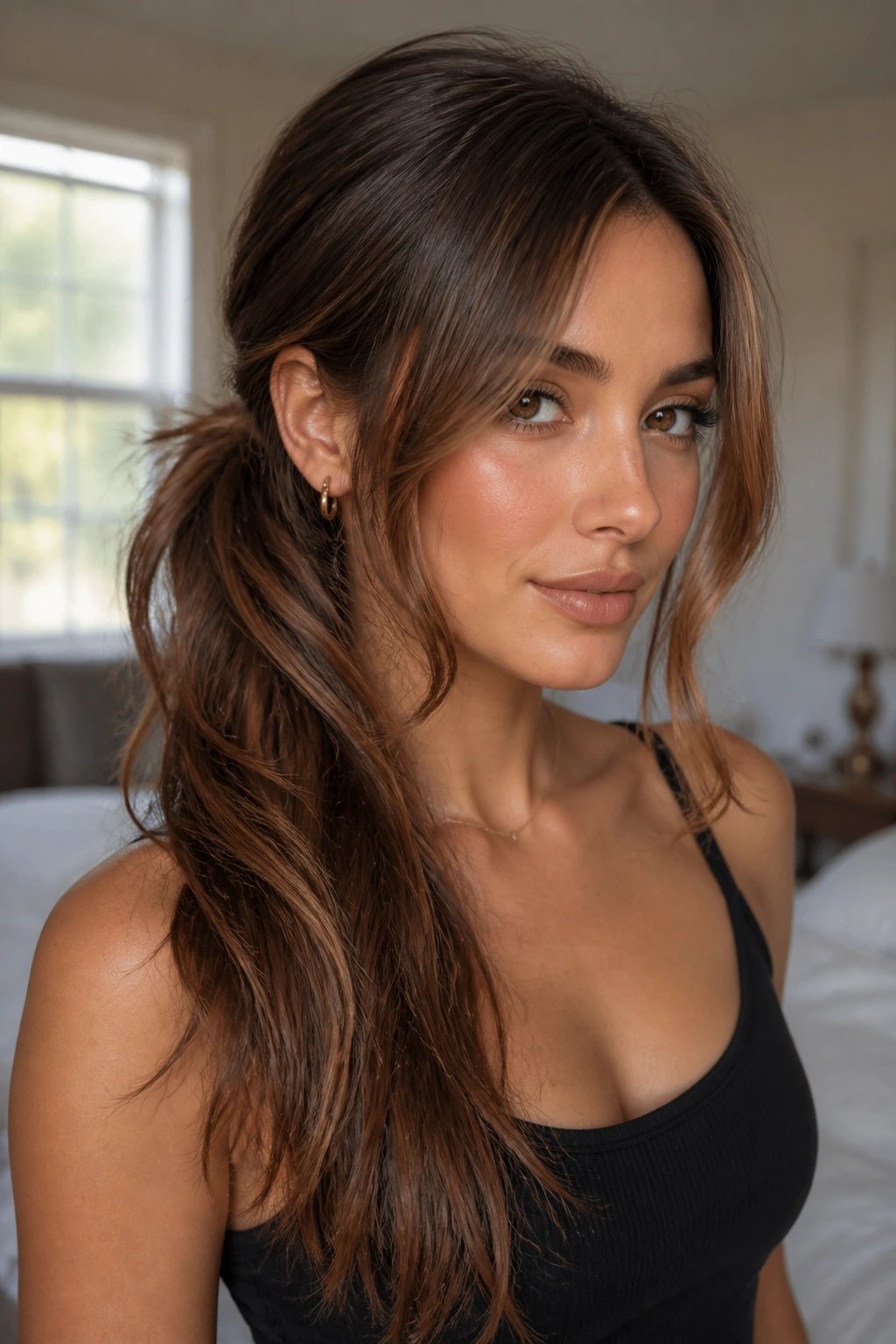
The pieces around your temples change the whole style before the ponytail even settles. Face-framing layers make a side ponytail feel softer, especially on long hair that can otherwise pull straight back and look severe.
Let the shortest pieces fall free around the cheeks, then curl them away from the face with a small iron if you want a lifted curve. The trick is not to overdo those pieces. They should skim the face, not stick out like antennae.
Longer layers can drop into the ponytail itself and create movement where the tail starts. That helps if the rest of the hair is one length and you want a little shape near the front without adding braids or accessories.
This style is useful when you want the ponytail to flatter the face instead of just holding the hair back. It makes a side ponytail feel less like a practical fix and more like a real style choice.
15. Glam Side Ponytail with Waves
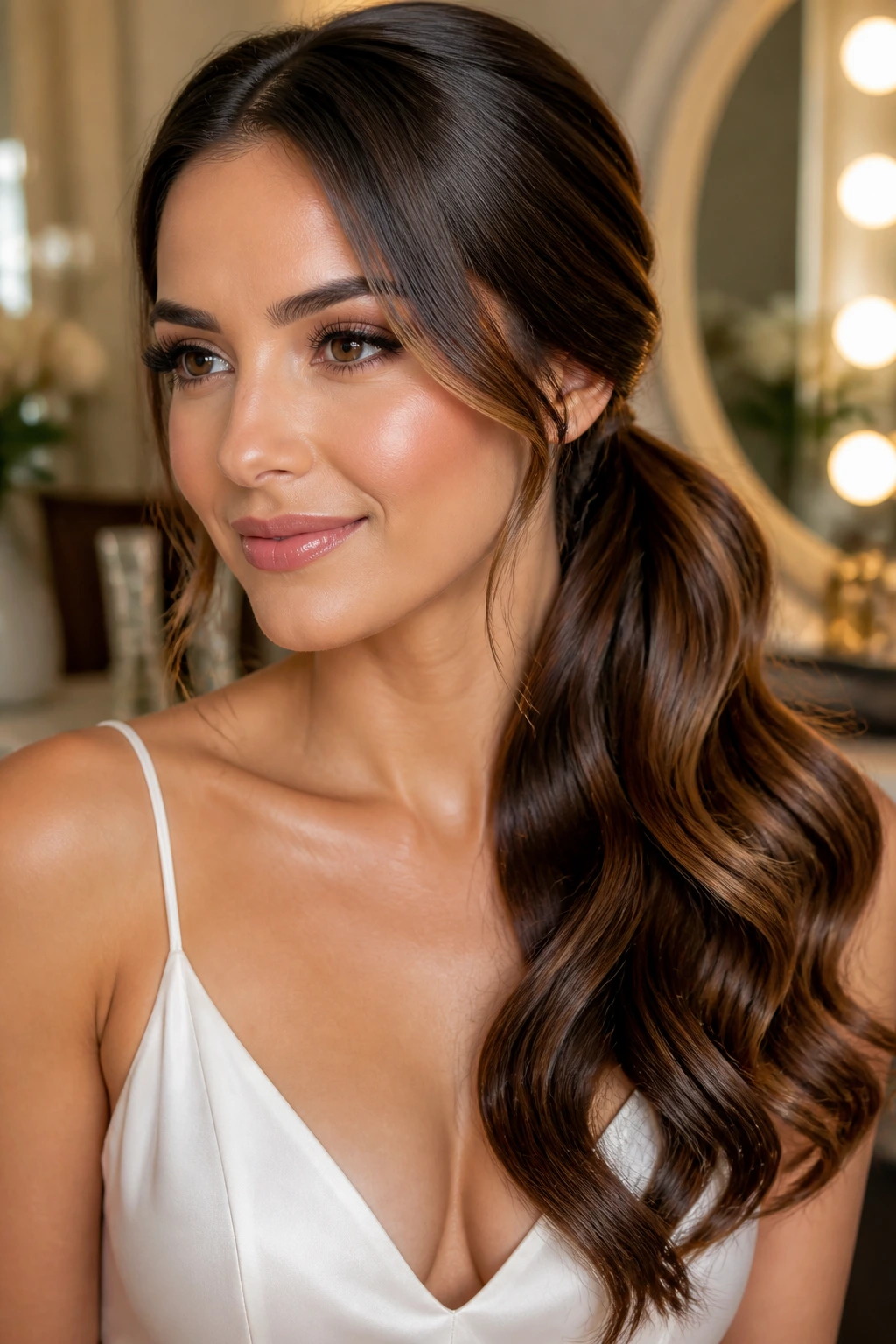
A glam side ponytail with waves is all about control at the crown and softness in the tail. The roots stay smooth, the waves stay glossy, and the overall shape leans elegant without looking stiff.
The Wave Pattern
Use a medium iron, around 1 to 1.25 inches, and curl away from the face in alternating sections so the waves do not merge into one big lump. Once the curls cool, brush them into loose S-shapes and gather the hair low on one side. The waves should look intentional but not frozen.
A little mousse at the roots before blow-drying helps the crown hold its shape. After the ponytail is tied, lift the hair just above the elastic with your fingers to give the top a small ridge of volume. That ridge matters. Without it, the style can flatten into the head.
- Keep the ends curled only halfway.
- Hide the elastic with a wrapped strand.
- Use shine spray on the mid-lengths, not the roots.
- Let one wave fall over the front of the shoulder.
This is one of the easiest ways to make long hair feel event-ready without moving into a full updo.
16. Low Side Ponytail for Long Hair at Work or School

A low side ponytail is the no-nonsense version. It sits quietly, stays out of the way, and still looks a little more thoughtful than a plain back ponytail.
The placement should be low enough to avoid pulling at the scalp but not so low that it disappears into your collar. If your hair is heavy, secure it with two elastics stacked close together so the weight does not drag the tie downward during the day.
This is the version I would pick for a long office day, a class schedule, or any time you want your hair off your face but still soft around the shoulder. It also plays nicely with glasses, because the side sweep keeps the temples clear.
- Brush the hair back with a soft bristle brush.
- Keep the part shallow for a calm finish.
- Use a matte elastic if the rest of the look is casual.
- Tuck loose ends behind one shoulder so the style stays tidy.
17. Side Ponytail for Thick Long Hair
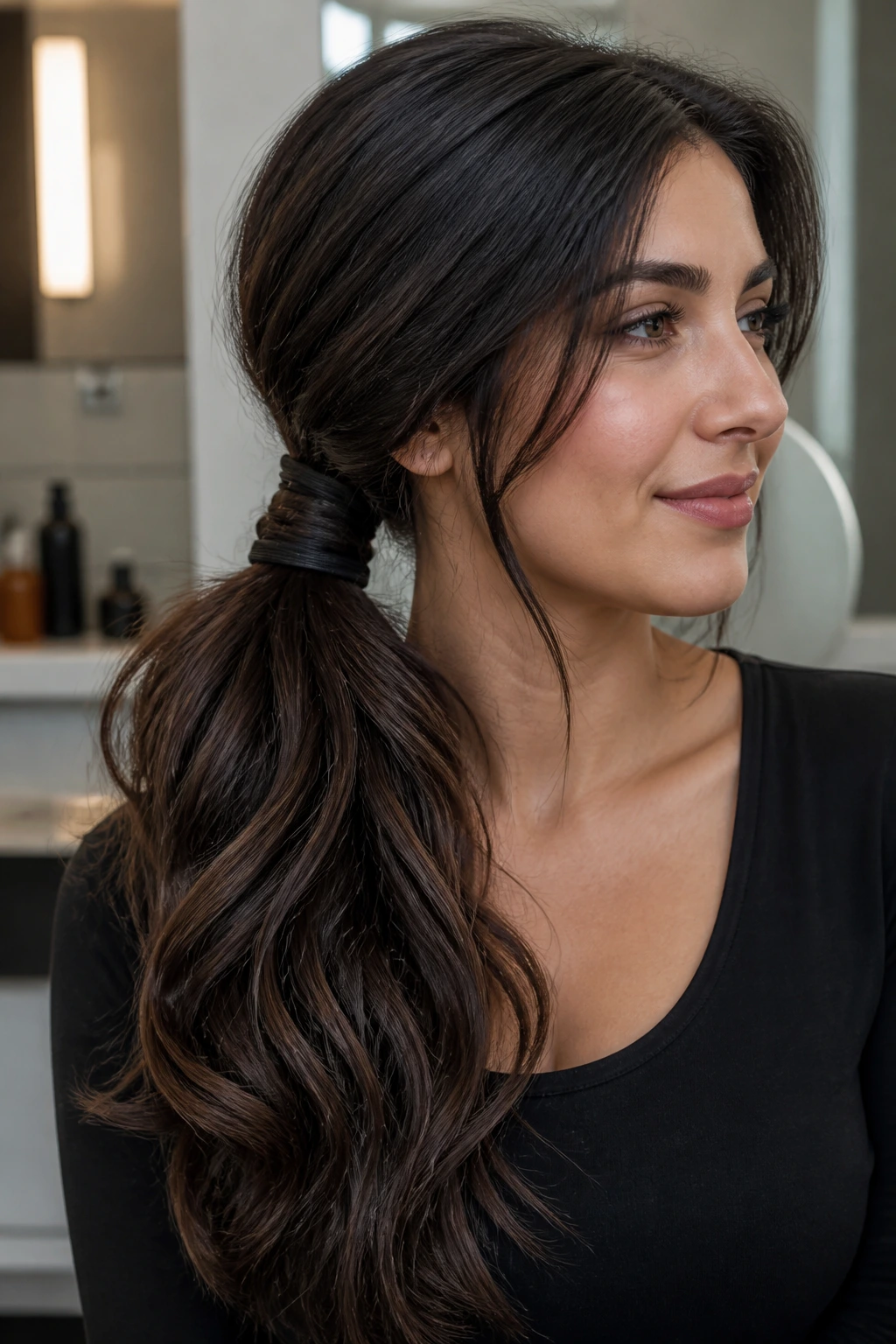
What if your hair keeps sliding out of the elastic? Then the style has a weight problem, not a styling problem. Side ponytail for thick long hair needs stronger anchoring and a smarter base.
Start by smoothing the roots with a little leave-in or lightweight cream, then gather the hair in two stages: first the top half, then the bottom half into the same side point. That way, you are not asking one elastic to hold all the weight at once. It makes a difference. A big one.
How to Handle the Weight
- Use a strong, snag-free elastic with a firm grip.
- Put a second elastic 1 inch below the first if the hair slips.
- Keep the ponytail slightly lower than you would on fine hair.
- Leave a touch of height at the crown so the style does not look helmet-flat.
Thick hair can look gorgeous in a side ponytail, but only if you respect the mass. If you try to force it into a tiny tie point, the whole style starts to tilt and pull. Give it a wider base, and it behaves much better.
18. Polished Ends and a One-Shoulder Finish
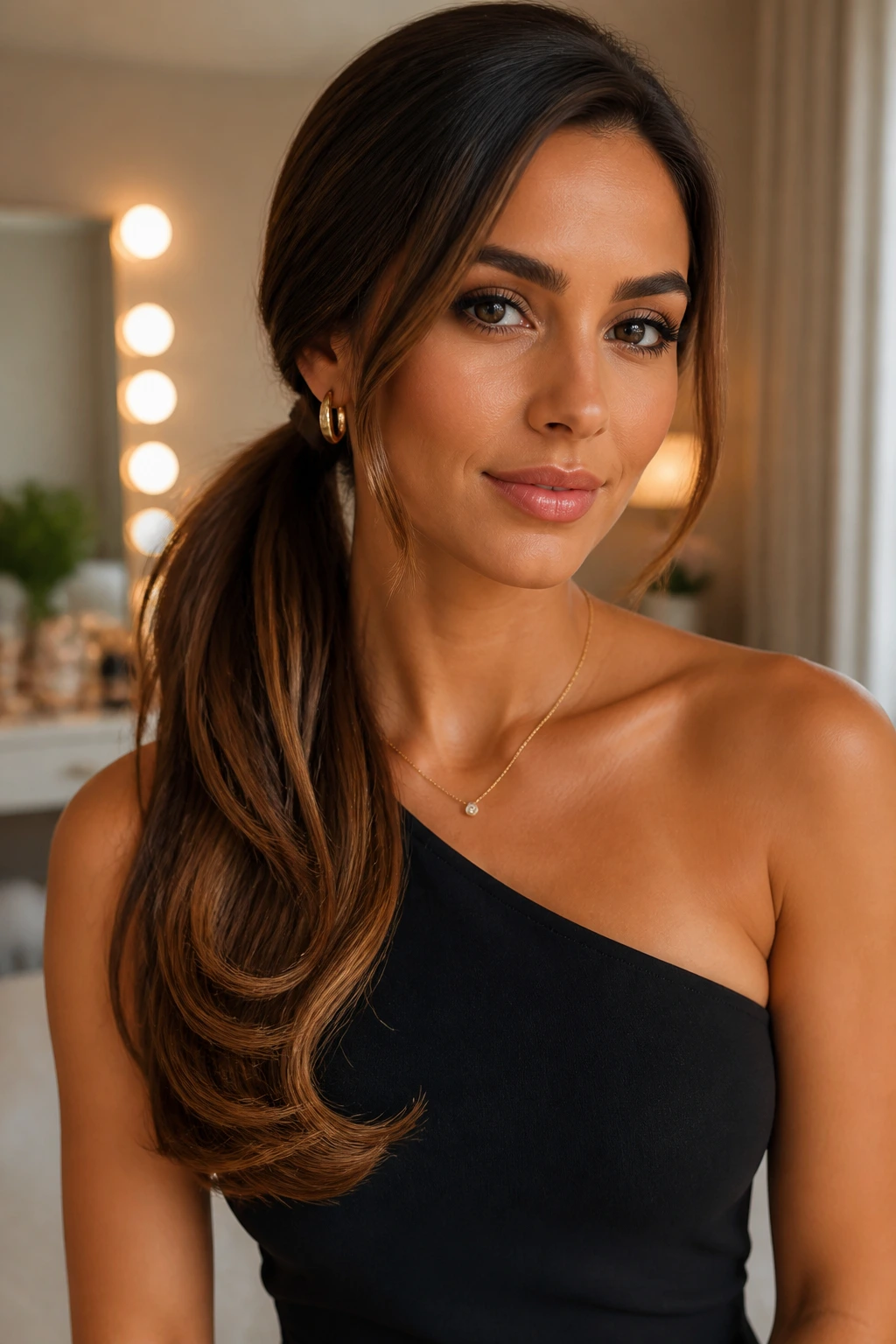
A side ponytail lives or dies in the ends. If the tail is smooth, slightly curved, and laid neatly over one shoulder, the whole style feels finished. If the ends are frayed or the tail points in a random direction, the look falls apart fast.
For this version, keep the base simple and spend your attention on the last 6 to 8 inches. Curl the ends under with a flat iron or wrap them once around a large-barrel iron so they bend softly instead of sticking out. Then guide the tail forward over the shoulder nearest the ponytail side and smooth the top layer with your hand.
That little one-shoulder sweep does a lot. It frames the neckline, shows off earrings, and keeps long hair from disappearing down your back. It is also one of the easiest ways to make a side ponytail feel grown-up without adding more pieces, more pins, or more fuss.
Sometimes the whole style lives in the last two inches of hair.
