



High ponytail hairstyles for long hair can look sharp, soft, or wildly dramatic, and the difference usually comes down to three things: where you place the ponytail, how much root lift you build, and whether you hide the elastic. Long hair gives you drama for free. It also gives you weight, which is the part that can flatten a style fast if you rush the prep.
That’s why a high ponytail on long hair is never just a ponytail. It’s a balance act. Pull it too tight and the front can look severe. Skip the smoothing step and the crown can puff in odd places. Get the placement right, though, and the whole face opens up in a way that feels clean, lifted, and a little bit bold.
The good news is that you do not need a complicated braid workshop to make one work. A strong brush, a couple of clear elastics, a few bobby pins, and the right finish products can cover most of the bases. Some versions lean sleek and polished. Others are soft and messy on purpose. A few rely on texture at the ends so the length does the work for you.
1. Sleek High Ponytail Hairstyles for Long Hair With a Wrapped Base
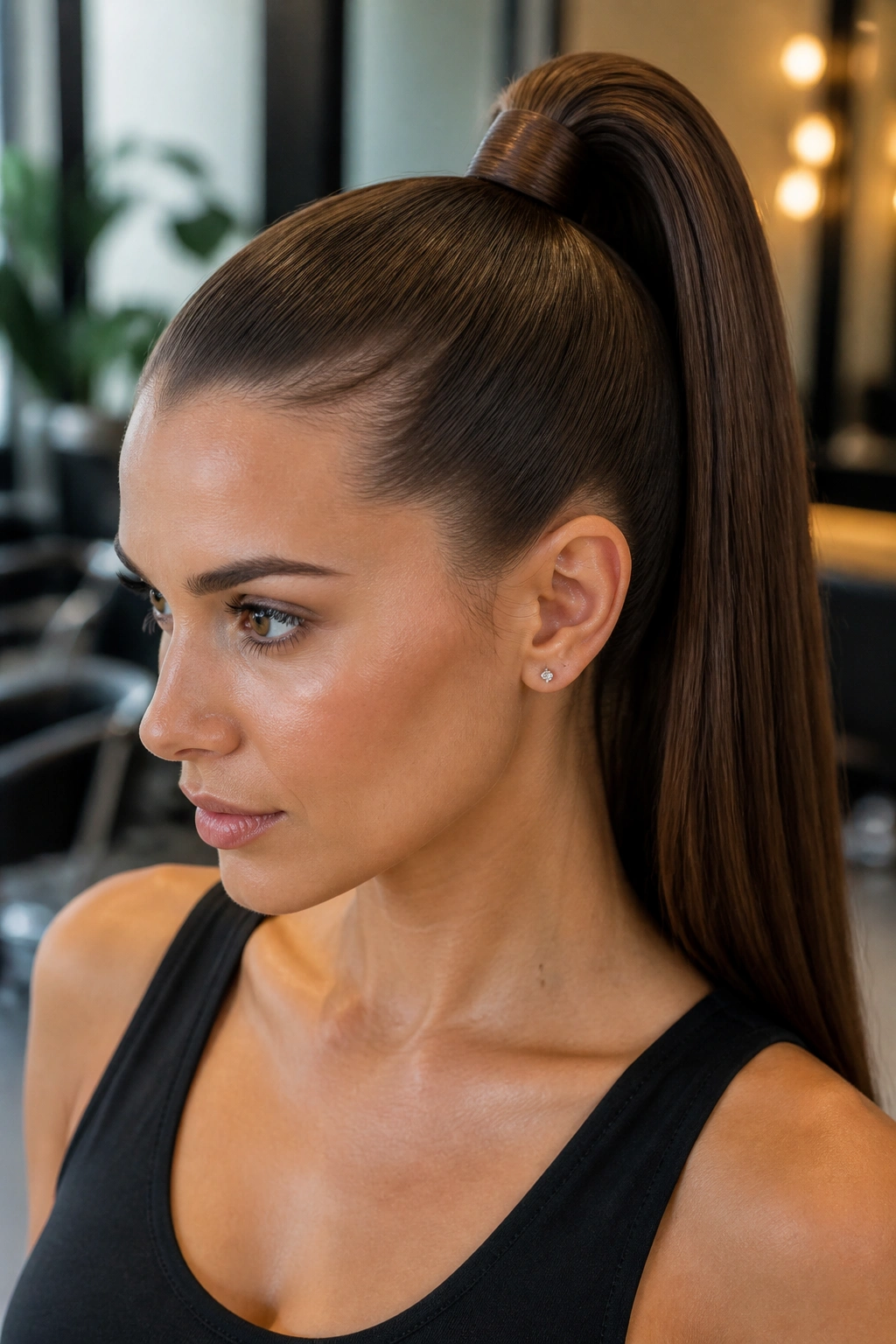
A sleek high ponytail is the cleanest, hardest-working version of the style, and long hair makes it look expensive without trying too hard. The trick is to place it high enough that the ponytail sits above the ears and then smooth the top in one direction before you fasten it. If the crown is flat, the whole look goes flat. That’s the part people miss.
Why the Wrapped Base Matters
The wrapped base is not decoration. It hides the elastic, yes, but it also makes the ponytail look finished instead of improvised. I like a ½-inch strand taken from underneath the ponytail, wrapped tightly around the band, and pinned under the base with one bobby pin. That tiny move changes the whole line of the style.
For long hair, use a brush with firm bristles and a little shine cream or gel at the roots. Not a lot. Too much product near the crown can make hair look greasy by lunchtime, and nobody wants that.
- Place the ponytail 1 to 2 inches above the crown line.
- Smooth the top with a boar-bristle brush.
- Use a clear elastic first, then cover it with the wrapped strand.
- Tuck the ponytail ends with a flat iron if they bend awkwardly.
Best tip: spray the wrapped strand before you wind it. It behaves better and stays put.
2. Teased Crown High Ponytail
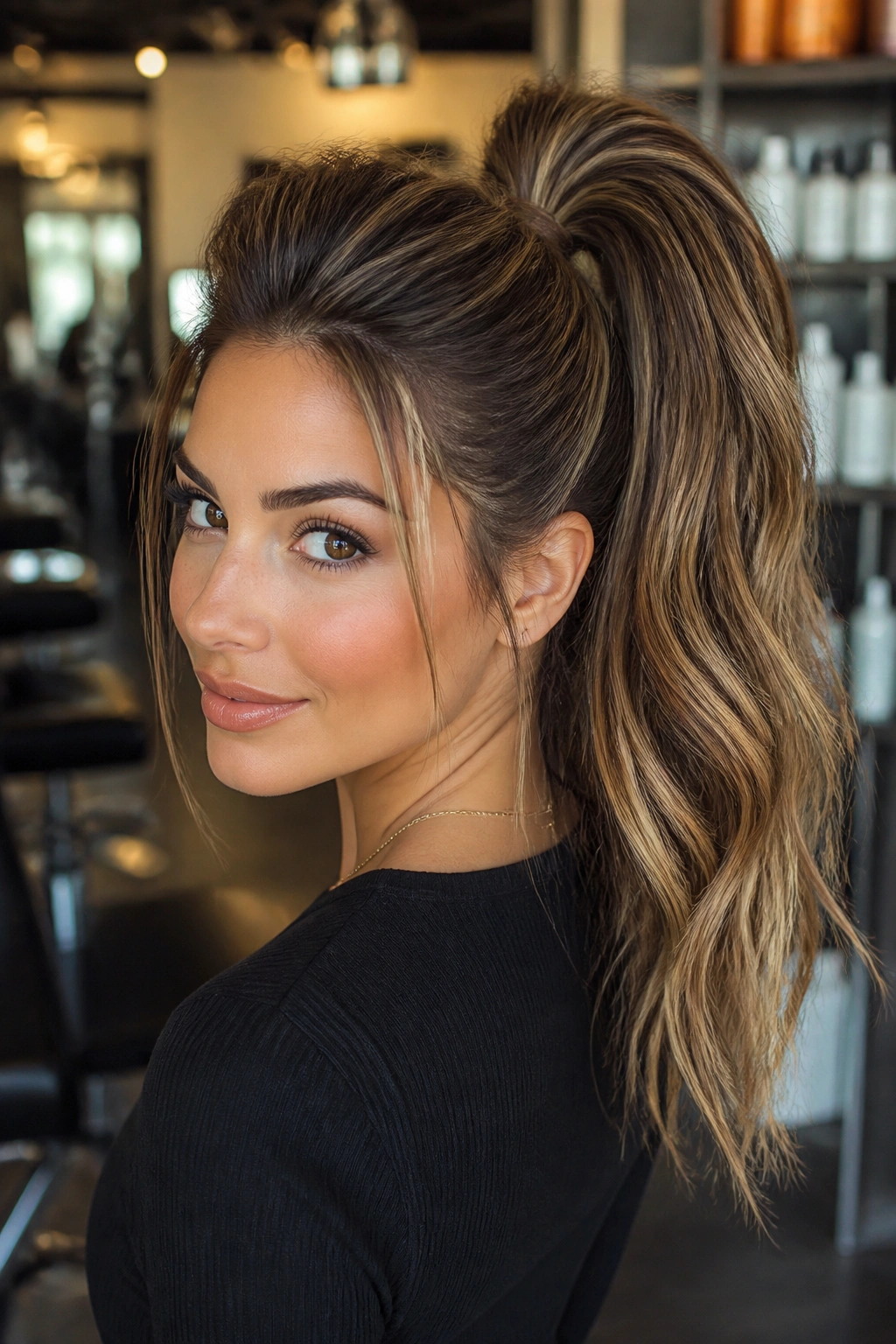
If your long hair is heavy, teasing is not optional. A sleek top with no lift can collapse under its own weight, and that collapse is always more obvious in a high ponytail than in a low one. I like to tease a 2-inch section at the crown, smooth only the very top layer, and leave the underneath section a little rough for grip.
The result is a ponytail that sits higher and lasts longer. It also keeps the face from looking pulled back too hard. A tiny bit of root lift makes the whole thing friendlier.
This style works especially well when the hair is one length or only lightly layered. If your hair is heavily layered, the teased crown keeps shorter pieces from sliding loose so fast. Use a light mist of flexible hairspray after teasing, then brush the surface just enough to hide the texture underneath. Leave the base of the ponytail tight. That part matters. Loose at the base, and the lift disappears within an hour.
3. Bubble High Ponytail
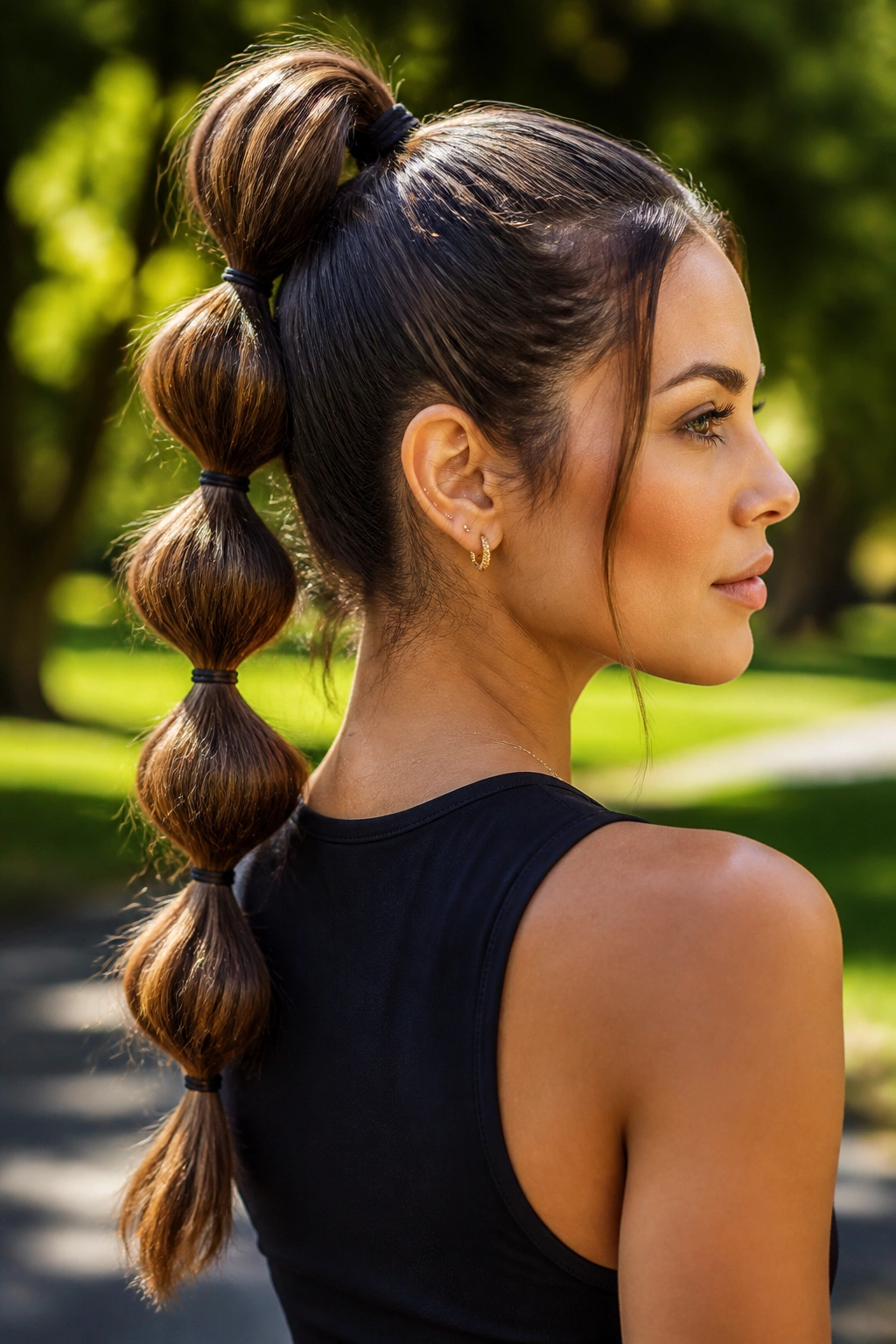
Why do bubble ponytails work so well on long hair? Because they break up the weight. One long swath of hair can pull straight down and flatten itself. A bubble ponytail uses small elastics every 2 to 3 inches down the length, which creates shape, volume, and a little movement without needing a curling iron.
I think this is one of the easiest ways to make a high ponytail look styled without spending forever on it. It is especially good when your ends are thick or your hair gets frizzy in humidity, because each section gets its own shape.
How to Get the Most From It
Start with a regular high ponytail. Then place another clear elastic about 2 inches below the base and gently tug the hair between the bands outward with your fingers. Repeat down the length. Don’t yank. You want rounded bubbles, not stretched-out sausages.
A few details make a difference:
- Use 4 to 6 small elastics, depending on hair length.
- Keep the bubble sections even, or the style starts to look accidental.
- Smooth the ponytail first if you want a sharper finish.
- Pull a few face-framing strands loose if you want it softer.
Tiny warning: this style can look bulky if your hair is already very layered, so go a little easier on the puff.
4. Braided High Ponytail
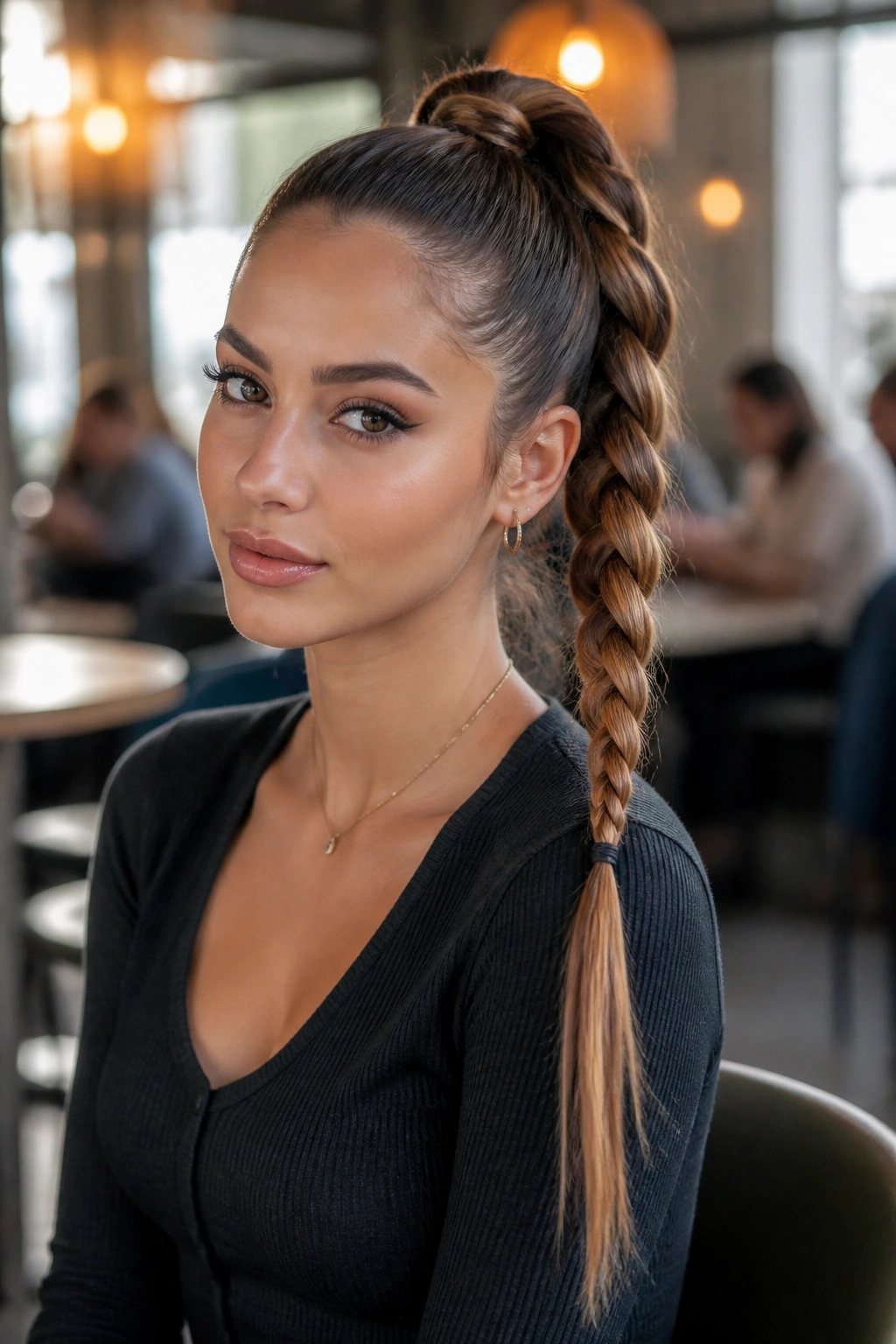
The braided high ponytail is the style I’d hand to someone who wants their hair to stay put through a long day. It looks deliberate, but it also keeps all that length under control. I’ve seen it work on everything from thick, straight hair to loose waves that refuse to sit still.
The braid changes the whole feel of the ponytail. Instead of one heavy rope of hair hanging from the crown, you get texture from top to bottom. That makes the style feel more balanced, and it gives you a little more grip if your hair tends to slip from elastics.
If you want it cleaner, braid the length tightly and finish with a clear band. If you want more softness, pancake the braid by tugging the edges once it’s secured. That little move widens the braid and makes it look fuller.
- Works well with second-day hair.
- Looks especially good with highlighted hair, because the braid shows off color shifts.
- Takes about 5 minutes longer than a basic ponytail.
- Stays secure with 2 bobby pins at the base if your hair is slippery.
5. Curled High Ponytail With Soft Ends
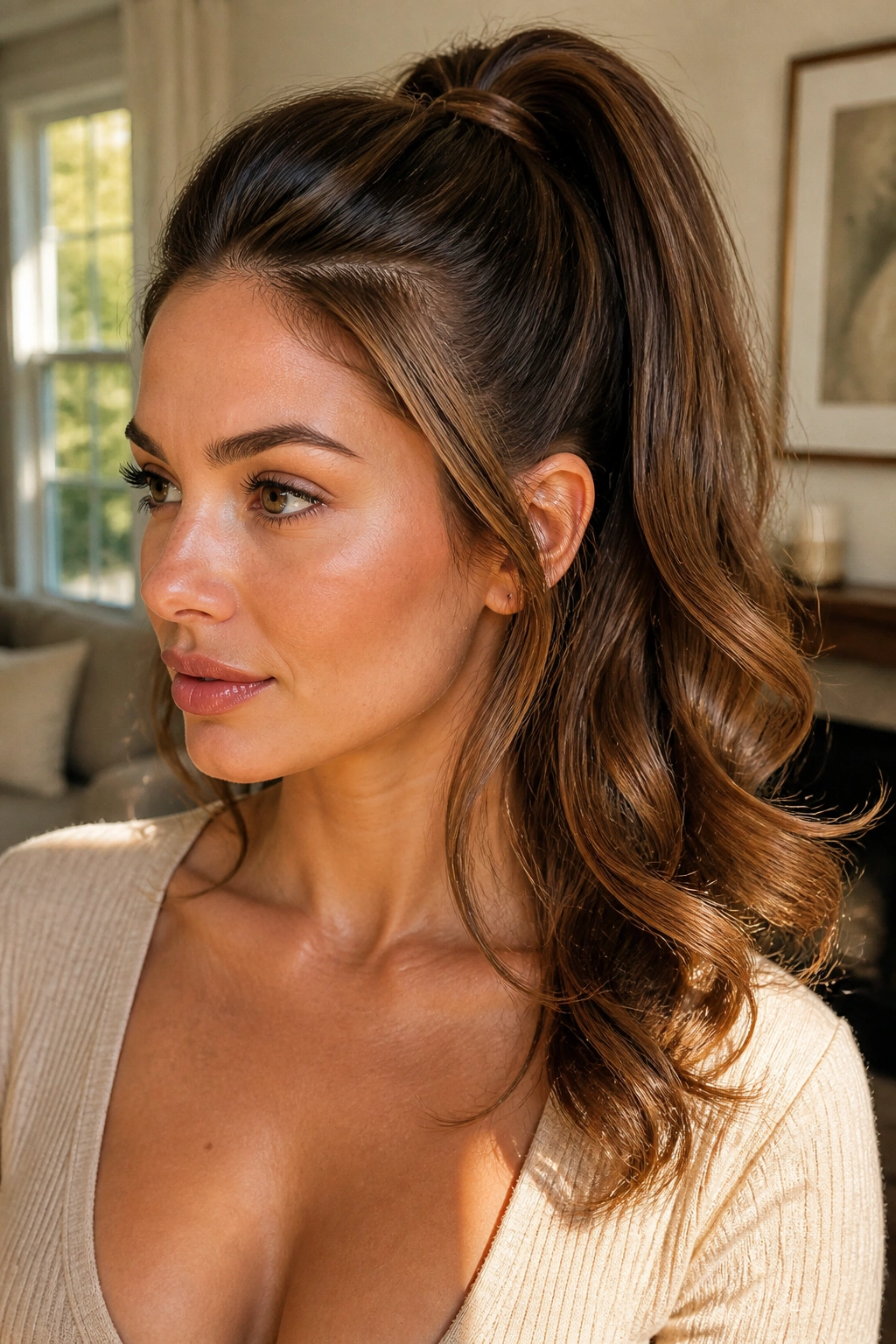
A curled high ponytail feels a little more dressed up, but not in a stiff way. The long hair gets to move, which is the whole point. I like this version when the ends are healthy enough to hold a curl, because the finish looks full instead of limp.
Use a 1¼-inch curling iron and curl away from the face in 1-inch sections. Do not curl the last inch of the ends if you want that modern, soft finish. Leaving the tips straighter keeps the ponytail from turning into a prom-style ringlet cloud, which is a mistake I see all the time.
Brush the curls out lightly with fingers, not a paddle brush. You want shape, not a blown-out mess. A touch of texture spray through the mid-lengths helps the curls separate a little and keeps the ponytail from looking like a single solid tube of hair.
The best part? This style is forgiving. If one curl goes wonky, it disappears into the rest of the movement. That’s a blessing.
6. Rope-Braid High Ponytail
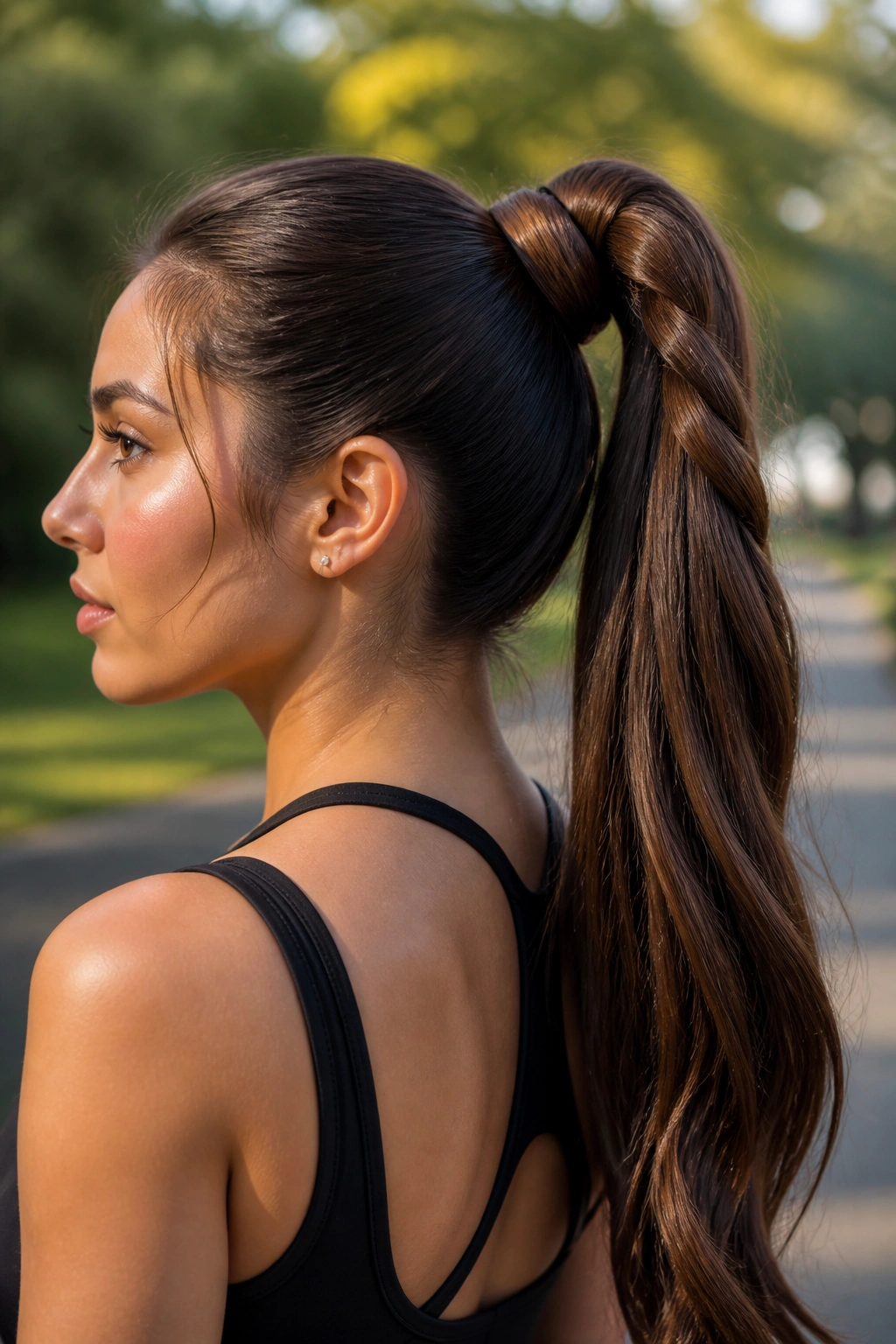
A rope braid is the cousin of a regular braid, but it looks sleeker and takes less hand coordination once you get the motion down. Unlike a three-strand braid, it uses two sections twisted around each other, which is why it often looks cleaner on long hair that has a lot of shine.
This style is smart when you want something polished but not too formal. It also photographs well from the side because the twist catches the eye without needing a ton of product or ornament. I like it on long, straight hair because the length makes the spiral more visible.
What Makes It Different
The rope braid depends on tension. Twist both sections in the same direction, then wrap them around each other in the opposite direction. That’s the whole trick. If you twist loosely, it falls apart. If you overtwist, it can kink and feel stiff.
For a fuller look, gently pull the rope braid apart after you secure the end. For a sharper look, leave it tight and use a little serum on the tail.
Best for: long hair that tangles easily, because the twist holds shape without too much fuss.
7. High Ponytail With Face-Framing Pieces
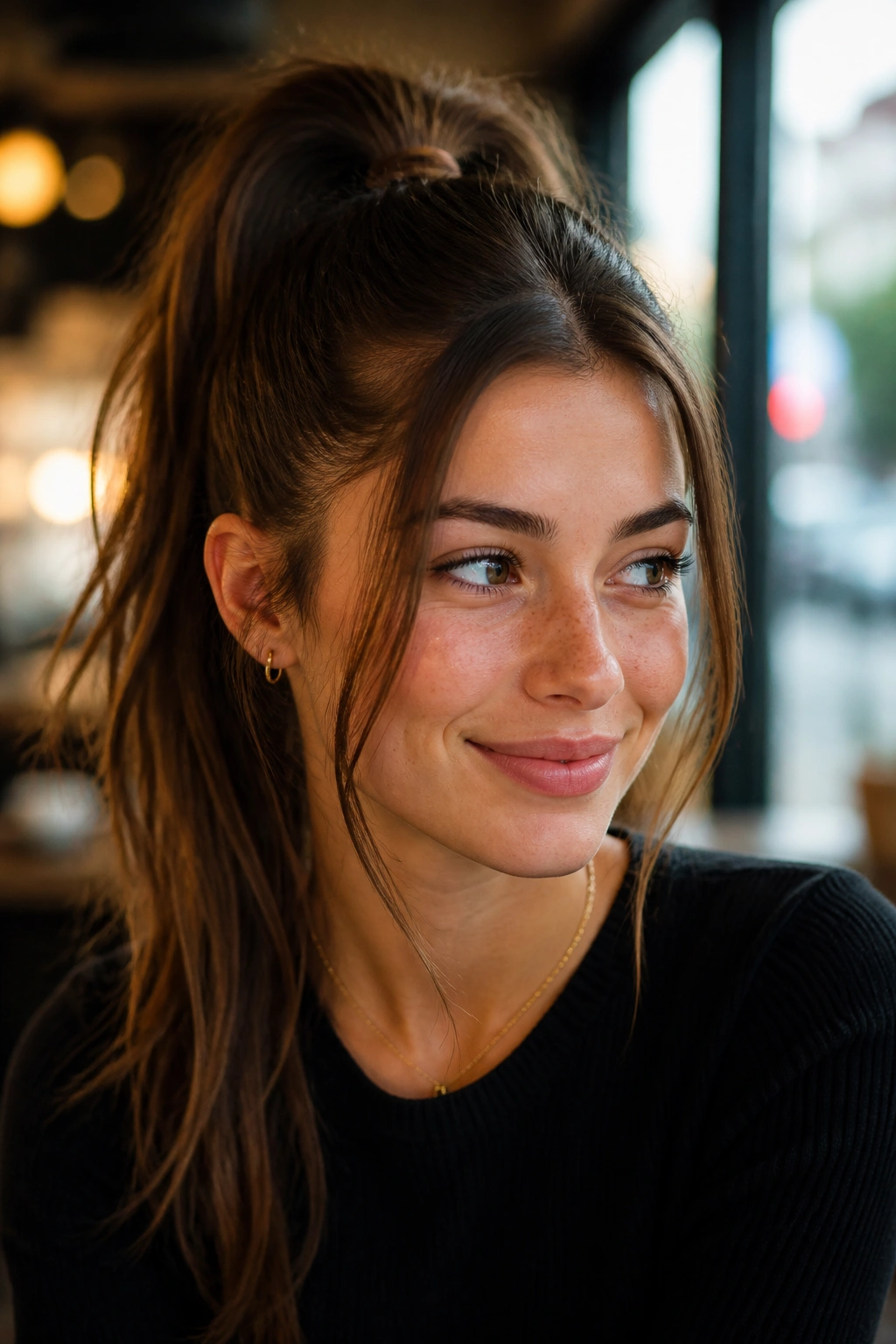
Sometimes the best high ponytail is the one that does not pull every strand away from the face. A few loose pieces near the temples can soften the whole style, especially on long hair where the ponytail itself already has plenty of drama.
I like to pull out the front pieces before tying the ponytail, not after. That gives you more control over how much hair you leave out, and it keeps the rest of the style clean. If you leave too much, the face framing starts to look messy instead of intentional.
How to Wear It
Aim for two slim pieces, one on each side, roughly the width of a pencil or your pinky finger. Curl them away from the face with a small iron if you want them to bend outward and sit nicely on the cheekbone. Straight face-framing pieces can work too, but they need a sharp, clean finish or they just look forgotten.
This version is especially good if you wear glasses or have strong brows. The loose strands break up the line of the ponytail and keep everything from looking too severe.
8. Wavy High Ponytail Hairstyles for Long Hair With Face-Framing Pieces
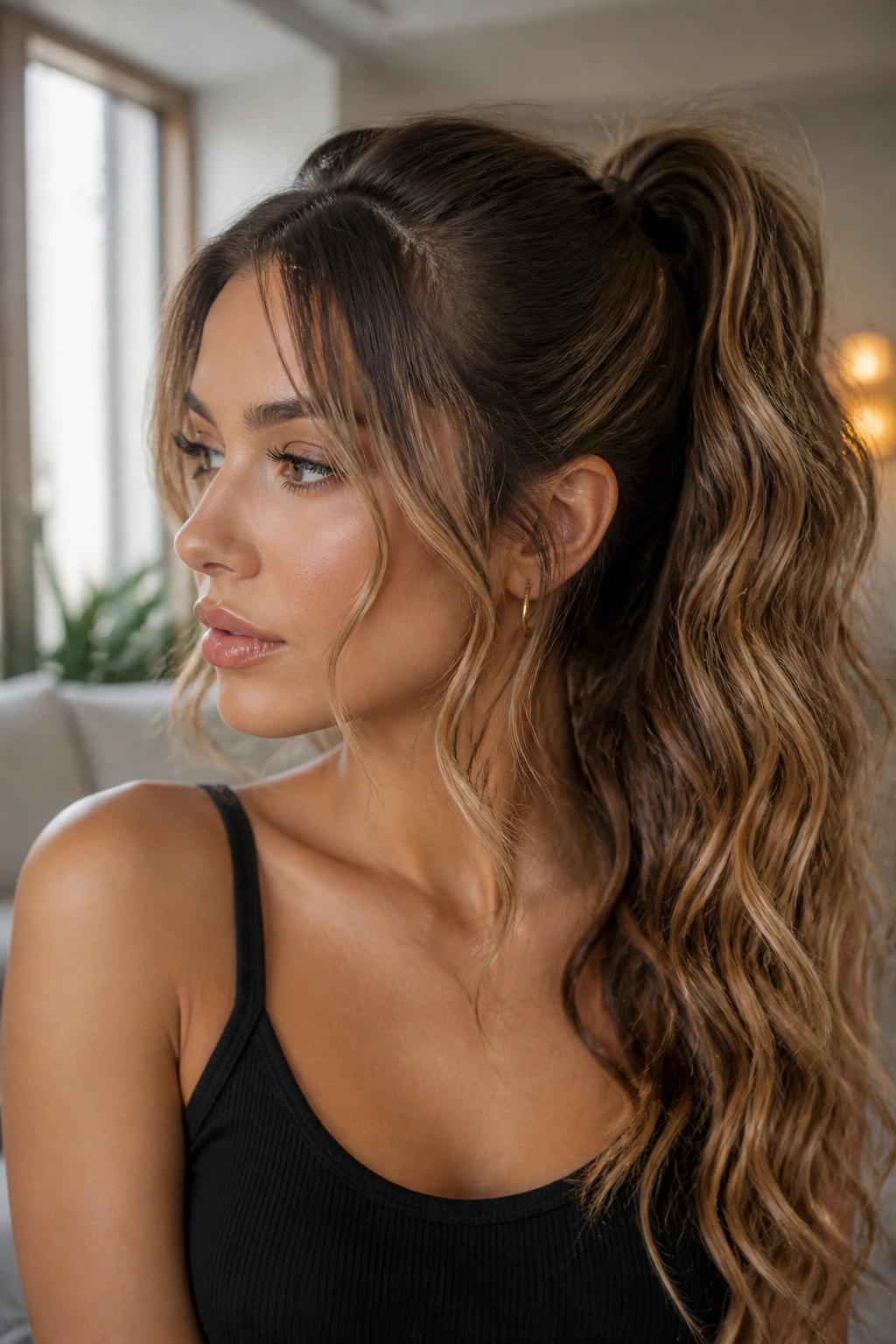
A wavy high ponytail with face-framing pieces is one of those styles that looks like it took effort even when it didn’t. The waves give the length movement, and the front pieces stop the style from feeling too tight around the hairline. On long hair, that combination is gold.
What I like most is the contrast. The crown can stay smooth, while the ponytail itself has soft bends and a little bounce. You get control without stiffness, which is where a lot of high ponytails go wrong.
If your hair already holds a wave, twist the ponytail once after securing it and mist it lightly with flexible hairspray. If your hair is pin-straight, create a few loose bends with a 1-inch iron and skip the perfect curl. Perfection makes this version feel dated. Softness wins.
A one-inch lift at the roots and a few loose strands around the face are often enough. That’s the magic. Not more.
9. Deep Side-Part High Ponytail
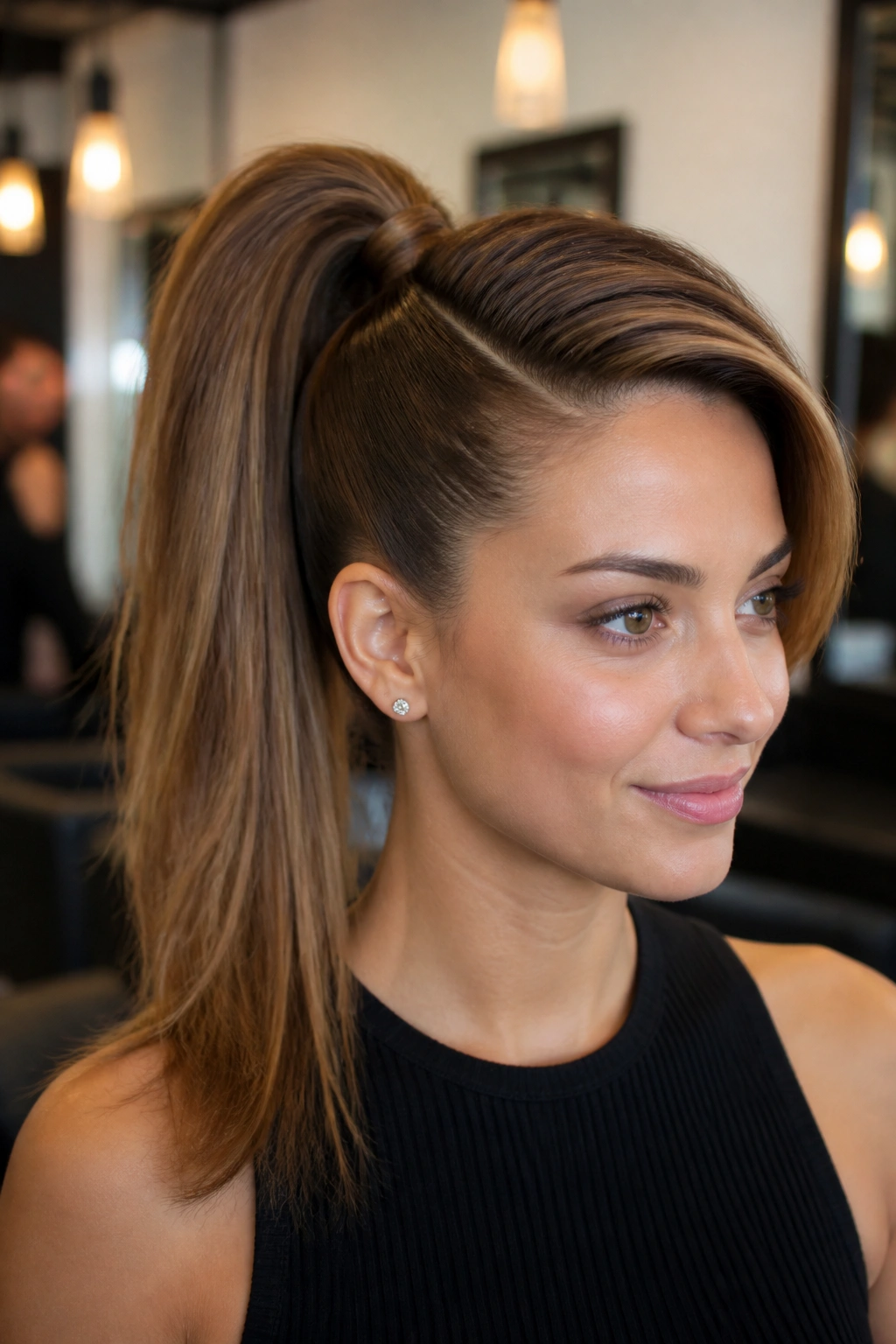
A deep side part changes the mood fast. It shifts the weight of the hair to one side before the ponytail even starts, which gives the whole style a little drama without adding any extra pieces or tools. Long hair makes this look especially strong because the length accentuates the asymmetry.
This is the version I reach for when I want the ponytail to feel less sporty and more styled. The side part creates a natural lift at the top, especially if you sweep the heavier side back across the head before securing the ponytail. It softens the forehead and gives the face a longer line.
Use a rat-tail comb for the part, then smooth the hair in sections rather than all at once. If you try to drag all the hair across the head in one move, the front tends to snag and puff. A little patience pays off here.
And yes, a deep side part also helps if your cowlick lives right at the crown. Sometimes the hair chooses the style for you.
10. High Ponytail With a Scarf or Ribbon
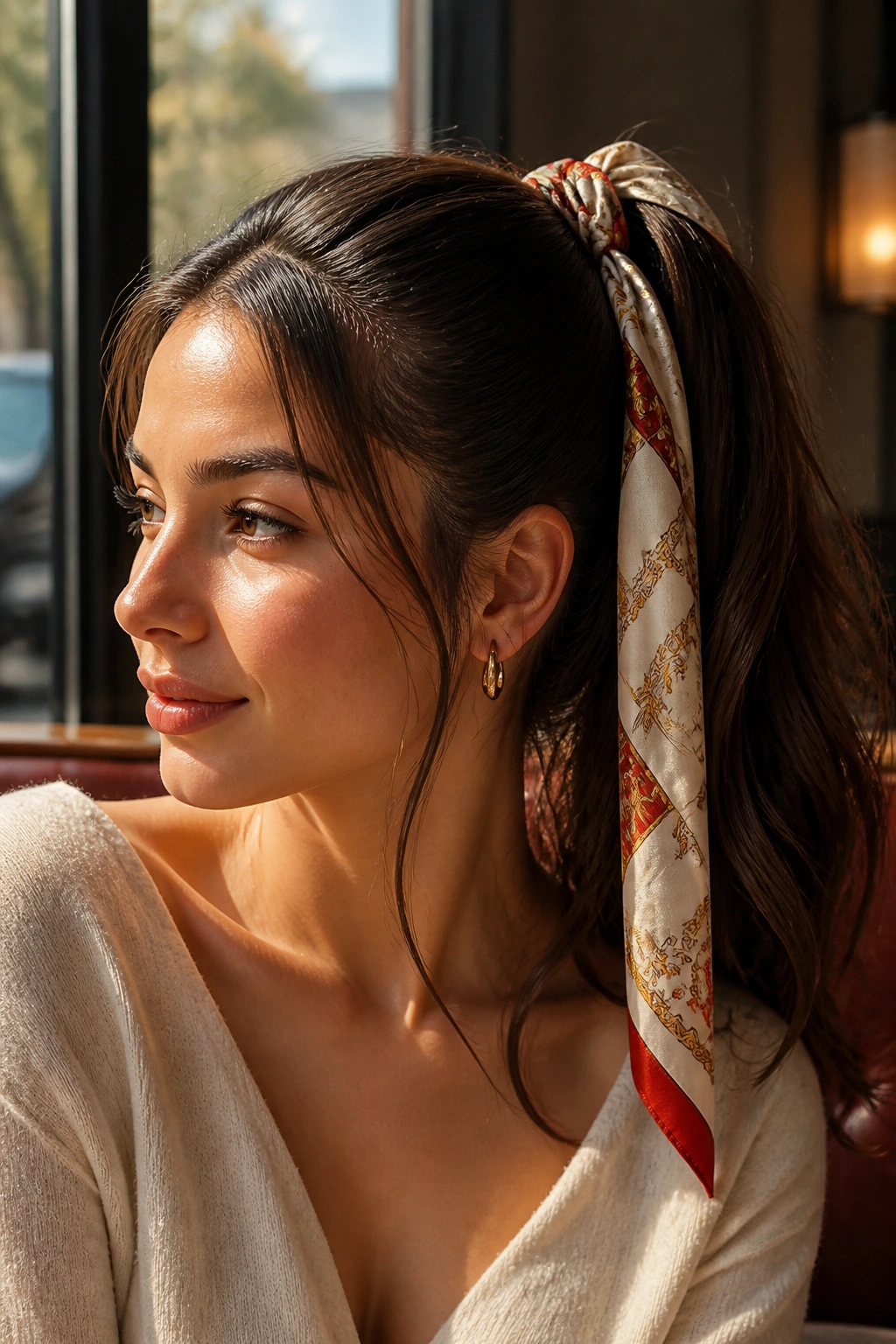
A scarf tied around a high ponytail can rescue hair that looks a little flat, a little dry, or a little too serious. The fabric does the styling work for you. It also gives you an easy way to add color without changing the shape of the ponytail.
I like this when the ends need a break from heat styling. Instead of chasing a perfect curl pattern, you let the ribbon be the accent. If your hair is long enough, the scarf can sit at the base and trail down the back, which looks polished without being fussy.
Small Details That Matter
- Choose a narrow ribbon for a neat, classic finish.
- Use a silk scarf if your hair tangles easily.
- Tie it after the elastic is secure so the ponytail does not slip.
- Keep the knot to one side if you want the style to feel less symmetrical.
My preference: tie the scarf with one tail shorter than the other. Perfectly even ends can look a little staged.
11. Braided Base High Ponytail
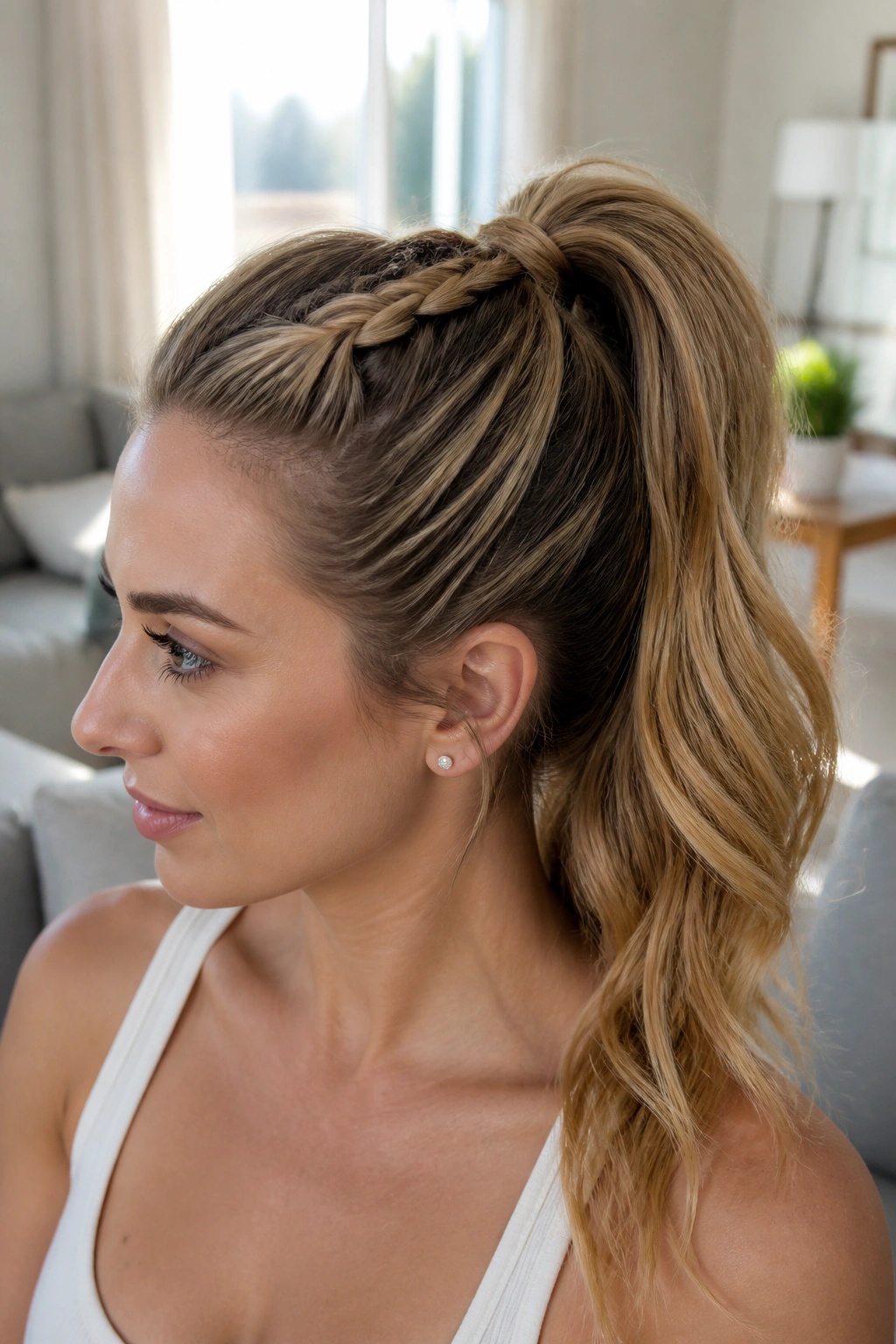
A braided base is one of the smartest tricks for long hair because it gives the ponytail a built-in anchor. Instead of relying on one elastic at the crown, you braid a small section at the top or along the hairline and use that braid to support the rest of the ponytail.
This is the style I’d suggest when hair is fine at the roots but thick in the length. The braid gives the top more grip, and the rest of the ponytail can stay full. It also works well if the hair slides out of elastics easily, which happens more often than people think.
The braid does not have to be huge. A narrow French braid or Dutch braid starting at the front hairline and ending at the crown is enough. After that, gather the rest of the hair into a high ponytail and wrap the base with a small strand if you want a cleaner finish. Simple. Strong. Effective.
A braided base also survives wind better than a smooth one. That matters more than it sounds like it should.
12. Flipped-Out Ends High Ponytail
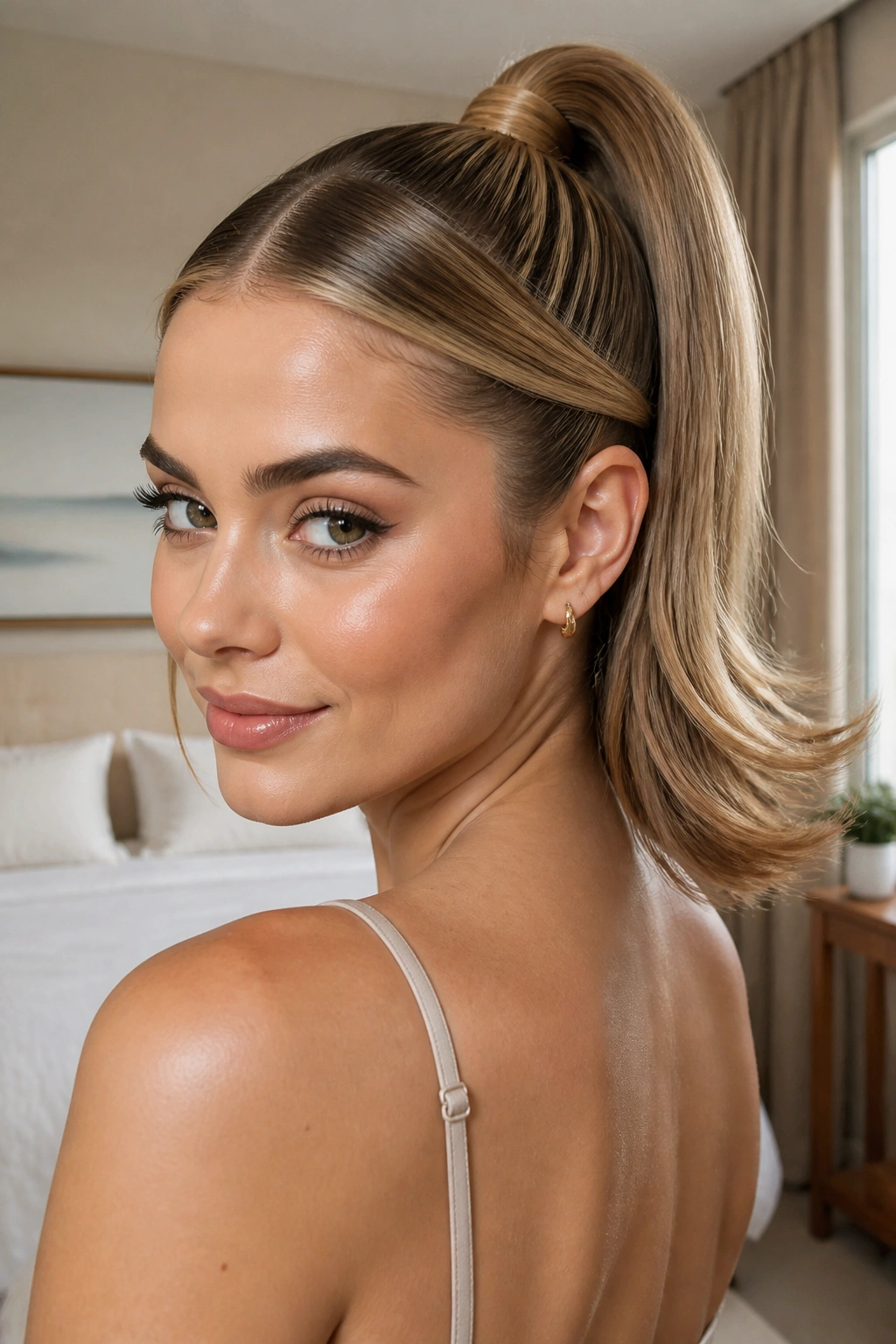
Flipped-out ends give a high ponytail some personality. They change the energy from sleek and controlled to a little retro, a little playful, and far less expected. Long hair makes the flip more visible because the ends have room to bend out without collapsing into the base.
You can get this look with a flat iron or a round brush, depending on what you own and how patient you feel. I usually bend the last 2 inches of the ponytail outward, then run a tiny bit of serum only on the ends so they hold shape without looking crispy. If the ends are too heavy, the flip will droop. That’s the only real catch.
This style works especially well with a sharp center part or a clean side part. It gives the whole ponytail a little swing when you turn your head, which sounds minor until you see it in motion. Then it makes sense.
No need to overthink it. The ends do the talking.
13. Messy Textured High Ponytail
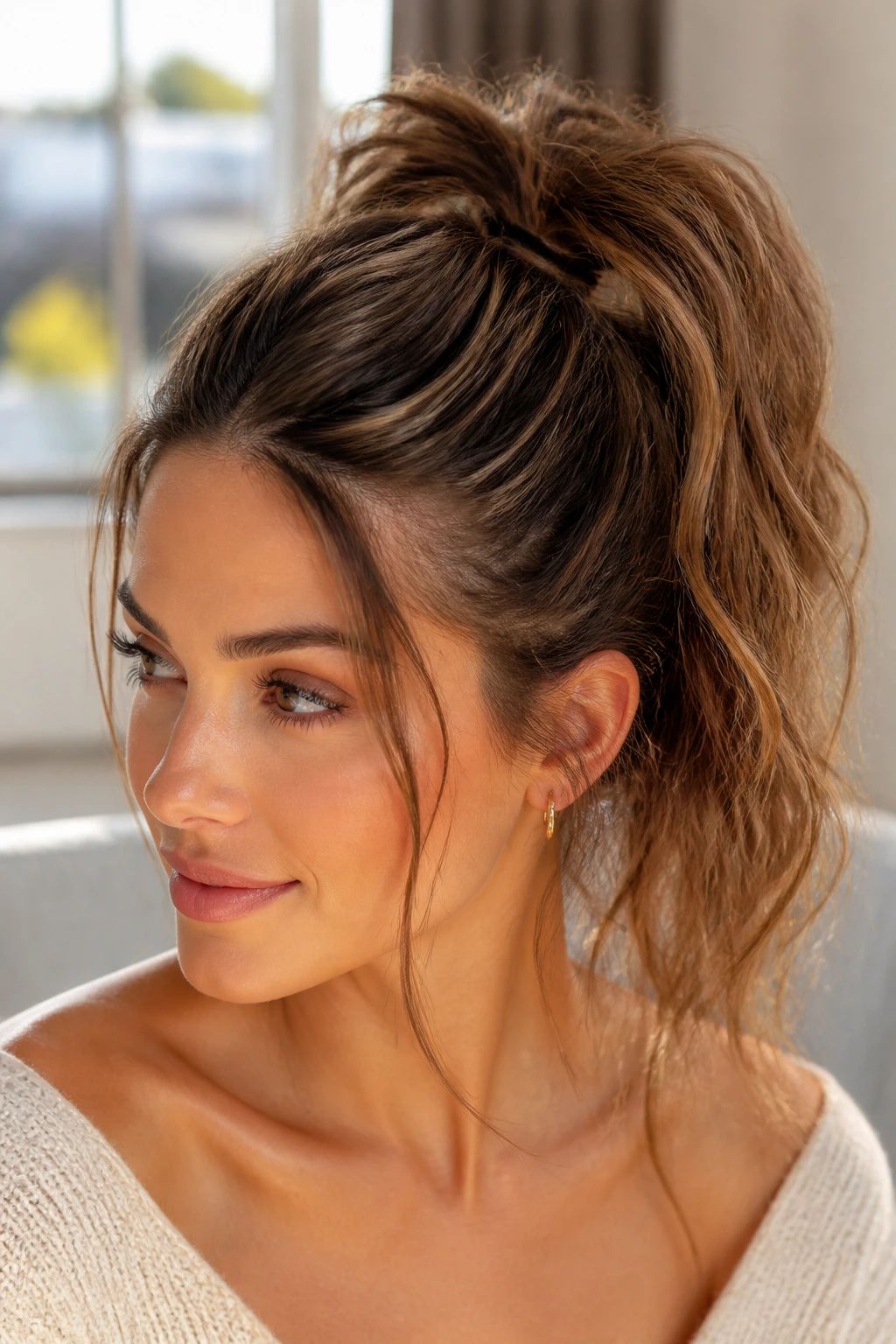
A messy high ponytail is not lazy hair. Done right, it’s controlled texture, and there’s a big difference. On long hair, the messy version can look expensive because the length keeps it from feeling unfinished, as long as you build shape at the crown and keep the ponytail from going stringy.
I like to start with dry shampoo or texture spray at the roots, then rough up the top with fingers instead of a brush. You want the hair to have a little grit. If the hair is too soft and slippery, the style slumps. If it’s too matte, it can look dusty. A small amount of product is enough.
Pull out one or two face-framing strands and tug the crown up by half an inch once the ponytail is secured. That tiny lift loosens the style in a nice way. It also keeps the ponytail from sitting too tightly against the head.
This is the ponytail I’d pick for a denim jacket, a knit sweater, or anything where you want the hair to feel easy but still styled. It does not need perfection.
14. Voluminous Curly High Ponytail
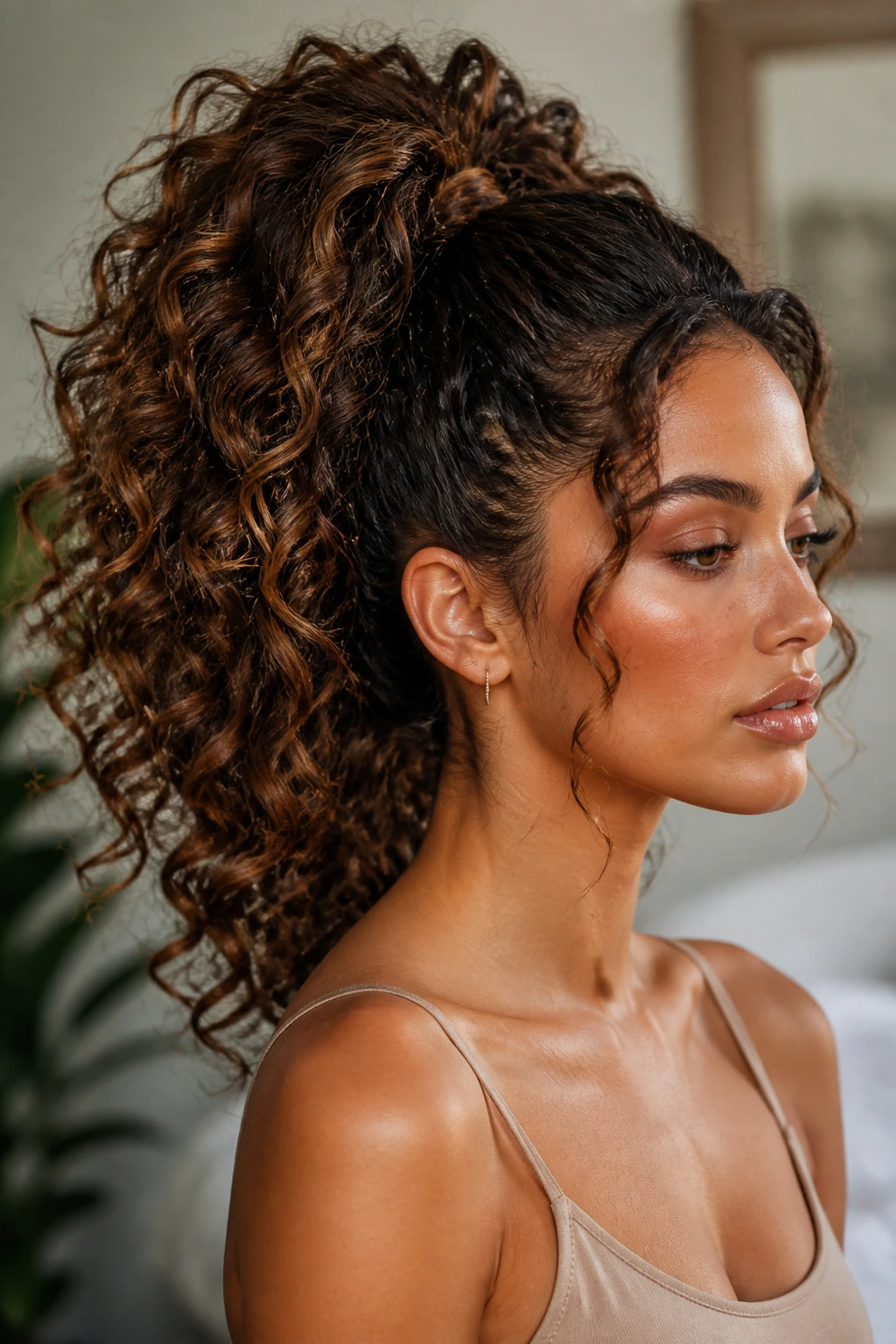
How do you keep a curly high ponytail from turning into a puffball? You don’t brush the curls out. That’s the short answer. Long curls need shape, and shape comes from preserving the curl pattern while giving the roots some lift.
Use curl cream or gel on damp hair, then diffuse or air-dry until the curls are fully set. Gather the hair high, but avoid dragging a brush through the lengths. Hands are enough. The ponytail should look full, springy, and a little wild at the ends.
Keeping the Shape
If the roots are flat, lift them with a pick or the tail of a comb before you secure the ponytail. A small clip at the crown while you finish your makeup can help too. Remove the clip only when you’re ready to go; that extra pause lets the roots cool in place.
A curly high ponytail looks best when the base is tight and the curls are free. That contrast matters. Tight base, loose length. Easy rule.
15. Double-Texture High Ponytail
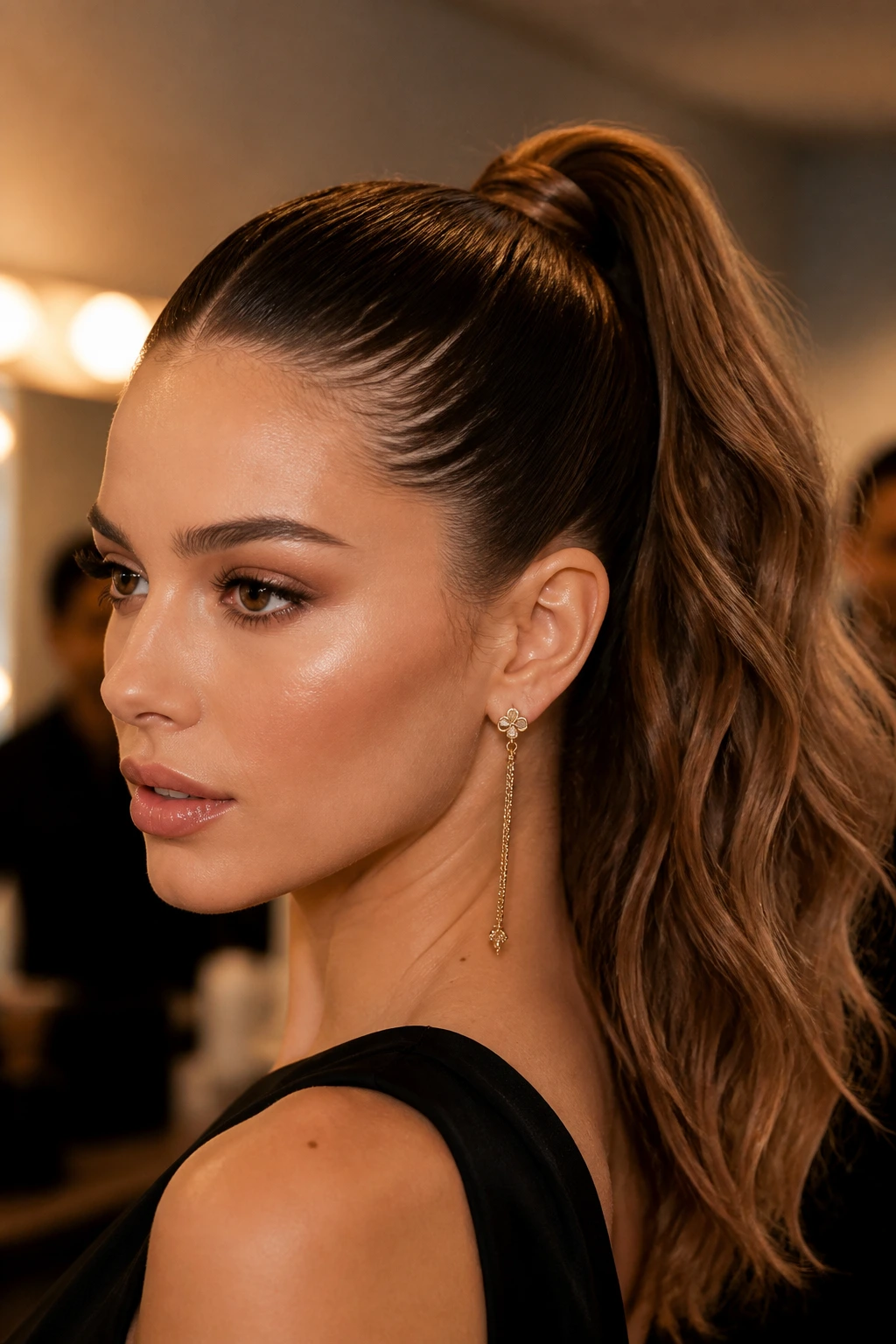
This is the ponytail I think looks most like a red-carpet style without actually needing a team around it. The top stays sleek, the mid-lengths and ends carry texture, and the contrast makes the whole thing feel richer than a plain ponytail. Long hair is perfect for this because there’s enough length to show the shift.
I like the double-texture look when the hair is clean at the roots but the ends have a little natural bend or a soft wave. Smooth the top with gel or cream, secure the ponytail, then add waves only from the middle of the length down. That way the crown looks intentional, not greasy, and the bottom half still has movement.
The style also hides slight frizz well. Since the texture is part of the design, a few imperfect strands do not ruin it. They help.
If you want to wear this out at night, wrap the base with a small strand and use a shine spray very lightly on the finished ponytail. Too much shine spray can flatten the texture, and that defeats the point.
16. Voluminous High Ponytail Hairstyles for Long Hair With Curly Lengths
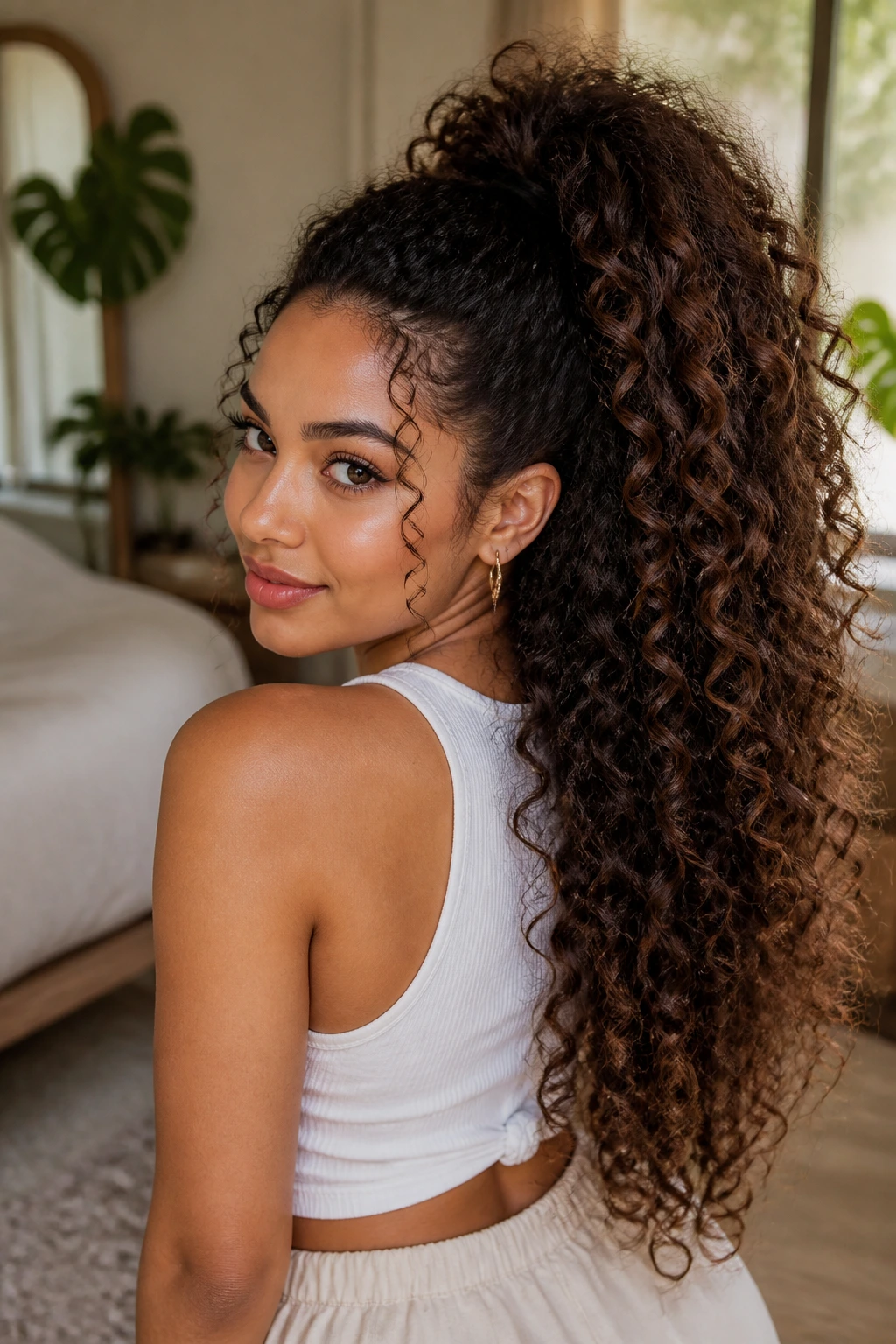
A voluminous high ponytail on curly long hair is all about respecting the curl pattern and lifting the base high enough to show it off. If the ponytail sits too low, the curls lose their shape and start to look heavy. Put it high, though, and the whole style opens up.
I like this version because it makes the hair look full without forcing it into a shape it does not want. The curls do the work. You just guide them.
Keeping the Crown Lifted
Use a soft brush only at the roots if needed, then stop. Once you start brushing through the length, the curl pattern can blur fast. Gather the hair with your hands, secure it, and then gently pull a few curls at the crown upward to keep the top from looking tight.
A few smart details help:
- Tie the ponytail with a snag-free elastic.
- Add one bobby pin under the base if the hair is thick.
- Refresh the curls with a mist of water and leave-in conditioner.
- Let a few curls escape around the hairline if the style needs softness.
This is one of those styles that looks better when it is a little lived-in. Too polished, and the curls lose their charm.
17. Criss-Cross Elastic High Ponytail
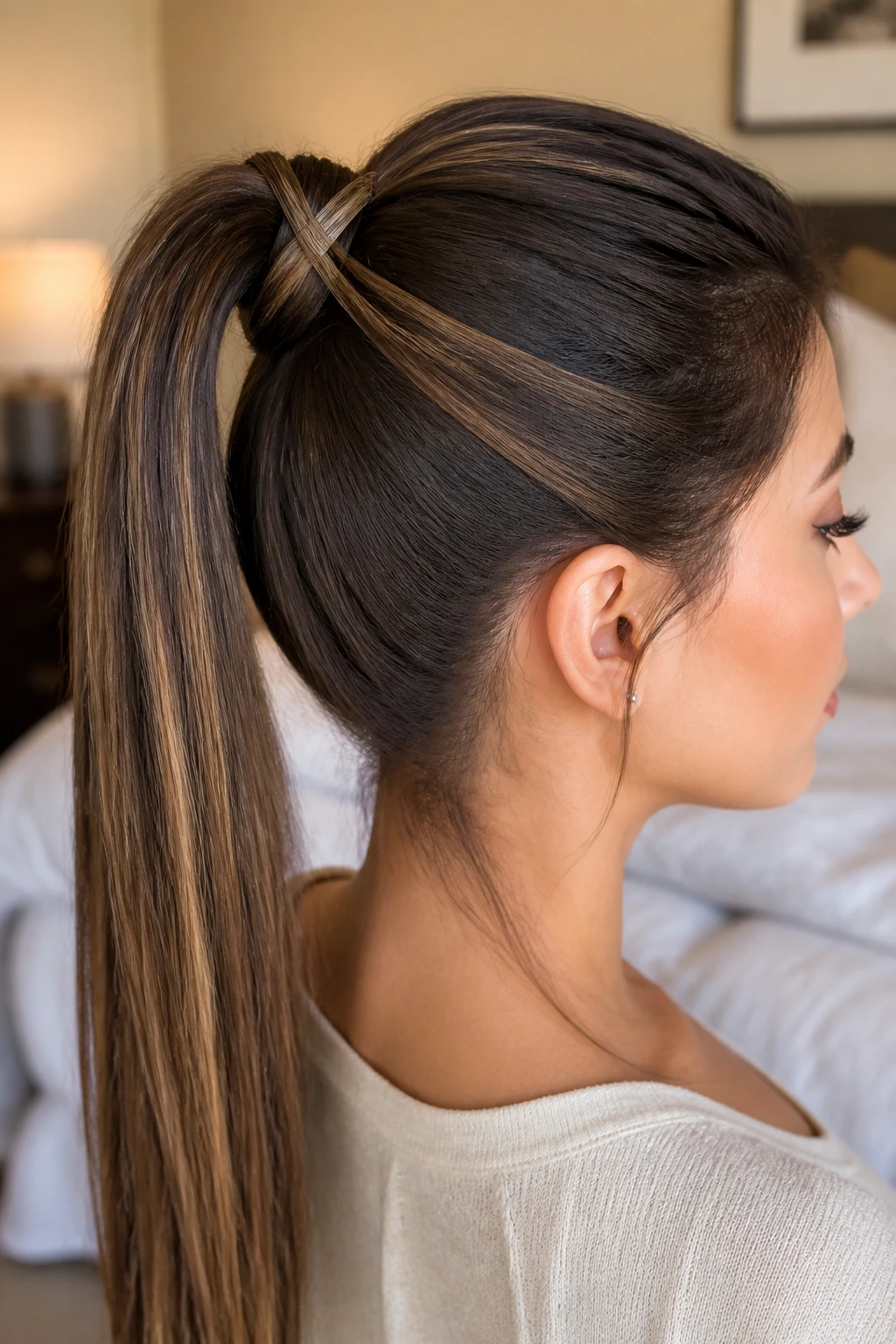
The criss-cross elastic trick is for anyone who likes detail without a full braid. Two small sections are pulled from the sides, crossed over each other at the base, and pinned or tucked under the ponytail. It creates a neat lattice effect that looks far more complicated than it is.
I like this on long, straight hair because the smooth length shows off the structure. It also works if you’re trying to make a plain ponytail feel more dressed up for an event. You do not need a curling iron, which is a relief on a day when you do not want extra heat.
Use two clear elastics or small snag-free bands to anchor the side pieces before crossing them. Keep the sections narrow so the detail sits cleanly instead of ballooning out. If you pull too much hair into the criss-cross, the base gets bulky fast.
This style is a good compromise when you want something different but not fussy. It is neat. It is fast. It stays in place.
18. Mini Elastic Section High Ponytail
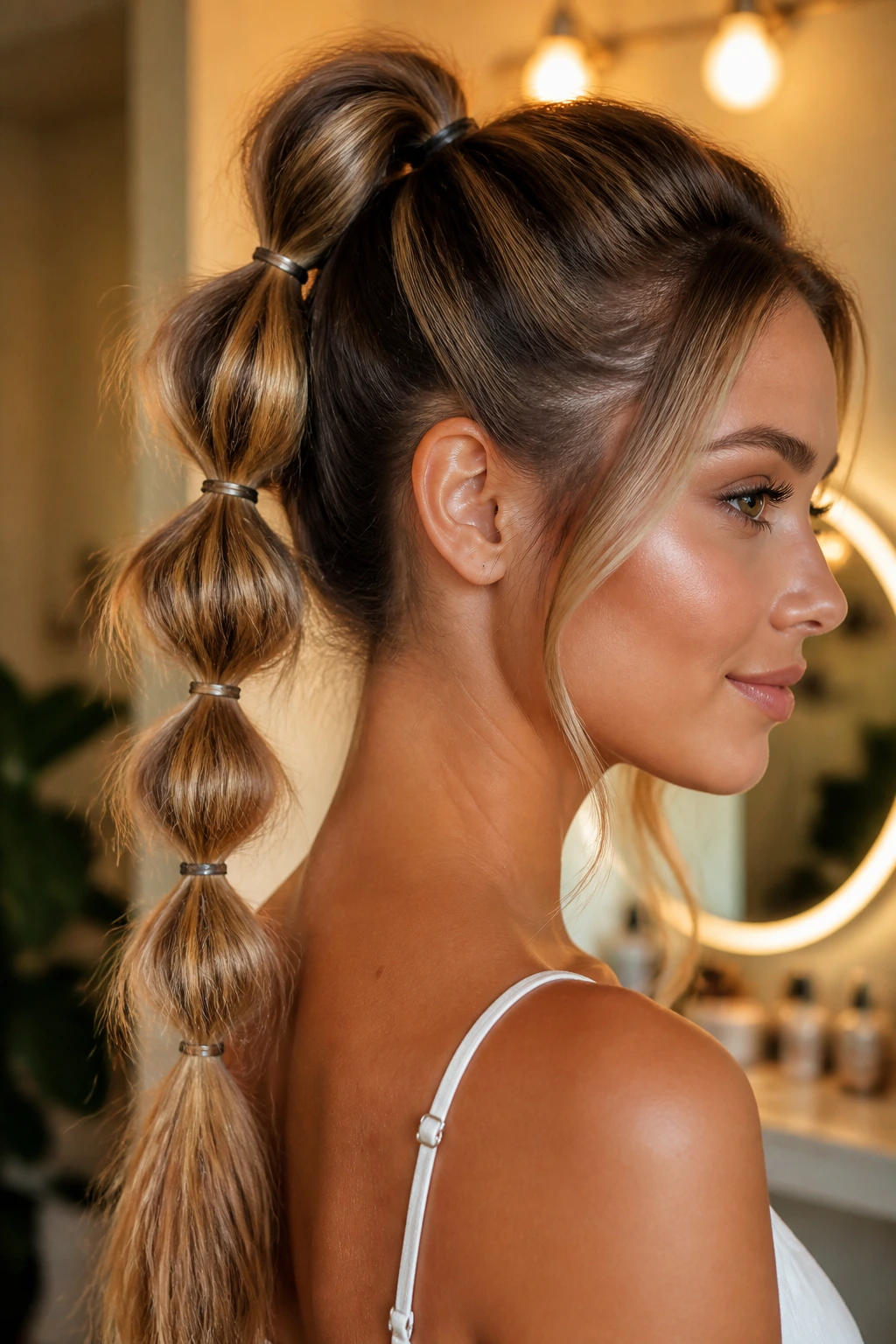
A mini elastic section ponytail is a clean way to add rhythm to long hair without braids or curls. Think of it as a segmented ponytail with small bands placed every 1½ to 2 inches down the length. The repeated sections create shape, and the hair between them can be puffed slightly for fullness.
This style is especially useful if your long hair is pin-straight and tends to hang in one heavy line. The sections break up that line and give the eye more to look at. It also works well with extensions because the elastics can hide where the natural hair ends and the added length begins.
Be careful with spacing. If the sections are too close together, the ponytail starts to look cramped. Too far apart, and the shape gets lazy. The sweet spot is usually three to five segments, depending on total length.
I’d wear this with a crisp outfit or a very simple neckline. The ponytail itself becomes the detail, so the rest of the styling can stay calm.
19. High Ponytail With Hidden Extensions
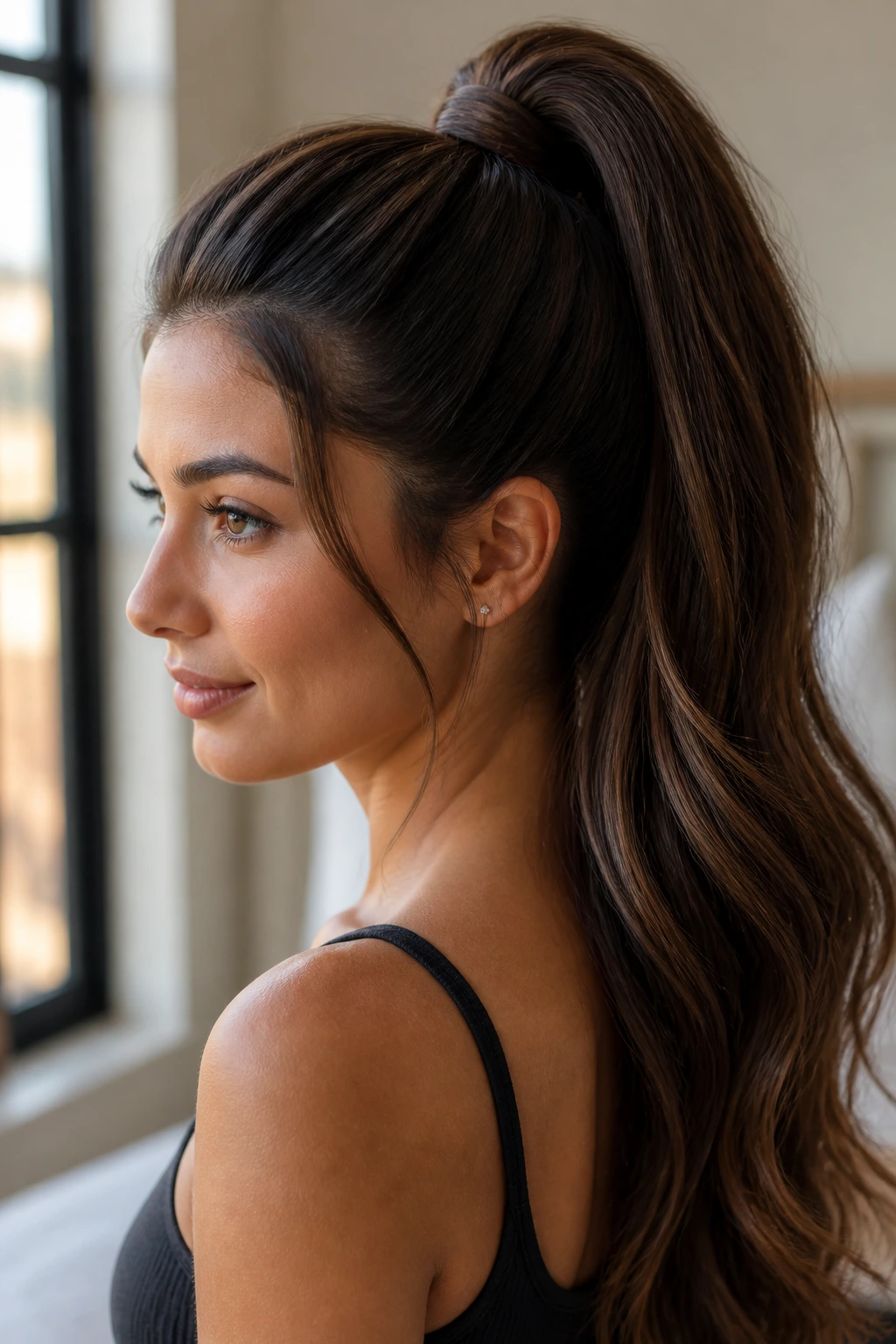
A hidden-extension high ponytail is for the person who wants the base to stay small while the ponytail itself looks fuller and longer. Unlike clip-ins worn visibly throughout the hair, the extra hair sits underneath the crown or just inside the ponytail base, where it blends into the real length.
This trick is useful if your own hair is fine or if the ends taper too much. A high ponytail can look skinny fast when the natural length is thin, and that is where hidden extensions save the day. They add width at the center and keep the ponytail from looking like a little tassel.
What to Watch For
Place the wefts low enough that they do not poke out when you tighten the elastic. Then wrap a section of your own hair around the base to keep everything discreet. If the added hair is too silky compared with your own, mist both with a light texture spray so they blend.
A good hidden-extension ponytail should move like one head of hair, not two. That’s the goal.
20. High Ponytail for Workouts and Long Days
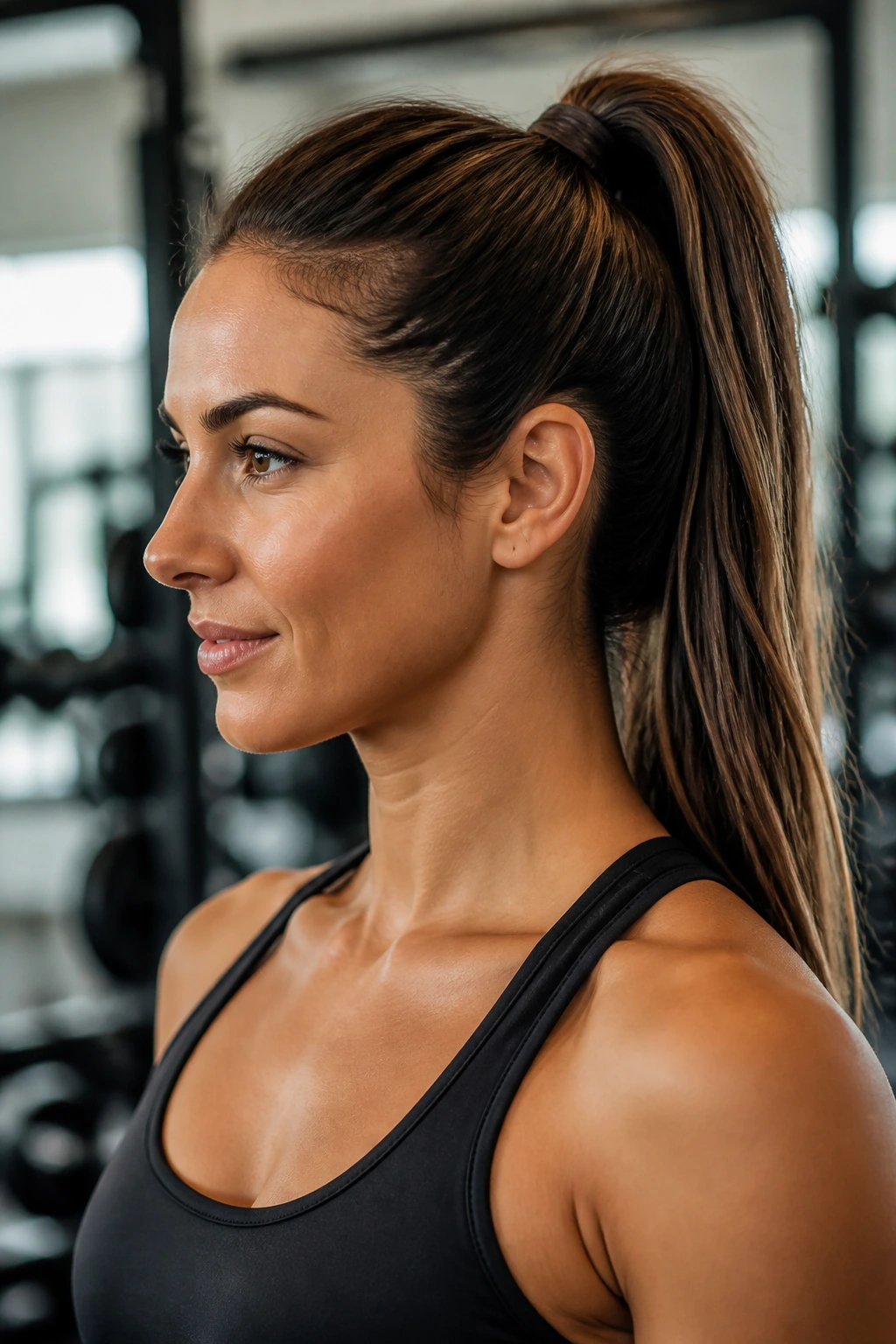
Not every high ponytail has to be glamorous. Some of the best ones are the ones that hold up through errands, walking, commuting, and the sort of day where you do not have time to reset your hair three times. For long hair, that usually means a high placement, a grippy elastic, and no loose ends near the nape that can slip out and annoy you later.
I like a strong workout ponytail with a little bit of tension at the base and a smooth top only if the hair is straight enough to cooperate. If it isn’t, don’t fight it. A slightly textured base can hold better. The main goal is staying power, not glassy perfection.
Use a flat, snag-free elastic and, if the hair is very thick, secure the ponytail once with a first band and then again half an inch lower with a second. That two-point hold makes a bigger difference than people expect. It also keeps the weight from dragging everything down by midday.
This is the practical version. No ribbon, no curl, no drama. Just hair that stays where you put it.
Final Thoughts
The best high ponytail for long hair is the one that matches the mood of the day and the way your hair actually behaves. Fine hair needs lift. Thick hair needs control. Curly hair needs room. Straight hair needs grip.
I always think the tiny details matter more than the big idea. A wrapped base, a 1-inch lift at the crown, a few face-framing strands, or a braid hidden under the top layer can change the whole look. Small work. Big payoff.
And if a style looks good but falls apart in 20 minutes, it is not a good style. It is a nice photo.
