



Short hair can be tied back. Barely. And that is the whole point.
A lot of people want the clean, easy feel of shorter hair without losing the tiny bit of control a ponytail gives you on busy mornings, sweaty walks, or those annoying half-humid, half-windy days when hair has a mind of its own. The sweet spot is a cut that still gathers at the nape, slips into a mini elastic, or sweeps off the face without turning into a full-time project.
People usually picture a ponytail as one long swing down the back. That’s not really what this category is about. With short hair, the ponytail might be a low nub, a micro tie, a soft half-up, or a little loop at the neck that keeps everything contained. And yes, that counts. More than counts, actually. It works.
The part most people miss is where the length sits. A haircut can look short from the front and still leave enough at the nape, temples, or crown to grab with an elastic. That’s why one extra inch in the wrong place can make a cut feel useless and one extra inch in the right place can make it suddenly cooperative. The first cut people underestimate is the collarbone lob.
1. The Collarbone Lob That Still Fits in a Ponytail
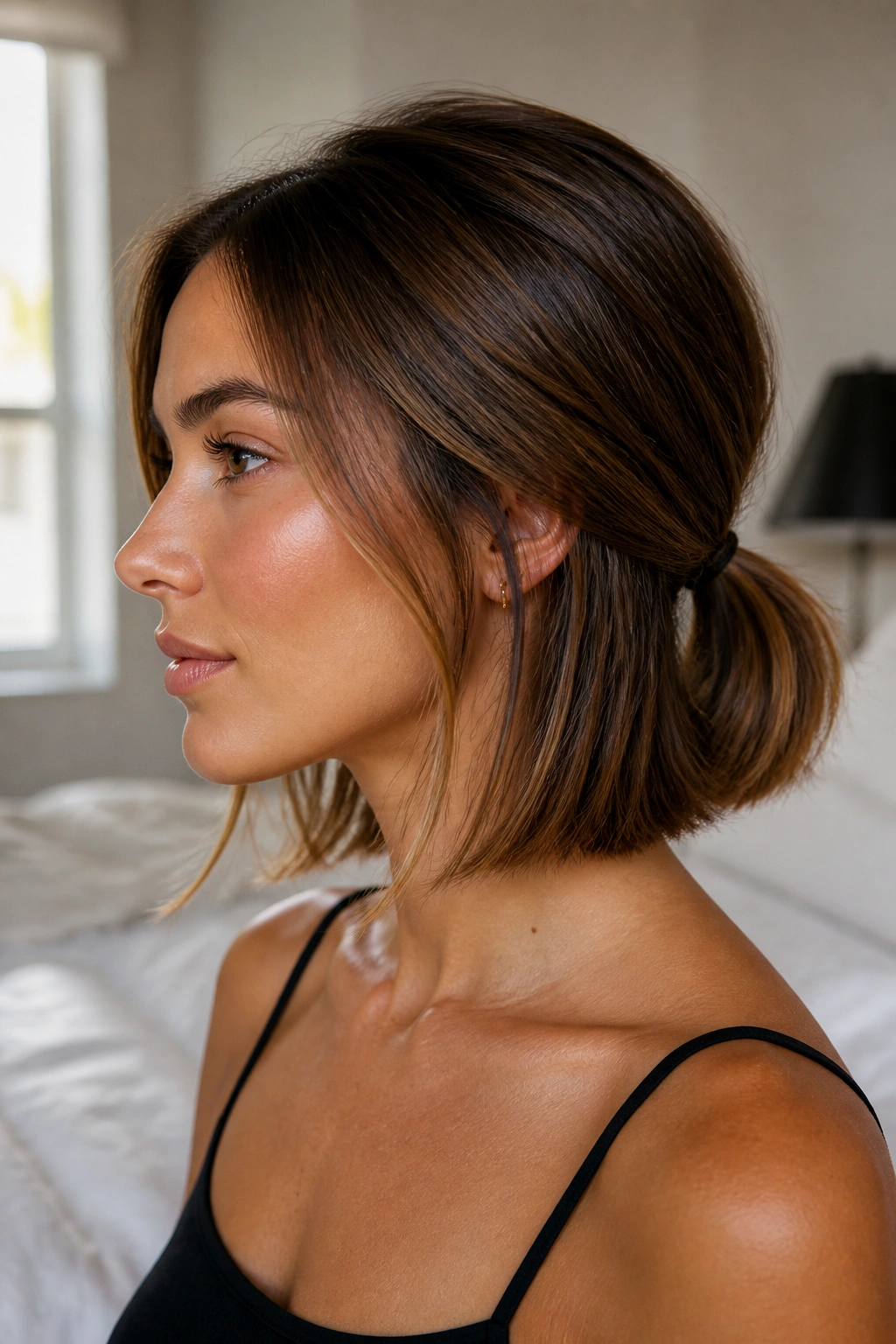
The collarbone lob is the easiest short cut to live with if you want backup options. It sits long enough to feel swingy and light, but it still gathers into a low ponytail without a fight. The tie usually lands at the nape or just above it, which is exactly where most people want their hair to disappear on a busy day.
What makes it work is the length balance. If the front skims the collarbone and the back stays only a touch shorter, you get enough slack to pull everything together. Go too choppy through the ends and the pony starts shedding pieces. Go too blunt and thick, and the style can feel heavy around the neck. The best version lands somewhere in the middle.
Why It’s Such a Safe Bet
This cut suits straight, wavy, and softly curly hair because it doesn’t depend on a precise curl pattern to look tidy. It also grows out well, which matters more than people admit. A lob that can still be tied back after eight weeks is a lot less annoying than one that only behaves on the first salon day.
If you like a smoother ponytail, ask for light interior debulking rather than aggressive layers. That keeps the outline clean. A small elastic and a few face-framing pieces are usually enough.
Best for: people who want the shortest cut with the least drama.
Avoid if: you want a strong, blunt bobline that never moves.
Styling note: a quick pass with a flat brush and a pea-sized amount of smoothing cream is usually enough.
Tiny tip: keep the nape slightly longer than the sides. It gives the elastic something to catch.
2. The Chin-Length Blunt Bob With a Longer Nape

A chin-length bob sounds too short for a ponytail until you see it with a slightly longer nape. Then it starts behaving. The back can still gather into a tiny tie, especially if the cut is blunt and the ends are kept thick instead of shredded into wisps.
There’s a reason this shape has staying power. Blunt ends create a denser-looking outline, and denser-looking hair is easier to grab. You may not get a swinging tail. That’s fine. You get a neat little pony at the base of the skull, which is often all you need for cooking, commuting, or getting through a warm afternoon without hair sticking to your neck.
What to Ask For
Tell your stylist you want the bob to hit around the chin in front but stay just a little longer at the nape. That extra rear length is what makes the ponytail possible. If the back is cut too even and too short, the elastic has nothing dependable to hold.
This cut looks best when the line stays clean. A rounded brush and a light mist of flexible hairspray can keep the shape from puffing up. On very thick hair, a touch of internal weight removal helps the style lie flat; on fine hair, skip heavy layering so the pony doesn’t come apart.
It’s not the most playful cut on the list. It is one of the most practical.
3. The Angled Bob That Gives You Extra Slack
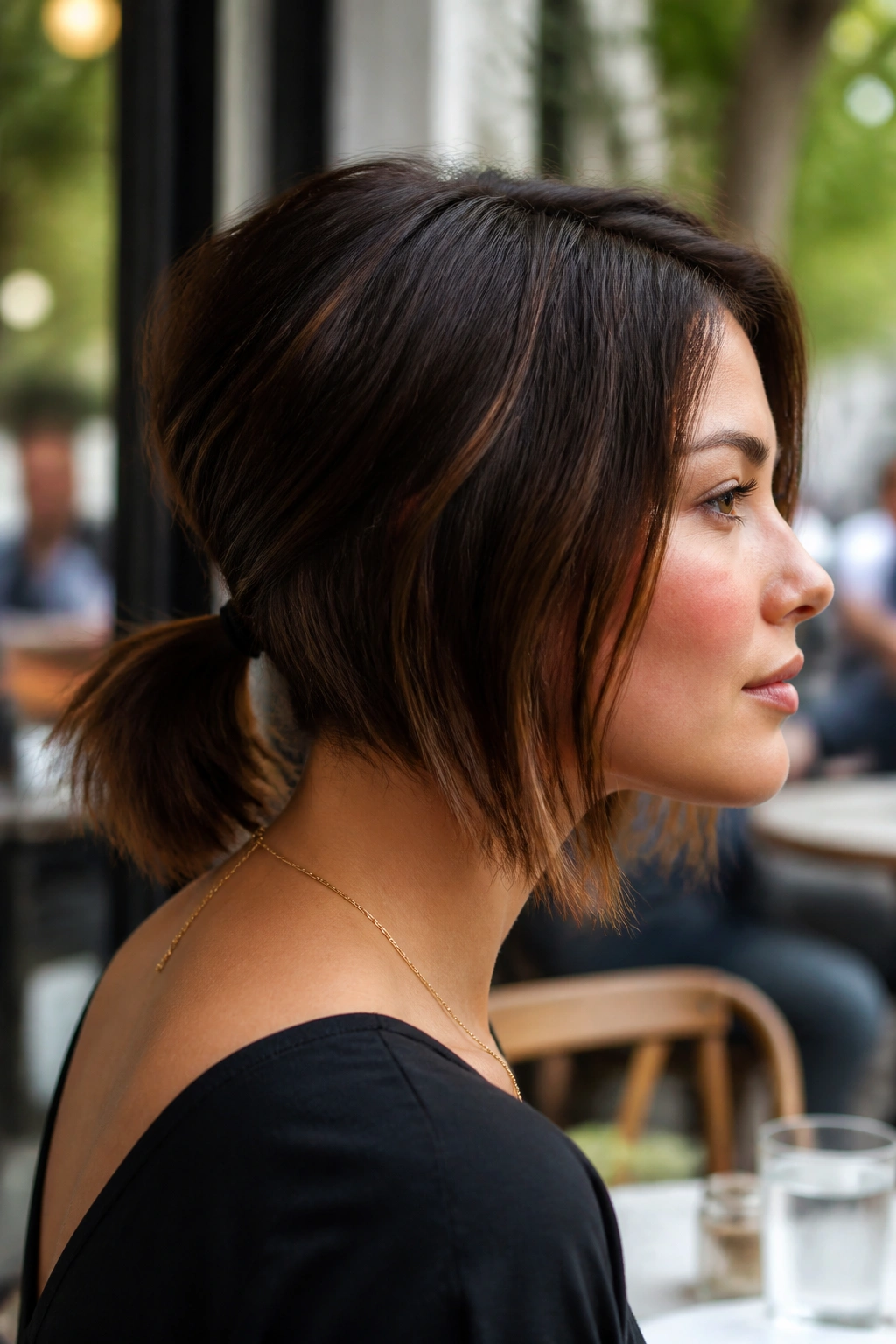
Why does an angled bob make the ponytail job easier? Because the front is doing quiet work the whole time. Longer front pieces give you slack to gather the hair back, which means the elastic doesn’t have to fight the length difference. A short back plus longer front is a small trick, but it changes everything.
The shape also keeps the neck feeling open. That matters more than people think. When the front sweeps forward and the back sits shorter, you get a cut that looks deliberate down and up. Not every style does that. Some short cuts are gorgeous when worn loose and awkward the second you try to tie them. An angled bob is usually kinder.
How to Wear It
- Keep the front at or just below the jawline if you want a usable mini pony.
- Ask for the back to stay a few inches shorter than the front, not stacked too high.
- Use a small elastic and gather the hair low, not mid-head.
- Leave the front corners loose if you want a softer, less tight look.
The best version of this cut feels sharp but not severe. You can tuck the shorter side back with a pin, wrap the elastic with a one-inch piece of hair, and still look polished. That extra angle is doing the lifting.
4. The Layered Shag Lob for Messy Ponytails
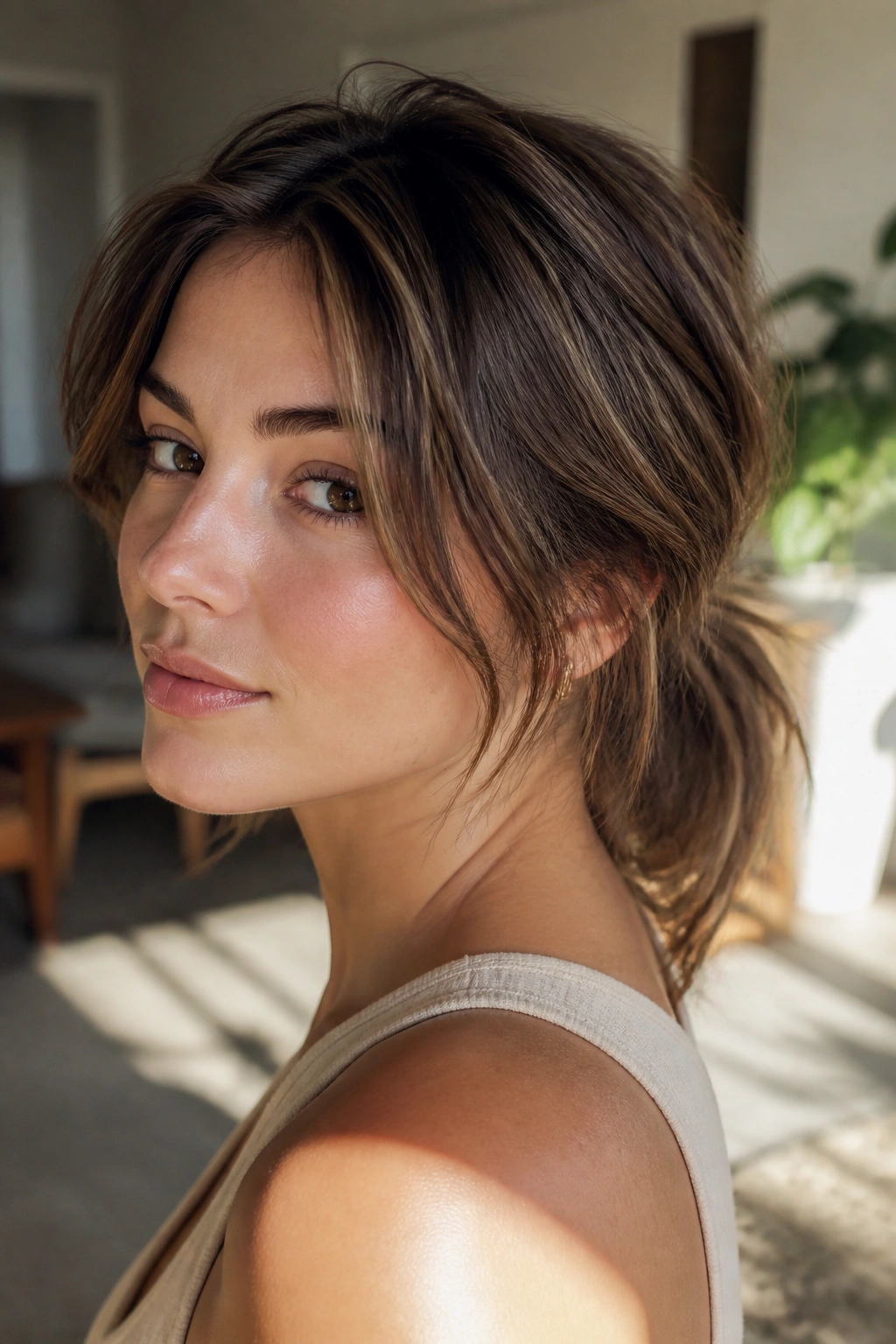
Picture this: you’ve got second-day hair, a dry shampoo mist that’s doing its best, and about thirty seconds before you need to leave. The layered shag lob is built for that exact moment. It does not promise a sleek, tight ponytail. It promises a good-looking messy one. Big difference.
The cut sits around the collarbone or just above it, then breaks up into soft layers that move when you gather them. Those layers keep the ponytail from looking stiff or helmet-like. Instead, the tie falls into a loose, lived-in shape with pieces falling around the temples and cheekbones. If your hair has wave, this can be a very easy win.
What Makes It Different
- Soft, shattered ends prevent the tail from looking bulky.
- Curtain bangs or long face-framing pieces help the style look intentional when tied back.
- A light texturizing spray gives the hair grip before you secure it.
- A scrunchie works better than a tight elastic if you want a fuller, looser finish.
The catch is that you have to like a little mess. If you want every strand tucked neatly into place, this is not your best bet. If you like hair that looks better after you’ve touched it once or twice, it’s a strong choice. I’d take this over a too-perfect blunt cut any day when the goal is a quick tie-back with some personality.
5. The Grown-Out Pixie With Enough Length at the Crown
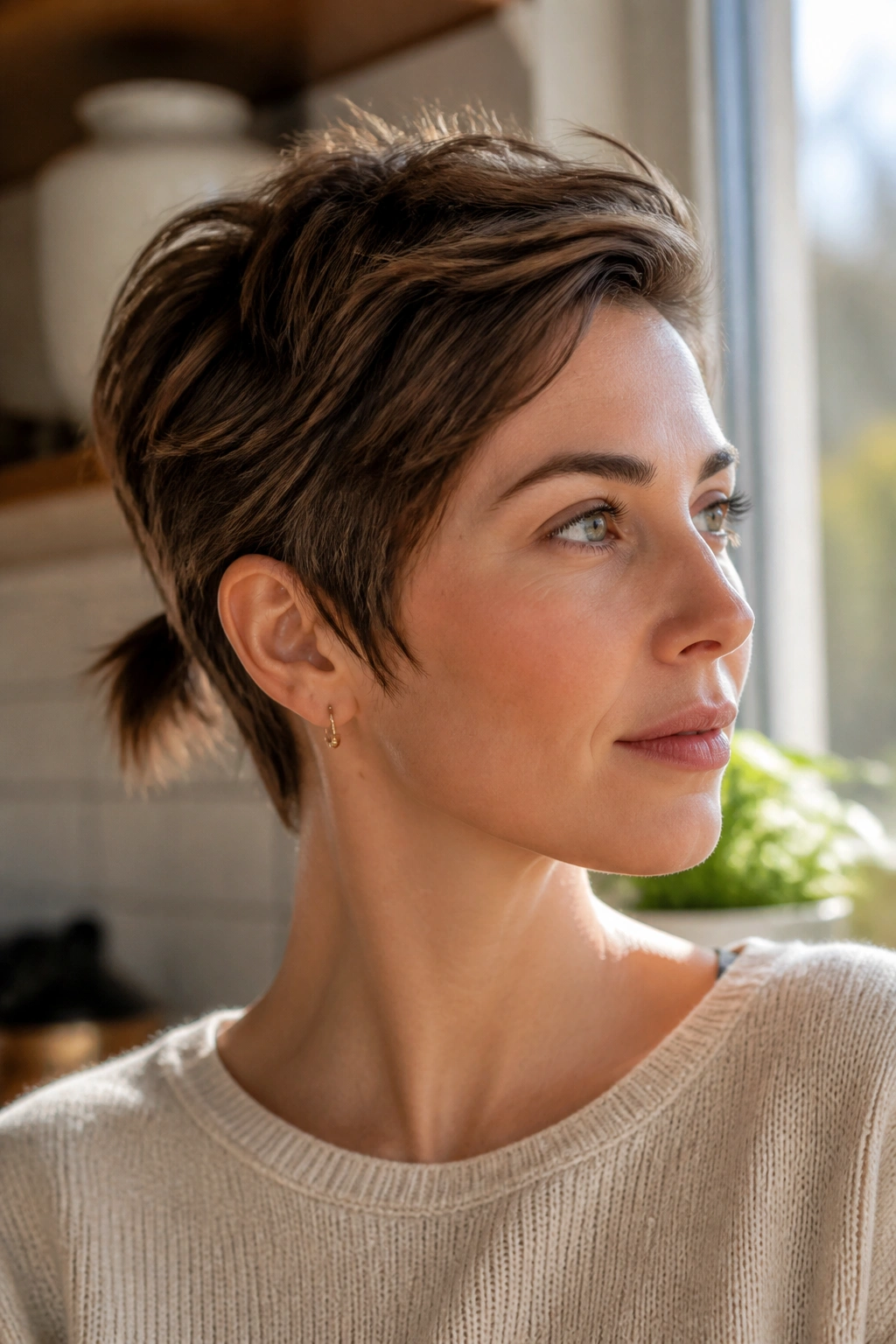
A pixie does not automatically rule out a ponytail. It rules out a full one. That’s a different thing. With the right grow-out, the top and crown can hold a tiny elastic at the back or gather into a little nub near the nape, especially if the sides are tapered and the top has 3 to 5 inches to work with.
This is the shortest haircut on the list, and it earns its place because it solves a real problem: you want your hair short, but you still want to get the front off your face fast. The ponytail you get here is tiny, practical, and a little cheeky. It’s the hair equivalent of folding up a chair and moving on.
A little styling cream goes a long way. Smooth the top with your fingers, brush the sides back, and use the smallest elastic you can find. If the crown is fluffy, a touch of water or a pea-sized dab of pomade calms it down. Don’t overdo the product. Short hair shows buildup fast, and nobody wants a ponytail that looks greasy by noon.
This cut suits people who like a clean neck and low-maintenance mornings. It does not suit people who want a swingy tail. Be honest about that part.
6. The Tapered Crop That Keeps the Neck Bare
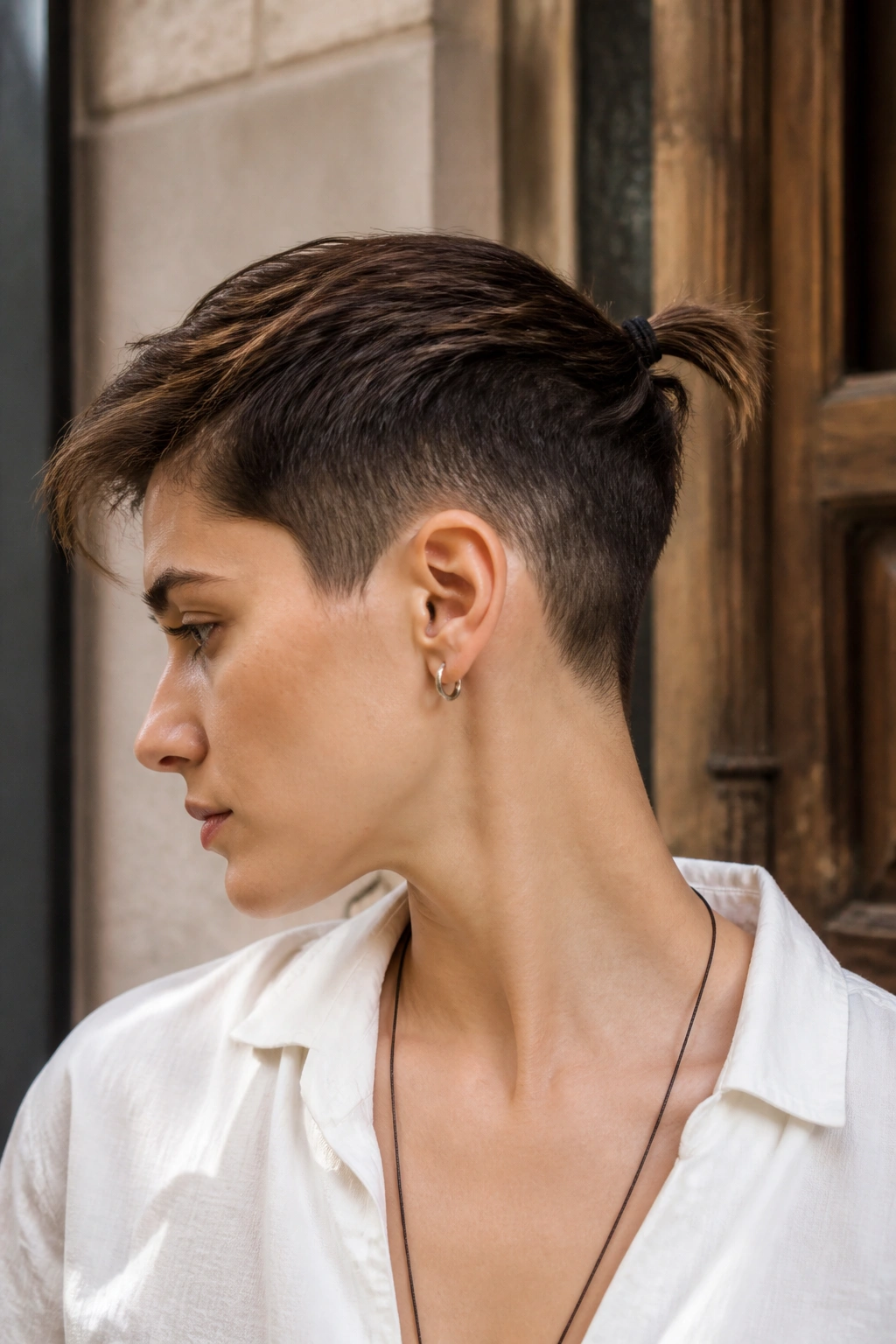
The tapered crop is for anyone who likes the back of the neck open and uncluttered. It’s shorter than a bob, but not as cropped as a true buzzed pixie, which means you can still gather the top into a tiny pony or mini knot if the crown leaves enough length. The sides stay snug, the neckline stays clean, and the whole thing feels crisp.
What matters most here is the balance between the top and the sides. Leave the crown around 4 to 5 inches and the top can gather into a small tie at the back. Keep the sides tight and you avoid that puffed-out triangle shape that makes some short cuts feel fussy. This one reads neat, not needy.
The best way to style it is fast. Finger-dry the top, push the hair back with a soft brush, and secure only the longest section. You don’t need to force every strand into the elastic. In fact, trying to do that usually makes the cut look worse. Let the shorter pieces stay loose around the temples.
This is one of those haircuts that rewards confidence. Not because it’s dramatic. Because it isn’t. It simply knows what it is.
7. The French Bob With a Soft Nape
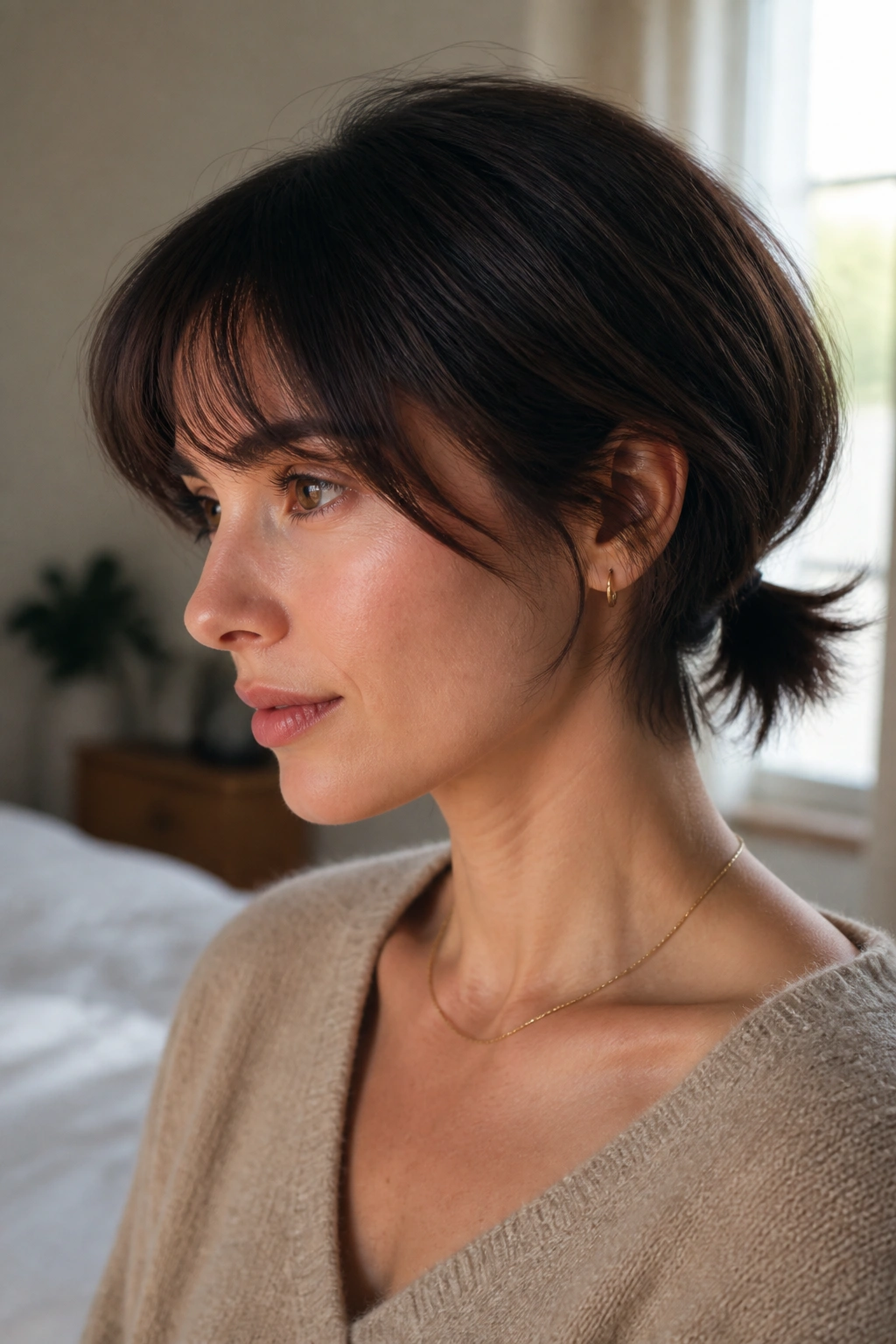
Can a French bob still tie back? Yes, if the back is left a little longer than the classic chin-skimming version. That small change gives you just enough length for a tiny low ponytail or a clipped-back nape section, while the fringe and sides keep the shape looking chic and a bit undone.
The appeal here is the face line. A French bob can make the jaw look sharper and the neck look longer, which is a nice trade when you’re wearing it down. Then, when you tie it back, the fringe softens the whole thing so it doesn’t look severe. It’s tidy without feeling stiff.
What to Watch For
If the bob is too blunt and too short at the nape, the ponytail may collapse into a few stubborn pieces. Ask for a little more length through the lower back section and keep the fringe light enough to tuck or pin. Heavy, thick bangs can make the tied-back version feel top-heavy.
This cut works especially well with straight or slightly wavy hair. On curls, the bob can shrink more than you expect, which is charming when worn loose and less charming when you need a ponytail. If your hair texture runs curly, leave a touch more length than you think you need.
It’s polished, but not precious. That matters.
8. The Shoulder-Grazing Wolf Cut That Makes a Soft Ponytail
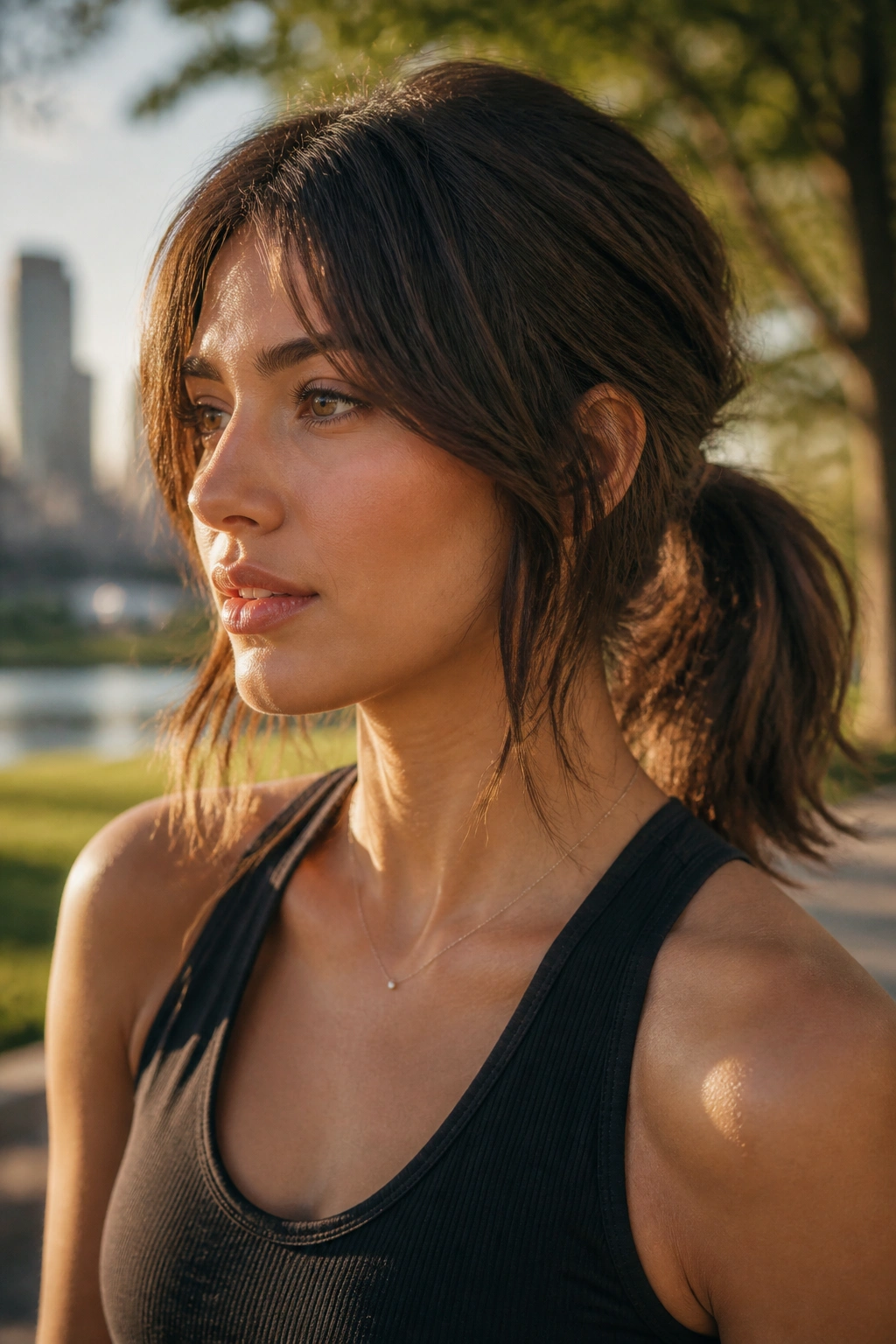
The shoulder-grazing wolf cut is the one people reach for when they want movement and a ponytail in the same haircut. It has layers, plenty of them, and those layers are what keep the tied-back version from looking flat. Pull it into a low or mid pony, and you get loose pieces around the face, texture at the crown, and a tail that never feels too tidy.
This is not the cut for someone who wants a strict, smooth silhouette. It’s for someone who likes the hair to move. The layers create a soft, shaggy frame, which means the ponytail can look better the second it gets a little worn in. That is either a blessing or a nuisance, depending on your taste.
- Best on wavy and thick hair.
- Works with curtain bangs or a long fringe.
- Needs grip from dry shampoo or texturizing spray.
- Looks best when the elastic sits low, near the nape.
The downside is obvious: short layers can slip out. You may need a couple of bobby pins to keep the shortest face pieces from escaping. But if you like that slightly messy, airy look, the tradeoff is worth it. A smooth ponytail is easy to buy. This shape has more personality.
9. The One-Length Midi Cut for the Most Reliable Ponytail
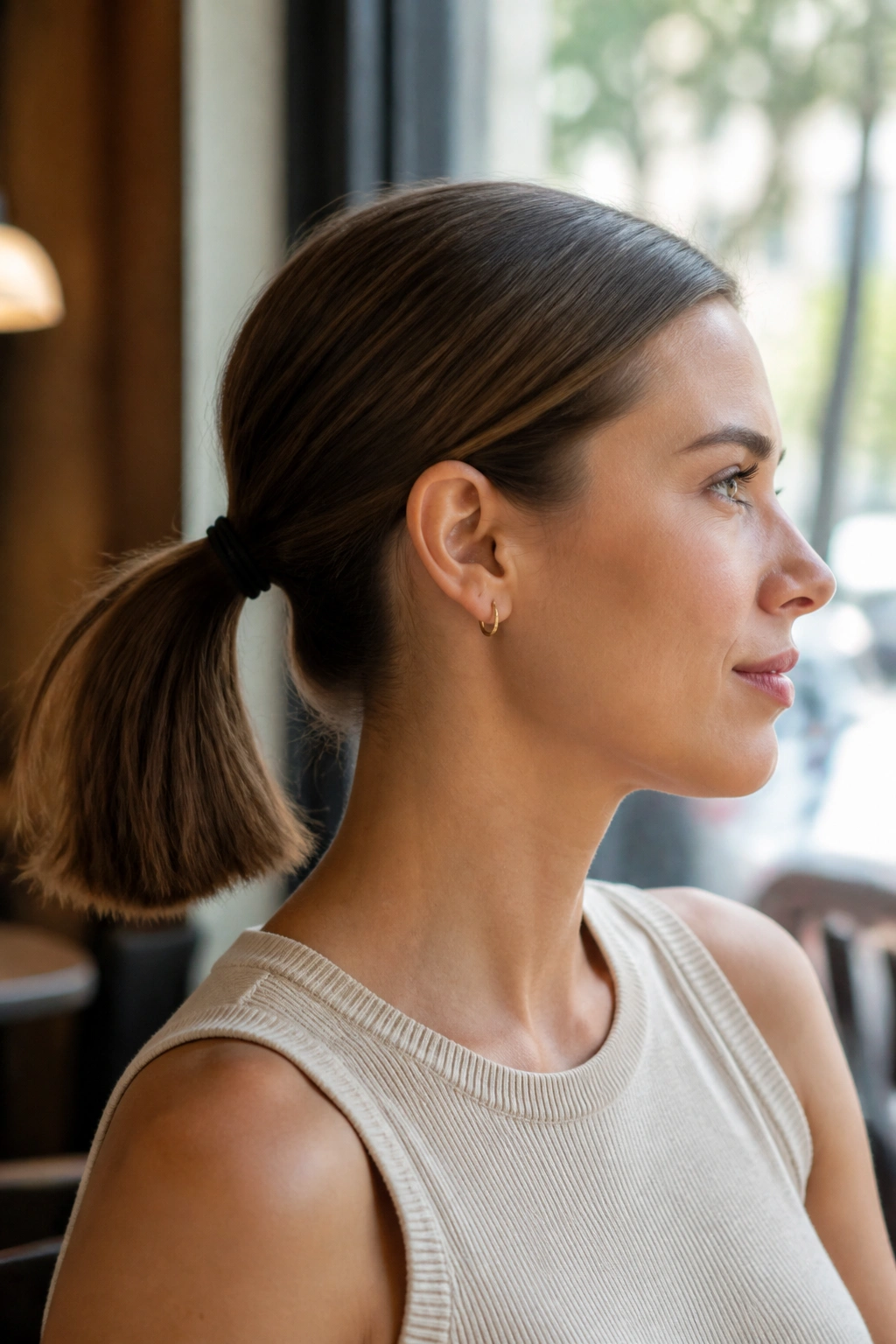
If you want the most reliable ponytail among short haircuts, start here. The one-length midi cut is plain in the best possible way. No dramatic angle, no shredded layers, no pieces fighting the elastic. Just enough length to gather neatly, usually somewhere between the jaw and the collarbone, with the same line all the way around.
That evenness is the whole trick. Hair that is cut with a clean perimeter slips into a ponytail more predictably because every section reaches the tie at roughly the same time. Fine hair especially benefits from this. A lot of short styles look cute loose but fall apart the moment they’re pulled back. A one-length midi cut tends to cooperate.
There’s a practical beauty to that. You can wear it down, tuck it behind the ears, clip it half-up, or pull it into a low pony that doesn’t puff or split. It’s not flashy. It works.
This is also the best choice if you hate constant styling. A blow-dry doesn’t have to be perfect. Airdried waves can look good. A little bend at the ends is fine. The haircut does most of the work for you, and sometimes that is the nicest thing a haircut can do.
10. The Undercut Pixie-Bob Hybrid That Removes Bulk
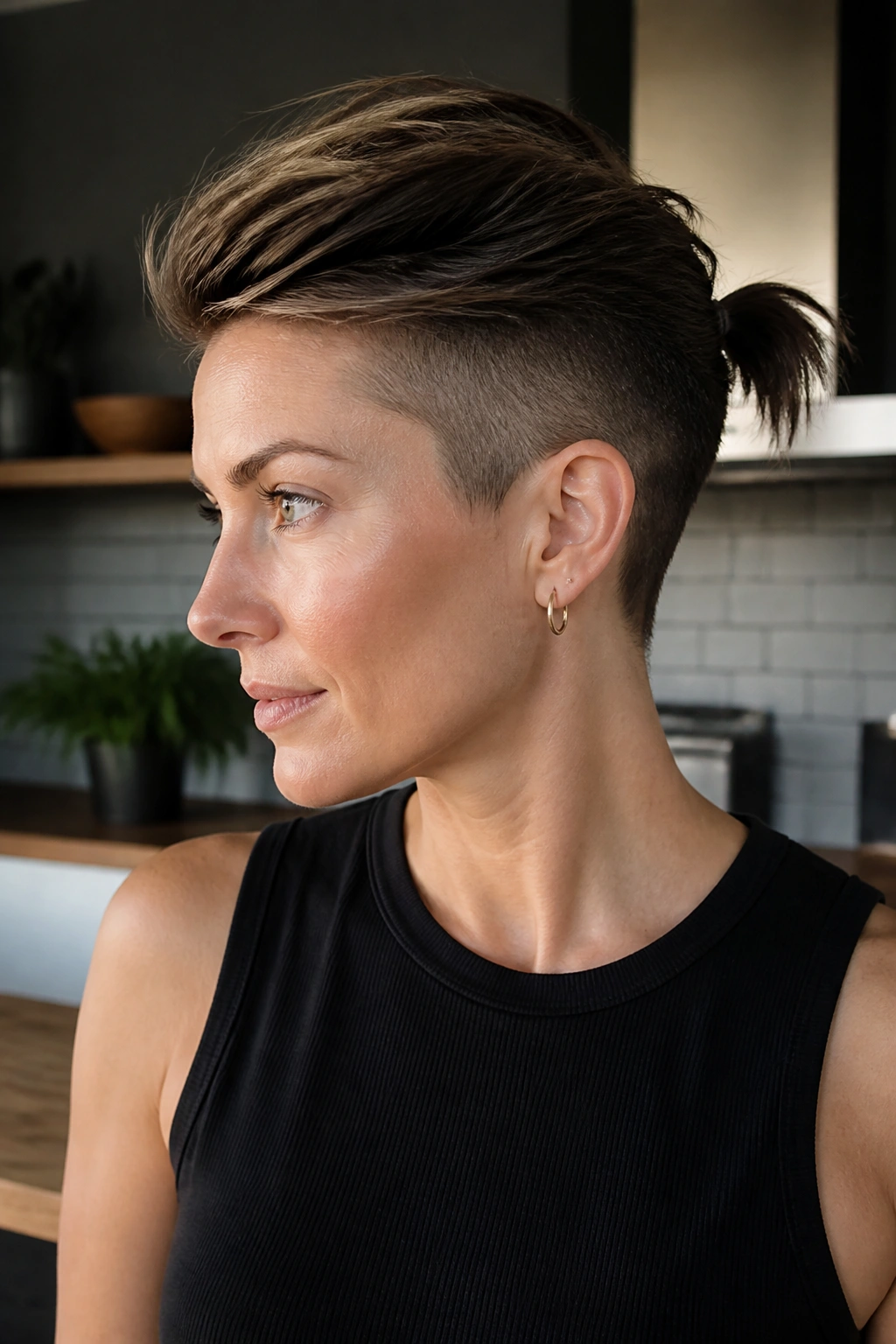
Unlike a soft bob, the undercut pixie-bob hybrid clears weight out of the nape and sides, which gives the longer top enough room to reach a tiny elastic. That’s the point. You keep the top pieces long enough for a small ponytail while the underside stays cut down and controlled, so the whole style sits flatter and feels cooler.
This cut is a smart pick for coarse hair or very dense hair, where bulk is usually the thing that gets in the way. A traditional short cut can look like a helmet on thick hair if the nape is too full. The undercut changes that. It gives the top hair a place to lie.
There is a catch. You have to like the feel of shorter sides. Not shaved bare unless that’s your thing, but clearly shorter. If you want softness around the head and a bit of fullness through the outline, this is not the place to ask for it. The shape is cleaner, sharper, and more directional.
For daily styling, a blow-dryer and a round brush can lift the longer top, then a tiny elastic or clip collects the back. It looks best when the finish is neat, not overworked. If you’ve got thick hair and want a ponytail option that doesn’t turn into a puffball, this is worth a serious look.
11. The Face-Framing Midi Shag That Softens a Tie-Back
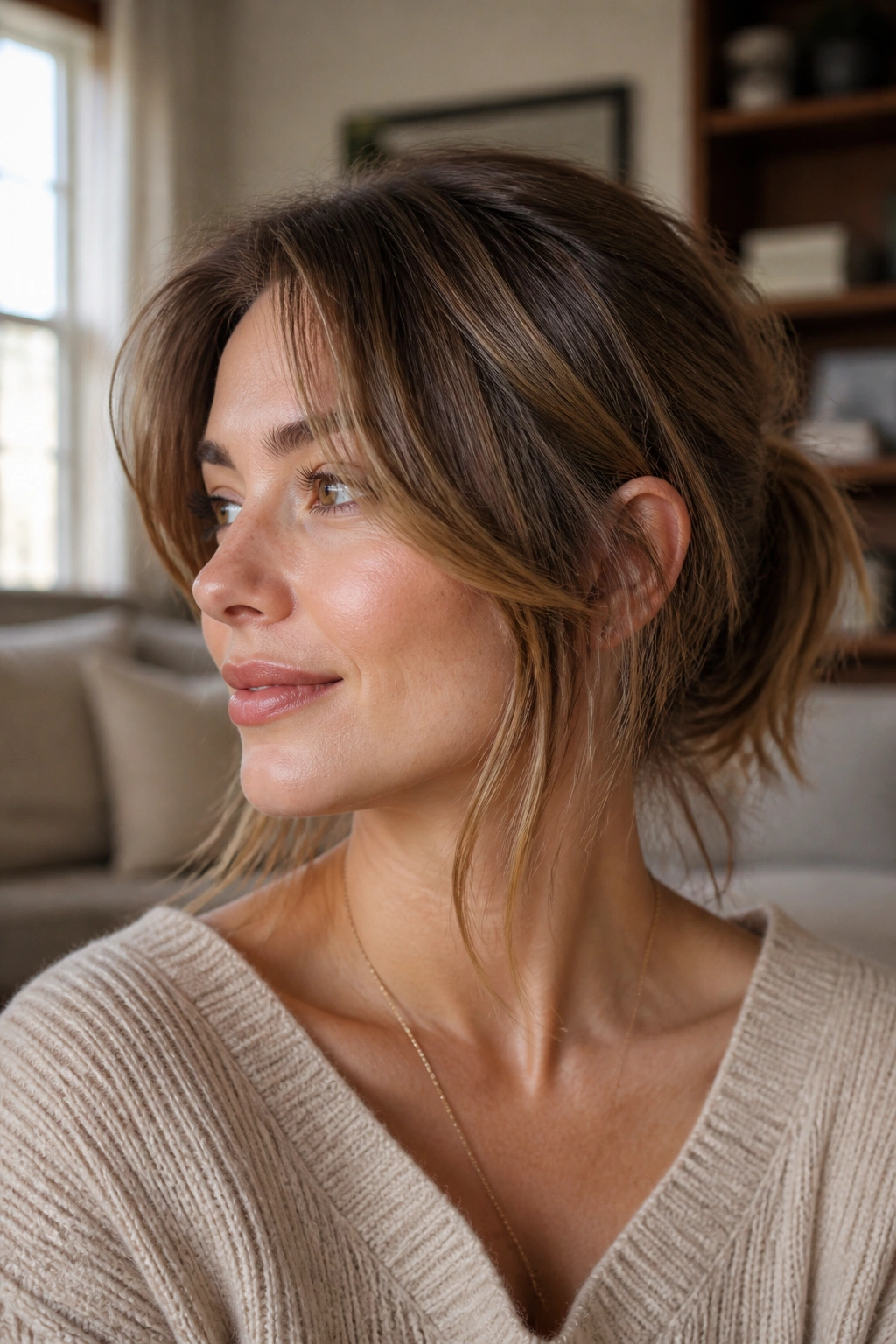
How do you keep a shag from collapsing when you tie it back? You don’t fight the pieces. You let the face-framing layers do their job. The face-framing midi shag keeps enough length at the shoulders to gather into a ponytail, but the shorter front layers create movement around the face so the tied-back version still looks deliberate.
The trick is in the front. Ask for the shortest layers to begin around the cheekbone or just below the jaw, not way up near the eyes. That gives you softness without turning the front into little flying bits every time you move. The back can stay longer and looser, which helps the ponytail hold together.
A few pieces will slip free. Fine. That’s part of the look. Use a medium-hold spray on the crown if you want more control, or leave it loose if you like a softer shape. A shag like this is at its best when it does not look overmanaged.
Best Ways to Wear It
- Low pony for a casual, worn-in feel.
- Mid pony with a few face pieces left out.
- Half-up style when you want more volume at the crown.
- Loose tie with a scrunchie if the ends feel too sharp.
It’s a good haircut for people who want movement first and neatness second. That order matters.
12. The A-Line Bob That Makes Room at the Front
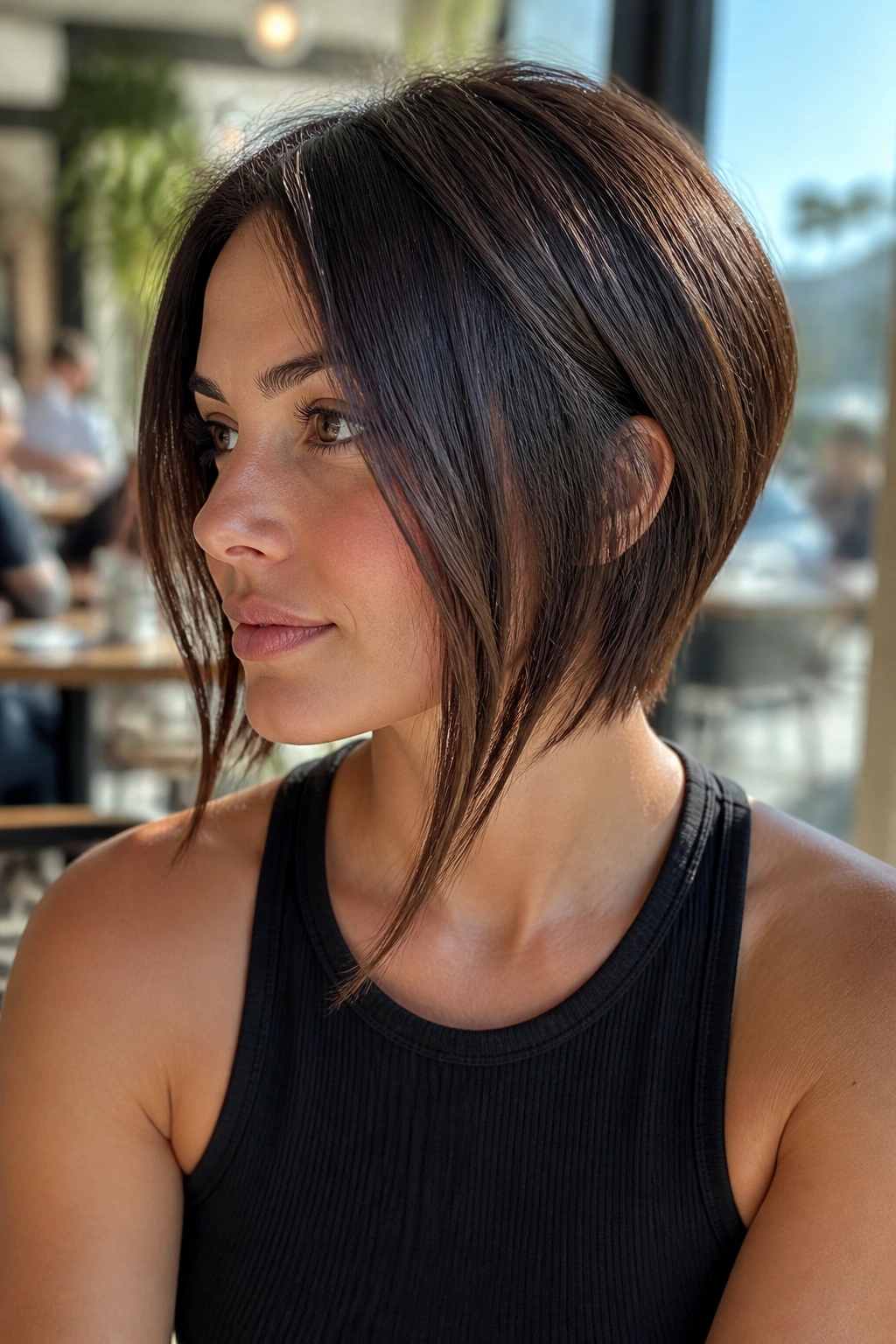
A-line bobs are sneaky. From the front, they look sleek and polished. From the back, they leave enough edge length to gather into a low ponytail more easily than a perfectly even bob would. The front angles down a little, so the hair has more slack to reach the elastic without yanking at the scalp.
That detail sounds tiny. It isn’t. A flat, even bob can feel like it’s fighting you when you try to tie it back. An A-line bob gives you a bit of motion through the front corners, which makes the whole style easier to manage. It also keeps the neck feeling open, which is half the reason people choose short hair in the first place.
This haircut loves straight or slightly bent hair. If your texture is wavy, the angle softens nicely. If your hair is very curly, the shape can shrink and lose some of its crisp line, so your stylist should leave extra length to account for that. A cut that looks perfect wet and useless dry is not a good cut.
When worn up, it looks clean. When worn down, it has shape. That balance is what makes the A-line bob worth the salon chair.
13. The Deep Side-Part Bob That Tucks and Ties Easily
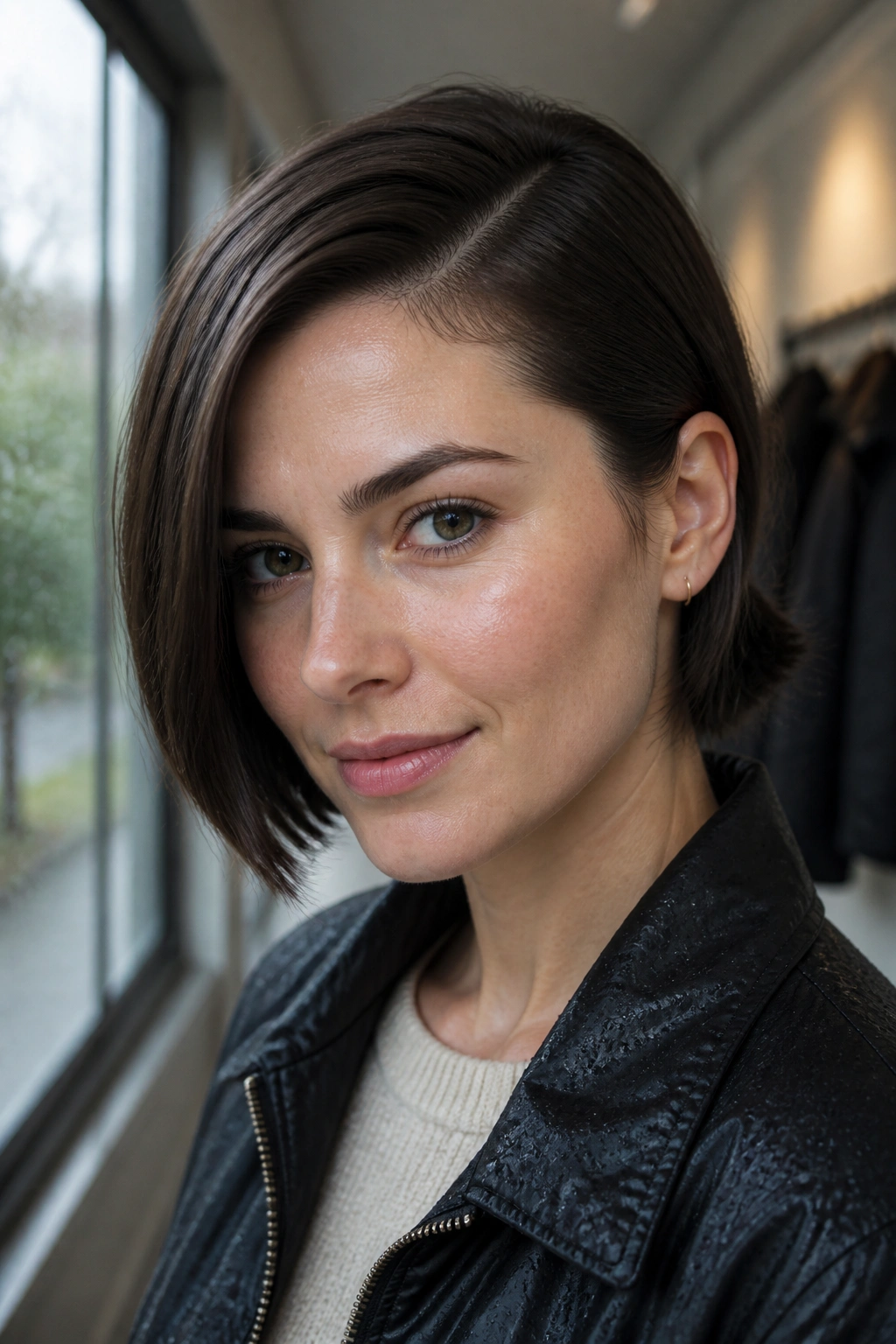
On rainy days, this is the cut I trust most. A sleek bob with a deep side part has an easy way of sliding into a low ponytail because one side already wants to sweep back. You spend less time forcing the hair into place, which sounds small until you’re trying to leave the house with one shoe on.
The part does a lot of visual work. It gives the bob motion, keeps the top from flattening too much, and makes the tucked-behind-the-ear side look intentional instead of accidental. When you pull it back, that same sweep helps the front collapse neatly toward the nape. You get a cleaner tie with less fuss.
A flat brush and a small amount of shine cream are enough for most days. If your hair is thick, a little tension at the roots helps the part stay where you put it. If it’s fine, don’t over-smooth it or the shape can look limp. A bit of bend is better than a stiff helmet.
This is one of the more polished choices on the list. It’s not the happiest cut for someone who wants shaggy texture. It is excellent for someone who likes looking put together with minimal effort and still wants a ponytail escape hatch.
14. The Textured Shoulder Cut With Interior Layers
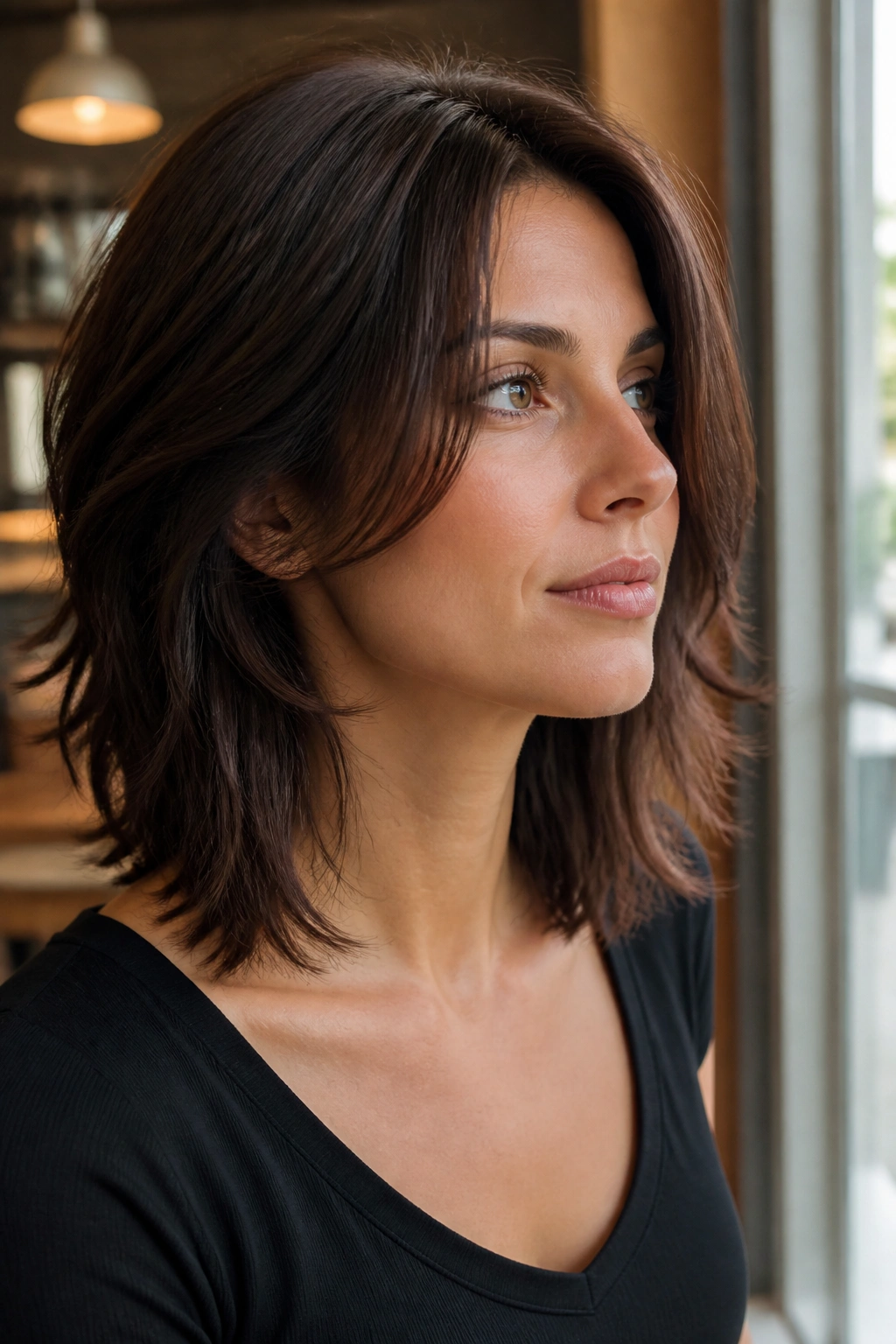
The textured shoulder cut sits in that pleasant middle ground where the hair is long enough to gather cleanly, but short enough to feel light around the face and neck. The real work happens inside the cut. Interior layers remove weight without stripping away the outline, which means the ponytail holds its shape instead of splitting into wide, awkward sections.
That matters if you have thick hair. A shoulder cut without some internal shaping can feel heavy when tied back, especially near the temples. Too much surface layering does the opposite and makes the pony look thin. Interior layers are the quieter fix. They keep the outside line intact and the inside less bulky.
This is the cut I’d point to for people who want one haircut that can do a little bit of everything. Wear it down. Tie it back. Clip the front. Put it in a lazy knot on the weekend. It’s not the most dramatic shape, and that’s part of why it stays useful.
Dry shampoo helps on day two, but so does simply flipping the hair over and rough-drying the roots. If you want a ponytail that doesn’t feel like a compromise, this cut earns its spot.
15. The Jaw-Length Bob With a Longer Nape
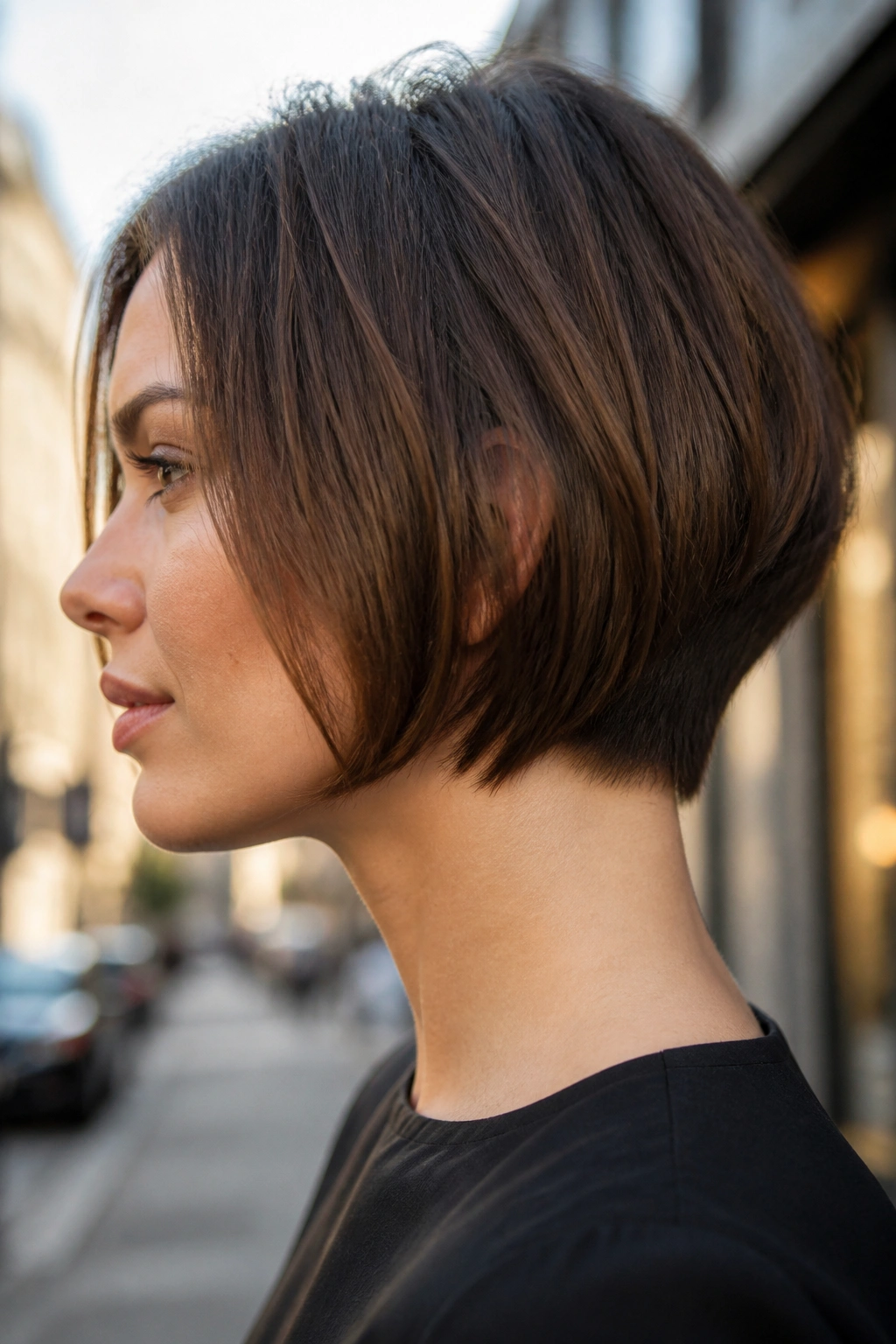
If you want the shortest possible haircut that still gives you a real tie-back option, this is the one to ask about. A jaw-length bob with a longer nape can gather into a tiny ponytail at the base of the neck, especially if the back is left an inch or two longer than the front and the ends are kept clean.
It’s a sharper look than the collarbone lob. A little less forgiving, too. The ponytail will be small, and on some hair types it will look more like a mini gathered tail than a proper swing. That’s fine. The point is control. You get the short shape you wanted and a small way to keep the hair off your face when you need it.
This cut works best when the stylist respects the nape. Too much stacking or overthinning in the back and the ponytail disappears. Leave enough weight there and the elastic has something to hold. That is the whole game.
A soft bristle brush, a tiny clear elastic, and a quick tuck behind the ears usually get it done. The result is neat, blunt, and a little bit cheeky. A haircut like this tells the truth: you like short hair, but you still want options. Fair enough.
