



A stretchy headband can rescue a workout hairstyle in less than two minutes, and that matters more than people admit. Stretchy headband hairstyles for workouts work best when the band does half the job for you — holding the front, catching the flyaways, keeping sweat out of your eyes — while the actual style handles the weight and bounce in back.
A band that’s too slick slides. A style that’s too loose falls apart. The sweet spot sits somewhere between those two, and it usually comes down to simple choices: ribbed knit instead of shiny fabric, a low anchor point instead of a sky-high knot, and enough tension to feel secure without making your scalp ache by minute twenty.
Hair type changes the game, too. Fine hair needs grip. Thick hair needs structure. Curly hair wants room. Straight hair wants texture. The good styles below all solve those problems in different ways, which is why a plain ponytail is not the only answer — not even close.
1. Low Sleek Ponytail With a Wide Stretchy Headband
A low sleek ponytail is the no-drama option, and that’s why it works so well. The headband keeps the front neat, the ponytail sits low enough to avoid bouncing all over the place, and the whole style stays close to the head instead of fighting it.
Why It Works for Sweaty Classes
The lower the ponytail sits, the less it swings when you run, row, or do fast footwork. A wide stretchy headband adds a second layer of control across the hairline, which helps if your bangs split apart the second you start moving.
If your hair is fine, smooth a pea-sized amount of styling cream through the crown before you tie it back. If it’s thick, use a wet brush and pull the hair back in sections so you’re not yanking at one giant bundle.
How to Do It Well
- Place the headband about 1 inch behind your hairline.
- Tie the ponytail at the nape of your neck, not halfway up the back of your head.
- Wrap a tiny strand around the elastic if you want a cleaner finish.
- Use a snag-free hair tie so the ponytail doesn’t crease and frizz out by the end of class.
Best tip: if the band slips, switch to a ribbed knit or terry version instead of tightening it until your temples hurt.
2. High Bubble Ponytail With a Slim Stretchy Headband
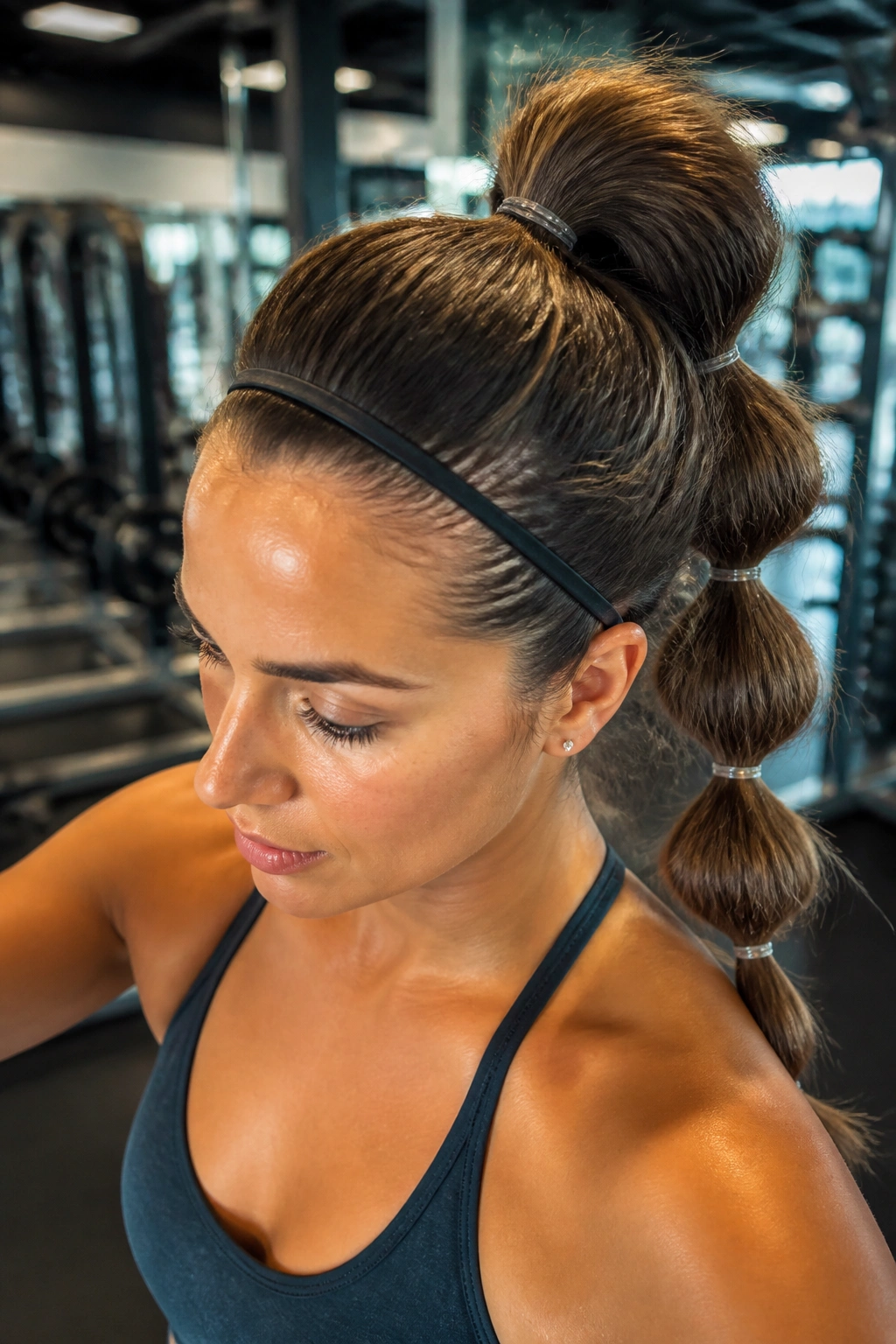
When a regular high ponytail feels too floppy, the bubble version fixes the problem fast. You still get the lift, but the elastic sections break up the length so the ponytail doesn’t whip against your neck every time you move.
The slim headband does a different job here. It keeps the hairline in check without adding bulk around the crown, which matters if you’re already layering elastics down the tail. Too much fabric up top can make the whole style feel heavy.
Picture a long ponytail tied at the crown, then sectioned every 2 to 3 inches with small clear elastics. Tug each section outward just a little so it puffs into round bubbles. Not huge. Just enough to look intentional.
This one is good for medium to long hair, especially if your ends are layered and prone to slipping out of a single ponytail. It also reads cleaner than a messy high ponytail, which is nice if you go straight from the gym to the rest of your day and do not want to look like you wrestled your own hair.
3. French Braid Into a Low Ponytail
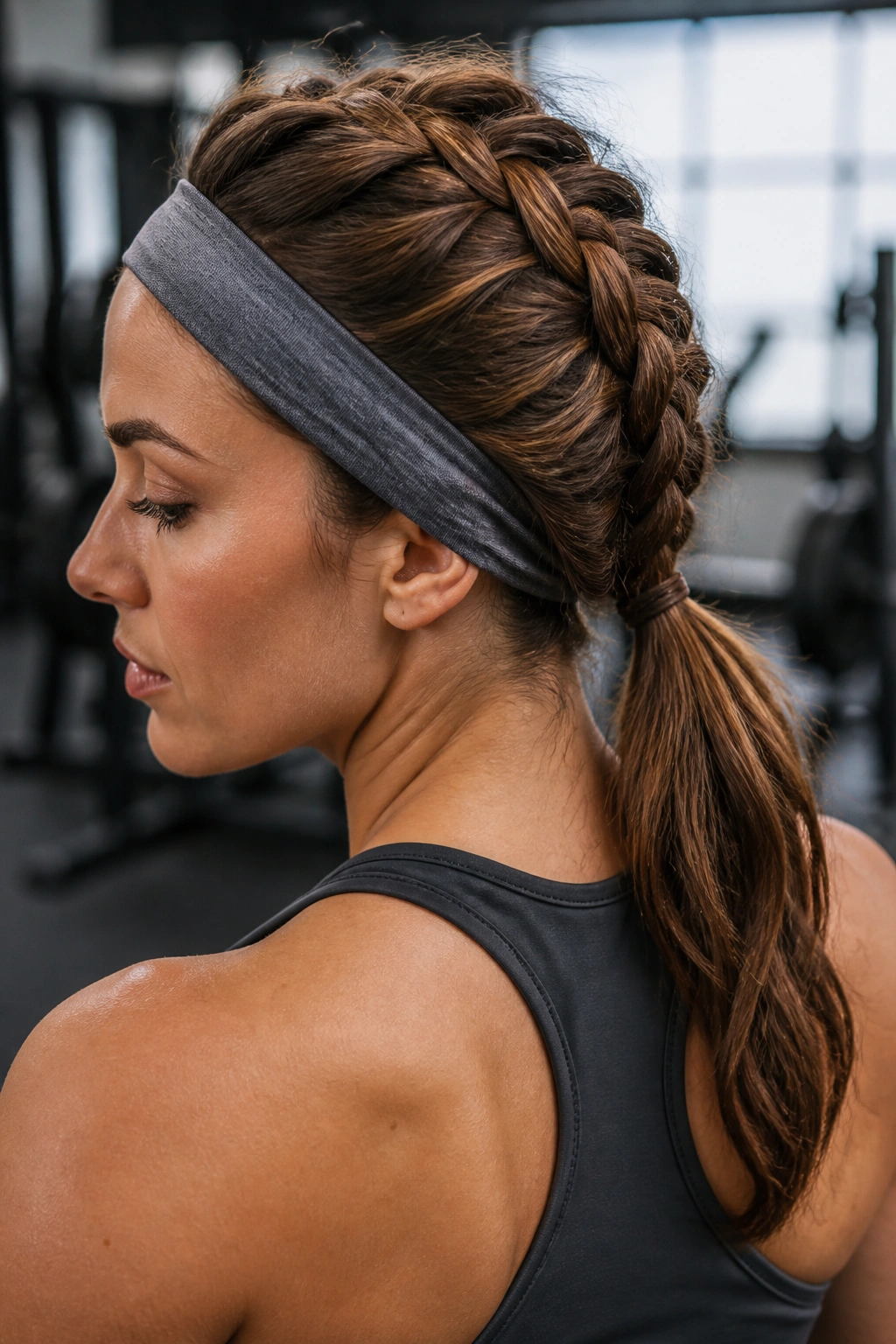
Why does this combo stay put so well? Because the braid locks the top section in place before the ponytail takes over. A French braid at the crown gives you control where hair usually starts escaping first, and the low ponytail keeps the finish simple.
The trick is to braid only until you reach the point where the hair is stable — usually just above the nape — then secure the rest with a small elastic. If you braid too loosely, the front lifts. If you braid too tightly, the scalp starts to complain halfway through warmup. There’s a narrow middle ground here, and it’s worth finding.
How to Keep the Braid from Loosening
- Start with a slightly damp or lightly texturized crown if your hair is slippery.
- Add hair from both sides in even sections.
- Keep the braid snug at the top and a little softer toward the ends.
- Finish with one elastic at the bottom and one under the ponytail if your hair is thick.
A stretchy headband can sit just in front of the braid line and stop short layers from peeling out. I like this look for cycling and incline walking because it doesn’t feel fussy. It just works.
4. Low Braided Bun That Stays Put
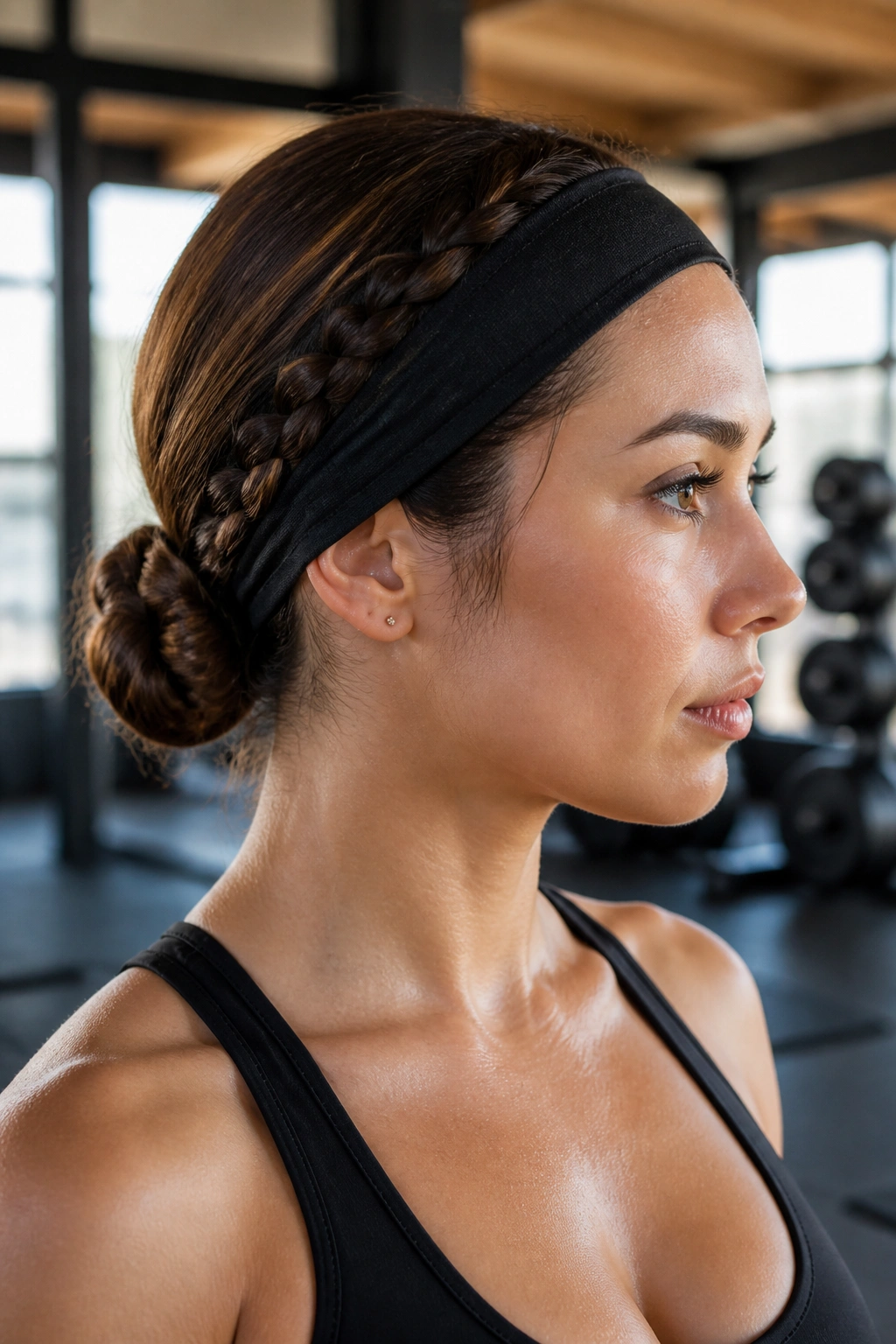
A bun does not need to sit high to stay neat. In fact, the low braided bun is usually steadier because the weight hangs closer to the neck and the braid gives the bun a firmer core to wrap around.
Start with a low ponytail, braid it all the way down, then coil the braid into a flat bun at the nape. Two or three bobby pins often do the job for fine hair. Thick hair may need four, maybe five if the braid is dense. Pin through the braid itself, not only the outer loop of the bun. That tiny detail matters more than it should.
This is one of my favorite choices for long cardio sessions, rowing, or anything that involves lying back on a bench. A high bun can dig into the headrest. A low braided bun stays out of the way.
One caveat: if your hair is layered, leave the last inch of the braid a little looser before you coil it. That helps the ends tuck in instead of poking out like little wires.
5. Messy Top Knot With Face-Framing Pieces
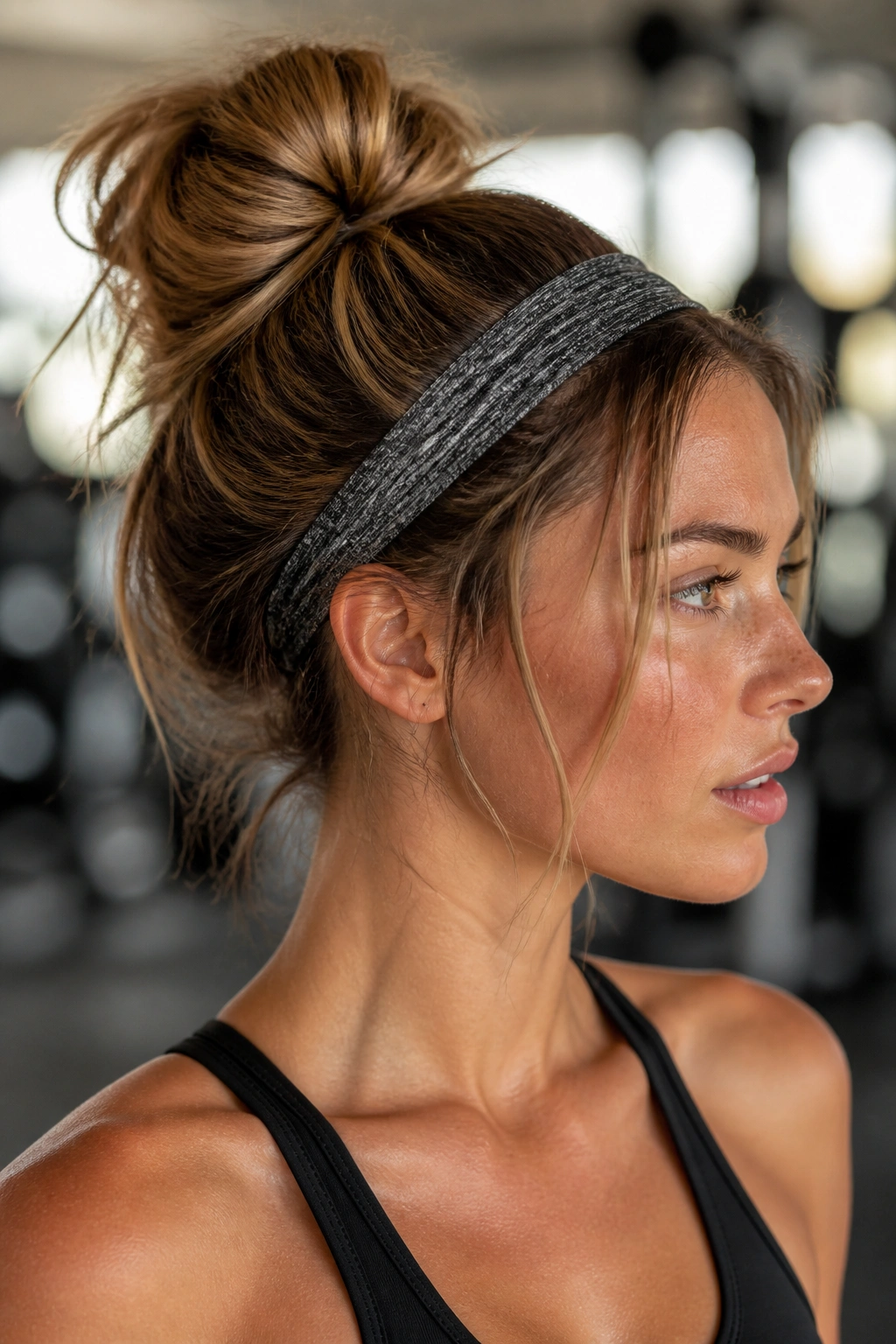
When your neck is hot and your roots feel damp, a top knot starts looking like common sense. The headband smooths the front, the knot lifts the length off your shoulders, and the face-framing pieces keep the style from feeling too severe.
Keep the knot slightly off the absolute top of your head. Too high, and it bobs. Too low, and it collapses against your neck. The sweet spot is usually a few inches above the crown, where the bun can sit without tipping backward every time you jump.
Messy doesn’t mean careless.
A few loose pieces at the temples are enough. You want them to stop around cheekbone level, not swing into your mouth when you move. If you’re doing yoga, lifting, or a slower class, this style feels easy and relaxed. For sprint work, pin the loose pieces back a little tighter or skip them altogether.
If your hair is fine, twist the ponytail before wrapping it into the bun. If it’s thick, split the ponytail in half and wrap each half around the base. That keeps the bun from turning into a giant lump that pulls on one spot.
6. Dutch Braid Crown With a Soft Headband
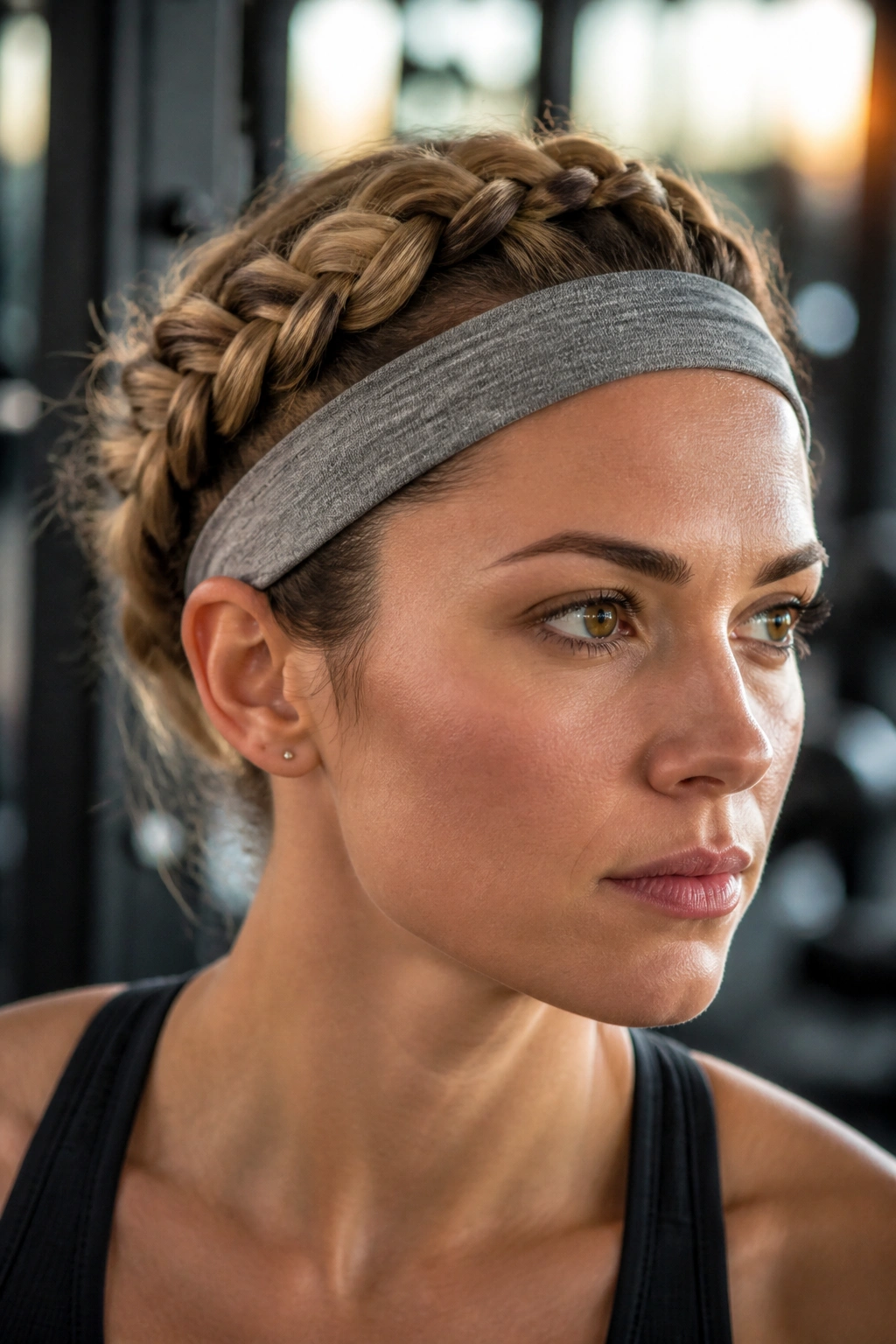
A Dutch braid crown does more work than it looks like. Because the braid sits raised on the head instead of sinking into it, it creates a little wall that keeps shorter layers from escaping around the sides.
The headband should be soft here — not stiff, not shiny, not the kind that leaves a red line across your forehead. A 1- to 1.5-inch knit band usually feels better than a narrow strip, especially if you’re wearing the style for more than an hour.
Why the Braid Helps
A Dutch braid grabs hair under the braid instead of over it, which makes the braid sit on top of the hair in a more visible, structured way. That’s useful in a workout style because the braid stays defined even when the rest of your hair moves around.
Best Way to Wear It
- Start the braid near one temple.
- Follow the hairline around the head.
- Keep the braid tight enough to hold, but not so tight that your scalp feels pulled.
- Tuck the end under the braid or pin it flat behind the ear.
This style suits medium to long hair and works especially well when you want the front completely off your face. It also looks polished in a way that doesn’t feel overdone, which is rare in gym hair. Rare, and welcome.
7. Double Braids With a Center Part
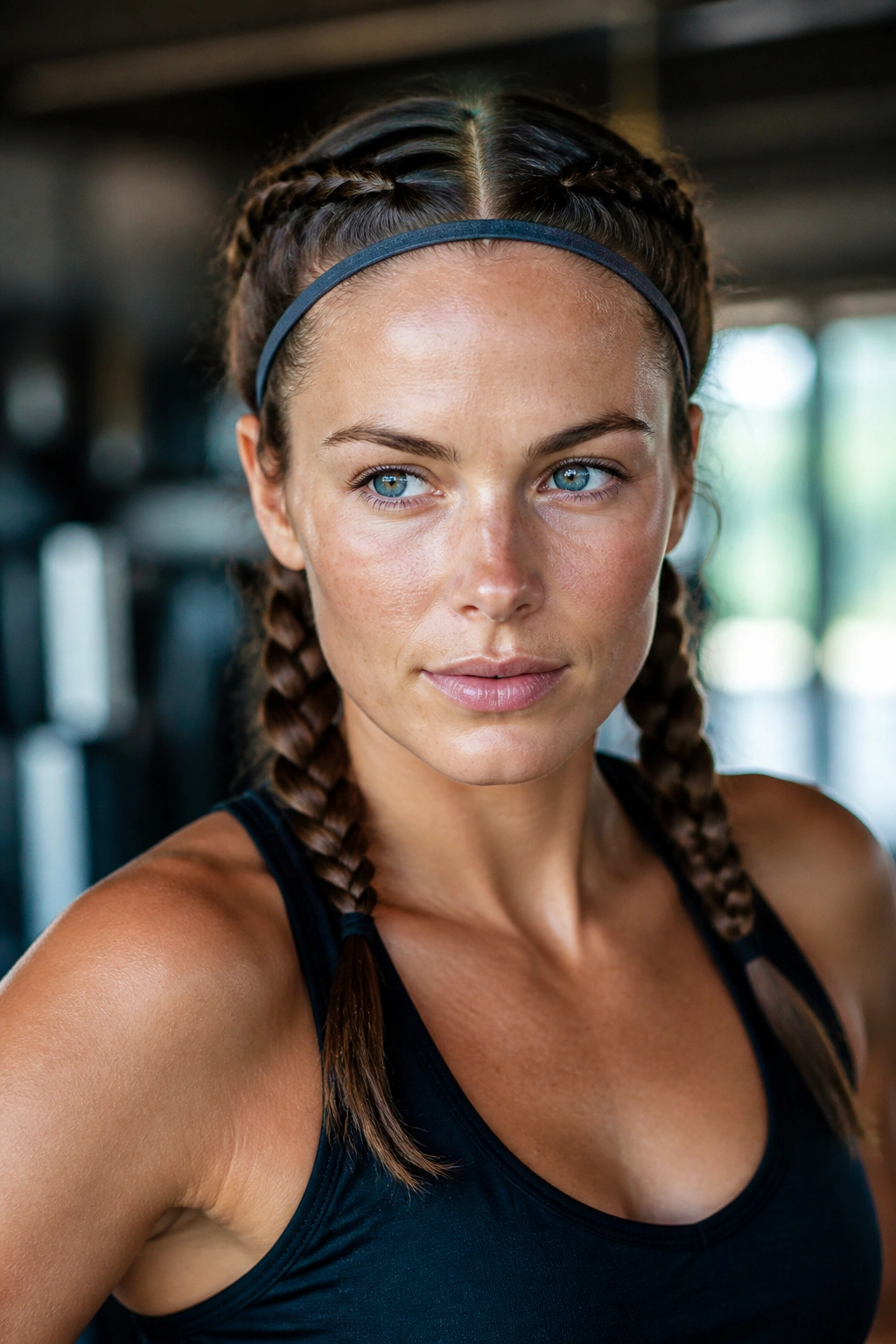
Unlike a single braid, double braids split the weight evenly. That matters during sprints, jump rope, and dance classes, where one heavy braid can swing to the side and start annoying you halfway through the session.
The center part gives the style balance. The stretchy headband keeps the front neat so the part doesn’t fray into little baby hairs as soon as you warm up. If your hair is layered, double braids are even better because short pieces on one side have a place to stay instead of fighting the rest of the style.
This is a practical choice, not a precious one. It works on thick hair, long hair, and hair that tangles if you look at it wrong. You can braid tightly for a more compact feel, or leave the braids slightly looser if you want a softer shape that won’t pull quite as much at the scalp.
A lot of people avoid double braids because they think the style looks too youthful. Fine. Let them. On a workout floor, what matters is whether the braids stay where you put them.
8. Half-Up Twist Bun For Shoulder-Length Hair
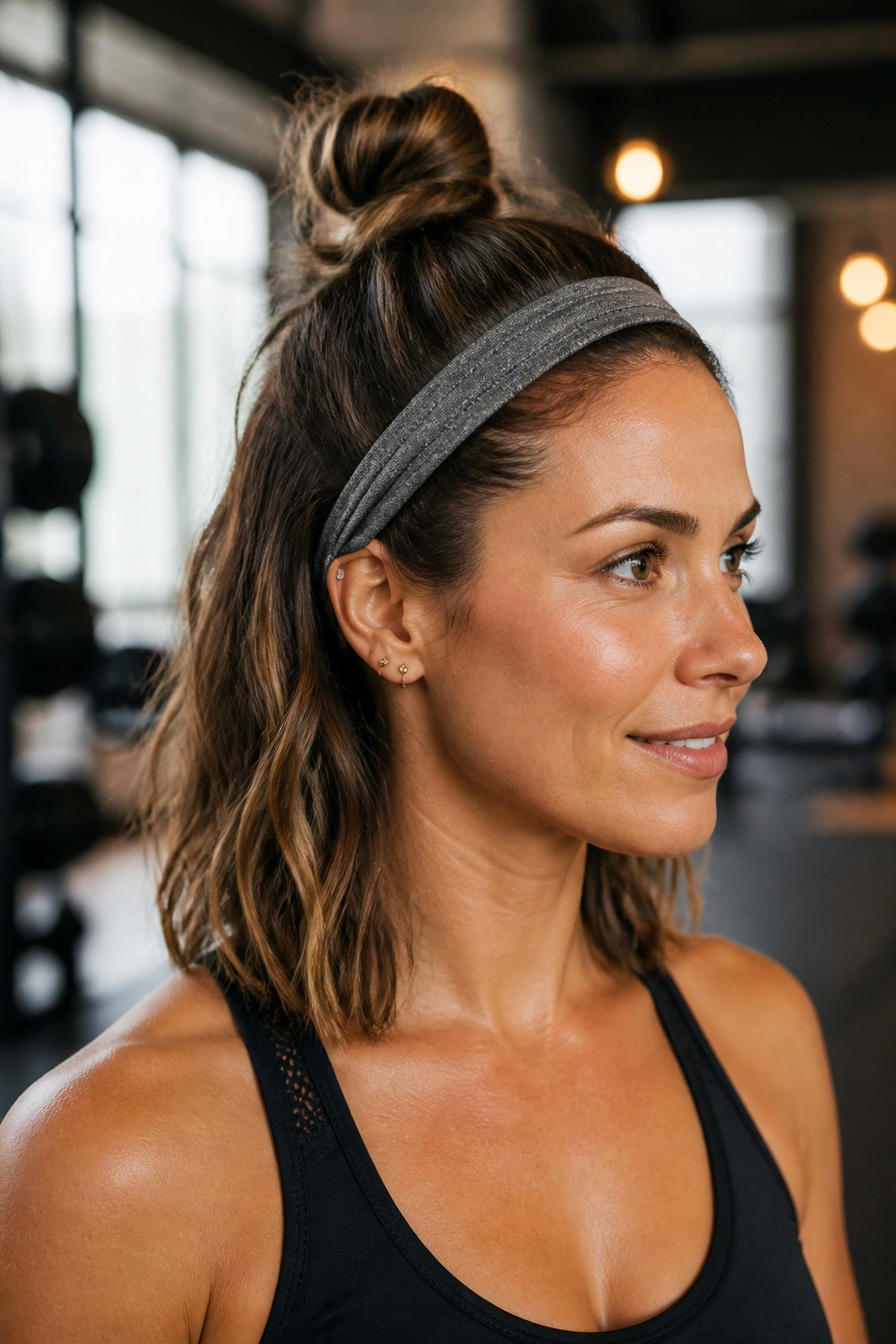
If you want your hair down because the headband already handles the front, a half-up twist bun is the compromise that makes sense. You get movement through the lengths, but the top section stays out of your face when you bend, stretch, or flip your head forward.
This is one of the few styles that looks deliberate on shoulder-length hair, which can be awkward in workouts. Full buns often feel too tiny. Full ponytails can slip. A half-up twist gives the middle length something to do.
Gather the hair from both temples and the crown, twist it once or twice, then coil it into a small bun. Leave the lower section down and let the headband frame the top. If your hair is layered, pinch the twist a little tighter at the base so the shorter pieces do not break free.
I like this one for studio classes and lighter training days. It’s easy, but it does not look like you gave up. That balance matters more than people think.
9. Twisted Low Bun For Shorter Layers
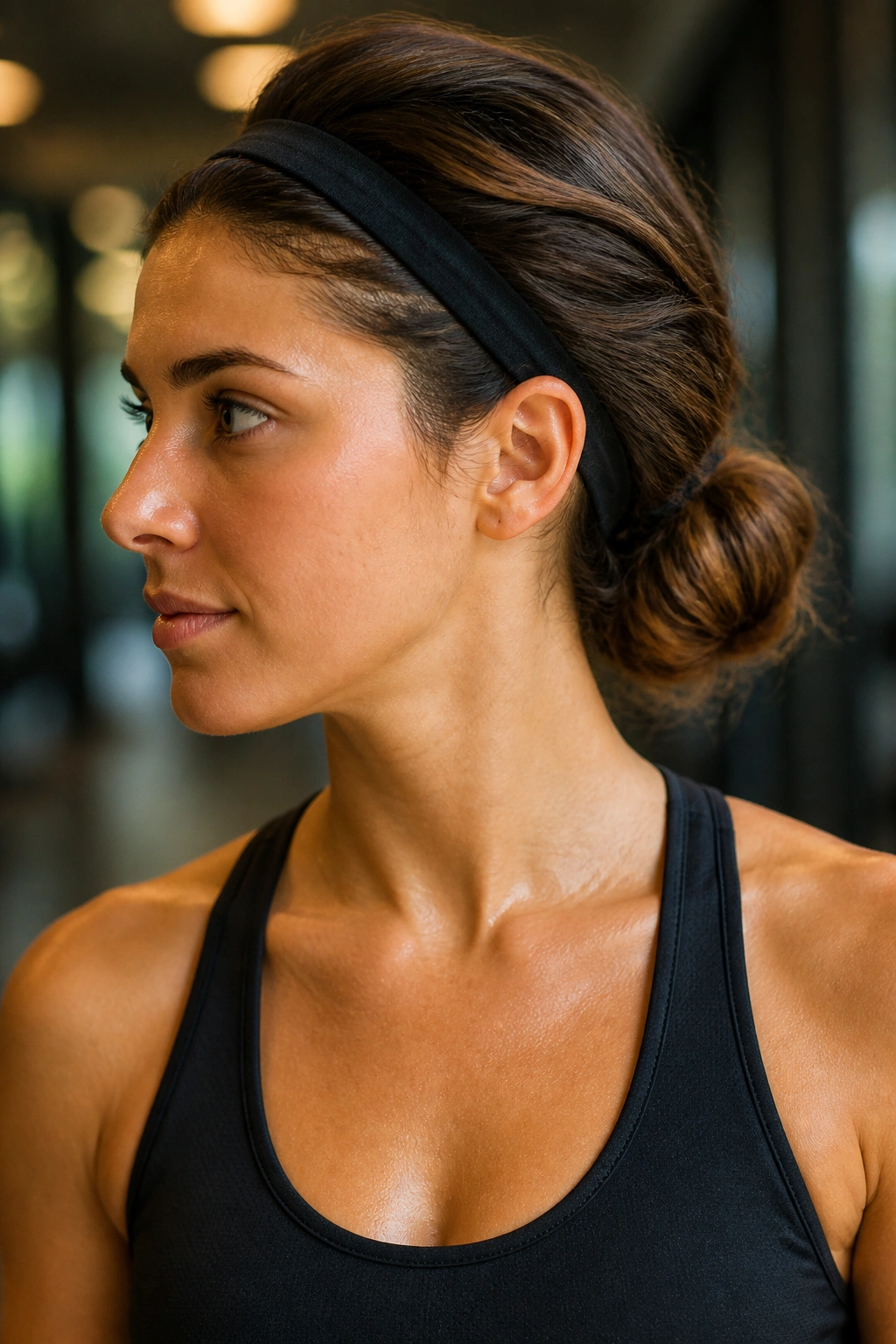
What if your hair is too short for a clean top knot? Then fold the problem down toward your neck and work with it. The twisted low bun is better for collarbone-length hair and blunt ends because it gives the shorter pieces somewhere to hide.
Start by splitting the hair into two sections, twist each side into a rope, then wrap both twists into a low bun. Use bobby pins to catch the ends underneath the bun, not just around the outside. A headband over the front line keeps the short pieces from springing loose around the face.
How to Pin the Short Pieces
- Use 4 to 6 bobby pins if your hair is slippery.
- Cross the pins in an X when the bun feels loose.
- Keep the bun low enough that it can rest against the neck without sliding upward.
- Use a little dry shampoo or texture spray at the roots if the hair is freshly washed.
This style is not the fastest one in the group, but it’s one of the most forgiving. Shorter layers can be stubborn. The twisted low bun gives them a job instead of asking them to behave like long hair.
10. Wrapped Ponytail With a Clean Finish
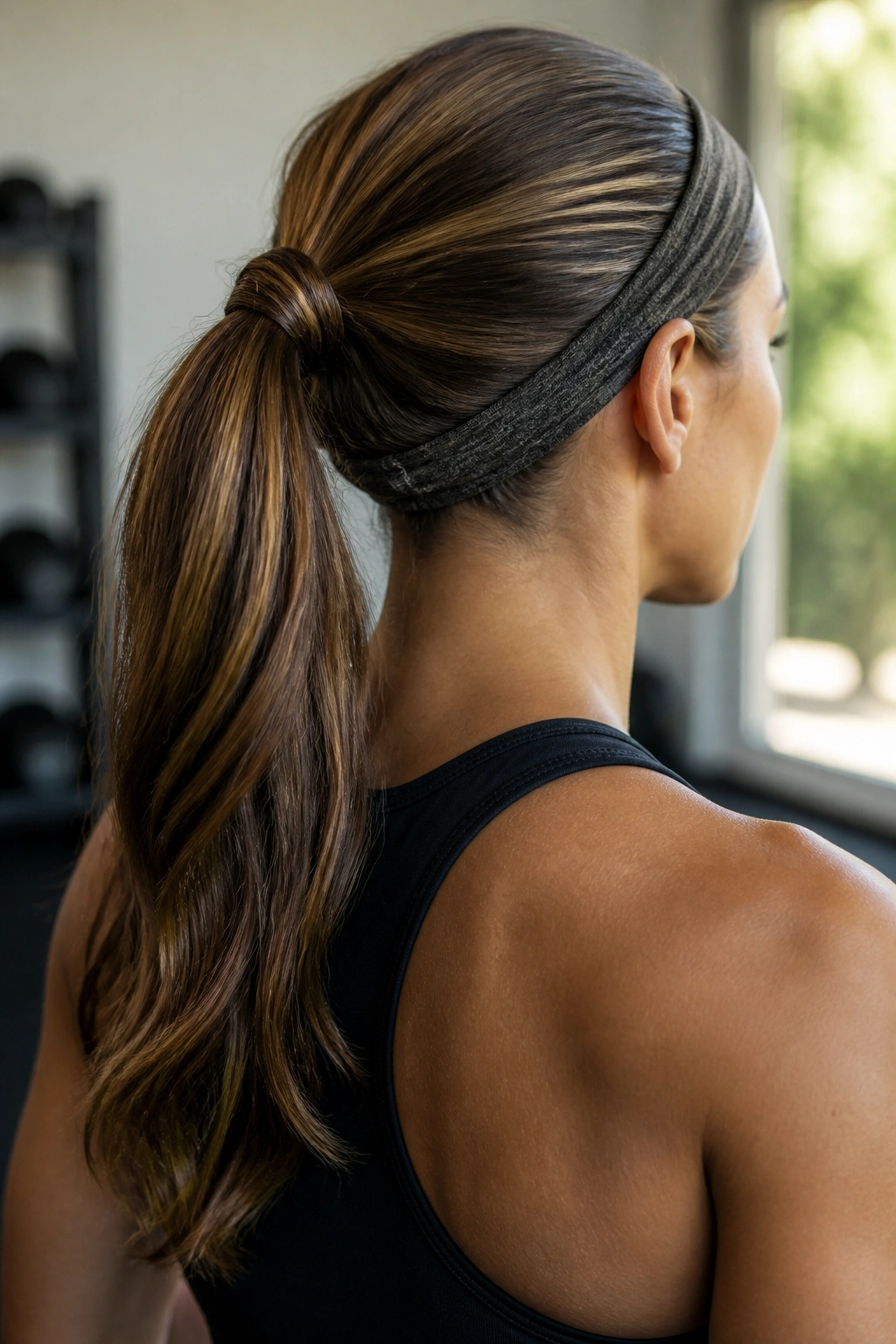
One extra wrap around the base changes the whole look. A wrapped ponytail feels cleaner than a plain elastic ponytail, and the stretchy headband frames it nicely so the style reads as finished instead of rushed.
Tie the ponytail first, then take a thin strand — about 1 inch wide — from underneath the tail. Wrap it around the elastic once or twice until the band is hidden, then pin the end underneath. Keep the wrap tight. Loose wrapping slides, and once it starts slipping, the whole ponytail loses its shape.
What to Watch For
- Don’t wrap so much hair that the ponytail loses volume.
- Keep the wrapped strand smooth so it does not poke out.
- Pin underneath the ponytail, not on the side where it can scrape your neck.
- Avoid heavy serum before wrapping; slippery hair makes the wrap drift.
This is a smart choice if you like hair that looks neat without looking stiff. It works on straight hair especially well, but it also holds on wavy hair if you prep the base with a little texture first.
11. Side Braid With a Swept-Back Headband
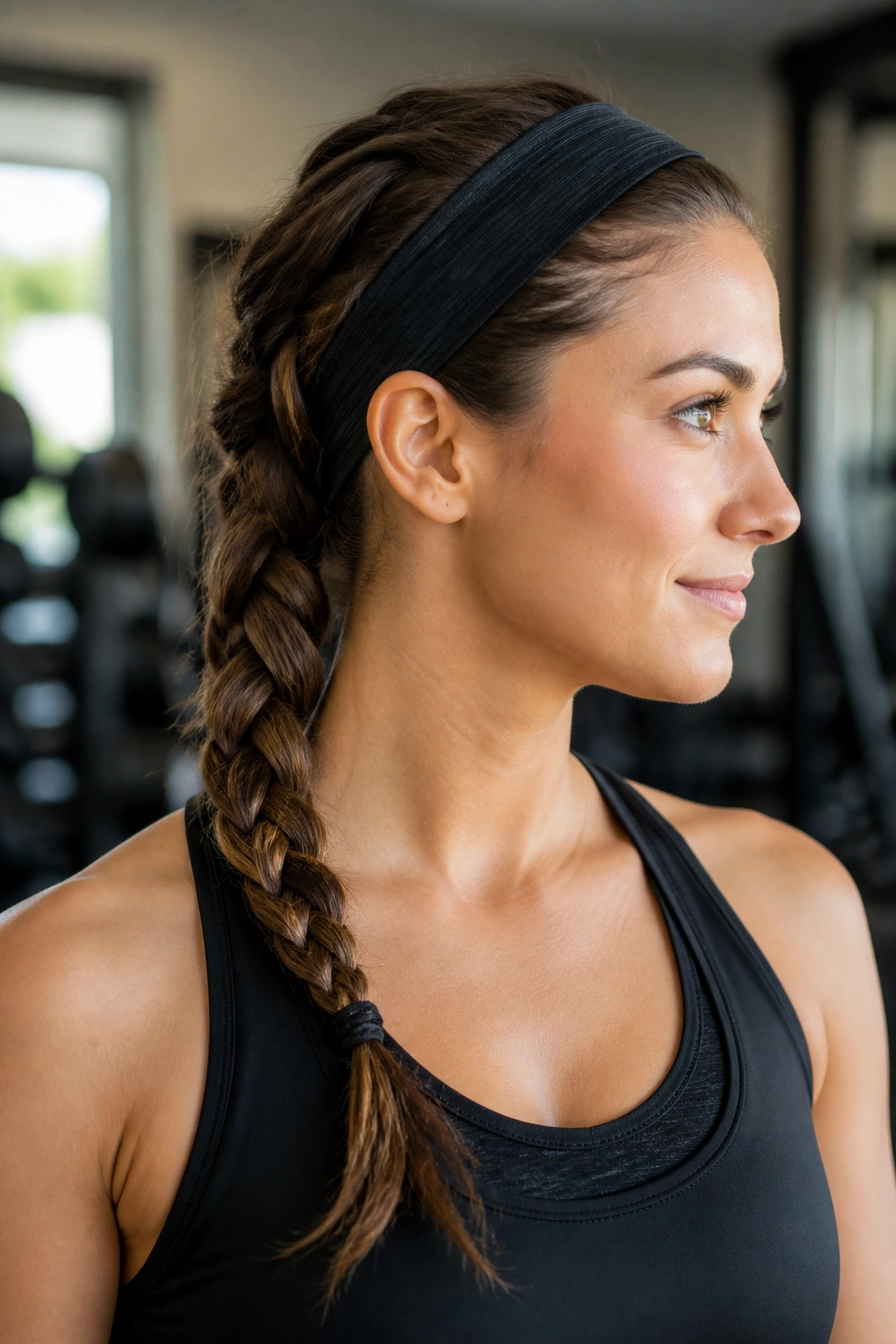
A side braid is the answer when your hair refuses to cooperate with a center part. Some heads have a stubborn cowlick, and some workout days just call for an off-center shape that feels less fussy.
The headband sweeps the front hair back from the heavier side, then the braid starts near one temple and falls over the shoulder or down the back. That side placement keeps the style from pulling evenly across the scalp, which can be a relief if you wear your hair part off-center most of the time anyway.
This is a good option for medium-length hair because the braid has enough length to hold shape without becoming bulky. It also works nicely for low-impact classes where you still want your hair contained but do not need a full braid army on your head.
If you want a sharper finish, braid tightly and smooth the top with a small amount of cream. If you want a softer gym look, tug the outer loops of the braid a little after tying it off. Not too much. Just enough to give the braid some width.
12. Space Buns With a Grippy Headband
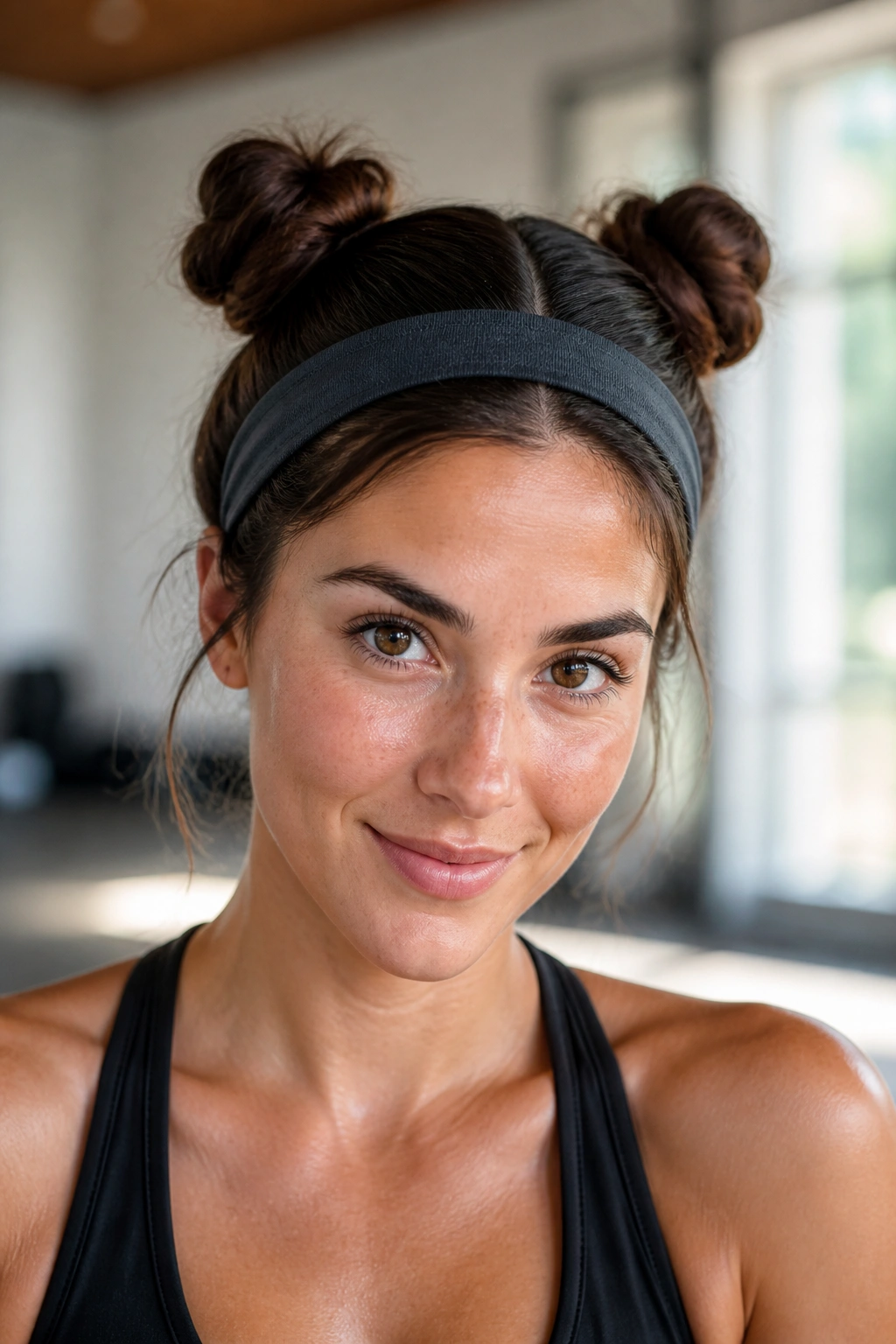
Space buns are not just for festivals or costume days. On workout days, splitting the load into two buns can make your head feel lighter, especially if one giant bun tends to sag and bounce around.
The key is symmetry. Part the hair down the middle, place each bun at a matching height, and keep the buns close enough to the head that they do not wobble. A grippy headband helps catch the short front pieces and stop the center part from opening up as you move.
Key Details That Matter
- Keep the buns high enough to clear the neck.
- Use two elastics per bun if your hair is thick.
- Leave a small gap above the ears so the style does not pull sideways.
- Pin stray ends underneath the bun instead of leaving them loose.
This style has a little personality, which I appreciate. Workout hair can get so serious that it starts looking like a uniform. Space buns break that up without sacrificing function. They do not work for every class — I would not pick them for a long run — but for dance, training, or a day when you want your hair off your neck and out of your mood, they’re excellent.
13. Curly Puff With a Wide Stretchy Headband
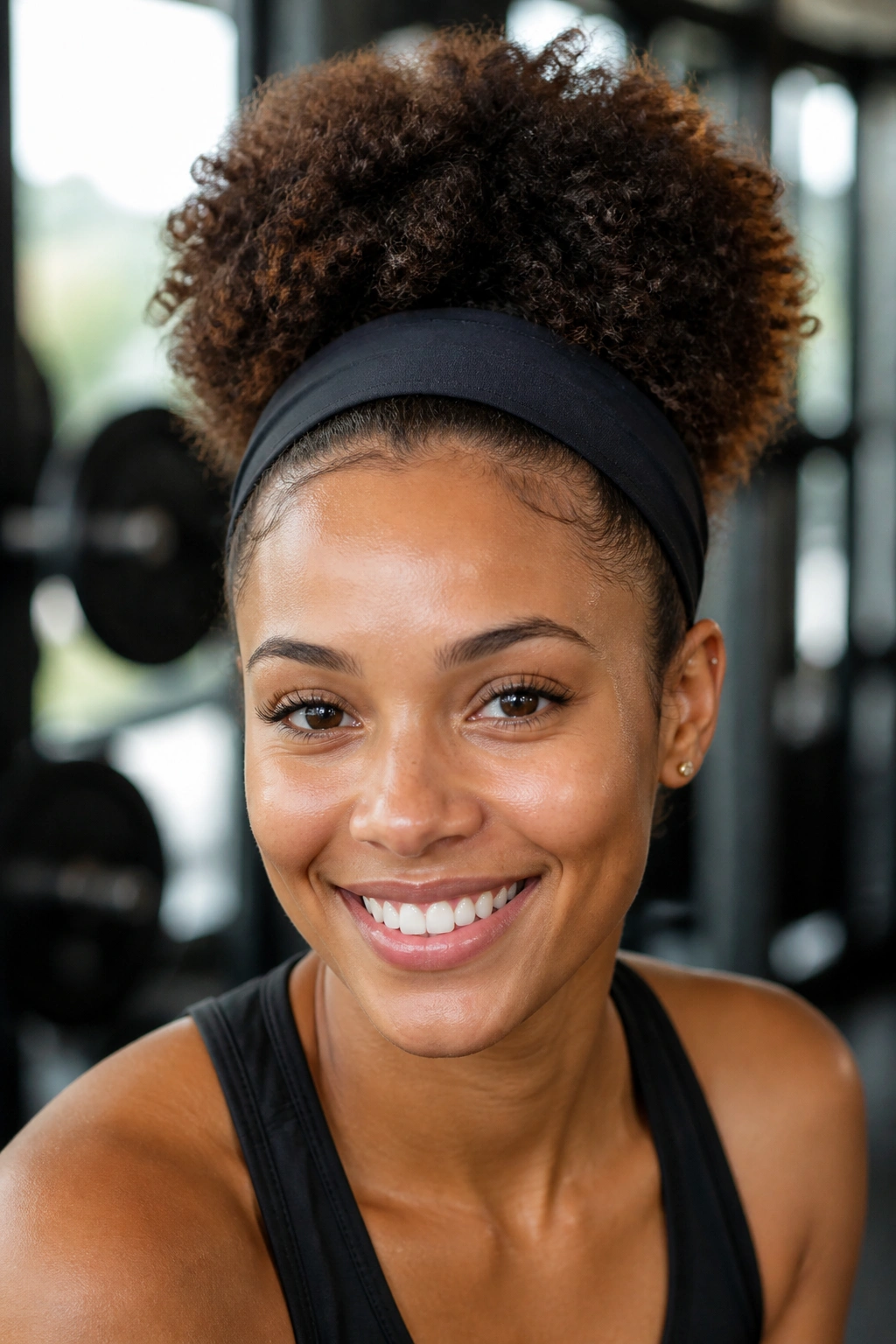
Curly hair feels different when it’s gathered up. The shape sits higher, the texture stays visible, and the headband handles the forehead work so the curls can do their own thing in back.
A wide stretchy headband is the best friend of a curly puff because it smooths the front without flattening the curl pattern. Put it too far back, and the roots puff up where you do not want them. Put it too tight, and the front starts losing shape. A little tension goes a long way here.
Best on Day-Two Curls
This style shines when the curls have settled a bit and you want to wake them up without rewashing. Mist the front lightly with water, smooth the edges with a little leave-in conditioner, and gather the puff where it feels balanced — usually mid-high or high.
One sentence is enough here: flat curls are not the goal.
Use a pick at the crown if you want more height, or leave the puff tighter if you’re heading into a class with a lot of movement. I prefer this style for coily hair because it protects the curl pattern while still keeping the front controlled. That balance is the whole point.
14. Halo Tuck With a Stretchy Headband
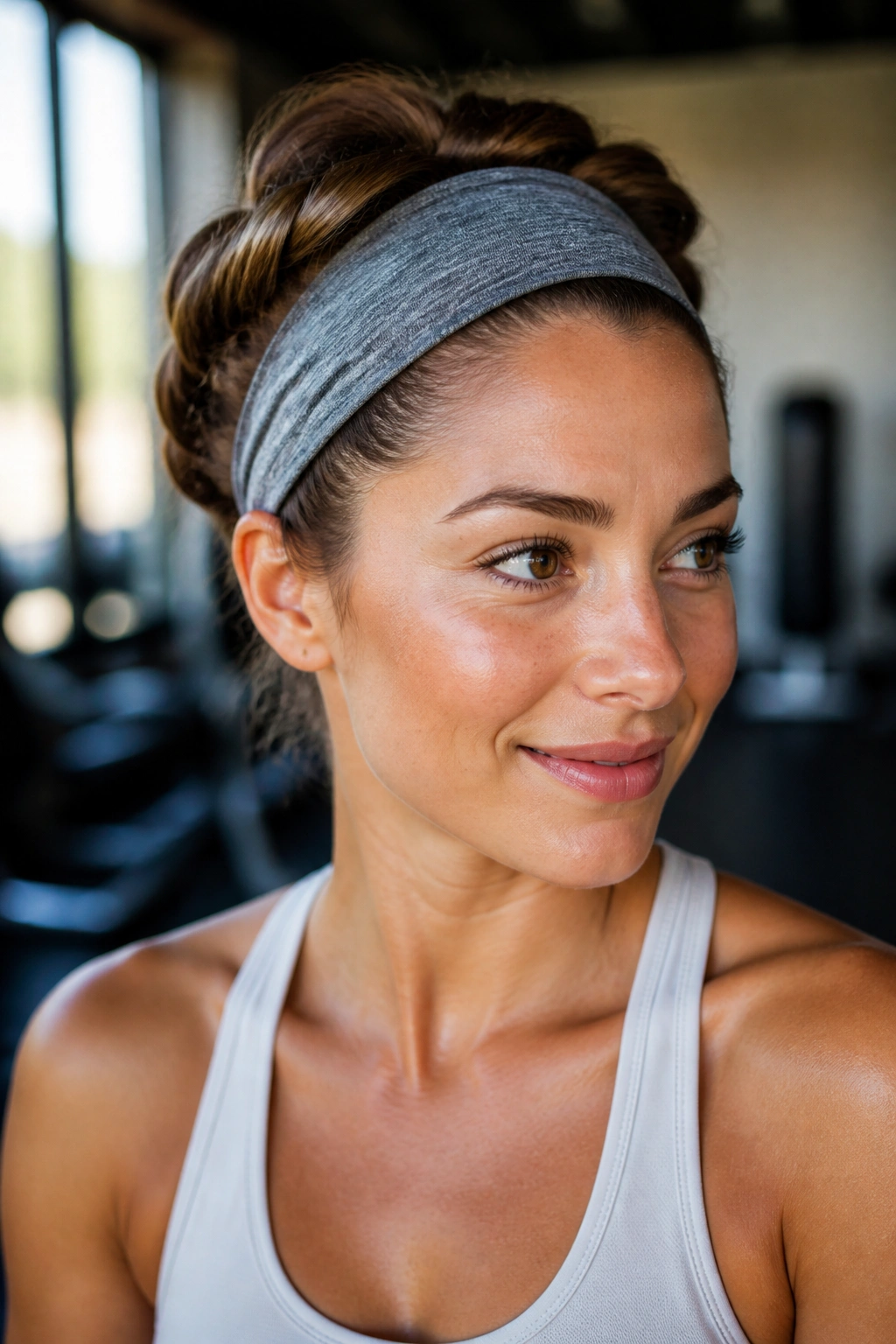
The halo tuck looks tidy with almost no fuss, and it handles medium-length hair better than people expect. It also keeps the ends tucked away, which is a relief if you hate hair brushing the back of your neck during a workout.
Place the stretchy headband around the head first. Then tuck sections of hair up and over the band, rolling the ends underneath as you go. If your hair is layered, use one or two bobby pins at the temples to stop the shorter pieces from sliding out. The first try can feel fiddly. The second one usually makes more sense.
This style suits hair that reaches the shoulders or a little past them. Very long hair can feel bulky in the tuck. Very short hair may not reach the band comfortably. Middle-length hair, though, gets the sweet spot.
I like the halo tuck for barre, walking, and any workout where you want your head to feel light. The style stays close to the head, which means less bouncing and less distraction. That matters more than a flashy finish.
15. Low Folded Ponytail For Fast Workouts
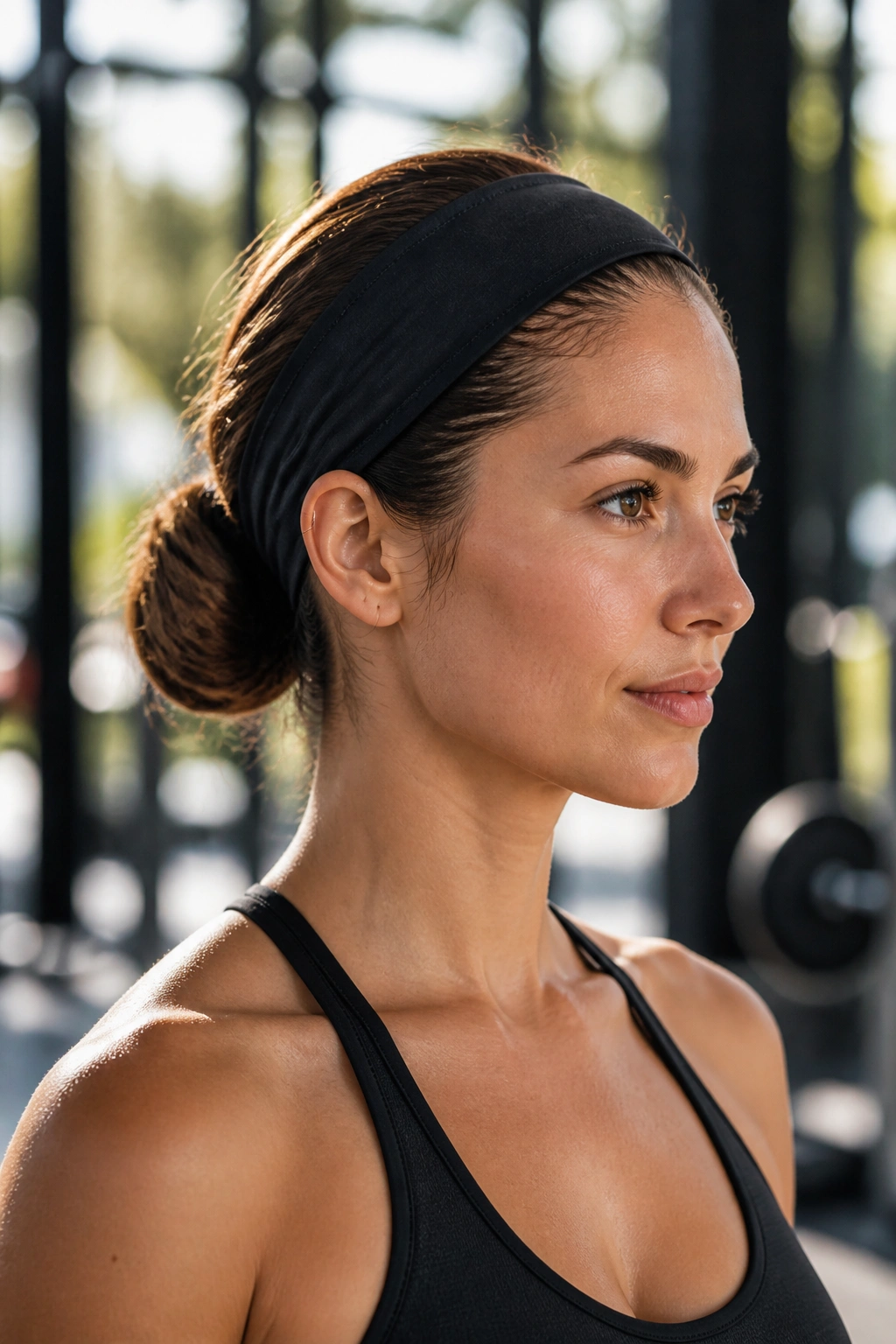
Need your hair off your neck without a full bun? Fold it. The low folded ponytail is one of those styles that looks simple because it is simple, and that’s exactly why it earns its place in a workout lineup.
Tie a low ponytail, then loop the length through the elastic only halfway on the final pull so the ends create a folded shape instead of hanging straight down. If your hair is longer, you can fold the tail under once more and secure it with a second elastic. A stretchy headband keeps the front smooth and stops the tiny front pieces from springing loose.
How to Make the Fold Hold
- Use a sturdy elastic with a little grip.
- Keep the fold low so it does not poke the back of your head.
- Add one bobby pin under the fold if the tail is heavy.
- Rough up freshly washed hair with dry shampoo so it does not slip.
This style is fast, which makes it ideal for lifting, cycling, or those days when you want your hair handled without thinking too hard about it. It is not the flashiest choice here. It is the one that gets out of the way.
Final Thoughts
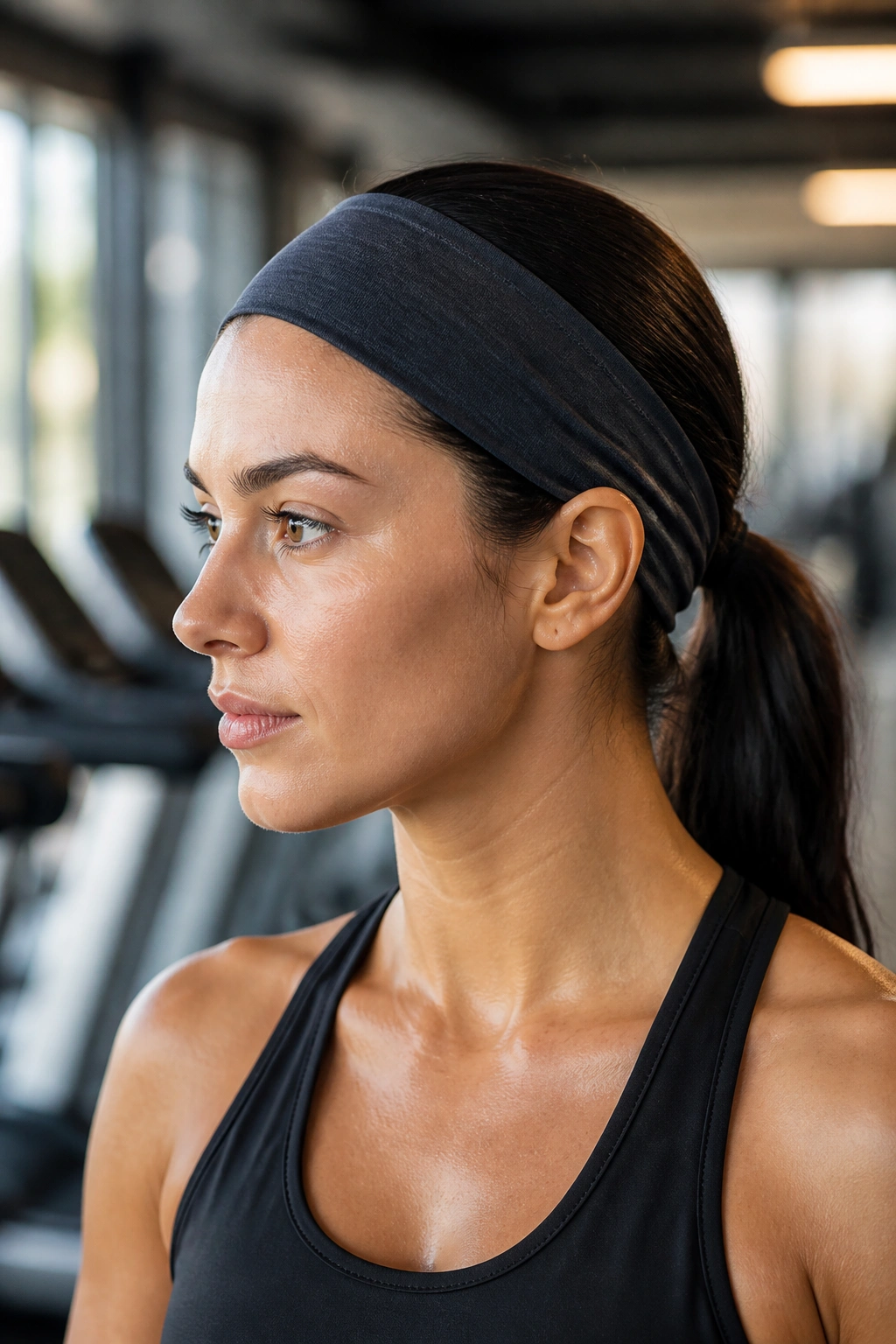
The best stretchy headband hairstyle is the one that matches both your hair and your workout. A low ponytail makes sense for steady movement. Braids handle bounce better. Buns keep the neck clear. Curly hair usually wants a little more room, not less.
If you want one practical test before you leave the mirror, do ten jumping jacks and turn your head side to side. If the band shifts, the style is too loose. If your scalp starts yelling, it’s too tight. The good version sits in the middle — secure, not painful, and calm enough that you stop thinking about it once class starts.
