



A good short stacked bob does something most people want from a haircut and almost never say out loud: it makes the back look fuller, the neck look longer, and the whole style look finished before you’ve even touched a round brush. For older women, that matters even more, because hair often changes in texture, density, and direction long before the rest of the routine does. A cut that depends on heavy styling every morning is a nuisance. A cut that falls into shape fast is worth keeping.
Short stacked bobs for older women work because the geometry is doing the heavy lifting. The back is graduated, the nape is tucked in, and the weight line sits where the eye wants movement. Fine hair looks less limp. Thick hair stops ballooning out at the sides. Gray and silver strands show off the shape instead of hiding it. That’s the part a lot of people miss: the stack is not only about volume. It’s about control.
The best versions do not look stiff or helmet-like. No one needs that. They keep a soft edge around the face, enough length to feel wearable, and enough layering at the back to create lift without turning the haircut into a triangle. That balance is where a short stacked bob earns its keep.
If you’re choosing one for yourself, the real question isn’t whether a stacked bob is “age-appropriate.” It’s which version fits your hair density, your jawline, your glasses, and how much styling you’re willing to do before breakfast. That’s where the good cuts live, and that’s where this list starts.
1. Feathered Nape Stacked Bob

Fine hair loves structure. A feathered stacked bob gives you that structure without leaving the back heavy or blocky, which is the mistake that makes so many bob haircuts feel flat. The short graduation at the nape creates a little lift right where older hair often needs it most, and the feathered finish keeps the ends from looking blunt or too dense.
Why It Works on Thinner Strands
The feathering matters because it breaks up the perimeter. Instead of one solid line sitting on the neck, the ends move a little, so the cut looks lighter and more alive. That helps especially if your hair has gotten softer over time and won’t hold a lot of bulk on its own.
- Best for fine, straight, or lightly wavy hair
- Sits neatly at the neckline
- Needs a quick round-brush blow-dry or Velcro roller lift
- Looks polished in silver, white, or soft brunette shades
Ask for short internal layers at the nape, not choppy layers through the sides. That one detail keeps the bob from getting fluffy at the ears, which is the place many stacked cuts go wrong.
2. Side-Swept Fringe Stacked Bob
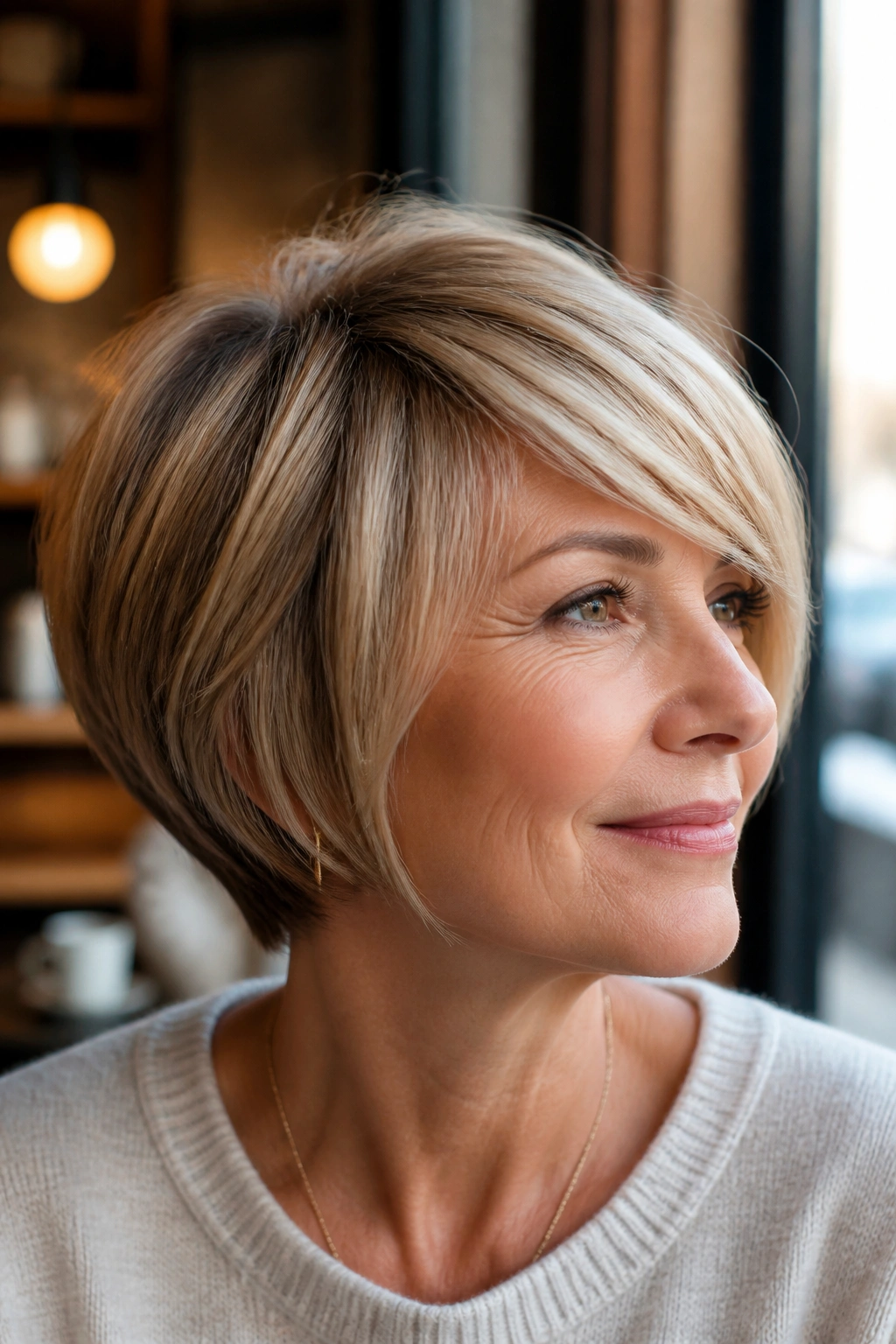
A side-swept fringe can soften a stacked bob faster than adding more layers. That’s the honest answer. A fringe gives the face some movement, and it keeps the cut from feeling too severe, especially if your hairline has changed or your forehead feels more exposed than it used to.
The nice part is how little drama it takes. A longer sweep across the brow works with glasses, highlights cheekbones, and gives the whole haircut a little motion. You do not need a heavy fringe. In fact, a thick blunt bang can fight the stack and make the style look boxy.
If you like to style quickly, this version is easy to live with. Blow the fringe forward for a few seconds, then sweep it to the side while it’s still warm. A small round brush or even your fingers will do the job if the cut has been shaped well. Keep the ends soft, not sharp, and the whole bob reads as modern without trying too hard.
3. Silver Stacked Bob With Beveled Ends
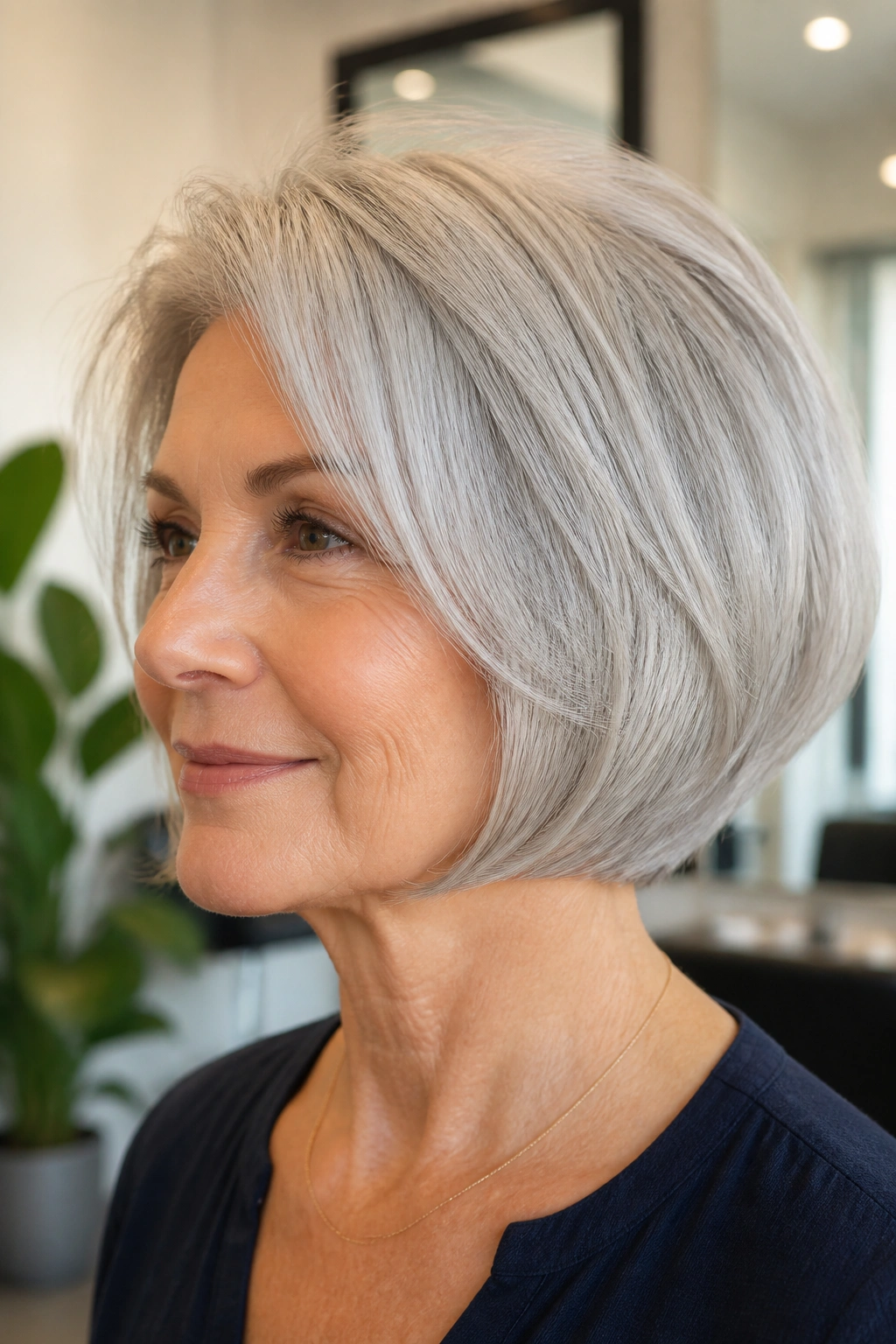
Why does silver hair look so good in a stacked bob? Because the color shows every curve. The shorter back catches light differently from the longer front pieces, so the shape becomes part of the color story. If your gray has a bright, clean tone, this is one of those cuts that makes the hair look deliberate rather than simply grown out.
How to Ask for It
Tell the stylist you want a stacked back with beveled ends, not a puffy rounded mass. That bevel keeps the perimeter curved under just enough to hug the jaw or neck, which is useful if you want the haircut to stay neat between trims.
A silver bob like this usually looks best with a little shine cream or lightweight serum, not a heavy oil. Heavy products can dull the hair and make the stack collapse by noon. A small amount on dry ends is enough. Nothing fancy. Just enough slip so the beveled line stays clean.
4. Curly Stacked Bob

If you have curls, you already know the problem: too much bulk in the wrong spot can turn a cute bob into a mushroom. A curly stacked bob solves that by building shape at the nape and letting the curls sit a little looser around the crown and sides. It feels controlled, but not pressed down.
The key is cutting it dry or nearly dry, so the stylist can see how each curl behaves. Wet curls lie. They always do. A good curly stack respects the spring of the hair and leaves enough room for the curls to move without puffing out at the ear line.
What to Watch For
- Ask for curl-specific layering, not generic thinning
- Keep the nape short enough to show the stack
- Use a diffuser on low heat
- Skip heavy creams that stretch curls flat
A curly stacked bob is one of those haircuts that looks expensive when it’s cut well and awkward when it isn’t. The difference is usually in the weight distribution, not the curl pattern itself.
5. Angled Stacked Bob

The angled stacked bob is the cleanest way to get lift without going too short. The back sits shorter and tighter, then the line moves forward toward the jaw. That diagonal shape does a lot of work for the face, especially if you want the haircut to look sharp without being severe.
I like this version for women who want their hair to feel intentional from every angle. From the side, you get that sleek fall toward the front. From the back, you get the short stacked lift that keeps the crown from drooping. It’s a smart shape, honestly, and it behaves well whether your hair is silver, brown, or somewhere in between.
The styling is simple. Blow-dry the back with a brush, then bend the front sections under just slightly. The trick is not to over-smooth the top. A little texture at the crown keeps the angle from looking too flat against the head.
6. Rounded Stacked Bob for Thick Hair

Unlike a blunt bob, a rounded stacked bob takes thick hair and gives it a shape it can actually hold. Thick hair wants to expand. That’s fine, but if every section is cut the same length, the whole style starts to stick out at the sides like a bell. A rounded stack prevents that by taking weight out of the back and blending the sides inward.
This cut works especially well when you want fullness without bulk. The back is stacked high enough to create lift, but the outer shape stays curved and controlled. The result is cleaner and easier to manage than a massive one-length bob that needs constant smoothing.
It suits women who like a neat silhouette and do not want to spend 20 minutes wrestling the sides down. Ask for internal debulking if your hair is dense, but avoid over-thinning. Too much thinning leaves thick hair frizzy at the ends, and that’s a miserable trade.
7. Tapered Neck-Length Bob
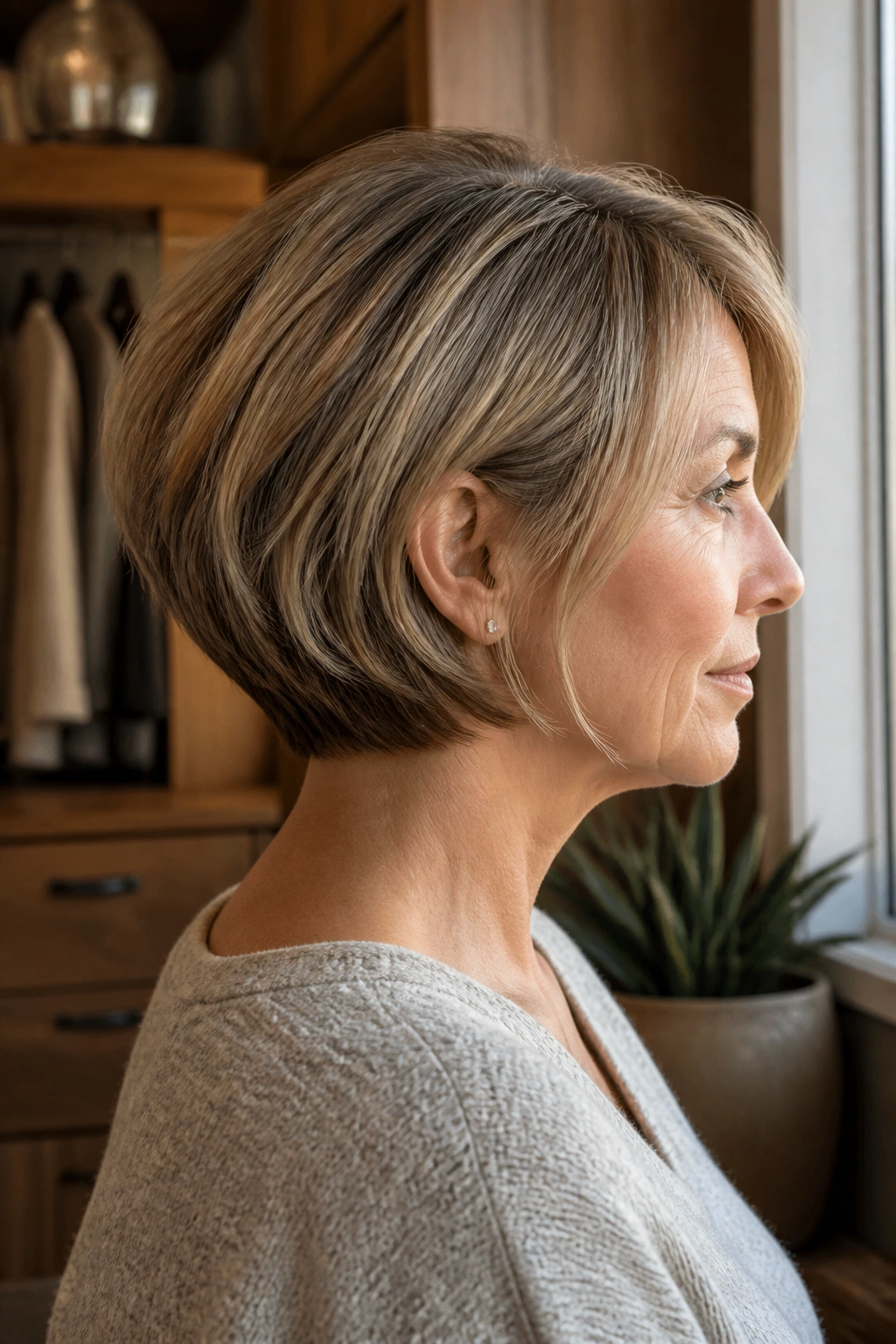
Can a bob skim the neck without looking severe? Absolutely, if the taper is done right. A neck-length stacked bob gives you a little more coverage than a super-short cut, but still keeps the shape lifted and tidy at the nape. It’s a good middle ground for women who want a shorter style without exposing every angle of the face.
The soft taper matters here. You want the back to narrow toward the neckline while the front stays just long enough to tuck behind the ear or brush the jaw. That keeps the haircut from feeling chopped off. It also makes the neck look elegant, which is a detail people notice even if they can’t name it.
This is a good choice if you like easy grow-out. The shape stays readable for weeks, and you can usually wear it smooth one day and a little tousled the next. That kind of flexibility is worth a lot.
8. Salt-and-Pepper Bob With Piecey Texture

Salt-and-pepper hair looks sharper when it has a piecey finish. A soft, separated texture stops the color from reading as one flat block, and that gives the whole haircut more movement. It also makes the gray and dark strands work together instead of fighting for attention.
The piecey look comes from a light hand. You want a dab of matte paste or styling cream worked through the ends, then finger-tousled, not brushed into submission. That tiny bit of separation keeps the stack visible at the back and the front from looking bulky.
A lot of women with salt-and-pepper hair worry that texture will make the style messy. It won’t, if the cut underneath is clean. The texture should sit on top of a precise shape. That’s the sweet spot.
9. Chin-Grazing Stack With Curtain Bangs

Picture this: you want the lift of a stacked bob, but you also want something that softens the face and doesn’t cling too hard to the jaw. Curtain bangs solve that nicely. They split the difference between fringe and face-framing layers, and they give the haircut a little movement without taking over the front.
This version works especially well if your face has softened over time and you want to bring some shape back around the eyes and cheekbones. The stacked back keeps the silhouette neat, while the bangs open the front. It’s a calm, flattering combination. Nothing fussy.
A few details help it stay wearable:
- Keep the bangs long enough to part
- Let the shortest front pieces fall near the cheekbone
- Use a round brush only at the roots
- Avoid cutting the bangs too heavy through the center
A chin-grazing stack with curtain bangs can be one of the easiest bobs to live with because it does not demand perfect styling. It wants a little bend. That’s all.
10. Undercut Stacked Bob for Dense Hair

Dense hair can swallow a stacked bob if the stylist leaves too much bulk at the nape. An undercut helps. Not a shaved look unless you want that, but a controlled reduction of hair underneath so the visible layer sits close and clean. That little hidden move changes everything.
The haircut stays short and structured on the surface, while the underneath weight disappears. The result is a bob that moves instead of puffing. If your hair is thick enough to feel hot on your neck or heavy by the afternoon, you’ll probably understand the appeal right away.
This version needs a stylist who knows where to remove weight and where to leave it alone. Take too much from the wrong spot and the shape collapses. Leave too much and you’re back to square one. There’s no shortcut there. Precision matters.
11. Inverted Bob With Soft Interior Layers
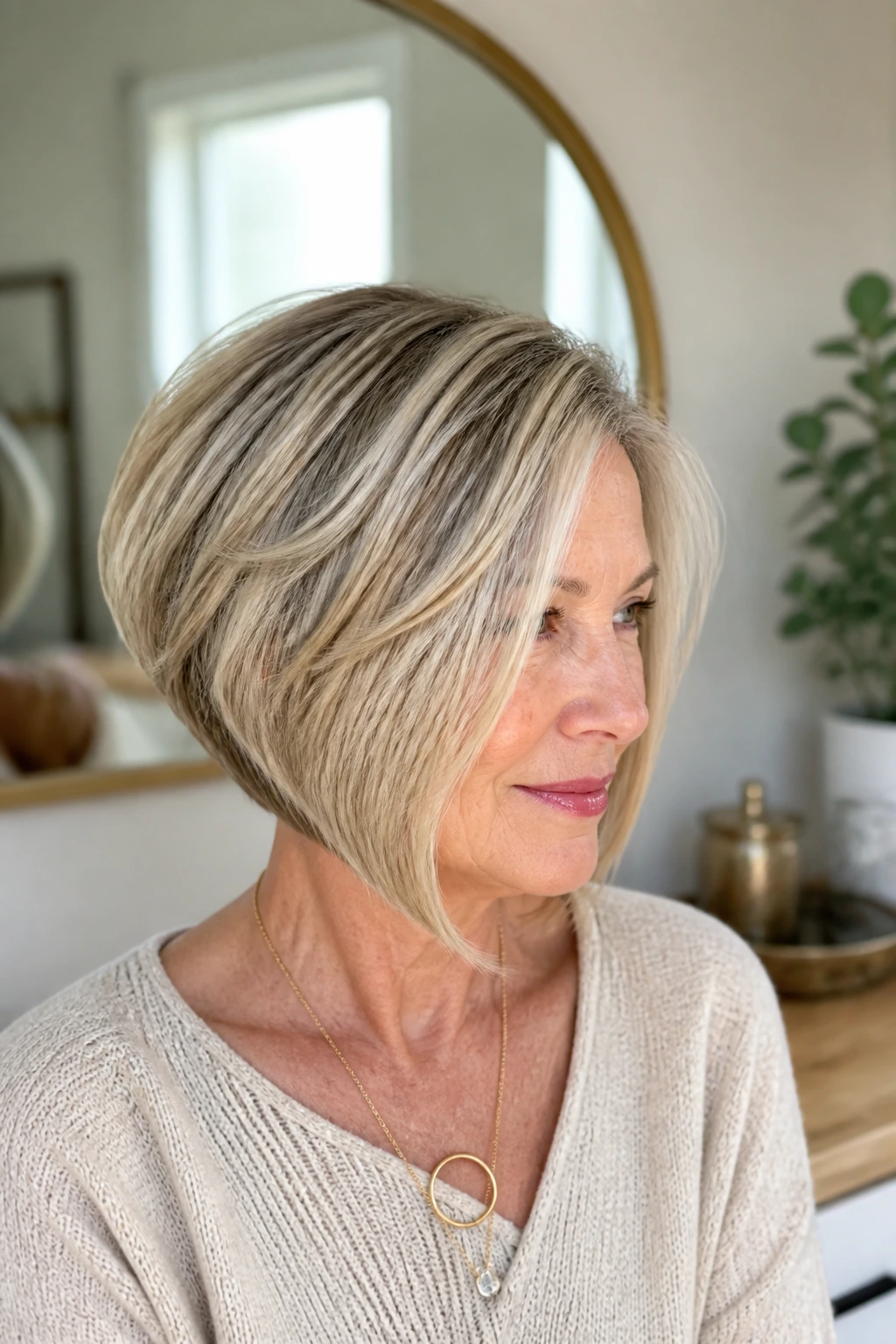
Unlike a blunt bob, an inverted stacked bob gives you a longer front and a tighter back, but the soft interior layers make the whole thing feel less rigid. That’s useful if you want shape without that hard, sliced look some inverted cuts get. The line still reads clearly. It just moves better.
The interior layers are doing the quiet work. They remove some density from the center of the haircut, so the ends can curve instead of sticking out. That’s handy for women whose hair has become a little coarser or straighter at the same time. Coarse hair can hold a shape beautifully, but it can also look puffy if the cut is too blunt.
This one tends to suit women who like polished hair but do not want to fight it every morning. A little blow-dry bend is enough. The rest is built into the cut.
12. Jaw-Length Bob With Wispy Fringe

Why does a jaw-length bob keep coming back? Because it frames the face in a way that feels clean without being severe. Add a wispy fringe, and the stack gets a softer front edge that works nicely if your forehead is a little shorter or if you just want less hair sitting straight across the face.
The wispy fringe should look airy, not stringy. That’s a real distinction. Airy fringe has movement and a little separation at the ends. Stringy fringe looks undercut and too sparse. The difference is in the density of the cut and the product you use afterward.
A light blow-dry and a fingertip amount of styling cream are usually enough. Keep the fringe piecey. Keep the nape neat. The combination is understated, and that’s exactly why it works.
13. Blunt Stacked Bob With a Slight Bevel
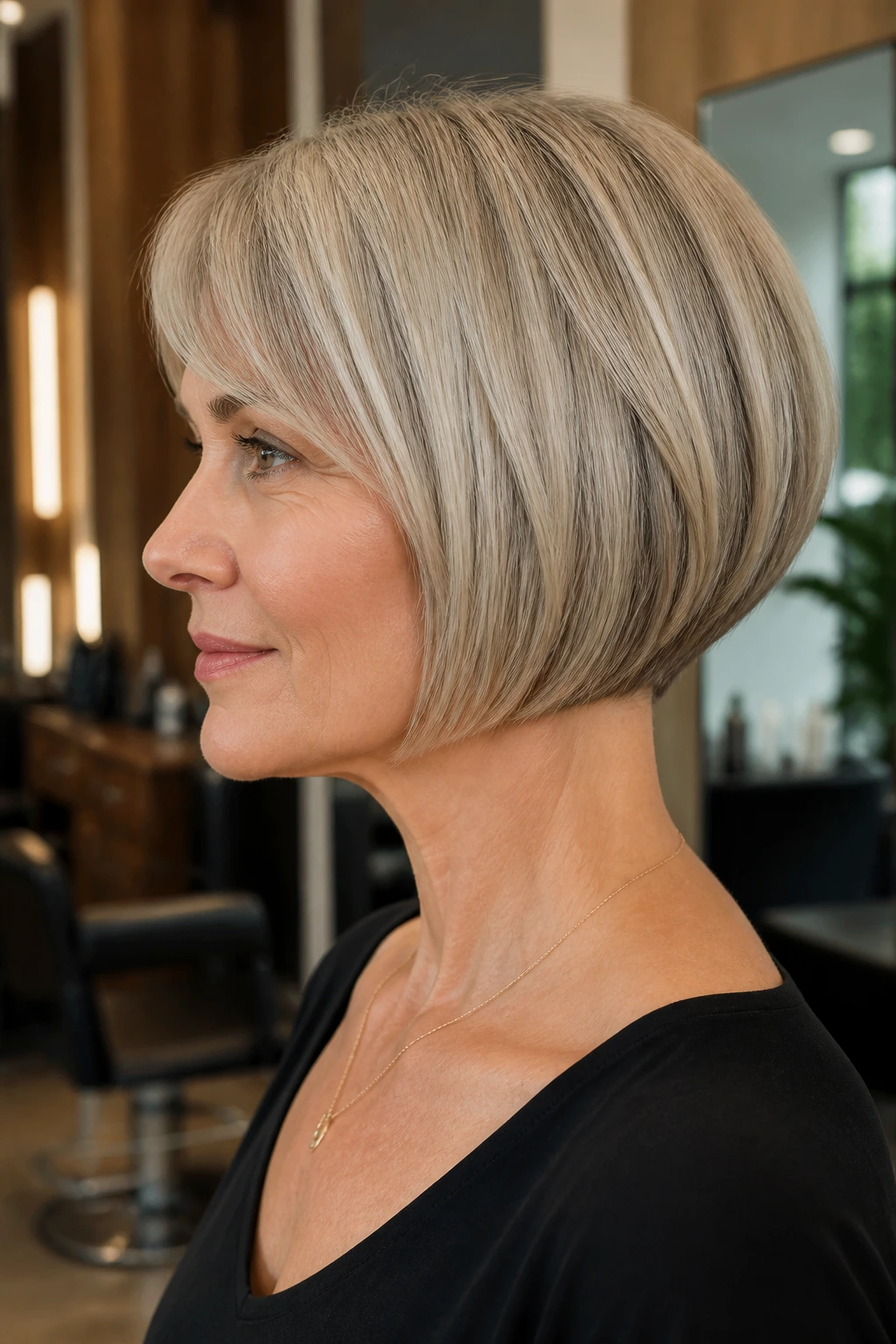
A blunt stacked bob sounds strict, but a slight bevel keeps it wearable. The blunt edge gives the cut power, especially on straighter hair, while the bevel stops the ends from looking like they were cut with a ruler. You want structure, not stiffness.
This version is good if you like the feel of a defined outline around the face. It can make the jawline look tidy and the neck look longer, especially when the back is stacked just enough to lift. The trick is keeping the front from becoming too heavy. A tiny bit of graduation near the nape does more than a lot of people expect.
One practical note: this cut needs clean trims. Blunt lines show every uneven bit. If you go too long between cuts, the shape can start to droop at the corners. That’s the trade-off. Sharp shape means a little maintenance.
14. Pixie-Bob Hybrid Stack
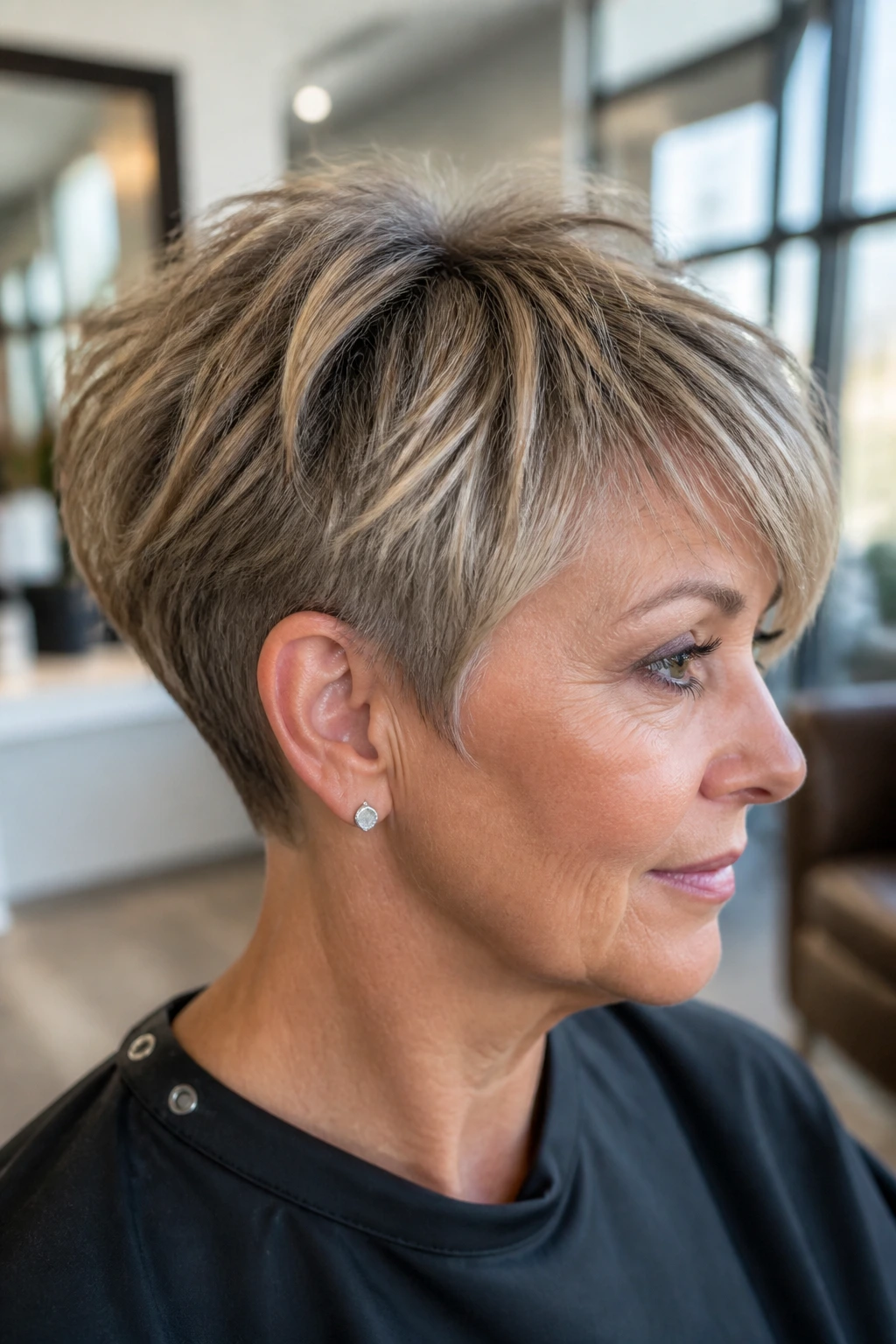
A pixie-bob hybrid is for the woman who wants shorter hair without surrendering all the bob shape. The back is compact and stacked, the sides are cropped in closer, and the top keeps enough length to brush forward or sideways. It’s a good compromise when hair feels too heavy in a longer bob but a full pixie sounds too bare.
This cut gives a lot of lift to fine hair, and it can take years off the styling routine without pretending to be low-effort in a lazy way. You’ll still want a little mousse or root spray, because the top needs direction. But the back and sides do a lot of the work on their own.
Best for women who like a sharper outline and don’t mind a little edge around the ears. If you want softness, ask for longer sideburns and a more feathered top. That keeps it from tipping too sporty.
15. Wavy Stacked Bob With Air-Dried Texture
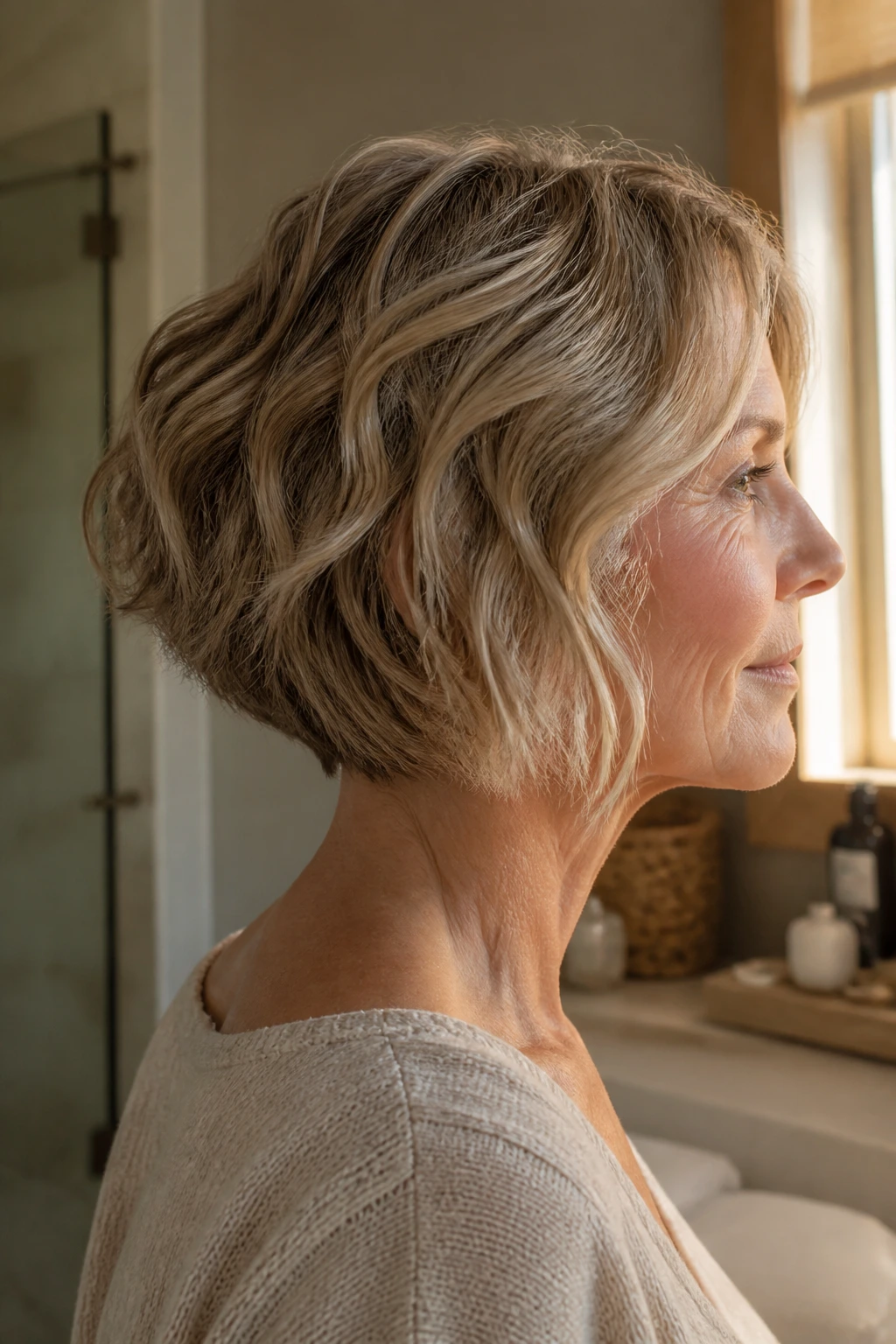
Waves and stacked bobs get along better than people think. The stack gives the back shape, while the wave keeps the cut from looking too formal. Air-dried texture is the nicest part here, because it leaves a bend that feels relaxed instead of curled into place.
The challenge is avoiding triangle shape. Wave needs room, but it also needs a good base. A well-cut stacked bob gives you that base by hugging the nape and keeping the crown lifted. Then the waves fall around it instead of spreading outward.
I’d keep product light. A leave-in conditioner, a small amount of curl cream, and maybe a touch of gel scrunched in while damp is enough for most hair. If the hair gets heavy, the wave disappears. If the product is too strong, the ends get crunchy. Neither helps.
16. Glasses-Friendly Stacked Bob

Glasses and a stacked bob can work beautifully together when the front pieces stop short of the frame. That’s the part that makes the difference. If the hair sits right on top of the glasses arm, you spend the day tucking and fussing, which gets old fast. A glasses-friendly bob leaves a little space.
The shape should still lift at the back, but the side pieces need to be cut with the frame in mind. That might mean a slightly shorter front that curves under the cheekbone or a longer side section that floats above the temples. Either way, the haircut should cooperate with your face, not fight the hardware.
This is one of those cuts where you should wear your glasses to the appointment. Seriously. The stylist needs to see where the arms land and how wide the frames sit. That one detail saves a lot of guessing.
17. Low-Maintenance Stacked Bob With Hidden Layers

Can a stacked bob look finished without a daily blowout? Yes, if the layers are hidden inside the shape instead of cut all over the surface. Hidden layers give the hair lift at the back and movement through the crown, but they don’t leave the ends looking chopped up when you let it air-dry.
That matters for women who want to wash, brush, and go. A lot of low-maintenance cuts become too shapeless once they dry. This one holds its line better because the graduation is built into the structure, not the styling. The hair can dry naturally and still show some curve at the nape.
Use a lightweight cream or foam if your hair frizzes. If it stays smooth on its own, skip the product and let the cut do its job. That restraint is part of what makes the haircut feel easy.
18. The Soft Everyday Stack That Grows Out Well

Some stacked bobs are designed to look crisp on day one and annoying by week four. This one is not that haircut. A soft everyday stack keeps the back lifted, keeps the front clean, and lets the shape loosen a little without falling apart. That makes it a good choice for older women who want a style that behaves between salon visits.
The real trick is in the balance. You want enough stacking to create a clear line at the nape, but not so much that the cut turns into a hard shelf. A touch of face-framing softness helps too, especially if your hair has natural bends or a small cowlick near the temple. Leave that detail alone whenever possible. Fighting a cowlick is a waste of time.
This version looks nicest when it moves a little. A quick bend with a brush, a small round-brush lift at the crown, or even a few finger-twisted ends can be enough. It should feel like hair, not a project. And that’s honestly the appeal of a good short stacked bob for older women: it gives shape, saves time, and still leaves room for your hair to behave like itself.
