



Short box braids bob styles have a way of looking finished without looking fussy. The length sits close to the jaw, the ends stay off the shoulders, and the whole shape feels lighter than a long braid set — which is a big reason so many women keep coming back to it.
The trick is that a bob can go wrong fast. Too much bulk near the neck, sloppy parts, uneven ends, or a braid size that fights your face shape will make the style feel off, even if the braids themselves are neat. The short length does not hide mistakes. It exposes them.
That’s also why the good versions are so satisfying. A clean box braids bob can sharpen the jawline, soften a strong forehead, make earrings stand out, and give you a shape that reads polished from the front and the side. If the parts are crisp and the ends are treated with care, the style does most of the work for you.
Start with the cleanest shape first. Once you know how the bob sits on the face, the rest of the variations make a lot more sense.
1. The Clean Middle-Part Short Box Braids Bob
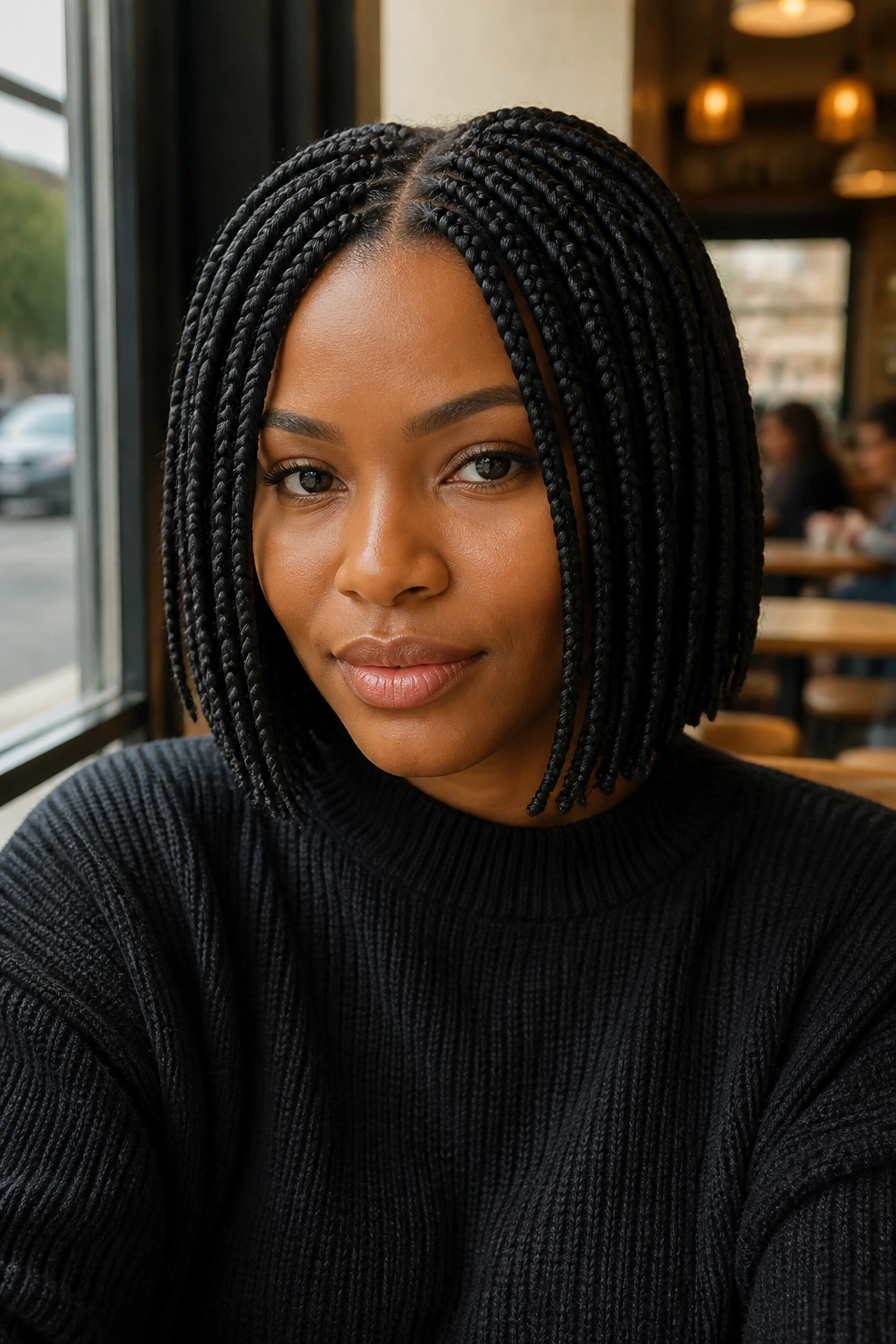
A middle-part bob is the version I’d point to first when someone wants short box braids that look neat, steady, and easy to wear. The part draws a straight line down the face, and that line gives the whole style a calm, balanced feel. It works especially well when the braids land right at the chin or just below it.
The shape matters more than the braid size here. Small to medium braids usually look the cleanest because they move enough to avoid looking stiff, but they still hold the bob outline. If the braids are too thick, the ends can puff out and the cut loses that sharp, compact shape.
Why It Looks So Clean
The middle part creates symmetry, and symmetry is a friend to a short bob. It makes the face look framed instead of crowded, which is a nice effect if you want the braids to feel intentional instead of heavy.
A clean middle part also gives you room for accessories later. You can tuck one side behind the ear, add a single cuff, or leave it plain and let the line do the work.
- Best length: chin to just under the jaw
- Best braid size: small or medium
- Best face shapes: oval, heart, and round
- Best finish: ends trimmed into a blunt line
My advice: ask for the ends to sit evenly, not “roughly even.” That tiny difference matters more than people think.
2. The Side-Swept Short Box Braids Bob
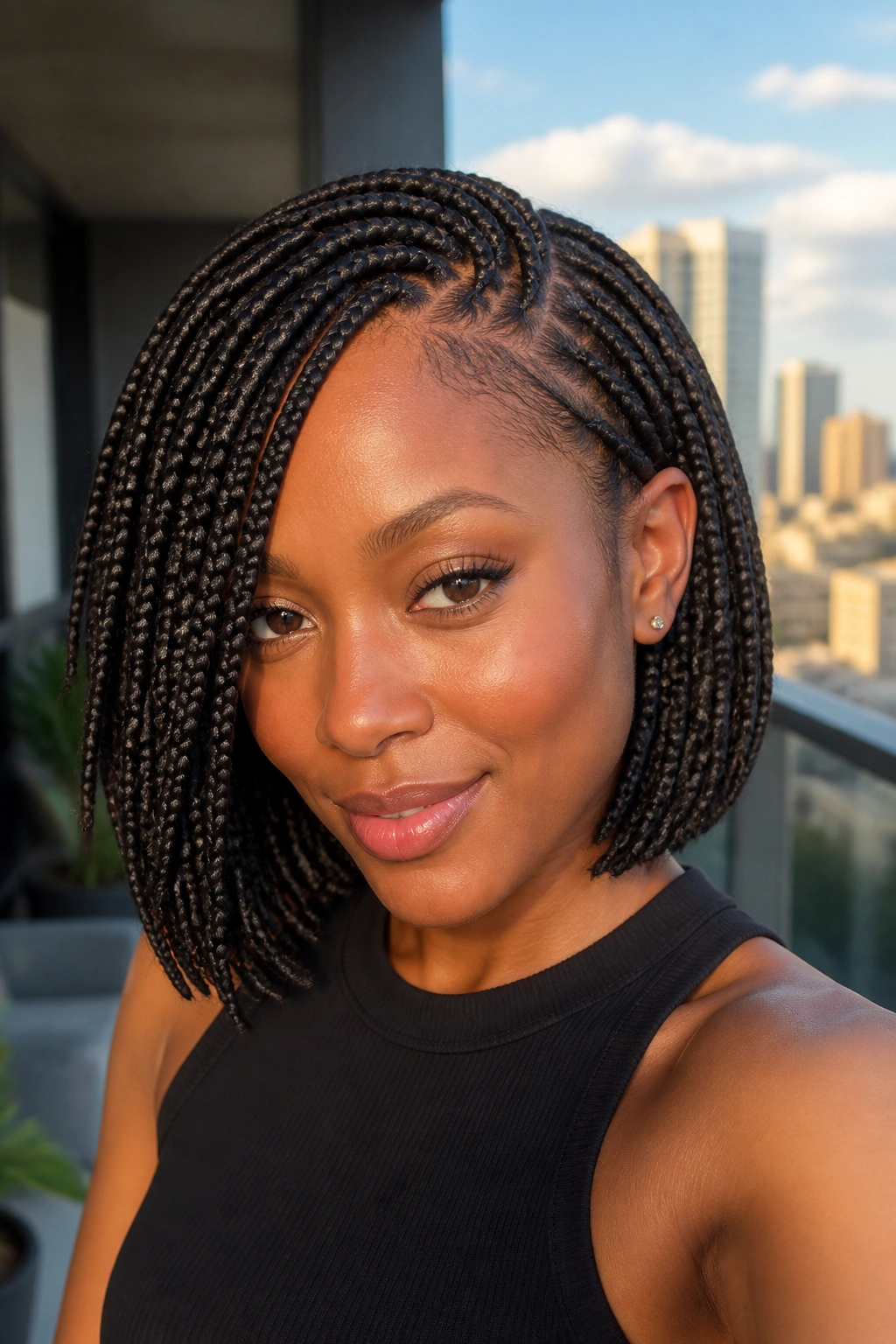
A side-part bob has more attitude than the middle-part version, and I mean that in a good way. The diagonal line softens the face, pulls attention to one eye, and makes the braids feel a little more relaxed.
It’s a smart choice if your hairline is not perfectly even. A side part lets the style work with the natural shape of the head instead of fighting it. And when the bob is short, that side sweep keeps the look from feeling boxy.
The best part? It gives a little movement without needing layers. The braids fall in a way that looks deliberate even when the wind catches them.
What Makes It Different
A side part changes where the volume sits. Instead of splitting the hair down the middle, the weight shifts to one side, which can make the face look softer and the bob feel less rigid.
If you like a style that looks neat but not severe, this is a solid one. It also plays nicely with hoop earrings, because the open side gives the jewelry space to show.
A small caution: if the part is too deep and the braids are too thick, the style can start to droop. Keep the braid size moderate and the crown area neat, and it stays elegant without trying too hard.
3. Curled-End Short Box Braids Bob Styles

Curled ends change everything. A straight blunt bob can feel crisp, but curled ends bring softness and a little swing, which is often what people want when they say they want the style to feel lighter. The ends sit with more shape, and the whole look feels less hard around the jaw.
This version works best when the curls are controlled, not fluffy for the sake of being fluffy. Small flexi rods or perm rods at the ends give the bob a tidy finish. Too much curl, and the shape starts to look busy.
How to Keep the Curl Clean
The goal is a soft bend at the bottom, not a full-out wave pattern all over the place. That detail matters more on a short bob because the ends land right near the face and neck.
A curled-end bob also gives you more room to play with color. Brown ends, honey tips, or a deep burgundy finish all show up well when the bottom has a little motion.
- Use medium braids if you want the curl to show clearly
- Keep the curl only on the last 1 to 2 inches
- Ask for even curl direction on both sides
- Avoid overloading the ends with heavy products
One little thing: if your ends feel too stiff after styling, that usually means too much setting product or too much heat. Less is better here.
4. Beaded Short Box Braids Bob for Extra Detail

Beads on a bob can look sharp, but they need restraint. A short braid length means the beads sit closer to the face and neck, so a few well-placed strands go farther than covering every braid. That’s the version I like best.
The smartest placement is usually around the front rows or just along one side. That keeps the look interesting without making the bob feel noisy. Heavy beading on every braid can drag the style down and make it swing too much.
Keep the Weight Down
Short braids already sit near the shoulders, so the last thing you want is a bunch of heavy beads pulling at the ends. Small wooden beads, slim metal cuffs, or a few clear beads usually look cleaner than oversized pieces.
- Use 3 to 7 accented braids, not all of them
- Keep beads on the front or temple area
- Match the bead tone to your jewelry if you want the look to feel cohesive
- Make sure the bob still moves easily when you turn your head
Beaded bobs are also good when you want the style to feel personal. A plain bob can be beautiful, but a few beads make it feel chosen rather than routine.
And yes, they click when you move. Some people love that sound. Some do not. I happen to like it in moderation.
5. Layered Face-Framing Bob

A layered box braid bob is one of those styles that looks simple until you notice how much work is happening in the shape. The front braids sit a little longer, the sides taper in, and the overall line follows the face instead of cutting straight across it.
This is a strong choice if you want the bob to feel softer around the cheeks or if you have a narrower chin and want a little balance. The shape does not need dramatic layering to work. Even a small difference in length between the front and back can change the whole profile.
You do need a steady hand for this one. If the cut is too uneven, the bob starts to look accidental. If it’s too subtle, the layers disappear and you lose the point.
Where the Shape Works Best
A face-framing bob tends to shine on people who wear glasses, because the front pieces sit nicely around the frames. It also works well if you like to tuck one side behind the ear and leave the other side loose.
The key is keeping the ends controlled. Layering should make the bob easier to shape, not frizzy at the bottom. A braid set with a clean taper and a small difference in length usually looks the best.
One-sentence truth: this is a better choice for a stylist who cuts braids often.
6. Half-Up Short Box Braids Bob for Busy Days
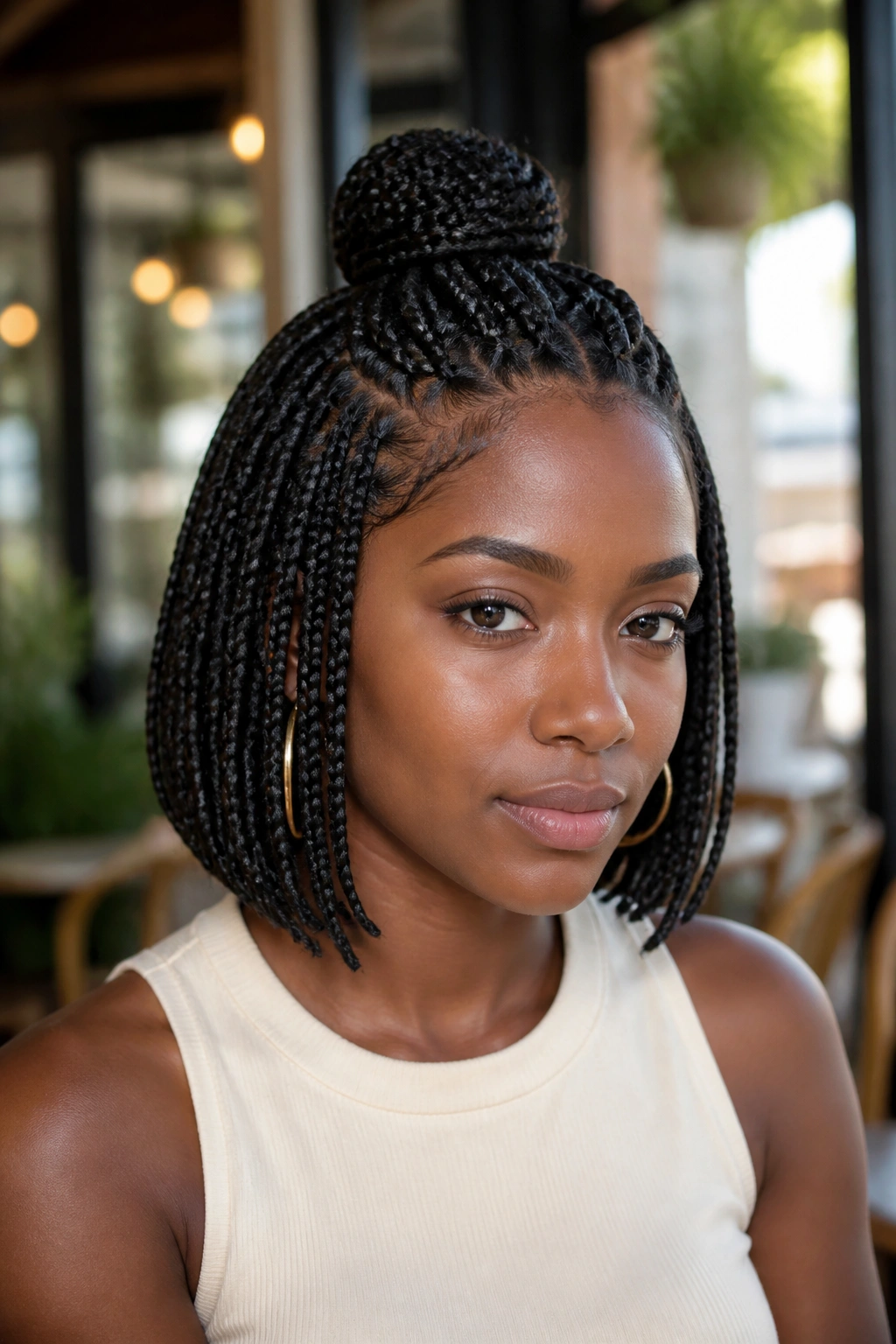
A half-up bob is the style I think people underestimate most. It gives you the clean outline of a bob, but it also clears the face when you want your hair out of the way. That makes it a practical option for workdays, workouts, and long errands.
The top section can be tied into a small bun, a puff, or a low half-up knot. Nothing huge. If the top gets too tall, the bob starts to lose its balance and the shape turns top-heavy.
How to Keep It From Looking Bulky
The trick is to gather only the top third of the braids, not half the head in a literal sense. That keeps the lift controlled and prevents the style from sitting like a helmet.
- Use a soft scrunchie or braid-friendly elastic
- Smooth the hairline with a light edge product if needed
- Keep the top knot small and low
- Leave a few braids free around the temples for movement
This style gives a bob a more casual feel. It is less “done up” and more lived in, which is nice when you want something useful but still neat. I like it most on days when you need to go from plain clothes to a nicer outfit without touching your hair again.
7. Triangle-Part Short Box Braids Bob
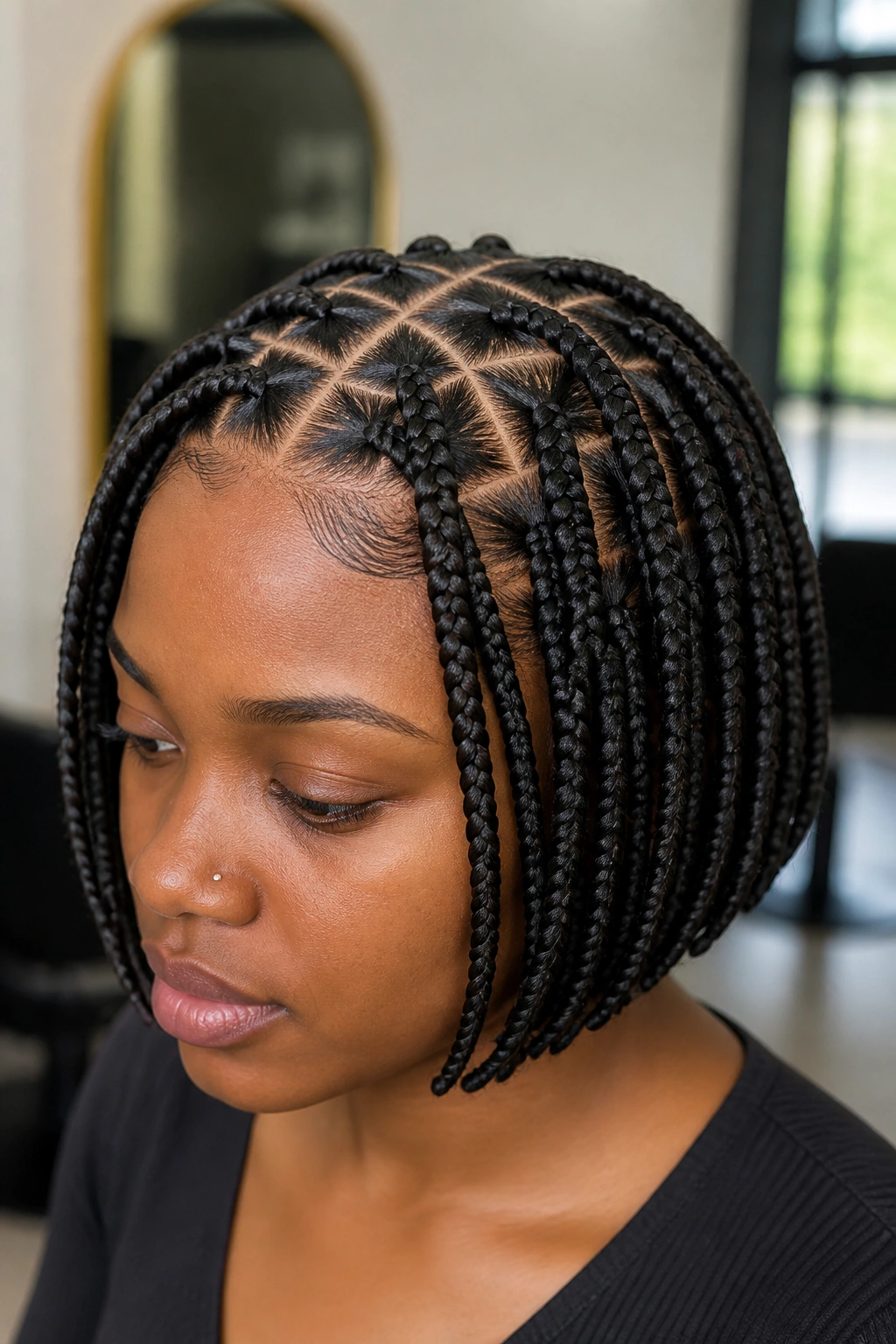
Triangle parts make a short box braids bob feel sharp and a little geometric. The parting pattern shows up more clearly when the braids are short, which is exactly why this style works so well at bob length. The scalp becomes part of the design.
This is a strong pick if you like detail. Triangle parts look especially clean near the hairline, and they add interest even when the braids themselves are plain black or dark brown. You do not need color or beads to make it stand out.
What to Ask For
The parts should be even, but not so tiny that they create tension. Short braids already sit close to the scalp, and tight parting across the whole head can feel too snug after a few days.
- Ask for medium-sized triangles if you want the pattern visible
- Keep the front rows tidy, because that is the first thing people see
- Use a bob length that lets the ends rest near the jaw
- Pair the style with a clean middle or off-center line if you want more shape
A triangle-part bob has a crisp, designed look. It feels a little more fashion-forward than a plain square-part bob, but it still wears well day to day. That mix is hard to beat.
8. Boho Bob with Loose Curls

A boho bob is the messy-soft cousin in this group, and I say that with affection. It mixes braids with loose curls or wavy pieces, so the style feels fuller and a little more undone. On short lengths, that softness helps keep the bob from looking too severe.
The loose pieces usually sit at the ends or frame the face. That is the part to control. If the entire head gets too fluffy, the bob can lose its shape and start to look busy instead of easy.
This style is especially good if you like texture. The mix of straight braid lines and loose pieces gives the eye something to follow, which makes short hair feel more dimensional without needing extra length.
What to Watch For
The curls need care. Frizz is part of the look, sure, but there is a line between relaxed and tired-looking. A light mousse or setting foam can help the loose pieces keep their shape without making them stiff.
- Keep the loose curls concentrated at the ends or face frame
- Choose braid hair that blends with the curl texture
- Avoid overloading the style with too many free pieces
- Refresh the curls gently instead of brushing them out
A boho bob is not the lowest-maintenance version here. It looks best when you accept a little softness and do not fight every flyaway.
9. Jumbo Short Box Braids Bob
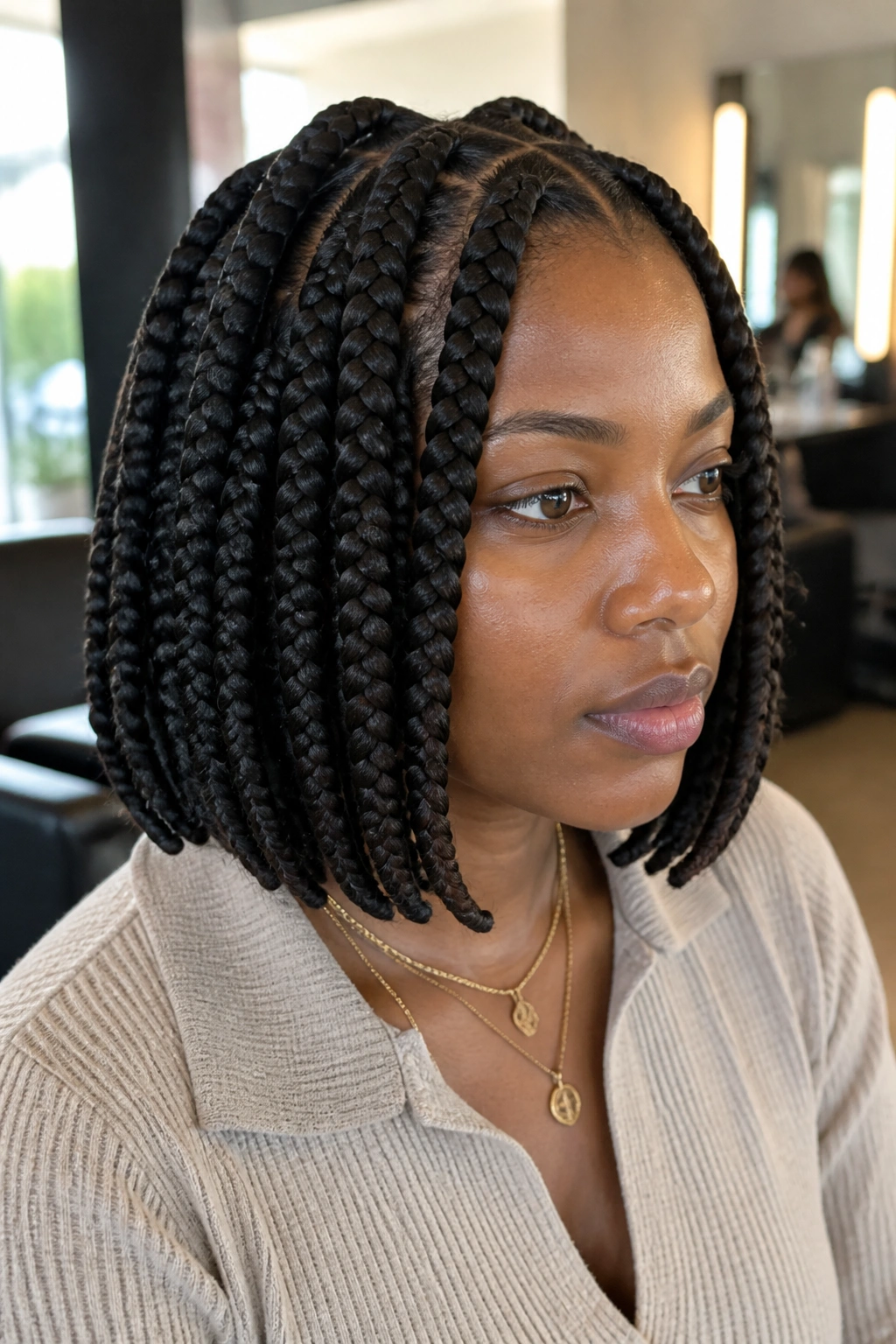
Jumbo braids at bob length are bold in a clean way. The sections are larger, the install goes faster, and the finished look has a heavier visual line than smaller braids. On the right face shape, that thick structure looks strong and confident.
I like jumbo bob braids when the goal is a style that feels low-effort after installation. There are fewer individual braids to deal with, which means less daily fuss. The trade-off is that the parts have to be neat, because there is nowhere for sloppy parting to hide.
Best for a Faster Install
A jumbo bob usually takes less time in the chair than a micro or small braid set. That matters if you want the braid style without sitting for an entire day.
- Works well with thick hair or medium-density hair
- Looks best at cheekbone to jaw length
- Needs clean parting because the sections are visible
- Feels lighter than it looks if the braids are not overpacked
There is a catch. Jumbo braids can feel too chunky if the bob is cut too short. If you want that rounded, full shape, great. If you want a sleek line, go smaller.
10. Micro Box Braids Bob
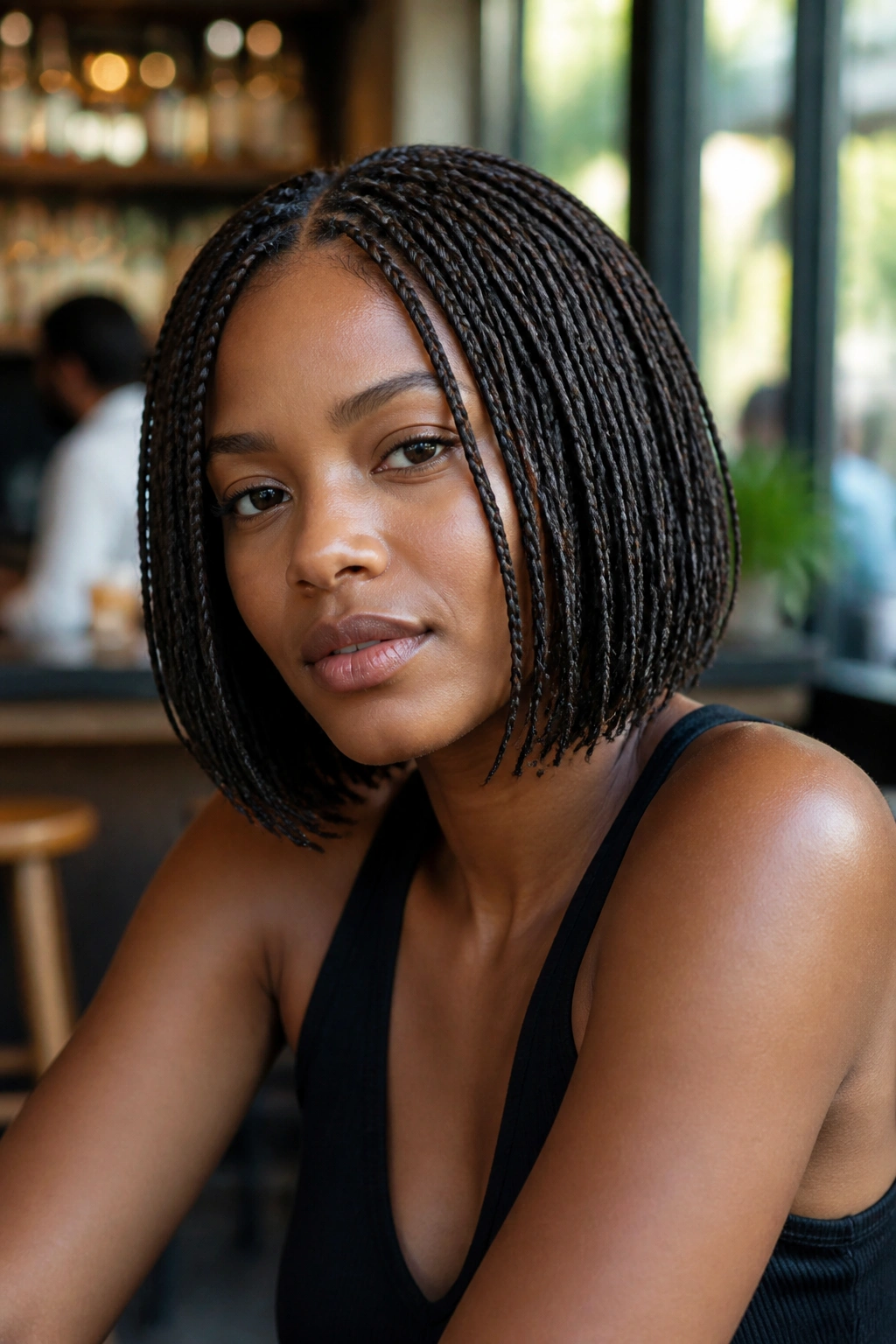
Micro box braids at bob length create a dense, fine-grained look that feels almost woven. It is a different mood from jumbo braids entirely. Instead of bold sections, you get lots of tiny movement and a softer overall outline.
This style takes patience, and I would not pretend otherwise. The install is longer, the parts have to be carefully placed, and the finished look depends on balance all over the head. But when it’s done well, the bob can look very light and flexible.
Why Some People Love It
Micro braids give you more styling room. You can tuck them, pin them, part them in different ways, and they usually fall with a lot of movement. Short length keeps them from becoming overwhelming.
A few things stand out with this style:
- The braids lie flatter at the crown
- The bob can look fuller without feeling bulky
- Small accessories work especially well
- The style needs careful scalp tension from the start
Not everyone wants the upkeep, and that is fair. Micro braids need attention at the roots if they grow out unevenly. Still, if you like a bob that has softness and a lot of texture, this one earns its place.
11. Ombre Short Box Braids Bob
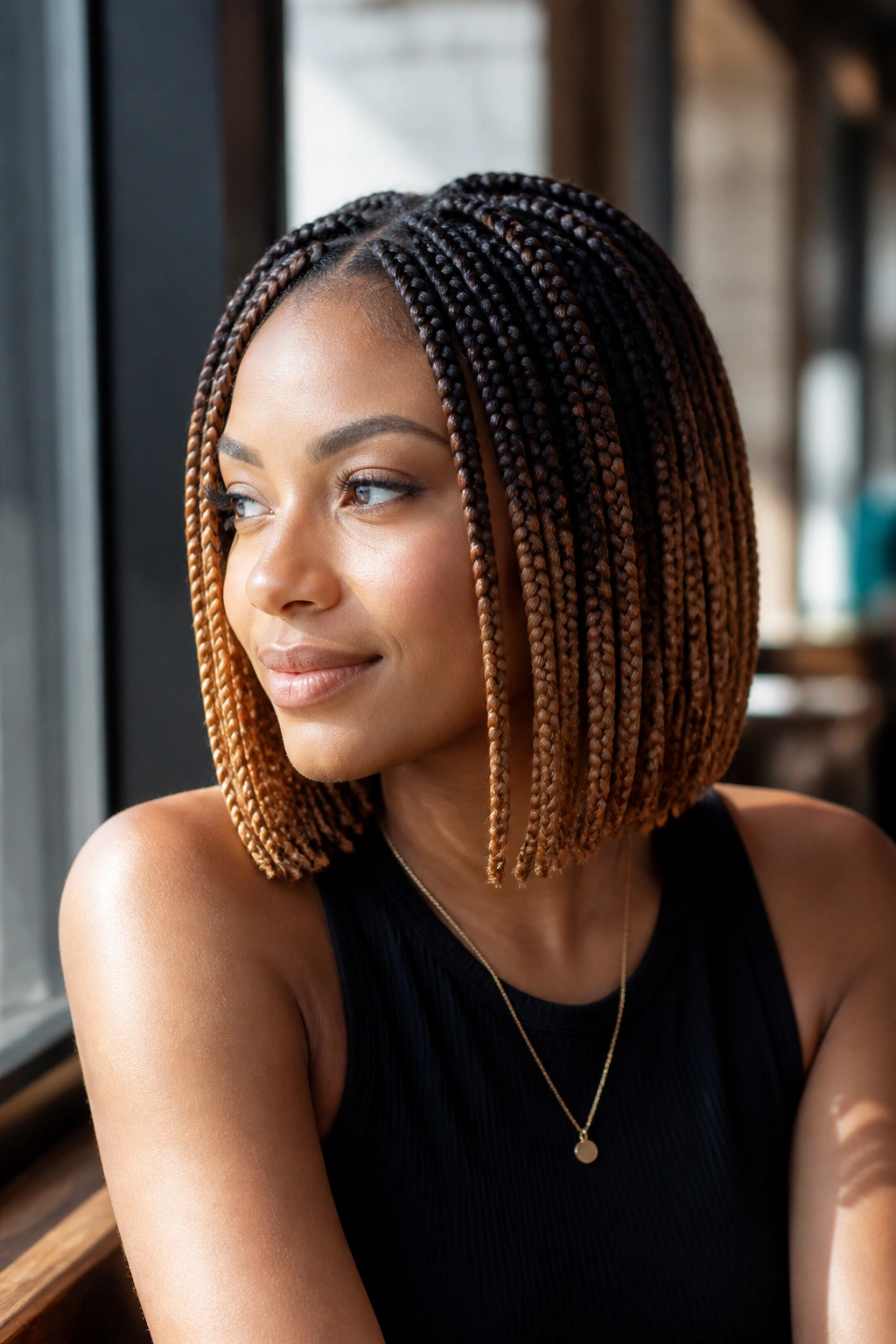
Color does a lot of work on a bob. A short length shows the transition fast, so an ombre braid bob gives you contrast without needing extra inches for the fade to appear. Dark roots moving into caramel, honey, burgundy, or copper can make the style feel richer right away.
I think ombre works especially well when the cut is simple. A clean bob lets the color do the talking. If the braid shape is already complicated, the color can fight with it.
What Makes It Stand Out
The bottom half of the braids catches the color shift first, which means the ends become the focal point. That’s useful when you want movement without adding curls or beads.
- Dark roots make grow-out less obvious
- Brown and honey tones soften the face
- Burgundy adds more contrast on deeper skin tones
- Two-tone braids look sharp with a blunt bob cut
The one thing to avoid is too many shades at once. A bob reads better when the color story is simple. Two tones is enough. Three can start to look busy, and on short braids, busy shows up fast.
12. Short Box Braids Bob with Cuffs and Rings

Hardware changes the mood of a bob in a flash. Cuffs, rings, and slim braid charms add shine, and because the braids are short, you do not need many of them to make an impact. A few pieces near the front can carry the whole look.
This style works well when you want the bob to feel dressed up without becoming formal. Gold cuffs on dark braids are a classic move. Silver can look sharper. Mixed metals can work too, but I’d keep them intentional, not random.
Where to Place the Accessories
Put them where the eye naturally lands. The front rows, temple area, and one side of the bob usually give the best result. Spreading them evenly across every braid can make the style feel cluttered.
- Use small cuffs if the braids are fine
- Use fewer, larger pieces if the braids are jumbo
- Match the metal tone to your earrings or necklace
- Keep the crown area simpler so the bob still looks clean
One honest note: too many accessories can snag in clothes and scarves. A few well-placed cuffs are better than a pile of them. Every time.
13. Asymmetrical Short Box Braids Bob

An asymmetrical bob means one side sits a little longer than the other. The difference does not have to be dramatic. Even a one-inch shift can change the whole feel of the style and make it look sharper.
I like this version on women who want something with edge but not drama. The uneven line adds personality, and on short braids, that shape stands out without needing extra color or accessories. It looks especially strong when the longer side skims the cheek and the shorter side stays a touch higher at the jaw.
Why It Works
The asymmetry gives the face a diagonal line, which tends to feel lively. Straight-across cuts can look neat, but they can also feel a little flat if the rest of the styling is plain.
A few smart choices help:
- Keep the shorter side clean, not choppy
- Let the longer side rest smoothly, not curl under too much
- Pair it with a side part if you want more movement
- Use medium braids so the line stays visible
This is not the most subtle style in the group. That is the point. If you want your bob to say something, this one does.
14. Knotless Short Box Braids Bob
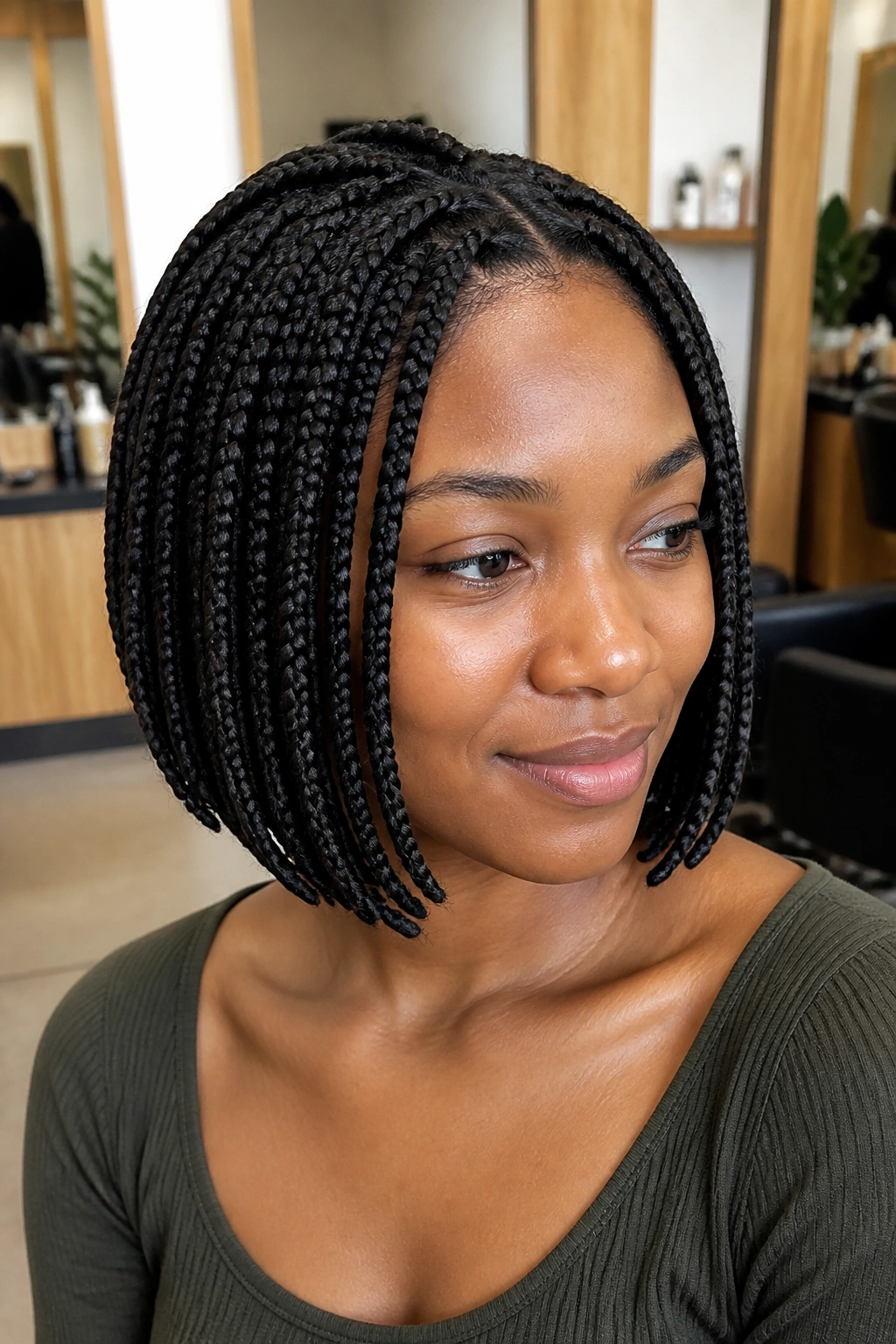
Knotless bob braids are worth the extra time if you care about a flatter start at the scalp. The braid begins with your natural hair and then gets built out gradually, which cuts down on that little knot at the root that traditional braids create.
The result is smoother, especially around the hairline and crown. On a short bob, that matters because the root area is more visible. You see the start of every braid, not just the ends.
What Makes Knotless Different
The style usually feels lighter at the roots, which can be a relief if your scalp is sensitive. It also gives the braids a cleaner drape, so the bob falls with less bulk near the top.
- Better if you like a flatter scalp finish
- Good choice for finer edges
- Often sits more naturally than a heavy knot braid
- Needs a skilled hand, so the install matters
The trade-off is time and technique. Knotless braids ask for patience. If the braider rushes, the whole point gets lost. But when they’re done well, the bob has a smoother, calmer line than most other versions.
15. Rounded Tucked-Under Bob
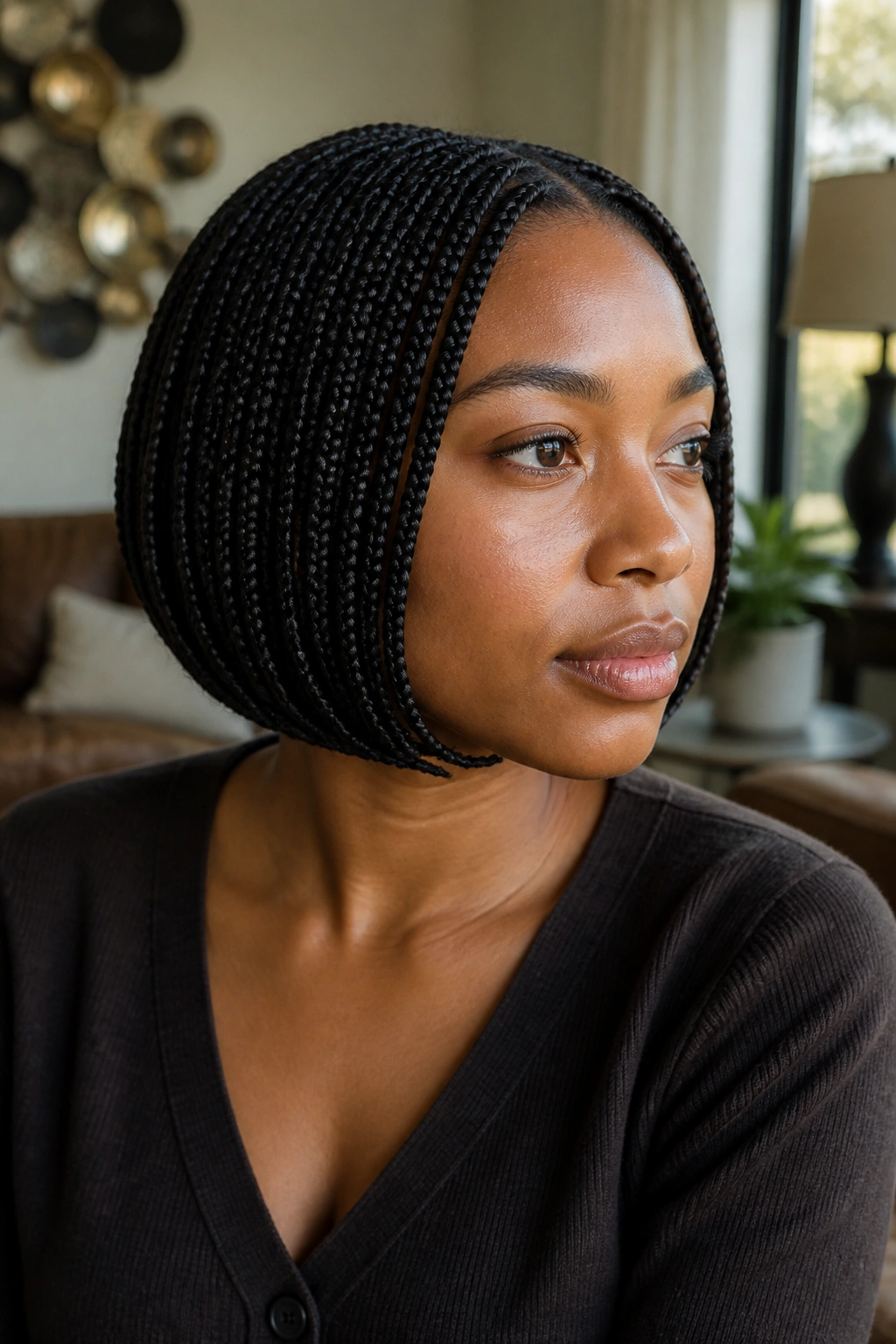
A rounded tucked-under bob has one job: make the ends curve inward so the shape feels soft and finished. It is the neatest of the bunch, and honestly, it’s the style I’d choose if I wanted something that looks polished without much effort after the install.
The curve makes the bob sit close to the face. That gives it a tidy outline from the front and a clean silhouette from the side. It is especially useful if you want the braids to stay away from your neck and collarbone.
The Shape Is the Point
Nothing here needs to be loud. The value is in the line itself. The ends tuck under slightly, the perimeter stays controlled, and the style reads as put-together without extra decoration.
A tucked-under bob works beautifully with medium braid size, a blunt trim, and a bit of shine at the ends. You can leave it plain, or you can add a single accessory and stop there. I’d stop there.
If you like a short box braids bob that feels neat in every setting — work, dinner, errands, a dressier event — this is the one that tends to behave. It is not flashy. It does not need to be.
Final Thoughts
A good short box braids bob is really about shape control. The length should sit where the face wants a frame, the parts should look deliberate, and the ends should feel like they belong there instead of hanging on as an afterthought.
The styles that hold up best are the ones that match the hair’s weight to the cut. Too much bulk, and the bob loses its line. Too little structure, and it falls flat. That’s why the clean middle part, the rounded tuck-under, and the knotless finish stay so appealing.
If you’re choosing between two versions, pick the one that asks for the least fighting on your part. A bob should make life easier, not give you a new problem every morning.
