



The long French bob with bangs has a useful kind of attitude. It looks polished when you leave the house, then looks even better once it moves a little, bends a little, and stops trying so hard. That is the part people like, even if they do not say it out loud.
A classic French bob can feel a bit severe if you need to tuck hair behind your ears, throw it into a clip, or let it grow out without panic. The longer version keeps the shape and the fringe, but adds enough length to live with. That extra inch or two matters more than people expect.
That softness is the point.
The sweet spot is usually somewhere between the jaw and the collarbone, with bangs that do some of the face-framing work. Straight hair, wavy hair, and even curls can handle it if the cut respects the texture instead of fighting it. The trick is choosing the right version for the way your hair actually behaves, not the way it behaves on a perfectly calm morning.
1. Collarbone-Length French Bob With Curtain Bangs

If you want the easiest place to start, this is it. A collarbone-length French bob with curtain bangs keeps the Parisian shape without feeling boxed in, and it has enough length to tuck, twist, or clip back on a bad hair day. It is the version I recommend to people who want the look but are nervous about a short chop.
Why It Works on So Many Face Shapes
Curtain bangs split the difference between a fringe and a face frame. They open at the center, skim the cheekbones, and let the eye travel downward, which softens sharp features and keeps round faces from looking too wide. The length at the collarbone also helps if you have a longer neck or like a little swing when you turn your head.
The cut is forgiving. That matters. If your blow-dry is not perfect, the center part and the soft bend around the face still look intentional.
- Best for: oval, heart, and square faces
- Texture match: straight, wavy, and loose curl patterns
- Styling sweet spot: a 1-inch round brush or a flat brush with a quick bend at the ends
- Maintenance: trim every 8 to 10 weeks to keep the front pieces from swallowing the fringe
Pro tip: ask for the longest front pieces to land about 1 to 2 inches below the chin so the cut keeps its shape as it grows.
2. Blunt Long French Bob With Full Fringe
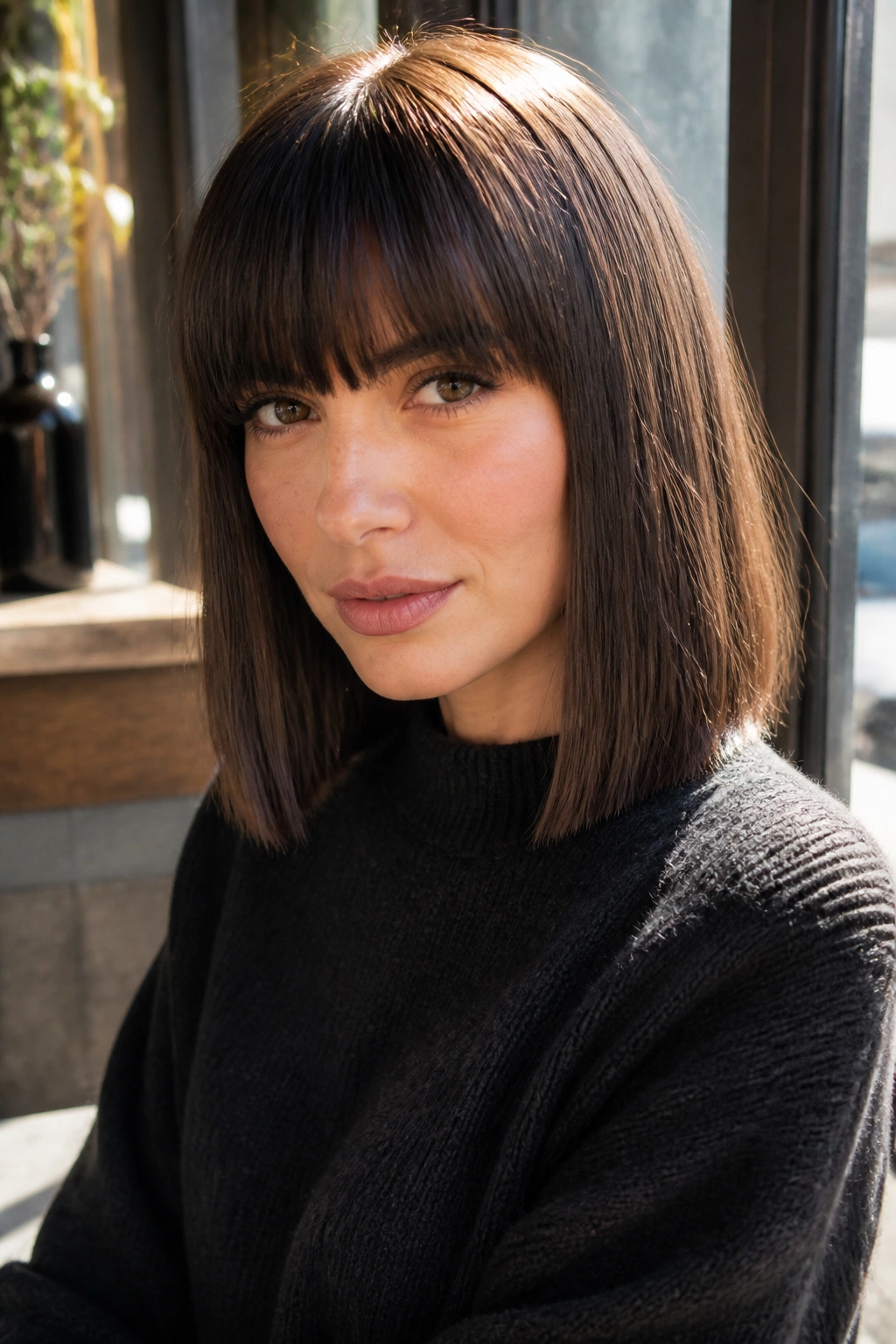
This is the sharpest version on the list. A blunt long French bob with full fringe has a clean edge, a heavier line across the forehead, and a little more fashion energy than the softer cuts. If your hair is naturally dense and fairly straight, this one can look expensive in the best possible way.
The blunt line does not need to be severe, though. That is where people get it wrong. You can keep the perimeter strong while letting the ends move a little, so the cut does not turn into a helmet. The fringe should sit somewhere between the brow and the lash line, depending on your forehead length and how much room you want for styling.
It suits people who like crisp shapes, plain and simple.
If your hair is fine, this version can still work, but the fringe should not be over-thinned. A sparse full fringe looks unfinished fast. A heavier line, cut cleanly, holds its shape better and makes the whole bob feel fuller.
The upkeep is the trade-off. You will want regular bang trims, because a blunt fringe changes fast. If you like a cut that always looks deliberate, even when the rest of your outfit is a mess, this is the one.
3. Wavy French Bob With Grown-Out Bangs

What happens when a French bob grows out a little? Most of the time, it starts looking even better. A wavy French bob with grown-out bangs has that slightly lived-in feel people chase with texture spray and a prayer, except here the shape is built in from the start.
The bangs are the key. They are not short and stiff. They are long enough to split, bend, and fall into the rest of the cut, which means they can move from fringe to face frame without a dramatic awkward stage. That makes this version a smart choice if you do not want to visit the salon every few weeks.
How to Style It
You do not need much.
- Mist damp hair with a light mousse or wave spray
- Scrunch the ends with your hands, not a brush
- Push the bangs into a soft center part while they are still damp
- Let them air-dry or use a diffuser on low speed
- Break up any hard bends with a tiny bit of cream on the fingertips
The best part is how easy it is on imperfect hair. A few flat pieces mixed with a few waves can look better here than a perfectly uniform blowout. That is the charm. It feels relaxed, but it still has a shape.
4. Side-Swept Long French Bob
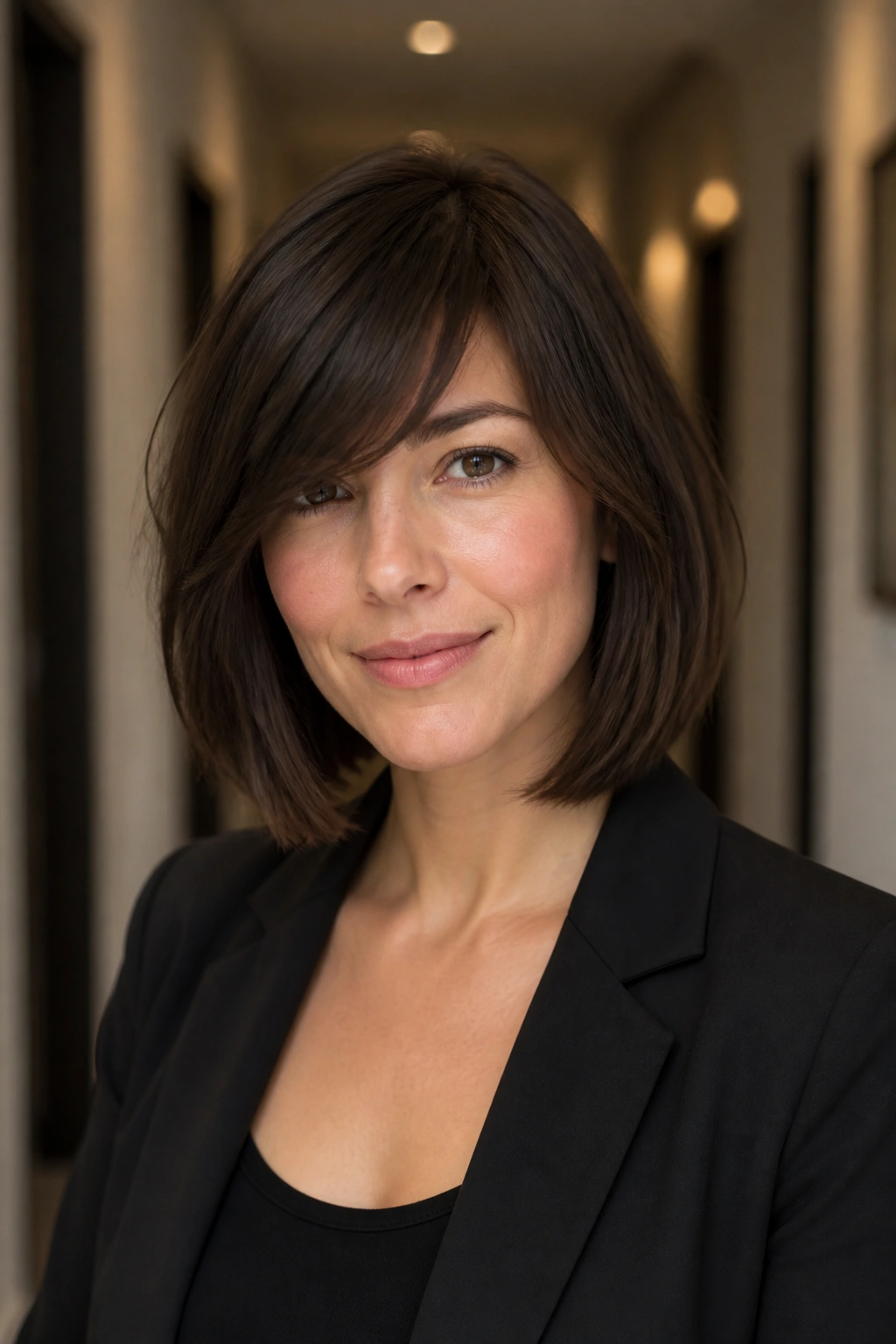
If straight-across bangs make you feel boxed in, a side-swept long French bob opens the face fast. I keep coming back to this version for people who want fringe without the commitment of a heavy curtain or blunt line. It has a little sweep, a little lift, and none of the hard edges that can make a short fringe feel too strict.
Picture someone with a blazer and no time to fuss with a round brush. This cut still works. The side part changes the balance immediately, and the bangs move diagonally across the forehead instead of sitting in a fixed line. That diagonal shape is doing a lot of work, especially if you have a strong jaw or a narrow forehead.
- Best for: round, square, and long faces
- Good hair types: straight hair that falls flat, soft waves, medium-density hair
- Styling note: dry the fringe in the direction you want it to sit, or it will keep fighting you
- Salon ask: keep the side-front pieces soft, not chopped into a hard angle
It is also a useful grow-out cut. Side-swept bangs usually behave better than blunt ones as they get longer, which makes the whole bob easier to live with between trims.
5. Airy French Bob With Wispy Fringe
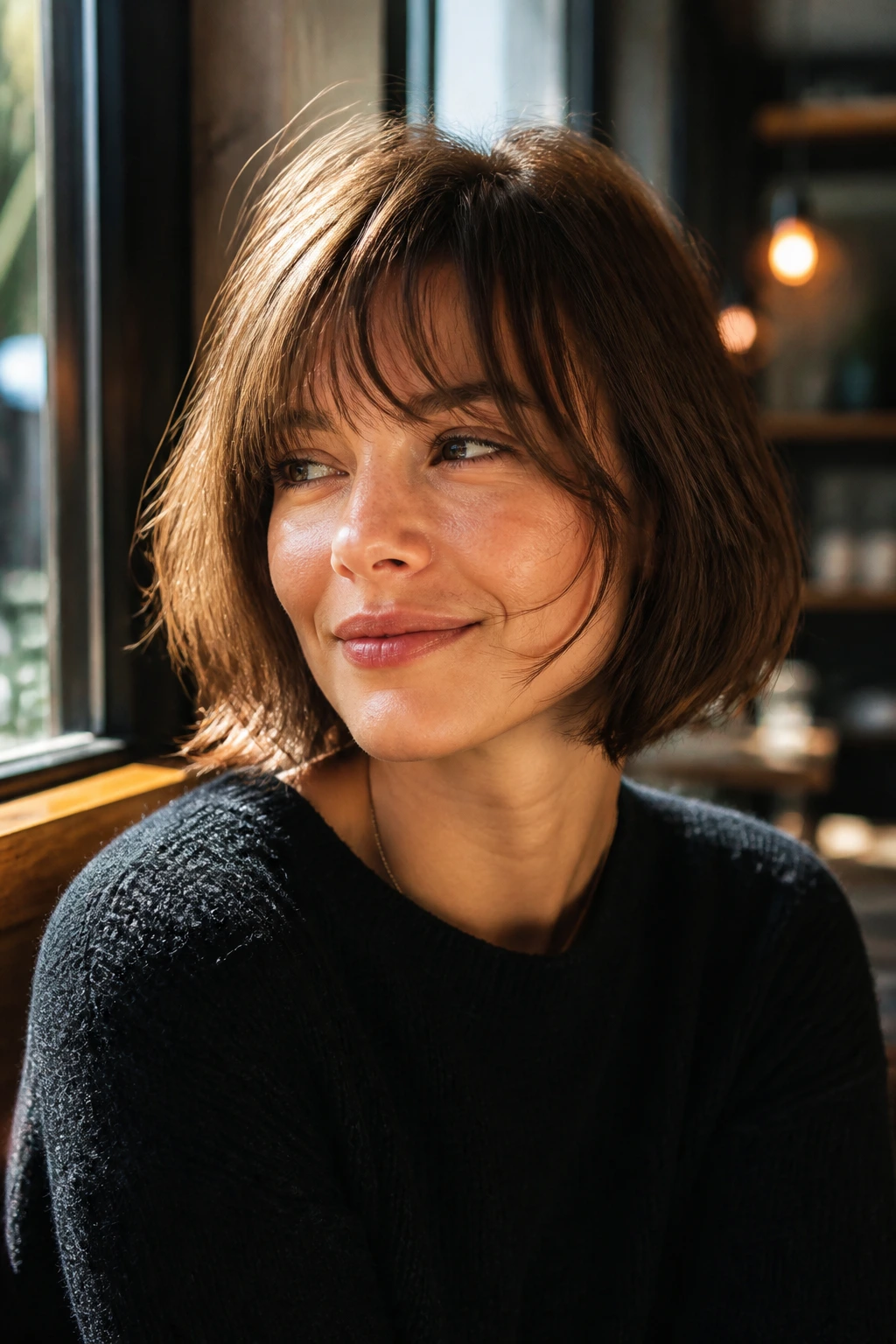
The airy French bob is for people who like their hair to look light on its feet. The fringe is soft, the perimeter is gentle, and the whole cut has enough movement that it never feels heavy around the face. On fine to medium hair, this can be a lovely answer to the question of how to get a bob without losing softness.
What you do not want is a fringe that has been thinned into nothing. That is where this style goes wrong. Wispy does not mean sparse. It means the bangs are broken up enough to let skin show through a little, while still keeping a clear line. That line matters. Without it, the cut can slide into accidental territory, and nobody wants that.
This version is especially good if your features are delicate or if a thick fringe tends to crowd your face. The softness around the eyes can make the whole haircut feel lighter. It also photographs the way a lot of people wish bangs did in real life: not too perfect, not too fussy, just clean enough to shape the face.
The styling is easy, but it does ask for a bit of restraint. A small round brush, low heat, and a quick bend at the ends usually do the job. Too much product will collapse the airy effect. Too much thinning shears work, and the fringe can disappear.
The trick is restraint.
6. Angled French Bob With Bottleneck Bangs

Unlike a blunt fringe, bottleneck bangs open in the middle and get a little wider as they reach the cheekbones. That shape gives the French bob a softer entrance and a cleaner grow-out, which is why I keep seeing it work for people who want polish without looking locked into a strict cut. Add a slight angle to the bob itself, shorter in the back and longer toward the front, and you get a shape that feels sharper from the side than it does head-on.
That matters if you like profile lines. The angled perimeter gives the neck room and keeps the hair from sitting flat against the jaw. The bangs do a different job: they break up the forehead without cutting the face in half. Together, they make the cut feel balanced.
This one suits people who want shape, not volume for volume’s sake. It is also smart for round or square faces, because the front length and the opening at the center create a little vertical line. If your hair is medium-density and naturally wants to bend under, even better.
Ask for the angle to stay subtle. A dramatic tilt can make the bob feel dated fast. The sweetest version barely announces itself until you turn your head.
7. Cheekbone-Grazing French Bob With Piecey Bangs
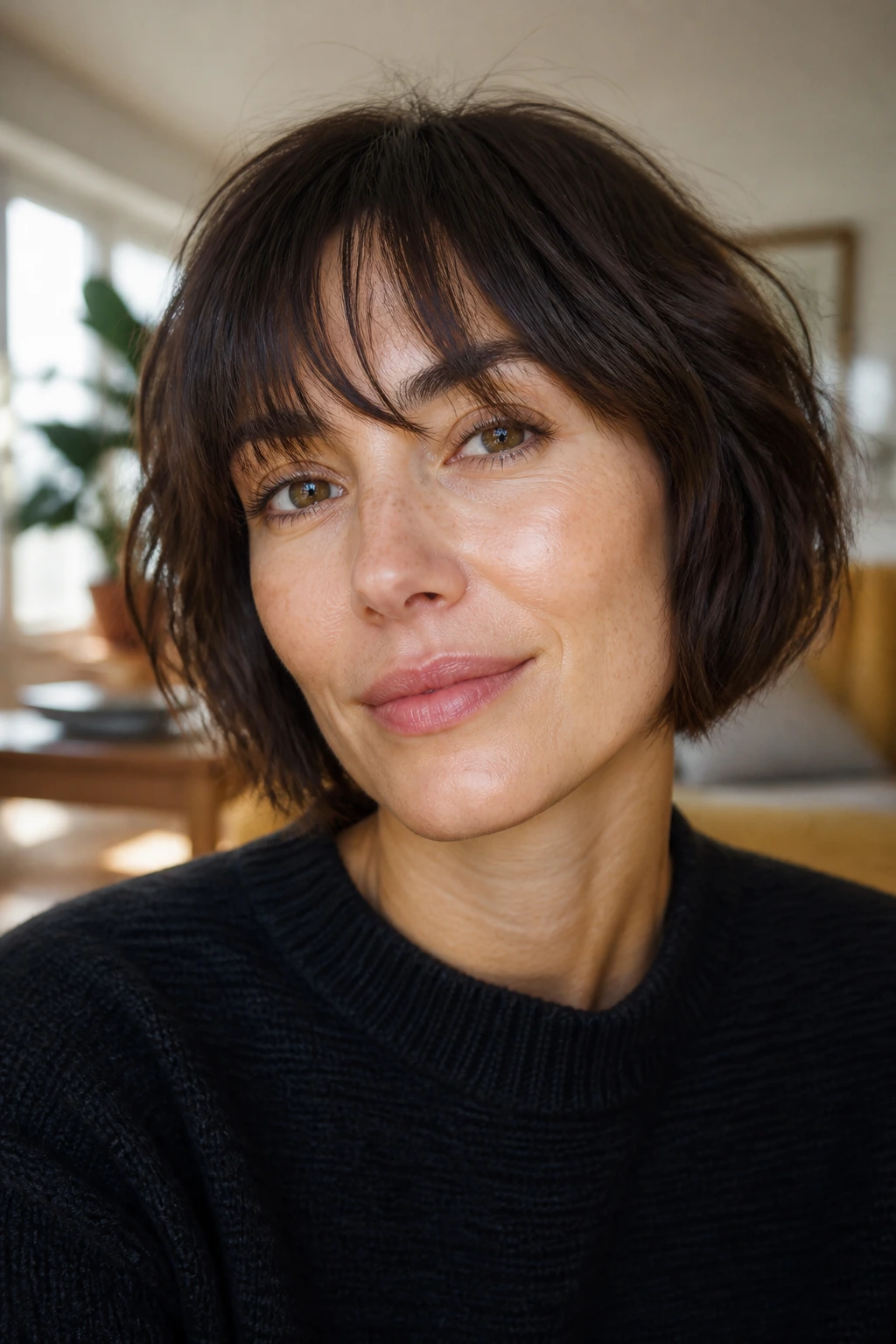
The cheekbone-grazing French bob is the flattering cousin of the classic cut. It puts the focus right where many people want it anyway: the upper part of the face, especially the cheekbones. Piecey bangs make that even easier because they break the fringe into small sections instead of creating one solid block across the forehead.
The Face-Framing Trick
The shortest pieces should land around the cheekbone, not much higher. That gives the face a bit of lift without making the bangs too short to style. The outer pieces can be left a touch longer so the fringe slides into the sides of the bob instead of stopping abruptly.
A little texture paste goes a long way here. Use enough to separate the bangs, not enough to make them crunchy. That line between piecey and stringy is thin, and the difference shows.
- Best with: medium to thick hair that can hold separation
- Good styling tools: fingers, a small flat brush, or a mini straightener for quick bends
- Face shape bonus: the cheekbone length pulls attention upward
- Maintenance note: trim the fringe before it gets past the nose, or the shape starts to lose its point
My take: this is one of the best versions if you want your bob to feel a little flirty without looking overstyled.
8. Curly French Bob With Rounded Bangs

Curly hair does not need to avoid the French bob. It just needs a cut that respects the spring in the hair. A curly French bob with rounded bangs can look lively, soft, and far more interesting than a flat ironed version, which is why I think people underestimate it. The key is giving the curls enough room to bounce without building the shape too short.
Rounded bangs are the part that needs the most care. If they are cut too short, they can spring up and leave the forehead exposed in a way that feels unfinished. If they are cut with the curl pattern in mind, though, they land in a soft curve that opens the face and works with the bob instead of against it.
Dry cutting helps here. So does patience. Curly hair changes shape as it dries, and anyone cutting it like straight hair is taking a guess they do not need to take.
This version looks best when the curls are defined but not stiff. A light cream, a diffuser, and a little scrunching are often enough. What you want is a bob that moves with your curl pattern, not one that tries to fight it into a neat little box.
And yes, it can be romantic without becoming precious. That balance is hard to fake.
9. Air-Dried French Bob With Split Bangs
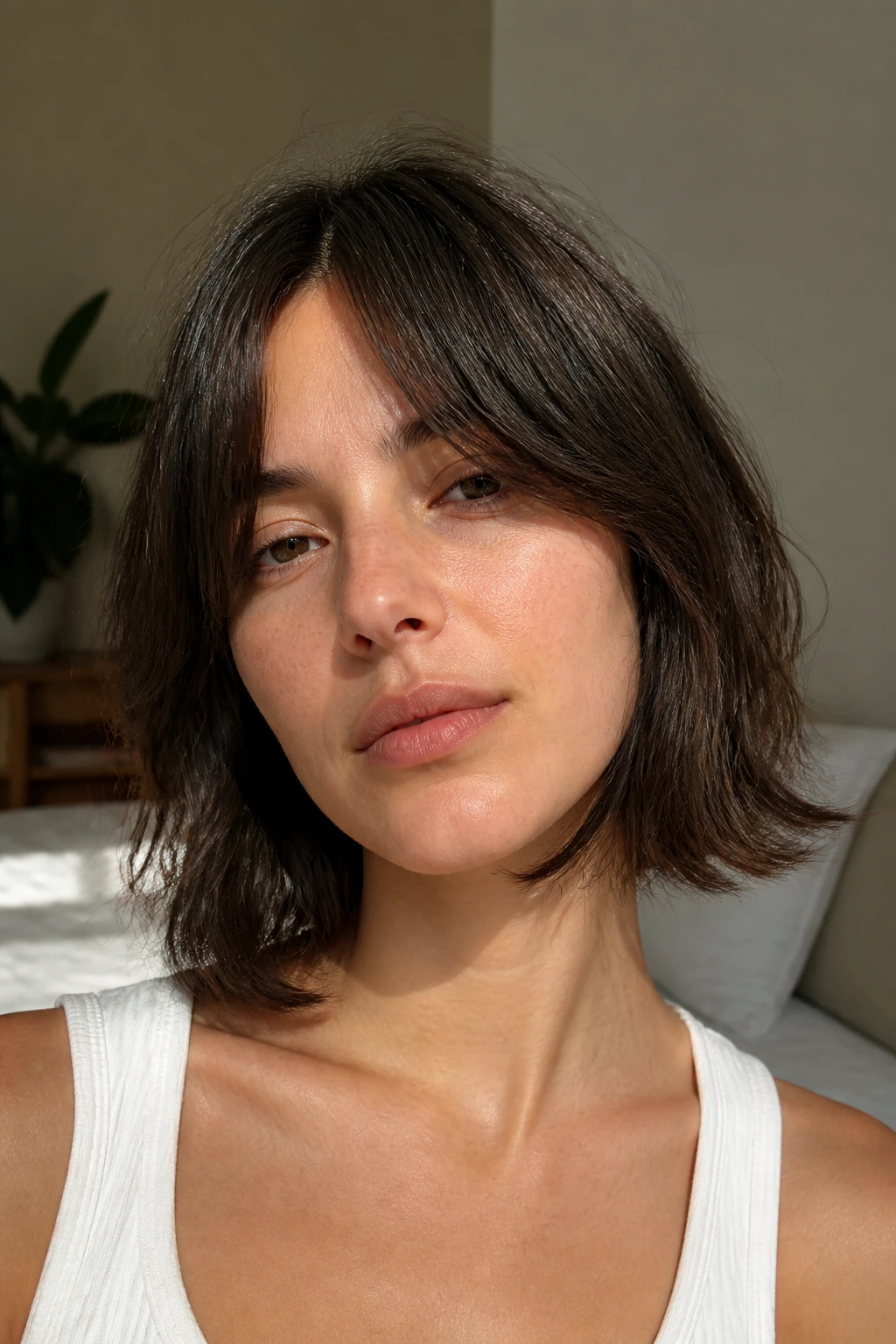
Can a French bob look intentional without a blow-dryer? Absolutely, if the bangs are cut to split on their own. An air-dried French bob with split bangs works with natural parting, cowlicks, and a little asymmetry, which makes it one of the easiest versions to live with on busy mornings.
The fringe sits at the center and breaks apart as it dries, creating that loose frame around the eyes that looks effortless without trying to look effortless. I know that word gets abused. Here, though, it fits. The shape is relaxed because the cut is built to let the hair fall where it wants to go.
How to Get the Split
Start with damp hair and a light leave-in. Comb the bangs down first, then part them with your fingers in the center while they are still wet. If the hair wants to separate too much, pinch a little mousse through the roots so the split stays soft instead of stringy.
The rest of the bob should be blunt enough to keep the shape recognizable. Too many short layers will make the air-dried finish look fuzzy. A cleaner perimeter gives the fringe a place to land.
This is the version for people who want a low-drama morning. Not no maintenance. Just less.
10. Shaggy French Bob With Long Layers

If your hair goes flat by noon, a shaggy French bob with long layers is probably the one to try first. The shape keeps the bob silhouette, but the layers stop it from lying there like a sheet. That little bit of movement changes everything, especially on hair that looks limp the second it loses some root lift.
The bangs should stay long enough to blend into the layers around the face. Short fringe plus shaggy body can get messy fast if the proportions are off. Long layers starting around the jaw or lower keep the cut soft and stop the ends from bulking up into a triangle. That part is more important than most people think.
- Best for: wavy hair, fine hair, and hair that needs help holding movement
- Styling trick: rough-dry the roots, then bend only the front sections with a brush
- Salon ask: point-cut the ends instead of carving huge chunks out of the shape
- Watch out for: too many short layers around the crown, which can make the top puff up
The nice thing about this cut is that it ages well. A little bit of grow-out tends to make it better, not worse. That is not something every bob can say.
11. Sleek French Bob With Straight Fringe
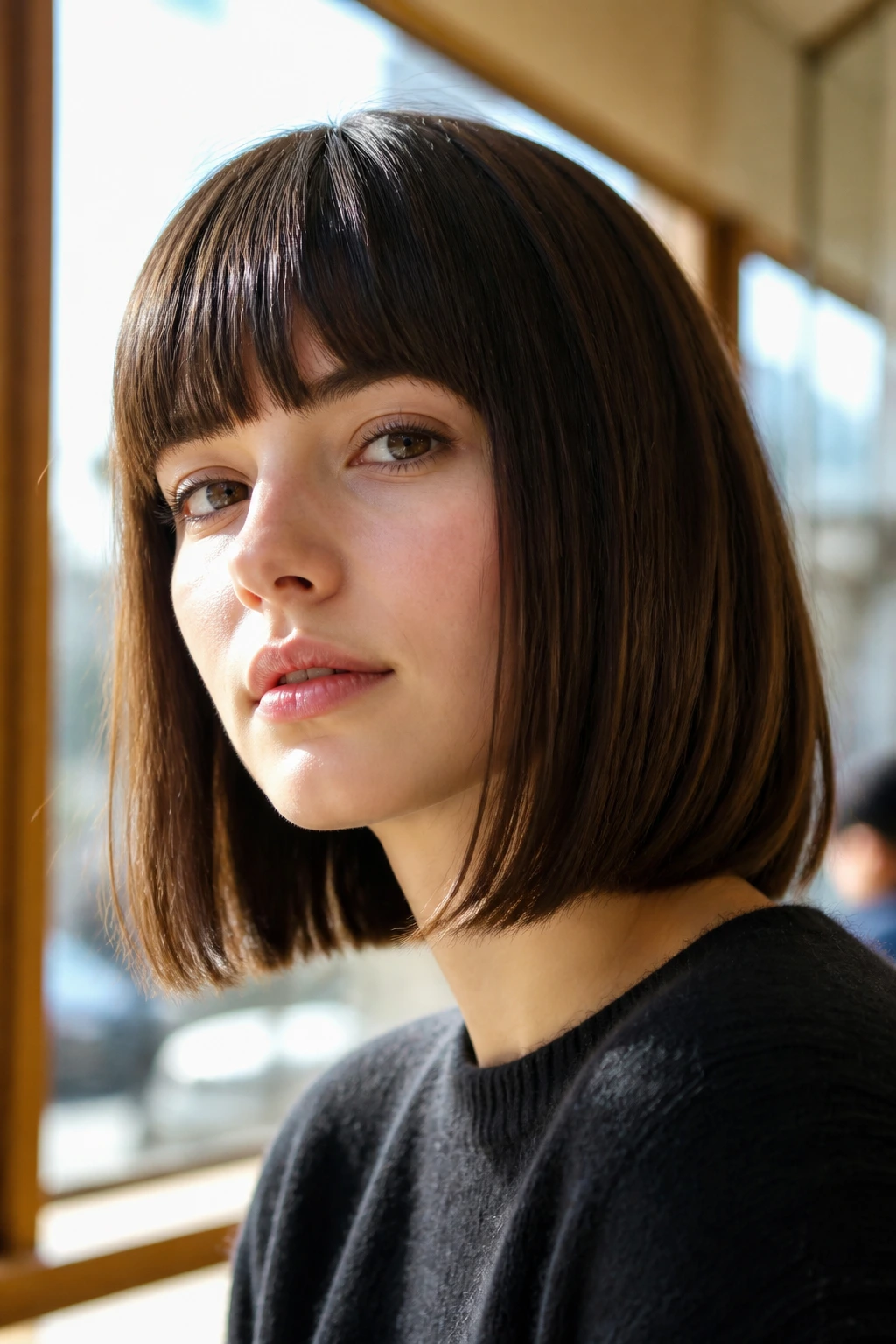
The sleek long French bob with straight fringe has a cleaner, more graphic feel than the softer versions. If you like a haircut that looks deliberate every time you catch your reflection, this one earns its keep. The line across the forehead is straight, the edges are neat, and the length sits in that in-between zone where the bob still feels feminine without getting fussy.
This version depends on smooth hair. Not poker-straight, not glassy, just smooth enough that the fringe falls where it should. A narrow round brush or a quick pass with a flat iron can help, but the bigger issue is frizz control. If your hair puffs when it sees humidity, you will need a smoothing cream or serum that keeps the fringe from separating into little sad strands.
It suits oval, heart, and longer face shapes especially well, because the straight fringe shortens the forehead and adds balance. On a square face, it can look striking, but you want a softer bob perimeter so the whole cut does not feel too rigid. A little bend at the ends keeps it from becoming severe.
I like this one on people who dress simply. A white shirt, a black sweater, a denim jacket — the haircut does a lot of the visual work without needing much else.
12. Messy French Bob With Tucked Ends

Unlike a perfectly curved bob that flips under on purpose, the messy French bob with tucked ends looks better when it has a little bend and a little imperfection. That is the charm. The ends can tuck behind the jaw in some spots, kick out in others, and still read as deliberate because the fringe keeps the shape anchored.
This is a good cut if you like a lived-in finish and do not want to spend ten minutes making every strand behave. You can rough-dry the hair to about 80 percent, then use a brush or flat iron to soften only the front pieces. The rest can stay a little undone. In fact, it should.
The bangs can be curtain-like, slightly off-center, or split enough to peek at the forehead. What matters most is that the cut has enough movement to survive second-day hair. A dab of dry texture spray near the roots helps, but don’t drown it in product. The whole point is ease, not stiffness.
This version is also good for people who tuck one side behind the ear without thinking about it. A cut that falls apart in a cute way is useful. A cut that falls apart in a weird way is not.
13. Fine-Hair French Bob With Feathery Bangs
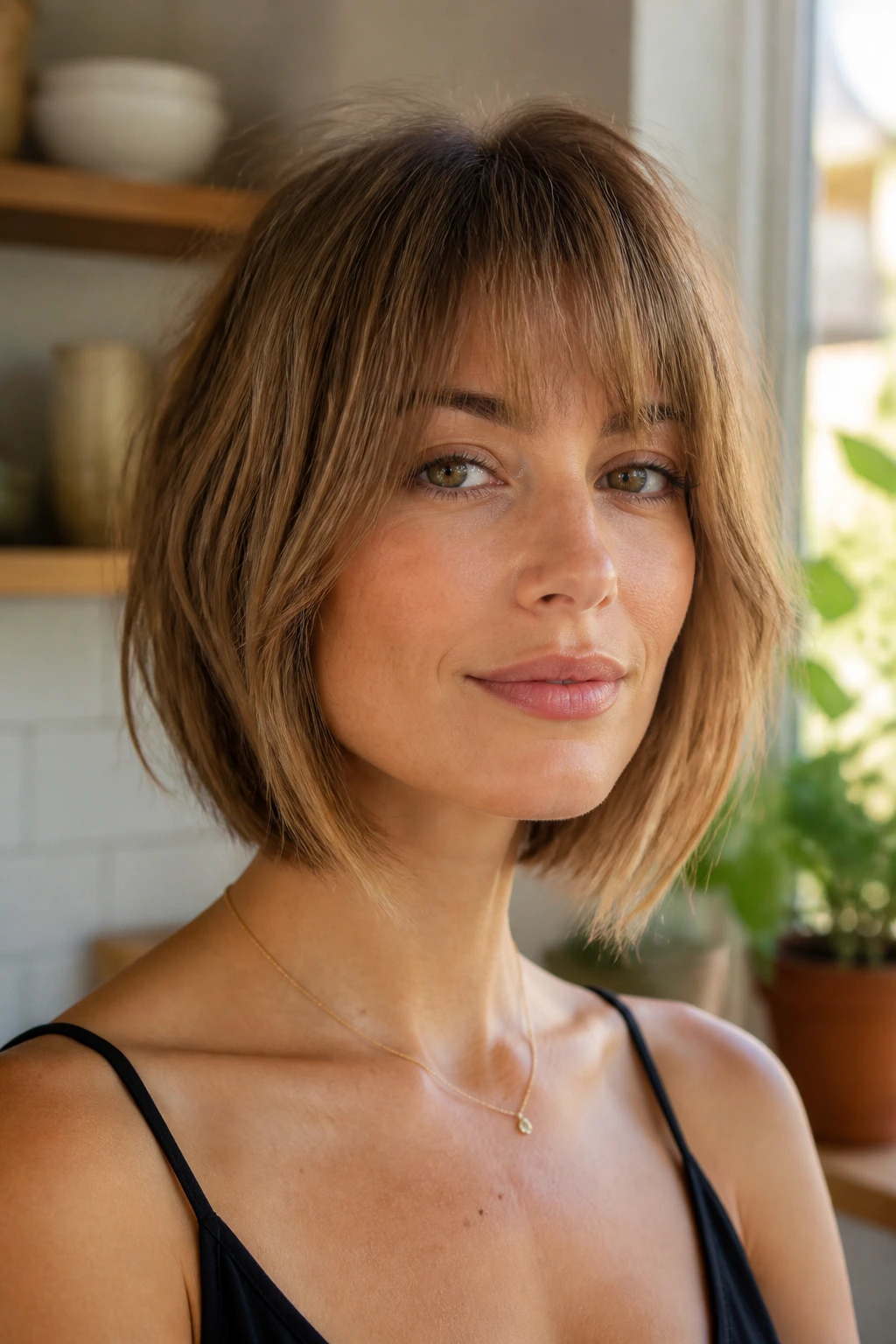
Fine hair can wear a long French bob beautifully if the fringe is feathered with care instead of thinned to death. That distinction matters. Feathery bangs should still have enough body to show up across the forehead, but they should move easily and avoid the blunt heaviness that can make fine hair look smaller than it is.
Why Feathery Bangs Help Fine Hair
A feathered fringe breaks up the hair line without demanding a lot of density. That means the bangs can look soft and airy, while the rest of the bob keeps enough weight to look full. If you have fine hair, this balance is usually better than a heavy blunt fringe, which can end up looking flat by midday.
The cut also benefits from soft slicing at the ends rather than aggressive texturizing. Fine strands can fray if they are cut too hard, and once that happens, they show every bit of damage. A cleaner, gentler finish tends to hold up better.
- Good match: straight or lightly wavy fine hair
- Styling note: blow-dry the bangs forward first, then split them with your fingers
- Product idea: a lightweight root spray for lift, not a heavy cream
- Maintenance: fringe trims every 4 to 6 weeks if you want the shape to stay crisp
My advice: keep the perimeter a little fuller than you think. Fine hair needs the visual weight.
14. Thick-Hair French Bob With Heavy Fringe
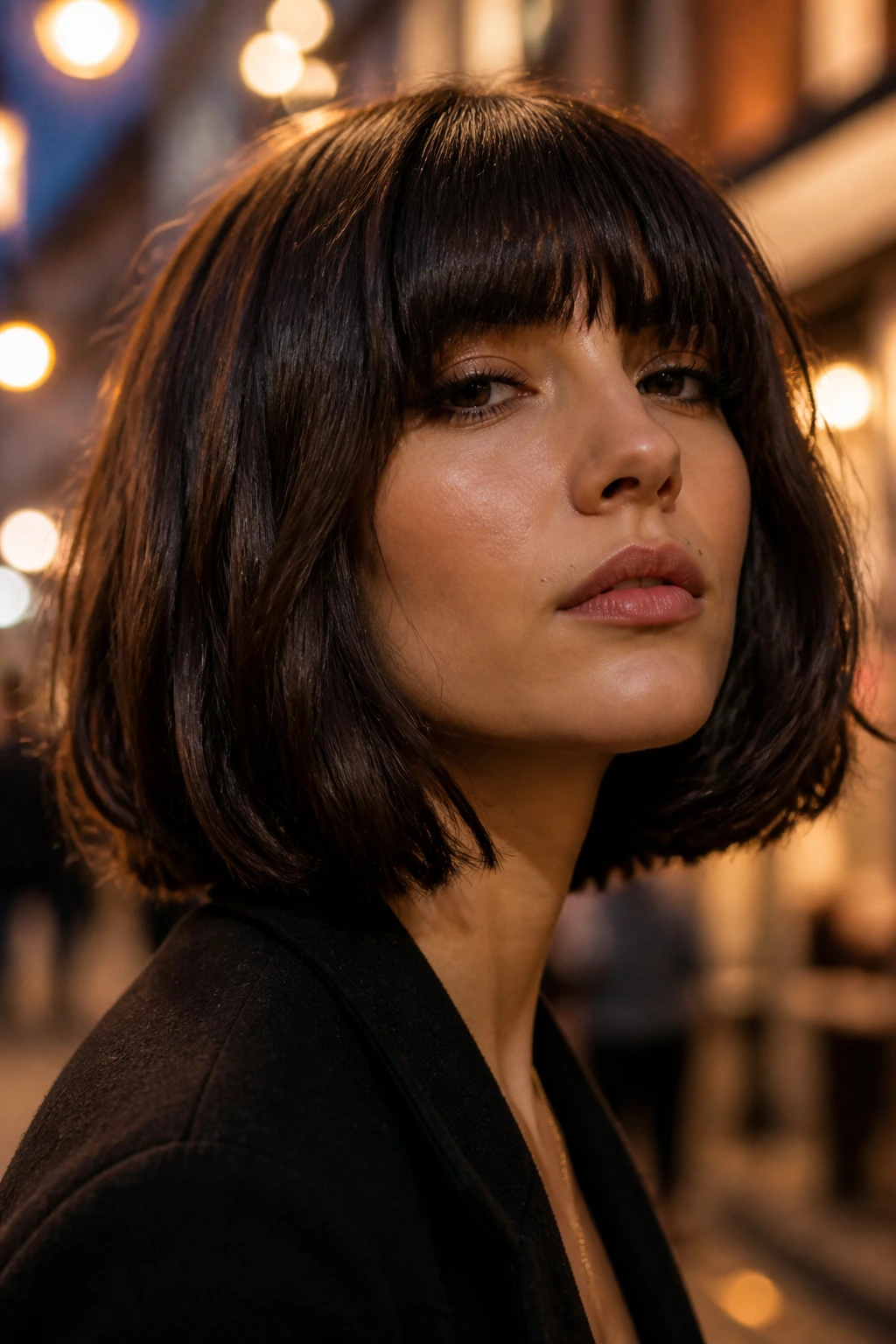
Thick hair can carry the heaviest, richest version of a French bob, and I wish more people understood that. If your hair has density, a long French bob with bangs can look expensive and full in a way that finer hair has to work harder to fake. The trick is keeping the cut controlled so the thickness does not turn into a triangle.
Heavy fringe is a good choice here because it can hold its shape. A wispy bang on thick hair often disappears into the rest of the hairline. A denser fringe gives the face a stronger frame and balances the weight of the bob. That said, the bangs should still be tailored. Too much bulk at the brow can make the forehead feel crowded.
Internal removal matters more than people think. You want the stylist to remove weight from inside the shape, not hack holes into the visible line. That keeps the bob from looking puffy while preserving the outline. If the hair is wavy, a bit of bend at the ends softens the whole thing. If it is straight, a sleek finish can look sharp in a good way.
This one takes confidence. Not because it is hard to wear, but because it looks best when you let it be itself.
15. Outgrown French Bob With Long Curtain Fringe
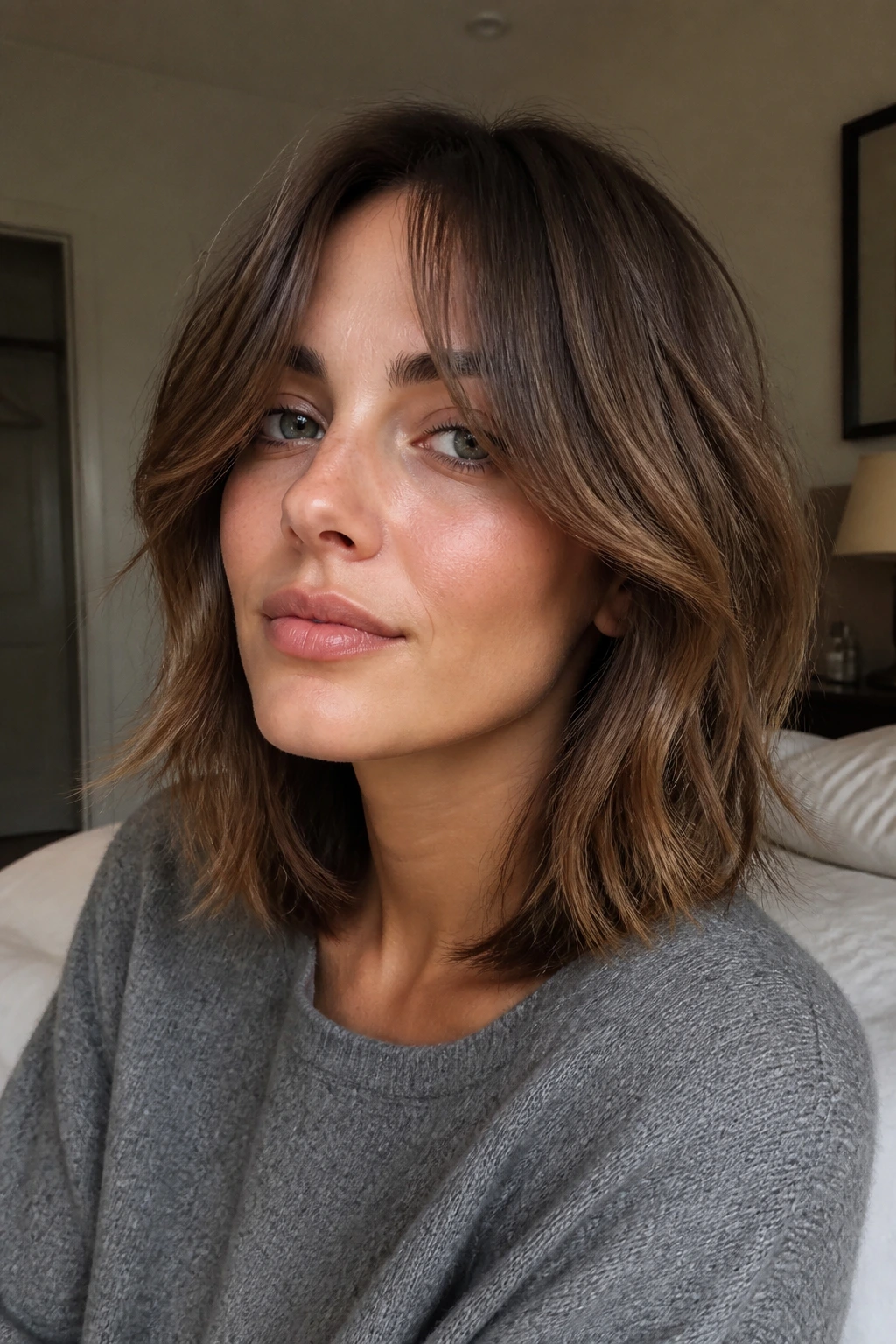
What happens when you want the cut to last a little longer between salon visits? You lean into the outgrown French bob. This version is especially useful if you like the shape of a bob but do not want to feel trapped by sharp lines or frequent trims. The fringe stretches into long curtain pieces, the perimeter lands somewhere near the collarbone, and the whole thing starts to feel more relaxed.
That grown-out stage is not a problem here. It is the point. The haircut keeps its French-bob energy even as the bangs pass the cheeks and the ends lose their original crispness. If anything, the cut gets easier because the front can move into the sides instead of needing constant correction.
How to Keep It Looking Intentional
- Ask for the fringe to stay long enough to split easily at the center
- Keep the longest front pieces around the collarbone
- Trim the ends before they get stringy or blunt at the bottom
- Use a small amount of styling cream on the face frame, not the whole head
- Let a little bend live in the hair; over-polished styling works against this cut
This is the version for people who want hair that can grow without looking neglected. A very useful thing, honestly. Not glamorous. Useful.
Final Thoughts
The best long French bob with bangs is the one that works with your texture before breakfast. That sounds blunt, but it saves you from chasing a haircut that only looks good after 25 minutes with a brush and a hot tool.
If you want the safest starting point, go with collarbone length and curtain bangs. If you want the most dramatic shape, try blunt fringe or a straight, sleek finish. And if your hair has a mind of its own, lean into that instead of trying to flatten it into something else.
Bring photos that show the front, side, and back, then say where you want the longest pieces to fall. That one detail matters more than most salon language. A good French bob should feel like hair you can actually live in, not hair you have to babysit.
