



A good bob can do a lot without shouting about it. Cut at the right length, it cleans up the jawline, opens the neck, and gives hair a shape that still looks neat when you skip a wash day or two. That’s a big part of why bob hairstyles for women over 40 keep showing up in salons, on street style, and in the lives of people who are simply tired of wrestling with long hair that has stopped cooperating.
The trick is not “looking younger.” That phrase sends people straight toward bad cuts. The better goal is shape, balance, and movement that work with the hair you actually have — finer strands, thicker strands, gray strands, straight strands that kink at the ends, waves that refuse to behave, curls that shrink up the second they dry. A bob can handle all of that, but the length and outline have to be chosen with some care.
Some bobs make hair look fuller because they stack weight in the right places. Others soften strong features, which is useful if your face has become a little more angular over time. And some styles are just practical. They dry faster, tuck behind the ear cleanly, and don’t collapse into a limp curtain by lunchtime. That matters more than people admit.
1. Chin-Length Classic Bob
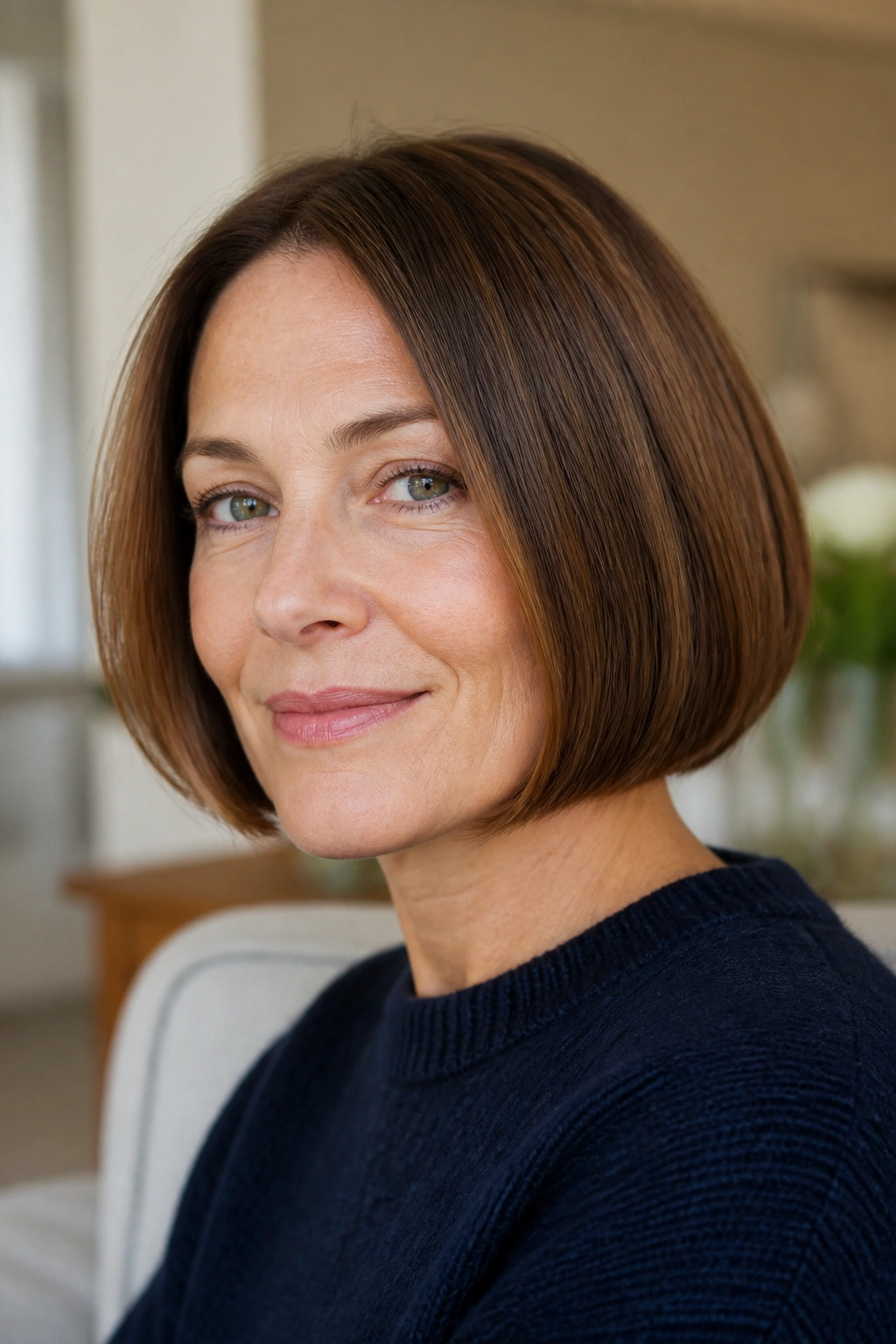
The chin-length bob is the one people keep returning to when they want something clean, simple, and easy to style. It sits right at the jaw, which gives the face a crisp frame without going so short that it starts to feel severe. There’s a reason this cut never disappears.
Why It Works
A chin-grazing line gives shape to hair that has lost a little density around the sides. It also keeps the ends full, which matters more than people think. When the bottom line is blunt enough, the whole haircut reads thicker.
Ask for a cut that stays even around the perimeter, with just enough bevel at the ends to stop it from looking boxy. A quick blow-dry with a round brush will bend the tips under and keep the shape polished. No drama.
- Best for fine to medium hair
- Trim every 6 to 8 weeks
- Looks strong with a side part or center part
- Works well with glasses and a defined jaw
Tip: keep the line clean. Too many short layers will steal the weight that makes this bob look good.
2. Long Bob with Soft Ends
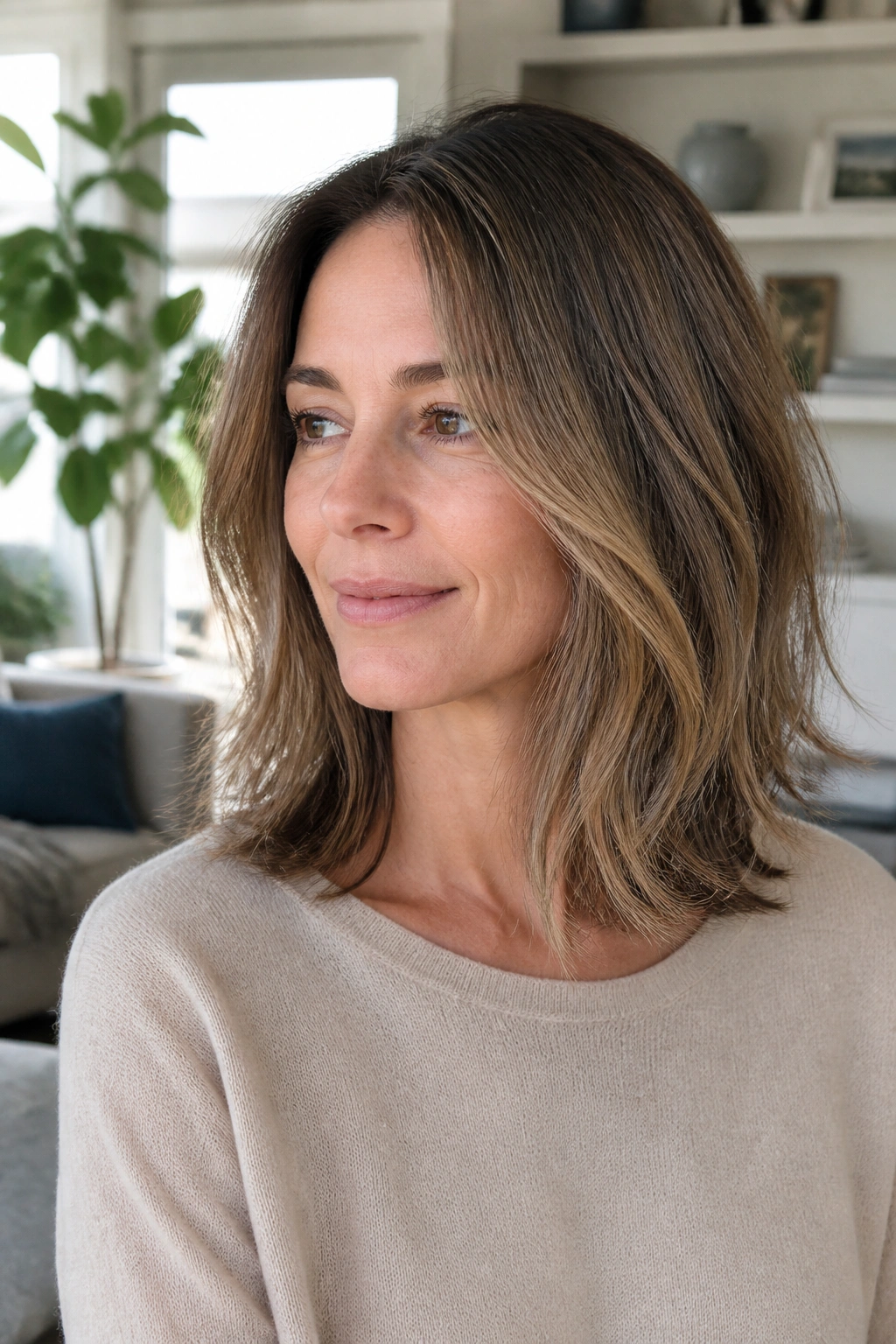
A shoulder-skimming lob is the easiest haircut to live with when you are not ready for a sharp chop. It gives you the feel of a bob without making you commit to a super-short neckline, and that little bit of extra length buys you more styling options.
It’s the easiest bob to live with.
The soft ends matter. Instead of a blunt bottom line, ask for ends that are lightly beveled or point-cut so the shape moves when you turn your head. That keeps the lob from looking stiff, which is the main mistake people make with longer bobs. A flat iron bend at the last inch of hair is enough on most days.
This cut is a good fit if you want to wear your hair down, clip it back, or toss it into a low twist when you’re busy. It also behaves well as hair grows out, which is one of those practical things nobody thinks about until they miss a trim and the cut still looks decent.
3. Blunt Bob with a Center Part
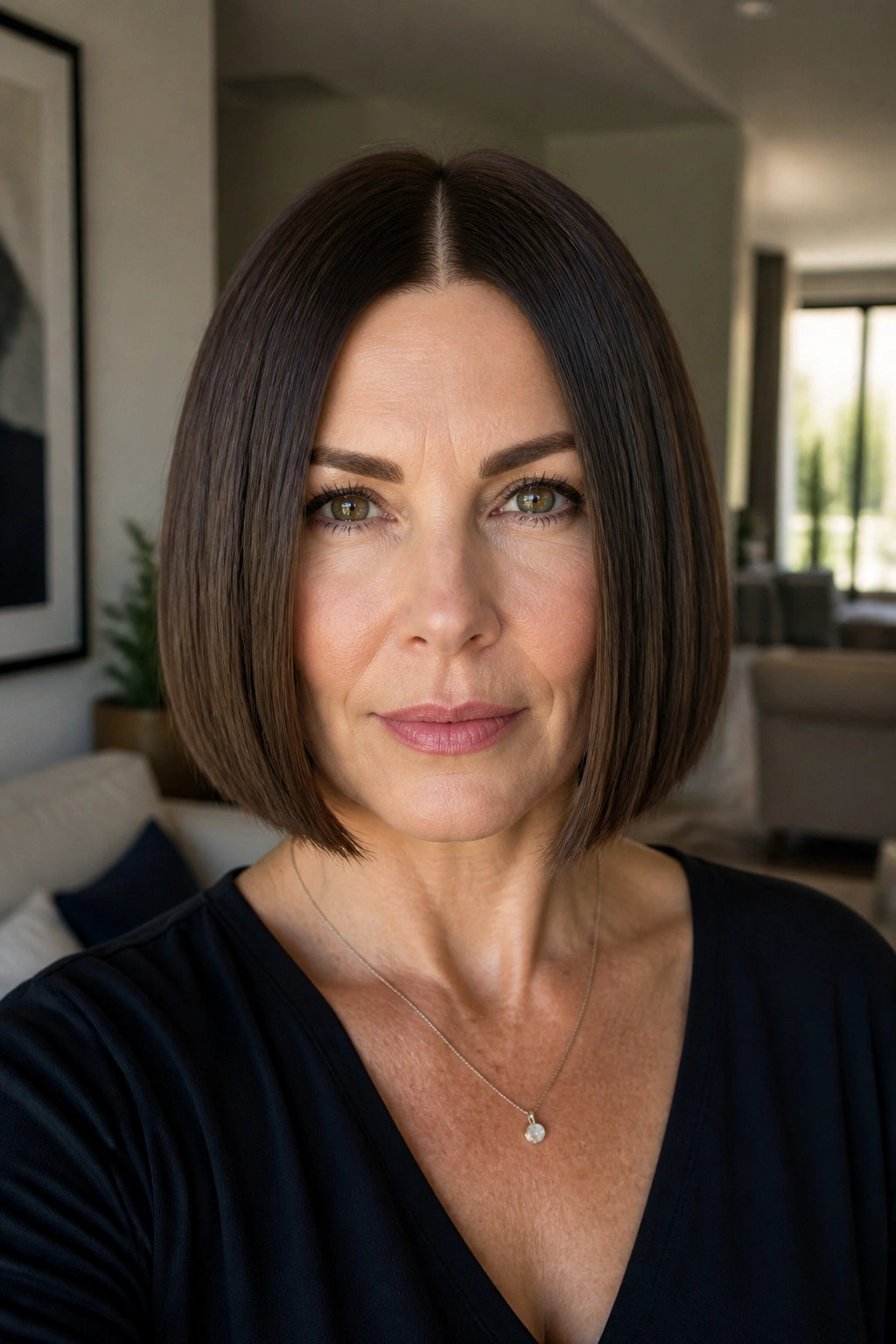
Want something sharp without going edgy? A blunt bob with a center part does exactly that. The clean middle line balances the face, and the blunt edge makes the hair look denser than it really is.
How to Wear It
The secret is precision. The ends should land in one clear line, usually somewhere between the cheekbone and the jaw, depending on how strong you want the shape to feel. If the cut is too layered, the whole point disappears. If it’s too fluffy, you lose that crisp finish that makes this style work.
This is one of the best choices for straight or slightly wavy hair that holds a smooth shape. Blow-dry with a paddle brush, then tap a small amount of serum through the mid-lengths and ends. Not much. A heavy hand makes the haircut slump.
For hair that looks fuller with a middle part, this bob gives a nice clean frame. If your part has been off-center forever, though, you may need a few days to get used to the symmetry. It can feel strict at first. Then it starts looking expensive in the plainest, best way.
4. Layered Bob for Fine Hair
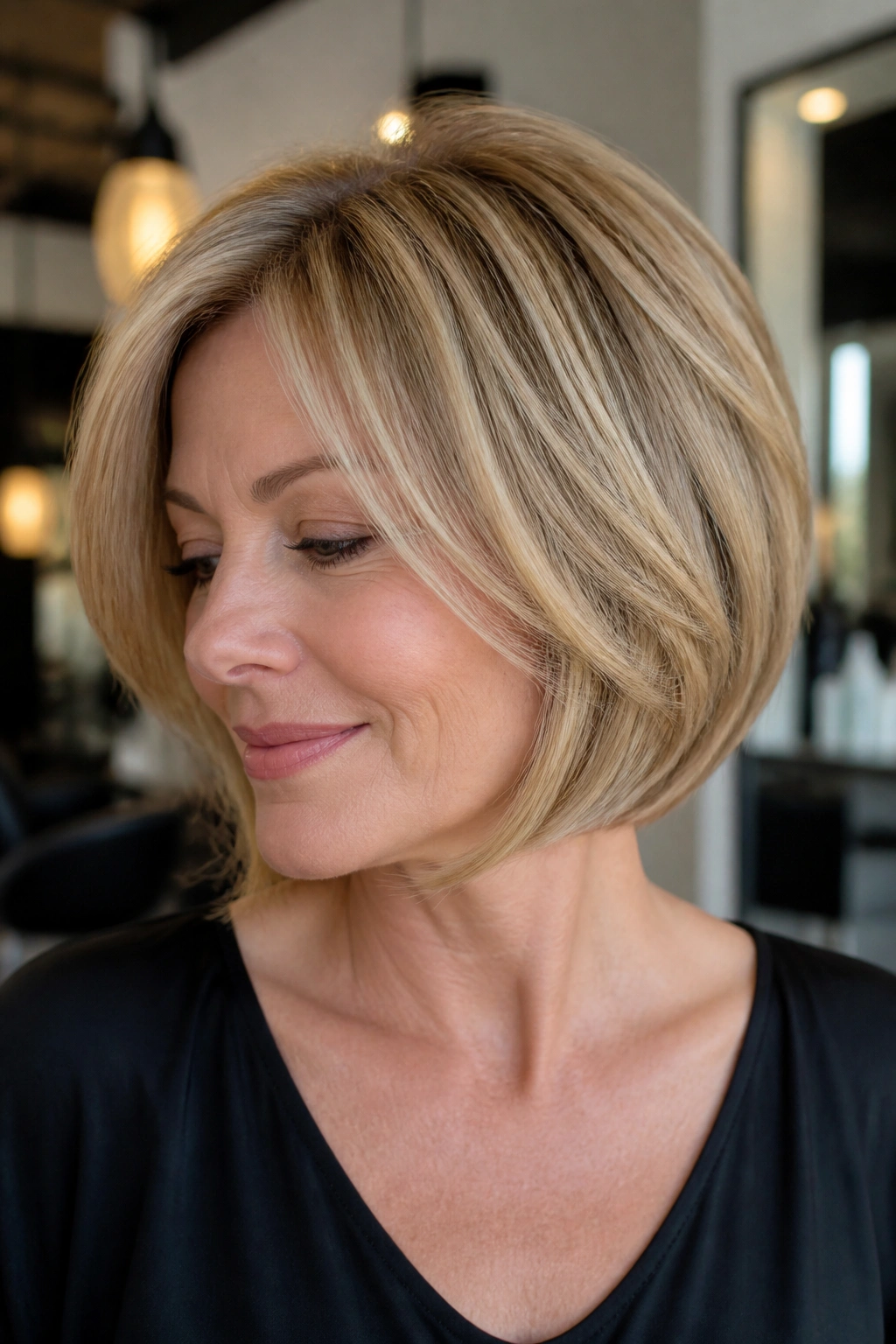
Fine hair can collapse fast. It looks good for the first hour, then the crown goes flat and the ends start to hang like they’ve given up. A layered bob fixes that by putting movement where the hair needs lift, not by stripping out weight everywhere.
What Makes It Work
The smartest version keeps layers light around the crown and cheek area while leaving the bottom line thick enough to show density. That balance matters. Too many layers and the haircut turns wispy. Too few and it sits there like a helmet.
- Ask for short internal layers near the crown, not choppy pieces all over
- Keep the nape a touch fuller for support
- Use mousse at the roots before blow-drying
- Finish with a round brush at the crown for lift
The shape helps hair look airy without making it sparse. That’s the whole point. You want movement, not holes.
5. Textured Bob with Piecey Ends
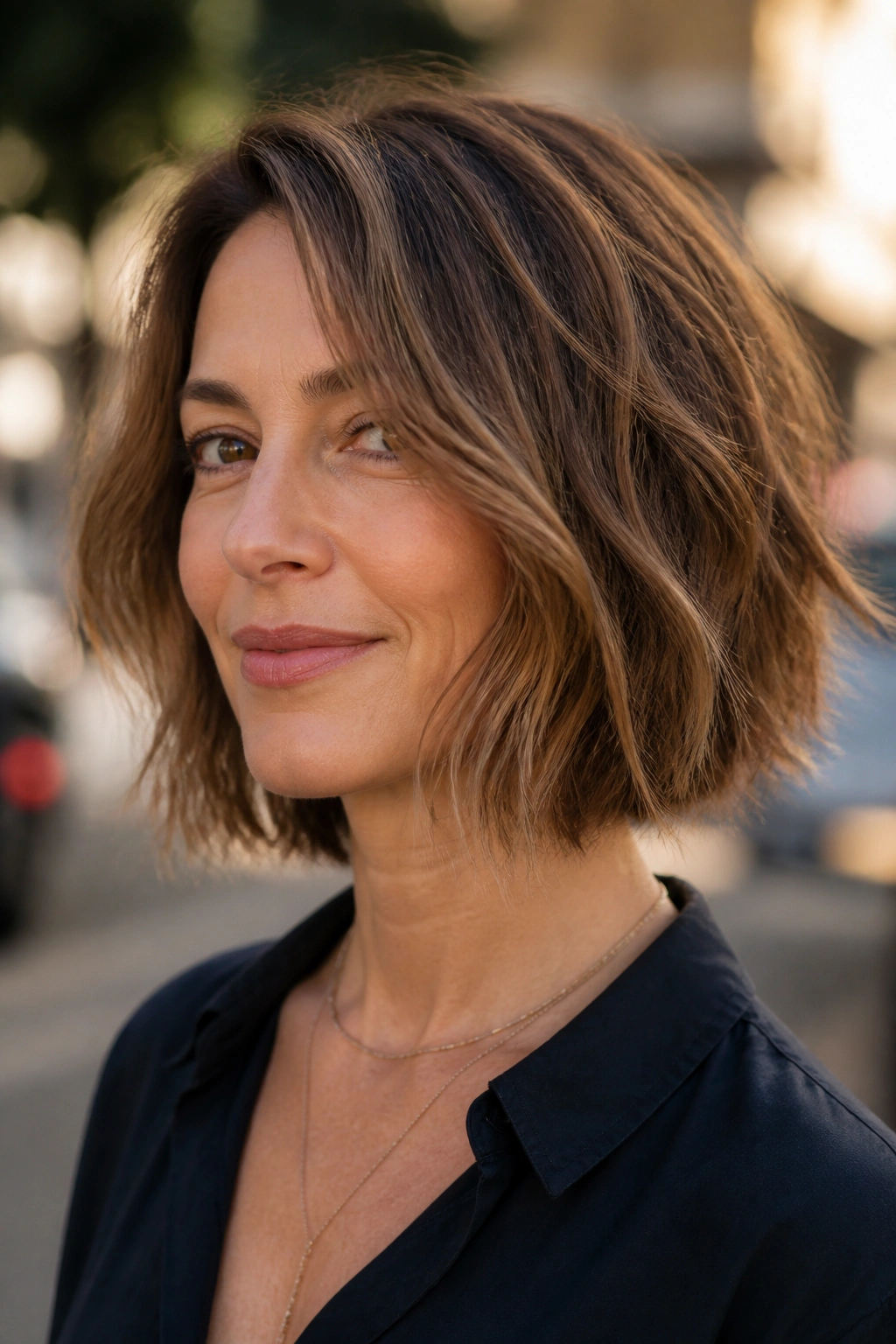
A textured bob has a little more attitude than a classic one, and I mean that in a good way. The ends are broken up just enough to keep the cut from feeling too neat, which is useful if your hair has a natural bend or you prefer a lived-in look.
Dry cutting helps here. So does a light texturizing spray at the ends after styling. The idea is not to make the bob shaggy. It’s to give it that separated, piecey finish that looks better when the wind hits it or when you run your fingers through it twice. If you’ve ever hated a haircut that looked “done” all the time, this is the opposite.
A textured bob works especially well on hair that’s between straight and wavy. On very frizzy hair, though, it can get messy fast if you skip a smoothing cream. That is the catch. Texture is a style choice, not a free pass to ignore the ends.
6. Side-Parted Bob with Sweep
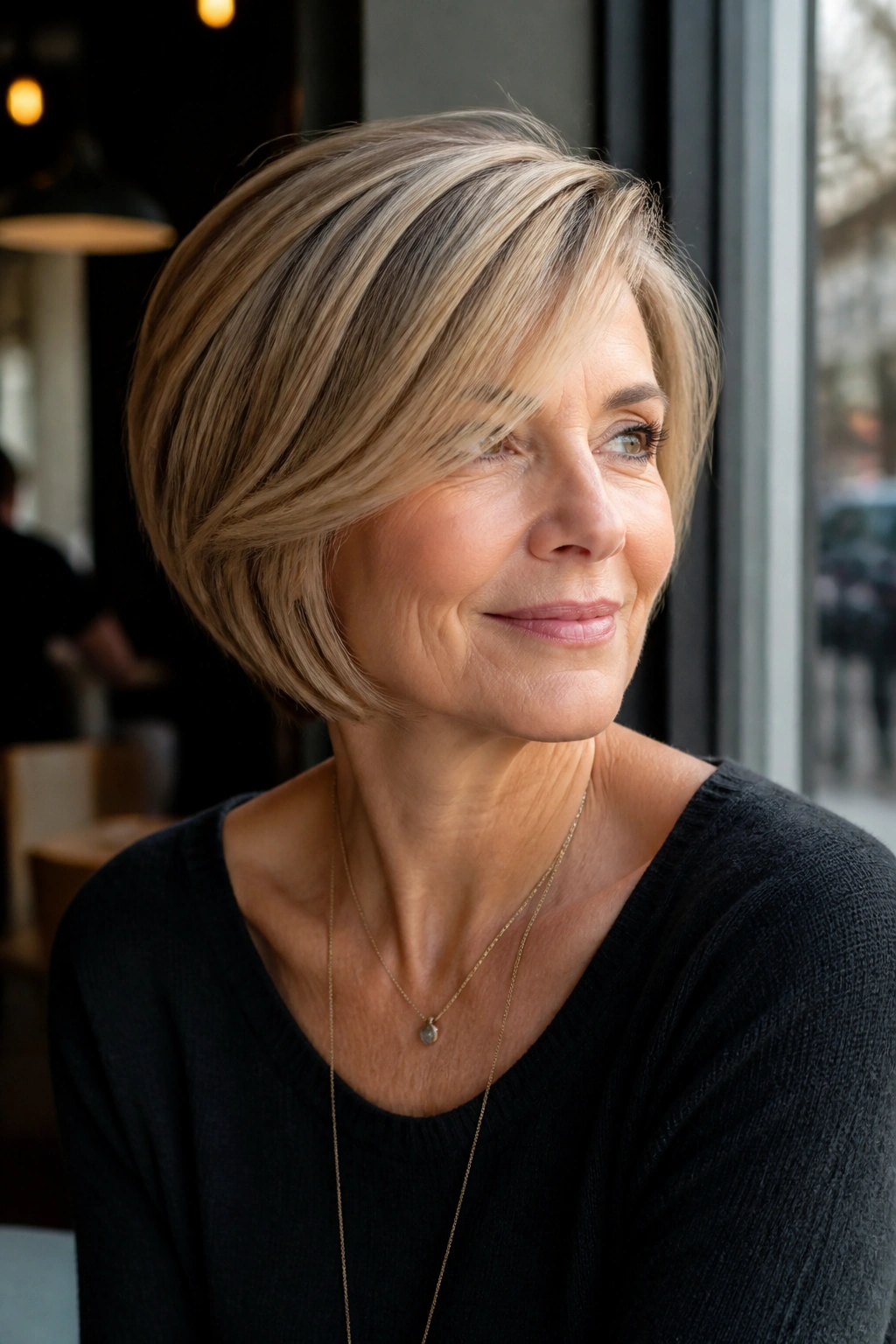
A side part can change a bob more than people expect. It softens the face, adds a bit of lift at the front, and breaks up anything that feels too symmetrical. If you have a cowlick or one side of your hair naturally falls flatter, this is the style that stops fighting your head.
Unlike a center part, a side-parted bob has a little movement built in. The sweep across the forehead can narrow a wider face, soften a strong brow, or simply give the cut a more relaxed feel. It’s not trying to be severe. Good.
This style works best when the part sits slightly off the deepest point of the arch in your eyebrow. That little shift gives the front some height without looking overstyled. Use a round brush at the root and direct the hair away from the part as it cools. Once it sets, the bob keeps that lift for hours.
7. Inverted Bob with a Slight Angle
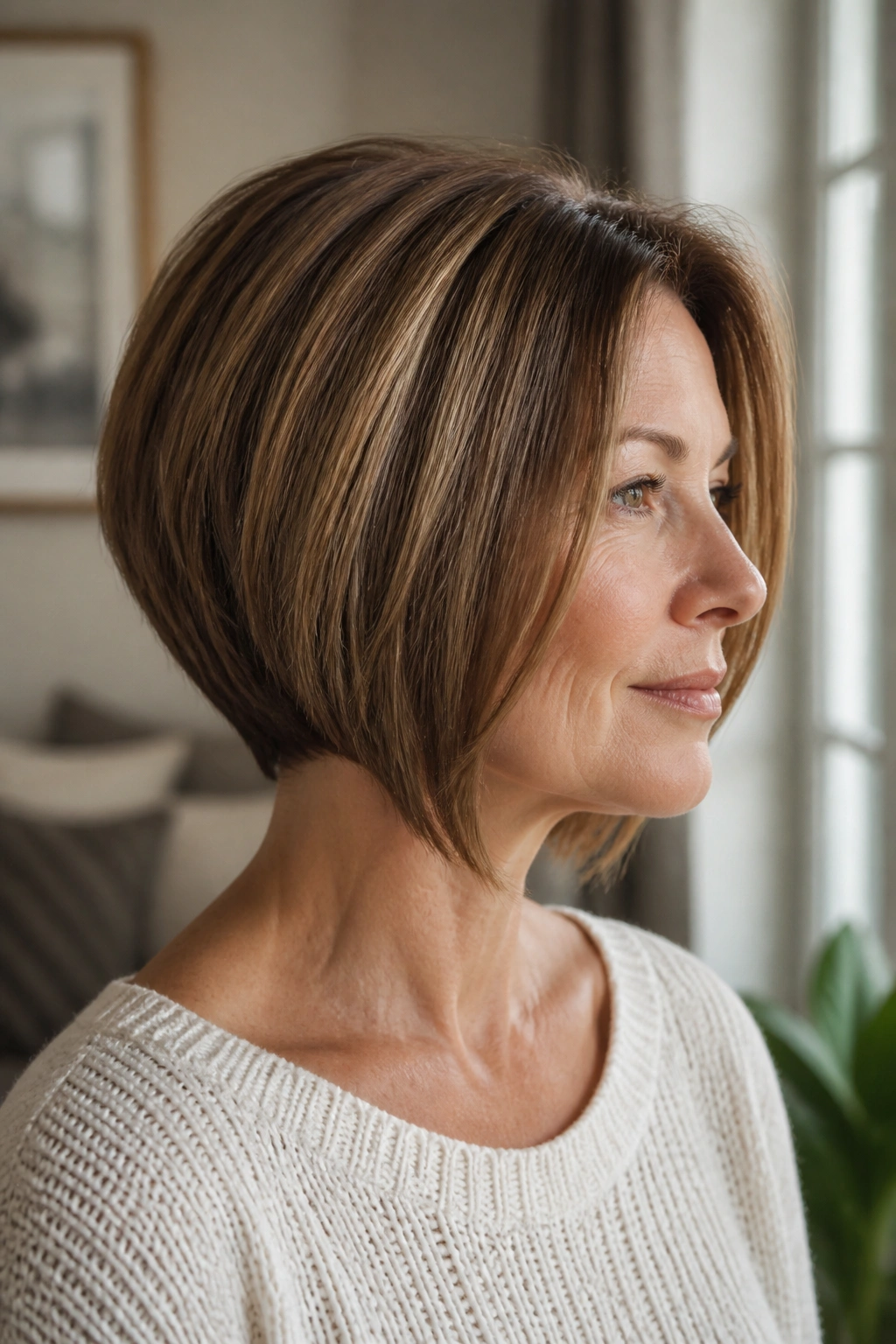
The inverted bob has a quiet trick: the back sits shorter, and the front gradually gets longer, which makes the neck look longer and the whole shape feel sharper. It’s one of those cuts that sounds dramatic on paper but wears easily in real life.
What to Ask For
Ask your stylist for a gentle angle, not a steep one. A severe inverted bob can be hard to grow out and even harder to style on busy mornings. A softer version gives you the clean outline without the sharp corners.
- Shorter nape for lift
- Longer front pieces near the collarbone
- A slight stack in the back, not a heavy one
- Smooth finish with a blow-dryer or flat iron
This one suits people who like structure. If your hair is thick, the angle helps remove bulk from the back. If your hair is fine, keep the graduation subtle so you don’t lose density. The cut should look deliberate, not overly engineered.
8. French Bob with Bangs

A French bob has that short, cheeky shape that looks casual even when the cut itself is precise. It usually lands around the mouth or jaw, with bangs that skim the brows or sit just above them. The whole effect is sharp, but not stiff.
This style flatters hair that has a little natural wave because the movement keeps it from feeling too exact. Straight hair can wear it too, especially if you like a tidy line and a fringe that doesn’t need to be fussed with every five minutes. The danger is taking it too short and too full at the same time, which can make the head look wider than intended.
Ask for soft bang edges and a clean baseline. A tiny bend at the ends keeps the cut from feeling blunt in a harsh way. If you wear lipstick, earrings, or a strong brow, this is one of those haircuts that makes the whole face register faster. It has presence.
9. Bob with Curtain Bangs
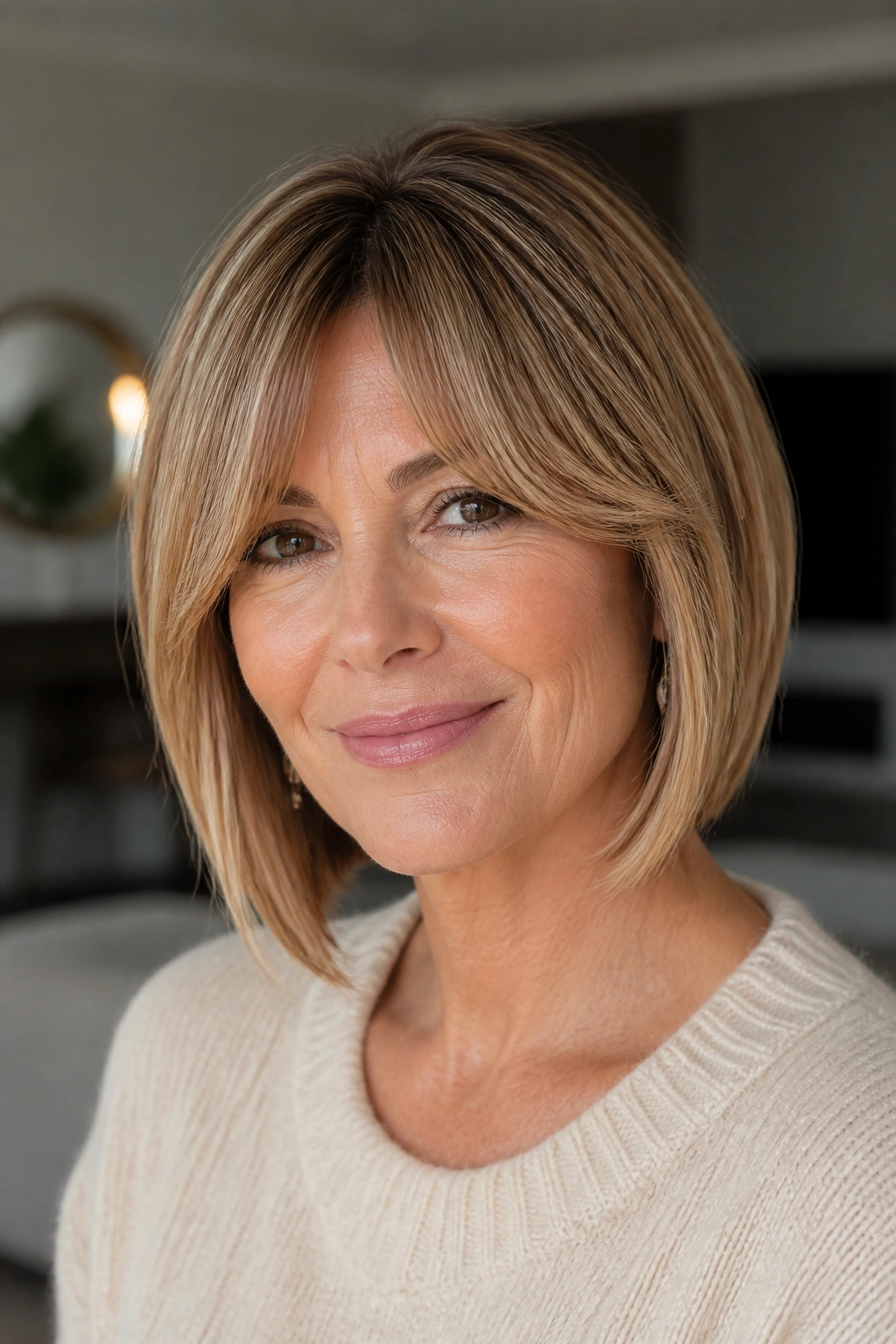
Curtain bangs are useful because they work with the bob instead of sitting on top of it like an afterthought. They open in the middle, sweep along the cheeks, and help soften the front of the haircut without hiding the face.
How to Style It
The best version is cut so the shorter pieces hit around the cheekbone while the longer edges blend into the bob. That creates a slow transition, which matters more than a lot of people think. A hard line between fringe and bob looks clunky. A soft blend looks intentional.
Blow-dry the bangs away from the face with a small round brush, then let them fall back naturally. A quick pass with a flat iron can refine the curve, but don’t chase perfect symmetry. Curtain bangs are better when they move a little.
This style is especially handy if you want to soften forehead lines or distract from a face shape that feels too long. It also grows out gracefully, which is a gift. Not every fringe does that.
10. Wavy Bob with Air-Dried Texture
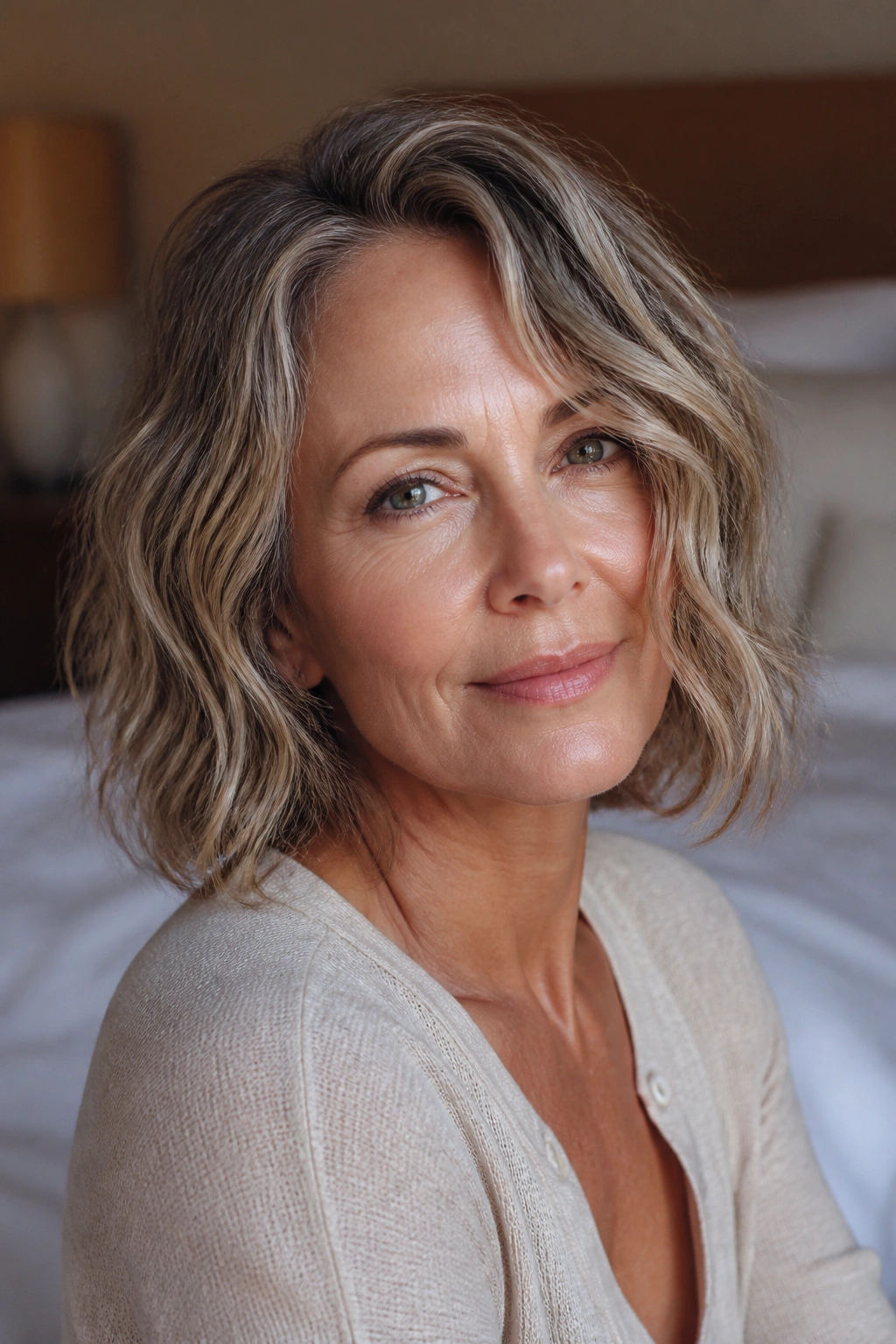
There’s a certain relief in a cut that looks good without a full blowout. A wavy bob with air-dried texture is built for that kind of life. It lets the natural bend show up and keeps the hair from looking overworked.
The trick is product and timing. A light mousse or curl cream through damp hair gives the wave something to hold onto, and a gentle scrunch with a microfiber towel keeps frizz down. After that, leave it alone for a while. Constant touching is how nice waves become puffy ones.
- Apply product to soaking-damp hair
- Scrunch upward, not sideways
- Air-dry or diffuse on low heat
- Break up the waves with a drop of oil at the ends
This cut looks especially nice when the length lands between the jaw and the collarbone. It keeps the wave visible without making the whole shape too wide. Low effort, but not lazy. There’s a difference.
11. Sleek Angled Bob
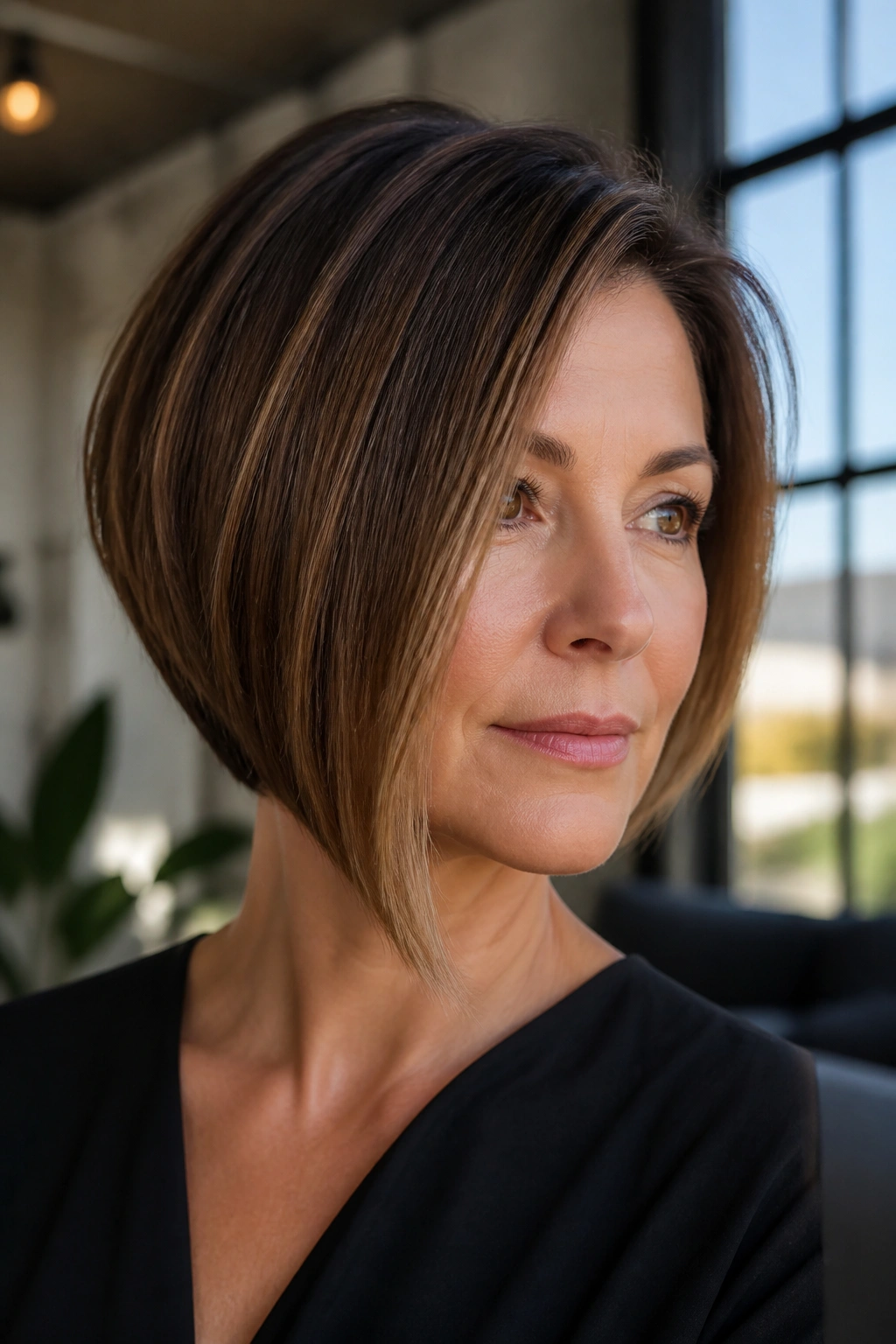
A sleek angled bob is about clean lines and a little polish. The angle makes the front pieces longer, while the back stays neat and tight, so the haircut has movement even when it’s styled straight.
The best thing about this cut is how controlled it looks. A flat iron, a heat protectant, and a small amount of smoothing cream are usually enough. Keep the iron moving in one slow pass and bend the ends slightly under so the line doesn’t look sharp in a harsh, chin-sticking way.
This bob works particularly well if your hair likes to lie flat and smooth. Thick hair can wear it too, but the inside may need some removal of weight so the shape doesn’t puff out. On humid days, a light anti-frizz serum helps more than a heavy oil. Heavy oil is how a sleek bob gets greasy by noon.
12. Feathered Bob with Soft Layers
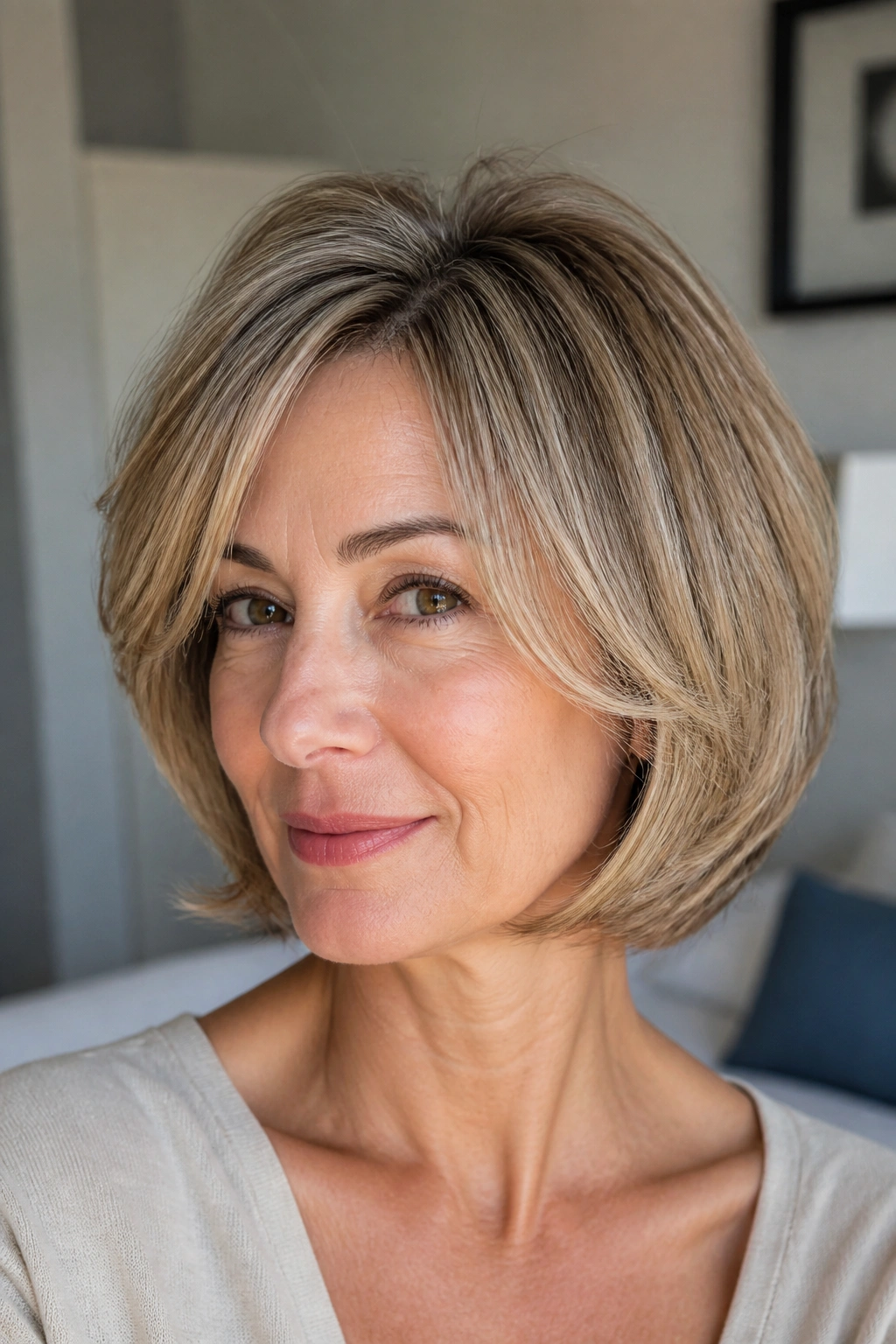
The feathered bob is the softer cousin of the heavily layered cut. Instead of obvious choppy pieces, the layers taper gently and give the hair a brushed, airy finish. It’s a nice choice when you want movement without visible slicing.
Unlike a shag, this style keeps a cleaner outline. That’s the difference that matters. A shag can feel carefree, but it also asks for more styling. A feathered bob still looks put together when you let it dry naturally, especially if the ends are gently turned out or under with a brush.
This is a good cut if your hair falls heavy around the face. The feathering removes that weight and lets the cheekbones show a little more. Ask for soft face-framing layers, not a pile of short pieces around the crown. You want motion, not fuzz.
13. Curly Bob with Rounded Shape
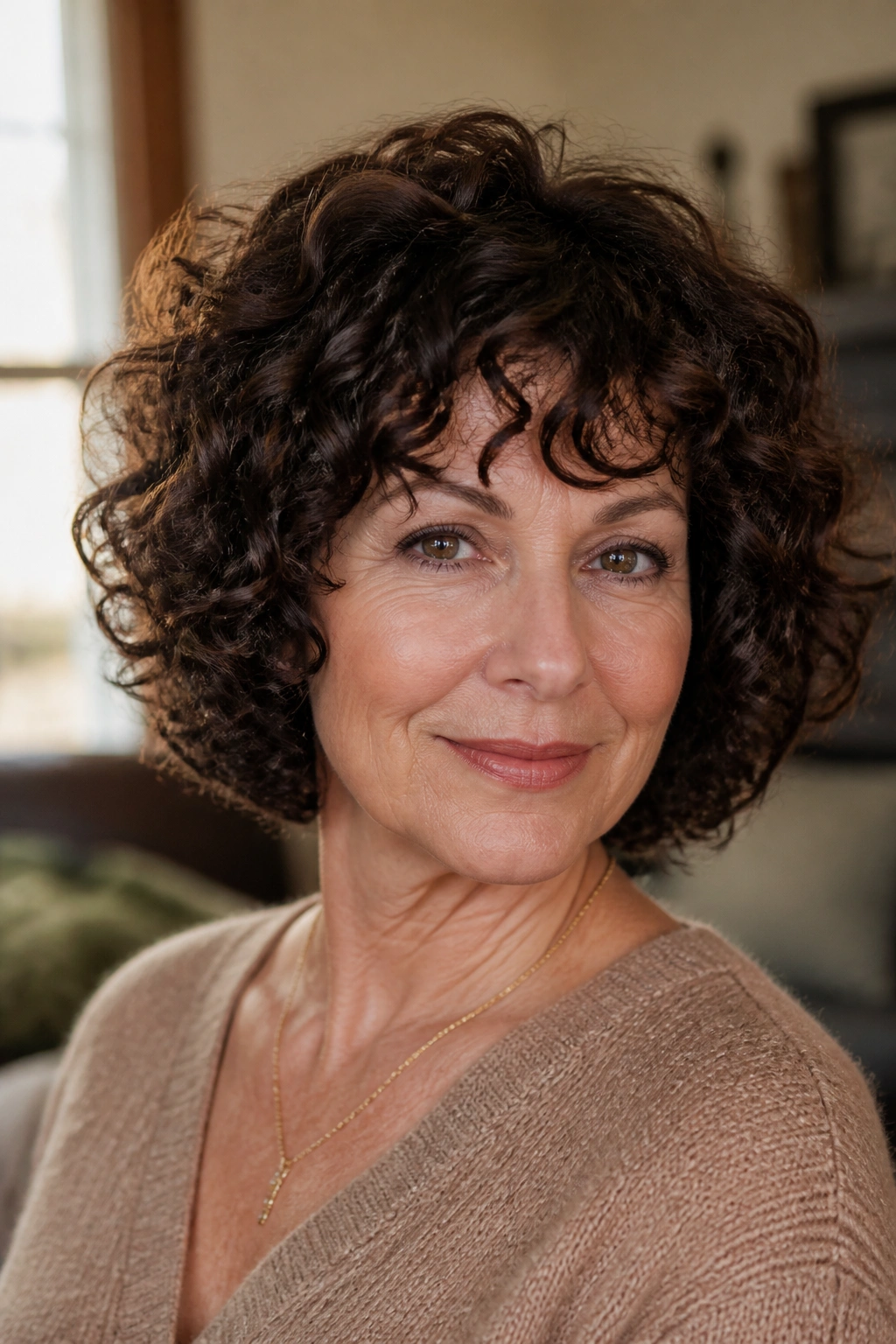
Curly hair looks best in a bob when the silhouette is shaped with the curl pattern, not against it. A rounded curly bob lets the curl cluster naturally, which keeps the shape balanced instead of triangular or stuck-out on the sides.
Why It Works
A good curly bob is often cut dry or nearly dry, curl by curl, so the stylist can see where the spring lands. That matters because curl shrinkage is real. A bob that looks collarbone length when wet might bounce up to the jaw when it’s dry.
- Keep the bottom line long enough to account for shrinkage
- Ask for rounded edges, not a flat shelf
- Use a curl cream or gel for hold
- Refresh with a spray bottle instead of rewetting the whole head
This shape is lovely on tighter curls too, as long as the cut respects the natural volume. The point is to let the curl make the haircut, not the other way around.
14. Salt-and-Pepper Bob with Shine
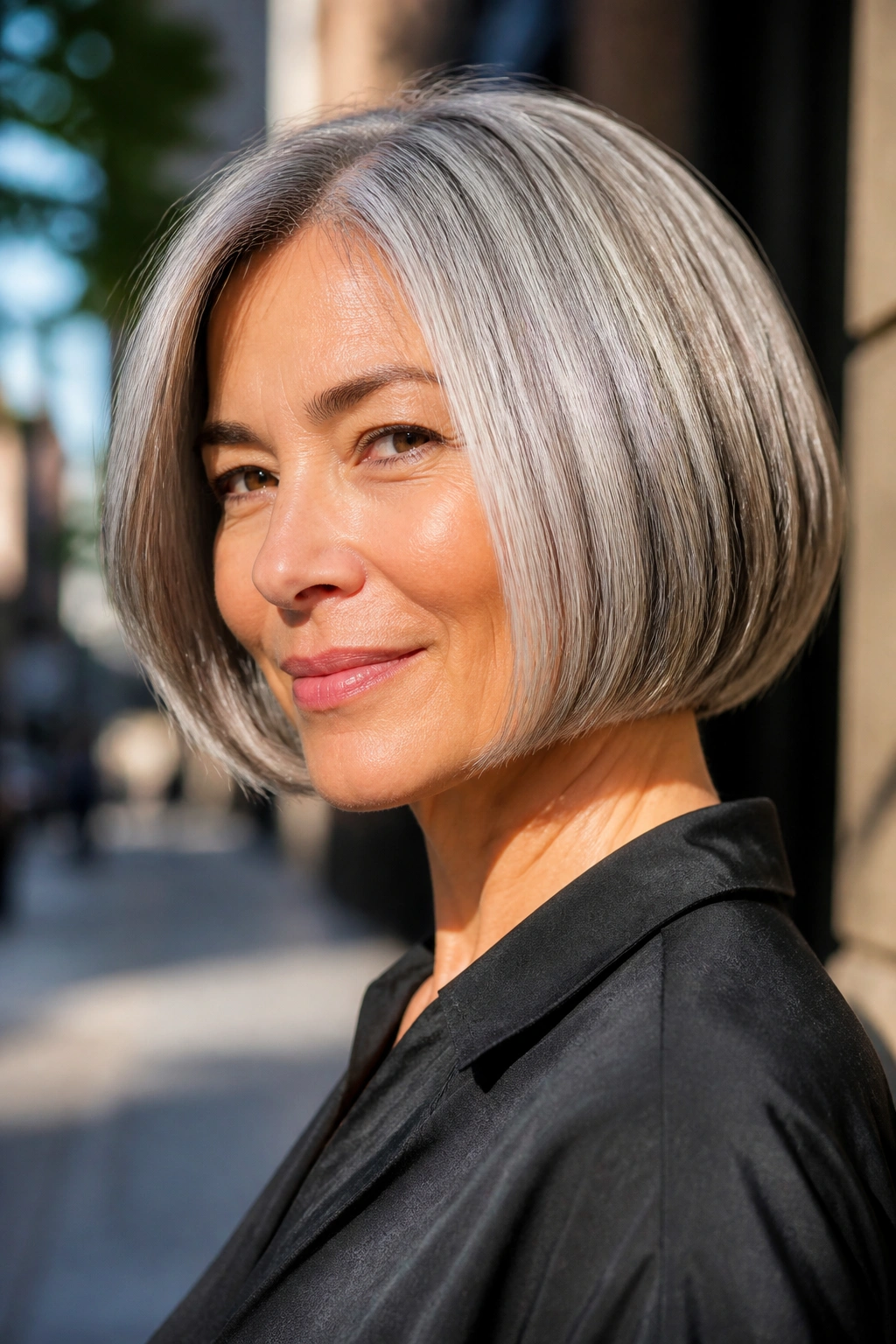
Gray hair has its own texture, and a bob can show it off in a way longer cuts sometimes don’t. The short-to-medium shape catches light along the silver strands, and a clean line makes the color shift look deliberate rather than patchy.
The key is shine. Gray and silver hair can go dry faster than pigmented hair, so a lightweight glossing serum or a weekly moisturizing mask goes a long way. You do not need to drown it in product. A little sheen at the ends and through the surface is enough to keep the color looking rich.
A blunt bob or a softly angled one tends to work especially well with salt-and-pepper tones. The contrast between the crisp cut and the mixed color is part of the appeal. If the hair is yellowing a bit, a purple shampoo once in a while can help, but using it too often can make the hair look flat. Easy does it.
15. Jaw-Length Bob with Side-Swept Bangs
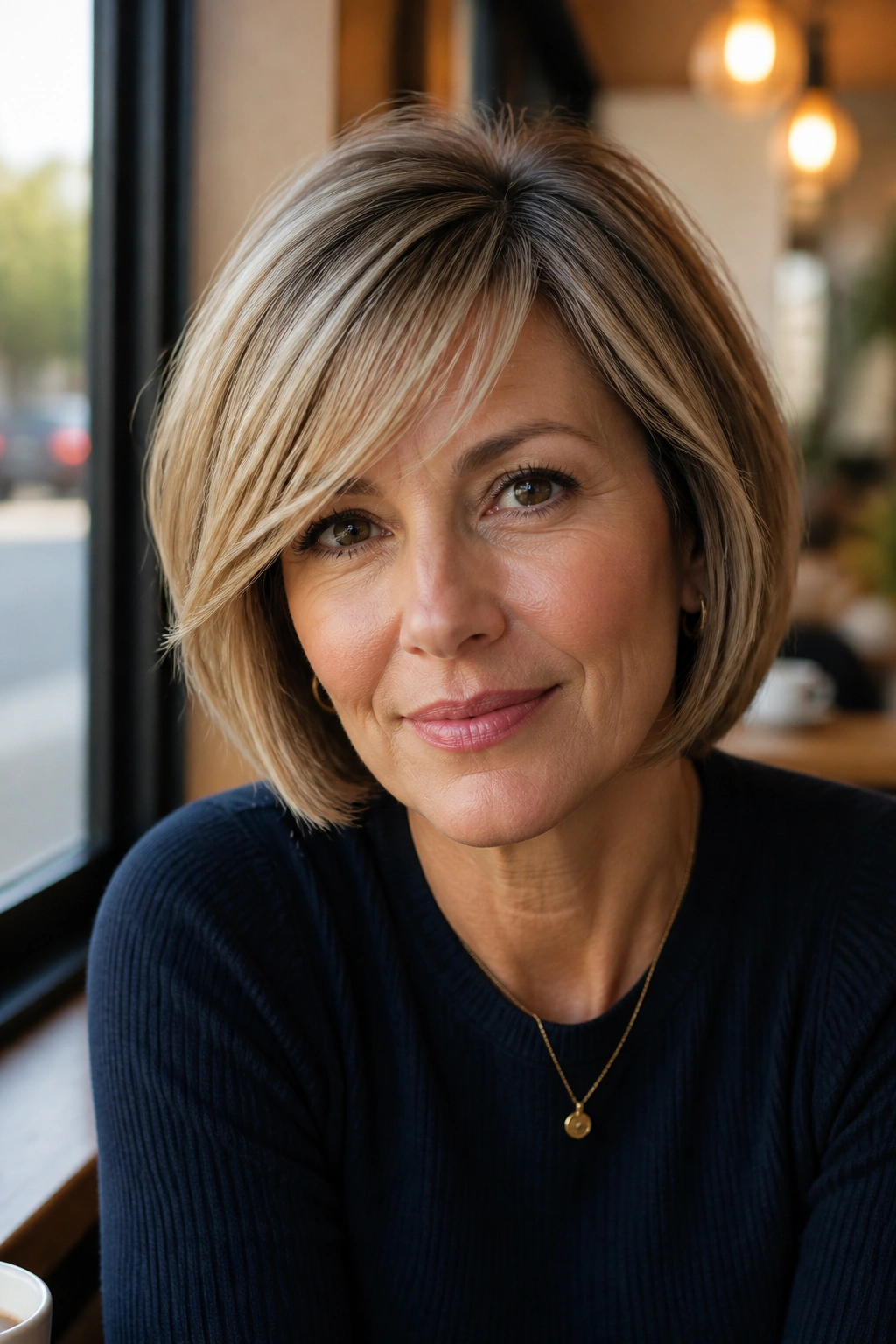
A jaw-length bob with side-swept bangs is one of the easiest ways to soften a strong jaw or broaden the front of the haircut without making it feel heavy. The side sweep breaks the line, and the shorter length keeps the whole style lively.
How to Wear It
This cut works well when the bang is long enough to blend into the side of the face. If it ends too short, the effect becomes choppy. If it’s too long, it slides into the rest of the bob and loses its job. The sweet spot is usually somewhere around the cheekbone.
A round brush at the root gives the front a little lift, and that lift matters because side bangs can droop if they’re left to dry on their own. Keep the rest of the bob smooth and let the bang be the softest part of the style. It plays nicely with glasses, too. That’s not a small thing.
16. Collarbone Bob with Internal Layers
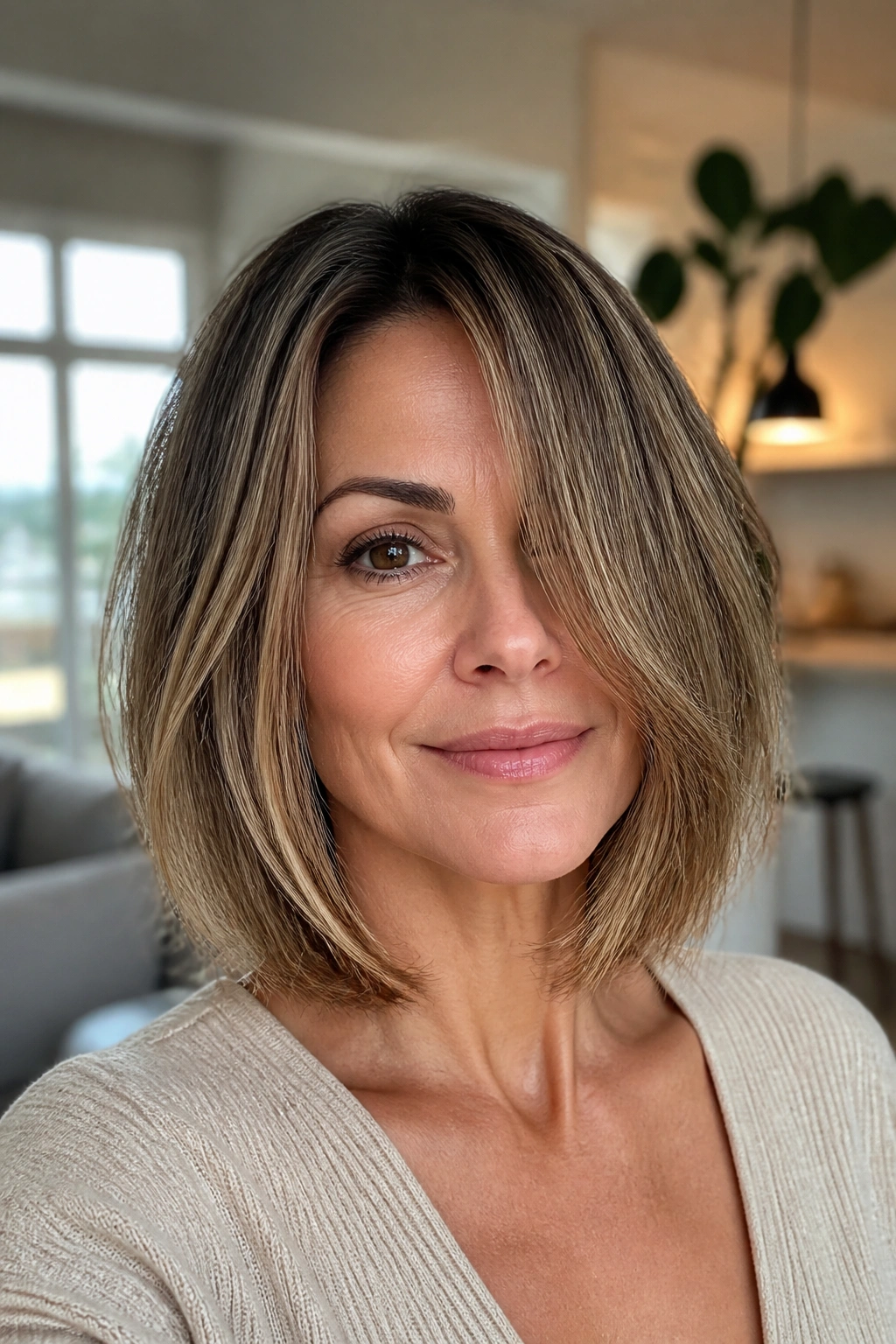
A collarbone bob gives you length without the weight of long hair, which makes it a smart choice if you want movement but are not ready to see a lot of neck. Internal layers make the cut lighter inside without changing the outer shape too much.
The good part is subtlety. From the outside, the bob still reads polished and fairly full. Inside, though, those hidden layers stop the hair from puffing out or hanging like one solid block. That’s especially helpful if your hair is thick and tends to feel boxy at a longer length.
- Ask for hidden layers inside the shape, not obvious chops
- Keep the front pieces at or just below the collarbone
- Use a medium round brush for a soft bend
- Finish with a light mist of flexible hairspray
It’s a grown-up cut in the best sense. It gives you room to tuck hair behind the ear, pull one side back, or leave it down without feeling weighed down.
17. Shaggy Bob with Loose Fringe

A shaggy bob is for people who want some mess built in, but not the kind that looks accidental. Loose fringe, soft texture, and a little unevenness through the ends give this cut a relaxed feel that works especially well on wavy hair.
The downside is obvious if you skip styling: frizz can take over. So this is not a throw-and-go cut for everyone, despite what people like to say. It looks best with a bit of mousse or styling cream and a rough-dry using your fingers. The fringe should stay light around the forehead, not dense and heavy.
This style has a casual edge that suits denim, bare makeup, and days when you want your hair to look like it was touched, not staged. Still, it needs a haircut that is intentional. A good shaggy bob is controlled chaos. A bad one is just chaos.
18. Tucked-Behind-the-Ear Bob

The tucked-behind-the-ear bob is understated in a way that works. One side or both sides get tucked, which exposes the cheekbone, the earlobe, or a pair of earrings, and the whole style suddenly feels lighter.
Unlike fuller bob shapes that keep all the hair forward, this one uses the face itself as part of the cut. That can be flattering if you want to show your jawline or you wear glasses and need the sides to stay out of the way. It’s also useful on days when you want one style to feel a little less formal.
The best version usually has a soft bend, not a pin-straight finish. A bit of movement at the ends keeps it from looking too severe once it’s tucked. If one side gets tucked more than the other, even better. Small imbalance often looks more natural than perfect symmetry.
19. Micro-Bob with Sharp Edges
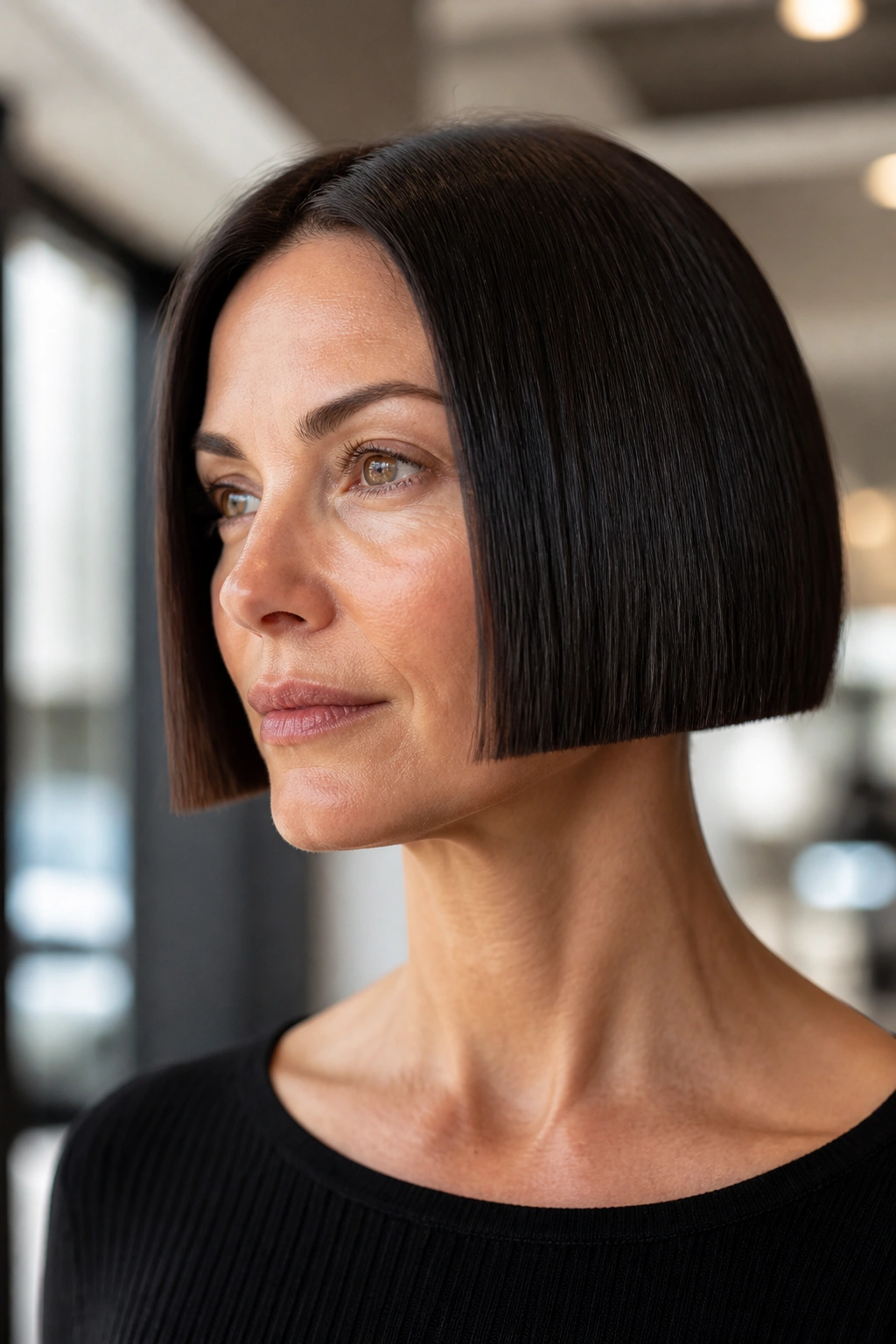
A micro-bob sits higher and shorter than most people expect, usually somewhere around the jaw or just below it, with a very clean edge. It’s a strong haircut. There’s no hiding in it.
What to Ask For
This cut works best when the perimeter is precise and the back is neat. If the hair is dense and straight, the micro-bob can look sleek and strong. If the hair is very wavy or frizzy, though, the edges will need more work to stay sharp.
- Keep the line blunt
- Avoid too much layering
- Use a smoothing cream or light balm
- Trim often so the shape stays exact
It’s not a haircut for every face, and that’s fine. The appeal is the boldness. If you like a crisp neckline, short earrings, and a style that looks deliberate from every angle, this one has a lot going for it.
20. A-Line Bob for Neck Length
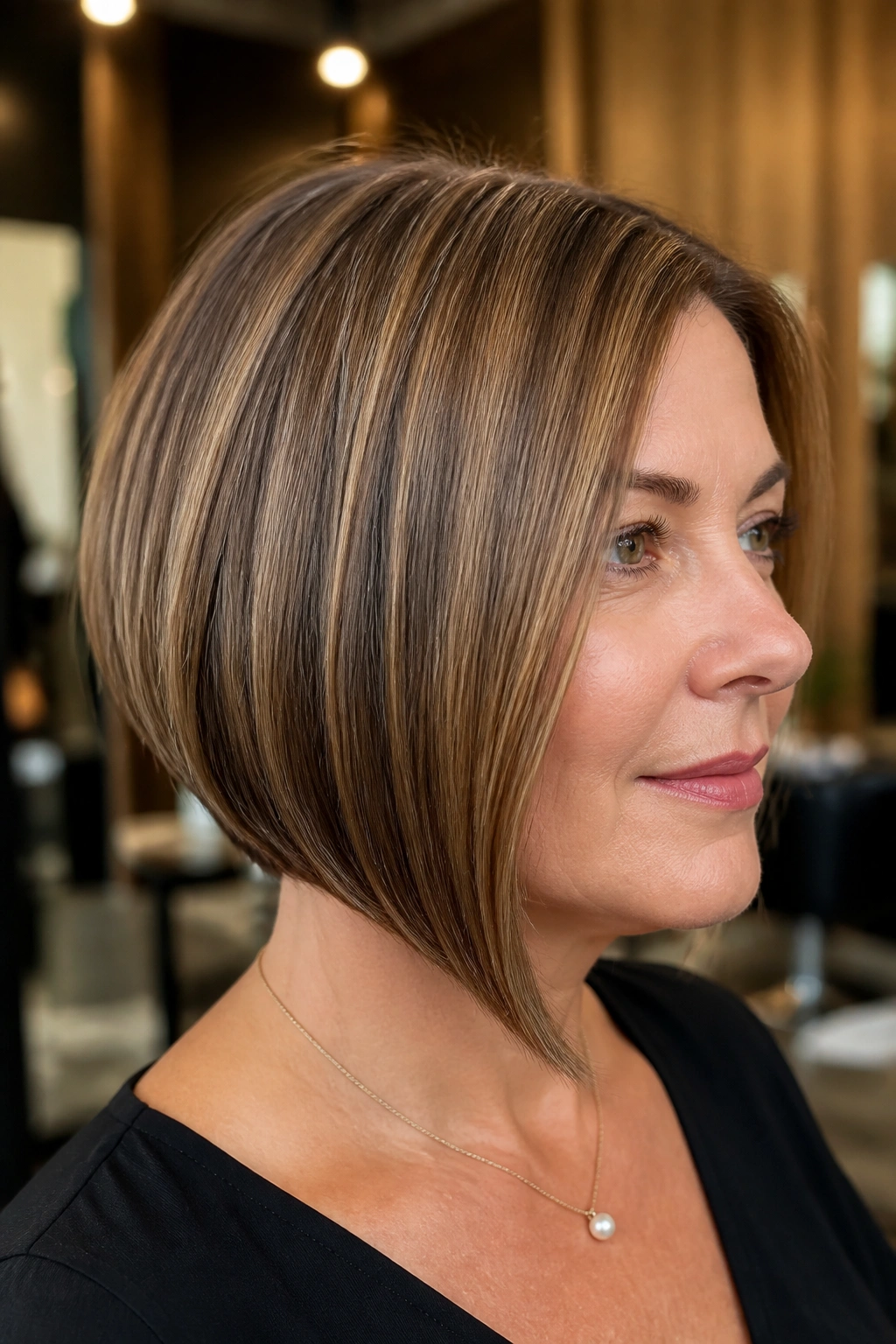
An A-line bob is one of the smartest cuts for anyone who wants the neck to look longer without losing too much fullness around the face. The front is slightly longer than the back, so the eye moves downward in a clean line.
The back sits close to the nape, which removes bulk where hair often swells out. That makes the front look more elegant, especially when it grazes the collarbone. It’s a useful shape for thick hair because the silhouette stays neat rather than puffy.
This cut can be styled straight for a sharp profile or bent under softly for a gentler finish. If you have a strong profile, it frames it well. If you prefer to soften the face, ask for the front to be only a little longer, not dramatically angled. The cut should feel sleek, not architectural.
21. Bob with Bottleneck Bangs
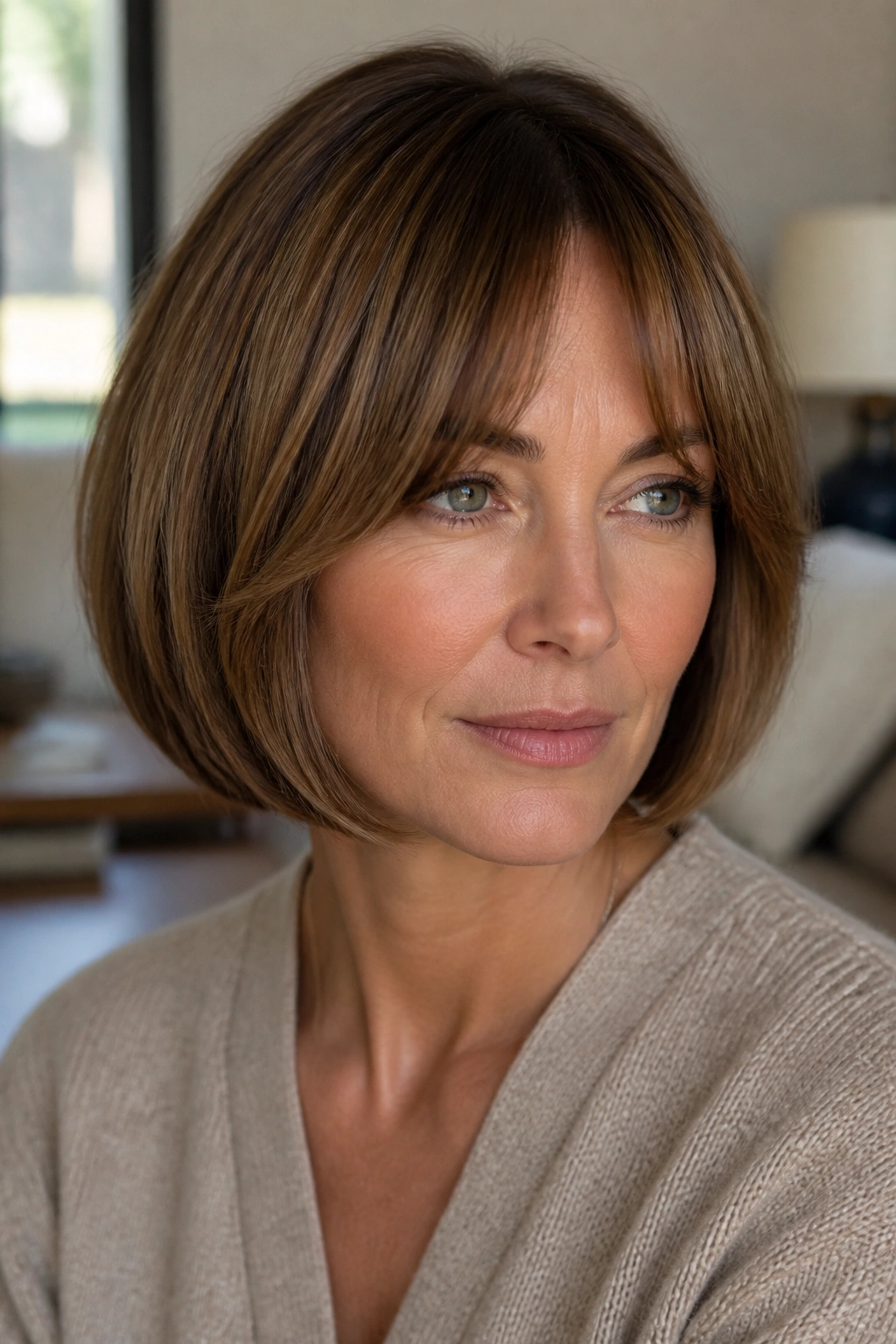
Bottleneck bangs start narrow at the center, then open a little wider as they move toward the temples. That shape works beautifully with a bob because it gives the front some softness without covering too much of the face.
How to Style It
The best part of these bangs is the gradual curve. They don’t need to sit perfectly in place to look good. A small round brush, a quick blow-dry forward, then a sweep outward at the temples is usually enough. That little shape helps frame the eyes and cheekbones in a gentle way.
This bob is a strong choice if you want bangs but hate the feeling of a heavy fringe. The bottleneck shape leaves air around the forehead and gives the haircut a lighter mood. It’s also forgiving as it grows out, which matters when you don’t want to visit the salon every four weeks.
Keep the bob itself simple. The bangs should be the feature, not a stack of other tricks fighting for attention.
22. Tousled Bob with Volume at Crown
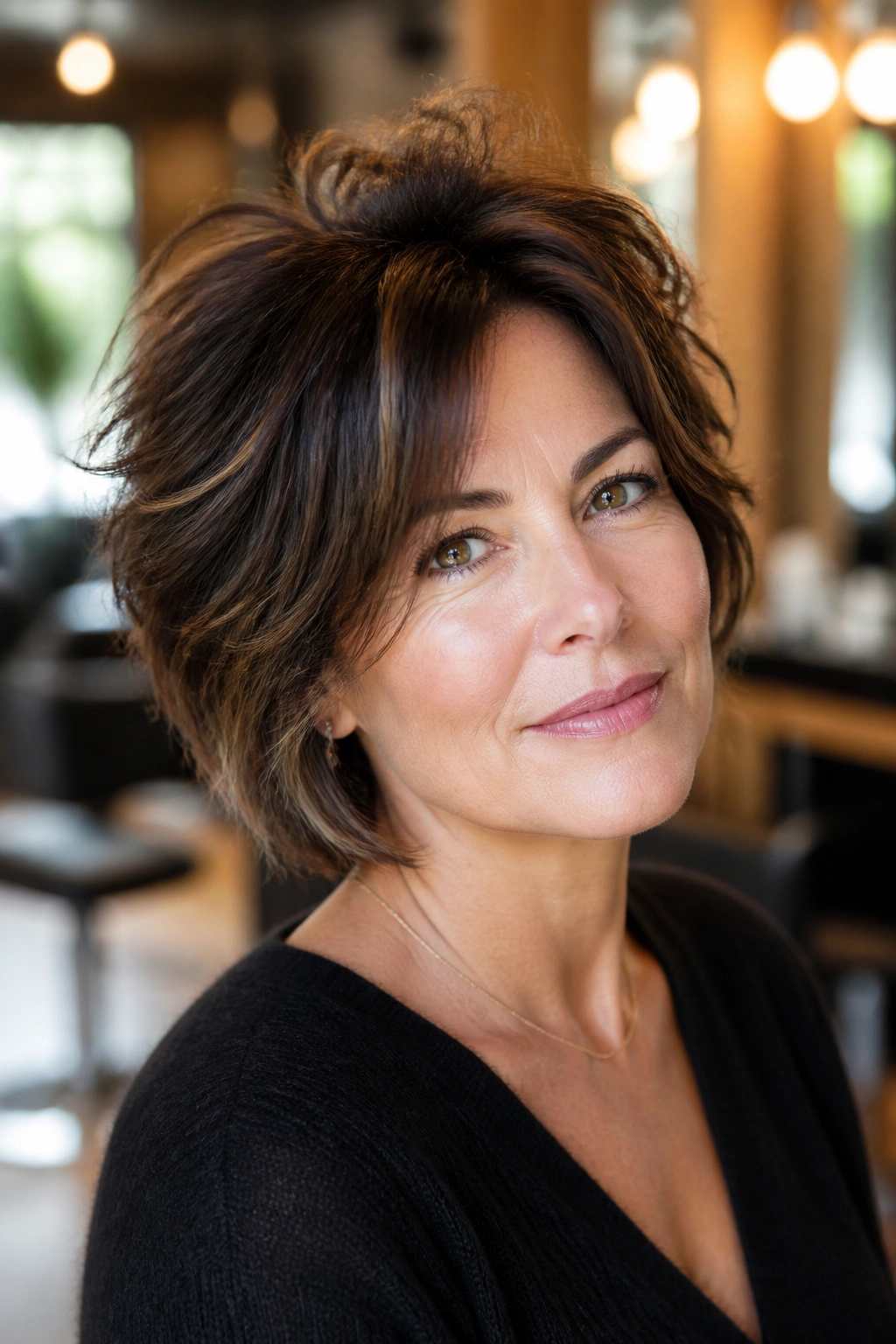
A tousled bob with a little height at the crown can make the whole face look more awake. The shape lifts where hair often flattens first, and the messier surface keeps it from feeling overdone.
The easiest way to get that lift is a root spray at the crown before drying. Flip the hair side to side, use the nozzle of the dryer to aim at the roots, then clip the crown for a few minutes while it cools. That tiny trick makes a real difference. Hair remembers shape better than people think.
- Root-lifting spray at the crown
- Medium round brush for the top layers
- Texturizing spray through the ends
- Finish by roughing up the roots with fingertips
This is the bob for days when flat hair is the enemy. It looks relaxed, but it still has structure. That balance is the reason it works.
23. Sleek Bob with Deep Side Part
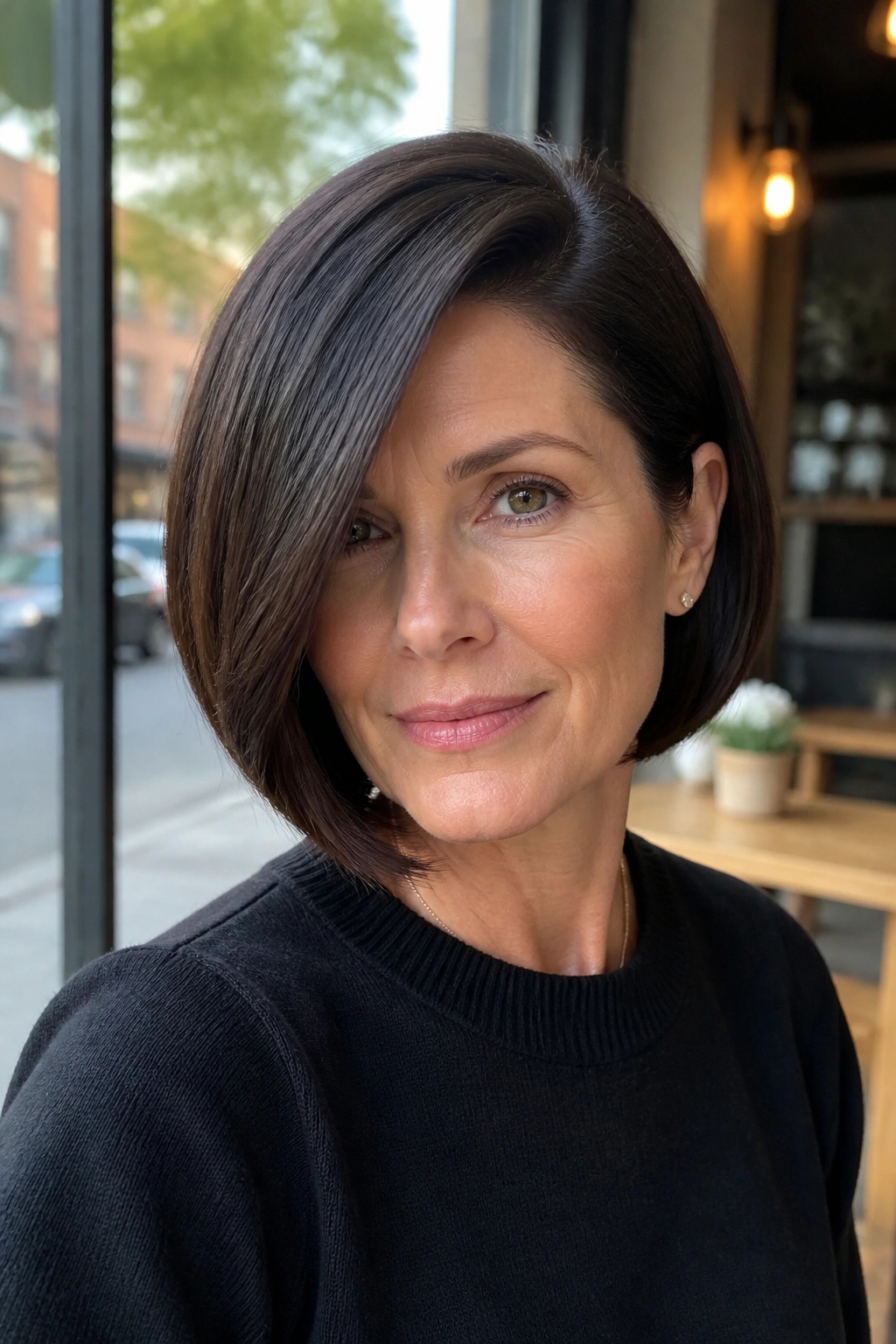
A deep side part gives a sleek bob more drama without adding length or layers. It shifts the weight of the hair to one side, which creates lift on top and a stronger line through the front.
Unlike a center part, which can make a straight bob feel very symmetrical, the deep side part adds movement right away. The hair falls in a way that feels a little more polished, and often a little softer, too. If one side of your face has a feature you like — a cheekbone, a brow, an earring, a smile line — this parting gives it room to show.
Keep the rest of the bob smooth and close to the head. A light heat protectant, a flat brush, and a finishing mist are enough. This style is less about fuss and more about placement. Tiny shifts make a big visual difference.
24. Graduated Bob with Stack in Back
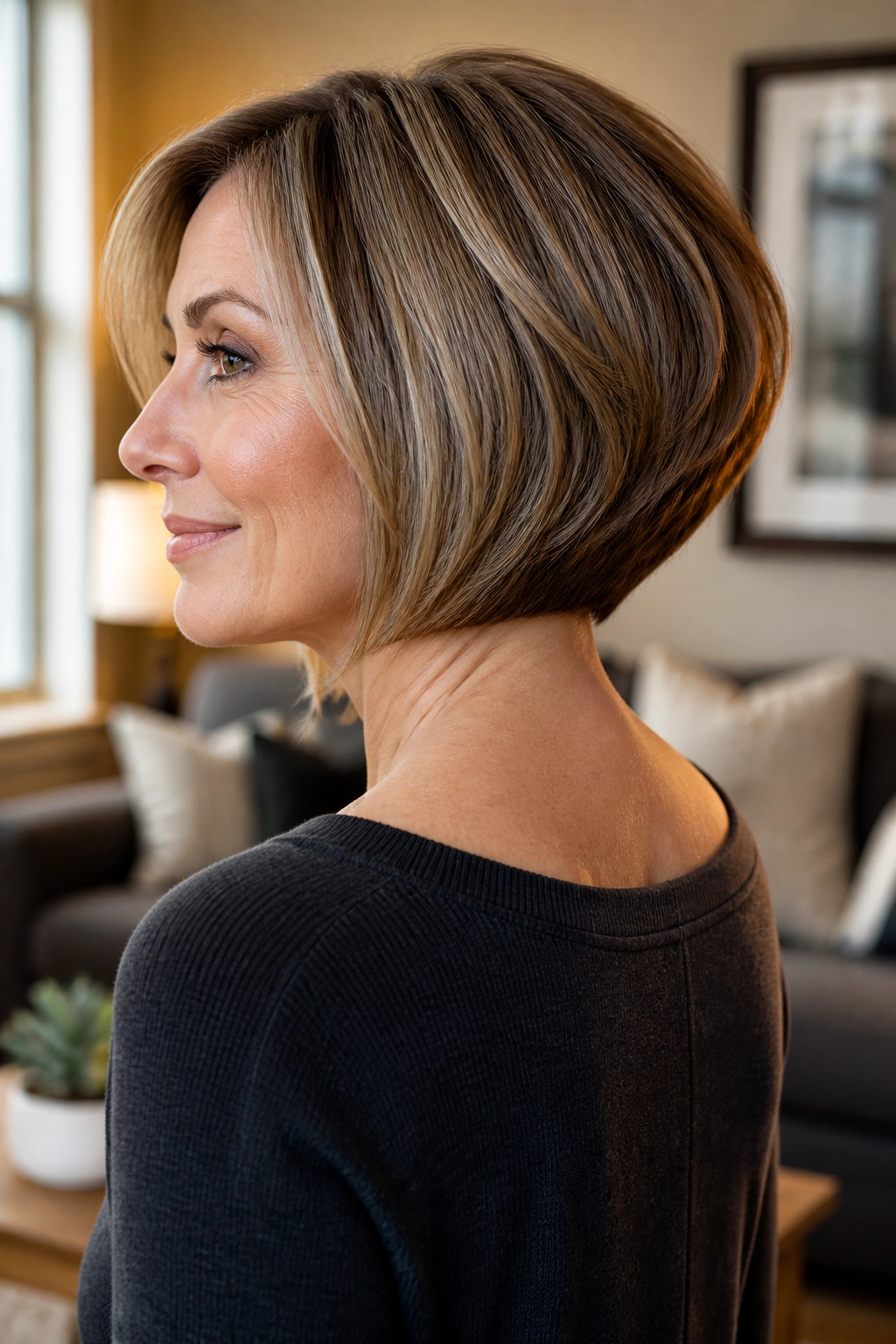
A graduated bob gives you shape at the back without making the front feel chopped off. The stack builds a bit of fullness near the nape, which is useful when you want lift and structure in a thick head of hair.
The stacked back can look wonderful on hair that tends to collapse at the crown or spread out too wide at the bottom. By removing a little length underneath and keeping the upper layers smooth, the cut rises up into a more compact shape. That keeps the neckline neat and makes the whole style feel tidy from the side.
This is different from an A-line bob, which leans more into length in front. The graduated version is a little fuller in the back and can feel more rounded. If you like a haircut with a clear profile and a bit of body at the nape, ask for a soft stack rather than a dramatic one. Severe stacks date faster than people expect.
25. Soft Rounded Bob for Everyday Wear
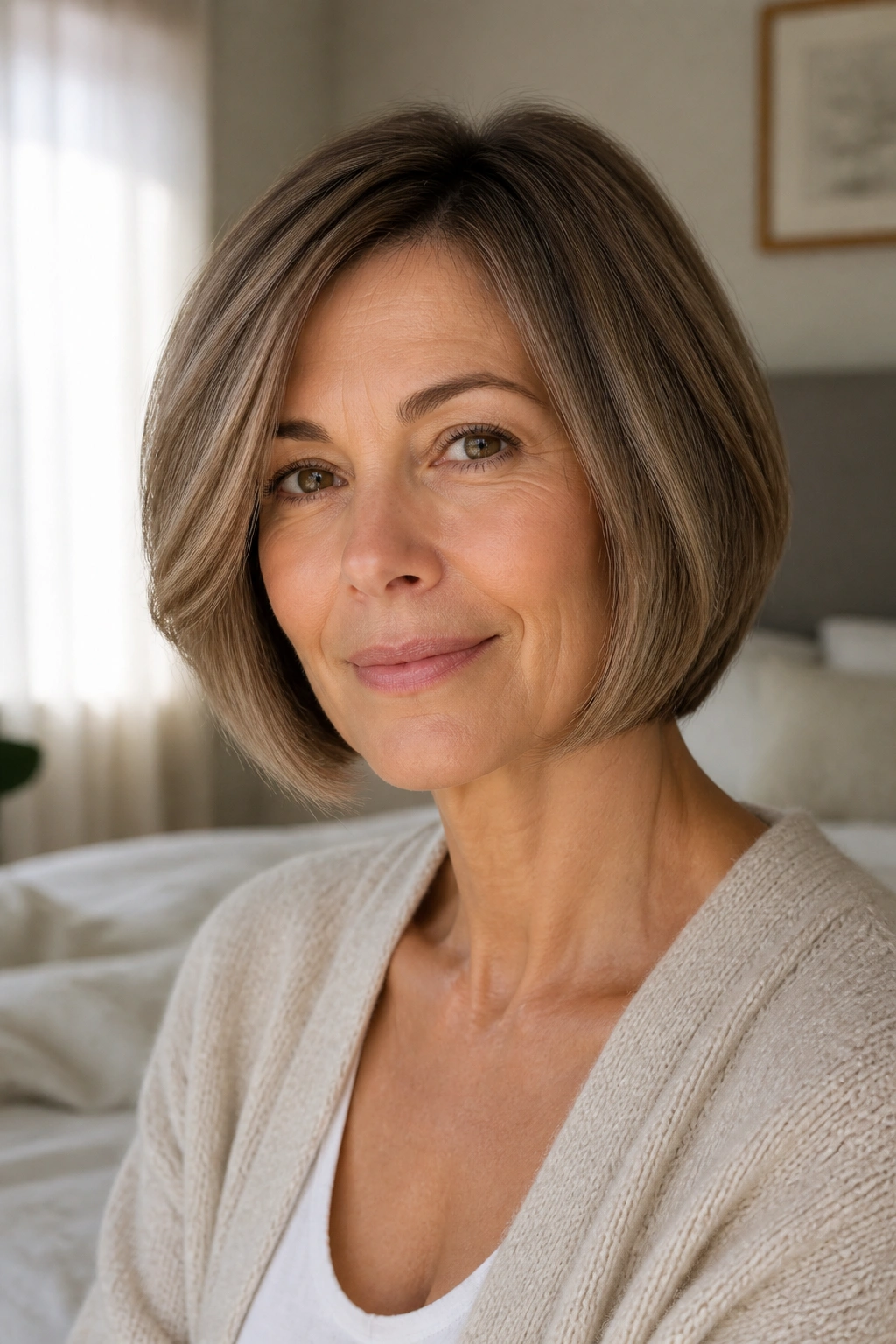
A soft rounded bob is the one I keep coming back to when someone wants a haircut that behaves on ordinary days. No harsh corners. No hard edges. Just a curved shape that follows the head and sits neatly whether you blow-dry it or let it air-dry halfway.
The rounded outline is especially kind to hair that has changed texture, because it doesn’t demand perfection. Fine hair gets a little body from the curve. Wavy hair looks smoother. Gray hair gets a clean frame. And if you are tired of fighting your own hair, that calm shape can feel like a small luxury.
Ask for a length that lands between the jaw and the upper neck, with soft graduation that keeps the bottom from flipping out. A light styling cream and a paddle brush are usually enough. Nothing fancy. Sometimes the best bob is the one that behaves well on a rushed weekday morning and still looks decent after dinner, which is more useful than a haircut that needs a full ritual every time you leave the house.
