



A shoulder-length wavy bob has a funny habit of looking low-effort even when it took a little work. That’s the charm. The cut sits at a length that moves, the waves keep it from feeling stiff, and the shape can lean polished, relaxed, shaggy, or sharp depending on where the weight falls.
That’s why wavy bob styles for shoulder length hair keep working for so many people. The same basic length can flatter fine hair, thick hair, natural bends, and straight strands that only wave when you help them along with a curling iron or a few rollers. The trick is not the wave alone. It’s the balance between the ends, the part, and the amount of layering.
Some shoulder-length bobs look flat because the shape is too blunt. Others puff out because the layers were cut too high or the styling got overdone. The good versions avoid both problems. They let the wave do part of the work, then use the cut to control where the movement lands.
1. Soft Center-Part Lob

A soft center part is one of the easiest ways to make a shoulder-length wavy bob feel calm and modern at the same time. The line down the middle keeps the shape symmetrical, while loose bends through the mid-lengths stop it from feeling too neat. It’s the style I’d point to first if someone wants a cut that looks put together without looking overworked.
The reason it works is simple: the center part lets the waves fall evenly on both sides, which makes the length read clean and balanced. That balance matters a lot at collarbone length, where a bad part can make hair swing too far forward and hide the face.
Why it flatters so many face shapes
The center part gives the eye a straight line to follow, then the waves break that line just enough. That mix softens strong jawlines and keeps rounder faces from feeling too boxed in.
A few small details matter here:
- Keep the first bend at about cheekbone level.
- Leave the ends slightly straighter so the cut does not balloon.
- Use a 1-inch curling iron, then brush the wave out with your fingers.
- Finish with a light mist of flexible-hold spray, not anything stiff.
Best for: medium-density hair, oval faces, and anyone who likes a clean shape with a little movement.
2. Deep Side-Part Waves That Lift the Crown

A deep side part changes everything. It gives the crown more height, shifts the weight to one side, and makes a shoulder-length wavy bob look fuller at the roots without adding a ton of product.
That matters if your hair tends to fall flat near the scalp. A side part creates lift where a middle part can feel sleepy. It also gives the waves a bit of drama, which is nice when the cut itself is fairly simple.
What makes this version different
The wave pattern should start lower, around the cheek or jaw, so the roots stay smooth. If you start curling too high, the hair can look puffy instead of lifted. I like this style with a side that tucks behind one ear and the other side left loose. Small shift. Big payoff.
Styling note
- Dry the roots in the opposite direction first.
- Set the side part while the hair is still warm.
- Use a volumizing mousse at the crown only.
- Pin the heavier side back for 10 minutes if you want extra bend.
Best for: fine to medium hair, square faces, and people who want a little extra height without teasing.
3. The Air-Dried Beachy Bob
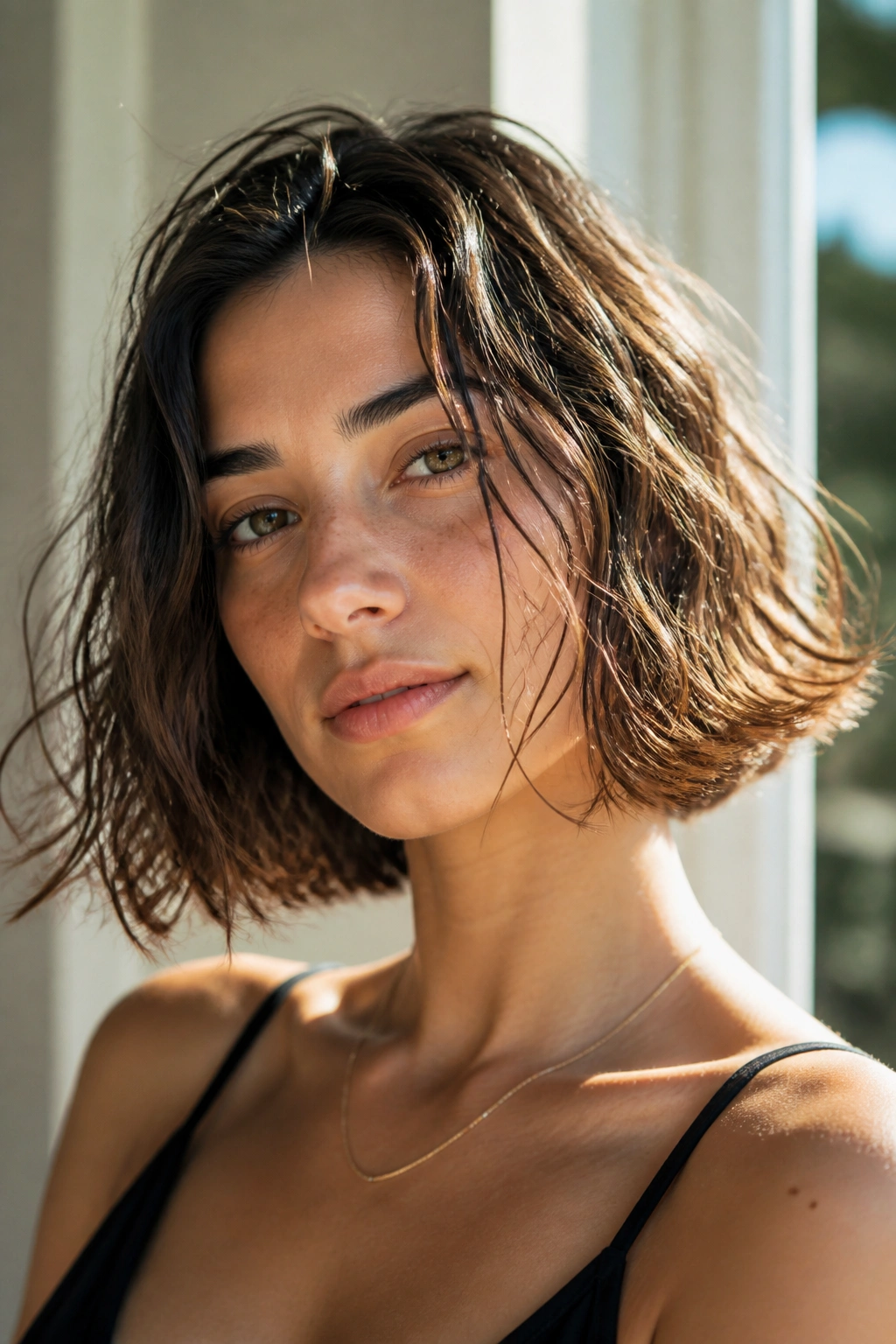
Not every wavy bob needs a hot tool. In fact, one of the nicest versions starts with damp hair, a bit of cream, and a patience level that most of us only find on a slow morning.
The air-dried beachy bob works because it keeps the wave soft and irregular. That irregularity is the point. You want some strands to curl more than others, a few ends to flip outward, and enough texture to stop the cut from sitting like a helmet.
How to get the texture right
Scrunch in a small amount of curl cream, then twist random sections around two fingers. Do not overdo it. Too much product makes the hair stringy, and too much touching flattens the bends before they set.
A few specifics help:
- Blot with a microfiber towel, not a rough bath towel.
- Use a wide-tooth comb only at the beginning.
- Let the front pieces fall forward while drying for face-framing movement.
- Break the cast, if there is one, with a drop of lightweight oil on the palms.
It’s casual, but not messy in a lazy way. More like the hair had a decent day and doesn’t need applause.
4. Blunt Ends With Loose, Mid-Length Waves

Here’s the thing: blunt ends and waves can look expensive together when the balance is right. The solid line at the bottom gives the cut structure, while the waves stop it from feeling too hard or too school-uniform neat.
This version is especially good if you want your shoulder-length cut to look thicker. Blunt ends make the perimeter feel denser, which is handy if your hair is fine or medium and tends to disappear at the bottom. The wave should stay loose, almost bent rather than curled.
The shape to ask for
Tell the stylist you want a clean edge with minimal internal layering. That wording matters. Too many hidden layers will chip away at the full look, and once the bottom gets too wispy, the blunt effect is gone.
Styling detail
- Curl only the mid-lengths.
- Leave the last 1 to 1½ inches straight.
- Use a flat iron for a gentle bend if a curling wand feels too round.
- Comb through once the hair cools for a smoother finish.
This one has a crispness I like. It feels tidy without acting stiff.
5. Layered Wavy Bob for Thick Hair

Thick hair needs room to breathe. Without layers, a shoulder-length wavy bob can sit like a block, especially if the hair has a strong natural wave that expands as it dries.
Layers solve that, but only if they’re cut with some restraint. You want movement, not feather dusting. The best layered wavy bob keeps weight at the bottom while removing bulk through the interior so the shape can swing instead of balloon.
Where the layers should land
The safest place for the first real layer is usually around the lip or chin area, depending on density. Shorter than that and the hair can get too wide at the sides. Longer than that and the cut may not open up enough.
A few things to ask for:
- Soft face-framing pieces.
- Internal layers that reduce bulk.
- A rounded outline, not a stack.
- Texturizing only on the ends if the hair is coarse.
Best for: thick, wavy, or slightly coarse hair that likes to take over the room.
This cut gives you movement without making the hair feel like it’s fighting the shape.
6. Curtain Bangs and Soft Bend Waves

Curtain bangs and shoulder-length waves have a very good relationship. The bangs soften the forehead, the waves keep the rest of the cut from feeling too formal, and the whole look sits right in that sweet spot between styled and easy.
The key is softness. Sharp, over-curled curtain bangs can feel dated fast. You want a loose bend that opens away from the face, then melts into the rest of the bob. If the bangs stop too high or too blunt, the balance gets off.
A good version usually needs:
- A center part or slightly off-center part.
- Bangs that hit around the cheekbone.
- Waves that begin below the bangs so the front stays airy.
- A round brush or small roller for the fringe only.
I like this style on people who want a little face framing without going full bang commitment. It gives shape right where you notice it most, which is around the eyes and cheekbones. Simple. Smart. No drama.
7. The Shaggy Lob With Choppy Texture

The shaggy lob is the messy friend who somehow always looks good in photos. It uses choppy layers, a bit of separation, and a loose finish to make shoulder-length hair look lived in rather than polished.
That rougher texture is not random. It gives the wave somewhere to break apart, which keeps the hair from clumping into one heavy shape. If your hair is naturally wavy, this cut can make air-drying easier. If your hair is straighter, it gives curling tools something to hold onto.
What to ask your stylist for
- Razor-soft ends, not blunt ones.
- Shorter internal layers through the crown.
- Framing pieces that start near the cheek.
- A shape that still touches the shoulders, not one that jumps too high.
The result feels relaxed but not lazy. That distinction matters. A true shaggy lob has movement built in, so it still looks good on day two when the wave settles a little.
8. An Angled Wavy Bob That Sits Longer in Front
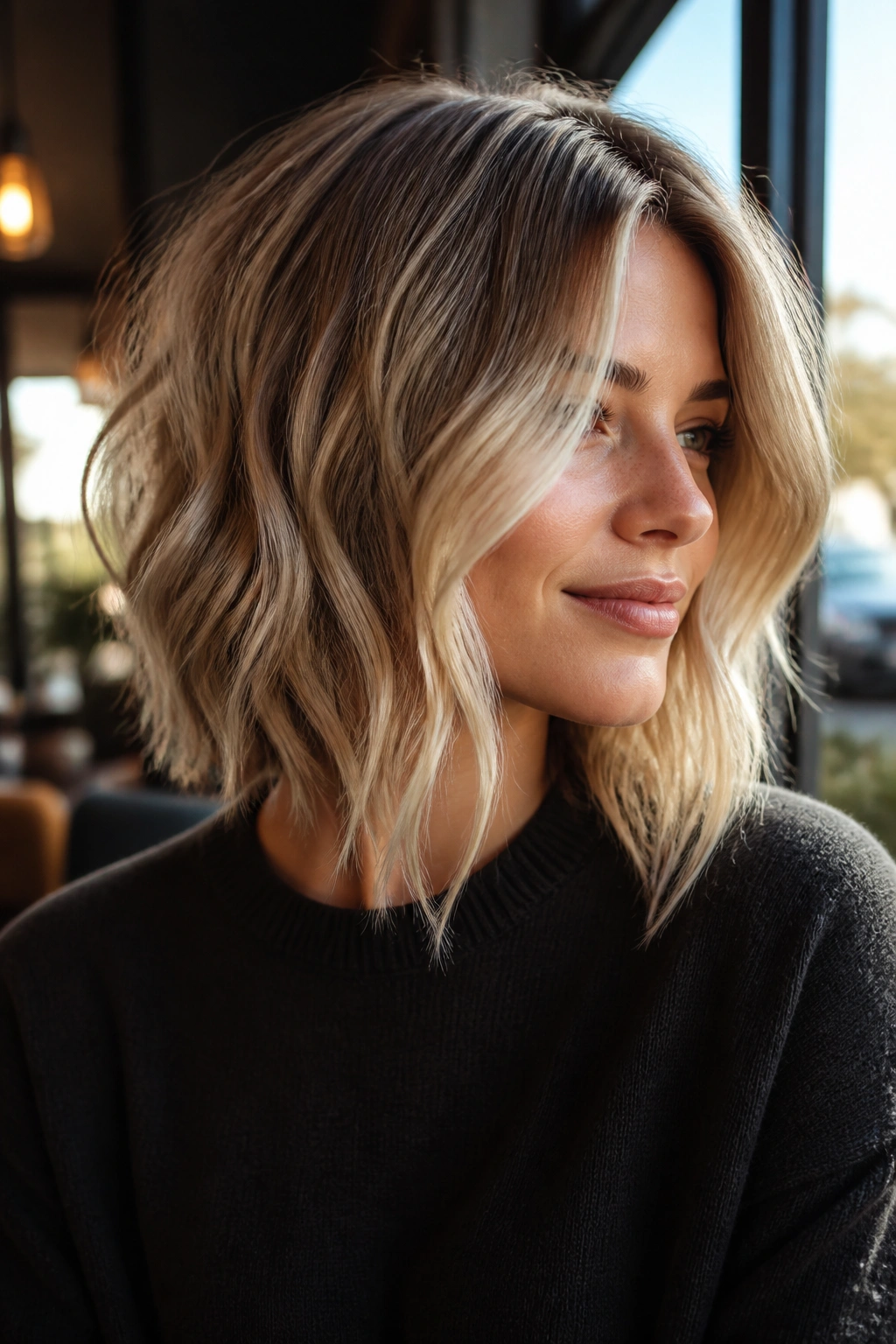
An angled bob gives you shape without sacrificing length. The back is a touch shorter, the front drapes a little longer, and the whole cut creates a clean line that makes the waves read more deliberately.
This is one of my favorite choices for people who want shoulder-length hair but need a bit of edge. The angle keeps the cut from feeling too safe. And because the front pieces are longer, the face gets a little extra framing without losing the bob shape.
The visual effect
The eye travels forward. That’s the whole trick.
When the front sits near the collarbone and the back lifts slightly off the neck, the waves have more room to show off their bends. The cut also helps hair swing better when you turn your head, which sounds small until you notice it in real life.
A few notes:
- Ask for a gentle angle, not a steep one.
- Keep the wave looser in the back.
- Use a round brush only at the roots if you want extra lift.
- Finish with shine spray on the front pieces.
9. Face-Framing Layers That Start at the Cheekbones
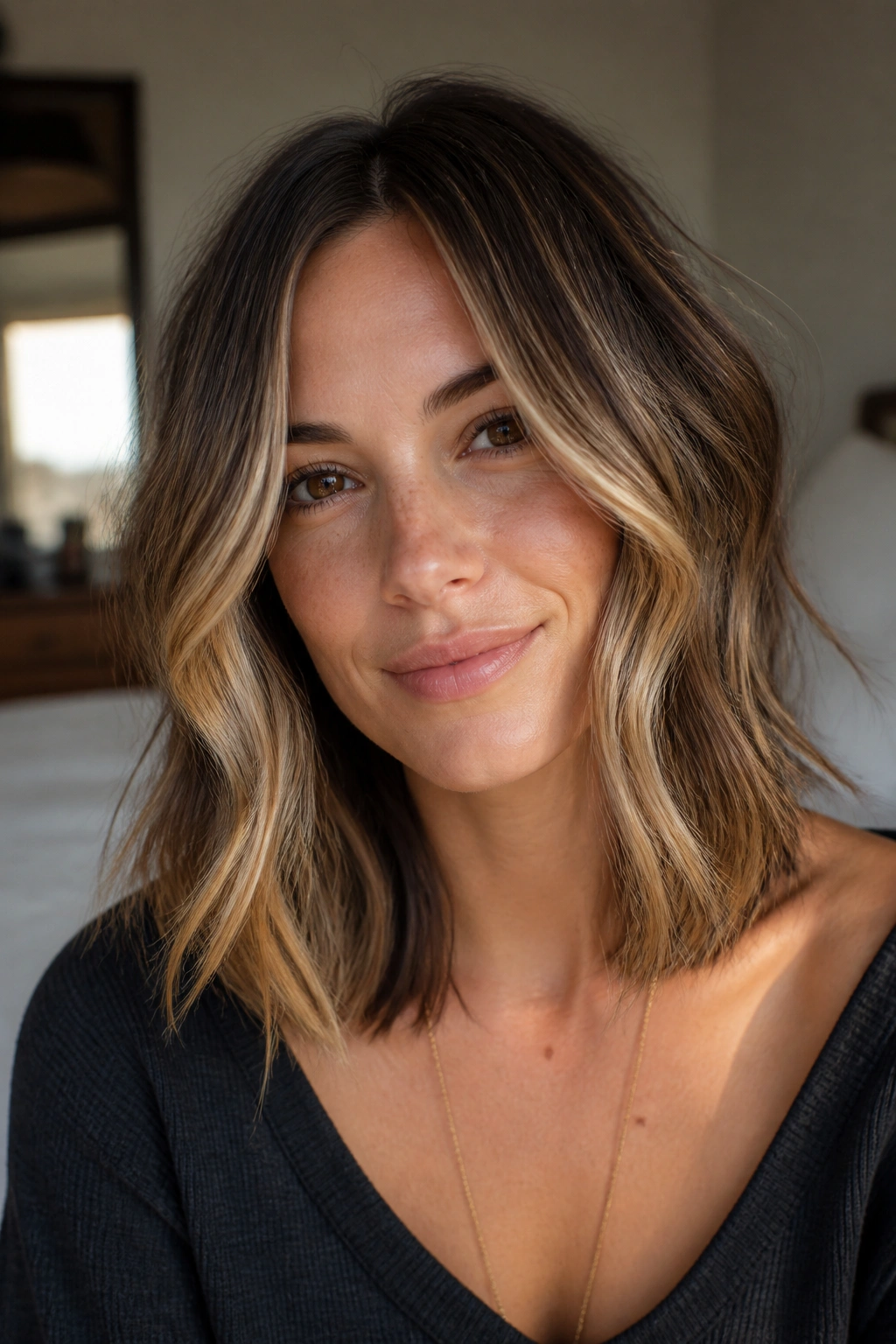
Face-framing layers are the quiet fix that makes a shoulder-length wavy bob look more tailored. They pull attention upward, soften the cheeks, and give the cut some shape even when the rest of the hair is pretty simple.
What matters is where the layers begin. Cheekbone level works for a lot of people because it creates movement around the face without chopping into the fullness of the bob. Start them too high and the style can feel thin. Start them too low and they don’t do much at all.
A practical way to wear it
If you want the easiest version, wear the rest of the bob in soft waves and keep the face-framing pieces slightly more defined. That contrast makes the front look intentional without turning the whole cut into a formal blowout.
This style suits:
- Rounder faces that need a little vertical line.
- Heart-shaped faces that want softness near the jaw.
- Wavy textures that need direction around the front.
It’s not flashy. That’s the point. It just makes the haircut look better from the front, which is where people actually see it.
10. Retro S-Waves for a Polished Finish
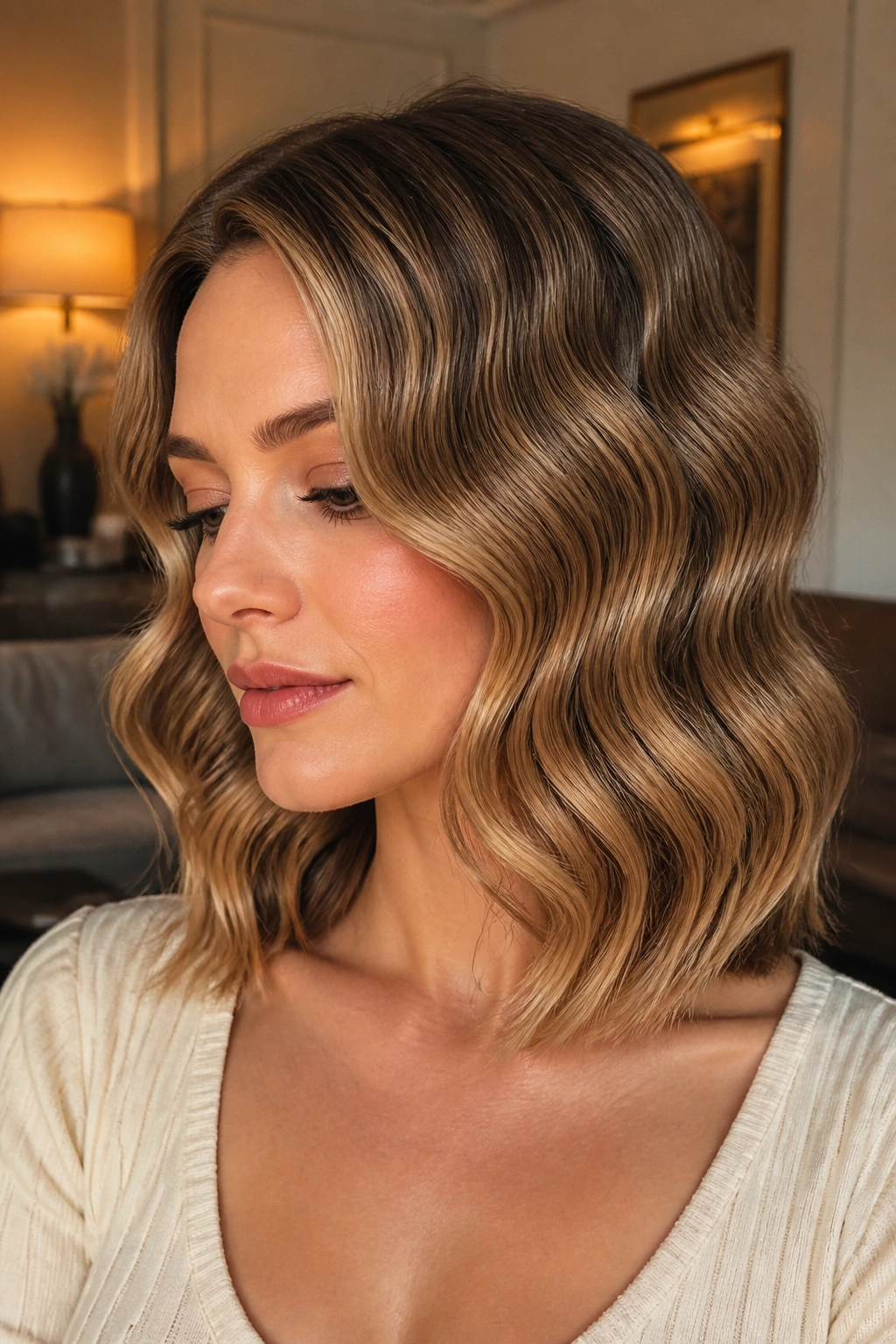
Retro S-waves turn a casual shoulder-length bob into something sharper and more polished. The curve pattern is smoother than a beach wave, with the hair bending in a soft S instead of spiraling or flipping randomly.
This style has a little old-film energy, but it still feels wearable. The secret is keeping the waves soft enough to move, not shellacked into place. You want the hair to look controlled, not frozen.
How it differs from beach waves
Beach waves are about uneven texture. S-waves are about pattern.
That means you’ll usually use a flat iron or a large curling iron and guide each section in the same direction before gently brushing it into shape. The finish should look smooth near the roots and more sculpted through the mid-lengths.
Best for special wear
- Events where you want the hair to read a bit dressier.
- Straight-to-wavy hair that holds shape well.
- Shoulder-length cuts with fewer layers.
A drop of lightweight serum on the ends makes this version shine without getting greasy. If your hair frizzes easily, this is the style that rewards a little patience.
11. Piece-Y Ends With Razored Texture

Razored ends give a wavy bob that broken-up, piece-y look people either love or avoid completely. I’m in the first group. When the texture is done well, it keeps shoulder-length hair from looking too heavy and makes the waves show up as separate strands instead of one big mass.
The danger is over-thinning. Too much razor work can make the ends wispy and weak, especially on fine hair. What you want is just enough softness to create movement around the perimeter.
A good version usually includes
- Slightly irregular ends.
- Loose, separated waves.
- A texture spray or dry spray for grip.
- Minimal brushing after styling.
This cut works best when the hair has some natural body. If your strands are pin-straight, you can still wear it, but you’ll need a bit more styling to keep the separated look from collapsing. The payoff is a bob that feels current without trying too hard.
12. Side Bangs With Tousled Volume

Side bangs are back in the conversation for a reason. They add softness at the forehead, break up the face shape, and bring motion into a shoulder-length wavy bob without asking for the commitment of full fringe.
The best version is not a heavy swoop. It’s a loose side bang that blends into the waves and moves with the rest of the cut. If the bangs are too thick, they can take over the whole look. If they’re too sparse, they disappear.
Why this cut feels balanced
The bangs give you direction. The waves keep the rest easy.
That combination works especially well if your hair tends to fall flat around the temples. A side bang can create the illusion of fuller roots and a longer line through the face. It also grows out more forgivingly than blunt bangs, which is a nice bonus because nobody loves a fussy trim schedule.
A quick styling trick: blow-dry the bangs in the direction you want them to land, then clip them aside while the rest of the hair cools. That little pause helps them keep shape.
13. Sleek Roots, Wavy Mid-Lengths

Straight roots with wavy mids are a good answer for anyone who likes a slightly cleaner finish. The top stays smooth, the bend starts lower, and the result looks modern without feeling overworked.
This style is especially useful when your natural wave gets frizzy near the scalp. By keeping the roots sleek, you get control where you need it most. Then the waves add movement below, where the shape has more room to show off.
How to build it
- Blow-dry the crown smooth with a paddle brush.
- Leave the lower half slightly damp before adding waves.
- Use a wide barrel for softer bends.
- Keep product light near the top so the roots do not collapse.
The style has a nice contrast to it. Smooth up top. Soft below. That contrast makes the shoulder-length cut feel longer and cleaner, which can be flattering if you want the bob shape without too much fluff.
14. The Wavy Bob That Gives Fine Hair More Body

Fine hair can wear a shoulder-length wavy bob beautifully, but the cut has to do some of the heavy lifting. Too much layering and it disappears. Too little and it lies flat. The sweet spot is a shape that looks full at the edges and slightly lifted through the crown.
A blunt-ish outline with soft bends usually works better than a heavily shagged one. Fine hair tends to lose density quickly once the layers get too short, so the cut should preserve as much visual weight as possible.
What helps most
- Root-lifting spray at the crown.
- A 1¼-inch iron for wider, softer waves.
- Less conditioner near the roots.
- A light dry shampoo on day two for grit.
A small wave pattern often beats a tight curl here. Tight curl can make the hair look stringy once it relaxes. A broader bend gives body without creating too much separation.
This is one of those styles that looks modest in the chair and much better once it moves.
15. Highlights That Make the Waves Read Better
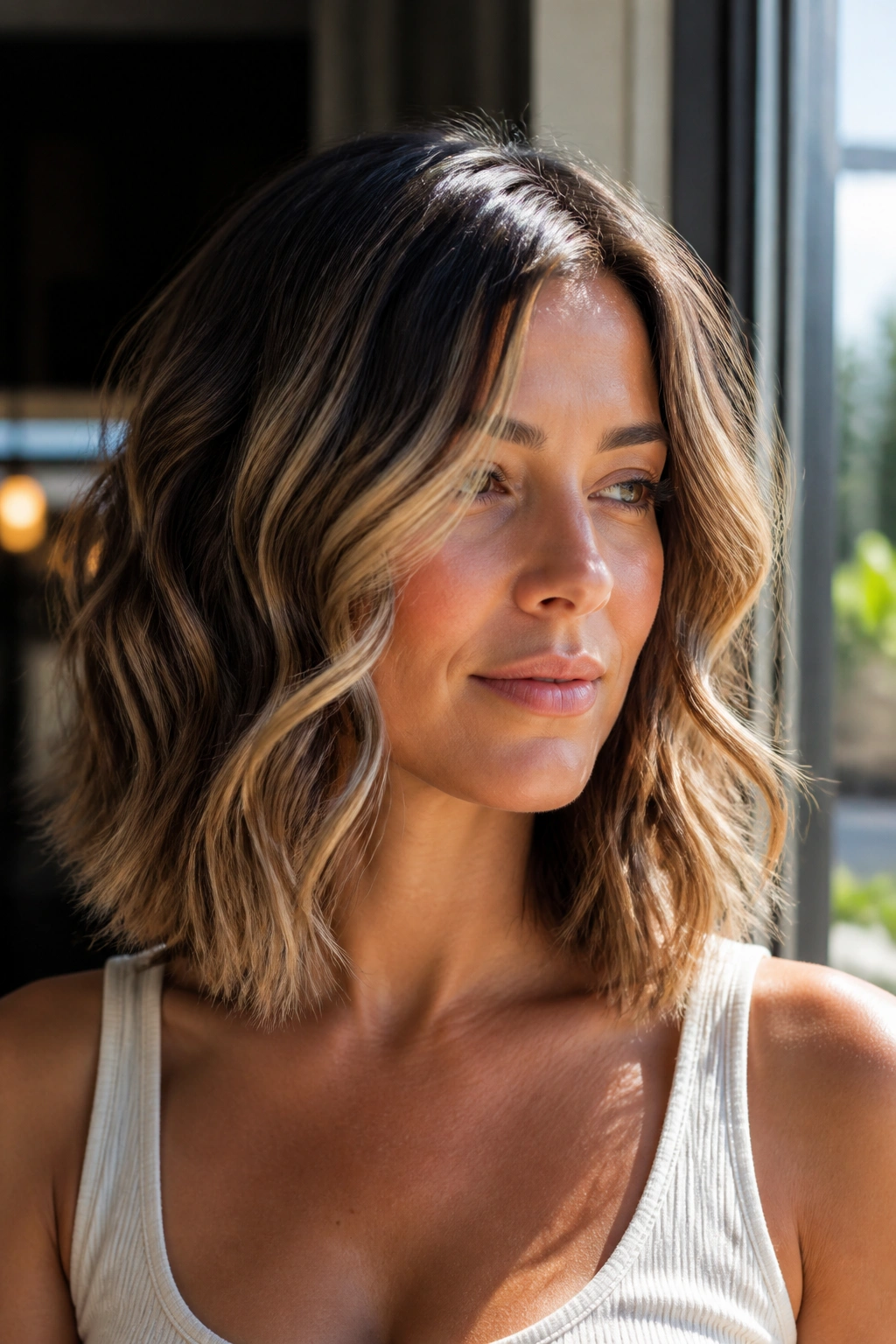
Color changes the way a wavy bob reads, and highlights are the easiest proof of that. A shoulder-length cut with ribbons of lighter color shows off every bend, turn, and flip in the hair because the light catches the texture in pieces.
The placement matters more than the shade alone. Face-framing highlights brighten the front, while a few softer ribbons through the mids give the whole bob more depth. If the highlights are too chunky, the effect can look stripy. If they’re too faint, the waves don’t pop much at all.
Where to place the light pieces
- Around the face for brightness.
- Through the top layer to show the bend.
- Near the ends for extra movement.
- A little underneath for dimension when the hair moves.
This style is a favorite when a cut feels a bit too plain. The waves do not change, but the texture suddenly reads better. It’s one of the simplest ways to make shoulder-length hair look fuller without changing the haircut itself.
16. Asymmetrical Waves for a Slight Edge

Asymmetry gives a wavy bob a sharper personality. One side sits a little longer, the part may shift off center, and the waves land in a way that feels less predictable than a perfectly balanced cut.
I like this style for people who want a little tension in the shape. Not a drastic, punky angle. Just enough difference to keep the haircut from feeling too safe.
Compare it to a classic lob
A standard lob is easy to wear. An asymmetrical one asks for a little more attention. The payoff is movement that looks deliberate even when the styling is loose.
The difference shows up fastest at the jaw and collarbone. One side brushes closer to the shoulders, the other opens up around the neck. That unevenness can make the whole haircut feel more alive, which is a nice change if your current bob feels too familiar.
If you want to keep it wearable, keep the wave soft. Too much curl can make the asymmetry look accidental instead of designed.
17. Micro-Layers for a Messy, Lived-In Look
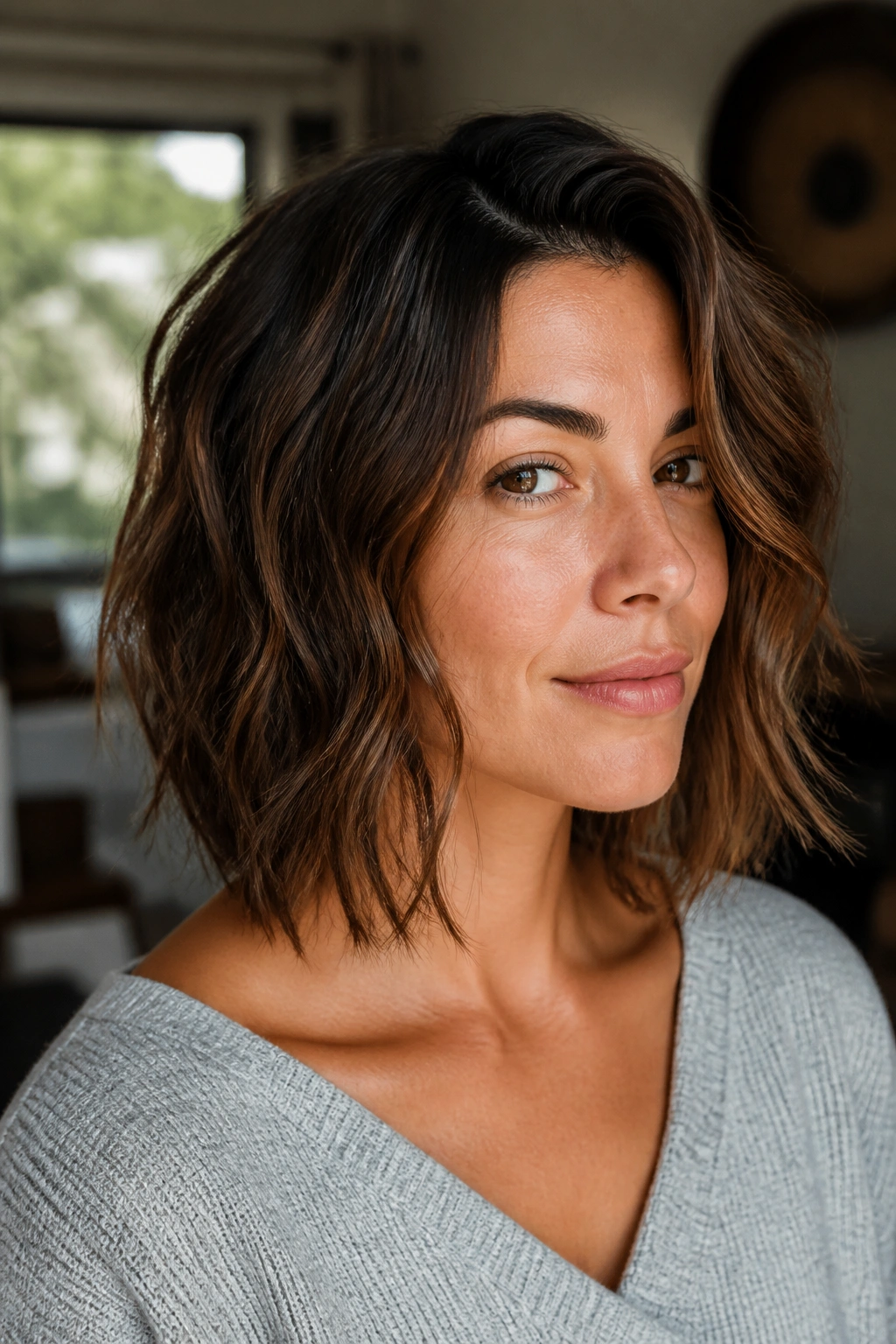
Micro-layers are tiny, but they change the way the hair falls. Instead of carving big sections out of the cut, they create small shifts in weight that help a shoulder-length wavy bob move more naturally.
This is the style I’d point to if you want that “I just shook it out and left” look without actual chaos. The layers should be subtle enough that the outline still feels full. What changes is the texture inside the cut, not the silhouette.
What to watch for
- Ask for soft internal layering.
- Avoid aggressive thinning at the ends.
- Use a matte texture spray if the waves need separation.
- Scrunch with your hands instead of brushing after styling.
A lived-in bob should still have shape at the edges. If the ends start fraying, the style loses its polish fast. The best versions look a little undone in the middle and neat enough around the perimeter to stay flattering.
18. Brushed-Out Glam Waves
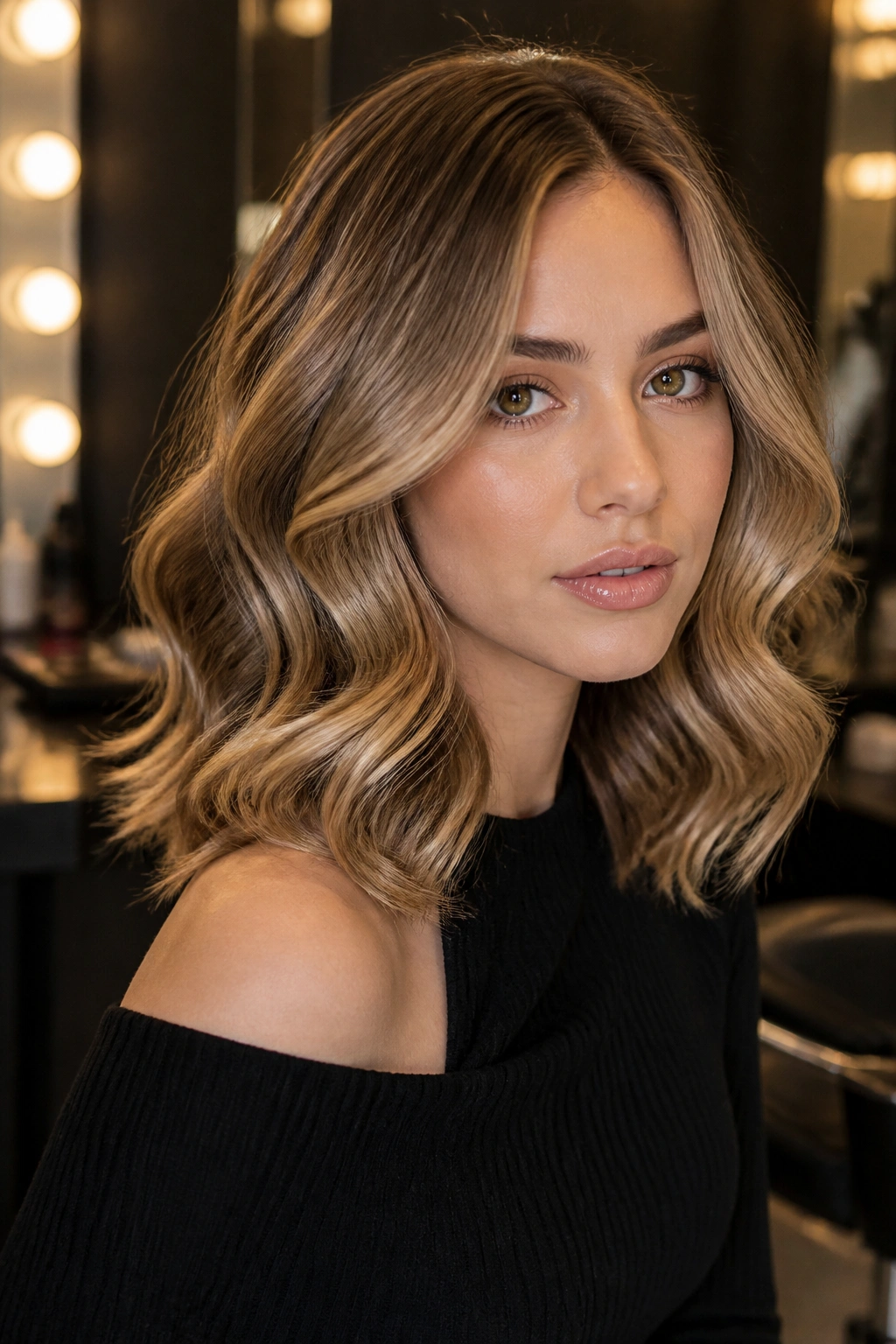
Brushed-out waves give shoulder-length hair a smoother, softer finish. The curl starts with shape, then gets loosened until it looks plush instead of tight. It’s a little dressier than beach waves and much less fussy than a perfect curl set.
This style works well when you want the bob to feel full and glossy. The brushing step is what makes it different. It softens the wave pattern, blends the sections, and gives the hair a flowing look that sits nicely on the shoulders.
The basic method
Curl the hair in medium sections, let everything cool fully, then brush with a boar-bristle brush or a soft paddle brush. Stop before the wave disappears completely. You want body, not straightness.
A few useful details:
- Curl away from the face on the front pieces.
- Hold each section for 8 to 10 seconds.
- Let the curls set before brushing.
- Finish with shine spray, not heavy oil.
This version has old-school glamour in the best way. Not costume-y. Just soft, full, and a little more finished than the average bob.
19. Wash-and-Go Texture for Busy Mornings
A good wash-and-go bob should not need a morning pep talk. The cut has to do most of the work. That means the layers, length, and shape need to support the natural wave pattern so the hair can dry into something decent with minimal effort.
This style is less about styling and more about smart cutting. If your hair already bends on its own, a shoulder-length bob can make that wave look cleaner and more intentional. If your hair is only partly wavy, the right cream or mousse can coax the rest.
What makes it reliable
- A cut that follows the natural growth pattern.
- Enough weight at the bottom to stop puffing.
- A lightweight leave-in to keep frizz down.
- A diffuser only if the roots need help.
The best wash-and-go versions are not perfect. They are predictable. That matters more. When the cut behaves on ordinary days, you stop fighting your hair every morning, and that is worth a lot more than a style that only works after forty minutes and three tools.
20. Tucked-Behind-the-Ears Waves
Tucking the hair behind the ears sounds almost too simple, but on a shoulder-length wavy bob it changes the whole attitude of the cut. It opens the face, shows off the jawline, and keeps the wave from swallowing the cheeks.
This style is useful when you want the bob to feel lighter without actually cutting it shorter. The tucked side creates a cleaner line, while the loose side keeps the movement. That contrast is what makes it work.
Small styling choices matter here
- Create a soft bend around the ears, not a hard curl.
- Use a side part if you want the tucked side to stay put.
- Add a light wax or cream only to the front pieces.
- Leave a few wisps loose for softness.
It’s an easy trick, but not a throwaway one. On a windy day or a long workday, this shape still looks intentional because the style is built into the cut, not forced by pins.
21. Blunt Bangs on a Wavy Bob
Blunt bangs with waves can look sharp, but only when the rest of the haircut is handled carefully. The bangs provide a straight visual line, and the shoulder-length waves soften everything below it. That contrast is what makes the cut interesting.
The danger is obvious: if the bangs are too thick or the waves too tight, the whole thing can feel heavy. The fix is keeping the fringe full but light enough to move, with waves that stay loose through the mids and ends.
How to keep it wearable
A slightly undone finish helps a lot. Dry the bangs first, then shape the rest of the hair into broad bends. If the fringe starts to separate, smooth it with a tiny touch of cream between your fingertips.
This style suits people who want a little drama without going all the way into bold fashion territory. The fringe gives the haircut a point of view. The waves keep it friendly.
22. Soft Rounded Bob With a Gentle Curve
A rounded wavy bob is the quiet finishing note that a lot of people overlook. The length still grazes the shoulders, but the overall outline curves inward a little, so the hair hugs the head instead of flaring out at the sides.
That curve makes the style feel clean and soft at the same time. It’s especially nice if you want your shoulder-length cut to look neat on ordinary days without losing movement. The waves can still bend through the mids, but the outline stays controlled.
Who this suits best
- People who like a tidier silhouette.
- Hair that has some natural bend but not a ton of volume.
- Anyone who wants a bob that works with minimal daily styling.
A rounded shape does not need to be stiff. That’s the mistake people make. The best version keeps enough softness at the ends so the waves can breathe, which keeps the haircut from looking overbuilt.
Honestly, this is the one I’d choose for the person who wants a bob that behaves. Not boring. Just dependable, flattering, and easy to live with, which is more useful than flashy most days.
