



A good shag does something most haircuts never manage: it makes messy hair look planned.
That matters when your hair flips out at the ends, puffs at the crown, or goes flat by lunchtime. A short shag haircut with bangs gives you a shape that feels alive, not frozen in place, and the fringe does a lot of the heavy lifting. Cut it right, and the whole thing looks like you meant for it to move.
I’ve always liked short shags on people who want texture without spending 20 minutes wrestling a round brush every morning. Straight hair gets lift. Wavy hair gets definition. Curly hair gets room to breathe. The trick is choosing the right kind of bangs, because the fringe changes the whole mood of the cut more than most people expect.
Some versions are soft and airy. Some are choppy and a little bratty in the best way. A few lean close to a wolf cut or mullet, while others stay closer to a classic shag with a cleaner finish. The first one is where I’d start if you want movement without giving up polish.
1. Choppy Micro-Shag With Eyebrow-Grazing Bangs
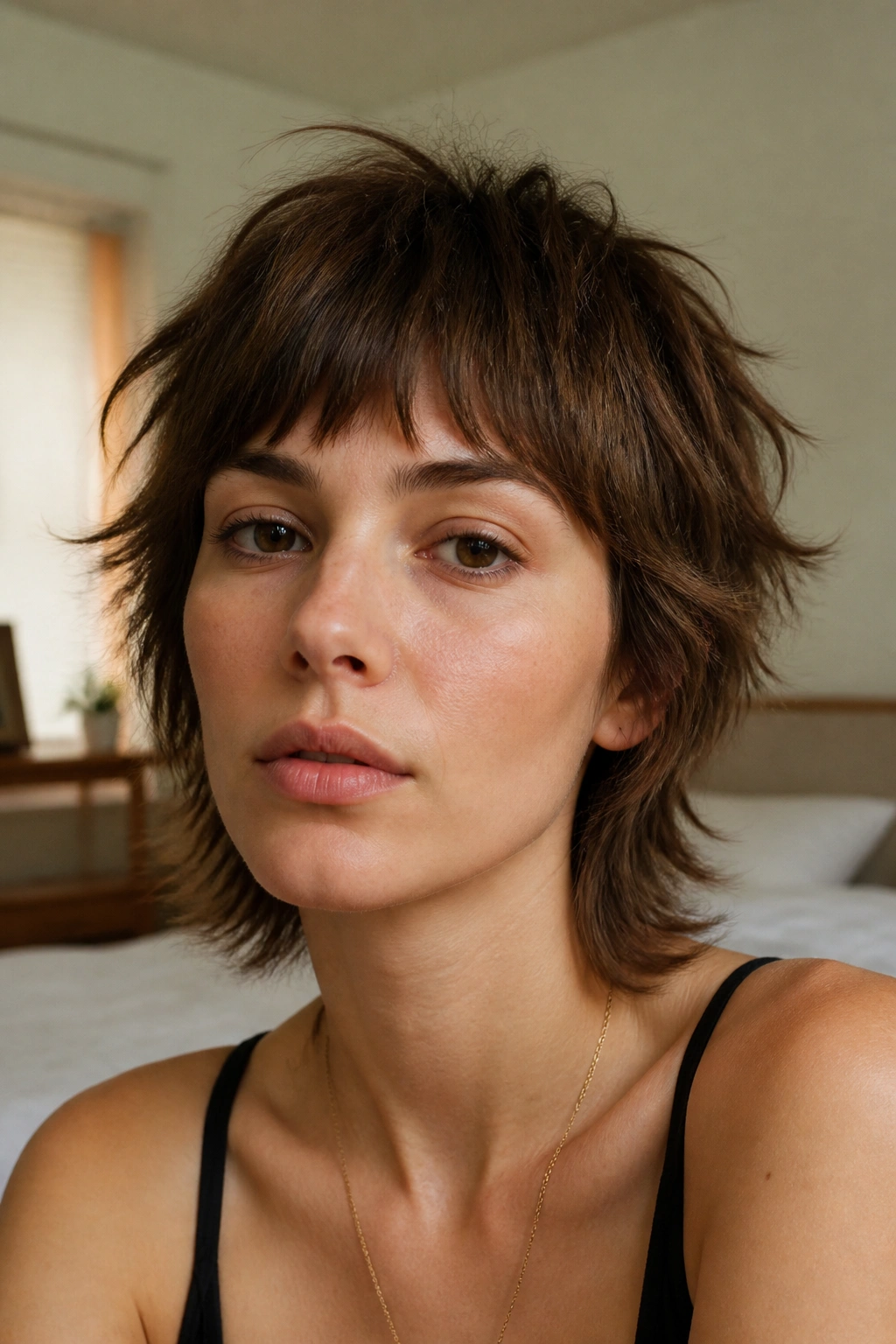
This is the cut for hair that goes limp fast. The crown gets short, broken layers, the sides stay soft, and the bangs skim the brows without sitting in one solid line. It has that slightly lived-in look people try to fake with styling paste, except the haircut does most of the work for you.
Why it works on fine hair
A micro-shag builds shape where fine hair usually needs it most: around the top and through the front. The short layers stop the crown from lying flat, while the choppy fringe keeps the face from looking too open. If your hair collapses when the weather gets damp, this cut gives you a better shot at keeping some lift.
Ask for point-cut ends and a fringe that sits just above or right at the eyebrow when dry. Wet hair lies. Dry hair tells the truth.
- Keep the crown layers between 1.5 and 3 inches for easy lift.
- Use a pea-size amount of styling cream, not a heavy balm.
- Blow-dry the fringe forward first, then rough-dry the rest with your fingers.
- Skip thick thinning shears if your hair is already wispy.
Best move: a tiny round brush and a quick bend at the ends. That little curve keeps the cut from looking too severe.
2. Curly Shag With Soft Curtain Bangs
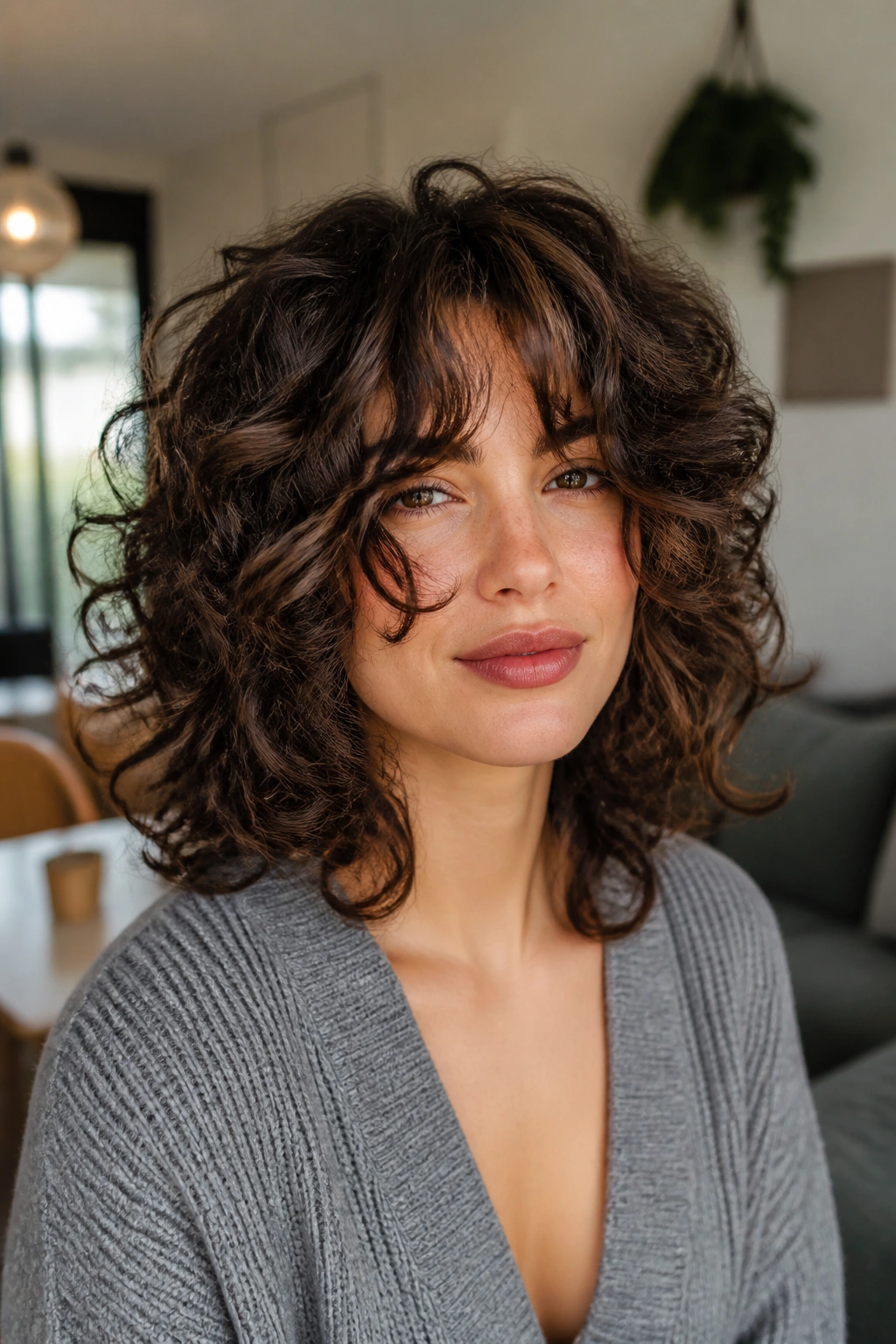
A curly shag with curtain bangs is one of those cuts that looks better when the curl pattern does its own thing. The front opens in the middle, the layers stack around the cheekbones, and the shape keeps curls from ballooning into a triangle. On the right head of hair, it looks effortless. On the wrong one, it can turn into a mushroom. So the cutting matters.
How to keep the curl pattern from fighting the cut
Dry cutting is your friend here. Curls shrink in strange ways, and if bangs are cut too short while wet, they can spring up higher than anyone wanted. I’d ask for the fringe to land somewhere between the nose and upper lip when dry-cut, then let it settle into a softer curtain shape.
The best part is the grow-out. The bangs blend into the layers instead of sitting there like a separate event. That makes this cut a smart choice if you hate sharp maintenance lines.
Styling notes that matter
Use light mousse at the roots and a curl cream through the mids. Then diffuse on low until the curls are set but not crunchy. If you scrunch too hard, the fringe can bunch up and lose the center part that gives curtain bangs their shape.
3. Pixie-Length Shag With Piecey Bangs
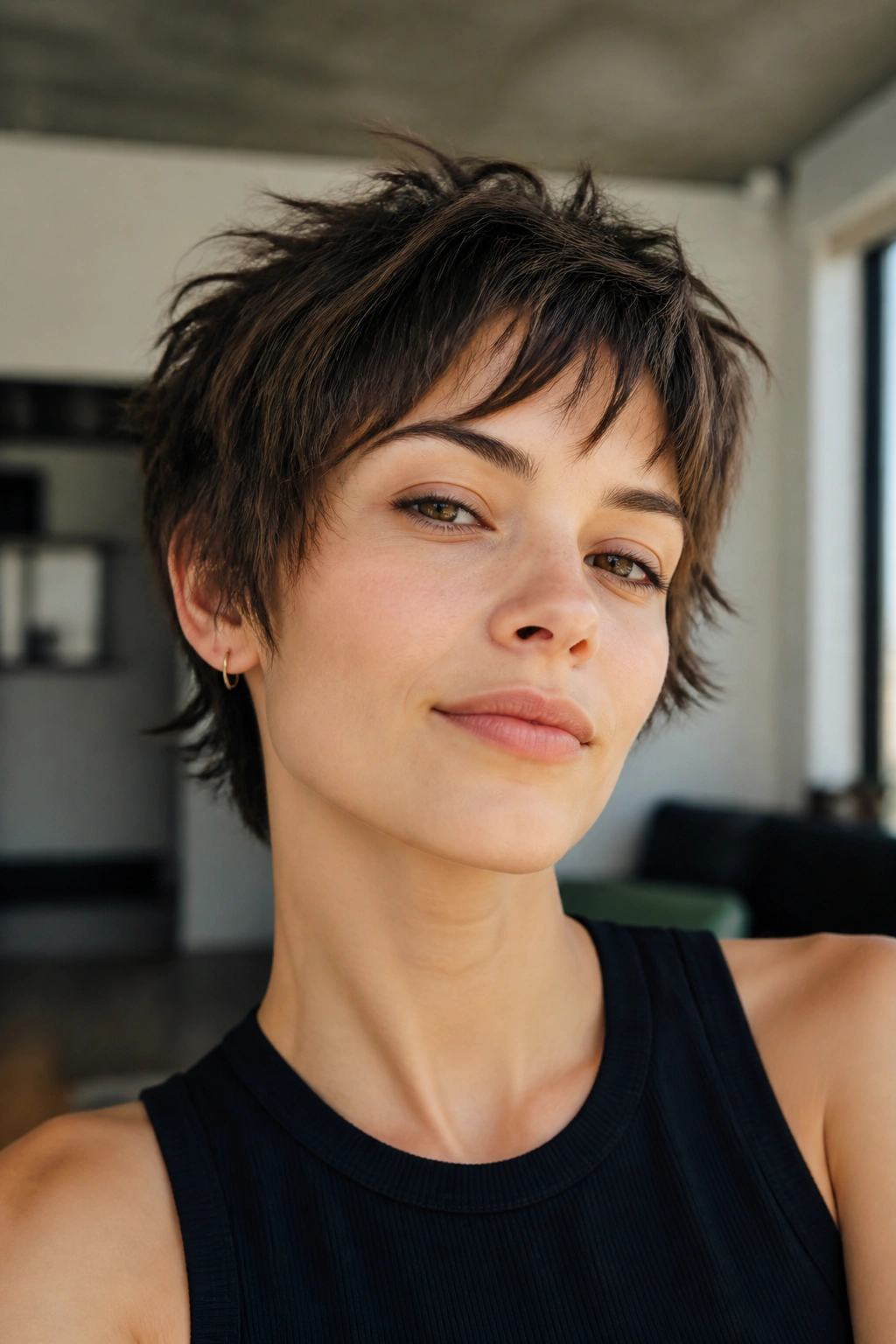
Why does this work when a regular pixie feels too neat? Because the shag version keeps some softness in the top and around the ears. The bangs are short, separated, and slightly uneven, which stops the haircut from reading as severe. It’s sharp, but not hard.
How short is too short?
Short enough to show the face. Not so short that you lose the shag shape.
That sounds vague, so here’s the practical version: the top should still have enough length to flip in different directions, and the fringe should be broken into pieces instead of cut into one blunt strip. If your hair has a little natural wave, even better. The ends can kick out without much coaxing.
This is the cut I’d pick for someone who wants a short style with personality but doesn’t want the precision of a classic pixie. It feels looser. Less buttoned-up. The upkeep is easier than a polished crop, though the bangs will still need trimming every few weeks if you want them to stay above the eyes.
How to wear it
- Work a small dab of matte paste through dry hair.
- Pinch the fringe in small sections so it separates instead of clumping.
- Keep the nape soft; a hard line kills the shag effect.
4. French Bob-Shag With Bottleneck Bangs

A French bob-shag sits in that sweet spot between easy and styled. The base usually lands around the jaw, the layers are soft enough to move, and the bottleneck bangs open at the center before tapering wider near the eyes. It flatters without trying too hard. That combination is why people keep coming back to it.
I like this cut on hair that has a little bend but not a ton of volume. The length keeps it from puffing into a triangle, while the fringe gives the face a frame that feels deliberate. If you like the idea of a bob but find plain bobs too stiff, this is a better road.
The bangs matter more than the length here. Bottleneck fringe can look heavy if the center is cut too blunt, so ask for a soft taper and a little separation at the ends. The goal is movement, not a curtain that hangs in one block.
A flat iron isn’t necessary. A quick pass with a round brush or even a wrist turn with a blow-dryer nozzle is enough. The cut should bend, not curl under like a school photo.
5. Razor-Cut Shag With Side-Swept Fringe
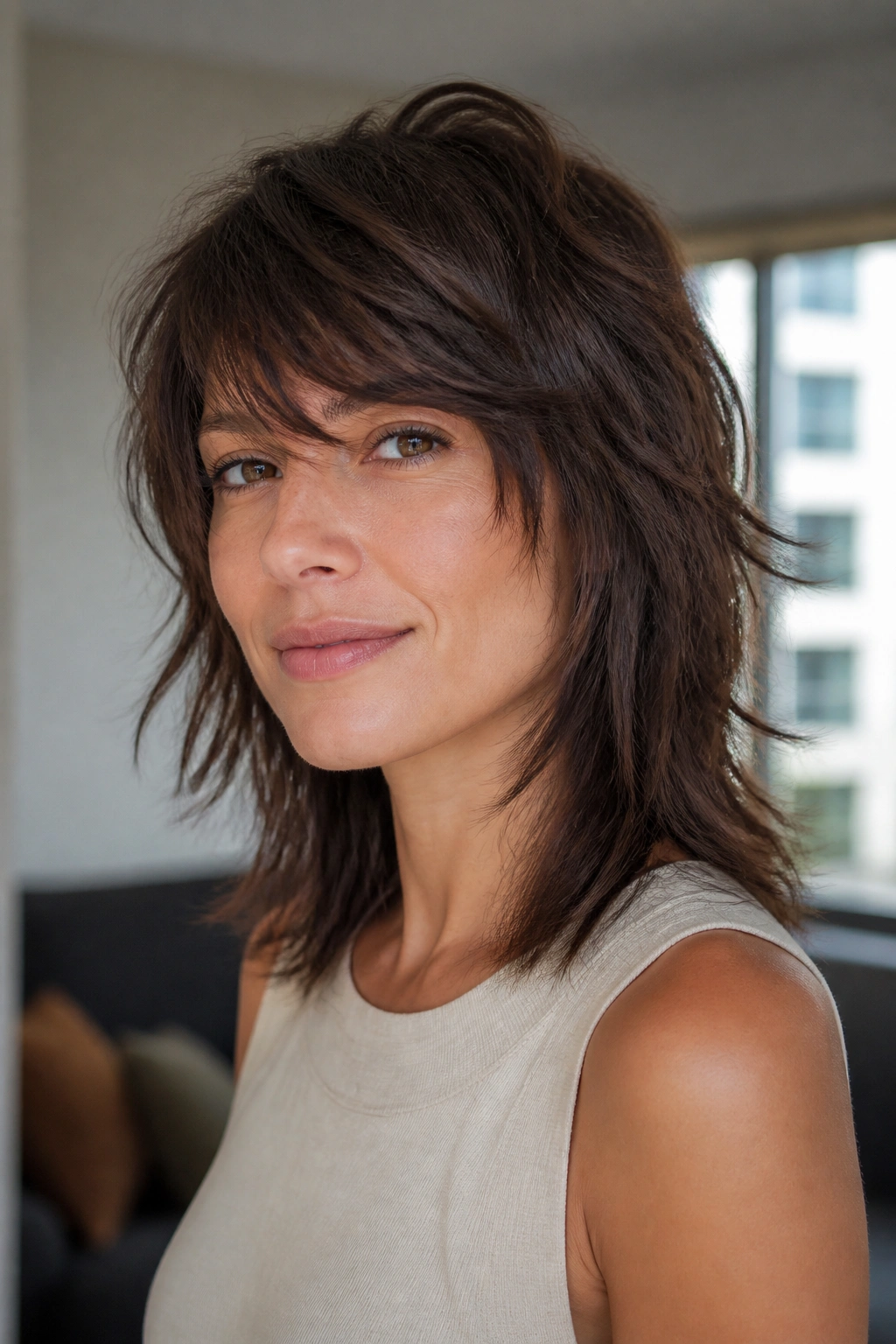
This is the most forgiving shag on coarse or stubborn hair. The razor work softens the ends, the layers fall with a little mess, and the side-swept fringe keeps the front from looking too chopped. It has a casual swing to it that scissors alone sometimes miss.
The side part is doing more than people think. It breaks the symmetry, which helps a short cut feel less blocky, especially if your face is round or your forehead is shorter. The fringe can sweep across the brow or tuck behind one ear when you need it out of the way.
What makes it different
A razor-cut shag is not the same as a heavily thinned haircut. Done well, it removes bulk while keeping the shape. Done badly, it can fray the ends and leave hair looking tired. I’d only trust a razor on hair that has enough density to handle it.
What to ask for
- Razor through the mid-lengths, not the ends only.
- Keep the fringe long enough to sweep, usually around brow to cheekbone length.
- Add short crown layers for lift.
- Finish with a lightweight texture spray, not sticky wax.
My opinion: this is one of the easiest cuts to live with if you hate “perfect” hair.
6. Wolfy Shag With Full, Heavy Bangs
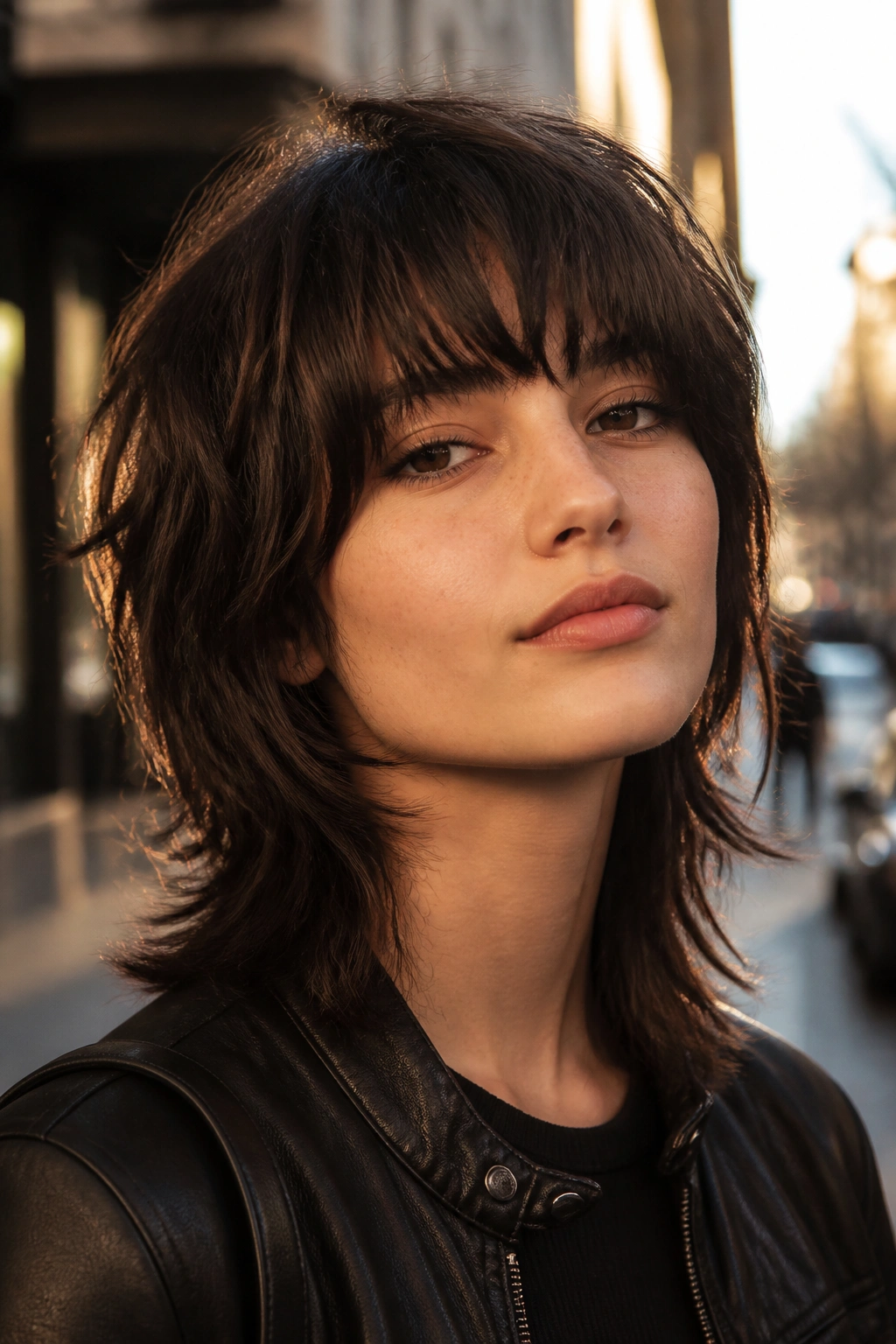
Unlike a soft shag, the wolfy version leans into contrast. The top is fuller, the nape is tighter, and the bangs land with more weight across the forehead. It has a little more edge. A little more bite. If you want your haircut to say something before you even open your mouth, this is the one.
Why it works
The heavy fringe gives the cut a focal point, while the layers underneath keep it from turning into a helmet. That’s the whole trick. Without the layered underside, full bangs can feel too square. With the shag shape, they sit inside a silhouette that moves.
This works especially well on straight-to-wavy hair that can hold a shape but still wants some texture. If your hair is very fine, go lighter on the bangs. If it is very dense, ask for some internal removal around the crown so the top doesn’t swell.
The mullet echo is there, but it does not have to look costume-y. Keep the transition soft from crown to nape and the cut stays wearable. Too much contrast, and it starts looking like a themed haircut. Nobody needs that.
7. Wispy Feathered Shag With See-Through Bangs
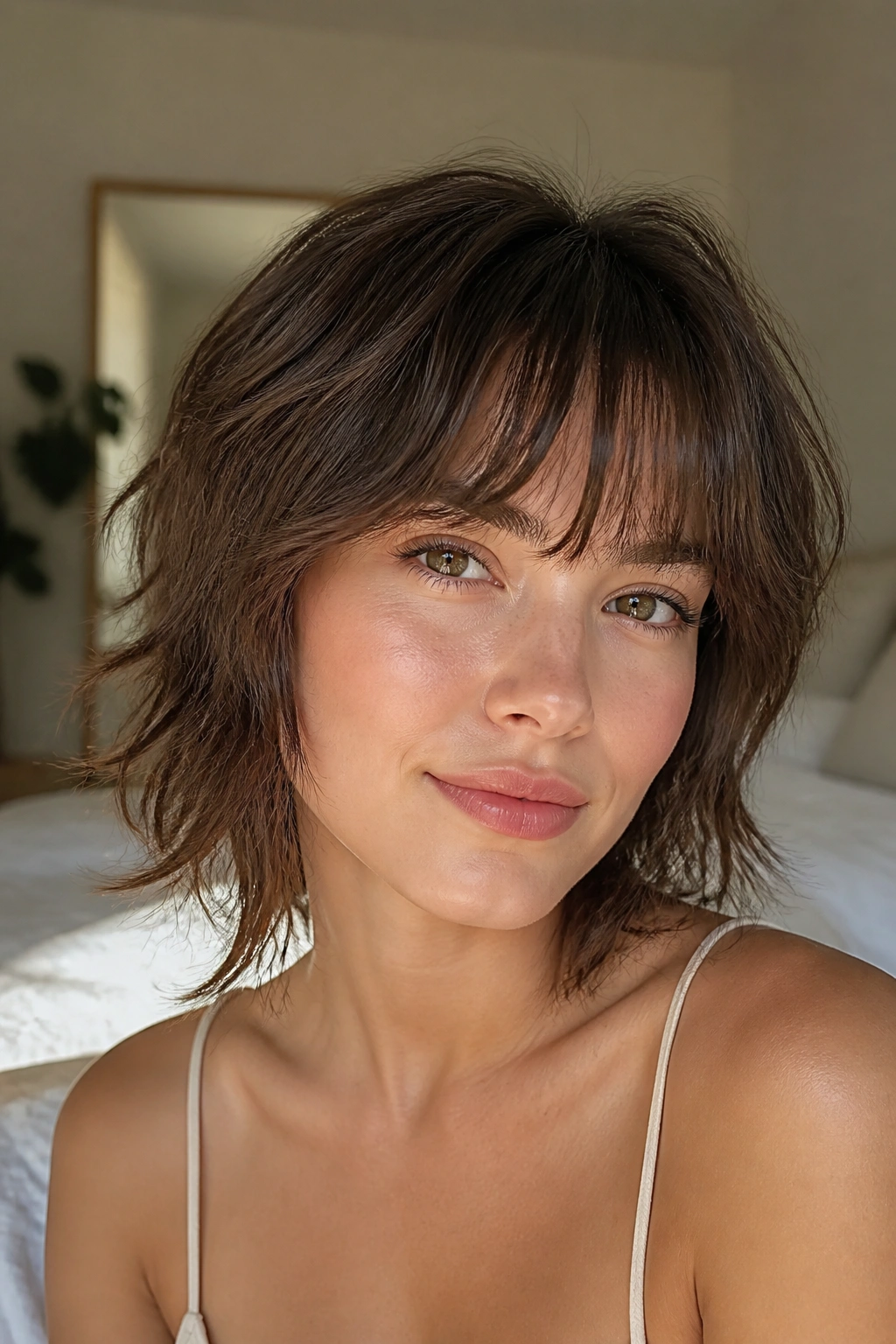
There’s a reason see-through bangs keep showing up on softer shag cuts: they let the forehead breathe. The fringe is sparse enough to feel light, the layers are feathery, and the whole haircut has a soft-focus look that flatters without shouting. It’s especially good if you want bangs but hate the feeling of too much hair sitting on your face.
The science behind the softness
Thin fringe works because it doesn’t block the features. It frames them. That makes it useful for square jaws, sharper cheekbones, or anyone who wants a lighter look around the eyes. The feathered layers also help if your hair tends to show every blunt line.
A lot of people overdo the thinning here. Don’t. The bangs should look airy, not transparent in a sad way. Ask for a soft, diffused edge and a little pieceiness through the ends, then stop there.
- Blow-dry the fringe with low heat and a flat brush.
- Keep products light: mist, cream, or a soft wax.
- Trim every 4 to 6 weeks so the fringe doesn’t lose its shape.
- Let the side layers graze the cheekbones for balance.
Best for: anyone who wants a shag that feels gentle instead of loud.
8. Rounded Shag With Arched Bangs
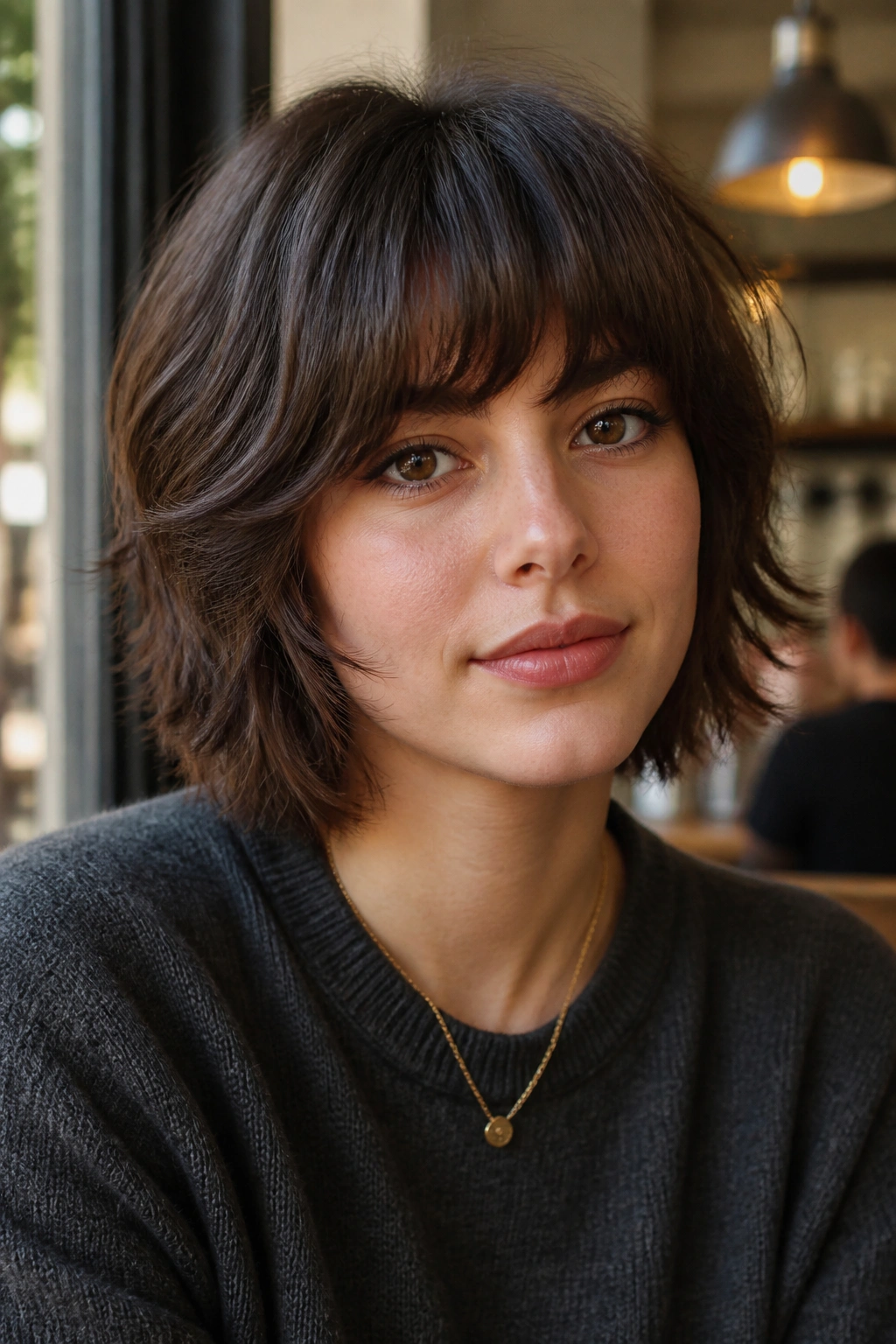
This one has a cleaner silhouette than most shags, and that’s the appeal. The layers curve around the head instead of kicking out in every direction, and the arched bangs follow the brow line with a soft lift in the center. It feels tidy, but not flat. There’s a difference.
I’d reach for this shape on a long face or anyone who wants a little width at the sides. The rounded layers keep the haircut from stretching downward, which short shags can do if they’re cut too straight. Arched bangs help the same way; they shorten the look of the forehead without boxing it in.
What to watch for
If the arch is too high, the fringe can look overstyled. If it sits too low, it loses the shape and starts reading as a blunt bang with layers attached. The sweet spot is a gentle curve that mirrors the eyebrow line, maybe a touch above the center.
A soft blowout does the job here. Round brush, medium heat, and a little lift at the roots. Keep the finish polished but not sprayed into place. This cut likes movement, not cement.
9. Wavy Shag With Long Curtain Bangs
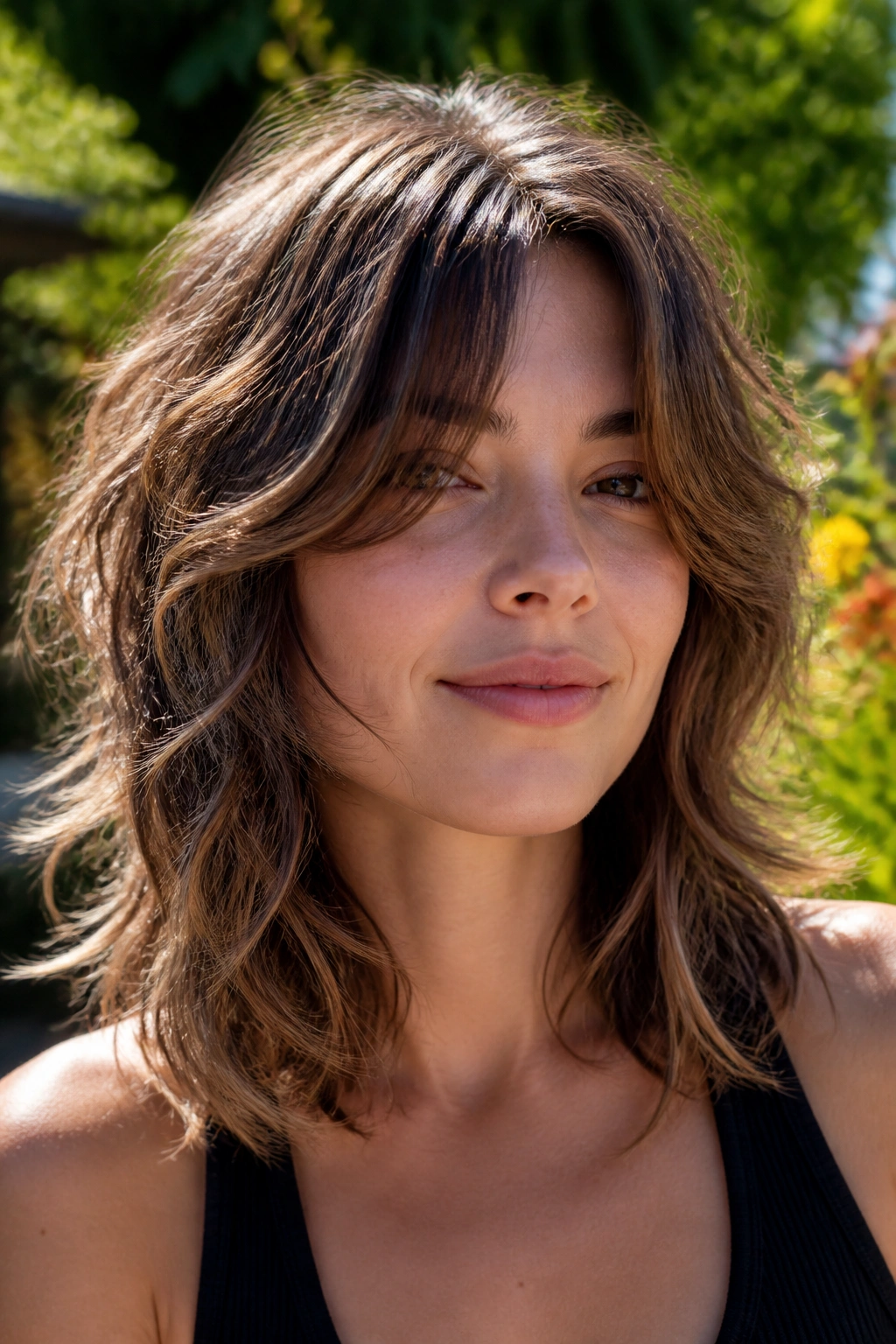
A wavy shag with long curtain bangs is probably the most forgiving short shag of the bunch. The bangs start near the center and fall toward the cheekbones, which gives you enough length to tuck, sweep, or split depending on the day. The waves do their part. You do not need to micromanage them.
How to get the most from it
The long fringe should connect to the top layers, not sit like a separate curtain hanging off the front. That connection is what makes the cut feel blended. If the shortest pieces hit around the nose or upper lip, they usually fall nicely once dry, especially if your hair has a loose bend.
This is a strong choice for people who want bangs but fear the grow-out phase. Long curtain bangs can be pushed aside when they get annoying, which is a gift on busy mornings. They also soften the face without hiding it.
Use it well
- Twist the front pieces away from the face while blow-drying.
- Add a small amount of mousse at the roots for lift.
- Let the ends stay a little undone; too much curling makes it fussy.
- Ask for face-framing pieces that start around the cheekbone, not the jaw.
10. Thick-Hair Shag With Internal Layers And Brow-Skimming Bangs
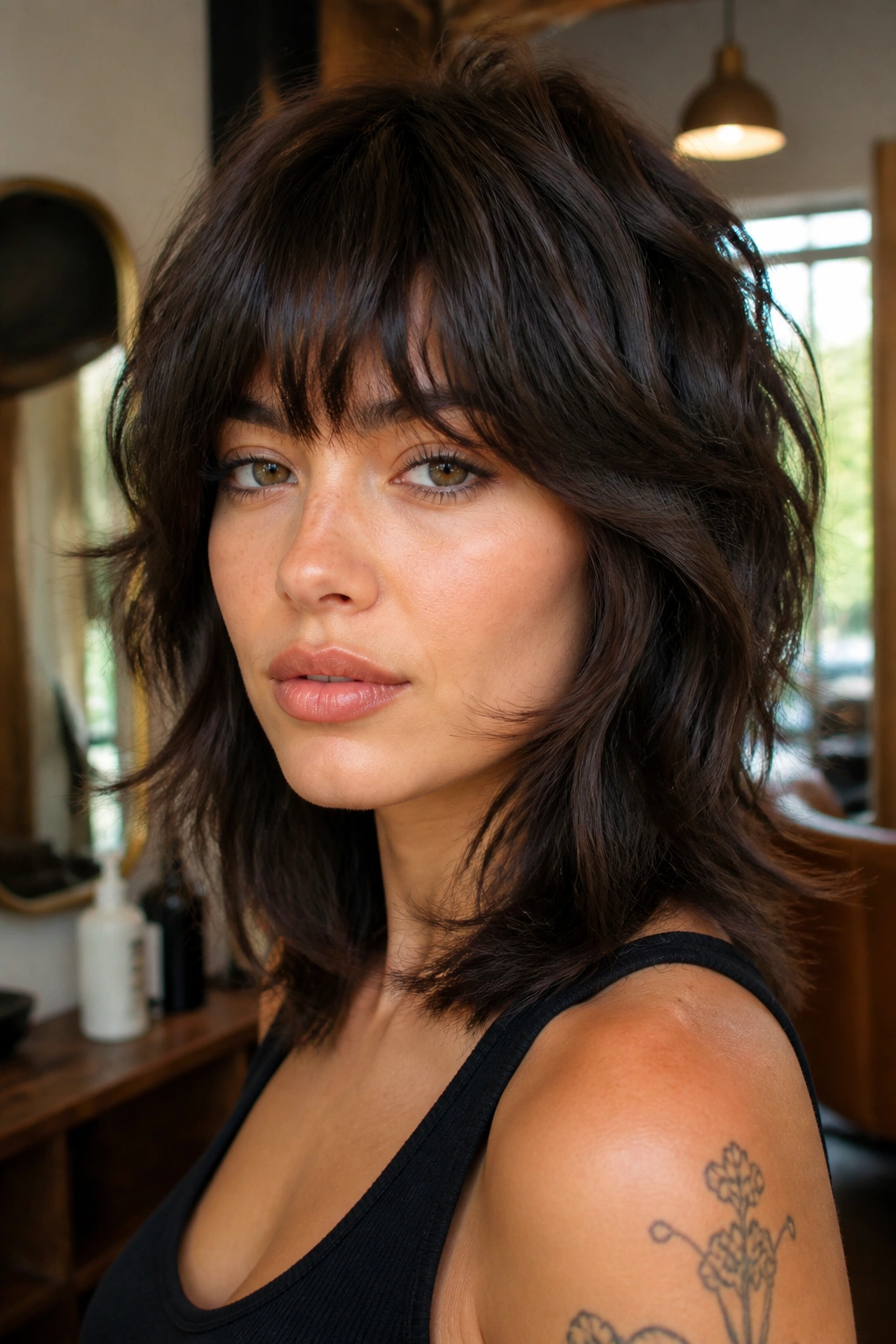
Thick hair needs subtraction, not more bulk. That’s why internal layers matter here. The outside shape still looks full, but weight gets removed inside the cut so the hair can move instead of sitting there like a heavy block. The bangs stay just at the brows and keep the front from swallowing the face.
Why internal layers matter
If you only shorten the outer edges, thick hair can still balloon underneath. Internal layers break that up. They let the top collapse a little, which sounds bad until you see the difference in real life. The cut falls better. It air-dries faster. It’s easier to tuck behind one ear without the whole shape exploding.
This is not a haircut for someone who wants to keep every ounce of density. It’s for people who would rather have shape than sheer mass. Ask for the weight to be removed through the midsection, not hacked off at the ends. That keeps the perimeter looking full while the body of the hair gets lighter.
A brow-skimming fringe works here because it gives the front structure without adding more width. Shorter can be too aggressive. Longer can disappear into the rest of the cut.
11. Fine-Hair Shag With Shattered Ends And Micro Fringe
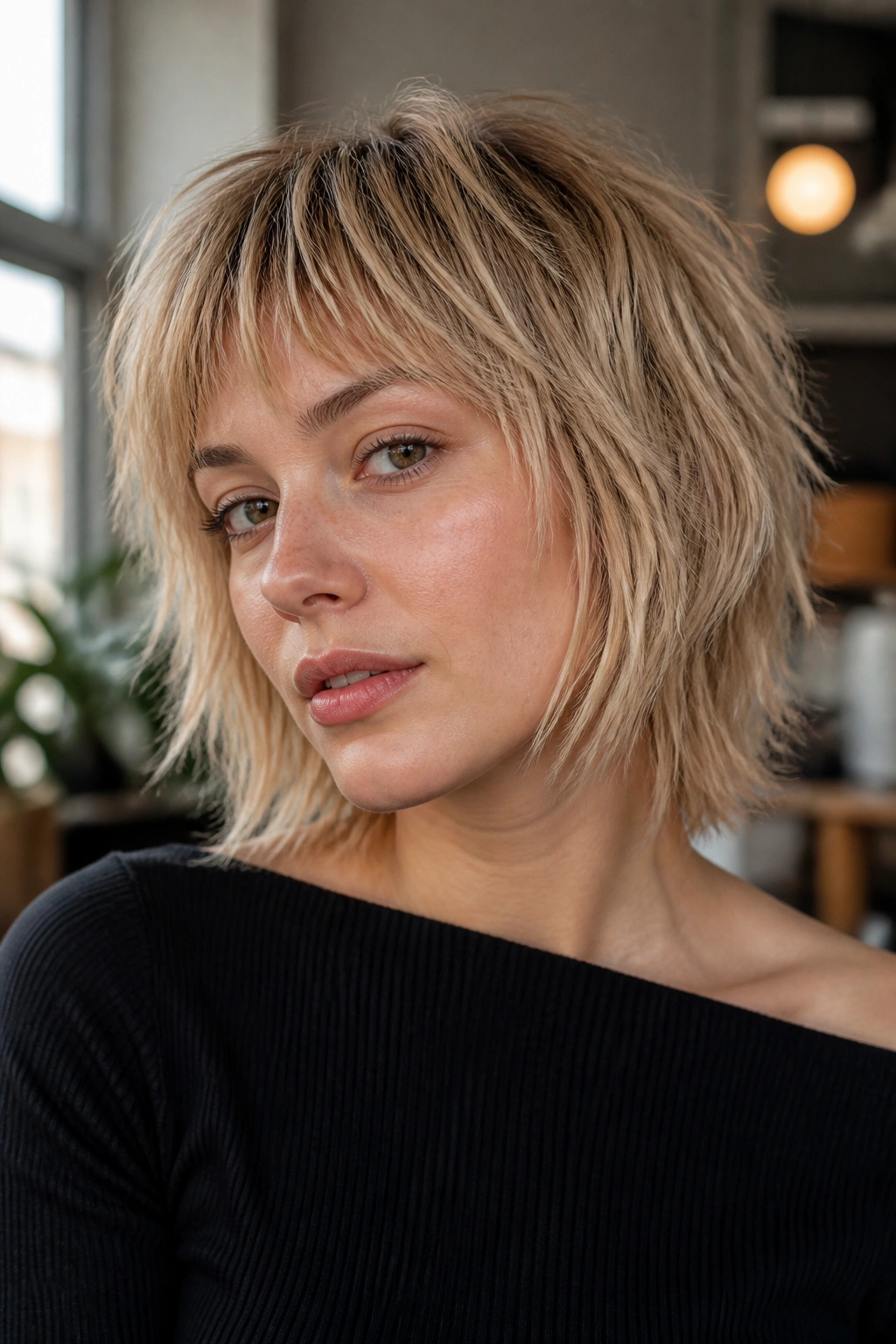
Fine hair can handle a shag, but it needs a careful hand. Too many layers and it turns stringy. Too little and the style collapses. The shattered-end approach threads that needle by keeping some length in the body while breaking up the edges enough to create movement. The micro fringe adds just enough attitude up front.
The best version of this cut is a little uneven in a good way. Not sloppy. Not chopped by accident. The ends should look light, but still feel like hair, not feathers. And the fringe? Short enough to notice, soft enough to avoid a hard line across the forehead.
I’d be cautious with heavy texturizing on fine hair. It can leave the ends frayed fast. A better move is precise point cutting and a small amount of root lift at styling time. Dry shampoo at the crown can help, but use a light hand. Too much and the cut looks dusty.
If your hair slips flat by lunch, this shape gives you more visual texture without needing a lot of product. That’s the real win.
12. Asymmetrical Shag With Deep Side Part And Swept Fringe
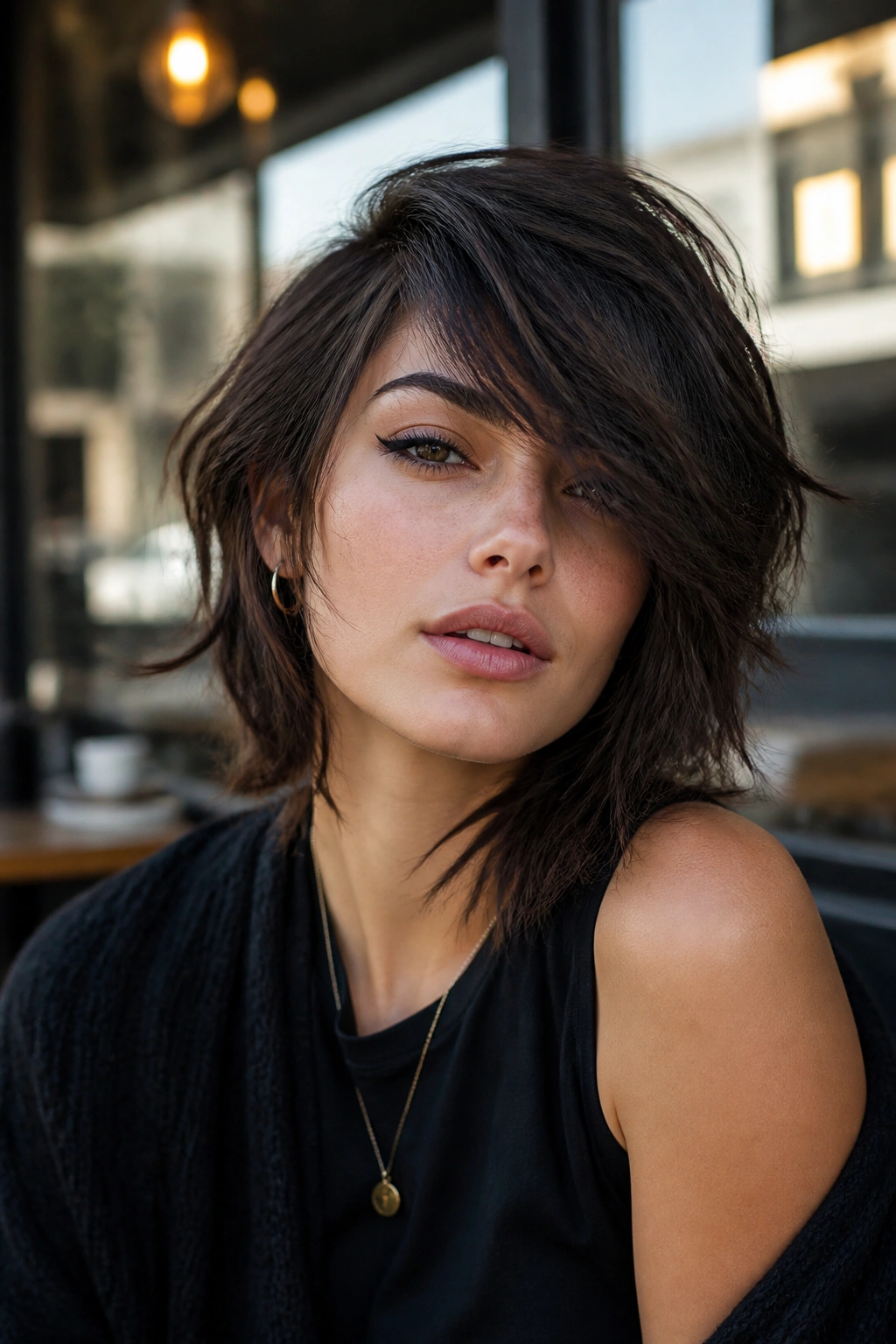
A deep side part changes the entire attitude of a short shag. One side gets a little drama, the fringe sweeps across the face, and the uneven balance makes the haircut feel sharper than a centered style. It’s a nice option if you want short hair that still has a little mystery to it. Not hard. Just not symmetrical.
What makes it different
The asymmetry does the work of contouring. It draws the eye diagonally, which can soften a wider forehead or give a round face a bit more length. That diagonal line also keeps the fringe from sitting flat in the middle of the face, which some people hate.
You do need some willingness to style it. A quick blow-dry with a side-directed brush or a little bend from a flat iron helps the front settle the right way. If you air-dry it and walk away, it can split wherever it wants. Sometimes that’s fine. Sometimes it looks like you lost a fight with a cowlick.
How to wear it
- Set the part while the hair is damp.
- Dry the fringe in the same direction every time.
- Keep the longer side slightly tucked behind the ear for contrast.
- Use texture spray only on the ends, not the roots.
13. Mullet-Lite Shag With Tapered Nape And Choppy Bangs
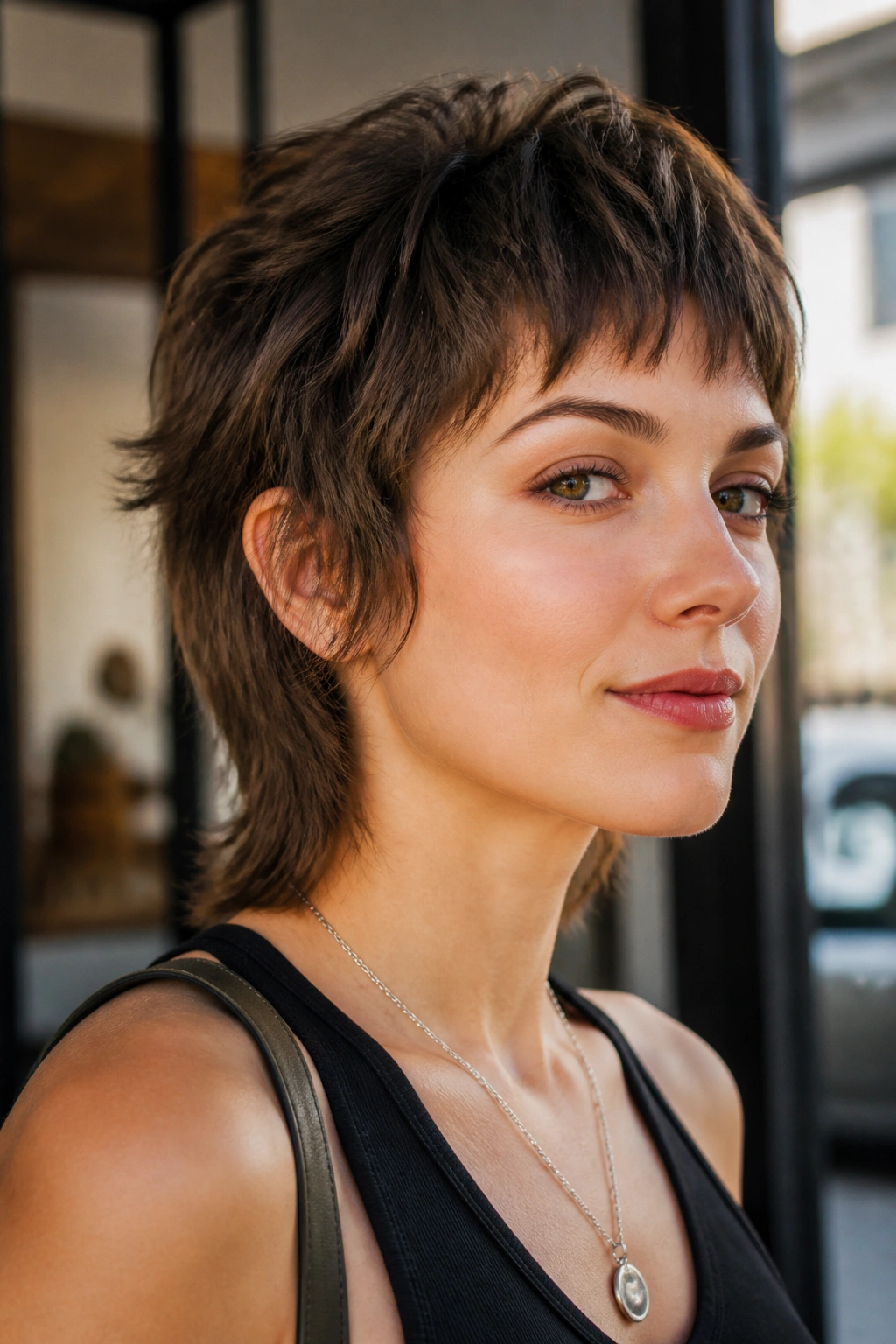
If you like your hair a little rebellious, this is the version worth paying attention to. The crown stays short and airy, the nape tapers down, and the bangs arrive in chopped, uneven pieces that keep the front from feeling polished. It has that mullet echo, but softened enough to wear in real life.
The trick is restraint. A mullet-lite shag works when the transition from front to back feels blended, not sudden. The nape should be tapered, not hacked. The bangs should look broken up, not like they were cut with a kitchen scissor and a grudge.
This cut tends to flatter people who want a shape with personality and don’t mind showing some neck. It also plays well with a little natural wave. If your hair is straight, styling paste and a quick twist with your fingers will keep the pieces separated.
I’d avoid making the back too long unless you want a stronger mullet feel. A short shag can lean edgy without becoming a costume. That line matters.
14. Face-Framing Shag With Long Bangs
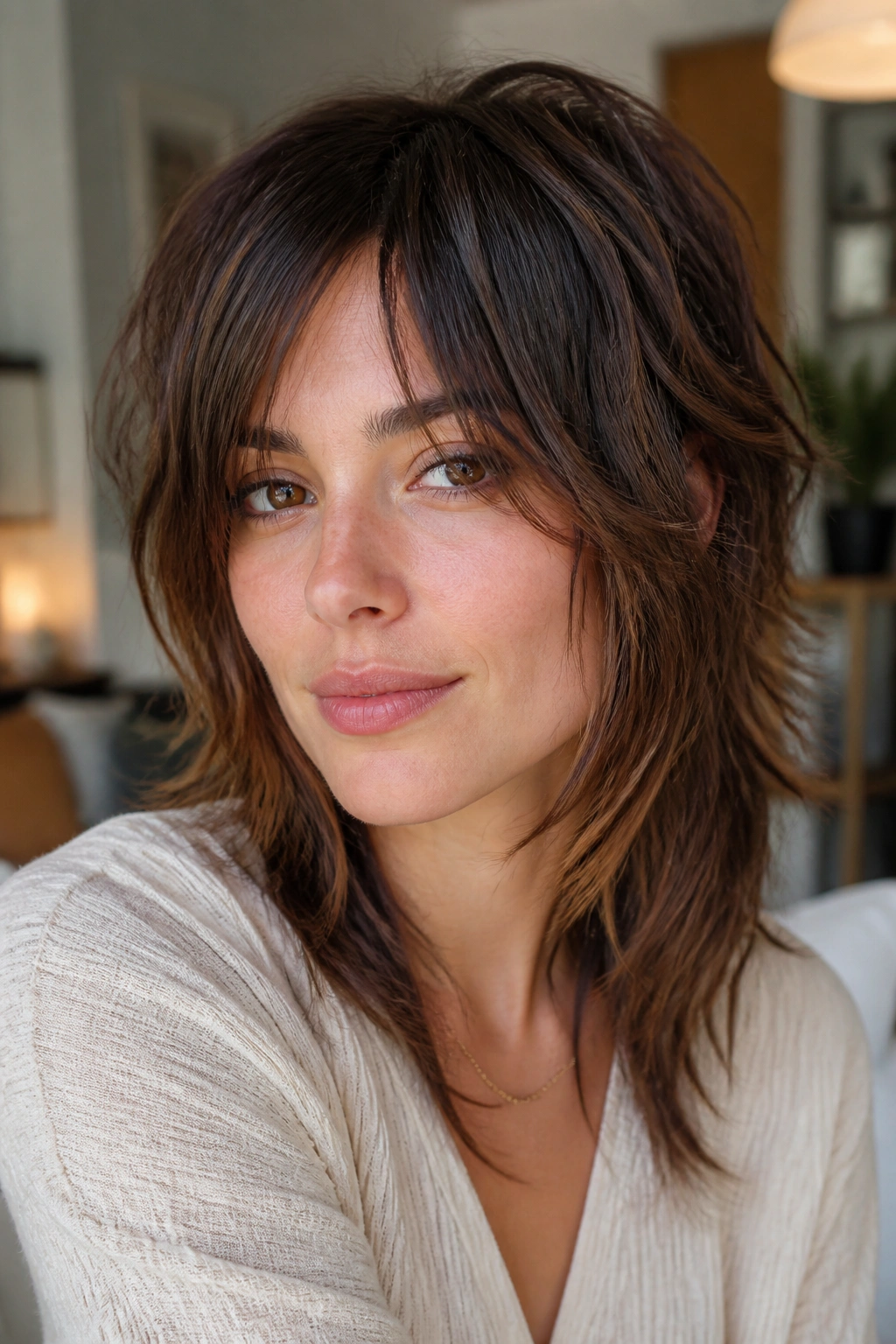
Long bangs are the quiet achiever of short shag haircuts. They sit around the cheekbones or jaw, soften the front of the haircut, and make the cut easier to wear if you’re nervous about fringe. You still get the shag texture. You just get more room to change your mind.
Why this shape works so well
Long fringe is versatile in the actual, practical sense. You can part it in the center, sweep it sideways, tuck it back, or let it hang loose. That helps if your styling habits change from day to day. It also means a haircut can survive a longer grow-out before it looks awkward.
The face-framing pieces should be cut to hit the strongest parts of your features. Cheekbone if you want lift. Jaw if you want softness. A little lower if you want the style to blend into the rest of the hair without a hard line.
A few things to ask for
- Keep the shortest front pieces long enough to tuck.
- Build layers that start high at the crown and soften near the chin.
- Avoid a blunt perimeter; it kills the shag effect.
- Style with a round brush only at the front, not the whole head.
15. Air-Dried Shag With Bent Bangs
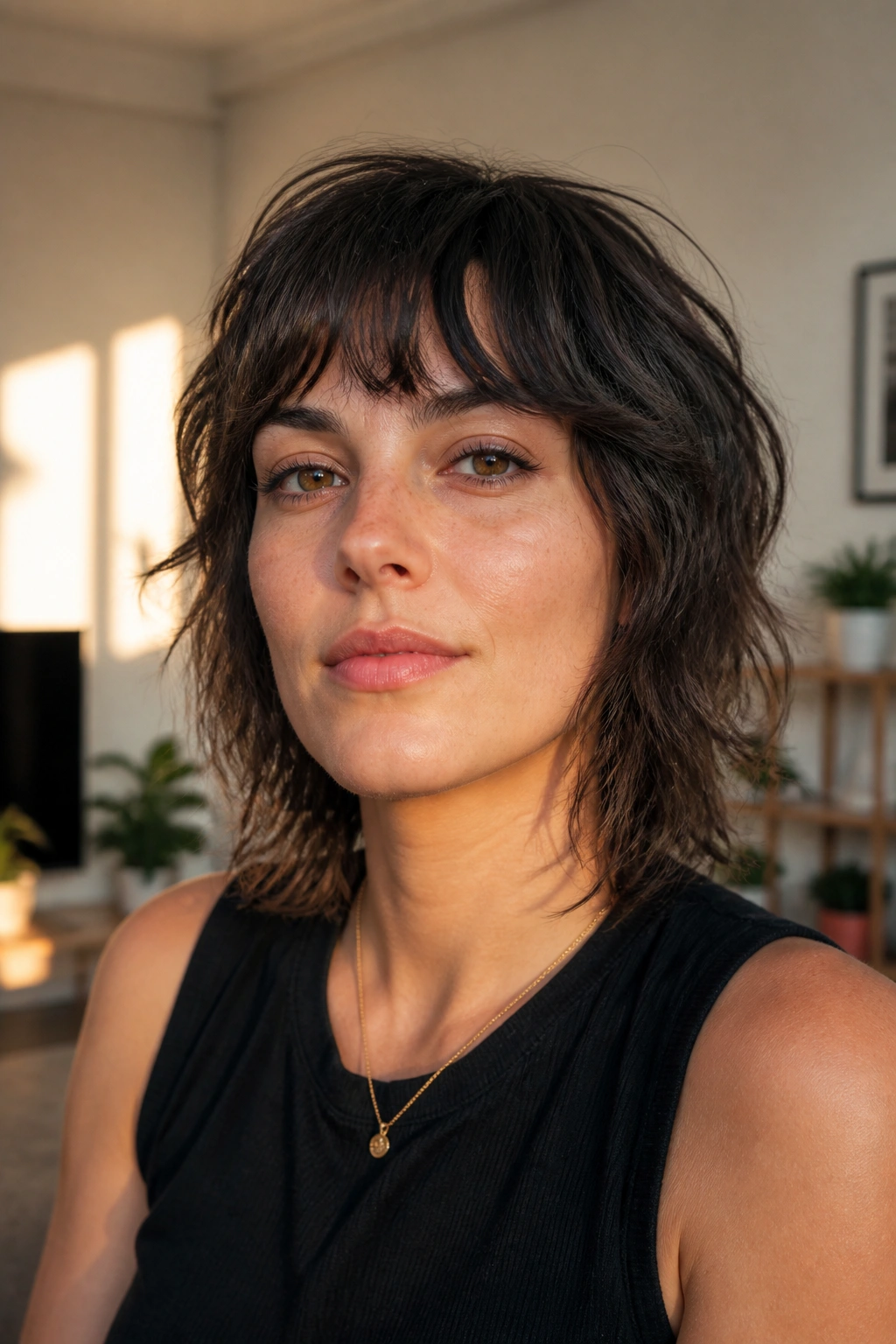
Some haircuts demand a blowout. This one doesn’t. An air-dried shag with bent bangs is cut to follow your natural wave or bend, so the shape lands with almost no effort. The bangs are slightly irregular on purpose, and that little irregularity keeps the cut from looking stiff.
How to get it right
The stylist has to work with your natural fall pattern. If your hair bends left, cut some of the front pieces to account for it. If it kicks under at the ends, leave enough length for that motion to happen without turning the fringe into a helmet.
This is one of my favorite short shag haircut with bangs options for people who wash and go. A small amount of mousse or curl foam, scrunched through damp hair, is often enough. Then leave it alone. Finger-combing too much can pull the bend out and make the fringe flat.
It does need the right product balance. Too heavy, and the bangs separate in oily chunks. Too light, and the whole shape disappears. A nickel-size amount is usually plenty for short hair. More is not better here.
16. Short Shag With Blunt Bangs
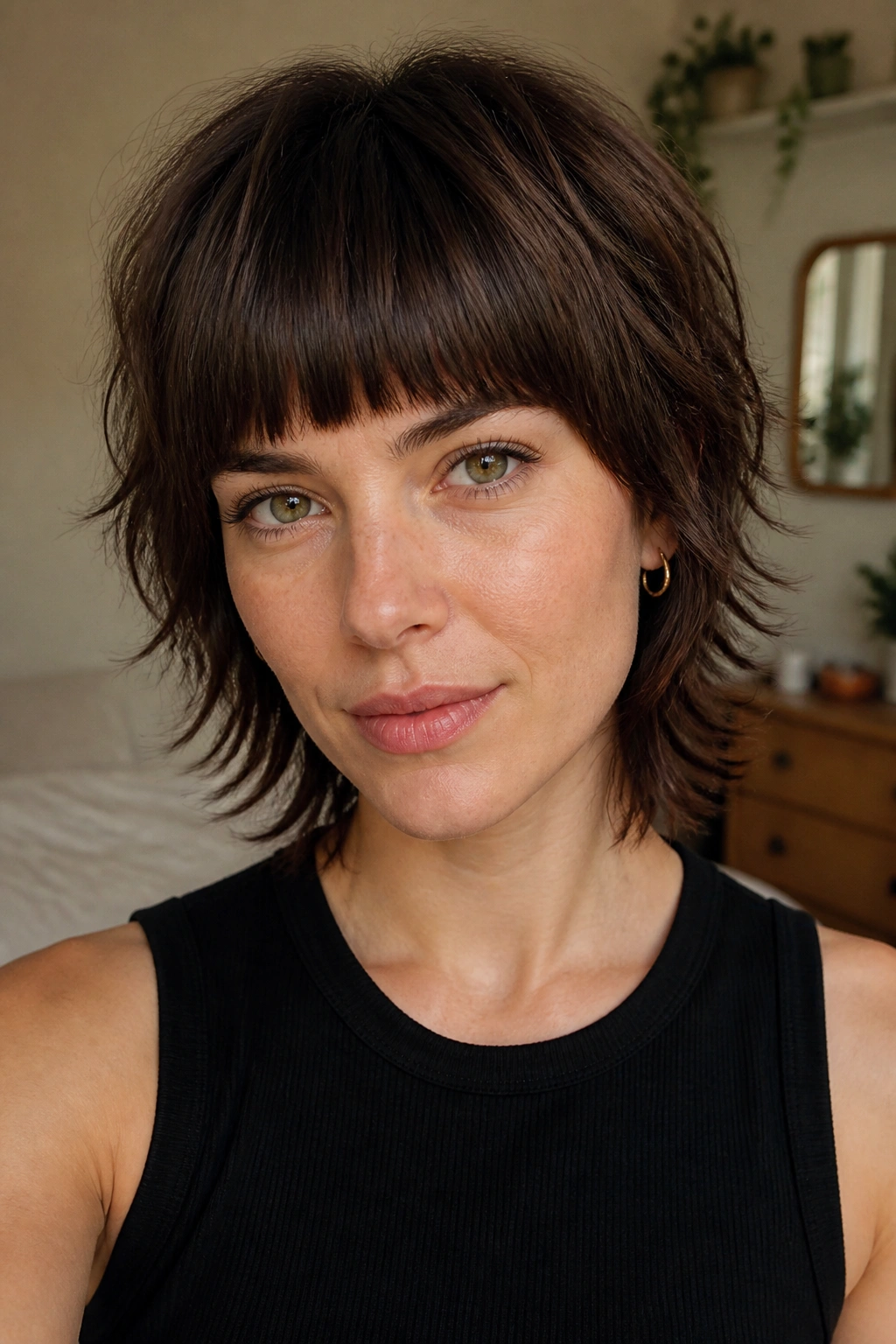
Blunt bangs on a shag can sound like a contradiction, but when the layers are soft enough, the contrast is exactly what makes it good. The fringe gives you a strong visual line, and the rest of the cut keeps the edges from feeling too rigid. It’s one of the bolder looks on this list.
I like this version when the face needs structure. The blunt fringe pulls attention upward and can make the eyes stand out fast. The layers underneath should stay broken and airy so the bangs don’t overpower the whole cut. If everything is blunt, the style loses its shape and starts looking boxy.
This is not the easiest upkeep. Blunt bangs ask for regular trims, and they show every cowlick. But if you have the patience, the payoff is strong. The haircut looks intentional even on a tired day. That’s worth something.
A flat iron can help the fringe sit cleanly, but keep the rest of the hair a little rough. The contrast between the sharp front and the messy body is what gives the cut its edge.
17. Soft Grow-Out Shag With Blended Fringe
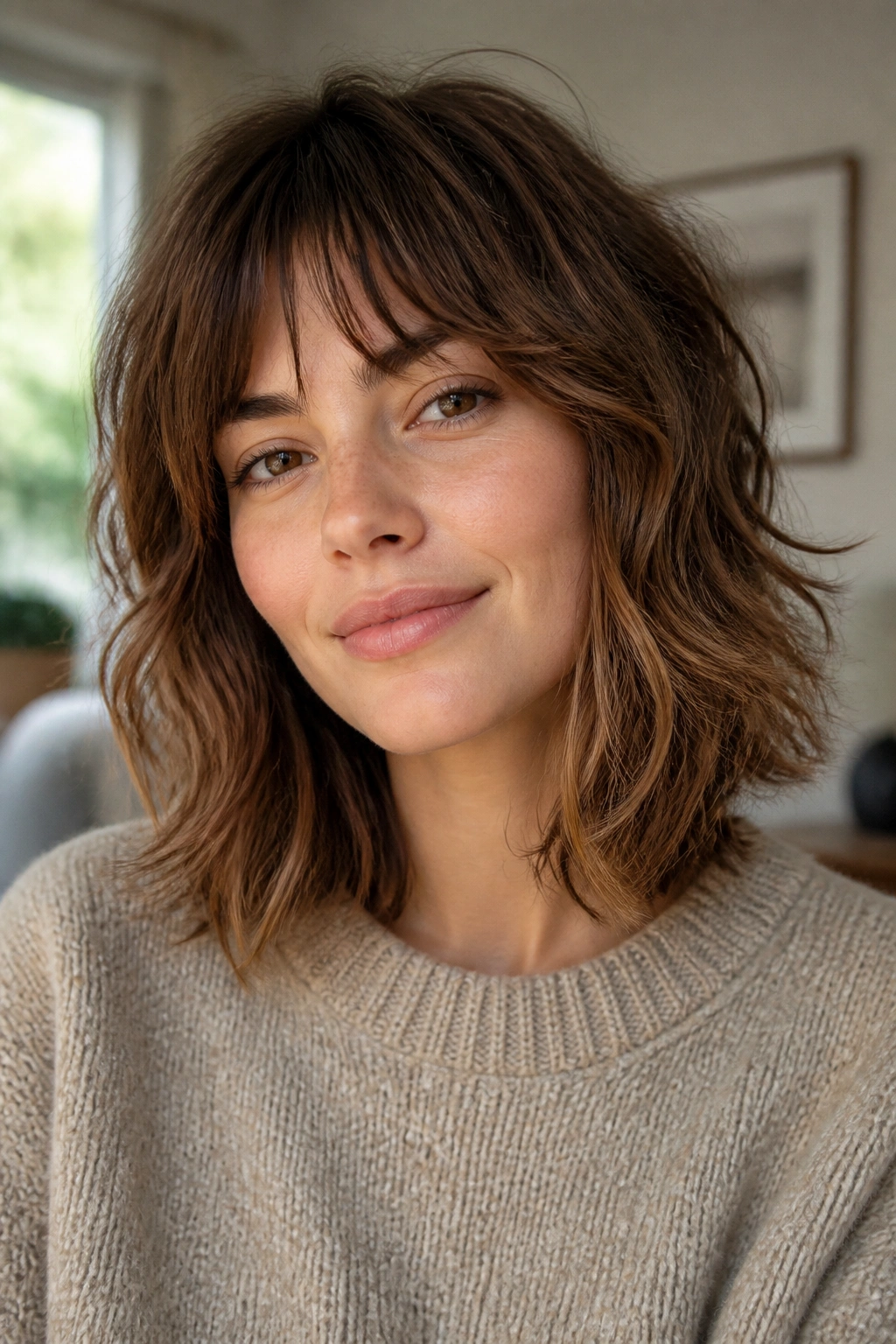
This is the haircut I’d recommend to someone who likes the idea of bangs but doesn’t want a hard maintenance schedule. The fringe blends into the front layers, so when it grows, it still looks like part of the haircut instead of a problem to solve. Smart. Plain and simple.
Why it stays wearable longer
A blended fringe avoids the obvious line that makes some bangs annoying after three weeks. The shortest pieces still sit near the brows, but the sides taper into longer face-framing layers. That means the grow-out has a shape. It does not suddenly become a bad haircut.
This cut works especially well on hair that changes texture between washes. A little wave one day, flatter the next. The blended fringe can handle both. It also gives you room to split the bangs in the middle if you need a break from them.
Practical upkeep
- Trim the fringe every 6 to 8 weeks if you want it tidy.
- Use a light leave-in spray so the layers don’t puff.
- Blow-dry the front first on days when the bangs misbehave.
- Ask for soft corners around the temples so the shape keeps moving as it grows.
18. Undone Shag With Choppy Baby Bangs
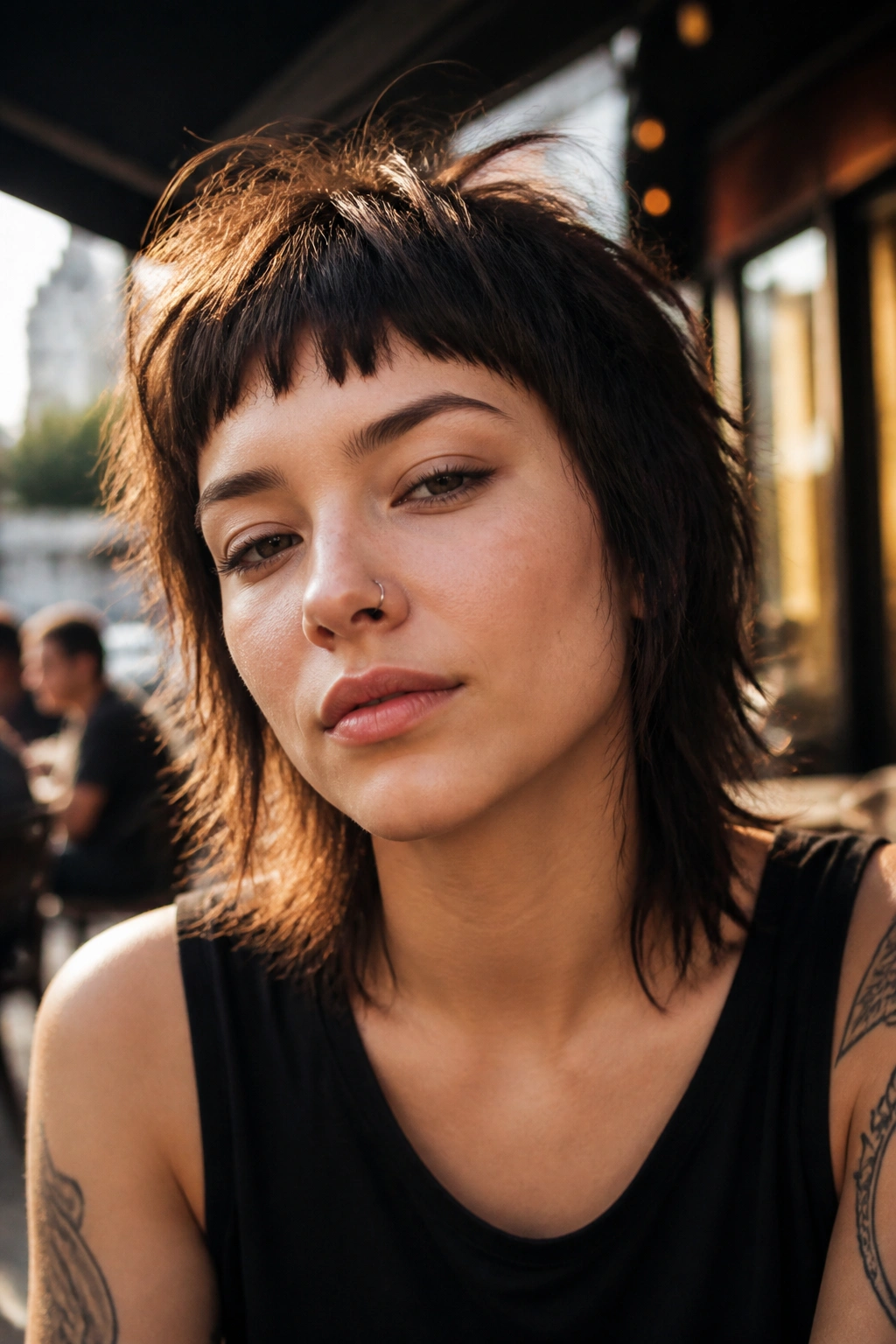
Baby bangs are not for the shy, and that’s exactly the point. Paired with a short shag, they create a cut that feels graphic up front and messy everywhere else. The result is raw in a good way. You get texture, shape, and a little attitude without needing much length.
The key is keeping the baby fringe jagged enough to match the rest of the cut. If the bangs are too neat, they fight the shag. If the layers are too tidy, the fringe looks like an afterthought. Both parts need a little roughness so they belong to the same haircut.
I’d only choose this if you like seeing your fringe every time you look in the mirror. It’s a look with opinions. It also grows out into a different vibe fast, which can be fun if you enjoy switching things up. A tiny dab of texture paste and a quick pinch of the front is usually enough to wake it up.
If you want one short shag haircut with bangs that still feels interesting when it’s slightly grown out, this is the one I’d keep on a short list.
