



A good pixie wolf cut for short hair feels a little unruly in the best possible way. It keeps the neatness people like about a pixie, then breaks the shape up with choppy layers, a softer crown, and ends that move instead of sitting in one stiff block.
That balance is why this cut keeps showing up in salons. Short hair can go flat fast, especially if it is fine, dense, or grows in with a strong cowlick at the crown. A pixie wolf shape solves that without asking you to grow your hair into bob territory first. You get lift, texture, and a bit of attitude right away.
The key is restraint. Too much layering and the cut starts looking hacked up. Too little, and you are back to a plain pixie that behaves for about ten minutes after styling. The sweet spot is usually a little extra length on top, a tapered back, and enough texture around the sides to keep the shape soft instead of helmet-like.
And that is where the fun starts, because the best versions are not all the same at all. Some are feather-light and airy. Some are sharp and messy. Some are better for curls, some for thick hair, some for people who want to spend thirty seconds on styling and move on with their day.
1. Soft Feathered Pixie Wolf Cut
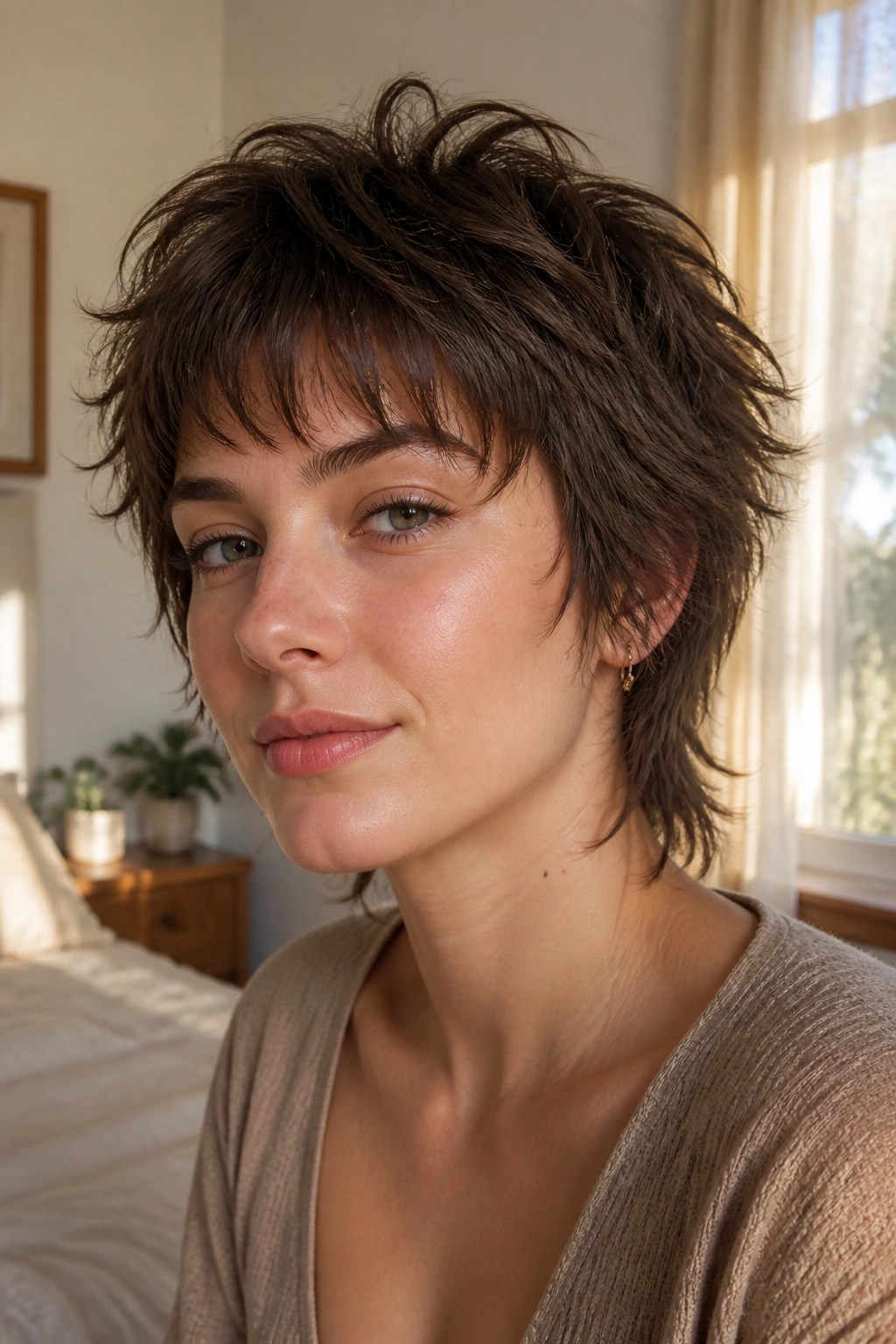
This is the version I point to when someone wants movement without looking like they’ve been attacked by thinning shears. A soft feathered pixie wolf cut keeps the crown lifted and the edges broken up, but the layers stay light rather than jagged. It has a softer face line, too, which helps if you do not want the cut to feel too severe.
Why it flatters
The feathered finish stops the haircut from reading as boxy. Instead of one blunt shelf around the head, the layers slip into each other and give the whole shape a bit of air. That helps fine hair look less limp and helps thicker hair avoid that heavy cap effect.
A stylist usually gets this look by point cutting the top and gently tapering the temples and nape. The trick is keeping the perimeter soft while preserving enough length on top for lift. If the crown is too short, the wolf part disappears. If the sides are too full, it turns back into a plain pixie.
- Best on straight to slightly wavy hair
- Works well with side parts or soft middle parts
- Easy to refresh with a small round brush and a pea-size cream
- Grows out without looking awkward after one week
Ask for feathering around the ear, not a blunt clipper line. That tiny detail changes the whole mood of the cut.
2. Piecey Micro Wolf Cut
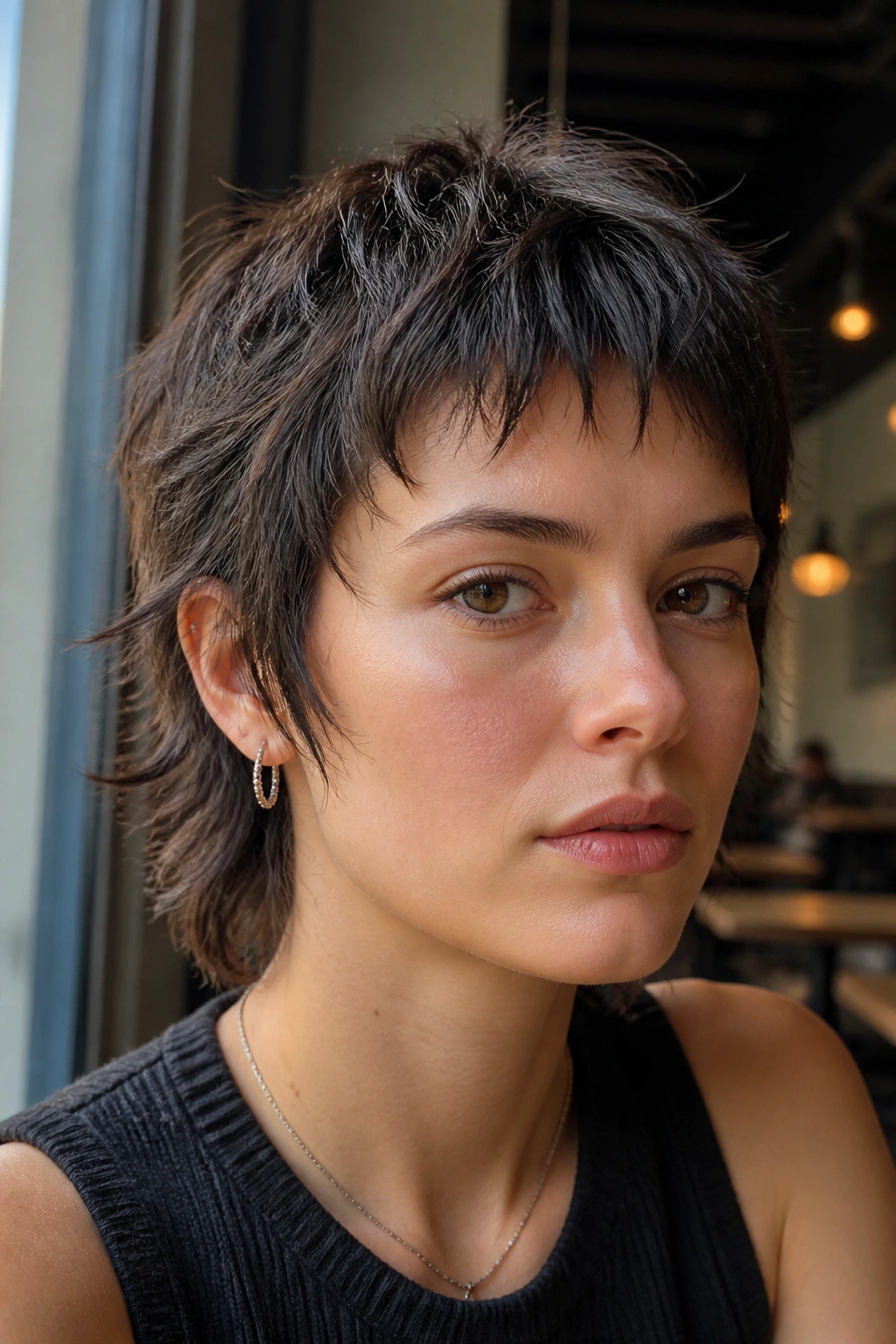
The piecey micro wolf cut has the most attitude in the group. It sits closer to the head, keeps the fringe short, and uses tiny separated sections instead of soft, blended movement. If you like hair that looks a bit deliberately undone, this is the one.
What makes it work is the contrast. The top stays compact, but the texture is broken enough that you still get movement. It is sharp without being stiff. A matte paste works better than a shiny cream here because shine can make the short layers look thin and overstyled.
This cut is a good call if you wear glasses, because the fringe can sit high enough to stay out of the frames. It is also nice if you hate hair brushing your cheeks all day. The downside is obvious: it needs regular reshaping, and you cannot be lazy with the styling if you want the texture to show.
A dab of product is enough. Emphasis on dab. Work it through dry hair with your fingertips, pinch the ends, then leave it alone. If you keep fussing, the pieces start clumping and the whole thing loses that crisp, choppy finish.
3. Curly Pixie Wolf Cut
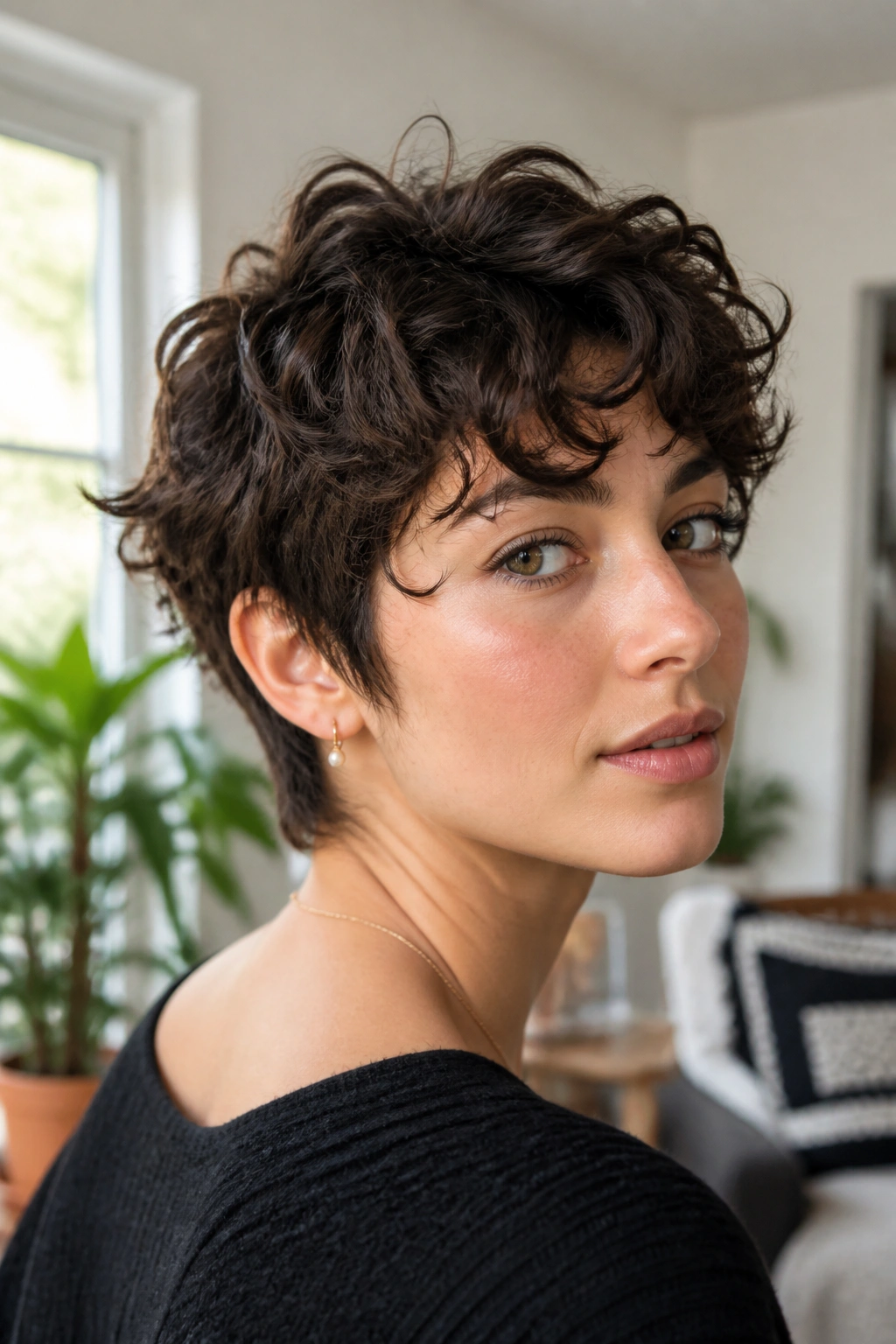
Why do curls handle a short wolf cut so well? Because they already want to move, and this shape gives them room without making them bulky. A curly pixie wolf cut keeps the top and crown layered enough to stop the curls from stacking into one solid puff, while the nape stays tighter so the silhouette still feels clean.
Curly hair changes this cut more than straight hair does. That is not a flaw. It is the point. The shorter layers catch the curl pattern and create a softer, more dimensional shape, especially around the temples and crown. If your curls shrink a lot, your stylist needs to leave a little more length than the mirror suggests. Otherwise you will lose the line the second your hair dries.
How to wear it
Start with soaking-wet hair and a light curl cream, not a heavy butter. Scrunch in a gel with medium hold, then diffuse on low heat until the roots are about 80 percent dry. After that, stop touching it. Really. The less you rake through it, the better the curl clumps stay.
If one side tends to puff more, have the cut adjusted with that in mind. Curly pixie wolf cuts for short hair live or die by balance, not symmetry. A good stylist will shape the curl pattern, not fight it.
4. Tapered Nape Wolf Pixie
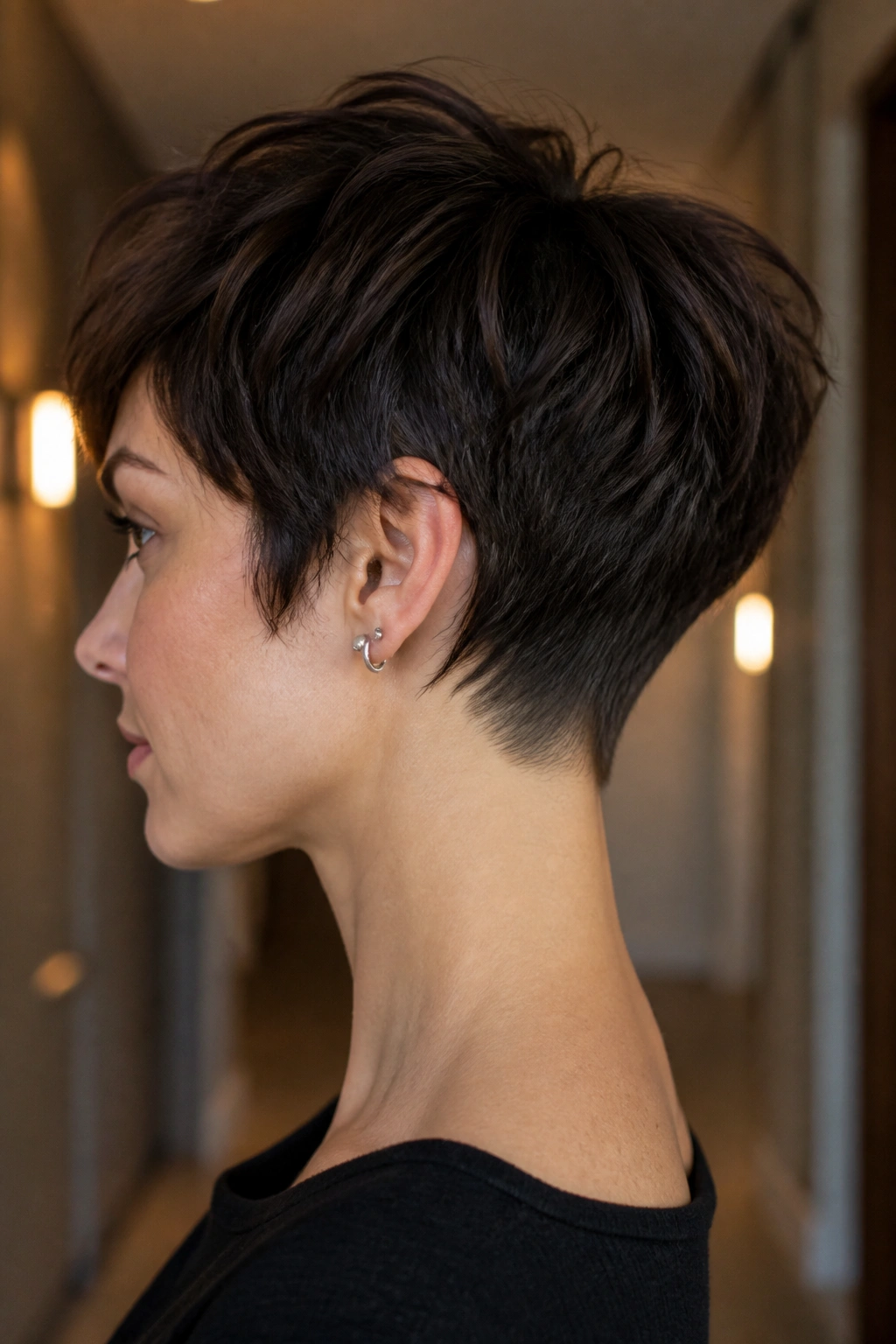
If the back of your head grows out fast and starts looking square, this is the cut that saves you. A tapered nape wolf pixie keeps the neckline close and neat while leaving enough movement through the upper layers to avoid a severe look.
You see this shape on people who like a clean outline but do not want the top to lie flat. The nape is usually clipped or scissored very close, then blended upward into a short back section and a slightly longer crown. That creates lift without the bulk that can make short cuts look helmeted.
- Good for thick straight hair
- Helpful if you tuck hair behind your ears a lot
- Easy to maintain between salon visits
- Keeps collars and scarves from catching in the back
A cut like this looks especially strong when the top is styled with a little root spray and a quick blow-dry upward at the crown. The back should feel tidy and cool against the neck, not heavy. If it feels bulky when you run your hand up the nape, the blend needs work.
5. Choppy Crown-Volume Pixie Wolf
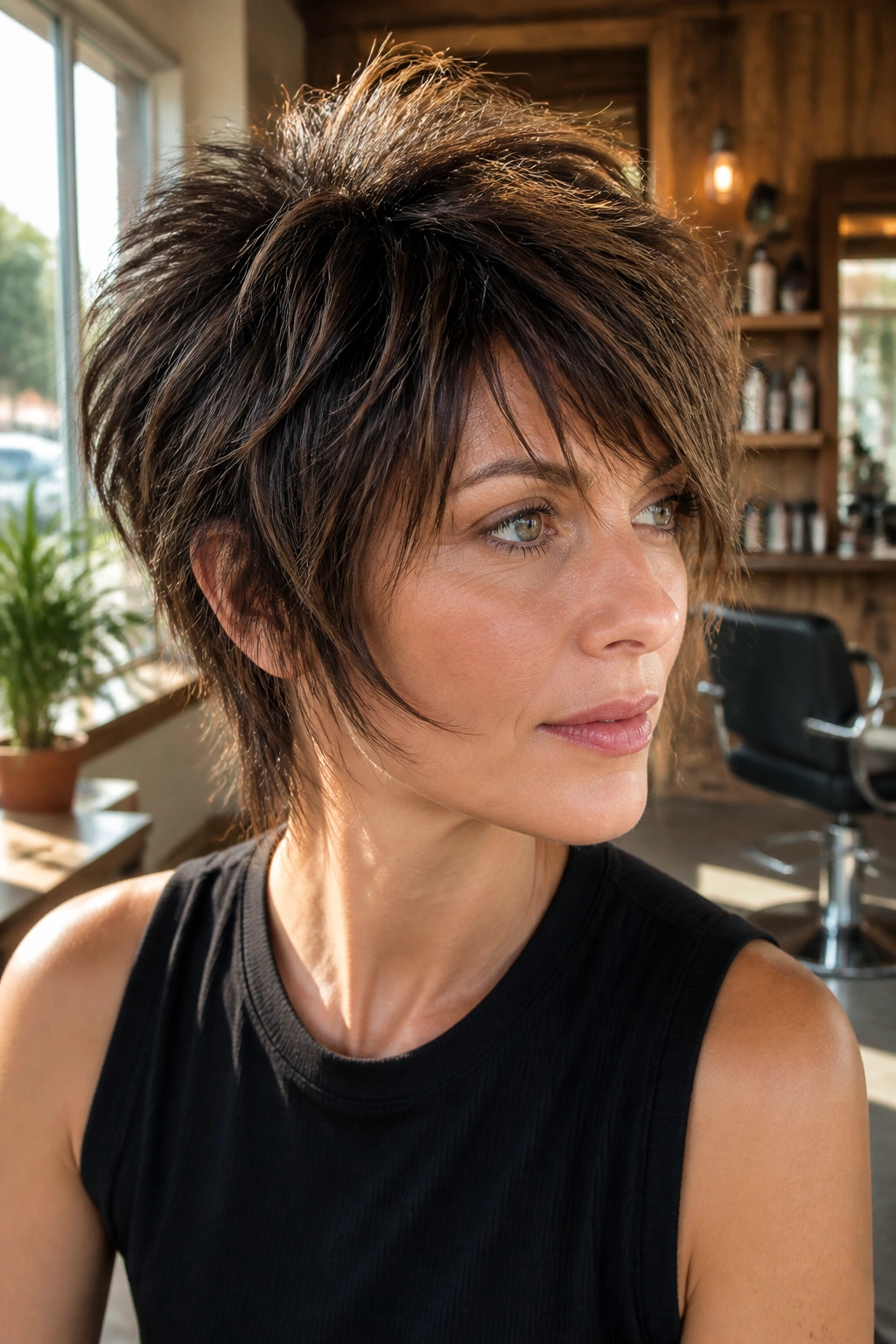
Crown volume changes everything. A choppy crown-volume pixie wolf gives the head a lifted shape from the top down, which makes short hair look more alive and less compressed. It is one of my favorite versions because it can make tired hair look like it has had eight hours of sleep.
The haircut usually has stacked or pieced layers through the crown, with the longest pieces falling forward into a fringe or toward the cheekbones. That upward shape is what creates the wolfy energy. It is not about length for length’s sake. It is about where the weight sits. If the weight is too low, the cut collapses. If it sits too high, you end up with a puffy mushroom. There is a narrow middle ground, and that is the whole game.
A little root mousse goes a long way here. Blow-dry with a small round brush, lifting the crown straight up, then let the ends fall where they want. Do not over-smooth the top. The slight roughness is what keeps the volume from looking artificial.
This shape loves a side part on days when you want more height, and a loose forward sweep when you want it softer. Same cut. Different energy.
6. Side-Swept Fringe Wolf Pixie
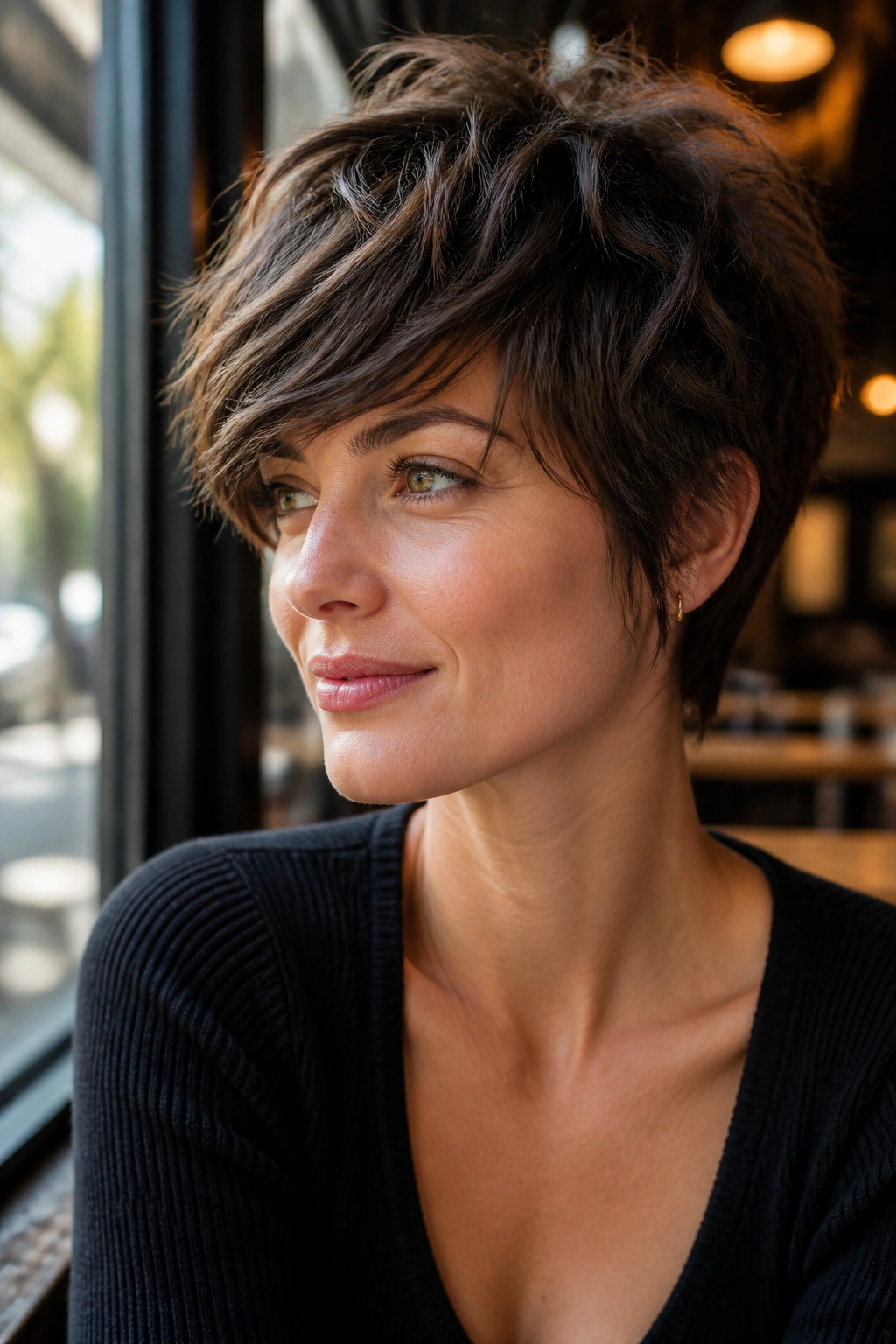
Unlike a blunt micro fringe, a side-swept fringe wolf pixie softens the forehead and gives the haircut a bit of motion before you even touch the rest of it. That one angled section does more than people expect. It can make a short cut feel less strict and a little more relaxed.
This is a smart option if you do not want a lot of forehead exposed, or if your brow line is already one of your best features and you want the hair to frame it instead of cut it off. A side-swept fringe also grows out gracefully. When it starts getting long, it just becomes a longer side piece rather than a shape problem.
The practical part is simple. Blow-dry the fringe in the direction you want it to sit, using a small vent brush or the side of a paddle brush, then finish with a touch of cream on the ends. You want movement, not a shellacked swoop.
It pairs especially well with slightly longer side layers and a cropped back. That mix keeps the look soft at the front and neat at the back, which is a useful combination if you want the haircut to feel polished on workdays and messier on weekends.
7. Undercut Pixie Wolf Cut
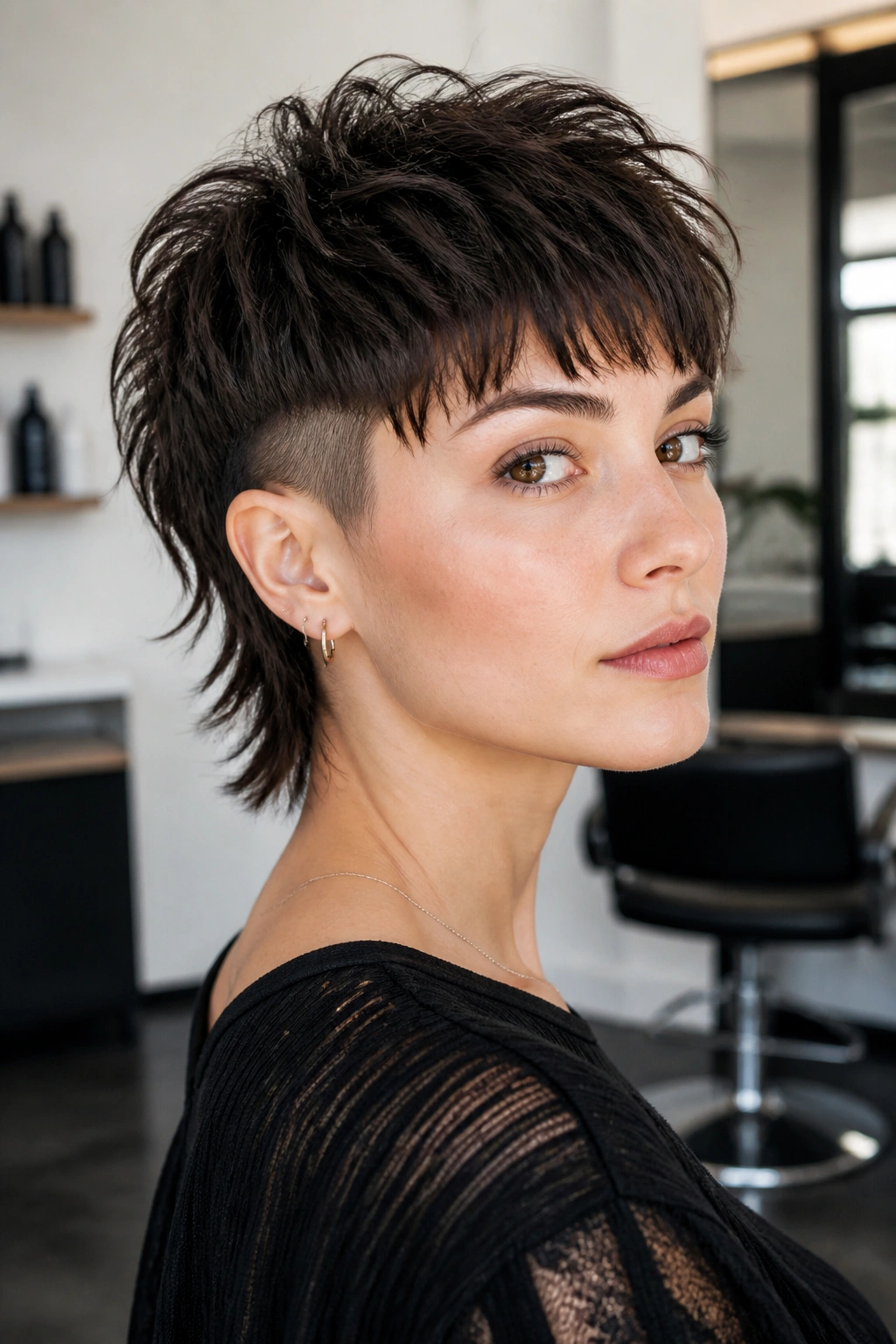
A short wolf cut with an undercut is not subtle, and that is exactly why some people love it. The undercut pixie wolf cut removes bulk underneath the top layers, which gives the upper texture more room to sit up and move instead of spreading outward.
What makes it different
The shaved or clipped section usually sits around the lower back and sometimes behind the ears. That hidden removal of weight changes the whole shape. Thick hair stops ballooning. Fine hair gets a cleaner outline. The top, meanwhile, can stay longer and piecey without feeling heavy.
If you wear hats a lot, this version is easier than it sounds. The undercut clears the neck and keeps the shape from getting crushed. It also cuts down on drying time. That matters more than people admit.
- Best for dense hair that gets bulky fast
- Useful if your hairline at the nape grows quickly
- Good for anyone who likes a sharper silhouette
- Needs a stylist who knows how to blend short and long sections cleanly
Tell your stylist whether you want the undercut hidden or obvious. That choice changes how the top is layered, and it affects the grow-out phase more than you might think.
8. Shaggy Bixie-Wolf Hybrid
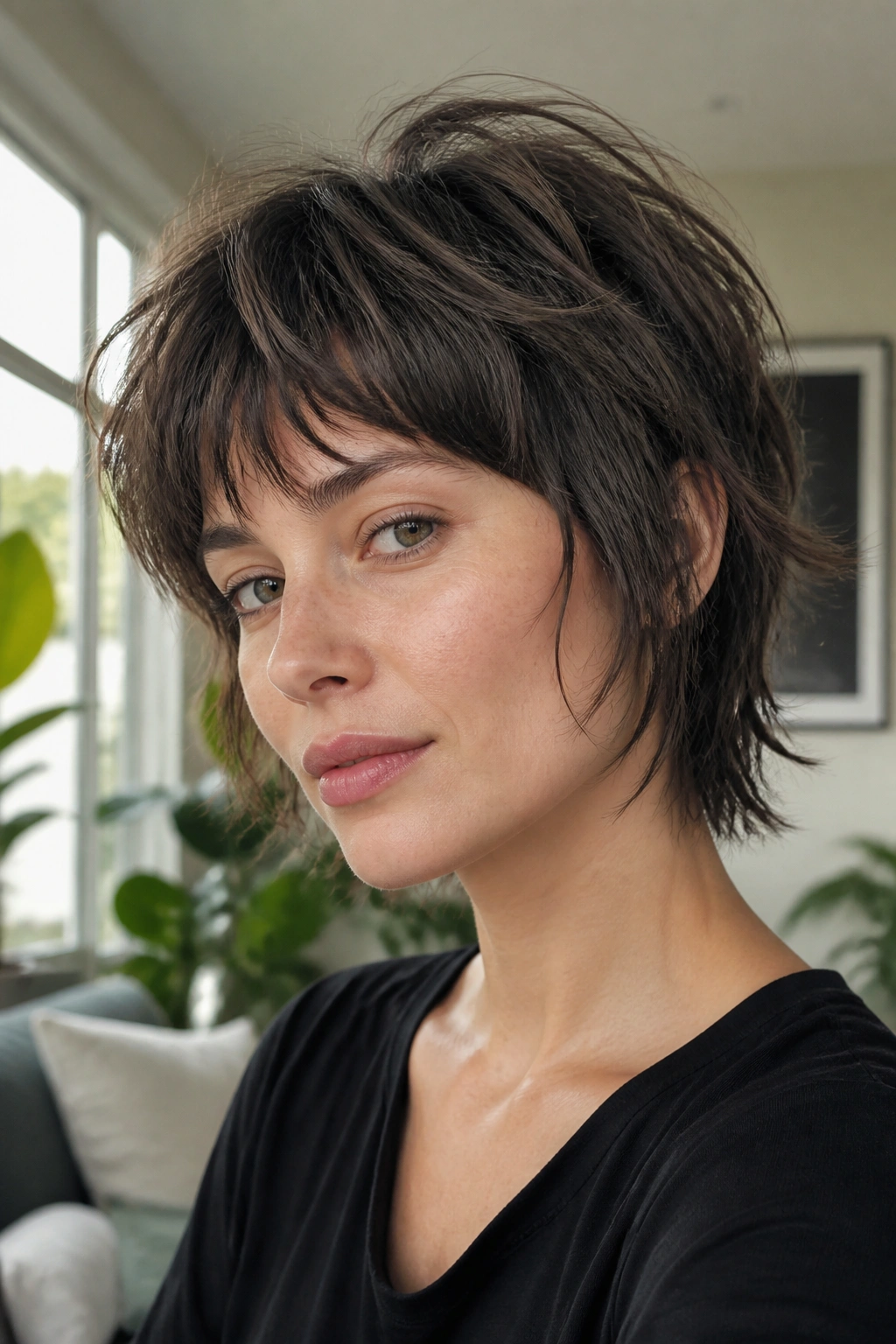
The shaggy bixie-wolf hybrid is the safest choice if you want a cut with personality but do not want to jump straight into something ultra-short. It sits between a bob, a pixie, and a wolf cut, and that middle ground is exactly why it works so well.
The length usually skims the jaw, cheekbone, or just above the ears, with broken layers through the top and a slightly airy perimeter. That gives you enough hair to tuck, flip, or sweep aside, but not so much that the shape feels heavy. It is a friendly cut. Not boring. Just easier to live with than some of the sharper versions.
A little mousse on damp hair and a rough blow-dry with your fingers is usually enough. If you want more separation, add a touch of texture spray once the hair is dry and scrunch the ends lightly. The cut should look a little lived in, not overcoiffed.
This one tends to be good for people growing out a shorter pixie or shrinking back from a bob that feels too polished. The shaggy texture bridges both worlds without making the transition awkward.
9. Razor-Cut Wolf Pixie
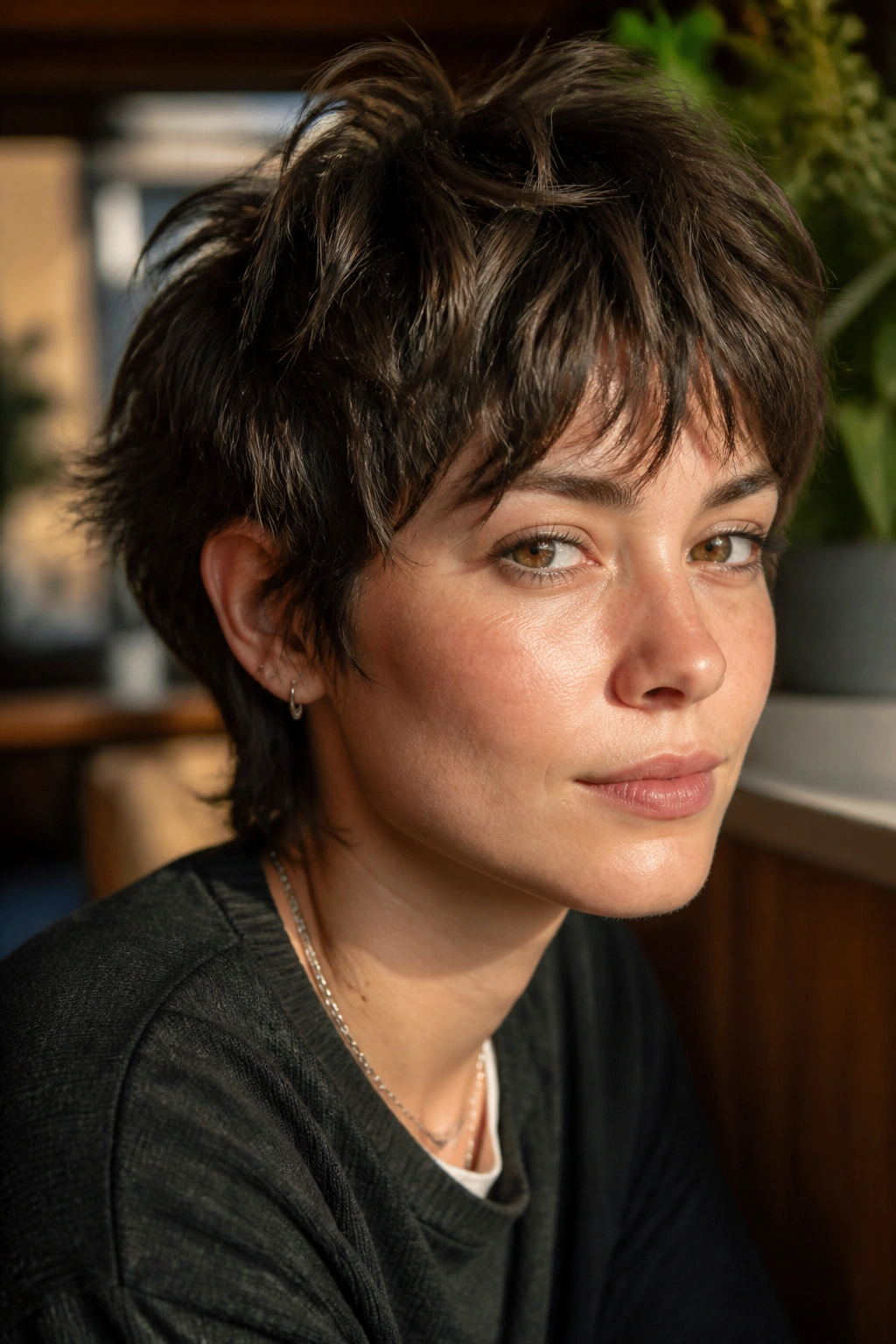
Why does a razor change the whole mood of a short haircut? Because it softens the ends and makes the layers fall with a more broken, airy edge. A razor-cut wolf pixie has less blunt weight, so the texture reads more fluid and less clipped.
This is a strong choice for thick hair that refuses to sit where it should. A razor can take the heaviness out of the ends and stop the top from looking chunky. It also gives the fringe a lighter finish, which helps if you want that slightly shredded, lived-in feel without going fully punk.
How to style it
Use a lightweight cream or spray, not a dense pomade. Blow-dry with your fingers until the hair is about 90 percent dry, then twist a few sections around your fingertips and let them cool in place. That keeps the cut from looking too fluffy at the ends.
If your hair is already fragile, ask the stylist to use the razor sparingly. Too much slicing can make delicate strands look frayed. Razor work should remove weight, not make the hair look chewed up.
This version looks best when the finish is imperfect on purpose. Clean edges and broken texture are fighting each other here. Let the texture win.
10. Tousled French Pixie Wolf
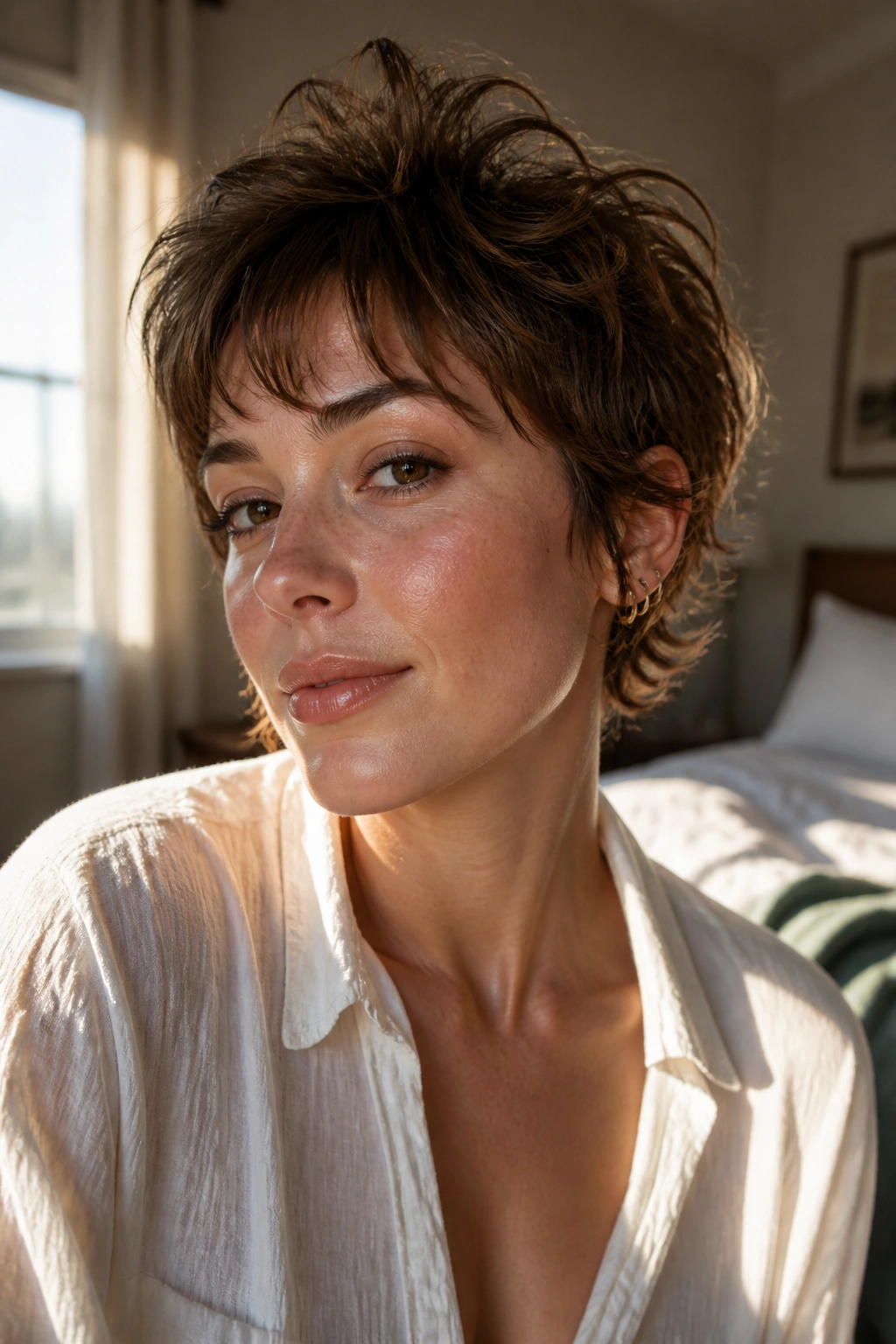
Picture a short cut that looks like it was thrown together after coffee, then somehow ended up looking better for it. That is the tousled French pixie wolf. It is softer than the punkier versions and looser than a tidy pixie, with just enough mess to feel lived in.
The fringe usually sits a little longer and more broken, often swept to the side or lifted off the forehead in a rough piecey shape. The sides stay close enough to keep the haircut neat, but the top and crown are left loose enough to move. It does not look overly styled, which is part of the appeal.
A small amount of styling cream, worked into damp hair and dried with the fingers, is enough for a lot of people. If you want more grit, add a touch of dry texture spray at the roots and around the fringe. Not too much. The point is to look like the hair decided its own shape.
This cut is nice on people who want softness around the face but still like edge in the back. It has an easy grow-out too, because the layers already look a little broken in from day one.
11. Mullet-Leaning Pixie Wolf
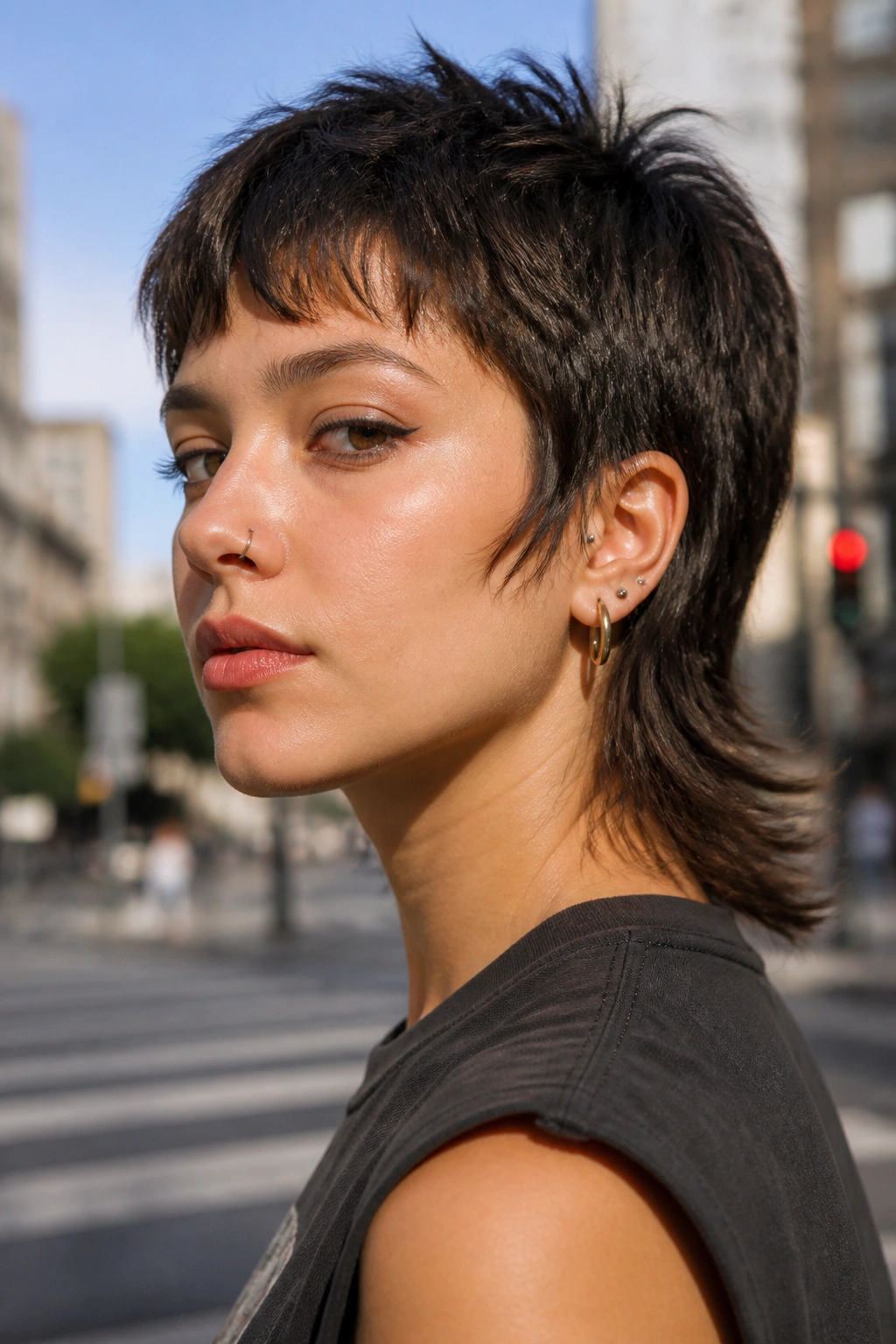
This one is not shy. A mullet-leaning pixie wolf keeps the front and sides tight while letting the back carry a little more length and swing. If you like a haircut that feels a bit rebellious without becoming full-on mullet territory, this is the lane.
The shape works because the contrast is controlled. The top stays short enough to keep the silhouette close, but the back is left long enough to move when you walk. That motion is what gives it life. A stiff version looks costume-y. A well-cut version looks sharp and intentional.
People with strong style usually wear this best, but it can be toned down with softer fringe and less dramatic sideburns. That makes it easier to live with if you want the back detail without shouting about it. Not everyone wants a haircut that announces itself across the room.
One thing I like here: the grow-out can be interesting instead of annoying. As the back gets longer, it shifts toward a shaggy shape rather than collapsing into a bad pixie. That makes upkeep a little kinder between trims.
12. Wispy Airy Layered Pixie Wolf
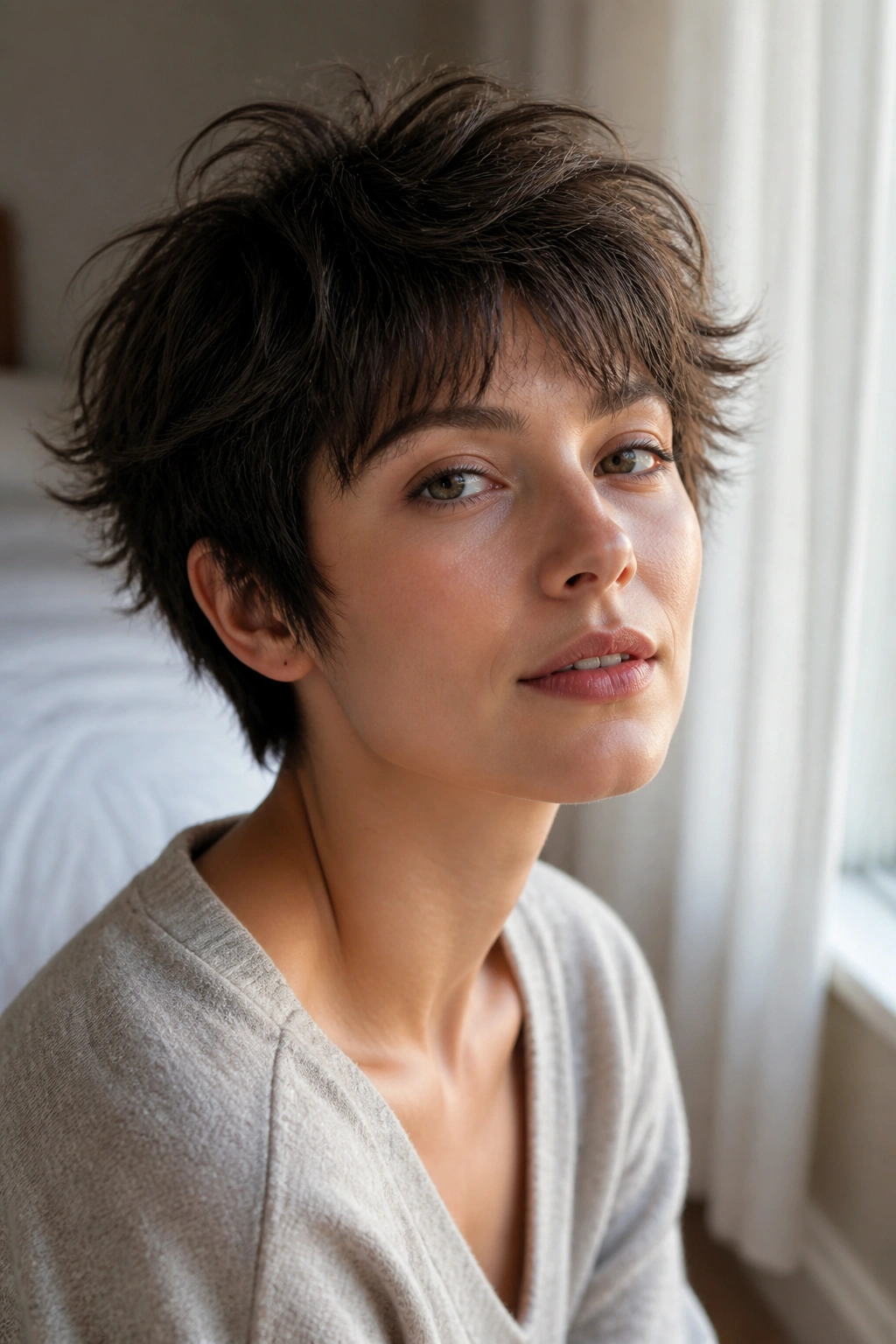
A wispy version is the opposite of a heavy, chunked cut. The wispy airy layered pixie wolf uses soft internal layers and light ends, so the whole shape feels breathable instead of packed. It is especially useful if your hair tends to sit close to the head and needs a little lift.
Unlike the choppier wolf pixies, this one relies less on sharp separation and more on a soft scatter of pieces. The result is easier on fine to medium hair because it does not require a lot of density to look full. The ends move, but they do not stick out in hard little spikes.
This is the kind of cut I’d hand to someone who wants texture but hates the feeling of “too much haircut.” The maintenance is mild. A bit of root spray, a quick blow-dry, and maybe a whisper of dry cream through the fringe. That is usually enough.
It is also one of the better choices for people who wear earrings a lot. The wispy side pieces frame the jaw and ear without competing with them. Small thing. Nice effect.
13. Asymmetrical Pixie Wolf Cut
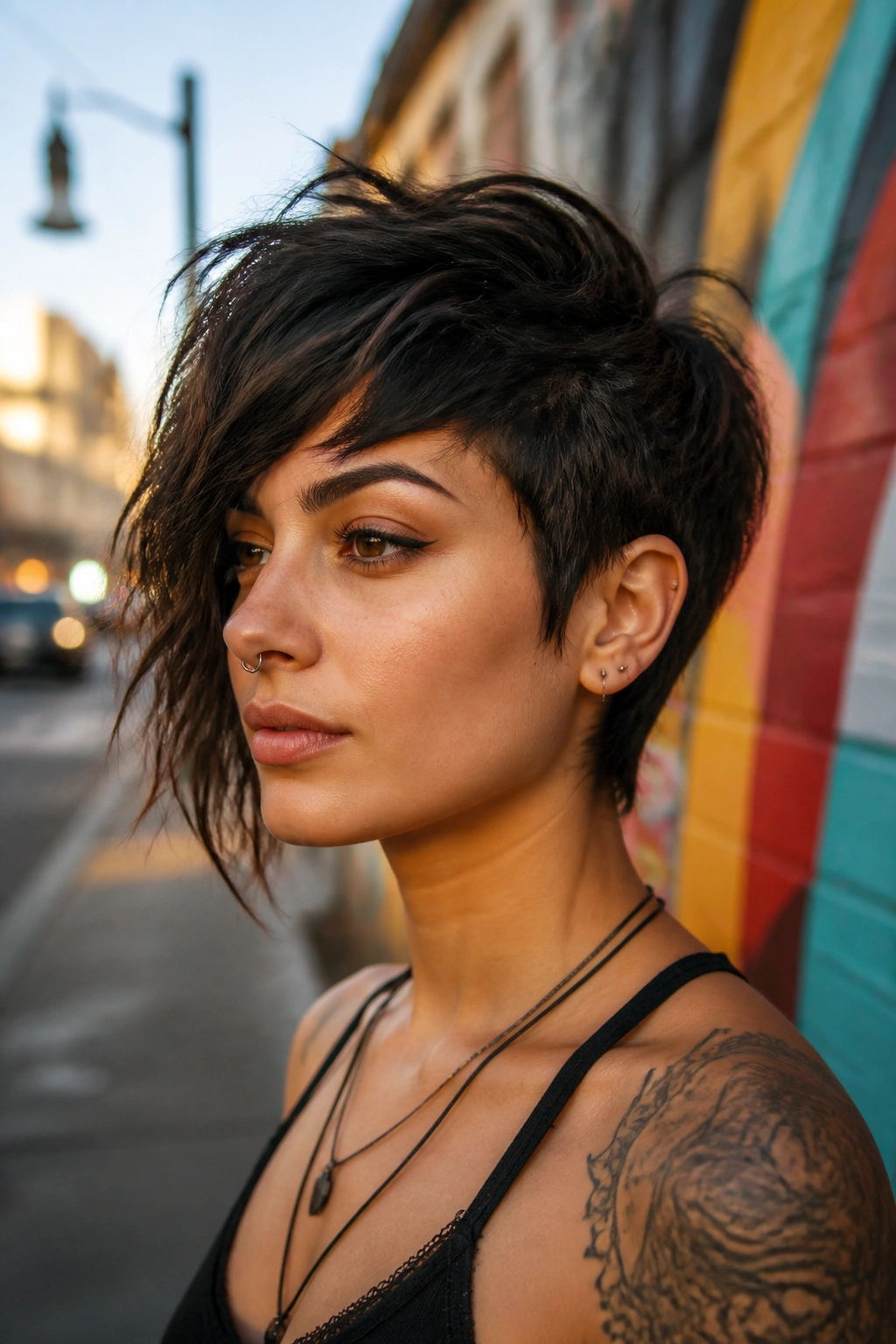
An asymmetrical pixie wolf cut gives one side more length than the other, and that one decision changes the whole read of the haircut. It pulls the eye diagonally, which makes the shape feel sharper and more deliberate than a balanced crop.
Why the asymmetry matters
The longer side can soften one cheek, cover more forehead, or balance a strong jawline. It can also hide a cowlick that keeps ruining otherwise good haircuts. That part alone makes it worth considering if your hair has a stubborn habit of doing its own thing.
The shorter side keeps the shape tidy, so the cut does not become too heavy around the face. That contrast is what keeps it in pixie-wolf territory instead of sliding into a simple asymmetrical crop.
- Good if one side of your hair falls flatter than the other
- Nice for people who like one dramatic feature instead of many
- Easy to style with a side part and a round brush
- Needs regular trimming to keep the line clean
Place the part where the longer side begins. If the part is off, the whole asymmetrical effect looks accidental, and that is a hard thing to recover from.
14. Cropped Wolf Cut with Baby Bangs
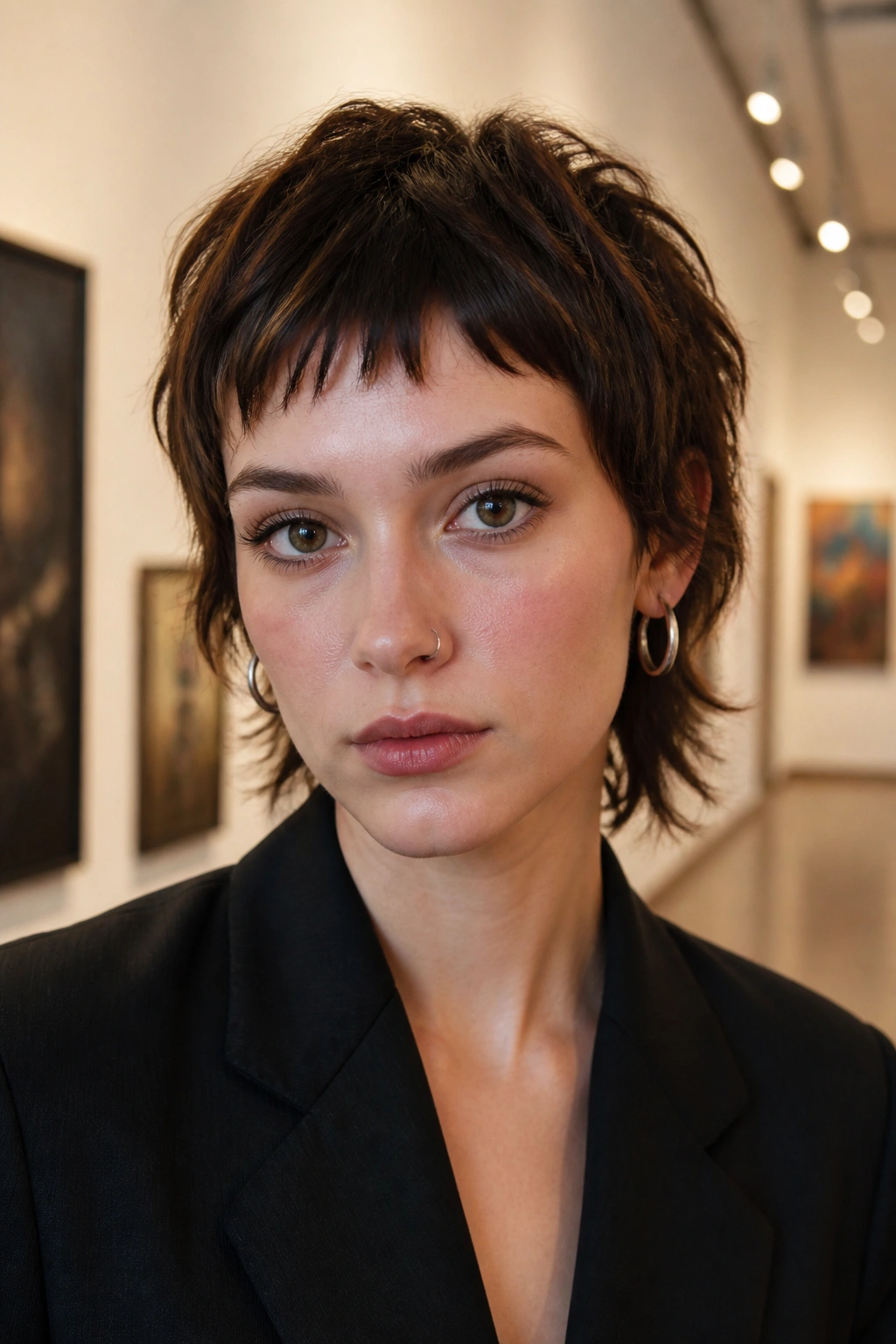
Baby bangs are not timid, and neither is a cropped wolf cut with baby bangs. The short fringe gives the whole haircut a sharp, graphic line, while the rest of the cut stays choppy and close. It is a strong look, but one of the most interesting ones in the bunch.
The fringe usually sits well above the brows, which means it needs regular cleanup. That sounds fussy because it is fussy. Still, the payoff is a face-framing effect that feels crisp and a little artsy. The short bangs also make short hair read even shorter, which can be flattering if you want a clear neckline and open cheekbones.
A little matte paste through the fringe helps keep it piecey instead of puffy. If the bangs dry too round, they can look like a tiny helmet. Flat iron them only if needed, and keep the heat low. You do not want them to look pressed.
This cut works best when you like contrast. Soft on the sides, sharp in front. Messy at the crown, precise over the brow line. That tension is the whole point.
15. Thick-Hair Textured Pixie Wolf
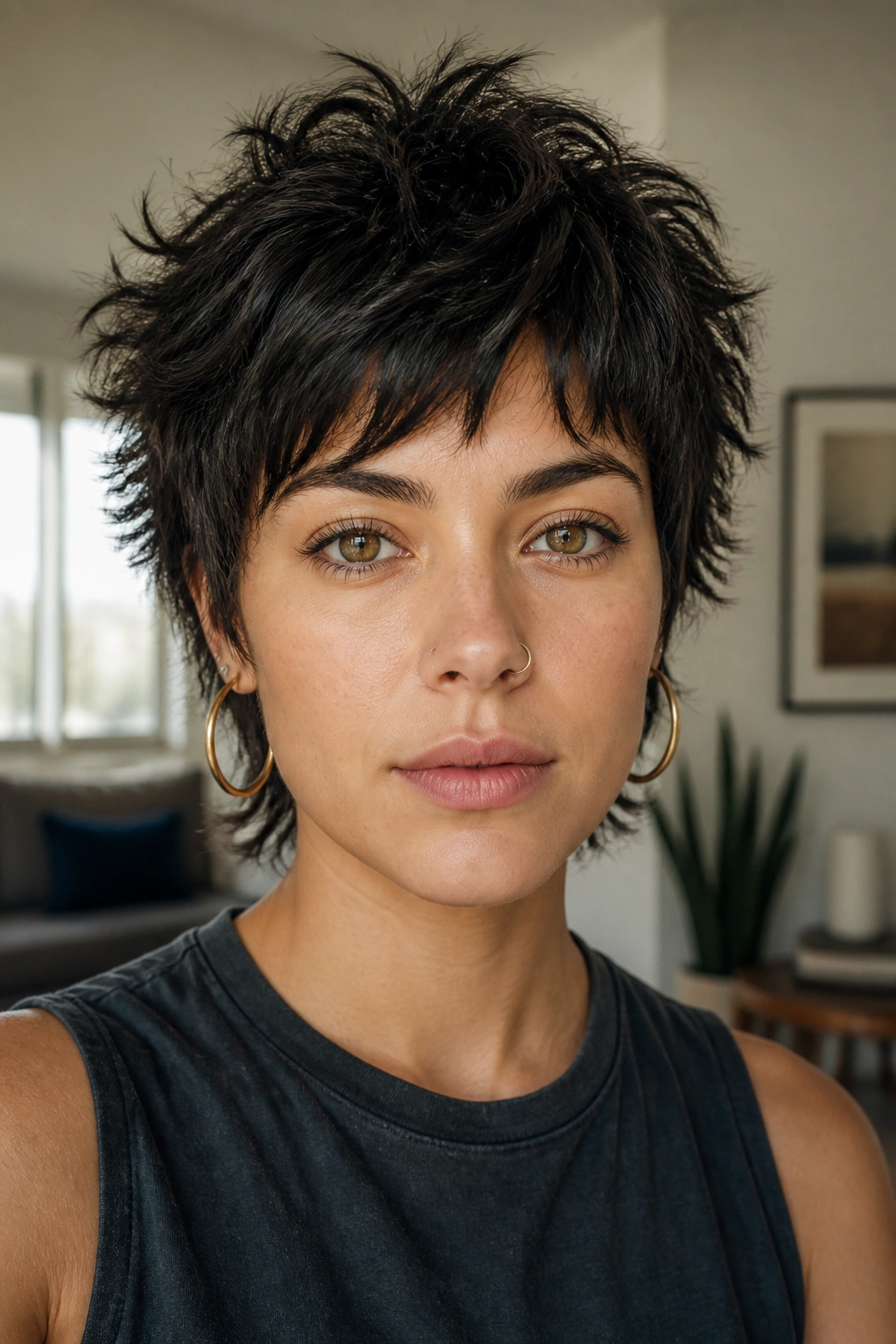
How do you keep thick hair from turning into a helmet? You remove weight in the right places, not everywhere. A thick-hair textured pixie wolf depends on internal layering, clean removal at the ends, and enough surface movement to stop the top from sitting like a solid block.
The mistake people make is asking for too much thinning. That can leave thick hair looking frizzy at the tips and bulky underneath. A better cut uses slice layers or point cutting through the interior so the hair still has shape, but not too much mass. The crown should have room to move. The sides should be lighter. The back should not puff out.
What to tell your stylist
- Keep the top long enough for movement, usually around 2.5 to 4 inches depending on density
- Remove weight under the top layer, not only on the outer ends
- Blend the nape carefully so the back does not kick outward
- Avoid over-thinning the fringe if your hair frizzes easily
A lightweight styling cream or smoothing milk can help, but only a small amount. Too much product collapses the texture and makes thick hair look greasy at the roots. The aim is controlled texture, not slickness. That difference matters a lot on this cut.
16. Fine-Hair Lifted Pixie Wolf
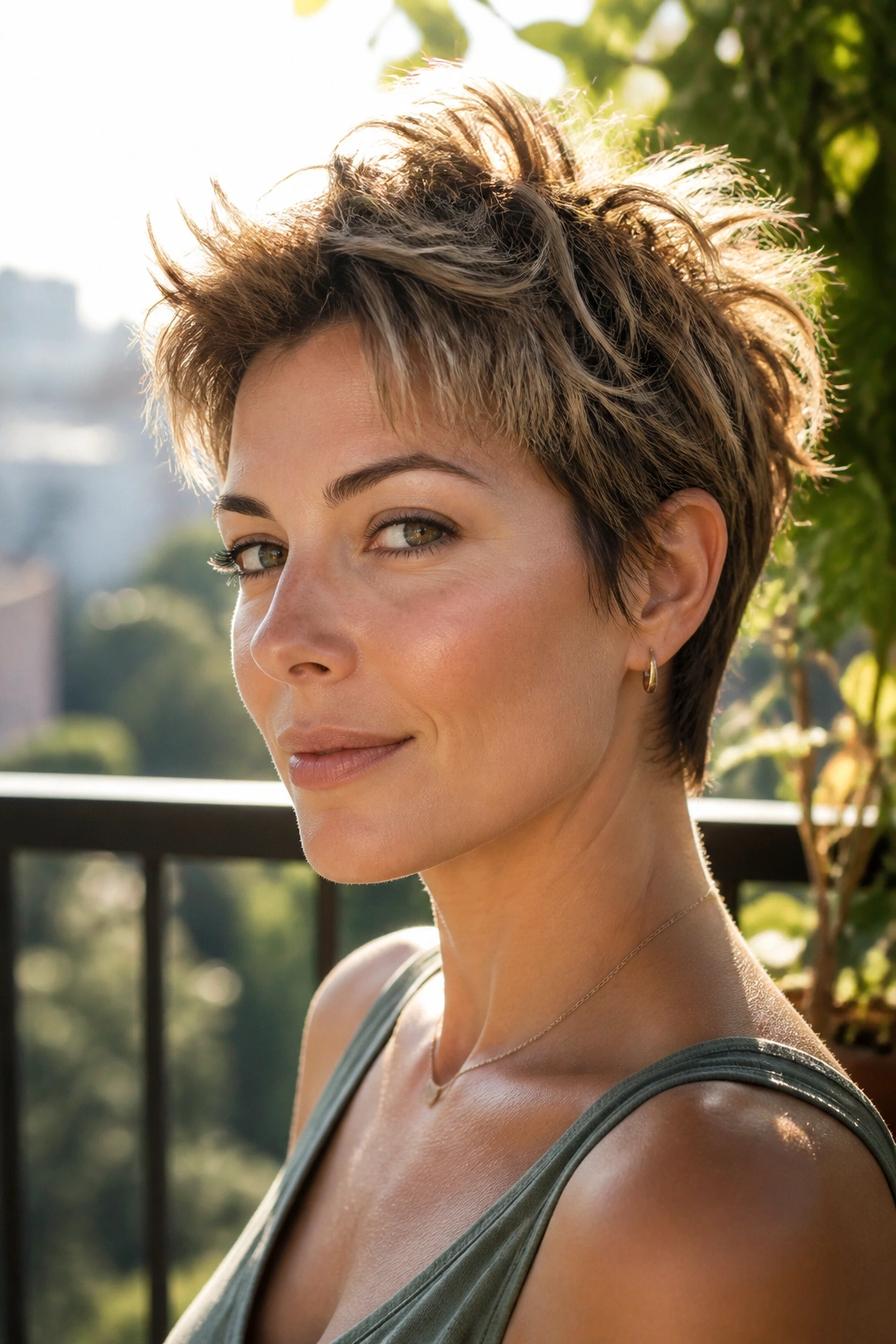
A fine-hair version needs lift first, texture second. A fine-hair lifted pixie wolf should use shorter support layers near the crown and slightly longer pieces on top so the hair can look fuller without being overloaded with length.
Fine hair can get stringy if the cut is too shredded, so the best shape is a careful one. Enough layering to create movement. Not so much that the ends vanish. The crown should be angled to stand up a little when you blow-dry it, and the fringe should be light enough to move, but not so short that it disappears against the forehead.
A root-lifting spray at the roots and a quick dry with your head upside down can help, but the real difference comes from the cut itself. If the perimeter is too thin, styling products only make the hair limp faster. If the top is too heavy, the whole style collapses by lunchtime.
- Good for hair that falls flat by noon
- Works well with side-swept fringe
- Needs a light mousse or spray, not heavy oil
- Best with regular trims to keep the ends crisp
Shorter sides and a lifted crown are the whole trick here. Once that balance is right, the haircut can hold its shape with very little fuss.
17. Edgy Editorial Pixie Wolf Cut
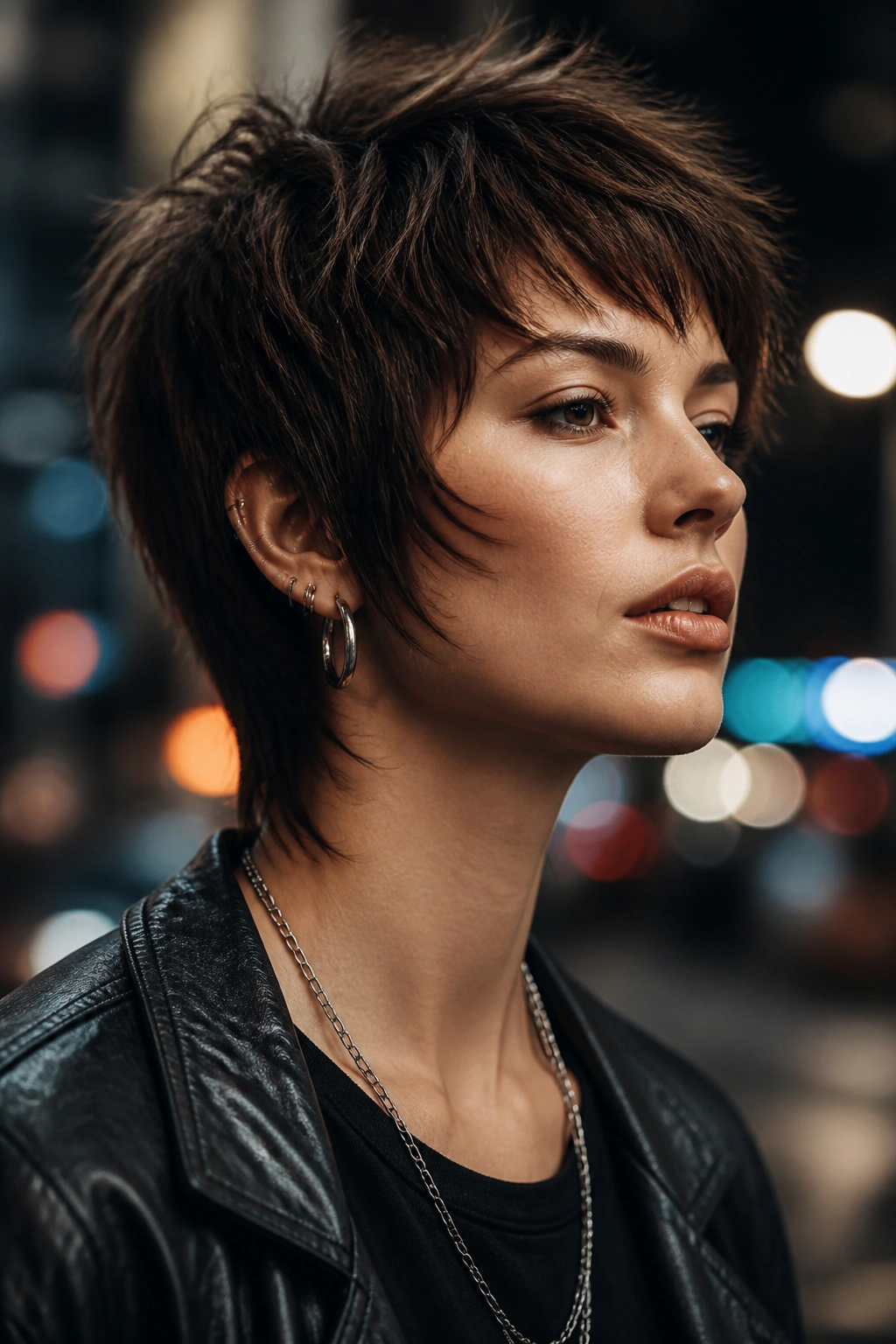
The edgy editorial pixie wolf cut is the sharpest version on the list. It leans into contrast: sharper side pieces, a more deliberate fringe, slightly disconnected layers, and enough texture to keep the whole thing from feeling neat. If you like a haircut that looks like it belongs on someone who dresses with purpose, this is the one.
A cut like this needs confidence from the chair and the mirror. The shape often has a strong side contour, with one side tucked shorter and the other left a little longer to swing around the cheekbone or jaw. The nape stays tight. The crown stays messy. That mix is what keeps the style from tipping into either too sweet or too severe.
Styling should stay simple. A matte paste or light wax, rubbed between the palms, then pressed into the ends and fringe. No shiny shell. No soft blowout that erases the sharp parts. Let a few pieces stick out. Let the silhouette breathe.
This is one of those pixie wolf cuts for short hair that gets better when it is not overthought. A little unevenness is part of the charm. If every strand sits in place, the haircut loses its nerve.
