



Short box braids with fringe bangs solve a problem that comes up more often than people admit: you want the neatness of a braided style, but you do not want a lot of hair sitting on your shoulders, brushing your collar, and getting in your way all day. A chin-length braid bob feels lighter on the neck, easier to live with, and a little sharper around the face.
The fringe is where the personality lives. Too little of it, and the style can look unfinished. Too much, and the front starts to feel bulky fast. The sweet spot is usually somewhere around the brow line or just under it, where the bangs soften the forehead without swallowing your features.
Braids at short length behave differently, too. The outline matters more. The parting matters more. Even the braid size changes the whole mood, because there is less length to hide a sloppy front row or a heavy stack at the crown. That is why a small shift from blunt to side-swept, or from square parts to triangles, can make the style feel polished instead of boxy.
The 18 looks below work with that shape in different ways.
1. Chin-Length Box Braids With a Blunt Eyebrow-Grazing Fringe
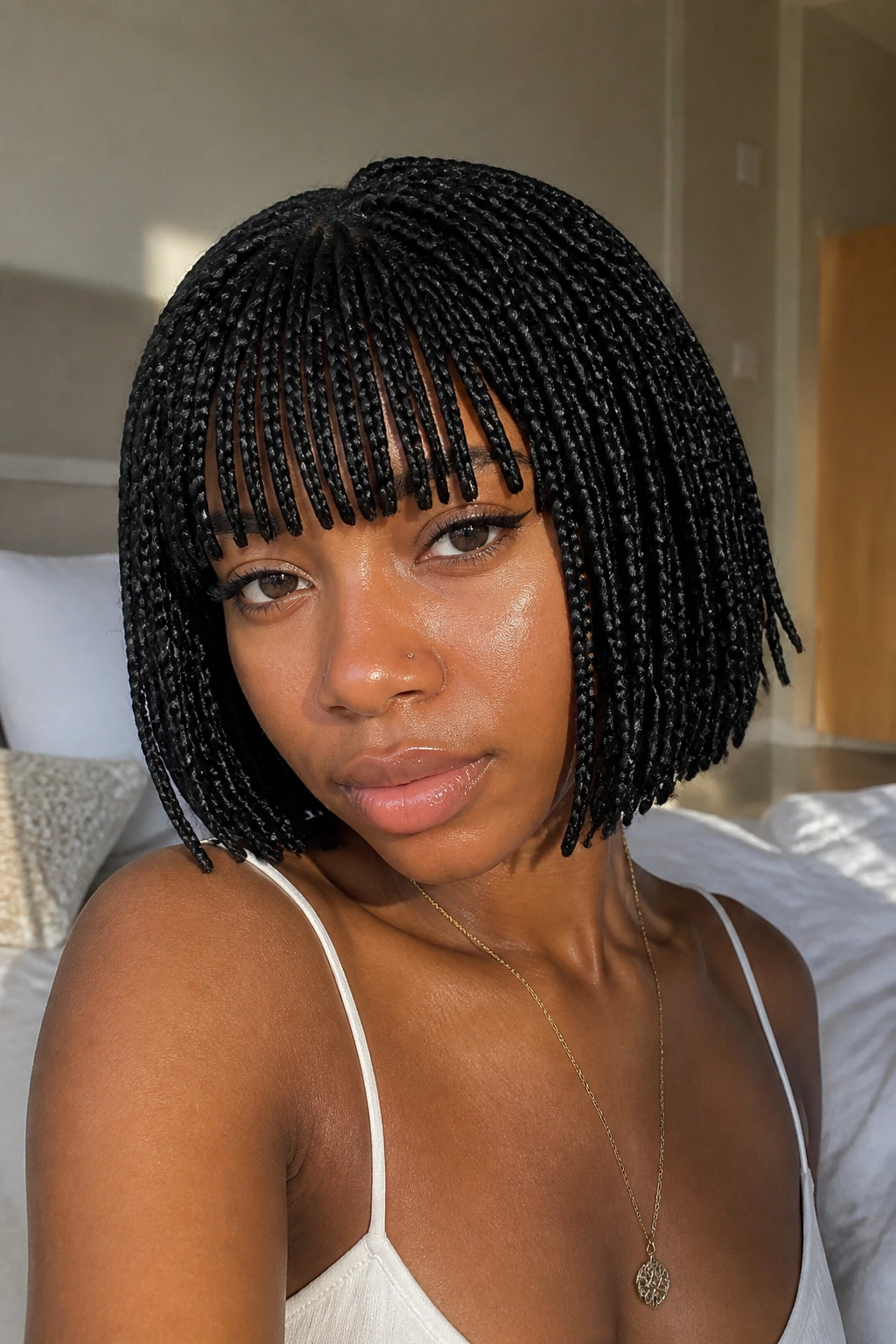
This is the cleanest version, and I mean that in the best way. The braids stop around the chin, the fringe sits just above the brows, and the whole look reads sharp from the front without feeling severe.
What makes it work
The blunt fringe creates a straight line across the forehead, which gives the style a little edge. That edge is useful when the braids are short, because short lengths can look plain if the front has no shape at all.
Keep the fringe dense enough to lie flat, but not so thick that it feels like a curtain. You want the front to move as one piece. If the fringe splits into tiny little strings the second you blink, it is too sparse.
- Best for people who like a crisp, neat outline
- Works well with square parts and a clean middle or slight off-center part
- Looks especially good with hoop earrings or a strong lip color
- Ask for the fringe to hit just above the brows, not halfway down the eyes
If the bangs need constant rearranging, they were cut too long or too thin.
2. Short Box Braids With a Side-Swept Fringe
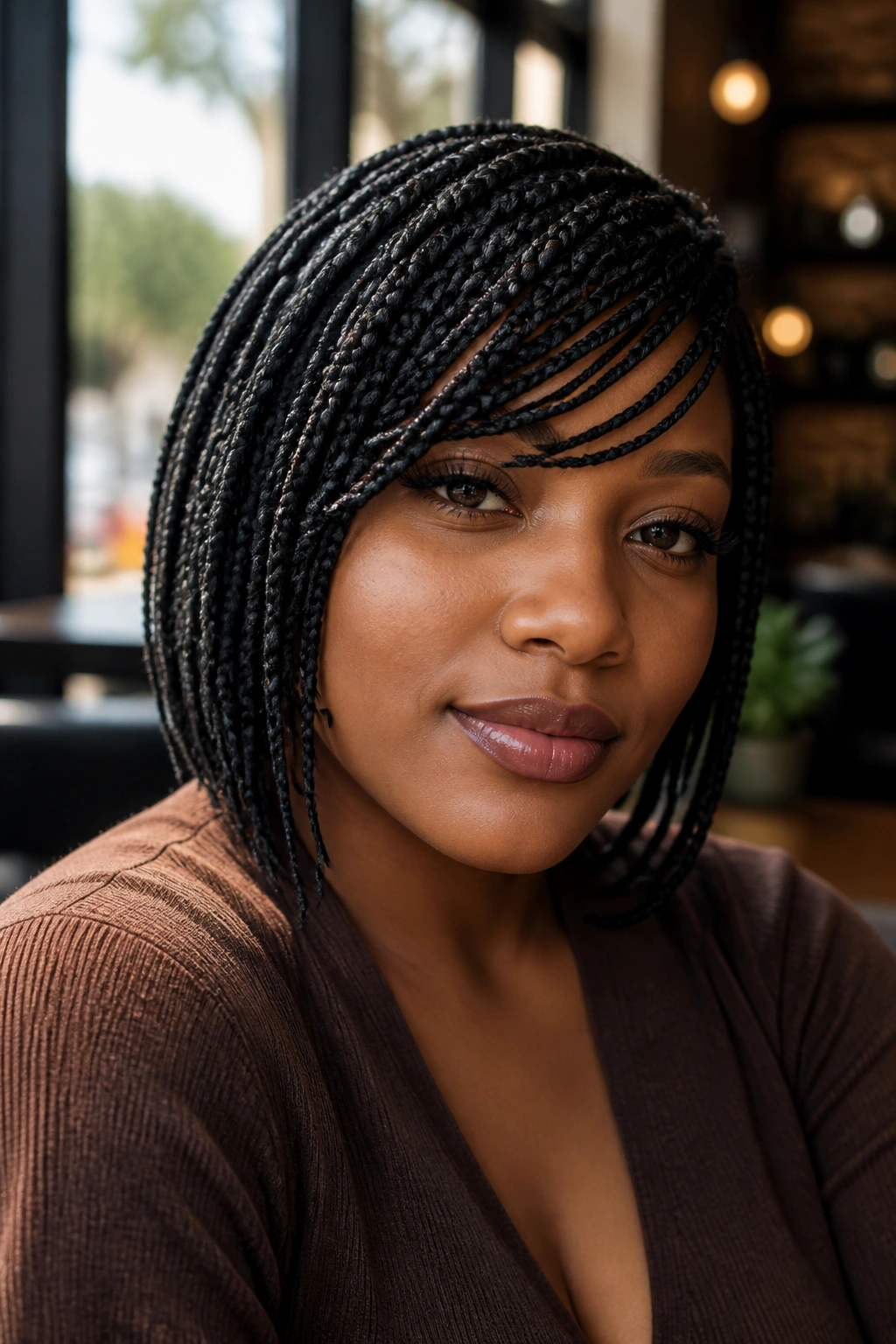
Why does a side-swept fringe look softer right away? Because it breaks the forehead line without hiding it completely. That slight diagonal pull can make short box braids feel less boxy and a little more relaxed.
The key is direction. The front pieces should sweep across, not collapse into the eyes. A deep side part can help, but you do not need a dramatic flip to get the effect. Even a modest shift to one side changes the way the braid bob sits around your face.
How to ask for the angle
Tell your braider you want the front pieces long enough to rest across one brow and blend into the side of the face. If the front is too short, the sweep turns into a stubby fringe. Not cute. If it is too long, it starts acting like a side bang from a different hairstyle entirely.
This version is one of the easiest to wear with glasses, because the bangs do not sit straight into the frame. They move around it. That makes the whole style feel softer and a little more forgiving on busy mornings.
3. Curtain Bangs on a Short Braided Bob
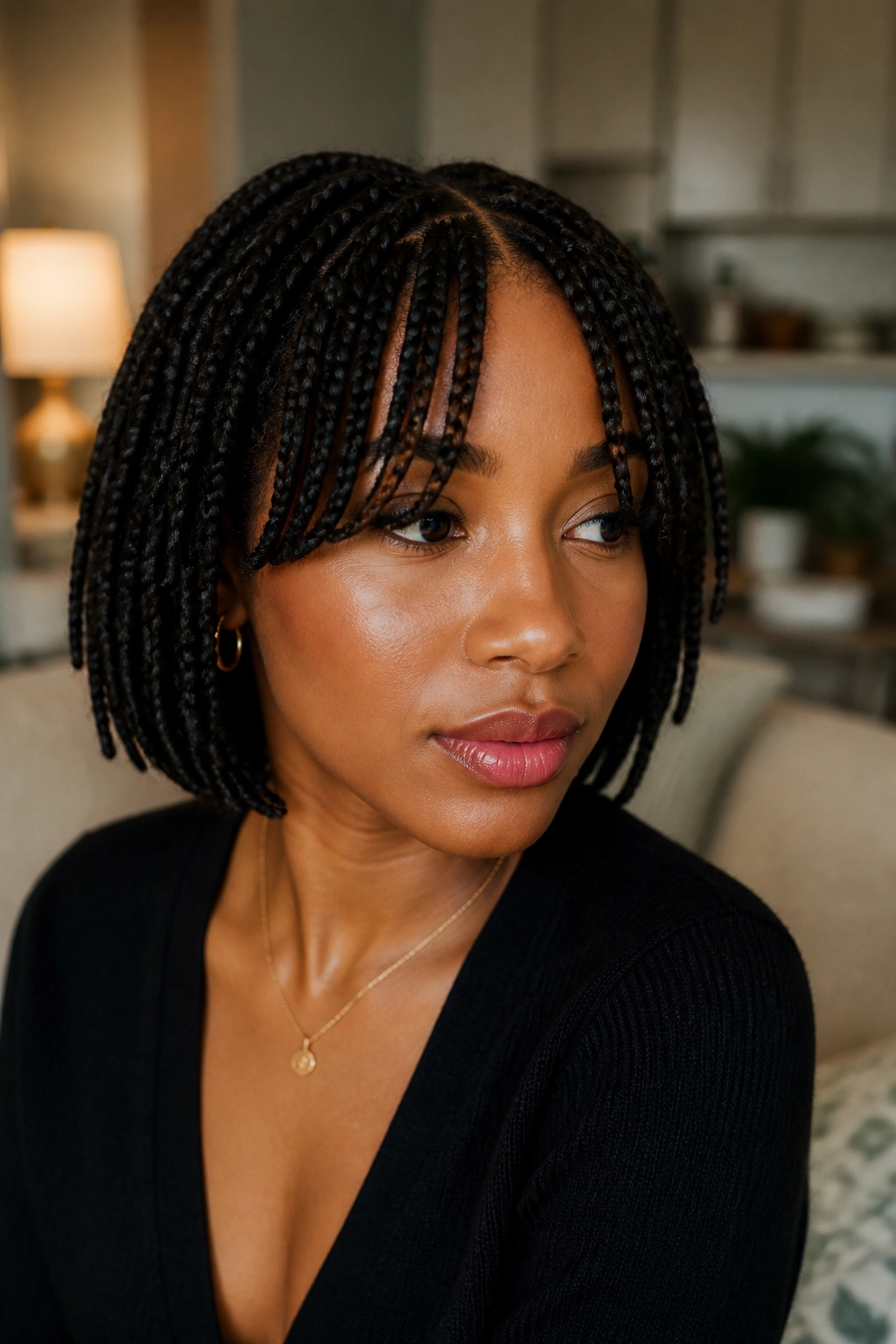
A center part with curtain fringe gives short box braids a calmer, more open look. The face stays framed, but nothing feels heavy across the forehead.
The best curtain versions are not perfectly symmetrical. One side can sit a touch lower than the other, and that tiny imbalance is what keeps the style from looking stiff. A few front braids should fall forward naturally, while the rest tuck back just enough to show the part.
Why it suits a short length
Short braids already have movement at the ends, so curtain bangs echo that softness at the top. It creates a nice balance. You get shape near the cheeks and movement near the jaw, which keeps the bob from feeling like one flat block.
If you wear your hair in the middle often, this is one of the easiest versions to live with. It also grows out in a forgiving way. The fringe can get a little longer and still look intentional, which is more than I can say for a blunt front that has gone soft and droopy.
4. Triangle-Part Short Box Braids With Choppy Bangs

Triangle parts change the whole mood. They make the scalp pattern look more graphic, which works nicely when the fringe is cut a little choppy and irregular.
Unlike a blunt fringe, choppy bangs do not try to make a straight line across the forehead. They sit in pieces, with a few braid ends landing a little higher or lower than the rest. That unevenness is the point. It keeps the front from looking too polished in a way that can feel flat on short braids.
This style is for someone who likes visible parting and does not mind that the scalp pattern becomes part of the look. The triangles show up fast, especially around the front and crown, so the parts need to stay clean. If the sections are crooked, the whole style will look off from the start.
A few gold cuffs on the front braids work well here. So do plain black braids if you want the triangle parts to do all the talking.
5. Knotless Short Box Braids With Feather-Light Fringe
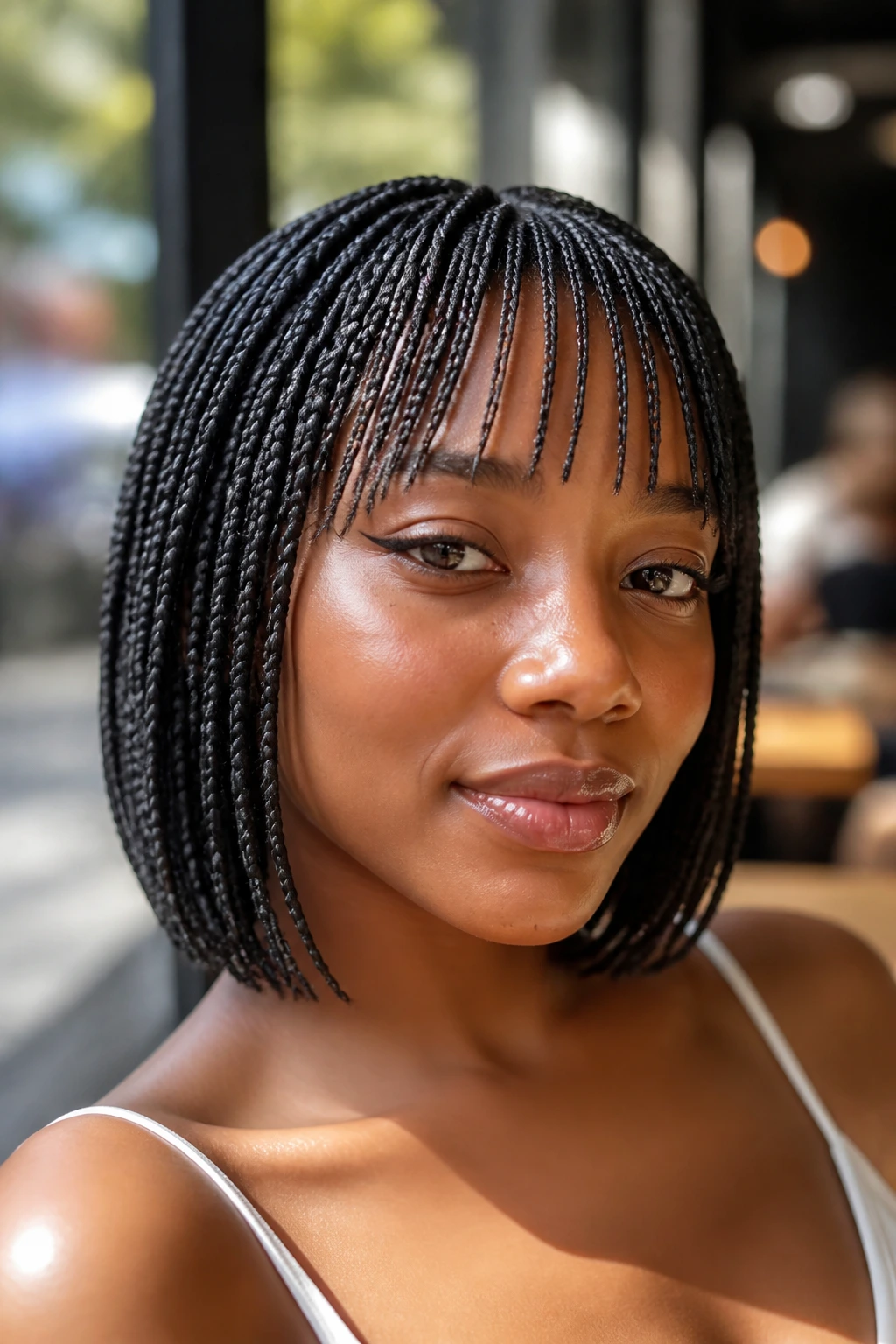
A lot of people like the look of a fringe, but not the feeling of extra weight on the hairline. Knotless short box braids help with that.
The front sits flatter because the braid is fed in gradually instead of starting with a tight knot. That matters when you have bangs, since the fringe already puts attention near the forehead. Add too much bulk there and the style can feel top-heavy fast.
- Good for tender edges or a sensitive scalp
- Useful if you plan to wear the braids for a longer stretch
- Helps the fringe fall softer instead of standing up stiff
- Works with both square and triangle parting
The big mistake here is assuming knotless automatically means light. It does not. Thick sections still feel thick, and a heavy fringe can still pull at the front. The braid technique helps, but the size of the front pieces matters just as much.
6. Jumbo Short Box Braids With a Full Fringe
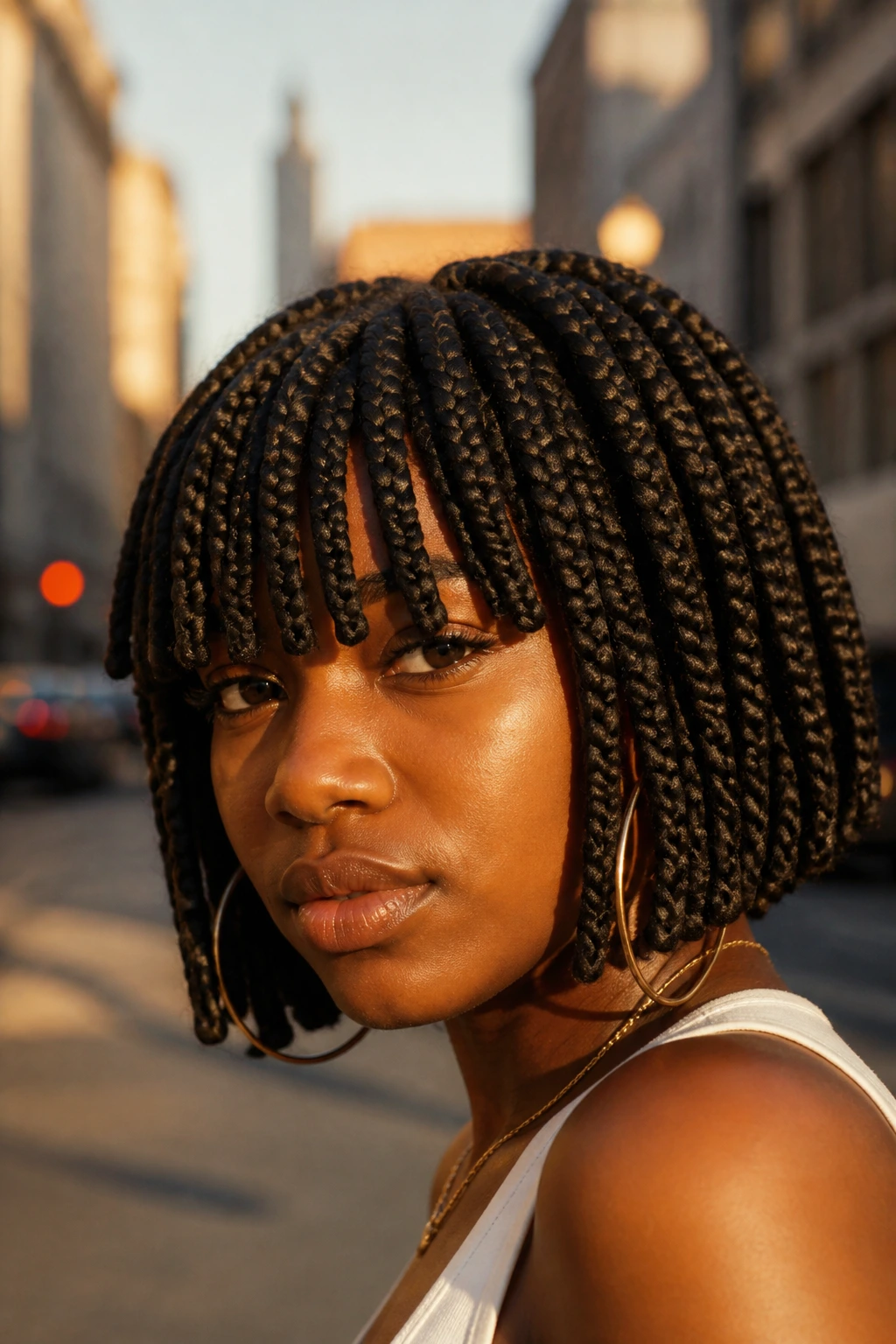
Jumbo braids make short styles feel bolder right away. Fewer sections, bigger plaits, more shape. The fringe has to match that energy, which means a full front with enough density to hold its own against the larger braids.
What to tell your braider
Ask for a thick fringe that lands around the brow line and sits close to the forehead. If the front pieces are too narrow, they can disappear next to the jumbo braids and the style starts looking incomplete.
A few things help this version stay balanced:
- Keep the braid count low so the style does not swell into a dome
- Ask for clean, even spacing at the crown
- Let the ends hit around the jaw or slightly below
- Avoid tiny accessories in the front; they get lost
This one looks strongest when the outline is clear from a distance. It is not a subtle style. It wants to be seen. If you like a big braided silhouette but do not want length hanging down your back, this is one of the smarter options.
7. Short Box Braids With a Wispy Fringe
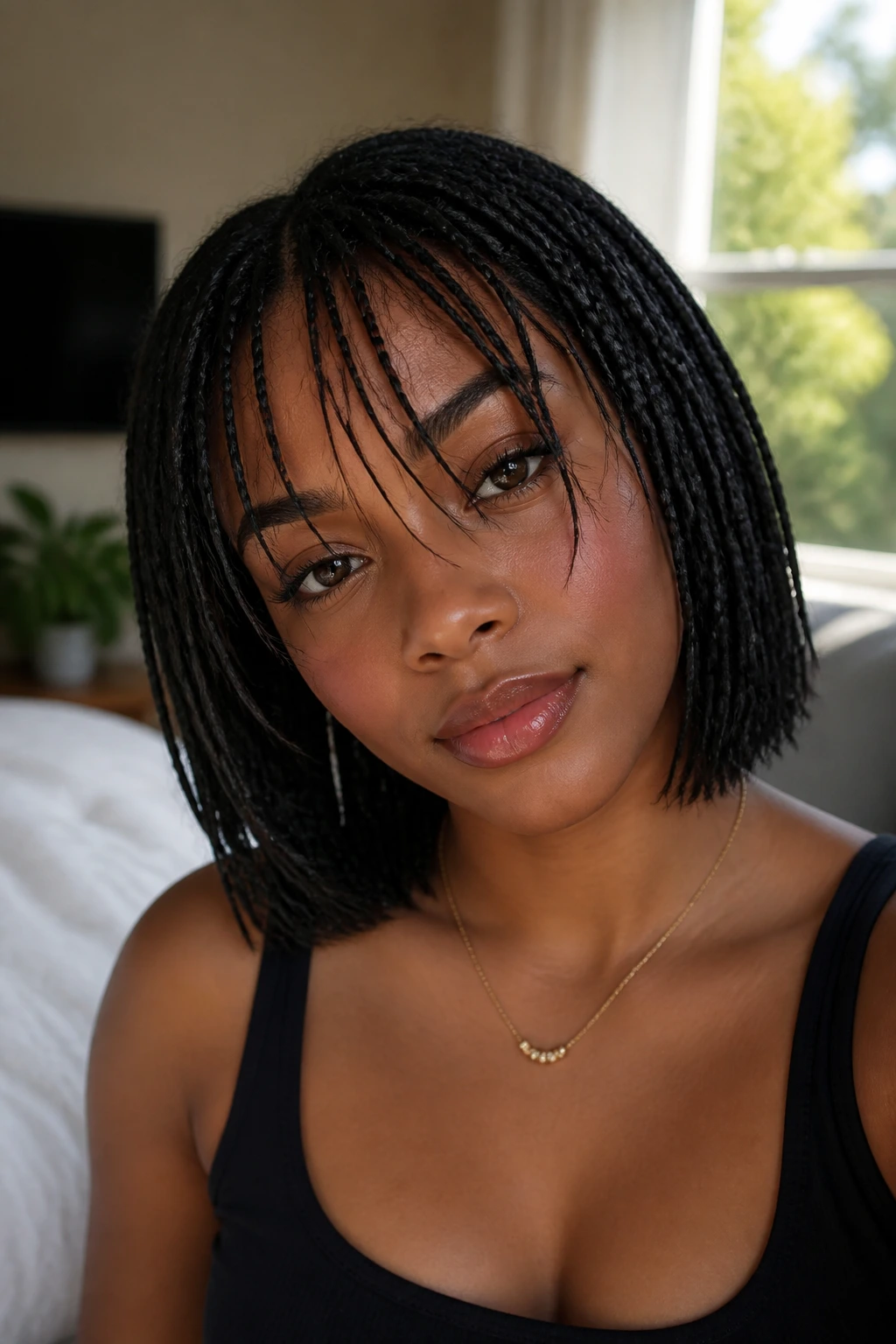
A wispy fringe changes the whole texture of the style. Instead of a solid front line, you get little pieces that move and separate a bit more easily.
The look works best with smaller or medium braids, because the fringe needs room to breathe. If the rest of the style is too bulky, wispy bangs can disappear. They need contrast. That contrast comes from a neat bob shape and clean parting.
This version is also one of the least harsh around the face. It softens the forehead, but it does not box you in. For people who want the idea of bangs without a heavy front, that matters.
The catch is upkeep. Wispy fringe shows frizz faster than a blunt one, so it needs a little more attention when you wrap your hair at night. A satin scarf that lays the front down flat helps a lot. So does avoiding rough brushing at the hairline.
8. Rounded Short Box Braids With Curved-In Ends

Why does a rounded bob feel softer than a square one? Because the silhouette echoes the face instead of fighting it. The ends curve inward a little, and the fringe follows that same rounded shape across the top.
This style is especially nice when you want short box braids to look intentional from every angle. Front, side, and profile all work together. Nothing sticks out awkwardly, which can happen when the braid ends are cut blunt and the fringe is too rigid.
The shape depends on the way the braids are finished. Ask for ends that are trimmed with a slight inward curve rather than left all at the same length. That small detail changes the line of the whole bob.
It also plays well with soft makeup and low-key jewelry. You do not have to dress it up much. The braid shape does the work.
9. Asymmetrical Short Box Braids With One-Side Fringe
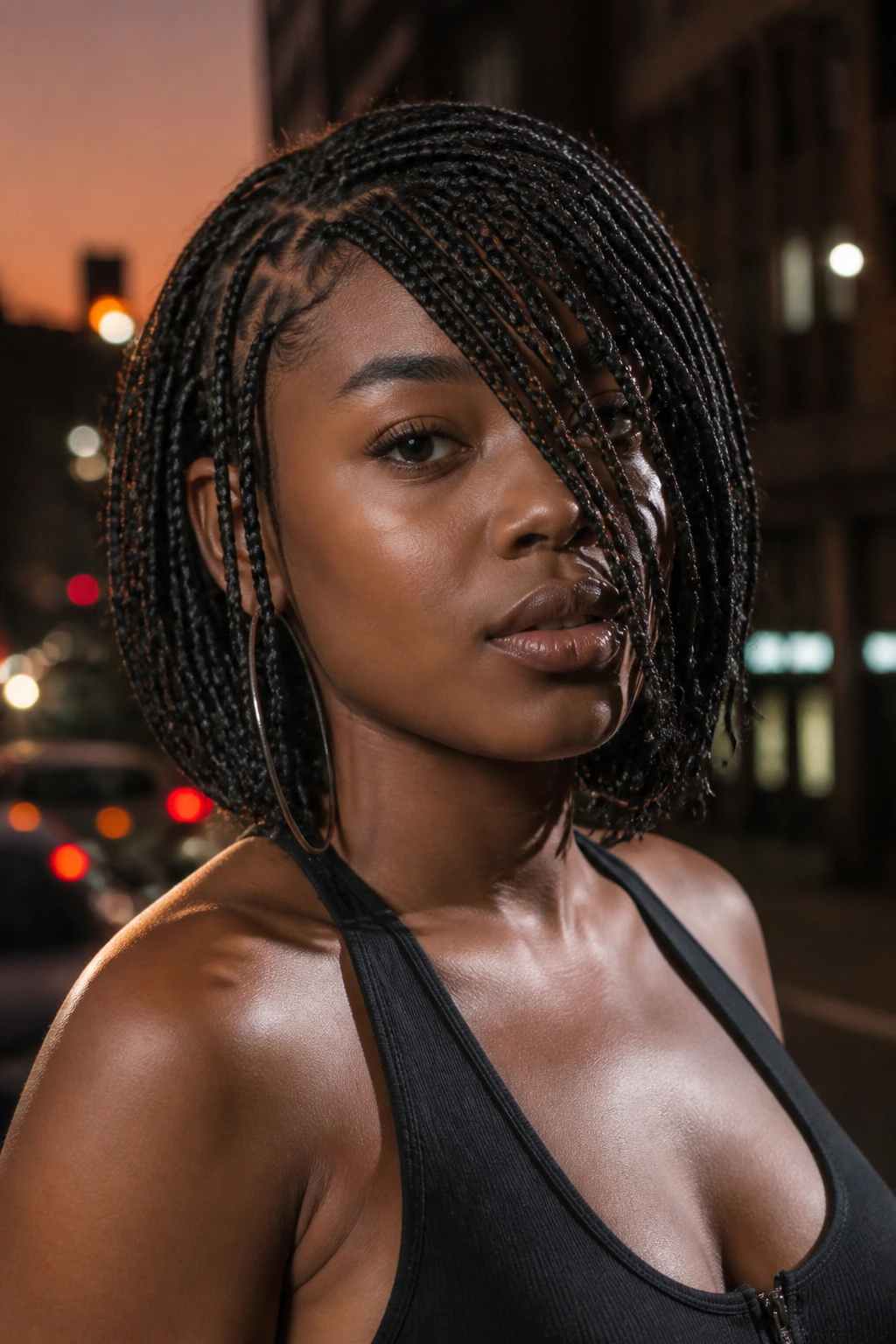
A little unevenness can be a good thing. In this case, it is the whole point.
One side sits lower or fuller than the other, and the fringe follows that same off-balance feeling. The result looks intentional, not sloppy, because the style is clearly built around the asymmetry. The front can sweep farther across one eye, while the opposite side stays tucked back and tighter.
Why it stands out
It gives the face a strong angle without needing long braids. That is useful if you like a dramatic shape but do not want a lot of weight. The shorter length keeps the style light enough to move, while the side fringe gives it attitude.
Keep the longer side neat. That is where this style can fall apart. If the longer side is frizzy and the shorter side is too tight, the whole look loses its balance. Clean parting and even tension matter more here than in a more straightforward bob.
10. Half-Up Short Box Braids With Fringe Bangs
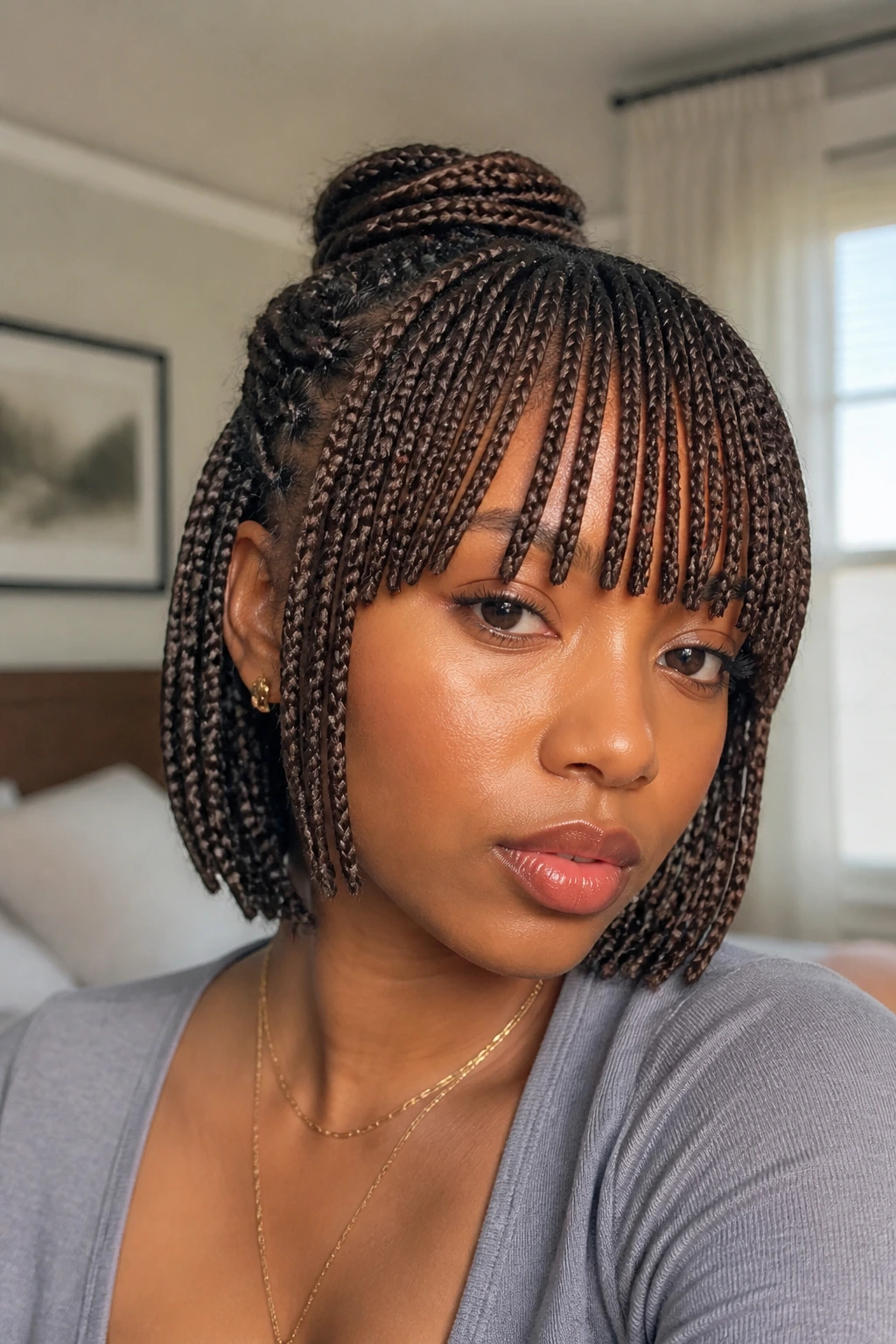
I like this one because it solves a real-life problem: you want your face open, but you do not want to lose the fringe. Pull the top half back, and the bangs stay in front where they belong.
The half-up shape works best when the ponytail or bun sits small and soft. A tight top knot can yank the front too hard and flatten the bangs in a bad way. A loose wrap gives you height without that pulled-back feeling.
You can wear this style on days when you want the braids off your neck, or when the front needs a reset between washes. It looks especially good if the fringe is slightly blunt and the back braids are a little chunkier than the front. That gives the eye something to move through.
Do not use a tight elastic. A soft scrunchie or a braided wrap is gentler and keeps the shape cleaner.
11. Short Box Braids With Beaded Fringe Ends
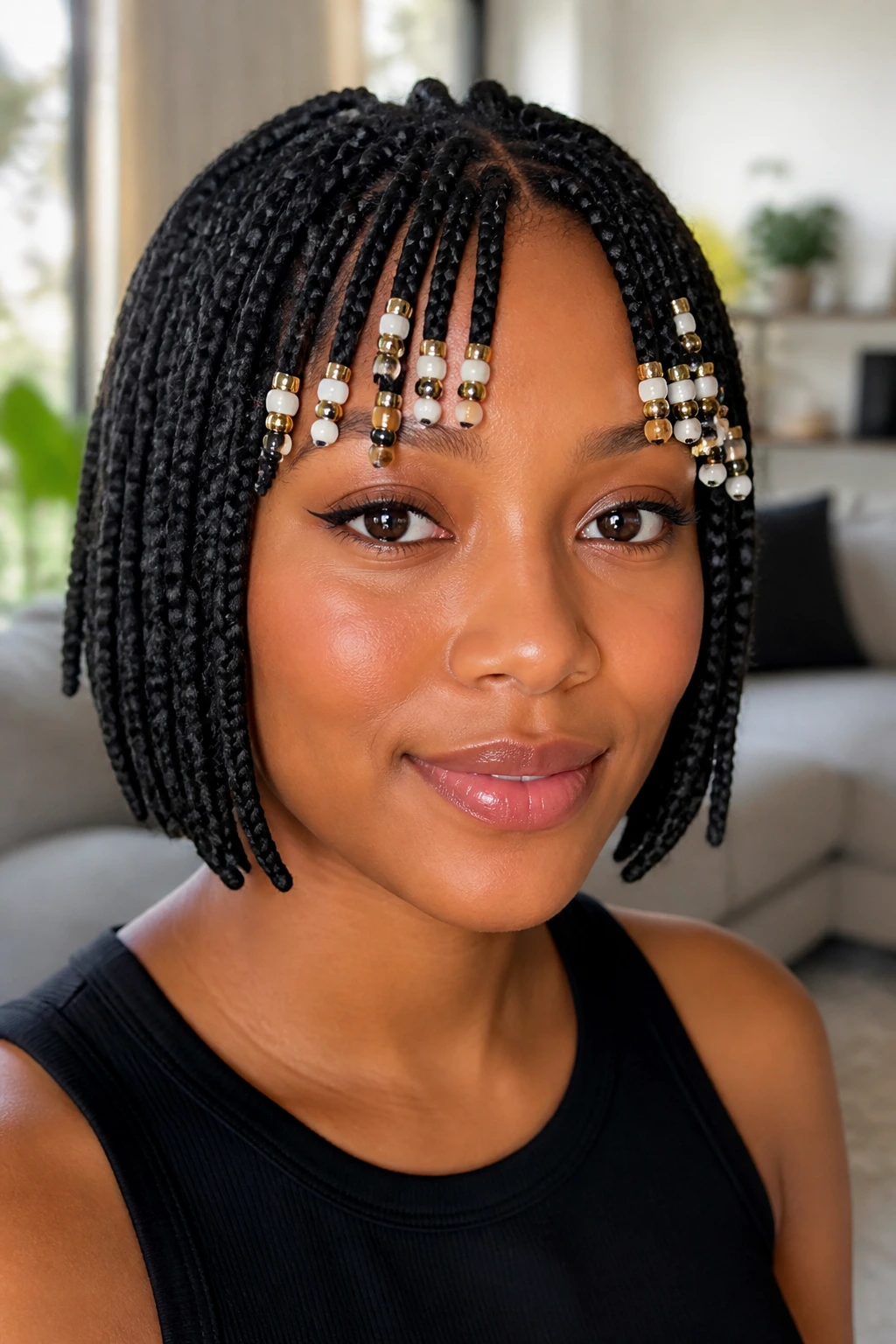
Beads near the front change the sound and the movement of the style. They also make the fringe feel a little more finished, especially when the braids are short and you want the front to carry some weight visually.
Where to place the beads
You do not need beads on every braid. In fact, that can look crowded fast. A better choice is to place them on one or two front pieces or along the outer edge of the fringe. That keeps the center open and lets the face stay visible.
A few simple rules help here:
- Use lightweight beads, not chunky ones that drag the front down
- Keep the color palette tight if the fringe is already busy
- Put heavier beads lower on the braid, not right at the roots
- Check that the front still moves freely when you blink or turn your head
This style can tip into costume territory if you overdo it. But with restraint, it looks sharp and playful at the same time. The bangs stay the focus. The beads are the accent.
12. Colored-Tip Short Box Braids With a Dark Fringe

What makes this version work is the contrast. Dark fringe at the front keeps the eye anchored near the face, while the colored tips add movement and personality at the ends.
That contrast is useful on short braids because the style has less length to show off color. If the whole braid is bright, the face can get lost in the noise. Keeping the fringe darker gives the style a cleaner frame.
A good color balance
Blonde ends with a black or deep brown fringe are the most obvious version, but copper, burgundy, and honey tones work too. The point is not the exact shade. It is the contrast between the front and the rest of the braid bob.
This is one of those styles that looks expensive when the colors are chosen carefully and messy when they are not. Too many tones can make the braid line look muddy. Two shades is usually enough. Three can work, but only if the transition is clean.
I would keep the fringe plain here. No beads, no cuffs, no extra noise up front. Let the color do the talking.
13. Short Box Braids With Face-Framing Front Pieces

Not everyone wants a true fringe. Sometimes you want the feeling of bangs without a hard line across the forehead. Face-framing front pieces do that nicely.
The front braids fall a little longer at the cheeks and temples, which softens the face without building a full bang. It is a good middle ground if you like the idea of fringe but worry about maintenance. These pieces are easier to tuck away, easier to pin back, and easier to grow out.
Because the style is softer, the parting can stay simple. A center part or a slight off-center part both work. The real shape comes from the front strands, which should fall in a gentle curve instead of a straight drop.
This is one of the most wearable versions on the list. It does not shout. It just frames.
14. Tapered Nape Short Box Braids With a Fuller Crown Fringe
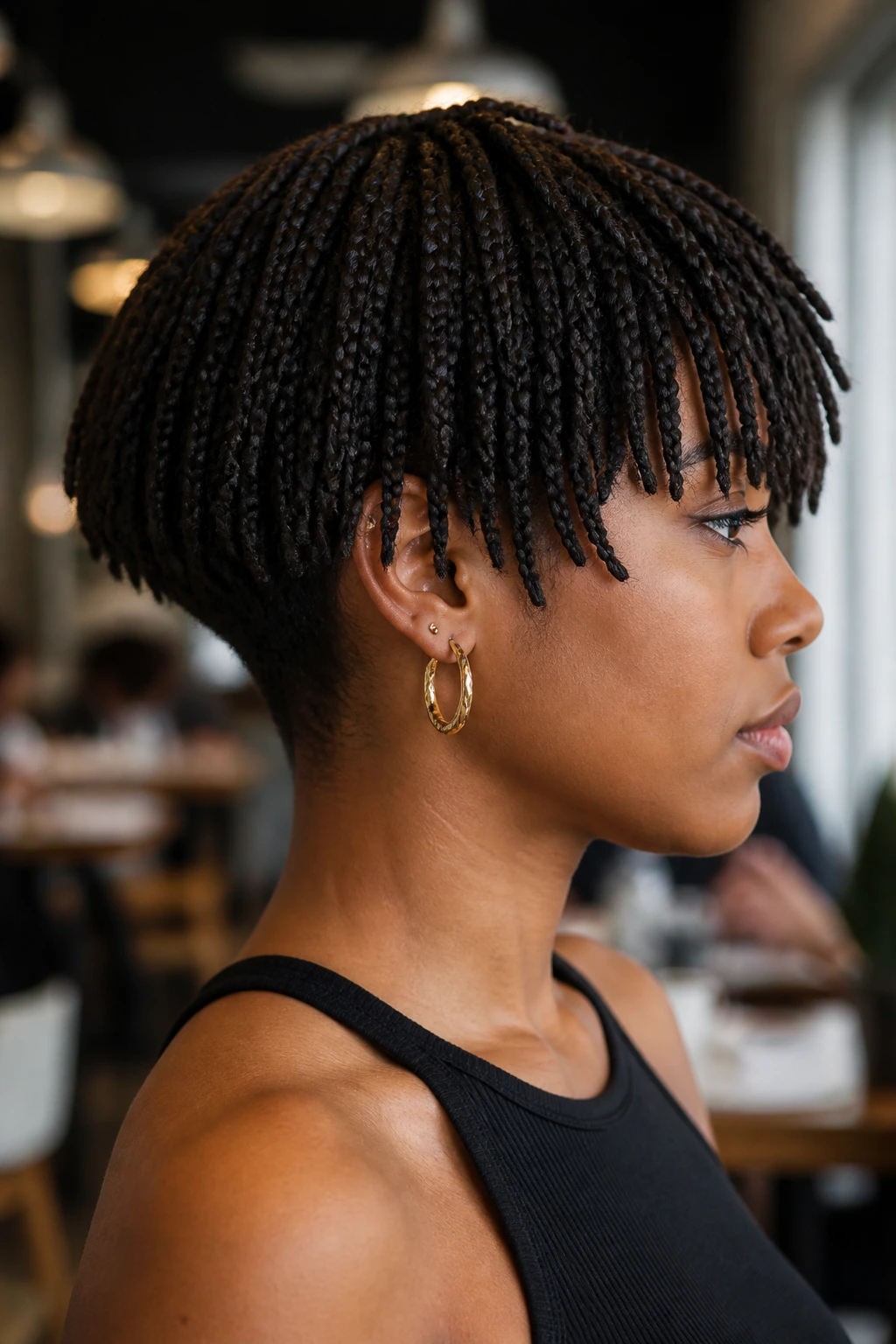
A tapered nape changes the profile more than people expect. The braids sit a little shorter and tighter at the back of the neck, then build fullness toward the crown and fringe.
That stack gives the style a tidy shape under collars, scarves, and jackets. Short box braids can puff at the nape if they are cut blunt all the way around. A taper keeps that area neat.
The fuller crown helps balance the front fringe, too. If the bangs are dense and the back is sparse, the style can look top-heavy. Adding a little volume at the crown keeps the whole shape even. It is subtle, but you feel it when the bob sits on your head.
A style like this asks for a careful hand. The back should not be shaved down or thinned so much that the braids lose body. You want taper, not emptiness.
15. Feathered Fringe With Layered Short Box Braids
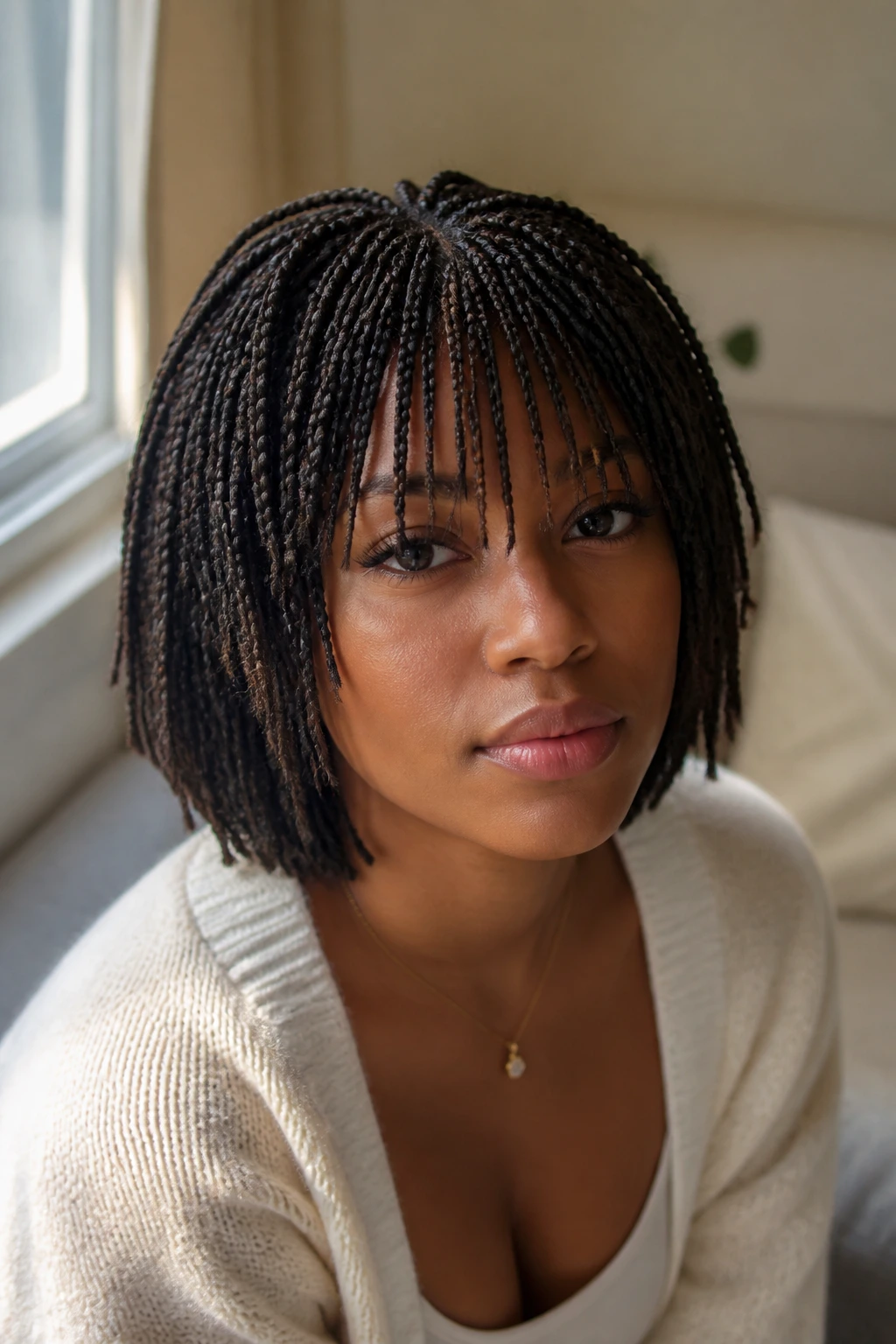
A feathered fringe works when the braid bob already has layers. The front pieces are trimmed in a softer way, so the fringe breaks up into light, movable sections instead of one heavy curtain.
Keeping the front from feeling stringy
The danger here is over-thinning. If the fringe gets too sparse, it looks like the style is falling apart. The trick is to leave enough braid density at the front so the bangs still have body, even when they separate a little.
Layered lengths help too. The braids around the cheeks can be a touch longer than the braids around the jaw, which keeps the whole style from turning into a blunt box. That layering is what gives feathered fringe its easy movement.
If you wear a lot of scarves or high necklines, this version is especially nice because it does not fight your clothes. It shifts and settles instead of sticking out. Small thing. Big difference.
16. Short Box Braids With a Deep Side Part and Sculpted Edges
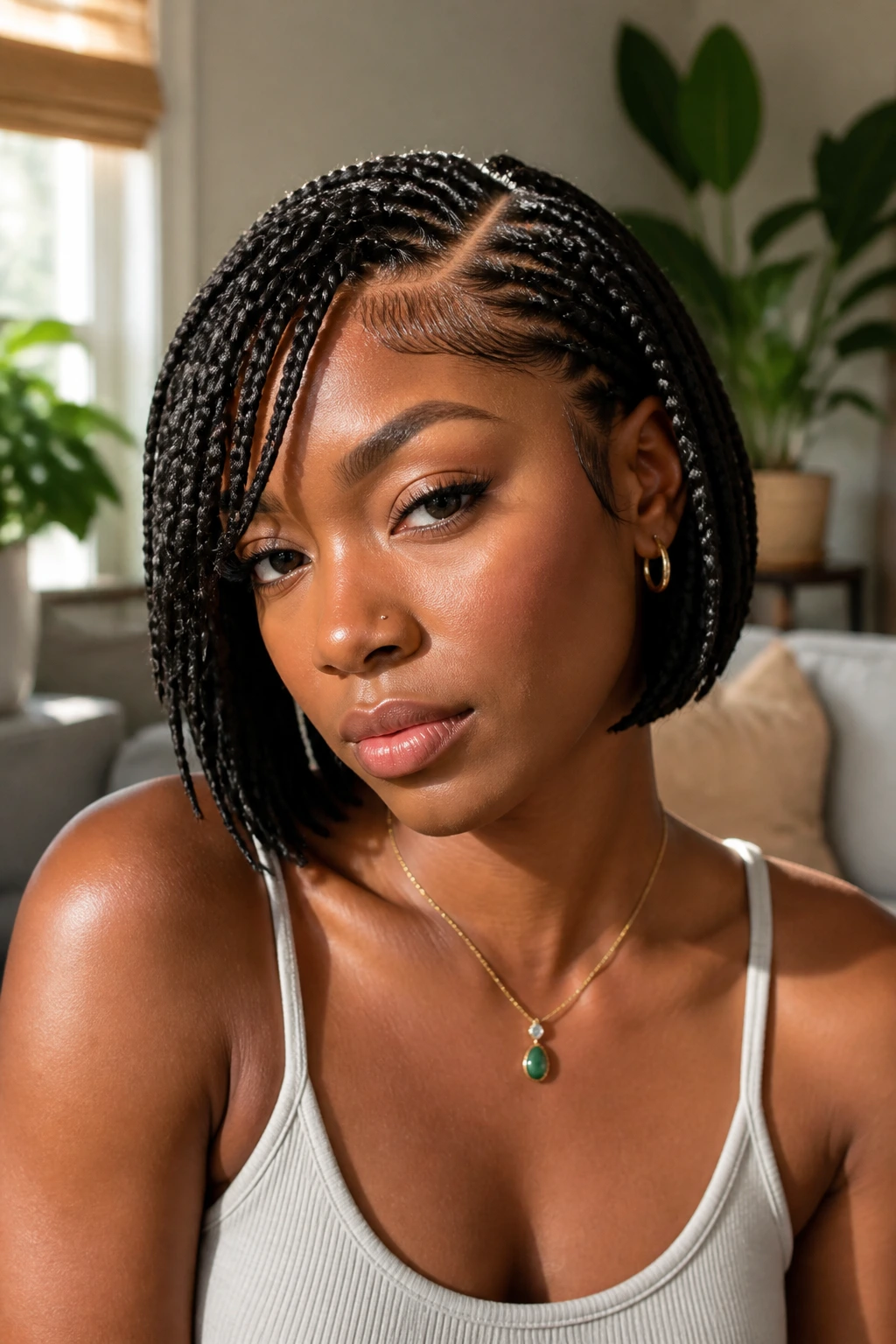
A deep side part gives short braids a clear direction. The fringe then follows that direction instead of sitting straight across the forehead, and the whole style feels more deliberate.
This is where edges matter, but only a little. Not glued down. Not drawn on. Just cleaned up enough to sharpen the part and frame the front. Too much gel can make the hairline stiff and flaky, which ruins the softness you were probably after in the first place.
How to keep it polished
- Use a light touch at the hairline
- Keep the side part crisp and straight
- Let the fringe curve naturally instead of forcing it flat
- Leave a little softness around the temples so the style does not look boxed in
I like this version for people who want the style to look finished without being fussy. It is neat enough for work or dressy plans, but it still feels like a real braid style, not a shellacked helmet. That balance is hard to fake.
17. Vacation-Length Short Box Braids With Loose, Airy Bangs
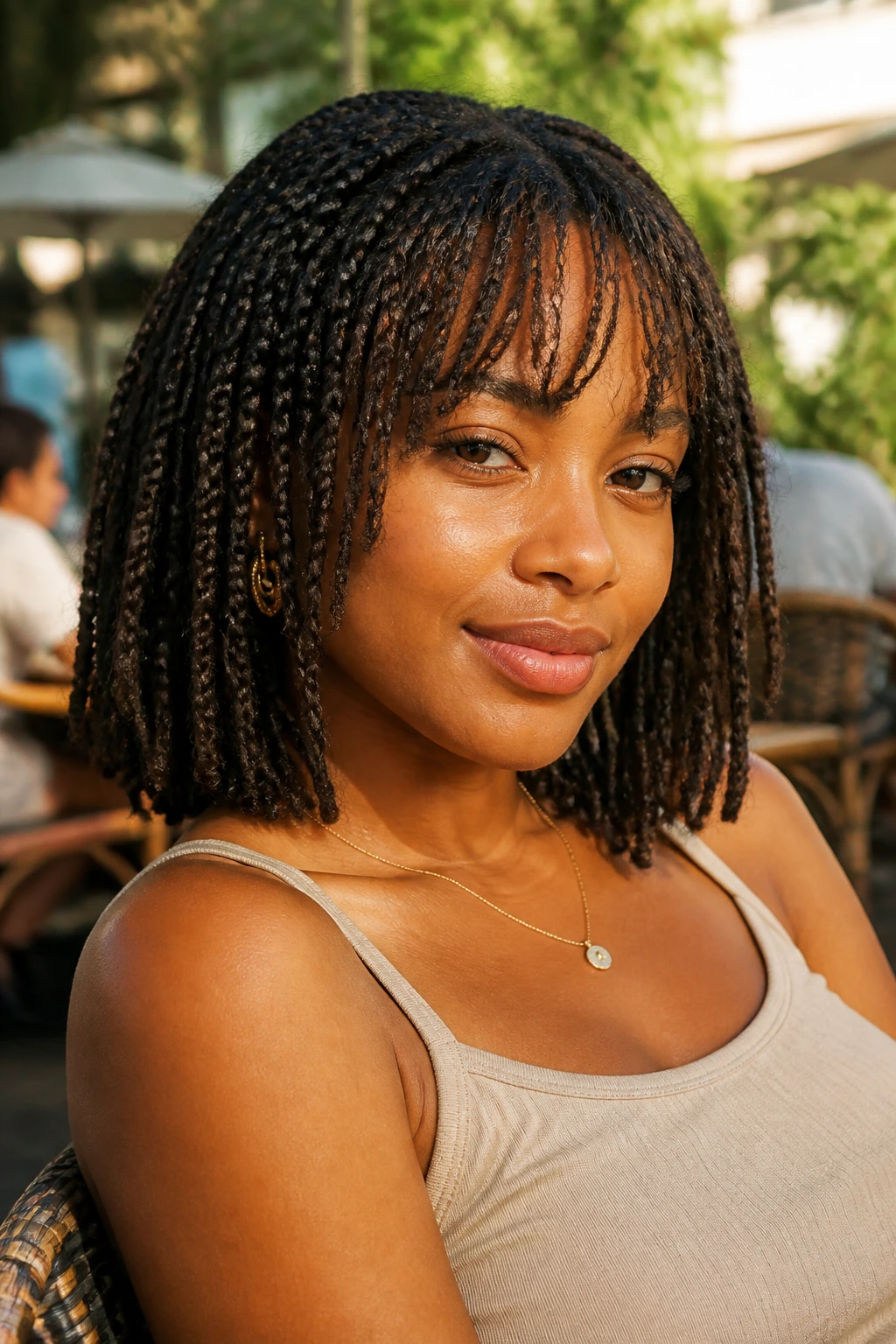
Short does not have to mean tiny. A vacation-length braid bob can sit right around the shoulders or just above them, which makes the fringe feel more relaxed and less severe.
The airy bangs matter here because the longer short length needs a little softness at the top. Without that, the style can start looking heavy around the chin. A loose fringe keeps the movement going from the front all the way down.
This is one of the easiest versions to live with if you wear braids for convenience as much as style. The length is manageable. The bangs are simple. The overall shape is forgiving when it starts to grow out, which happens faster than people expect with short styles because every inch shows.
If you want something that feels casual but still put together, this is a strong place to land.
18. Statement Short Box Braids With Cuffs, Rings, and a Clean Fringe

This is the bold version, but it works because the fringe stays clean. The accessories live on the braids, not all over the forehead, so the front still has room to breathe.
Where the accessories belong
Put cuffs on the outer braids, a few rings on the lower rows, and leave the fringe mostly plain. If the bangs are already busy, the style can tip into clutter fast. The clean front keeps the whole look readable.
A few specific choices help:
- Use two or three cuff finishes, not five
- Keep rings on the lower half of the braids so they do not crowd the face
- Leave at least one front braid free of hardware
- Match the metal tone to your earrings or necklace if you want the look to feel intentional
This style is for people who like their braids to say something. Loudly. The key is restraint in the front and a little drama everywhere else. That contrast is what makes it work.
Final Thoughts
Short box braids with fringe bangs work because they give you shape up front and ease everywhere else. The best versions know where to be soft and where to stay crisp. That is the whole game.
If you are choosing between styles, look first at the front line. A fringe can make a braid bob feel sleek, playful, sharp, or calm in one move, but only if the density and parting make sense together. Mess up the front, and the style looks unfinished no matter how neat the back is.
Take a front photo in daylight before you leave the chair. That small habit catches the stuff mirrors miss — a fringe that sits too high, a part that drifts, a side that feels heavier than the other. It saves you from living with a braid shape that never quite settles.
