



The best hair designs for Black women do not only look good in a mirror. They have to survive sleep, a bonnet that slips off, a long commute, and the kind of day that turns polished hair into a puff if the prep was sloppy.
That is why the styles worth wearing share a few traits: clean parting, smart tension, and enough structure to stay neat without turning your scalp into a complaint line. A style can be sleek and still feel soft. It can be detailed and still let your edges live.
Braids, twists, faux locs, and sculpted cornrows each bring a different mood. Some give you length. Some give you shape. Some save time in the morning because you can throw on a scarf, smooth a little mousse at the roots, and go. The trick is matching the style to your hairline, your schedule, and how much maintenance you can actually stand.
Start with the workhorse.
1. Knotless Box Braids for Black Women Who Want Less Pull

Knotless box braids are the style I point people to when they want length without that hard tug at the roots. The braid starts with your own hair and the extension hair is fed in gradually, so the base sits flatter and feels lighter than old-school box braids.
Why Knotless Feels Gentler
That flatter base matters more than people admit. It means less bulk on the scalp, less heaviness around the temples, and a softer drop along the hairline. If your scalp gets sore after braid installs, knotless is the better bet almost every time.
A medium size usually gives the best balance. Tiny braids look neat, but they take forever and can add more tension than you need. Huge braids are fast, but they can get clunky fast if you wear them for weeks.
- Best when you want a long style that moves.
- Works well with waist-length or mid-back extensions.
- Ask for medium parts if your edges are sensitive.
- Refresh the roots with mousse, not grease.
Quick tip: if the braid feels tight in the chair, do not “wait and see.” Tight is tight.
2. Fulani Braids with Beads

Fulani braids have a way of looking detailed even when the structure is simple. A center braid, a few side cornrows, and some beads at the ends can change the whole mood of the style. It feels finished. Intentional. A little bit regal without trying too hard.
The best versions keep the front rows clean and the accessories light enough that they do not drag on the roots. Beads look gorgeous when they swing, but heavy beads can turn into tiny weights by the end of the day. That matters if you like long wear and do not want your braids pulling at your hairline.
I also like Fulani braids for the way they frame the face. A sharp center part opens everything up, while the side braids pull the eye outward. If you want a style that gives shape before it even reaches your shoulders, this one does the job.
The style works especially well with medium-to-long hair, but the real secret is spacing. Too many beads, too close together, and the whole thing starts feeling loud in a bad way. Fewer beads, placed with purpose, look richer.
3. Lemonade Braids with a Clean Side Sweep

Want a braid style that instantly changes the shape of your face? Lemonade braids do that almost on contact. The side-swept pattern pulls the eye across the head, which makes the whole style feel longer, sharper, and more styled than a straight-back row ever could.
How to Wear Them
The cleanest versions start with a deep side part and consistent braid size from front to back. If the cornrows drift in different directions, the design loses its snap. Keep the rows tidy, keep the curve smooth, and let the parting do the work.
They are a strong pick when you want drama without extra accessories. No beads needed. No curls required. Just a strong braid map and enough length for the braids to hang neatly over one shoulder.
Lemonade braids also work well for people who like their hair off the face but not fully pulled back. That half-hidden, half-showing effect is a nice middle ground. And yes, they can be worn in a ponytail or bun if you want a different finish later.
Best for: longer wear, photo days, and anyone who likes a side part that actually makes a point.
4. Feed-In Cornrows with a Low Bun

Feed-in cornrows are one of the few styles that can look polished, stay practical, and still leave the scalp feeling pretty normal by the end of the day. The added hair gets built in gradually, so the braid grows from flat to full instead of starting with a thick knot at the root.
That gradual build is the reason this style works so well for a low bun. The cornrows lay close to the head, the bun sits at the nape, and the weight stays lower instead of hanging off the temples. That is a smarter setup than a top-heavy style if you need your hair to stay put.
A low bun also makes the style easy to dress up. You can keep it plain, wrap it with braid hair, or pin a few ends under for a sleeker finish. Either way, it looks clean without screaming for attention.
I like this one for work weeks, travel, and any stretch where you need your hair to behave. It is not flashy. That is the point.
5. Stitch-Braid High Ponytail
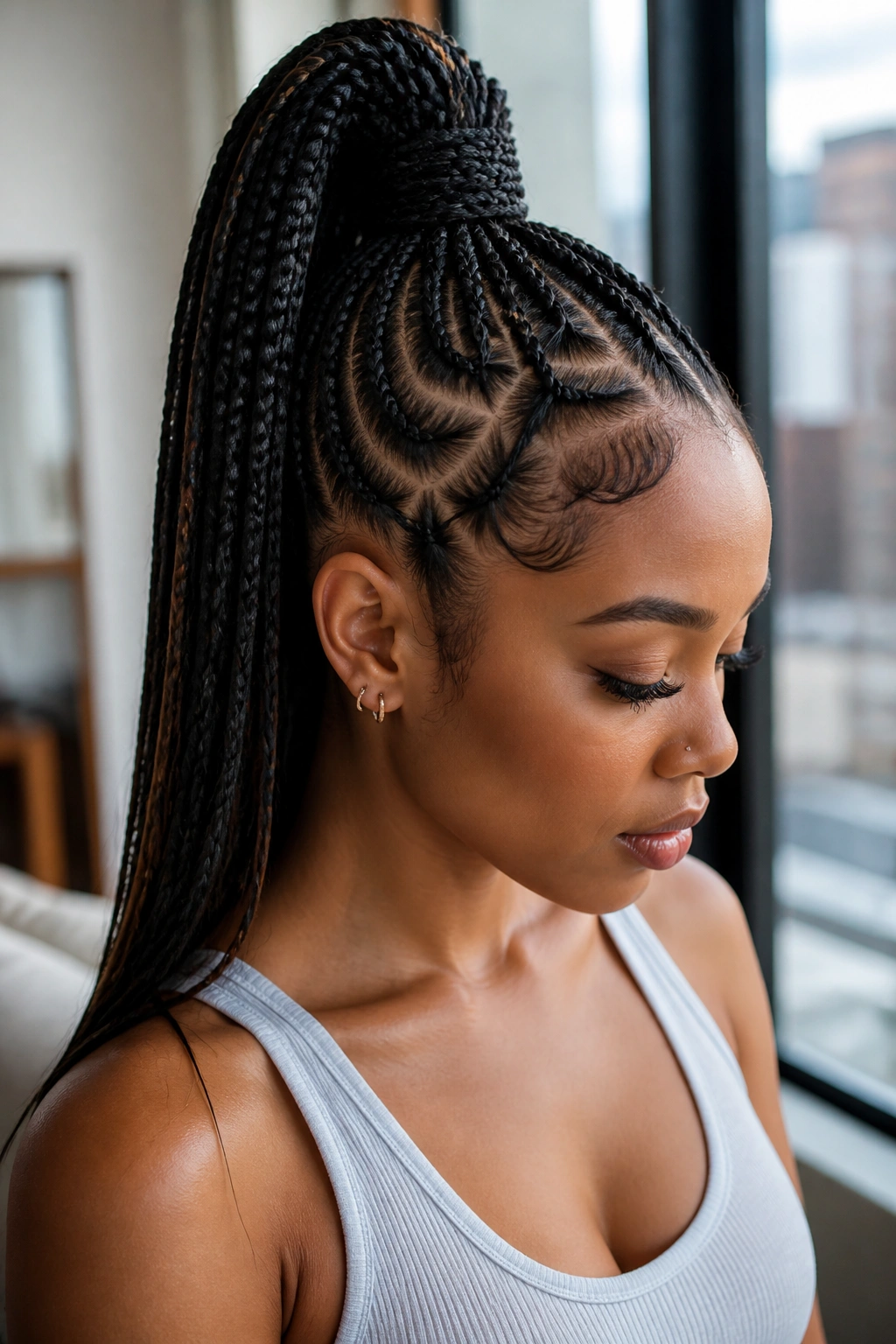
A stitch-braid ponytail is for the days when you want your hair to look controlled and a little bold at the same time. The braid lines run across the head in sharp, neat sections, then gather into a high ponytail that sits up where everyone can see it.
I remember this style being the one people ask about most when they want something that looks “done” without needing a lot of extras. The grooves are the whole story. Tight, even stitch parts create a clean grid, and that grid makes the ponytail feel more architectural than casual.
What Makes It Stand Out
The ponytail itself can be braided, curled, or wrapped in a long extension for a fuller drop. If you have a strong hairline and want height, this style gives you both lift and polish.
- Best with medium to thick hair density.
- Works well when the front rows are the same width.
- Add a braided wrap around the base to hide elastic bands.
- Keep the ponytail light if you plan to wear it all week.
A high ponytail looks sharper when the sides are smooth and the back is secure. If the base feels loose, it will show fast.
6. Jumbo Goddess Braids
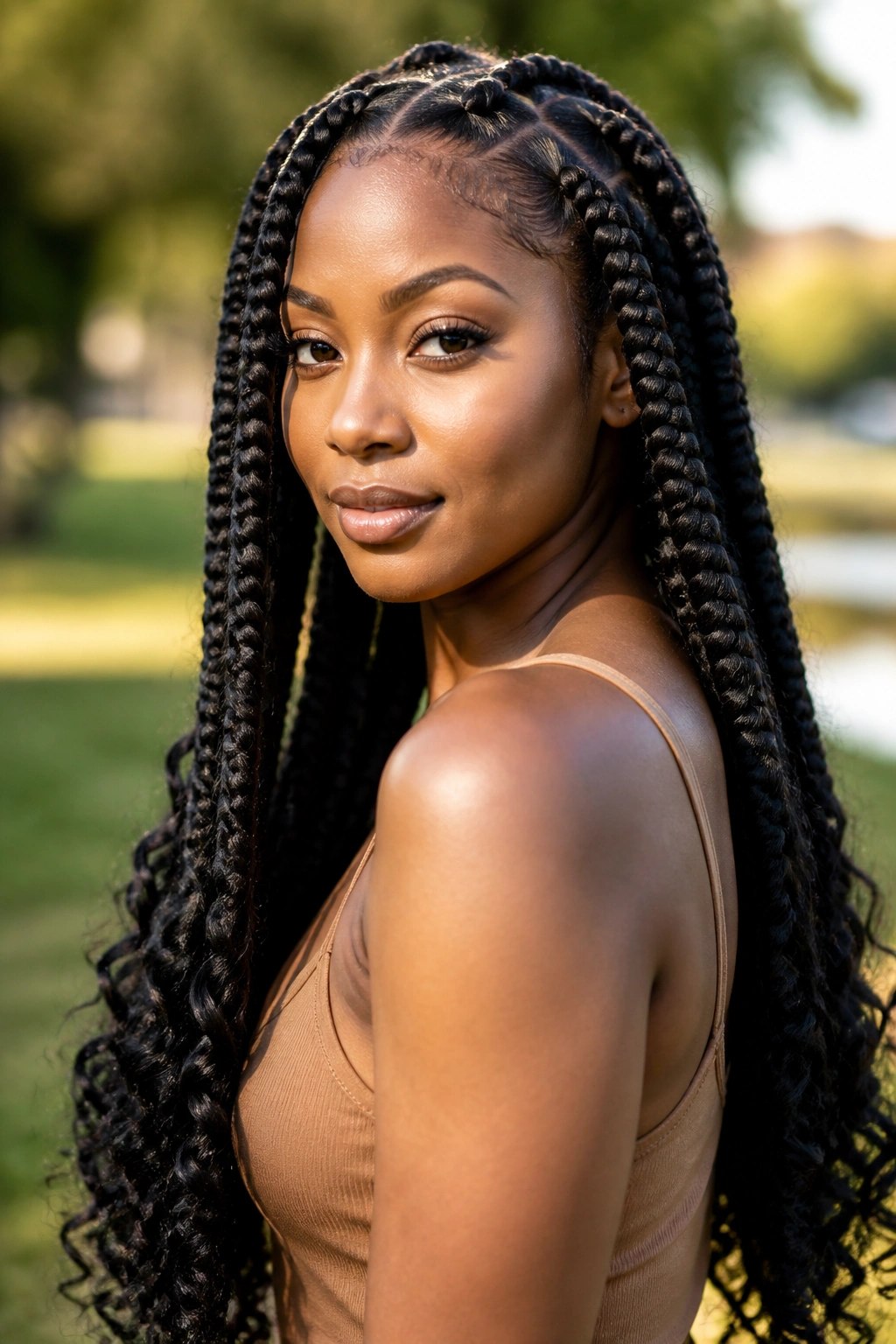
Jumbo goddess braids are for people who want a big look without sitting in the chair forever. Thick braids move faster, show off the parting, and give you that sculpted shape that looks good from every angle. They also feel easier to wear when you are not in the mood for dozens of tiny sections.
The loose curly pieces woven in or left out around the braids soften the whole style. That bit of texture keeps the look from feeling stiff. Without it, jumbo braids can read as plain. With it, they have a little sway and a little softness around the face.
This style works best when the braids are not overloaded. Too much hair in each section and the weight starts doing the talking. Keep the sections balanced, and the style stays wearable.
I also like jumbo goddess braids for shoulder seasons, when you want protection but not a full curtain of hair. They frame the head, show the neck, and still give you that braided length. Practical. Easy to like.
7. Senegalese Twists with a Smooth Finish

Senegalese twists are the sleek sister in the twist family. They use two strands twisted together, which gives the finished style a smoother, rope-like look than a lot of other textured twists. If you like clean lines and a little shine, this is the one.
Unlike fluffier twists, Senegalese twists usually look best when the parting is crisp and the twists are even from root to tip. The style has a dressier feel because the surface is smoother. That makes it a nice pick for someone who wants polished hair without wearing braids.
They also hold shape well when the extensions are the right weight. Too heavy, and the roots start to sag. Too thin, and the style loses the bold twist effect. Medium size is the sweet spot if you want them to last and still swing a bit when you move.
Best of all, this style works for long wear. Put the twists up, down, half-up, or tucked into a bun. They still look put together.
8. Passion Twists for a Softer, Looser Look

Passion twists are what I reach for when someone wants softness more than sharpness. The texture is looser, the finish is more airy, and the whole style has that lived-in movement that looks good even when a few strands start doing their own thing.
What to Ask For at the Chair
Say you want twists with a bit of frizz-friendly texture, not a stiff rope. That usually means using water-wave hair or a similar texture that keeps the style from looking too perfect. Passion twists are supposed to move. If every strand is pinned down like a math problem, something got lost.
They work beautifully for people who like boho texture but do not want a full braid set. They are also lighter than many long braids, which makes them easier on the neck if you wear your hair down a lot.
A little mousse helps. So does sleeping with a scarf that actually stays on your head, which sounds obvious until you have gone to bed with perfect twists and woken up with a whole different situation.
Best for: soft edges, shoulder-length drama, and anyone who wants their style to look relaxed without looking unfinished.
9. Spring Twists That Bounce Instead of Hang

Spring twists have a different personality from smoother twist styles. They spring. That sounds obvious, but it matters. The coils give the hair a tight, lively shape that looks fuller without needing a ton of added bulk.
Because the texture is more coiled, the style often feels lighter than it looks. That is one of its biggest selling points. You get visual volume without putting a heavy curtain of hair on your neck all day. Nice trade.
I would not pack the sections too thick. Spring twists look better when the coil pattern can actually show. If the strands are stuffed too full, the whole style starts reading as dense instead of springy.
This is also a good style if you want something that works with short-to-medium lengths. You do not need waist-length hair for it to land. A clean part and a neat install matter more than extreme length here. Let the texture do the talking.
10. Marley Twists with a Matte, Natural Feel

Marley twists have a more earthy finish than Senegalese twists, and that matte texture is exactly why people love them. They look less glossy, more grounded, and a little fuller around the face. If you want a style that feels textured instead of slick, Marley twists earn their spot.
Why the Texture Matters
The hair used for Marley twists usually gives the style a thicker, softer body. It is not trying to look shiny. It is trying to look rich. That makes it a nice match for natural hair textures that already have some volume and bend.
The finish works well with medium or large parts. Tiny parts can make the texture look busy. Bigger sections let the twist pattern stay visible and keep the install from feeling too fussy.
- Great for fuller silhouettes.
- Good if you like a soft matte look.
- Can be worn shoulder length or long.
- Refresh with foam and a light scarf wrap.
I like Marley twists when someone wants protection but does not want the style to feel too neat or too polished. There is a little edge to them. A little softness too. That balance is the charm.
11. Faux Locs That Give the Look Without the Commitment

Faux locs are for the person who loves the loc look but is not ready to make that decision permanent. The style wraps hair around a braided base or a twisted base, then builds the loc shape from there. The result is textured, long, and full of movement.
The first thing people notice is the weight. Good faux locs should feel substantial without feeling like they are dragging you backward. If the install gets too heavy, your scalp will tell you fast. Keep the locs balanced, especially near the front.
What to Watch For
The roots should feel secure, not hard. Faux locs can look beautiful even when they are not perfectly uniform, which is part of their appeal. A little variation makes them feel more natural.
- Ask about wrapping method if you want a softer fall.
- Choose thinner locs if you plan to wear them up often.
- Add curly ends if you want more movement.
- Avoid overloading the front rows.
Practical note: if your scalp is tender, do not let anyone talk you into extra-heavy locs. They are not worth the headache.
12. Butterfly Locs with Soft Loops

Butterfly locs have a loose, airy look that makes the style feel a bit more relaxed than traditional faux locs. The loops and pulled-out texture create those uneven spaces that give the style its name. It is messy on purpose, and that is the charm.
The best butterfly locs look textured, not sloppy. There is a difference. A good install keeps the loc base neat while letting the outer loops stay soft and separated. If every strand is too tidy, the style loses the whole point.
They are a smart option when you want something that can be worn up or down without looking stiff. The loops catch the eye in a nice way, especially when the style has a bit of length. Add a few curly pieces around the face and the whole look softens even more.
This is one of those styles that photographs well without needing perfect symmetry. A little irregularity gives it life. That makes it easier to wear, too.
13. Braided Bob for Black Women Who Want Shape Without Bulk
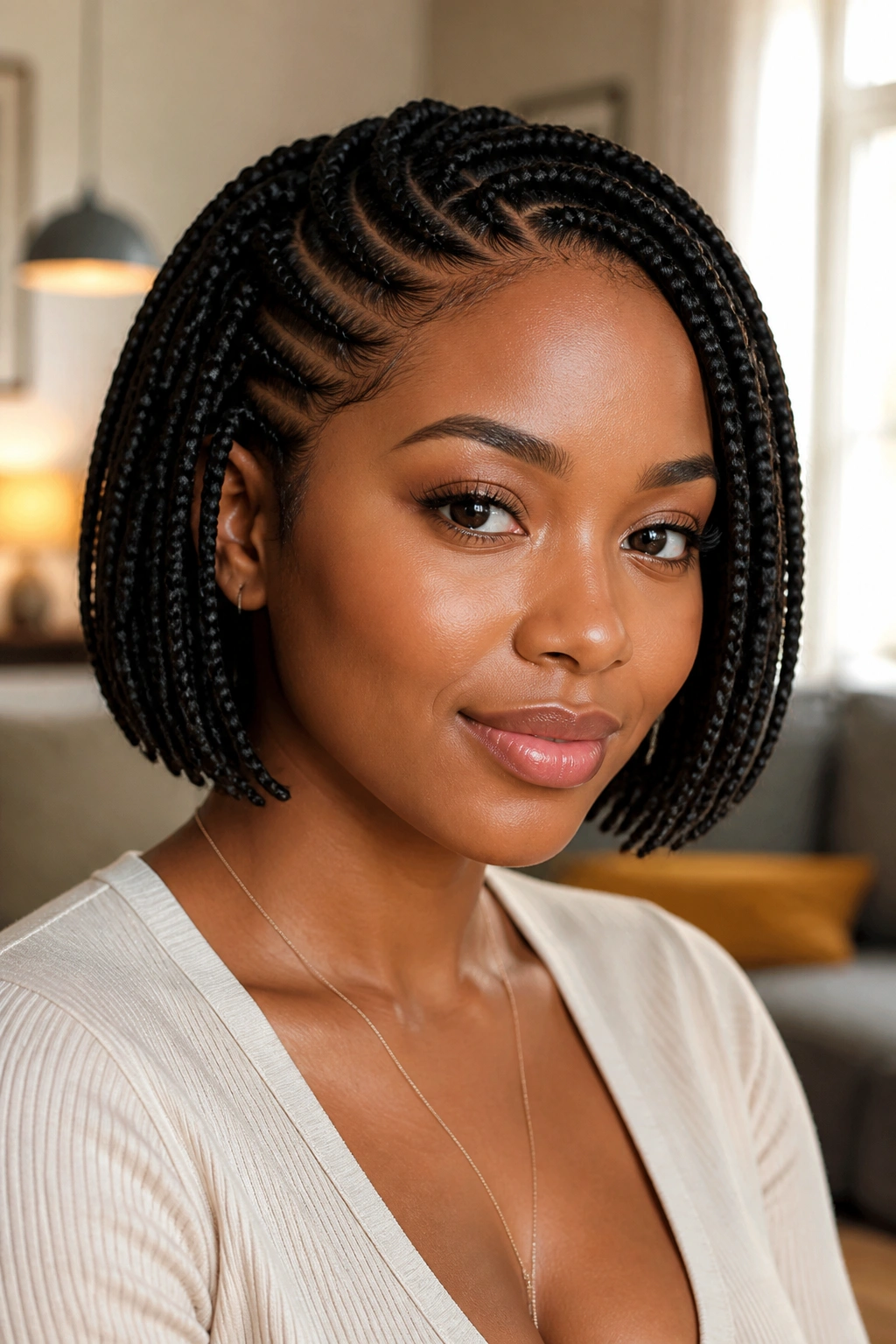
A braided bob is one of my favorite answers to “I want braids, but I do not want all that hair.” Shorter braids keep the weight down, open up the neck, and give the style a swing that longer lengths sometimes lose.
Unlike waist-length braids, a bob depends on shape. The ends have to land in the right spot, usually around the chin, jaw, or collarbone. That placement changes the whole face frame. A blunt bob reads bold. A slightly layered bob feels softer. Either way, it has more shape than people expect.
The smaller profile also makes maintenance easier. You can sleep faster, tie it down faster, and wash your scalp without fighting a curtain of hair. Not glamorous. Useful. That counts.
If you want a style that feels fresh but not overbuilt, this is it. It works with knotless braids, box braids, and even braid-twist mixes. The length does the work.
14. Triangle-Part Box Braids with a Sharp Geometric Finish

Triangle-part box braids change the whole mood of a standard braid install. The braids can be the same size as classic box braids, but the parting gives them a little more attitude. The geometric shape catches the eye before the braid length even gets a chance.
Why the Parting Matters
Triangle parts show more scalp than square parts, which means the design reads cleaner and more decorative. That can be flattering if you like detail near the roots and do not want the style to disappear into a wall of hair.
They also help if you want the install to feel custom. The braids are the same category, sure, but the parting makes them look thought-out. That matters more than people think. A familiar style with a sharper grid can feel brand new.
- Best with medium sections so the triangles stay visible.
- Works with waist-length or shoulder-length braids.
- Keep the part lines neat from the start.
- Use a light edge gel, not a hard shell of product.
Good to know: triangle parts need a steady hand. If the sections wobble, the whole design does too.
15. Side-Part Stitch Braids with Curled Ends
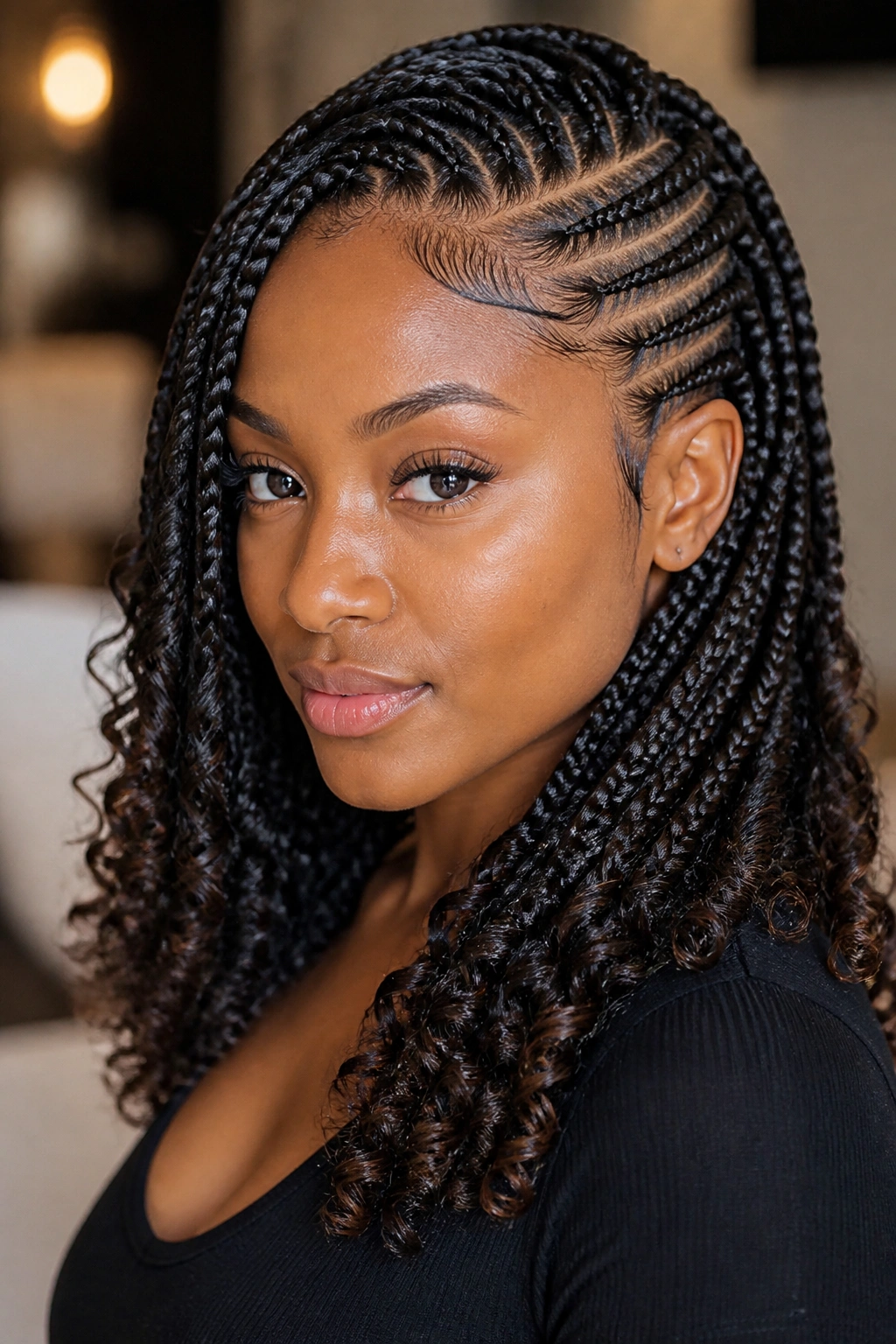
Side-part stitch braids give you structure at the scalp and softness at the ends, which is a nice split. The braid lines are crisp and defined, then the curly ends keep the style from feeling severe. That contrast is the whole point.
A deep side part gives the look a little drama right away. Then the stitch pattern brings in clean, even sections. By the time you get to the ends, you can add wand curls, flexi rods, or pre-curled extension hair for a softer finish.
This style works especially well when you want something that can read polished in the front and playful at the bottom. It is not a plain cornrow style. It has shape, movement, and a little bounce.
The curled ends need care. A quick wrap at night keeps them from tangling into a fuzzy mess, and a light mist of mousse helps them keep their shape. Skip heavy oils on the curls. They will go limp fast.
16. Tribal Braids with Loose Curls

Tribal braids have a long history, and the modern version often mixes straight-back cornrows with hanging braids, beads, and loose curls. That mix gives the style movement and identity. It is not a plain braid set. It feels layered.
I like how much room this style gives you to build. You can keep the top rows tight and neat, then add curl pieces around the lengths so the finish feels softer. Beads work here too, but they should support the shape rather than crowd it.
Details That Make It Work
The braid map matters more than the extras. If the front rows are uneven, the whole style loses its balance. Clean lines at the scalp make the curls and beads look intentional instead of random.
- Try a center part if you want symmetry.
- Choose loose curls for a softer frame around the face.
- Keep the bead count modest so the front rows stay light.
- Use mousse on the loose pieces every few days.
This is the kind of style that can feel both rooted and playful. That is a rare combination.
17. Crown Braid Updo
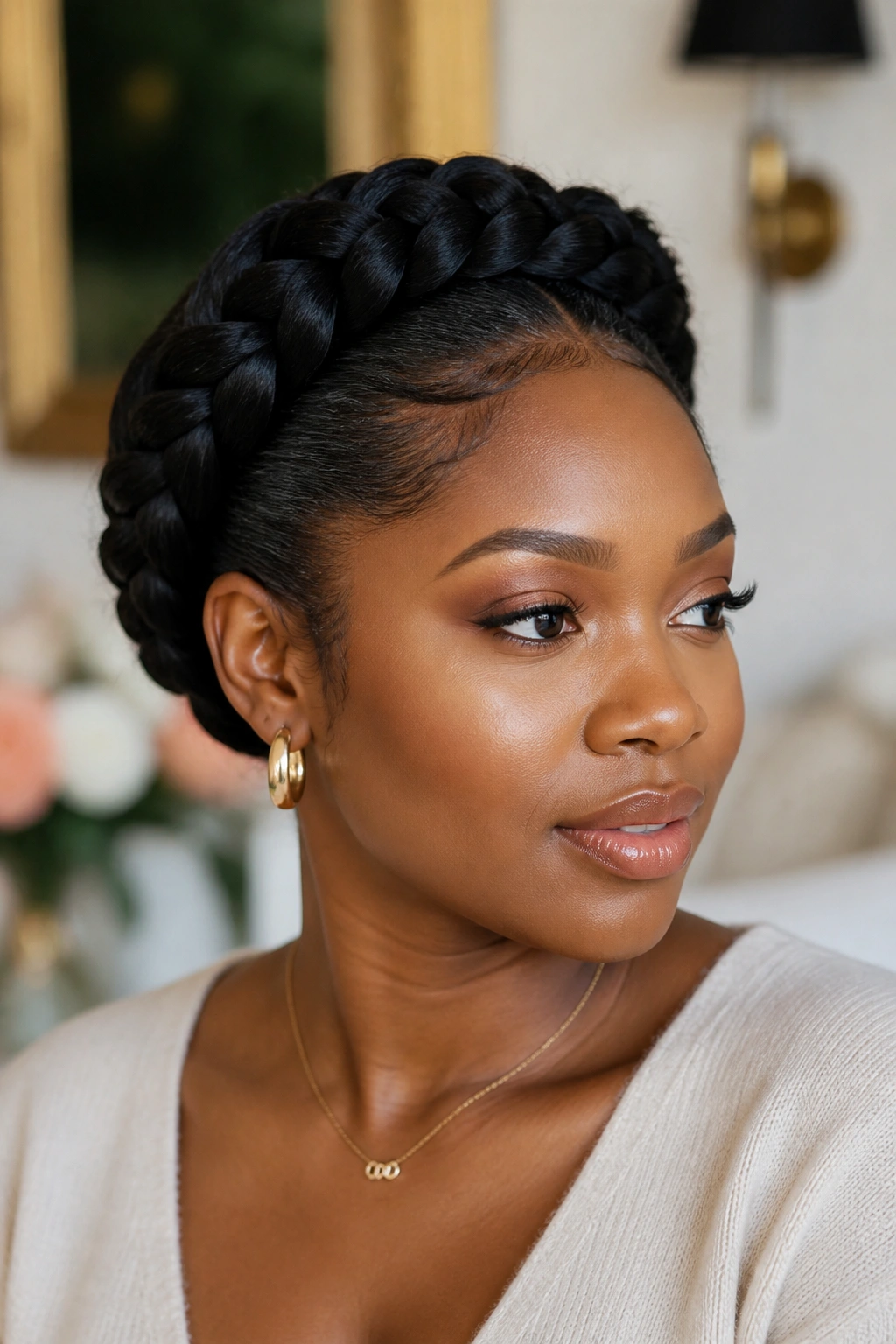
A crown braid updo wraps the braid around the head like a halo, which gives it an elegant look without making it precious. It is tidy, secure, and useful when you want hair off the neck but still want a style that reads like a choice.
The charm here is the shape. A crown braid brings the eye upward and around the face. It can soften a strong jawline, balance a round face, or just make a plain outfit feel more put together. It does not need a lot of extras to land.
This style also plays well with formal wear, but it is not limited to dressy settings. A crown braid can handle church, office wear, weddings, travel, and those in-between days when you want your hair off your shoulders for no special reason.
Keep the braid snug enough to stay in place, but not so tight that the scalp starts complaining. A few discreet pins can help anchor the ends. That part matters more than the photos suggest.
18. Half-Up, Half-Down Boho Braids
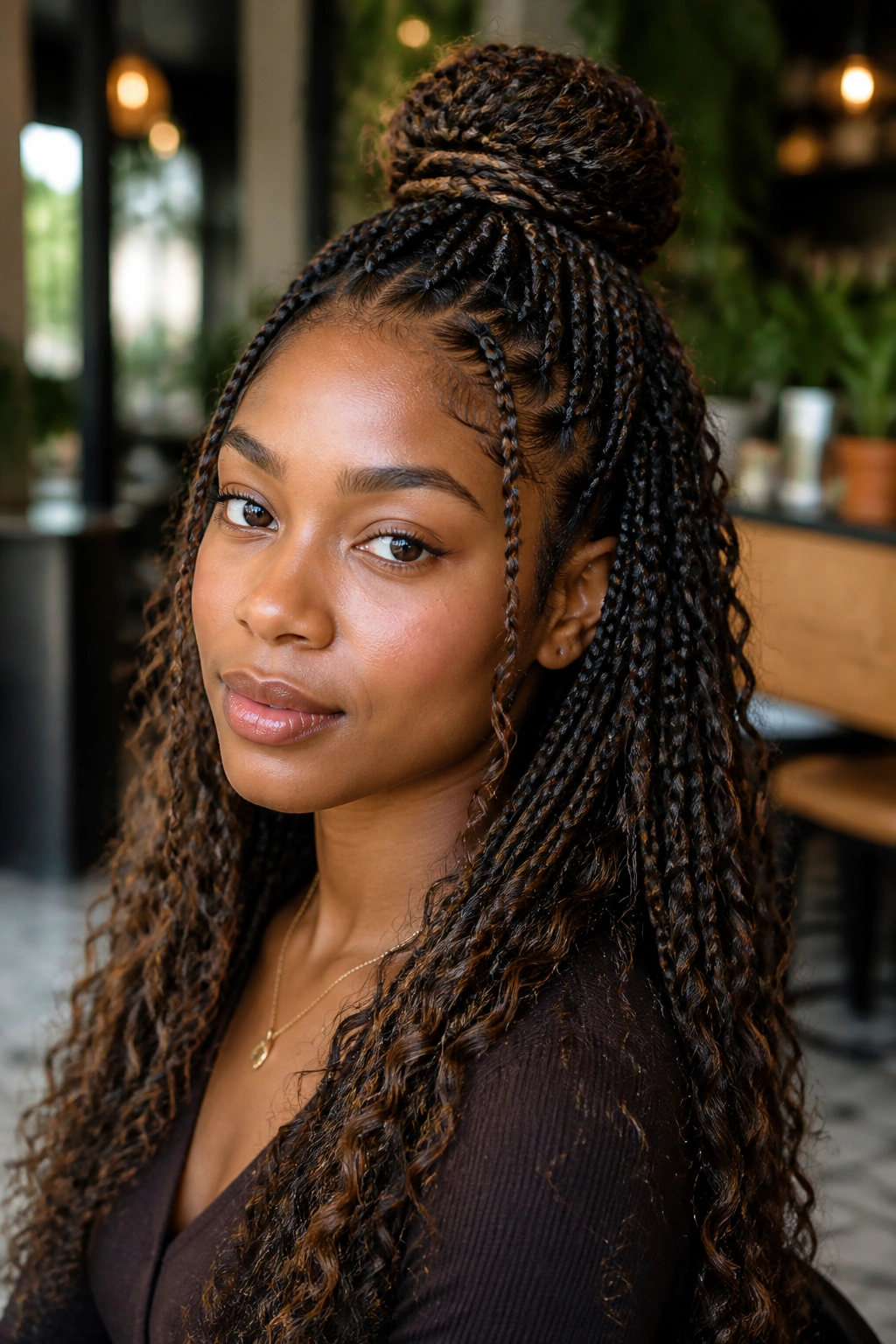
Half-up, half-down boho braids give you structure at the crown and movement everywhere else. That split is what makes the style so easy to wear. You get the face-framing lift of a tied-up top section, plus the loose length and curls falling underneath.
Compared with a full updo, this style feels less formal and a little more relaxed. Compared with all-down braids, it keeps the hair out of your face better. It lives in the middle, which is often where real life sits anyway.
The boho touch usually comes from loose curls mixed into the braids or hanging from the ends. Those pieces keep the style from looking too rigid. If you like hair that moves when you turn your head, this is a good lane.
I would keep the top section secure but not squeezed. The half-up part should lift the face, not flatten it. If you need to keep the style for a while, wrap the top knot or tie-down section separately at night so the curls below do not get crushed.
19. Crochet Curls on a Cornrow Base

Crochet styles are a smart move when you want a full look without sitting through a marathon install. The hair gets cornrowed underneath, then pre-curled or pre-styled hair is looped in with a crochet hook. Fast. Neat. Much less hand strain.
Why People Reach for Crochet
The base does the heavy lifting, and that means the visible style can be all about texture. Tight curls, kinky coils, faux locs, or wavy pieces all work here. The benefit is speed, but the payoff is also versatility. You can change the finish without changing the whole foundation.
A good crochet install should lie flat at the base and blend cleanly where the pieces are attached. If the cornrows underneath are too bulky, the whole style sits high and starts looking awkward from the side.
- Great for quick installs.
- Good when you want fullness without a lot of individual braiding.
- Works with short natural hair under the cornrow base.
- Blend the hairline carefully so the front looks natural.
If your hands need a break, this style is a gift. Plain and simple.
20. Flat Twists into a Tucked Bun

Flat twists into a tucked bun are one of those styles that look calm, neat, and almost unbothered. The twists lie close to the scalp, which makes the whole shape tidy from the front, and the tucked bun keeps the ends hidden.
This is a good choice when you want protection without a lot of drama. It is especially nice for days when your hair needs a reset or when you want a style that stays out of the way during work, errands, or exercise.
The texture of the twists gives the style more interest than a plain bun. And because the ends are tucked, there is less frizz to fight later. That saves time. It also means you can wear the style longer if you keep the scalp moisturized and the edges laid lightly.
One thing I like about this one: it still looks finished even when you skip accessories. No beads, no curls, no extra shine. Just shape.
21. Bantu Knots with Braided Parts

Bantu knots are not just a style; they are a shape. A row of small coils or knots arranged across the head creates a sculptural look that feels playful and bold at the same time. Add braided parts between the knots, and the whole style gets even more texture.
Why the Sectioning Matters
The parting is doing a lot here. Clean sections make the knots look crisp, while braided parts between them add contrast and make the pattern stand out. If the parts are messy, the knots lose their snap.
Bantu knots are also flexible. You can wear them as knots for a few days, then take them down for a twist-out texture. That double use makes the style practical, not just pretty.
- Choose small knots for more definition.
- Keep sections even so the size stays consistent.
- Let the hair dry fully before taking them down.
- Use light product so the knots do not get greasy.
They are not the fastest style on the list, but they are one of the most fun. There is no pretending otherwise.
22. Braided Mohawk with Sleek Sides

A braided mohawk has edge, and it knows it. The sides are braided or slicked close to the scalp while the center section rises into a braid, ponytail, or twisted ridge. The effect is taller, sharper, and more dramatic than a standard down style.
Unlike full-head braids, this look leaves room for negative space. That empty space on the sides makes the center section pop. It is a smart choice if you want height without wrapping your whole head in extensions.
The style also plays nicely with shorter hair because the central ridge can carry the visual weight. If you want to show off earrings, makeup, or a strong neckline, a mohawk shape does that job. It is one of the few braid styles that can feel tough and polished at the same time.
Keep the side rows snug but not punished. The style relies on clean edges. If the sides get fuzzy too fast, the whole look loses its shape.
23. Heart-Part Braids with Beads

Heart parts are one of those details that can make people do a double take, in a good way. The actual braids may be simple, but the parting shape turns the style into something playful and more personal. Add beads to selected ends, and the whole look feels custom.
Keep the Hearts Clean
The heart shape works best when the part lines are crisp and balanced. If one side of the heart is wider than the other, you can see it right away. This is a design that rewards a steady hand.
I like heart parts on medium-size braids because the shape stays visible. Tiny braids can hide the detail. Huge braids can overwhelm it. Medium gives the design room to breathe.
- Use beads on a few braids, not all of them.
- Keep the heart near the front or crown where it can be seen.
- Ask for symmetry if you want the design to read clearly.
- Let the parting stay the star.
It is a sweet style, yes, but not childish. Done well, it feels clever.
24. Feed-In Ponytail with a Wrapped Base
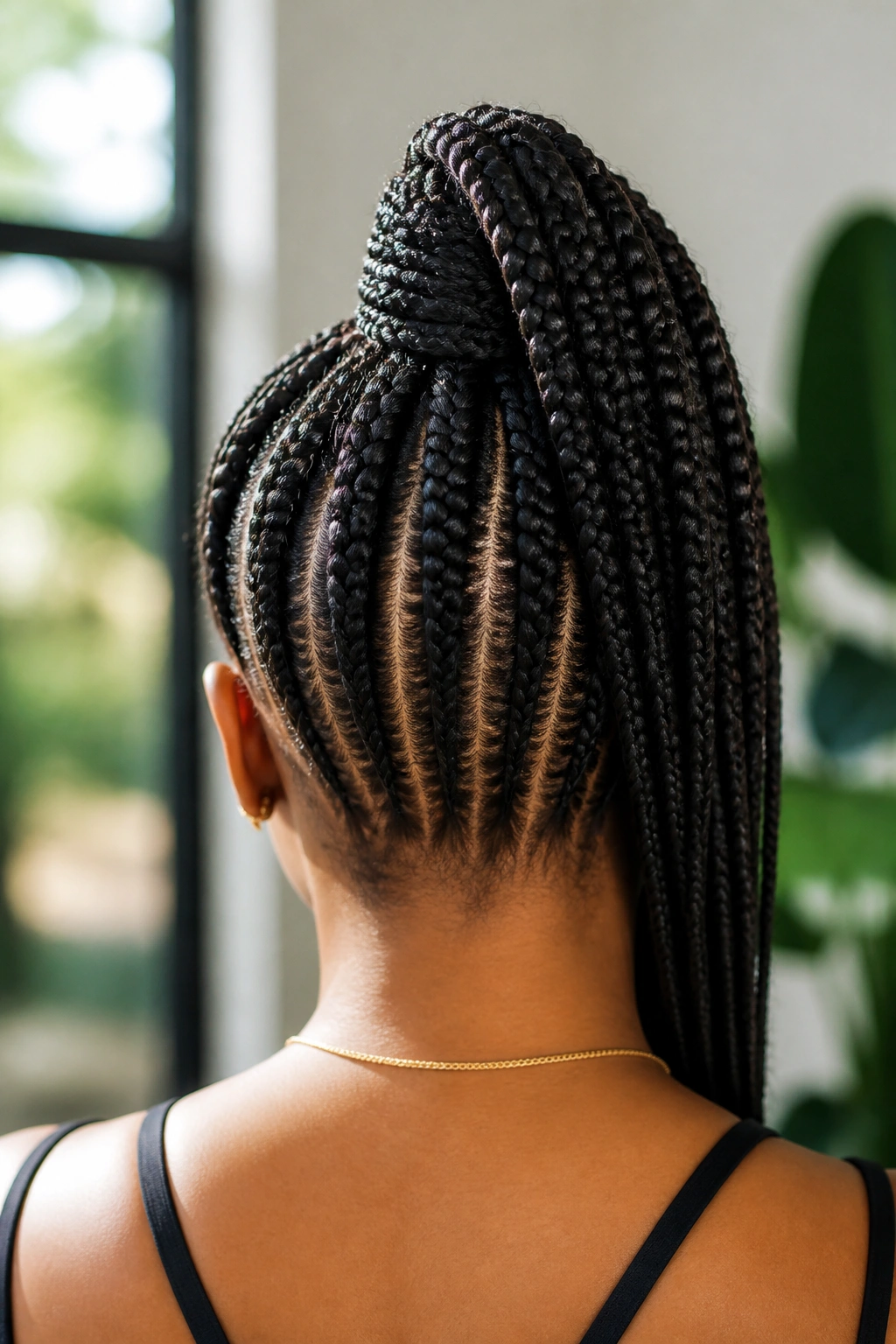
A feed-in ponytail is one of the cleanest styles on the list when you want height and a smooth finish. The braids or cornrows feed into a ponytail at the back or crown, and the base is wrapped so the elastic disappears. That hidden base is the detail that makes the style look polished.
The ponytail can be straight, braided, curled, or mixed with wavy pieces. I prefer it when the base is tight enough to hold shape but not so tight that you feel it throbbing by lunch. There is a difference, and your scalp knows it.
This style works when you need your hair off your shoulders but still want length swinging in the back. It is good for events, but it is also useful for ordinary days because it stays out of the way. That matters more than people admit.
A scarf at night helps protect the edges and keep the wrapped base smooth. If the wrap starts slipping, fix it sooner rather than later. Once it loosens, the whole ponytail starts looking tired.
25. Halo Braid for Black Women Who Like a Clean Finish
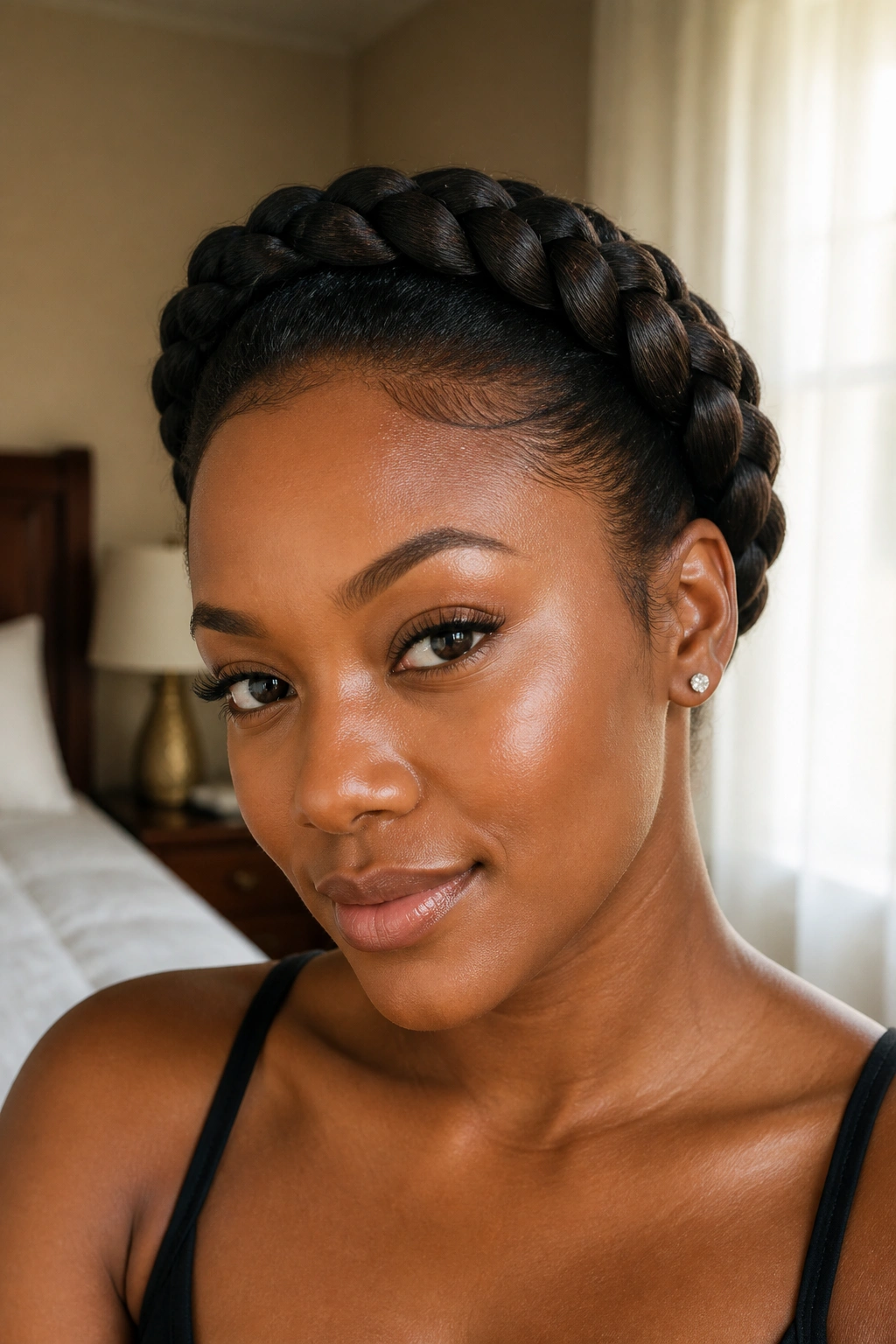
A halo braid circles the head and gives you that clean, almost serene finish that looks polished with very little effort. It is one of the few styles that can feel formal and easy at the same time. That is a rare thing.
The braid sits around the crown, so the face stays open and the neck stays clear. For anyone who gets tired of hair on the shoulders, that matters. A halo braid also hides frizz well, which makes it useful for days when you want your style to keep its shape without constant touching.
I like this one because it can be plain or dressed up. A few pins, a smooth edge, maybe one accent accessory if you want it. That is enough. You do not need much else.
If you want a style that feels neat, protects the ends, and still looks good after a long day, this is a dependable pick. And when your week gets messy, a halo braid keeps the hair looking like you had a plan all along.
