



There is something genuinely liberating about shedding the weight of a long, single-length haircut and embracing the chaos of layers. For years, we were stuck in an era dominated by sleek, one-dimensional styles that required an arsenal of flat irons and smoothing serums to maintain. But the pendulum has swung. The long shag is back, and it’s not the rigid, dated version you might remember from old family photos. It is effortless, full of movement, and arguably one of the most forgiving cuts you can have.
Whether your hair is pin-straight, coiled with tight ringlets, or somewhere in that awkward wavy middle ground, adding layers is the fastest way to inject personality into your look. A shag isn’t just about chopping hair off; it is an architectural decision. It’s about removing bulk where you don’t need it and building volume exactly where you do. When done right, it creates a “lived-in” aesthetic that feels like you just woke up looking that good, even when you definitely didn’t.
Let’s look at twenty ways to approach this. From the classic seventies-inspired feathered looks to the modern, razor-cut hybrids, there is a variation here that will actually suit your hair type rather than fighting against it.
1. Classic 70s Feathered Shag
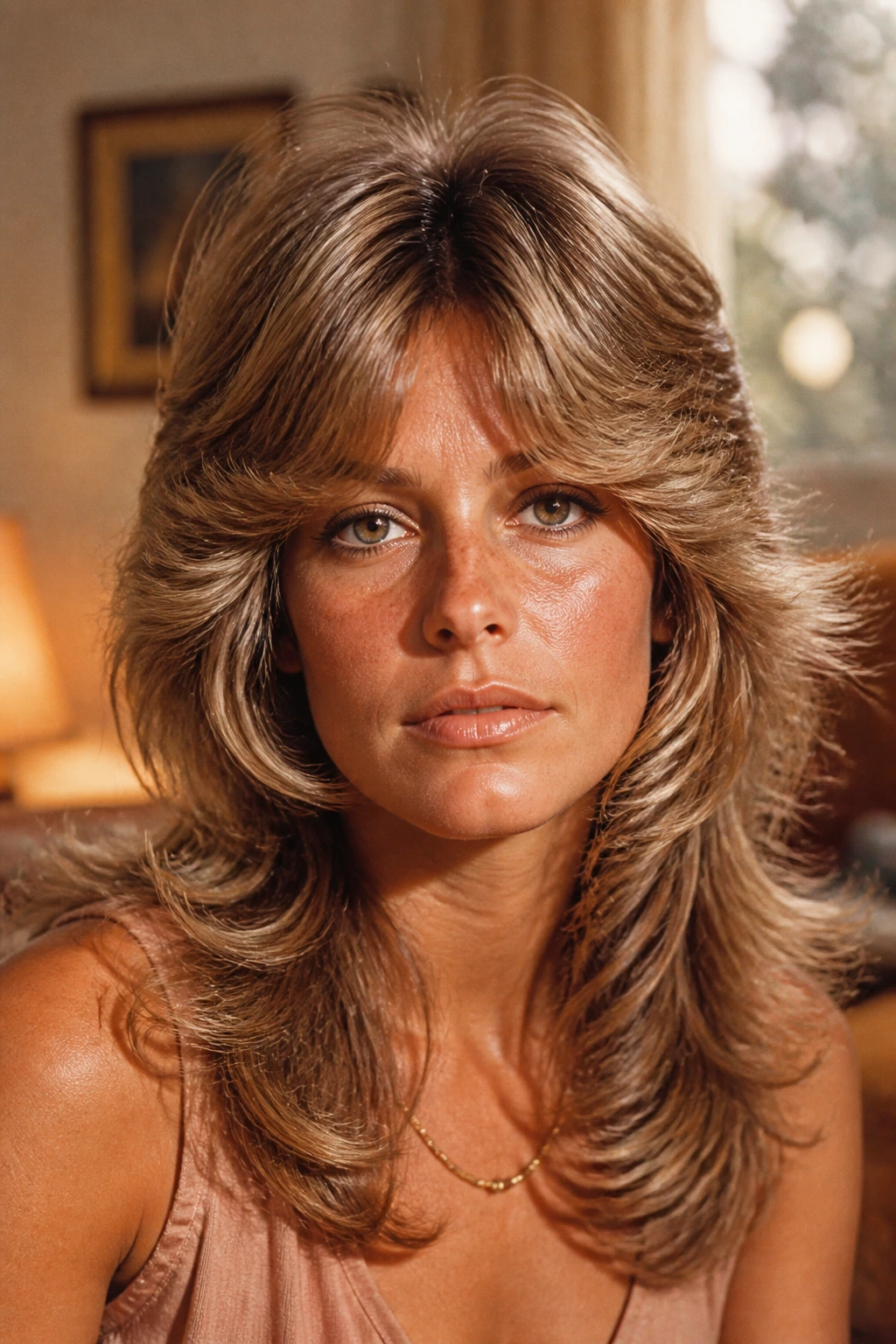
This is the look that started it all. Think of the quintessential feathered layers that framed the face, with plenty of volume at the crown and wispy, tapered ends. It is all about the “flick.” Unlike modern iterations that rely on natural texture, this cut requires a bit of styling effort, usually involving a round brush and a blow-dryer to encourage those layers to flip outward.
The Anatomy of the Feathered Cut
The key to this style is the layering technique. The stylist needs to cut into the hair at the cheekbone and jawline to create that signature face-framing effect. The back should be shorter and more heavily layered than the front to create that distinct, rounded shape. If the layers are too long or heavy, you lose the “feathered” appearance and end up with just a standard haircut.
Styling for the Full Effect
- Volume: Use a volumizing mousse on damp hair before blow-drying.
- Direction: Always pull the hair away from your face with a round brush.
- Finishing: A light-hold hairspray is non-negotiable here; you want movement, not stiffness.
Pro tip: If your hair is naturally flat, use a velcro roller on the crown while the hair is still warm from the dryer. It sets the volume and holds the shape for hours.
2. Heavy Curtain Bang Shag
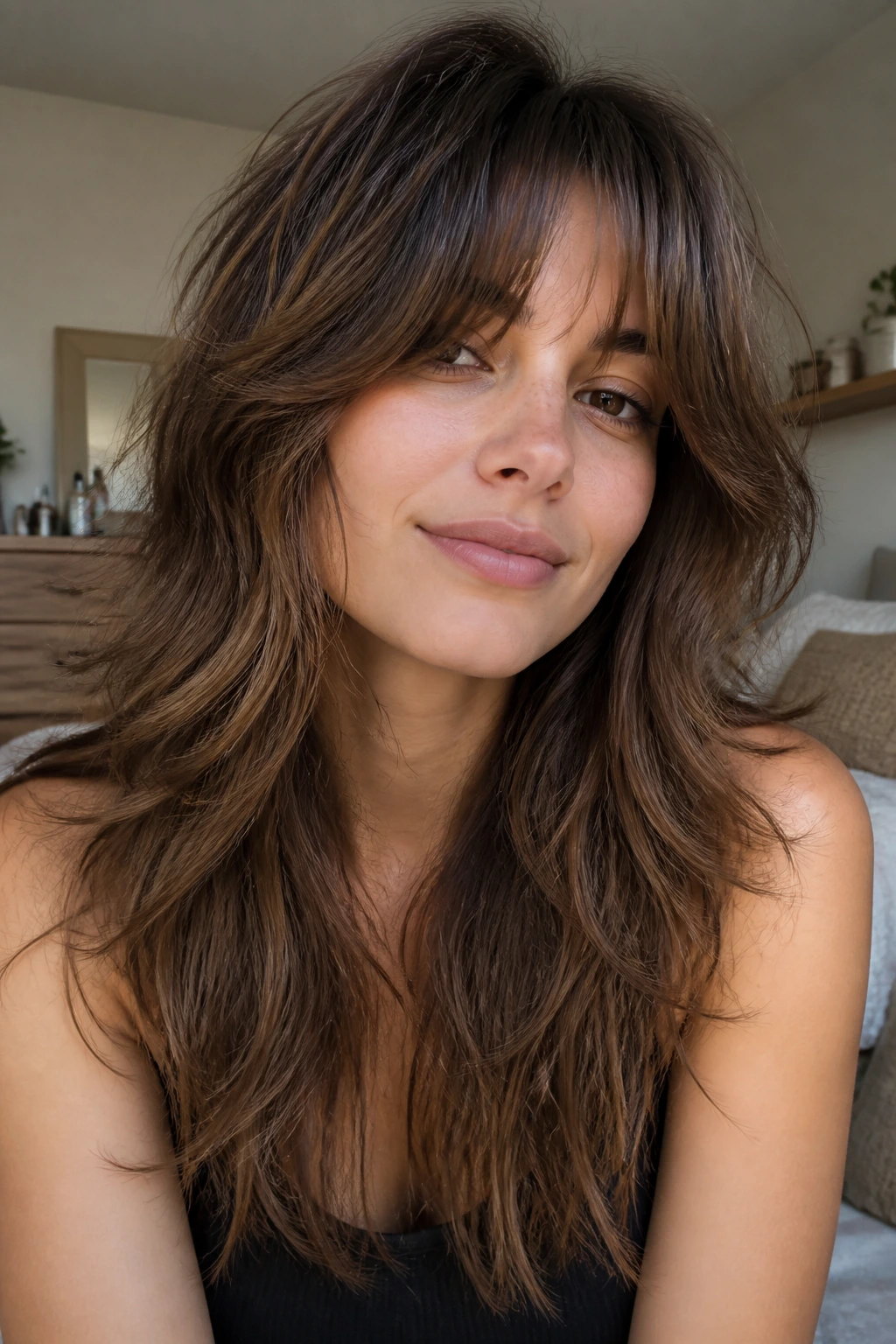
Not everyone is ready to commit to a full-blown shag, but adding heavy curtain bangs is a gateway into the style. This version keeps the majority of the length long and relatively consistent, while the layers are concentrated entirely around the front and the crown. It creates a beautiful silhouette without the high-maintenance requirement of a shorter cut.
Why This Works for Beginners
You get the benefits of the shag—the bounce, the face-framing, the texture—without sacrificing your overall length. It is incredibly flattering because the curtain bangs soften the forehead and cheekbones, acting like a built-in filter. If you hate the result, it is much easier to grow out a bang than it is to grow out a full-shag chop.
Maintenance Considerations
This cut depends entirely on the bangs. They need to be trimmed every four to six weeks to keep them from poking you in the eye. When you wake up, they will likely be going in different directions. Keep a small round brush and a travel-sized dryer in your bathroom to reset them in the morning; it takes less than sixty seconds.
3. Modern Wolf Cut Shag
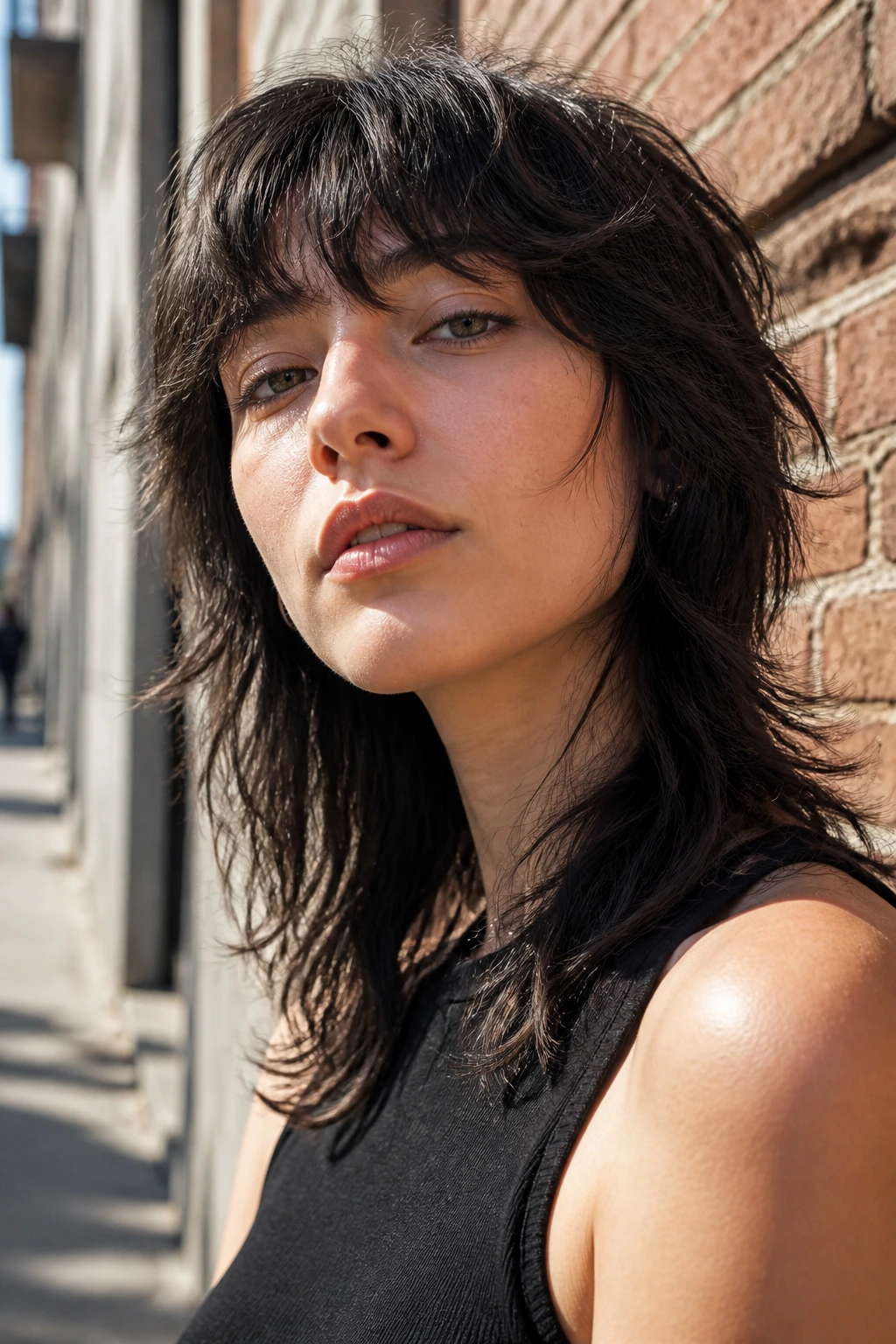
The “wolf cut” is essentially a hybrid. It takes the best parts of a shag and mashes them together with the edgy, short-layered look of a mullet. It sounds aggressive, but in practice, it is surprisingly soft. The top section is heavily layered to create significant volume, while the bottom length is thinner and piecey.
The Secret to the Wolf Cut
It relies heavily on razor cutting rather than blunt scissor cuts. Razoring thins out the ends and creates that soft, shattered look that defines this style. If your stylist tries to use blunt scissors for the entire cut, tell them to stop. You want that feathered, slightly frayed edge that screams “I cut this myself” (even though you absolutely did not).
Texture is Everything
This haircut does not look good on pin-straight, heavy hair unless you use texture spray. You need a grit-heavy product to make the layers stand out. If you have natural wave, this cut is a miracle. It will likely air-dry into a perfect, messy shape that requires zero effort.
4. Soft Layers on Fine Hair
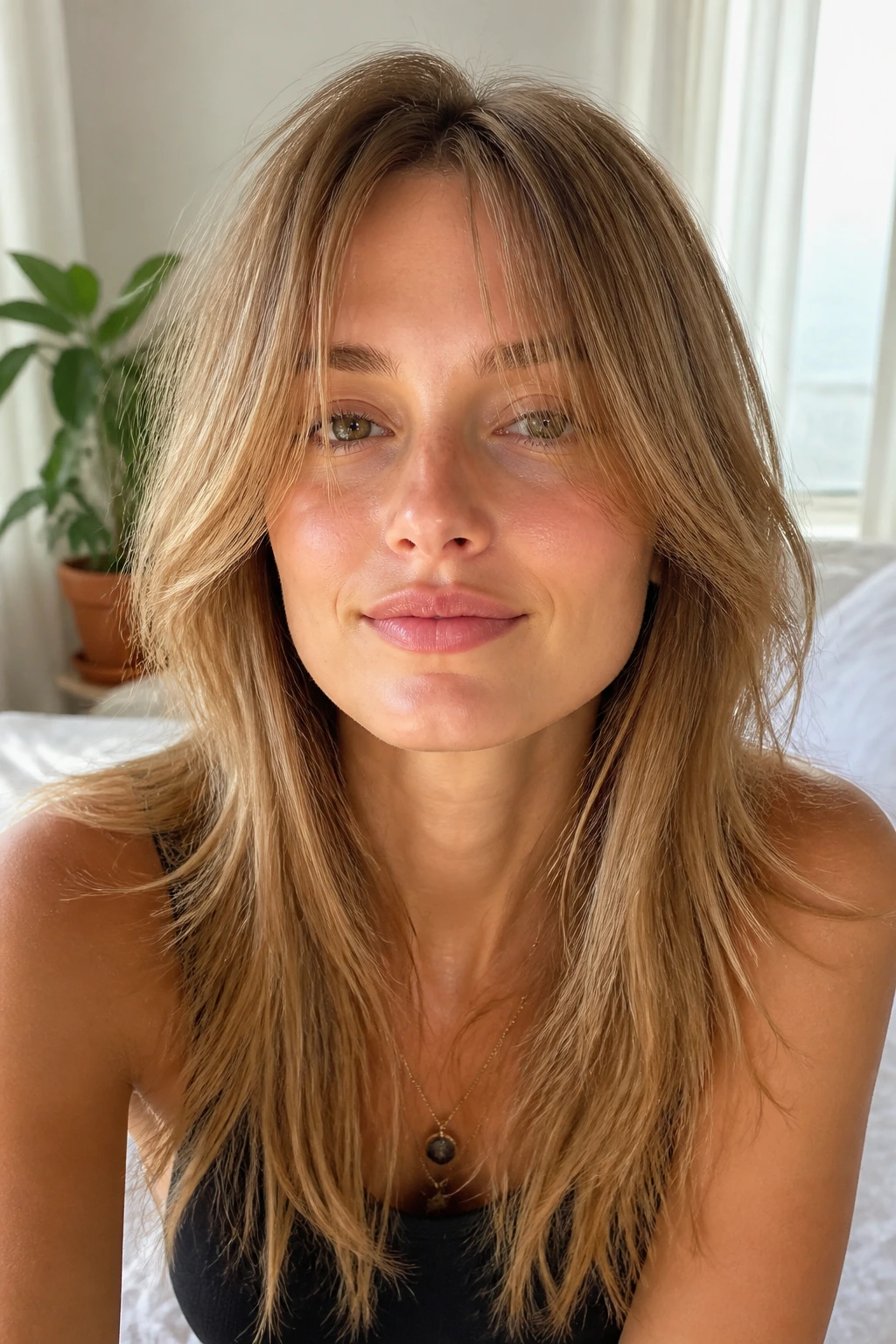
The biggest fear for someone with fine hair is that layers will make it look thinner. That only happens if you cut the wrong layers. For fine hair, the goal is “shattered” layers, not heavy, choppy ones. You want to remove just enough weight to let the hair lift, without creating see-through ends.
Avoiding the “Stringy” Trap
Ask your stylist for long, blended layers. Avoid disconnection. When the layers are disconnected, you end up with holes in the hair density. You want a smooth transition from the shortest layer to the longest. This creates the illusion of fullness and movement.
The Best Products to Use
Stay away from heavy creams or thick pomades; they will weigh your hair down immediately. A dry texturizing spray or a lightweight sea salt spray will be your best friend. Spritz it into your roots and mid-lengths, then scrunch with your hands.
5. Curly Shag with Rounded Volume
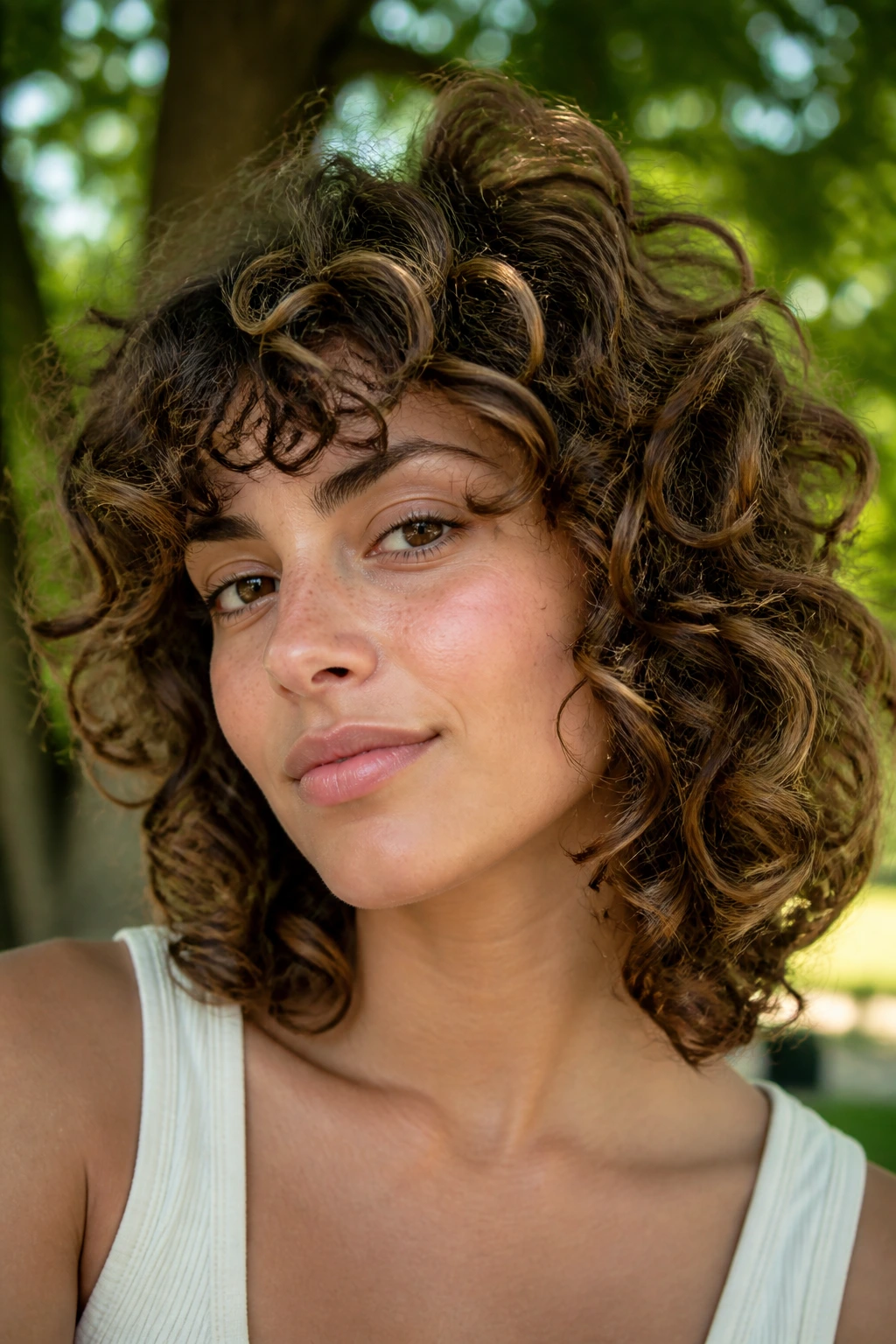
If you have curls, you should be rocking a shag. It is the most flattering cut for textured hair because it distributes volume evenly. Instead of having all the weight at the bottom (creating the dreaded triangle shape), the layers move the volume up, framing your face and highlighting your features.
Why Gravity is Your Enemy
With curls, gravity usually pulls them flat at the roots. A shag solves this. By cutting shorter layers at the top, you reduce the weight that pulls the curls straight. The result is a rounded, bouncy, and incredibly healthy-looking head of hair. It takes the focus off the length and puts it on the bounce.
Styling Notes for Coils
- Diffuse: Never air-dry to get max volume. Use a diffuser attachment on low speed.
- Product: A curl-defining cream mixed with a touch of gel gives the best hold without the crunch.
- Day 2: Sleep on a silk pillowcase to keep those layers from getting frizzy while you sleep.
6. Choppy Layers for Thick Hair
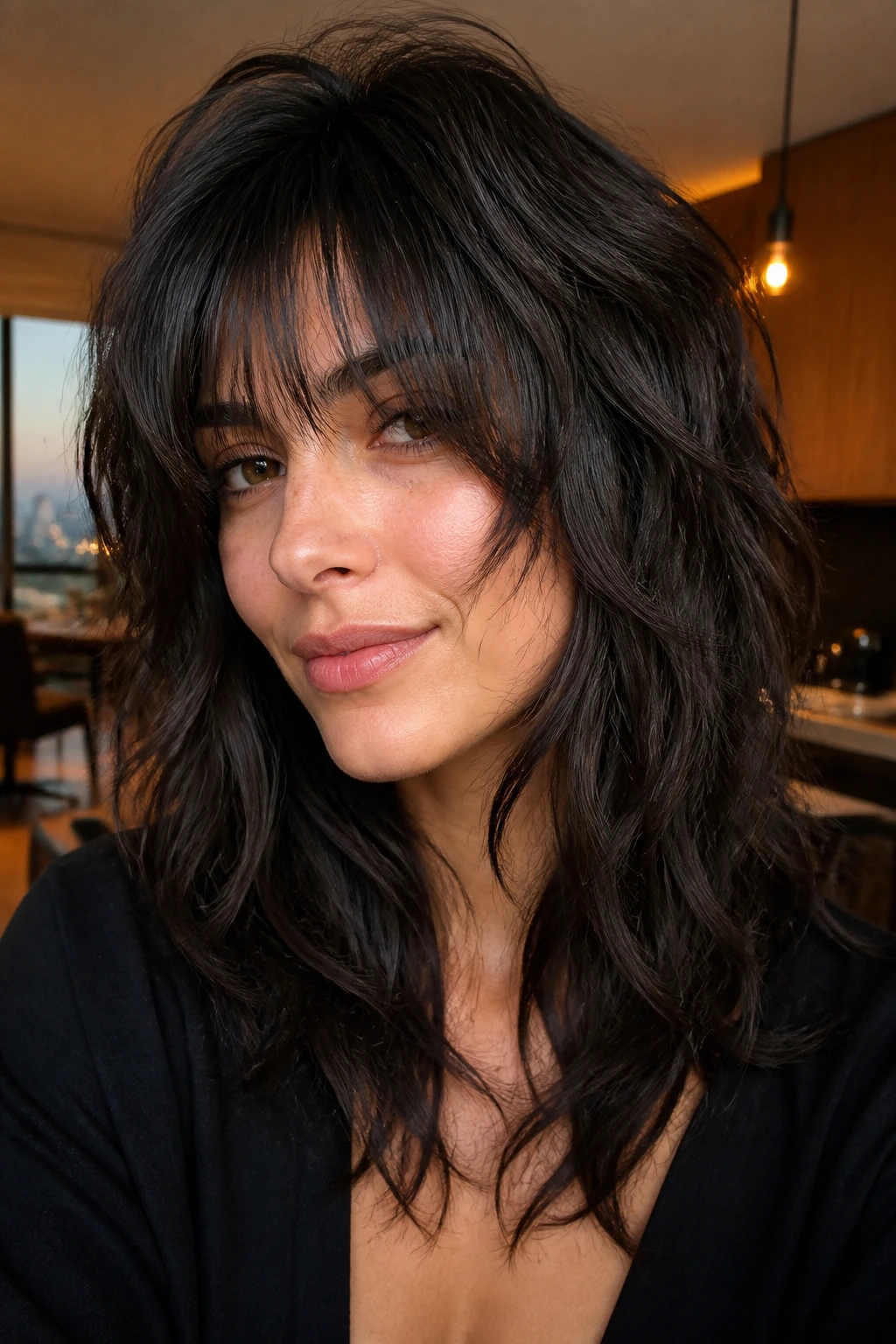
Thick hair needs a shag like it needs oxygen. If you have dense, heavy hair, you know the struggle of it feeling like a curtain. Choppy layers are the solution. This cut is aggressive. You are going to ask your stylist to remove weight.
The Technique Matters
Your stylist should be using thinning shears or a razor to debulk the interior of the cut. This removes the weight without changing the length. It changes the way the hair falls, allowing it to curve inward rather than sticking straight out.
Embracing the Edgy Look
This is not a “soft” cut. It is intentional, textured, and slightly messy. Don’t try to make it look smooth or polished. Use a matte clay or a styling paste to separate the layers and give them definition. If it looks a little bit rebellious, you’ve done it right.
7. Face-Framing Shag with Wispy Ends
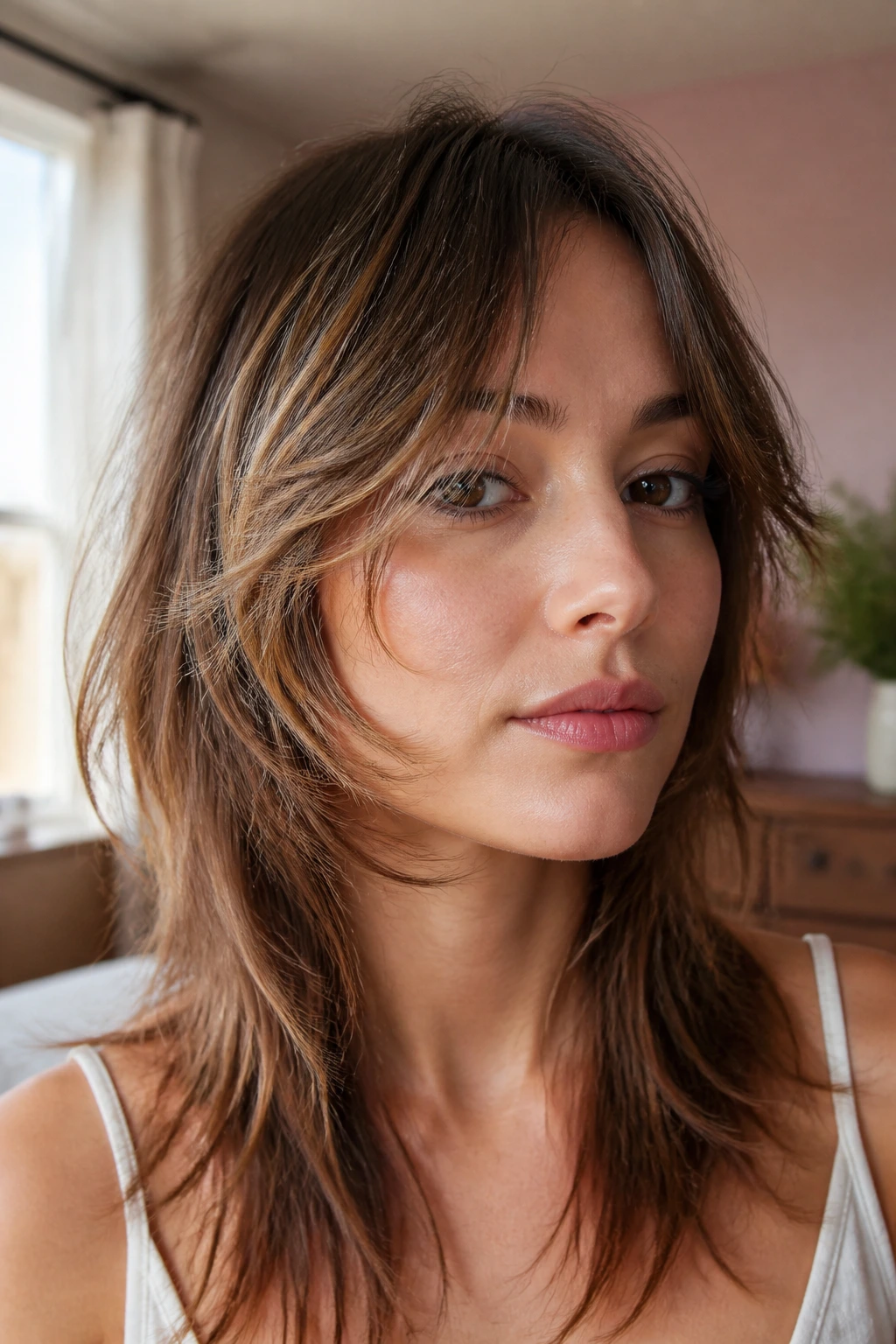
This is a delicate, almost ethereal version of the shag. It’s not about volume at the crown; it’s about framing. The layers are focused entirely on the front, specifically around the eyes and cheekbones, while the ends are kept wispy and soft, almost translucent.
The Art of the “Wispy” End
This requires point-cutting. Instead of cutting across the hair, the stylist holds the scissors vertically and snips into the hair. It creates that soft, jagged edge that looks lived-in and healthy. It also helps conceal split ends, making the hair look better than it actually is.
Who Should Choose This
This cut is perfect for people who want a change but are terrified of losing their length. You barely lose any actual length in the back, but the front transformation is massive. It changes your whole profile.
8. Disconnected Layers Shag
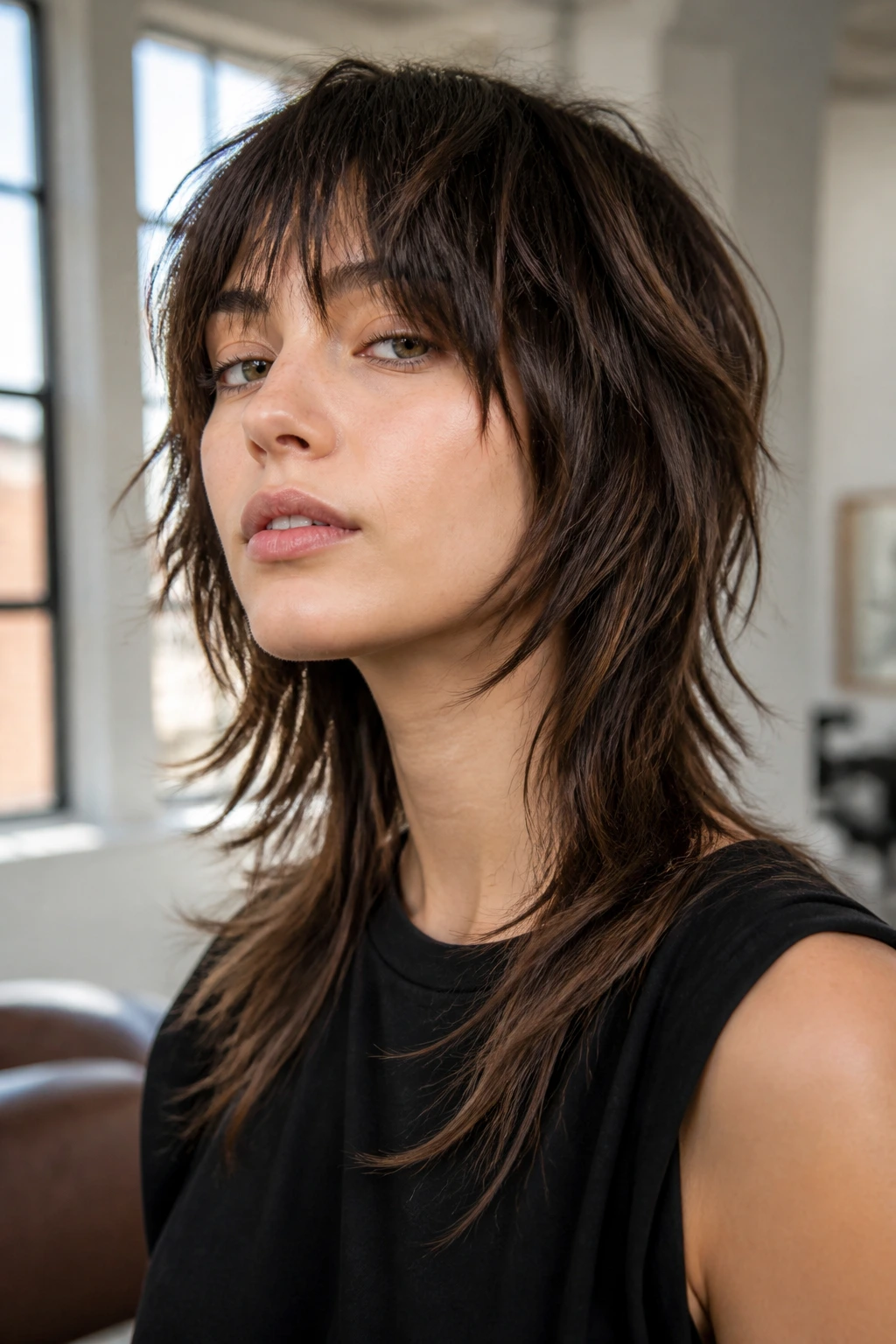
A “disconnected” cut means the layers don’t blend perfectly into one another. There is a distinct line where one section ends and another begins. It’s an editorial, high-fashion look. It looks deliberate and cool, rather than soft and blended.
Why Do It?
If you feel like your hair is boring or predictable, this is the fix. It adds an element of surprise. It creates a jagged, uneven texture that looks incredibly modern. It works best on medium-to-thick hair textures that can hold the shape of the disconnected layers.
Warning: It’s High Maintenance
You cannot wake up and just walk out of the house with this cut. It needs to be styled. You need to use a flat iron or a curling wand to emphasize the layers. If you don’t style it, it just looks like a bad haircut. If you like to spend ten minutes on your hair, this is for you.
9. Shag with Blunt Bottleneck Bangs
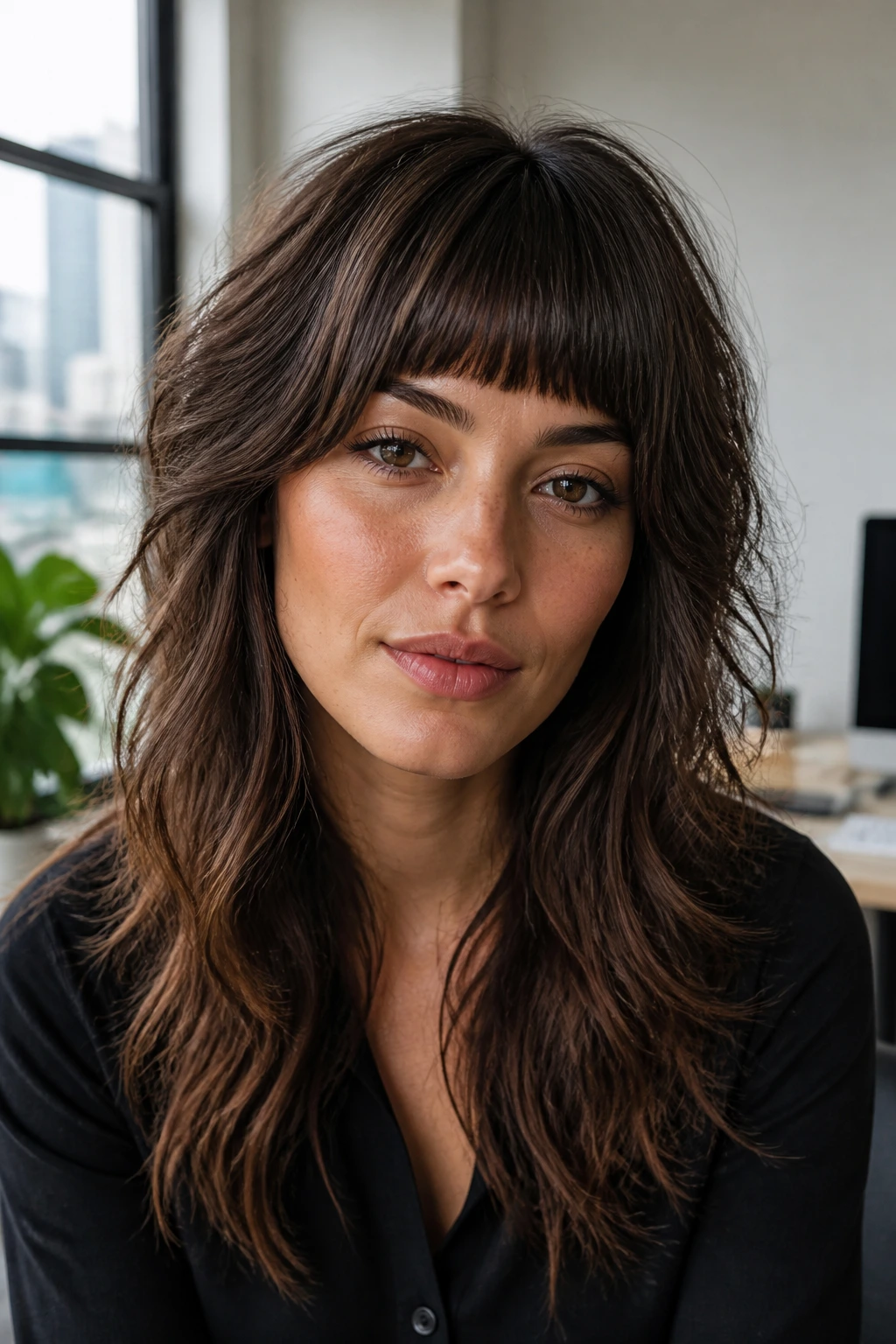
“Bottleneck bangs” are essentially curtain bangs that are cut a bit shorter in the middle, creating a shape that mimics the neck of a bottle. When you pair these with a long shag, the contrast is spectacular. You have this blunt, sharp bang against these messy, flowing layers.
The Visual Contrast
The bluntness of the bangs grounds the cut. It keeps the shag from looking too unkempt or “grungy.” It adds a touch of polish. It’s a great way to wear a shag to a professional office environment where a truly messy mullet-shag might feel too casual.
How to Style
You have to round-brush the bangs forward while they are wet. Do not let them air-dry unless your hair is perfectly straight and frizz-free. Once they are dry, use a flat iron to give them a slight bend at the ends.
10. Long Wavy Shag with Texture Spray
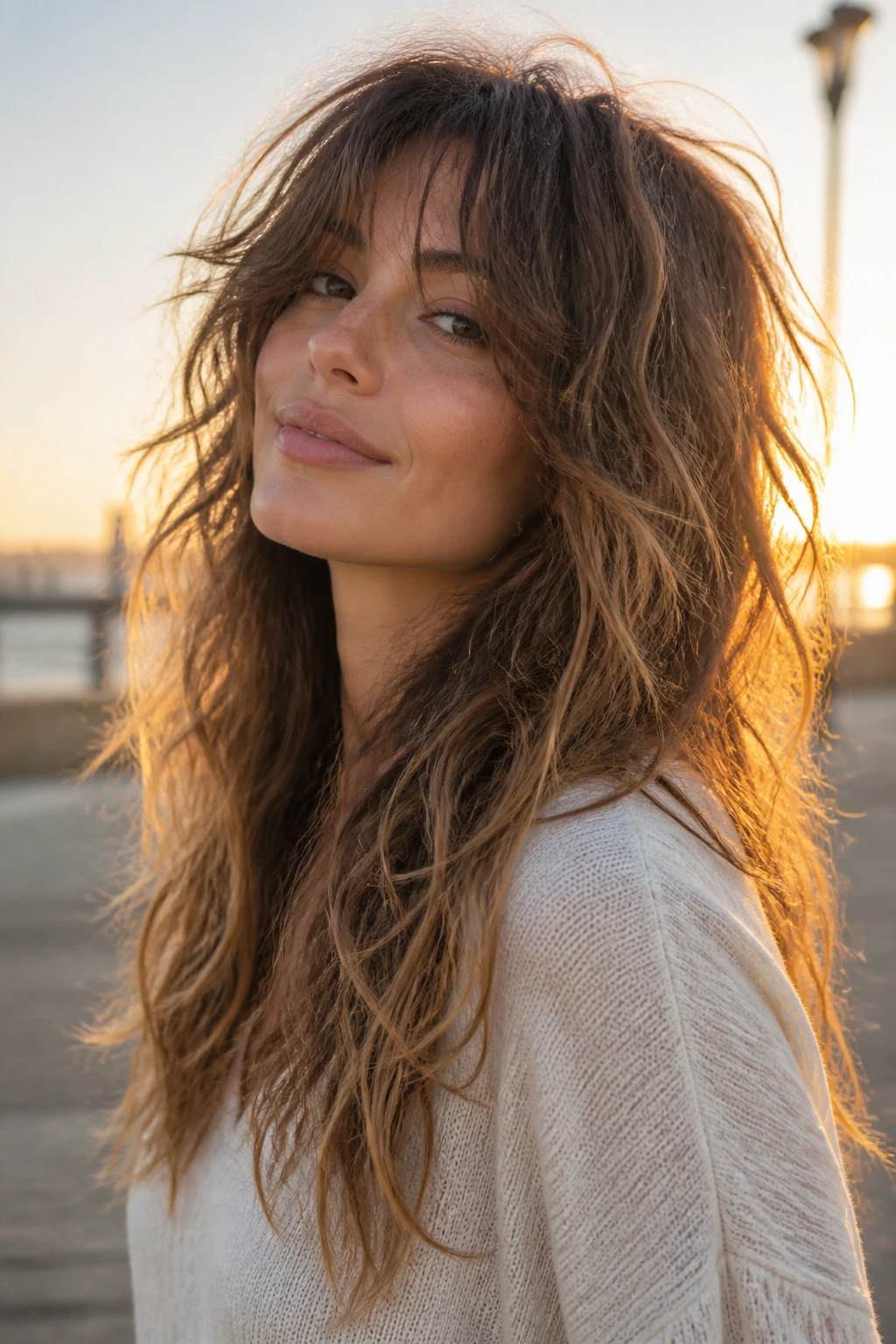
If your hair is wavy, you have the holy grail of shag hair. You don’t need a lot of layers to create movement because the wave does the work for you. This cut is about enhancing what you already have.
The “Less Is More” Approach
Don’t over-layer. If you put too many layers in wavy hair, it poofs out into a triangle. Keep the layers long and sparse. Use them to break up the weight so the waves can spring up.
The Product Secret
Stop using heavy shampoos. Use a clarifying shampoo once a week to strip out the product buildup. When styling, spray a salt-based texture spray onto damp hair and twist sections with your fingers. Let it dry naturally. That is it.
11. Low-Maintenance Shag for Straight Hair
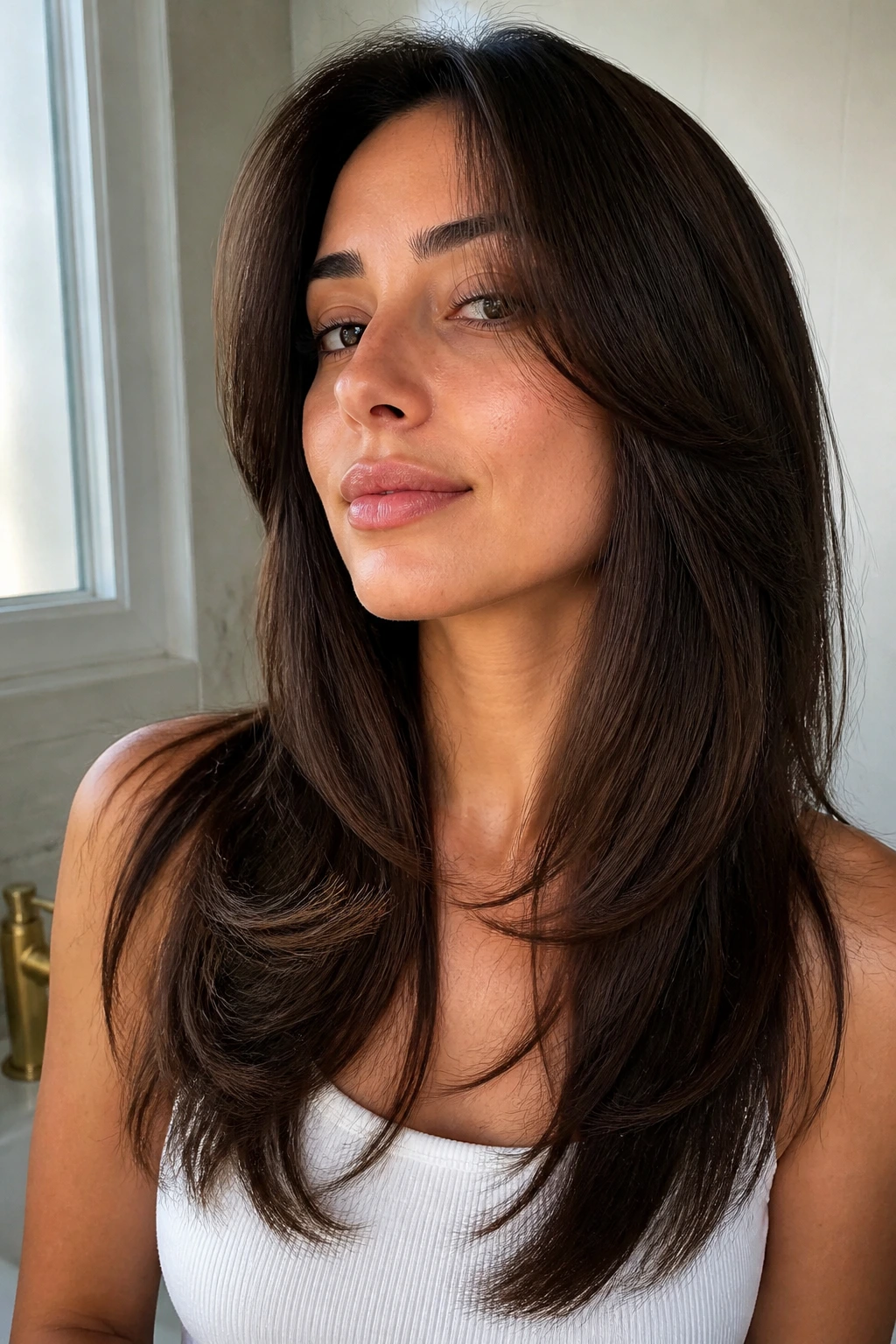
Straight hair often resists layers because they can look like “steps” if they aren’t cut correctly. The low-maintenance shag for straight hair avoids this by using long, blended, cascading layers. They don’t look like steps; they look like a gradual change in length.
The Key to Success
Ask for “internal layers.” This means the stylist cuts layers into the inside of the hair, not just the ends. This builds movement without creating a choppy, step-like appearance. It gives you that bounce without making your hair look thin or ragged.
The Best Tool
A simple paddle brush and a blow-dryer are all you need. Blow-dry the hair upside down to get the roots to stand up, then finish with a boar-bristle brush to smooth the ends. You don’t need irons.
12. Shag with Ombré or Balayage Dimensions

Layers are the best way to show off color. When you have a solid, one-length cut, color sits flat. When you have a shag, your color shifts and moves. An ombré or balayage works perfectly here because the layers catch the light and highlight the different tones.
Placement Matters
If your stylist does the layers before the color, they can place the highlights exactly on the ends of the layers. This makes the layers look more dramatic and defined. It’s a technique called “color contouring.”
Maintaining the Color
Because shags are usually styled with texture products, you might notice your ends feeling dry. Invest in a good hair mask. Use it once a week. Bleached ends on a shag can look fried if you aren’t careful, so keep them hydrated.
13. Shag with Piecey Fringe
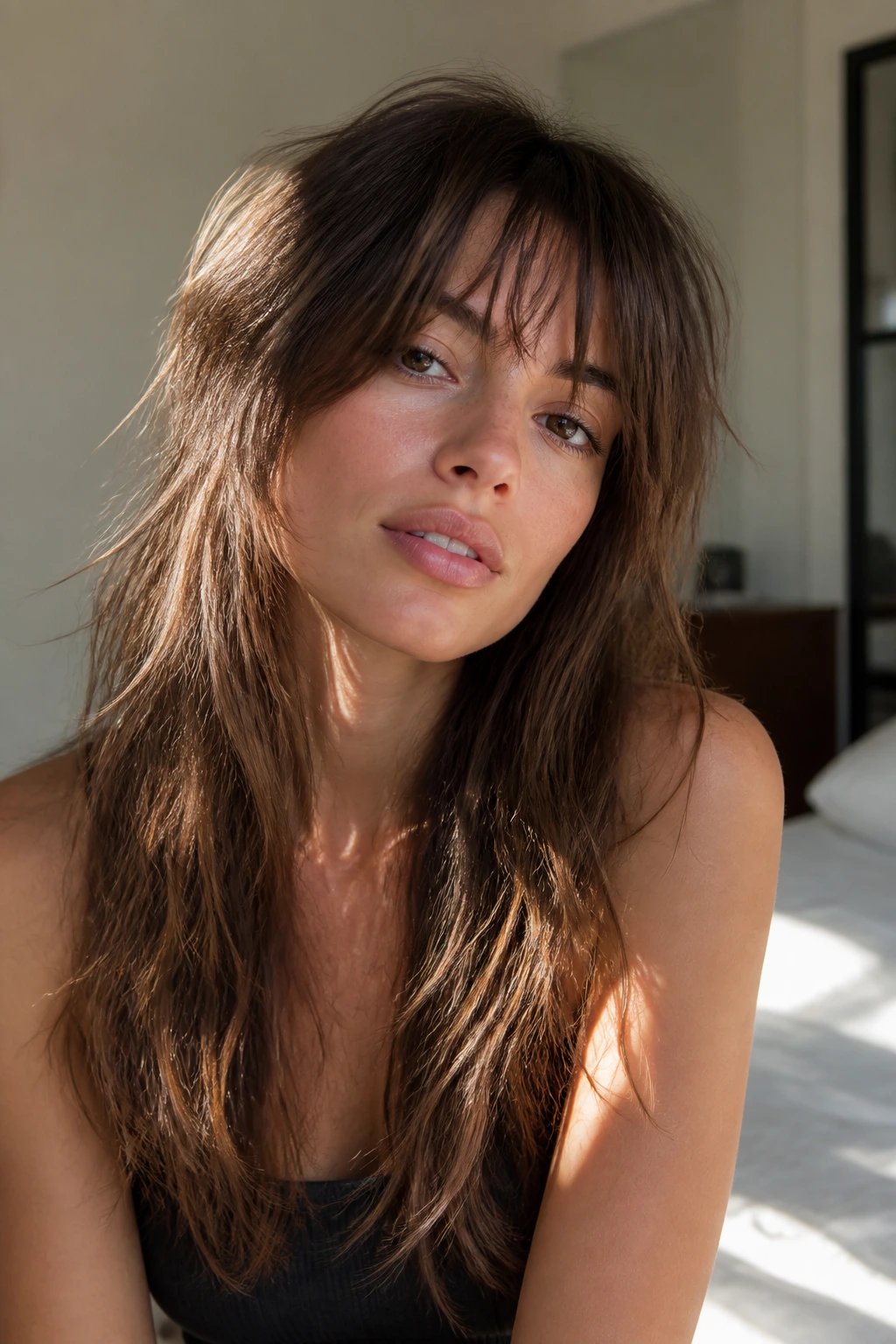
A piecey fringe is thinner and separated, not a thick, heavy curtain. It’s very 90s-inspired. Paired with a long shag, it gives you a soft, romantic vibe. It’s very low commitment.
Why It’s Flattering
It exposes a bit of the forehead, which helps elongate the face. If you have a round face, this fringe is a secret weapon. It breaks up the face shape.
How to Style
Don’t use a brush. Use your fingers. Rub a tiny bit of pomade between your fingertips and pinch small sections of the fringe together. This creates that “piecey” look that lasts all day.
14. The “Octopus” Hybrid Shag
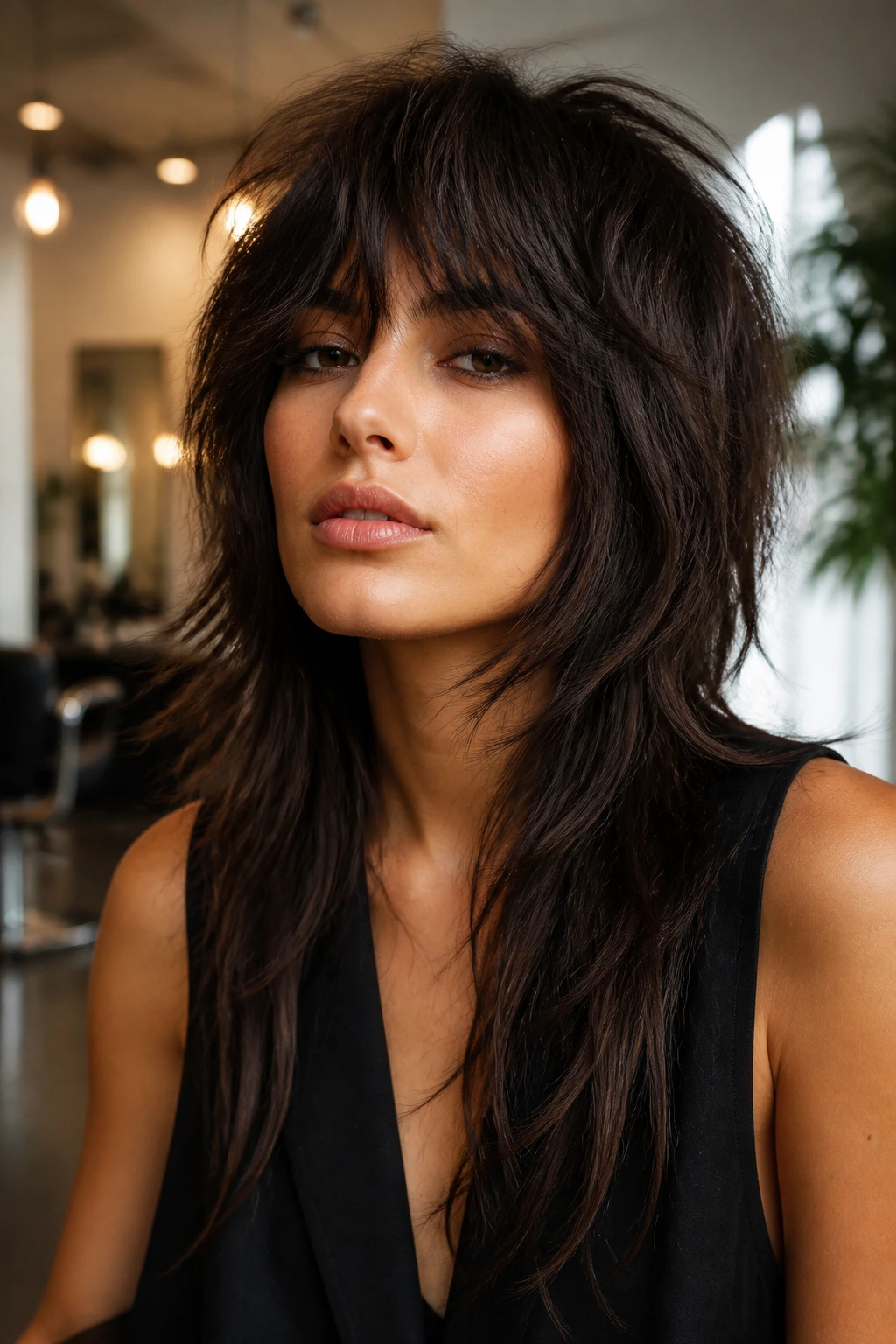
The “octopus” cut is a specific type of shag that is very heavy at the crown (like an octopus head) and then tapers down into thin, long, wispy legs. It is not for the faint of heart. It is dramatic.
Why It’s Having a Moment
It’s the ultimate “cool girl” cut. It’s messy, it’s voluminous, and it feels very high-fashion. It works best on people who have a lot of hair density. If you have very fine hair, stay away—this cut will leave you with too little hair at the bottom.
The Cutting Technique
It requires a lot of sectioning. The stylist builds the weight in the top section and then uses a razor to aggressively thin out the bottom. It’s almost two haircuts in one.
15. Shag with Sun-Kissed Highlights
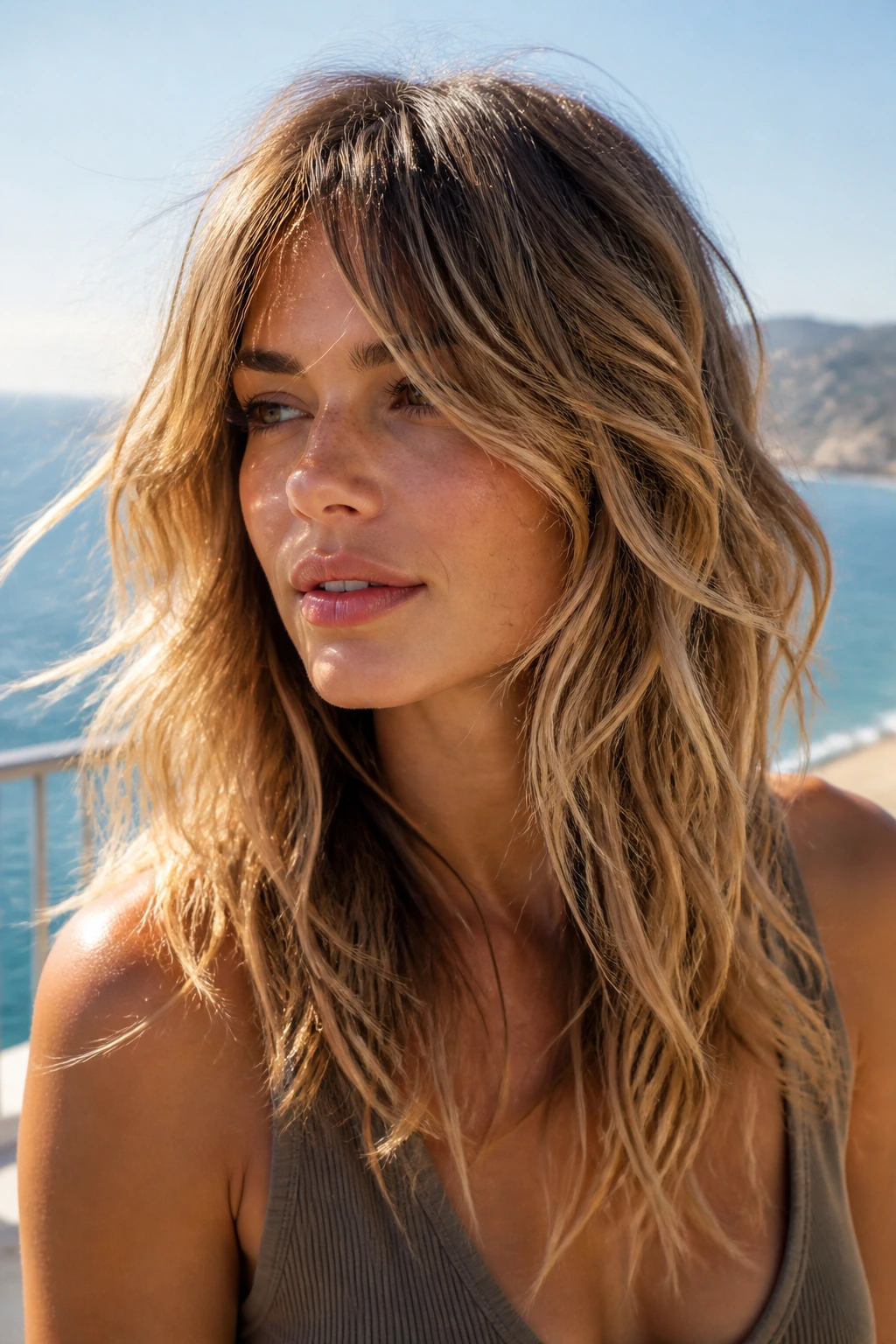
Sun-kissed highlights on a shag give you that “I just spent three months in the Mediterranean” look. Because the hair is layered, the highlights look completely natural, as if the sun actually hit them that way.
Ask for “Painted” Highlights
Ask your stylist for “hand-painted” or “balayage” highlights. Avoid foils if you want a natural look. Foils create a stripey, harsh line. Balayage creates a soft, blended look that grows out beautifully.
The Vibe
This is a relaxed, beachy style. Pair it with a loose wave. You don’t want this looking too “done.” If it looks perfect, it’s wrong. It should look a little bit sun-bleached and slightly salty.
16. Ultra-Layered Shag for Movement
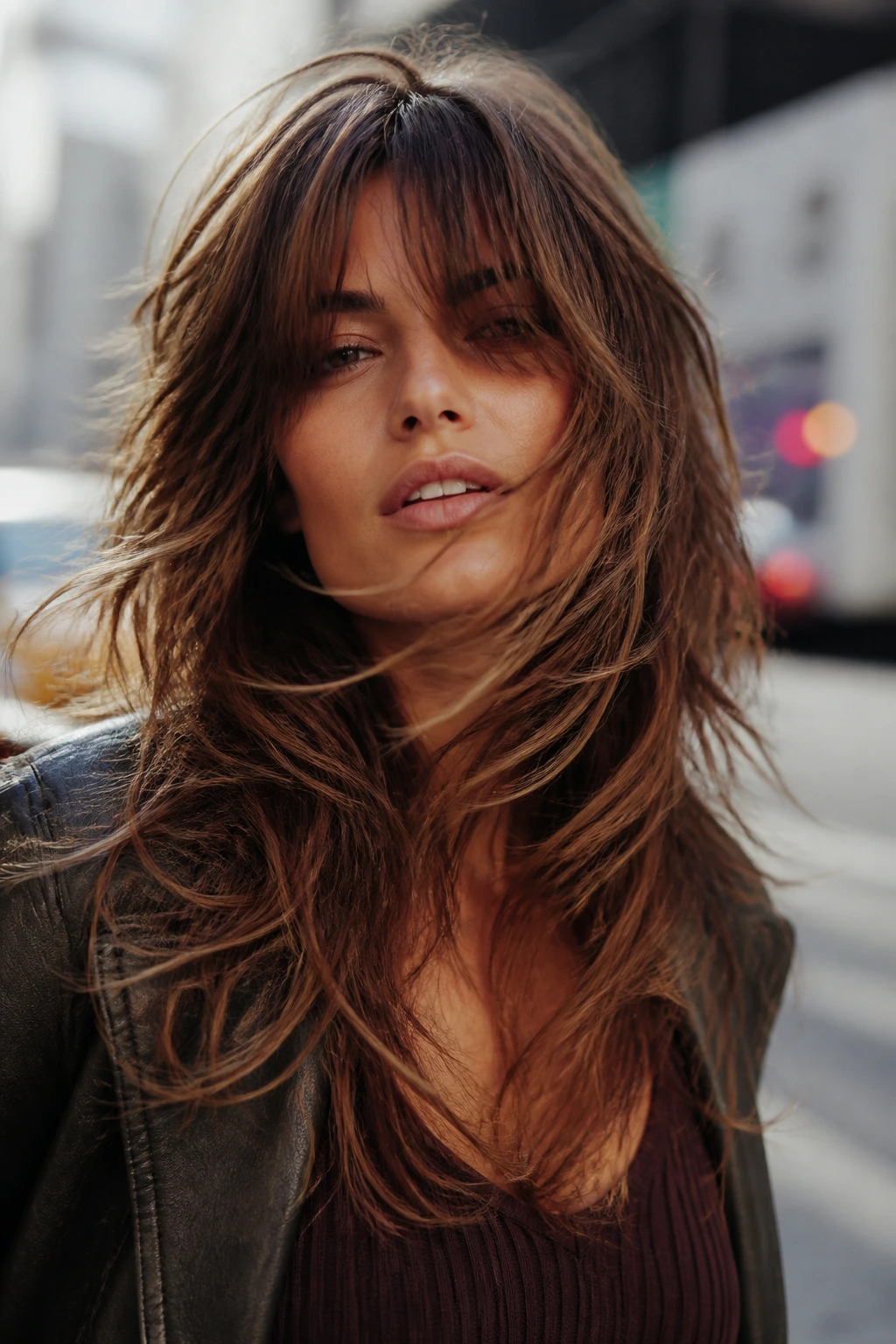
If you are tired of your hair just sitting there, this is the fix. We are talking about layers from the temple all the way down to the ends. It is all about maximum movement.
The Trade-off
You will have more flyaways. That is just the physics of it. With more layers, there are more ends exposed. You need to accept that your hair will not look “sleek.” It will look wild and voluminous.
Taming the Mane
You don’t need to eliminate the flyaways, but you do need to keep them healthy. A leave-in conditioner is mandatory. Apply it when your hair is wet to seal the cuticle. This prevents the layers from looking frayed.
17. Shag with Heavy Curtain Bangs
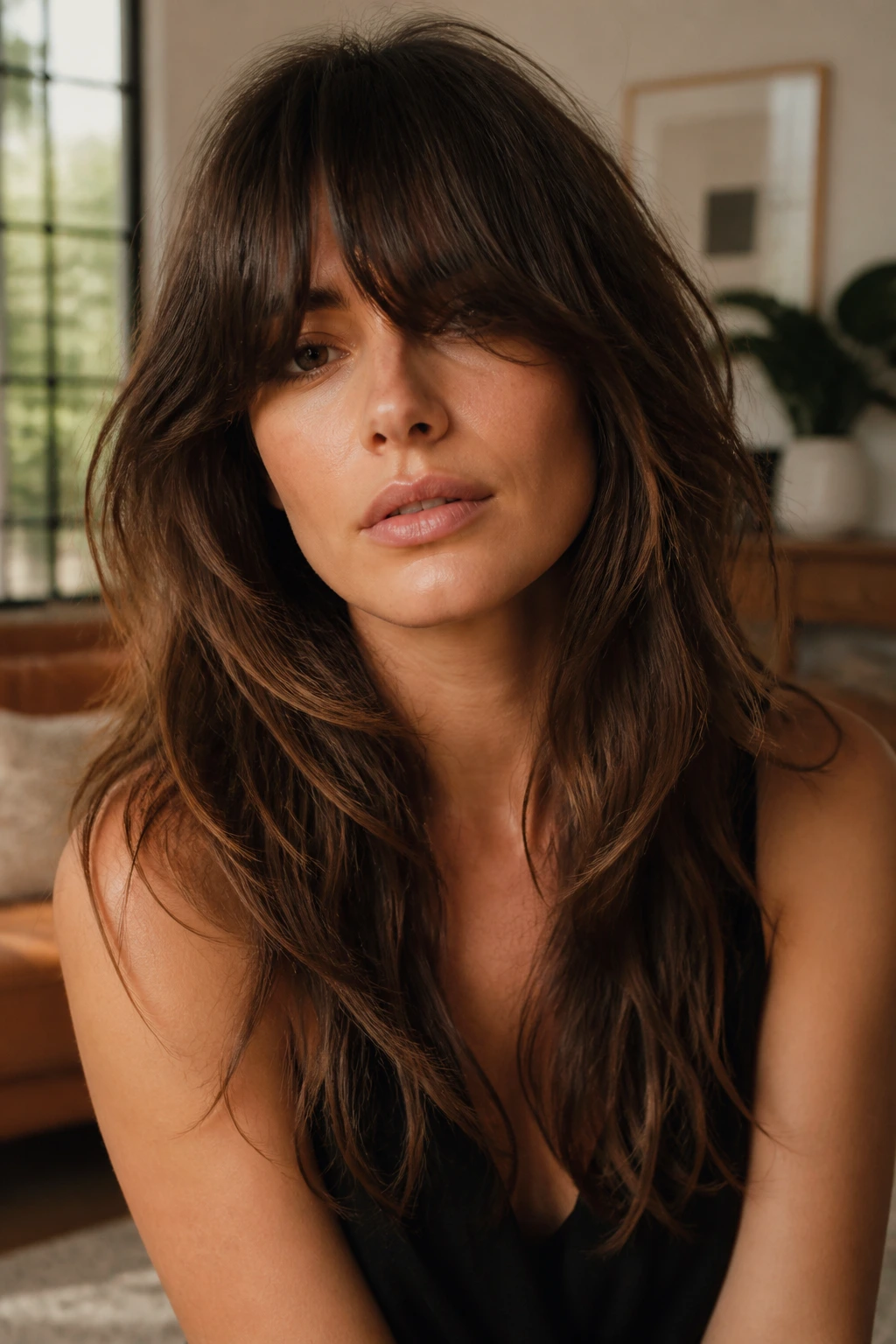
We mentioned curtain bangs before, but pairing them with heavy layers is different. This is the “Bardot” look. The bangs are thick, covering a good portion of the forehead, and the layers are heavy and dramatic.
The Drama Factor
This is a very specific aesthetic. It’s retro, it’s sultry, and it’s very intentional. You need to have the confidence to wear it because it hides a lot of your face. It draws all the attention to your eyes.
Maintenance
You have to trim these bangs. If they get too long, they lose their shape and just become hair in your face. Keep a pair of hair-cutting shears in your bathroom for a quick trim every few weeks.
18. Shag with Subtle Waves
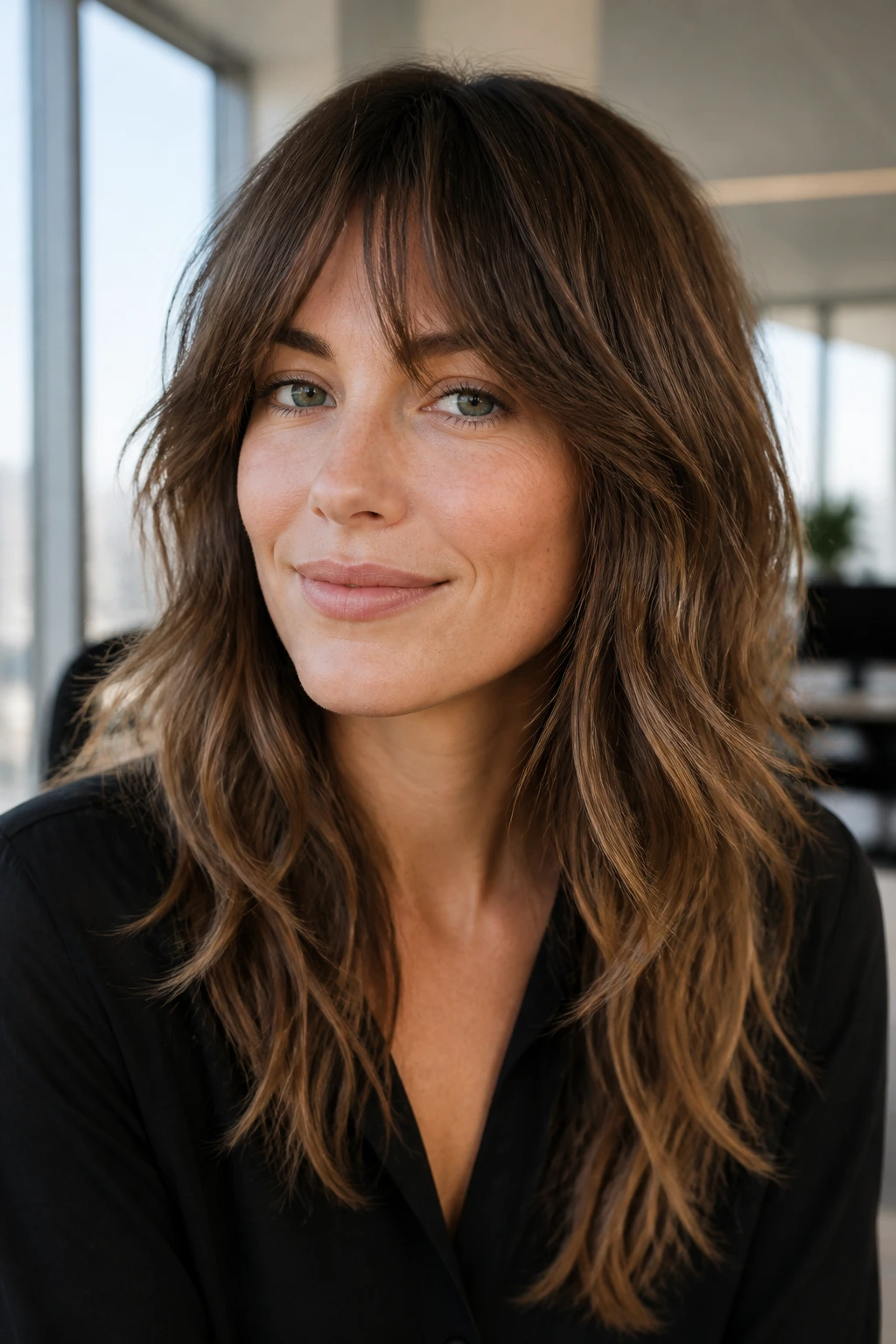
This is the “everyday” shag. It is polished, clean, and professional, but still has that texture. It is for people who want the shag look but work in conservative environments.
The Subtle Approach
The layers are long and blended. The texture is added with a light touch. It’s not “in your face” style. It’s refined.
Styling Tip
Use a curling wand, but don’t curl the ends. Leave the last two inches of hair straight. It keeps the look modern and prevents it from looking like a pageant hairstyle.
19. Shag with Asymmetrical Layers
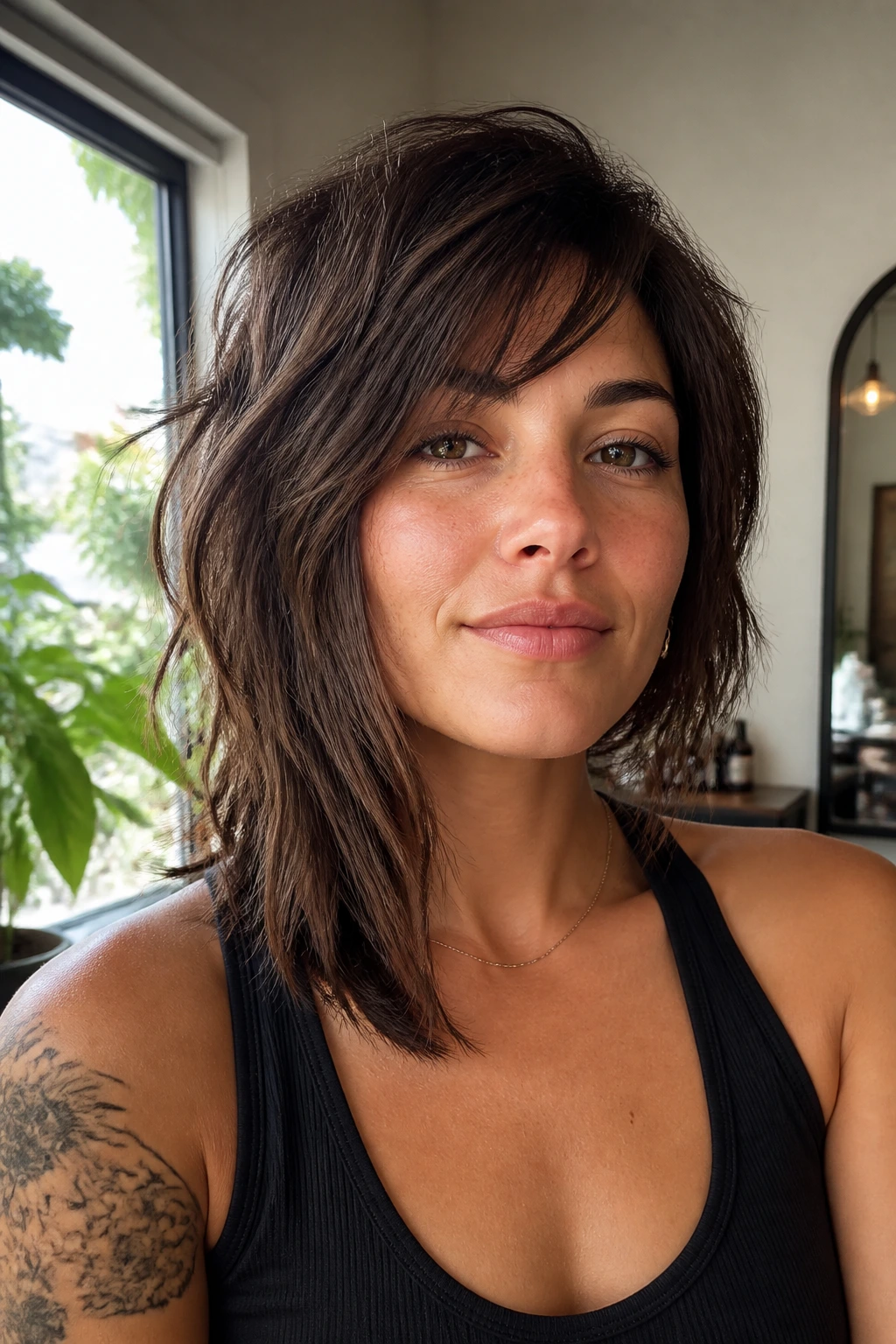
Asymmetry adds interest. One side is shorter, or the layers are cut at an angle. It breaks the symmetry of the face, which can be very flattering.
Why It’s Unique
It’s a conversation starter. People will notice your hair. If you like being the center of attention, this is a great choice. It’s also surprisingly versatile; you can part it differently to change how the asymmetry falls.
The Cut
This needs to be done by a stylist who knows how to balance a face. Don’t go to a random chop shop for this. You need someone who understands hair geometry.
20. Grunge-Inspired Shag
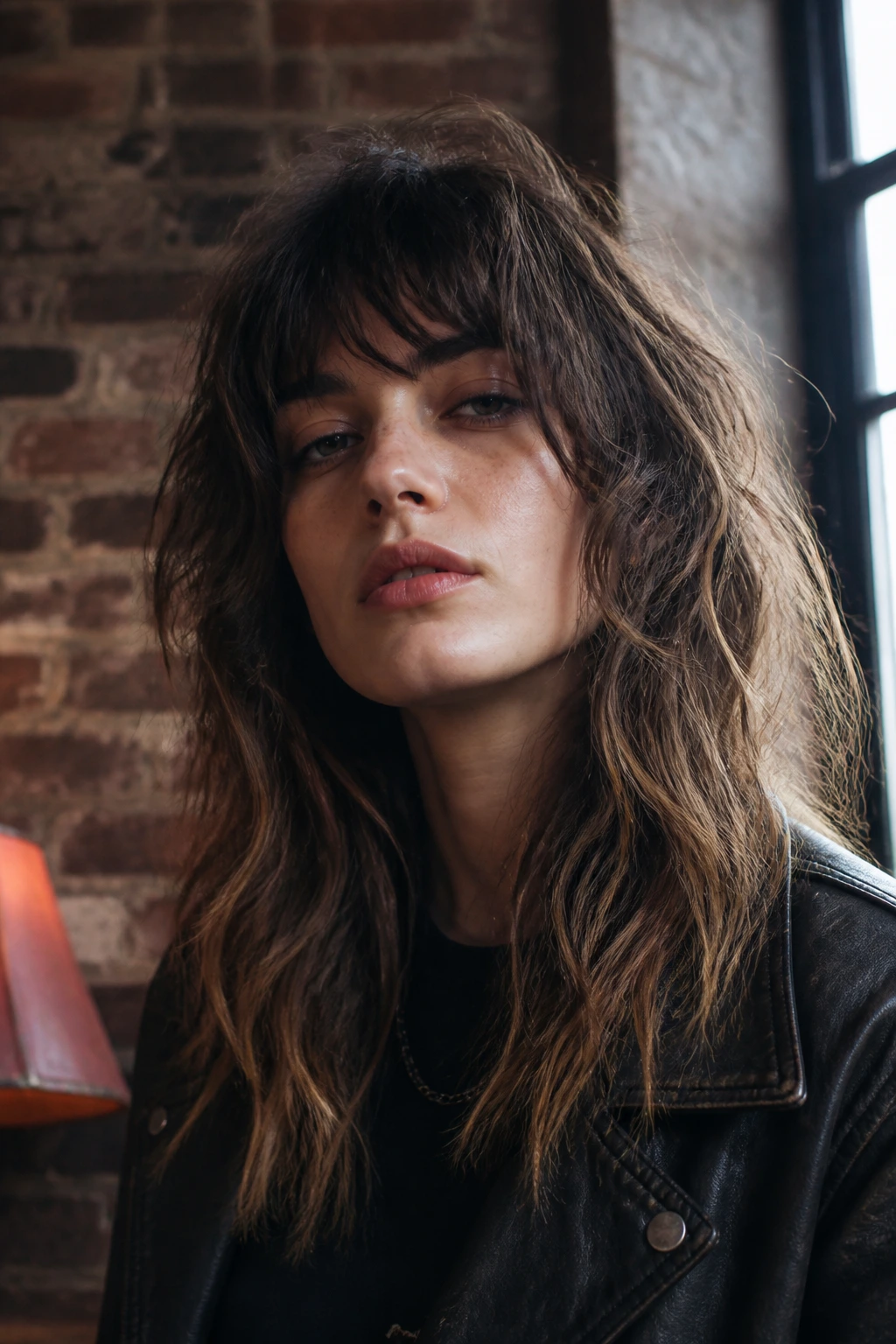
This is the “I don’t care” shag. It is messy, it is choppy, and it is glorious. It’s inspired by the 90s grunge scene. It is supposed to look like you haven’t washed it in two days (in a good way).
Achieving the Grunge Look
Use dry shampoo as a styling product, not just to clean the hair. It adds the grit and the matte finish that defines the grunge aesthetic. Don’t brush your hair. Use your fingers to rake through it.
The Attitude
The hair is just the accessory. The attitude is the point. This cut is about being unbothered. It pairs perfectly with messy eyeliner and a vintage leather jacket.
Final Thoughts
Choosing to cut a shag is, more than anything, a decision to prioritize movement over perfection. For decades, we were conditioned to chase a glossy, static ideal of hair—one that looked exactly the same from morning until night. But that kind of hair is high-maintenance and rarely feels natural. The shag, on the other hand, embraces the reality of human hair: it moves, it grows, and it changes depending on the humidity, how you slept, and what you’ve done to it.
When you commit to these layers, you are giving your hair the permission to have a life of its own. You might find that you need fewer products than you think. You might find that your morning routine shrinks because you stop trying to wrestle your hair into submission. Remember that the best version of this cut is the one that works with your texture, not against it. If your hair is fine, don’t force a heavy wolf cut. If it’s curly, don’t ask for a razor-cut shag that will leave you frizzy. Be honest with your stylist about your styling habits, and you will end up with a cut that actually makes your life easier, not harder.
