



Pixie braid hairstyles for Black women hit a sweet spot that long braids can miss. They give a short cut shape, movement, and a little attitude without asking you to grow out your hair first. And because the length is tight and close to the head, the braid placement matters more than sheer size — a tiny plait at the temple can change the whole silhouette.
That’s the part a lot of people overlook. On a pixie, braids are not there just to “decorate” the cut. They steer the eye. They sharpen a side part, soften a fade, frame the cheekbones, or make a tapered nape look deliberate instead of like an afterthought. Done well, they read as styling. Done badly, they tug at the hairline and look crowded fast.
The other thing worth saying: short hair needs cleaner parting and lighter tension than a full head of braids. A strong braid on a pixie is usually a braid that respects the cut you already have. That means keeping the sections small, letting the scalp show in the right places, and choosing details that work with your texture instead of fighting it.
Some of the looks below are sleek and close to the head. Some lean soft and romantic. A few are sharp enough to make gold earrings look even better. All of them can work on short natural hair, tapered cuts, or cropped styles with enough length on top, and the best ones are the ones that fit your routine, not someone else’s photo.
1. Side-Swept Cornrows That Skim the Hairline
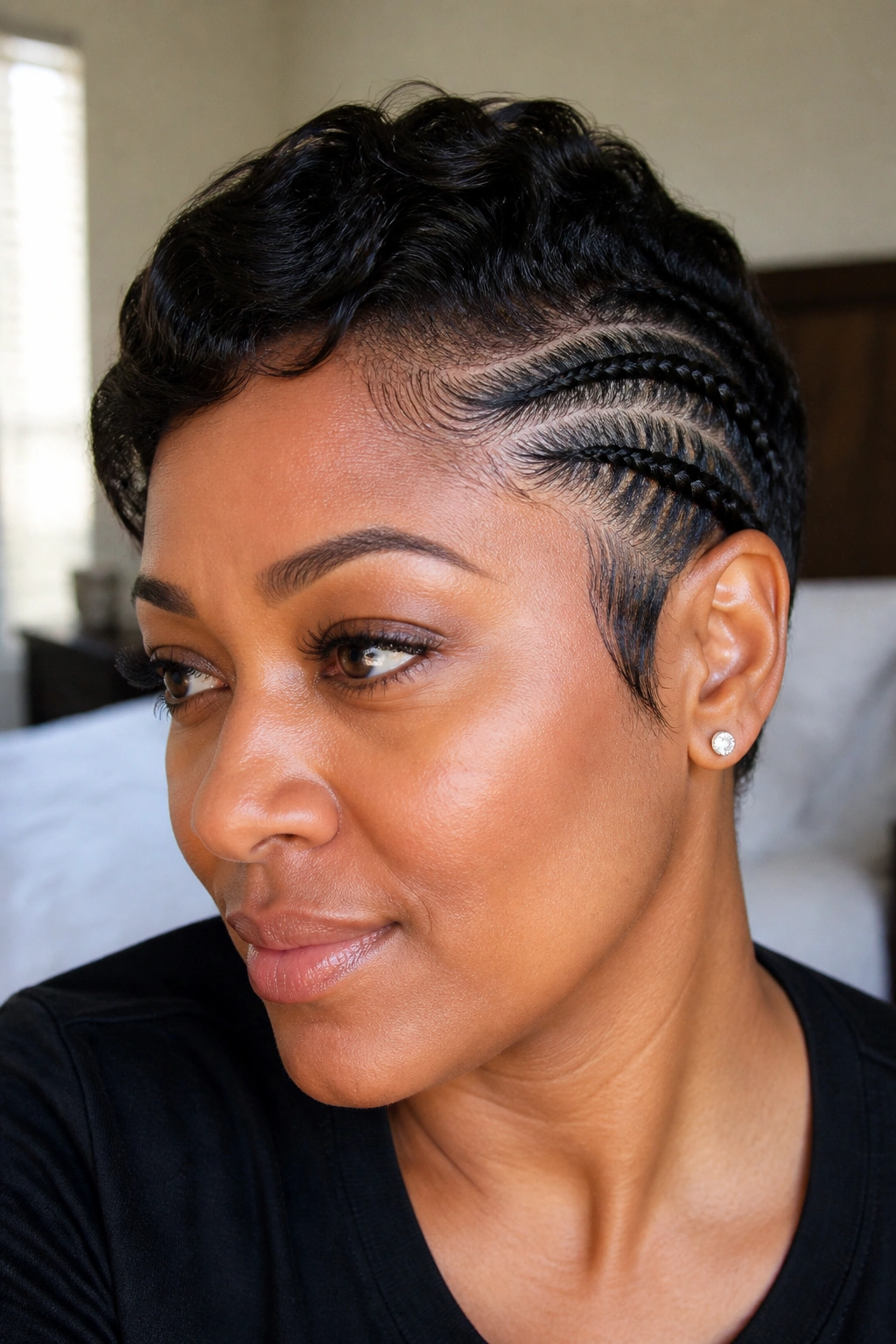
A side-swept cornrow on a pixie can do a lot with almost no extra hair. The braid starts near the front hairline, moves diagonally across the head, and ends low enough to tuck behind the ear or disappear into the side of the cut. That line gives a short style direction, which is half the battle on cropped hair.
Why It Works on Short Hair
The shape matters more than the size here. A braid that sits just above the temple pulls the eye upward, then across, and that makes the face look more balanced. It also works well if one side of your pixie is fuller than the other, because the braid helps even out the shape without making the whole style look heavy.
Keep the braid slim. A 1/4- to 1/2-inch section is usually enough. If the braid gets too thick, it starts to sit on top of the haircut instead of blending into it.
- Use a rat-tail comb for a clean diagonal part.
- Smooth the hair with a light braid gel, not a greasy layer.
- Wrap the finished braid at night so the front stays neat.
Best for: short natural hair, tapered pixies, and anyone who wants a clean look without a lot of fuss.
2. Curved Feed-In Braids Across a Tapered Pixie
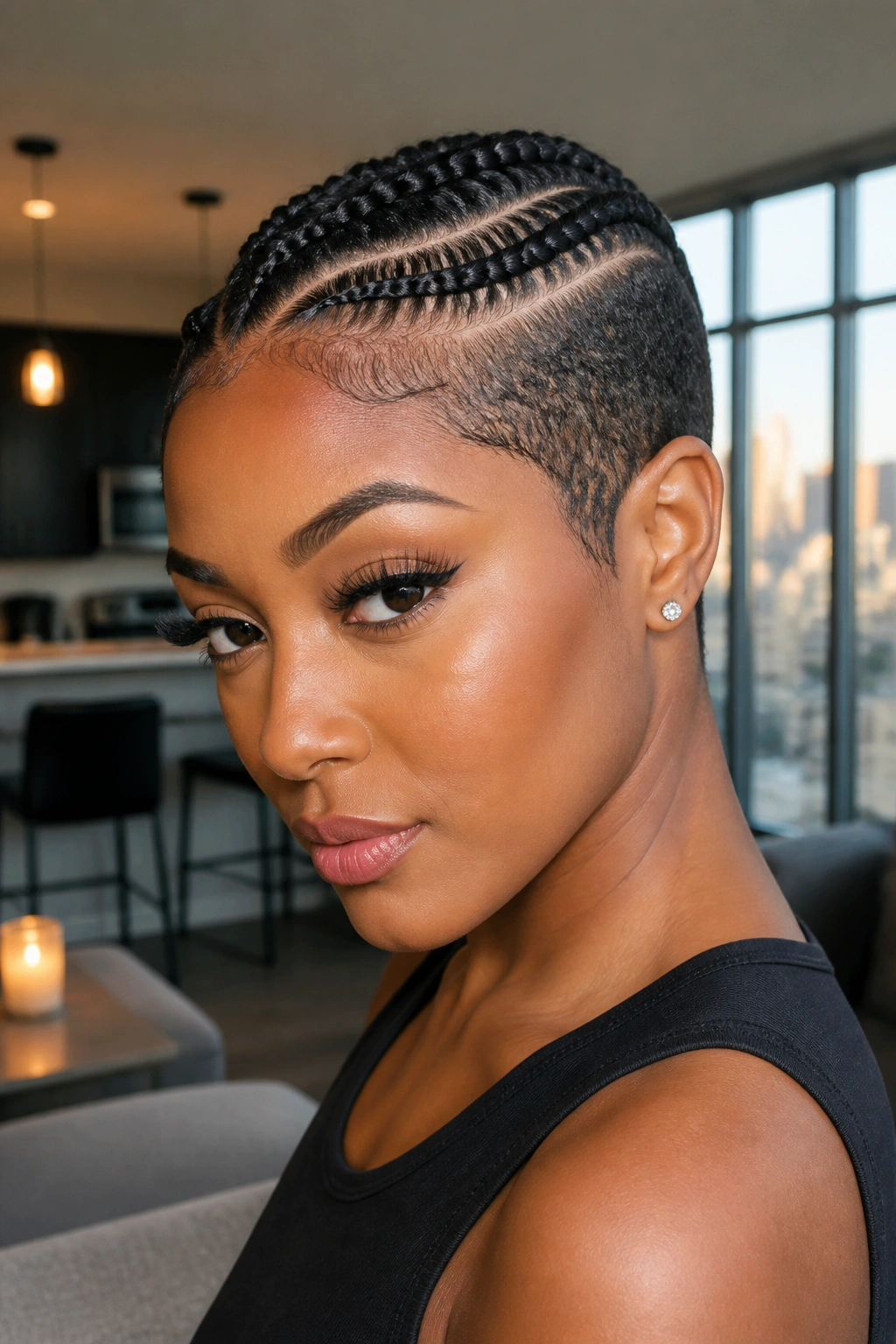
Feed-in braids look especially good on short hair because the scalp becomes part of the design. That gradual start at the root keeps the braid from looking bulky, which is a problem you do not want on a pixie cut. On a tapered shape, the curve can follow the head and make the whole style feel intentional instead of random.
The curve is the point. Instead of pulling straight back, the braid can arc from the front hairline toward the crown or sweep from one side into the back. That motion gives the cut some rhythm, and it helps when the taper around the nape is tight and clean. The braid acts like a line drawing on top of the haircut.
I like this style when the sides are already close. It gives you something visible at the top without hiding the fade or making the cut look crowded. Ask for two or three curved rows, not six or seven. Too many and the style starts fighting the shape of the head.
But here’s the catch: the sectioning has to be neat. Curved feed-ins look elegant only when the parts are smooth and the braid grows out evenly. Messy spacing shows fast.
3. Braided Bang With a Soft Side Part
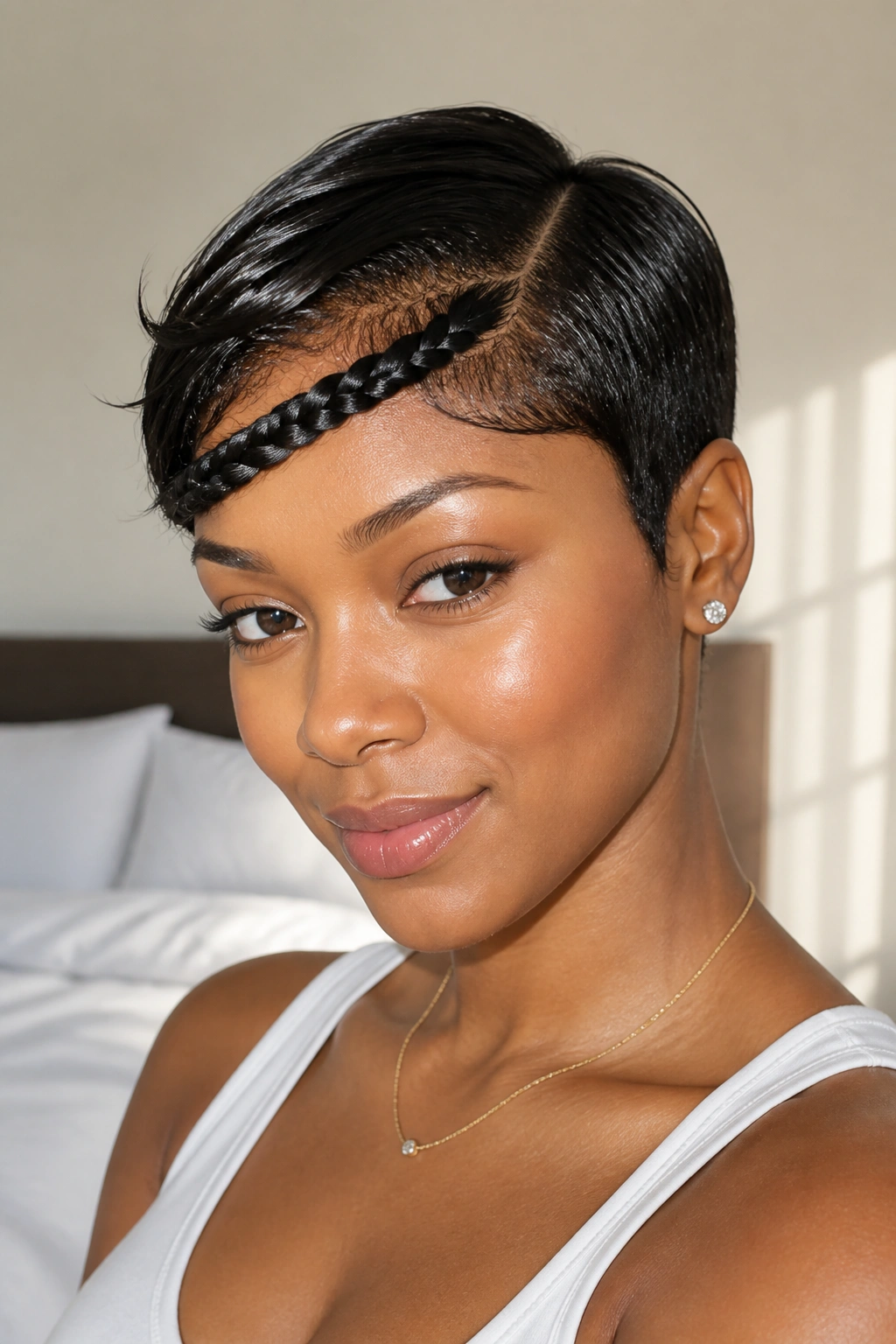
Want a braid that feels pretty without turning your whole head into a braid set? A braided bang does that job. It uses the front section of a pixie like a built-in accessory, and the rest of the hair can stay brushed smooth, softly curled, or lightly textured.
How to Wear It
Start the braid near the temple or just off the side part, then guide it across the forehead line or slightly above it. The braid should sit low enough to frame the face, not so low that it keeps sliding into the eyes. One neat braid is enough for this look; trying to add too much more can make the front feel crowded.
This style works well when you want the rest of the cut to breathe. Leave the crown soft, keep the back close, and let the braid do the talking. If your pixie has a little top length, you can finger-curl the rest for contrast. Straight hair works too, but the finish will feel sharper and less airy.
The real trick is balance. The braid should look like a front accent, not a helmet strap. If you wear side parts often, this is a smart way to keep the habit and still change the mood.
4. Crown Braid on a Close-Cropped Cut
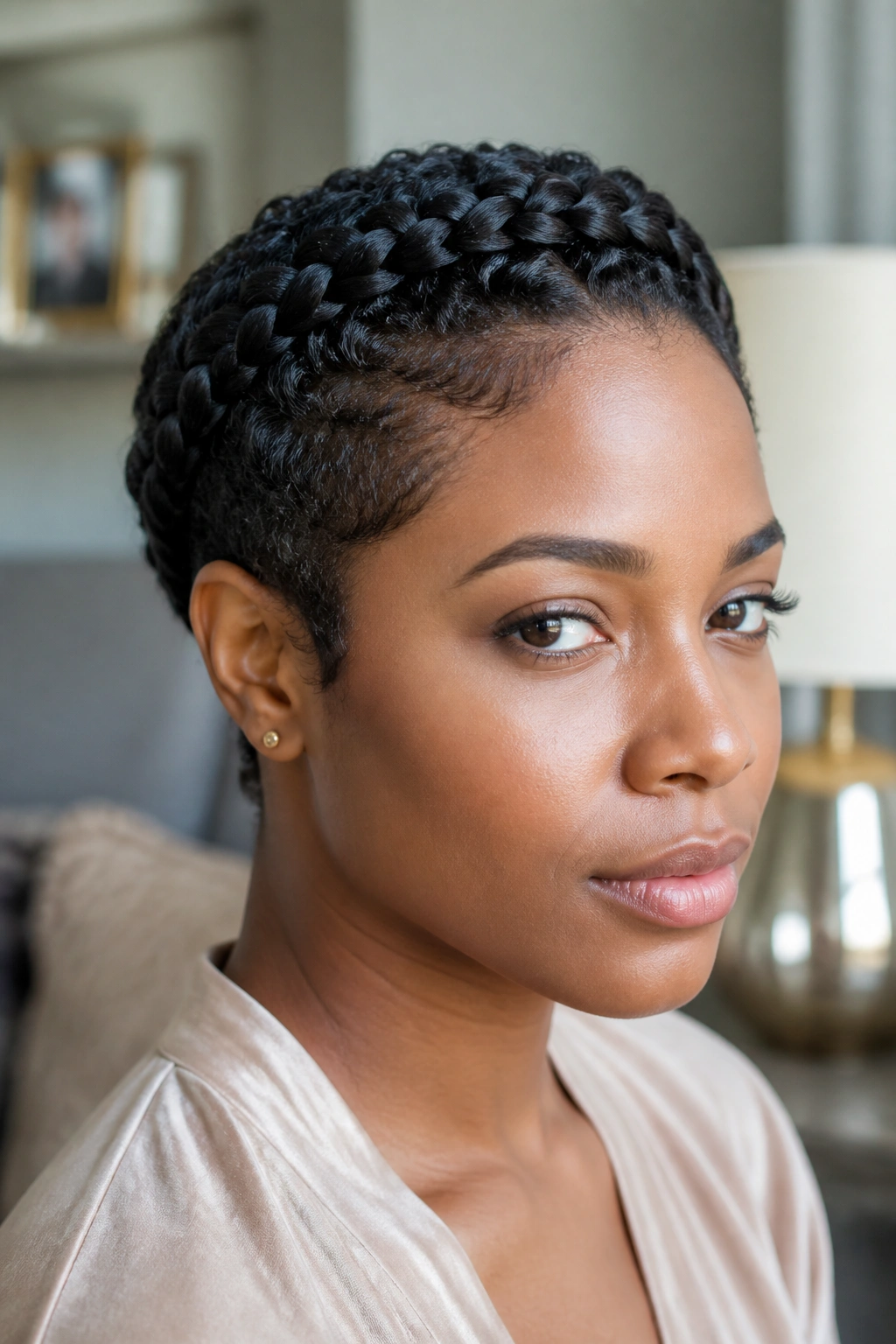
A crown braid on a pixie sounds ambitious until you see it on a close-cropped cut. Then it makes sense. The braid hugs the top edge of the hairline, curves around the head, and gives a short style that lifted, almost halo-like shape. It feels dressed up without needing much length.
Picture this on a cut with 2 to 3 inches on top and a tighter nape. The braid sits above the forehead, follows the curve of the head, and tucks near the side or back. The rest of the hair stays smooth, so the braid becomes the frame instead of the whole picture.
- Keep the braid flat against the head.
- Leave the crown section soft if you want more height.
- Tuck the end discreetly behind the ear or under another section.
- Use a light sheen spray, not heavy oil.
This one is a good pick for events, church, or any day when you want a neat finish that still feels feminine. It also hides a grow-out phase better than a plain side part. The braid becomes the border, and the short haircut inside the border looks cleaner because of it.
5. Zigzag Part Pixie Braids
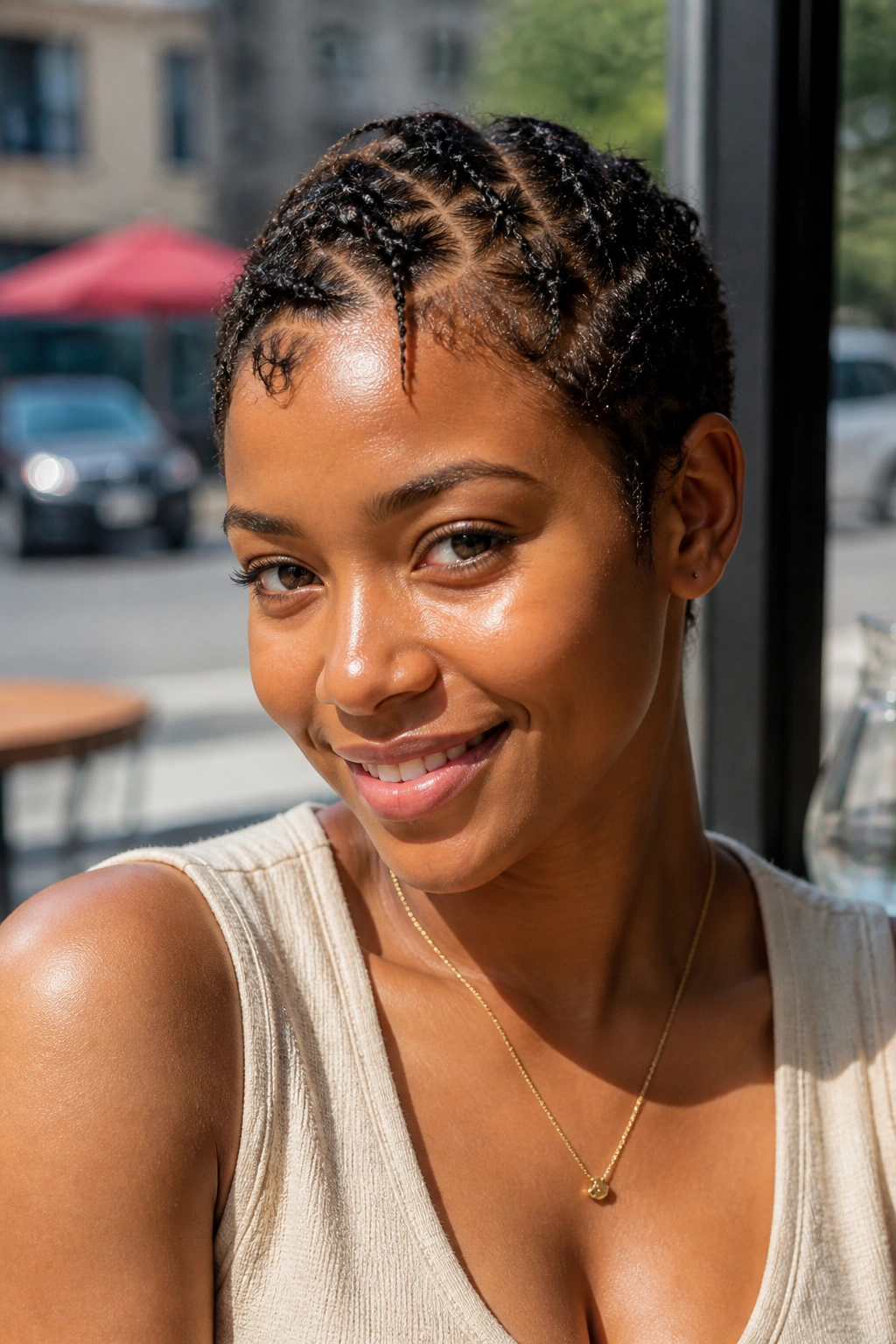
Zigzag parts can wake up a short haircut fast. On a pixie, the braid itself may be small, but the parting pattern gives the whole style motion. Instead of straight lines, the comb work makes a jagged path through the scalp, and that little detail changes everything.
I’m a fan of this look when the hair is already fresh. Zigzag parting looks best on a clean scalp and a cut that has a sharp outline. If the hairline is fuzzy or the grow-out is uneven, the parts can look busy instead of crisp. So this is the kind of style that rewards a neat foundation.
The braid can sit along the zigzag, or the parts can lead into two or three tiny cornrows at the front. Either way, the visual effect comes from the geometry. Keep each section narrow — roughly a pencil’s width is enough — and avoid stacking too many braids close together.
It is not a lazy hairstyle. That’s fine. Some looks are supposed to show that you paid attention. This is one of them.
6. Mohawk Braid With Shaved or Tapered Sides
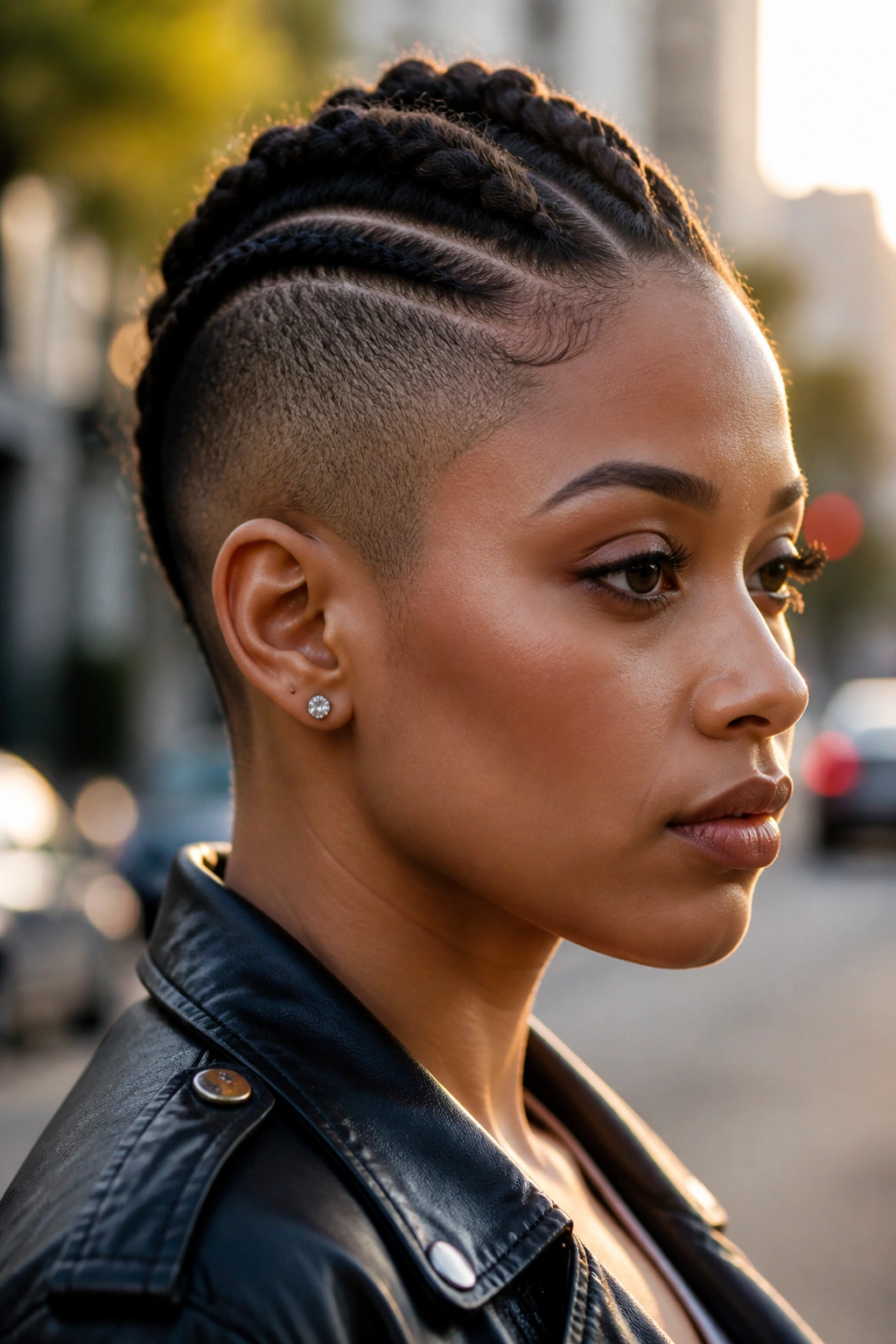
A mohawk braid on a pixie is the bold one in the group. The center braid does the heavy lifting, while the sides stay shaved, faded, or brushed tight to the head. That contrast creates height instantly, which is why the style works so well on cropped cuts.
Unlike a side braid, this one wants a straight visual path from front to back. The braid usually runs along the center ridge of the head, sometimes with a little width at the forehead and a tighter end near the nape. The sides stay sleek, so the middle line has room to stand out. If you have earrings, this style gives them space.
This is the pick for someone who likes a cut with presence. It looks strong, but not stiff, and it holds up especially well when the shape of the haircut is already angular. I would choose it for a tapered pixie, a fade, or an undercut where the sides are short enough to make the braid pop.
Tell your stylist to keep the braid lifted, not puffy. A mohawk braid loses its edge when the base gets too thick. Clean parting and a tight center line matter more than added hair.
7. Micro Braids Around the Perimeter
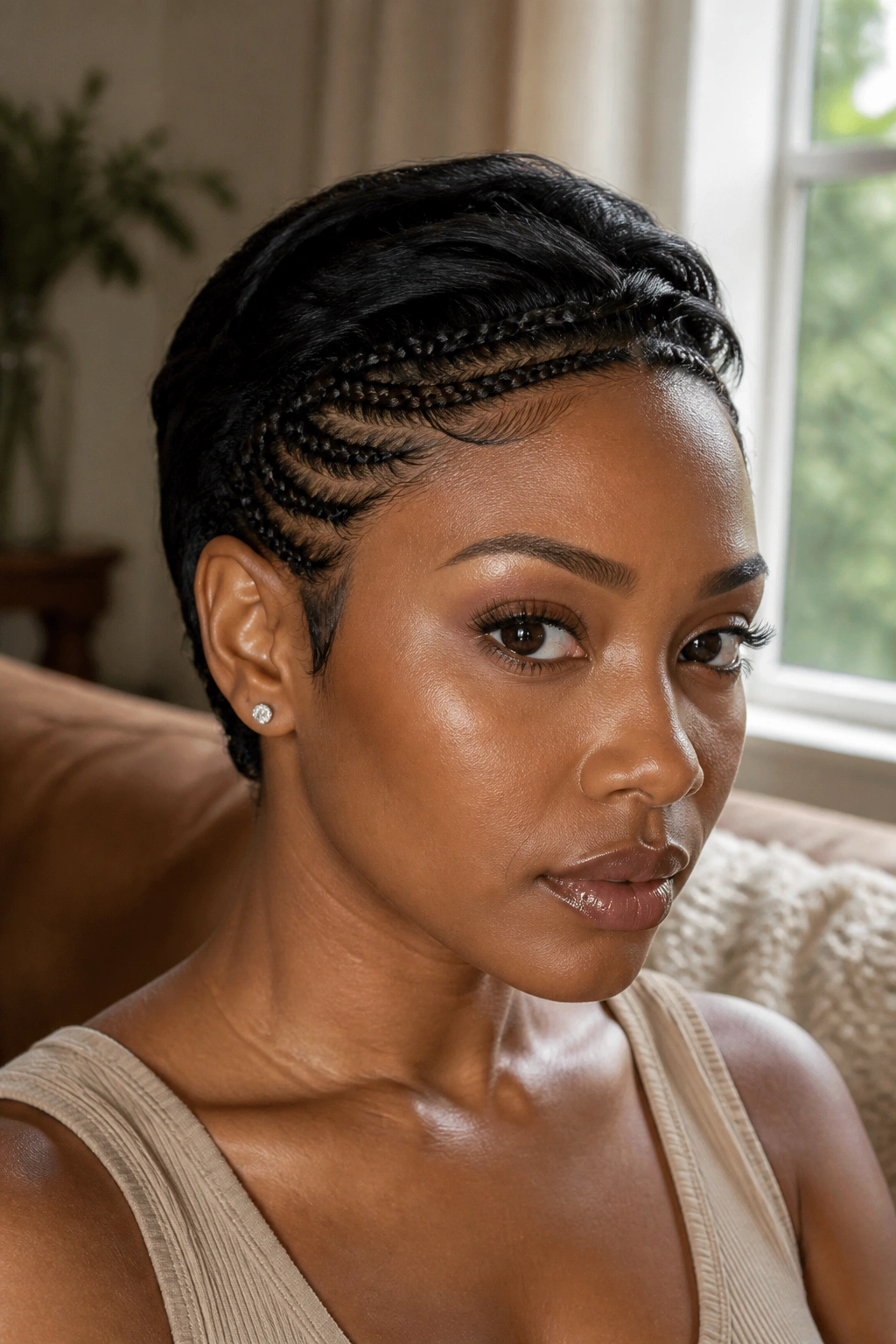
Micro braids around the perimeter are the detail lovers’ answer to a pixie. The braids stay tiny, and they live near the hairline, the temples, and sometimes the nape, while the middle of the cut stays free. That gives the style a framed look without putting too much weight on short strands.
Tiny Details, Big Payoff
The smaller the braid, the more precise the sectioning has to be. Think pencil-thin or even finer if your hair density allows it. These are not chunky statement braids; they are edge work. The payoff is that they can hide irregular growth around the sides and give a cropped cut a more finished outline.
Because the braids are light, they also work well for people who do not want much scalp tension. That said, tiny braids can take patience. They’re slower than a single cornrow, and they need a careful hand so they do not unravel at the tips.
- Best on short natural hair with some grip.
- Good for framing the hairline without bulk.
- Easy to pair with curls, waves, or a smooth crown.
- Keep beads light if you add them at all.
This style is subtle from a distance. Up close, it has a lot going on.
8. Double Side Braids With a Tucked Back Top
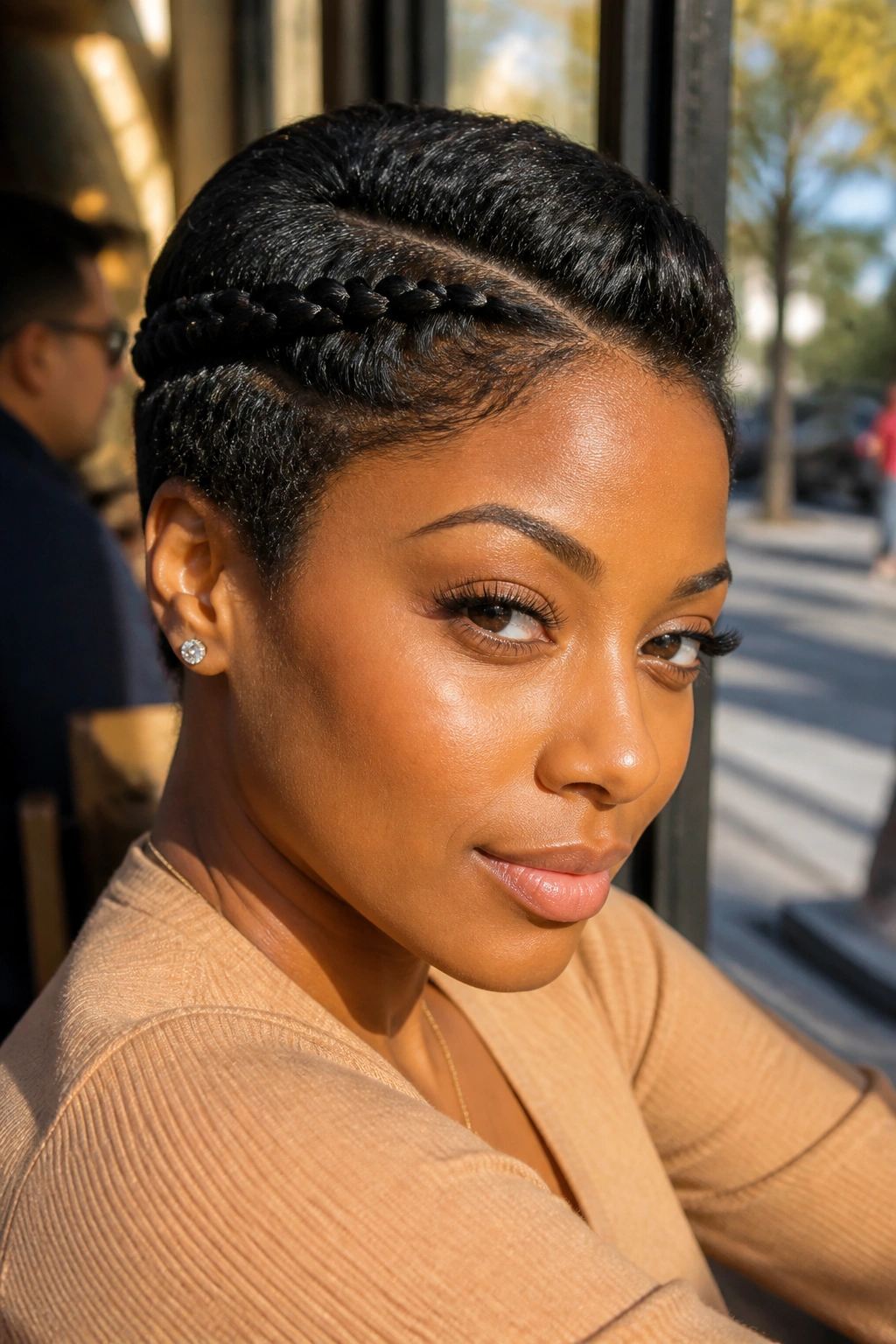
Two slim braids on either side of a pixie can make the haircut feel balanced in a way a single braid can’t. They pull the eye outward, then back, and that gives the short shape a little structure without flattening it.
This is the style I’d pick for someone who likes clean symmetry. The braids usually begin near each temple and tuck back toward the crown or behind the ears. The top can stay brushed back, softly curled, or lightly molded with mousse. None of those choices is wrong. The point is to keep the center from competing with the side braids.
It works especially well on face shapes that benefit from a little width near the temples. It also looks good with glasses because the braids stop the front from feeling too heavy. A small detail, but a useful one.
The cleanest versions keep the braids narrow and the parting straight. If the sections drift too far apart, the style starts to look disconnected. If they sit too close, the face loses space. A braid on each side, about 1/2 inch apart from the hairline, usually lands in the sweet spot.
9. Halo Braid Framed by a Pixie Fade
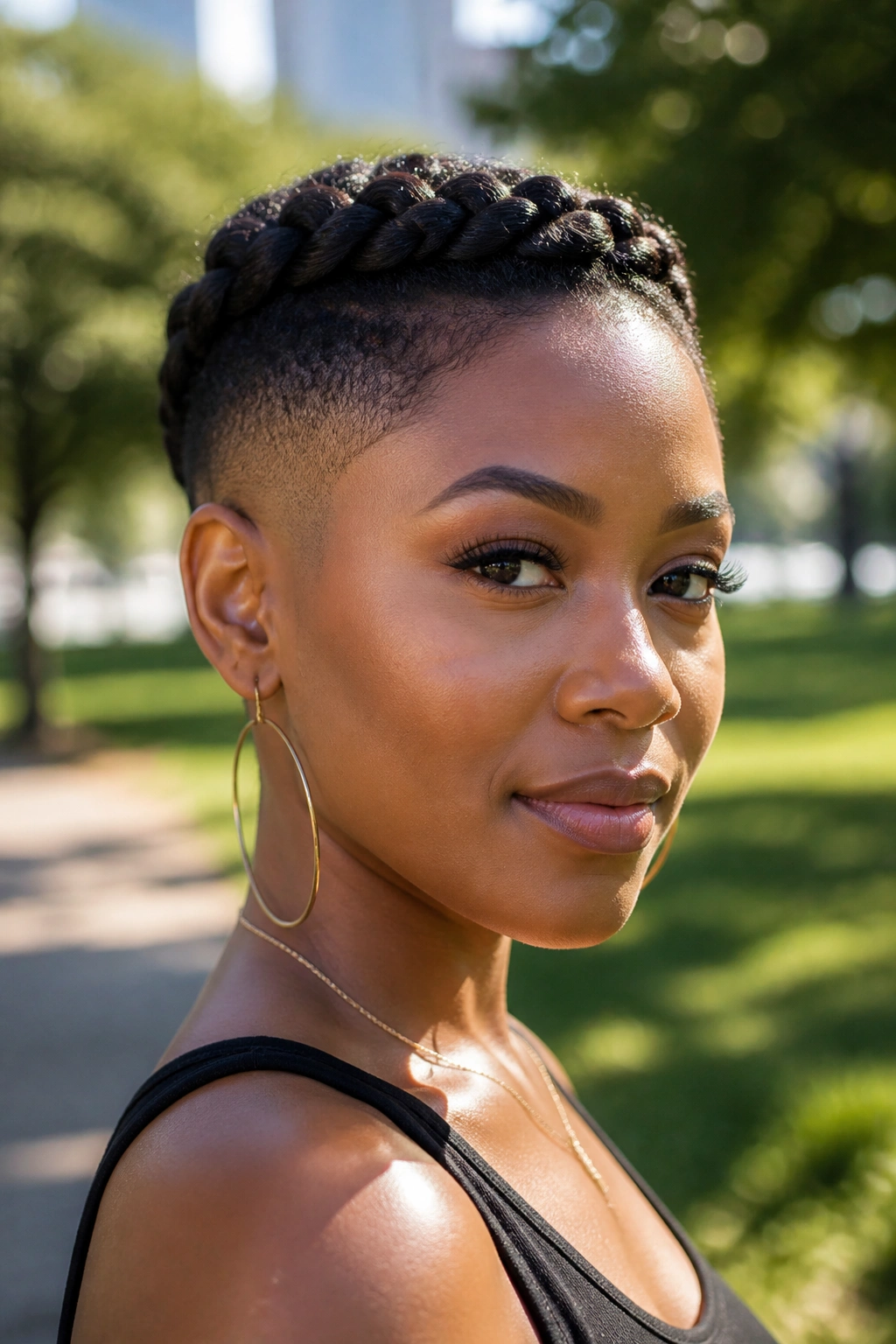
A halo braid on a pixie fade has a softer feel than a center braid, and that’s why it works. The braid wraps around the head like a border, while the fade underneath keeps the whole look sharp. The contrast is what makes it interesting.
What I like here is the tension between polished and cropped. The braid can start near one temple, move across the top edge of the head, and finish low on the other side. Because the fade is visible, the braid does not need to carry the whole style. It just needs to trace the shape.
If you wear hoop earrings, this is a good match. The braid opens the sides of the face, and the fade gives the neckline a clean break. Use a light holding foam before braiding so the short hairs stay down, then smooth the finished style with a satin scarf for a few minutes.
One thing to watch: the braid should sit above the fade line, not cut across it. That little gap keeps the style readable. Too low, and the braid disappears into the taper.
10. Rope-Twist Braids for a Softer Finish
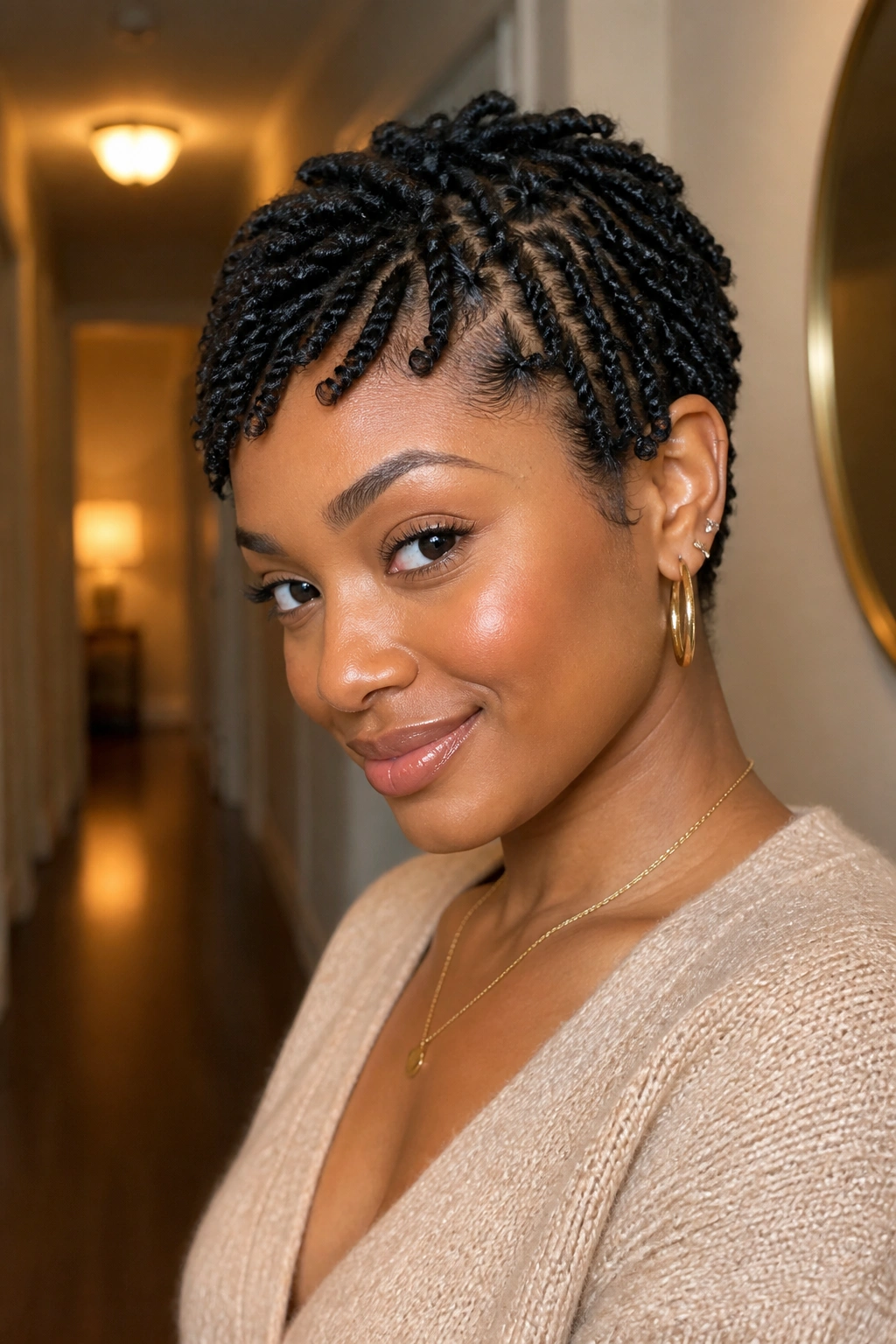
Rope twists are a smart move when you want the braid look but not the stiffness that can come with cornrows. On short hair, the twisted texture feels softer at the hairline, and it can be gentler on strands that do not love a tight grip.
Why Twists Beat Braids for Some Pixies
The twist pattern gives a little more movement. Instead of a flat braid pressed hard against the scalp, you get a rounder shape that sits slightly off the head. That can be useful if your pixie has a fine top or if you want the style to feel less severe around the forehead.
This version works well with two twists at the front or one curved twist along the side. Keep the sections even, about 1/2 inch wide, and stop before the twist starts to pull at the edge. On short cuts, twisting too far back can make the style lose its shape.
- Softer at the front hairline.
- Good for fine or fragile strands.
- Easy to pair with curls on top.
- Needs light wrapping at night so the twist pattern stays neat.
It is not the loudest style in the set. That is the point. Sometimes a short haircut looks better when the braid line is a little gentler.
11. Stitch Braids With Razor-Clean Sections

Stitch braids are for people who like structure. The parts are the star here, and the braid follows those parts like a line on a drawing. On a pixie, that precision can make the haircut look sharper than a much longer style ever could.
What Makes the Parting Matter
Each part is marked out in tiny horizontal slices before the braid starts, so the scalp shows a neat “stitched” pattern between the rows. That detail is what gives the braid its name. On short hair, the effect is strongest when the sections are narrow and evenly spaced, usually no wider than 3/8 inch.
I would not crowd this style. Two to four stitch braids are enough on most pixies. More than that and the head can start to feel boxed in, especially if the sides are already tapered. The clean parting should add shape, not take it away.
- Ask for straight, even lines across the front or side.
- Keep product light so the parting stays visible.
- Use a scarf after styling to flatten flyaways.
- Skip thick braid hair unless the section truly needs it.
This is one of those styles that looks expensive because it looks careful. No mystery there. It’s all in the line work.
12. Braided Pixie With Finger Waves Through the Top
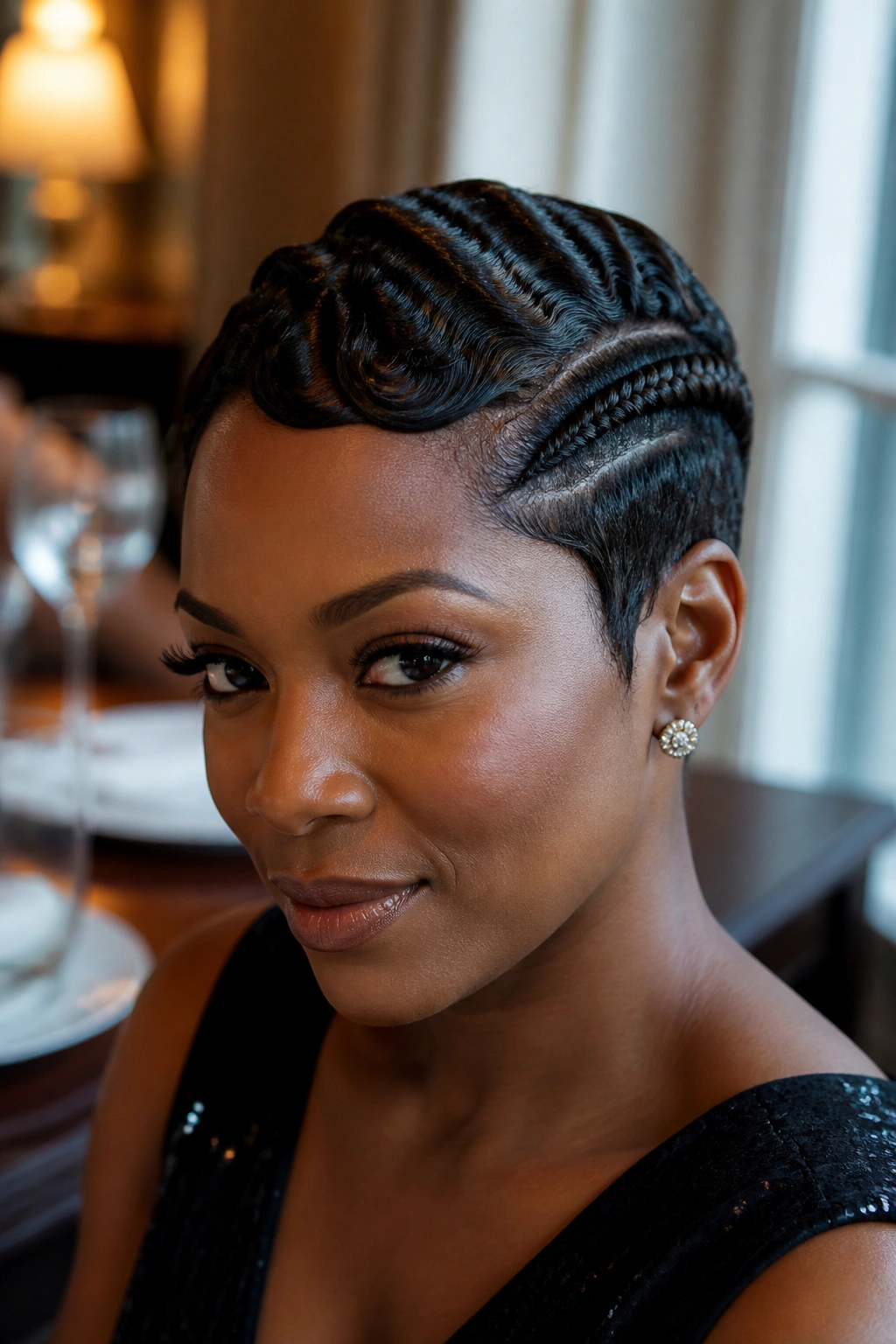
Finger waves and braids on a pixie are a good combination because they give you two different textures in one haircut. The braid brings structure, and the waves bring softness. Together, they make a short cut feel finished in a way that straight hair alone sometimes doesn’t.
The braid usually sits along one side, or across the front, while the top is molded into soft ridges with setting foam or gel. On natural hair, you can shape the waves with a comb and a dryer bonnet. On relaxed or heat-styled hair, the finish tends to be smoother and more defined. Either way, the contrast is the point.
This style has a little old-school glamour without feeling costume-like. That’s why it works for dinners, weddings, and any event where you want your hair to look intentional from every angle. A narrow braid near the temple keeps the style modern.
One thing I like here: the waves hide small differences in length. If one area of the pixie is growing faster than another, the molded top makes that less obvious. Handy. Sometimes a pretty style is also a practical one.
13. Beaded Pixie Braids for a Little Rhythm
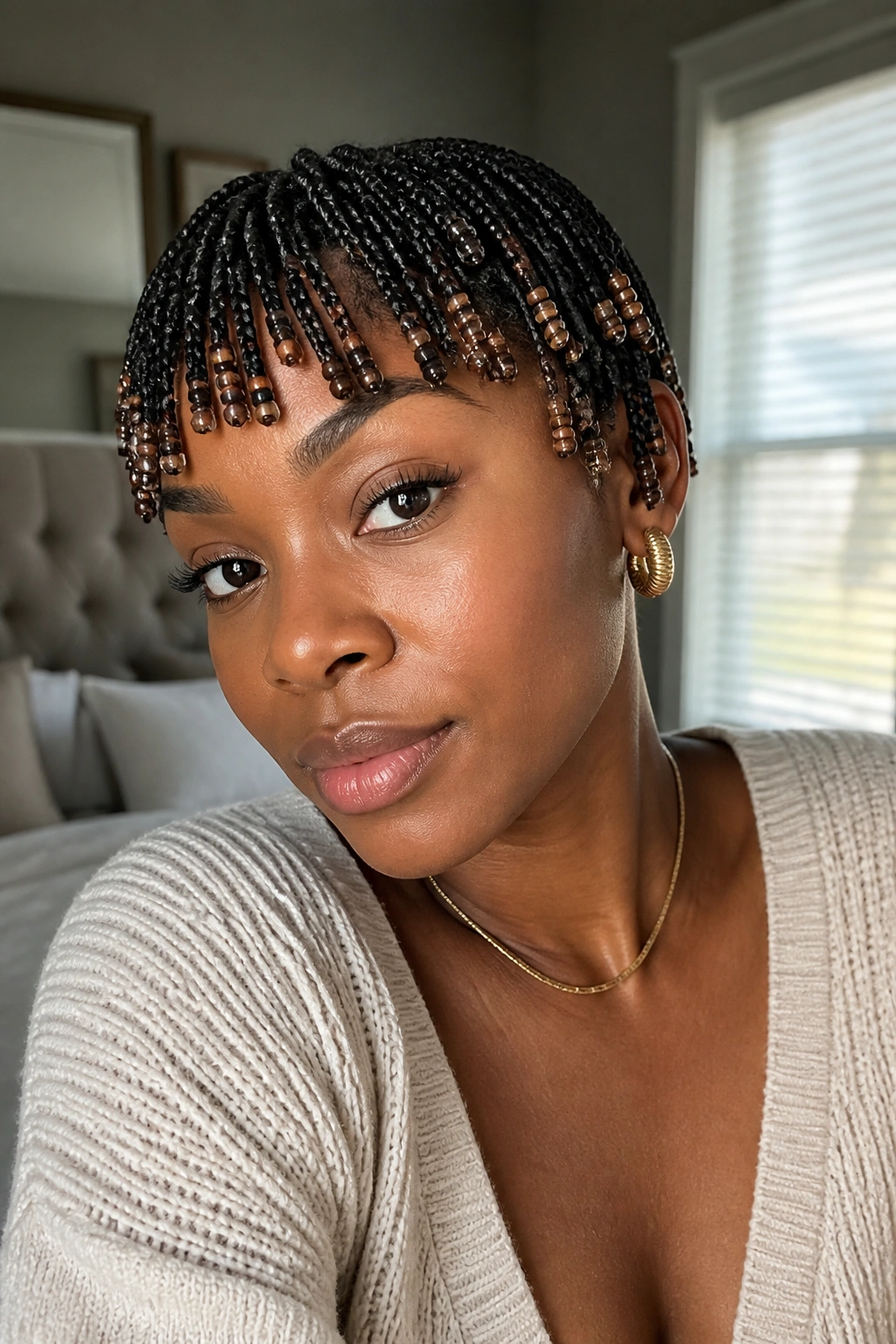
Does a little hardware help? On a pixie, yes — if you keep it light. Beads can make tiny braids feel alive, especially when the ends are short and the braid itself needs a finishing touch. A single bead or a pair of small cuffs can be enough.
Keep the Weight Down
The rule here is restraint. One to two small beads per braid is usually enough on short hair. Heavy beads drag the braid down, and on a pixie they can stress the base faster than people expect. You want movement, not pull.
This look works best on thin side braids, a short mohawk braid, or a tiny accent plait near the temple. Clear, gold, or wooden beads all work, depending on the rest of the style. If your outfit already has a lot happening, go simpler with the hair.
- Choose lightweight beads only.
- Place them near the ends, not at the root.
- Wrap the hair at night to stop the beads from shifting.
- Keep the rest of the style clean so the accessories can stand out.
A beaded pixie braid is small, but it is not shy. It has sound, motion, and a little bit of bounce. That matters more than size.
14. Goddess Braids on Short Natural Hair
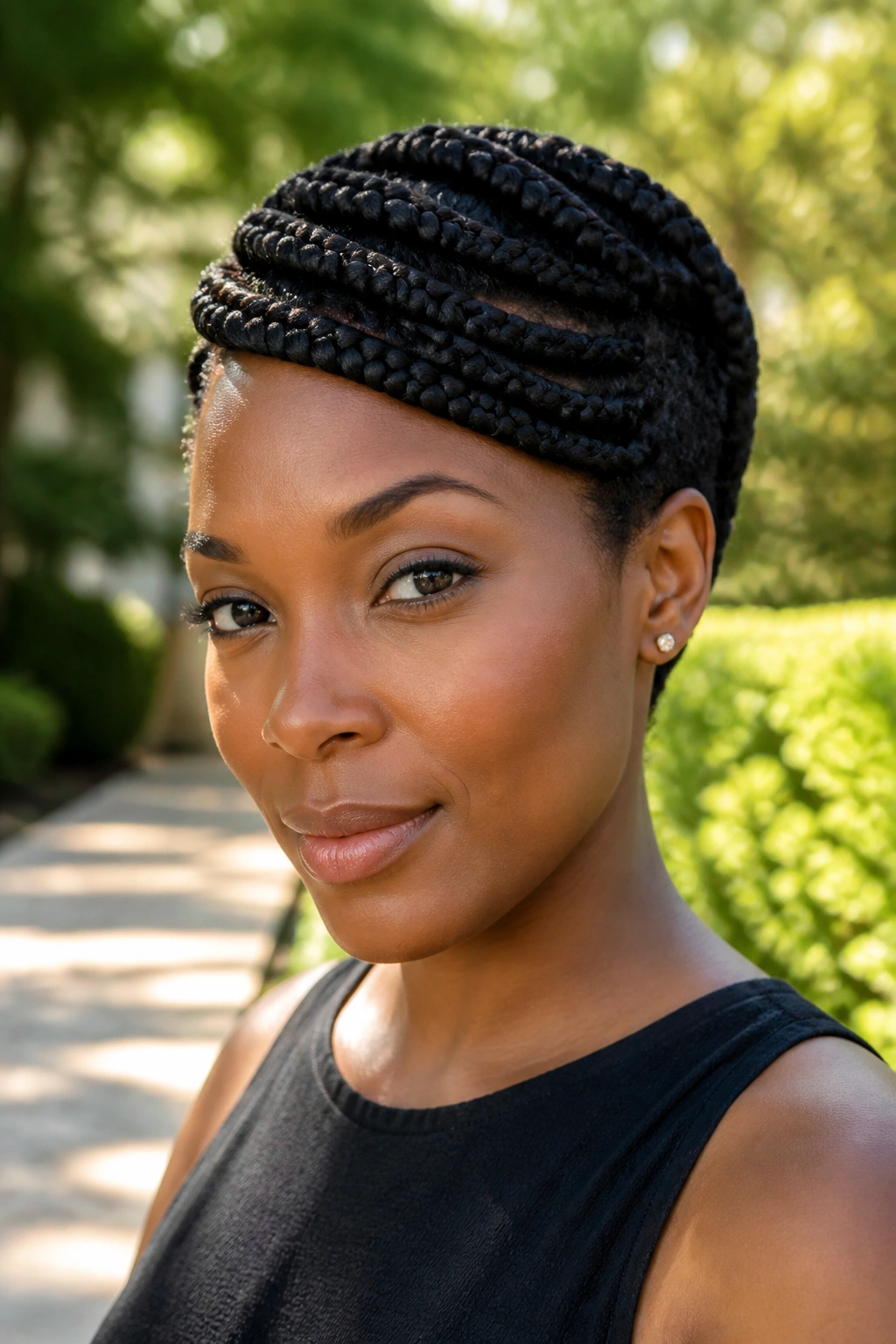
Goddess braids bring a softer, fuller feel to short hair. They are thicker than micro braids and less rigid than stitch braids, so they suit a pixie when you want shape without sharp edges. On short natural hair, they usually sit along one side, across the front, or in a pair that leaves the crown open.
This style is friendlier to density than length. If your hair is coarse or full, goddess braids can look rich without needing much extension hair. If the hair is a little short, a small amount of braiding hair can help, but it should stay feather-light. Heavy add-ins on a pixie are a bad trade.
The look feels calm and a little regal without trying too hard. The braid has a wider, smoother profile, which makes it useful if you do not want every scalp line showing. It also hides a grow-out line better than tighter braiding styles.
I would choose this for someone who likes structure but does not want a hard finish. Pair it with a tucked nape or a soft curl at the crown, and the style suddenly feels layered instead of flat. The braid carries the shape; the rest of the cut just supports it.
15. Front Braid With a Curly Crown
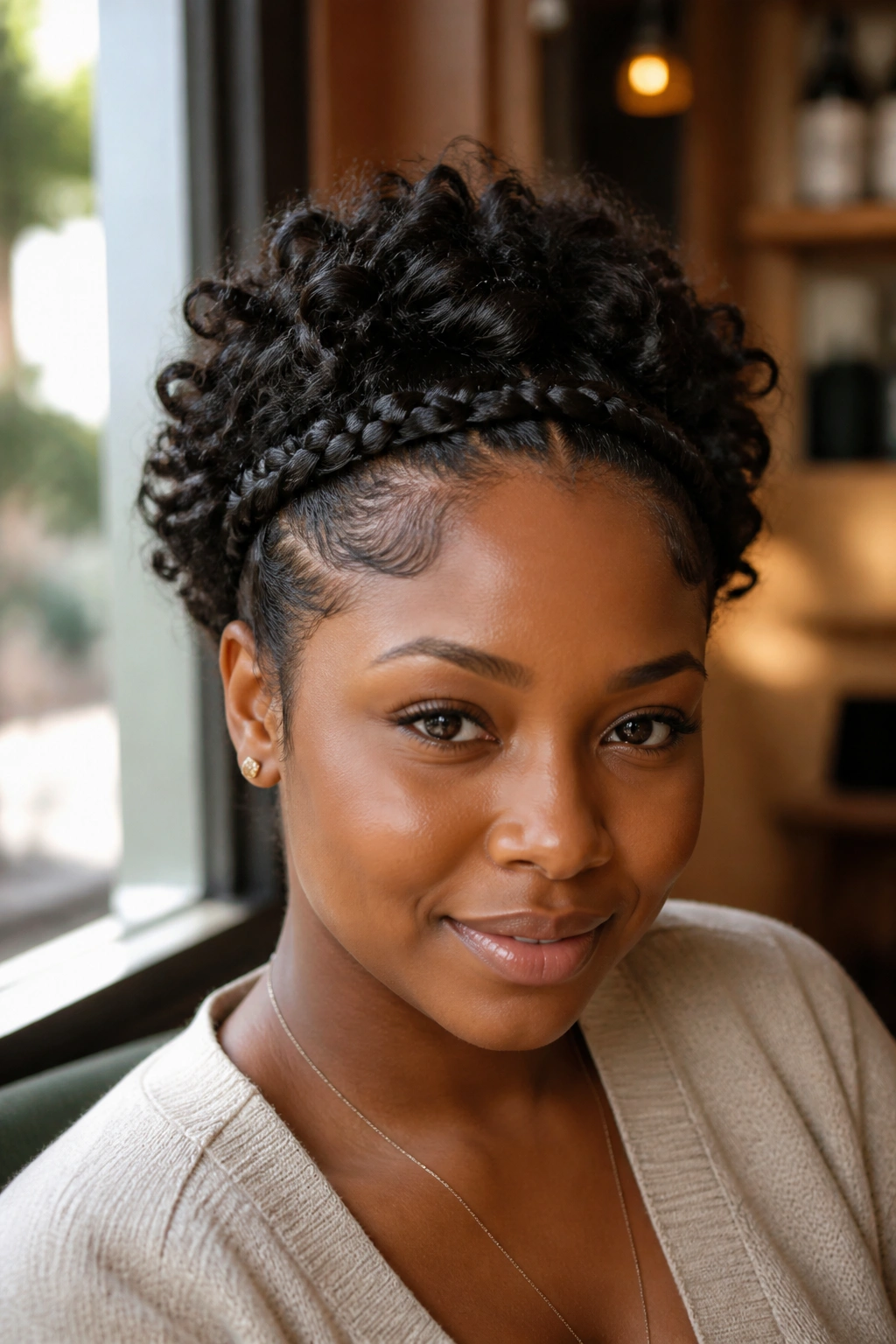
A front braid with a curly crown is one of the prettiest mixes in the bunch, and I mean that in a practical way, not a fluffy one. The braid gives you a clear line at the front, while the top stays loose, curled, or finger-set. That contrast keeps the pixie from looking too severe.
The Texture Contrast Matters
If the braid sits close to the hairline, the curls behind it get to do more visual work. A short cut with 2 inches of curl on top can look fuller than a straight pixie with more length because the bend in the hair creates body. That’s why this style works so well for special events.
- Braid the front from temple to temple, or just one side across.
- Leave the crown in defined curls or soft coils.
- Use a light mousse so the curls stay separated.
- Pin the front braid flat if you want a cleaner finish.
This style can read romantic, but it does not have to be delicate. Add a deep side part, and it gets sharper. Keep it centered, and it becomes softer. That flexibility is why I keep coming back to it. One braid, one curly crown, and the whole cut changes mood.
16. Braided Undercut Pixie With a Clear Side Reveal
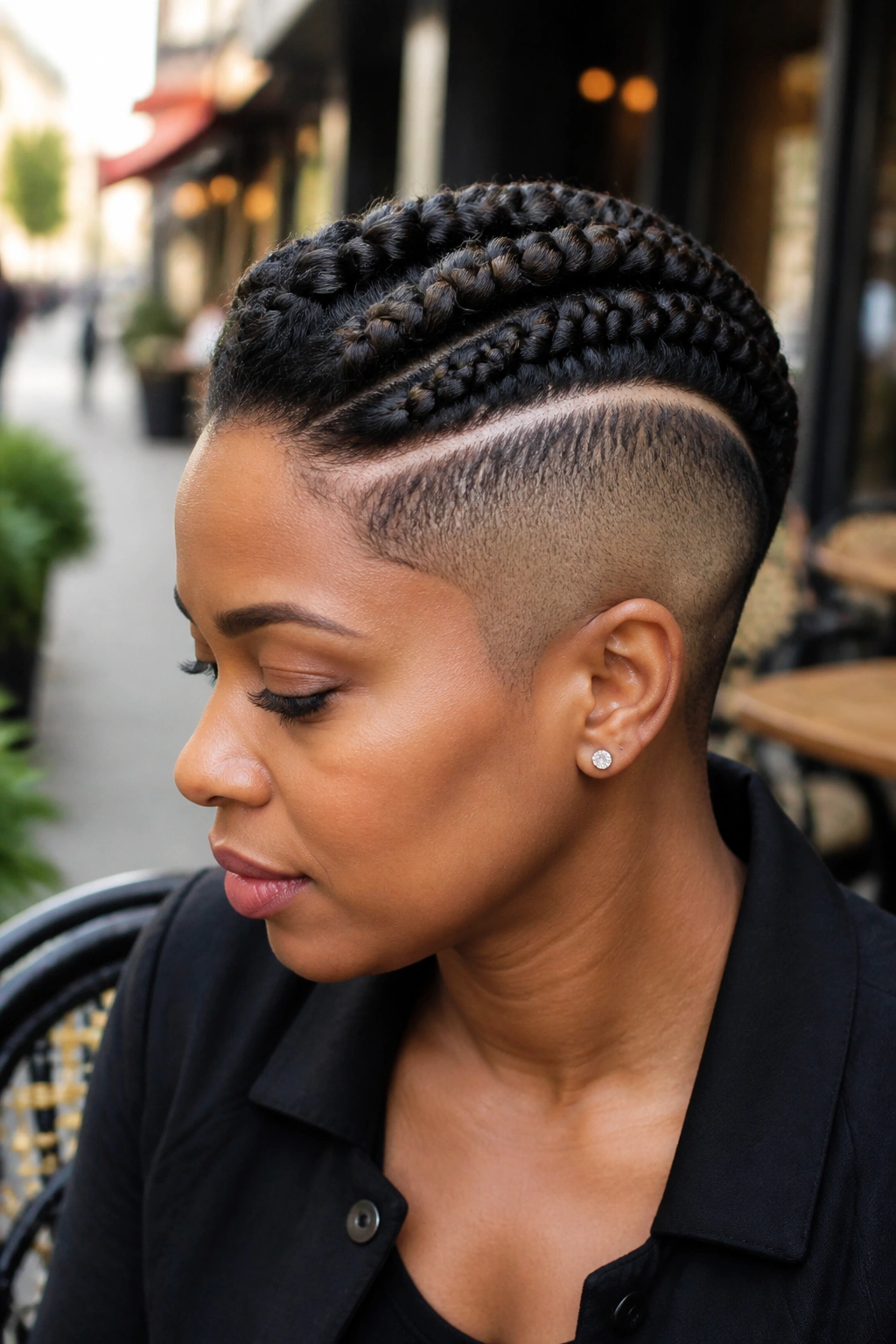
An undercut pixie gives you a lot of room to play because one side or the back is already shorter. A braid on top of that can look almost architectural. The braid sits above the reveal, so the shaved or closely cropped section stays visible and becomes part of the style instead of something to hide.
The cleanest version uses a single braid placed about 1 inch above the fade line. That spacing lets the undercut show through. If the braid is pushed too low, you lose the whole effect. The point is contrast: one side slicked, one side braided, and maybe a little volume left on top for balance.
This is a good style when you want earrings, a sharp jawline, or a strong makeup look to stay visible. It clears the face. It also wears well with dark roots because the line work draws attention away from grow-out and toward shape.
I’d keep the braid narrow and the rest of the top smooth. Too much texture on top can blur the undercut. Let the empty space do some work. That’s the part most people ignore.
17. Sideburn Braids and Tiny Accent Plaits
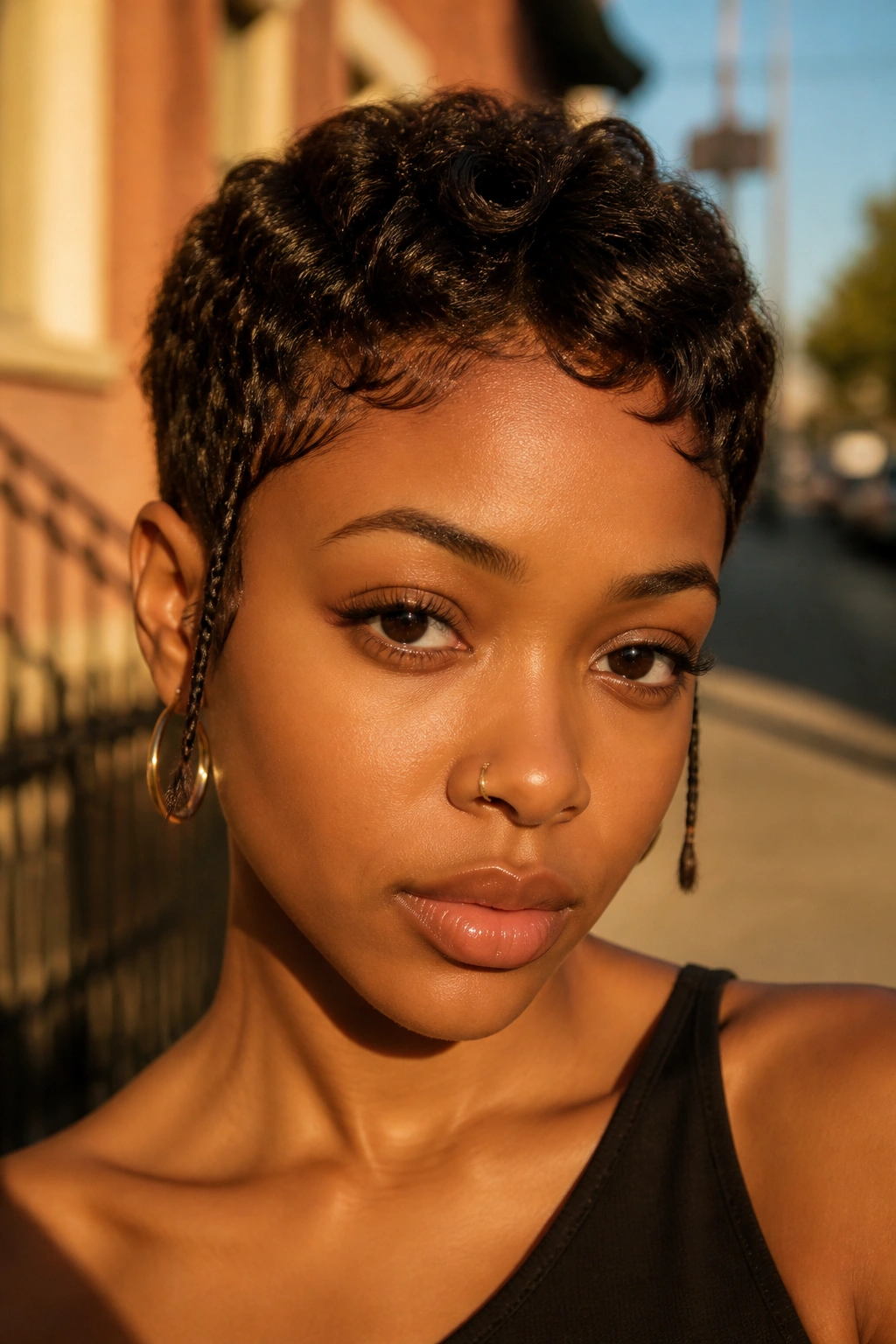
Sideburn braids are for the person who likes detail more than drama. The braids sit near the sideburn area or just in front of the ear, then a tiny accent plait might tuck into the temple or the back of the cut. It is subtle, but it changes the face in a nice way.
Small Braids, Soft Finish
This kind of style works well on a pixie that already has shape. You are not trying to build a new haircut here. You’re just giving the existing one a few strong lines. That makes it a smart choice when you want something tidy for work, school, or a low-key event.
The best version keeps the braids thin and close. Two sideburn braids and one small temple plait is often enough. More than that can crowd the front, especially if your edges are fine. And no, you do not need heavy beads or a bunch of clips to make this work.
- Keep the braids low near the ear.
- Match the braid size on both sides if you want symmetry.
- Smooth the rest of the pixie with a light cream or foam.
- Wrap at night so the tiny plaits do not puff up.
This is the hairstyle for someone who likes quiet detail. Not plain. Just precise.
18. Mixed-Texture Pixie With Braids, Coils, and a Satin Scarf
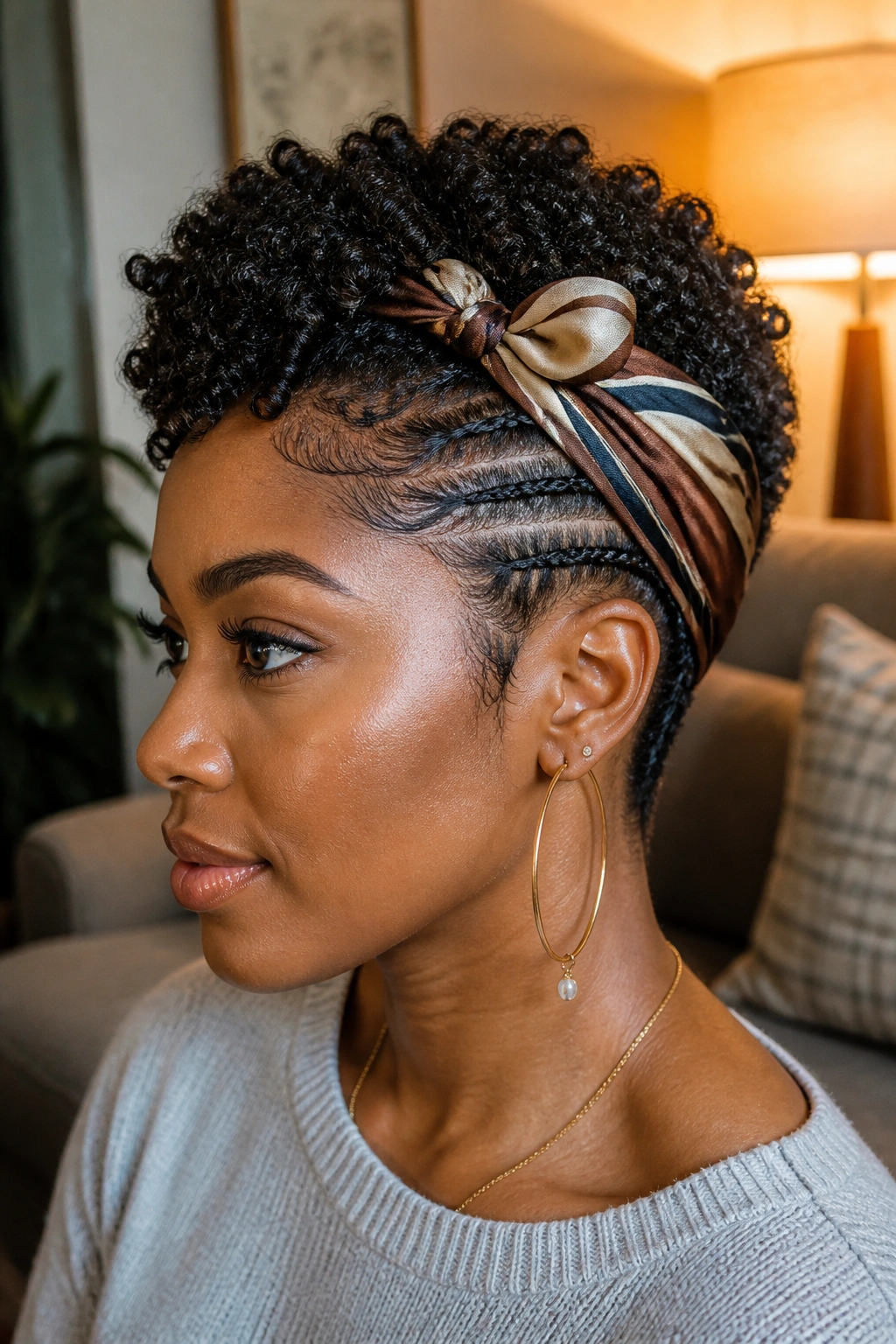
A mixed-texture pixie is what I’d suggest when you want the hair to feel styled even if it’s in a grow-out phase. One side can hold a braid, the crown can stay in coils or soft curls, and a satin scarf can sit at the hairline or be tied loosely around the crown for a finished look.
Why Mixing Textures Works
Short hair sometimes looks flat when every section follows the same pattern. Braids on the side, coils through the top, and a smooth scarf line break that up in a good way. The braid gives structure, the coils give lift, and the scarf ties the whole thing together without asking the hair to do too much.
This is also a good fallback style if one part of your pixie has more length than the other. You can hide the unevenness by giving each section a different job. The braid does not need to be the whole story.
- Use the scarf to protect the hairline overnight or during a dry day.
- Keep the braid small if the curls are doing most of the visual work.
- Choose a scarf in silk or satin so it slides less.
- Let one feature lead; do not crowd all three at once.
It’s a nice reminder that short hair does not need to be perfect to look intentional. It just needs a plan.
Final Thoughts
The strongest pixie braid hairstyles for Black women are the ones that respect short length instead of pretending it is long hair in disguise. A tight braid, a clean part, and a little shape around the hairline can do more than a heavy style ever could.
If your edges are delicate, keep the braid small and the tension light. If you like drama, push the shape upward with a mohawk line, stitch parts, or a halo curve. Either way, the style should work with the haircut you already have — not bully it.
One practical habit makes a big difference: wrap the hair at night, even if the style looks fine when you leave the mirror. Short braids lose their edge fast when they rub against cotton. Silk or satin keeps the lines cleaner, and cleaner lines make a pixie look expensive without trying.
