



A pixie that stops right at the widest part of the face can make cheeks look fuller, even when the haircut is technically short and tidy. Give it height at the crown, a little length at the front, and the shape changes fast.
Pixie haircuts for round faces and fine hair work best when the cut respects two facts at once. Round faces usually need a bit of vertical line, and fine hair usually needs shape that does not get shredded into wisps. That is why the same pixie can look sharp on one person and flat on another — the difference is usually in the crown, the fringe, and how much weight is removed from the sides.
Fine hair is not the same as thin hair, and that distinction matters. You can have plenty of strands with a small diameter, which means the wrong razor work can make the ends look scraggly fast. A cleaner outline, a controlled side part, and texture placed where it helps rather than everywhere often do more than a dozen random layers.
The safest move is usually not the shortest one. Start with the cut that fits your styling habits, then adjust the edge, the fringe, and the amount of lift until it suits your face instead of fighting it.
1. Side-Swept Classic Pixie
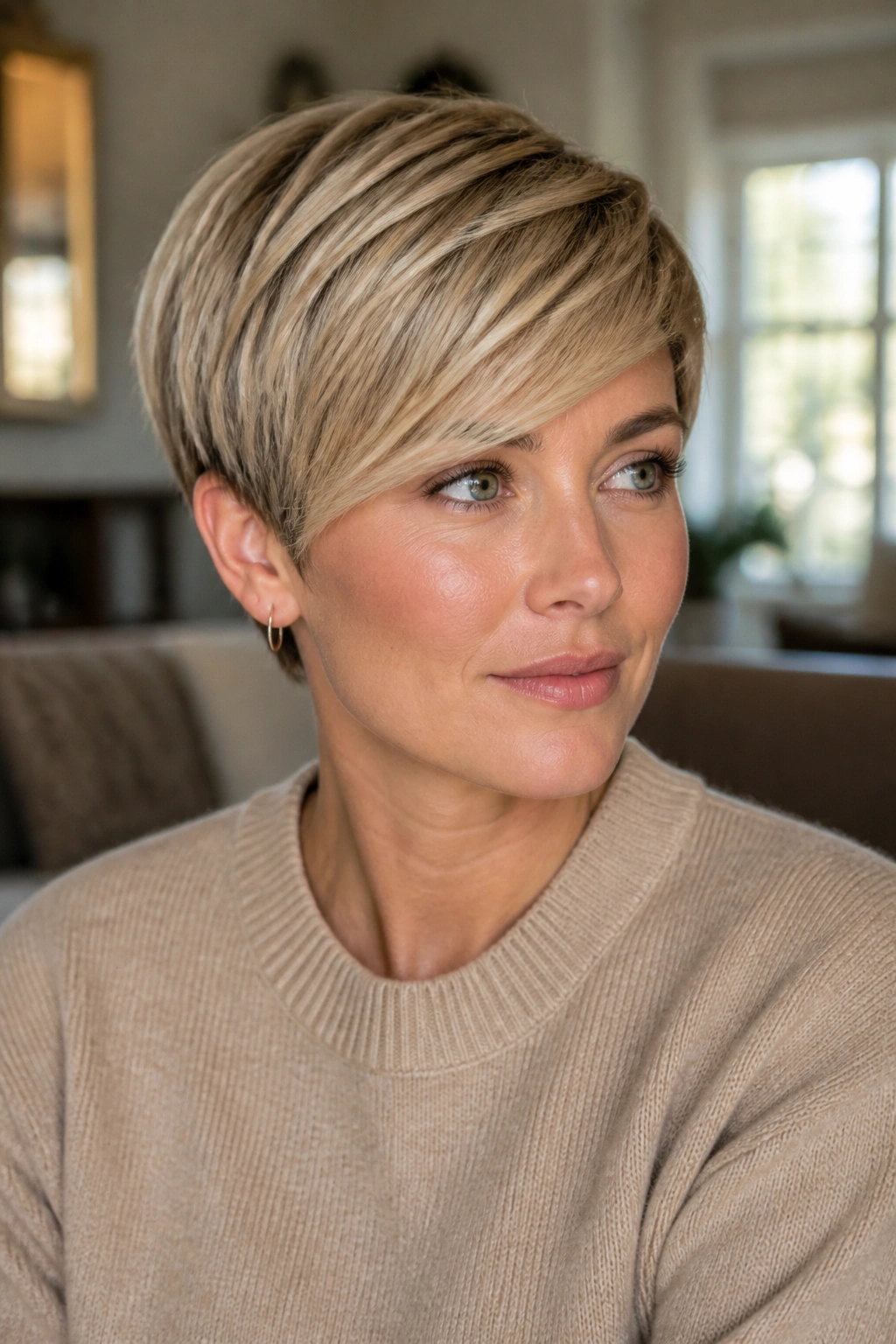
The classic side-swept pixie is the one I’d put at the top of the list for a reason: it does the job without making a fuss. A soft diagonal fringe breaks up the roundness through the forehead and gives the whole face a longer look, which is exactly what you want when you are working with fine hair and soft facial curves.
Why It Flatters a Round Face
The diagonal line matters more than most people realize. Instead of a straight fringe that cuts the face in half, the sweep draws the eye up and off to one side. That tiny shift makes the cheek area feel less dominant.
Keep the top about 1 to 2 inches longer than the sides, then taper the nape close. That balance keeps fine hair from puffing out around the ears.
- Ask for a fringe that can be pushed across the forehead, not pinned flat.
- Keep the sides snug so the silhouette stays clean.
- Leave enough length on top to tuck behind one ear if you want a softer finish.
A pea-sized dab of lightweight cream is enough. Heavy wax can make fine hair separate in a tired, stringy way, and that is the last thing this cut needs.
2. Crown-Lift Tapered Pixie for Round Faces and Fine Hair
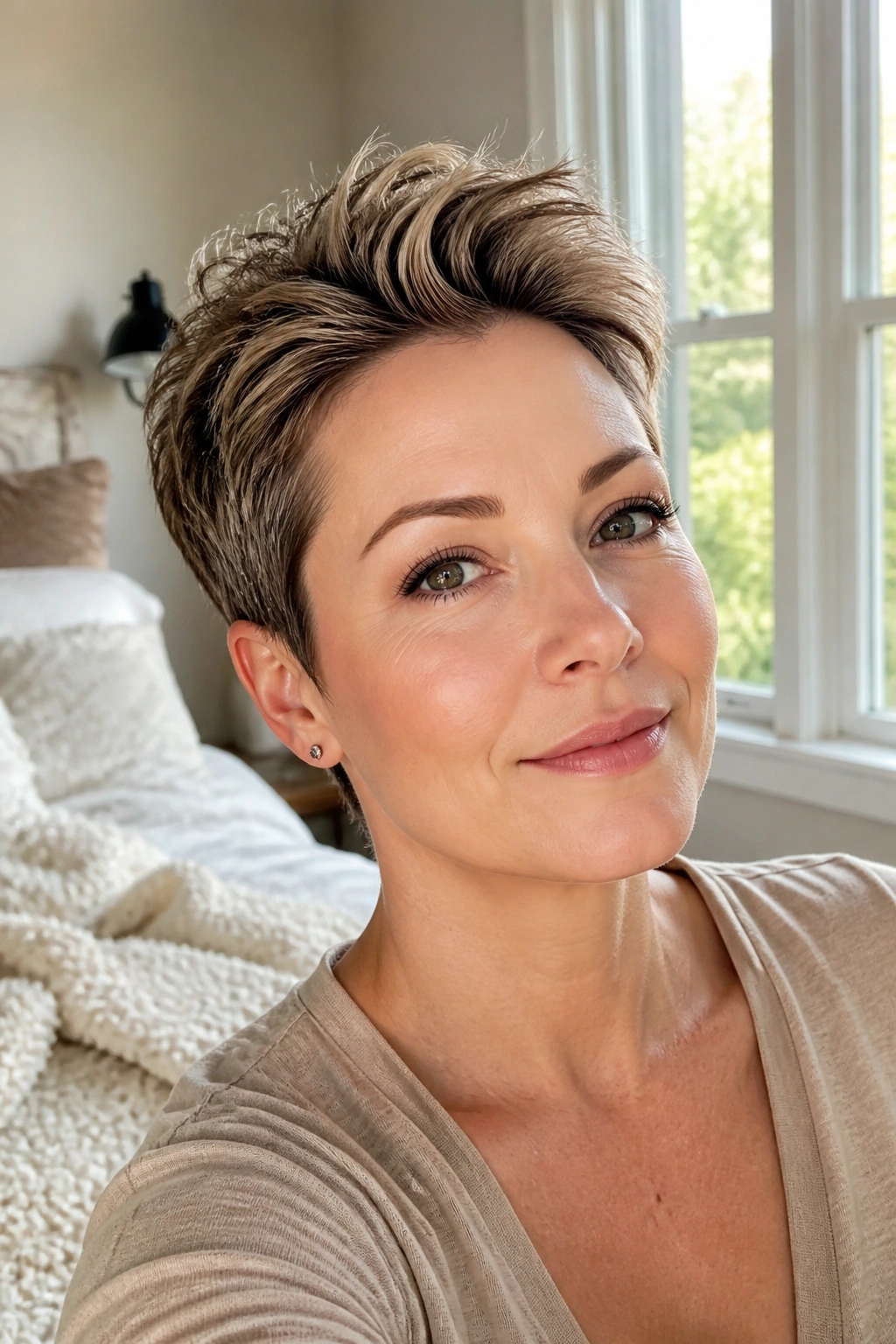
A little height at the crown changes the whole shape.
This is the version I like for anyone who wants a pixie haircut for round faces and fine hair without a lot of styling drama. The sides are kept close, the back hugs the head, and the top is left with enough length to be brushed upward or slightly forward with a bend. That extra lift pulls the eye vertically, which makes a round face read a bit longer.
The mistake people make is asking for volume everywhere. No. You want lift at the crown, not a puffy halo at the temples. Fine hair tends to collapse if it is overlayered, so the shape should be built with smart placement instead of excessive cutting.
A root-lift spray at the roots and a quick blow-dry with your head tipped forward usually does the trick. Once the hair cools, pinch the top with your fingers and let it fall where it wants. That softer finish looks better than a stiff, overworked crown.
3. Choppy Textured Pixie
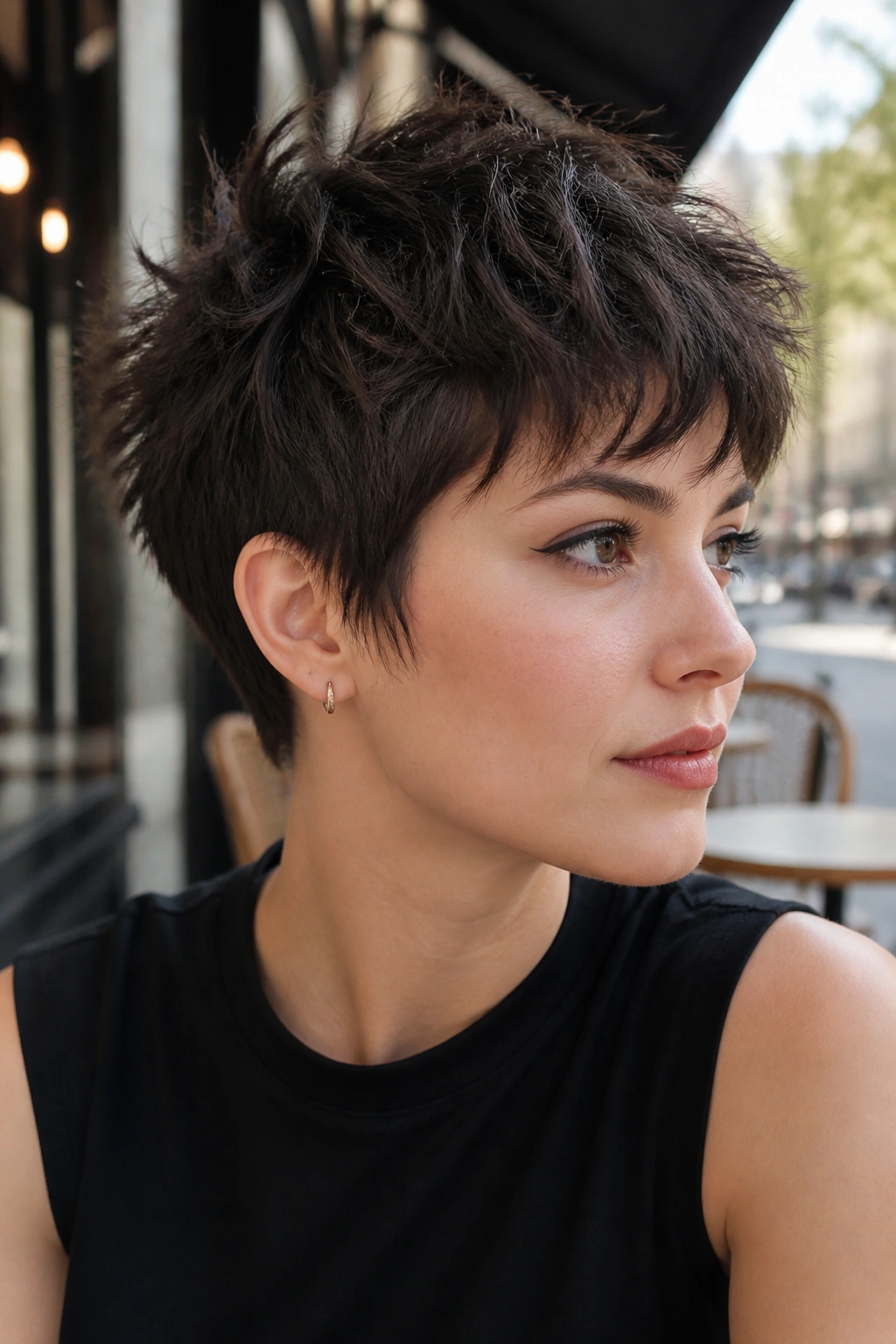
If your hair goes limp by lunchtime, this is the cut I’d look at first.
A choppy pixie gives fine hair something it often lacks: visible movement. Those broken ends keep the style from sitting in one flat sheet, and that makes the hair look fuller even when the strands themselves are delicate. On a round face, the key is to keep the choppiness up high, not through the sides where it can widen the face.
What to Ask for at the Salon
- Point cutting through the top for piecey, uneven ends.
- Tighter sides that stay close to the head.
- A little extra length at the front so the cut does not open the face too much.
The best styling trick is dry shampoo. Not because your hair is dirty, but because the powder gives the strands a little grit and makes the texture hold. Use a small amount, wait half a minute, then shake it through with your fingertips.
Do not ask for random thinning all over. That can leave fine hair looking sparse fast.
4. Long Pixie With Curtain Bangs
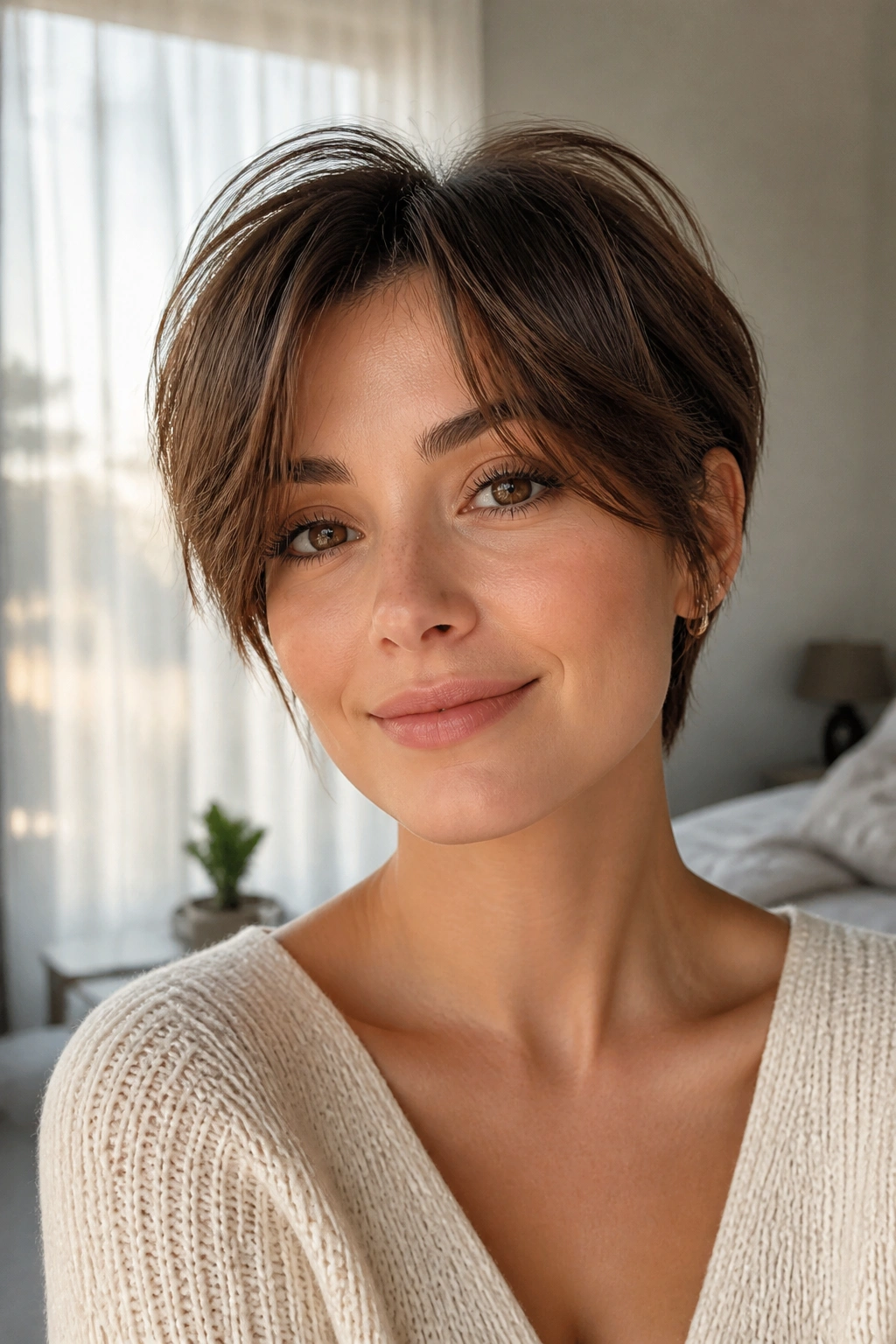
Can bangs work on a round face without making it look shorter? Yes, if they stay airy.
Curtain bangs in a pixie cut are a smart middle ground for someone who wants softness around the forehead but does not want a heavy fringe sitting straight across the brow. The split should be loose, the sides should bend away from the center, and the longest pieces should skim the cheekbones rather than sit right on them. That creates movement without adding width.
The nice part is that this shape gives you options. On clean hair, it reads polished. On second-day hair, it looks a little lived-in, which is often better with fine strands anyway. You can tuck the longest front pieces behind the ears and suddenly the whole cut feels lighter.
Where the Length Should Land
Keep the shortest part of the fringe just above the brows, then let the side pieces drift down in a soft angle. If the bangs are too thick, they can swallow the forehead and make the face look shorter than it is.
A round brush helps here, but only a little. Bend the fringe under for 5 to 10 seconds with the dryer, then stop while the hair still has movement. Overstyling this cut makes it lose the soft bend that gives it charm.
5. Undercut Pixie
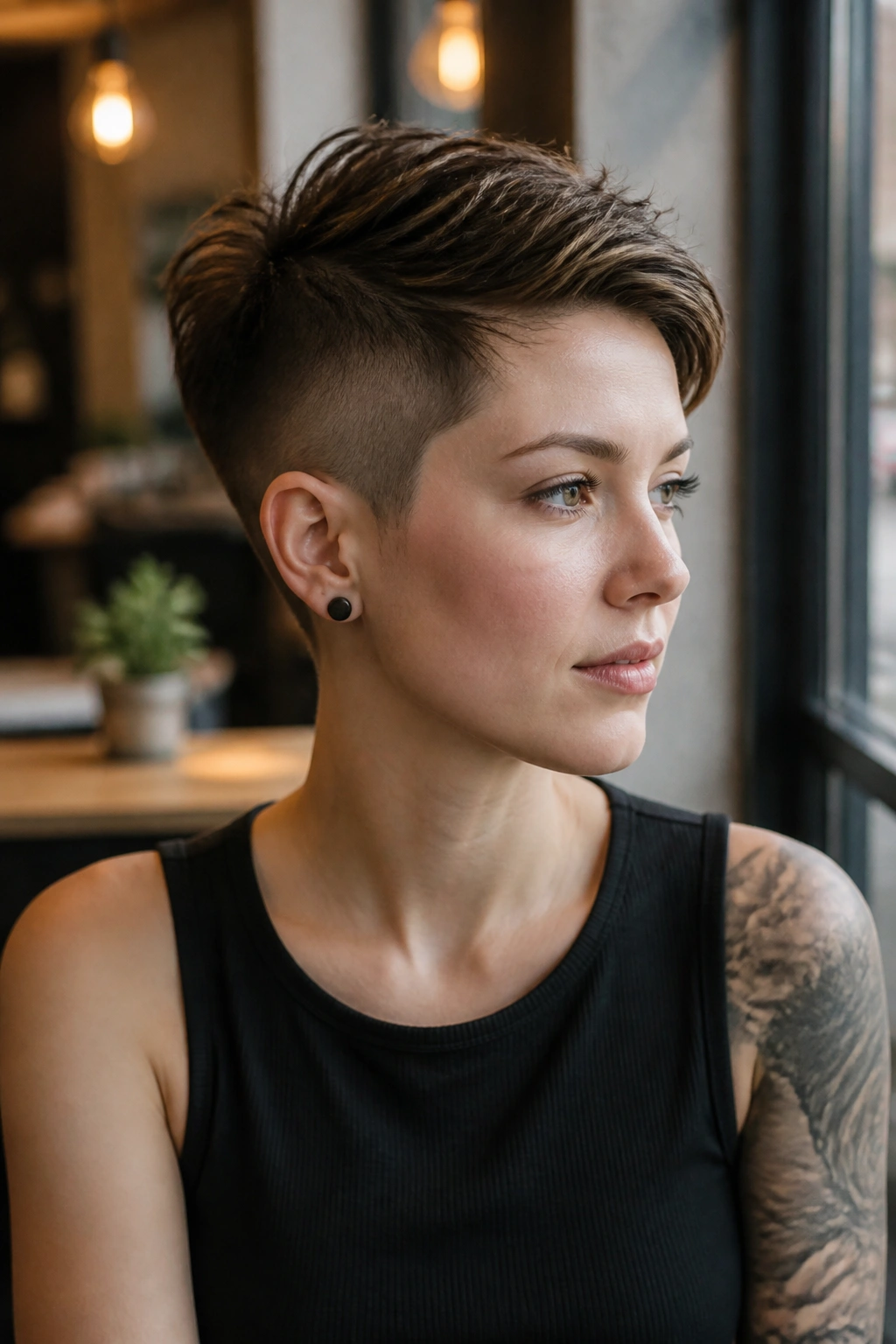
Not every pixie needs to be soft.
An undercut pixie is one of the boldest options for round faces and fine hair, and it works because it removes bulk where you do not need it. The short or clipped sides keep the head shape neat, while the top stays longer and fuller, which gives the illusion of density. That contrast is useful if your hair gets fluffy at the sides but flat on top.
The catch is maintenance. If the undercut grows out too far, the whole style can lose its sharp edge. It also helps to keep the shaved section narrow rather than taking it too high, especially on fine hair. Too much removal can leave the cut looking thin instead of deliberate.
Best Use Case
- You want strong shape and low side bulk.
- You are fine with trimming every 4 to 6 weeks.
- You like styling the top forward, up, or diagonally.
A matte paste works better than shiny gel here. You want separation and control, not a slick helmet. Keep the product at the roots and the top only.
6. Bixie for Round Faces and Fine Hair
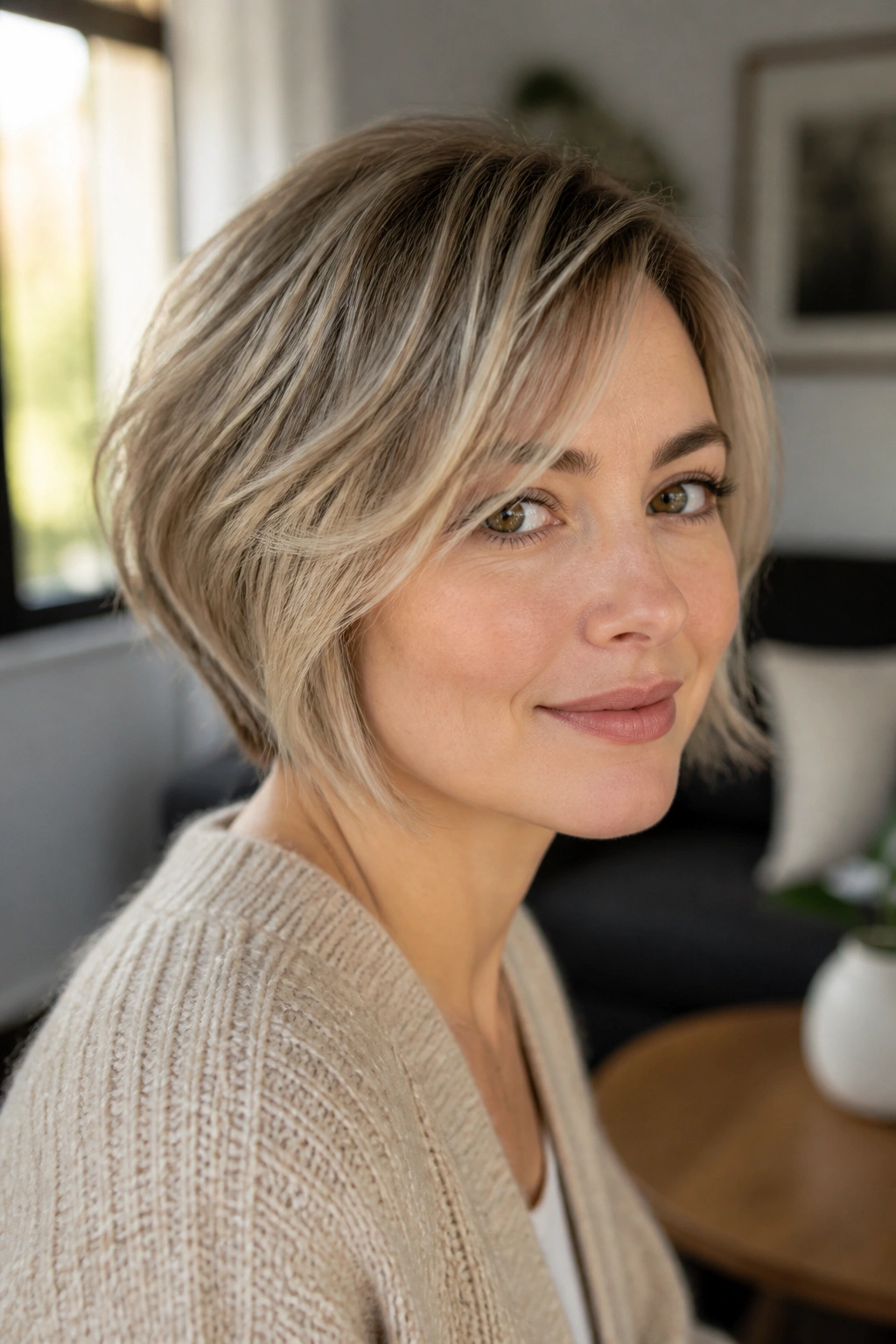
The bixie sits in a useful middle ground.
It gives you the lightness of a pixie with a little more coverage through the jaw and neck, which can be a relief if you are not ready for a very short crop. For round faces, that extra length can create a more vertical outline, especially when the front pieces are kept longer than the back. Fine hair benefits too, because the cut can keep some body without asking every strand to carry the whole shape.
I like this one for people who want movement but do not want to feel exposed. That sounds dramatic, maybe, but it is real. A bixie can soften the transition into short hair because it still has enough length to tuck, flip, or bend with a brush.
Ask for soft layers that start lower on the head and a tapered nape. If the layers begin too high, the crown can get fluffy and the ends can lose weight. Short hair needs structure. Too much fluff is not structure.
7. Asymmetrical Pixie
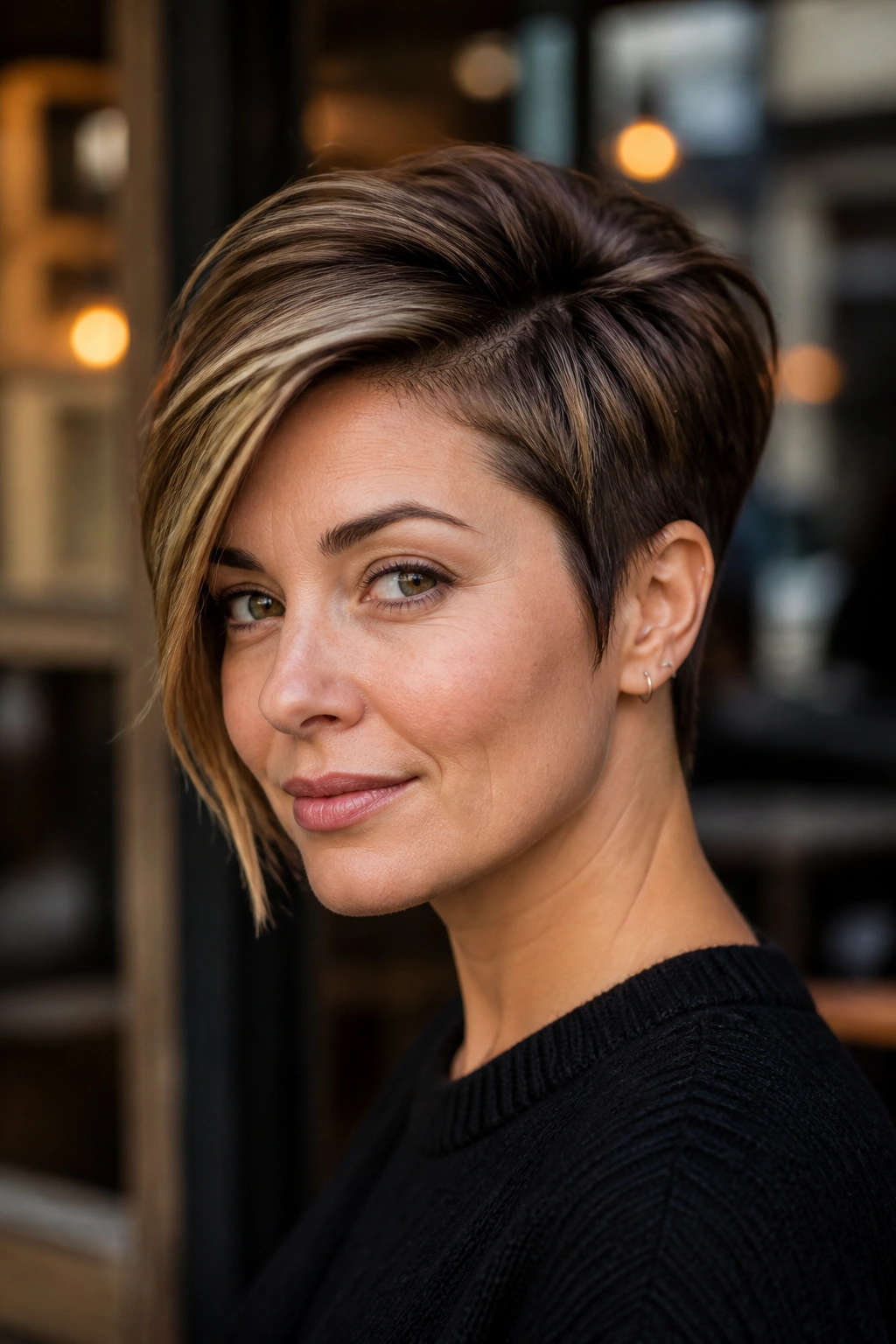
One longer side can do more than a lot of layering.
An asymmetrical pixie uses imbalance on purpose. One side stays a little longer, the part is usually pushed off center, and the front pieces fall in a diagonal line that breaks up the roundness of the face. For fine hair, that shape also keeps the cut from looking too neat or too small.
What Makes It Work
- The longer side should be noticeable, not dramatic to the point of gimmick.
- The shorter side should stay close enough to show the jawline.
- The top needs some lift so the cut does not flatten into the head.
This is a good one if you like a haircut with attitude but you still want it to look wearable at 8 a.m. It photographs well in person too, because the shape changes as you turn your head. One side tucked, one side loose — that little shift gives the cut life.
A styling cream with flexible hold is enough. You do not want crunchy ends here. The whole point is movement with a little edge.
8. Feathered Pixie Crop
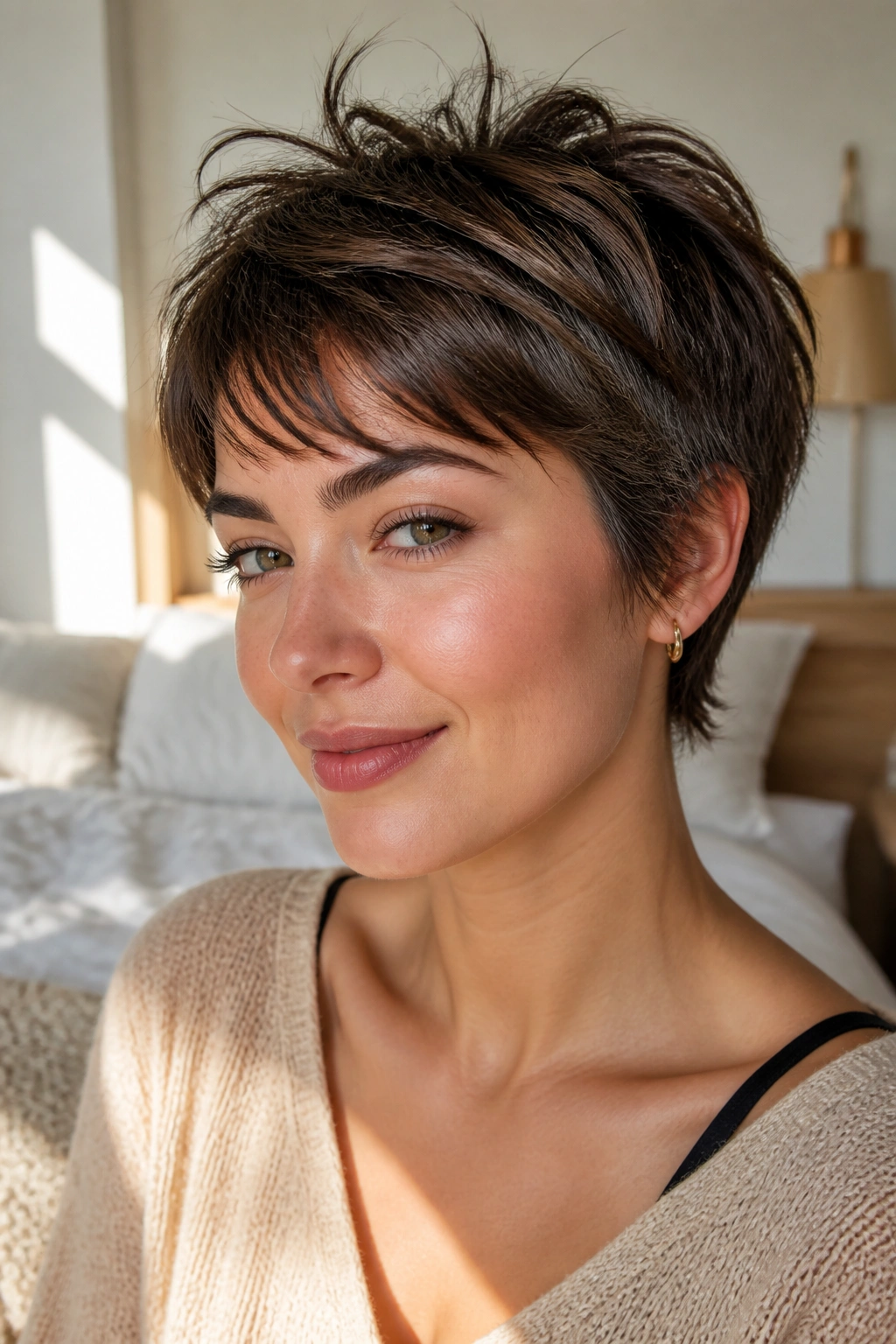
Feathered ends feel almost weightless.
That is exactly why this version works so well on fine hair. The layers are soft, not chopped, and the edges break into light little pieces that move easily. On a round face, feathering helps keep the outline from becoming too boxy, especially if the top is longer and brushed slightly upward.
This cut has a gentle, airy feel that suits people who do not like hard lines. It is softer than an undercut, less structured than a bixie, and a little more forgiving than a blunt crop. That middle zone matters. It lets the haircut breathe without losing shape.
A small round brush and a light mousse are enough to set it. Dry the roots first, then turn the brush through the ends just enough to bend them. If you overwork the feathering, it starts to look frayed. That is the line to watch.
9. Wispy Fringe Pixie
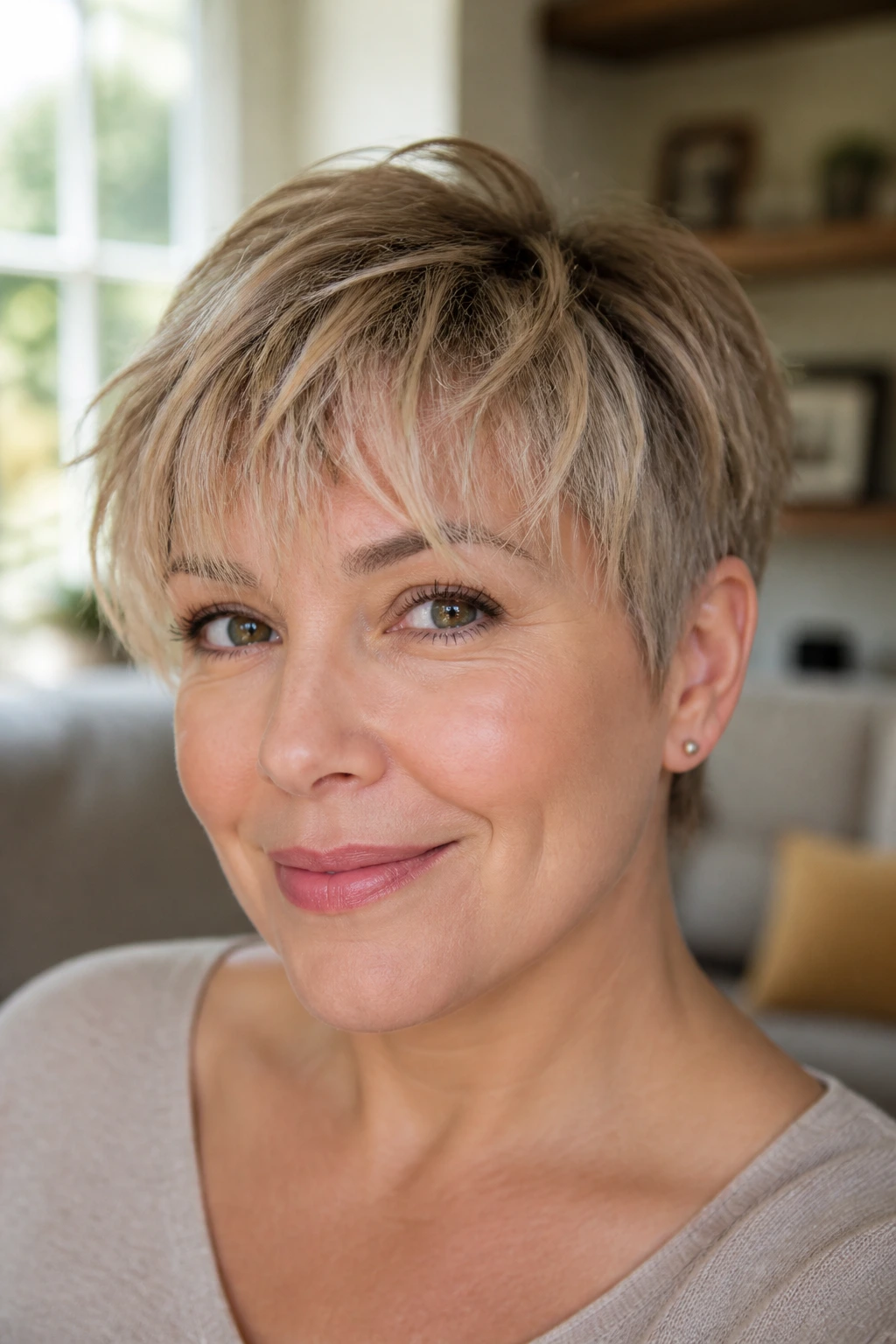
Can a fringe shorten the face? It can — or it can fix the proportions if it is broken up and light.
A wispy fringe is one of the easiest ways to soften a round face without adding too much bulk. The trick is to keep the fringe airy, piecey, and slightly uneven, so it does not form a heavy line across the forehead. Fine hair handles this well when the fringe is cut with a light hand instead of being overthickened.
How to Wear It
- Keep the fringe narrow enough to leave some forehead visible.
- Let the ends break into small pieces rather than one solid strip.
- Pair it with a tapered side and a little height at the crown.
This cut is especially good if you like a bit of softness near the eyes. It gives the face a gentler frame, but it does not drag the whole shape downward. A tiny amount of styling balm on the very ends is enough. Too much product makes wispy bangs stick together, and then you lose the whole point.
If you hate feeling “covered,” this is the fringe version to try first.
10. Shaggy Pixie With Broken Ends
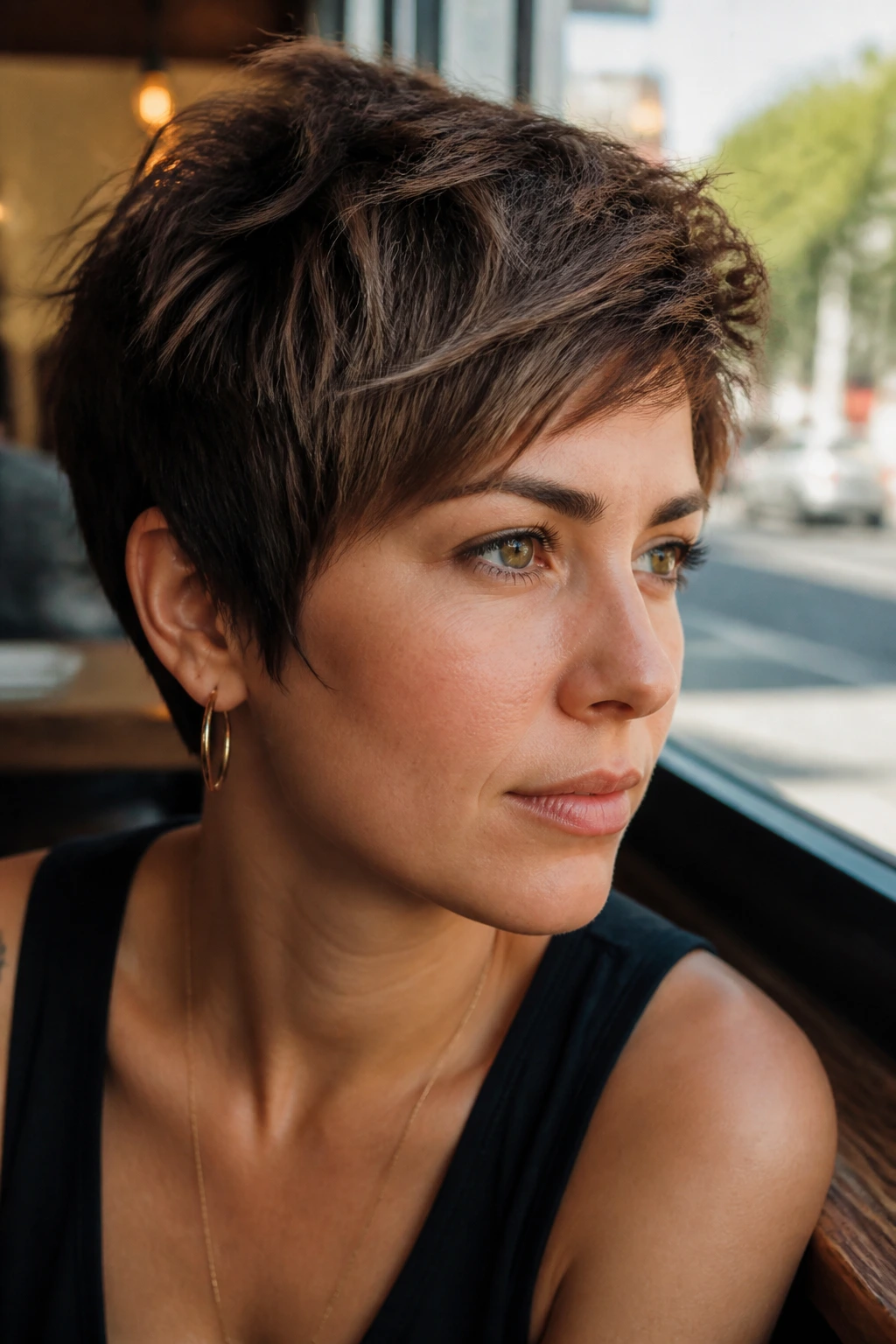
I have seen this cut rescue hair that looked dead flat in a bun.
A shaggy pixie works because it builds in irregular movement. The pieces are broken up, the top stays a little longer, and the shape feels loose in a way that can be flattering on round faces. Fine hair often wakes up with this kind of cut because the uneven ends create shadow and texture, which makes the hair look fuller than a blunt, polished crop.
The important part is restraint. Too much shag can turn into fuzz, especially if your hair is very fine and smooth. Ask for separation at the top and around the crown, not all over the sides. The sides should still follow the head, or the cut can widen out fast.
A light texturizing spray is enough for styling. Salt spray can be drying on very fine hair, so I reach for something softer unless the hair is naturally slippery. Scrunch the top, twist a few pieces between your fingers, and stop before it becomes messy for the sake of being messy.
11. Slicked-Back Pixie With Soft Temples
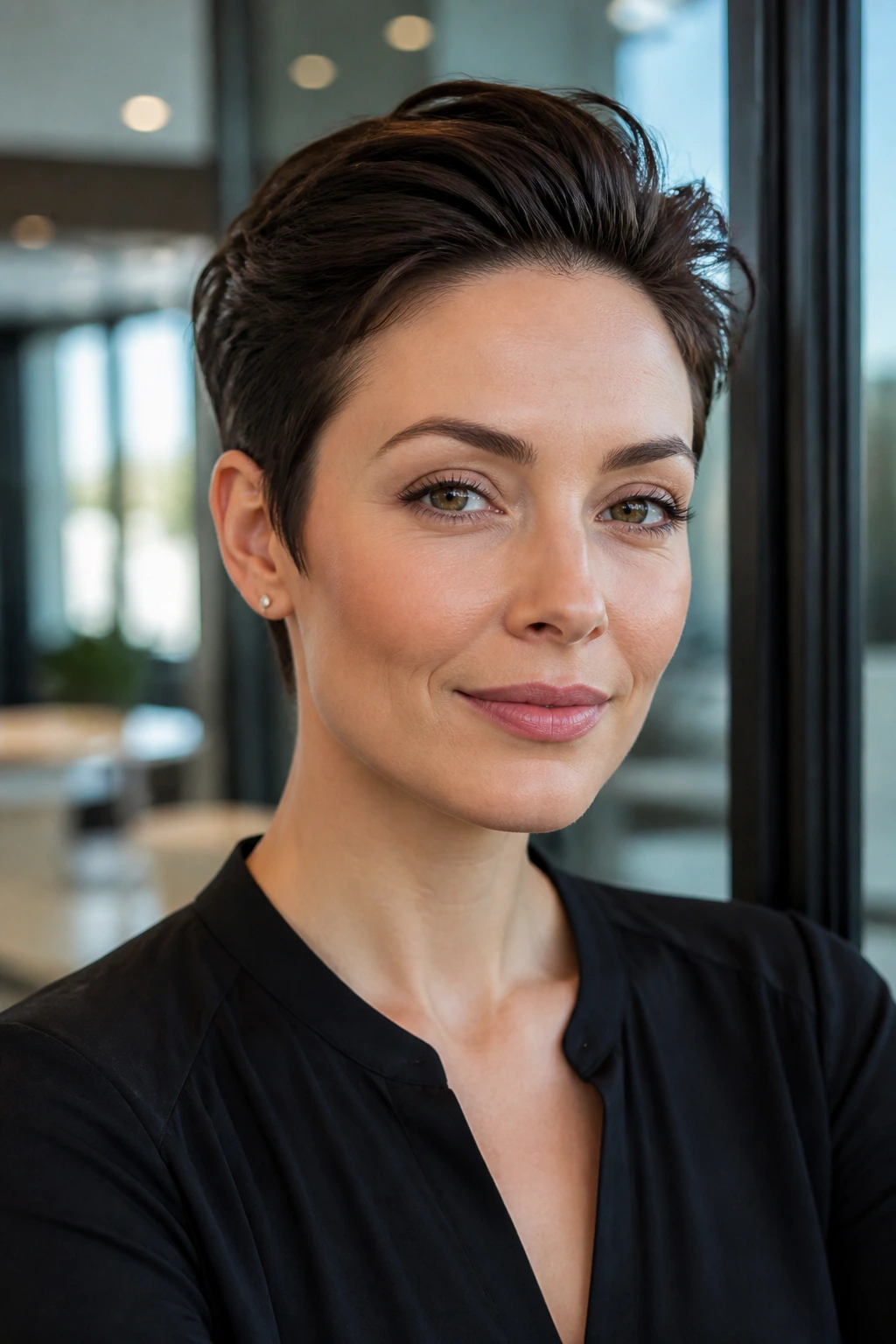
Sleek does not have to mean severe.
A slicked-back pixie can work beautifully on a round face when the temples are left a little softer and the top is not pulled flat against the scalp. That small bit of lift keeps the head shape from looking too wide, while the back and sides stay neat enough to show the bone structure. Fine hair often looks denser when it is smoothed down in this controlled way.
This style is cleaner than a textured crop and more polished than a shaggy pixie. It is a good option if you want something sharp for work or events, but you still want some softness around the face. A lot of people ruin this look by using too much gel. Then the hair looks wet for all the wrong reasons.
Use a small amount of pomade, about the size of a lentil, and spread it through the top with your fingers. Leave the temples a little loose. That tiny detail keeps the cut from looking stiff.
12. Ear-Grazing Pixie With Longer Top
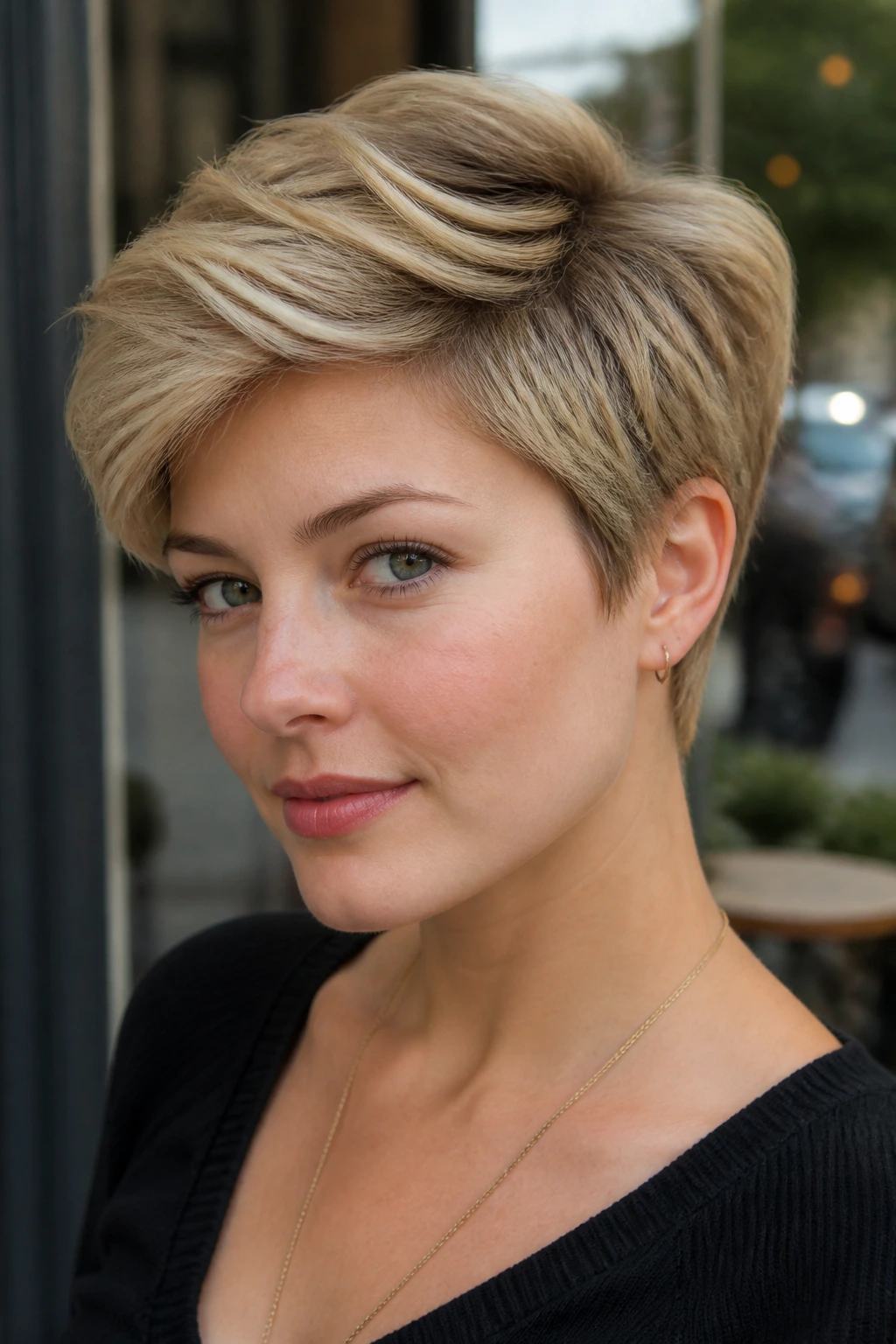
If you like tucking hair behind one ear, this cut makes that move look deliberate.
The ear-grazing pixie gives you just enough length around the sides to soften the face, while the top stays long enough to build height or a slight bend. On a round face, that combination creates a longer line from the crown to the jaw. Fine hair gets a bonus too: the longer pieces help the style look fuller instead of clipped too close to the scalp.
The Face-Framing Rule
- Keep the side pieces long enough to skim the top of the ear.
- Leave the crown 1 to 2 inches longer than the sides.
- Avoid over-thinning the front, which can make the shape look wispy in a bad way.
This is one of those cuts that looks easy, but the measurements matter. If the side is too short, the face opens up too much. If the top is too short, you lose the lift that makes the whole shape work. A soft bend with a flat brush is usually enough to style it.
A little root spray at the crown helps the top stay awake. That is the whole game here.
13. Blunt-Perimeter Pixie for Fine Hair
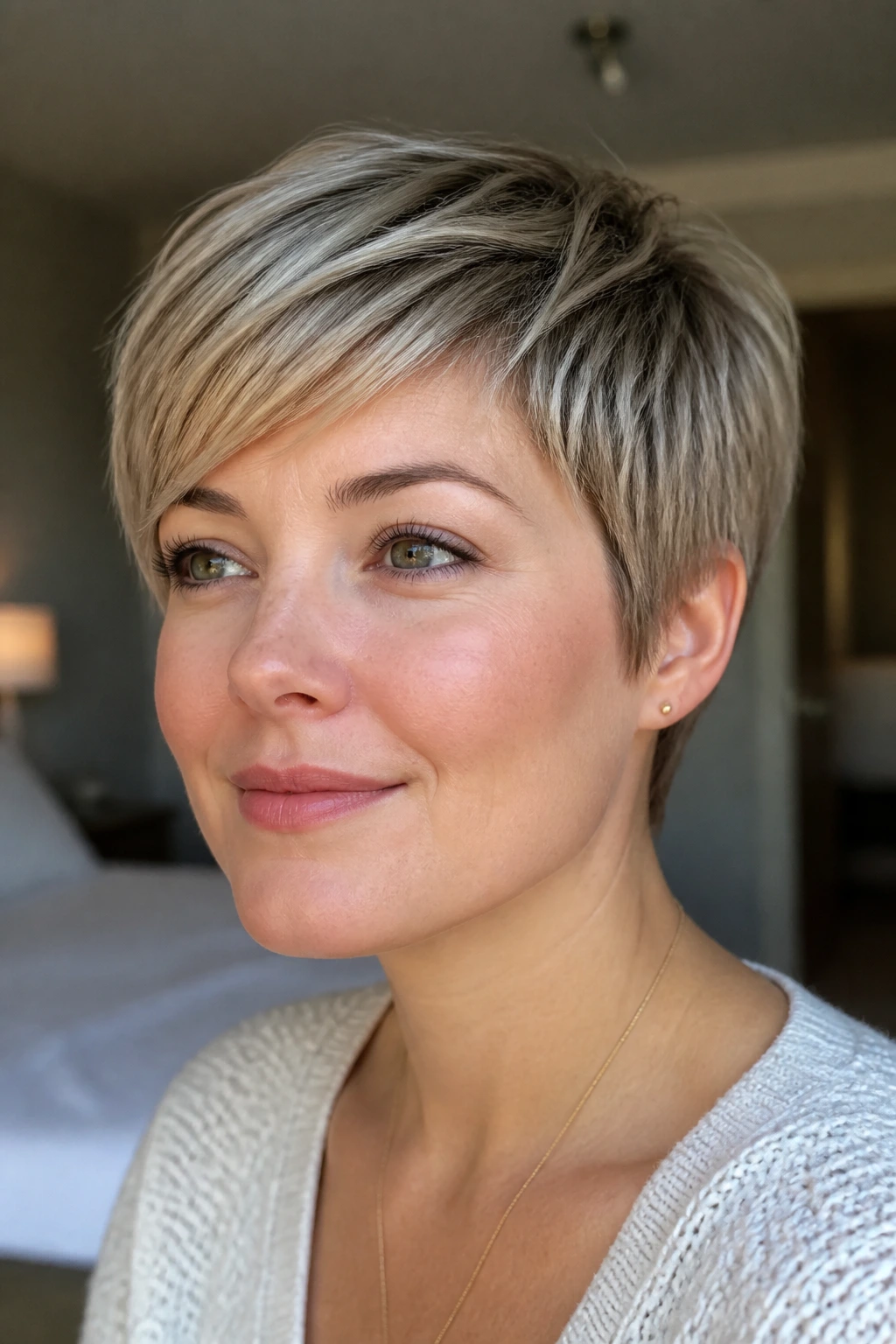
Fine hair usually does better with less drama at the ends.
A blunt perimeter is one of the smartest ways to make fine hair look fuller, because the edge keeps a clean line instead of dissolving into wisps. That sounds simple, and it is, but the effect can be big. On a round face, a tidy perimeter also keeps the shape from expanding too much at the cheeks. The outline stays controlled.
The trick is to keep the outer edge solid while allowing some movement inside the cut. You do not want everything chopped at the same level. Internal layers under the top section can give lift, but the outside line should stay crisp enough to hold its shape between trims.
Ask for This, Not That
- A clean outline around the hairline.
- Soft internal layering for movement.
- Minimal razor work on the ends.
This is a good cut if your hair tends to fray at the ends after a few weeks. A blunt edge grows out more gracefully than a heavily shattered one. It also takes less product, which I appreciate. Sometimes the simplest solution is the least annoying.
14. Deep Side-Part Tousled Pixie
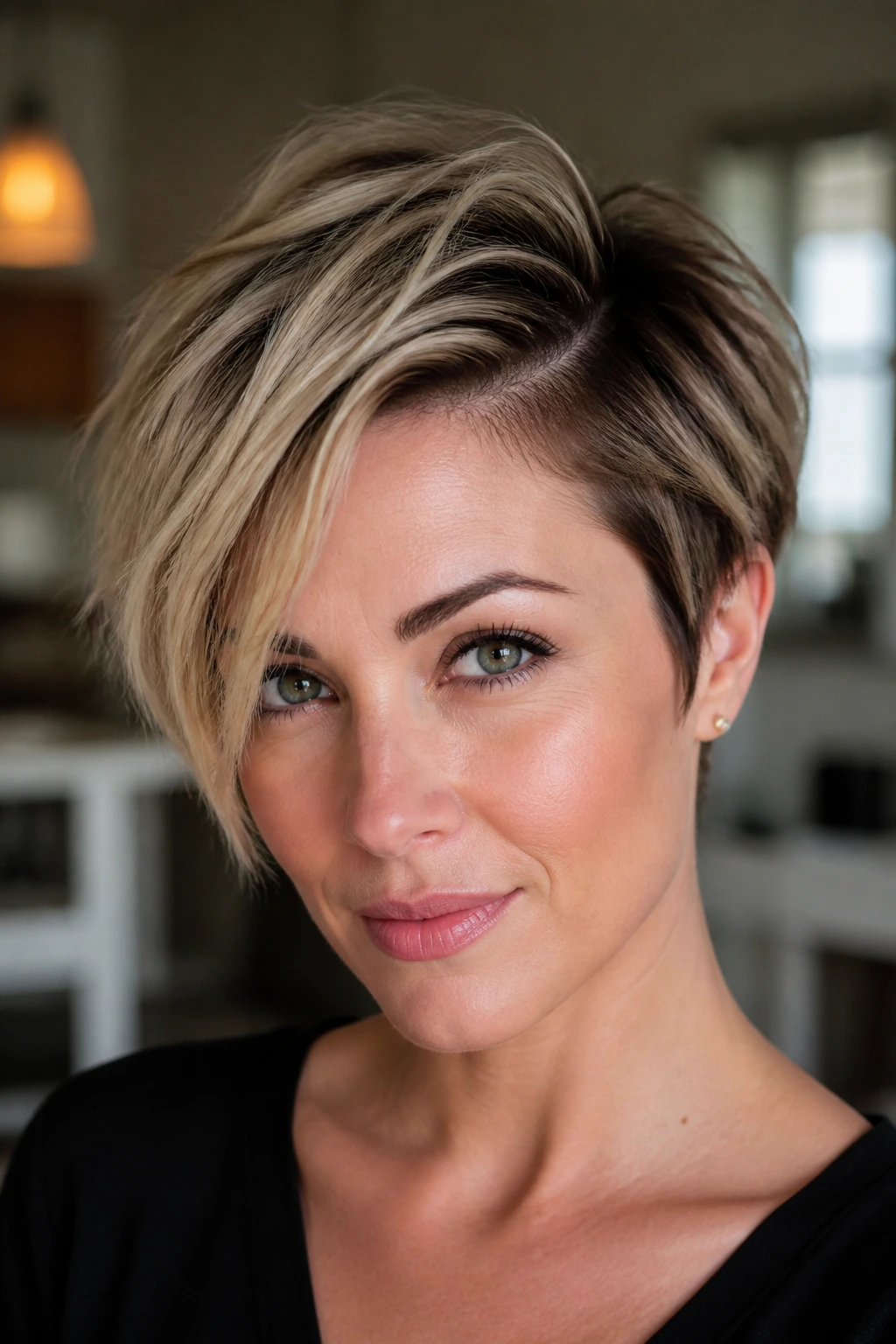
Why does a deep side part keep coming back? Because it works.
It creates instant asymmetry, and asymmetry is useful on a round face. The heavier side gives the cut direction, while the lighter side keeps the style from feeling boxed in. On fine hair, a deep part can also make the top look denser because the roots lift when the hair is redirected.
What Makes It Work
- Blow-dry the hair in the opposite direction first.
- Flip it back while it is still warm.
- Keep the top piecey instead of smooth all the way through.
That little pre-dry trick matters. It gives the roots memory, which fine hair usually needs. A pixie with a deep side part can feel playful one day and more polished the next, depending on how much product you use. I like that range. It means the cut is doing part of the styling for you.
Use a lightweight spray wax if you want separation. If the product is heavy, the part loses its lift and the whole shape falls flat again.
15. Tapered Pixie Bob for Round Faces and Fine Hair
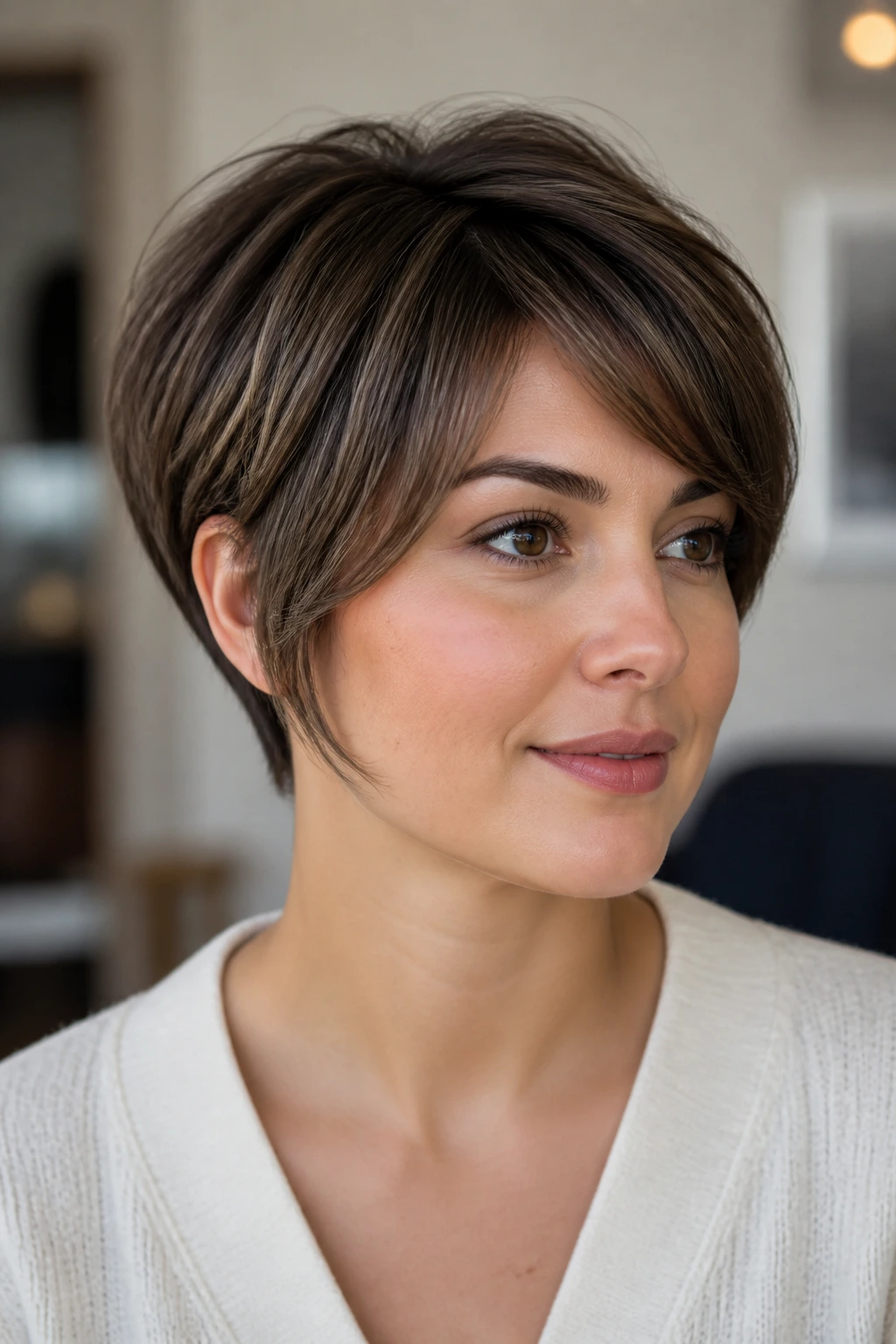
A pixie bob earns its keep when you want short hair without the shock of a full crop.
It carries a little more length through the sides and jaw, which can be handy on round faces because it adds a longer frame around the lower half of the face. The taper at the nape keeps it from feeling too boxy, and fine hair benefits from the extra surface area, which makes the hair look like it has more movement than a super-short cut would allow.
This is a smart compromise if you are nervous about going very short. You still get the ease of a pixie, but you have enough length to tuck, shape, or push behind the ears. The cut is also easier to grow out than a severe crop, which is worth thinking about before you sit in the chair.
A side part and a soft bend at the ends keep the shape flattering. If the bob part gets too blunt at the cheek, it can widen the face, so ask for the front to angle down a little. That small adjustment changes everything.
16. Piecey Pixie With Swept Temple Length
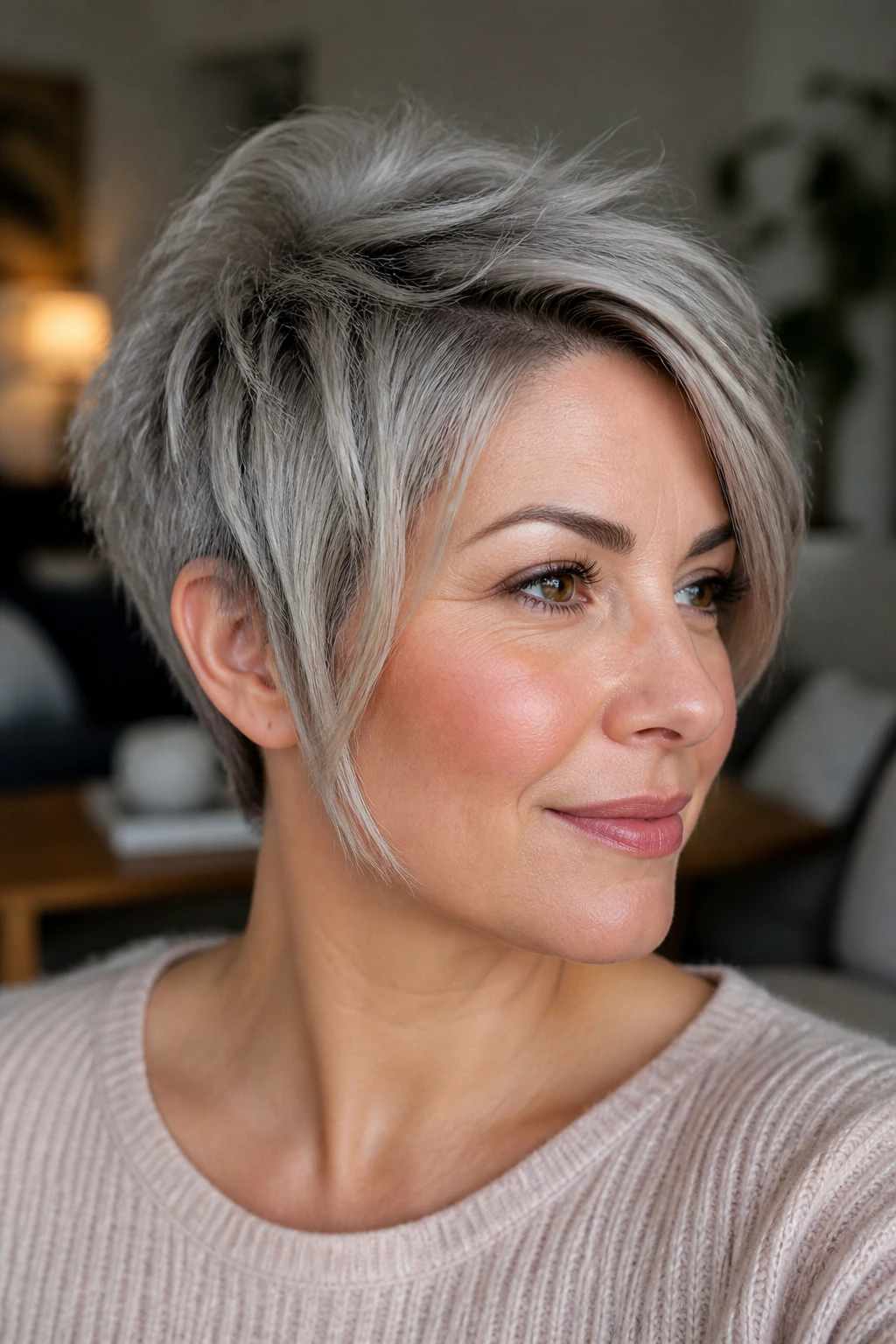
Temple length is underrated.
The little pieces that sit near the temples and cheekbones do a lot of quiet work on a round face. They give the eye somewhere to travel downward, which helps the face look a touch longer. On fine hair, those pieces also create the feeling of movement without requiring a heavy fringe or a lot of layering.
The Best Part of This Cut
- The temple pieces can be tucked or left loose.
- The top stays longer for lift.
- The sides stay neat enough to keep the shape slim.
This cut is good for people who like to change the look day to day. One morning it can be soft and face-framing. The next day it can be pushed back and made sharper. That flexibility is worth a lot if you do not want your short haircut to feel fixed in one mood.
A small amount of mousse at the crown and a touch of cream at the temple pieces usually handles styling. Keep the product light. Fine hair does not need much before it starts to sag.
17. Soft Close-Cropped Pixie With Nape Detail
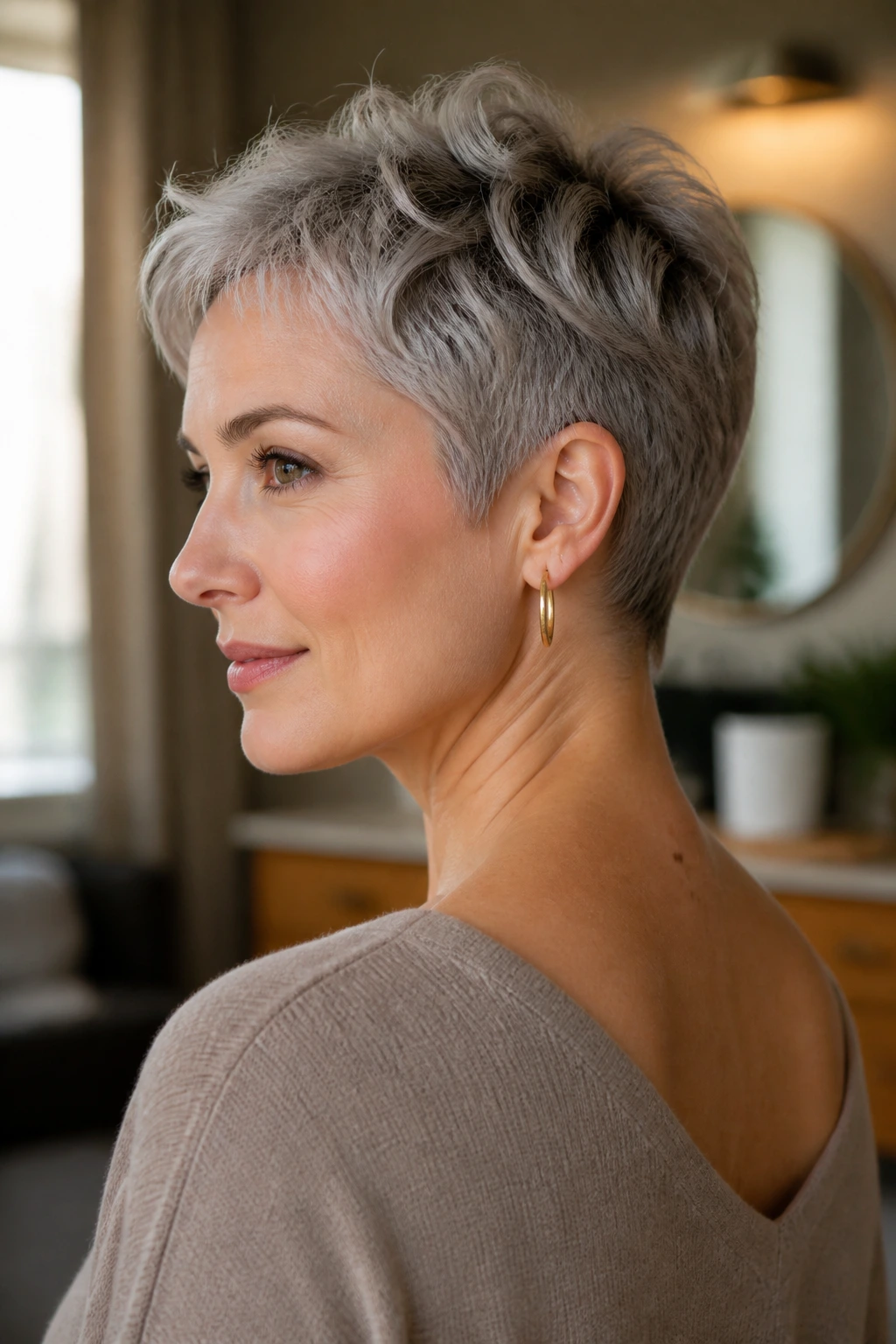
The cleanest pixie is often the one with the softest neckline.
This cut stays close through the back and sides, but it leaves a little softness where the hair meets the nape, which keeps the shape from looking severe. On a round face, that neat back line helps the eye move upward. Fine hair likes the controlled outline too, because it does not have to fight with a lot of layered bulk.
I like this cut for anyone who wants a low-fuss routine and a crisp finish. It needs trims on a regular schedule, usually before the nape starts to flip or lose its shape. That is the part people forget. A short crop can look perfect for weeks, then one tiny growth spurt throws the whole thing off.
If you are choosing between several pixie haircuts for round faces and fine hair, come back to this question: do you want softness, edge, or structure most of the time? Pick the version that gives you the strongest answer without demanding a complicated morning ritual. Short hair is honest. It shows the cut.
