



A long pixie cut for round faces lives or dies on shape. If the sides puff out and the top lies flat, the face can look wider than it is. If the crown has lift, the fringe moves on a diagonal, and the side pieces stay lean, the whole cut starts doing quiet, useful work.
That’s the part people often miss. Round faces are not a problem. The wrong geometry is. A good long pixie doesn’t fight softness; it redirects it, usually with one clean line, a bit of height, and enough length around the front to keep the cut from feeling too cropped.
I’ve always thought the nicest long pixies are the ones that look effortless but are built with a lot of intention. The shortest pieces matter. So do the longest ones. And yes, the difference between “cute” and “wow, that suits you” can be as small as moving the part a half inch or leaving the fringe just a little longer at the cheek.
1. Side-Swept Long Pixie Cut for Round Faces
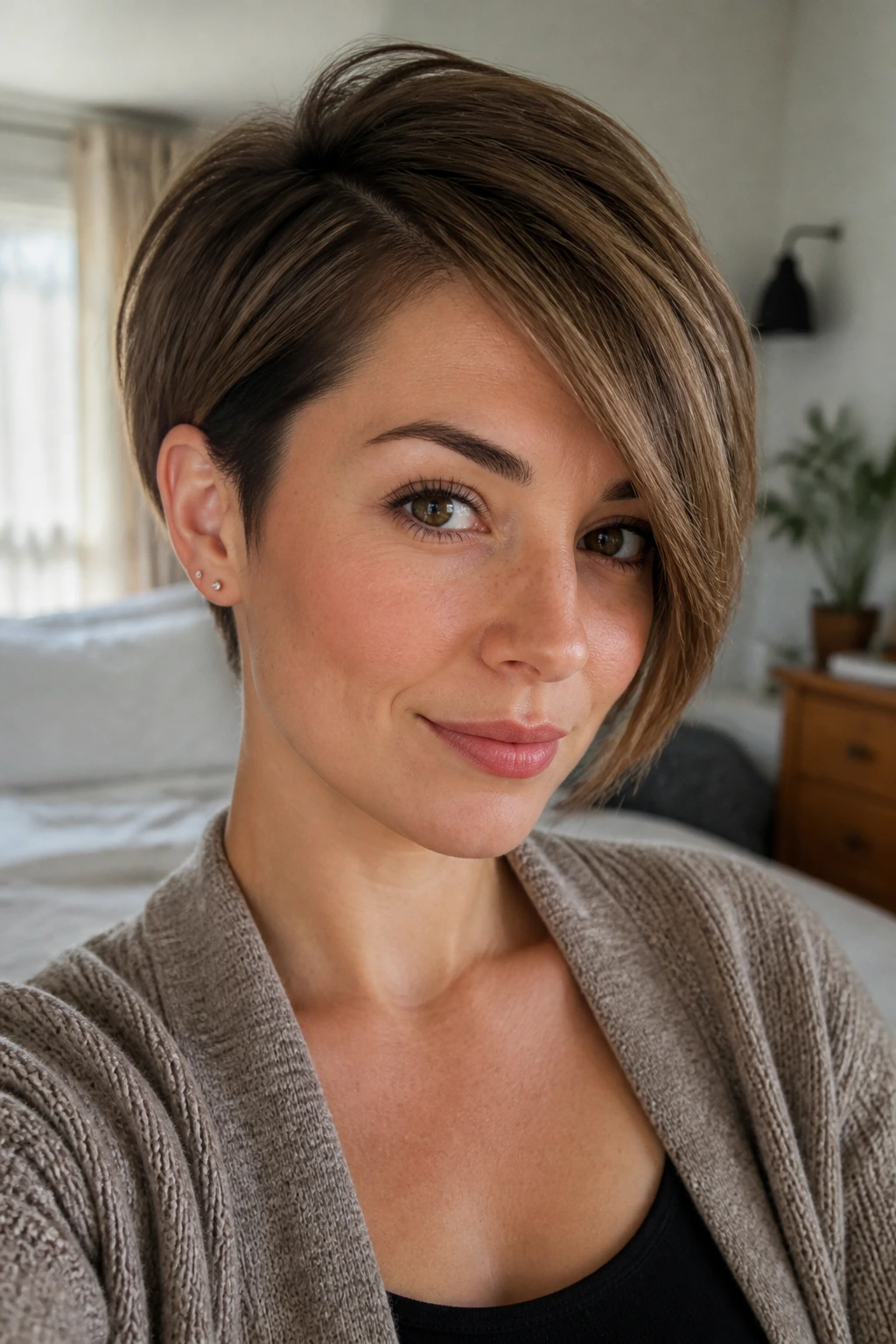
A deep side part is one of the easiest ways to make a long pixie work on a round face. It creates a diagonal line across the forehead, which pulls the eye upward and away from the widest part of the cheeks. That little shift does a lot.
Why the Diagonal Line Helps
The trick is to keep the front section long enough to sweep across, not so short that it collapses back into the face. I like a fringe that starts near the arch of the eyebrow and lands somewhere around the top of the cheekbone. It should feel soft, not heavy.
A stylist can also tuck the opposite side closer to the head, which gives the cut shape without making it look severe. That contrast matters. A round face looks best when the cut has some asymmetry built in.
- Ask for the part to sit slightly off center, not directly over the pupil.
- Keep the longest front piece around cheekbone length.
- Taper the sides so they don’t add width at the temples.
- Finish with a light cream or wax, not a stiff paste.
Pro tip: blow-dry the fringe in the direction you want it to live, then let it cool before you touch it again. That extra minute keeps the side sweep from falling flat by lunchtime.
2. Crown-Volume Long Pixie Cut for Round Faces
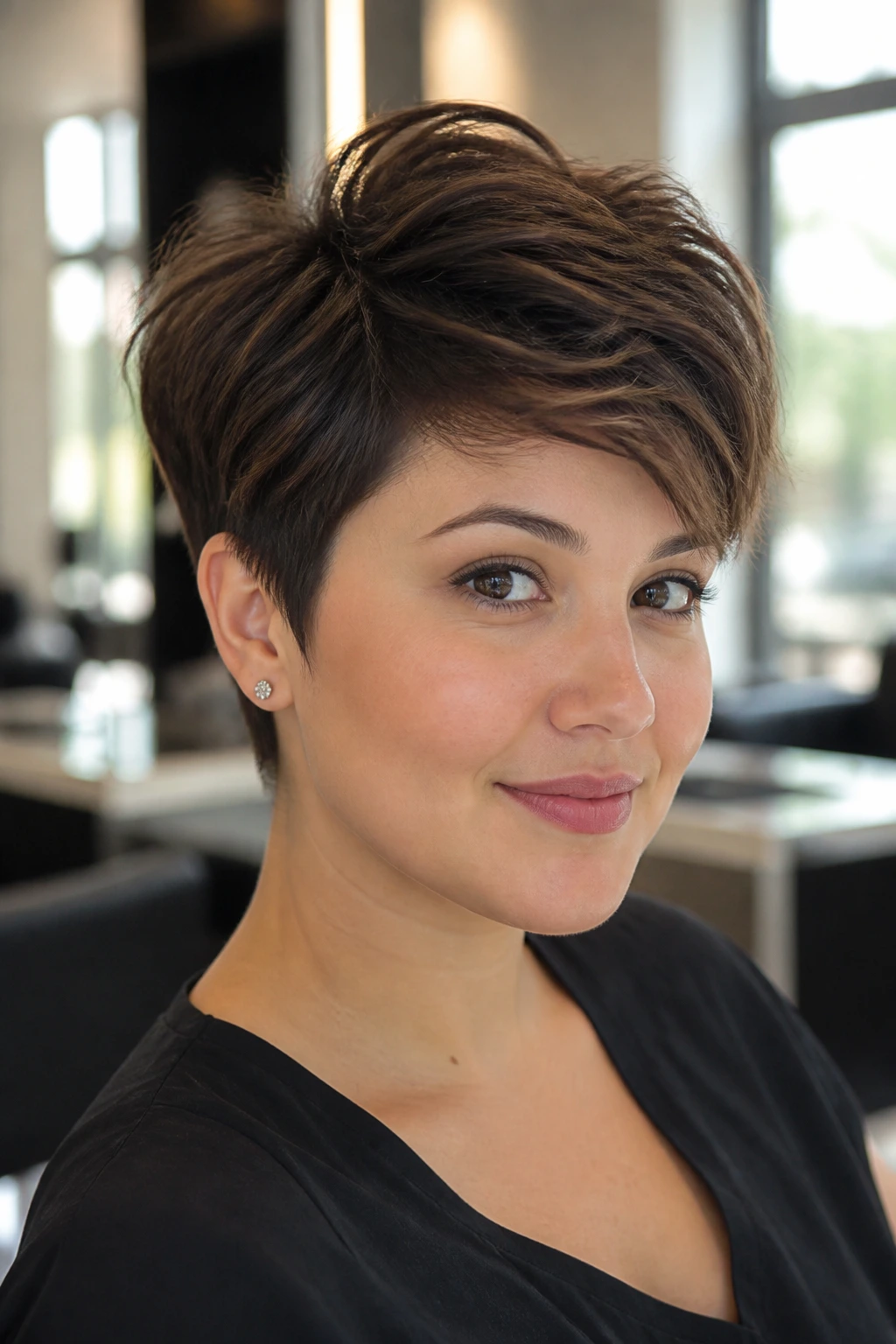
If you want your face to look longer, put the height on top, not on the sides. That is the whole game here. A little lift at the crown changes the silhouette fast, especially when the nape and temples stay tight.
The best version of this cut has a soft, rounded crown with enough internal layering to stand up when you style it. Not teased. Not helmet-like. Just elevated enough that the eye reads vertical first, horizontal second.
A round face can handle softness, but it does not need width added at cheek level. So the sides should stay close to the head, while the top gets the room to move. That contrast is what makes the cut feel fresh instead of bulky.
For styling, a root-lift spray or mousse at the crown is the difference between a flat pixie and one with shape. Blow-dry upward with a small round brush or your fingers, then set the top back and slightly off center. Easy. Clean. Done.
3. Feathered Ends That Break Up the Cheeks
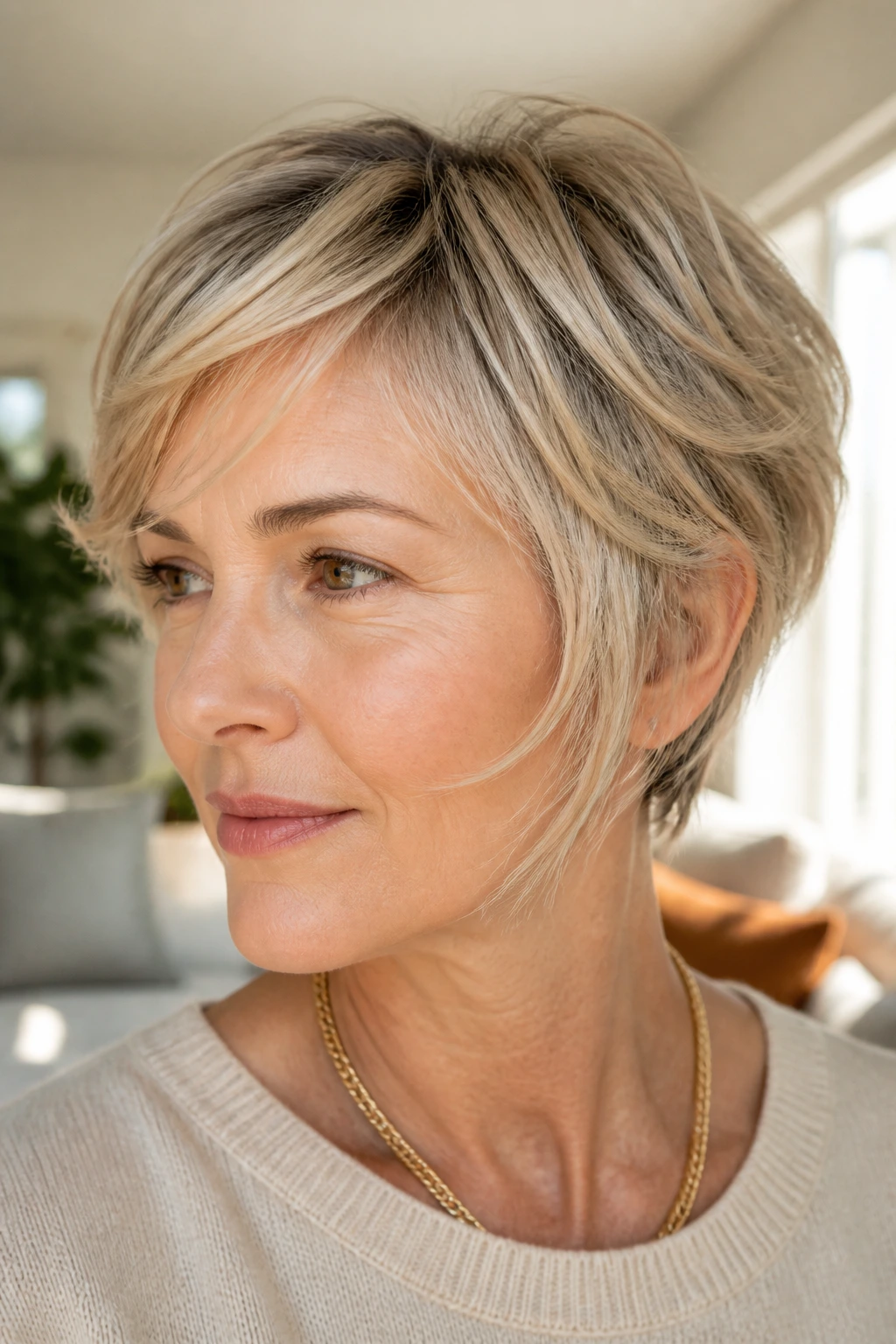
Why do feathered layers work so well here? Because they interrupt the circle. A blunt edge tends to echo fullness; soft, feathered ends cut that line into smaller pieces, which is kinder to a round face.
The cut depends on movement, not heavy structure. Think of the ends as lightly sliced, not chopped into one solid shape. A razor can help on some hair types, but point cutting with shears is safer if your hair frizzes easily.
What Makes the Texture Work
The goal is to keep the perimeter airy around the jaw and cheeks. You want the hair to shift, not sit in one block. That movement gives the face a little more length and keeps the cut from feeling boxy.
This style is especially good if your hair is medium-fine and likes to fall forward. The feathered pieces stop it from looking sparse. They also make the grow-out less fussy, which is a nice bonus.
How to Get the Most From It
- Ask for soft, broken ends rather than a blunt outline.
- Keep the longest layers just below the cheekbone.
- Use a light texturizing spray on dry hair.
- Scrunch the front pieces with your fingers, not a brush.
The best part is how forgiving it is. The cut looks good with a bit of bend, and it still holds its shape on a lazy day.
4. Curtain Bangs in a Long Pixie
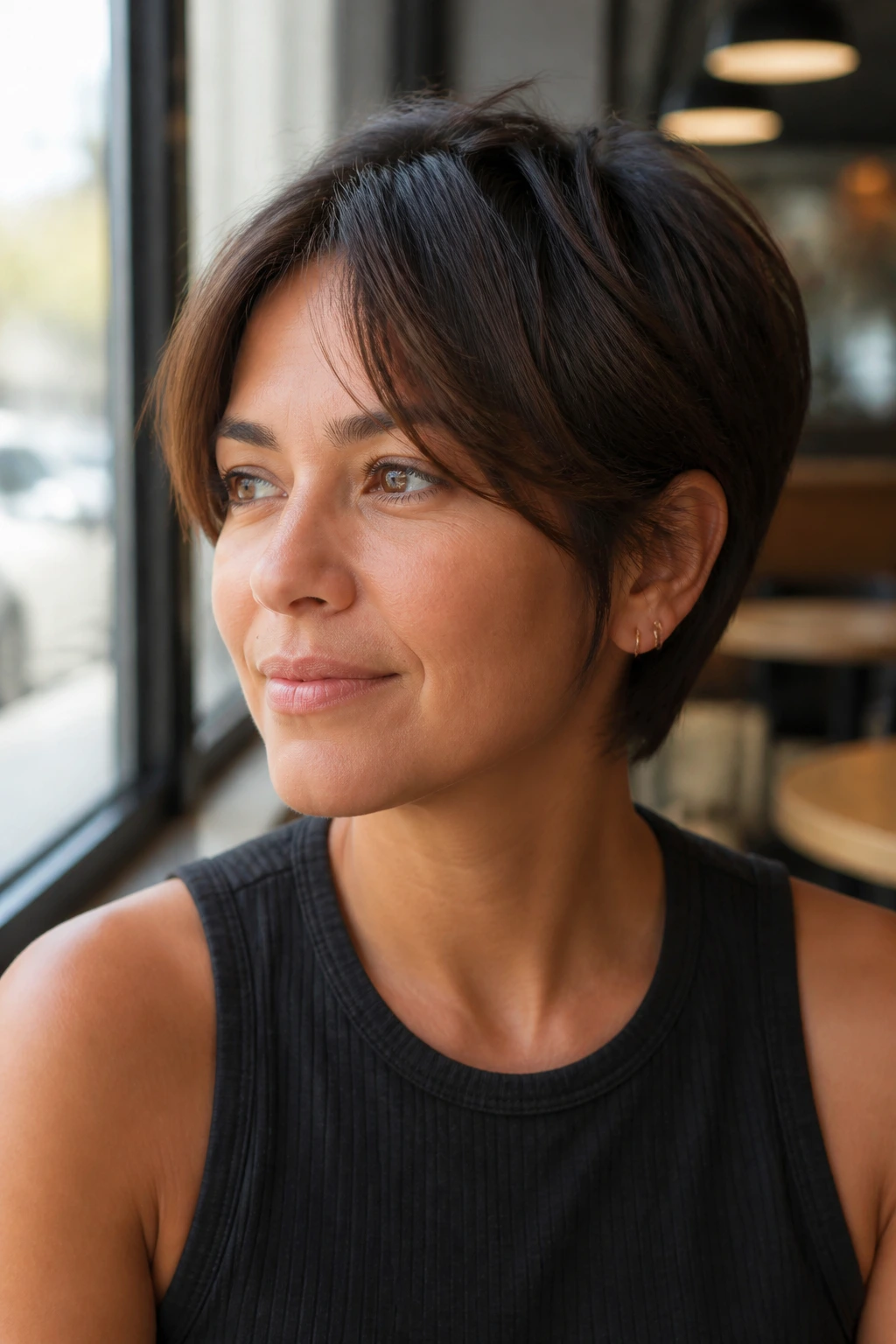
Imagine wanting fringe, but not wanting your face buried under it. That’s where curtain bangs come in. They split gently at the center or just off center and open the face instead of closing it off.
This version works because the bangs are longer at the outer edges, usually grazing the cheekbone, while the center stays soft and movable. On a round face, that little opening acts like a frame. The eye moves upward and outward instead of landing right on the widest point.
I like this shape on straight or wavy hair because it has room to fall in a natural way. Thick hair needs some weight removed around the temples, or the bangs can get too broad. Fine hair needs a careful cut so the fringe does not disappear into the rest of the style.
If you’ve ever had a blunt fringe and felt boxed in by it, this is the antidote. It still gives you face-framing, but it breathes.
5. Hidden Undercut With a Soft Top
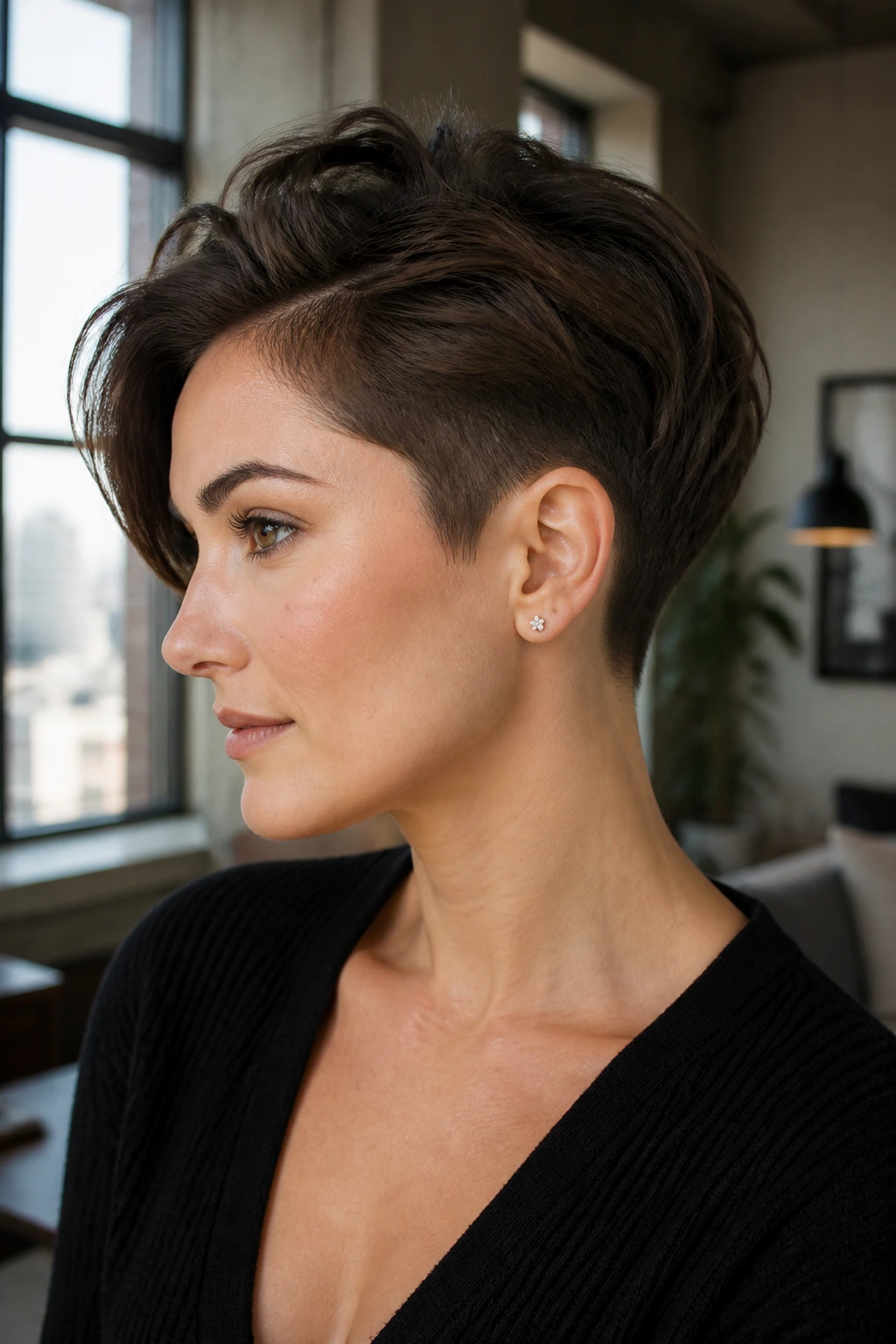
Unlike a soft layered pixie, this one gets its shape from subtraction. The nape, and sometimes a small zone above the ears, is clipped shorter underneath so the top can sit longer and lighter. That hidden undercut takes away bulk where round faces usually do not need it.
It’s a smart choice if your hair is thick, dense, or prone to puffing out at the sides. Without the hidden shorter layer, the top can look puffy in a bad way. With it, the silhouette stays clean.
This cut has a little attitude, though it doesn’t have to scream about it. The top can still stay soft, swept, and touchable. The undercut is the quiet part. You only notice it when the head turns or the hair is tucked behind the ear.
Best for people who want a sharper outline and don’t mind a salon visit every few weeks to keep the underside neat. If you like texture but hate bulk, this one earns its keep.
6. Choppy Micro-Texture That Keeps the Face Light
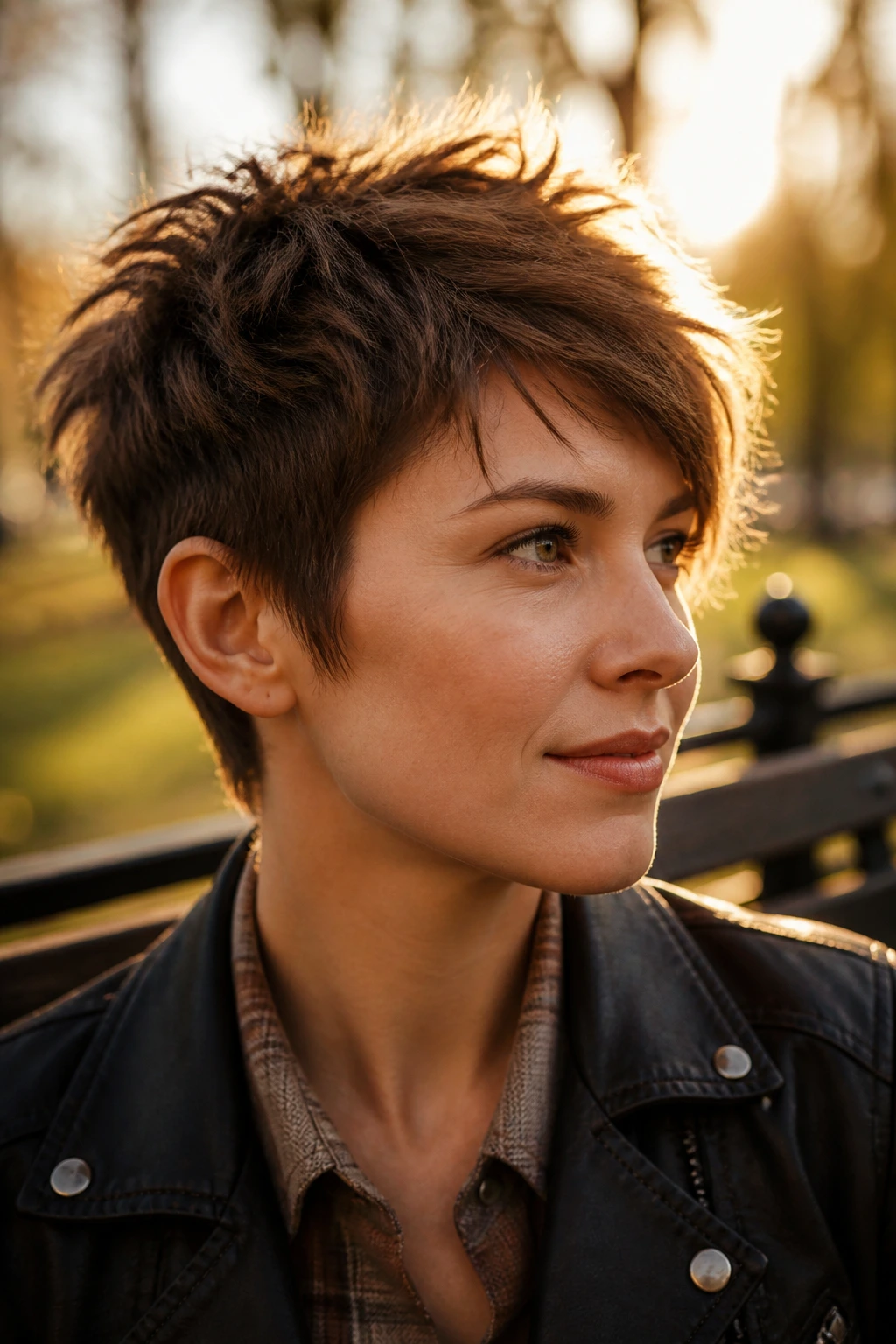
Choppy texture is not the same thing as mess. Done well, it’s controlled break-up. The cut uses small, irregular lengths to stop the hair from forming one big shape around the cheeks.
That matters on a round face because smooth, uniform layers can make the cut read wider than it should. Micro-texture keeps the eye moving. Your hair ends up looking fuller in a smart way, not heavy.
I’d ask for pieces cut in short, uneven sections—some around half an inch, some a little longer—so the perimeter never looks too neat. That unevenness gives the style life, especially if your hair is fine and tends to go limp by the end of the day.
A matte paste works better here than shine-heavy products. Use a pea-sized amount, warm it between your palms, then press it into the ends. Don’t rake it through from root to tip unless you want a lived-in, slightly wild finish.
7. Asymmetrical Length That Pulls the Eye
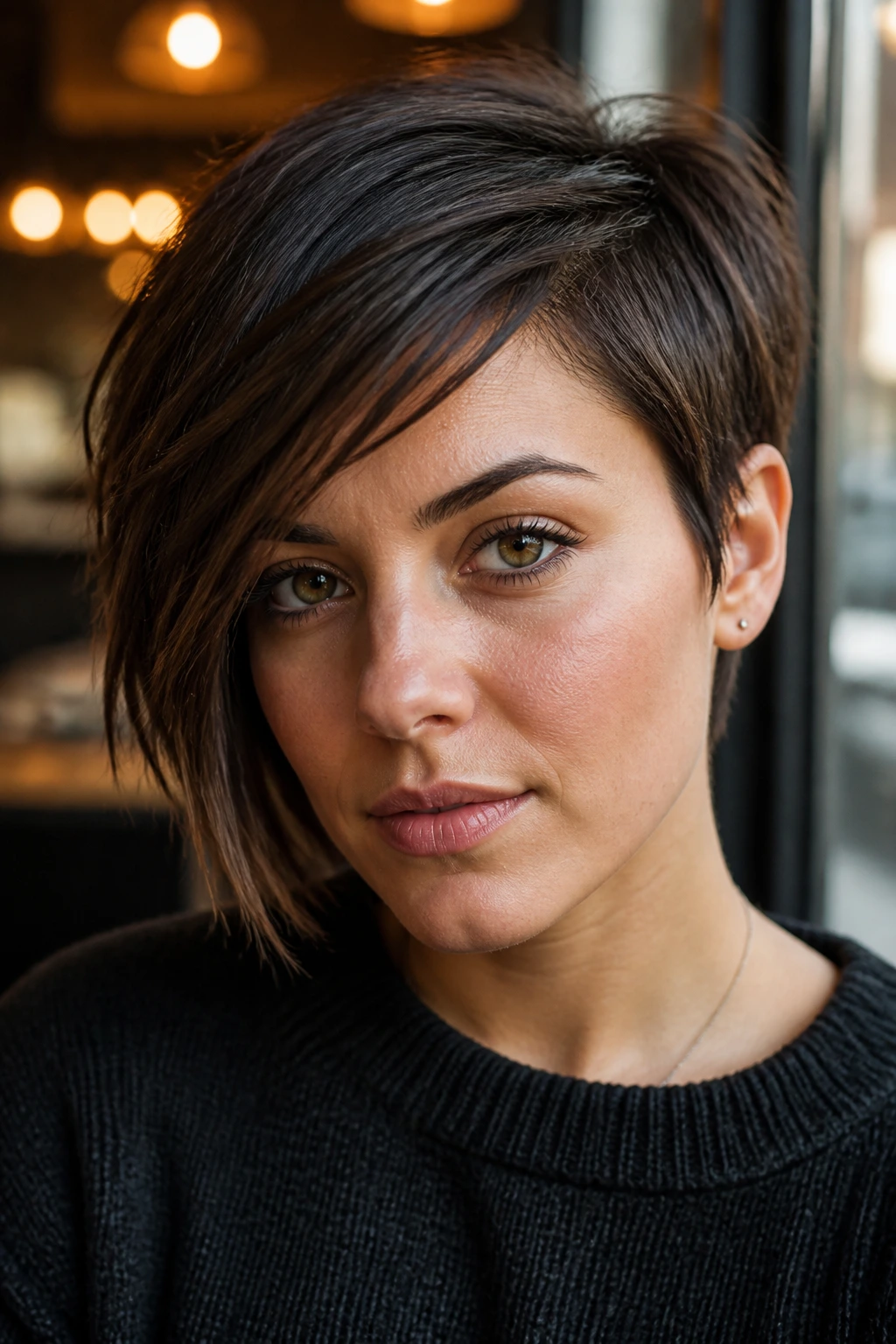
What does asymmetry do that a centered cut can’t? It creates tension, and tension is useful on a round face. One side sitting longer than the other interrupts the natural fullness of the cheeks and gives the eye somewhere else to go.
The longer side can skim the jaw or even brush the top of it, while the shorter side stays tucked closer to the ear. That difference does not need to be dramatic. A subtle half-inch to one-inch shift is often enough. Too much, and the cut starts to feel costume-y.
How to Brief Your Stylist
- Keep the longest side in front of the cheek, not above it.
- Let the shorter side sit close to the head.
- Preserve some movement in the top so the cut doesn’t look pinned down.
- Avoid making both sides blunt; soft edges are better.
This is the cut for someone who wants shape without looking too precious. It has edge, but it still flatters in a very practical way. If you like hair that looks a little off-center on purpose, this one is hard to beat.
8. Slicked-Back Shape With Tapered Sides
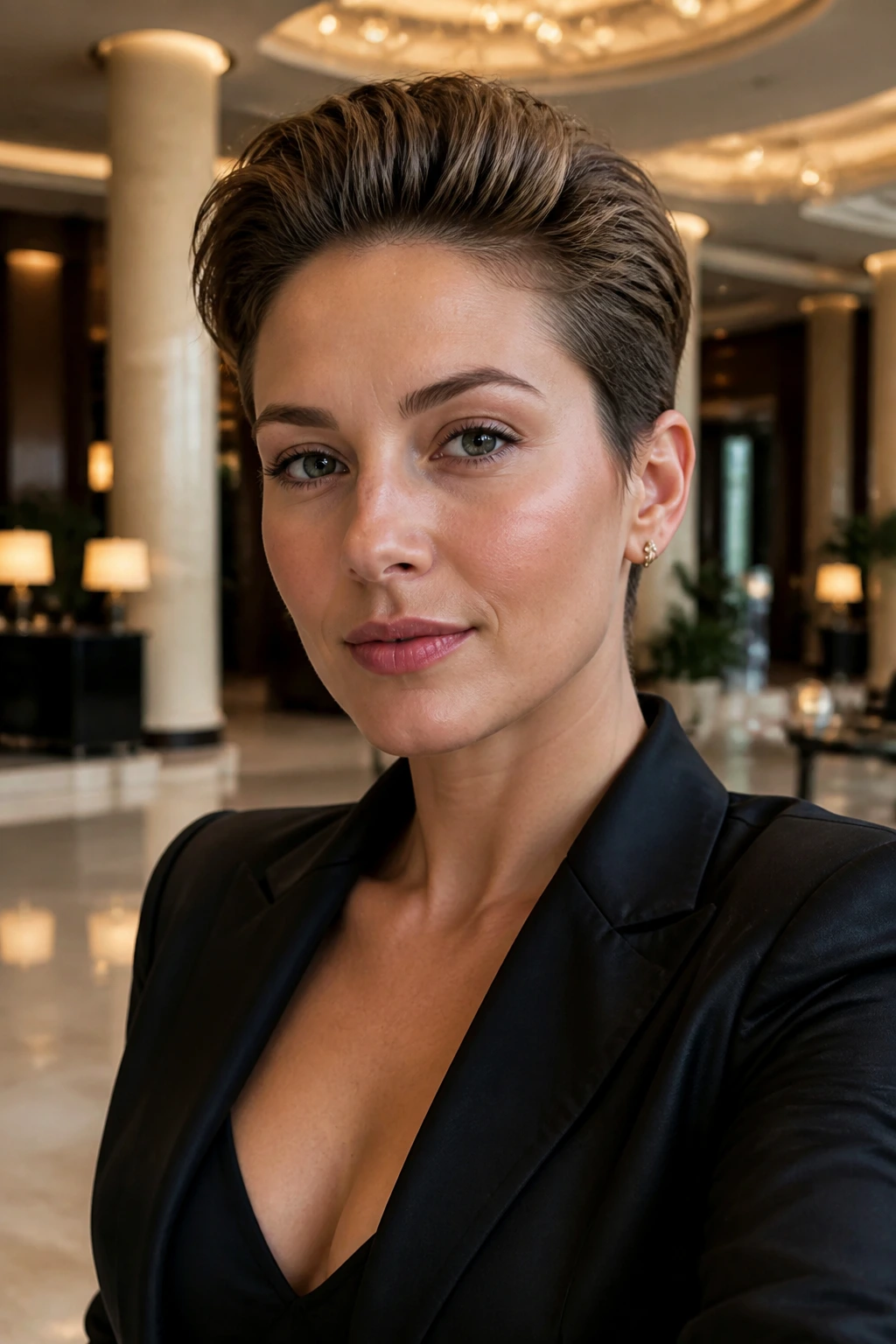
A slicked-back long pixie can look surprisingly good on a round face, as long as the sides stay tapered and the top keeps a bit of height. The slicked finish opens the face completely, which makes the cheeks feel less dominant.
There’s a catch, though. If you flatten the crown too much, the whole look turns heavy. So the top should be brushed back with a little lift at the roots, not pressed like wet paper against the skull.
This works especially well for evenings, sharp collars, or days when you want the haircut to look intentional and clean. A lightweight gel or styling cream is enough. Heavy wax can make the style collapse, and nobody needs that.
I’m a fan of this cut on straight or slightly wavy hair because it stays put more easily. If your hair is very curly, you can still do it, but the shape needs more coaxing. The payoff is a face that looks longer, leaner, and a bit more sculpted.
9. Wavy Pixie With Cheekbone Fringe
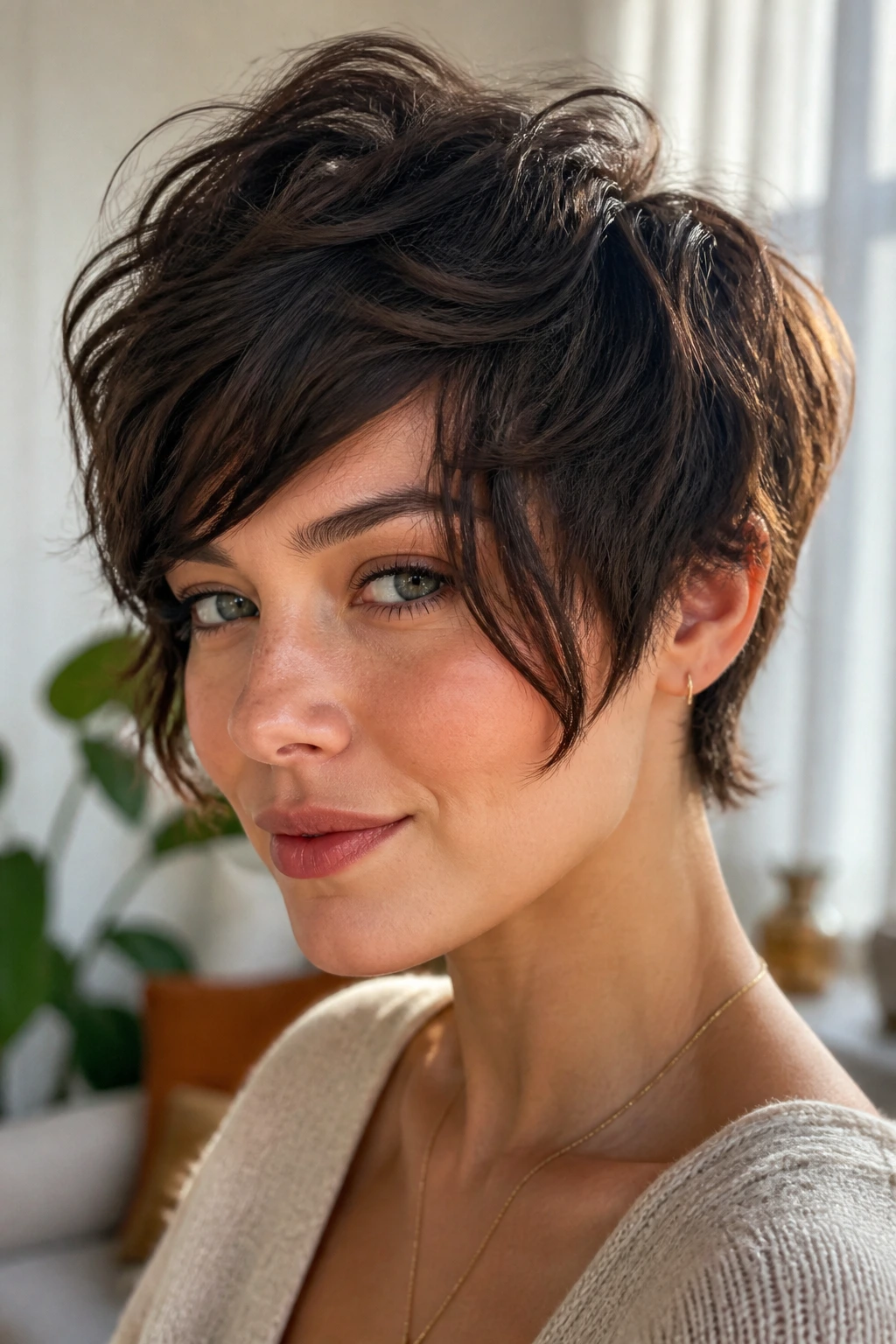
If your hair already bends on its own, don’t fight it. A wavy long pixie with a cheekbone fringe usually looks better when the texture is allowed to breathe. The waves soften the cut, and the fringe gives the face a diagonal line without making it severe.
The key is to keep the front pieces long enough to land around the cheekbone or slightly below it. That length matters. Shorter waves can puff out at the widest part of the face, while longer ones skim past it and keep moving.
Air-drying can work here, but I like a diffuser when the hair needs a little more shape at the root. Scrunch lightly with a curl cream or wave spray, then leave the ends alone. Too much touching turns nice texture into frizz fast.
This cut has a casual feel that suits people who don’t want their hair looking overworked. It’s relaxed, but not lazy. There’s a difference.
10. Long Pixie Cut for Round Faces With Side Bangs
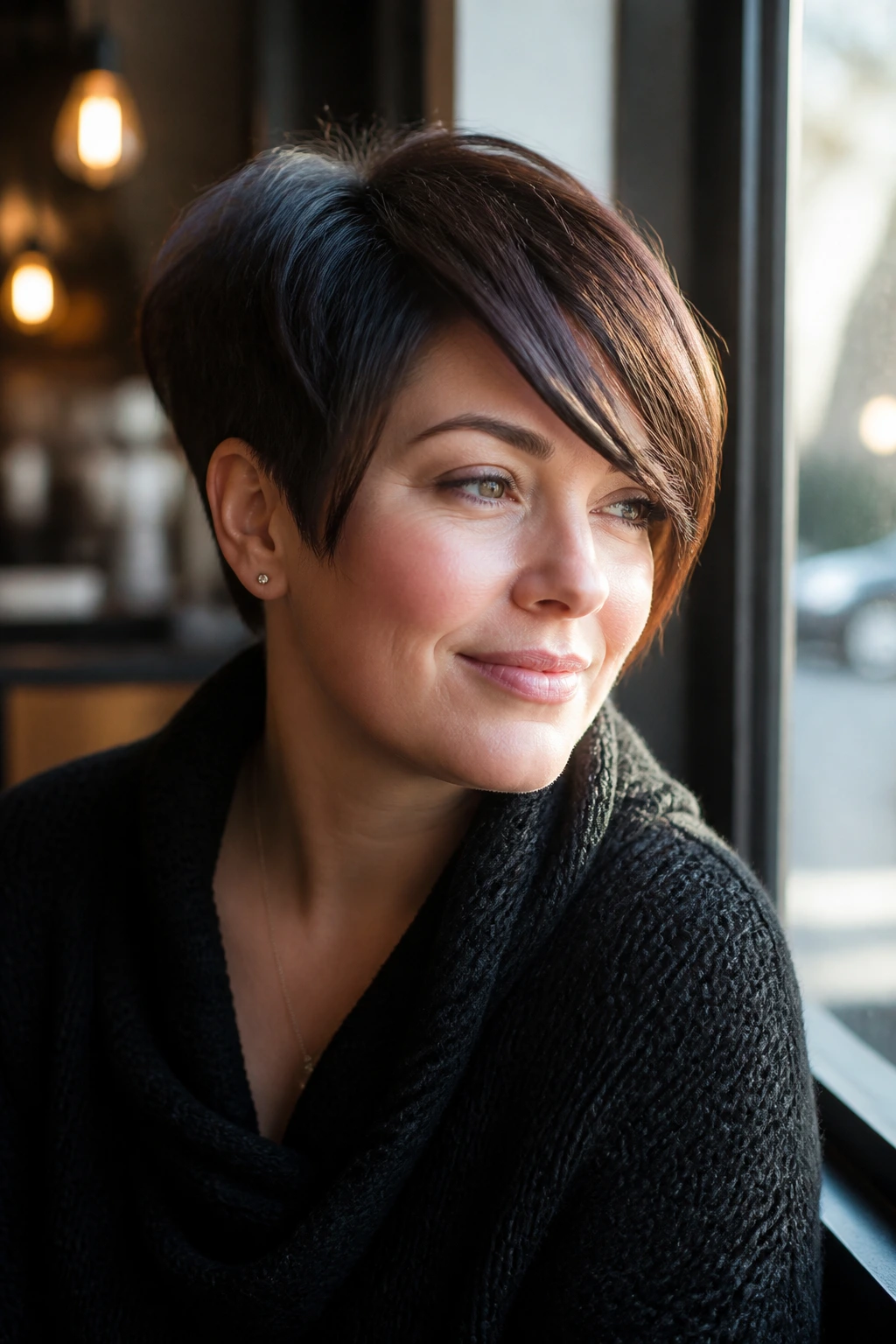
Side bangs are the safer cousin of a full fringe, and I mean that in a good way. They give you face-framing without cutting the forehead in half, which helps a round face stay open and lifted.
The best side bang in this cut starts around the temple or outer eyebrow and sweeps diagonally toward the cheek. You want enough length for movement, but not so much that it swallows the eye. A bang that lands just at the cheekbone usually feels balanced.
Where the Length Should Sit
The back and sides should stay compact so the bangs can do the visual work. If the cut gets too wide around the temples, the whole thing stops flattering the face shape. That’s the part to watch.
A soft nape taper helps too. It keeps the haircut neat from behind and makes the front feel more intentional. I’d also avoid heavy layering in the crown if your hair is very fine; the bang already brings enough movement.
How to Style It
- Blow-dry the bang from side to side first, then set it in place.
- Use a small round brush only at the ends.
- Finish with a touch of lightweight serum on the longest piece.
This is one of those cuts that looks polished even when you barely do much to it. Good sign.
11. Shaggy Layers With Razored Ends
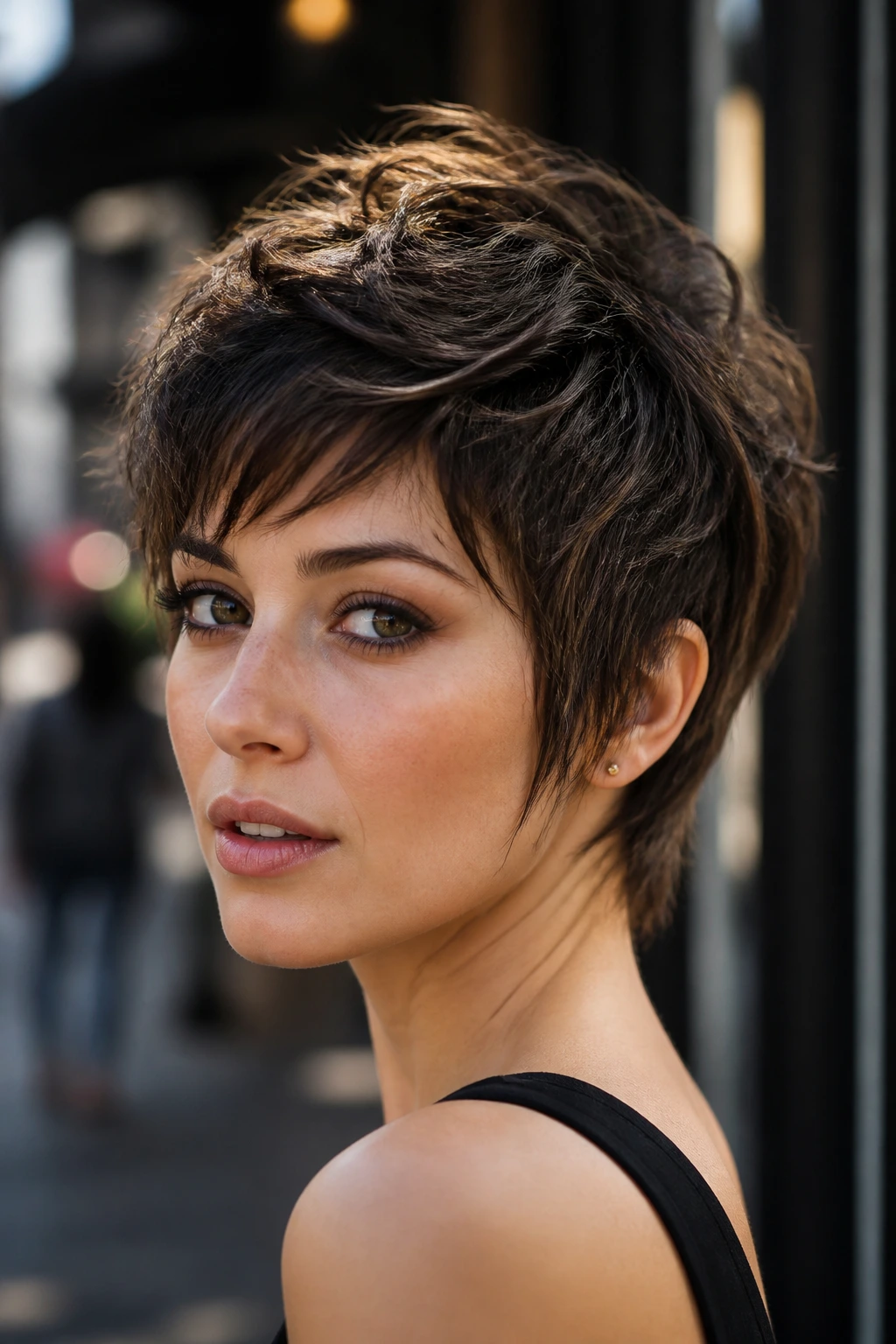
Shaggy does not mean sloppy. On a round face, the right shaggy long pixie adds vertical movement and stops the outline from feeling too round or too neat. Razored ends help by taking weight out of the perimeter.
I like this cut best when the crown has some lift and the sides are kept lean. If everything is shaggy all over, the shape can spread out. That’s the mistake. The texture should be concentrated where you want movement, not everywhere at once.
Unlike a tidy classic pixie, this one has a little grit. The layers can be uneven on purpose, and that’s what gives the style personality. It’s a good match for thick hair that fights being flat, or for anyone who likes hair that looks better after a wind gust than before it.
A light matte clay gives the ends separation. Use your fingers to pinch out the front pieces, then leave the rest alone. The cut should look touched, not fussed over.
12. Pixie Bob Hybrid With a Cropped Nape
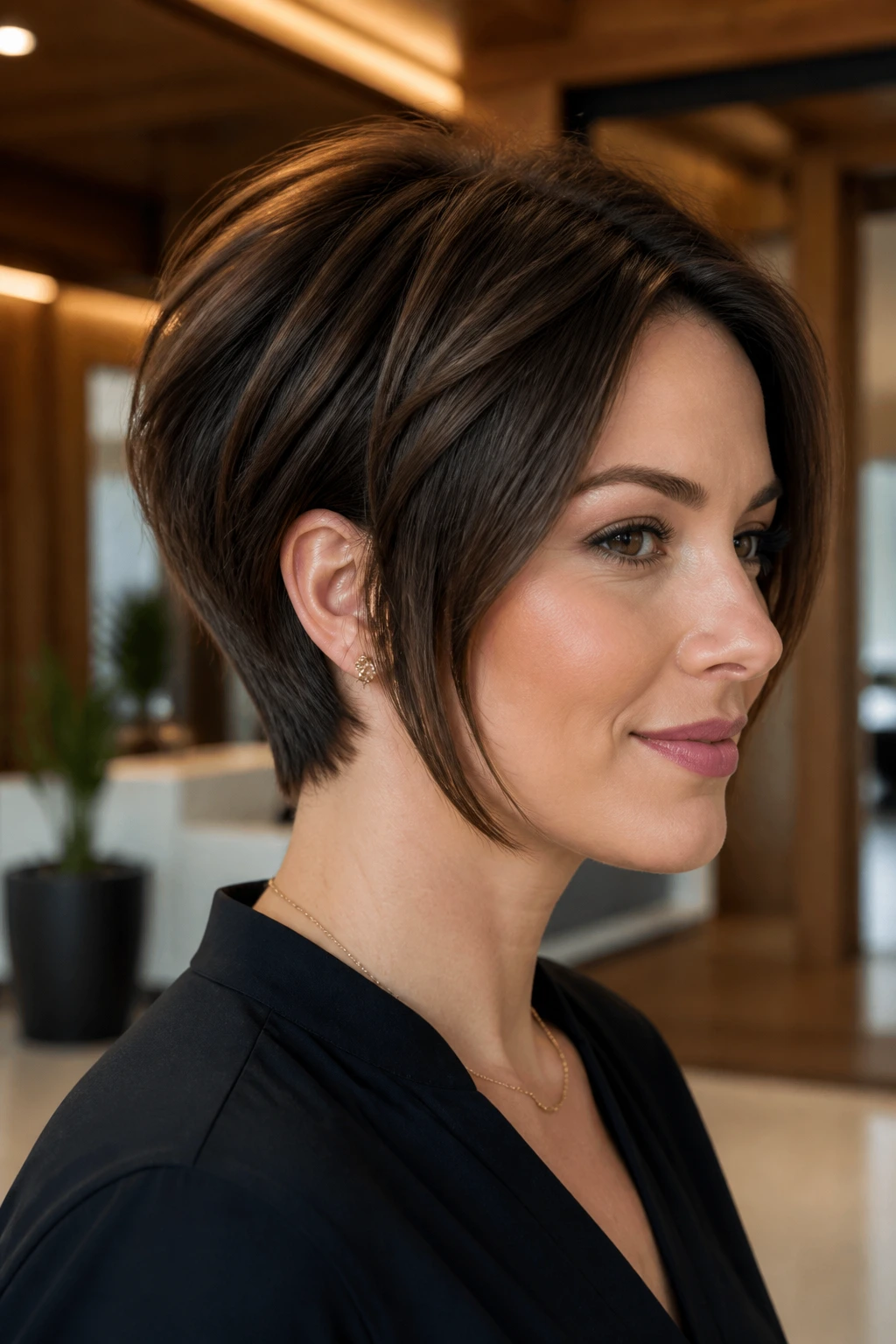
Can a cut be short and still feel safe? Yes. The pixie bob hybrid is exactly that middle ground: cropped enough to feel easy, long enough to avoid the sharp jump of a true pixie.
The nape stays shorter, but the front pieces graze the jaw or slightly below it. That extra length in front helps a round face by creating a longer line near the chin. It softens the cheeks without adding width where it doesn’t belong.
This version is especially good if you’re nervous about going very short. It has the clean neck of a pixie and a little more presence around the face. That blend makes it feel less abrupt, which some people need before they’ll really commit.
Ask your stylist to keep the front slightly longer than the side pieces and to avoid a blunt shelf. The best pixie bob hybrids move. If they sit like a cap, the shape falls apart.
13. Temple Wisps That Break the Width
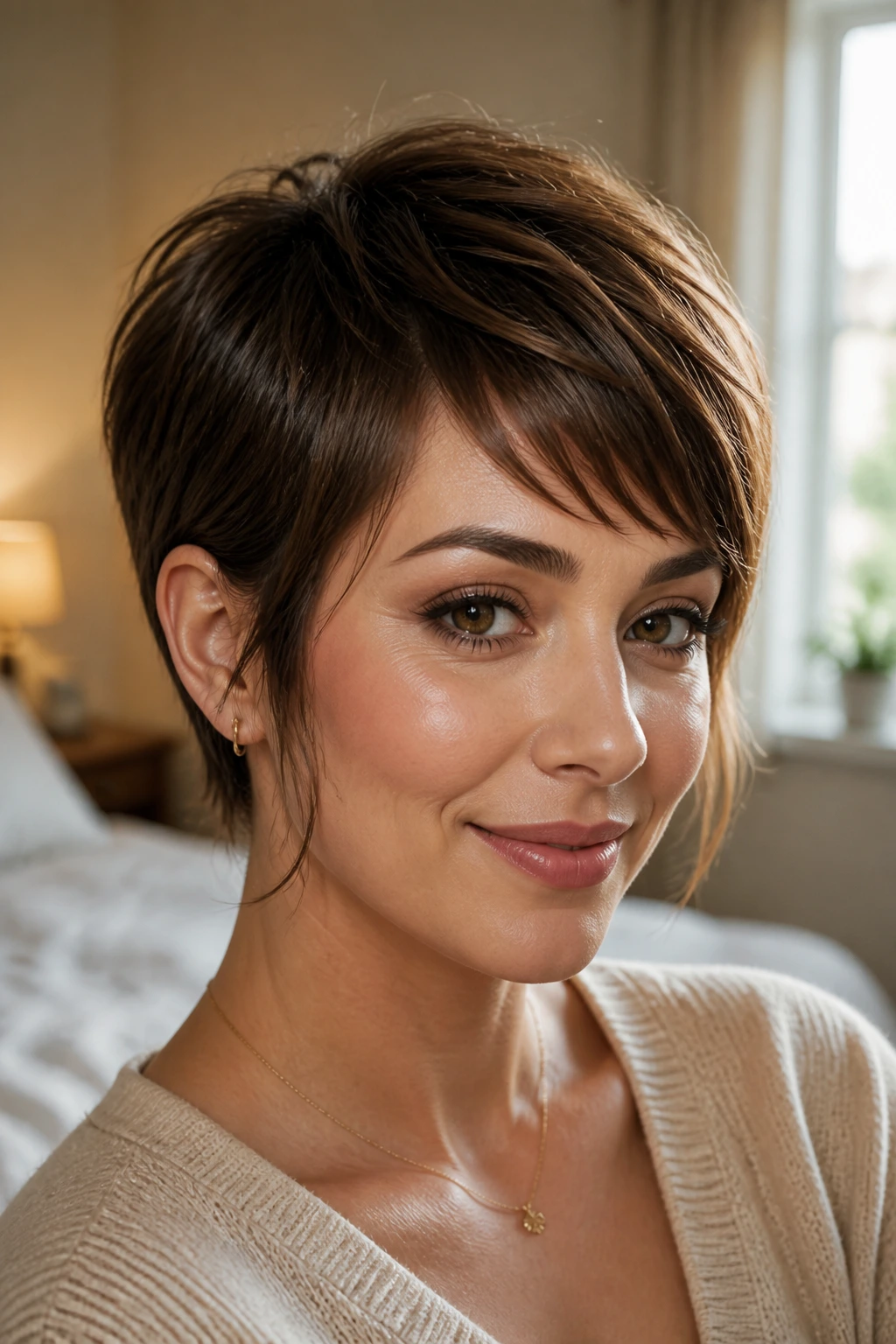
A tiny detail can do a surprising amount of work. Temple wisps—those soft pieces left around the sides of the forehead and upper cheek—help blur the widest part of a round face without hiding it.
This cut is not about drama. It’s about restraint. You leave just enough softness near the temples to keep the style from feeling harsh, while the rest of the haircut stays neat and close to the head.
I like this on people who don’t want a big fringe but still need some face-framing. The wisps can be feathered, slightly curved, and a touch longer than the sideburn area. That small length difference matters more than people think. It gives the eye a path downward.
Use a light styling cream and pinch the pieces into place with your fingers. A brush can over-smooth them and make the shape disappear. The point is gentle movement, not perfection.
14. Root-Lift Volume That Stays Up
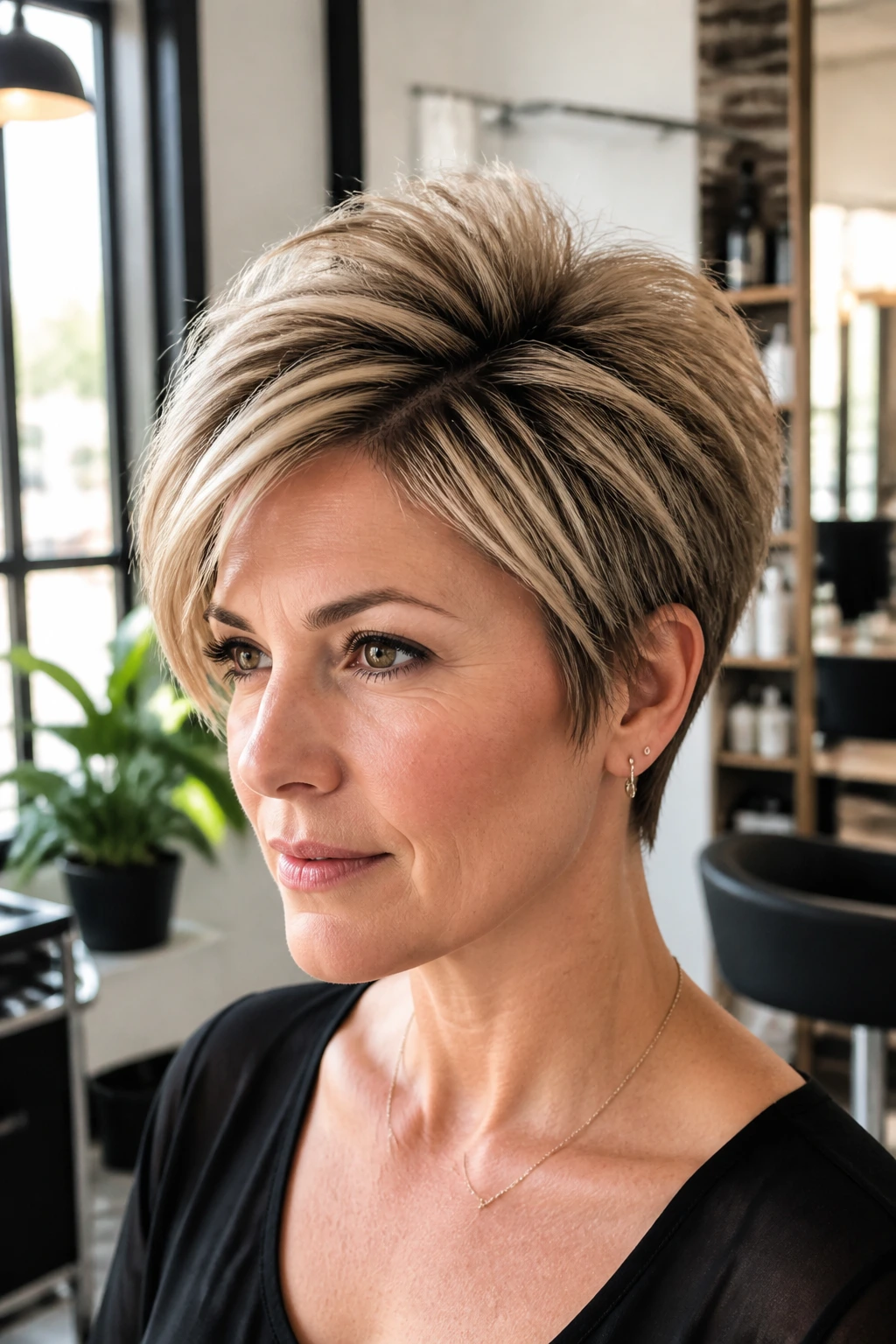
Flat roots make round faces look wider. Root lift changes that in one shot. When the top has height and the sides stay controlled, the face reads longer and the haircut feels more balanced.
This is a great option for fine hair that tends to collapse. A volumizing mousse at the roots, applied to damp hair, gives the style some backbone before you even pick up a blow-dryer. Aim the dryer upward at the crown and forward at the fringe, then redirect the top back once it’s about 80 percent dry.
The mistake people make is puffing up the sides too. Don’t do that. Keep the lift concentrated at the top center and maybe a little at the front. The cheeks should stay visually quiet.
One small note: this style benefits from a slightly longer top layer, because very short layers can stick up in awkward ways. If the top is around 3 to 4 inches, you have enough room to shape it without making it spiky.
15. Tucked Sides With a Flipped Top
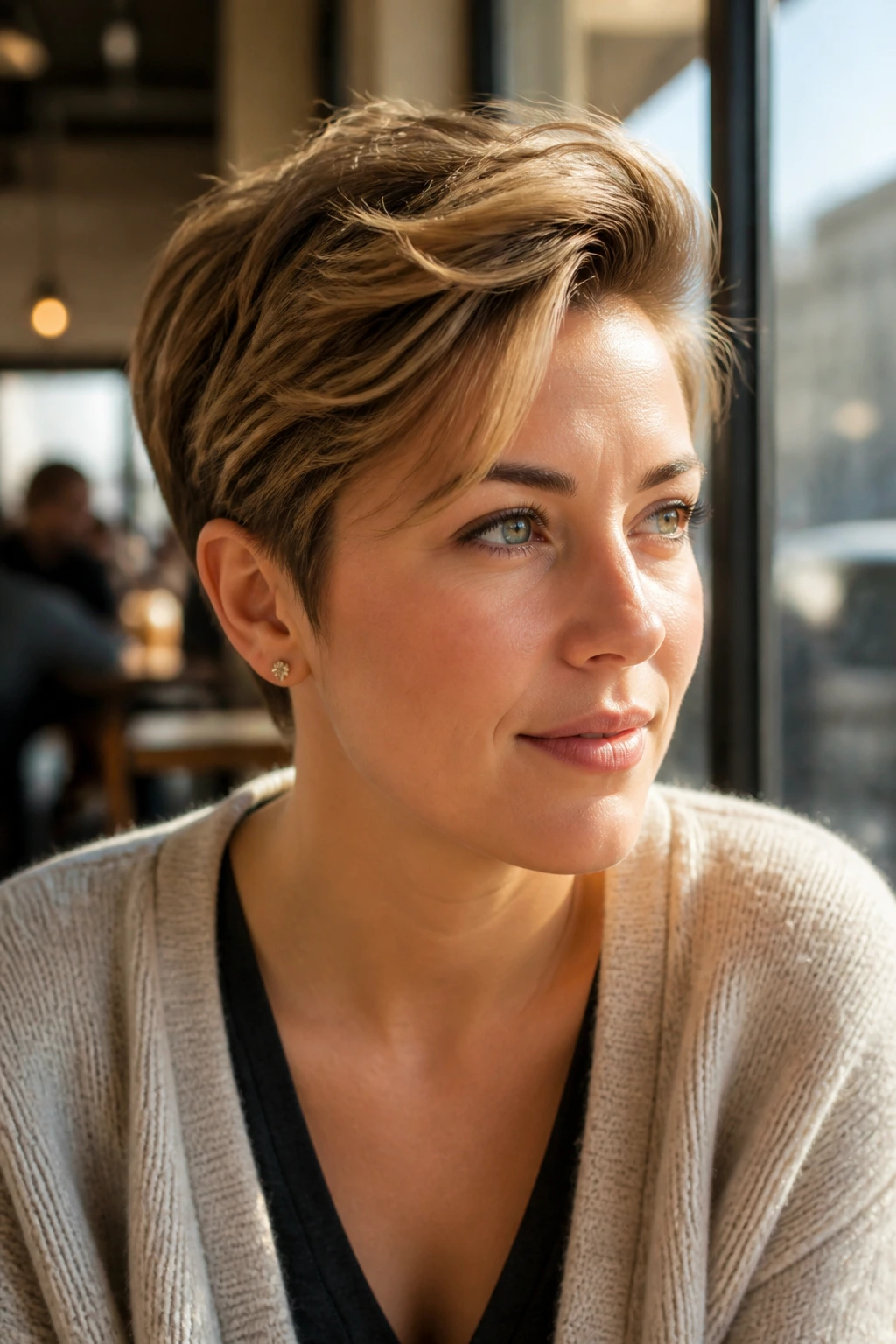
There’s something clean about hair that can tuck neatly behind the ears and still look styled. On a round face, that tucked side creates a visible vertical line from temple to jaw, which helps the face look longer.
The top should stay soft and slightly flipped away from the face, not plastered down. That little bend matters. It keeps the haircut from feeling severe, and it gives the front some movement when you walk.
The Shape to Ask For
- Keep the sideburn area slim enough to tuck.
- Let the top pieces flip lightly away from the cheek.
- Preserve a bit of length in front so the style doesn’t look too cropped.
- Add taper at the nape to keep the back clean.
This is one of my favorite low-drama options for people who want to wear earrings, glasses, or sharp necklines. The tucked side opens all of that up. Nice and easy.
16. Center-Part Long Pixie Cut for Round Faces
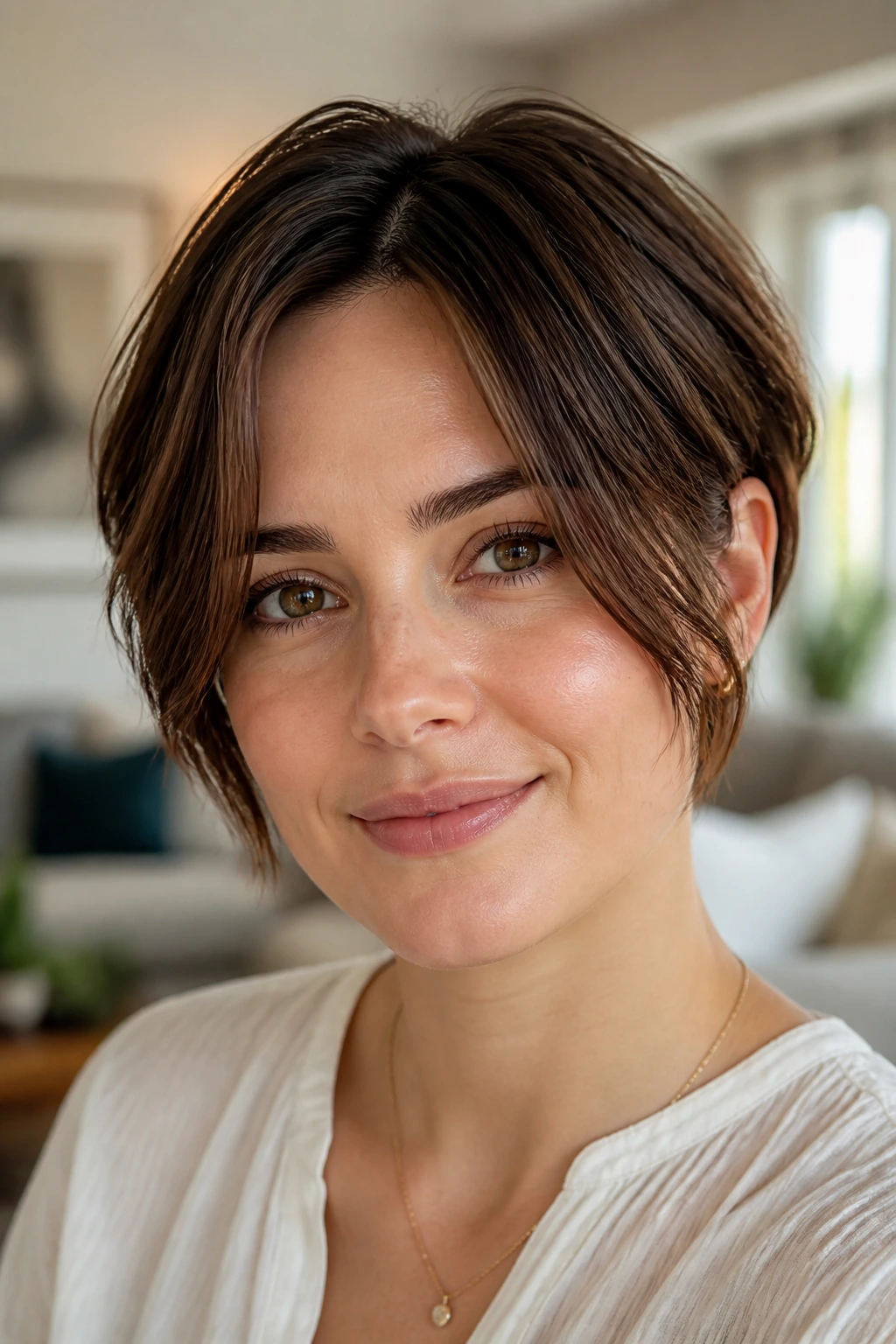
A center part is not off-limits here, but it needs length and movement to work. If the front pieces are too short, the part can widen the face. If the front pieces fall below the cheekbone, the part starts to look elegant instead of blunt.
The shape works best when both sides are soft, slightly uneven, and not too full at the temples. That keeps the cut from turning square. The middle part then acts like a clean vertical line, which can be surprisingly flattering when the rest of the cut stays airy.
This style is good for people with naturally straight or wavy hair who want something restrained. It feels neat, but it isn’t stiff. I would not choose it if your hair naturally balloons out at the sides and you do not want to style it every morning.
A little serum on the ends helps the front pieces fall in a controlled way. Keep the roots lifted, though. A flat center-part pixie can go soft in the wrong direction fast.
17. Low-Maintenance Grow-Out Pixie
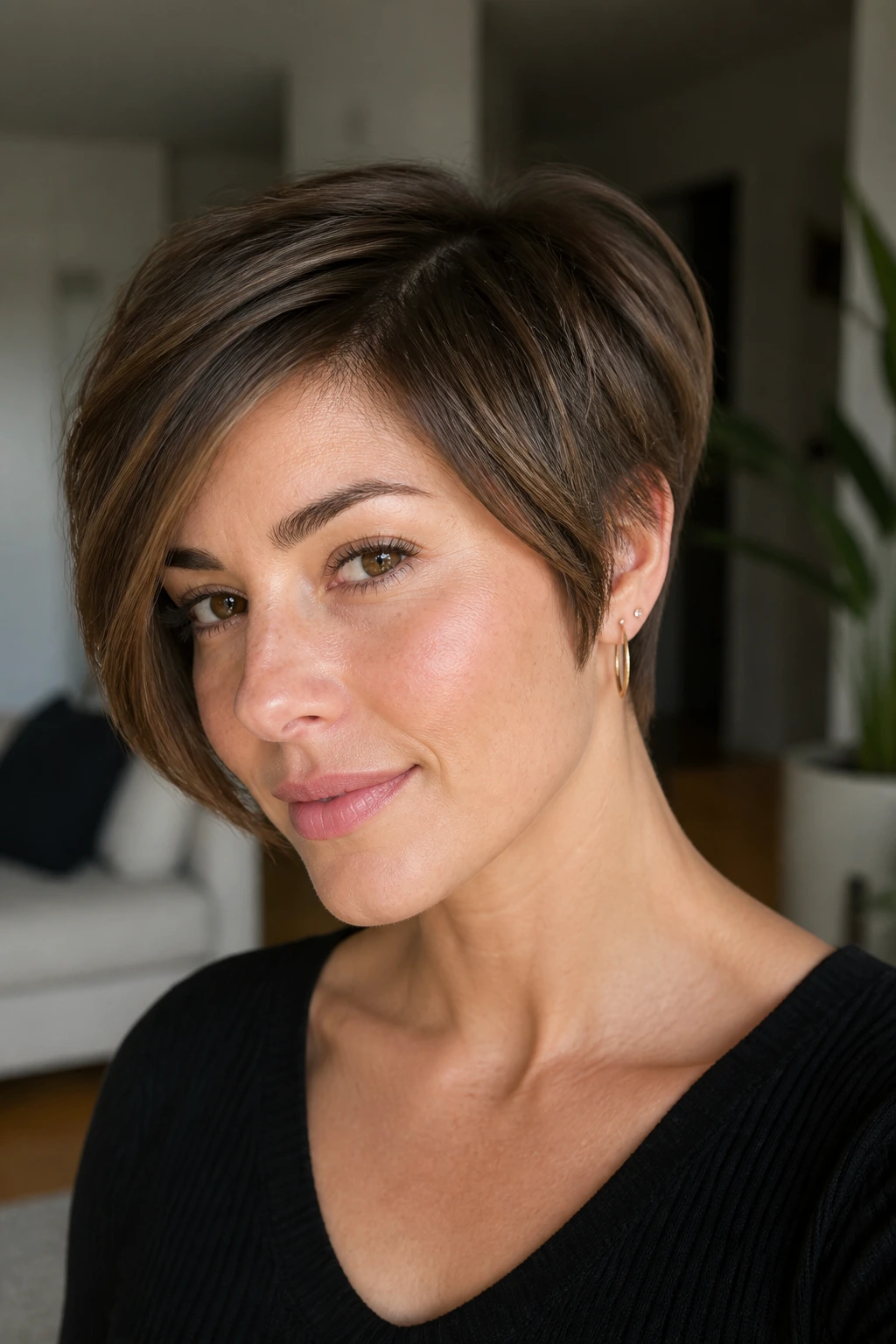
What if you want a pixie that still looks decent when it gets a little longer? Then the cut needs a soft grow-out plan from the start. A low-maintenance version keeps the nape tapered, the crown blended, and the front long enough to shift shape without looking unfinished.
This is a practical choice for round faces because it avoids the awkward puff that can happen when a pixie starts to grow out at the ears. If the side layers are too blunt, the face can suddenly look wider. Blended sides solve that.
I’d ask for enough length at the front to tuck behind the cheekbone and enough texture on top to keep the silhouette lifted. The cut should still look intentional at week six or eight, not like you missed your trim.
That’s the part that makes this style worth considering. Some cuts only look good for ten days. A smart long pixie should keep its shape as it grows, even if it changes a little along the way.
18. Jaw-Grazing Front Pieces That Lengthen the Face
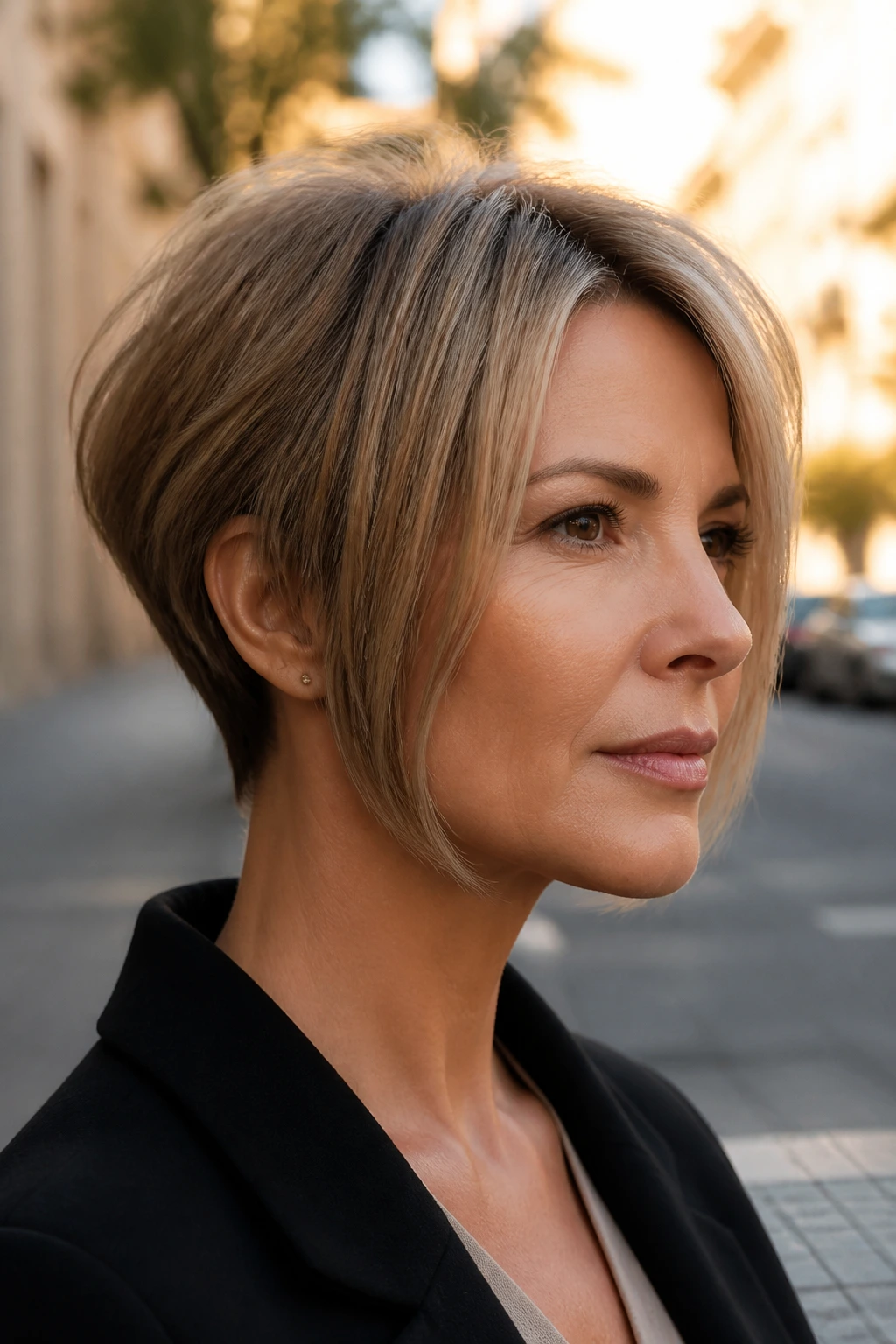
Jaw-grazing front pieces are one of the strongest tools in a long pixie cut for round faces. They create a vertical edge right where the face needs it most, near the chin. That line lengthens the look of the face without stealing all the softness.
The front should not stop at the fullest point of the cheek unless the top has serious height. A piece that lands just below the jaw does a cleaner job. It pulls the shape down, which is exactly what you want when the face reads broad through the center.
I like this cut when the back stays close and the sides are softly tapered, because then the front becomes the star. You get movement, but you also get a clear shape. The contrast keeps the cut from feeling vague.
If you’re sitting in a stylist’s chair and trying to explain it, ask for the longest point to brush the jawline, not sit above it, and keep the top light enough to move. That one sentence can save a lot of bad snipping.
