



A long pixie bob haircut has a useful little trick: it gives you cheekbone length, jawline shape, and enough neck exposure to feel light without tipping into full short-hair territory. That balance is why people keep coming back to it. It can look polished, messy, sharp, or soft, and the difference often comes down to a few inches at the nape and a little restraint around the crown.
The cut also has a reputation for being easier than it really is. It isn’t. A long pixie bob can go wrong fast if the weight line sits too low, if the back gets bulky, or if the front is left so long that the shape turns into a sad half-grow-out. The best versions have intent. You can see it in the taper at the neck, the way the layers stack or feather, and whether the fringe is doing actual work instead of just sitting there.
That’s the fun part, though. Once the shape is right, you can steer it in a dozen directions with a side part, a round brush, a flat iron, or nothing more than a bit of mousse and your fingers. Some versions love fine hair. Others are a gift for thick or curly hair. A few lean elegant, a few lean punk, and one or two sit right in that sweet spot where they somehow suit both.
1. Softly Stacked Long Pixie Bob
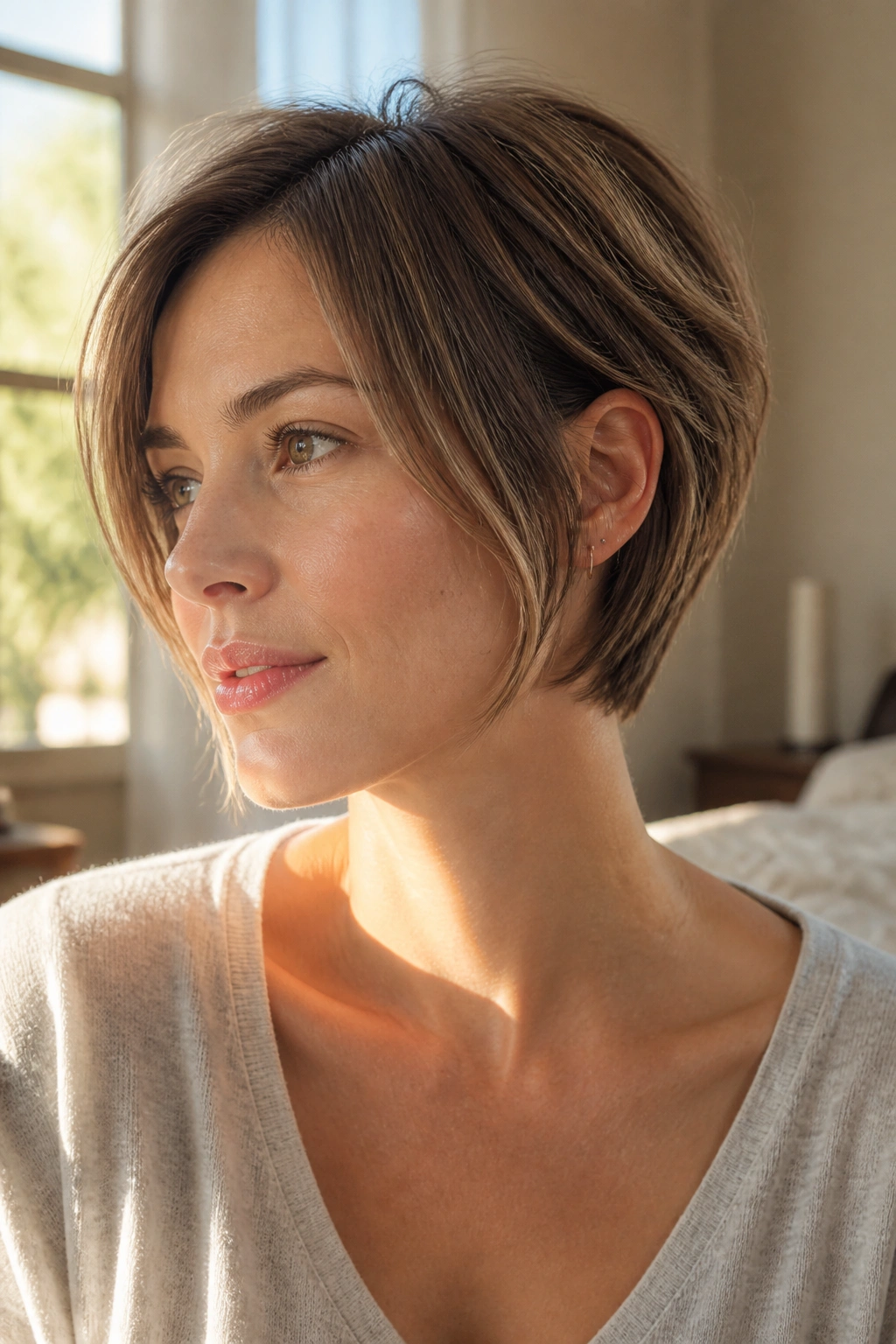
This is the version I reach for when the goal is shape without stiffness. The back is gently stacked, which means the layers are shorter near the nape and slightly longer as they move up toward the crown. You get lift without the helmet effect, and that matters more than people think.
Why the back matters
A soft stack makes the haircut look deliberate from every angle, not only from the front. The nape sits clean, the crown gets a little support, and the whole shape follows the head instead of puffing away from it. On fine hair, that subtle stacking can make the cut look fuller in a way that feels natural, not teased.
Ask for the shortest point at the nape to sit just above the collar line, then let the front land around the cheekbone or just below the jaw. That keeps the cut in long pixie bob territory instead of sliding into classic bob length. If your hair grows out quickly, this version buys you more time before the shape starts to look lazy.
- Best on fine to medium hair
- Works well with a round brush and a 1.5-inch barrel brush
- Needs a trim every 5 to 7 weeks if you want the stack to stay crisp
My honest take: if you want movement without fuss, this is one of the safest bets on the list.
2. Side-Swept Long Pixie Bob with a Deep Part

This is the most forgiving long pixie bob haircut of the bunch. A deep side part changes everything: it lifts one side, softens the forehead, and gives the whole cut a little swing without asking for extra length.
The real reason it works is simple. Hair pushed over from a deeper part creates volume at the root, and that volume makes the haircut feel bigger than it is. If your hair lies flat at the crown, this is the quickest way to fake some shape. If your face is round or wide through the cheeks, the diagonal line helps stretch the eye upward and across.
I like this version on people who do not want to fight their hair every morning. A quick blow-dry at the roots, a dab of lightweight cream on the ends, and you’re done. No need to overthink it. The front should be long enough to skim the cheekbone, because if the fringe is too short, the whole effect gets choppy in the wrong way.
The best part? It looks equally good tucked behind one ear or left to fall over the forehead. That kind of flexibility is worth more than people admit.
3. Choppy Textured Long Pixie Bob
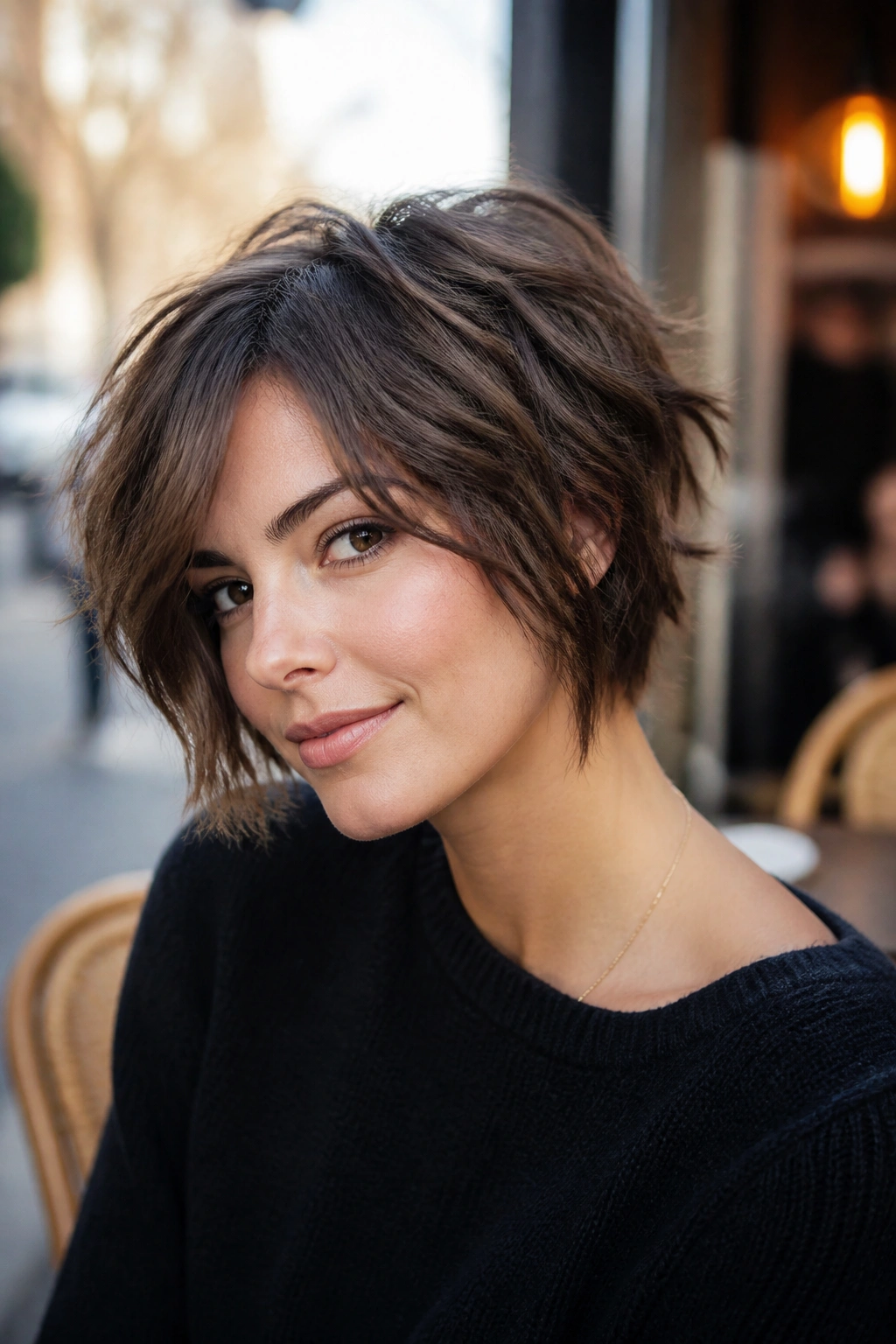
Why does this one feel less precious than a polished bob? Because it is built on broken-up ends and small changes in length, not one single clean line. That makes the haircut feel alive the second you move your head.
What gives it that undone edge
Choppy texture usually comes from point-cutting or razor work, where the stylist snips into the ends instead of cutting straight across. The result is softer movement and less bluntness. On thick hair, that can stop the cut from looking heavy. On finer hair, it adds a bit of grit so the style doesn’t collapse by noon.
The trick is not to go too far. Too much texture can make the ends look frayed, especially if your hair is already dry or fragile. A little unevenness is enough. You want piecey, not thin. You want separation, not a haircut that looks like it lost a fight with a pair of kitchen scissors.
How to style it
- Work a pea-sized amount of styling cream through damp hair
- Twist small sections around your fingers as they dry
- Use a flat iron only on the last inch if you want bend, not curl
- Finish with a light mist of texturizing spray at the crown
A choppy pixie bob is a good choice if you like a haircut that looks a touch better after a messy day. That’s the whole point.
4. Curly Long Pixie Bob
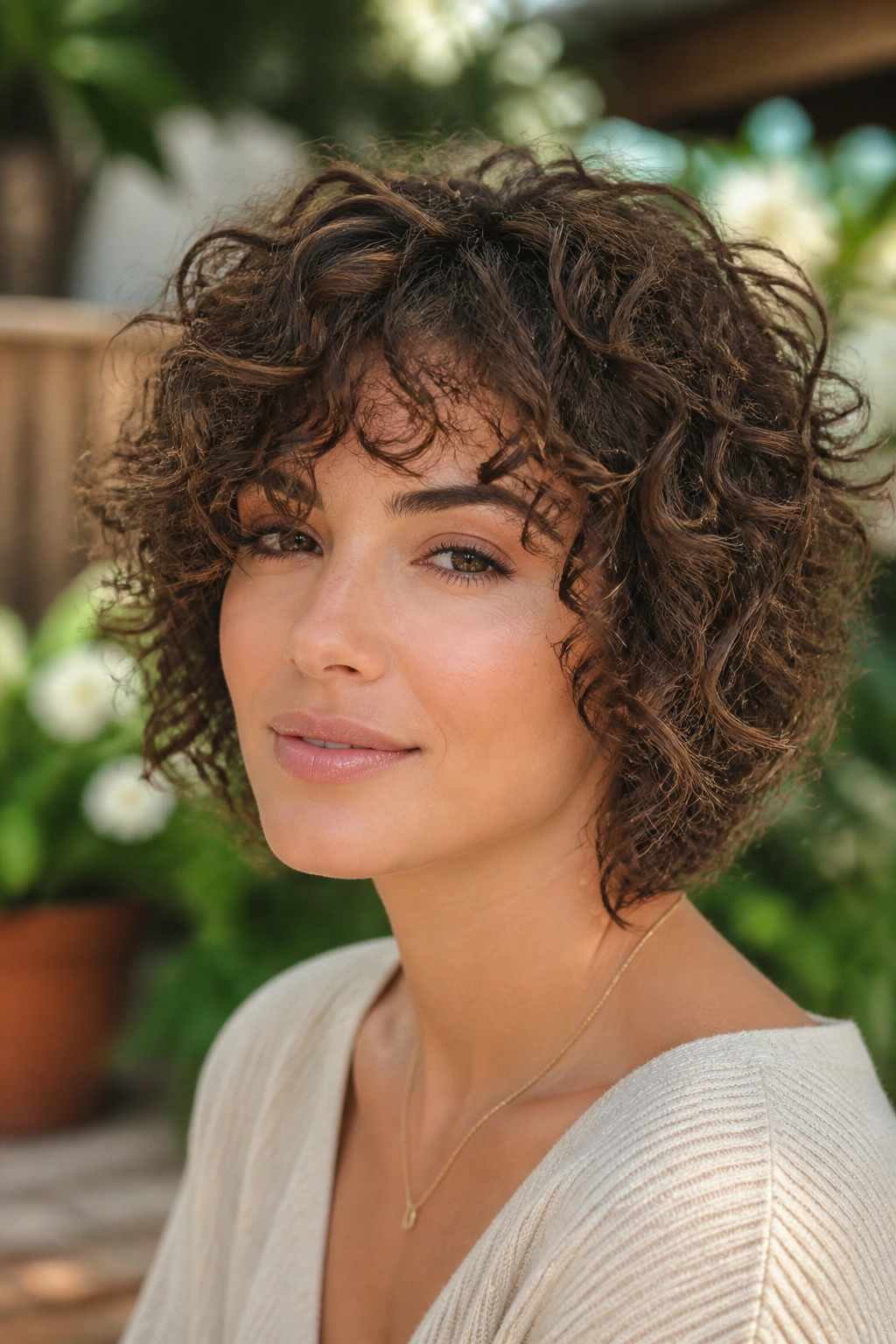
If your curls puff up at the sides and go flat at the roots, this cut can be a relief. The length sits in a practical place — short enough to remove bulk, long enough to keep the curl pattern intact — and that changes the whole mood of the haircut.
A curly pixie bob works best when the shaping respects shrinkage. That means the cut should be done with the hair in its natural state, or at least with a clear idea of how much length will spring up once it dries. If a stylist cuts curly hair as if it were straight, the shape can end up too short in the front and oddly triangular in the back. No one wants that.
Use layers sparingly near the crown and a little more around the sides if your curls are dense. That keeps the silhouette from turning into a triangle. A diffuser helps, but so does patience. Let the curls dry 70 to 80 percent before you touch them much, or the pattern gets frizzy fast.
- Best for waves, curls, and coils that want shape without bulk
- Drying time matters more than with straight hair
- A curl cream or light gel helps the ends hold their form
- A trim every 6 to 8 weeks keeps the outline clean
The cut is especially good if you hate the feeling of hair sitting on your neck but do not want to sacrifice curl movement.
5. Sleek Long Pixie Bob Tucked Behind the Ear
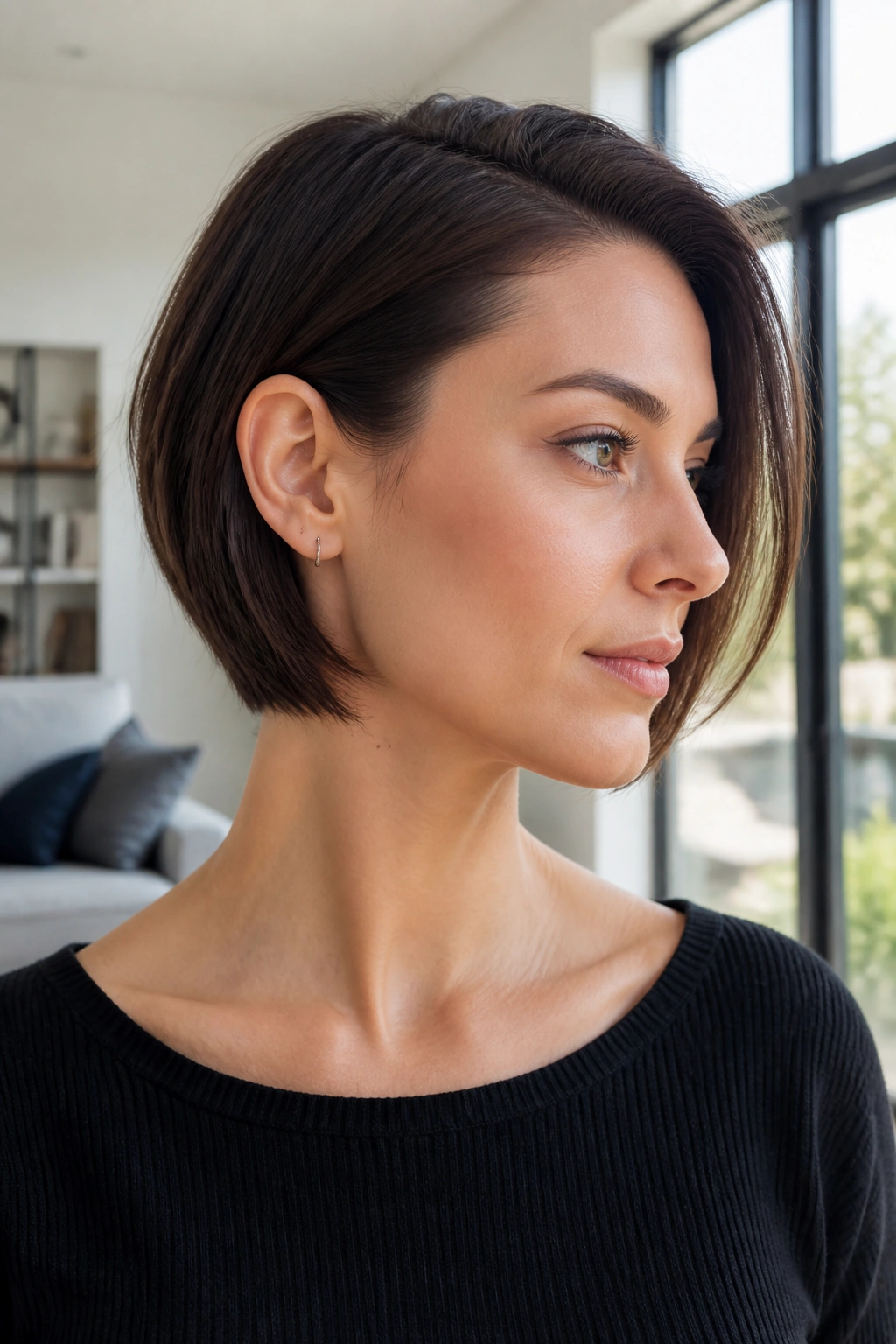
Unlike a blunt bob, this cut depends on what happens when one side is tucked and the other side stays loose. That small shift makes the haircut feel sharper, cleaner, and a bit more architectural.
The sleek version works because the ear-tuck reveals the jawline and creates a clear break in the shape. You can do it with a side part or a center part, but I prefer a deep side part if the hair is straight and dense. It gives the front more drama and keeps the profile from looking boxy. A single pass with a flat iron is usually enough if your hair already lies smooth.
This is one of those styles that looks expensive without needing much product. A light heat protectant, a tiny amount of shine serum, and a fine-tooth comb are enough for most hair types. If your hair frizzes at the temples, smooth that section first. That area ruins the line fastest.
Who does this suit best? People who want a clean silhouette and are fine with touching up the front pieces during the day. It’s not the lowest-maintenance option, but it does look crisp fast. Very fast.
6. Feathered Long Pixie Bob with Airy Layers

Feathering sounds old-fashioned until you see it done well. Then it just looks smart.
The whole point is to remove weight in a way that keeps the haircut soft at the edges. Instead of hard shelves of hair, you get layers that lift away from the face and move when you turn your head. On thick hair, that can be the difference between flattering and boxy. On medium hair, it gives the cut a little bounce that makes blow-drying easier.
I like feathered layers when the front needs lightness. Around the cheeks and jaw, the hair should skim, not cling. That small detail matters a lot if you want the haircut to open up the face. Keep the shortest face-framing pieces around the cheekbone, then let the rest blend back toward the nape.
A round brush helps here, but you do not need to wrestle every strand into place. Rough-dry the roots first, then brush the top layers forward and back to build lift. The result should feel airy, not blown apart. That’s the line.
7. Asymmetrical Long Pixie Bob with One Longer Side
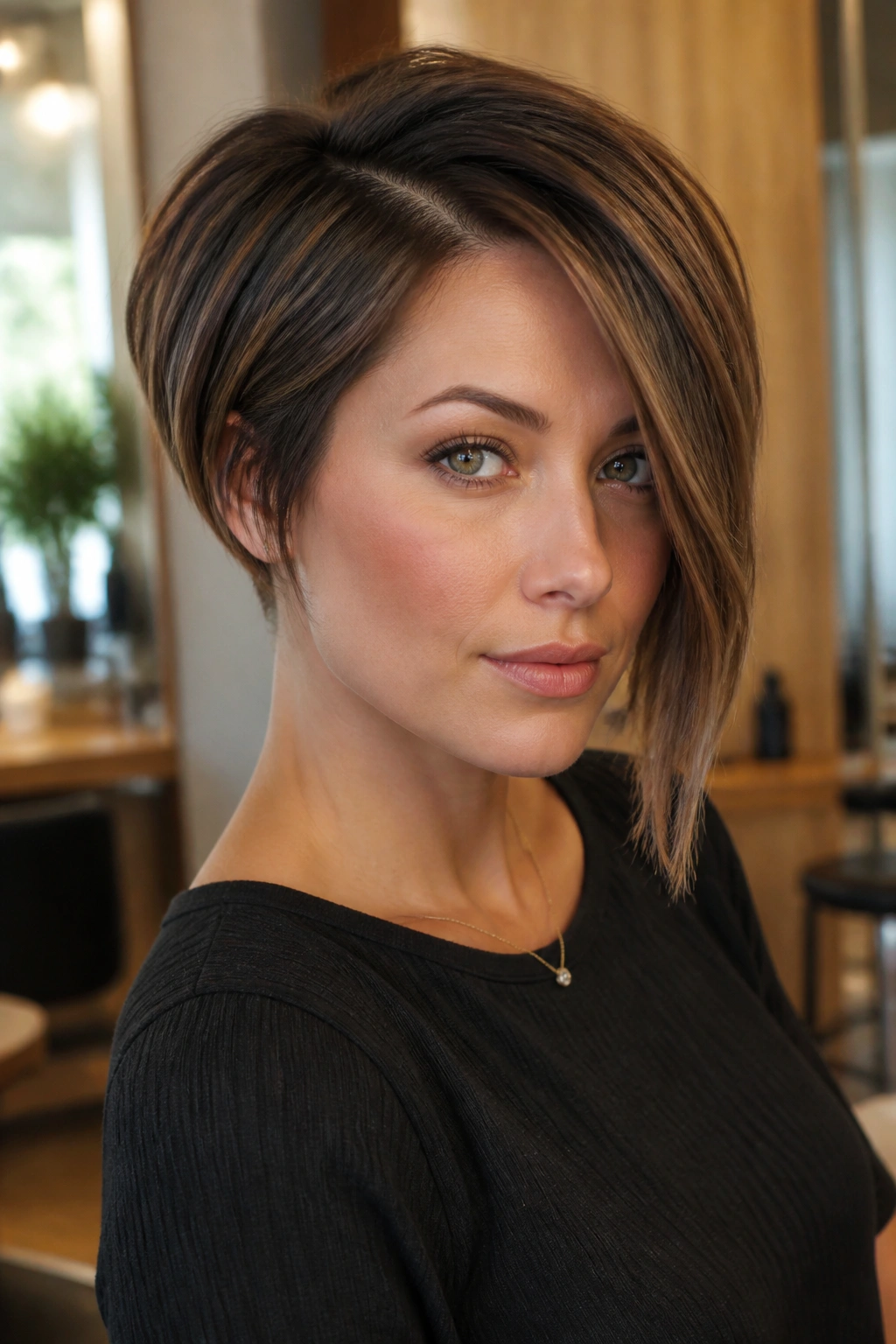
A good asymmetrical pixie bob does not scream for attention. It just quietly changes the geometry of the face.
Where the imbalance should sit
The longer side usually drops about 1 to 2 inches below the shorter side, though the exact difference depends on how dramatic you want it. Too much contrast and the cut becomes a statement piece that can be hard to grow out. Too little and nobody notices the asymmetry at all. The sweet spot is somewhere in the middle.
The shorter side can graze the ear while the longer side brushes the jaw or even the upper neck. That diagonal line pulls the eye downward in a flattering way, especially if you have a strong cheekbone or a soft jawline you want to sharpen. It also gives you more styling options than a symmetrical shape.
What to tell your stylist
- Keep the shorter side clean but not shaved
- Let the longer side have at least 1 extra inch of length
- Ask for soft blending near the crown so the transition does not look choppy
- Style with a side part to emphasize the difference
I like this cut on people who want something modern without going full edgy. It has attitude, but it still behaves.
8. Long Pixie Bob with a Hidden Undercut
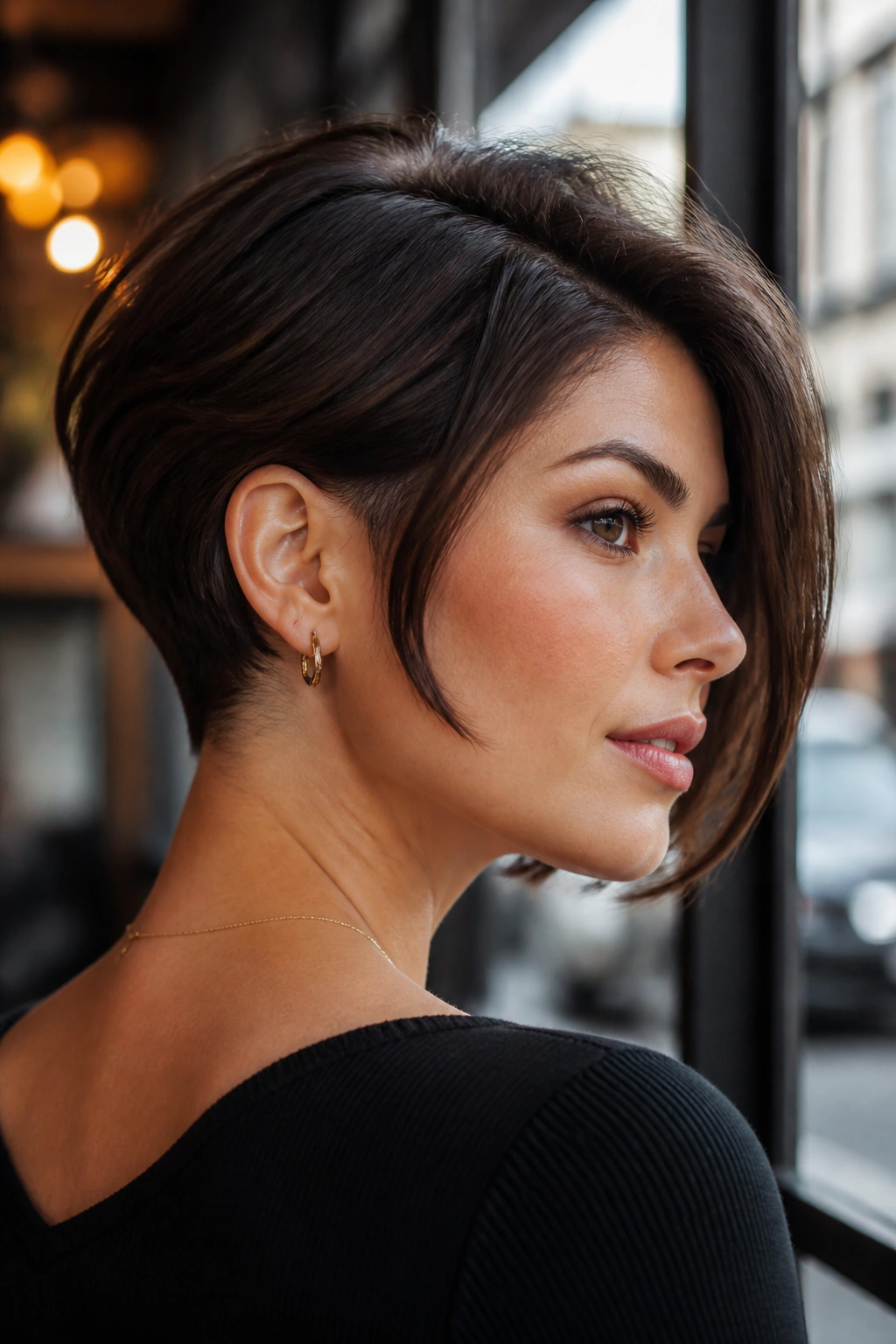
This is the smartest fix for thick hair that refuses to sit down. A hidden undercut removes bulk where you cannot see it, which means the surface still looks polished while the underneath does the heavy lifting.
Most people picture an undercut as something loud and obvious. It does not have to be. A discreet undercut at the nape or just behind the ear can clean up the shape without changing the visible outline much at all. If your hair balloons at the back of your head or forms a shelf under the crown, this is the move that gives the cut breathing room.
Ask for the undercut to stay narrow unless you want a more dramatic result. A 1- to 2-inch section at the nape is often enough. That little bit can cut down on bulk, reduce blow-dry time, and help the top layers fall closer to the head. The rest of the haircut can stay soft and feminine, which is why this version works better than people expect.
It is not the most low-drama option when it grows out, so be ready for upkeep. Still, if you have dense hair, the payoff is real. The shape gets cleaner. The neck feels lighter. And the whole cut behaves better.
9. Long Pixie Bob with Curtain Bangs
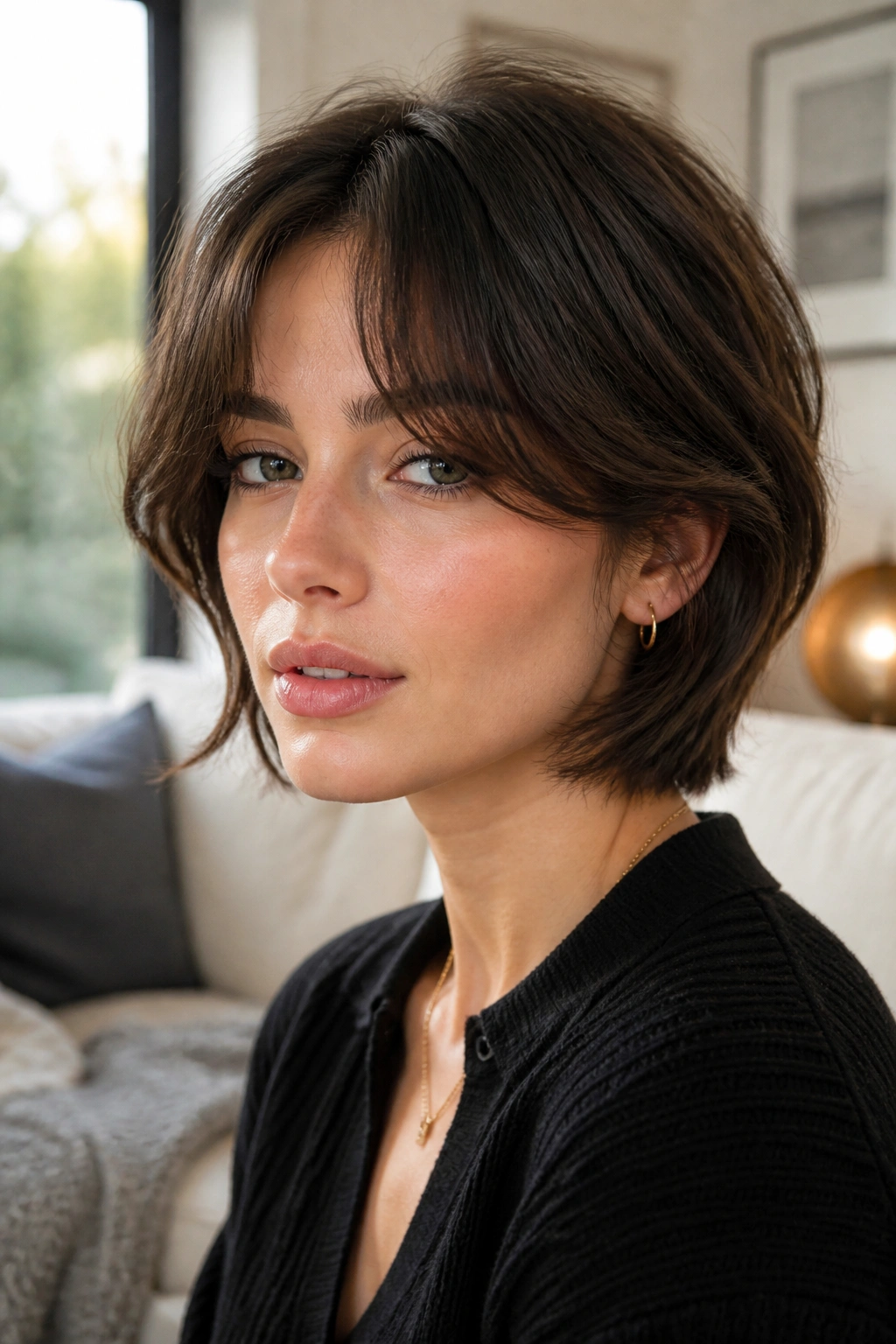
Can curtain bangs work on a pixie bob? Absolutely — if the fringe is long enough to split and move instead of hanging like a blunt curtain in front of your eyes.
The best version starts around the eyebrow to cheekbone zone and blends into the front layers. That gives you softness around the face without creating a heavy wall of hair. The middle part opens the forehead, while the longer outer pieces pull attention toward the cheekbones. It’s an easy way to make the haircut feel more expensive, which sounds shallow but is often just true.
What the fringe should do
The bangs should move away from the center and fall into the rest of the cut, not sit apart from it. If they are cut too short, they lose the softness that makes curtain bangs useful in the first place. If they’re too long, they become face-framing layers and stop reading as bangs at all. That middle ground is the sweet spot.
A small round brush or even a blow-dry brush is enough to shape them. Direct the roots forward at first, then sweep each side away from the face while the hair is still warm. That gives the fringe a little bend instead of a stiff curve.
This style is a good pick if you want a softer haircut without giving up the clean neck line that makes a long pixie bob feel neat.
10. Wavy Long Pixie Bob with Razor Ends
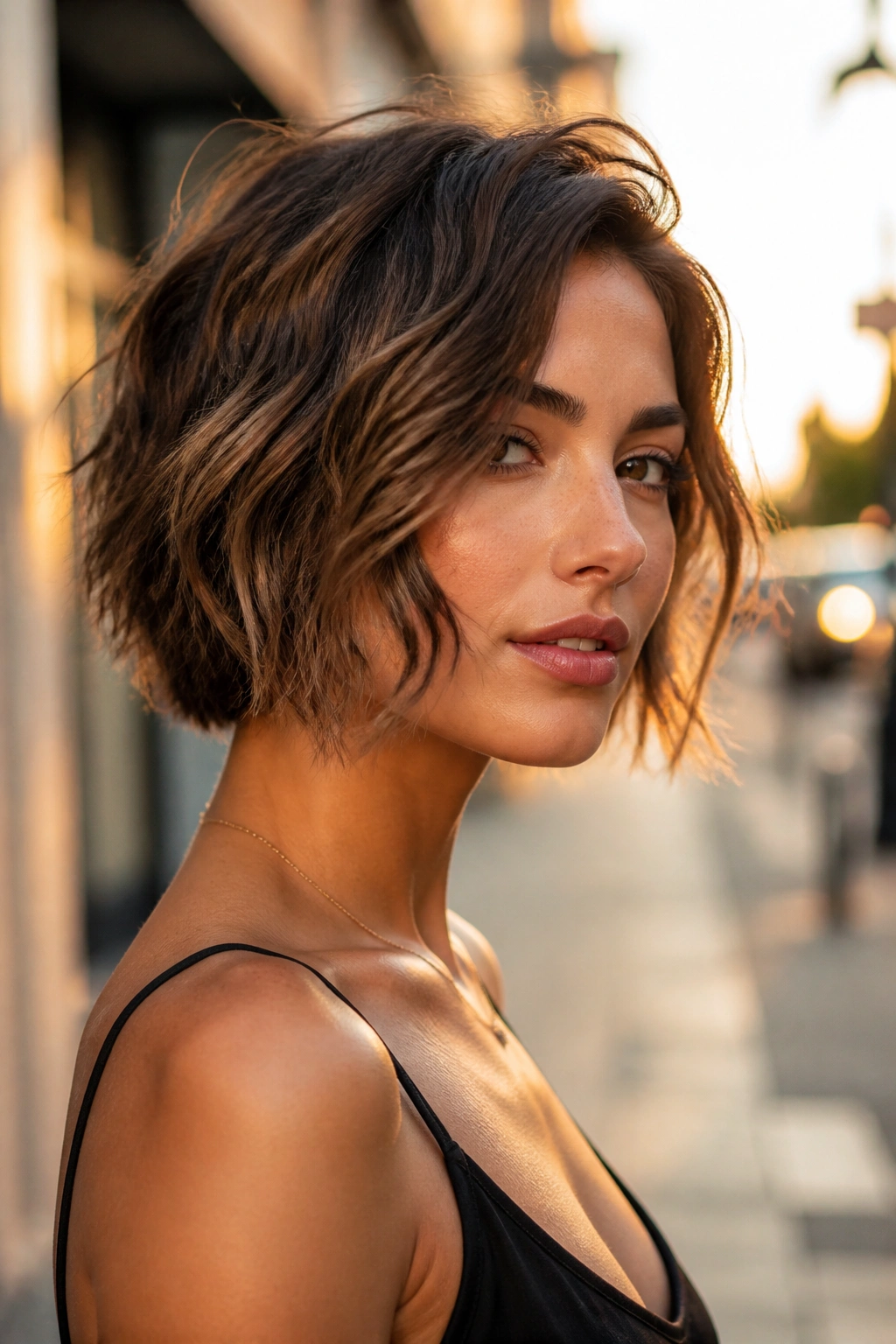
You know the look: a little air-dried, a little piecey, and never trying too hard. That’s the charm of a wavy pixie bob with razor-cut ends.
Razor cutting gives wavy hair room to move. The ends become lighter, so the wave pattern shows up instead of getting crushed under weight. I like this especially on hair that falls somewhere between straight and curly, because it keeps the shape from looking too exact. A flat line can fight that texture. A softer edge usually wins.
What to watch for
- A razor can make fine hair look wispy if the stylist goes too far
- The cut should keep enough weight at the bottom to stop frizz
- Waves usually look best when the front lands at cheekbone or jaw length
- A diffuser or air-dry cream keeps the pattern from puffing out
This cut has a built-in casualness, which is part of why it works. You can rough-dry it, twist a few pieces with your fingers, and leave the ends a little uneven. In fact, the haircut looks better with some movement. Dead-flat styling can take the life out of it.
If your hair already has a natural bend, this is one of the easiest ways to make that bend look intentional.
11. Rounded Long Pixie Bob for Thick Hair
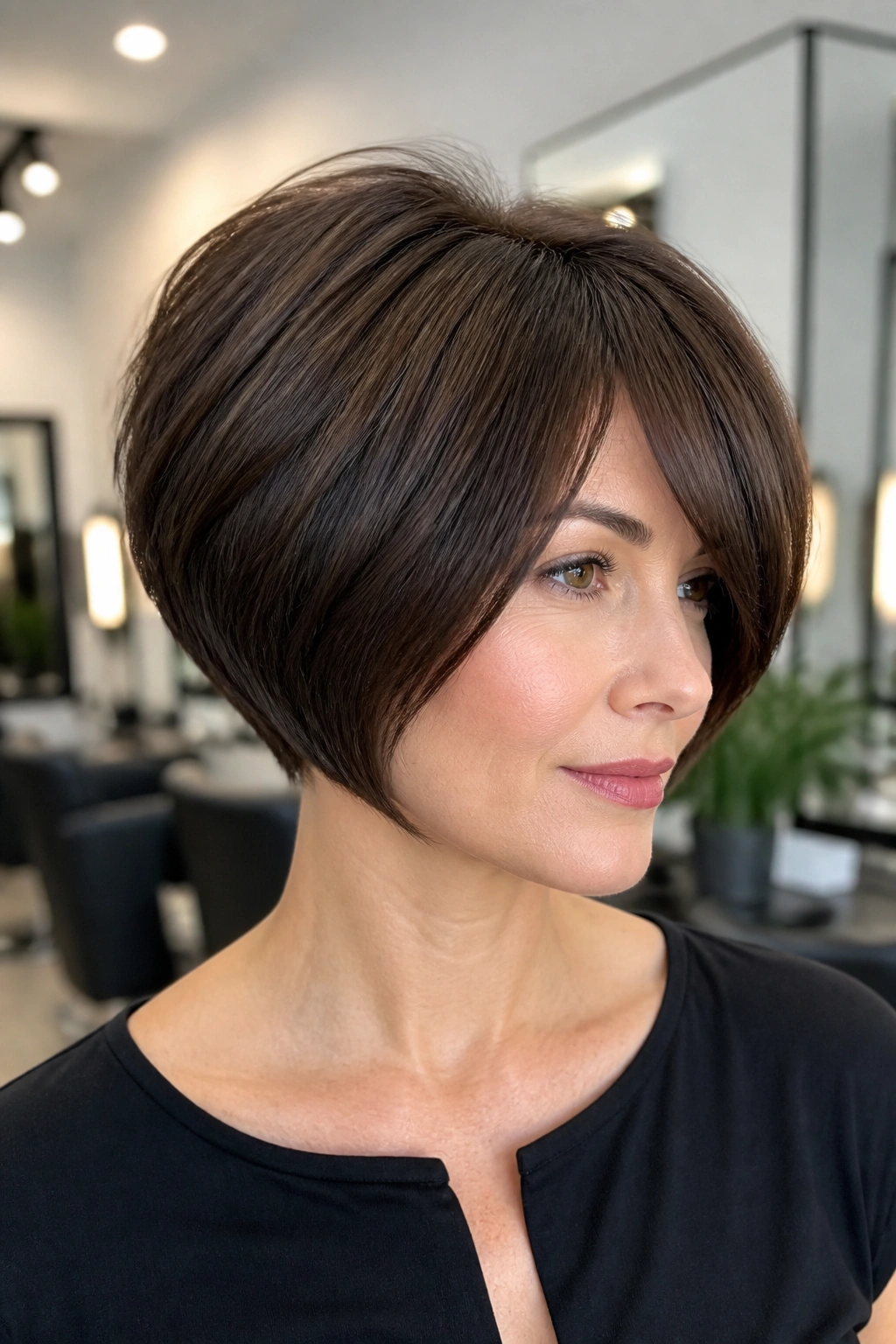
A rounded shape is the opposite of the over-thinned, over-chopped mess people sometimes end up with when they try to tame thick hair. It keeps the silhouette smooth and full, but not bulky.
The key is in the curve. The hair sits a little closer to the head around the ears and nape, then rounds out softly through the crown. That creates a balanced outline instead of a boxy one. Thick hair often needs weight removed from the right places, not everywhere. Too much thinning near the ends and the cut frays. Too little and it gets puffed out by lunchtime.
This version is calmer than a shaggy pixie bob. Less attitude, more control. If you want to wear it with minimal heat styling, that matters. A paddle brush and a quick blow-dry can keep the shape in line, and a smoothing cream on the ends helps the perimeter stay tidy.
I’d pick this cut for coarse hair, dense hair, or anyone whose hair has a mind of its own. It gives you shape without making you fight for it every morning. That alone is worth a lot.
12. Platinum Long Pixie Bob with a Glossy Finish
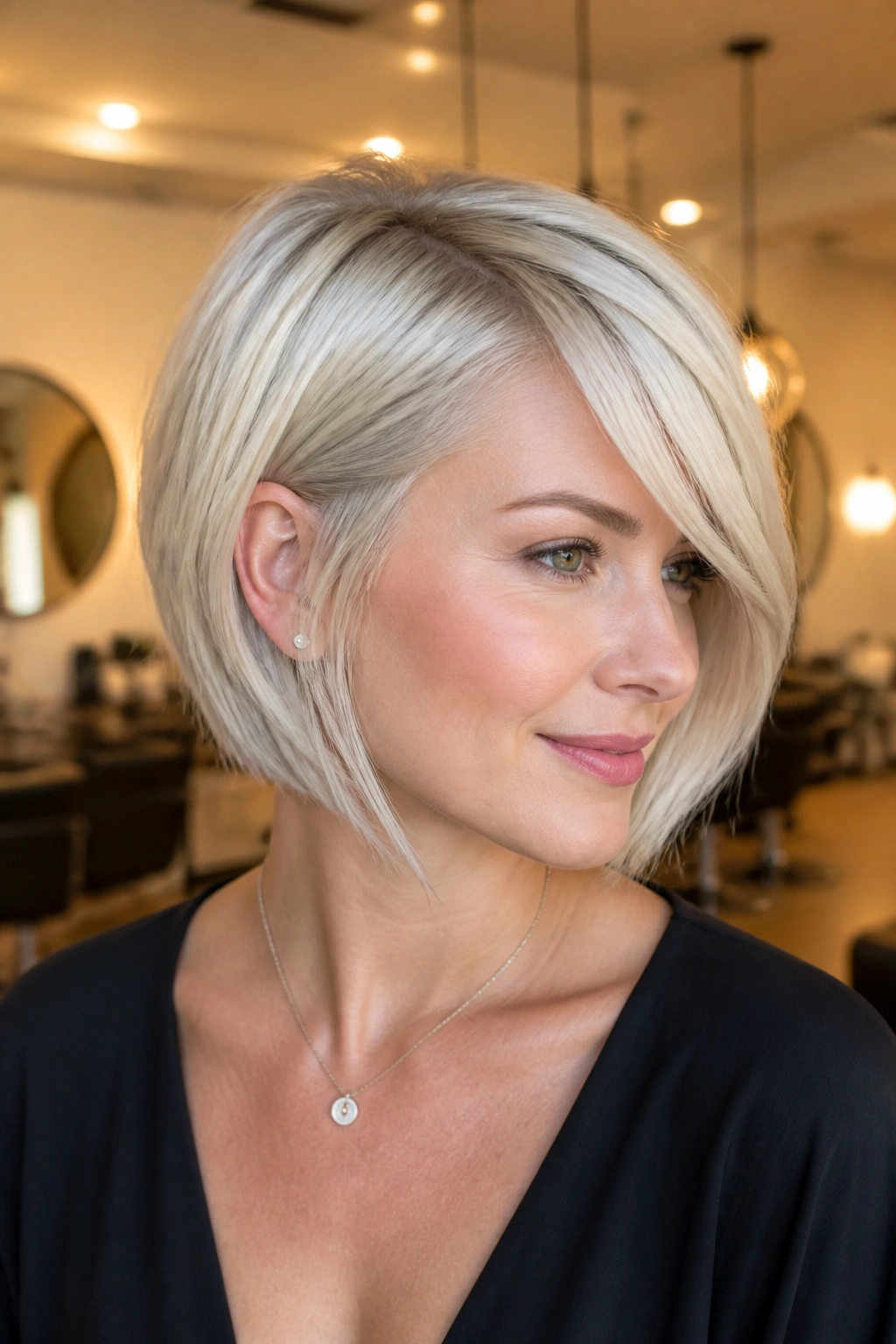
Does color change a haircut? A lot more than people think. A platinum blonde long pixie bob shows every line in the shape, which means the cut has to be good before the color can even do its part.
The glossy finish is what keeps this style from looking harsh. Platinum on its own can go flat or chalky if the hair is dry, but a smooth finish catches the light along the layers and makes the shape read as deliberate. The cleanest version has a slightly longer front, a tucked nape, and edges that are crisp enough to hold the color’s brightness.
How to keep the shape from looking flat
Blow-dry the roots with a small round brush and keep the airflow moving toward the back and sides. That stops the crown from collapsing. A smoothing serum should go only on the mid-lengths and ends — too much near the roots can make the cut limp fast. If the toner needs refreshing, do it before the brass creeps in too far. Yellow tones can muddy the shape more than people expect.
This style is for someone who likes a little edge and does not mind upkeep. Light hair color and a precise haircut are a demanding pair, but they can look sharp together.
13. Shaggy Long Pixie Bob with Piecey Ends
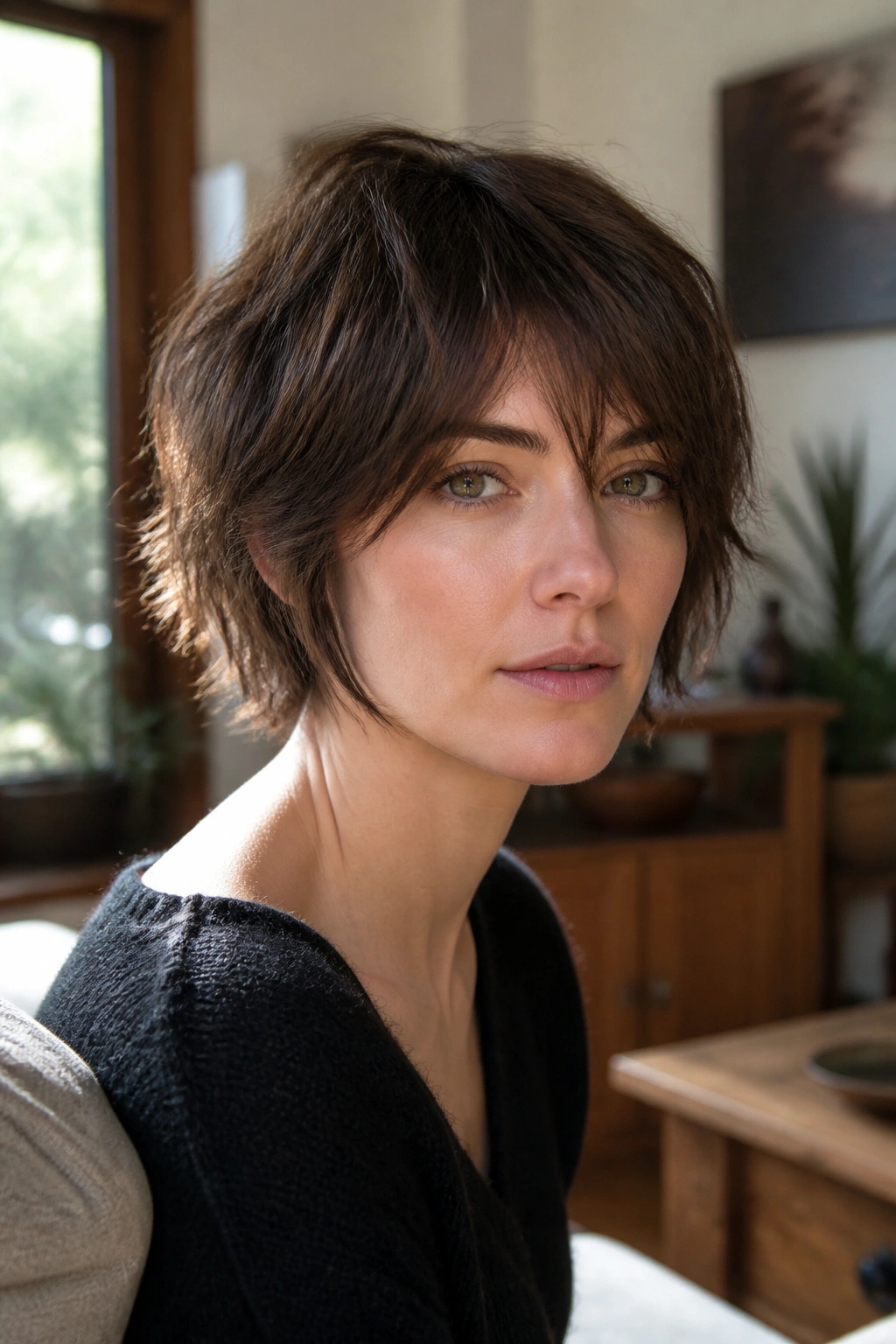
A shaggy pixie bob should look like it has a bit of life left in it by the end of the day. That is not a flaw. That is the appeal.
The piecey ends keep the haircut from reading too neat. Instead of one smooth outline, you get small sections that separate and move. It works especially well if you like hair that looks better with a bit of mess in it. Clean can be boring here. A little roughness is part of the charm.
I’d be careful with this style if your hair is already very fine and dry, because too much shag can make it look sparse at the ends. On the other hand, if your hair has density, this cut can remove just enough weight to make the whole thing feel lighter. It sits between a pixie and a bob in a way that feels intentional rather than indecisive.
A matte paste or light cream helps define the pieces without making them stiff. Use your fingers, not a brush, once the hair is mostly dry. Brushes pull the texture apart too evenly. Fingers keep it irregular, which is exactly the point.
14. Graduated Long Pixie Bob That Hugs the Neck
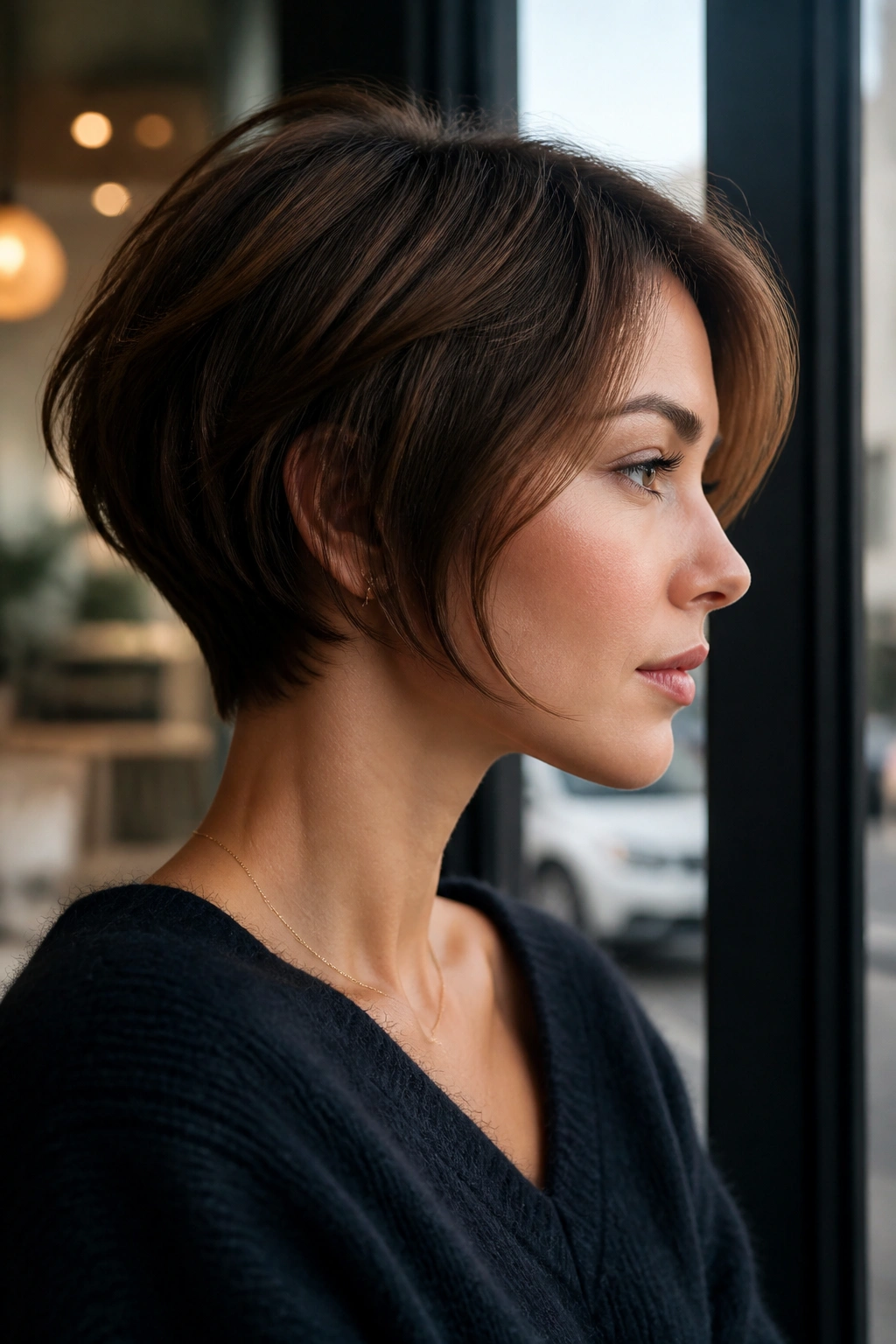
This is the version that makes the back of the haircut look expensive. The graduation starts higher at the nape and shifts gradually toward the longer front pieces, so the shape follows the curve of the head instead of sitting out from it.
A graduated neck-length pixie bob is useful if you want hair off your collar but still want movement at the jaw and cheek. It is especially flattering on people who like a clean neckline. The slope from short to long creates a neat silhouette, and that can make the neck look longer without making the cut feel severe.
What to ask for
- Keep the nape tight but not shaved
- Let the crown keep enough length to avoid a flat spot
- Blend the side sections so they don’t pop out at the ear
- Leave the front long enough to tuck or sweep across the face
The shape looks best when it’s cut with the head in a natural position, not tilted too far forward. That keeps the graduation true. If the stylist overbuilds the back, the cut can get bulky fast. If they underbuild it, the shape loses its clean line.
It’s a neat, practical haircut. And that’s not a bad thing.
15. Bixie-Leaning Long Pixie Bob with Flip-Out Ends

If you keep loving short hair but can’t quite give up the softness of a bob, this is the version to look at. It leans a little bixie, a little pixie bob, and the flip-out ends keep it from feeling too polished.
The magic is in the perimeter. The back stays short enough to lift off the neck, while the front keeps enough length to brush the cheek and jaw. That combination gives you movement without losing the face-framing part that makes a longer pixie appealing. When the ends flip slightly outward, the haircut feels playful instead of severe.
This style suits hair that likes to hold a bend. A quick pass with a flat iron turned outward at the ends is enough to shape it. You do not need every strand to flip the same way, either. In fact, it looks better when the movement is a little uneven. That keeps the cut from looking too arranged.
I like this on people who want something fresh but not fussy. It has personality. It also grows out in a fairly graceful way, which is more useful than it sounds when you live with a short cut between trims.
Final Thoughts
A long pixie bob works best when the shape matches the hair you actually have, not the hair you wish you had. Thick hair usually needs smart removal of bulk. Fine hair usually needs cleaner structure and a little lift at the root. Curls want room. Straight hair wants movement. The cut is flexible, but it still needs a plan.
Bring photos that show the front, side, and back. That part matters more than people think. A long pixie bob can look almost completely different depending on where the nape lands and how much length stays around the cheek, so one flattering picture from the front is not enough.
The nicest versions have a clear line and a bit of attitude. That is the combination worth asking for.
