



A pixie only looks “messy” when the cut itself is doing the work.
That is the part people miss. Messy pixie cuts are not just short hair with a dab of texture spray and a hopeful shrug. They need broken-up ends, a little lift at the crown, and enough shape around the face that the whole thing looks deliberate when it’s slightly tousled.
The lived-in version is my favorite kind, frankly. It has that soft, second-day feel without looking neglected. The hair moves. The fringe falls a little off-center. The nape stays neat enough that the cut still has structure, which is what keeps it from sliding into “I gave up” territory.
If you have ever wanted a short cut that can survive air-drying, a rushed morning, or a grow-out phase without turning into a helmet, the right messy pixie is a very good place to land. The trick is picking the version that matches your texture, your face, and how much styling you’re willing to do before coffee. The choppy-crown version is the easiest place to start.
1. Messy Pixie Cut with a Choppy Crown
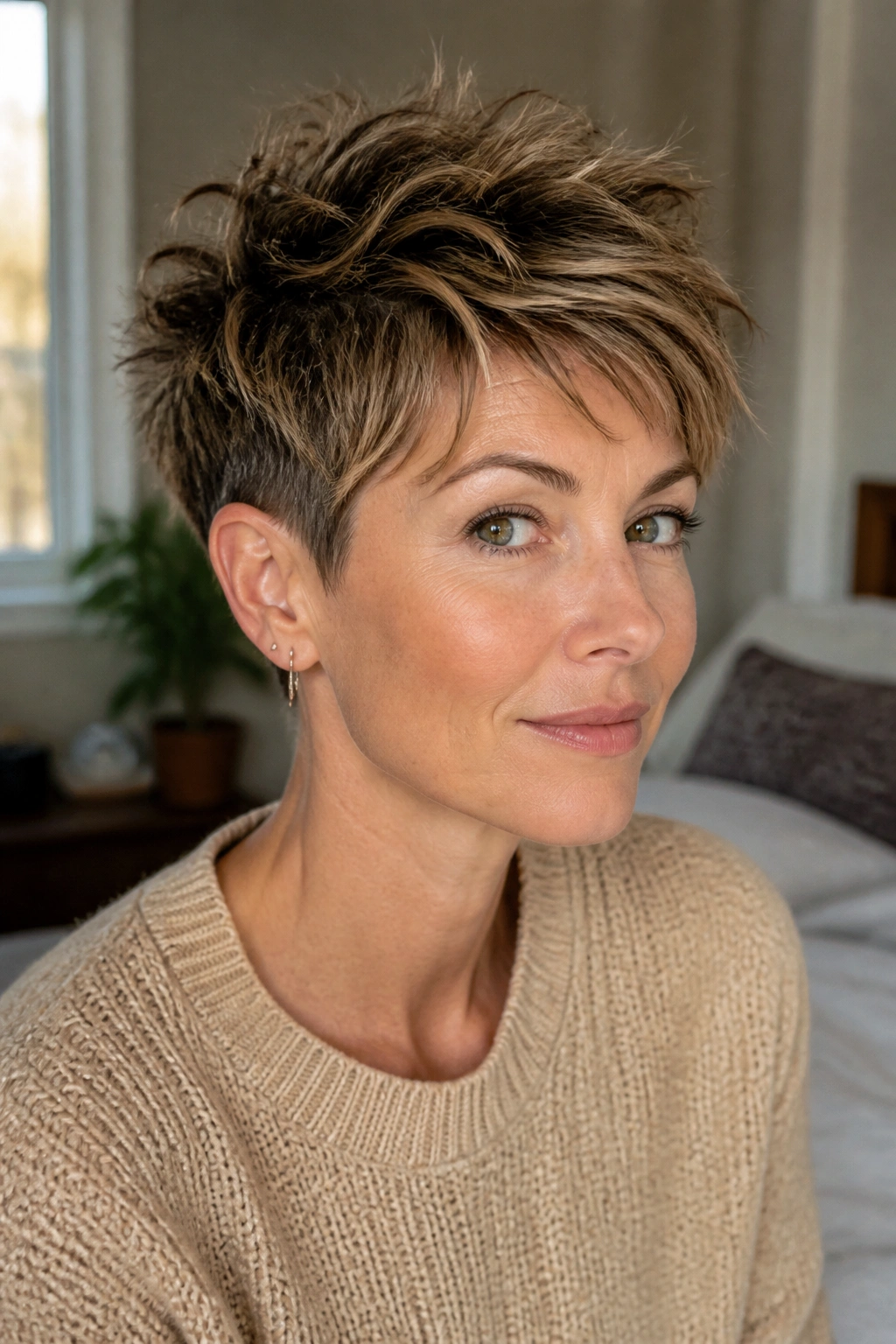
A choppy crown keeps a pixie from going flat, and that is the whole magic trick here. Shorter sides and a slightly longer top give you room to rough the hair up with your fingers, which is what makes the style look lived-in instead of freshly helmeted.
Why It Works
The crown carries most of the movement. When those top layers are cut with point-cutting or a razor, the ends don’t sit in one hard line. They separate a little on their own, which means you need less product and less time to get that piecey finish.
This is one of the easiest messy pixie cuts for fine hair, because the extra texture creates the illusion of thickness. It also works well if your hair tends to lie close to the head. You are building shape where hair usually collapses.
- Ask for the crown to stay about 1 to 2 inches longer than the sides.
- Use a pea-sized amount of matte paste on dry hair, not wet hair.
- Push the top forward, then break it apart with your fingertips.
- Leave the ends soft, not blunt.
Pro tip: if the top starts looking too stiff, rub a tiny bit of cream between your palms and touch only the tips.
2. Tapered Nape Pixie with a Soft Top
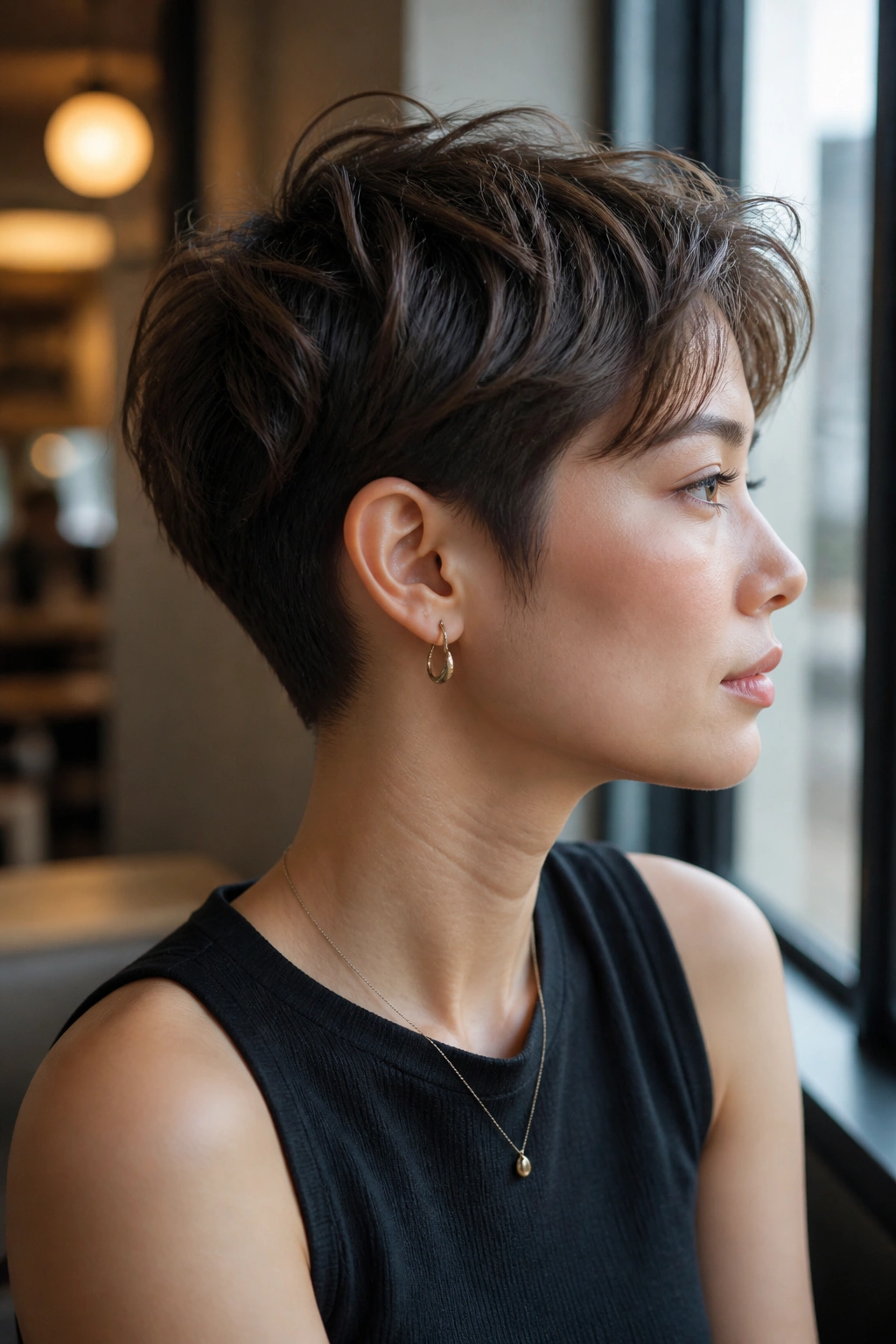
A tapered nape does a lot of quiet work. It keeps the back of the cut clean and close to the neck, which makes the top look even fuller and more undone by contrast.
The appeal here is balance. You get a neat lower half and a loose upper half, so the cut never feels too sweet or too polished. That contrast is what gives the style that easy, slept-in look without making it messy in the wrong way.
A soft top matters more than people think. If the top is left too short, the whole shape can go stiff. Keep the crown long enough to bend over to one side, then rough it up with a vent brush while blow-drying, or just twist it with your fingers if you like air-drying.
The shape also flatters a long neck and a strong jaw. It can be a little unforgiving if the taper is too severe, though. Go too high with the nape and you lose the softness that makes this version feel worn-in. The sweet spot is clean, not severe.
3. Piecey Side-Swept Pixie
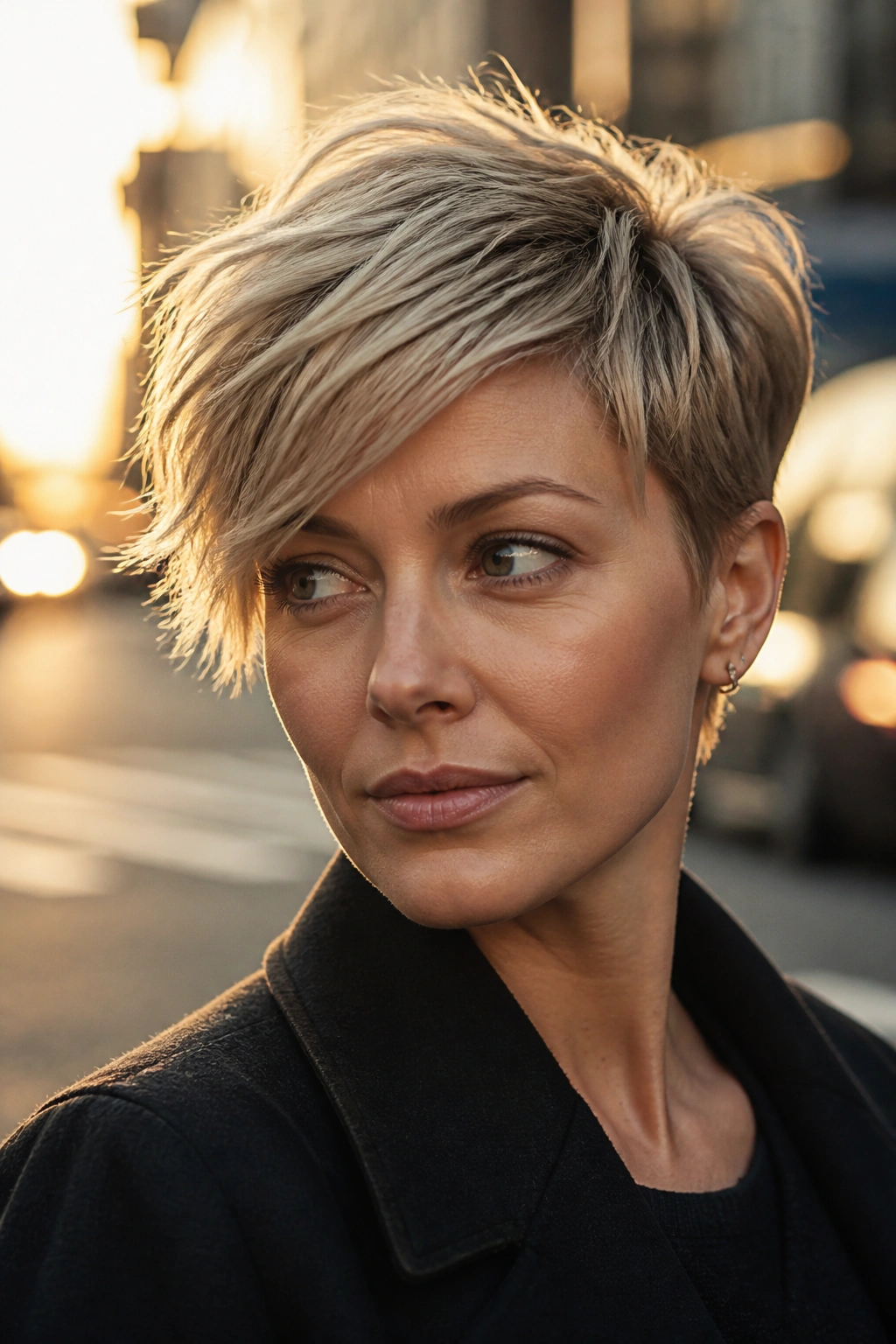
What if you want the messiness to look a little softer?
Then the side-swept pixie is the move. The front falls diagonally across the forehead, and that one simple direction makes the whole cut feel less sharp. It is still short. It still has attitude. But the side sweep keeps it from reading as too spiky or too boyish if that is not your thing.
How to Wear It
Start by drying the fringe in the direction you want it to live. A small round brush can help, but you do not need perfect tension. In fact, too much tension is the enemy here. You want a bend, not a curl.
A little styling cream at the ends helps the pieces stay separated. If your hair is thick, use a light wax only on the front section and leave the rest airy. That keeps the front from looking heavy while the back still feels light and broken up.
- Best for oval, heart, and long faces
- Looks good with a deep side part or a soft off-center part
- Works on straight hair and lightly wavy textures
- Needs only a quick finger restyle during the day
One small thing: tuck one side behind the ear. It sounds simple. It changes everything.
4. Messy Pixie Cut for Natural Curls
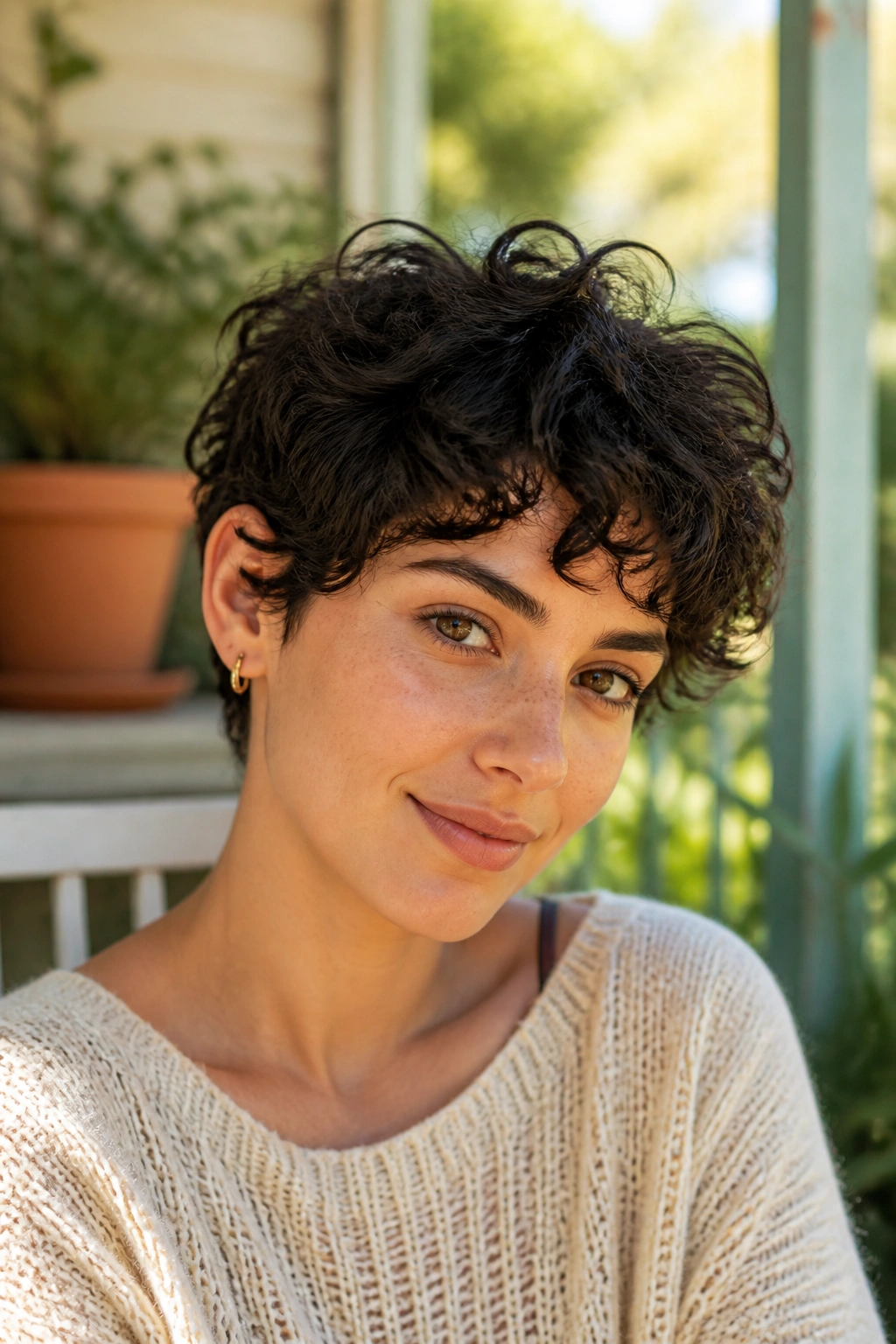
Curly hair and a pixie can be a beautiful mess, which is my favorite kind of mess. When the curl pattern is left intact, the cut stops looking “styled” and starts looking lived-in in the best way.
The mistake people make is cutting curls too short while they are wet. Curls spring up later, and suddenly the whole head feels smaller than planned. A good curly pixie leaves enough length at the top and around the front so the curls can form their own shape. The texture does most of the work.
What to Ask For
- Keep the top long enough for the curl to coil, usually 2 to 4 inches depending on curl size.
- Ask for soft layering, not heavy thinning.
- Leave a little length at the hairline so the front does not puff up into a triangle.
- Use a diffuser on low heat or let it air-dry with a curl cream.
The finish should look touchable, not crunchy. If you can see a few curls clumping together and a few frizzier pieces breaking loose, that is not a problem. That is the point.
Curly messy pixie cuts have a relaxed honesty to them. They do not need much persuasion. They just need room.
5. Feathered Fringe Pixie
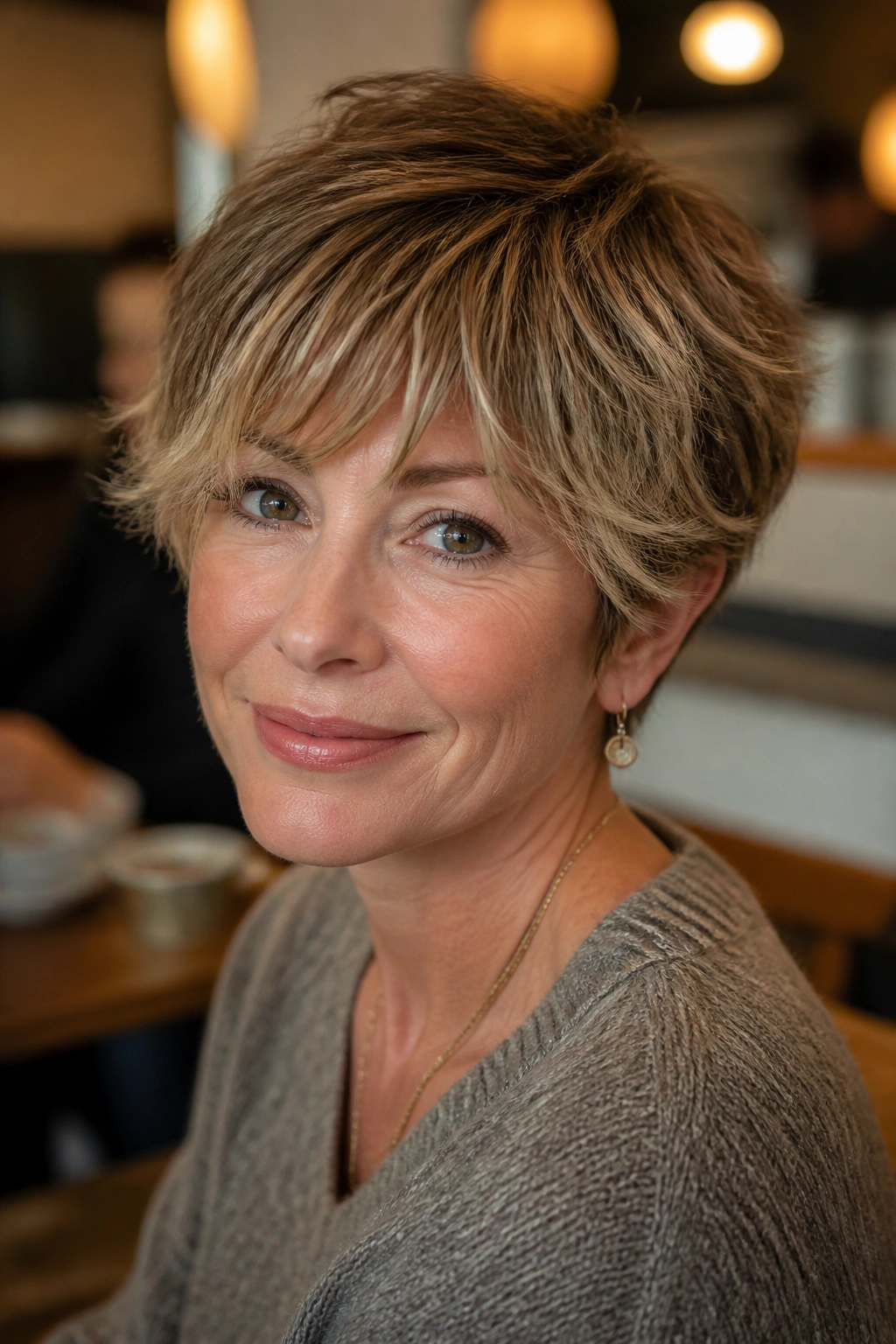
Feathering changes everything. Instead of a heavy block of hair falling across the forehead, the fringe breaks into lighter, softer strands that move when you turn your head.
This is the pixie for anyone who likes a little softness near the face. It has less edge than a choppy crop, but it still avoids the flat, tidy look that can make short cuts feel stiff. The feathered pieces frame the eyes in a way that feels easy rather than styled to death.
I also like this version for fine hair that needs a visual lift. Feathered layers create motion without requiring a lot of length, which is useful when you want the hair to feel airy and not sparse. Ask your stylist to avoid over-thinning the crown, though. Too much thinning turns feathered into wispy, and that is a bad trade.
The best styling tool here is a small round brush or just your hands. Blow-dry the fringe forward, then sweep it slightly to one side while it cools. A light mist of flexible hairspray is enough. You want movement that survives the afternoon, not shellacked bangs that crack when you blink.
6. Razored Undone Pixie
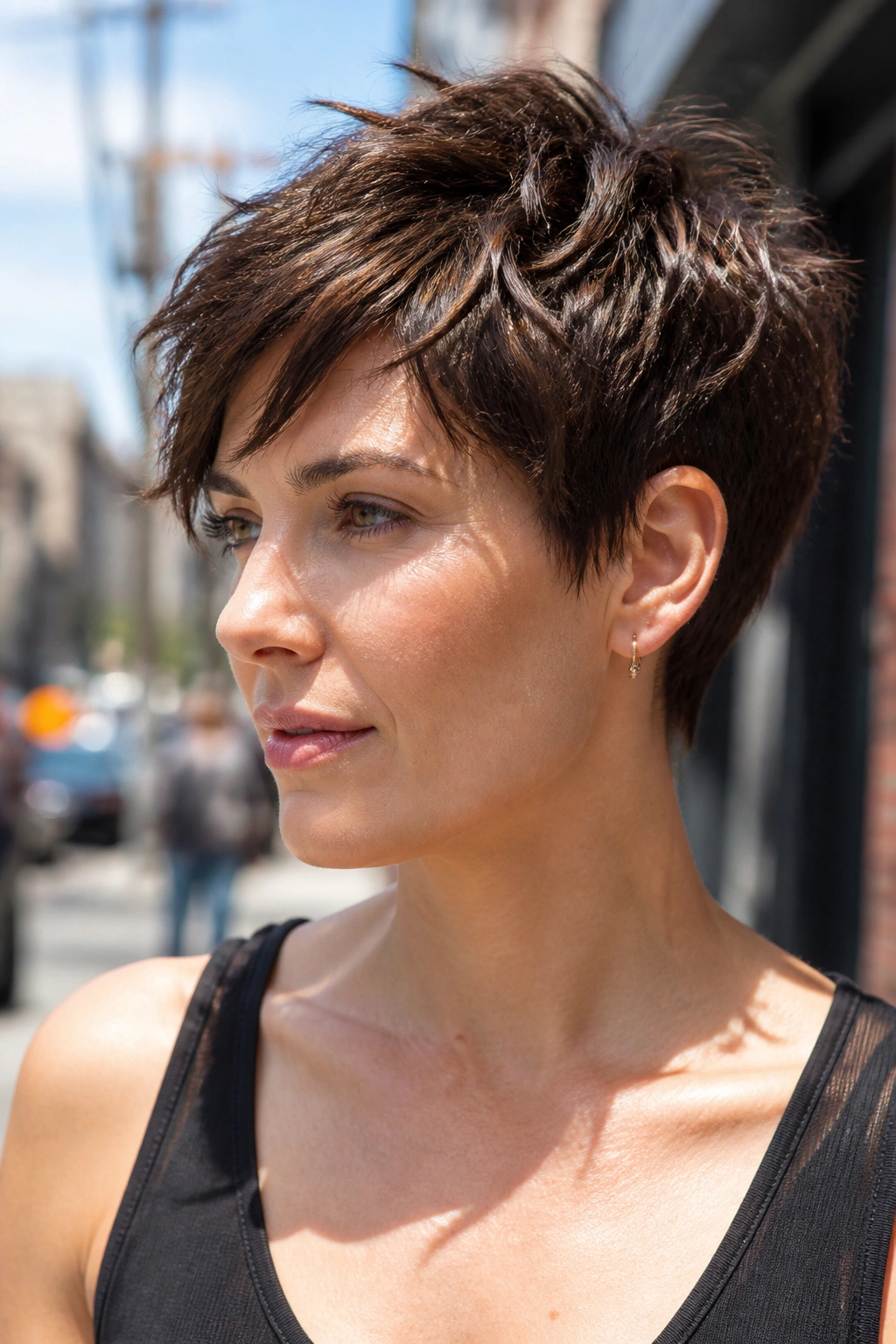
A razored pixie looks different from a blunt crop the moment it is cut.
That is because the razor softens the ends and leaves tiny variations in length, which gives the hair that broken-up finish people usually try to fake with product. It is a cleaner route to the same effect. Less polish, more air.
Why It Beats a Blunt Cut for This Look
A blunt pixie can be sharp and modern, but it does not always read as lived-in. Razoring removes some of that hard edge. The shape feels lighter, and the pieces fall in different directions instead of stacking into one block.
That makes this version a good fit for straight to slightly wavy hair, especially if your hair tends to show every line. It also suits people who do not want to restyle every morning. The cut itself does some of the textural work.
Use a tiny amount of paste or pomade, warmed in the palms first. Then press it into the mid-lengths, not the roots. Roots need lift. Ends need separation.
If you like a slightly grungier finish, this is the one to ask for. It has edge without looking fussy. Not every pixie needs to be sweet.
7. Shaggy Pixie with a Longer Top Layer

This one is for people who want their short hair to feel a little unruly on purpose.
A shaggy pixie with a longer top layer borrows the soft, broken structure of a shag haircut and compresses it into a shorter shape. The result is fuller at the crown, looser around the face, and much less precious than a neat crop. It has a bit of rocker energy, but not the costume version of it.
What Makes It Feel Lived-in
The length on top gives you room to bend the hair forward, sweep it sideways, or push it back with your fingers. Because the layers are uneven, the hair never settles into one fixed shape. That is what keeps it casual.
This cut is a smart pick for thick hair because it removes bulk without making the whole head look too small. It can also help coarse hair feel less boxy. The danger is over-layering the sides, which can make the style puff out in the wrong places. Ask for shape, not shredding.
- Crown: long enough to pinch and twist
- Sides: soft, tapered, not bulky
- Texture: matte paste or dry wax
- Finish: finger-styled, not brushed flat
The part that matters most: do not try to make every piece behave. The stray bits are the point.
8. Asymmetrical Messy Pixie
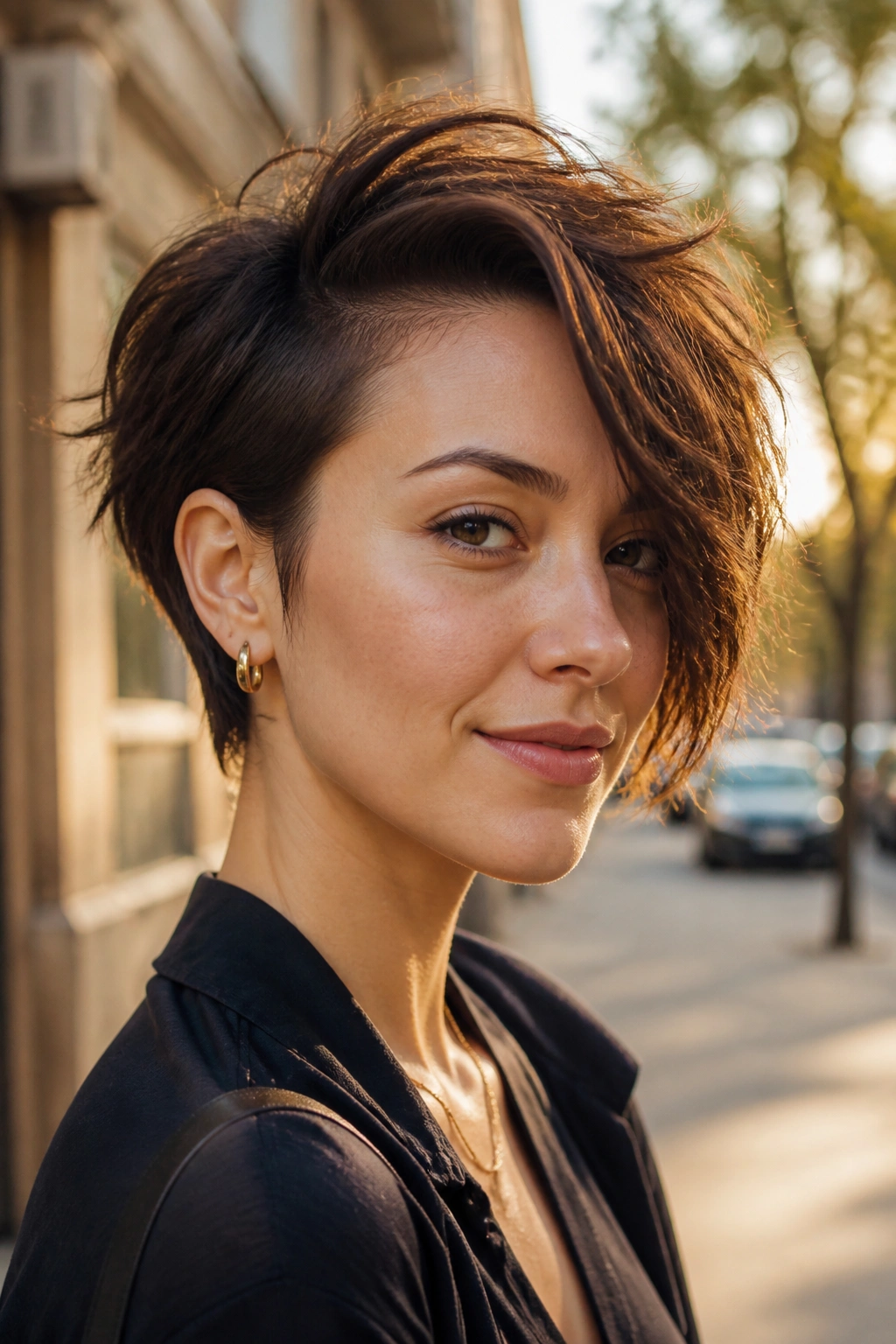
A little unevenness can make a pixie look cooler immediately. One side longer than the other gives the cut direction, and direction is what stops messy short hair from looking random.
The asymmetry does not need to be dramatic. Even a modest difference—say, one side skimming the cheekbone while the other stays tucked closer to the ear—changes the whole mood. It draws the eye across the face and makes the texture feel intentional.
This cut is especially good if you like wearing one side tucked behind the ear and letting the other side fall forward. That small habit adds a bit of movement every time you turn your head. It also works nicely with a deep side part, which gives the longer side a natural place to land.
I prefer this look with soft ends rather than sharp angles. Hard asymmetry can feel too engineered. Soft asymmetry feels like hair that decided to misbehave in a flattering way.
If you want a short cut that has personality without needing a lot of styling product, this is a strong choice. It looks a little different from every angle. That is the fun of it.
9. Air-Dried Wavy Pixie
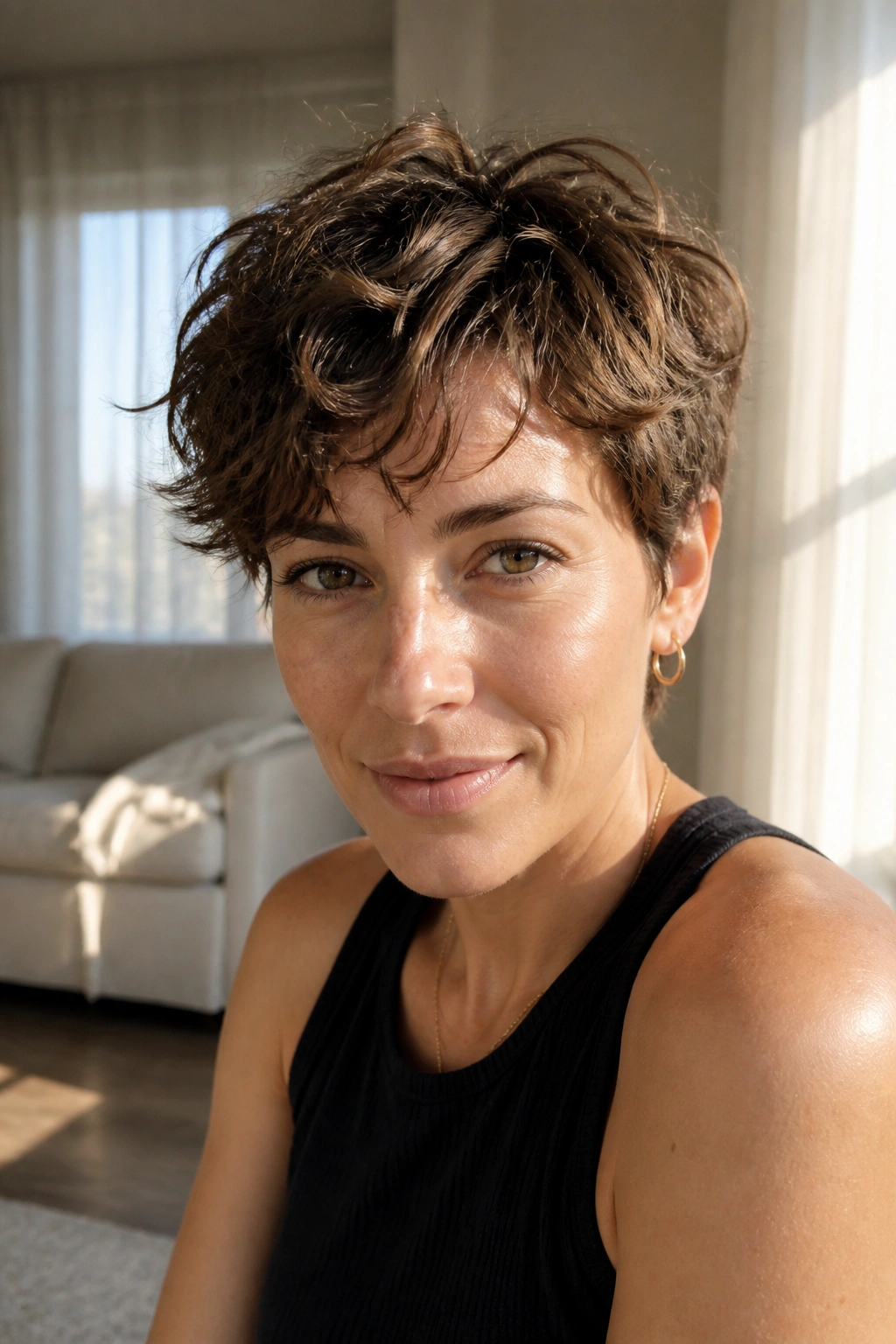
Can a pixie look good with no hot tools at all?
Absolutely. In fact, a wavy pixie often looks better when you leave it alone and let the bend in your hair show up naturally. The trick is cutting enough length through the top and fringe so the wave has somewhere to live instead of springing straight up.
How to Get the Bend
Work a light mousse or curl cream through damp hair, then scrunch the top with your hands. If your wave pattern is loose, pinch the ends around your fingers to encourage a few bends near the front. Then stop touching it. That part matters more than people admit.
A microfiber towel helps if your hair frizzes easily. So does a wide-tooth comb used once, early, before the hair starts drying. After that, fingers only. Too much combing flattens the movement and pulls the wave out before it forms.
- Best for loose waves and soft texture
- Looks especially good with a slightly longer fringe
- Needs a lightweight product, not a heavy cream
- Gets prettier as the day goes on
The finished cut should look like you slept on it a little, in the flattering sense. Not sloppy. Just relaxed.
10. Two-Tone Dimensional Pixie
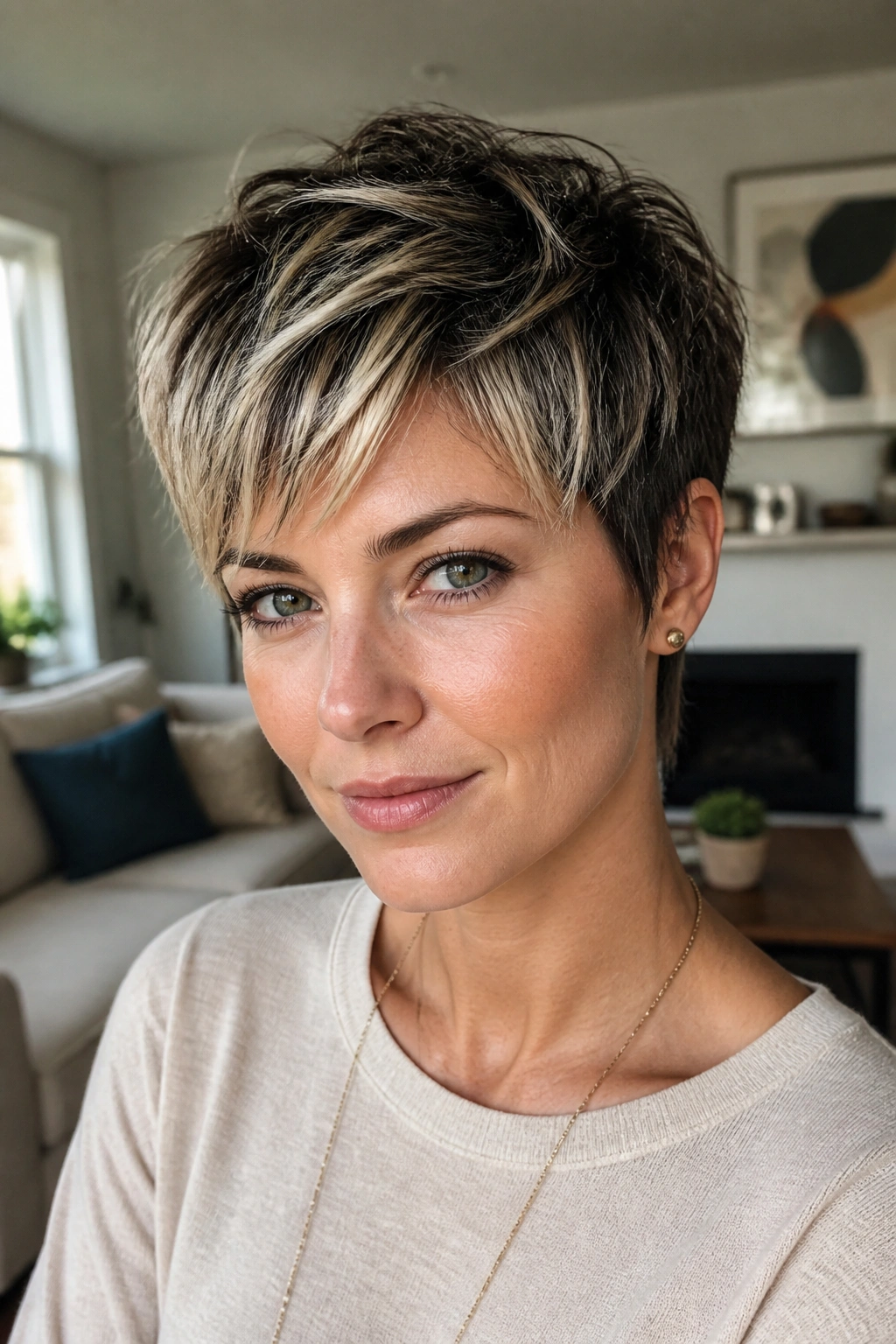
Color can do half the styling for you, and this is one of those cuts where that really shows. A two-tone pixie uses contrast—darker roots, lighter tips, subtle highlights, or a bold fringe panel—to make the layers read more clearly.
That extra dimension is useful because short cuts can flatten out when the color is too uniform. A bit of contrast breaks up the shape and makes the movement easier to see, especially in the crown and around the temples. You do not need loud color for this. A few fine highlights can be enough.
A Few Smart Color Moves
- Keep roots slightly deeper than the ends for a lived-in look
- Add lighter pieces around the fringe to lift the face
- Use soft balayage or babylights if you want low-maintenance depth
- Ask for the color to follow the cut, not sit on top of it
The best part is how forgiving this makes the grow-out. As the roots come in, the style usually looks more relaxed rather than less finished. That is why I like this on messy pixie cuts that need to last a little longer between salon visits.
The cut itself should still have shape. Color is the support act, not the entire show. But when both parts work, the result feels lived-in in a way that plain one-tone hair often does not.
11. Soft Mullet Pixie
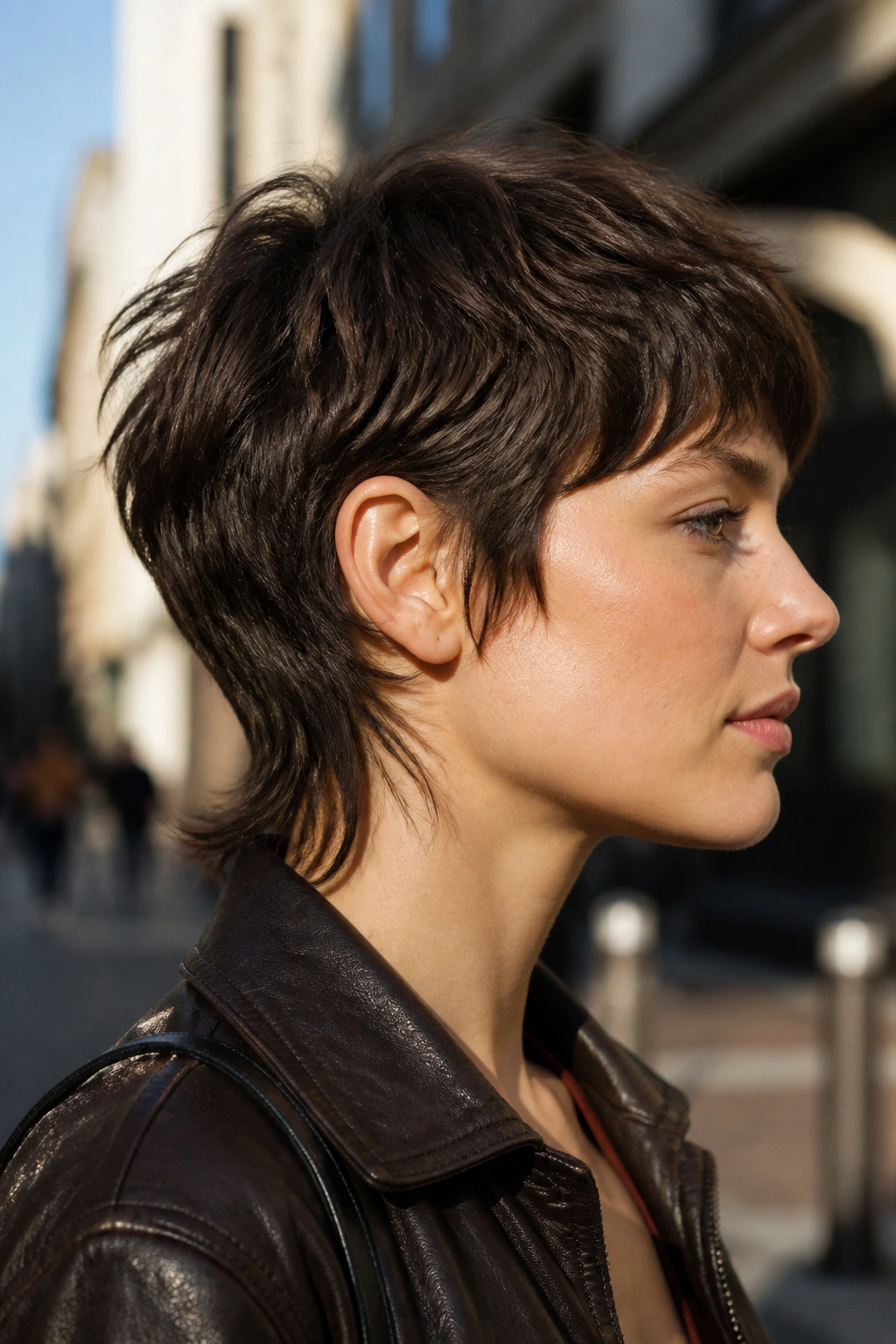
A soft mullet pixie sounds a little rebellious, but the modern version is gentler than the name suggests. The front and sides stay short and neat enough to feel like a pixie, while the back keeps a touch more length so the shape can move.
Unlike a classic pixie, this one does not rely on symmetry. It is looser through the nape and neck, which gives it a relaxed swing when you turn your head. That extra length in back is also handy if you hate the look of a super-close crop growing out too quickly.
The key is softness. A harsh mullet cut can feel costume-like fast. A soft version uses feathered layers, broken ends, and a slightly longer fringe to keep the whole thing wearable. It should feel like hair with a little attitude, not a dare.
This is a good option if you like styling your hair with your hands and moving on. Put a bit of wax on the top, let the back fall where it wants, and leave the edges imperfect. That is the point. It has shape, but it is not trying to behave.
12. Spiky Texture Pixie
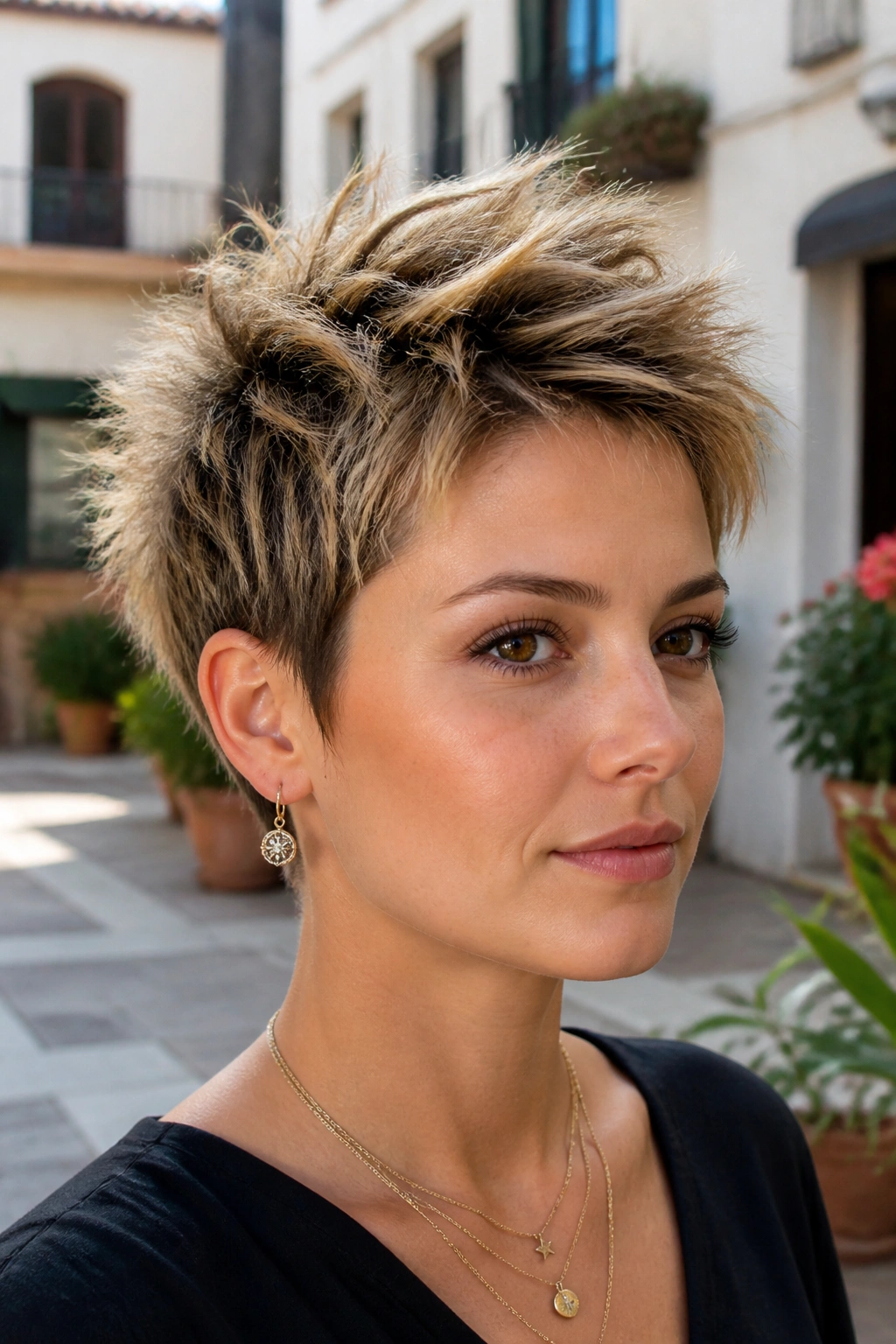
A spiky pixie can look edgy, but the lived-in version is less about hard spikes and more about lifted, separated pieces.
The difference matters. Hard spikes need a lot of product and can look stiff by midday. Soft spikes, on the other hand, have a broken surface. They lean in different directions, which keeps the cut from feeling too neat. Think piecey, not helmeted.
Why It Works
The short length around the sides and back lets the top stand up without dragging the whole shape down. A little fiber paste or matte clay is enough. Rub it between your palms, then pinch sections at the crown and front. You are not sculpting a mohawk. You are nudging texture into place.
This version suits straighter hair especially well, because straight strands can sometimes feel limp in a very short cut. The extra lift gives them some attitude. Thick hair can wear it too, though the top should be left a little longer so it does not puff out like a brush.
- Use product on dry hair
- Keep the pieces small
- Leave a few ends sticking out
- Avoid shiny gels unless you want a wet finish
A messy pixie cut like this has a little bite. Not much. Just enough.
13. Grown-Out Pixie with Long Bangs
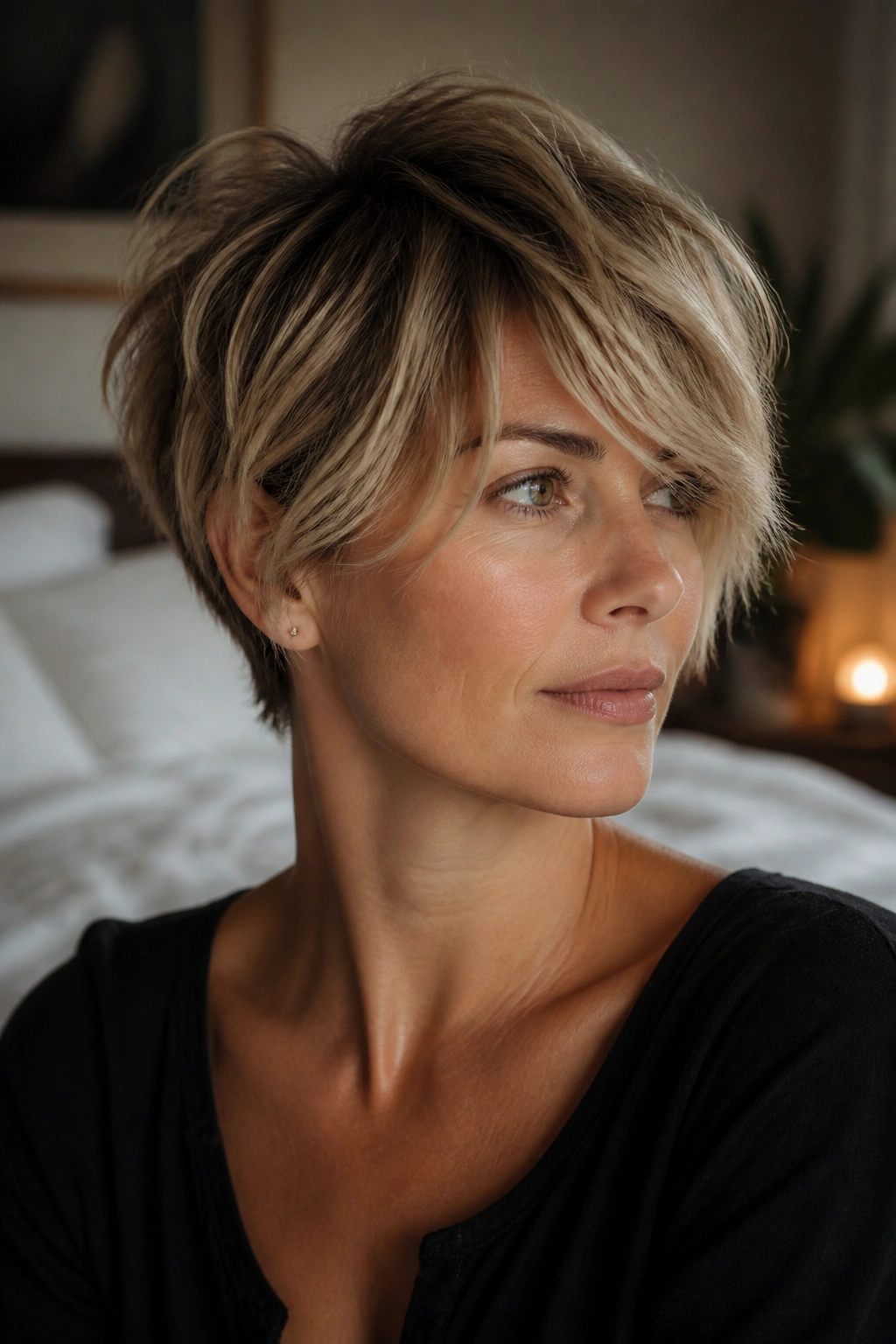
There is a sweet spot in the grow-out phase where a pixie starts looking expensive in the most accidental way. The bangs get longer, the sides soften, and the cut picks up a little movement around the eyes and cheekbones.
That is what makes a grown-out pixie with long bangs so useful. It lets you keep the short back and the ease of a cropped cut while giving the front enough length to sweep, part, tuck, or let fall into the face. The whole thing feels more relaxed because it is not trying to stay ultra-short.
I like this version for people who want a short haircut but do not want to commit to frequent trims every few weeks. The longer bangs buy you time. They also give the style more personality, which helps a lot when the rest of the cut is simpler.
The danger is letting the bangs get so long that they swallow the face. Trim them before they start hanging heavy over the eyes. You want them soft and deliberate, not like you are hiding under your own haircut. A touch of texture spray and a side sweep usually keeps the shape open.
14. Micro Fringe Pixie
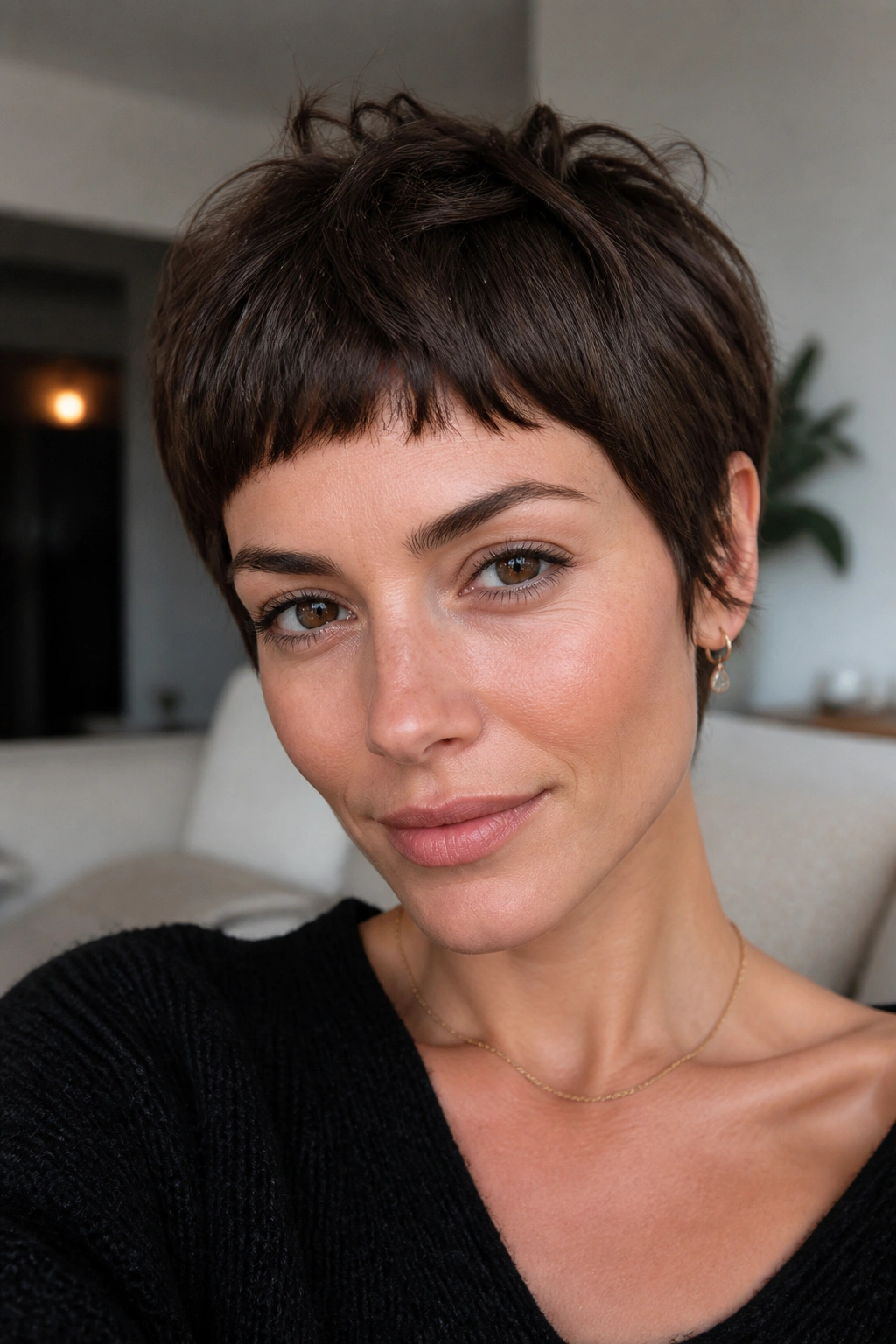
A micro fringe changes the whole mood of a pixie in one move. The bangs sit high above the brows, which creates a sharp little frame for the face and puts all the attention on the eyes and the top shape of the cut.
Is it for everyone? No. It is a specific look. But when the rest of the cut is soft and piecey, the short fringe can feel surprisingly lived-in instead of severe. That contrast is the trick.
Who It Suits
- People with strong brows or a clear eye shape
- Hair that can hold a little texture without collapsing
- Anyone who likes a fashion-forward cut with some edge
- Faces that benefit from a bit of vertical lift
The sides and crown should stay soft so the fringe does not dominate. If the edges are too crisp, the cut can feel strict. Keep the rest of the hair a little broken up, and the short fringe reads more like a design choice than a statement of intent.
I would not pair this with heavy smoothing products. That kills the point. A tiny bit of texture at the top keeps it from looking too severe. Tiny details matter here. They really do.
15. Overgrown Pixie Bob Hybrid
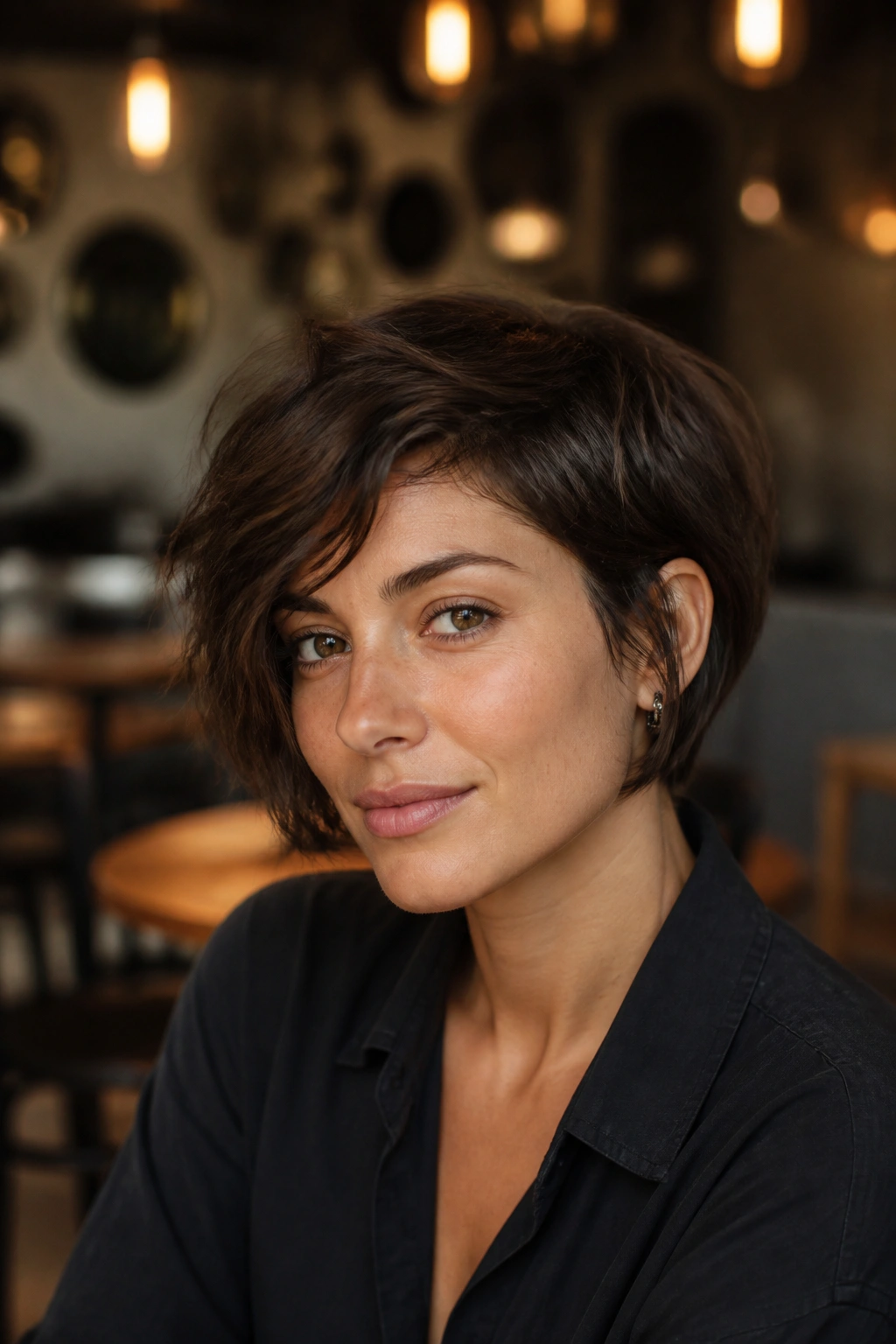
A pixie bob hybrid is what happens when a pixie grows a little longer and decides to stay interesting instead of awkward. The shape lands somewhere between a cropped cut and a short bob, usually with more length around the ears and jaw and a shorter, tighter nape.
That extra length makes the style feel lived-in fast. Hair can tuck, bend, and fall in softer ways, which means you do not need to force the shape every morning. It is also a good choice if you want to keep some of the pixie energy without revealing your neck quite as much.
The best version has a slightly uneven top and a fringe that can be swept off-center. That keeps it from looking too blunt. If the ends are too tidy, the whole thing loses the relaxed feeling that makes this cut work. A few broken layers around the front help a lot.
This is the cut for someone who wants short hair with a bit of drag along the jawline. It feels grown-in, but not grown out. There is a difference, and you can see it immediately when the cut is done well.
Final Thoughts
The best messy pixie cuts do not look messy because they were neglected. They look that way because the shape has enough texture, softness, and movement built into it from the start.
If your hair is fine, go for choppy layers and a little crown lift. If it is curly or wavy, let the pattern do more of the talking. If you want the cut to last longer between trims, the grown-out pixie and the pixie bob hybrid are both smart choices.
The nicest part is how forgiving these cuts can be. A lived-in pixie usually gets better when it is touched, bent, and worn for a few hours. That is the charm of it. Ask for point-cutting, keep the ends soft, and do not let product crush the movement.
