



Flat hair has a rude habit of looking fine for about twenty minutes, then quietly giving up on you. The crown settles, the ends lie there, and the whole cut starts reading as tired even when your hair is clean and healthy.
The right modern haircuts for women with flat hair do not fight that problem with brute force. They use shape, line, and a little smart weight placement to make the hair look fuller from day one. Sometimes that means a blunt edge. Sometimes it means a softer fringe, a lifted crown, or layers that start in the right place instead of chewing through the ends.
A lot of volume advice misses the point. Flat hair usually does not need more and more layers; it needs a stronger silhouette. Too many short pieces can leave the hair see-through, especially around the bottom third, and that is a hard look to recover from without styling tools and patience.
So the real trick is this: choose a cut that gives the eye something solid to read, then style it in a way that does not flatten the roots back down. The best options below do exactly that, and they do it without asking you to become a full-time round-brush person.
1. Chin-Length Blunt Bob
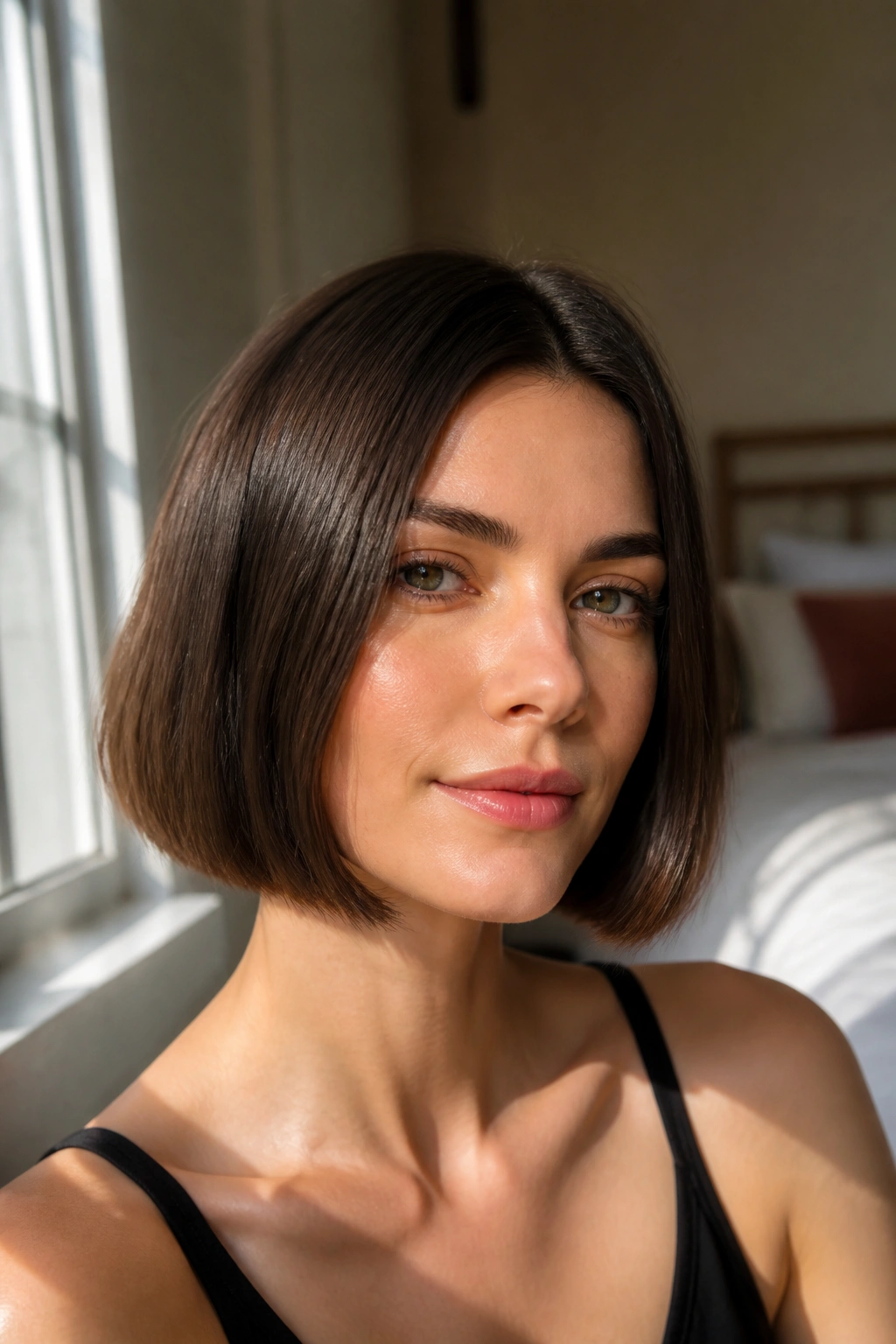
A chin-length blunt bob is one of the easiest ways to make flat hair look thicker fast. The blunt edge gives the ends a clean line, which makes the whole shape feel denser than a wispy cut ever will.
Why It Works on Flat Hair
The length sits right where the jaw starts to frame the face, so the hair does not drag down the silhouette. That matters more than people think. If your hair hangs too low, the eye goes straight to the flatness; if it stops at the chin, the cut gets the attention instead.
Ask for a blunt perimeter with almost no layering through the back. You can soften the front a little, but keep the hemline firm. A tiny bevel at the ends is fine. A shaggy finish is not.
- Best length: between the lip and the chin
- Best texture: fine to medium straight hair
- Best styling move: root-lift spray at the crown and a quick blow-dry with a flat brush
- Best finish: a slight bend at the ends, not a flipped-out curl
My favorite part: this cut looks intentional even when you air-dry it badly. That is rare.
2. Italian Bob
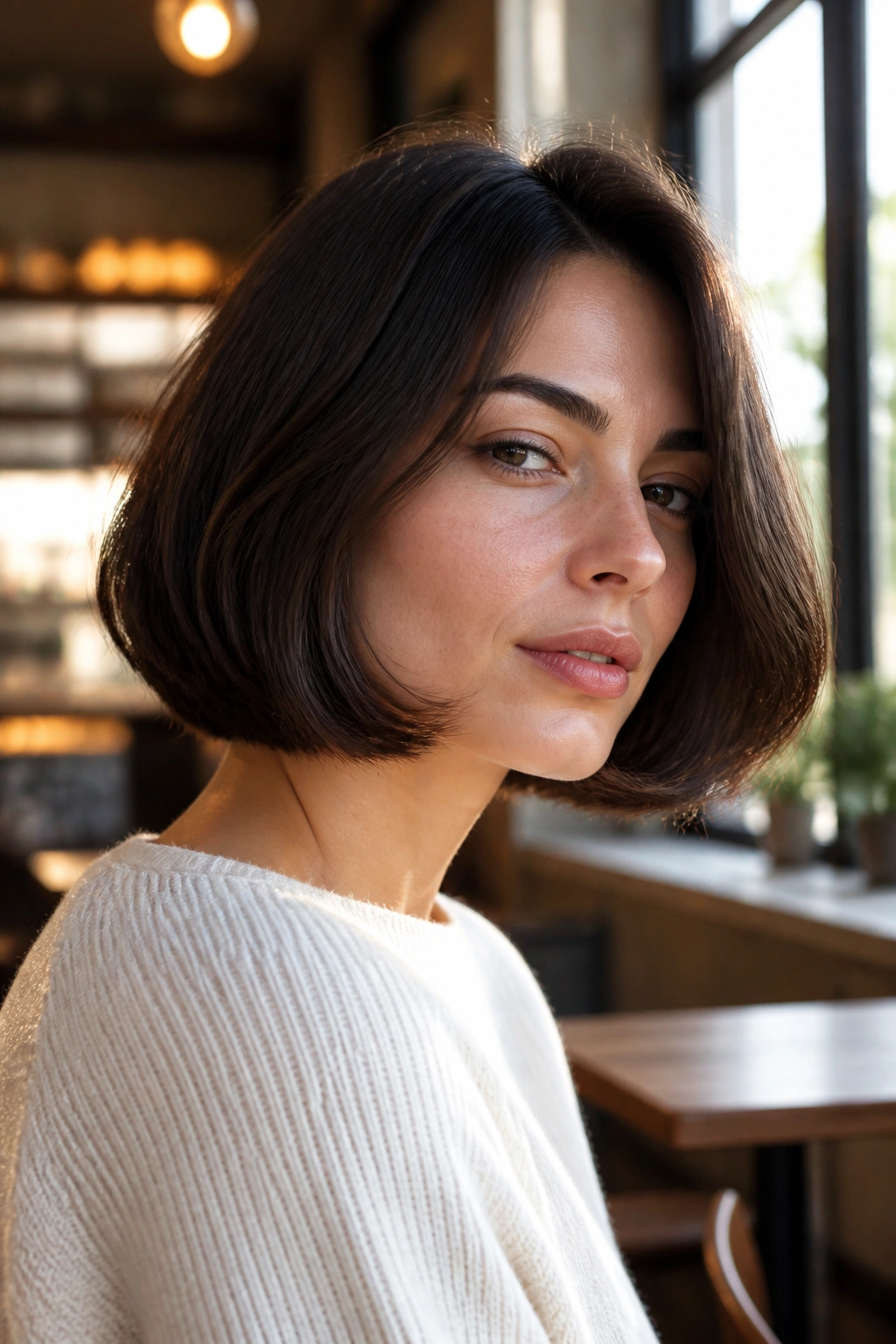
The Italian bob is a little softer than a blunt bob, and that softness is what keeps it from looking stiff. It usually sits around the jaw or just below it, with enough weight left in the shape to make fine hair look fuller.
A lot of people think volume has to mean big hair. Not here. The Italian bob gets lift from the way it curves around the face and from the way the ends are beveled inward, not from aggressive layering. It feels polished without looking helmet-like, which is a hard line to walk.
I like this cut for flat hair that needs movement but not chaos. If your strands go limp when you add too many layers, this is a safer bet. Ask your stylist for a soft bend through the mid-lengths and a slightly off-center part, then style with a 1.25-inch round brush or a large curling iron only on the bottom inch. The hair should swing when you turn your head. If it sticks, the cut needs a touch more shape.
3. Textured French Bob for Flat Hair

Why does the French bob keep showing up in photos? Because it gives flat hair a short, smart shape without feeling overworked. The trick is not the romance of it. The trick is the structure.
This version works best when the back is kept neat, the front sits around cheekbone length, and the fringe is soft enough to move. For women with flat hair, I would not ask for a heavy fringe that sits like a curtain across the forehead. A lighter fringe or a wispy brow-grazer keeps the top from collapsing visually.
How to Wear It
A little mousse at the roots goes a long way. Work it through damp hair, then scrunch the ends with your hands and let the hair dry about 80 percent before touching it again. If you keep fussing while it is wet, the shape goes limp.
This cut loves a lived-in bend. It does not need perfect curls. It needs a little air and a little edge.
4. Bixie Cut

A bixie is what happens when a bob and a pixie stop arguing and meet in the middle. For flat hair, that middle ground can be gold. You get the lift of a short cut without losing the softness that keeps a pixie from looking severe.
The best bixies leave a bit more length on top and around the temples, then taper the neckline so the back does not feel bulky. That extra top length matters. Flat hair often lies hardest at the crown, so you want enough hair there to build a shape with your fingers or a bit of cream.
- Top length: about 2 to 3 inches longer than the sides
- Fringe: optional, but side-swept pieces work well
- Neckline: tapered, not choppy
- Best products: light mousse, small amount of styling paste, dry shampoo at the roots
A bixie is a good choice if you want something modern and practical. It wakes up fast. It also forgives a rough blow-dry, which, honestly, is half the reason people love it.
5. Soft Shag With Curtain Bangs

A soft shag is not the wild, heavily shredded cut people picture from old photos. The version that works for flat hair is gentler, with layers that start lower and a fringe that opens the face instead of swallowing it.
Curtain bangs do a lot of work here. They break up a flat forehead line, create movement around the eyes, and stop the haircut from reading as one long, heavy sheet. If your hair tends to lie straight against your head, that little lift in the front makes a bigger difference than you expect.
I prefer this cut when the layers begin around the cheekbone or just below it, then feather down through the mid-lengths. That keeps the bottom from getting too thin. The ends should still feel like ends. Not feathers. Not strings.
Hair like this likes a rough dry with a diffuser or a quick twist of the fingers at the front. Use a lightweight mousse, not a heavy cream, or the whole thing sinks by lunch. Flat hair does not need weight; it needs shape.
6. Butterfly Cut
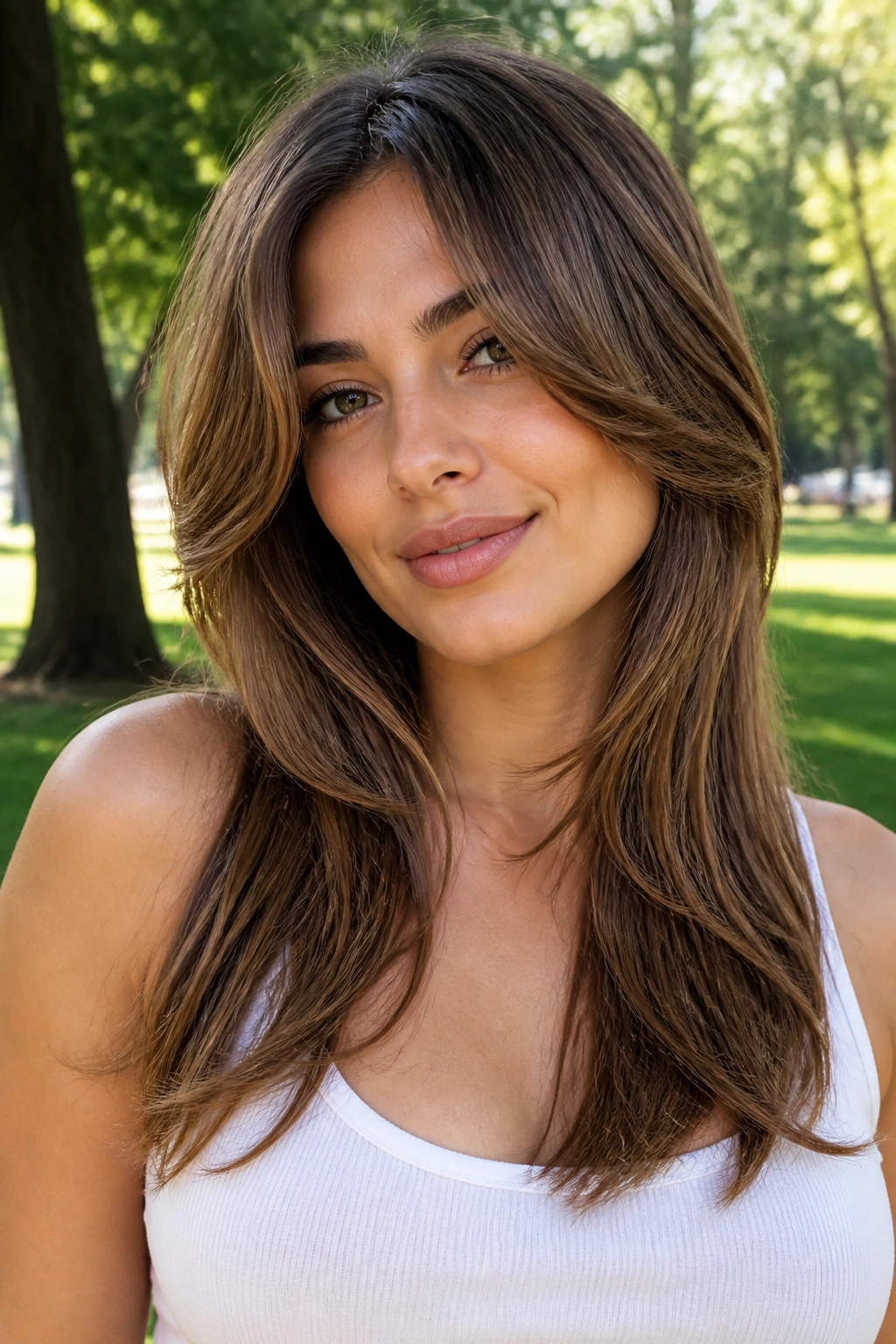
The butterfly cut is a smart choice if you want the feeling of volume without chopping off your length. It keeps the longest pieces long, then builds shorter face-framing layers that move around the cheeks and collarbone.
Unlike all-over layers, this cut preserves a lot of weight at the bottom. That helps flat hair look thicker. Too many people ask for layers when what they actually need is lift near the front and a fuller line through the back. The butterfly cut gives you both.
It works best on hair that is at least shoulder length, and it shines when the top pieces are blown out with a large round brush. The shorter front layers can be styled away from the face, then the longer pieces can stay sleek. That contrast is the point. It creates the illusion of fullness without making the ends thin out.
If you want hair you can still clip into a ponytail but wear loose and bouncy most days, this is a strong pick. It has a bit of drama, but not the messy kind.
7. Collarbone Lob With Invisible Layers for Flat Hair
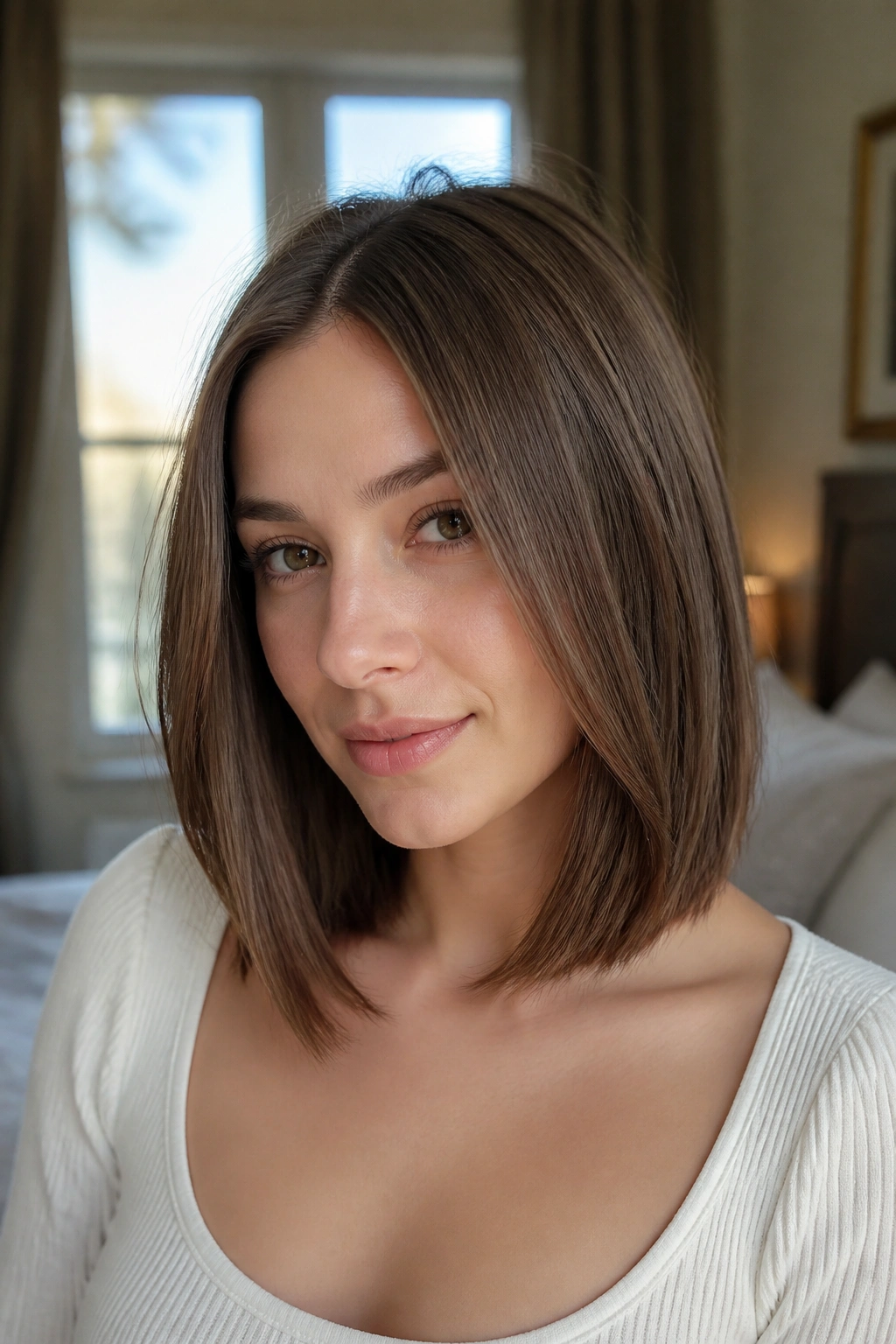
A collarbone lob with invisible layers is one of the sneakiest good cuts for flat hair. The length hits where the neck opens up, so it does not drag the face down, and the hidden layers keep the shape from turning boxy.
Why the Collarbone Matters
The collarbone is a smart stopping point because the hair does not sit too heavily on the shoulders. It also gives the cut a natural place to swing. Flat hair often needs that bit of movement more than it needs a drastic chop.
The layers should be cut inside the shape, not hacked across the surface. You want the perimeter to stay full. Ask for subtle internal layering about 1 to 2 inches up from the bottom, then keep the ends blunt enough that they still look dense.
- Best parting: slightly off-center
- Best finish: smooth with a small bend
- Best for: straight or softly wavy hair
- Avoid: razor-thin ends and too many short surface layers
This cut is calm, but not boring. That is usually the sweet spot.
8. Razor-Cut Lob
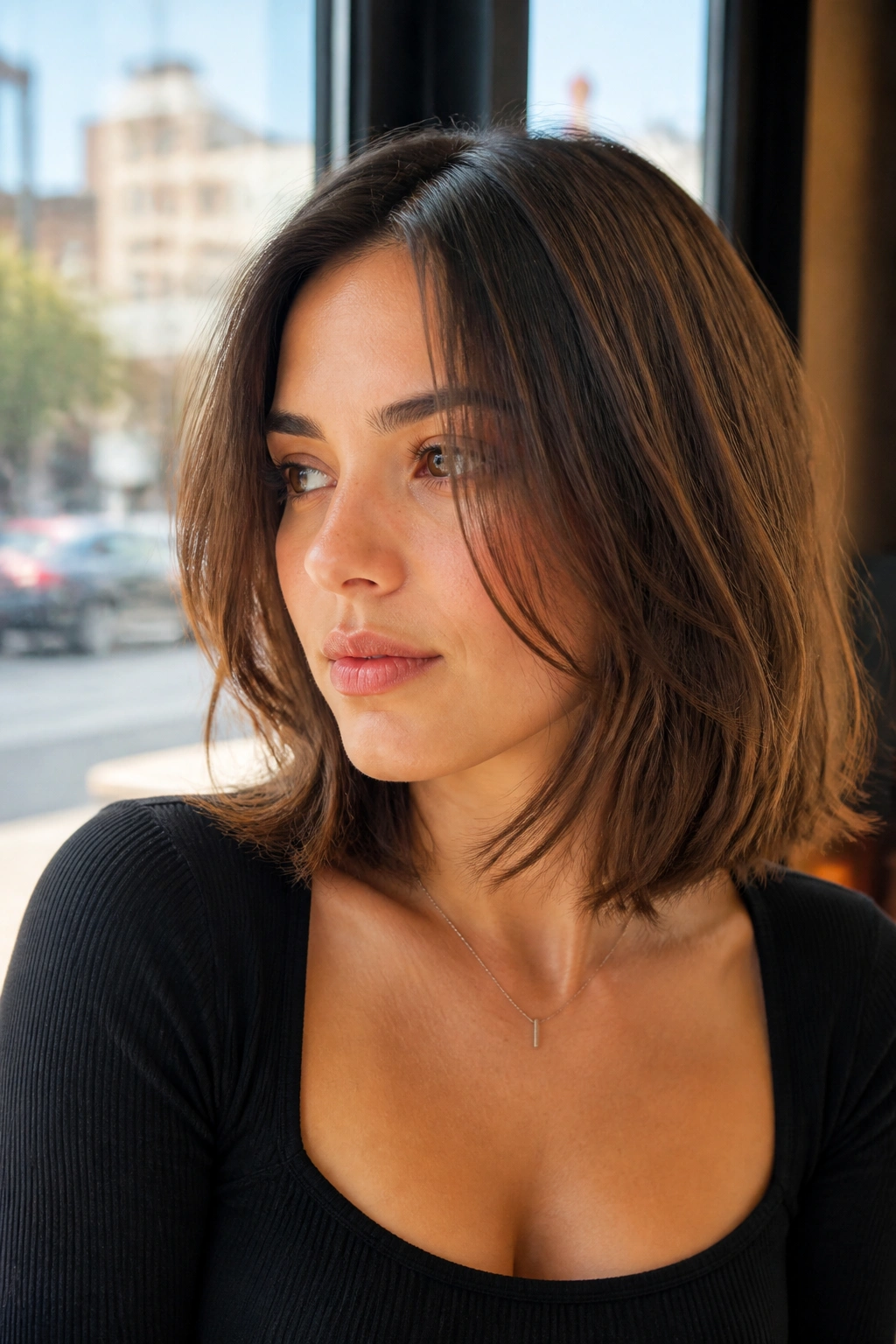
A razor-cut lob can be gorgeous on flat hair, but only when the hair can handle it. The razor gives the ends movement and stops the shape from looking heavy or square. Used carelessly, it can make the ends look frayed. That is the part people forget.
Heavy, healthy hair tends to take a razor cut better than fragile hair that already feels dry. If your ends snap easily, I would not go hard on the razor. Ask for razor-softened mid-lengths and a cleaner perimeter instead. That gives you texture without the shredded look that can make fine hair look thinner than it is.
This cut is good if you want a lob that moves when you walk. It works especially well with a center part or a slight off-center part, and it looks best when the hair is blow-dried with a paddle brush first, then bent around the face with a medium iron for just a few pieces.
Heavy hair hates a box. Fine hair hates a mess. The razor-cut lob sits between those two problems if it is done with restraint.
9. Modern Mullet

Can a modern mullet work on flat hair? Absolutely, if it is softened enough to feel wearable. The modern version keeps the shape interesting without turning the back into a dramatic tail.
The secret is balance. You want lift at the crown, some cheekbone-framing pieces around the face, and a back that tapers rather than hangs. That gives flat hair more height where it matters and keeps the overall look from sagging. The cut is a lot less rebellious than people think. It can be surprisingly polished.
How to Keep It Wearable
- Keep the top layers modest, not chopped to the scalp.
- Leave the front pieces around cheekbone length.
- Avoid shaved sides unless you truly want that edge.
- Use a pea-sized amount of paste to separate the ends.
This is the haircut for someone who wants personality in the shape itself. If your style leans a little offbeat, it can be a strong move. If you want something quiet, skip it.
10. Asymmetrical Bob
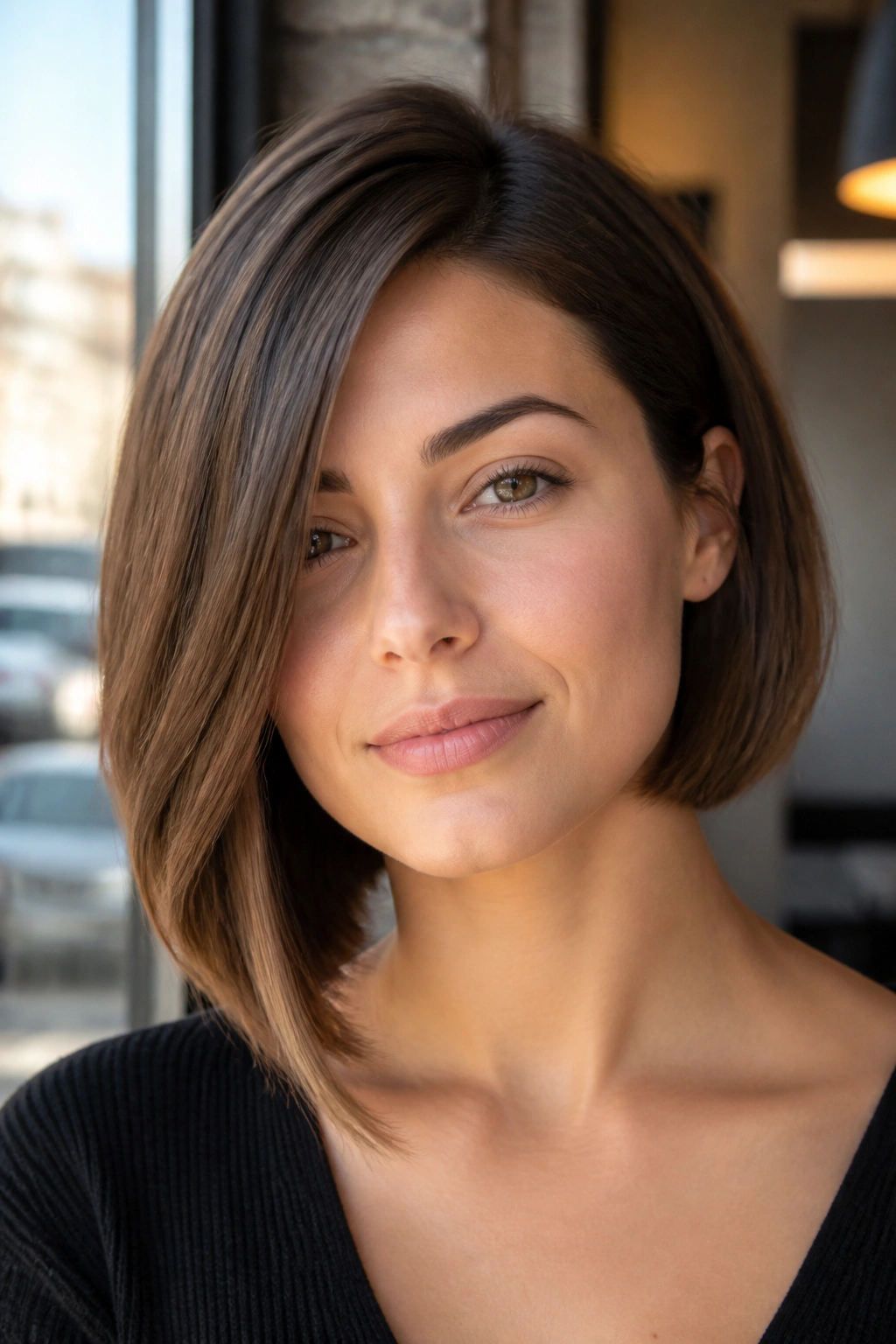
A slight asymmetrical bob can do something flat hair often needs: it creates a visual shift. One side is just a touch longer than the other, which keeps the eye moving and makes the whole cut feel less static.
I like this cut best when the difference is subtle, usually half an inch to one inch. Too much and it starts shouting. Just enough and it gives the hair a built-in lift, especially when one side naturally falls flatter than the other. That happens more often than people admit.
Picture a bob that sits clean at the jaw on one side and sweeps a little longer on the other. That tiny imbalance makes the cut feel modern without depending on texture spray or curling tools. It also pairs well with a side part, which helps the crown stop lying so flat.
If your hair has one stubborn side that always drops, this cut can be a quiet fix. Not magic. Better than magic, actually, because it looks like a design choice.
11. Shoulder-Length Cut With Bottleneck Bangs

A shoulder-length cut with bottleneck bangs is a good answer when you want softness around the face but do not want to lose length. The bangs are the interesting part here. They start narrower at the center and open wider at the sides, which gives flat hair a little lift right where the face begins.
That shape matters because flat hair often feels longer than it should. Bottleneck bangs break that vertical line. They pull the eye upward, then outward, which makes the crown and cheek area read fuller. The rest of the cut can stay fairly simple and still look thoughtful.
Ask for the bangs to be shorter in the center and blended into cheekbone-length pieces on the sides. The shoulder length should be clean, not over-layered. If the ends are thinned too much, the whole thing can look sparse.
This cut looks especially good with a blow-dry that curves the fringe away from the face on the sides and down in the middle. A small round brush is enough. No circus act required.
12. Rounded Mid-Length Cut

A rounded mid-length cut does something blunt cuts cannot: it gives flat hair a softer outline that still feels full. Instead of hanging straight down, the shape curves slightly inward around the shoulders and jaw.
That roundness helps because flat hair often looks flatter when it forms one long vertical line. Break that line, and the whole head looks more balanced. I especially like this cut for hair that is fine but dense enough to hold shape. It gives body without making the hair look broken up.
Unlike a dead-straight mid-length cut, this one keeps a little bulk in the sides and at the back. The ends should sit cleanly, not feather out. You want the perimeter to feel solid when you run your fingers through it.
If your face shape already has strong angles, this cut softens them. If your hair tends to lie too close to the head, the rounded outline gives the illusion of width. It is one of those cuts that looks simple until you notice how well it behaves.
13. Long Layers With Face-Framing Pieces
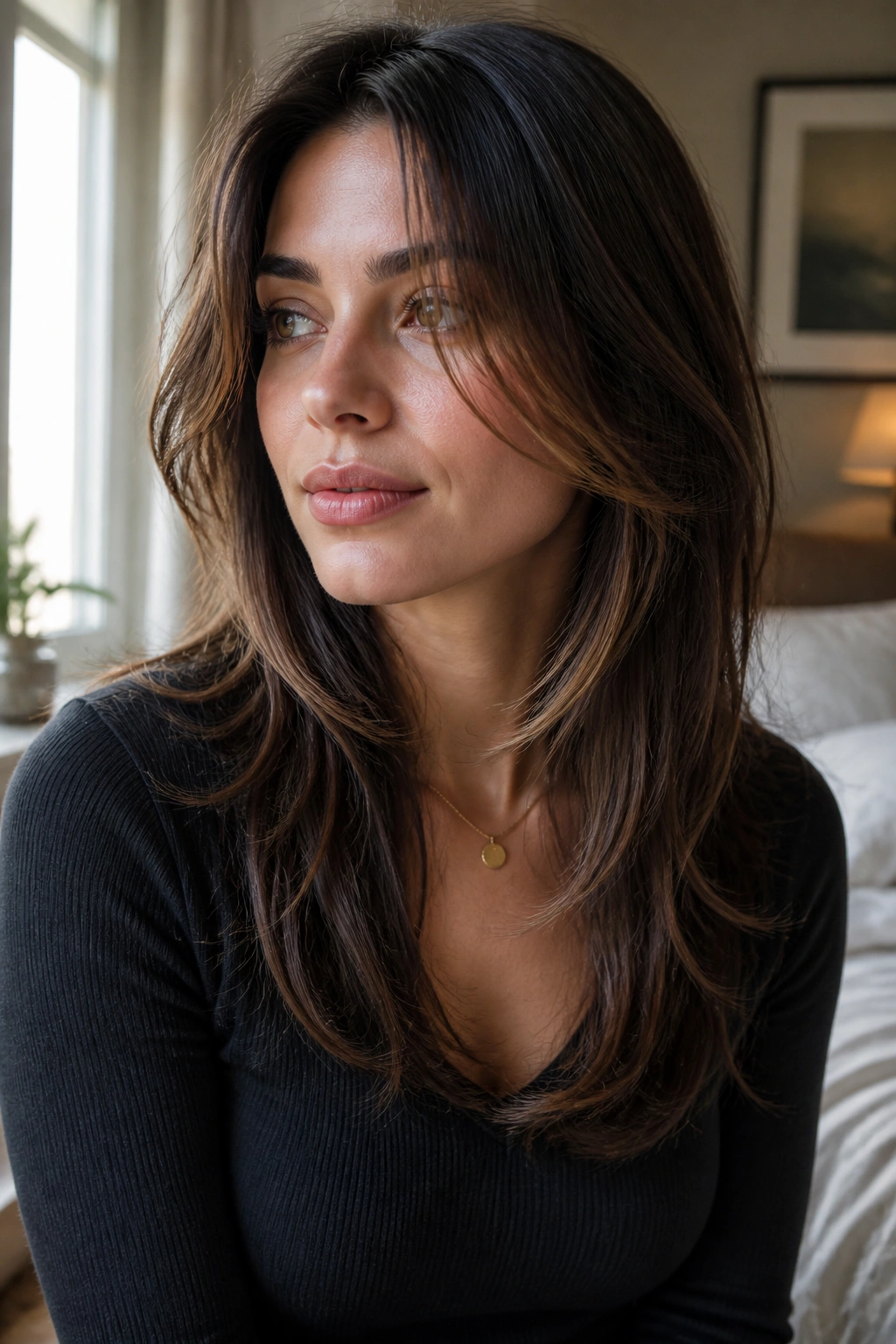
Long hair and flat hair can get along, but only if the layers are handled with care. Long layers with face-framing pieces can add movement without stripping away the weight that keeps the hair from collapsing.
How to Keep Length Without Losing Lift
The first face-framing layer should usually begin around the chin or collarbone, not halfway up the cheek. If it starts too high, you can lose density fast. That is how long hair ends up looking thin and tired at the bottom.
The longer layers should begin below the shoulders, then blend through the mid-lengths. Keep the bottom section full. That last bit matters more than most people think.
- Start the shortest face frame around chin to collarbone length
- Keep the lowest two inches of hair full
- Use large velcro rollers at the crown if you want extra lift
- Avoid layers that start at the ear line
I like this cut for people who want movement but still want to pull their hair back. It is practical, and that counts.
14. Stacked Bob
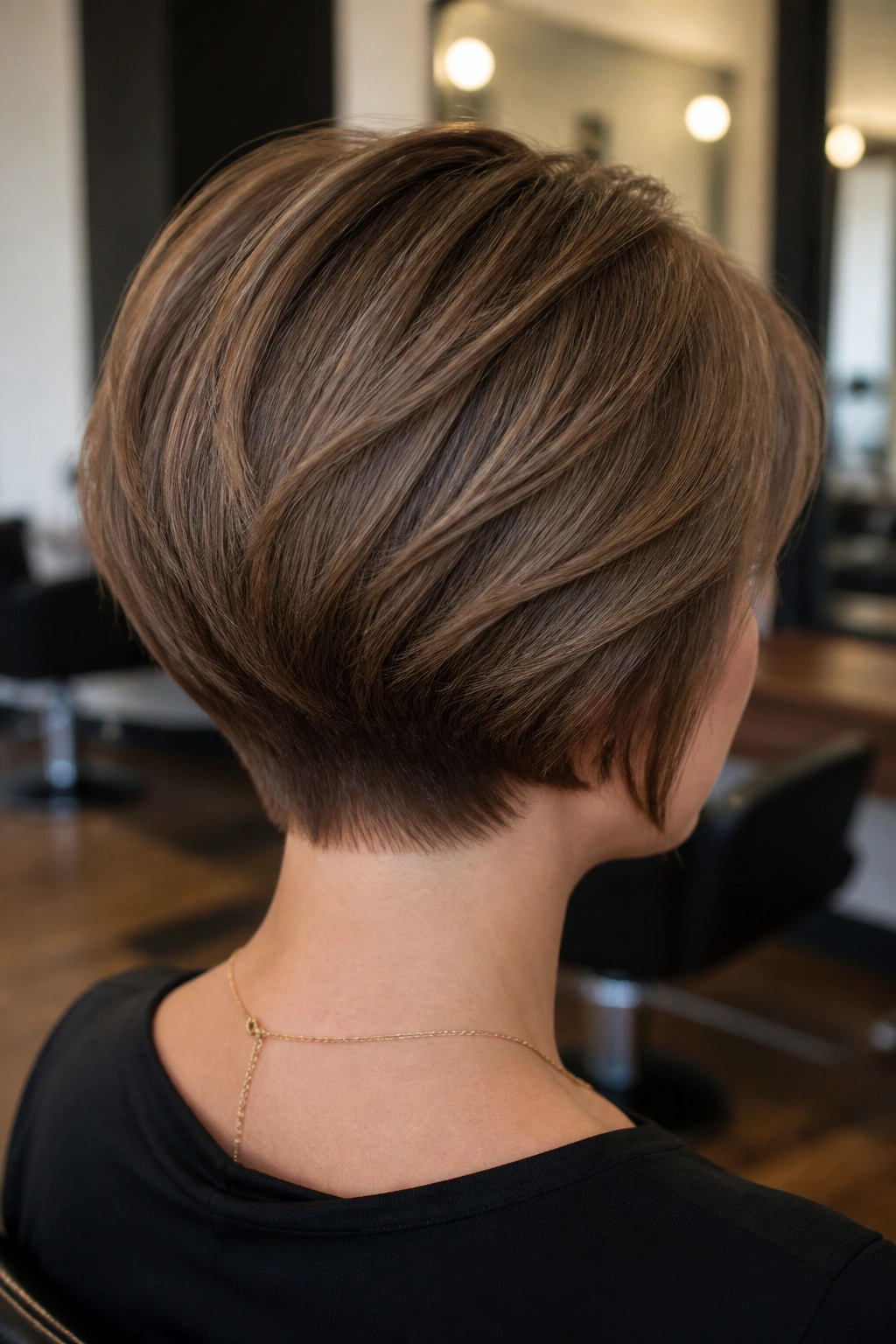
A stacked bob is one of the best answers for flat hair that collapses at the back of the head. The graduation in the nape builds lift into the cut itself, so the back gets shape without needing a ton of styling.
The angle is the whole point. Shorter layers sit underneath, longer ones rest above them, and that stacked structure creates a little dome at the back. If your crown goes flat the second you leave the house, this cut can give you shape you do not have to manufacture every morning.
I prefer a soft stack, not a hard wedge. A hard wedge can feel dated fast. A soft stack keeps the bob modern and still gives the back of the head a fuller look. It is especially useful if your hairline at the nape is thin or if your hair grows in a way that makes the back sit flat.
Plan on trims every 6 to 8 weeks. This one loses its shape if you let it grow out too long, and then the magic disappears.
15. Wolf Cut for Fine, Flat Hair
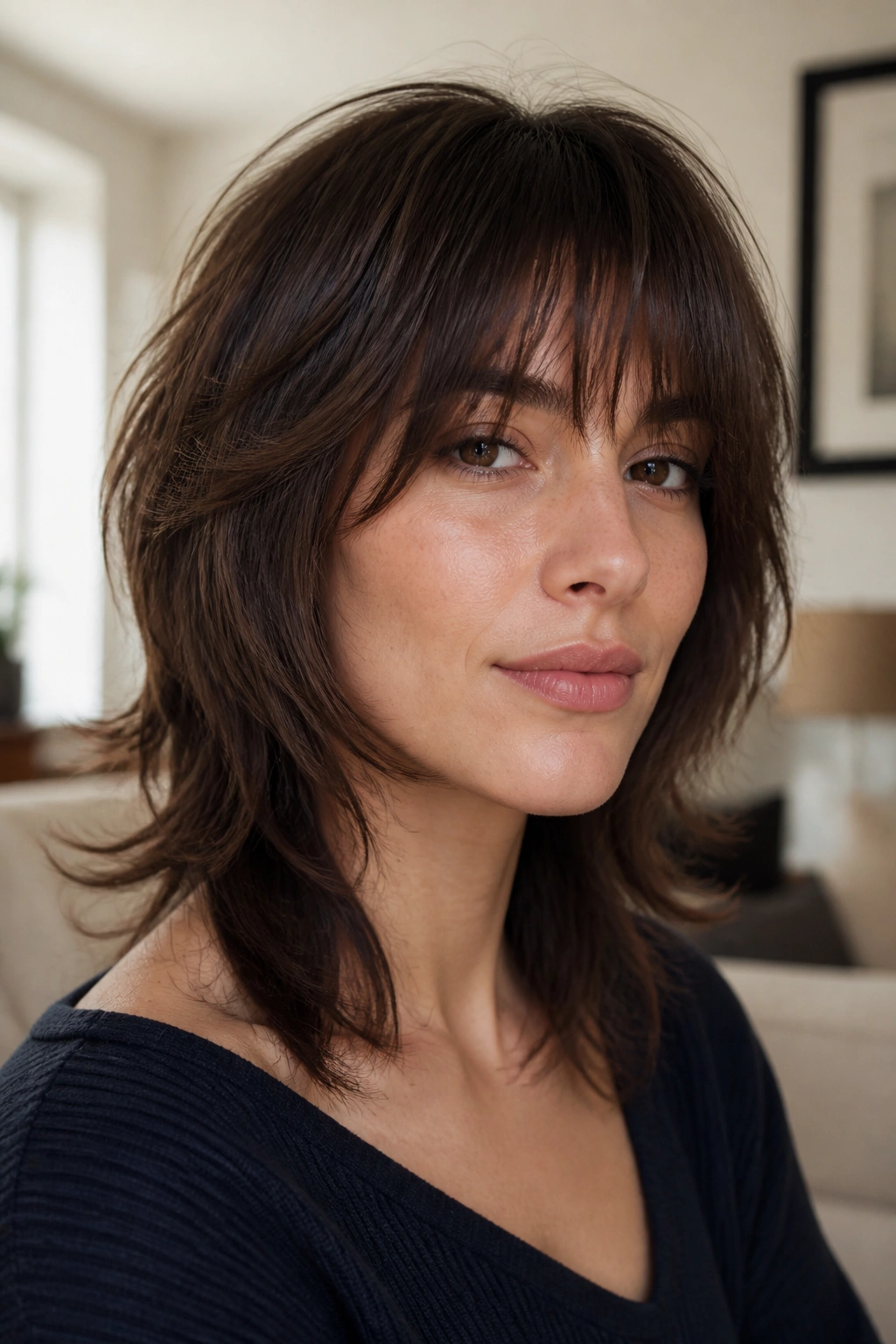
Can a wolf cut work for fine, flat hair? Yes, but only if it is toned down. The usual heavy version can eat up too much density and leave the ends see-through. The softer version keeps the top lifted and the perimeter more solid.
What to Ask for at the Salon
Ask for a blunt or softly blunt bottom line, then keep the crown layers long enough that they do not stand up in skinny little spikes. A good stylist will know how to keep the texture airy without turning the head into a frizz halo.
- Crown layers: not shorter than 2 to 3 inches from the top
- Face-framing layers: start around the cheekbone
- Fringe: optional, but light and piecey works best
- Thinning: minimal, never aggressive
This haircut is for someone who likes a bit of edge but still wants the hair to look like hair, not confetti. If you want a flat hair fix that feels a little cooler than a standard shag, this is the one to test.
16. Deep Side-Part Lob
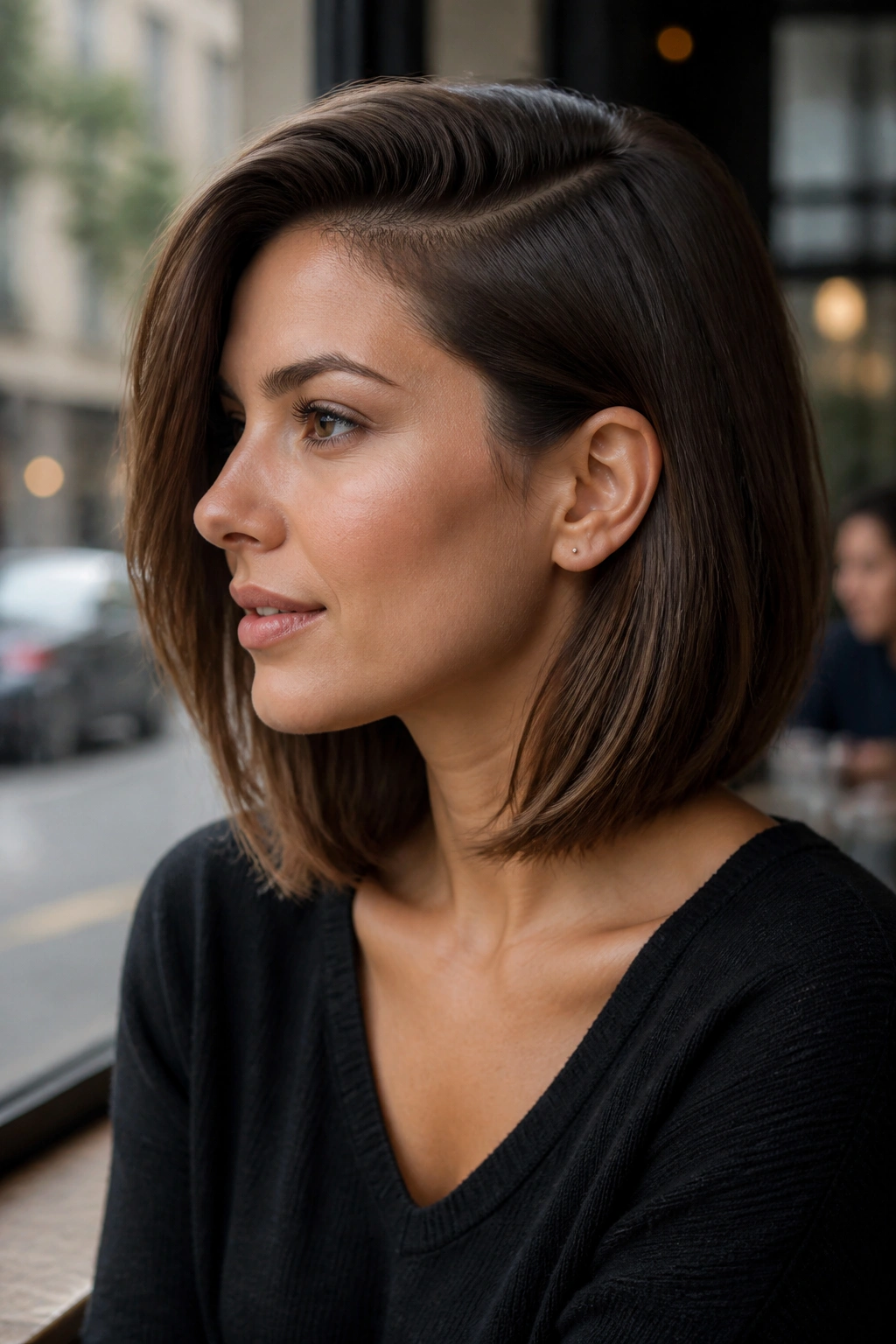
A deep side-part lob sounds simple because it is. That is also why it works. A side part instantly changes how flat hair sits on the head, and the lob length gives the shape enough body to keep that lift.
I have seen this cut rescue second-day hair more times than I can count. The side with more hair naturally lifts at the root, while the other side falls softer and helps the overall shape look fuller. If you already have a lob and it keeps collapsing in the middle, this is the easiest styling fix with the biggest payoff.
Small Details That Matter
- Place the part near the outer arch of the eyebrow
- Keep the length around the collarbone or just above it
- Add a very soft bend through the front pieces
- Finish with dry shampoo at the root on the heavy side
It is a good cut for people who do not want a dramatic change. Some days, that is the right answer.
17. Short Crop With Side-Swept Fringe

A short crop with a side-swept fringe is blunt, neat, and fast. It is also one of the best cuts for flat hair if you are tired of trying to fake volume with a round brush every morning.
The top stays long enough to move, usually around 2 to 3 inches, while the sides and back can be tapered close to the head. That contrast gives the crown some height and keeps the style from looking helmet-like. The side-swept fringe matters because it pulls attention across the face instead of straight down.
This cut likes a tiny bit of paste or cream, nothing heavy. Work it through dry hair with your fingers, then push the fringe to one side and leave the ends slightly separated. That roughness helps. Over-smoothing it ruins the shape.
It is a low-maintenance cut, but not a lazy one. You still have to choose where the fringe sits. Once you do, the whole thing falls into place quickly.
18. Airy U-Cut for Flat Hair
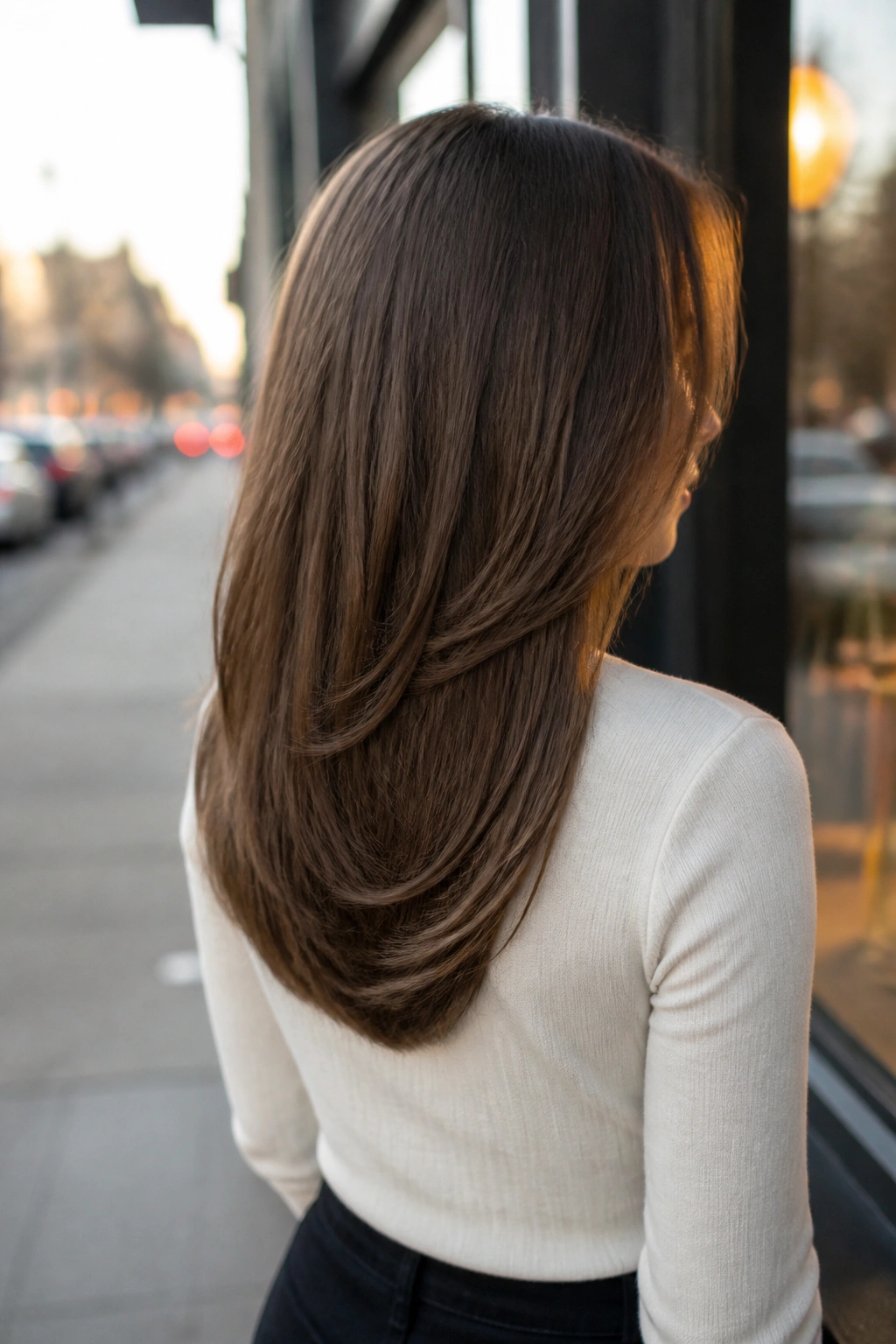
A U-cut is a quiet fix for long, flat hair that keeps losing shape. The curve at the bottom softens the outline, and the length difference between the center back and the sides gives the hair a little swing.
I like this better than a straight-across long cut for one simple reason: it keeps the hair from looking like one heavy curtain. The sides frame the face a touch more, while the center holds enough length to keep the cut feeling full. If your hair is long, fine, and forever stuck to your back, that curve makes a difference.
Ask for the longest point to sit in the center back, then let the sides rise gently toward the front. Keep the ends clean. Skip aggressive texturizing. Long flat hair usually needs structure more than it needs thinning, and this cut respects that.
If you want to keep your length but make your hair look lighter, this is the one I’d put near the top of the list. It does not shout. It just makes flat hair look like it has a little more life in it, which is often enough.
