

Long hair has a funny way of looking polished for about ten minutes and then making up its own mind. One loose strand turns into a face curtain, a ponytail sags, and a braid you liked at home starts leaning left by lunch. That is exactly why easy everyday hairstyles matter so much: they keep the length, but they take the drama out of it.
The best styles for long hair are rarely the most complicated ones. A clean elastic, a few bobby pins, a brush with some grip, and maybe a little dry shampoo at the roots can do more than a drawer full of gadgets. Day-two hair usually cooperates better than freshly washed hair, too. It has a little texture, which gives ponytails, buns, and braids something to hold onto instead of sliding straight out.
I’m a fan of hairstyles that look like you meant to do them, even if they took five minutes and one mirror check. That means low tension at the scalp, smart placement, and enough structure that your hair survives a commute, a windy walk, or the second cup of coffee. Some of these are tidy. Some are softer. A few are a little playful. All of them work in real life, not just in a perfect bathroom selfie.
1. Low Ponytail for Long Hair With a Wrapped Base
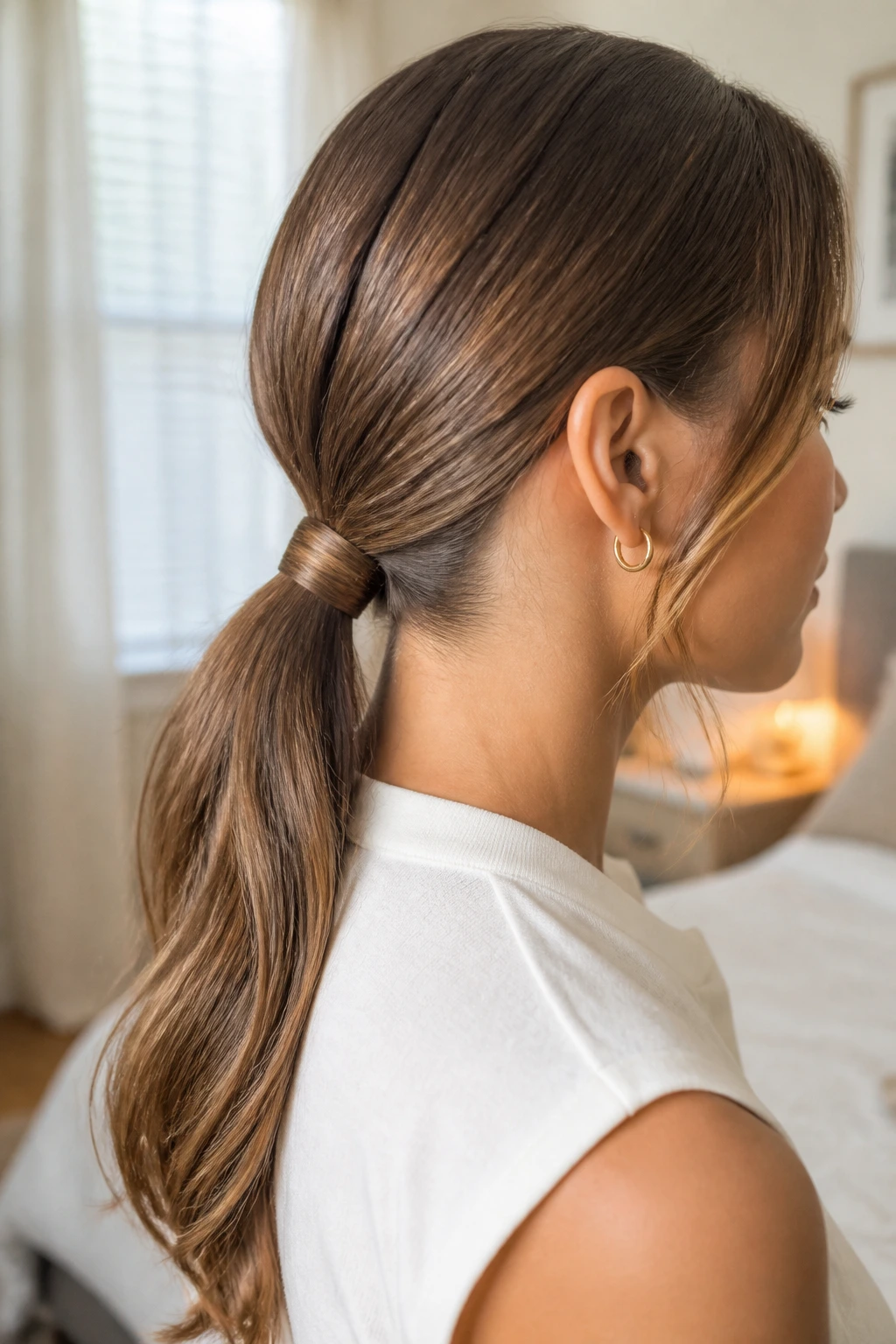
A low ponytail is the hairstyle equivalent of a clean notebook page. It looks calm, organized, and a little more thoughtful than a high ponytail that’s fighting for attention. On long hair, the trick is placement: keep it at the nape, not in the middle of the back of your head, and the whole thing reads smoother.
Why It Works on Long Hair
Long hair has weight, and a low ponytail uses that weight instead of fighting it. The style sits close to the neck, so it feels secure without needing a pile of pins. Wrap a small strand of hair around the elastic and pin it underneath, and the look gets a finished edge fast.
- Brush hair back with a paddle brush for a flat, neat finish.
- Use a snag-free elastic if your hair is thick.
- Wrap a ½-inch strand around the base to hide the band.
- Pull the crown up slightly if you want a softer shape.
My favorite detail: leave the ponytail ends a little smooth, not brushed into puffiness. That tiny bit of polish changes everything.
2. Claw Clip French Twist
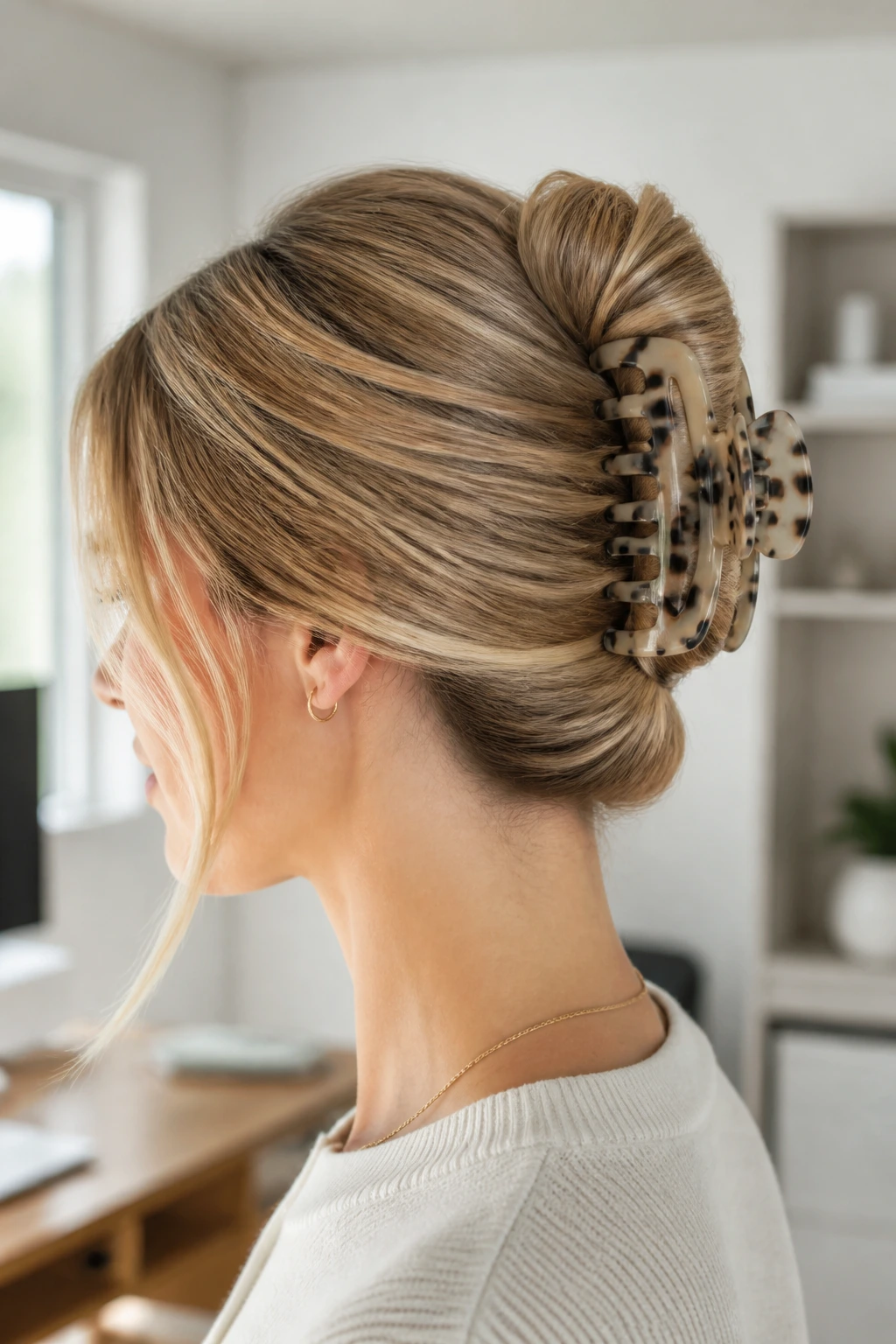
A claw clip French twist is one of those styles that looks like you tried harder than you did. It’s fast, it keeps hair off the neck, and it works especially well when long hair feels too heavy for a bun. The twist should sit vertically, with the ends tucked upward so the clip can grab the fold.
If your hair is very silky, mist the mid-lengths lightly with dry texture spray before you twist. That gives the clip something to bite into. Bigger clips suit fuller hair; smaller clips tend to collapse under weight. And yes, the clip matters. A flimsy one slips, and there’s no point pretending otherwise.
I like this style for errands, desk work, and the awkward half-hour between “I need my hair up” and “I need to look human.” It takes less than a minute once you get the angle right, and the angle is the whole thing.
3. Bubble Ponytail for Long Hair
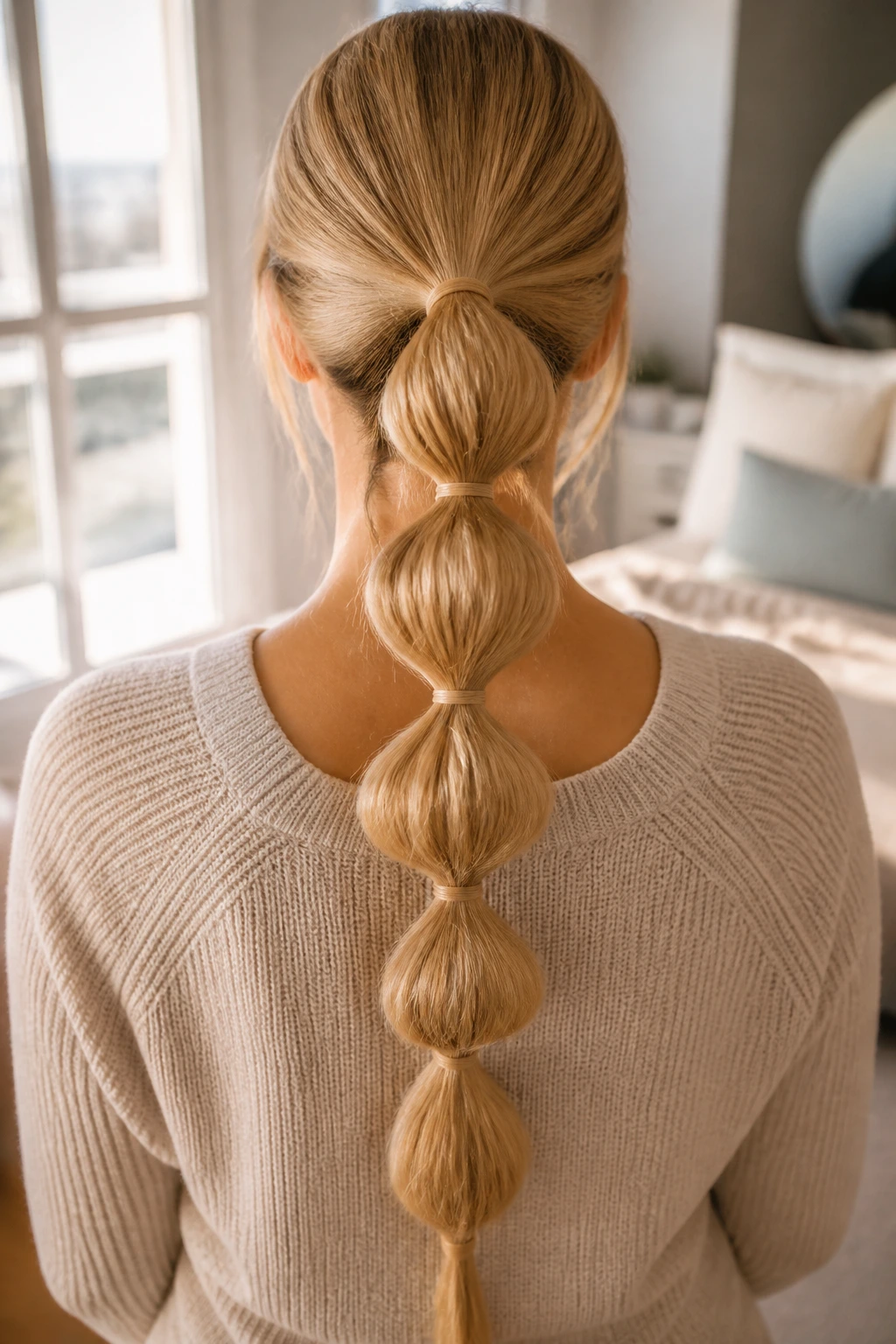
Why do bubble ponytails keep showing up in real life? Because they’re one of the easiest ways to make a simple ponytail look deliberate. Instead of relying on perfect curling or fancy braiding, you use a row of elastics spaced down the length, then puff each section into a rounded shape.
How to Keep the Bubbles Even
The gaps between elastics usually work best at about 2 to 3 inches. Too close together and the bubbles shrink into each other. Too far apart and the ponytail starts looking sparse. After each elastic goes in, tug the hair between the ties outward with your fingertips until it forms a rounded pocket.
This style is happiest on long, medium-thick hair, but fine hair can wear it too if you tease each section a little before puffing. Clear elastics keep the focus on the shape, while colored ones make the style feel more playful. Either way, it’s an easy fix for a plain ponytail that needs more structure.
4. Messy High Bun
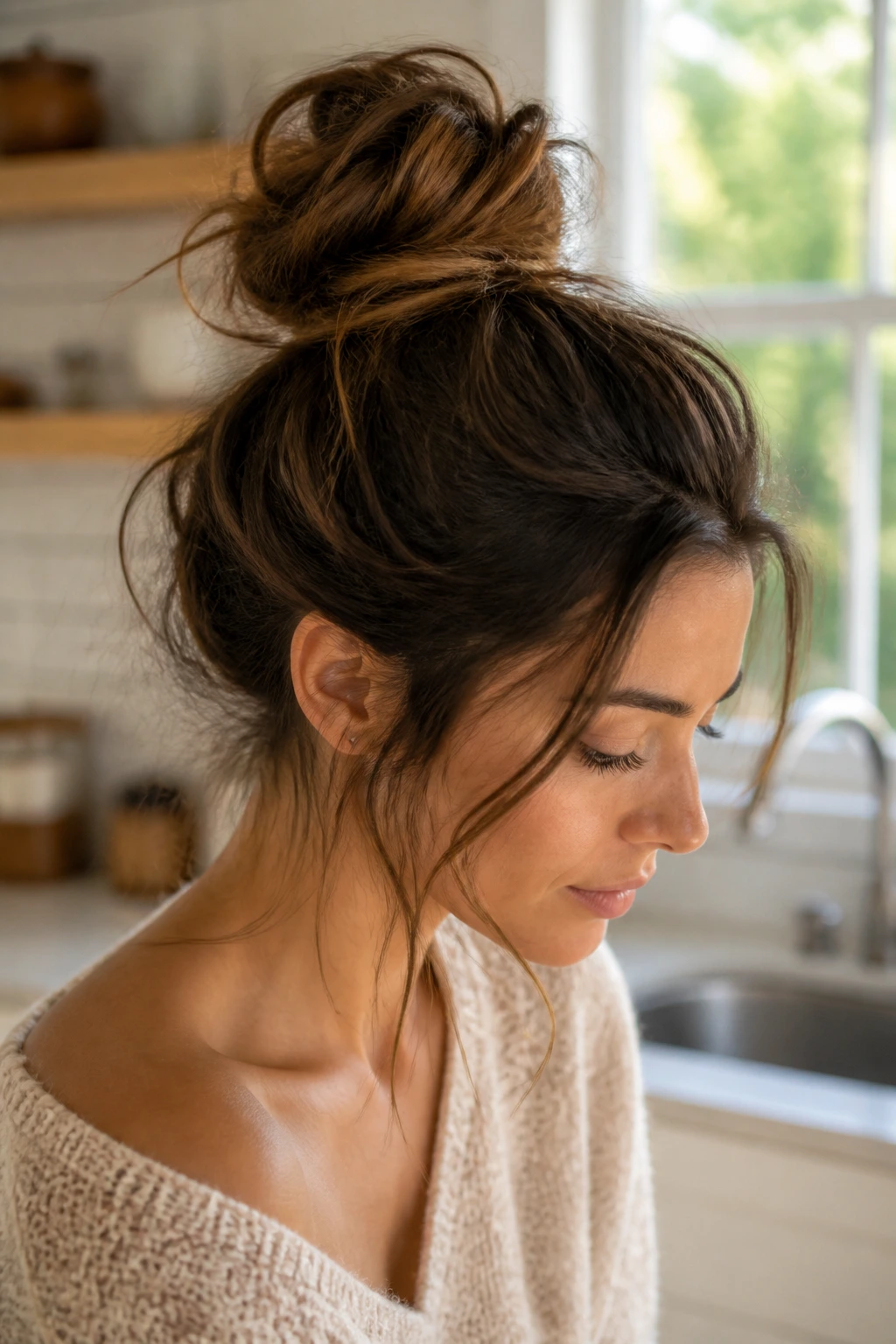
Picture the kind of morning where your hair is everywhere and you do not have the patience for a tidy style. A messy high bun saves that day. It lifts the hair off your shoulders, opens up your face, and still looks relaxed instead of severe.
What Makes It Look Intentional
The secret is where you place the bun. High on the crown gives energy; too low and it starts looking like you ran out of time. Gather the hair with your hands, twist it once or twice, and coil it loosely before pinning. A few escaped pieces around the ears make the whole thing softer.
- Use two pins in an X shape if your hair is thick.
- Keep the bun loose enough to see some texture.
- Tuck the ends under instead of letting them stick out.
- Leave a little height at the crown.
The style is quick, forgiving, and easier to wear with long hair than people expect.
5. Classic Three-Strand Braid
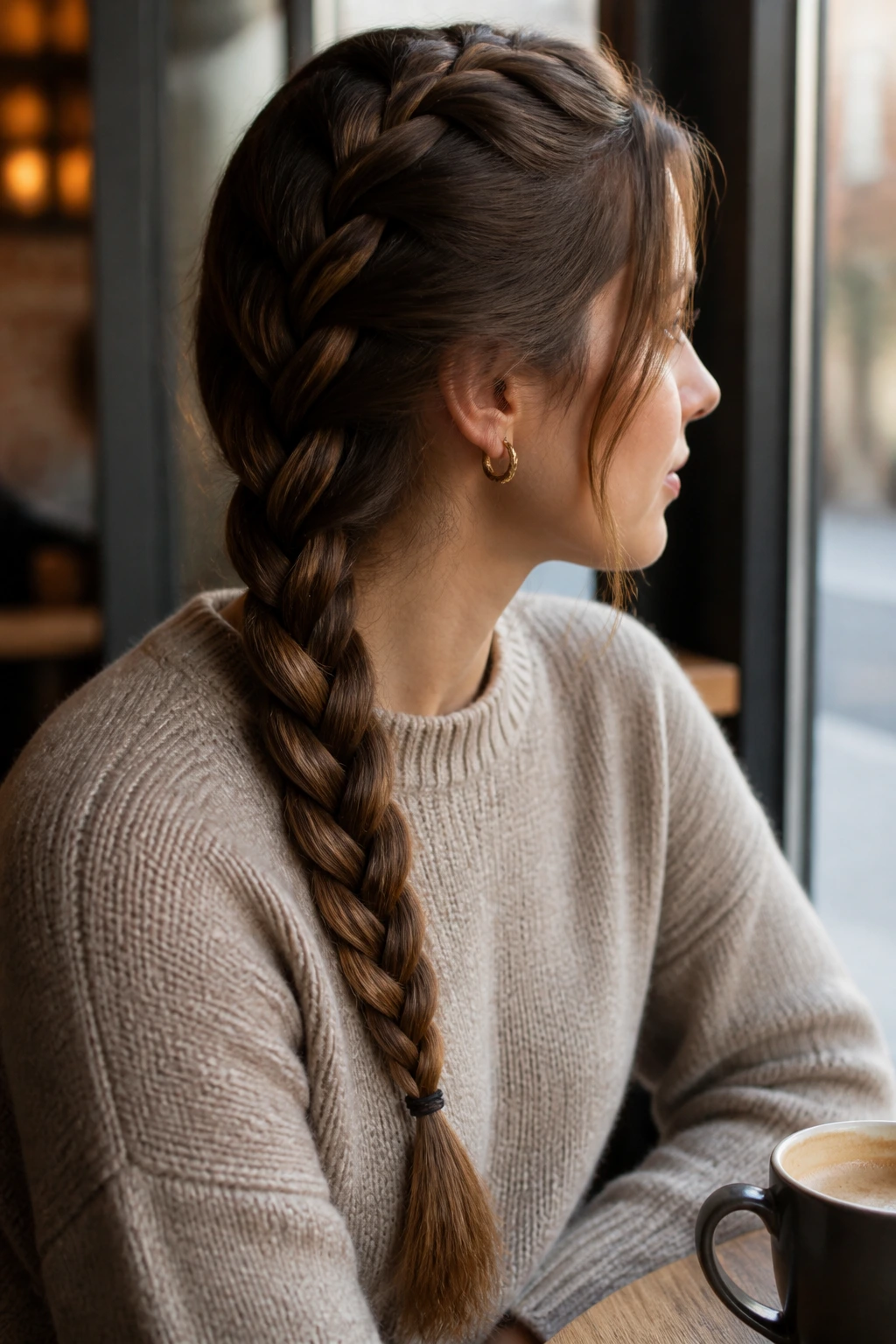
The plain three-strand braid is still here for a reason. It keeps long hair together without asking for a learning curve, and it works on clean hair, oily roots, damp lengths, and everything in between. That matters more than fancy looks do.
I reach for this braid when I want the hair to stay still. It’s especially useful on windy days or when the ends are tangling on a scarf or coat collar. A braid that starts low and stays even all the way down tends to look better than one that starts tight and loosens halfway through.
The nicest part is how practical it is. You can sleep in it, wear it to work, or tuck it under a sweater. If the braid ends up too stiff, loosen it by pulling gently at the outer loops with two fingers. A little softness keeps it from feeling school uniform-ish.
6. Half-Up Half-Down With Crown Lift
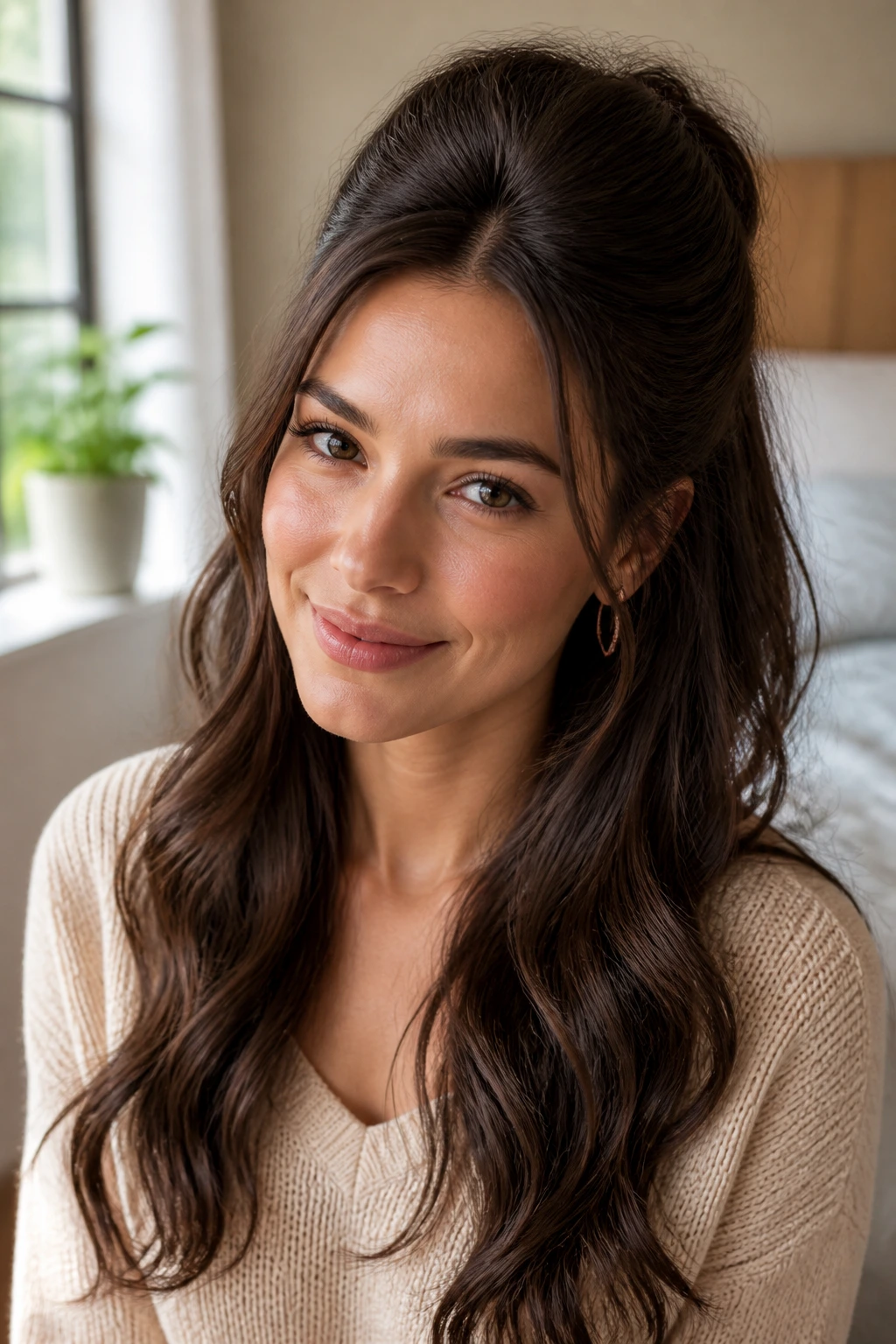
A half-up half-down style gives you the best part of long hair—the length—without letting it fall into your face all day. The crown lift keeps it from flattening out, which is the mistake that makes so many half-up styles look lazy.
What Makes It Different
Compared with a full ponytail, this version keeps the ends visible and gives the whole style more movement. Compared with wearing hair loose, it still clears the temples and cheekbones. That middle ground is why it works so often.
Backcomb a small section at the crown with a fine-tooth comb, then smooth the top layer over it before pinning. Two bobby pins crossed under the gathered section help it hold. Keep the half-up section narrow if you want the hair length to stay the main event. Wider sections can start to feel bulky on very long hair.
7. Sleek High Ponytail for Long Hair
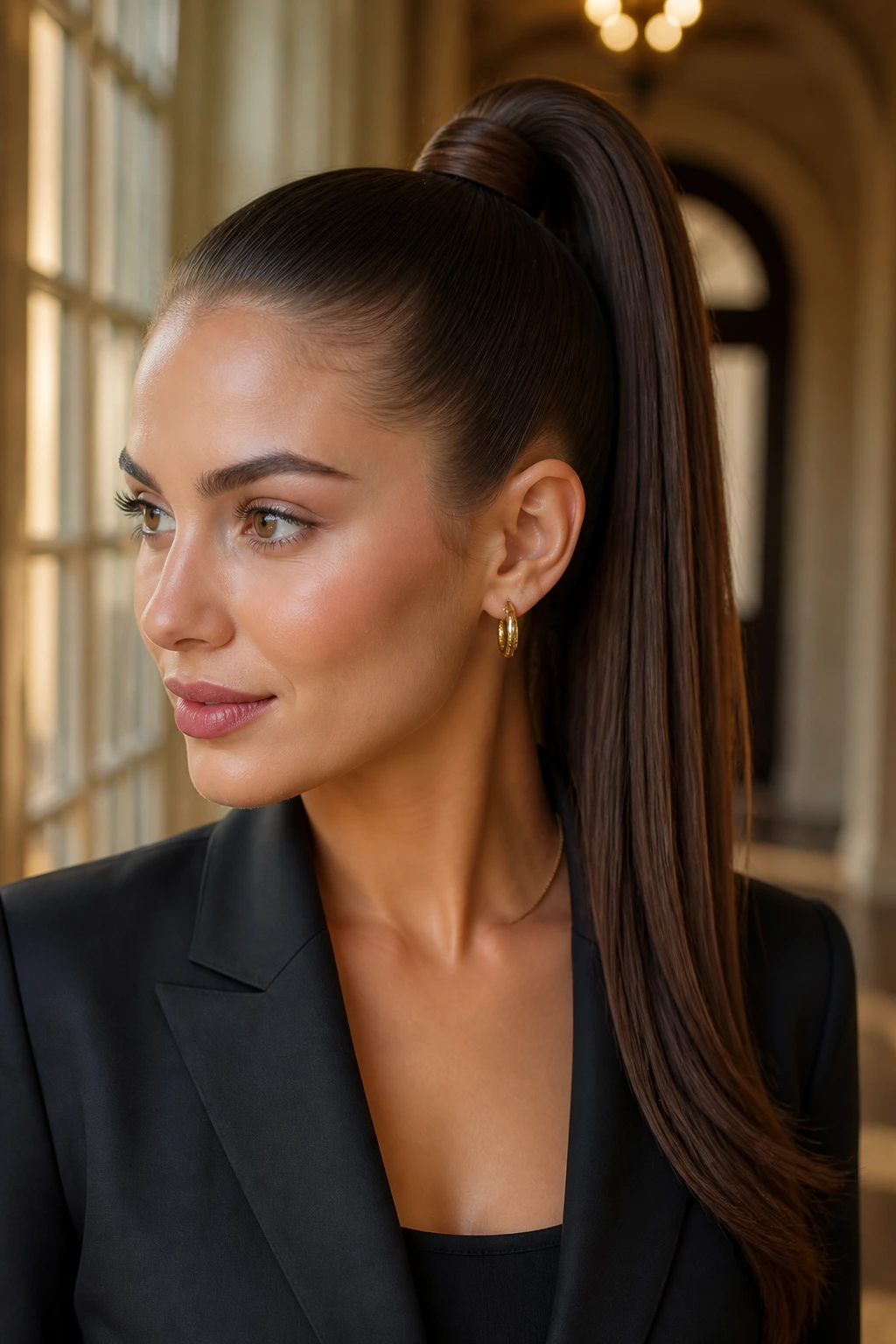
A sleek high ponytail is the sharpest style on this list, and it’s the one I’d pick when the goal is clean lines and zero fuss. It pulls the face upward, shows off the length, and handles thick hair better than many people expect. The high placement gives it lift right away.
How to Get the Smooth Finish
Start by brushing hair up while tipping your head slightly back. That helps keep the crown smooth without weird bumps. A pea-sized amount of smoothing cream at the top of the head controls flyaways, but don’t coat the ends or the ponytail goes limp.
Once the elastic is in, take a small strand from underneath and wrap it around the base. Pin the end in place under the ponytail. It’s a tiny step, but it changes the whole mood of the style. Instead of “thrown up,” it reads as finished.
If your hair is heavy, choose a strong elastic and secure it twice. Weak elastics snap under pressure. They always do.
8. Side Braid Over One Shoulder
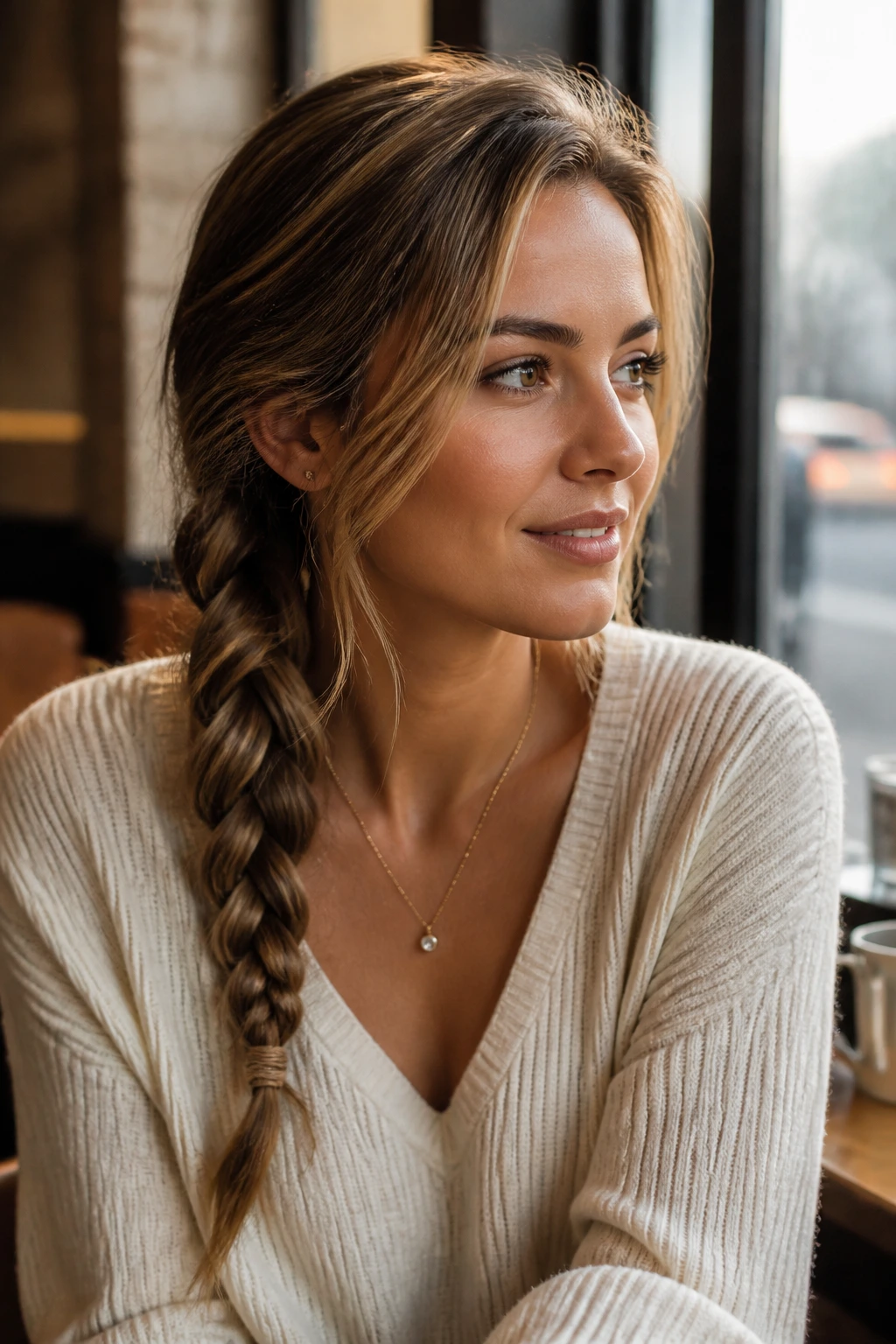
A side braid softens long hair in a way that feels easy and a little romantic without being fussy. Moving the braid to one shoulder makes it practical, too. It stays visible, doesn’t drag down your back, and works nicely under scarves or coat collars.
What I like most is the shape. A side braid frames the face less harshly than a centered braid, and it’s friendly to layers. If your hair has shorter pieces around the front, let them stay loose. They break up the outline and keep the braid from looking too strict.
Start the braid behind one ear and keep the tension even. Too tight at the top and too loose at the bottom gives you that odd lopsided look. The braid should feel secure, not constricted. That’s the sweet spot.
9. French Braid Down the Back
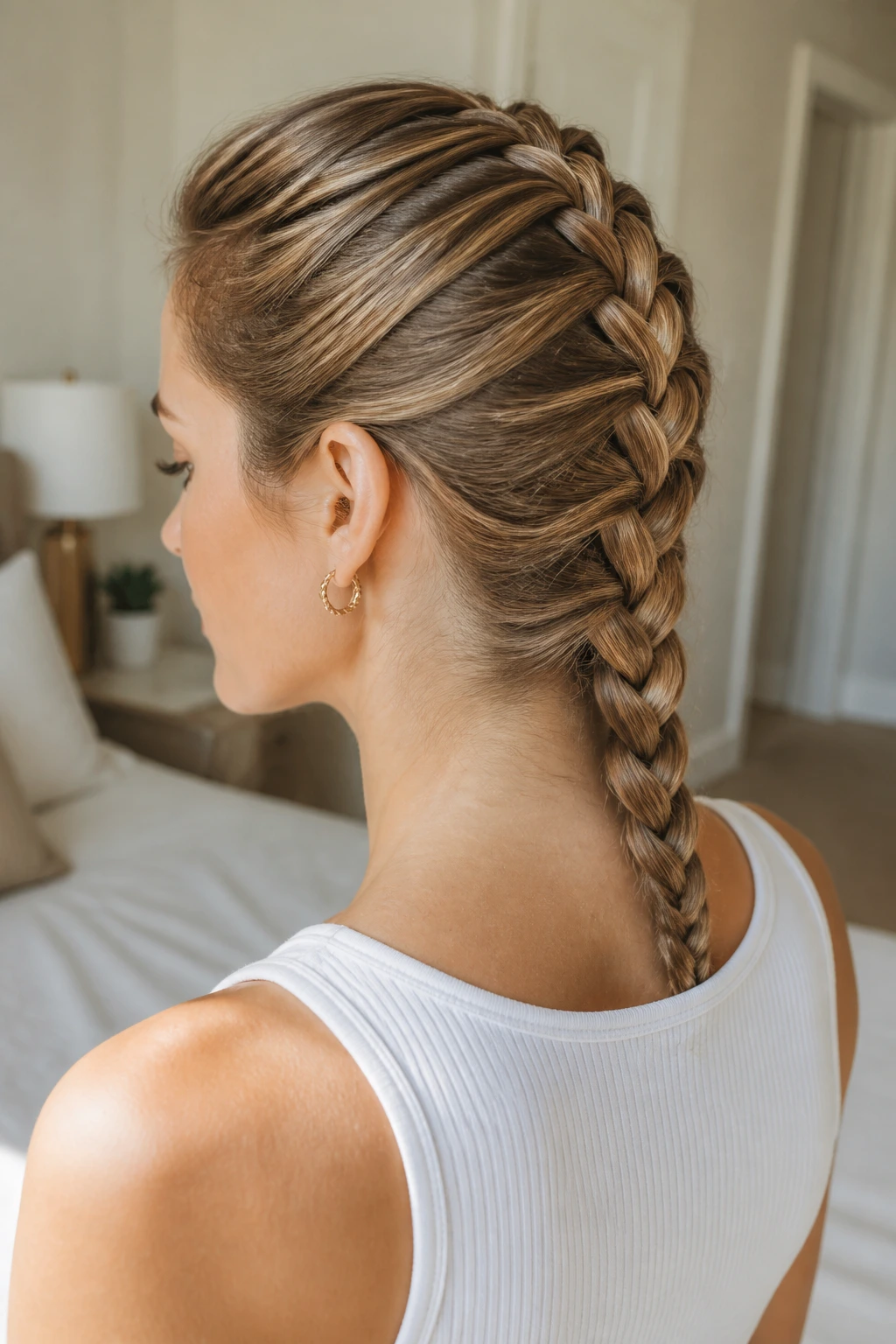
Why does a French braid stay on so many long-hair shortlists? Because it handles the full length without letting the hair spread out and tangle. It’s one of the best options when you need control but don’t want a bun pressing against your scalp all day.
Getting the First Three Sections Right
The braid starts near the front hairline or slightly behind it, then gathers more hair as you move down. That feeding-in motion is what makes the braid sit close to the head. If the first three passes are neat, the rest usually falls into place.
A French braid is not the fastest style at first, but it gets easier with practice. Keep your fingers close to the scalp, and don’t try to make each strand perfect. Small irregularities disappear once the braid is complete. A light mist of hairspray on the finished braid helps it stay put without turning crispy.
This is the braid I’d choose for travel days, long walks, and any situation where hair needs to stay out of the way.
10. Dutch Braid With Extra Grip
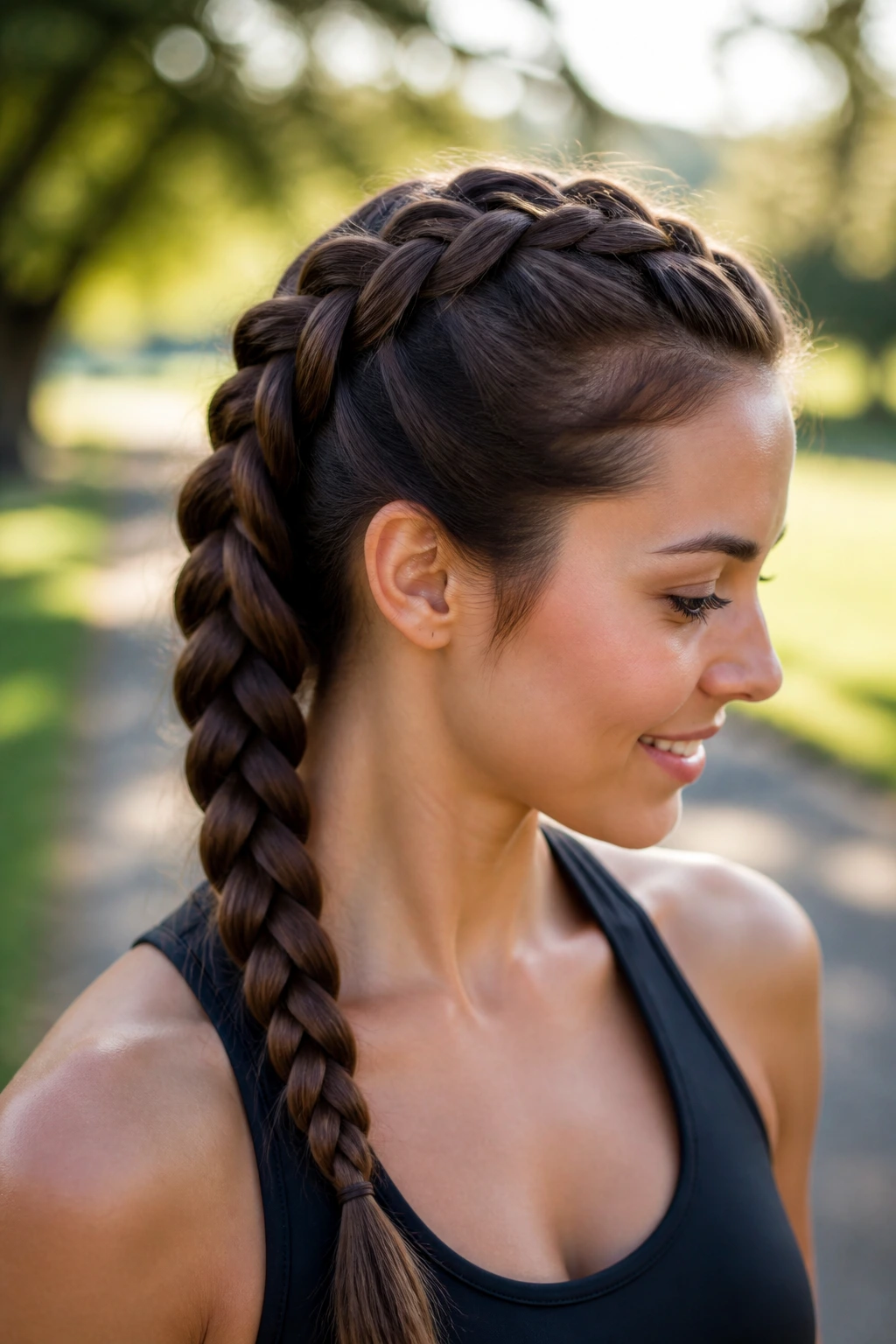
A Dutch braid looks bolder than a French braid because the sections sit on top of the hair instead of sinking into it. That little difference gives it more shape and better grip, which is useful when long hair is slippery or freshly washed.
The braid feels a bit more visible, almost like a stitched line down the scalp. Some people like that. I do, especially when the hair needs to look tidy but not delicate. If you’ve ever watched a French braid start slipping after an hour, the Dutch version can feel like a relief.
- Cross sections under the center strand, not over.
- Keep the braid snug at the crown.
- Use a small elastic at the end, then tuck it into a jacket or collar if needed.
- Pancake the outer loops gently for a fuller look.
The style reads athletic, neat, and practical all at once.
11. Fishtail Braid
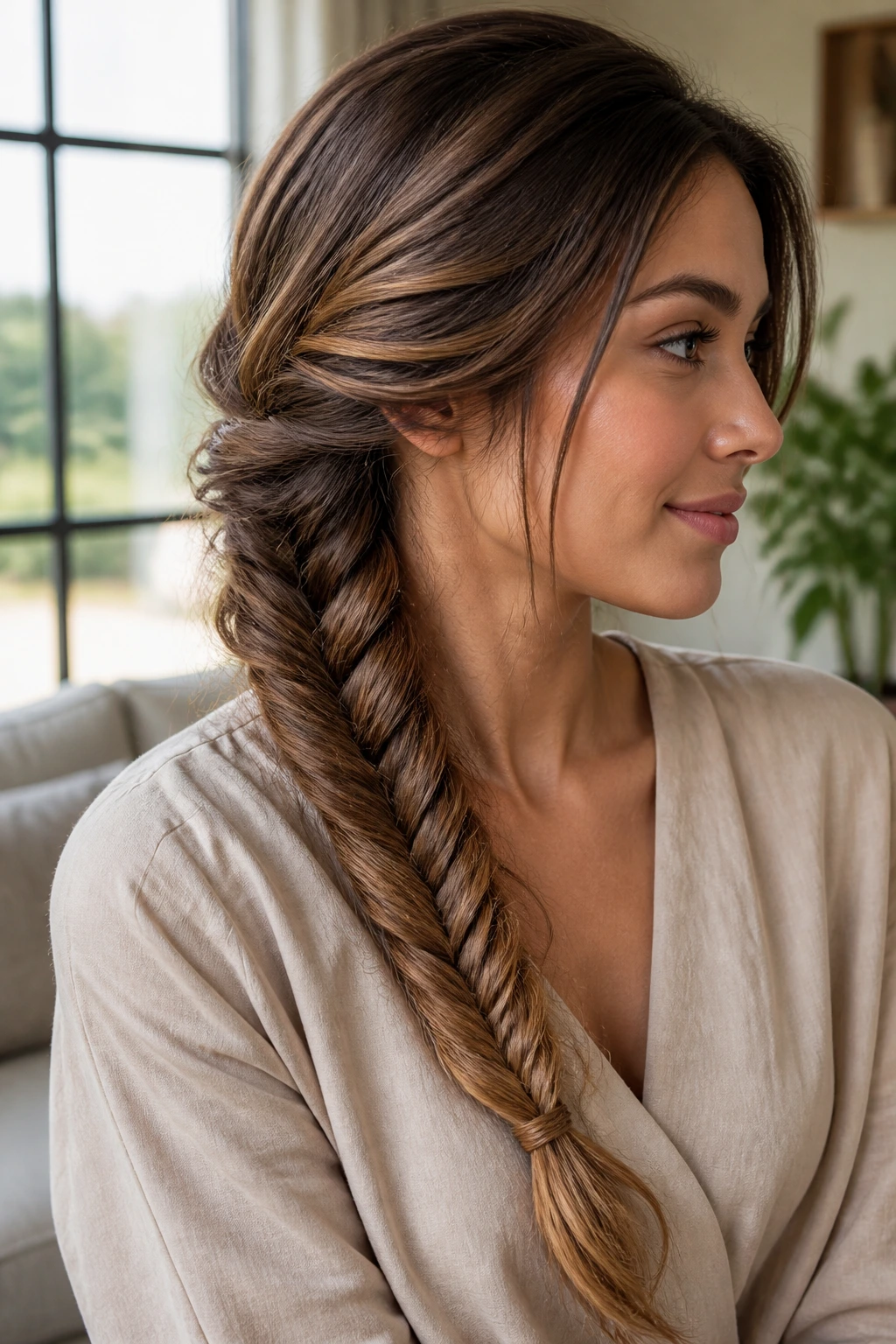
A fishtail braid looks more complicated than it is, which is one reason it keeps showing up in everyday styling. The braid is built from two sections, not three, and you keep taking tiny pieces from the outside and crossing them over. Slow at first. Easy after that.
I like fishtails on long hair because the texture shows off the length without needing layers of volume spray or hot tools. It works best when the hair has a little grit, so second-day hair is often the nicest base. On freshly washed hair, a touch of texture spray helps the sections hold.
Keep your hands small and your movements even. Big, rushed pulls make the braid fray. A neat fishtail can look almost rope-like; a looser one feels softer and more relaxed. Both are good. The sharper version suits a clean shirt. The looser one works with sweaters and denim.
12. Low Chignon at the Nape
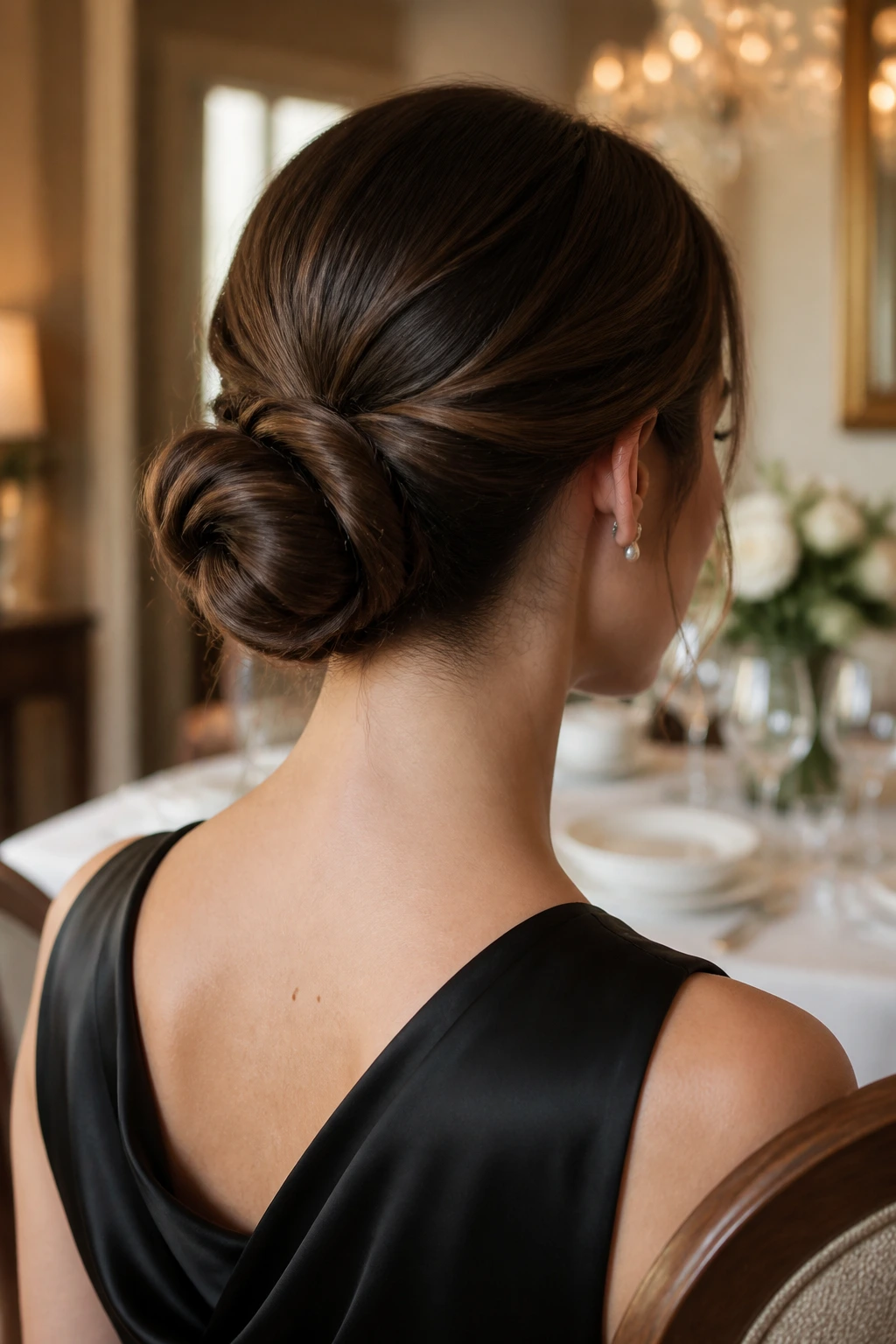
A low chignon gives long hair a calmer finish than a messy bun and a softer finish than a slick knot. It sits at the nape, where it feels polished without being severe. If you want an everyday updo that can move from office to dinner without much fuss, this is a solid pick.
The hair is usually twisted into a coil, then pinned around the base so the shape stays compact. Long hair can make this style look rich and full, but only if you keep the coil close to the head. If it floats too far out, the bun starts looking like a separate object.
I prefer this style when the outfit already has a lot going on. It doesn’t compete. It holds its own quietly, and that is enough. A few soft pieces near the ears can make it feel less formal.
13. Rope Braid Ponytail
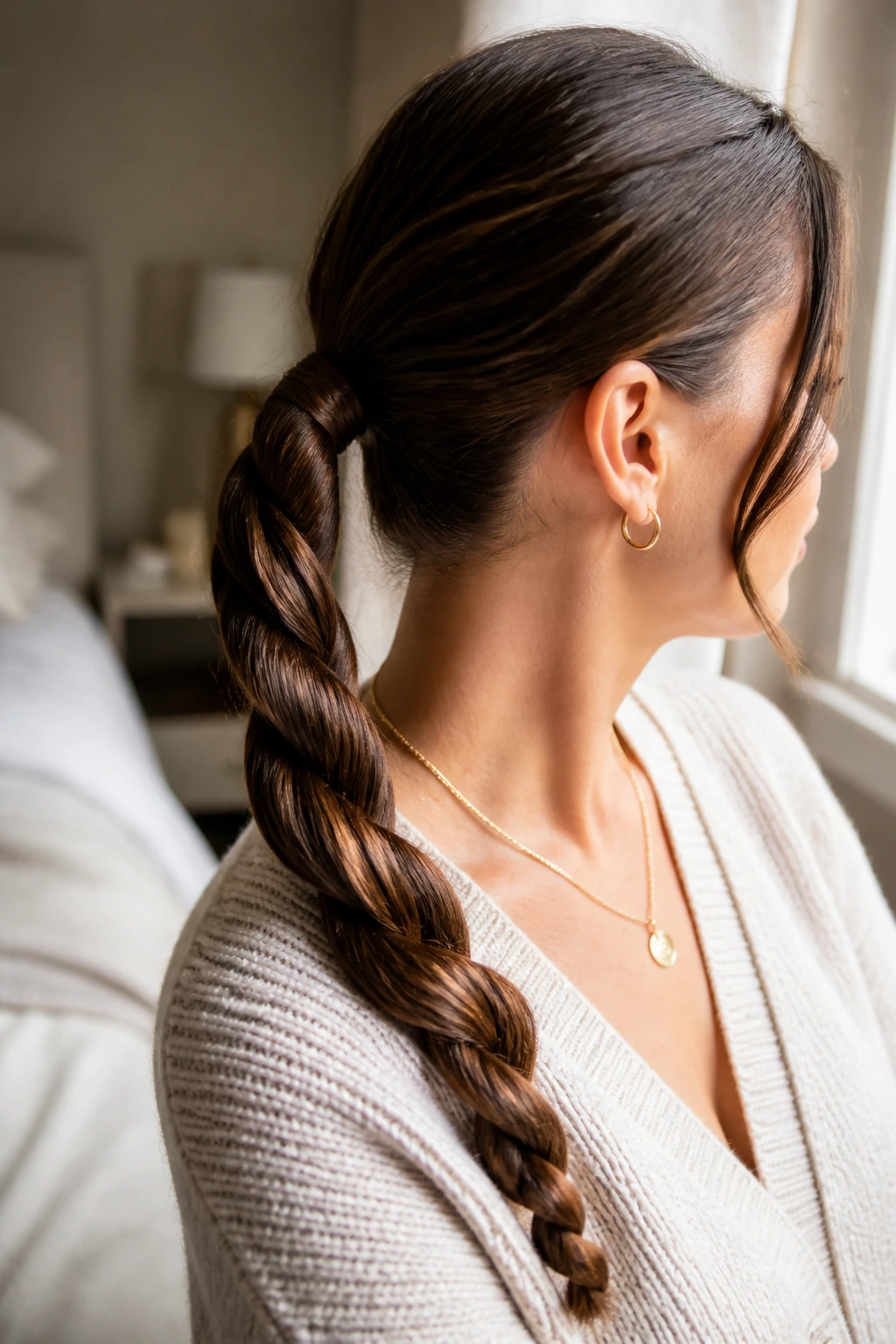
A rope braid ponytail is what I call the “I need something fast, but not boring” option. You divide the hair into two sections, twist each one in the same direction, then wrap them around each other in the opposite direction. That twist gives the ponytail a clean spiral look with barely any effort.
Why It Holds Up
The spiral structure grips better than loose straight hair, so the ponytail stays neat longer. It also looks good on long hair because the length shows off the twist. You don’t lose the shape halfway down the back.
A few practical details make it easier:
- Start with a mid- or low ponytail, not a high one.
- Twist each section tightly before crossing them.
- Secure the end with a small elastic.
- Pull a few strands loose around the face if you want a softer finish.
This is a great style for hair that tends to frizz at the ends. The twist keeps everything together.
14. Half-Up Top Knot
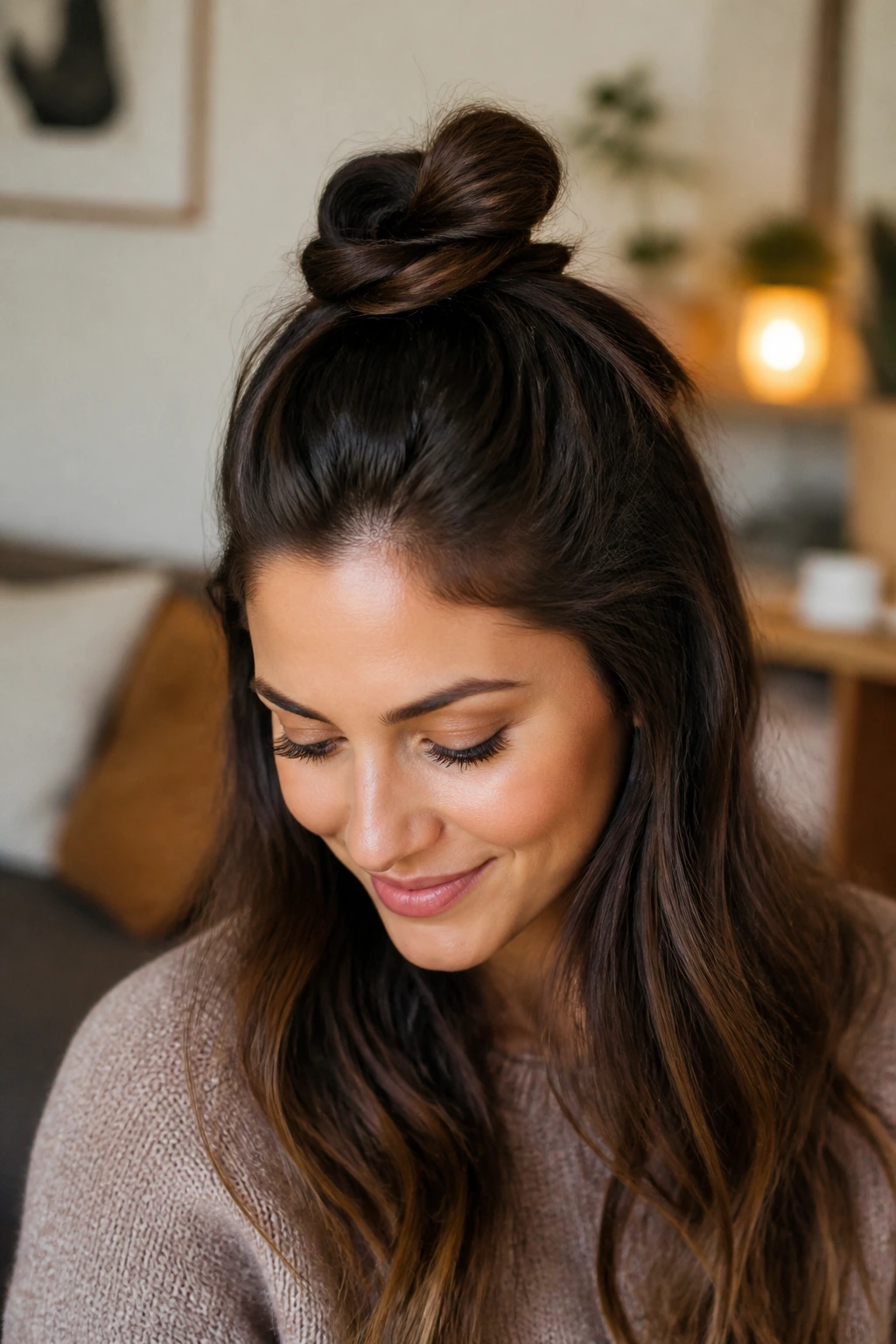
A half-up top knot gives long hair lift without hiding the length. That’s the appeal. You gather only the top section, twist it into a tiny bun, and leave the rest hanging. It’s one of the easiest ways to keep hair off the face while still wearing it down.
The bun looks best when it sits high enough to show off the crown but not so high that it turns into a tiny satellite dish. A small elastic or a pair of pins can secure it. If the knot is thick, split the section in two before wrapping it; that keeps the shape flatter and easier to pin.
This style is especially handy for hair that feels heavy around the temples. It gives you a break from the weight without losing the movement of the rest of the hair. And yes, it can survive a full workday if the pins are decent.
15. Double Braids
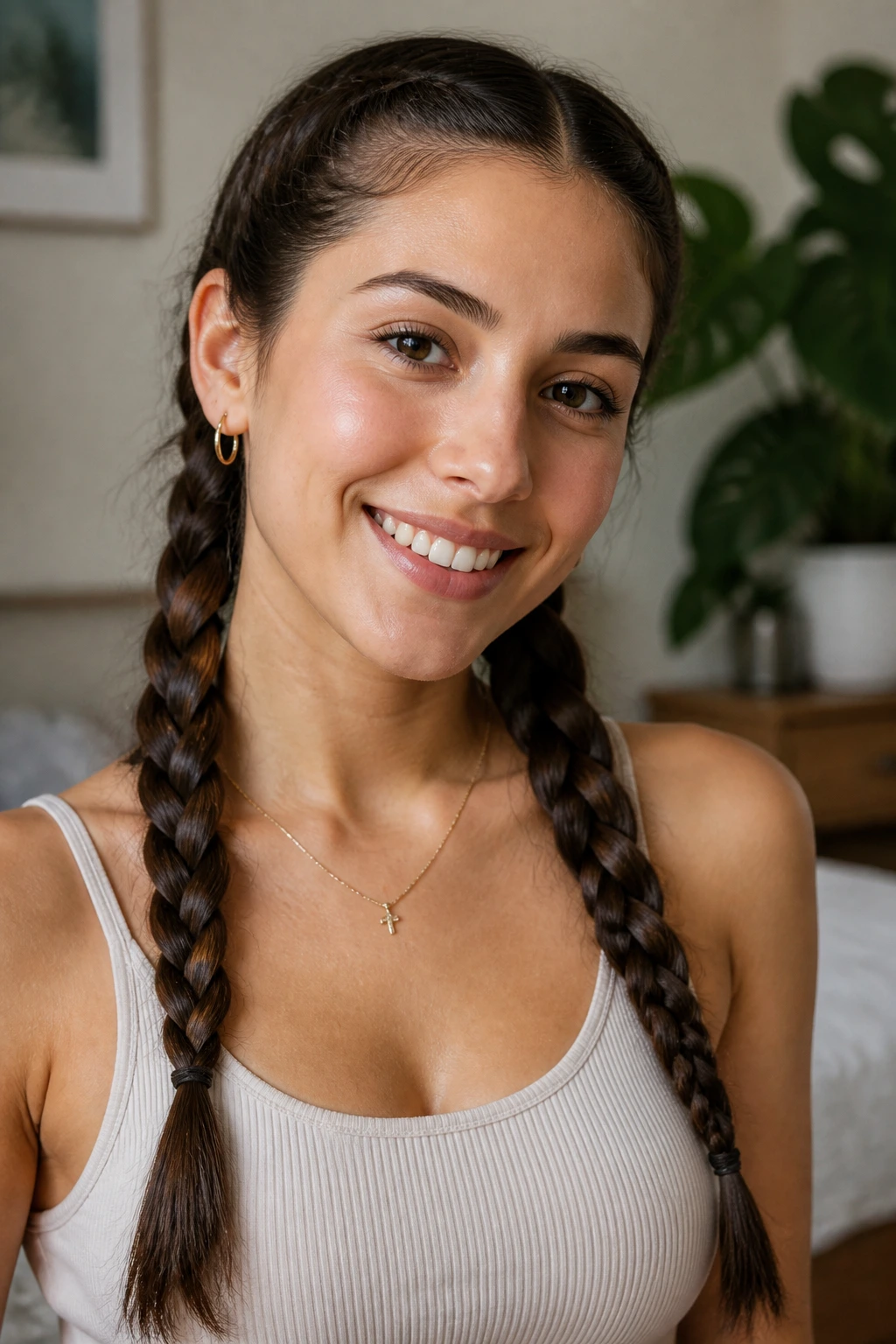
Two braids are practical in a way that never really goes out of style. They spread the weight of long hair across both sides of the head, which makes them comfortable for active days and long errands. The look is neat, but not stiff.
A center part keeps the style balanced, though a side part changes the mood fast. Braiding from just behind the ears gives a cleaner finish, while starting higher near the temples makes the style feel more playful. Either version works. The bigger question is whether you want a tighter, more secure braid or a looser one that sits flatter.
If your hair tends to get fuzzy at the ends, add a tiny dab of cream to the last few inches before braiding. That keeps the tails from puffing up. It’s a small fix, and it matters.
16. Space Buns
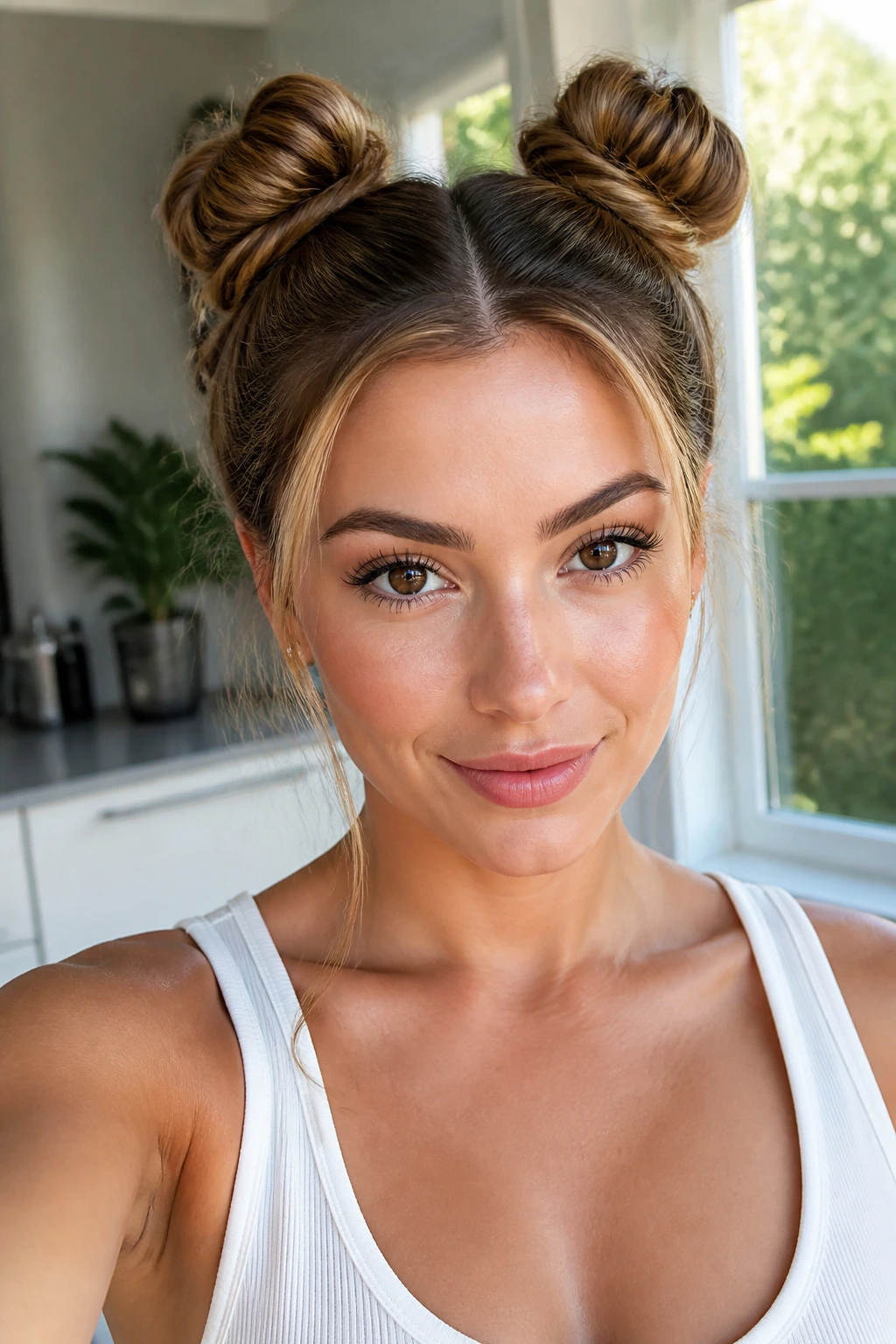
Space buns are the style people think of as playful, but they’re also practical on long hair because they keep the ends contained. Two buns on the top half of the head lift everything up and out of the way. That matters on humid days, during workouts, or when the back of your neck is already warm.
Where to Place Them
Too high and the buns can feel costume-like. Too low and they lose the point. I like them just above the crown, with a center part running between them. Keep the buns compact if your hair is thick, or leave them softer if you want a more casual look.
- Twist each section before wrapping.
- Use pins instead of relying on a single elastic.
- Leave the ends hidden for a cleaner shape.
- Pull a few face-framing pieces loose if the style feels too strict.
The fun part is how much personality they carry without needing much time.
17. Braided Bun
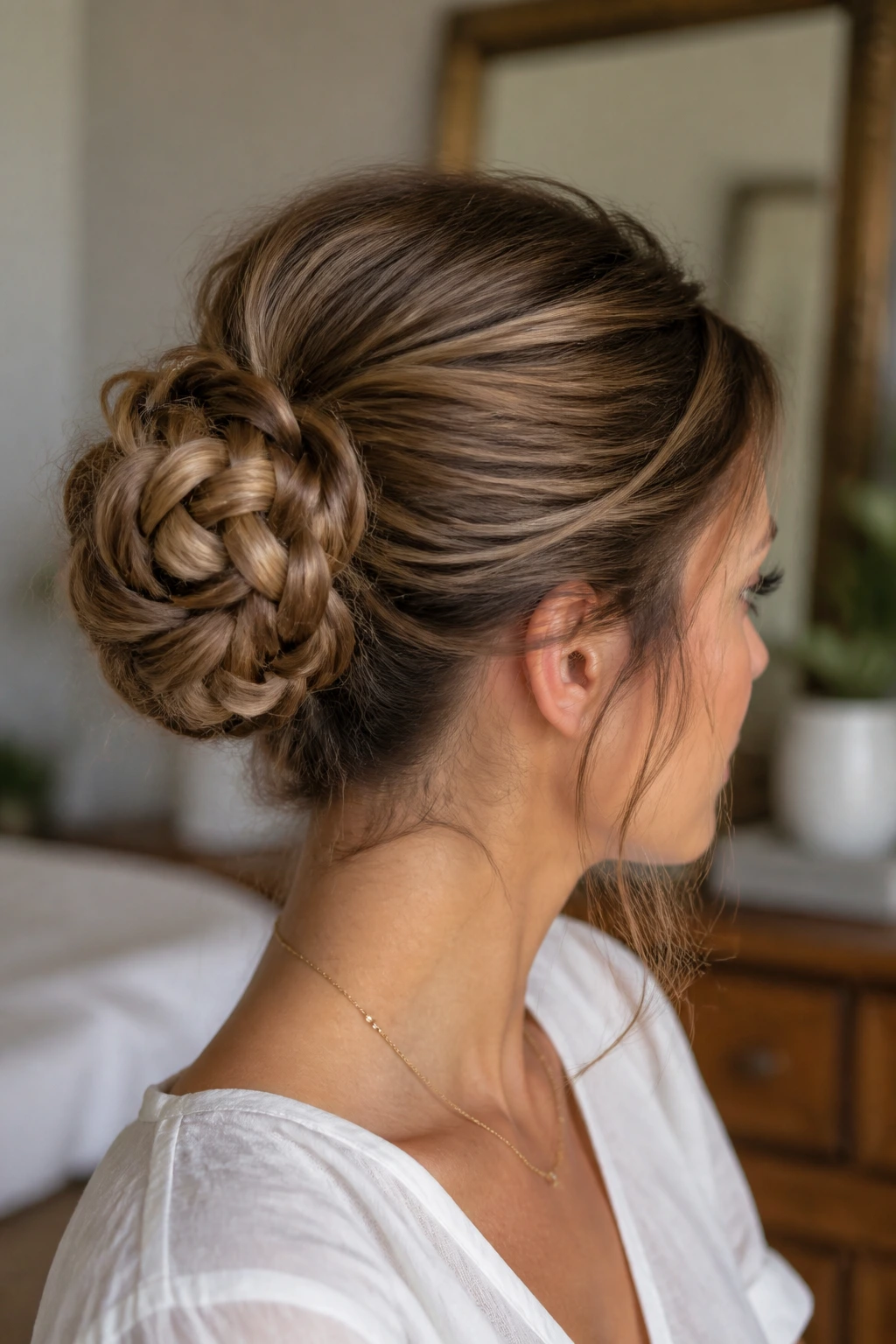
A braided bun gives long hair a little extra texture without adding much work. You braid the ponytail first, then coil the braid into a bun at the back of the head. That extra step gives the style more hold than a plain twist, which is handy when your hair is thick or slippery.
I like this one for days when a regular bun starts slipping before you’ve even left the house. The braid gives the bun a spine. It also makes the bun look fuller, which helps when long hair collapses into a smaller shape than you want.
Keep the braid slightly loose if you want the bun to look softer. Tight braids make the bun look compact and tidy. Both can work. The choice depends on whether you want neat or relaxed.
18. Scarf-Tied Ponytail
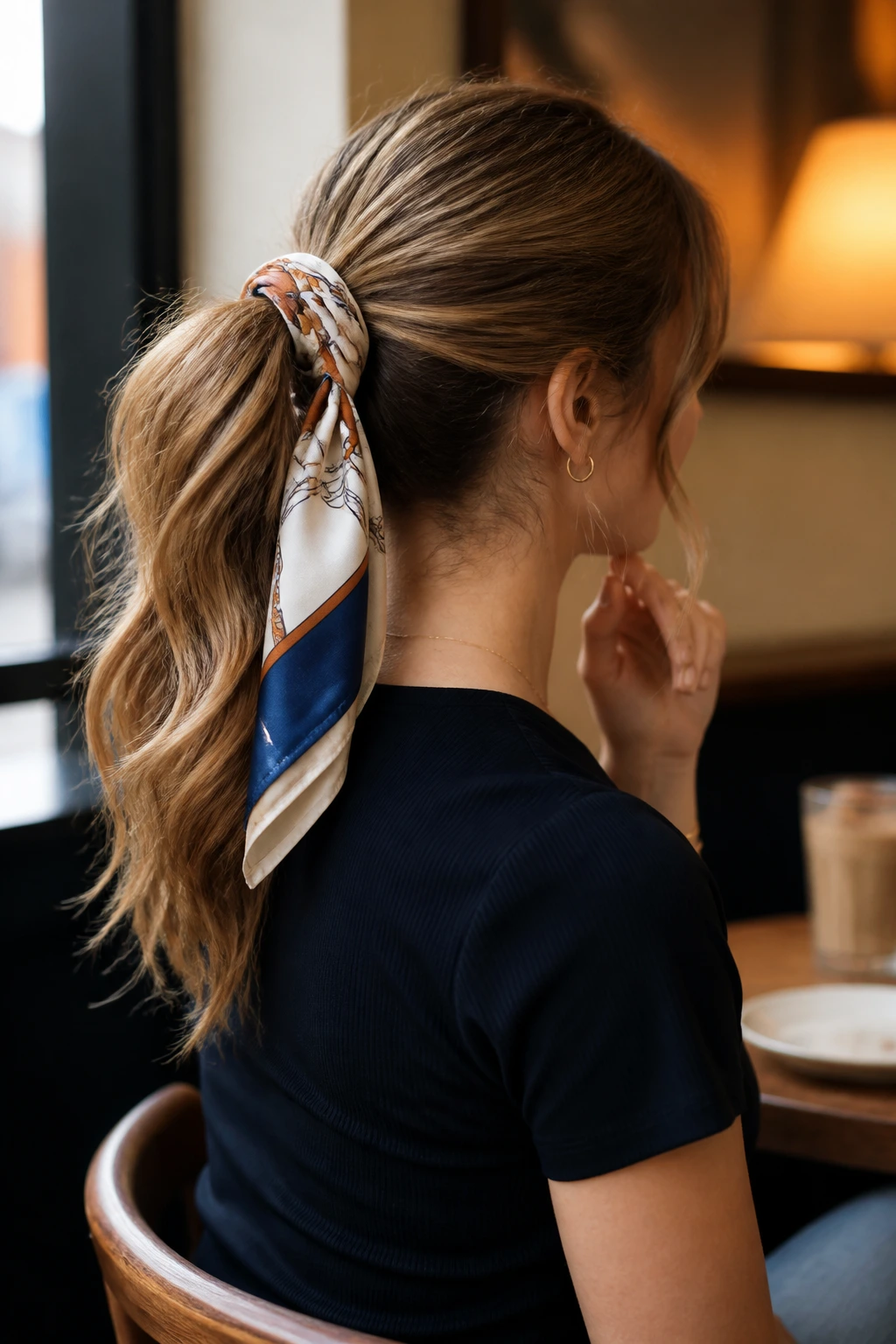
A scarf-tied ponytail fixes a plain ponytail fast. The scarf hides the elastic, adds a little color, and makes the whole style feel more finished without adding real time. If you’ve got long hair and a drawer full of tired ponytail holders, this is a useful upgrade.
Silk scarves slide more and cotton ones grip more, so the feel changes depending on the fabric. A thin scarf works well around a low ponytail. A slightly wider one can anchor a high ponytail if you knot it securely. Tie it once, then check the tail length so the ends don’t feel lopsided.
I like this style when the outfit is simple and the hair needs a small focal point. It’s one of those easy everyday hairstyles for long hair that looks like an accessory choice, even though it’s also a styling shortcut.
19. Waterfall Braid Across the Front
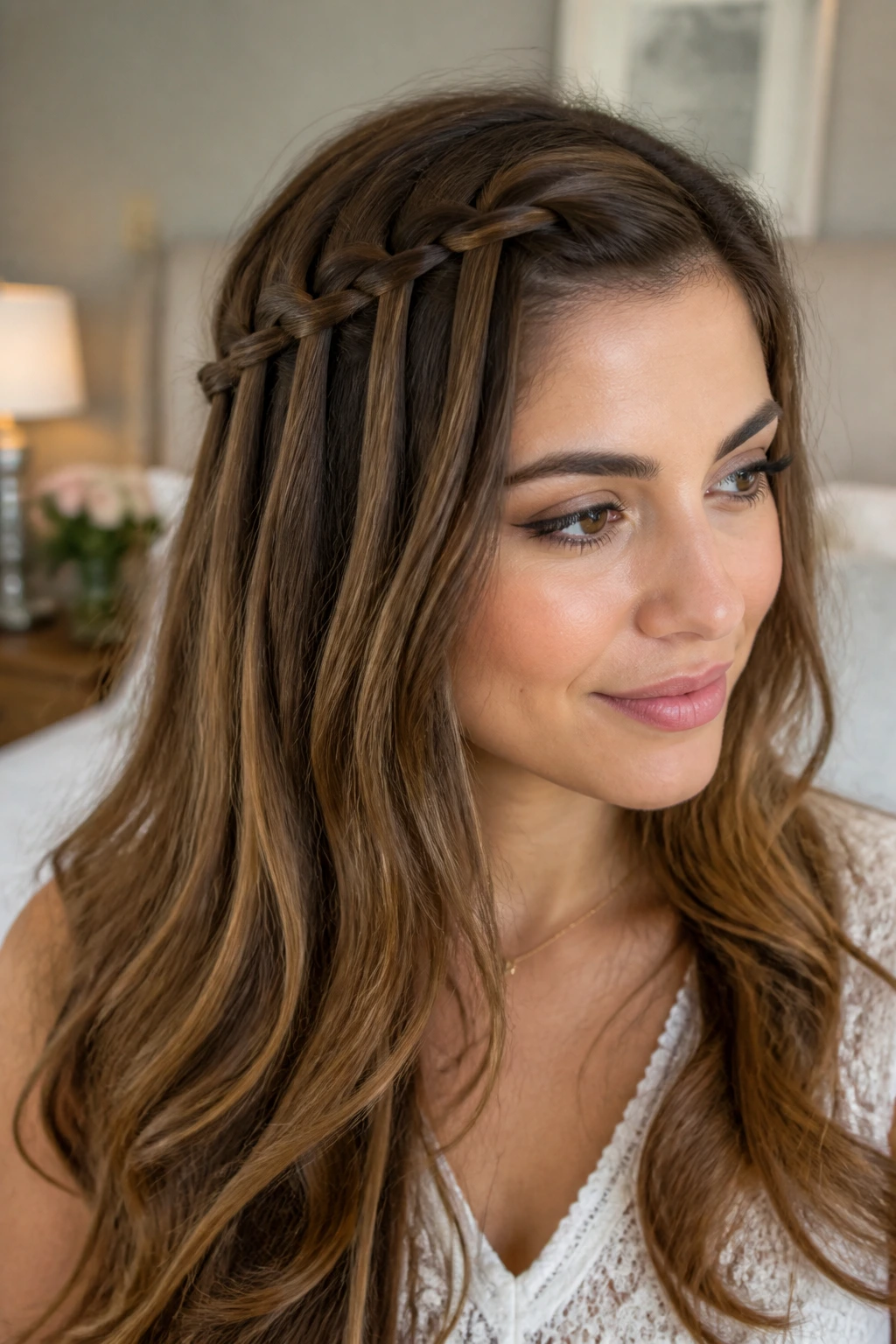
A waterfall braid is what you reach for when you want the hair mostly down but still want some shape around the face. The braid lets sections drop through the weave, which creates a soft, open pattern across the front. It’s pretty, yes, but also useful because it keeps the front layers from falling everywhere.
Where to Place It
Start near one temple and braid across the crown or just above the ear. That placement keeps the detail visible without taking over the whole head. On long hair, the braid can sit above loose waves, straight lengths, or even a low ponytail.
It takes more patience than a plain braid, so I wouldn’t choose it on a rushed morning. But if you’ve got ten extra minutes and want something that feels different without being fussy, this is a good compromise. A single clear bobby pin tucked under the weave usually does the job.
20. Heatless Loose Waves for Long Hair
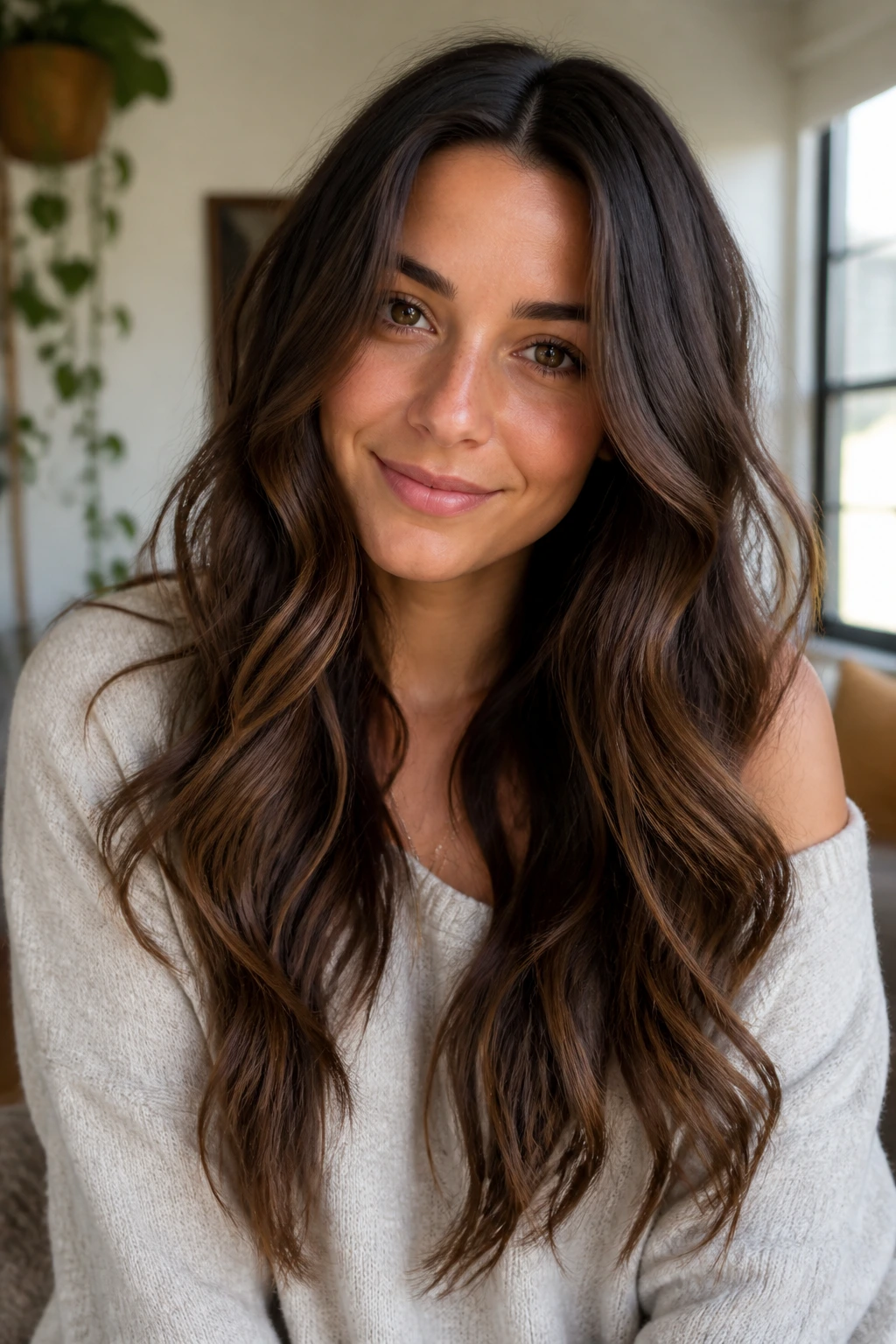
Loose waves count as a hairstyle, and on long hair they can be the easiest one of all. The trick is not forcing the shape. You braid, twist, or wrap the hair while it’s slightly damp, let it dry, then brush it out until the pattern softens. The result should move.
A center part keeps the waves balanced, while a side part gives more lift at the roots. If your hair is very straight, a light mousse through the mids before setting the style helps the bend last longer. If your hair already has wave, a quick twist or two may be enough.
This is the style I’d choose for a day when you want your hair down but not flat. It works well with long layers, and it looks especially nice when the ends keep some shape. Don’t overbrush. That’s where people lose the texture.
21. Pin-Back Front Sections
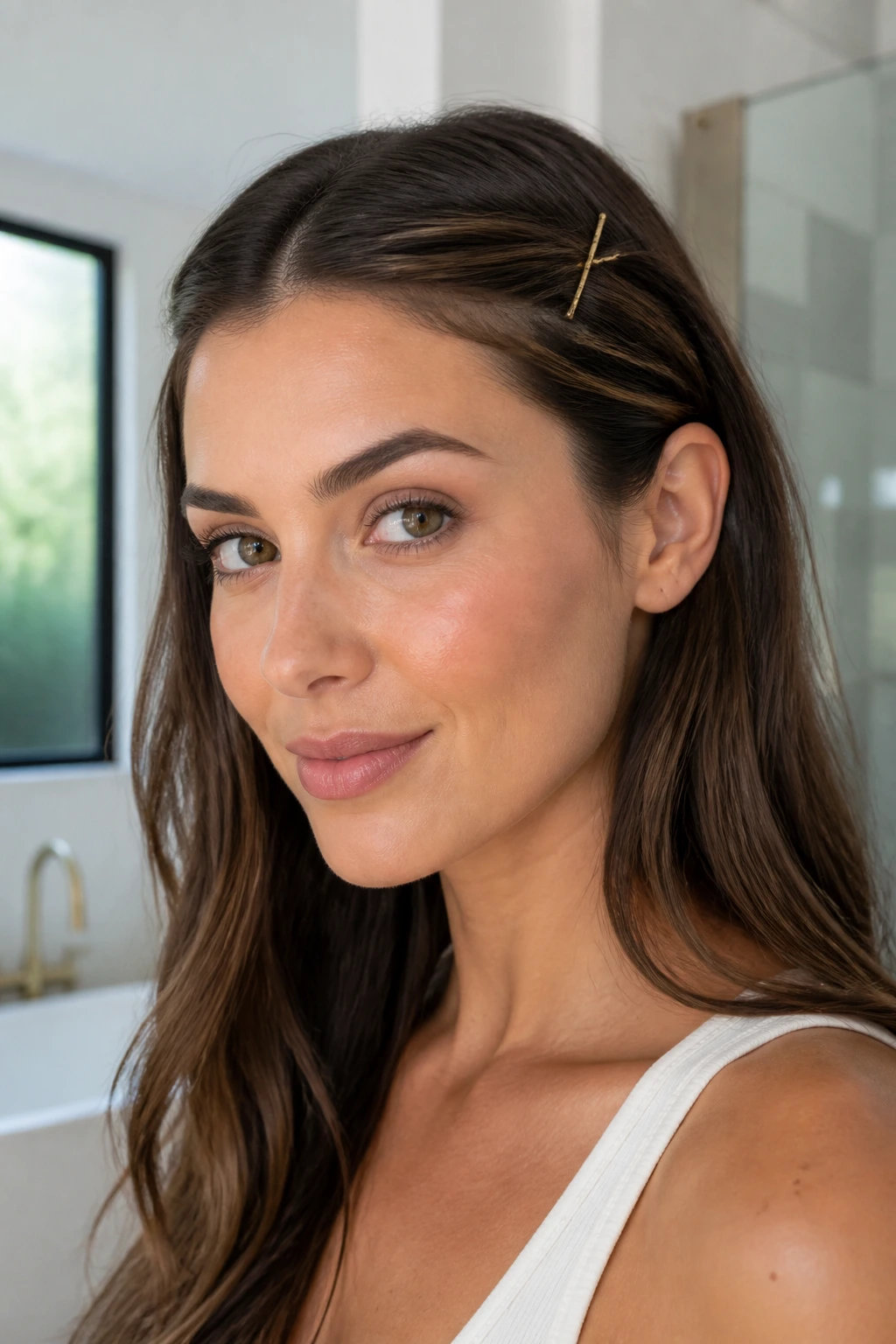
Pinning back the front sections is the fastest way to make long hair feel controlled without changing the length at all. You take the pieces near the temples, sweep them back, and pin them behind the ears or just above them. Done right, it looks clean and airy.
Best for Fine or Heavy Hair
Fine hair benefits because the style creates lift where the roots usually sit flat. Heavy hair benefits because it removes bulk from the face without building a full updo. Two pins in an X pattern hold better than one lone pin, especially if the hair is slippery.
This is the kind of style you wear when the rest of the hair already looks decent and you only need the front to cooperate. It works with straight hair, waves, and second-day curls. A tiny bit of texture spray near the pin point helps a lot.
22. Tucked-In Faux Bob
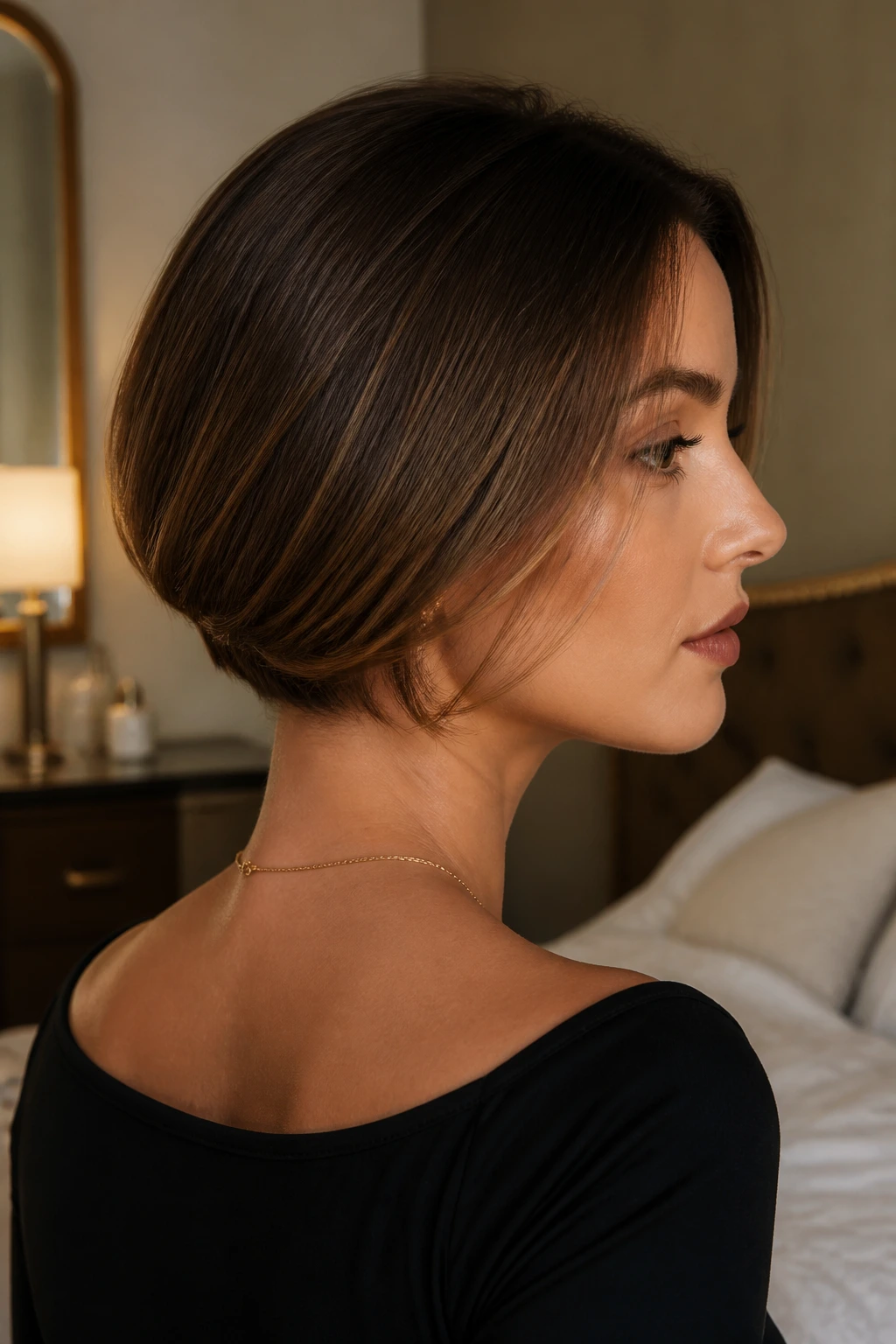
A tucked-in faux bob is a little sneaky, and I mean that in a good way. It lets long hair look shorter for a day without scissors, commitment, or regret. You fold the ends under at the nape, pin them in place, and shape the front so the length disappears.
The hairstyle feels chic because it changes the silhouette so much. Long hair usually hangs down the back. Tucking it in gives the neck more space and makes earrings or collars stand out. That can be a nice reset when long hair starts feeling heavy.
Keep the roll close to the head and use enough pins to hold the ends flat. If you leave a lump in the back, the illusion goes away fast. A smooth finish is the whole point here.
23. Low Twisted Ponytail
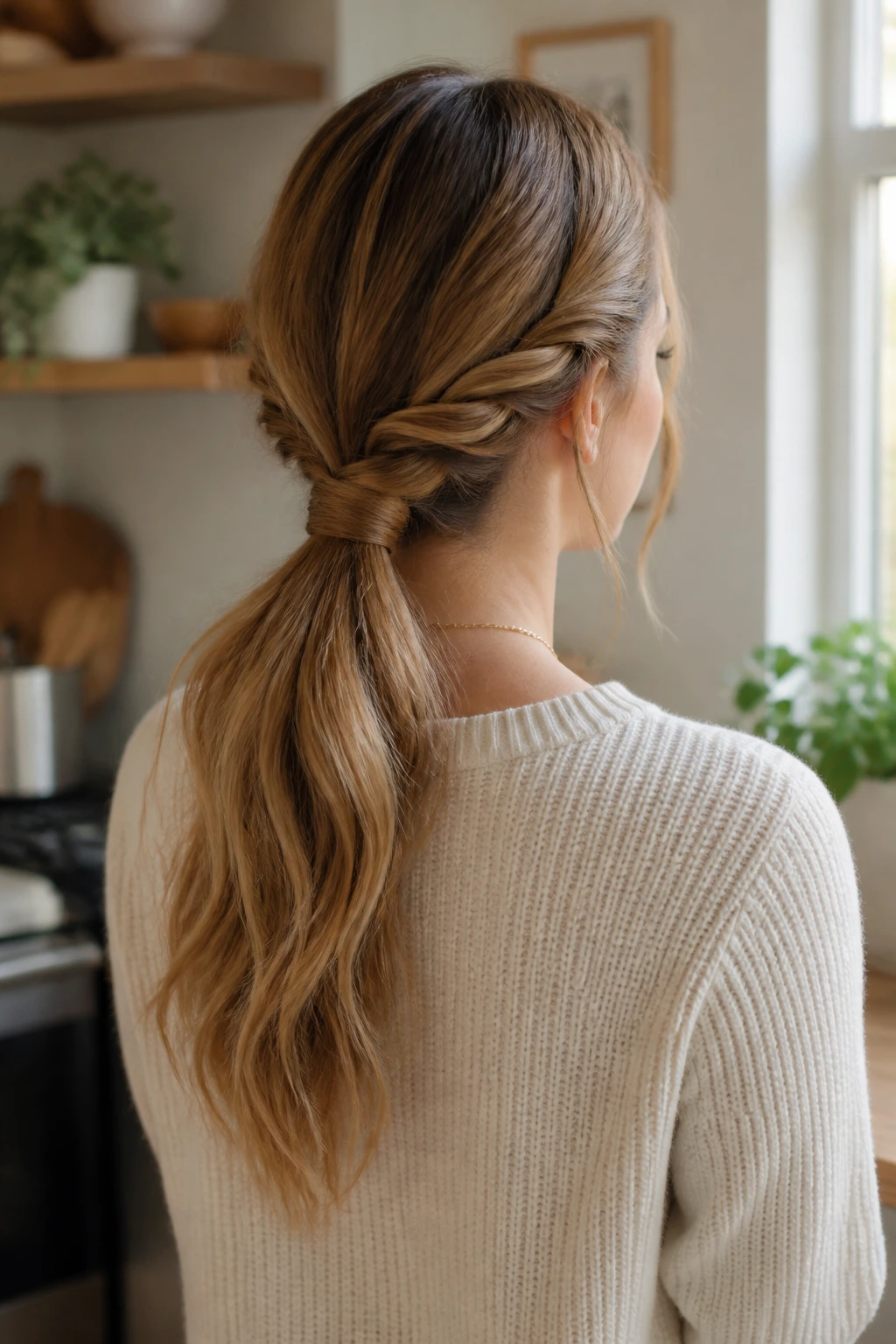
A low twisted ponytail is a softer cousin of the regular low ponytail. Instead of pulling everything back in one go, you twist small sections from each side and gather them at the nape. That little twist adds shape without adding much work.
I like this style because it flatters long hair that has some layers around the face. The twists hold those pieces in place better than a plain elastic does. It also feels nicer than a tightly brushed ponytail when you want something casual but neat.
A clear elastic at the base keeps the look clean. If the hair is thick, secure the twists first with pins, then add the ponytail elastic. That sequence helps the style stay centered instead of slipping sideways by afternoon.
24. Half-Up Claw Clip Twist
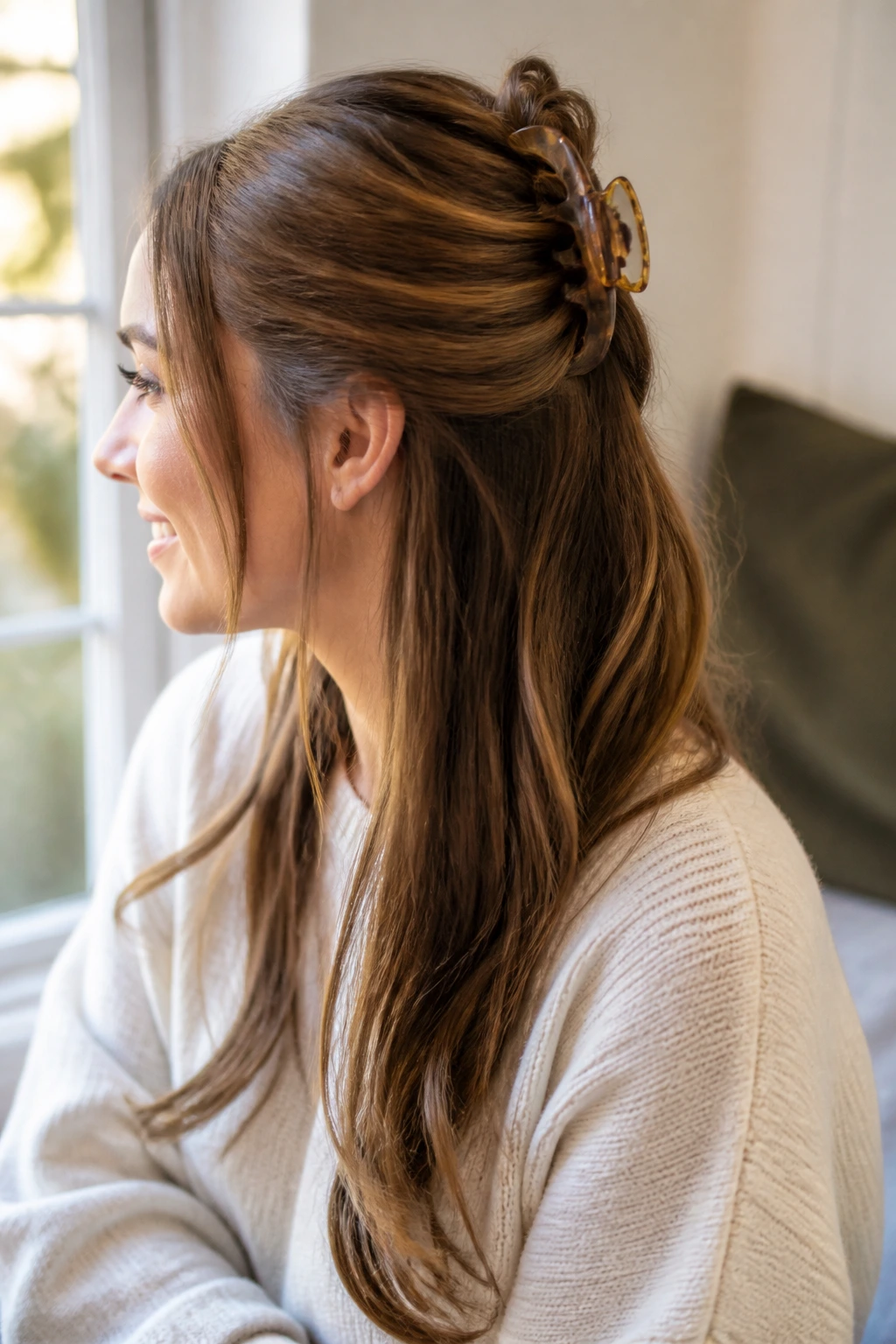
A half-up claw clip twist gives you the ease of a clip with less bulk than a full updo. You lift only the top section, twist it once, and clip it so the ends stay tucked. The rest of the hair hangs loose, which keeps the style balanced on long lengths.
Compared with a full French twist, this version feels lighter. Compared with a simple half-up ponytail, it has a little more shape. That’s why it lands in the middle so well. It doesn’t scream for attention. It just works.
Choose a clip wide enough to span the twist without crushing it. If the clip is too small, long hair slides out the bottom. A quick finger-smooth at the crown before clipping keeps the top from puffing up in odd places.
25. Crown Twist With Loose Length
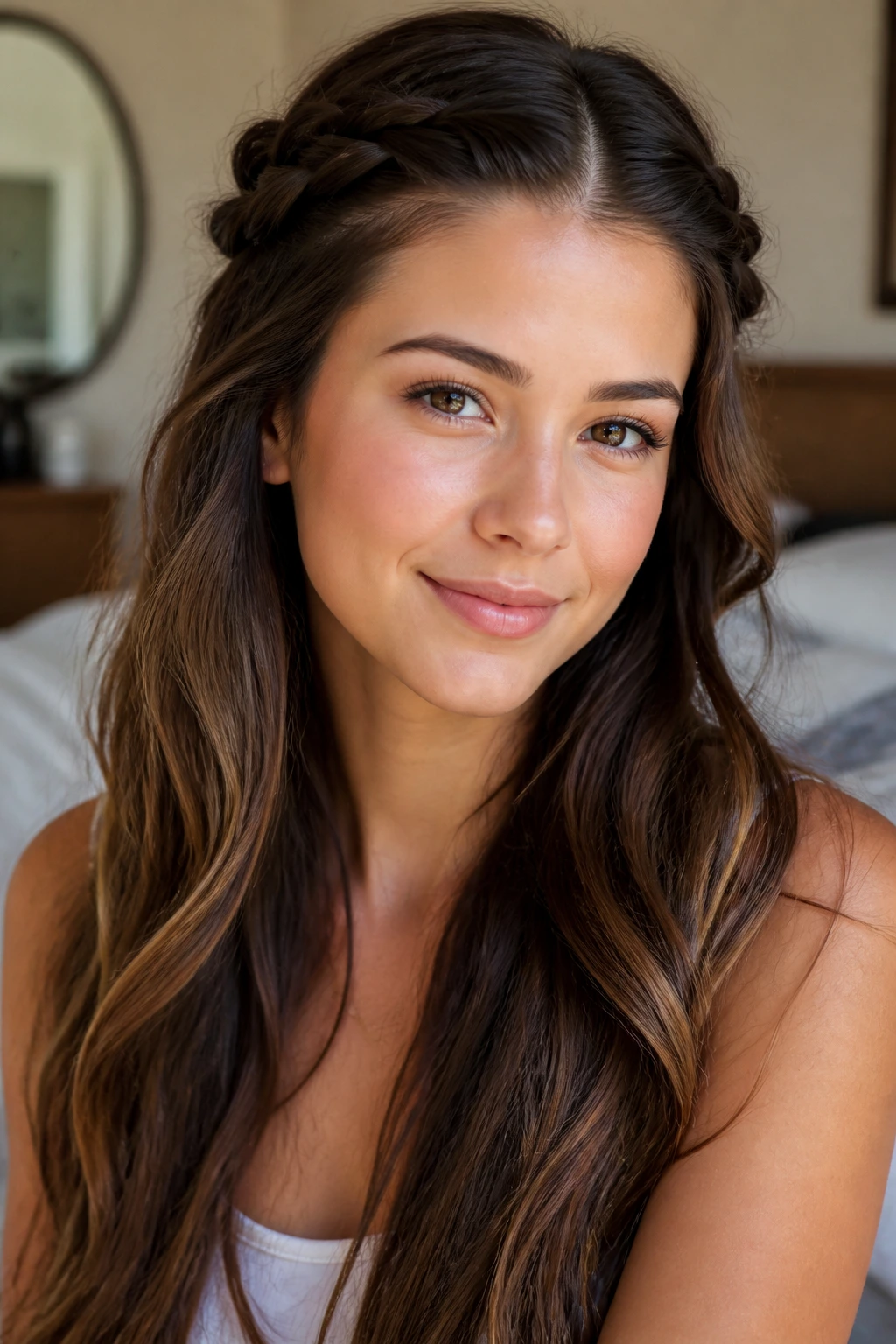
A crown twist is a nice answer when braids feel like too much work but you still want detail around the face. You twist sections from each temple back toward the center, then pin them so they meet like a soft headband. The rest of the hair stays loose.
Why I Keep Coming Back to It
It gives long hair shape without hiding the length, and it works with straight hair, waves, or loose curls. The twist can be tight and neat, or a little loose and airy. If you want a softer finish, pull the twist apart gently after pinning so it sits flatter against the head.
This style is especially good for hair that falls into your eyes but looks nice worn down. It solves the front-piece problem without forcing a ponytail. A pair of matching bobby pins keeps the look clean, and a small wave at the ends helps the whole thing feel finished.
Final Thoughts
The easiest hairstyles for long hair are usually the ones that respect the hair you already have instead of fighting it. A low ponytail, a braid, a clip twist, a half-up style—none of them needs to be perfect to look good.
Texture helps. So does placement. And if a style slips out by noon, that usually says more about the elastic or the grip than your hair. I’d rather see a simple style worn with a little intention than a complicated one that needs constant fixing.
Pick two or three of these and get them into muscle memory. That’s where the real payoff is. One day you’ll grab the right elastic without thinking, twist your hair in under a minute, and wonder why you ever made it harder than that.