



Humidity has a way of making honest hair out of every style. Smooth waves swell. A clean part starts to drift. Ends that looked polished at breakfast can feel fuzzy by lunch, and if you live with that little puff at the crown, you already know the feeling.
That’s why frizz control hairstyles matter so much on humid days. The right shape does half the work for you. It keeps the hair cuticle tucked down, limits how much your ends rub against your clothes, and gives moisture from the air fewer places to sneak in and cause that halo effect nobody asked for.
I’ve always thought the smartest humid-day styles are the ones that work with the weather instead of fighting it head-on. Heavy brushing usually makes things worse. So does over-layering product until your hair feels sticky before you even walk out the door. A cleaner, tighter, more deliberate shape usually wins.
The good news? You do not need a complicated routine or a drawer full of styling tools. A few pins, a bit of gel or cream, and the right structure can keep your hair looking intentional even when the air feels wet enough to wring out. Some styles are sleek. Some are braided. A few hide frizz by design. All of them are worth knowing when the forecast turns sticky.
1. Sleek Low Bun for Frizz Control

A sleek low bun is the style I reach for when I want hair off my neck and out of the humidity’s way. It works because it keeps every strand gathered close to the scalp, which means less movement, less friction, and fewer chances for frizz to spread.
Why It Works
Start with hair that’s dry or just slightly damp at the roots. If it’s soaked, the bun can look flat in the wrong way and take forever to set. Smooth a small amount of leave-in conditioner through the mid-lengths, then add a pea-size dab of gel around the hairline and crown. The goal is soft control, not helmet hair.
Brush everything into a low ponytail at the nape, twist the length, and coil it into a bun. Use two to four bobby pins, depending on your hair thickness. Fine hair usually needs fewer pins; thick or coarse hair often needs more than you think.
A silk or satin scrunchie helps if you hate creases. If you want the front to look extra neat, press down any flyaways with a tiny bit of styling cream on your fingertips. Keep the bun slightly loose at the center so it doesn’t split open later.
Best for: medium to long hair, straight through curly textures, and days when you want the least possible fuss.
2. Dutch Braid Crown That Hides Humidity Fast
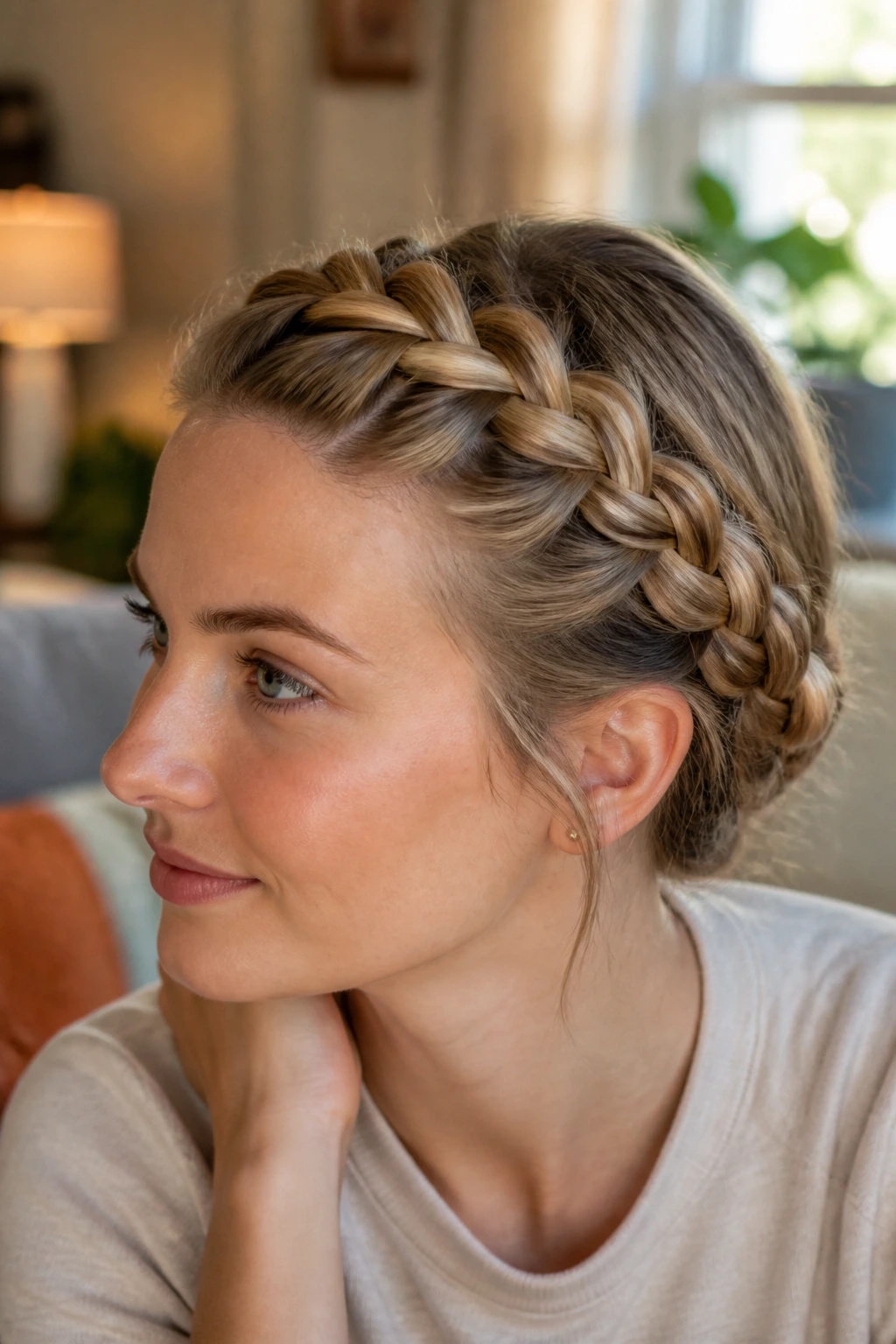
Humidity loves loose lengths. A Dutch braid crown takes that problem away by lifting the hair and wrapping it close to the head, where the braid itself becomes the style. It looks polished, but the real magic is that the exposed surface area stays small.
There’s a reason this one holds up. The braid pattern keeps the strands locked together, so the hair can’t puff apart every time the air gets thick. If your ends tend to frizz first, tuck them under the braid and pin them flat. That tiny detail matters more than people think.
What Makes It Different
A crown braid works especially well on layered cuts, which can be annoying in humid weather because shorter pieces like to escape. Braid each side starting near the temple, then wrap them around the head and pin them at the back. Use 6 to 10 bobby pins, placed in a crisscross pattern so the braid feels secure instead of flimsy.
If your hair is silky and slippery, prep with a light texturizing spray before braiding. If it’s curly or coily, stretch the hair a little with your fingers first so the braid sits neatly. Do not braid too tightly at the hairline. That just gives you a headache and a flat ridge.
This is the style I’d choose for an outdoor event where you still want your hair to look like you meant it.
3. French Braid Ponytail for a Cleaner Line

Picture a regular ponytail on a humid afternoon. Nice idea. Then the crown starts puffing, the ends tangle, and the elastic leaves a little puffed-up mess behind it. A French braid into ponytail form fixes that by controlling the top half before the length ever gets the chance to expand.
The trick is simple: braid from the front hairline down to the nape, then secure the rest into a ponytail. You get the structure of a braid with the ease of a ponytail, which is a pretty useful combination when the weather is working against you.
Quick Styling Notes
- Start with a center or side part, whichever sits flatter on your head.
- Add a dime-size amount of cream through the front sections before you braid.
- Braid firmly enough to hold, but not so hard that the braid looks thin and stressed.
- Tie the ponytail with a coated elastic so it does not snag the ends.
- Wrap a small strand of hair around the base if you want the elastic hidden.
I like this one for shoulder-length hair because it keeps the top neat without asking you to commit to a full updo. If your ends frizz easily, run a drop of serum through just the last two inches after you secure the ponytail. Less is better here. Too much product on the lengths makes them look oily, and that is a different kind of bad hair day.
4. Claw-Clip Twist for Hot, Sticky Days

Why does a claw clip keep showing up in humid-weather hair advice? Because it gets the hair up fast, and it does not require perfect technique. That matters. When the air is heavy and your arms are already tired, the best style is the one you can do in under a minute and still trust.
Twist your hair upward as if you’re making a French twist, then fold the ends in and secure the whole shape with a medium or large claw clip. The shape should feel snug at the base but not crushed. If pieces fall out around the ears, that is fine. A little looseness keeps the style from looking stiff.
How to Keep It Neat
Use a small amount of smoothing cream on the palms of your hands before you twist. That helps tame the hair without flattening it completely. For fine hair, choose a clip with teeth that grip well but do not slide. For thick hair, a larger clip with a stronger spring saves a lot of frustration.
I usually leave the front softer with a few face-framing pieces. If the weather is brutal, pin those pieces back with two bobby pins crossed in an X. A clip alone is not always enough for very fine, silky hair. It works, but only if the grip is strong.
This style is casual, fast, and surprisingly good at hiding the fact that your hair is rebelling.
5. Bubble Ponytail for Frizz Control
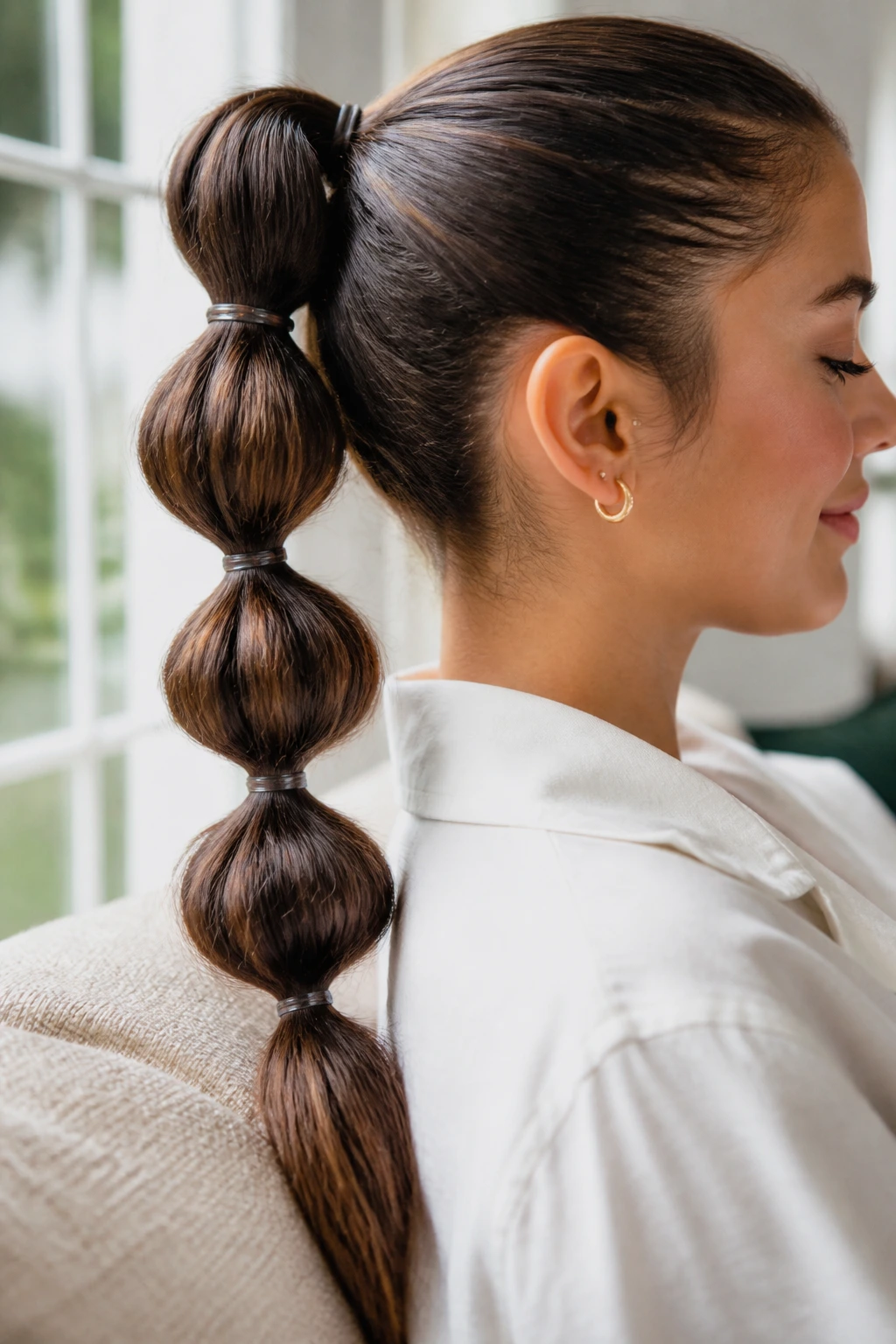
A bubble ponytail looks playful, but it earns its place in a frizz-control list because it breaks one long, frizz-prone section into smaller, easier-to-manage segments. That means less puffing at the ends and a shape that still looks deliberate by the time the day gets sticky.
Brush the hair into a high or low ponytail and secure it with a strong elastic. Then add another elastic 2 to 3 inches down, then another, and so on. Gently pull each section outward to create the bubble shape. If the hair is too smooth, the bubbles can slide around, so a little texture spray on the length helps.
The Small Details Matter
- Use clear elastics for a clean look, or fabric ties if your hair is thick.
- Keep the gaps between elastics even, around 2 to 3 inches.
- Tug the bubbles gently from the sides, not from the center.
- Smooth the base with gel before you begin if flyaways are a problem.
- Leave the last bubble a little smaller so the tail doesn’t look bottom-heavy.
This is one of those styles that looks more complicated than it is. It also works on second-day hair, which is useful when humid weather has already done its worst. If your hair is layered, tuck the shorter pieces behind the bubbles with a couple of pins. That keeps the whole thing from turning fuzzy around the edges.
6. Boxer Braids for All-Day Grip
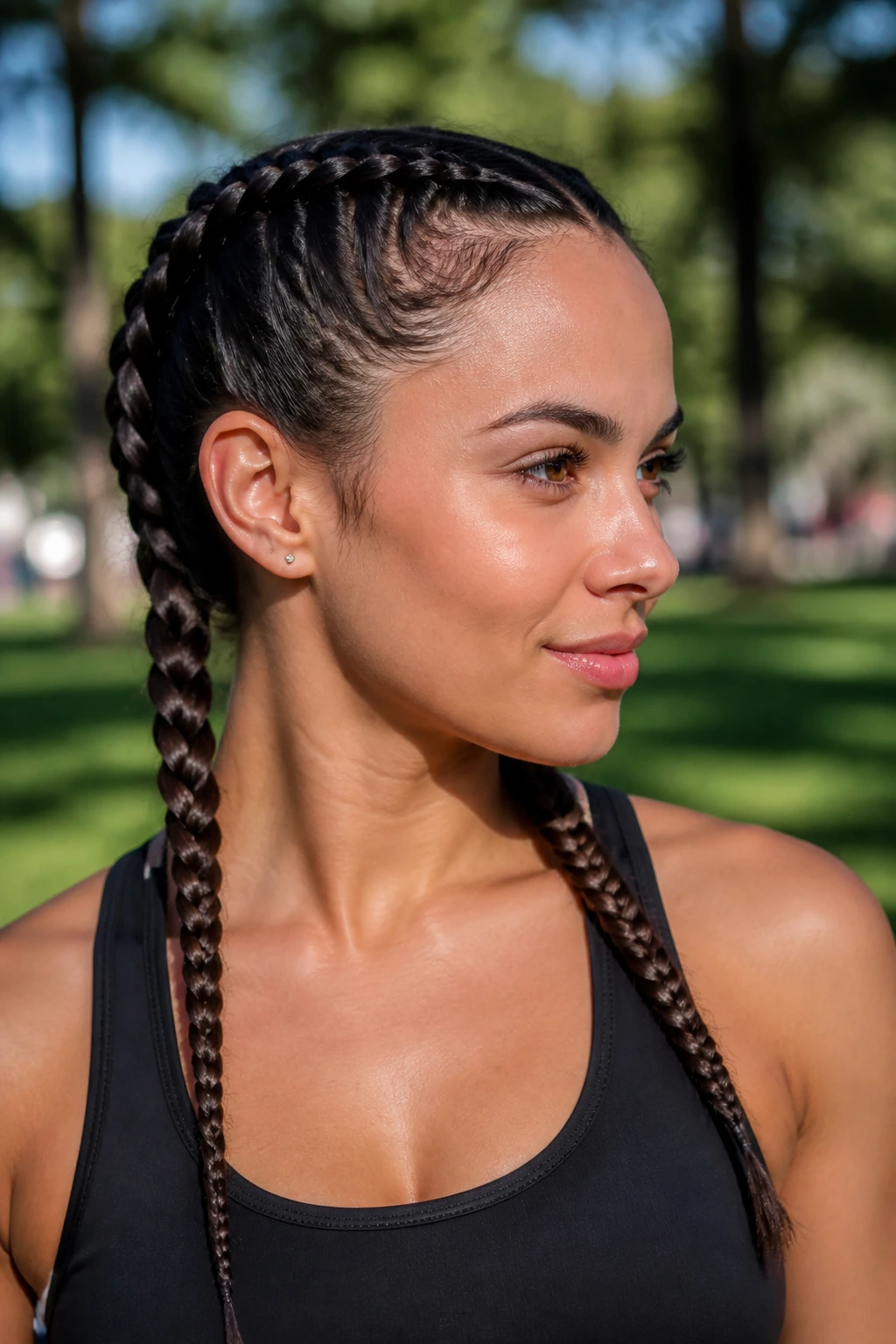
Boxer braids are the blunt instrument of humid-day styling. Not delicate. Not fussy. Very effective. The reason they work is simple: two close braids keep the hair locked down from the scalp to the ends, so the surface has less opportunity to swell and frizz.
They also last. That is the part people underestimate. If you’re heading into a long day, a full braid set can buy you a lot of time before humidity starts bothering the finish. Tight enough to hold, loose enough not to hurt—that balance matters more than perfection.
Who They Suit Best
This style is especially friendly for active days, thick hair, and curls that want to puff up the moment they leave the house. It also works well if you want to preserve a twist-out or a blowout shape overnight. In that case, braid the hair after lightly coating the lengths with a leave-in and sleep with a satin bonnet later.
A couple of things to watch: if you braid too tightly at the scalp, the look can read harsh. If you braid too loosely, the style loses its grip and frizz shows up in the seams. Aim for firm tension, not pain. That sentence saves a lot of headaches.
I’d skip this one if your hairline is sensitive or if you hate the feeling of tight styles. Otherwise, it’s hard to beat for staying power.
7. Low Twisted Chignon with Tucked Ends

You know that half-polished, half-messy bun that somehow survives a bad weather day better than anything else? That is the low twisted chignon. It keeps the ends hidden, which is half the battle on humid days because the oldest, driest part of the hair is usually the first to puff.
Gather the hair at the nape, divide it into two sections, and twist each one loosely before winding them together into a knot. Pin the ends under the fold. The style should sit low and calm, not high and perfect. A little softness actually helps it look better, because hard edges tend to fight humid air and lose.
Add a light smoothing balm before you twist, but keep it off the roots. Too much product near the scalp can make the bun slip, and then you’re fighting a style that should be helping you. Use three to six pins, depending on thickness.
- Best on medium to long hair.
- Nice choice for weddings, dinners, or office days.
- Works well with side parts and soft face-framing pieces.
One more thing: if your hair is very layered, fold the shorter pieces under the twist before pinning. That keeps them from popping up in the damp air halfway through the day.
8. Half-Up Rope Twist for Soft Control

A half-up rope twist gives you a little lift without exposing every strand to humidity. That’s the charm of it. The top section stays controlled and lifted, while the length can move freely, which is a good compromise if you do not want a full updo.
Take two sections from above the temples, twist each one in the same direction, then wrap them around each other in the opposite direction. Secure the twist at the back with a small elastic or a couple of pins. If that sounds fussy, it isn’t once you’ve done it twice. The motion becomes almost automatic.
I like this style on wavy hair because it keeps the crown flatter without destroying the texture below. It also works on curly hair if you want to show off the pattern while keeping the top under control. If the front pieces are short, mist them lightly with water and a little cream before twisting so they sit together instead of springing apart.
The key is tension. Too loose, and the rope twist unravels. Too tight, and it loses the soft shape that makes it useful in humid weather. Leave the ends slightly hidden under the back section if you want a cleaner finish. A tiny barrette can help there, and yes, I am a fan of overusing small clips when the weather gets rude.
9. High Braided Ponytail That Keeps Ends Contained
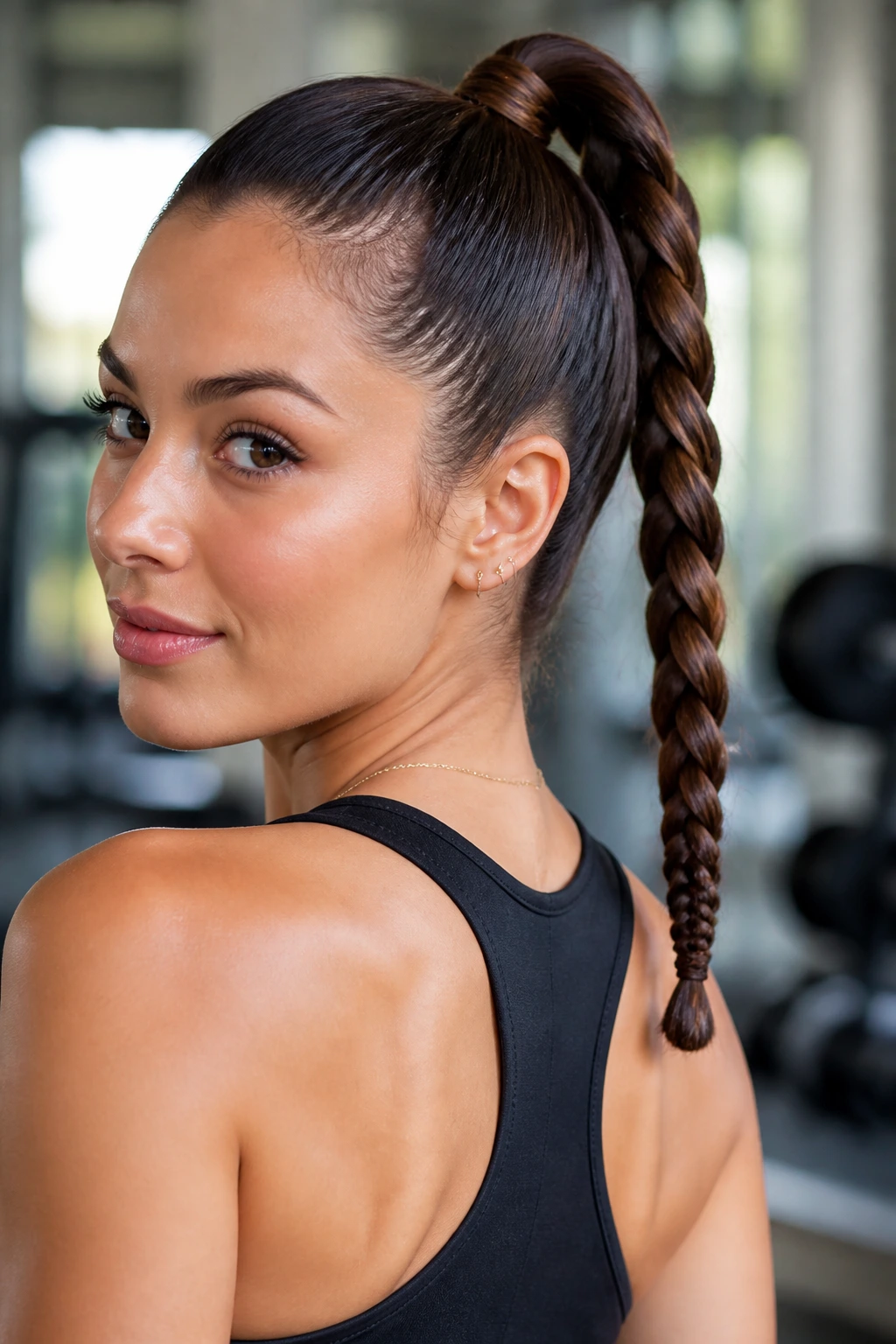
A high braided ponytail is the style you choose when you want the lift of a ponytail but not the chaos of exposed ends. The braid keeps the tail compact, which cuts down on puffing, tangling, and that dry, fuzzy look that shows up after a few hours in the heat.
Pull the hair into a high ponytail and smooth the crown with a soft brush or your hands. Braid the length all the way down and secure the tip with a tiny elastic. If you want the base extra smooth, wrap a one-inch section of hair around the ponytail holder before pinning it underneath.
How to Get the Most From It
Use a small amount of gel on the front hairline, then brush upward before tying the ponytail. That gives the top a cleaner finish. If your hair is very thick, braid the ponytail in three sections first and then fold the braid over once before you finish it. It sits heavier, but it stays put.
- Best for long hair and thick textures.
- Good for workouts, travel, and all-day wear.
- Strong enough to handle wind and humidity together.
This is not the softest-looking style on the list. It’s a bit sporty. That’s fine. Sometimes you want a hairstyle that looks like it can handle a messy day without falling apart by noon.
10. Side Braid Tucked Into a Bun
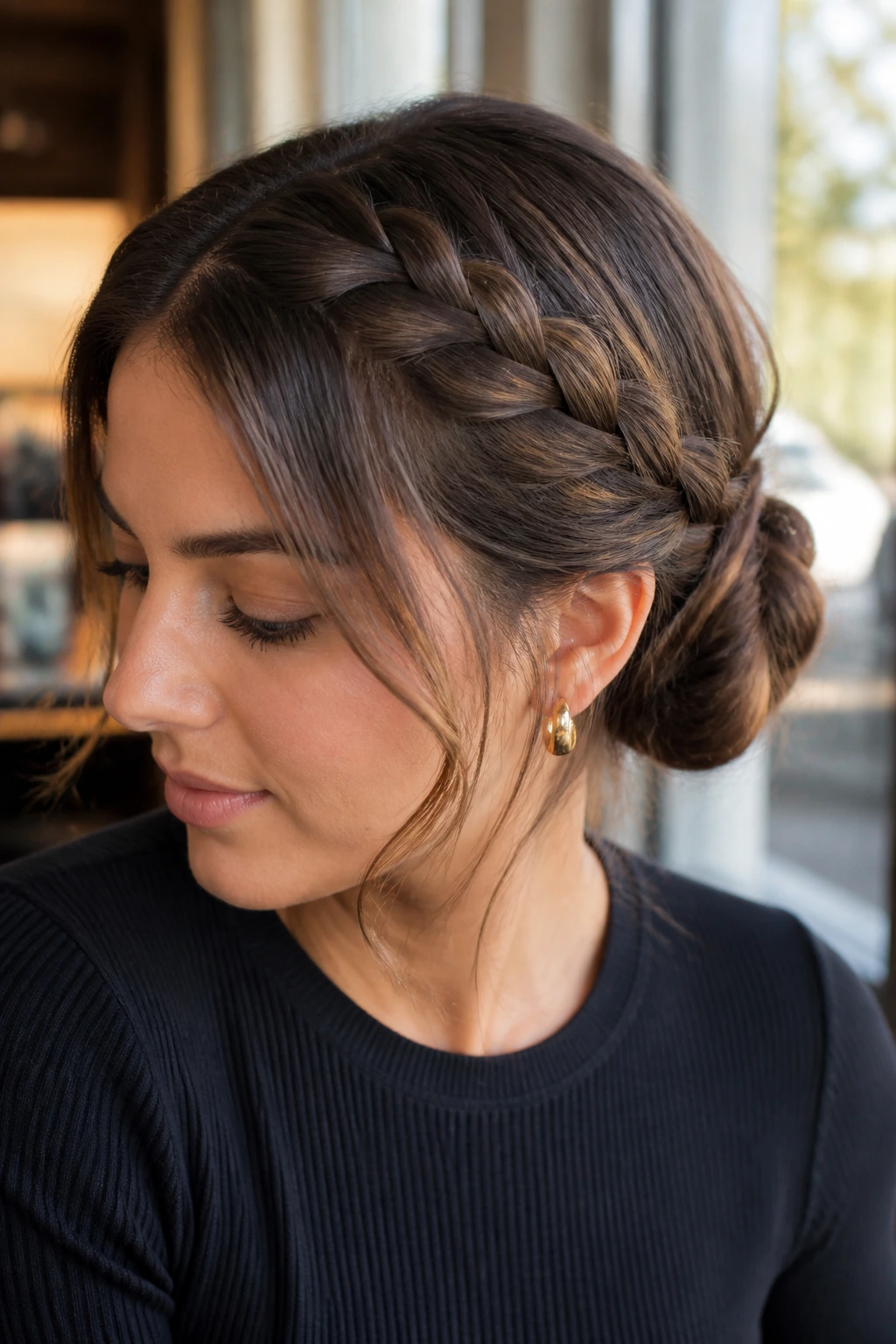
This one looks a little more styled than a plain bun, which is why I keep coming back to it. The side braid adds detail up front, and the tucked bun seals the ends away from the damp air. It’s a smart mix of structure and softness.
Start with a deep side part. Braid the heavier side from the part down toward the ear, then gather all of the hair into a low bun at the opposite side of the neck. The braid becomes the visual detail, while the bun does the humid-day work of hiding the ends.
A few pins keep everything secure. A satin scrunchie at the base can help reduce creasing if you plan to take it down later. If your hair is prone to frizz at the temples, smooth those areas with a tiny amount of styling wax on a fingertip. Use less than you think you need. Temple frizz can be tamed fast, but heavy product makes the area look greasy.
This style suits medium to long hair and looks especially nice on layered cuts. It also has a subtle downside: if the braid is too small, it can disappear into the bun and lose its point. Make the braid visible on purpose. Don’t be shy with it.
11. Space Buns for Shorter Frizz-Prone Layers
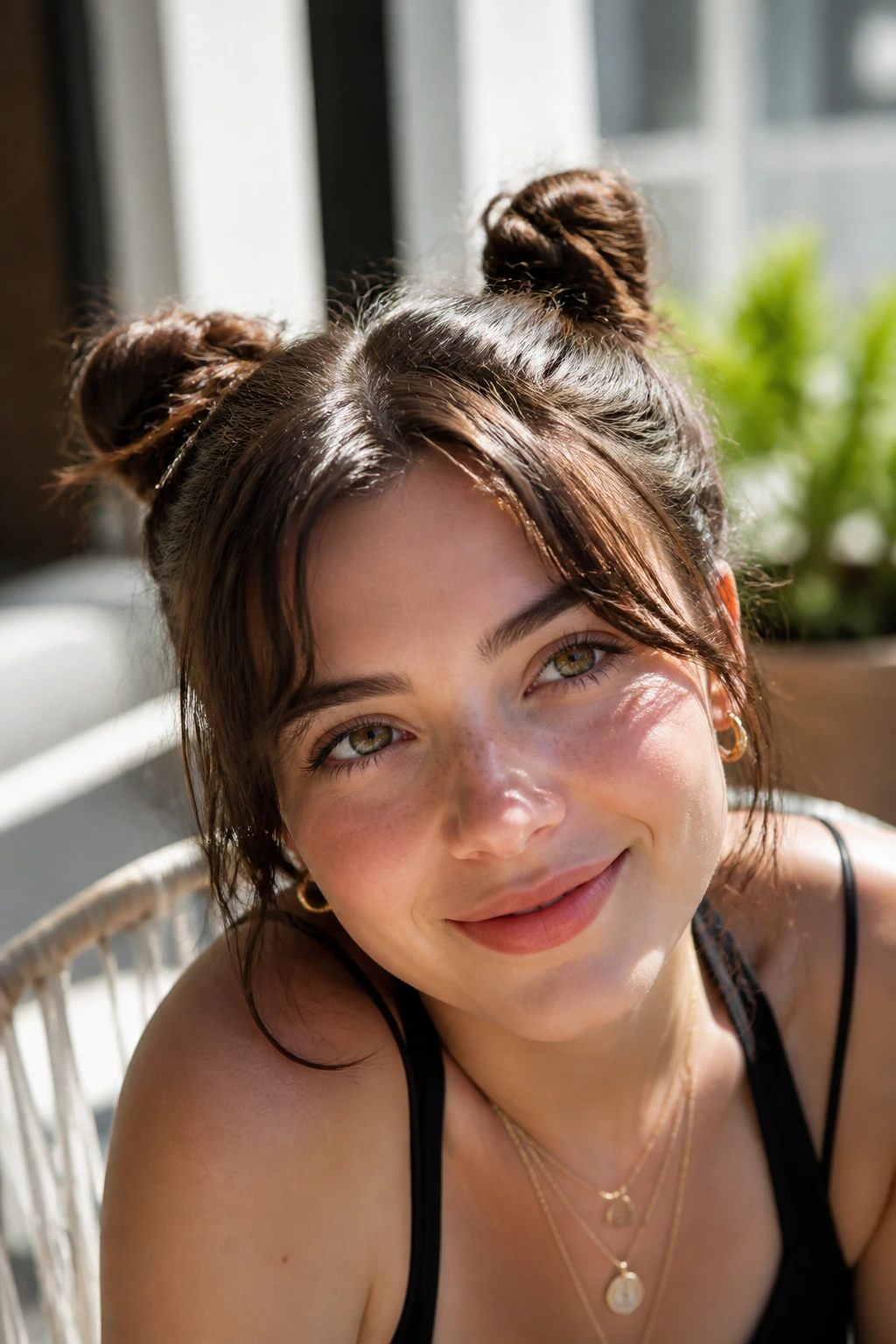
Space buns are useful because they corral hair in two places instead of one. That can be a lifesaver when layers refuse to stay smooth or when the back of the head tends to frizz faster than the front. They also let you keep the style playful instead of trying to make humidity look formal, which never works for long.
Part the hair down the center and make two high pigtails. Twist each one and wrap it around its own base, then pin or tie the buns in place. If your hair is short, keep the buns small and let a few pieces stay out. That is not a failure. It is a workable style.
Small Tweaks That Help
- Spray the part line lightly with water before styling.
- Use two elastics per bun if the hair is slippery.
- Leave the buns a little loose so they do not look tiny and strained.
- Pin the shorter pieces under the buns instead of chasing every single strand.
I think this style gets dismissed too quickly because people assume it is only for casual outfits. Not true. On humid days, space buns can look neat, practical, and a little bit cheeky in a good way. They are especially handy when you want most of your hair protected but still want some shape around the face.
12. Slicked-Back Ponytail for Frizz Control
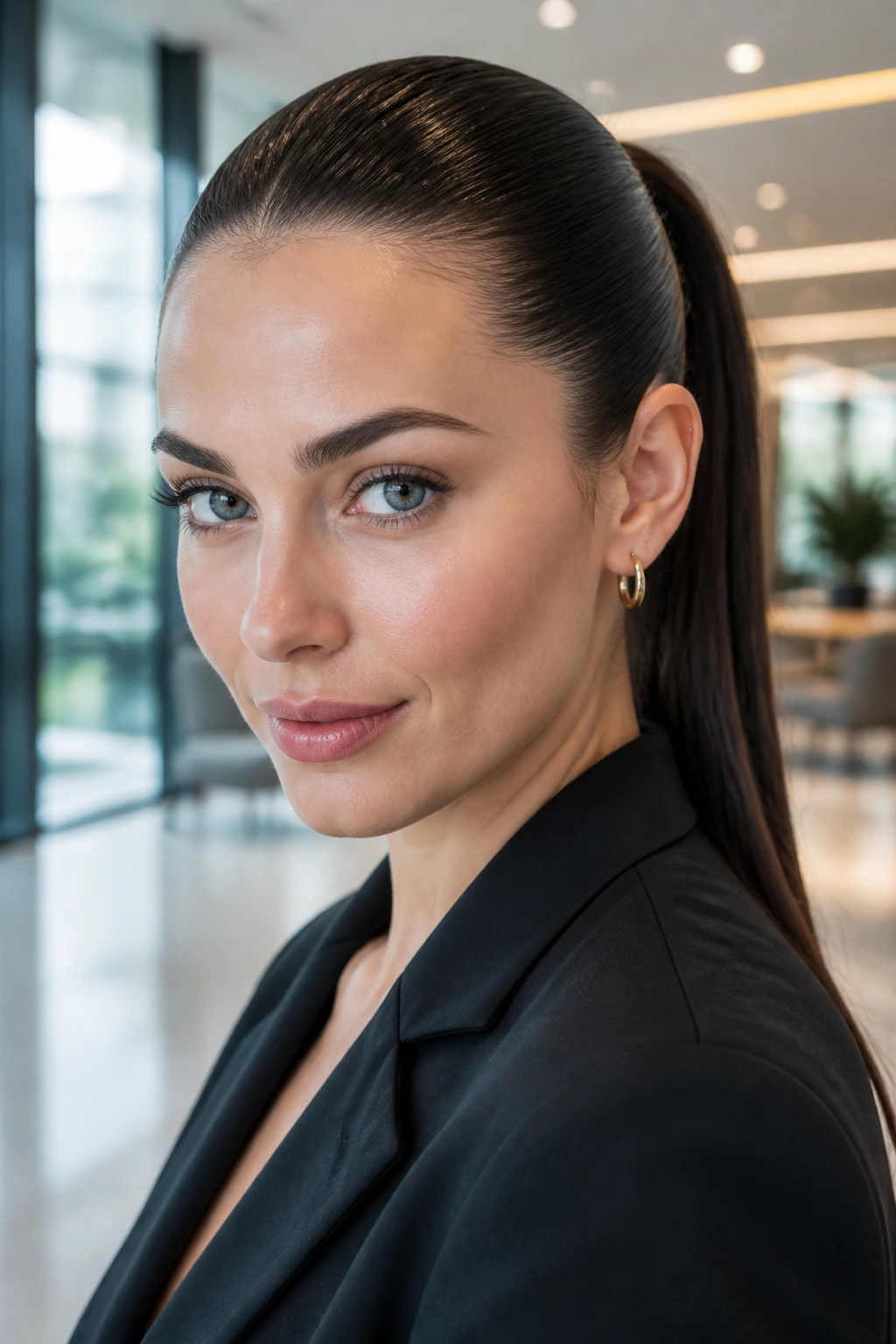
A slicked-back ponytail is not for people who want softness. It is for people who want the hair pinned down and finished fast. And on humid days, that blunt approach works. The less the hair can lift, the less frizz has room to show.
Brush the hair back with a small amount of gel or styling cream, then secure it at the nape or higher on the head. Use a dense brush or a fine-tooth comb if your hair can handle it. If your hair is curly or coily, smooth the top with your fingers first, then go over the surface with the brush so you keep some control without flattening the whole texture.
A few things make the difference here. The front should be evenly coated, not clumpy. The ponytail holder should grip hard enough to stay in place, because nothing ruins a sleek look faster than a sagging base. And if you want the style to stay clean longer, wrap a strip of hair around the elastic and pin it under the ponytail.
This style suits strong cheekbones, sharp earrings, and people who want a no-nonsense answer to sticky weather. It can look severe if you overdo the product. Use enough to tame the flyaways, not enough to make the scalp look wet.
13. Curly Pineapple Updo with Soft Edges

What if your hair is curly and you don’t want to fight the shape? Then the pineapple updo makes more sense than a sleek style that works against your texture. It keeps curls high, away from friction, and out of the neck area where humidity tends to turn the whole day sweaty.
Flip the head forward and gather the curls loosely at the very top, then secure them with a soft scrunchie. The curls should sit high and airy, not crushed into a hard knot. Let the curls fan out so they keep their shape. If the sides need help, pin them with two or three small clips.
How to Shape It Well
Use a leave-in conditioner before gathering the hair so the curls stay soft and do not dry out. If your curls are tighter, separate them gently with your fingers before you tie them up. That keeps the top from becoming one stiff lump.
- Best for curly and coily textures.
- Great for preserving curl definition on humid days.
- Works well overnight with a satin bonnet on top.
I like this style because it does not pretend humidity isn’t happening. It respects the curl pattern and still keeps the hair controlled. If you want a cleaner look around the hairline, smooth the edges with a touch of gel. If not, let a few curls stay loose. Both versions work.
14. Braided Headband with Loose Lengths
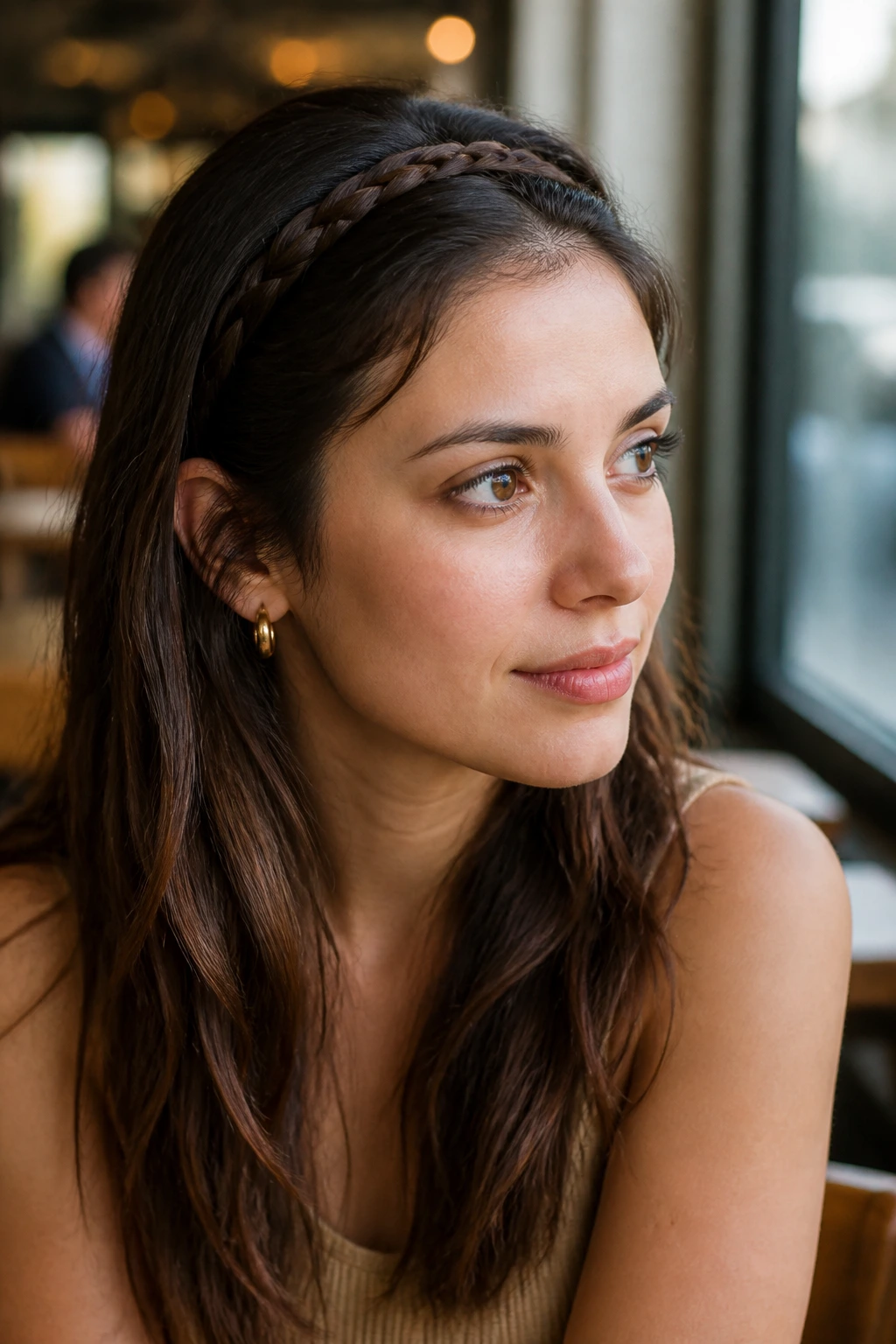
A braided headband is a clever middle ground for people who want to wear the hair down but hate the way humidity attacks the front sections first. The braid acts like a built-in frame, holding the hair away from the face while the rest stays free.
Take a small section from one side near the front hairline, braid it back across the crown, and pin it behind the opposite ear. The rest of the hair can stay loose, straight, wavy, or curly. That’s the nice part. You do not need to control everything to get a better result.
This style works best when the loose length is already in decent shape. If the hair is extra frizzy, add a light cream to the mid-lengths and a drop of serum to the ends. Do not coat the whole head. That usually makes the front collapse and the lengths look limp.
One reason I like this option is that it looks more styled than it really is. People think you spent longer on it than you did. Nice bonus. If your braid keeps slipping, backcomb the tiny section at the root before you start, then pin the braid under a layer of hair so the end disappears.
15. Satin-Scarf Low Knot for the Worst Humid Days
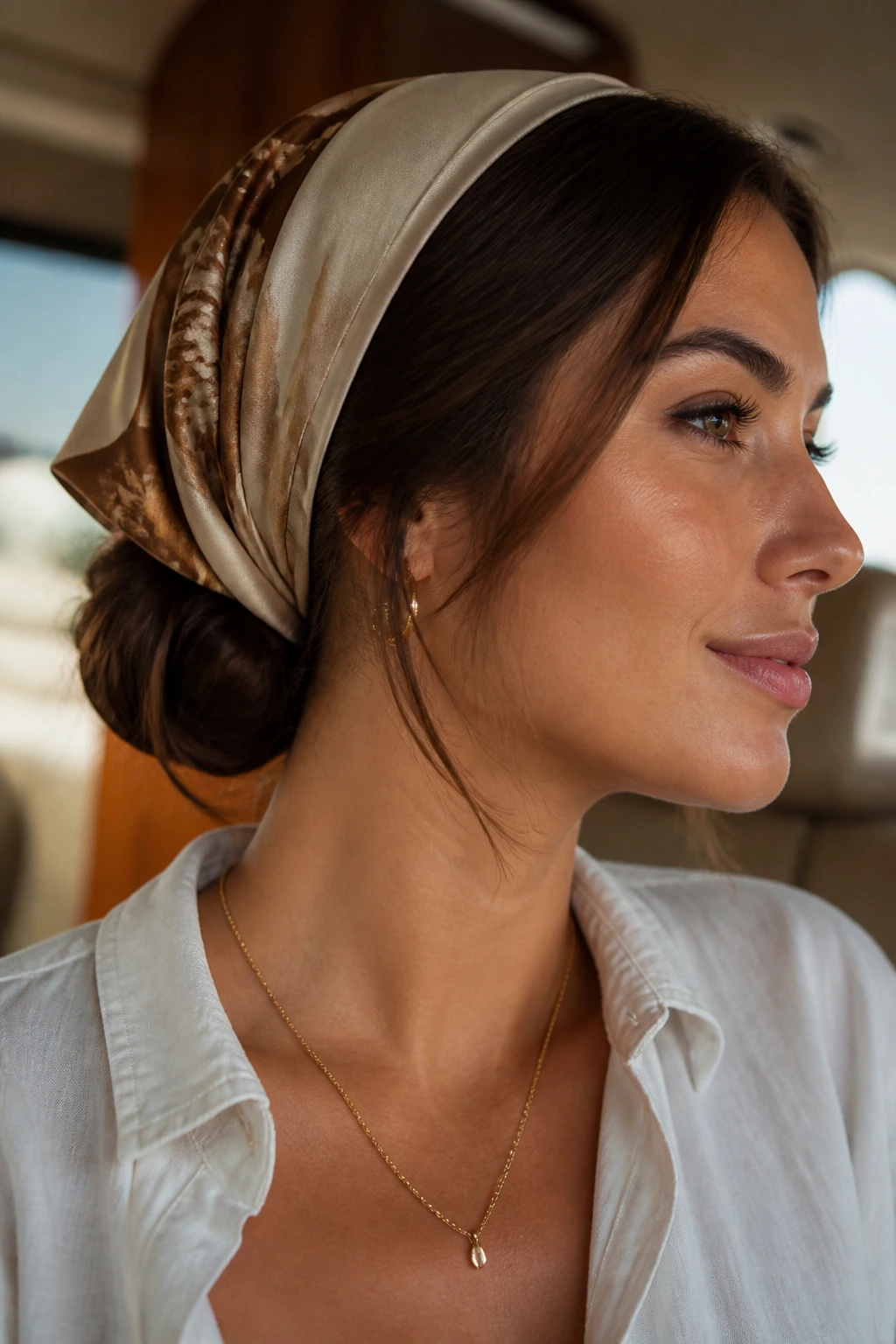
When the air feels thick enough to ruin everything, a satin scarf can save the day. Pair it with a low knot, and you get a style that protects the surface of the hair from friction while keeping the ends folded away from damp air. That combination is hard to beat.
Start with a low bun or knot at the nape. Fold a square or long satin scarf around the head, tying it over the bun or weaving it into the base. The scarf should sit snugly, not so tight that it leaves a dent across the forehead. Satin matters because it slides against the hair instead of roughing it up.
Why It’s Worth Having
- It reduces rubbing from wind, bags, and shirt collars.
- It keeps the crown area calmer than a bare bun.
- It can hide day-two texture when the roots are not cooperating.
- It makes a simple style look finished without extra heat or product.
This is the style I’d use for travel, errands, or days when I know the weather is not on my side. It also works well for protecting blowouts overnight if you tuck the scarf around a loose low knot before bed. The ends stay contained. The hairline stays calmer. And, honestly, it looks far more intentional than most people give it credit for.
The best humid-day hair is usually not the flashiest hair. It is the hair that stays where you put it, keeps the frizz from taking over the whole shape, and still looks like you had a plan.
