



Fine hair does not need to be long to look full. Some of the smartest short hairstyles for thinning fine hair work because they keep the shape close to the head and put the strongest line at the perimeter. That gives the eye a clean edge instead of a wispy tail.
Length is not the enemy; slack is. When the ends get too long and too light, they start to separate, and the whole cut can look flatter than it is. A blunt line, a controlled layer, or a little height at the crown can change that fast.
I also think a lot of bad advice comes from treating all fine hair the same. Straight, slippery hair behaves differently from fine wavy hair, and a cowlick at the front can ruin a cut that looks perfect on paper. The right short cut respects the way your hair actually falls, not the way a brochure says it should.
The best result usually comes from a simple plan: keep the ends solid, avoid over-thinning the top, and choose a shape that gives your face a clean frame. From there, the haircut does most of the work. Style matters, sure, but the cut has to earn its keep first.
1. The Classic Pixie for Thinning Fine Hair

A classic pixie is the cleanest answer when you want more lift without fighting long, stringy ends. The shape is short enough to keep the silhouette neat, but it still leaves enough length on top to bend forward, sweep to the side, or stand up a little at the crown.
What makes this cut work is restraint. Ask for short, tapered sides and back with about 1 to 2 inches on top if your hair is very fine, maybe a touch more if it collapses fast. I would also skip heavy razor work through the crown. That’s where too much thinning starts to show scalp.
A soft side-swept fringe helps too. It breaks up the forehead line and gives the haircut a little movement without making the front look see-through. If you want a piece that feels modern but still easy, this is the one I keep coming back to.
Style it with a pea-sized amount of matte paste or light cream, warmed between your fingers first. Push the roots up with your fingertips while the hair is still slightly damp. Done. That small lift at the root matters more than a pile of product ever will.
2. The Bixie Cut with Lift at the Crown
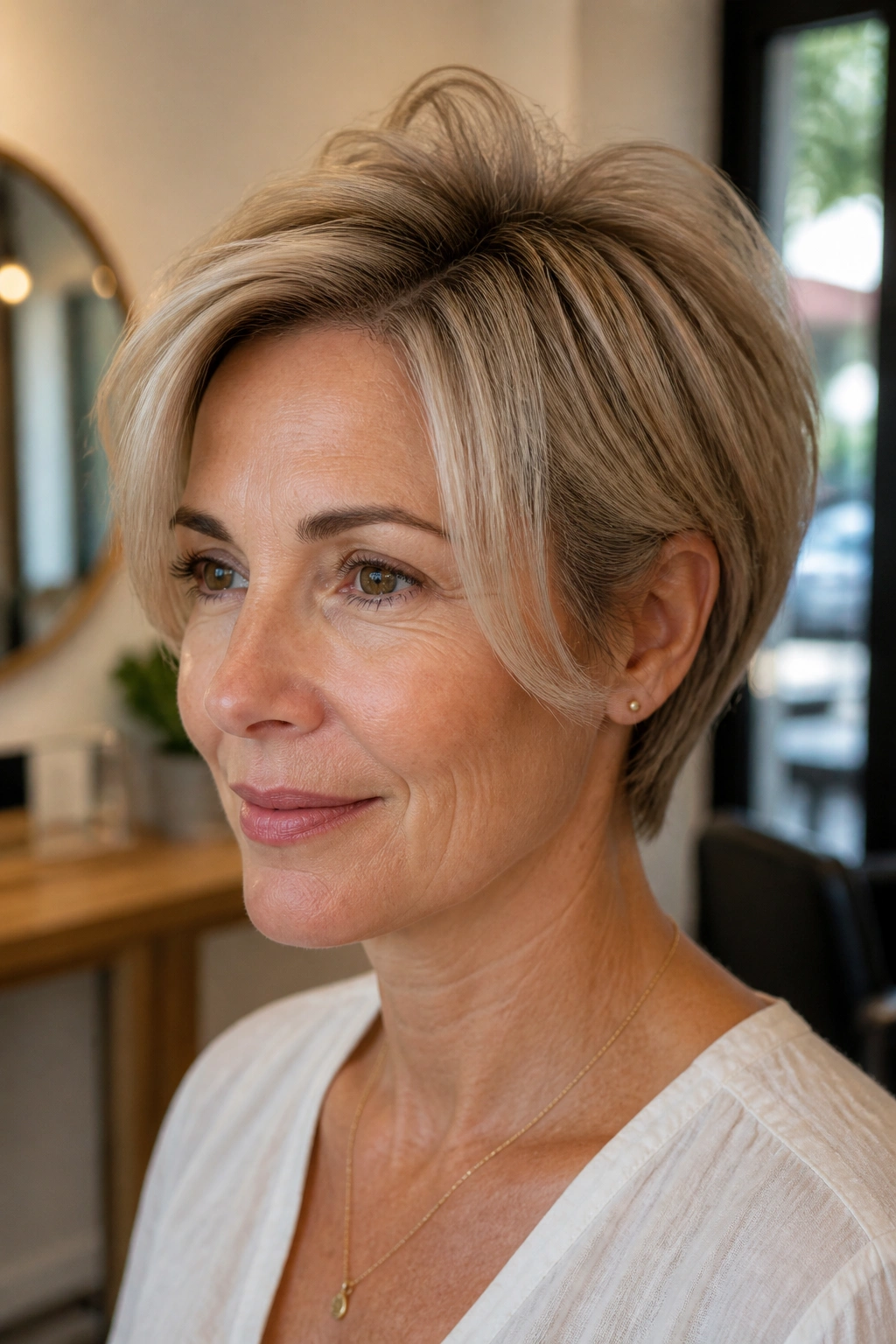
The bixie sits between a bob and a pixie, and that in-between length is exactly why it flatters fine hair so well. It gives you a little more coverage than a crop, but it avoids the droopy look that can happen when fine hair gets too long.
What to ask for
- Keep the neckline short and clean so the cut does not drag down the back.
- Leave the front pieces grazing the cheekbones or jaw for a bit of face framing.
- Build a small amount of lift at the crown, but do not carve away too much bulk from the top.
That last part matters. A bixie should feel light, not hollow. When the top gets over-layered, you lose the shape that makes this cut appealing in the first place.
I like this cut for people who want something softer than a pixie but still want their hair off the neck. It grows out in a forgiving way, too. Three or four weeks of growth usually still looks intentional, not sloppy.
A round brush or a small blow-dry brush helps here, but only for a minute or two at the roots. You are not trying to create helmet hair. You just want the top to lift off the scalp instead of lying there.
3. The Chin-Length Blunt Bob for Thinning Fine Hair
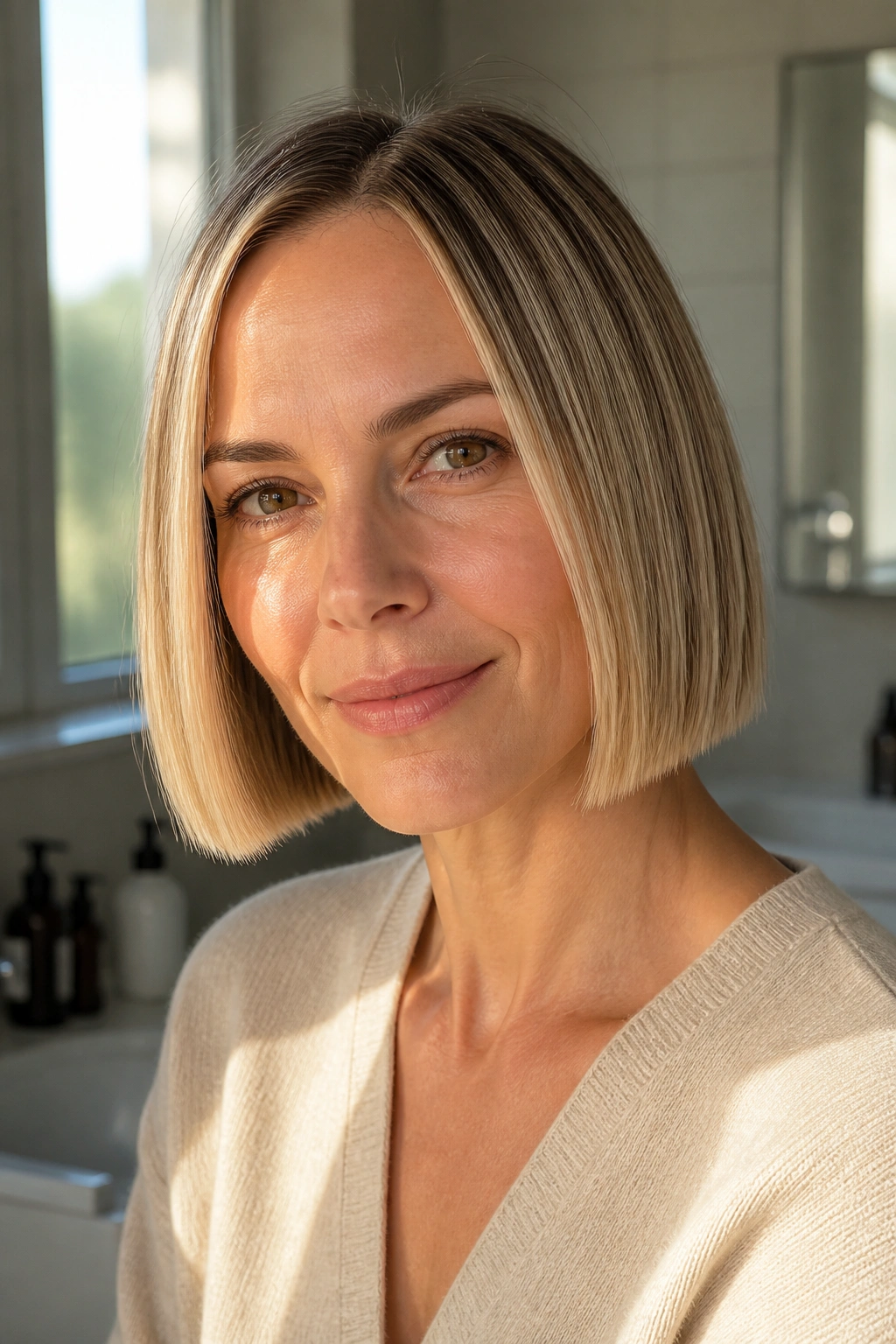
Why does a blunt bob make fine hair look thicker? Because the eye sees one solid line at the bottom, not a frayed edge. When every strand lands around the same length, the ends look denser and the whole cut reads as fuller.
Why the blunt edge helps
A chin-length blunt bob works best when the perimeter stays clean. That means no over-texturizing, no wispy bottom, and no invisible layers removing weight from the ends. Fine hair needs that weight. It is the difference between a bob that looks expensive and a bob that looks air-dried into chaos.
A center part can work beautifully here, but only if your roots are not too flat. If they are, a slight off-center part often gives the hair a little more lift without making the cut feel fussy.
How to wear it
Dry the roots first, then smooth the lengths with a paddle brush or flat brush. If the ends flip out on their own, let them. The slight bend can look better than forcing every strand straight.
This cut is especially good if your hair breaks at the ends. Shorter length plus a blunt line makes the damage less obvious. That is the real advantage—not just the shape, but the way it hides weaker ends.
4. The French Bob with Airy Fringe

A French bob looks casual, but it is not careless. The cut usually lands around the jaw, with a fringe that skims the brows or breaks a little higher, and that shorter shape can be a gift for hair that has lost density.
The appeal is in the balance. The length stays short enough to keep the ends from looking thin, while the fringe draws attention upward toward the eyes. On fine hair, that matters more than people realize. Your eye follows the fringe first, then the clean line at the jaw.
This cut suits straight to softly wavy hair best. It can work on curls too, but the fringe needs a stylist who knows how much spring those curls will have once they dry. If the front is cut too short, it can bounce right past the sweet spot.
A light mousse at the roots and a quick rough-dry are usually enough. I would not load this style with heavy serum or oil. It kills the airy feel and makes fine hair separate into little strings. The whole point is a little lift and a little edge, not shine at all costs.
5. The Textured Crop with Choppy Micro-Layers
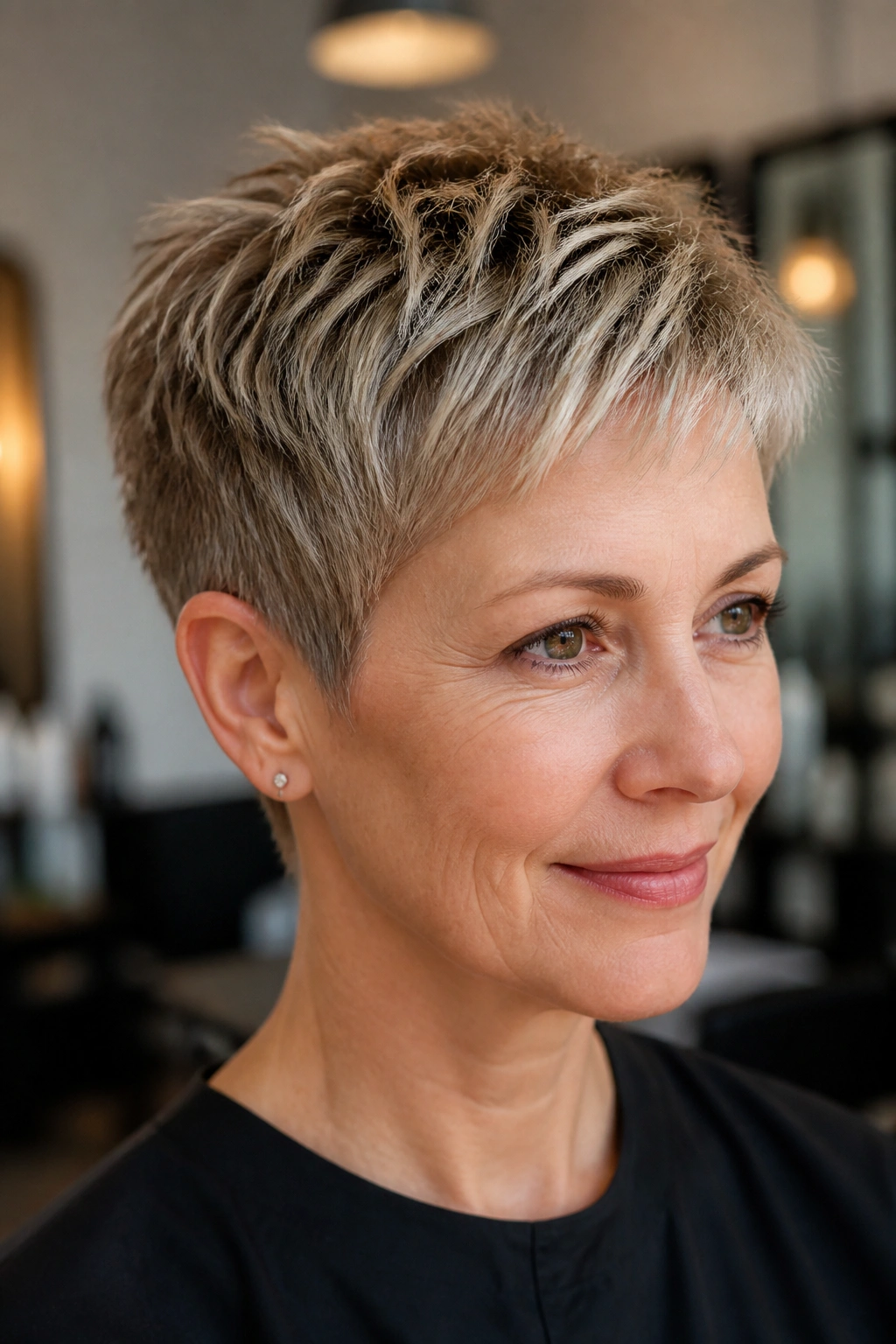
This is the cut for anyone who likes movement but does not want a fluffy mess. A textured crop can work well on thinning fine hair when the layering is tiny, controlled, and mostly placed where the head needs lift.
The phrase I would use with a stylist is micro-layers at the crown, solid weight at the perimeter. That keeps the top from lying flat while protecting the outline of the haircut. Too many short layers through the sides, and the whole style starts to see through. That is where people get burned.
- Ask for point-cutting rather than aggressive razor work.
- Keep the side panels a little fuller than you think.
- Use texture only where the hair needs bend, not everywhere.
I like this cut on people who want a slightly undone finish. It looks good with a bit of bend in the fringe and a matte texture cream worked through the top. A tiny bit goes a long way. Use too much, and you get separation instead of fullness.
This is one of those styles that can look chic in five minutes or messy in fifteen. The cut has to be precise.
6. The Asymmetrical Bob That Fakes Fuller Hair

An asymmetrical bob gives the eye something to chase, and that can make fine hair look denser than it is. One side sits a little longer than the other—often by 1 to 2 inches—so the silhouette feels intentional and slightly sharp.
I like this option when one side of the hair is weaker, flatter, or more broken than the other. Instead of pretending both sides behave the same, the cut works with the difference. That alone can make the hair feel more balanced.
The longer side should not be so long that it drags the whole style down. Keep the line close to the jaw or just below it. The shorter side can tuck neatly behind the ear, which gives the haircut a clean break and makes the front pieces look thicker by comparison.
Styling is easy. A deep side part helps exaggerate the angle, and a quick bend with a flat iron on the ends gives the bob a little shape. No need to over-style it. The geometry does most of the heavy lifting.
7. The Layered Shag Bob with Curtain Fringe
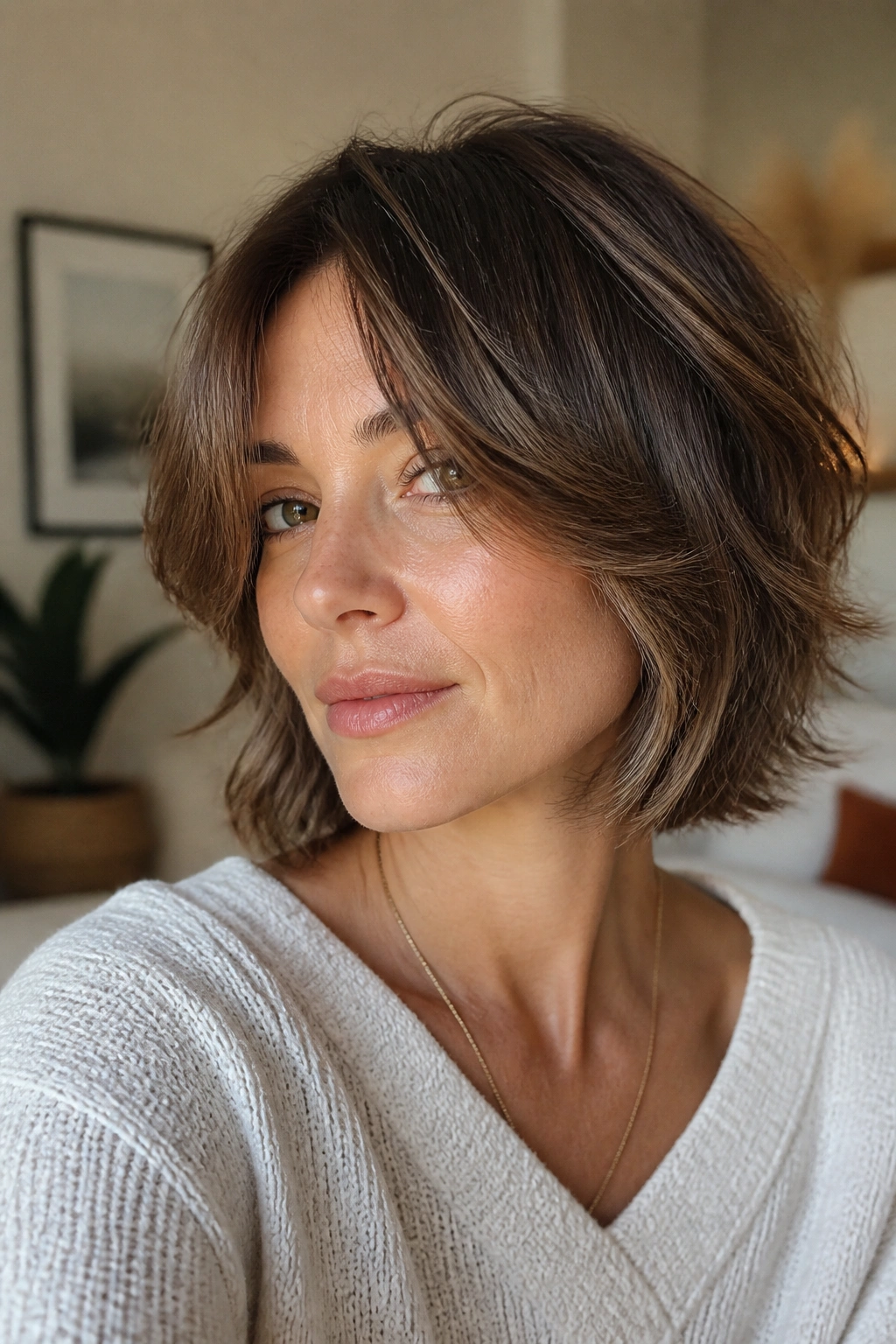
A shag bob can be a good call for fine hair, but only if the layers are kept long and the base stays solid. The bad version of this cut looks airy in the worst way—thin, frayed, and scattered. The good version looks soft, piecey, and full of movement.
Where the layers should stop
The layers should build around the cheekbones and jaw, not get hacked all the way up to the crown. That keeps the top from collapsing and preserves the shape around the lower half of the face. Curtain fringe helps here because it breaks up the front without taking too much density away from the hairline.
How to style it
A diffuser can help if your hair is wavy, but keep the heat low and the airflow gentle. Fine hair does not love aggressive drying. It frizzes fast, then falls flat an hour later. A light texturizing spray at the mid-lengths is usually enough.
I like this cut for people who want a little edge and do not mind a more casual finish. It is not the neatest style on the list. It is the one that looks best when it moves.
8. The Tapered Pixie with Longer Top Pieces
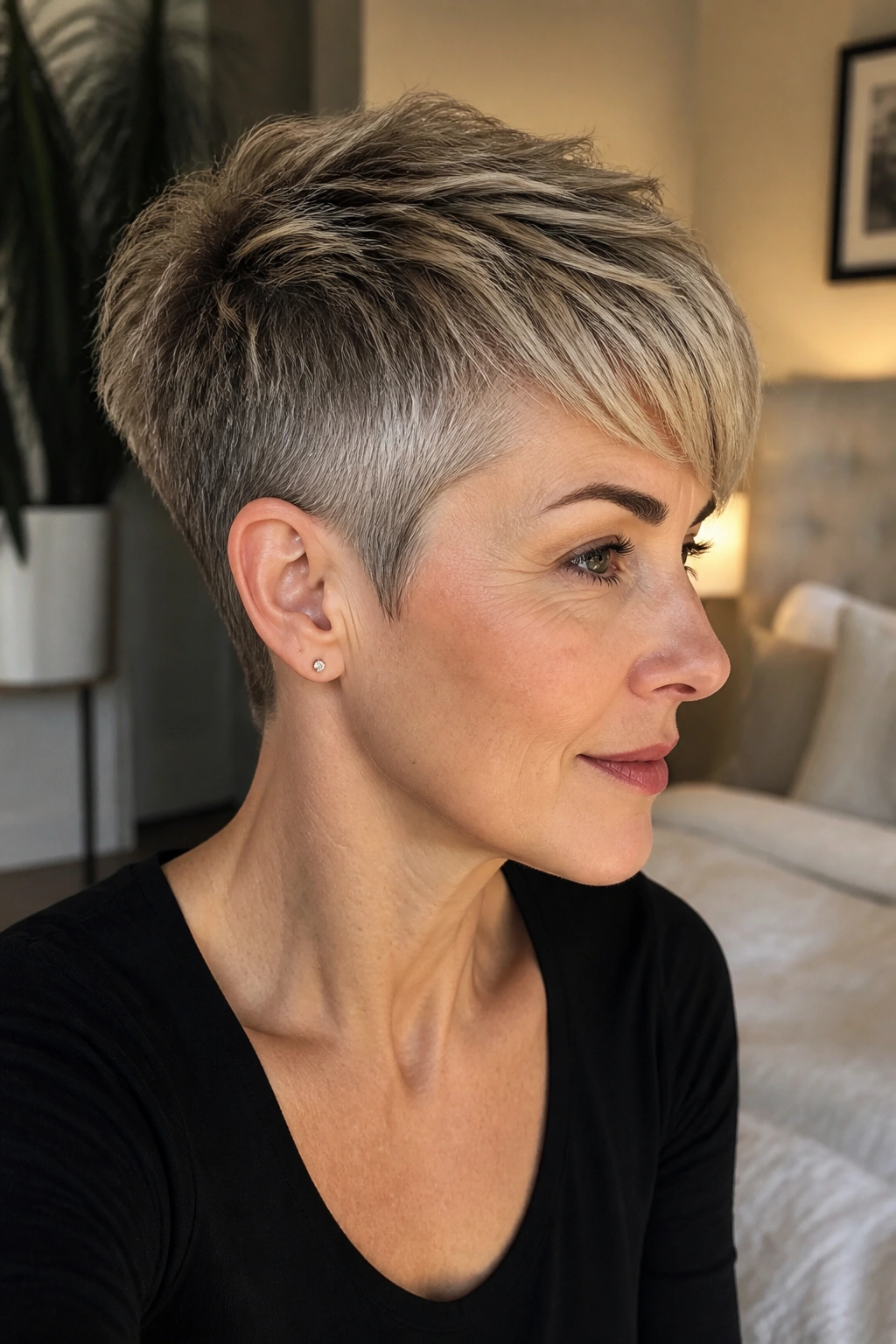
Some mornings, you want a haircut that still looks decent when you have done almost nothing to it. The tapered pixie is good for that. The sides and back are cut close, while the top stays longer and softer, which gives the illusion of height where you need it most.
The nape matters a lot here. A clean taper at the neck stops the back from puffing out awkwardly, and it makes the top feel more lifted by comparison. On fine hair, that contrast is useful. It keeps the cut from reading as flat and shapeless.
What makes it easy to live with
- The top can be brushed forward, up, or to the side.
- The neckline stays neat between salon visits.
- A small dab of cream or paste is enough for the whole head.
This cut works especially well if your hairline is delicate or your temples are sparse. The shorter sides create a neat frame without asking the hair to do more than it can. And honestly, that is the charm of it.
9. The Inverted Bob with a Stacked Back
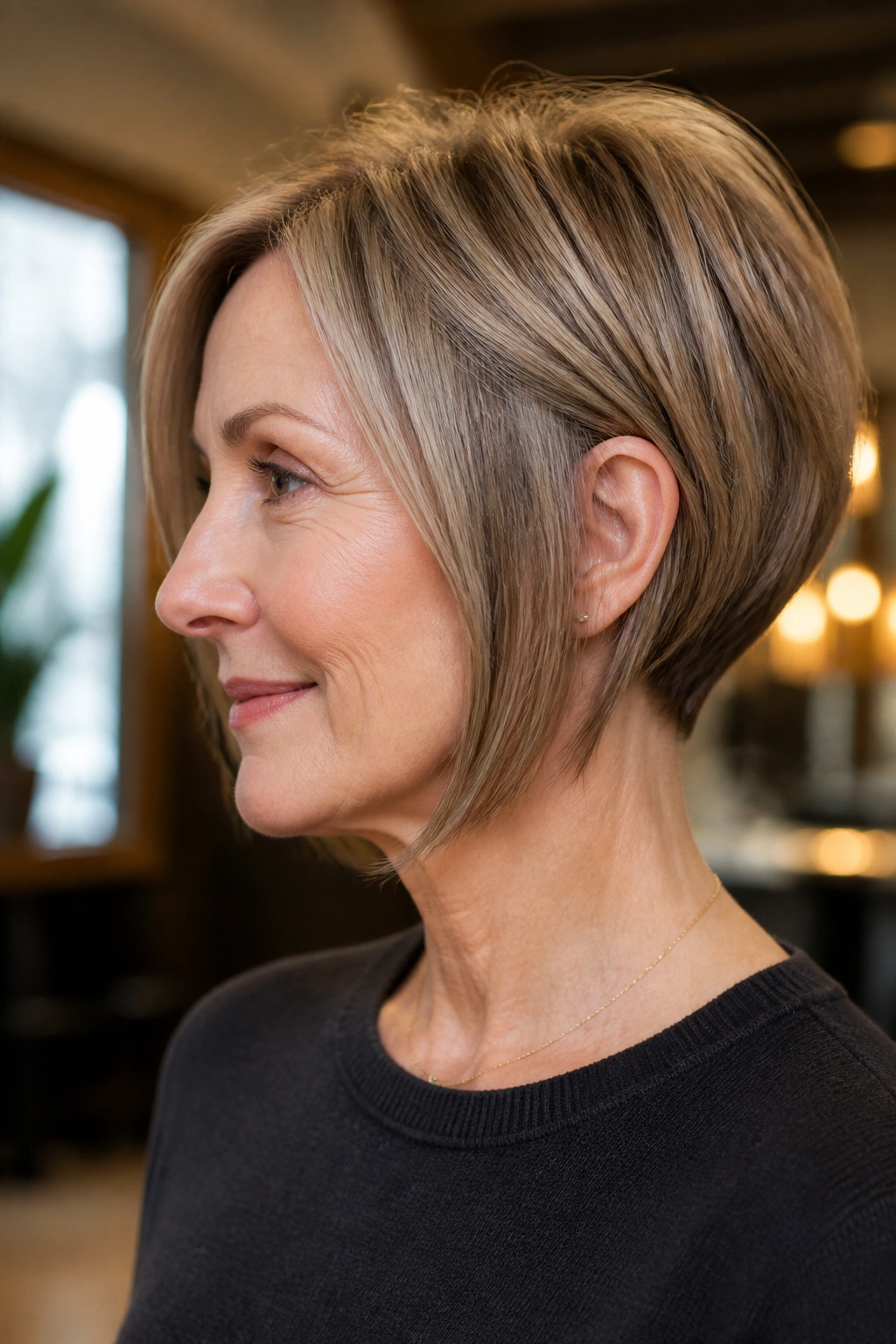
The inverted bob is one of those shapes that gives fine hair a built-in advantage. Shorter in the back, longer in the front, it creates lift at the nape and a cleaner line around the face. That stacked shape can make the back look fuller without relying on heavy product.
But there’s a catch. If the stacking is too aggressive, the back can start to look hollow. That is not what you want. Fine hair needs a little structure, not a cliff.
Ask for a soft stack and a front length that lands around the jaw or just below it. The front pieces should still feel like they belong to the same haircut. If they get too disconnected from the back, the whole shape can look choppy.
This bob is good for straight hair, or hair that dries mostly straight with a little bend at the ends. It has enough shape to look polished on its own, which is useful when you do not want to fuss with a round brush every morning.
10. The Collarbone Lob for Thinning Fine Hair
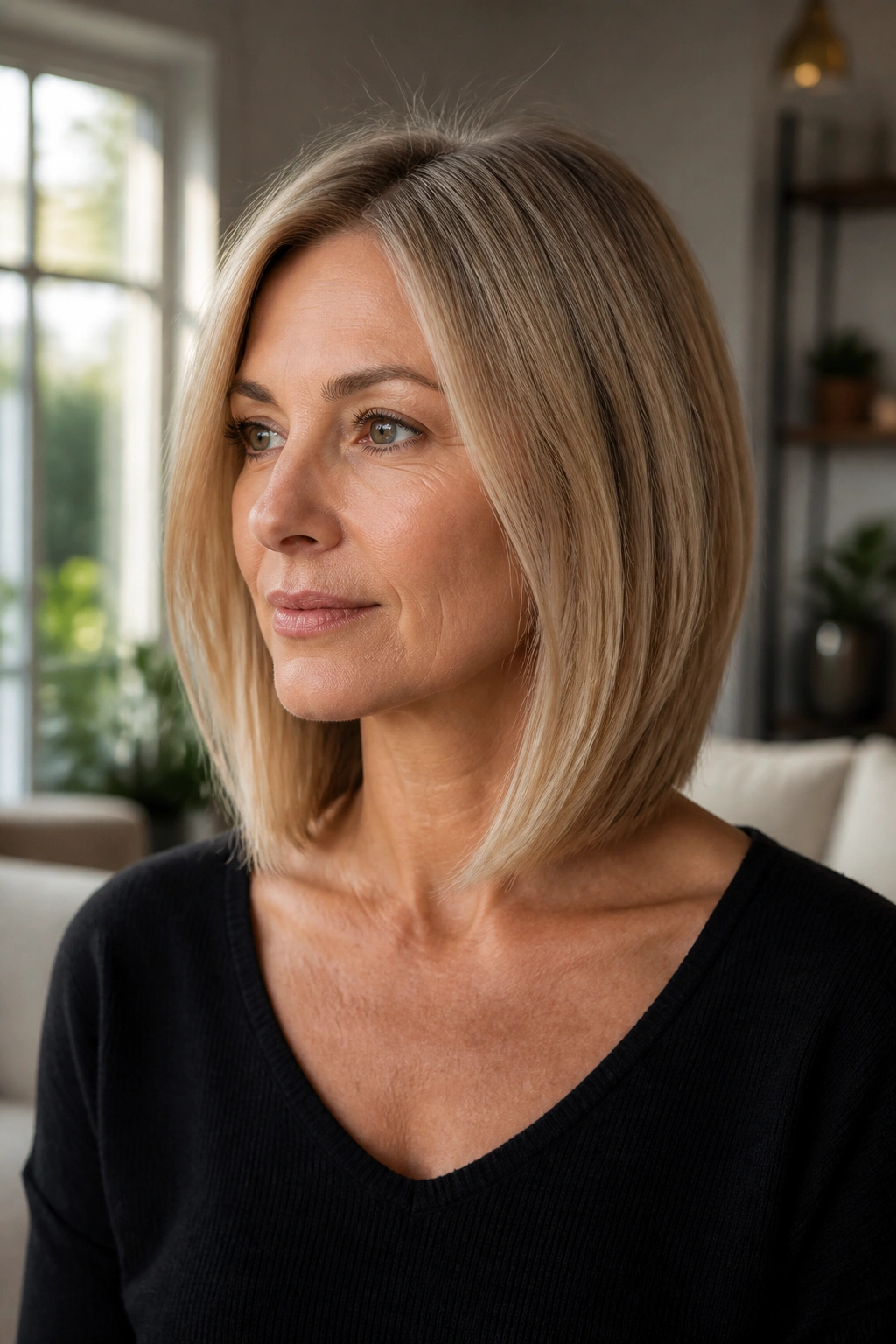
Can a longer cut still work on thinning fine hair? Yes, if the ends are weak and you are not ready to go super short. A collarbone lob keeps enough length to feel familiar, but it avoids the stringy look that happens when fine hair gets too long and too light.
The trick is hidden structure. Ask for soft internal shaping, not obvious layers that eat away at the perimeter. The outside line should stay fairly clean so the ends still look dense. The movement lives inside the cut, not on the surface.
This length is especially good if your hair has a little wave. It falls in a way that feels natural, and the extra length gives you some room to tuck one side behind the ear or make a low bend with a curling iron. Two or three loose waves are usually enough.
If your roots are flat, flip your part from time to time. That small change helps the hair stand up at the scalp and keeps the same section from lying down all the time. Simple. Effective.
11. The Curly Crop That Lets Texture Do the Work
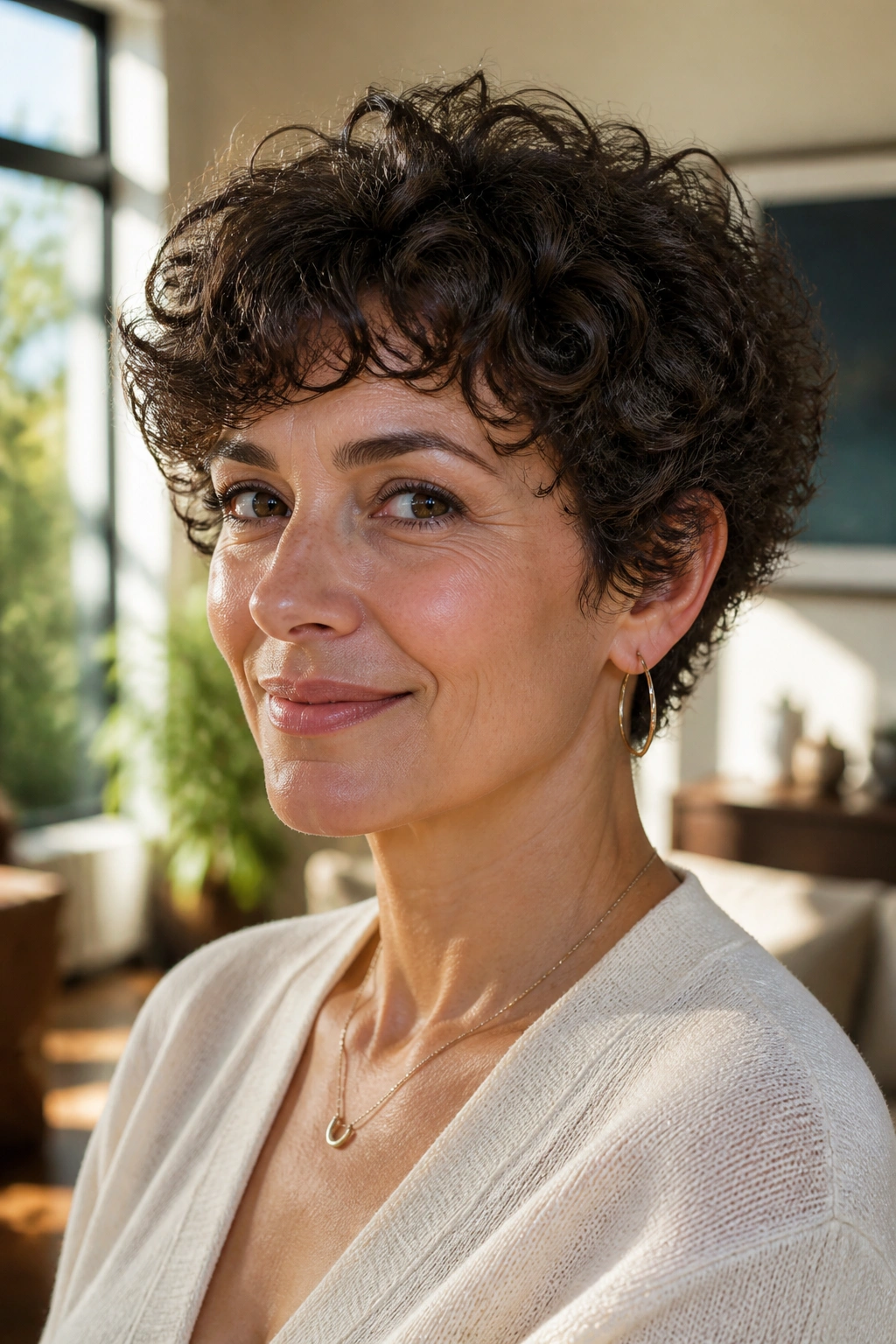
Fine hair with curl or wave is a different animal. It can look sparse when it is too long, then puff up when it is cut the wrong way. A curly crop solves that by letting the curl shape do the volume work instead of fighting it.
Cut it dry
A dry cut is often the smarter move here because curls shrink. A stylist can see where the clumps fall and keep the shape balanced without taking off too much. That matters more than a perfect round line. Perfect is not the goal. A stable shape is.
Use less product than you think
A curl cream or light gel is enough for most fine curls. Heavy butters and thick creams can drag the curl down, which makes the hair look thinner at the roots and sticky at the ends. Start small. Add more only if the curl pattern needs it.
This cut works best when the ends stay blunt enough to hold together. Too much thinning destroys the curl clumps and leaves the hair fluffy in the wrong way. Fine curls need definition, not dust.
12. The Sleek Ear-Tuck Bob with a Deep Side Part
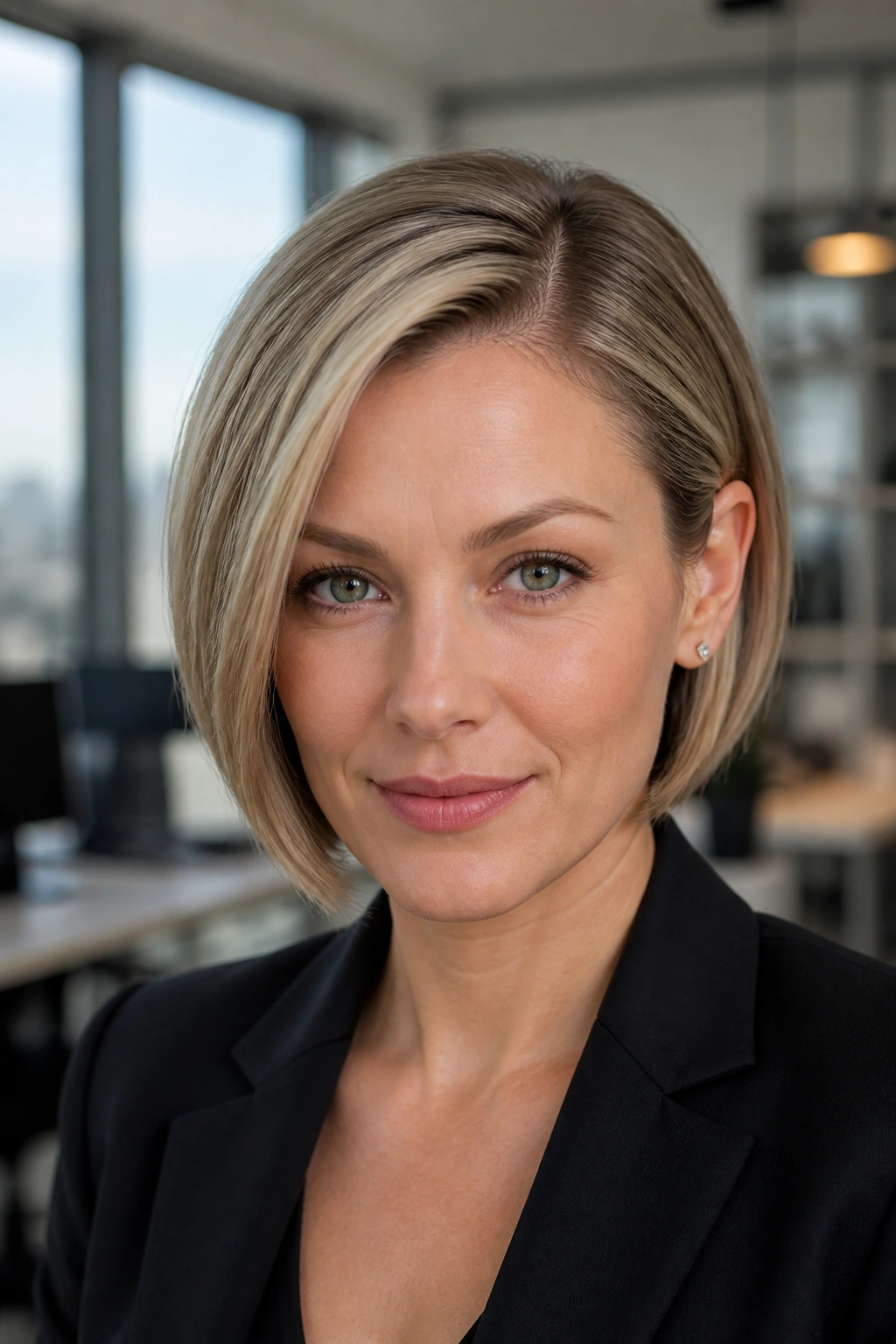
There is something satisfying about a bob that tucks neatly behind one ear and leaves the other side to frame the face. It is clean, sharp, and flattering for hair that needs a little extra lift from shape rather than layering.
A deep side part does a lot here. It shifts more hair to one side, which gives the roots a chance to rise a little on the heavier side. The tucked side creates a deliberate break in the line, so the cut feels styled even when you have only spent a few minutes on it.
Tiny details that matter
- Keep the surface smooth with a small round brush or a flat brush.
- Use serum only on the ends, not near the roots.
- A barrette or tuck behind the ear keeps the line crisp.
I like this style for work settings and dressier nights because it looks intentional without being stiff. The shine matters, but not in a heavy, greasy way. Fine hair shows every product mistake, so less is better.
13. The Feathered Crop with Wispy Ends
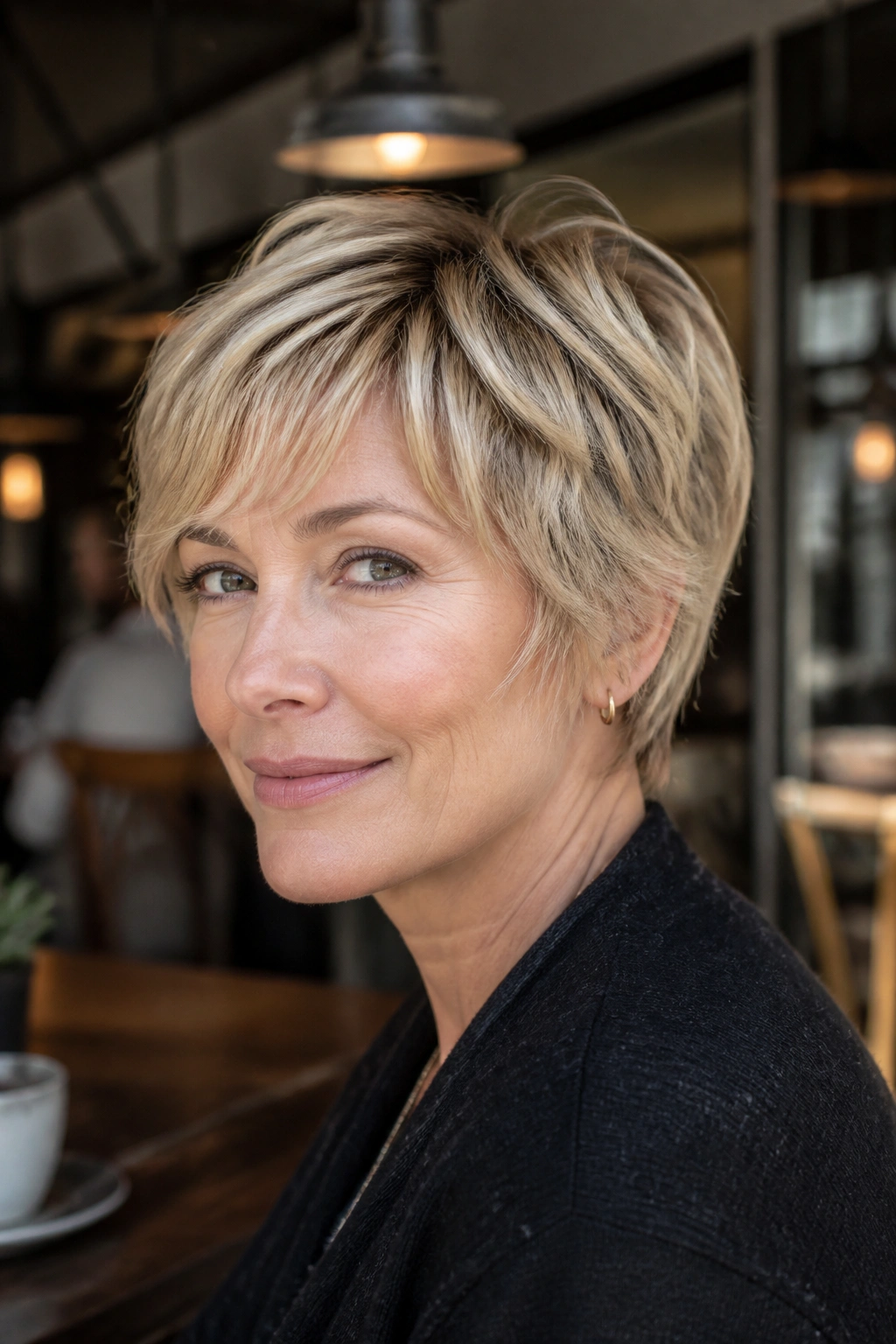
Feathering can be dangerous on fine hair if a stylist gets too enthusiastic. Done badly, it removes the very weight that helps the hair look full. Done carefully, though, it softens the outline around the face and makes the haircut move without looking sparse.
The safest version keeps the feathering around the cheekbones and outer edges. The bottom line stays stronger. That way you get some air around the face, but the cut still has a clear edge at the ends. I prefer that balance over an all-over fluffy finish.
This is a good option if your face looks best with softness near the jaw or temples. The hair can sit a little off the head and still keep its shape. A light blowout with a vent brush helps the pieces separate just enough to show the texture.
If your hair already breaks easily, ask for soft texturing only. No aggressive thinning. No razoring through the ends. You want the haircut to move, not unravel.
14. The Jaw-Length Bob with a Sharp Center Part
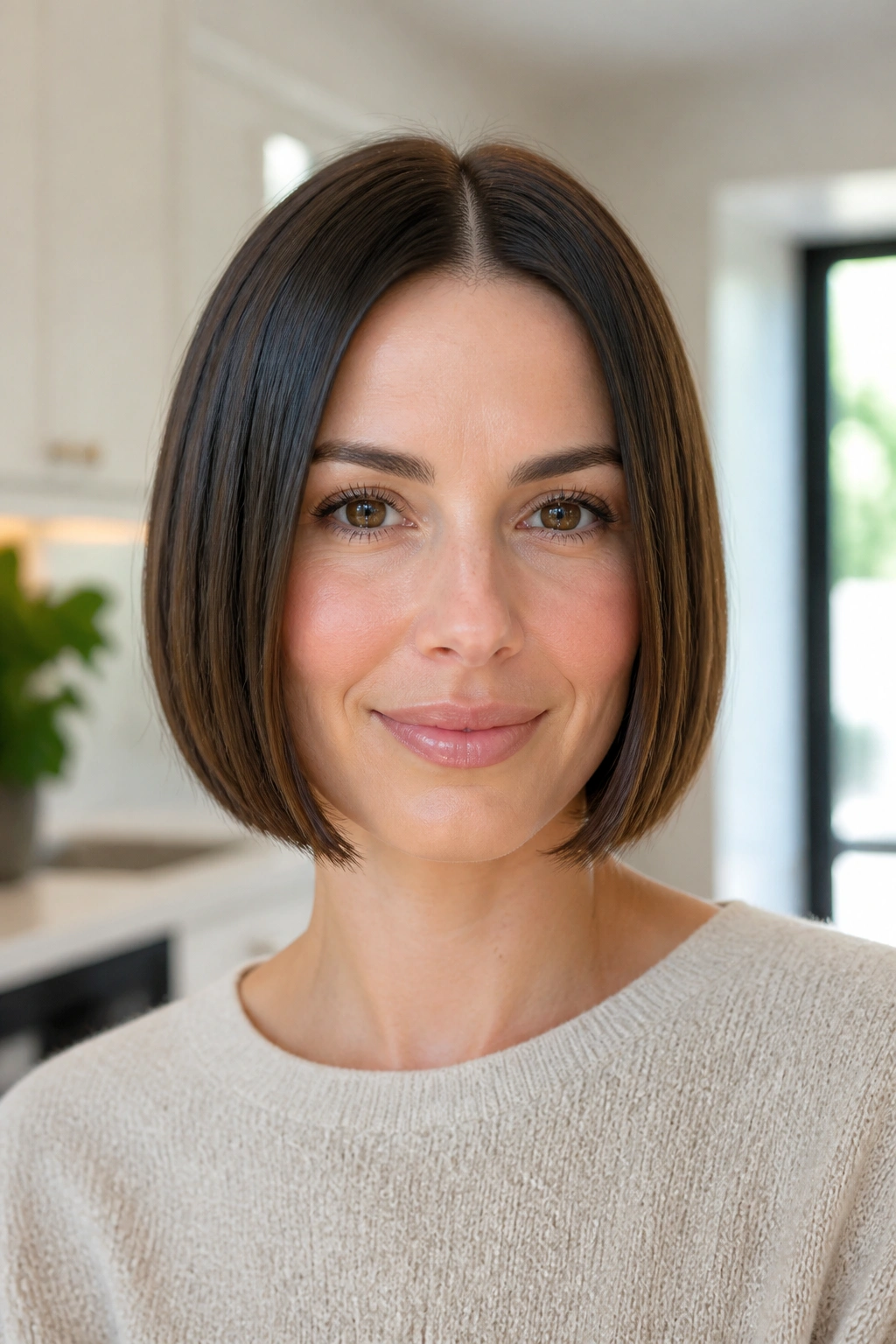
A sharp center part can look brilliant on fine hair when the rest of the bob is strong. The symmetry makes the cut feel crisp, and the jaw-length perimeter keeps the ends from going wispy. It is a simple shape, but that simplicity is exactly why it works.
Unlike a side-parted bob, which can hide density on one side, a center part puts everything on display. That sounds risky, and sometimes it is. If your crown is very flat or your hairline is sparse, the part can reveal too much scalp.
Still, when the hair is cut blunt and the roots have a little lift, the look is clean and modern. I would choose this cut for straight hair that naturally falls in a smooth line. It also works well if you like a no-fuss finish. No layers to battle. No extra pieces to tame.
A root-lifting spray at the part, then a quick blast of heat at the crown, usually does the job. The shape should do most of the talking.
15. The Boyish Crop with a Soft Nape
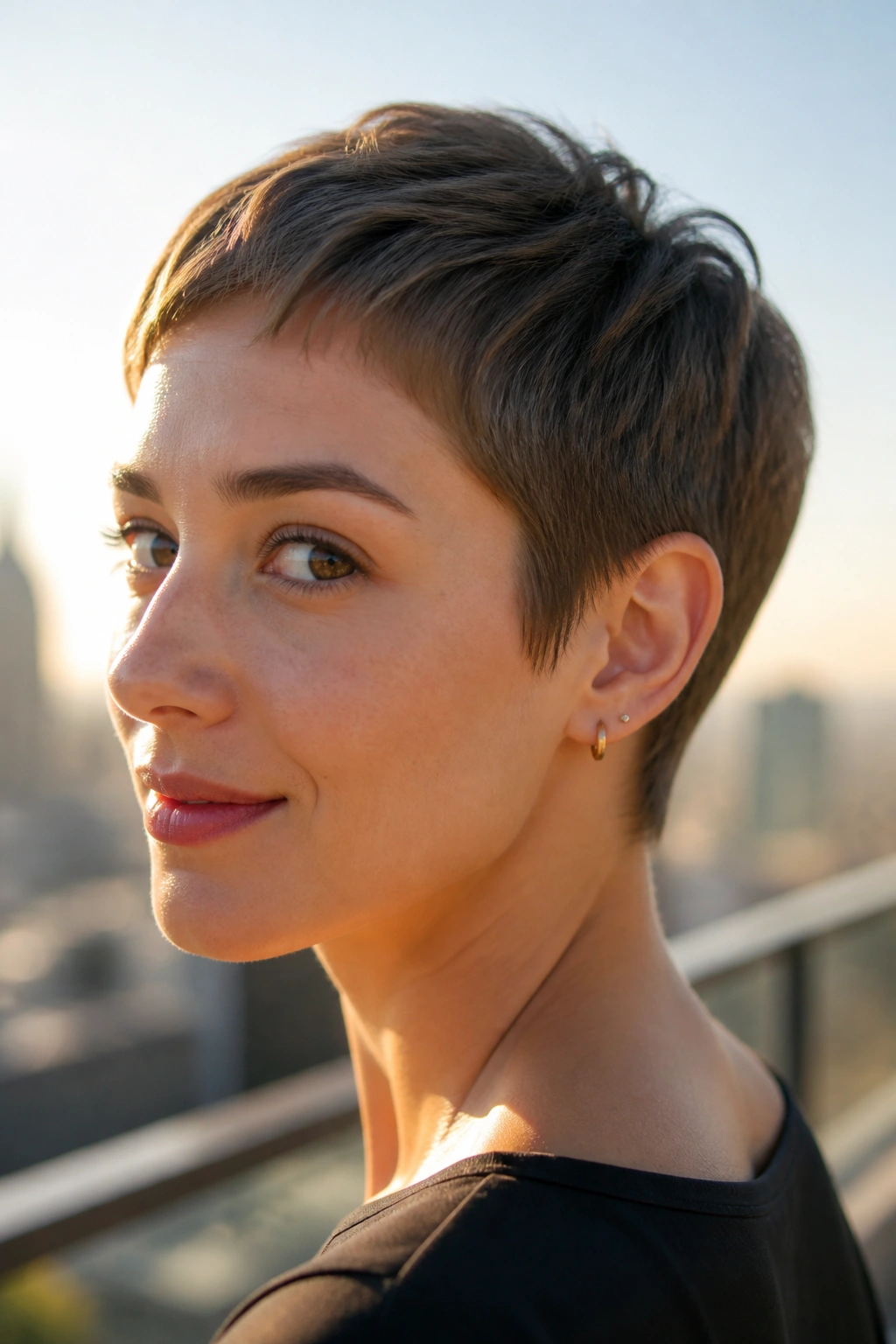
Can a very short cut still feel soft? Absolutely. The boyish crop proves it, especially when the nape is tapered neatly and the top is left slightly longer so the haircut does not look severe.
This cut is for people who want the shortest possible routine. Wash it, blot it, put a little cream through the top, and go. That’s the appeal. Fine hair often behaves better when it is short enough to hold shape without collapse.
The nape matters again here. If it is cut too blunt or too bulky, the whole style can puff out in an awkward way. A clean taper keeps the neckline neat and helps the top look more lifted by comparison.
I would ask for softness around the temples too. That little detail keeps the cut from looking boxy. If you wear glasses, this shape can be especially good because it leaves the frames room to stand out.
16. The Rounded Bob That Hugs the Face

A rounded bob gives fine hair a fuller outline because the shape curves in around the cheeks and jaw. Instead of hanging straight down, the hair sits in a soft arc, which makes the silhouette look thicker from the side and front.
Why the curve helps
The rounded shape creates the illusion of density where the eye expects volume. That is why this cut often looks better than a flat, one-length bob on hair that has started to lose body. The curve gives the ends a place to sit.
It also works nicely with glasses, strong cheekbones, or a narrow jaw. The hair frames the face without hiding it. I would keep the layers minimal and focus on the outer line, because too many internal layers can make the shape fall apart.
A round brush or a medium curling brush can help you bend the ends inward during drying. You do not need a salon blowout every morning. Even a slight curve makes the cut look more finished.
17. The Soft Taper Pixie for Easy Daily Styling
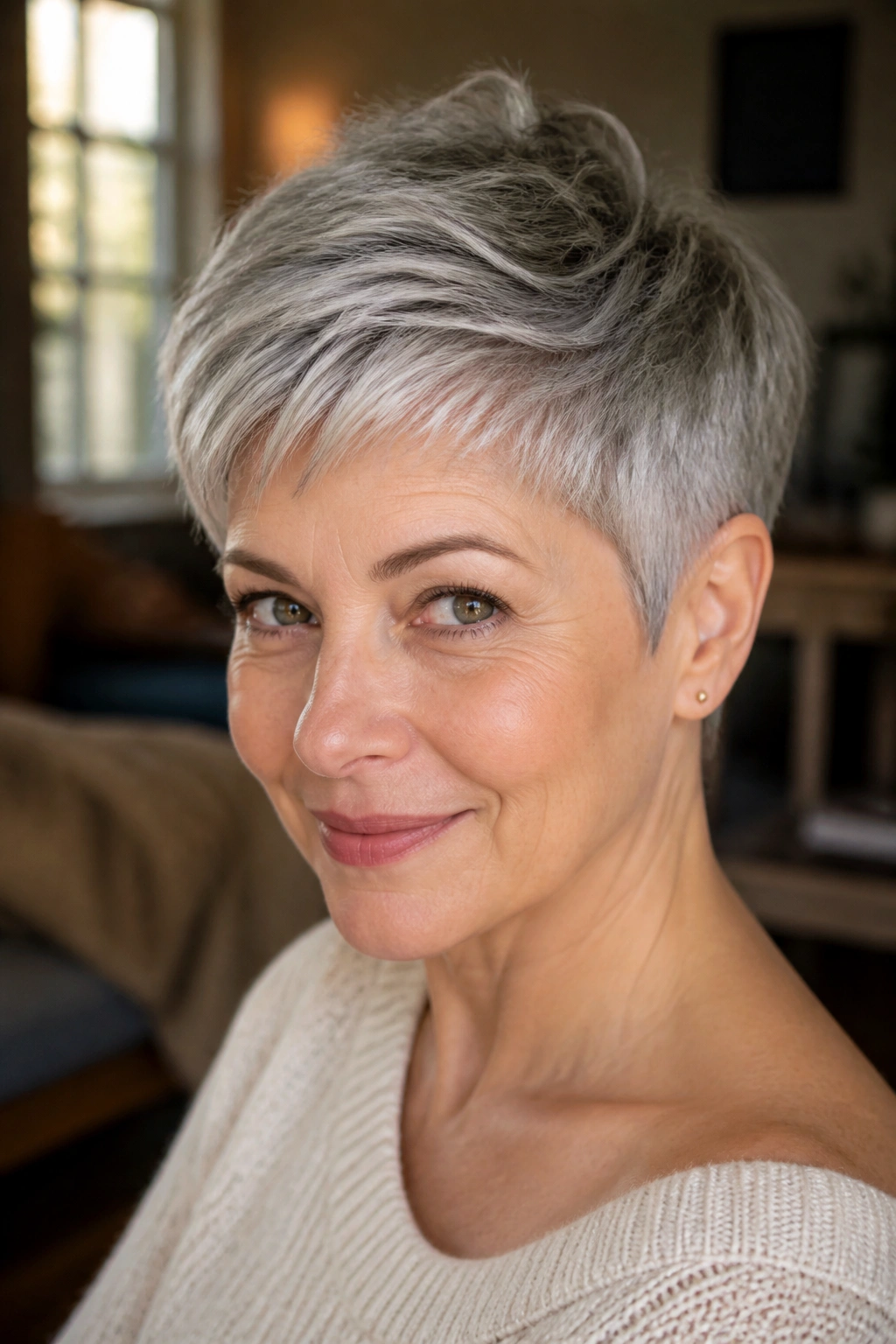
If you want the shortest option with the least morning drama, this is the one I keep coming back to. A soft taper pixie keeps the sides and back close while leaving enough length on top to shape with your fingers, which is exactly what fine hair often needs.
The best version is not severe. It leaves a little softness around the hairline and a little movement over the forehead, so the cut feels easy rather than harsh. The top should still hold some weight. That weight is the whole point. Without it, the cut can look thin instead of light.
A tiny amount of styling cream is enough. Work it through damp hair, then push the top forward, up, or slightly diagonal depending on your face shape. If your hair tends to collapse, a quick blast of heat at the roots makes a bigger difference than adding more product.
This is the cut I would suggest to someone who is tired of fighting fine hair every morning. It is neat, fast, and forgiving. And when the shape is right, that is often all the haircut needs to be.
