



Short hair has a funny reputation. People treat it like a compromise, then spend months realizing it can look sharper, cleaner, and more expressive than longer hair ever did.
The best hairstyle ideas for short hair do not try to fake length. They work with the cut you already have — the jaw-skimming bob, the cropped pixie, the shaggy crop that has a mind of its own. That’s where the good stuff lives.
It also helps to think in shapes. Short hair wants a bend, a tuck, a lift, a wet finish, or a little bit of mess on purpose. It does not need a huge amount of product, either. A pea-sized dab of paste can be plenty. So can three bobby pins and a flat iron if you know what you’re doing.
A lot of short styles fail for one simple reason: they look random instead of chosen. The ideas below are built to fix that. Start with the easiest ones, then work your way toward the more polished looks.
1. Textured French Bob

A French bob gets away with more than almost any other short cut. It sits right around the jaw, sometimes a touch below, and that little gap between blunt and soft is where the charm lives.
Why It Flatters So Many Faces
The shape gives the face room to breathe. A slight bend at the ends keeps the bob from looking boxy, and a side part or off-center part makes the whole cut feel less strict. If your hair is fine, this style can make it look fuller without piling on heavy product.
A 1-inch curling iron or a flat iron works well here, but only on the mid-lengths. Leave the last half-inch straight. That tiny detail keeps the bob modern instead of curled-under and fussy.
- Mist the hair with a light heat protectant before styling.
- Wrap 1-inch sections away from the face for 5 to 8 seconds.
- Shake the roots loose with your fingers, not a brush.
- Finish with a dry texture spray on the crown.
Best tip: keep the ends a little imperfect. That’s the whole point.
2. Sleek Side-Part Pixie
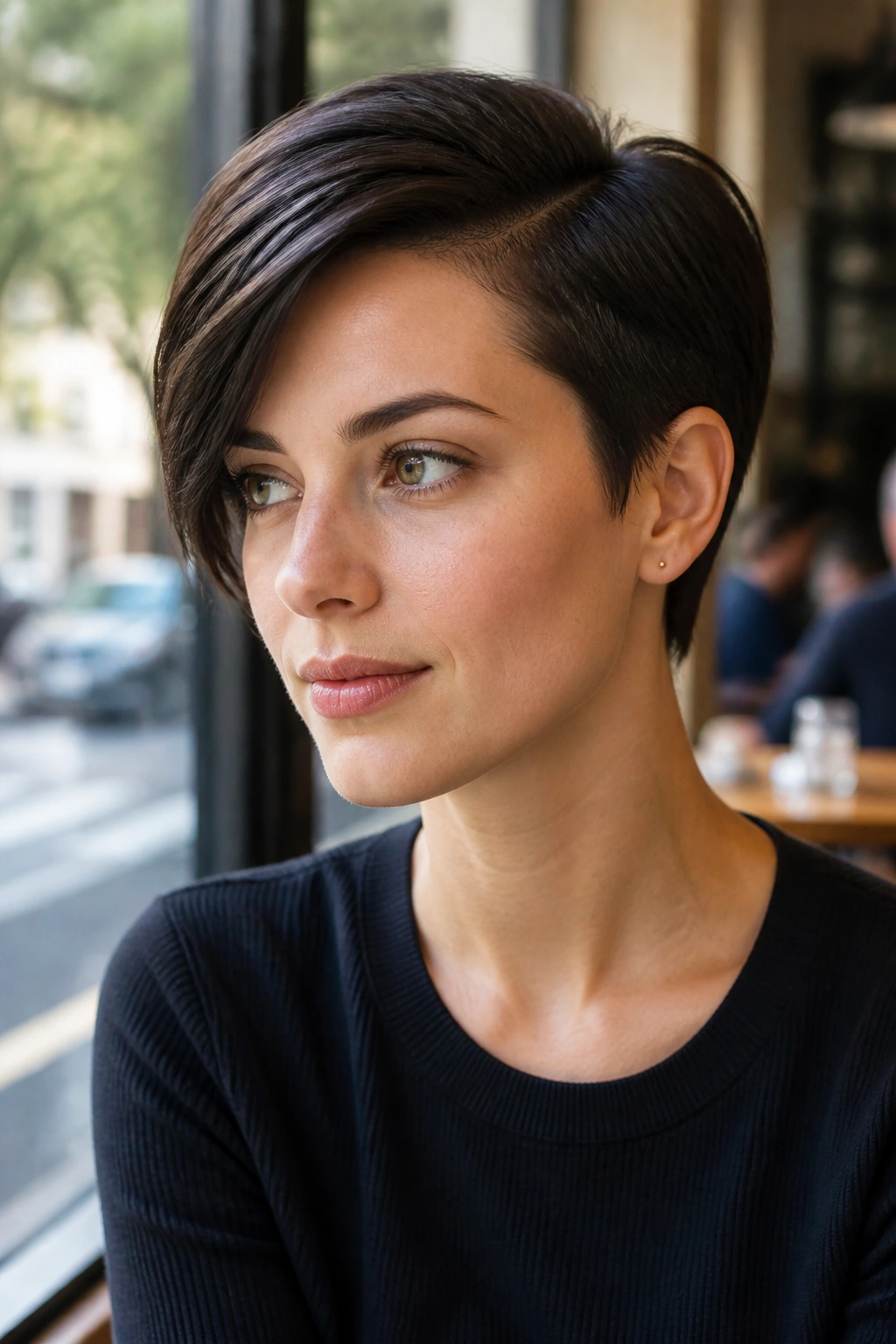
This cut has attitude. Not loud attitude. The quiet kind that looks expensive because it’s so clean.
A side-part pixie works especially well when the top has enough length to sweep over the forehead, even if the sides stay close to the head. A small amount of styling cream or wax goes a long way; too much and the hair starts to look greasy by lunch, which ruins the effect fast.
The part matters more than people think. Shift it just an inch or two away from the center, then comb the longer top section across in one smooth line. If a few pieces fall forward, let them. That’s what keeps the style from feeling stiff.
This is one of those short hairstyles that looks best when the neckline is clean and the shape around the ears is deliberate. If the edges are grown out, it loses its bite. If the edges are sharp, it looks sharp in a good way.
3. Air-Dried Curly Crop

What if your curls want less control, not more? That’s the whole appeal of an air-dried crop. It lets the natural pattern do the work, which usually looks better than over-styling anyway.
Use a curl cream on soaking-wet hair, then scrunch in a small handful of mousse from the ends up to the ears. The trick is to stop touching it once the product is in. Seriously. Every extra rake through the curls makes the top puffier and the ends less defined.
How to Keep the Curl From Puffing Out
After the hair is about 80 percent dry, bend forward and let gravity help you. That part matters. It keeps the top from drying flat while the underside stays damp and swollen.
A diffuser can help if the roots need lift, but keep the heat low and the airflow gentle. If you blast short curls with high heat, they expand in all the wrong places.
- Use a leave-in conditioner first if the hair is dry.
- Scrunch with a microfiber towel, not a rough bath towel.
- Diffuse on low heat for 5-minute rounds.
- Separate curls only after they’re fully dry.
4. Blunt Micro Bob
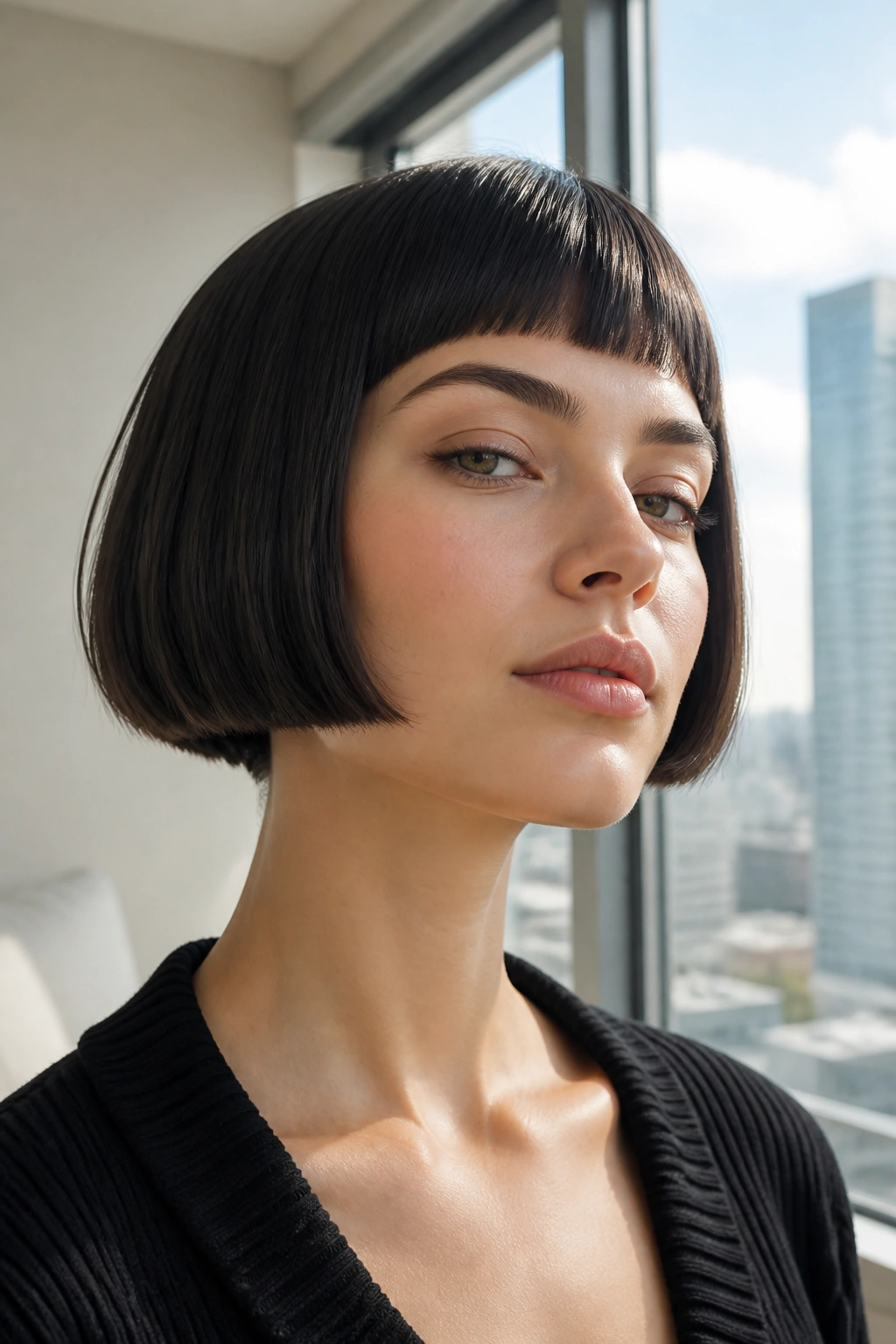
A micro bob makes a strong case for short hair. The perimeter sits close to the jawline, the ends are one length, and the whole cut looks neat even when you barely style it.
Walk into a room with a blunt micro bob and people notice the line first. That’s the magic. It’s almost architectural, but still easy to wear if the cut is good. Fine hair especially likes this shape because blunt ends can make it look denser at the bottom.
The styling part is simple. A smoothing cream, a quick blow-dry, and a flat iron pass on the last inch is often enough. You do not need curling. You do not need volume everywhere. A micro bob lives or dies on the cleanliness of the edge, so the ends should sit crisp, not fluffy.
If you like earrings, this cut is a dream. It clears the face and leaves the jawline visible, which gives even a plain T-shirt a little polish.
5. Curtain-Bang Crop

Curtain bangs on short hair feel softer than a full fringe, and that softness is exactly why they work. The part opens in the middle or just off-center, then the bangs sweep down toward the cheekbones instead of sitting like a wall across the forehead.
That shape helps if you want something low-commitment. Curtain bangs grow out better than blunt bangs, and they still give a short cut some movement around the face. A round brush, a blow dryer, and a small Velcro roller at the crown can do a lot here.
The trick is to dry the bangs away from the face first, then let them fall back on their own. If you brush them straight down from the start, they tend to collapse into a heavy strip. Nobody wants that.
This style looks especially good with bobs that hit somewhere between the cheek and the chin. The bangs soften the line, and the rest of the cut gets to stay simple.
6. Half-Up Mini Knot

A tiny half-up knot is one of the easiest ways to make short hair look styled without pretending it’s longer than it is.
Unlike a full topknot, this keeps the length visible. You pull only the top third of the hair back, twist it once or twice, and secure it with a small elastic or a pair of pins. Leave the bottom layer loose. That contrast — neat at the crown, loose below — is what keeps it from looking childish.
It works best on second-day hair, because a little grit helps the knot stay put. Freshly washed hair can slip right out unless you rough it up with texture spray first. If the ends stick out, that’s fine. Actually, it looks better that way.
A mini knot is useful on days when your hair is too short for a real bun but too flat to wear down as-is. Fast, not fussy. Which is a relief.
7. Deep Side-Part Wavy Bob
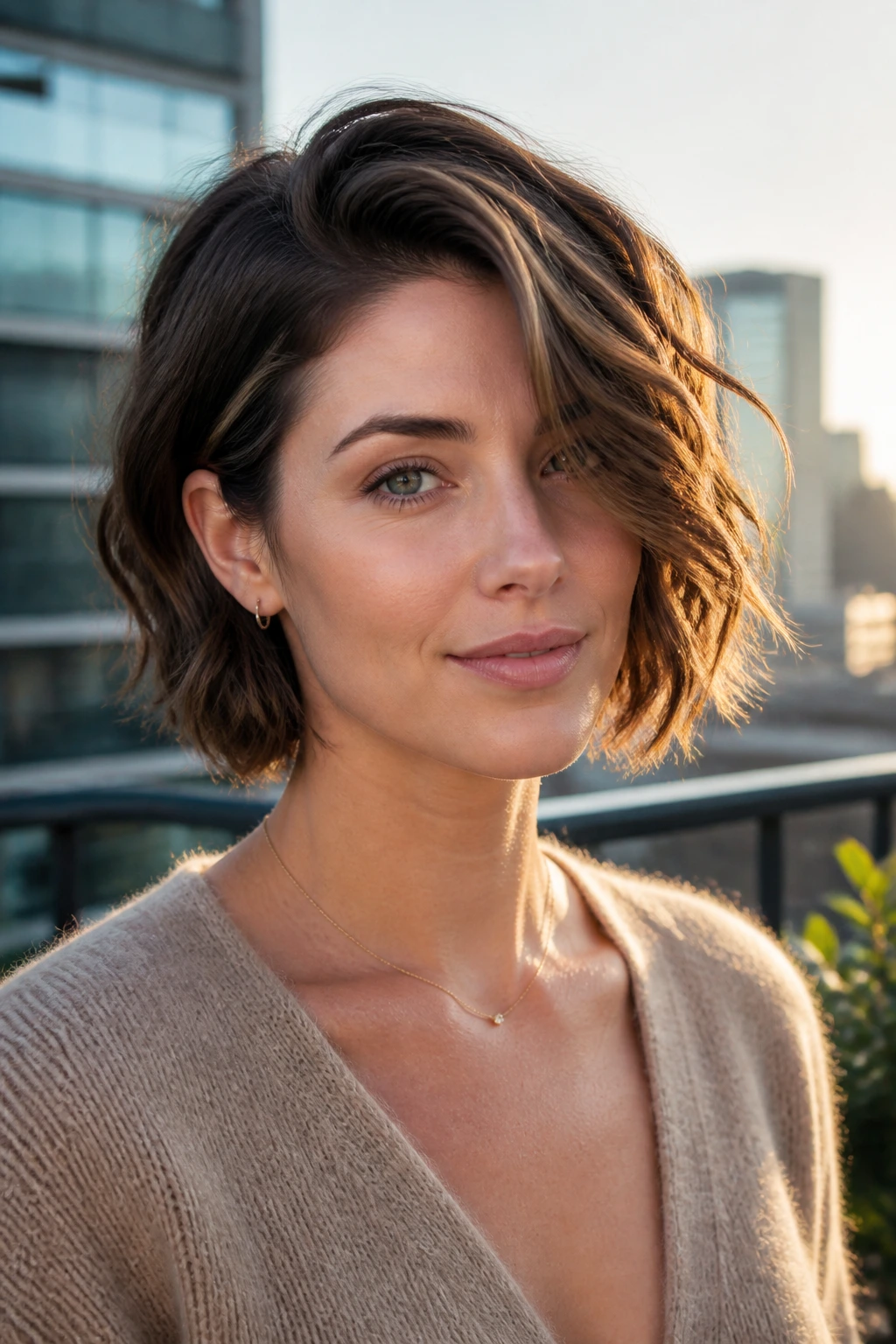
Why does a deep side part make a plain bob look so much more finished? Because it changes the whole balance of the cut.
When the part sits low and far to one side, one half of the hair gets lift at the root while the other half hugs the face. That asymmetry adds shape without changing the haircut itself. A 1-inch iron works well here, but don’t curl every strand the same direction. Alternate the bend on the mid-lengths and leave the last inch straighter for that loose, lived-in wave.
Where the Bend Should Begin
Start the wave just below the cheekbone. If you curl too close to the roots, the whole style looks overdone. If you start too low, the bob can fall flat and lose its swing.
A few quick pin curls at the front can help while the hair cools. Not necessary, but useful. Especially if your hair resists holding a bend.
- Shift the part an inch or two past the arch of one eyebrow.
- Curl sections away from the face on the heavier side.
- Mist with flexible-hold spray, then rake through once.
- Finish with a light shine serum on the ends only.
8. Wet-Look Short Crop

A wet look is cleaner than people think. On short hair, it can read sharp, sleek, and almost editorial without turning into a helmet.
Start with damp hair and work gel through the top and sides using a fine-tooth comb. The product should coat the strands, not sit in clumps. If it feels sticky in your palms, you probably used too much. A glossy finish comes from even distribution, not from drowning the hair.
How to Avoid Crunchy Ends
The ends need a touch less gel than the roots. That’s the part many people miss. When the very tips get overloaded, they dry into little spikes instead of lying smooth.
A soft brush can help smooth the sides back, but stop combing once the shape is in place. Every extra pass breaks the surface and turns glassy shine into fluff.
This style works especially well on a bob or pixie with a strong cut line. It also hides second-day roots better than a lot of polished styles, which is one reason it keeps hanging around.
9. Finger Waves

Finger waves make short hair look deliberate in a way loose styling never quite can. There’s a little patience involved, sure, but the result has a clean, sculpted shape that feels worth it.
Setting lotion, a fine comb, and duckbill clips are the tools here. You create an S-shaped wave by pushing one ridge forward and the next ridge back, smoothing each curve into place while the hair is still damp. It sounds fussy because it is fussy. That’s not a flaw. It’s the point.
The best finger waves do not look crunchy or overworked. They look smooth, almost molded, with a soft sheen. If you want the style to stay put, let it dry fully before removing the clips. Half-dry waves fall apart fast.
This is one of the rare short styles that can look just as good with a satin dress as it does with a tailored jacket.
10. Mini Braids Along the Hairline

Tiny braids along the hairline can change the mood of a short cut in five minutes. They add detail without asking for extra length, which is exactly why they work so well.
Unlike a full braid style, this only needs two or three skinny sections near the front or temple. They can tuck back into the rest of the hair, or sit openly beside the face. Either way, the effect is clean and a little playful.
Best Braid Placement on Short Layers
Place the braids where the shortest pieces still reach. That usually means just above the temples or right near the part. If you try to braid too far back, the layers slip out and the whole thing starts looking sloppy.
Use tiny clear elastics or flat pins to keep the ends hidden. A drop of serum on the finished braids keeps them from fuzzing up.
- Part the hair with the tip of a tail comb.
- Braid 1/4-inch sections only.
- Secure each braid right under the hair instead of letting it stick out.
- Mist the whole front with light-hold spray.
11. Choppy Shag Bob

A choppy shag bob is what happens when a bob stops trying to behave. It’s layered, piecey, and a little bit wild in the best way.
This cut loves movement. The crown gets some lift, the ends are broken up with texture, and the fringe or front layers usually fall in uneven, flattering bits. A razor-cut finish helps, but the real secret is styling with a dry texturizing spray instead of heavy cream. Heavy cream drags the layers down and turns “cool” into “flat.”
I like this style most on hair that has a natural wave or a cowlick or two. Those little quirks stop mattering. In fact, they start helping.
You can rough-dry it, shake it loose with your fingers, and leave it alone. That is a rare gift in short hair styling, and it’s one worth taking seriously.
12. Tucked-Behind-Ears Lob

A tucked lob is the haircut equivalent of a white shirt. Simple, but only if the fit is right.
The idea is plain: smooth the hair, tuck both sides behind the ears, and let the front pieces stay clean. That little tuck shows off the jawline and gives the style a neat frame. It also works beautifully on straight or softly wavy hair, because the shape stays visible even with almost no product.
The key is not to over-polish it. If every strand is glass-smooth, the style can feel severe. A light cream through the mid-lengths keeps the bob from puffing while still leaving some softness around the face.
This is a good pick when you want your hair to stay out of the way but still look like you made a choice. Which, honestly, is most weekday mornings.
13. Pompadour Pixie
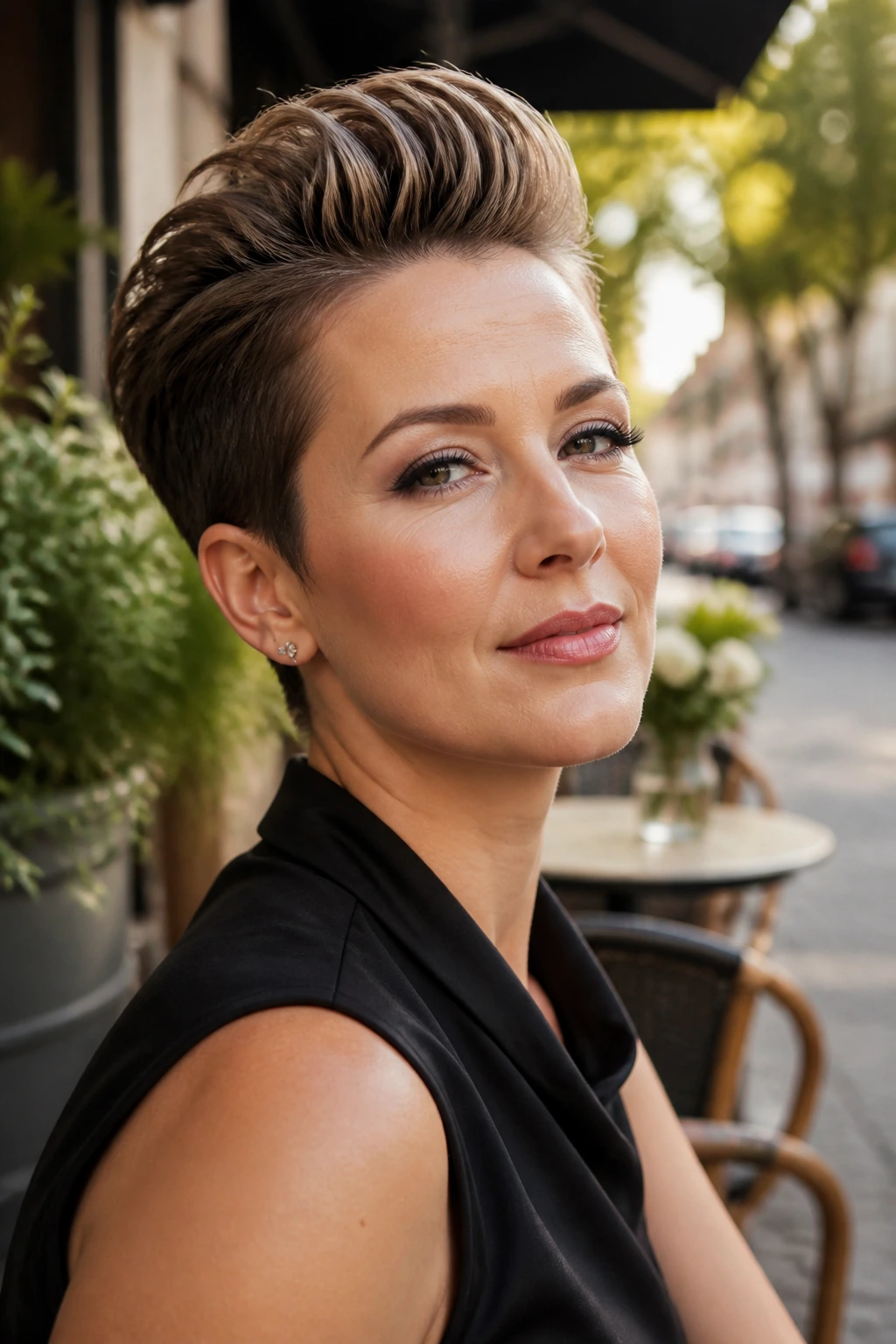
Need height without a lot of length? A pompadour pixie does the job fast.
The front section gets lifted up and back, while the sides stay close to the head. That contrast is what gives the style its shape. A little mousse at the roots, then blow-drying the front upward with a round brush, makes the volume last longer than finger styling alone.
Where the Lift Belongs
The lift should sit at the front third of the head, not all the way back. If you raise the crown too much, the cut can start looking dated. Keep the shape forward and airy instead.
A matte powder or dry shampoo at the roots helps if the hair is fine. Thick hair usually needs less product and more direction from the brush.
- Blow-dry the front against its natural fall.
- Clip the top in place while it cools.
- Smooth the sides with a small amount of wax.
- Finish with flexible spray, not hard-hold lacquer.
14. Flat Twist Crown

On coily hair, two flat twists can do more than a dozen pins ever will. They keep the hair controlled, show off the texture, and give short styles a clean shape around the face.
This works best when the hair is damp or stretched first. Add leave-in conditioner and a twisting cream, then part the hair into two or four sections depending on how much length you have to work with. Twist close to the scalp and follow the curve of the head rather than pulling the hair straight back.
A satin scarf wrapped around the twists for 15 to 20 minutes helps them settle. That little pause can make the difference between a puff and a smooth crown. The style is practical, but it also has presence. You can wear it to run errands or to a dinner where you want the hair to stay put all night.
It’s a good reminder that short hair does not need to be loose to look elegant.
15. Headband Tuck With Face-Framing Pieces

Some styles solve a problem and look good doing it. The headband tuck is one of them.
Use a 1-inch or 1.5-inch headband, slide it in a little behind the hairline, and tuck the sides back loosely. Leave two or three front pieces out around the cheeks so the look doesn’t feel too strict. That soft framing matters. Without it, the style can read a bit school-uniform.
This is a strong option on days when the roots are oily or the fringe is refusing to cooperate. Fabric headbands grip better than shiny plastic ones, and a padded band can hide a small amount of puff at the crown. If the hair is very short, pin the back sections under the band instead of forcing them in.
It’s fast, it’s useful, and it looks far more put together than it has any right to.
16. Flipped-Out Ends Bob

A flipped-out bob has a little attitude without getting loud about it. The ends curve away from the face instead of under it, which gives the cut a playful swing.
Unlike the inward curl that makes some bobs feel stiff, the outward flip keeps things open. A flat iron can do this in one pass: clamp near the ends, turn the wrist outward, then release. You only need a small bend, not a full curl. Too much flip and the hair starts looking costume-y.
How Far the Flip Should Go
The best flip usually starts at the last 1 to 1.5 inches of hair. That leaves the body of the bob smooth and lets the ends do the talking. On fine hair, keep the flip subtle so the style doesn’t collapse by midday.
A round brush and blow dryer work too, especially if you want a softer finish. Use whatever tool gives you a clean bend instead of a hard loop.
- Hit the ends with heat for 3 to 5 seconds.
- Let the hair cool in the flipped shape.
- Use a light mist of spray to lock it.
- Keep the roots smooth so the finish stays balanced.
17. Pinned-Back Sides

A few bobby pins can rescue a bad hair day faster than any grand styling plan. Pinned-back sides are simple, but they solve the “what do I do with this?” problem with very little effort.
Twist a 1-inch section from each temple and pin it back behind the ear, or cross two pins in an X shape for extra hold. If the hair is freshly washed, rough it up with texture spray first. Clean hair slips. That’s the annoying part.
This look is especially useful when bangs are growing out or one side keeps falling in your eyes. A small barrette can make it feel a bit prettier, but plain pins work fine. Sometimes better.
It’s not a statement style. It’s a useful one. And useful wins plenty of mornings.
18. Defined Mini Afro
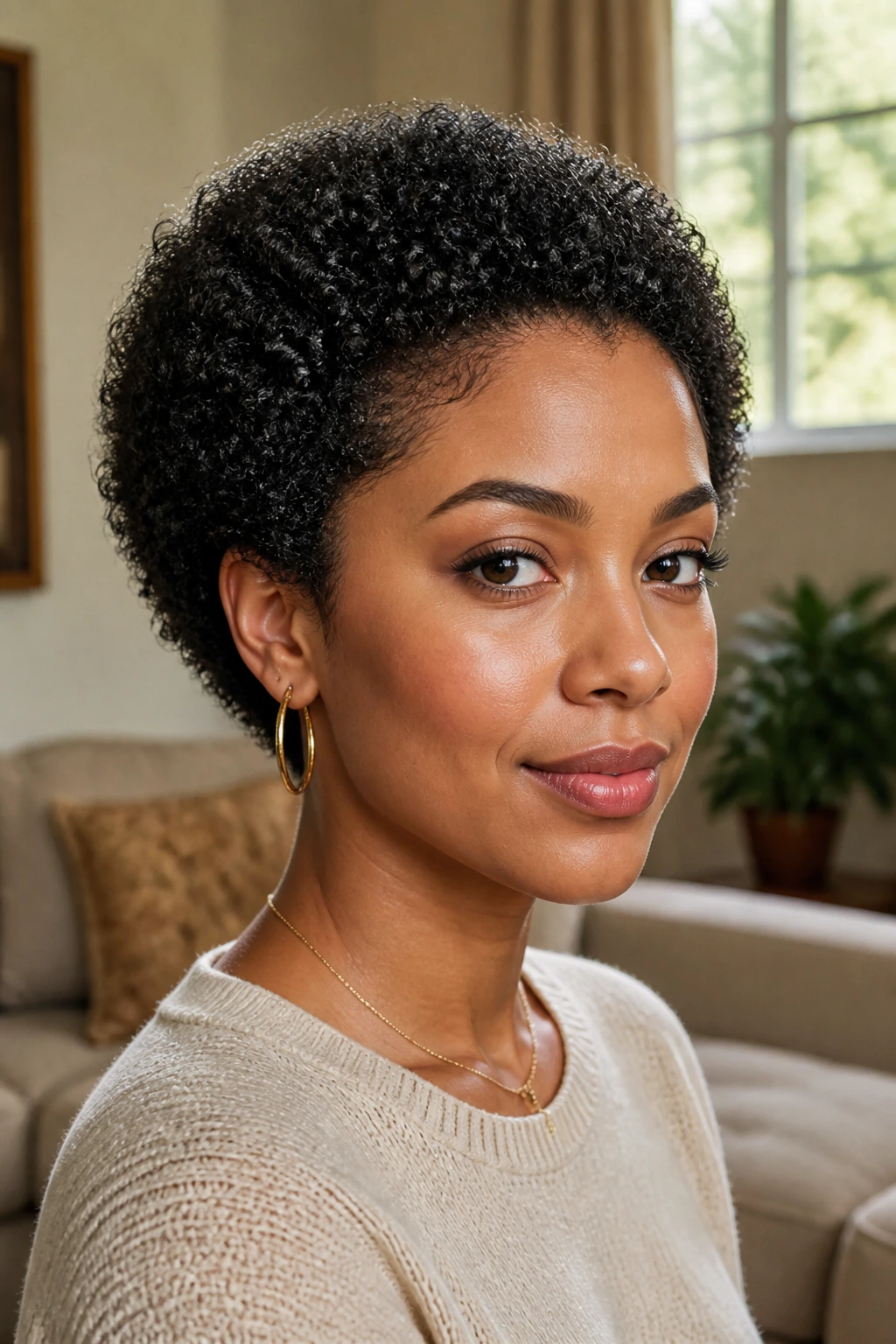
Shape beats length here. A defined mini afro looks best when the outline is clear, the moisture level is right, and the roots are lifted without disturbing the curl pattern.
Start with leave-in conditioner on damp hair, then work in a cream or gel made for coils. Use your fingers or a curl sponge to guide the shape, but don’t overpick it. The pick should stay near the roots if you want height without breaking up the curl too much.
Shape First, Volume Second
Ask for a trim that rounds the sides and keeps the top balanced. A good shape makes the style look intentional even on low-effort days.
If the hair starts to look dry, a spray bottle with water and a tiny bit of leave-in can wake the curls back up. That’s more helpful than piling on fresh product every time.
A defined mini afro has a lot of personality. It also has structure, which is what keeps it from turning into a blur.
19. Space Buns on Short Hair

Can short hair pull off space buns? Yes, if you stop chasing perfection.
The trick is to make two small buns high on the head, then let the ends and shorter layers do some of the work for you. Tiny elastics help, but the real support comes from crossing bobby pins at the base of each bun. If the buns are uneven, that’s fine. Tiny asymmetry usually looks more natural than trying to force them identical.
What to Watch For
The middle part should be clean enough to anchor the buns, but not so perfect that it feels severe. A little texture at the crown helps the buns hold without sliding backward.
This style is a good fit for shoulder-grazing bobs and layered lobs. On anything much shorter, you may need to fake the bun shape with twists instead of full loops.
- Leave the ends loose if they won’t wrap fully.
- Pin from underneath so the pins disappear.
- Mist the finished buns with flexible spray.
- Pull a few front pieces forward if you want a softer feel.
20. Side-Swept Quiff
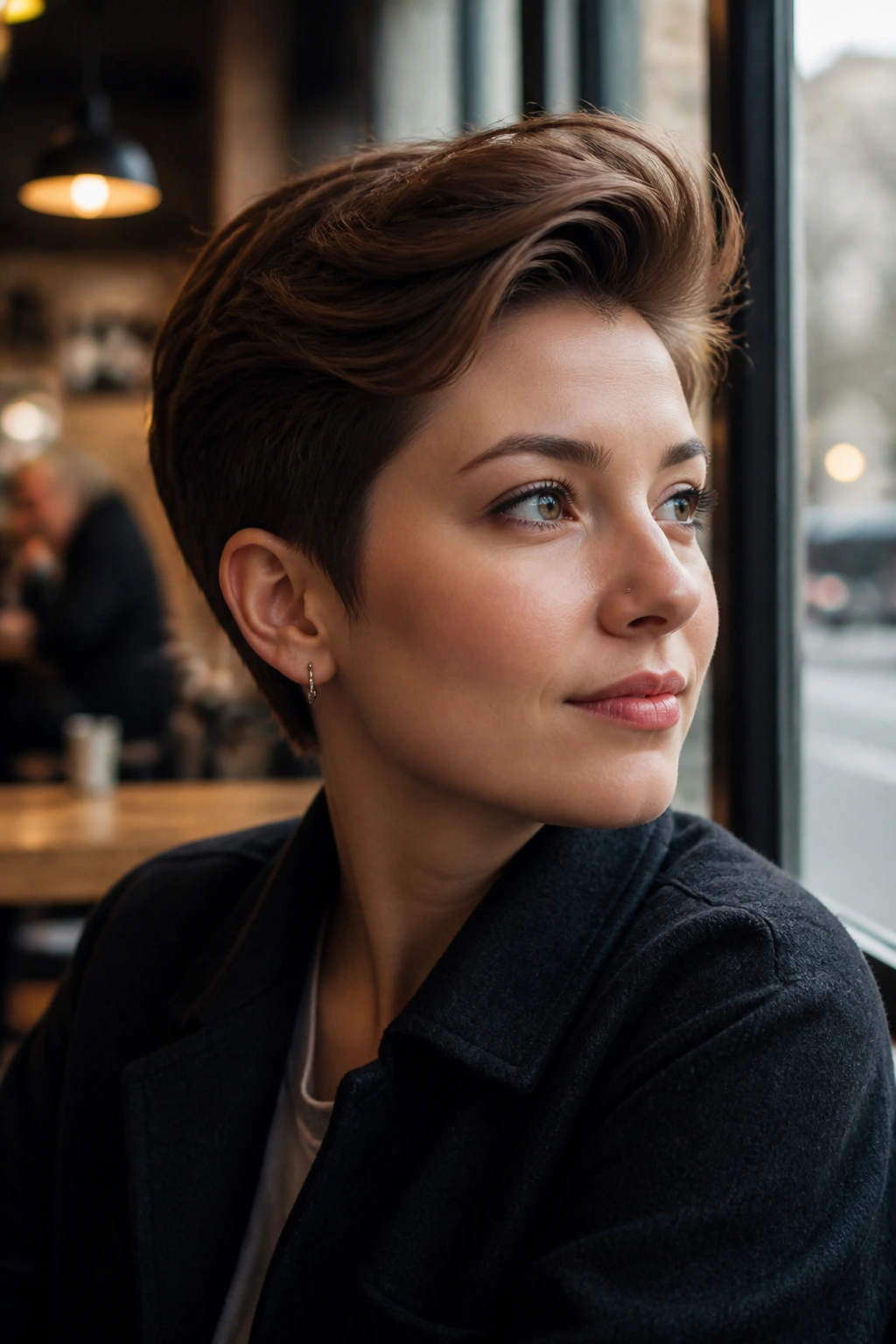
A side-swept quiff gives short hair lift at the front without changing the cut. That’s why it works so well for people who want drama but not a whole new style.
Blow-dry the front section in the opposite direction of the part first, then sweep it across with a round brush or your fingers. The point is to build height at the root and movement through the fringe. A little mousse or root spray can help, but don’t load the hair up. Too much product drags the front down before the style has a chance.
The back and sides should stay smoother than the top. That contrast gives the quiff its shape. If everything is blown out the same way, you lose the lift and the whole thing turns flat.
It’s a strong option when you want a short haircut to feel a little more dressed up without adding curls or pins.
21. Low Twisted Bun for Bob Length

When your hair just brushes the collarbone or sits right above it, a low twisted bun can be a lifesaver. It looks more refined than a messy tie-up and less formal than a sleek bun.
Pull the hair into a low ponytail, twist the length, then wrap it around itself once before pinning. If the ends are too short to fully tuck, leave them out on purpose and let them peek through. That keeps the style from fighting the cut.
How to Pin It So It Holds
Use 4 to 6 bobby pins, placed in opposite directions. One pin alone usually isn’t enough. Shorter layers love to slip, especially if the hair is silky.
A small amount of texture spray at the nape can make the whole thing stay in place longer. If you want it sleeker, smooth the top with a dab of cream before you twist.
This one works for dinners, office days, and any moment when you want the hair off your neck but still want a finished shape.
22. Razor Crop With Piecey Fringe
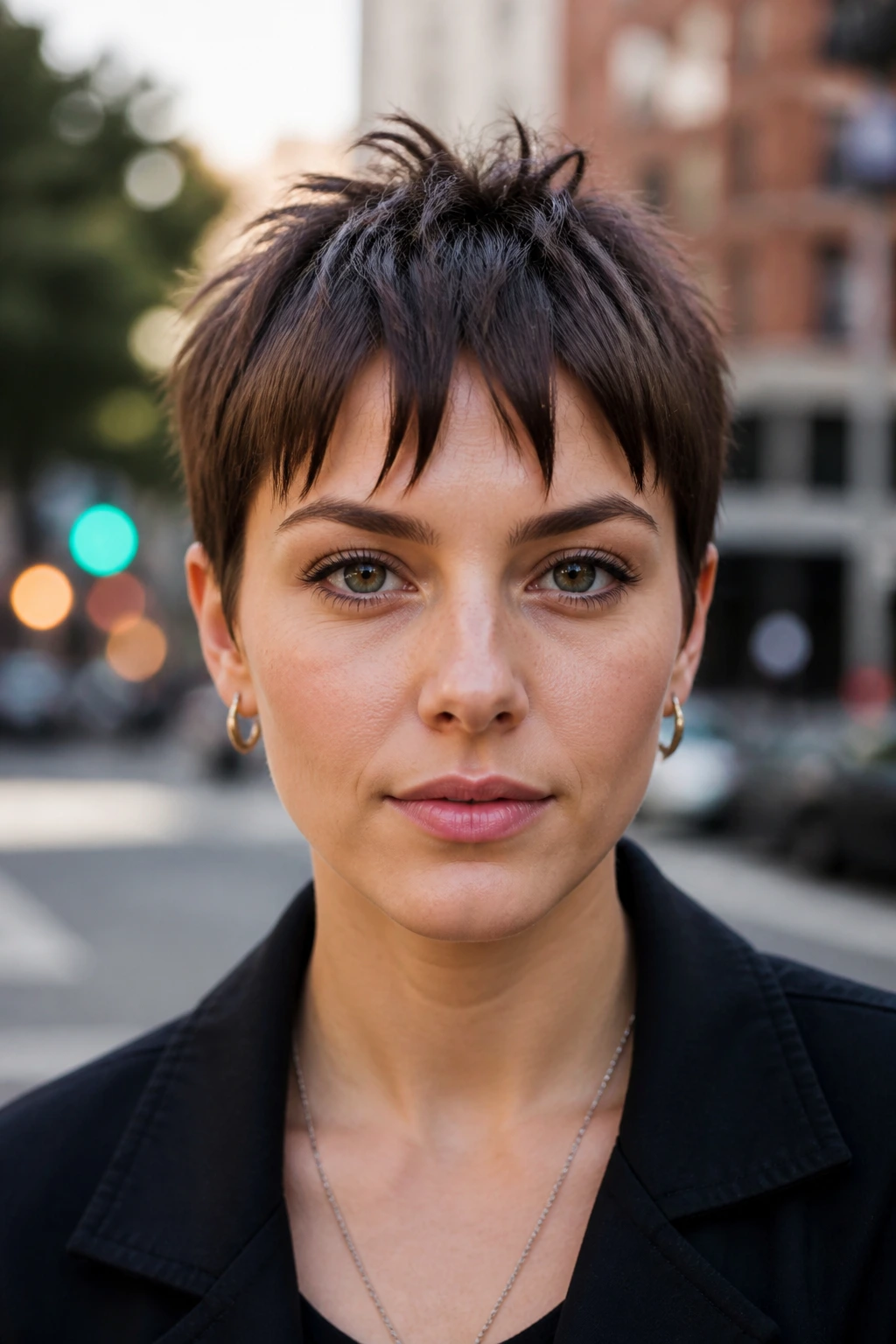
A razor crop with piecey fringe has edge, but not the try-hard kind. The cut is short, the texture is broken up, and the fringe falls in separated bits instead of one blunt curtain.
That separation is the point. A matte paste or clay on dry hair gives the fringe grip, then you pinch small sections together with your fingertips. Don’t comb the product all the way through. You want visible pieces, not a smooth shell.
This style is especially good if your hair has a little natural bend or if you like a more androgynous look. It also handles cowlicks better than a lot of tidy cuts, because the uneven pieces can hide where the hair wants to split.
The whole thing feels low maintenance, which is accurate. Short, choppy, and easy to wake up with.
23. Soft Roll-Under Bob

Why does a roll-under bob still look neat when everything else feels messy? Because the shape does the polishing for you.
A round brush or a flat iron can turn the ends under by a half-inch or so, giving the cut a soft curve without locking it into old-fashioned territory. The difference between dated and clean is usually just how strong the bend is. Keep it gentle.
This style works well on straight hair, especially if you want the ends to sit close to the neck. A tiny bit of smoothing serum on the last inch makes the roll look deliberate instead of frizzy. If the hair is thick, section it into smaller parts so the ends don’t fight you.
The result is tidy, wearable, and easy to pair with anything from a T-shirt to a blazer. Quietly useful. I like that.
24. Braided Bang Accent

A braided bang accent solves the problem of a front section that will not stay where you want it. It also adds a little detail without turning the whole head into a braid project.
Take the fringe or front corner of the hair, braid it back toward the temple, and pin or tuck it under the side layer. That’s enough. You don’t need a full crown braid to make the style feel finished.
Unlike a full braid style, this one can be done on short cuts that barely reach the chin. It’s especially handy when bangs are growing out and sitting in that awkward half-stage where they’re too short to leave alone and too long to ignore.
- Braid only the front 1 to 2 inches.
- Keep the braid flat to the head.
- Secure with one bobby pin hidden underneath.
- Smooth flyaways with a tiny drop of serum.
25. Claw-Clip Twist
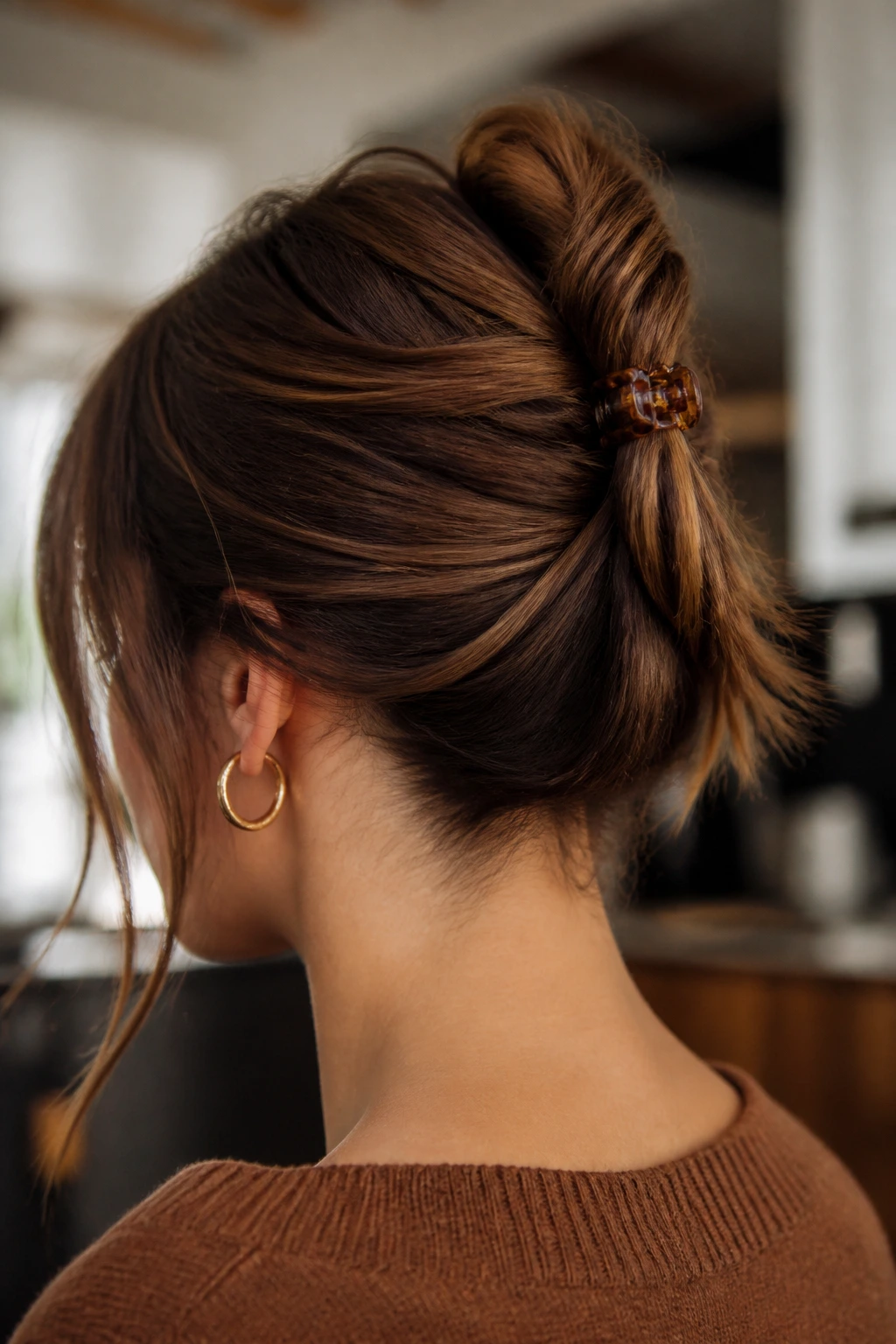
A claw-clip twist is one of those styles that sounds easier than it is — which is fine, because it still ends up easy once you know the trick.
Gather the hair at the back, twist upward, and clip it with a small claw clip that actually fits the amount of hair you have. Bigger clips tend to slide around on short hair. Smaller ones grip better and look neater. If the ends poke out, let them. That loose finish reads more relaxed than trying to cram everything in.
This style works best on bob-length hair or a layered lob. On shorter cuts, pin the lower section first, then clip the twist on top so the shape holds. A little texture spray before you twist gives the hair something to grab onto.
It’s fast, office-friendly, and one of the few up-dos that does not fight a shorter cut.
26. Sleek Middle-Part Bob for Short Hair

A sleek middle part makes short hair look sharper than almost anything else. No volume tricks, no curls, no accessory rescue mission. Just a strong line and clean shine.
This style works best when the bob sits evenly on both sides of the face. Flat iron the hair in small sections, about 1 inch wide, then follow with a serum that smooths without making the ends greasy. The middle part should be straight enough to feel intentional, but not so rigid that it looks like you measured it with a ruler.
The whole point is balance. A center part can make the face feel longer and the cut feel calmer, especially if the ends are blunt. If your hair has a cowlick right at the part, blow-dry it in place first with a clip while it cools.
It’s a strong, no-drama look. Sometimes that’s exactly what short hair needs.
27. Voluminous Blowout Bob

Can a short cut have swing? Absolutely. A voluminous blowout bob proves it.
The lift belongs at the roots and through the crown, not just at the ends. Use a round brush or blow-dry brush to pull the top sections up and forward as they dry, then curve the ends under or leave them softly bent. A cool shot at the end helps lock the shape before gravity takes over.
Where the Lift Should Live
Keep the sides smoother than the top. If every section gets the same amount of volume, the style turns puffy instead of bouncy. That balance matters more than people realize.
A root clip at the crown while the hair cools can buy you extra height, especially on fine hair. Thick hair often needs more smoothing and less lifting.
- Apply mousse from roots to mid-lengths.
- Blow-dry in sections no wider than 2 inches.
- Roll the top back with the brush for 3 to 4 seconds.
- Finish with light spray and a finger-comb.
28. Silk Scarf Tie-Back
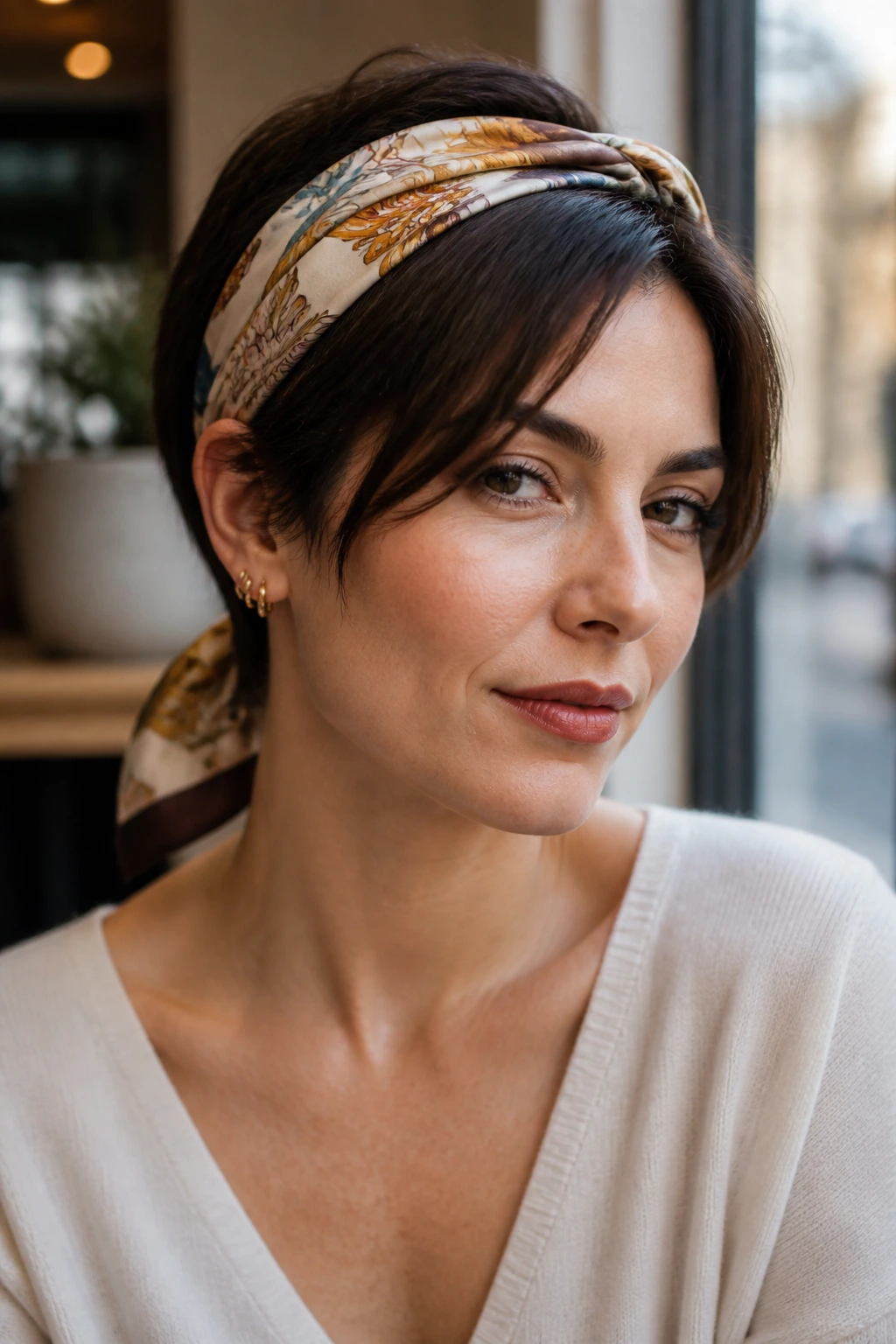
A silk scarf tie-back can turn a simple short cut into something a little more considered. It is not a cheat. It’s a styling choice, and a good one.
Fold the scarf into a band about 2 inches wide, place it across the crown, and tie it at the nape or just above one ear. Leave the front pieces out if you want softness, or tuck everything back if you need the hair off your face. The scarf should frame the cut, not swallow it.
This works especially well with a bob, a shaggy crop, or any short style that needs a little color near the face. The fabric matters too. Silk and smooth cotton tend to sit better than stiff woven scarves, and they slip less once you knot them snugly.
If the rest of the outfit is plain, the scarf does a lot of work. If the outfit is busy, keep the scarf simple. Clean lines beat chaos every time.
