



The best medium haircuts for round face shapes do one simple job: they make the face read a little longer without fighting the softness that makes round features so pretty. That sounds easy. It isn’t. A cut can look gorgeous on a hanger of a head and then land all wrong the second it hits a face with full cheeks, a soft jaw, and that width-through-the-middle that changes the whole balance.
Medium length gives you room to shape the silhouette. You can build height at the crown, carve in diagonal lines, keep bulk away from the cheeks, and still have enough length to tuck, wave, flip, or smooth. Shorter cuts can be too boxy. Longer cuts can drag. Medium sits in the useful middle, which is why stylists keep coming back to it when the goal is flattering roundness rather than fighting it.
A face does not need to be hidden. It needs direction. The right cut guides the eye up and down instead of side to side, and that tiny shift changes everything.
1. Collarbone Lob with a Deep Side Part
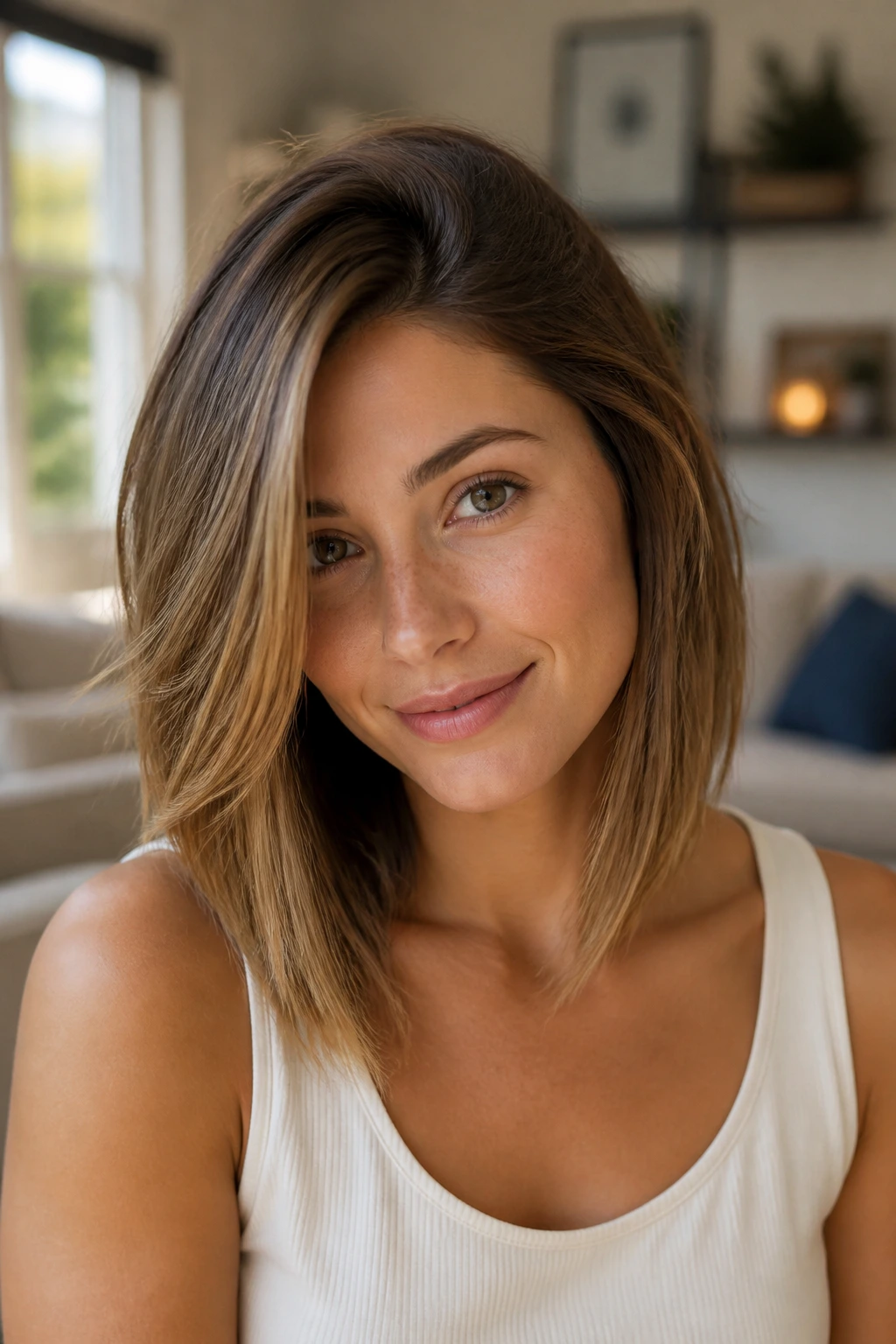
This is the safest medium haircut for round face shapes, and I mean that in the best way. A collarbone lob gives you length without looking severe, and the deep side part draws a clean diagonal line across the face.
Why it works
The line of the cut matters as much as the length. When hair lands right around the collarbone, it slips past the widest part of the cheeks and gives the face a longer frame. A side part adds asymmetry, which is exactly what a round shape needs when you want a little more visual length.
Ask for the front pieces to graze the collarbone and the back to sit only slightly shorter. Not a steep A-line. Just enough angle to keep the cut from going flat and boxy.
- Best on straight, loose wave, or soft bend textures
- Ask for ends that are blunt enough to look thick, but not heavy
- Blow-dry with the front directed away from the face
- A 1.25-inch curling iron gives the ends a soft turn
Pro tip: flip the part to the opposite side of your natural cowlick for the strongest lift at the root.
2. Long Layers That Start Below the Cheekbone
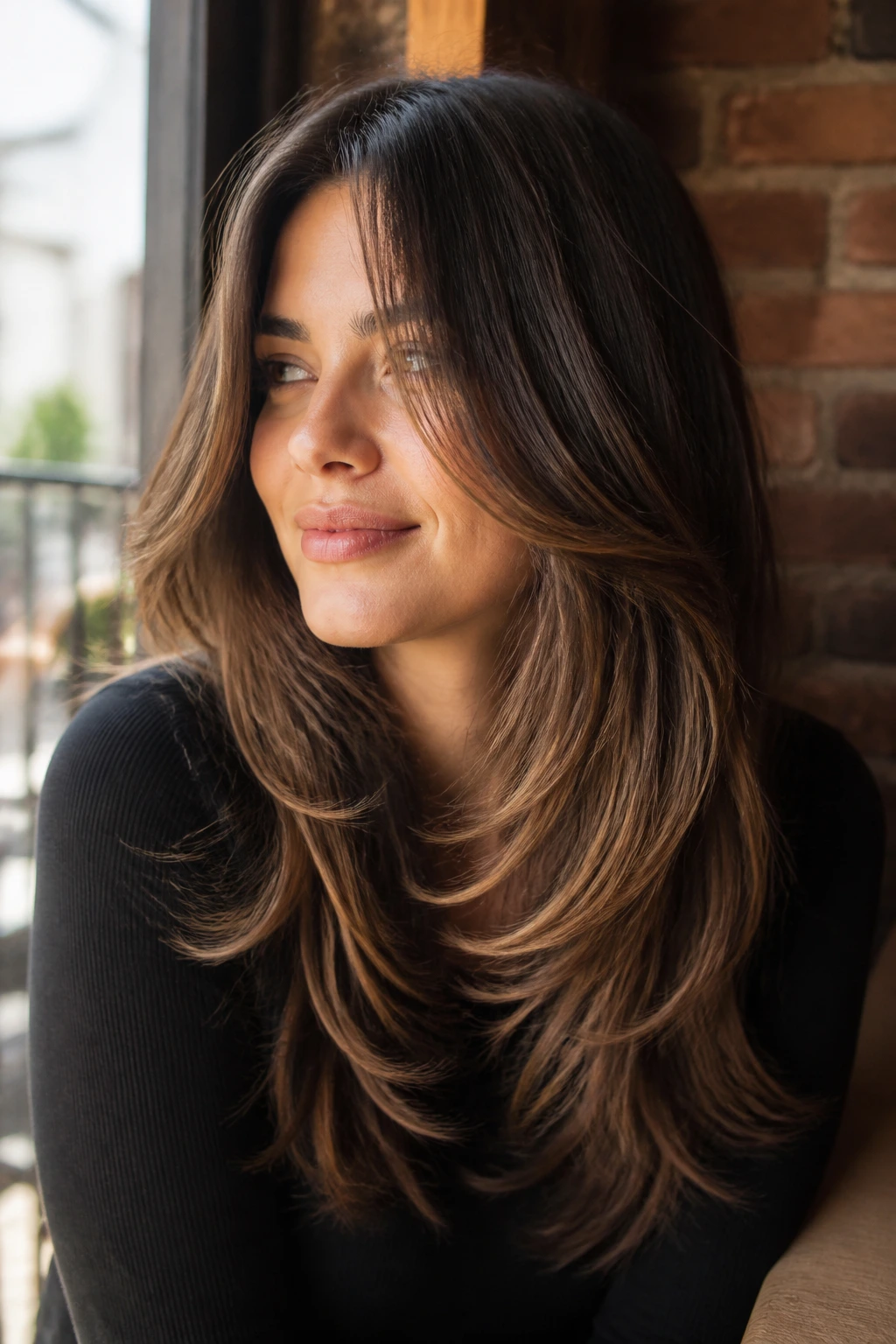
If you like movement, this beats short face-framing pieces almost every time. Layers that begin below the cheekbone let the hair move without widening the face right where it already has shape.
The trick is restraint. Too-short layers around the cheeks can puff out and make a round face look wider. Longer layers do the opposite. They fall past the fullest part of the face, then break into movement around the jaw and shoulder line, which is much more flattering.
This cut is especially good if your hair is thick and holds shape well. The weight comes off the ends, but the perimeter stays long enough to keep the whole style looking clean. If you wear your hair wavy, those layers catch the bend and make the cut feel lighter. If you wear it straight, you still get a softer outline without losing length.
A round face does not need to be narrowed to look good. It needs a little vertical pull. This cut gives you that without making the hair look chopped up.
3. Angled Lob That Drops Longer in Front
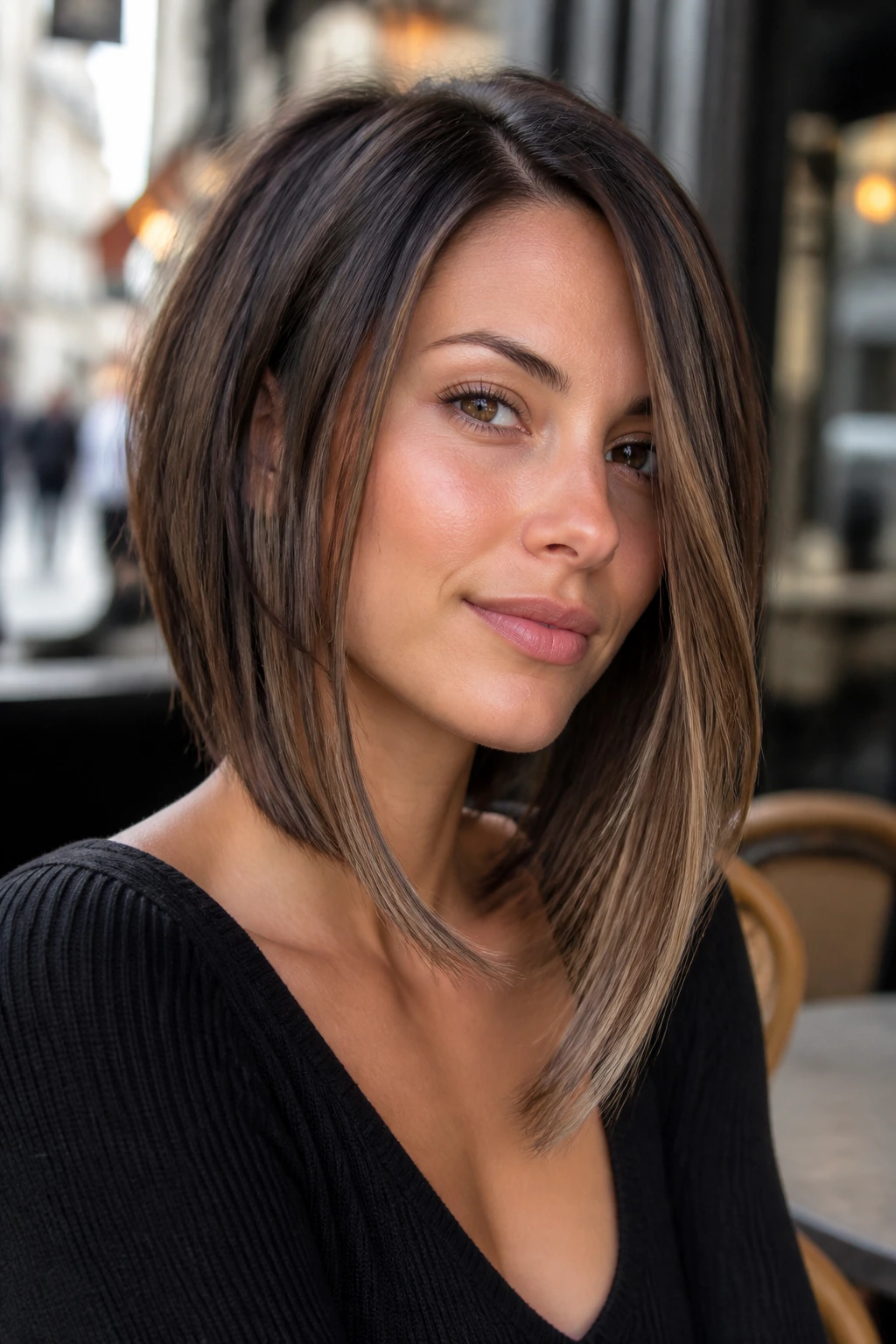
Why does an angled lob work so well on round faces? Because it quietly does two jobs at once. The back keeps the cut neat and lifted, while the longer front pieces pull the eye forward and down.
How to ask for it
Tell your stylist you want the back to sit at the nape or just above the shoulders, with the front landing around the collarbone. That extra inch or two in front matters. It should be visible when you tuck the hair behind the ear or let it fall naturally.
A steep angle can look dated fast. Keep it soft. The line should feel like a gentle slide, not a sharp point.
What it looks like in motion
The best angled lobs swing a little when you walk. They have shape, but they do not feel stiff. That moving front edge is what gives the face a longer read, because the longest point lands below the cheeks instead of beside them.
This cut is a smart pick if you like a polished finish and do not want much layering. It looks clean with a straight blowout, and it still works with loose bends. Flat irons can make it sleek, but a round brush gives it a bit more life.
4. Curtain Bangs with a Soft Shoulder Cut
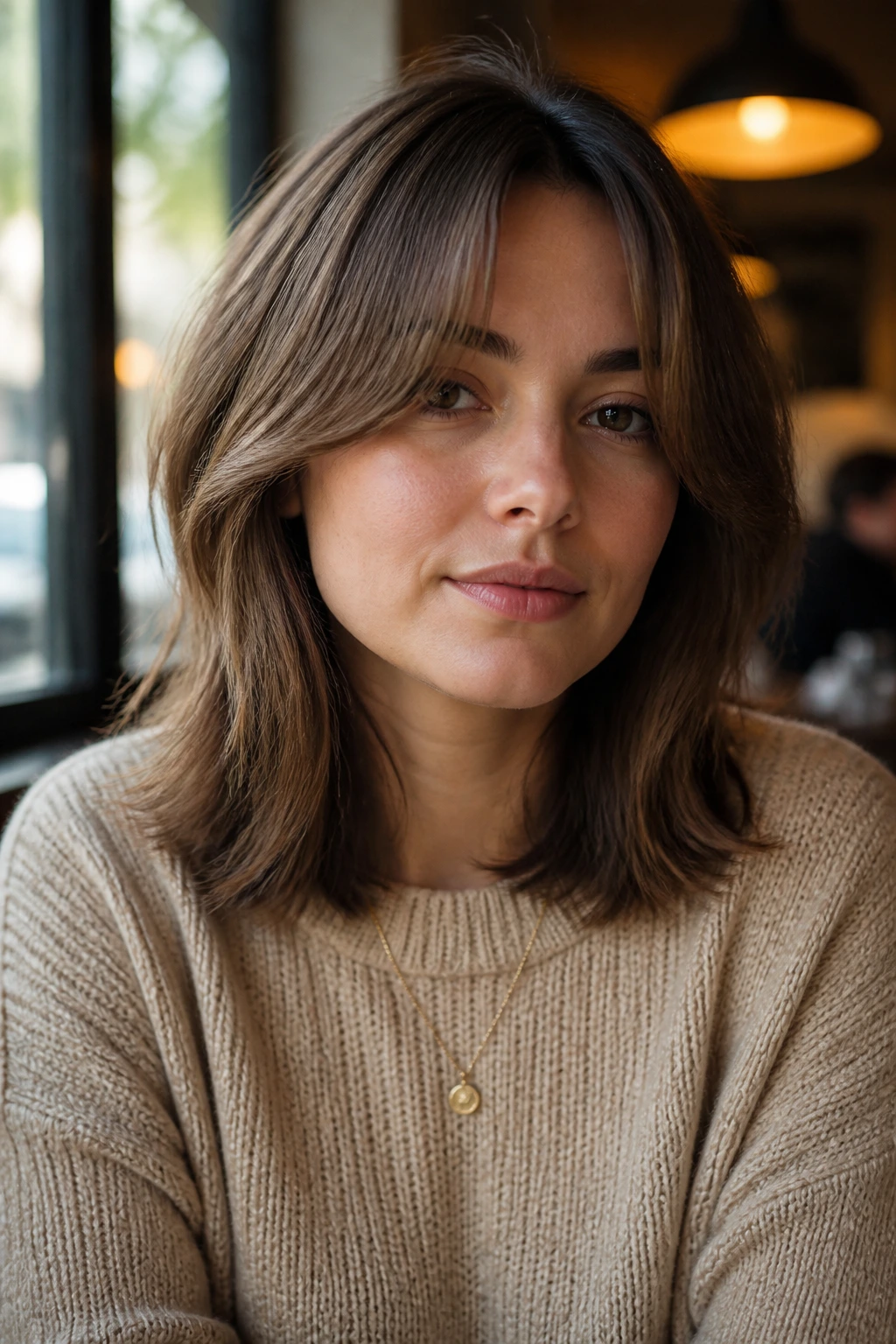
If you want hair off your face without committing to full bangs, this is the one. Curtain bangs split the forehead in the middle and open outward, which softens the face without cutting a hard horizontal line across it.
The shoulder-length cut keeps the rest of the style from feeling too short. That matters. On a round face, bangs need room to breathe, and shoulder length gives them that space. The shorter pieces can sit near the cheekbones, then sweep away instead of landing right on them.
What to ask for
- Bangs that start around the eyebrow or slightly below
- The shortest point kept soft, not blunt
- Side pieces that blend into the lengths by the jaw
- Ends that move a little, not frozen into a solid line
Curtain bangs are one of those cuts that look casual but rely on good placement. If they’re cut too short, they can make the face feel wider. If they’re cut too long and heavy, they lose the shape that makes them flattering. The sweet spot is a gentle opening that frames the center and releases around the outer face.
5. Textured Shag with Choppy Ends

A shag at medium length can be brilliant on a round face, but only when the texture is controlled. Choppy ends and broken-up layers keep the style from sitting in one solid, wide block. That matters more than people think.
The best version has lift at the crown and movement through the lower half of the hair. You want pieces that move away from the cheeks, not a puff of volume right beside them. When the layers are cut with purpose, the shape gets narrower as it moves downward, and that shifts the eye in a flattering way.
It also has a certain lived-in feel that works with natural waves. The hair does not need to look glassy or perfect. In fact, a shag can look weird when it’s overdone. A little grit is part of the charm.
The downside? You do have to style it. A quick scrunch with mousse or a light curl cream helps the layers separate. Skip that, and the cut can blur out into fuzz. Nobody wants that.
6. Blunt Lob with Tucked-In Ends

A blunt lob sounds like it would be too wide for a round face, and sometimes it is. But when the length sits at or just below the collarbone and the ends are handled cleanly, the blunt line can work in your favor.
The clean edge gives the face a longer frame. That’s the whole trick. Instead of lots of layers flaring outward at the cheeks, you get a straight visual line that moves down the body. It feels modern, calm, and a little sharper than a layered lob.
This cut is especially good for fine hair that needs thickness at the perimeter. The ends look denser. The shape looks deliberate. If you tuck the front pieces behind the ears or smooth them behind the shoulder, the face opens up and the jawline looks less hidden.
The catch is volume. Too much round brushing at the sides can puff the haircut into a helmet. Keep the blowout smooth and let the ends bend inward only slightly. A tiny tuck is enough.
7. Butterfly Cut with Airy Face Framing
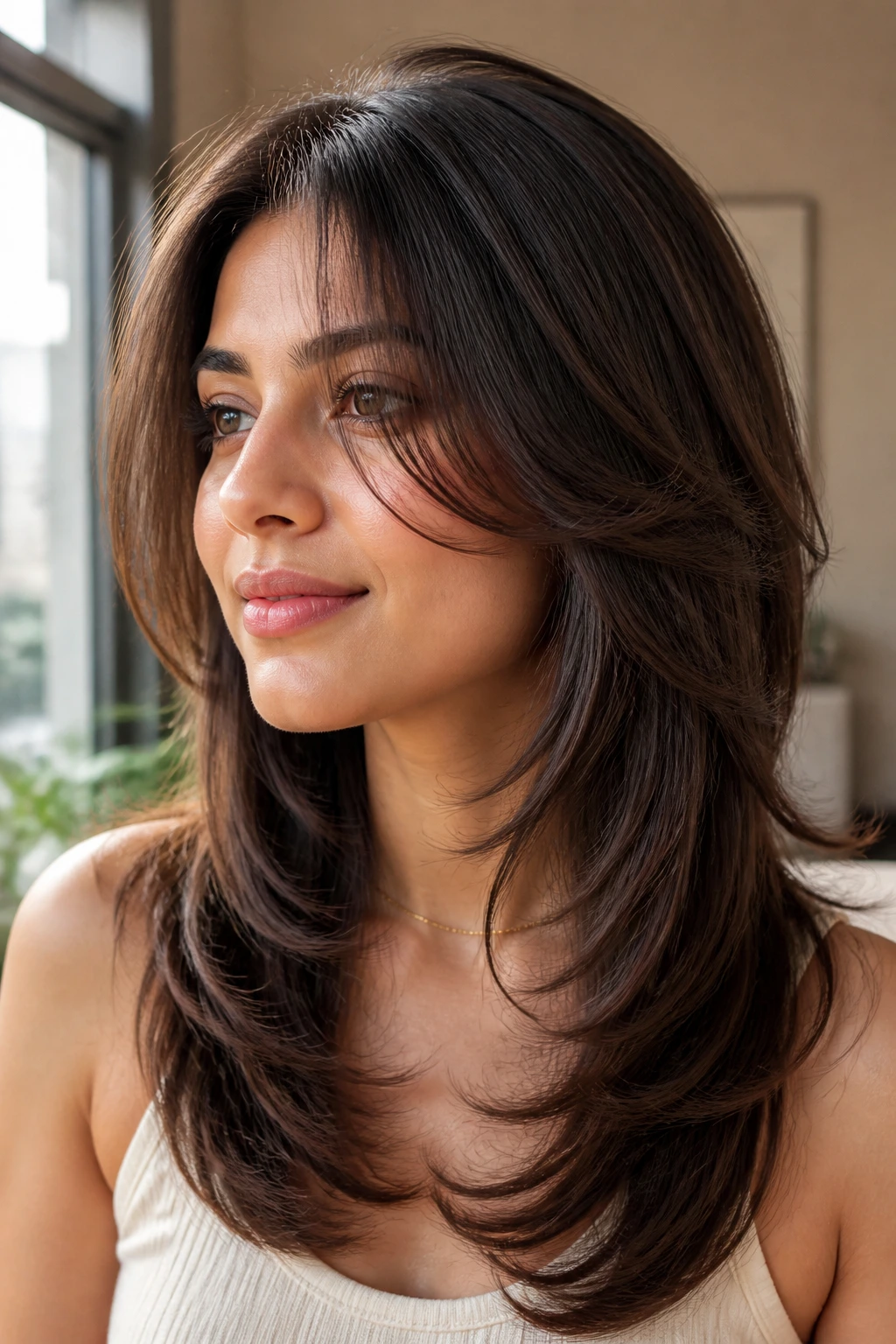
The butterfly cut has a lot of lift, and that lift can be useful on round faces when the layers are placed with care. You get shorter pieces around the top and longer lengths underneath, which creates the sense of fullness without piling all the bulk at the cheeks.
Why it flatters
The crown gets height. The lower lengths stay long. That combination matters because it shifts the visual weight upward and downward instead of across the middle of the face. Done well, the cut feels airy near the top and smooth at the bottom.
Ask for the shortest face-framing pieces to sit below the cheekbone, not right on it. That keeps the front from widening the face. The longer layers can blend into the rest of the haircut and give you that soft, floating shape people love in blowouts.
Best way to style it
- Blow-dry the top section with a round brush for lift
- Use a large roller or 1.5-inch iron on the face-framing pieces
- Keep the bottom lengths loose and smooth
- Finish with a light mist of flexible hairspray
The butterfly cut looks dramatic in photos, but it works in everyday life too if you keep the frame soft. Too much separation makes it fussy. A little movement goes a long way.
8. Side-Swept Fringe and Shoulder-Length Layers

A side-swept fringe is underrated. It breaks the symmetry that can make round faces feel broader, and it does it without the commitment of straight-across bangs.
The fringe should sweep across the forehead and soften into the side lengths, not sit like a separate piece cut onto the front of the head. That sweep creates a diagonal line, which is one of the easiest ways to stretch the look of a face. Shoulder-length layers finish the job by giving the cut room to move.
This style is especially good if you want to soften a fuller forehead or take attention off the center of the face. It also plays nicely with earrings and glasses, which can get lost under heavy, straight fringe. Side-swept pieces keep the face open.
A lot of people ask for side bangs and end up with a chunk of hair that just sits there. Don’t do that. The fringe should feel touchable, light, and easy to push back when you want it gone.
9. Wavy Lob with a Center Part
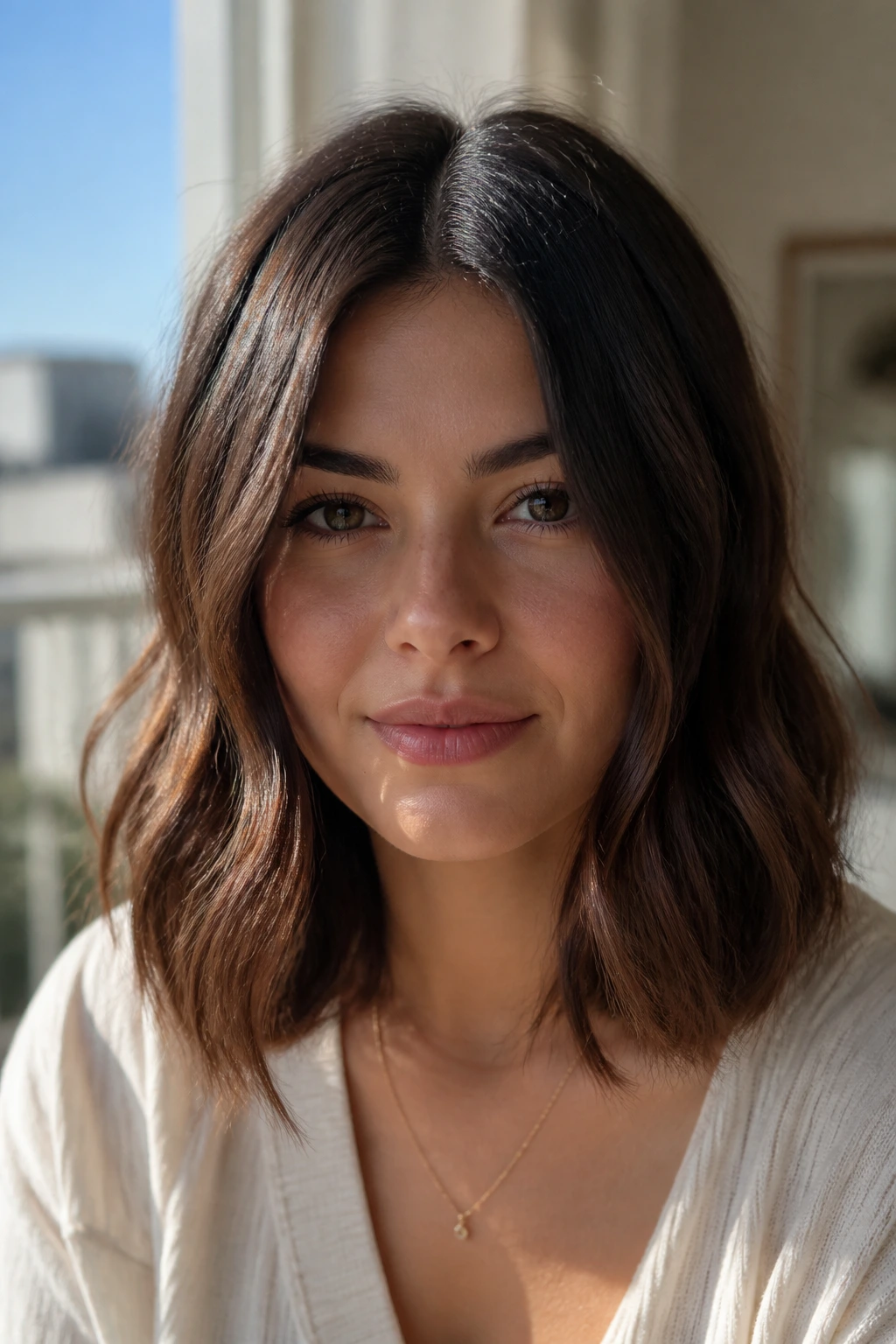
Can a center part work on a round face? Yes, if the cut has enough shape to support it. A wavy lob with a center part can look balanced, fresh, and clean when the waves start below the cheekbone instead of ballooning at the sides.
The center part gives the face a neat vertical line, which helps with symmetry. The waves then add softness below that line, especially when they’re loose and brushed apart. Tight curls or heavy barrel waves can do the opposite and make the cut feel too wide, so keep the bend relaxed.
This is a good option for hair that naturally has a little wave but not a lot of volume at the root. The cut does not need dramatic layering. It needs length, a good part, and enough movement to keep it from looking flat.
How to keep it from widening the face
Start the wave from mid-length down. Leave the roots mostly alone. A bend that begins under the eyes is much friendlier than a curl that starts at the cheek. That small difference changes the silhouette fast.
10. Soft Wolf Cut at Medium Length
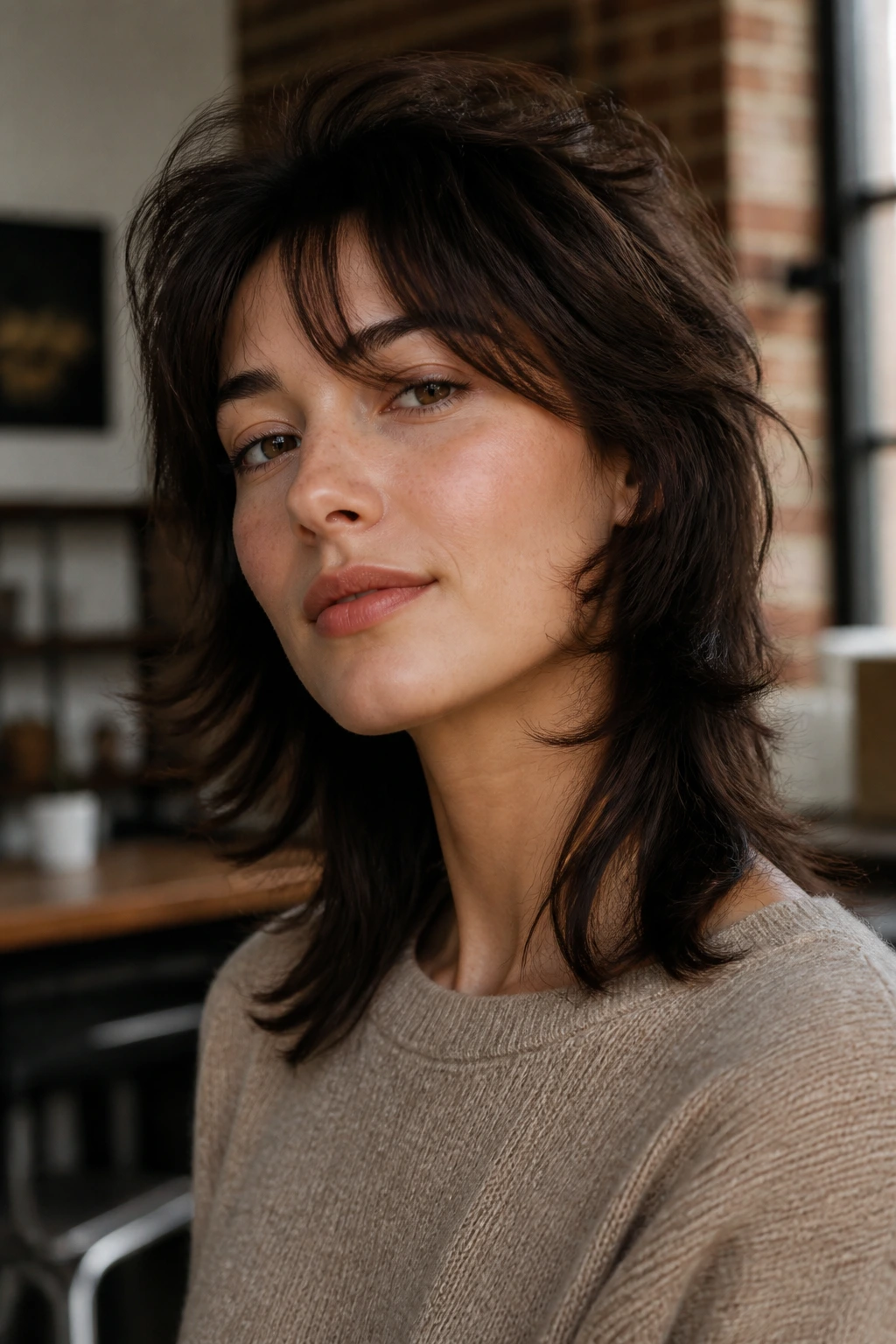
The wolf cut is a shag’s bolder cousin, and at medium length it can be strangely flattering on round faces. The reason is separation. It breaks up the outline of the hair so the face does not sit inside one solid circle of volume.
This cut works best when the top has lift and the lower lengths stay slightly elongated. The contrast between those two zones gives the face more visual length. It also works well with natural texture, especially if your hair already bends a little on its own.
But the wolf cut needs discipline. Too much width at the temples or around the jaw can swallow the face whole. Keep the upper layers controlled, and don’t over-tease the roots. You want a lived-in edge, not a pyramid.
A little texture spray, a rough blow-dry, and some finger shaping are usually enough. If the hair looks fluffy in the wrong places, step back. This cut is better a touch imperfect than overstyled.
11. Grown-Out Shag with Piecey Layers
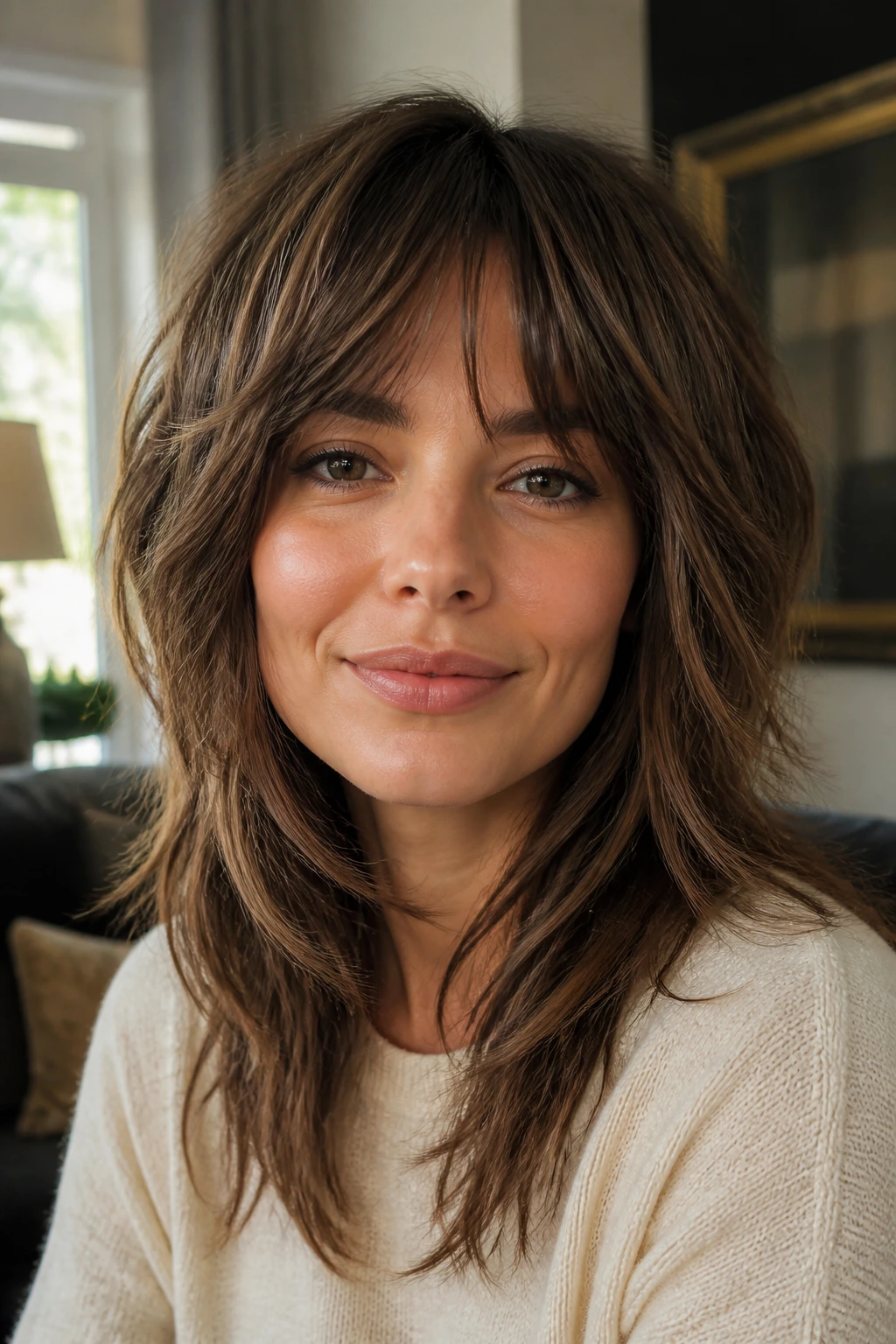
A grown-out shag feels calmer than a full wolf cut, and that’s part of why it works. The layers are still there, but they’re softer, longer, and easier to live with. For a round face, that softness matters because it adds movement without turning the sides into a puff.
The piecey finish gives the haircut some separation. Instead of one dense shape, you get little shifts in length that keep the eye moving. The face reads longer because there’s no single horizontal line stopping everything at the cheeks.
This is one of my favorite choices for wavy hair that wants to look intentional without looking fussy. You can air-dry it, bend a few pieces with a curling iron, or just add a bit of cream and call it a day. It usually looks better the second day, too.
The best version has a fringe that brushes the brows or the outer corners of the eyes. Not blunt. Not short. Just enough to add a little front interest.
12. Rounded Layers with a Slight Flip at the Ends
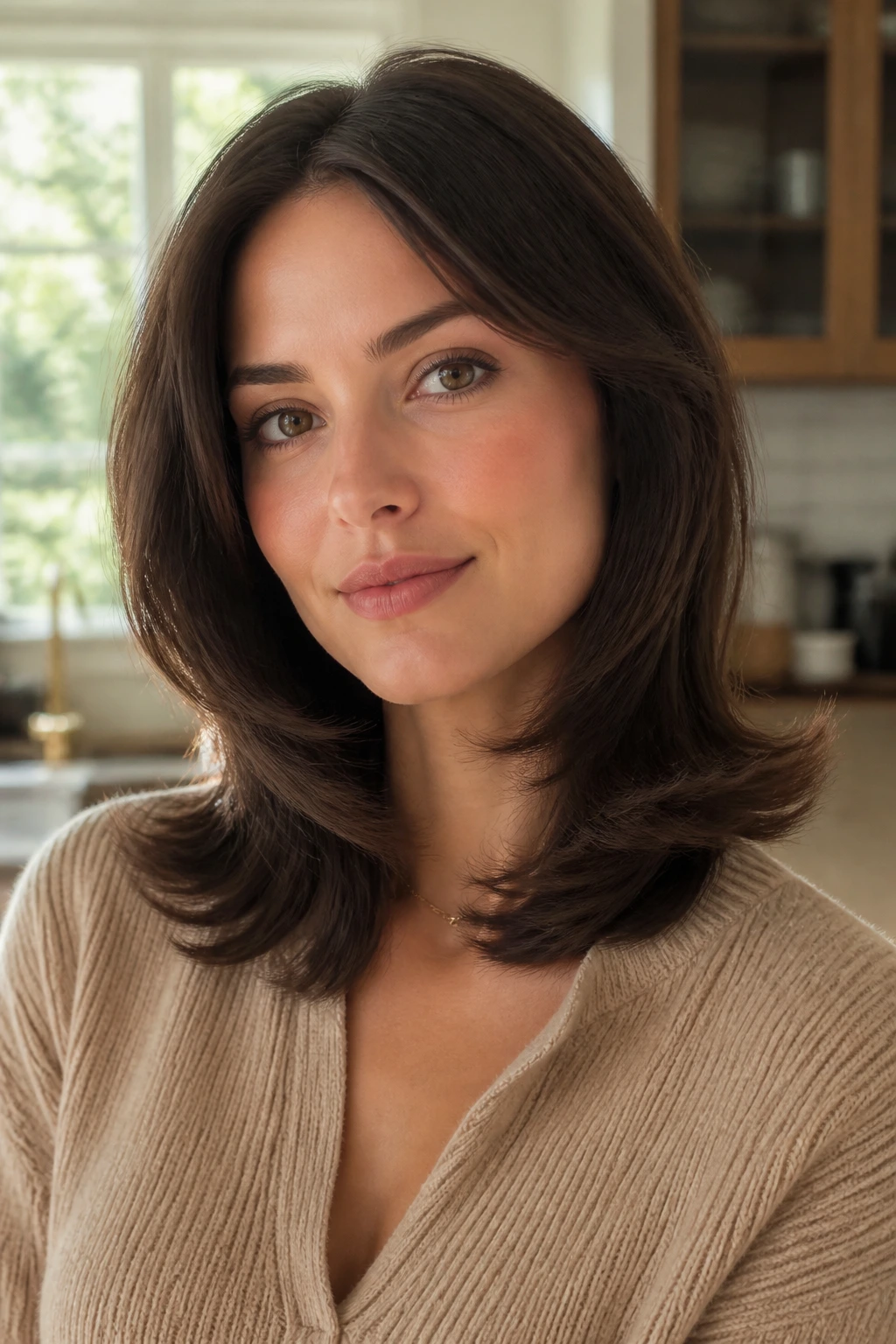
Rounded layers sound almost too gentle to work, but they can be a smart choice if you want shape without harsh angles. The slight flip at the ends keeps the hair from hugging the cheeks and makes the whole cut feel lighter.
Unlike a blunt style, this one has movement built in. Unlike a shag, it does not look broken up. It sits in the middle, which can be useful if you want something soft but still polished.
The styling trick
Use a medium round brush or a 1.5-inch curling iron to push the ends away from the jaw by about half an inch. That tiny lift keeps the hair from settling into the widest part of the face. You do not need a huge flip. Too much will look dated fast.
- Ask for layers that keep the perimeter soft
- Keep the longest pieces near the collarbone
- Add a slight outward bend only at the last 2 inches
- Finish with a cream that controls frizz without flattening the ends
This cut is friendly if you wear your hair down most of the time and want a shape that feels done without feeling stiff.
13. Mid-Length Cut with Invisible Layers

Hidden layers do a lot of work without looking chopped up. That’s the appeal. On round faces, invisible layers can remove bulk from thick hair and keep the outline smooth, which avoids the boxy look that heavy medium cuts sometimes get.
The magic is inside the haircut, not on top of it. The outer shape still looks clean. The weight just shifts so the hair falls better around the shoulders and doesn’t puff out at the sides. It’s a smart move if you want movement but hate obvious layering.
Ask for this in the chair
Tell your stylist you want internal layers or subtle weight removal, not short face-framing pieces. The front can stay long enough to skim the collarbone while the inside is thinned and shaped to keep the cut from collapsing into a triangle.
This style works especially well if your hair is dense, straight, or slightly wavy. It can also be easier to grow out because the layers are not screaming for attention. The downside is that it relies on a solid cut. If the interior is hacked too aggressively, the ends can start looking thin and uneven.
14. Sleek Straight Lob with a Side Tuck

A sleek straight lob can be one of the sharpest looks for a round face, as long as the line is clean and the part is offset. The hair should skim past the cheeks, not stop right at them.
The side tuck is the part people forget. Tucking one side behind the ear opens up the jaw and breaks the width of the haircut in a very natural way. It gives you a little asymmetry without needing a full cut change. That tiny shift can make the face look more angled and less full.
This style is especially nice if you like polished hair, dark hair, or blunt lines. It can look expensive without trying too hard, which is rare. Just keep the straightening controlled. Stick-sleek hair with no movement can flatten the whole face if the part is too perfect.
A soft side part and a tucked front section are enough. You do not need a dramatic flip or heavy volume. Clean does the work here.
15. Medium Cut with Micro Face Framing
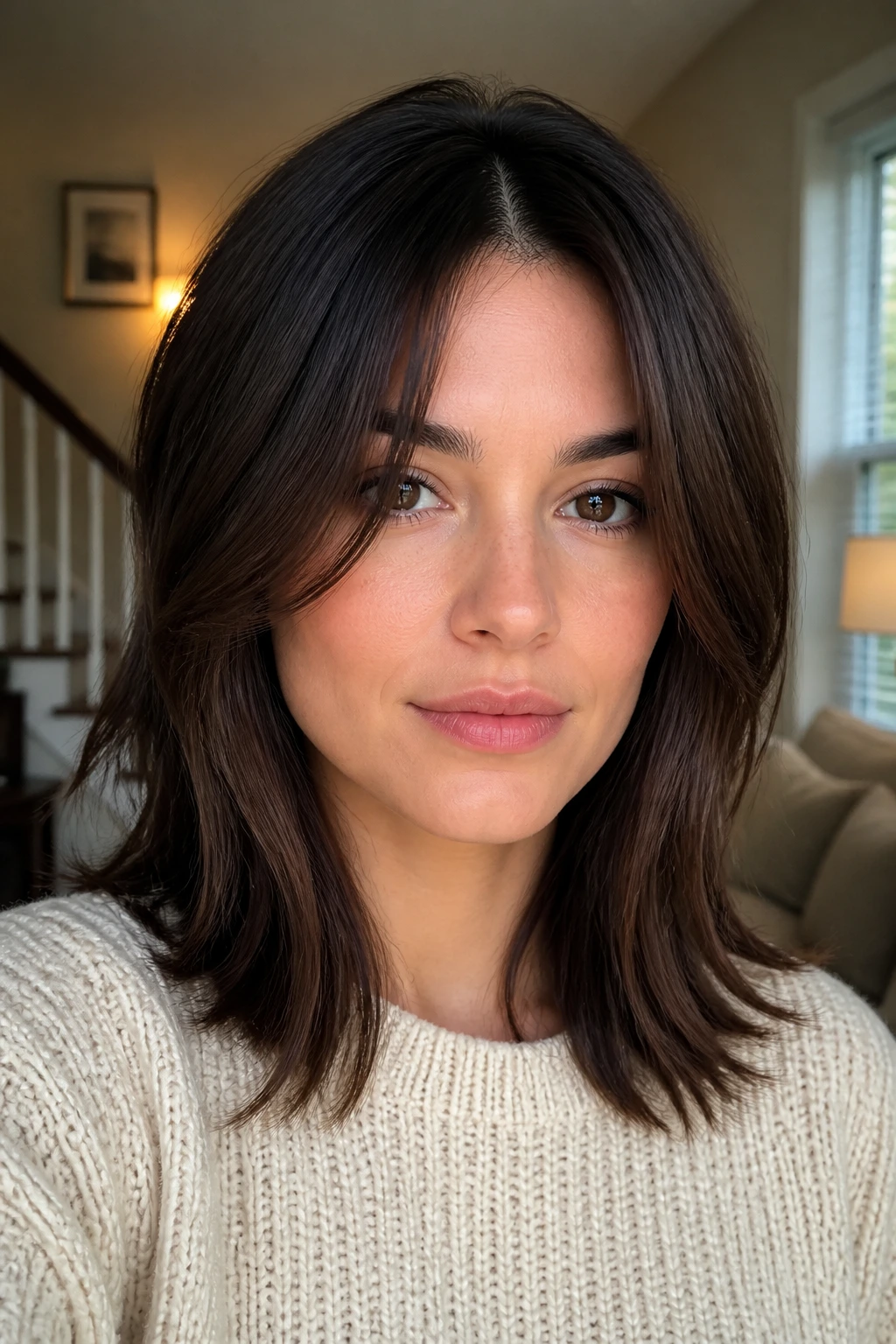
Not every round face needs a lot of front layering. In fact, too much can make the hair split and widen the cheeks. Micro face framing solves that by using only a few slim pieces near the front, usually starting below the cheekbone.
The pieces are subtle. That’s the point. They whisper instead of shout. A couple of short-to-long strands near the front can soften the line around the jaw while the rest of the haircut stays longer and calm.
This cut is a good fit if you wear glasses, because big face-framing layers can fight with frames and crowd the face. Micro pieces stay out of the way. They also work well on finer hair that can’t handle heavy layering.
Keep the rest of the shape shoulder length or a touch longer. The front detail should feel like a small adjustment, not a full feature. A lot of people overcut the front and regret it a week later. Don’t be one of them.
16. Layered Cut with Bottleneck Bangs
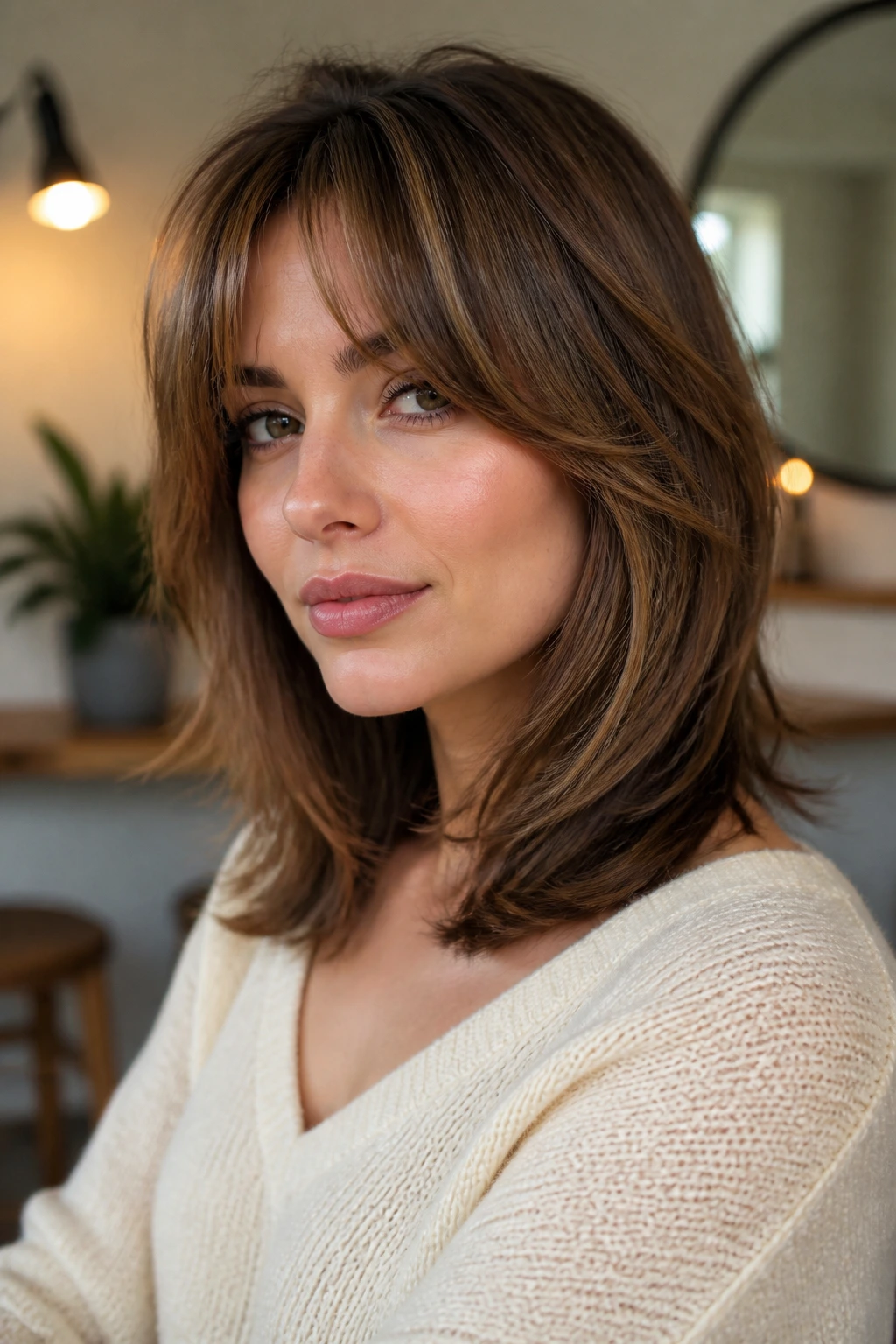
Bottleneck bangs sit between curtain bangs and a fringe, which is why they work so well on a round face. The center is shorter, then the sides open out and blend into the haircut, usually around the cheekbone or below.
The shape matters. If the center is too short, the bangs can make the forehead look crowded and the face feel wider. Keep the shortest point soft, with the side sections long enough to sweep away from the cheeks. That outer opening is the part that helps.
How to wear them
- Blow them down first, then sweep them apart
- Keep the center piece airy, not thick
- Pair them with a cut that hits at the collarbone or shoulders
- Add a slight bend to the side sections for softness
Bottleneck bangs are a little more styled than curtain bangs, and that may be exactly why you want them. They give a medium haircut shape without fully covering the face. If you’re bored with one-length front pieces, this is a cleaner way to change the mood.
17. Air-Dry Cut for Natural Waves

Some cuts look best when they’re not overworked, and this is one of them. An air-dry cut for natural waves is built around how your hair falls when it dries on its own, which matters because round faces often look better with soft, broken-up movement than with forced symmetry.
The length usually sits between the shoulders and collarbone, with layers placed to encourage the wave to drop downward instead of puffing outward. That gives the hair shape without making the sides too wide. The ends should stay a little blunt so the style does not disappear into frizz.
This is the cut for people who want to spend less time with a brush. A little leave-in, a bit of mousse, and a scrunch is often enough. If your waves are stronger in some spots than others, the haircut can balance that out by removing weight where the bends get heavy.
It isn’t the right choice if you want a very sleek finish every day. But if your real life involves towel drying, finger-combing, and walking out the door, this kind of cut makes a lot of sense.
18. Shoulder-Length Cut with a Subtle A-Line
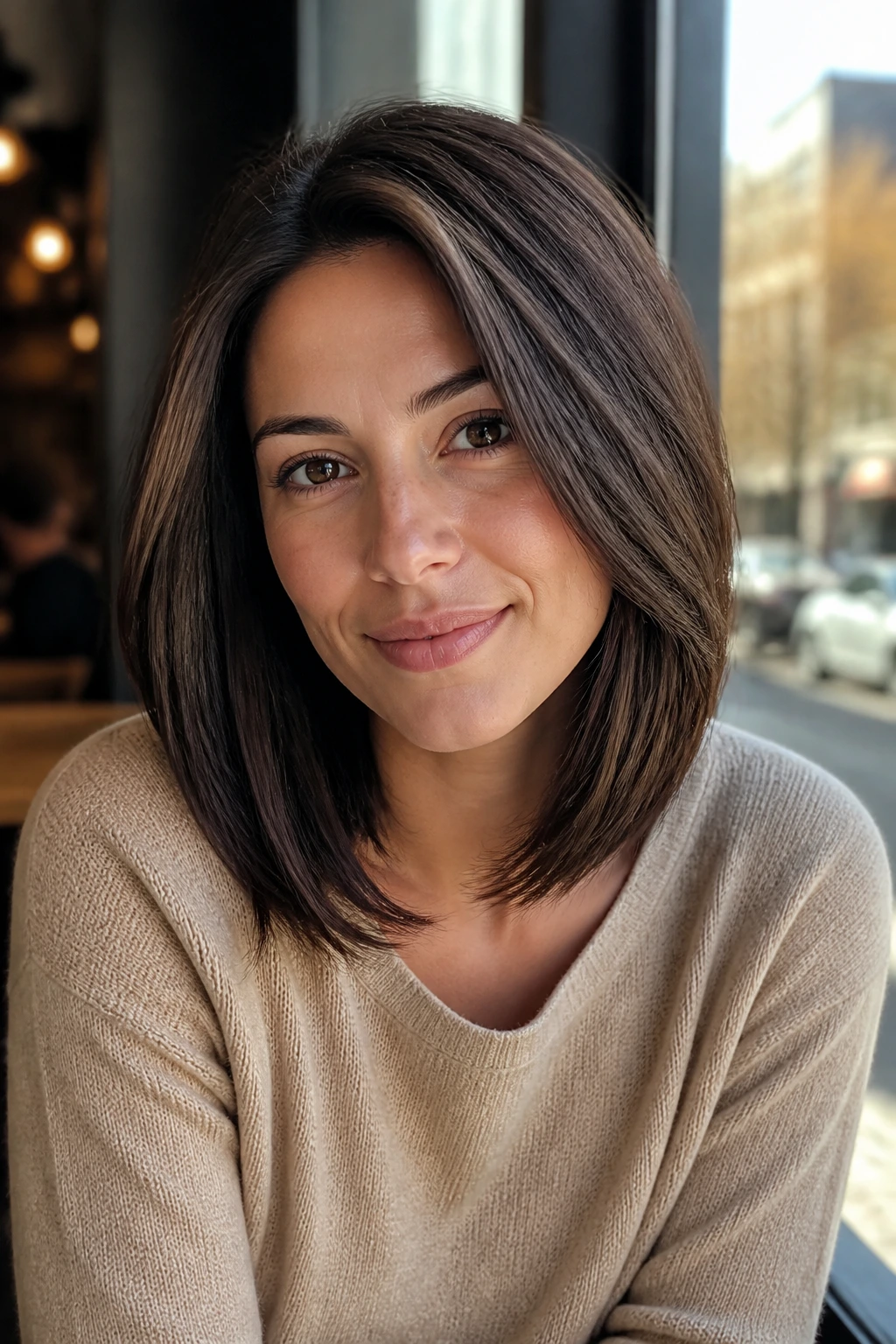
A subtle A-line is one of those shapes that sounds dramatic and turns out to be quietly useful. The front sits a little longer than the back, which pulls the eye downward and gives a round face a longer frame without making the cut look severe.
The difference between front and back does not need to be huge. An inch or so is enough. If the angle gets too steep, the style can feel sharp in a way that fights the softness of a round face. Keep it gentle. The shape should be felt more than seen.
This cut is nice if you want structure but still like a softer finish. It looks good tucked behind one ear, loose around the shoulders, or bent under with a round brush. It also gives you a little movement when you walk, which helps the haircut feel less static.
The cleanest versions use a smooth perimeter with just enough angle to guide the eye. That’s the whole thing. A little lean forward. Not a lot. Just enough.
Final Thoughts

Round faces do not need to be “fixed.” They need a haircut that understands where the face is widest and where the eye should go next. Medium length gives you a lot of room to work with, and the smartest cuts use that space to create line, lift, and a little asymmetry.
If you want the safest bet, start with a collarbone lob, long layers below the cheekbone, or a soft angled cut. If you want something with more texture, a shag, wolf cut, or butterfly variation can work beautifully when the volume stays controlled. The wrong move is usually the same one: too much width at the cheeks and not enough shape through the ends.
One last thing. Bring photos, but bring the right kind. Look for the angle of the front pieces, where the layers start, and how the hair sits at the collarbone. That tells you far more than the overall vibe ever will.
