



Oval face shapes have a useful problem: most haircuts can work, but a few look especially clean because they follow the face instead of fighting it. That’s why hairstyles for oval face shapes are such a good playground for layers, bangs, length, and volume. The face is usually a touch longer than it is wide, with balanced cheekbones and a jawline that doesn’t pull too hard in any one direction. That balance gives you room.
What you do not want is a style that adds bulk in the same spot over and over. Too much puff at the crown can stretch the face. Heavy width at the cheekbones can make the whole shape feel wider than it is. On the flip side, hair that hangs flat and straight without any thought can make the face look longer than needed. Small changes matter here. A center part. A fringe that lands at the right point. Layers that begin below the cheekbone instead of right at it. Those details do the work.
I’ve always thought oval faces are the least fussy face shape, but that can fool people into choosing a haircut with no point of view. Don’t do that. The best styles still need a shape. They need a reason to exist. A good cut should frame the eyes, skim the jaw, or give the crown a little lift without making the head look top-heavy.
Long layers are the easiest place to start, then you can move into bobs, bangs, updos, and softer textured cuts from there.
1. Long Layers That Start Below the Cheekbones

Long layers are one of the safest, smartest choices for oval face shapes because they keep length while adding movement where the hair tends to go flat. The key is placement. If the shortest layer lands right at the cheekbone, it can widen that area too much. If it starts a bit lower, the hair falls around the face in a cleaner line.
Why this cut works
A good long-layer cut keeps the center length intact and uses the outer pieces to soften the sides. That means you get shape without losing the easy, swinging feel of long hair. It also works whether your hair is straight, wavy, or somewhere in between.
Ask for the first layer to start below the cheekbones, often around lip to chin level on long hair, then have the ends softened with point-cutting or slide-cutting. The finish should move when you walk, not sit like a curtain.
- Best for medium to thick hair that needs shape.
- Easy to air-dry with a little wave cream.
- Looks better when the ends stay full, not wispy.
My favorite trick: keep the front layers a touch longer than you think you need. They frame the face without pulling attention away from it.
2. Curtain Bangs With Shoulder-Length Hair
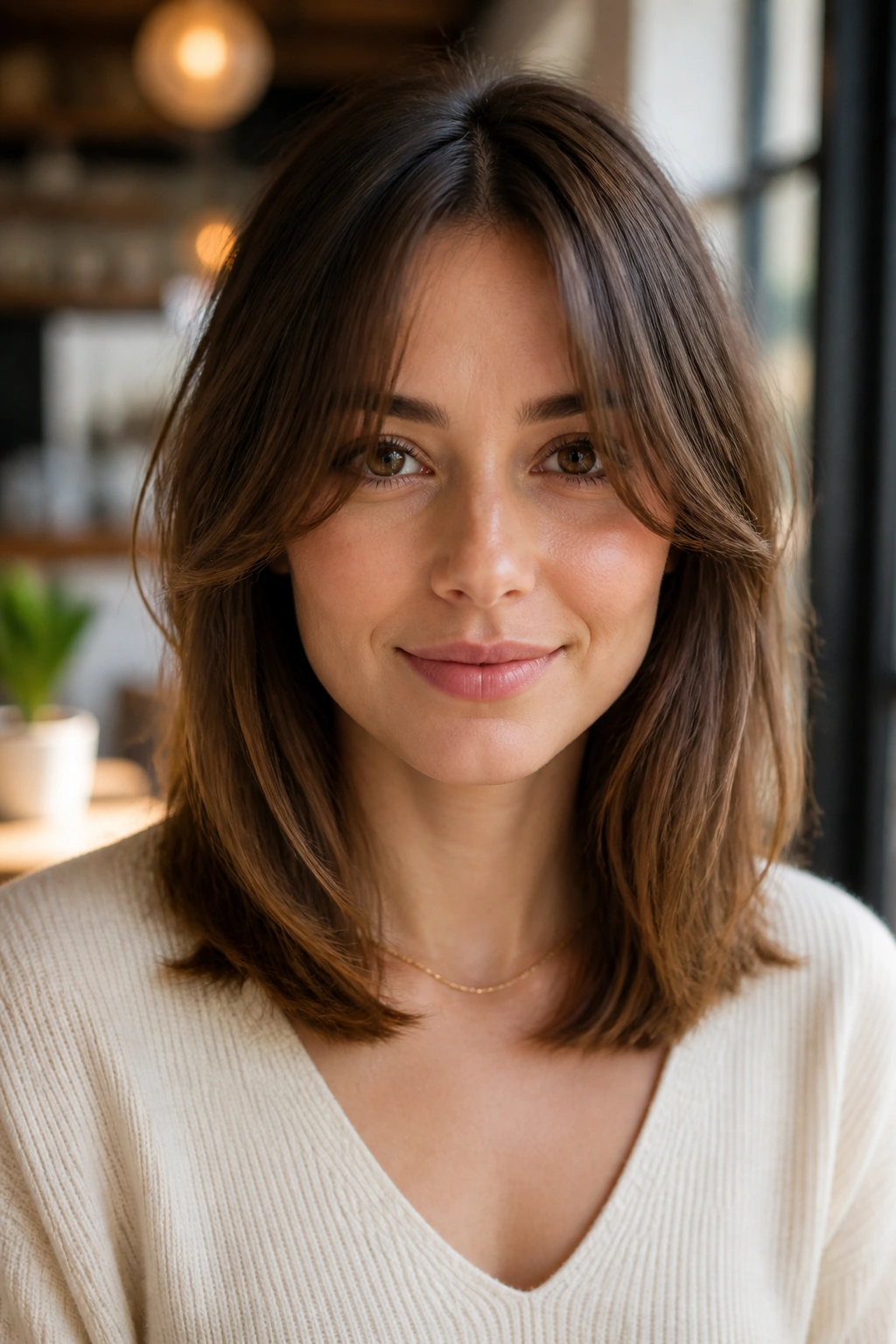
Can bangs work on an oval face without taking over the whole haircut? Yes — if they’re curtain bangs and not a blunt chop across the forehead. This is one of the cleanest hairstyles for oval face shapes because it adds softness at the brow while leaving the lower half of the face open.
Curtain bangs should part in the middle, then sweep outward toward the cheekbones. That shape matters. If they are cut too short, they can sit awkwardly high and make the forehead feel crowded. If they are too thick, they can overpower the face. The sweet spot is a bang that brushes the eyebrows in the center and lands around the cheekbone on the outer edge.
How to style them
Blow-dry the fringe with a small round brush, turning the front section away from your face. A quick pass with a flat iron on the outer corners can help if your hair wants to flip the wrong way. Keep the rest of the cut at the shoulders or collarbone so the bangs have room to breathe.
Curtain bangs are forgiving. They grow out well, and they do not demand perfection every morning. That’s a gift.
3. Chin-Length Blunt Bob

A chin-length blunt bob can look sharp on an oval face, and I mean that in the best way. It creates a clear line around the jaw, which makes the face read as crisp and focused instead of long or empty. If your hair is fine or straight, this cut can give you the feeling of density without much styling.
The catch is placement. A bob that lands exactly at the chin can feel strong; a bob that sits a little below the chin tends to soften things. If your jawline is already prominent and you want a gentler result, go a half-inch longer. That tiny shift makes a big difference when the hair dries.
A center part keeps the shape symmetrical. A side part softens it. Both work, but the side part adds a little slack, which some people prefer if they wear minimal makeup or want the cut to feel less severe.
Short hair like this needs a clean edge. If the ends fray, the whole thing loses its power.
4. Soft Shag With Airy Ends
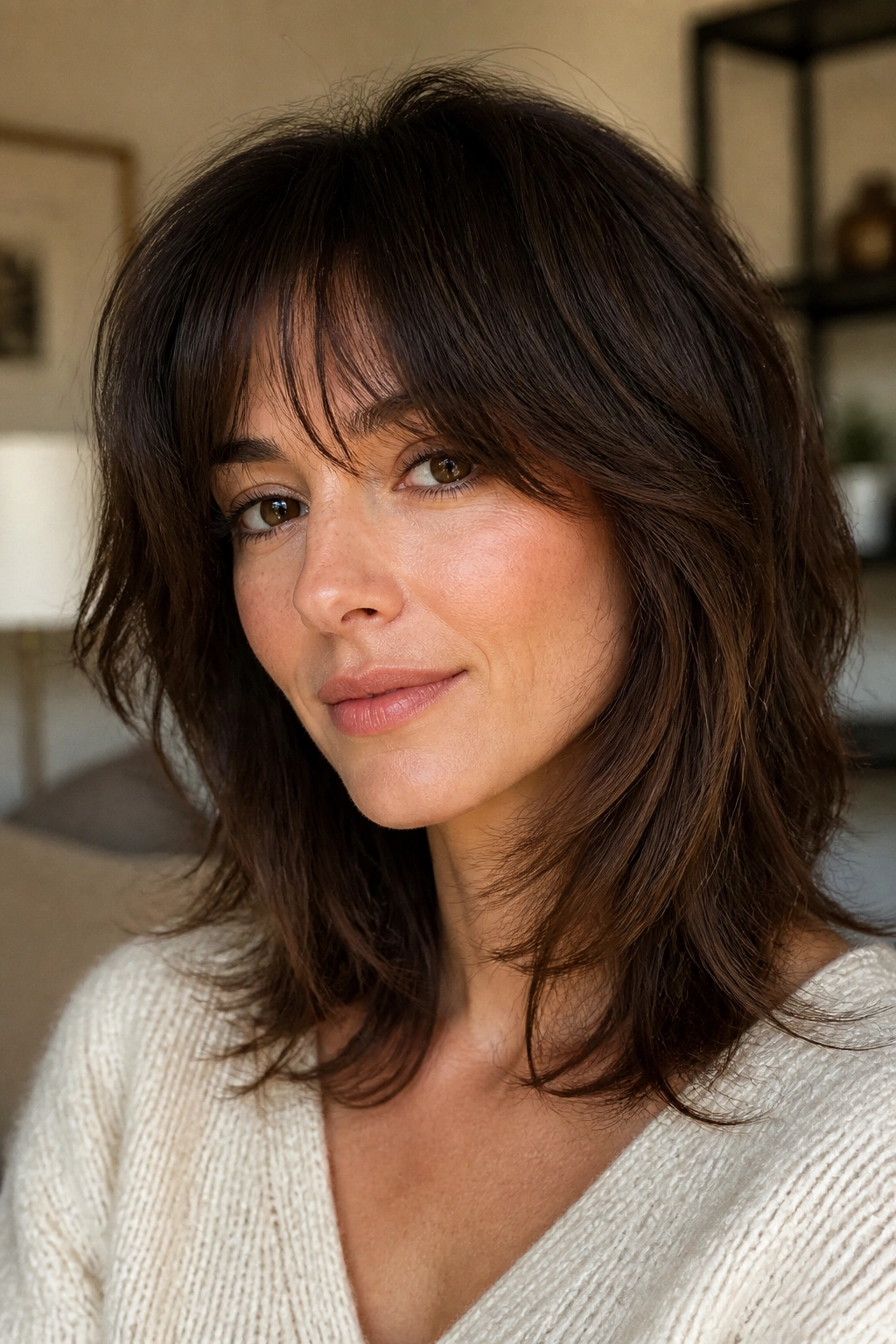
People still treat the shag like it belongs to one mood only, and that’s a mistake. A soft shag can be one of the best hairstyles for oval face shapes because it adds texture without stacking bulk around the widest part of the face. The trick is keeping the layers feathered and movable instead of choppy for the sake of it.
What makes it different
A good shag uses interior layers to create lift and separation. The hair looks lighter, but not thin. On oval faces, that looseness keeps the style from reading too strict. It also works well if your hair has a natural bend or a little wave that likes to spring up on its own.
The best way to wear it is a bit undone. Rough-dry the roots, add a small amount of mousse or styling cream, then scrunch or twist sections while they dry. A diffuser helps if your wave pattern needs support.
If your face is narrow and your hair is dense, this cut can be a friend. If your hair is pin-straight and low in volume, the shag needs more effort. That’s the honest version.
5. Textured Pixie With Longer Top Layers
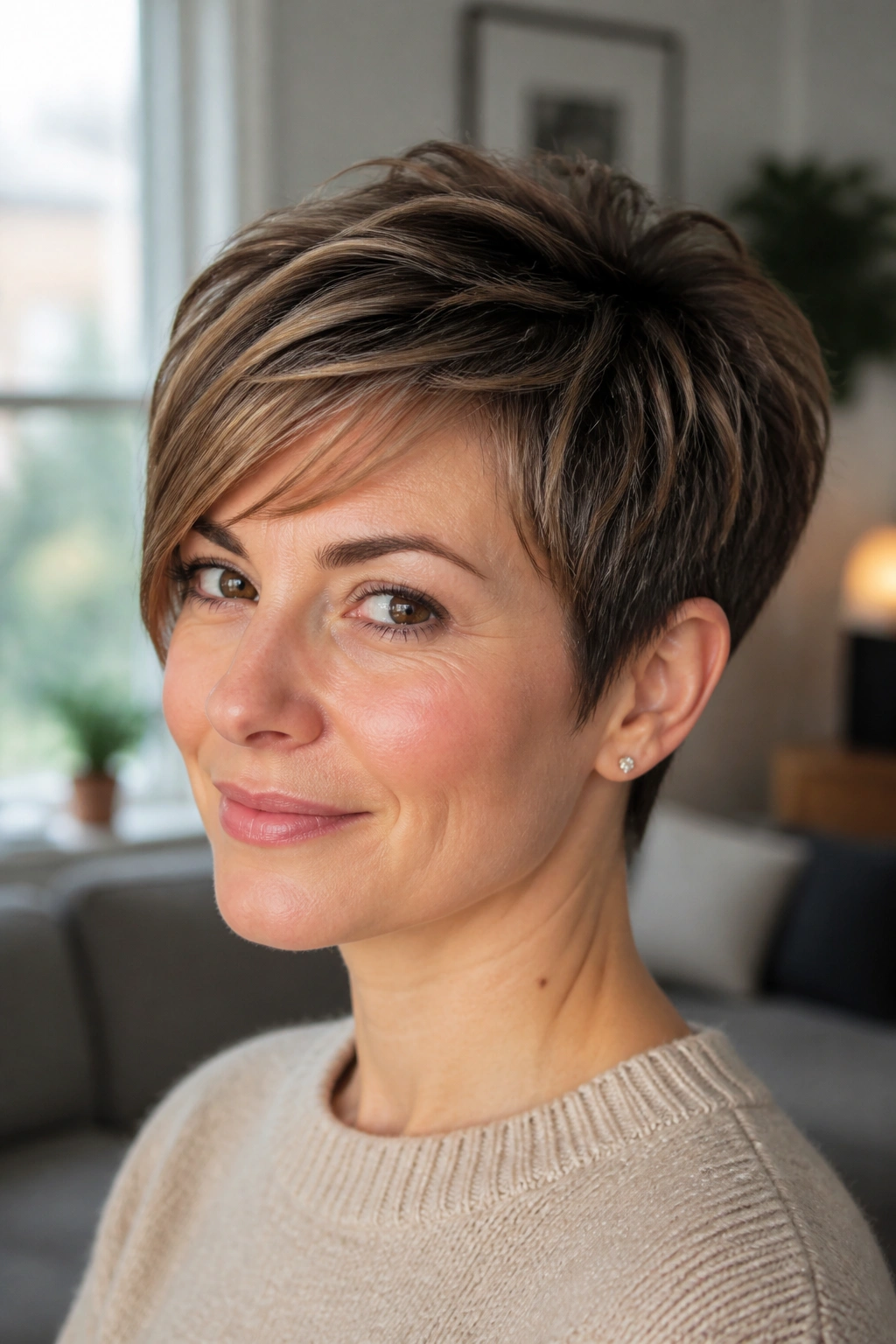
Short hair can be fantastic on an oval face, and a textured pixie proves it. The shape keeps the sides neat while leaving enough length on top to create lift and movement. That balance matters. Without some height at the crown or softness near the temples, a pixie can look too cropped and expose more face than you want.
This cut works best when the top is not too rigid. Ask for longer pieces through the crown and a little softness around the ears. The finish should feel light, not helmet-like. A matte paste or light wax can separate the top into small, piecey sections that move instead of sitting stiff.
I like this style on people who want easy mornings. It dries fast. It takes a minute to style. And it gives the face a clean frame without hiding the cheekbones, which is half the point with an oval shape.
If you want a pixie but worry about looking too severe, leave the fringe long enough to sweep sideways. That one move changes the whole cut.
6. Side-Swept Lob
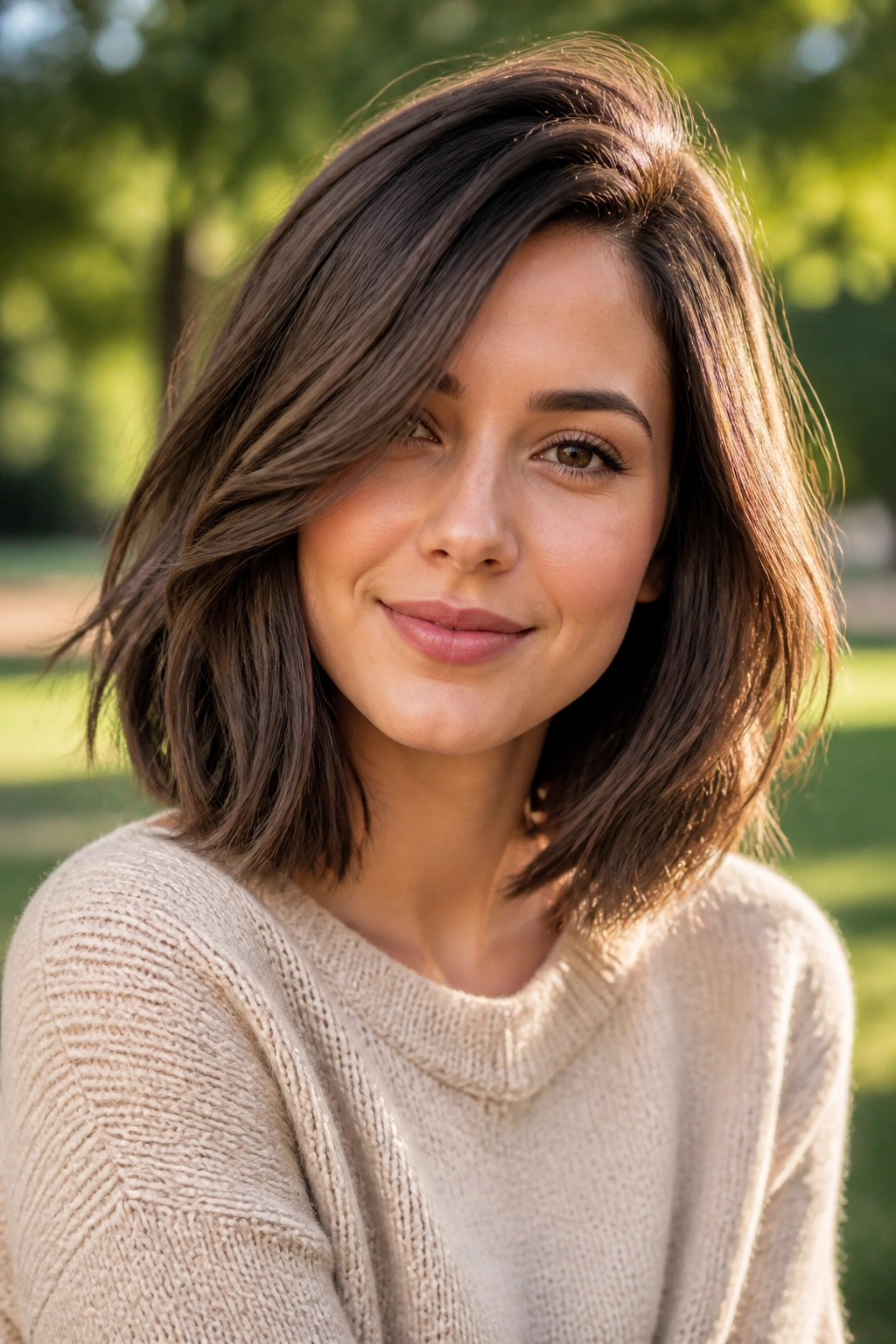
A lob with a side part is one of those styles that seems plain until you wear it. Then it makes sense. The longer length keeps things soft, while the side sweep breaks up the face’s symmetry in a way that feels easy rather than forced. On oval face shapes, that slight asymmetry can be flattering because it adds shape without adding clutter.
Why it beats a flat center part for some people
A center part can look sleek, but it can also make the face feel longer if the rest of the cut is very straight. A side part shifts the hairline and gives the forehead more shape. The whole haircut suddenly has direction.
This is a good choice if your hair sits somewhere between straight and wavy. You can blow it smooth with a paddle brush for a polished finish, or bend the ends with a flat iron for a softer edge. A little bend at the collarbone keeps the lob from looking stiff.
If you want low-effort styling, keep the layers minimal. Too many layers can make a lob lose its clean shape. Sometimes restraint is the better move.
7. Sleek Low Bun With a Middle Part
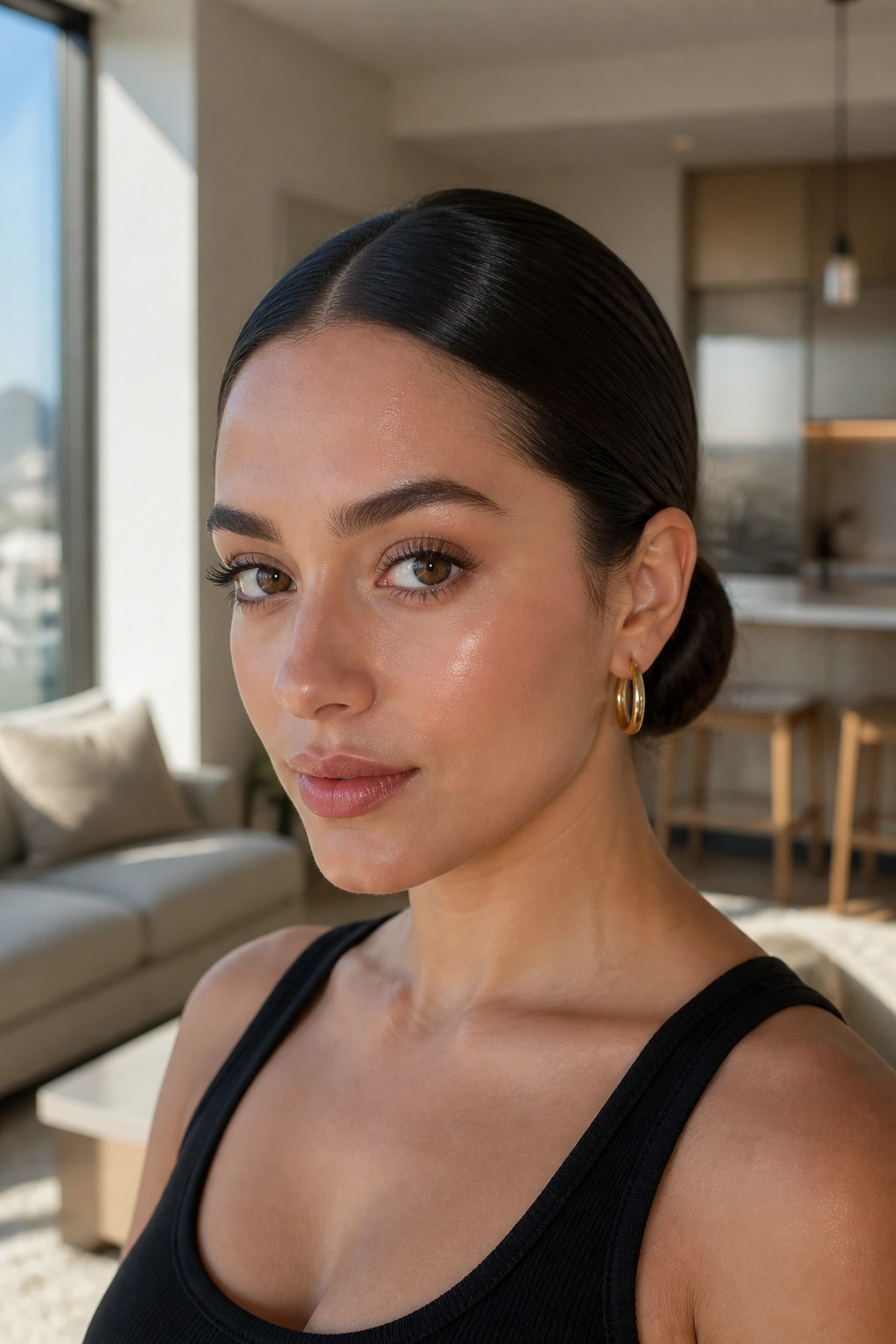
A low bun sounds simple, and it is, but that does not make it boring. On an oval face, a sleek low bun with a middle part can look calm and balanced in a way that many loose styles cannot. It clears the face, shows off bone structure, and keeps the whole look tidy.
The best version sits at the nape, not high on the back of the head. That placement matters because a high bun can pull attention upward and make the face feel longer. A low bun keeps the line level. Leave a few thin pieces loose near the temples if you want a softer result. If you want it sharper, smooth everything back and pin it clean.
- Use a fine-tooth comb for the part.
- Smooth the hair with a light gel or cream.
- Secure the bun with pins that cross in an X shape.
- Mist the surface with a flexible hairspray, not a hard shell.
This is one of those styles that works for dinner, work, or a wedding without much adjustment. Clean. Easy. Done.
8. Face-Framing Waves
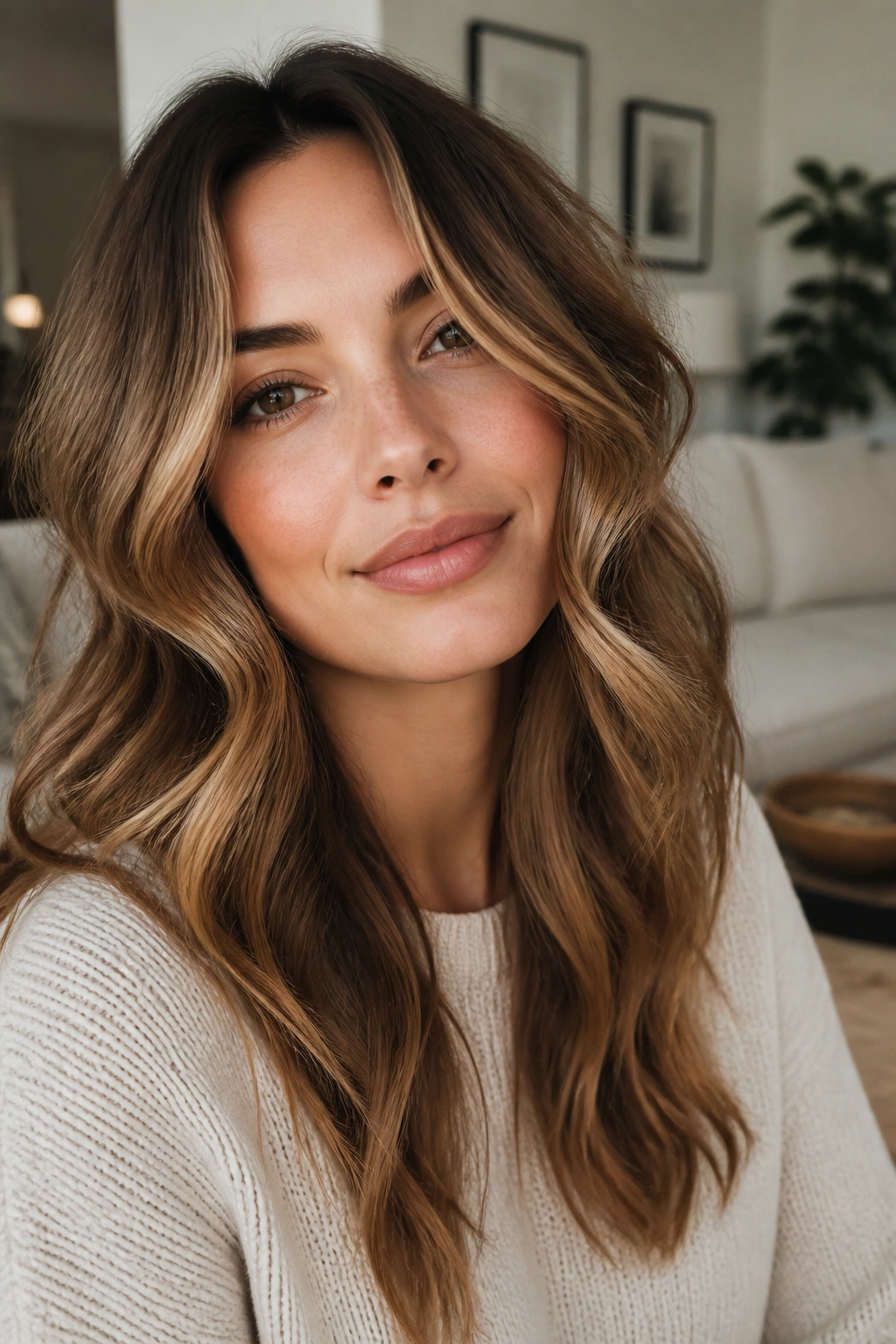
Face-framing waves do a lot of quiet work on oval faces. They keep the length soft while bringing attention to the eyes and cheekbones, which is where most people want the eye to go anyway. The style feels relaxed, but it needs a little planning so the wave pattern falls in the right spots.
How to make the shape last
Use a 1.25-inch curling iron or wand and wrap sections away from the face near the front, then alternate directions through the rest of the head. That keeps the front pieces from collapsing into one flat shape. After the curls cool, brush them out gently with fingers or a soft bristle brush until they turn into loose waves.
The front pieces should start around the cheekbone or mouth, not at the temple. That gives the face a frame instead of a puff. A tiny amount of serum on the ends helps, but keep it light. Too much product makes the wave lose its swing.
This style looks good with medium or long hair, and it holds up well on second-day hair. Sometimes the hair even behaves better then. Oddly enough, that’s often the truth.
9. Blunt Collarbone Cut
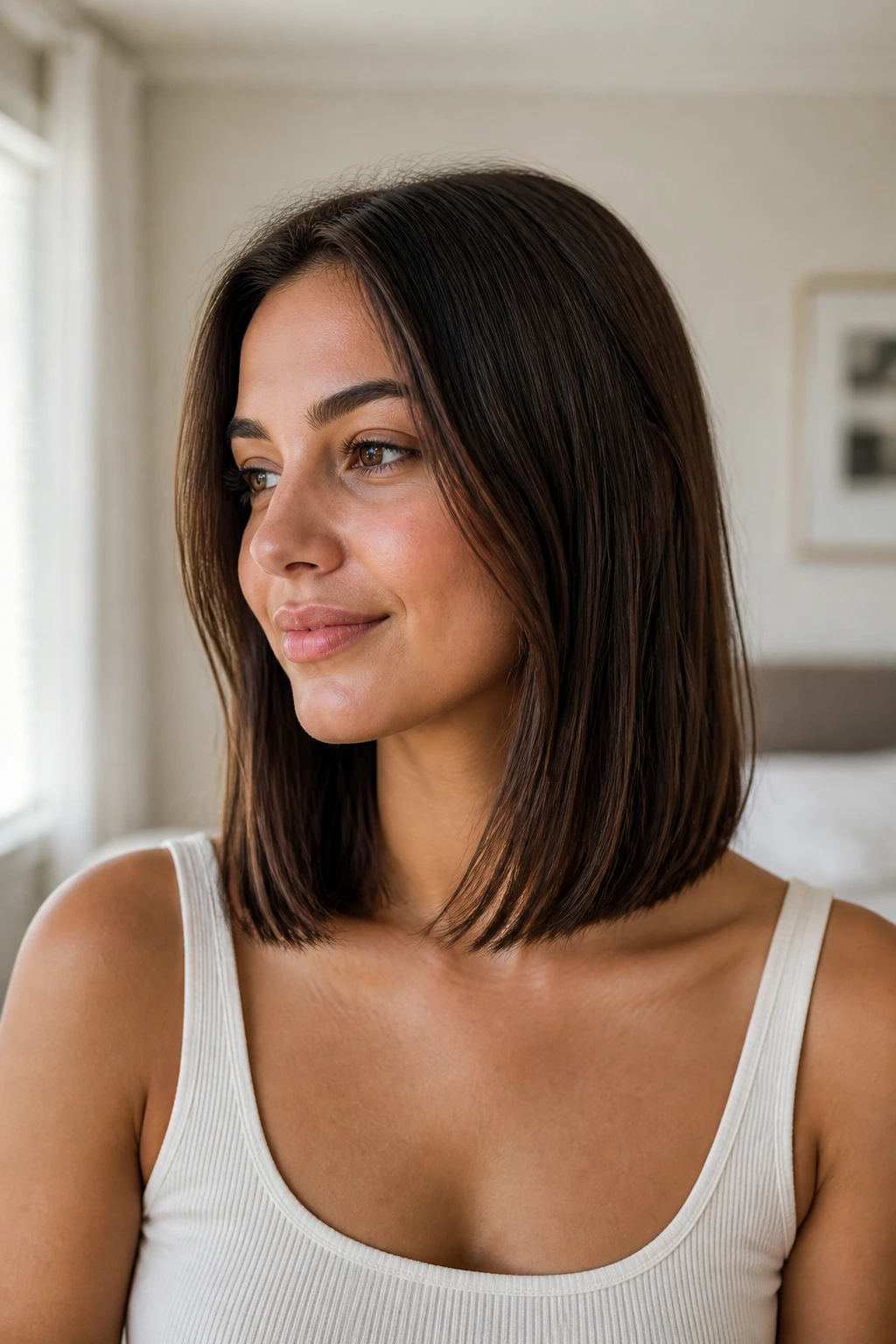
A blunt cut that lands at the collarbone is one of my favorite shapes for oval faces because it hits a sweet spot between short and long. The collarbone acts like a natural shelf. Hair that ends there feels finished, not accidental.
The blunt edge gives the style a clean, strong line. That line can make fine hair look thicker, and it can give thicker hair a sharper outline. If you want movement, you do not need heavy layers. A slight bend at the ends is enough. Too many layers can blur the shape and make the cut lose its point.
This is a good haircut if you want to wear your hair down most days. It works with a center part, but it also handles a side part well. If your face is very balanced, a blunt collarbone cut can look almost tailored. If your face is a little longer than you like, the collarbone length helps interrupt that vertical line.
Keep the ends neat. That matters more here than almost anywhere else.
10. Wispy Fringe With Long Hair
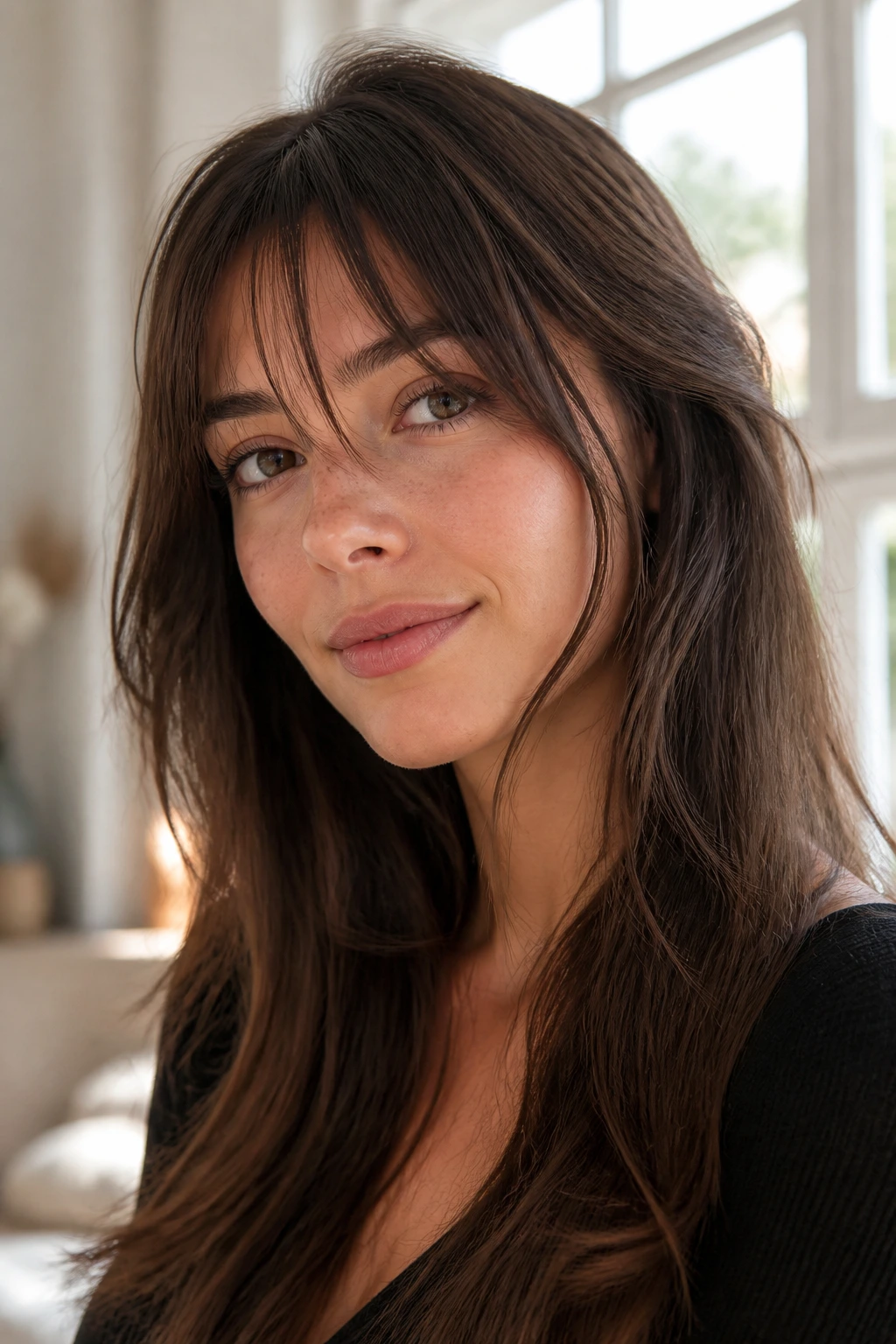
What if you want bangs, but you do not want your face swallowed by them? Wispy fringe is the answer. On oval face shapes, it adds a little break across the forehead without changing the whole mood of the haircut.
The best wispy fringe is light enough to see through. It should not sit like a wall. Think of short, feathery pieces that taper into longer side sections. That keeps the eyes visible and avoids a heavy block across the top half of the face.
What to ask for
Ask for softness at the center and longer pieces at the edges. The shortest hair should not be cut too far above the brows unless you want a more playful look. This fringe works especially well with long layers or a low-maintenance shag.
Styling is simple. Blow-dry the fringe with a small round brush, then press the roots in the right direction with your fingers while it cools. A dry shampoo at the roots can keep the fringe from separating in odd ways if your skin runs oily.
It’s a small detail, but it changes the whole haircut.
11. Half-Up Half-Down With Crown Volume
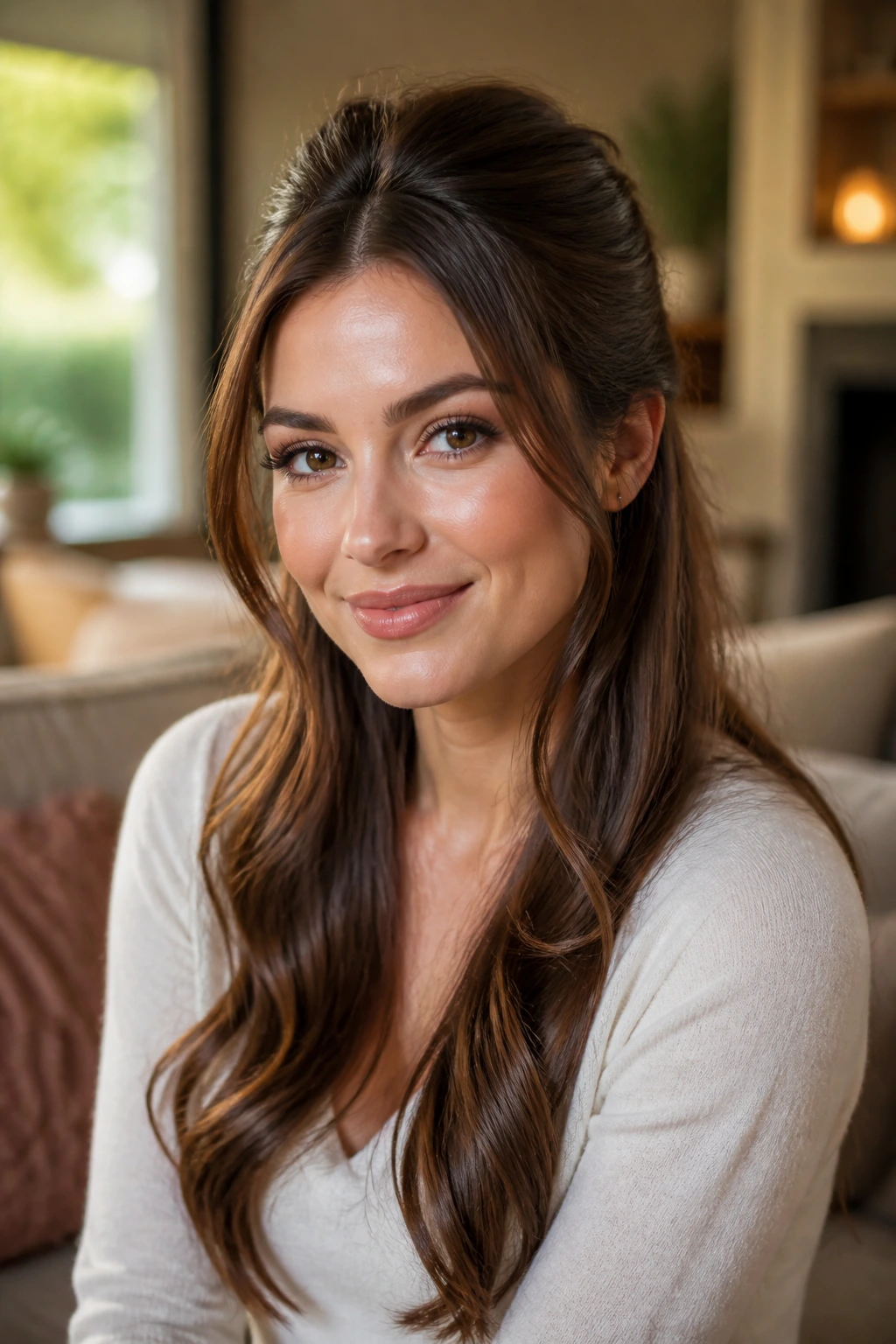
A half-up style with a little crown lift is one of the easiest ways to make an oval face look balanced without hiding any length. It pulls hair away from the sides, opens the face, and keeps the bottom length visible. That matters because oval faces can handle a bit of lift without looking top-heavy, as long as the crown is not teased into a giant bump.
The trick is to keep the volume controlled. Lift the hair from the temples and top back just enough to create shape, then secure it with a clip or elastic. Leave the lower half soft and loose. If you curl the ends, the whole look feels more finished. If you keep them straight, it reads cleaner and more casual.
- Tease only the top inch or two.
- Smooth the outer layer so the back doesn’t look puffy.
- Leave a face-framing section out on each side.
- Use a small claw clip for a softer look.
This style is the kind you can wear on a busy day and still look like you meant it.
12. Deep Side Part With Hollywood Waves
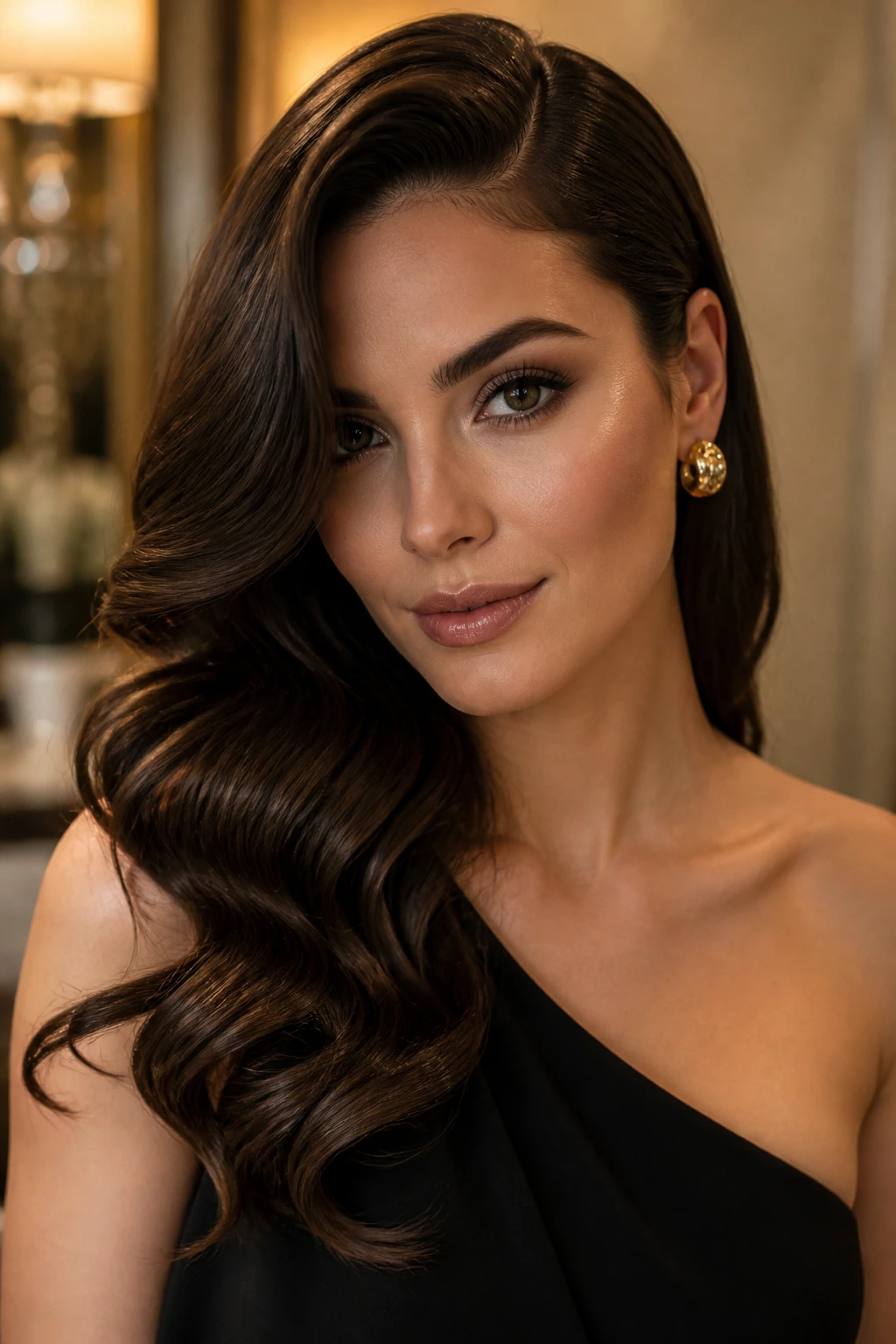
A deep side part changes the face fast. It pushes one side of the hair across the forehead and builds a strong sweep that feels old-school in the best way. On oval face shapes, that sweep creates a line that keeps the face from reading too long or too plain.
The waves themselves should be broad, not tiny. Think large sections wrapped around a 1.5-inch curling iron, then brushed into one smooth shape once they cool. The wave should move in one direction, not bounce out in every direction. That sleek curve is what gives the style its polish.
If your hair is fine, set each wave with clips while it cools. If your hair is thick, let the curls fall on their own, then brush only the surface. A soft shine spray can help, but keep it light. Heavy product kills the wave.
This style is dramatic without being fussy. It loves red lips, earrings, and a clean neckline. But even with a plain sweater, it still does the job.
13. Shoulder-Length Curly Cut
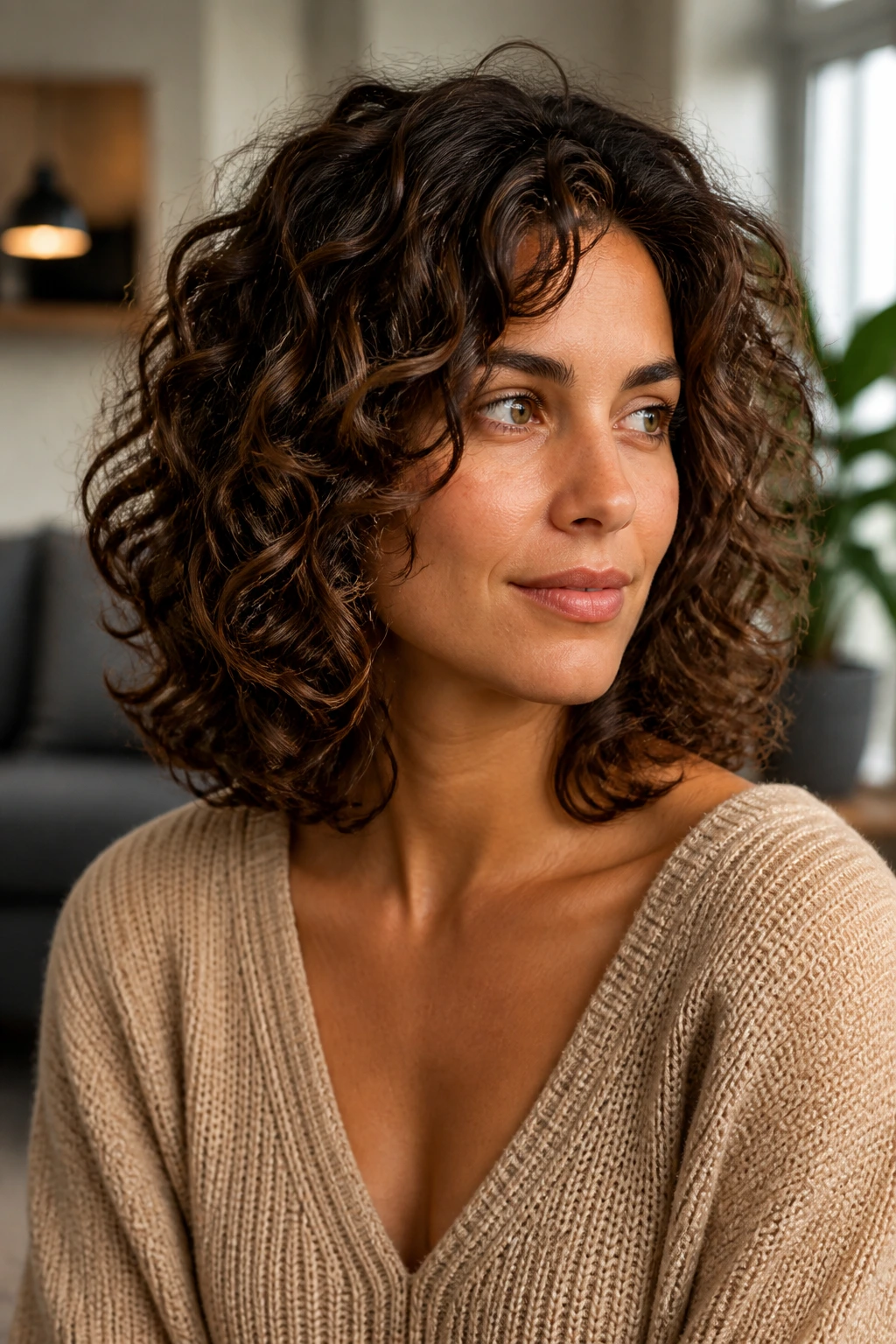
Curly hair on an oval face needs shape more than length, and shoulder length is often the sweet spot. It gives curls enough weight to settle without dragging the face down. The goal is a rounded, lifted outline — not a triangle, not a helmet, not a flat pile.
The cut matters more than the styling
A good curly cut usually has layers that help the curl spring upward and out, especially around the crown and the sides. Many stylists prefer to cut curls when dry or mostly dry so they can see the true fall of the hair. That matters because curly hair can shrink in ways straight-haired people never expect.
Use curl cream on damp hair, scrunch gently, and dry with a diffuser if you need more volume. If your curls are loose, let them air-dry and avoid touching them too much before they set. Too much handling makes the shape frizz out and lose definition.
For an oval face, this length is useful because it keeps the sides from getting too wide near the cheeks. The shape stays alive. That’s the whole game.
14. Clavicut With Flipped Ends

A clavicut — hair that lands right around the collarbone — looks especially good when the ends flip slightly away from the neck. That tiny outward bend gives the cut motion and keeps it from lying flat against the shoulders. On an oval face, that movement helps the style feel lighter and less vertical.
The flipped end can be polished or casual. You can get it with a round brush during blow-drying, or create it with a flat iron by turning the wrist at the very bottom of each section. A little bend is enough. You do not need a curl that looks rehearsed.
Small details that matter
- Keep the part clean and defined.
- Flip the front pieces away from the face.
- Add a touch of root lift at the crown.
- Finish with a light spray so the ends stay separated.
This is a good haircut if you want something that works with coats, scarves, and everyday life. It sits nicely on the shoulders and keeps the neck area open.
15. High Ponytail With Loose Face Pieces
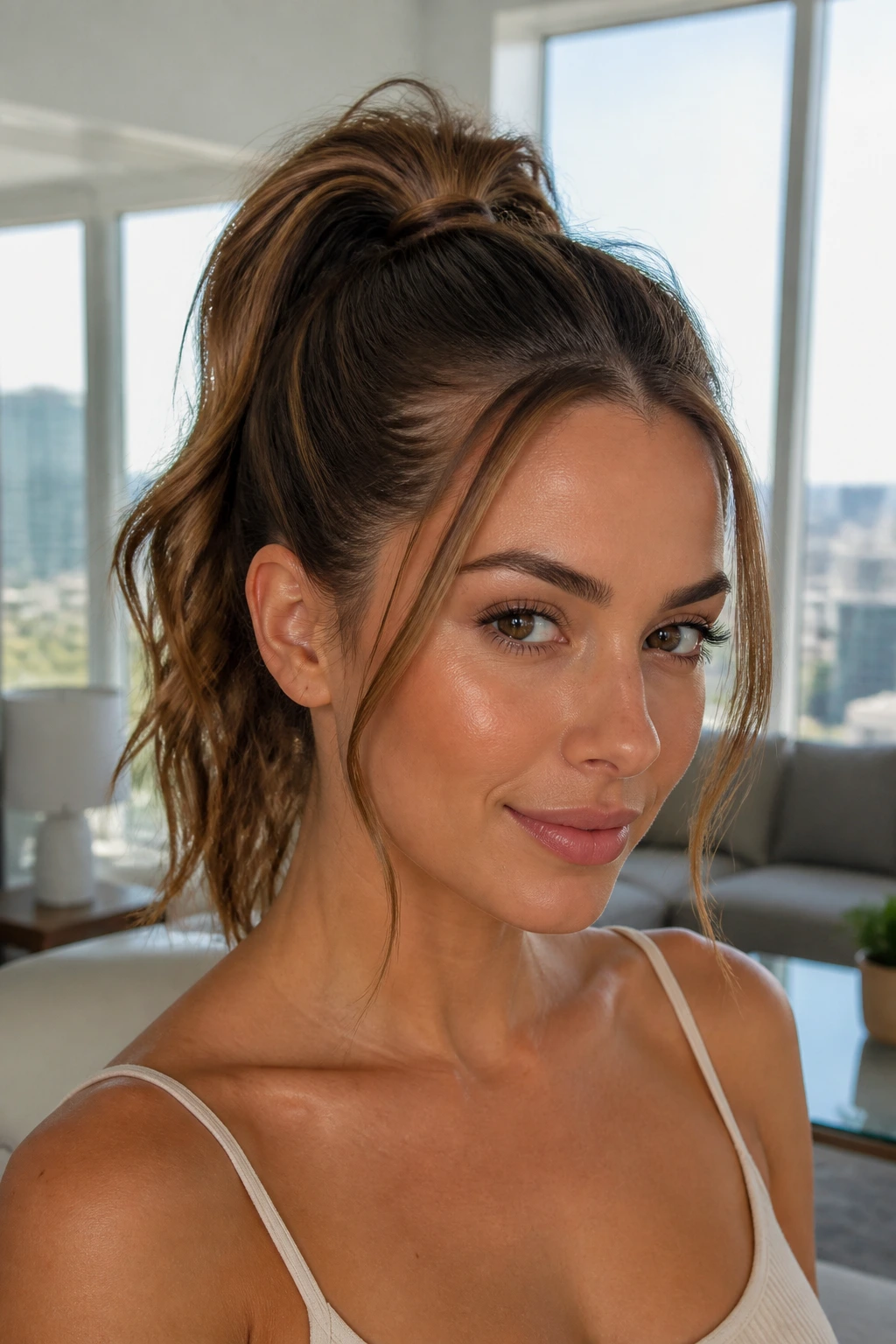
A high ponytail can look fantastic on an oval face when it’s done with a little restraint. Pulling the hair up and back opens the face and shows off the bone structure, but the style can feel harsh if every strand is yanked tight. That’s why the loose pieces matter.
Start by brushing the hair upward toward the crown or slightly above it. Secure it firmly, then wrap a small strand around the elastic so the base looks finished. Leave a few slim pieces at the temples or just in front of the ears. Those soften the line and keep the ponytail from feeling severe.
This style works for workouts, yes, but it also works for a cleaner dressed-up look if the surface is smooth. A little volume at the crown keeps the face from reading too long. Too much height is the mistake to avoid.
- Use a firm elastic that won’t sag.
- Smooth the top with a light brush, not heavy oil.
- Curl the loose front pieces if you want softness.
- Keep the ponytail base tight enough to hold, but not painful.
16. Braided Crown or Halo Braid
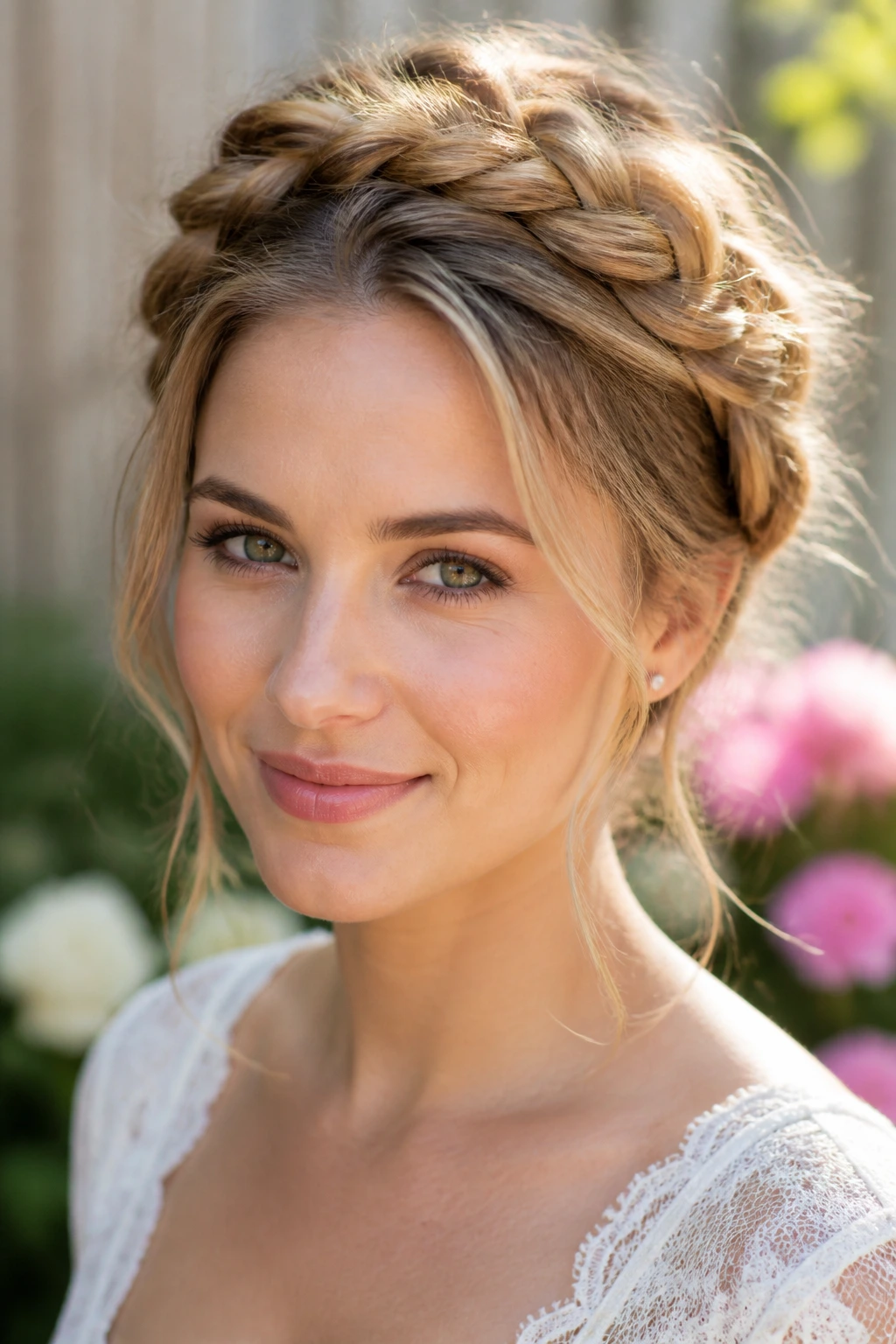
A braided crown is one of those styles that solves problems fast. Hair is off the face, the shape stays neat, and the braid wraps the head in a way that works nicely with an oval face. It adds width around the outer edge without bloating the cheeks, which is a useful trick.
The braid can be tight and polished or loose and slightly messy. The loose version usually feels better on oval faces because it lets a few tendrils escape around the temples and ears. Those small pieces soften the outline and keep the braid from looking too rigid.
What to watch for
If the braid sits too high, it can make the face feel shorter. If it sits too low, it can drag the style down. Somewhere around the crown and upper nape tends to work best. Hair that is a bit dirty on day two often braids better, which is one of those annoyingly true hair facts.
This style is handy for warm days, formal events, or any time you want your hair out of the way without going plain. It has shape. It has purpose. That helps.
17. Soft Wolf Cut
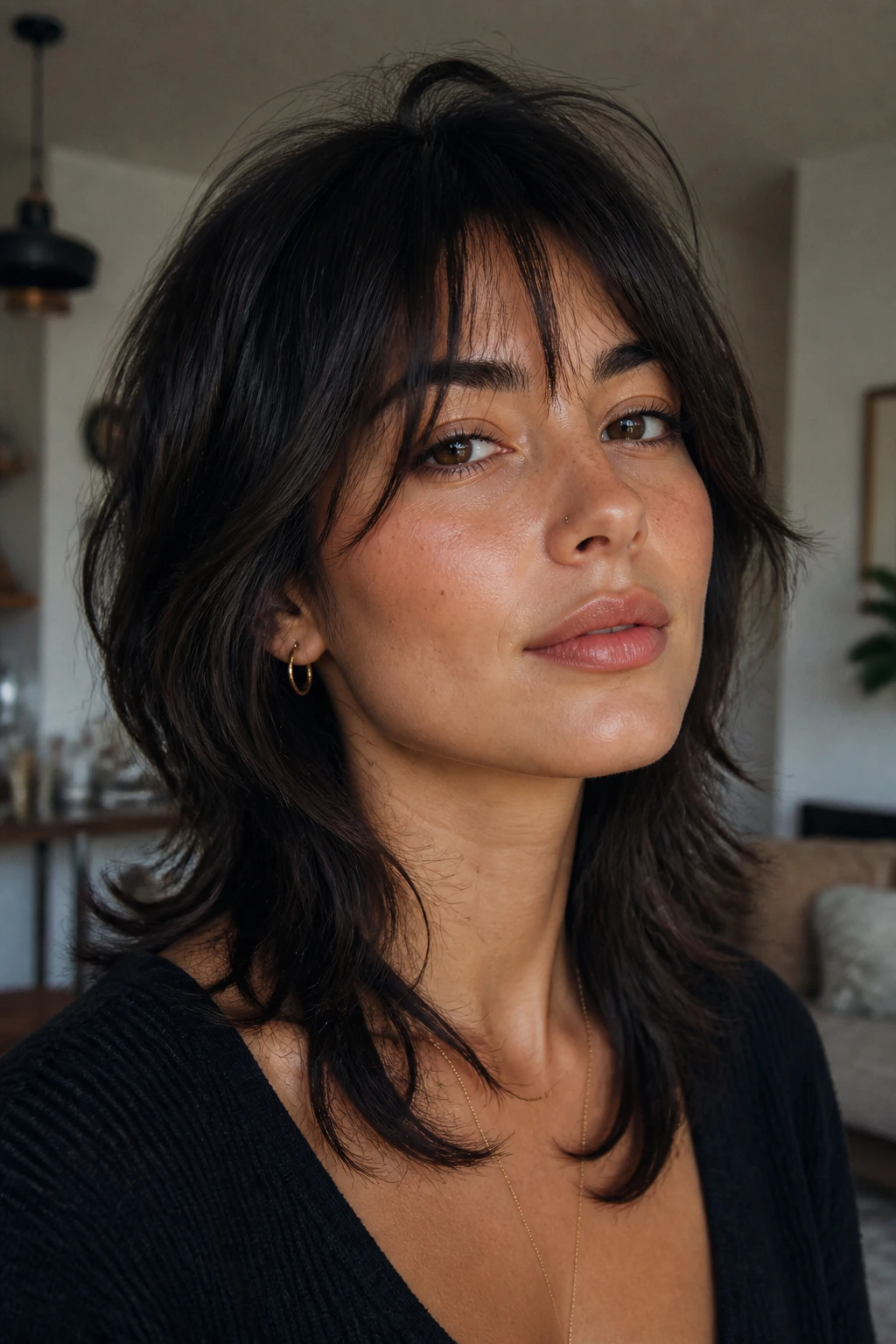
A soft wolf cut can work beautifully on oval faces when it keeps the edges light and the top layers controlled. I’m not talking about the extreme, mullet-heavy version that takes over the room. I mean the softer version with shaggy texture, a little crown lift, and wispy ends that fall around the face instead of fighting it.
Compared with a classic shag, the wolf cut usually has more attitude through the crown and more texture through the lengths. That makes it a good fit if your hair likes movement and your face can handle a little messiness. Oval faces can take it. The shape already has balance, so the haircut can be a little wild.
It works best with wave or bend in the hair. Air-dry cream, a diffuser, or a quick pass with a curling wand can help define the uneven layers. If your hair is very fine, ask for softer layering so it does not lose density. If your hair is thick, the interior texture helps take out some weight.
This cut is not shy. That’s the appeal.
18. Twisted Chignon

A twisted chignon gives an oval face a polished frame without making the hair feel overworked. It sits low, often near the nape, and uses twists instead of a tight knot to create shape. The result is soft and controlled at the same time.
The part can stay centered, or it can shift a little to one side if you want less symmetry. That small choice changes the mood fast. A center part feels clean and formal. A side shift feels a little more relaxed, almost like the hair was pinned up after a long day and somehow looked better that way.
This style is especially useful for medium to long hair that needs to stay put. It does not require a perfect blowout. In fact, a touch of texture helps the twists hold. Use pins in short, crossed sections so the shape stays anchored.
There’s something nice about a chignon that does not try too hard. It lets the face stay open and the neckline do some work.
19. Long Straight Hair With Invisible Layers
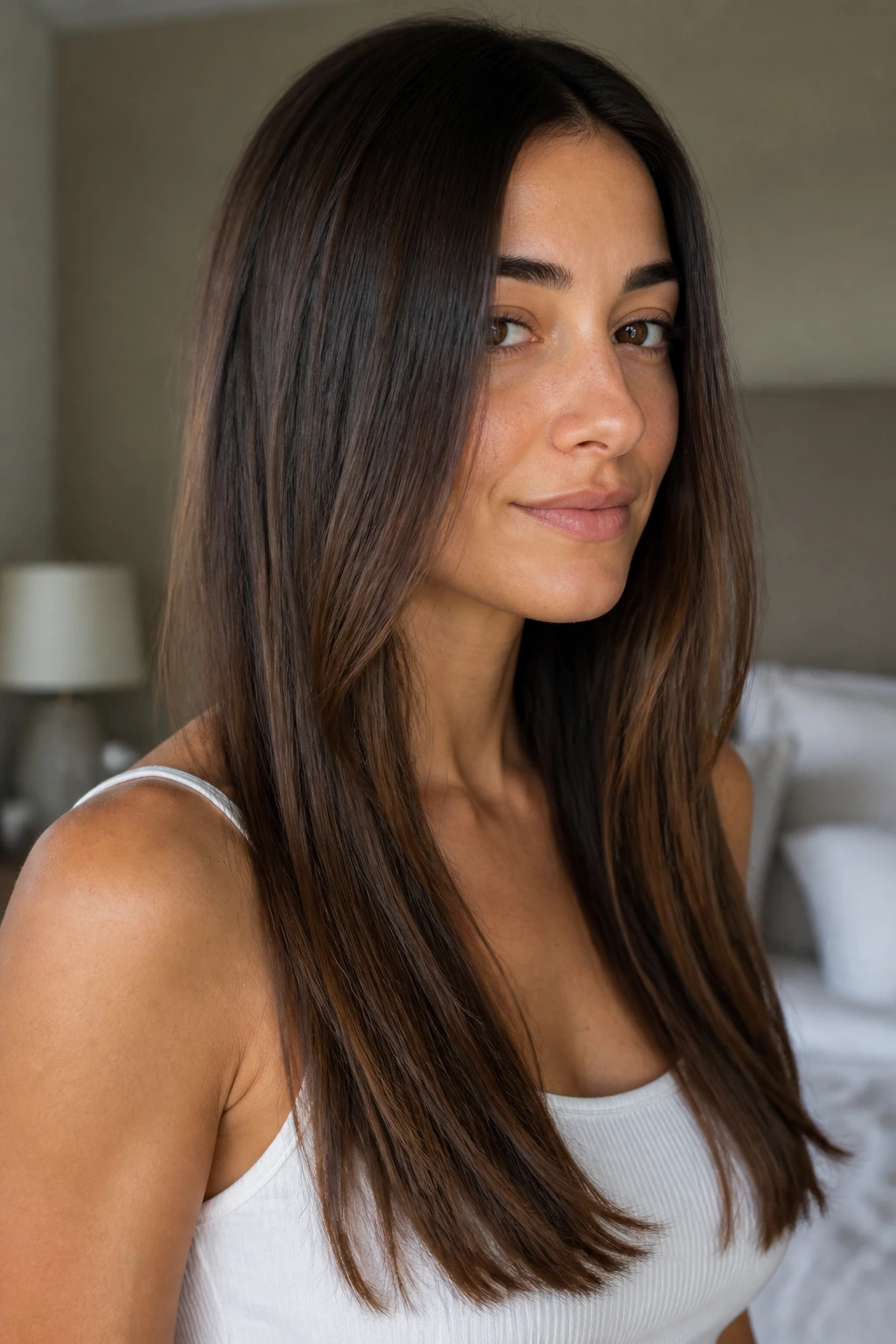
Long straight hair can work on an oval face, but only if it has some movement built in. Invisible layers are the answer. They keep the outline smooth while stopping the whole style from hanging like a sheet. A few hidden layers under the surface help the ends move and keep the cut from looking heavy.
Does straight hair make an oval face look longer? Sometimes, yes — if it falls flat from root to tip with no break. Invisible layers and a small face-framing section fix that. The shape gets air around the cheekbones and jawline without losing the sleek effect.
- Ask for soft internal layers, not choppy ones.
- Keep the front pieces around mouth to collarbone length.
- Use a flat iron only where needed.
- Finish with a shine serum on the last inch or two.
This look is clean and low-drama. It needs less daily styling than a curl-heavy cut, but it still needs regular trims so the ends stay blunt enough to look healthy. Otherwise, the whole point disappears.
20. Soft Side Part With Tucked Ends

A soft side part with tucked ends is one of the easiest everyday hairstyles for oval face shapes because it feels both relaxed and deliberate. The side part breaks up the symmetry of the face, while the tucked side opens one cheek and keeps the shape from falling flat around the jaw.
What I like here is the smallness of the choice. You are not changing the haircut. You are changing the way the haircut sits. Tuck one side behind the ear, let the other side fall forward a little, and give the ends a bend so they do not look stiff. That tiny shift can make straight hair, waves, or a lob feel more alive.
This is the kind of style that works when you want to look put together without standing in front of a mirror for twenty minutes. It’s quiet, but not boring. The face stays open. The hair still has direction. And for oval faces, that balance is often enough on its own.
If you only try one styling habit from this whole list, make it the side part. It changes more than people expect.
