



A textured pixie cut can do more in ten minutes than a drawer full of styling tools. A little lift at the crown, a few broken-up ends, and a clean neckline can make hair look fuller, sharper, and less fussy without turning it into a helmet.
That’s the real appeal of textured pixie cuts: they’re not one haircut, but a whole family of short shapes that can look soft, jagged, airy, cropped, or polished depending on where the weight sits. The cut matters more than the product. Always has.
Short hair is honest. If the shape is off, you see it immediately. If the texture is right, the whole face wakes up, and the haircut starts doing the work for you.
A good stylist usually talks about the crown, the fringe, the nape, and the side balance before they ever mention wax or spray. That’s the part a lot of people miss. Texture is built into the cut first, then finished with styling later. The styles below cover fine hair, thick hair, curls, coils, sharp jawlines, round cheeks, and the grow-out phase that everybody pretends to love but secretly hates. The first one starts at the crown, because that is where a short style either wakes up or falls flat.
1. Choppy Crown Pixie
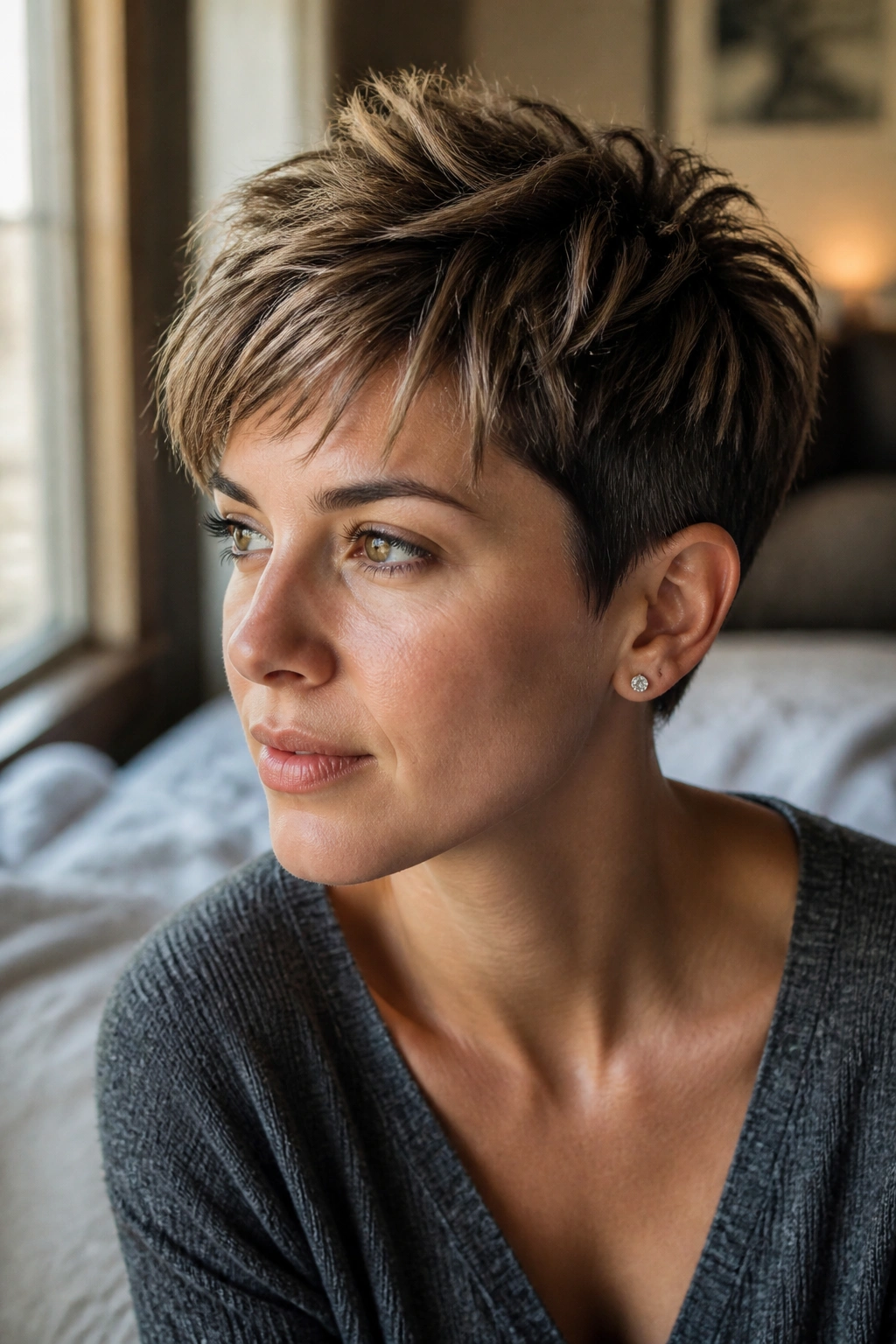
A choppy crown is the fastest way to make a pixie look awake. It lifts the eye, breaks up the silhouette, and keeps the top from sitting like a flat cap.
What gives this version its edge is the contrast: the crown stays piecey and broken, while the sides and nape stay tighter. That shape works especially well if your hair lies flat at the top or if you have a stubborn cowlick that refuses to cooperate. A stylist will usually use point cutting rather than blunt shears, which means the ends don’t form one hard line.
Why the Crown Matters
The crown is where most pixies either gain life or lose it. A half inch of texture up there can matter more than extra length anywhere else.
- Ask for soft, irregular pieces on top, not shredded layers.
- Keep the sides close so the crown has room to stand up.
- Use a pea-sized matte paste and warm it in your palms first.
- Push the top forward, then back, then settle it where it looks best.
Do not smooth the crown flat. That one move can erase the whole shape.
2. Side-Swept Fringe Pixie
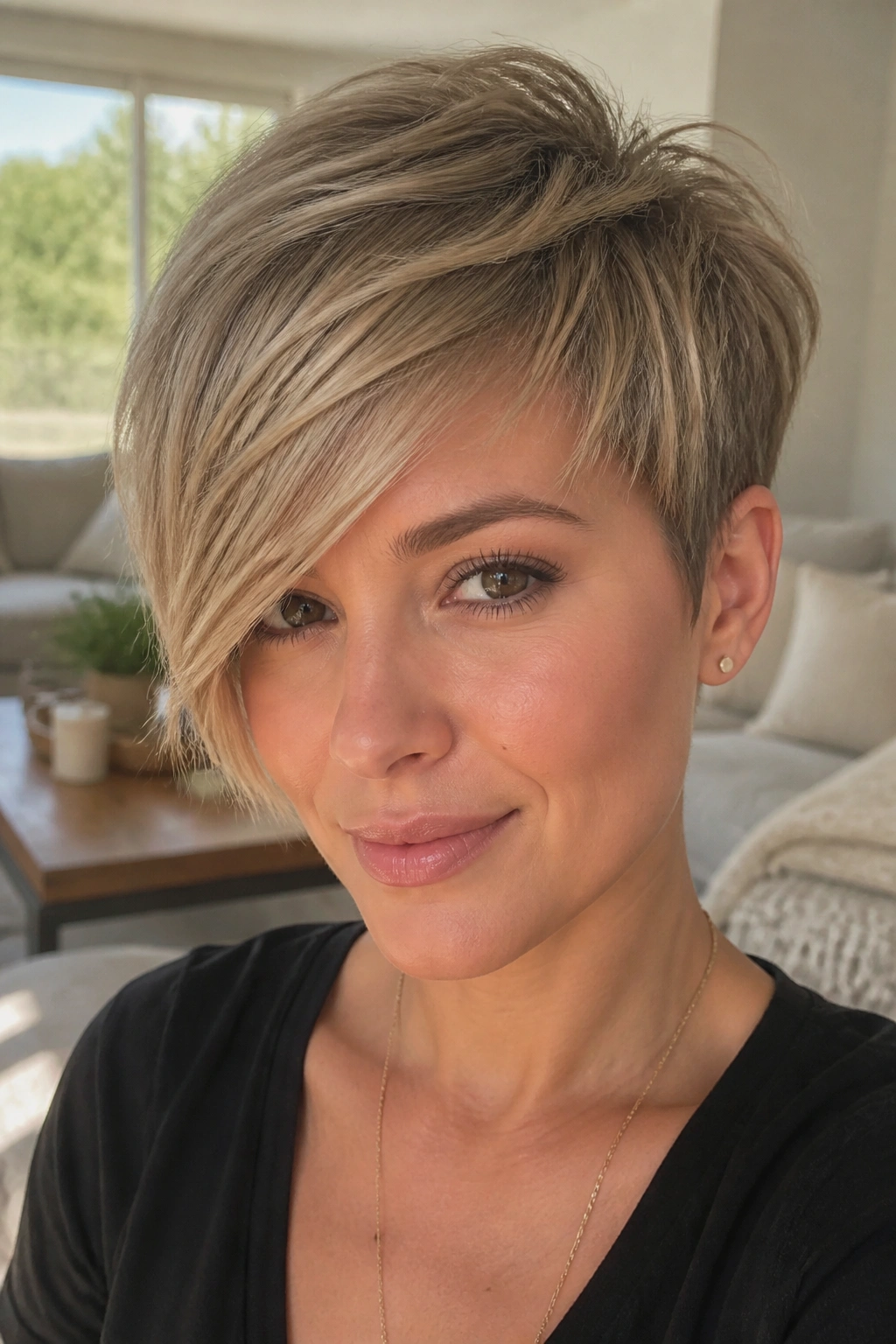
A side-swept fringe can soften a pixie without making it timid. It gives the cut a diagonal line, and diagonal lines are flattering because they move the eye instead of stopping it.
This version works well if you want short hair but you do not want your forehead fully exposed. It also helps if one eyebrow sits a little higher than the other, which is more common than people think. The longer fringe creates a small bit of asymmetry, and that tiny shift can make the face look calmer and less boxy.
Bring a photo with fringe that falls to one side of the cheekbone rather than a heavy curtain. That’s the key. Too much width at the front turns the cut into a mushroom. Too little and you lose the softness that makes this style worth wearing.
The easiest way to style it is with a quick blow-dry and a flat brush. Lift the roots first, then sweep the fringe across while it is still warm.
3. Curly Wash-and-Go Pixie
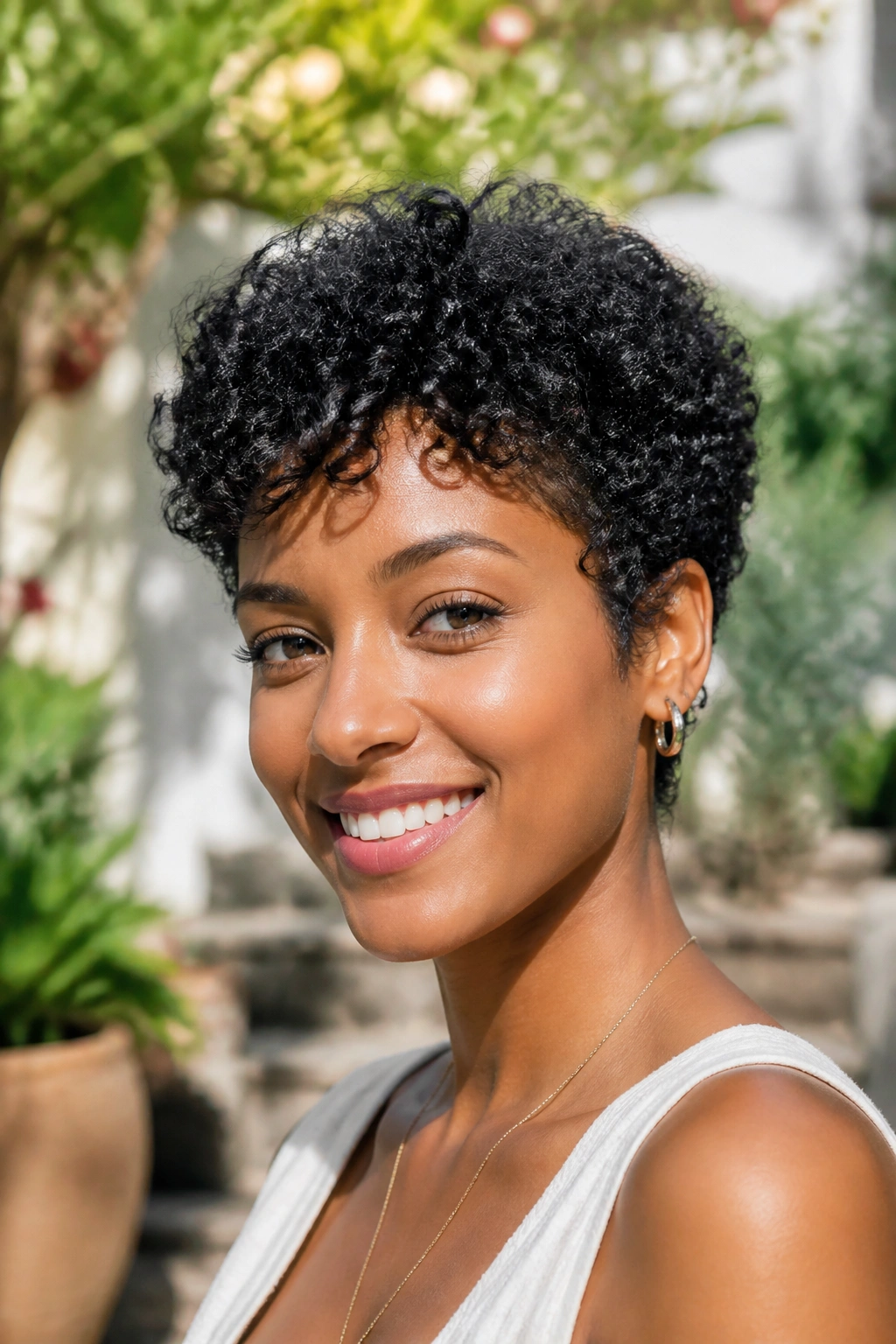
Why do curls look better in some pixies than others? Because the cut has to respect the curl pattern instead of fighting it.
A curly pixie looks best when the top has room to spring and the sides stay controlled. If the hair is cut too short all over, curls shrink in different directions and the shape gets boxy fast. Leave enough length on top to show the curl, and keep the neckline neat so the cut still reads as deliberate. The front can be a little longer than the crown, which gives the curls somewhere to fall instead of popping straight up.
How to Keep the Curl Pattern Intact
- Ask for dry cutting if your curl pattern changes a lot when wet.
- Use a curl cream or light gel while the hair is damp.
- Scrunch gently with a microfiber towel, not a rough bath towel.
- Let the hair air-dry or diffuse on low heat.
A curly pixie should look like it belongs to the curl, not like the curl was forced into the haircut.
4. Tapered Nape Pixie
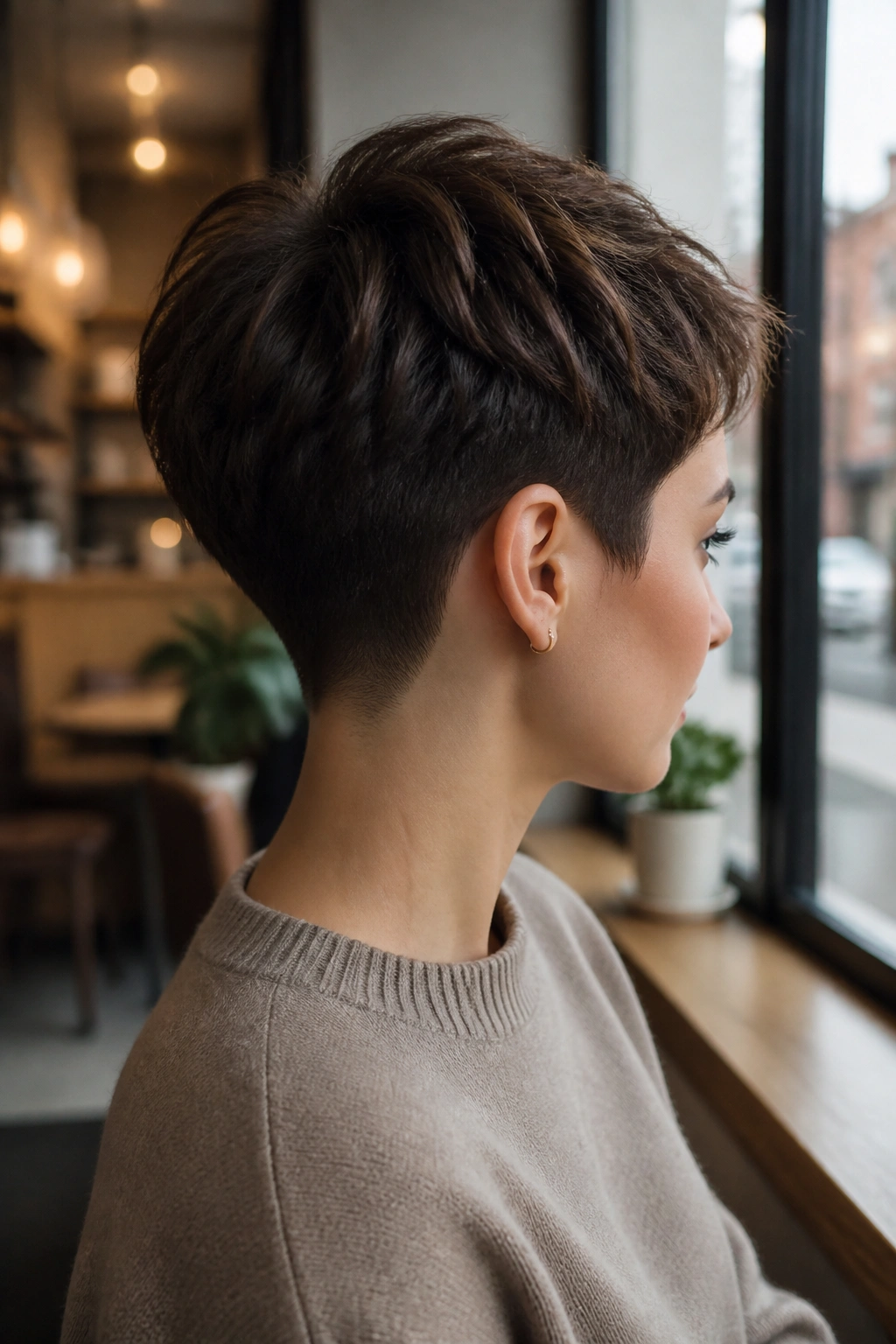
Picture hair that sticks out at the neckline the second you tuck your scarf in. A tapered nape fixes that problem in the cleanest way possible.
The back is cut close and shaped to follow the curve of the head, which makes the whole silhouette look neater from the side. That’s a big deal if you wear glasses, have a strong jaw, or simply dislike the awkward puff that can happen when short hair grows out at the neck. The top can still be textured and soft, but the base stays tidy.
What Makes It Work
- The taper should follow the natural hairline, not cut into it harshly.
- The transition from crown to neck should feel gradual.
- A little product at the ends goes farther than product at the roots.
- This shape looks sharp even when the top is slightly messy.
I like this cut for people who want texture without a lot of visual noise.
5. Feathered Ear-Hug Pixie
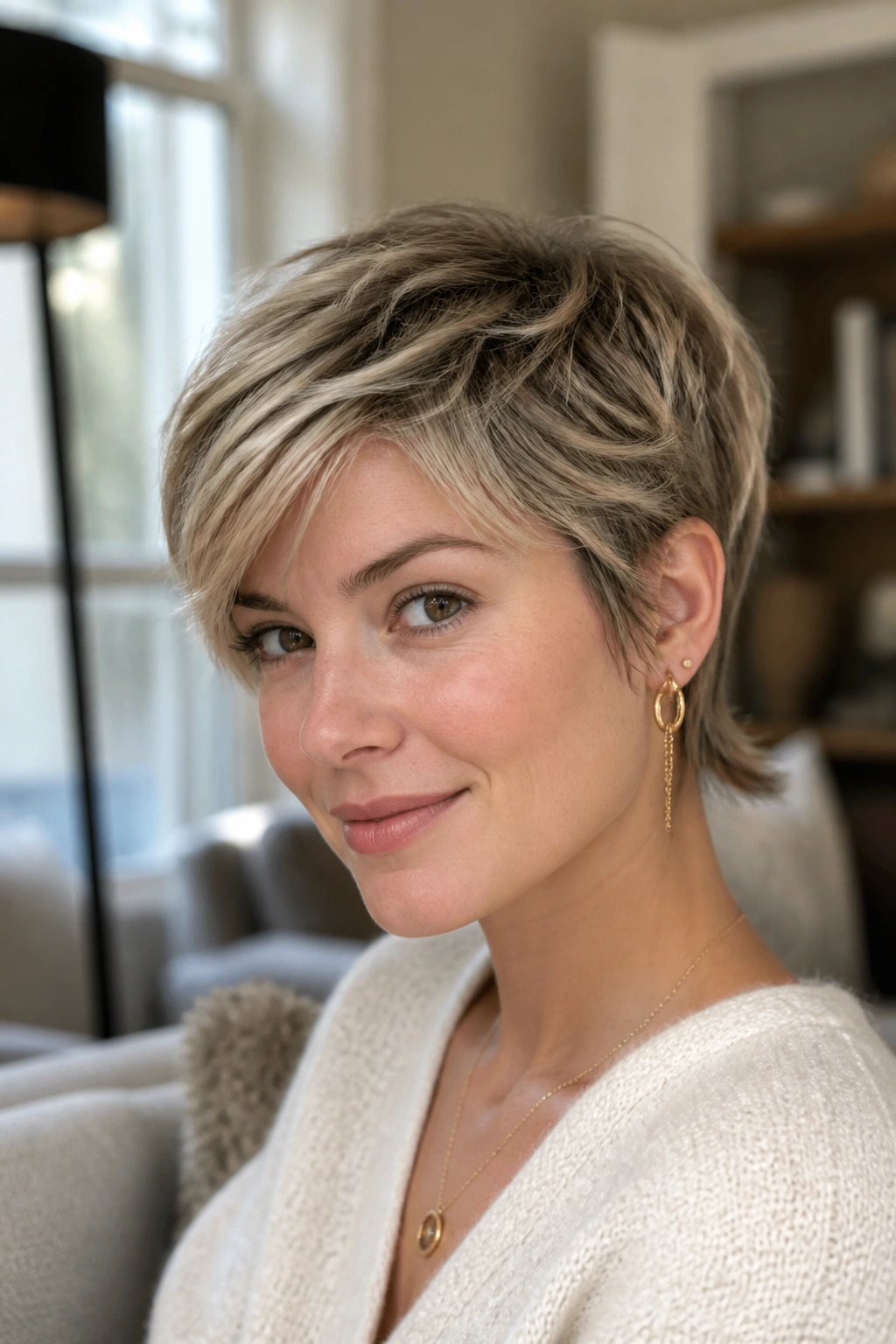
A feathered pixie is one of those cuts that looks easy because the work is hidden. The ends are softened around the ears and temples, so the hair moves instead of sitting in one block.
This is a smart choice if you want something gentle around the face. It can take the edge off a strong brow or a very angular jaw without turning soft and vague. The feathering also helps if your hair is dense around the sides, because it removes enough weight to keep the silhouette from getting bulky.
The styling part is simple, but it matters. Blow-dry with a small round brush and lift the roots just enough to keep the top from collapsing. Then separate the pieces with your fingers, not a comb. A comb makes feathering look too neat, and neat is not the point here.
Use a light mousse if your hair needs body. Use almost nothing if it already has movement.
6. Asymmetrical Long-Front Pixie
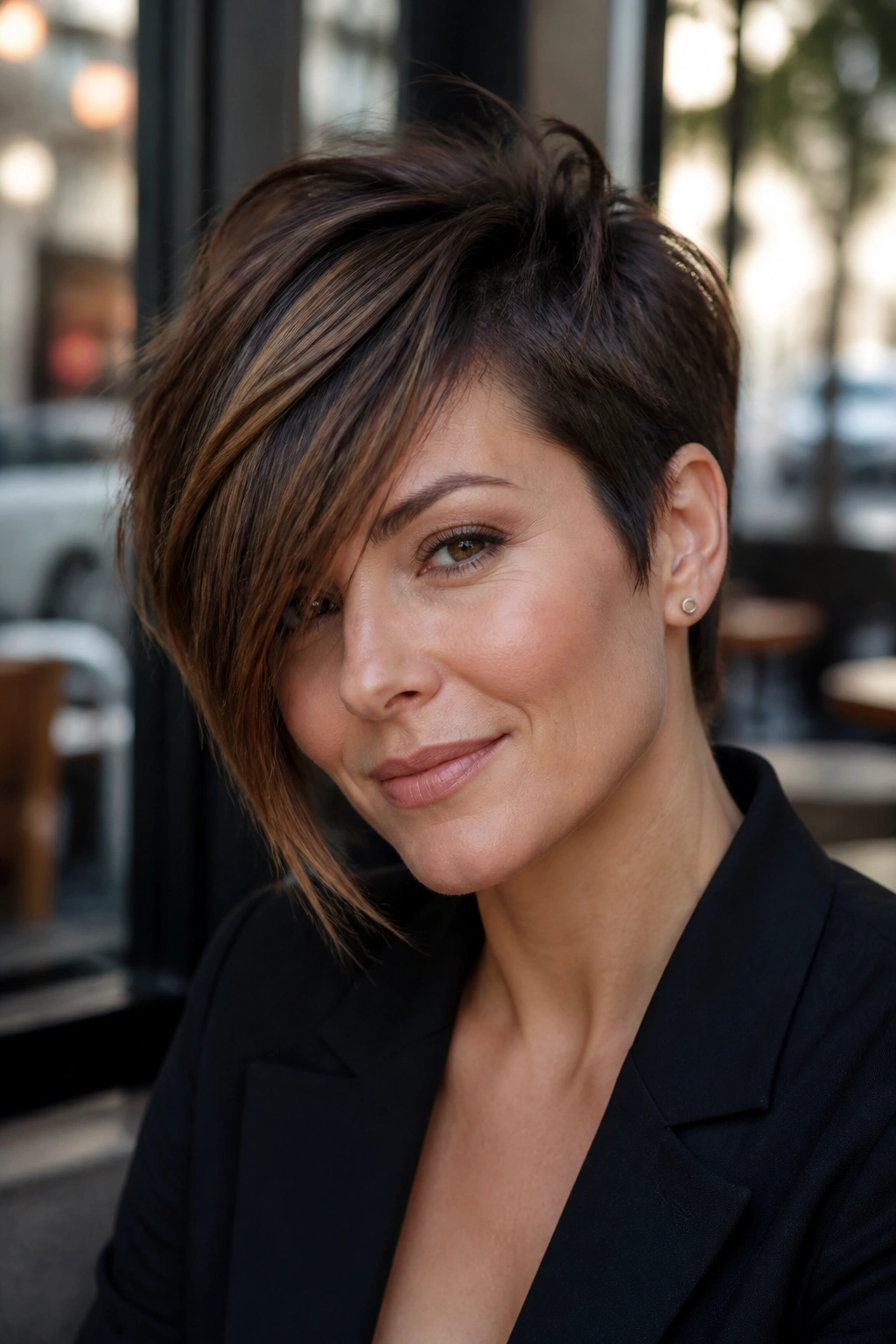
Unlike a balanced crop, this one keeps one side longer and lets the front fall on a diagonal. That small shift changes the whole mood of the haircut.
It’s a good pick if you want short hair that still feels a little dramatic. The longer front can skim the cheekbone or jawline, which gives the face a longer line. The shorter side keeps the cut honest and prevents it from looking like a grown-out bob pretending to be a pixie. That balance is the whole trick.
This cut is especially nice on straight or slightly wavy hair because the asymmetry shows clearly. Curly textures can wear it too, but the longer side has to be cut with the curl pattern in mind or it will spring up too much.
Bring a photo that shows both sides clearly. A quick verbal description is not enough here, because symmetry problems show up fast once the hair is dry.
7. Razor-Cut Micro Fringe Pixie
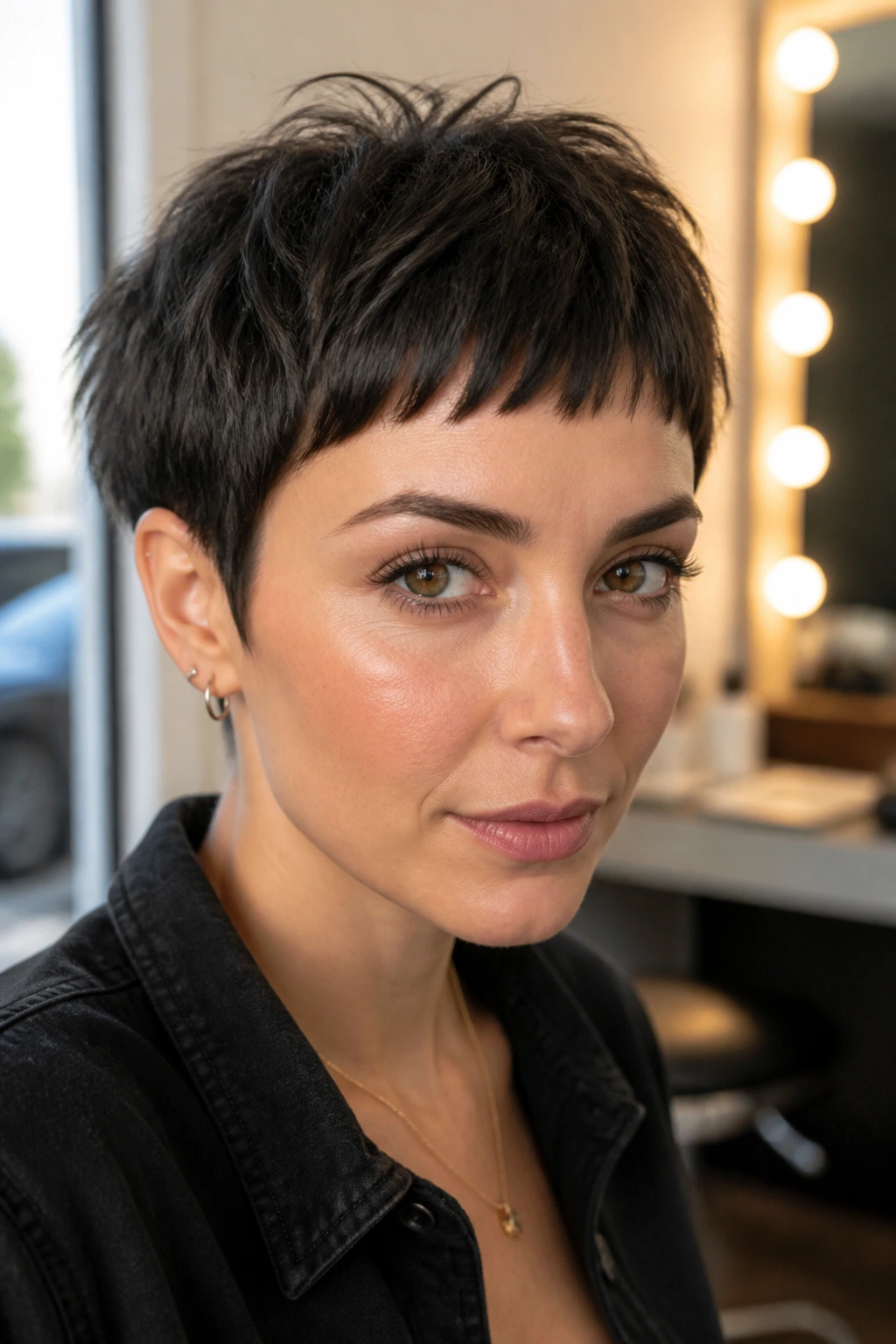
A razor-cut micro fringe gives a pixie a sharper, more editorial feel. The little fringe sits high on the forehead, and the razor work breaks the ends so the line never feels stiff.
This cut is best on medium-density hair. Very fine hair can look wispy in a bad way, and very coarse hair can puff if the razor work is too aggressive. The sweet spot is hair that can hold a shape but still benefits from a little softness at the edges. The micro fringe also draws attention to the eyes, which is useful if you like a strong brow or wear bold makeup.
What Makes It Sharp
The shortest pieces should land just above or right at the brow ridge.
- Keep the fringe narrow, not wide.
- Ask for soft tapering at the temples.
- Style with a dry texture spray, then pinch the ends.
- Skip heavy cream; it kills the shape fast.
This one has attitude. No question.
8. Swept-Back Pompadour Pixie
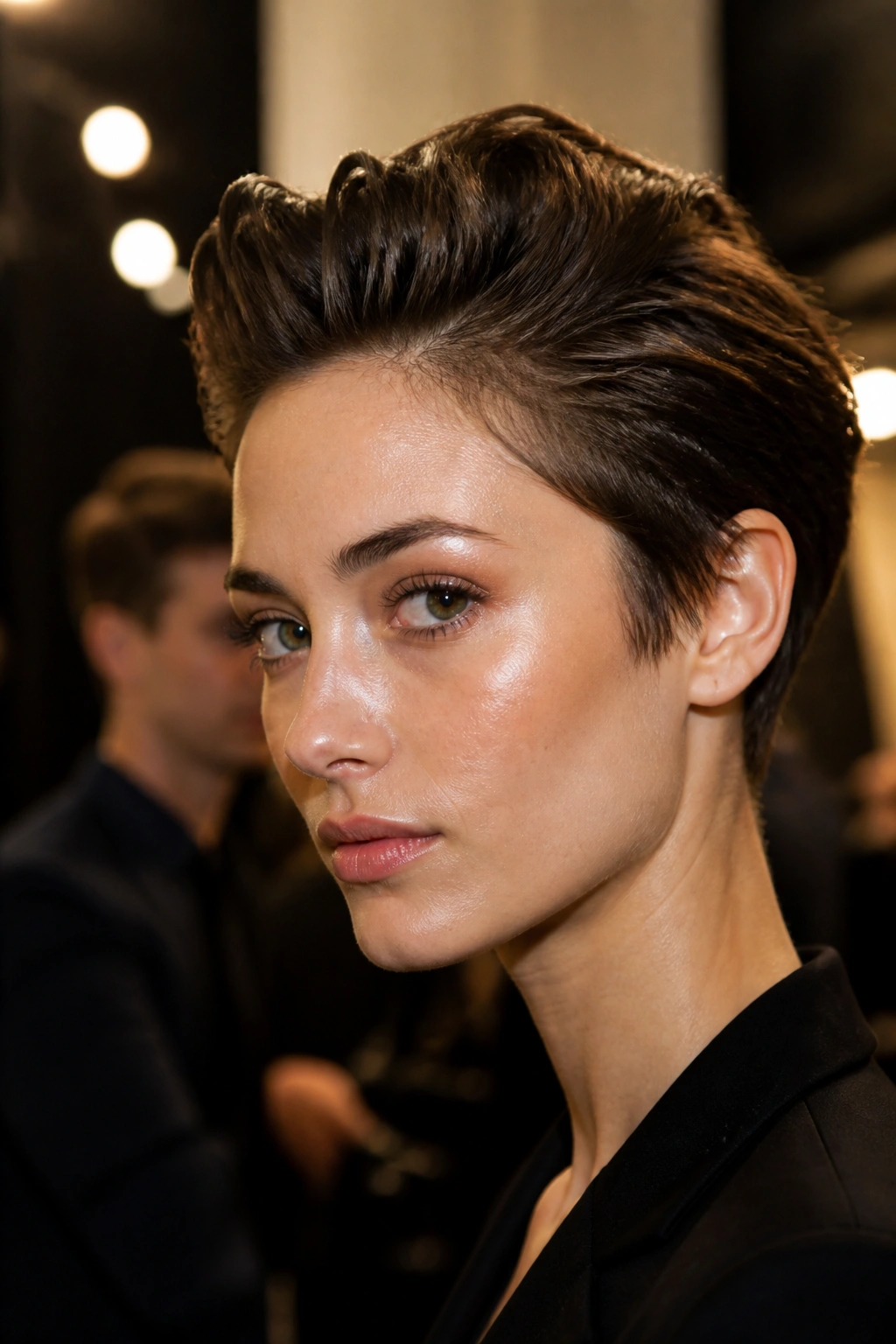
A swept-back front changes the mood fast. It gives a pixie some height, and height is what keeps short hair from feeling plain.
This style works when you want the face open but not exposed. The front is blown up and back, then pinned into a soft ridge or left loose with a bit of hold. It looks especially good on longer faces, because the lift at the crown adds presence without dragging the eye downward. If your hair is fine, a root mousse helps. If it is thick, you may need a lighter product so the front does not get heavy and slide forward by lunch.
The trick is not to make it stiff. Use heat to build the shape, then cool the hair while it is still lifted. That locks in the direction without making the ends crunchy.
This is one of the few pixies that can feel polished and a little bold at the same time.
9. Shag-Inspired Pixie
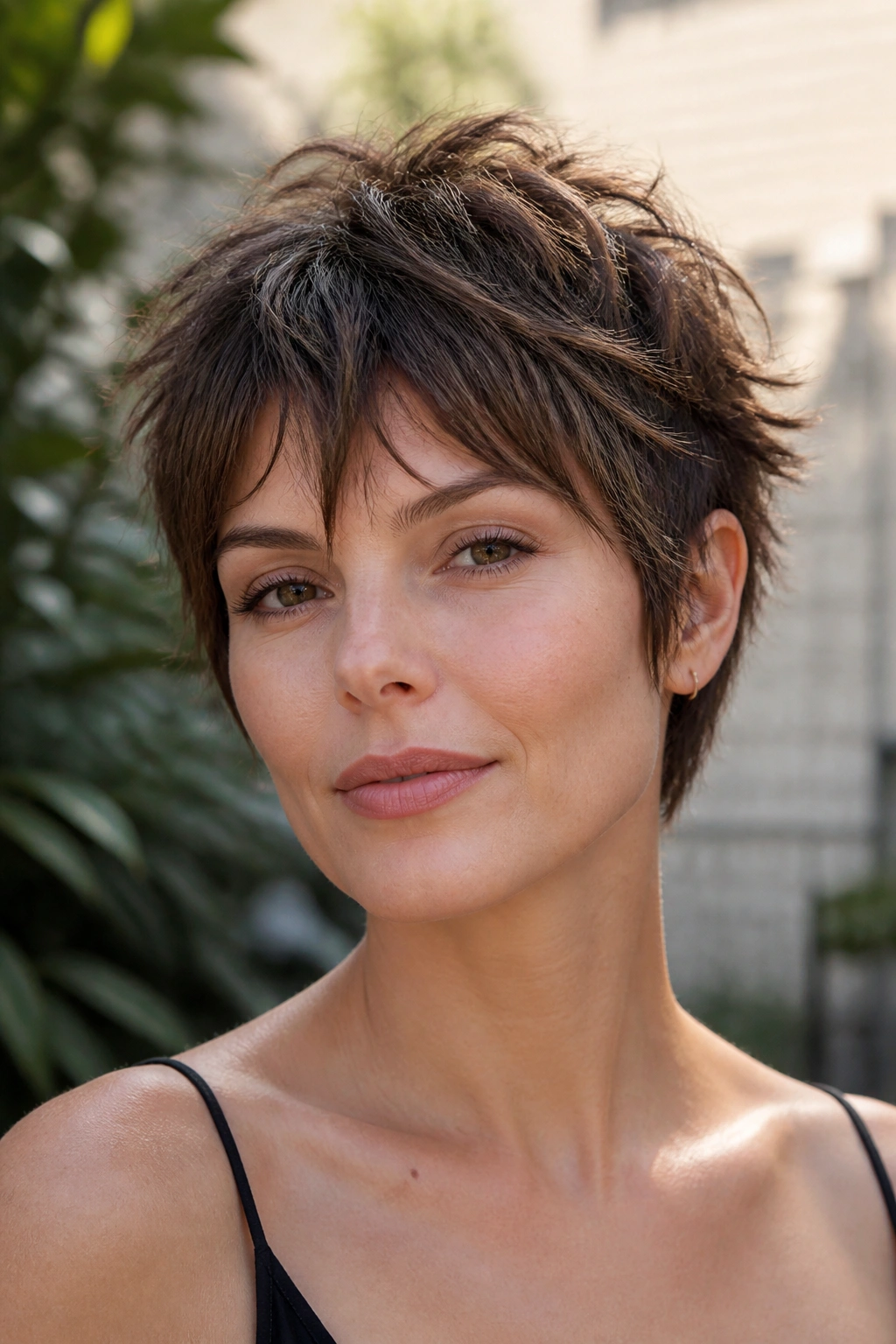
Can a shag and a pixie share the same head? Absolutely, if the top is choppy, the fringe is broken up, and the ends are allowed to move.
A shag-inspired pixie brings more looseness than a classic crop. The layers are not stacked neatly; they sit a little irregularly, which gives the haircut that slightly lived-in feel people keep asking for. It works well if you like a short style that does not look over-edited. The back stays short enough to read as a pixie, but the top and fringe have enough length to flick, piece out, and fall a little differently every day.
Best Way to Wear It
- Let the hair dry mostly on its own.
- Add texture cream to the mid-lengths, not the roots.
- Push the fringe in a slightly off-center direction.
- Trim it before the layers get too soft.
This is a good cut for anyone who likes movement more than precision.
10. Undercut Pixie with a Soft Top
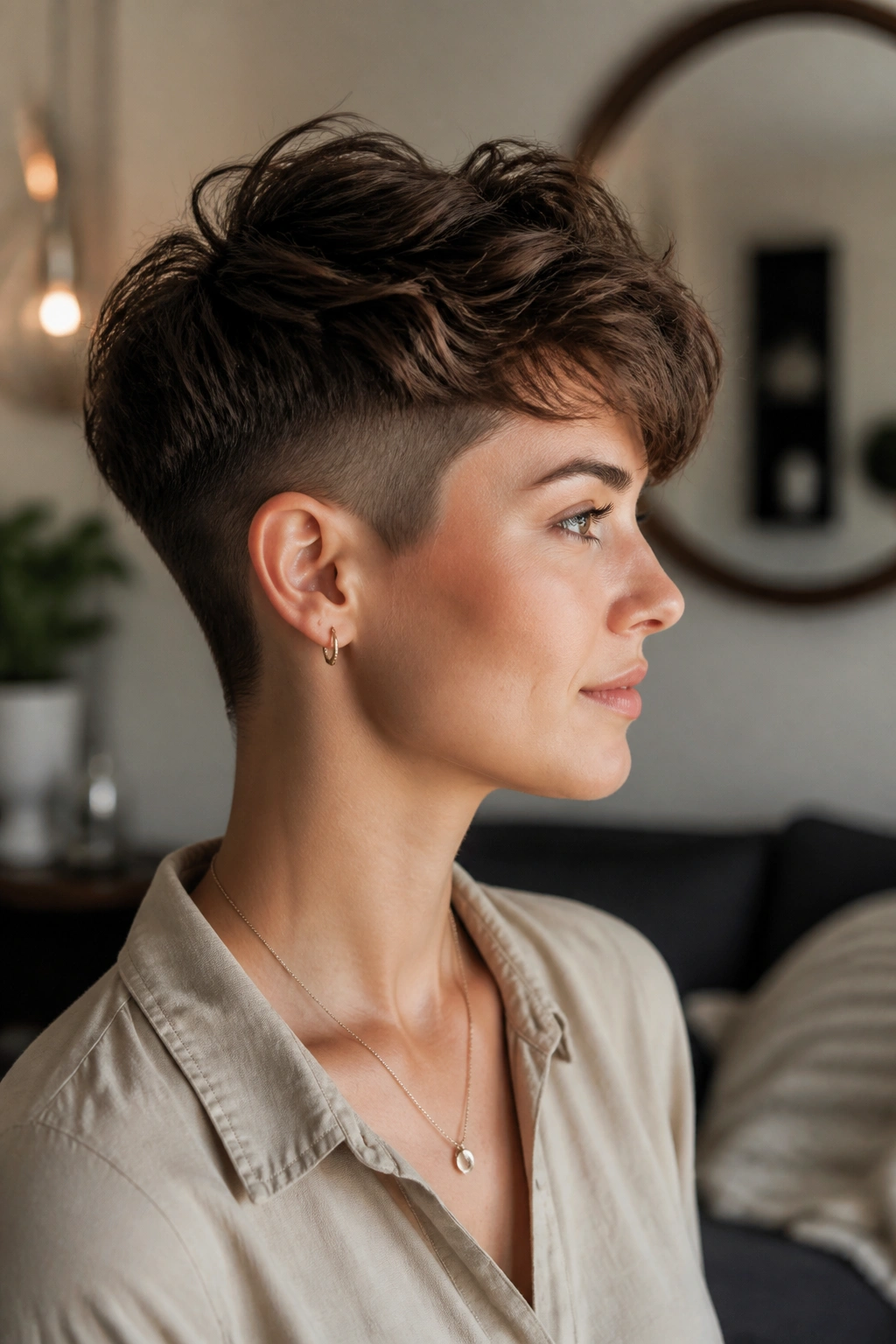
If thick hair keeps turning into a helmet, an undercut can change everything. The sides and back are taken shorter underneath, while the top stays soft and touchable.
That hidden removal of bulk is what makes the shape sit close to the head without looking flat. It also means the top can be styled forward, up, or slightly over to one side without fighting the weight underneath. People with dense hair usually notice the difference right away because the cut feels lighter the second it is dry.
The undercut does not need to be shaved down to nothing. A tidy, short section underneath is often enough. That gives you shape without making the haircut look too severe.
Bring up maintenance if your hair grows fast around the ears and neck. The undercut line can blur sooner than the top does.
11. Piecey Platinum Pixie
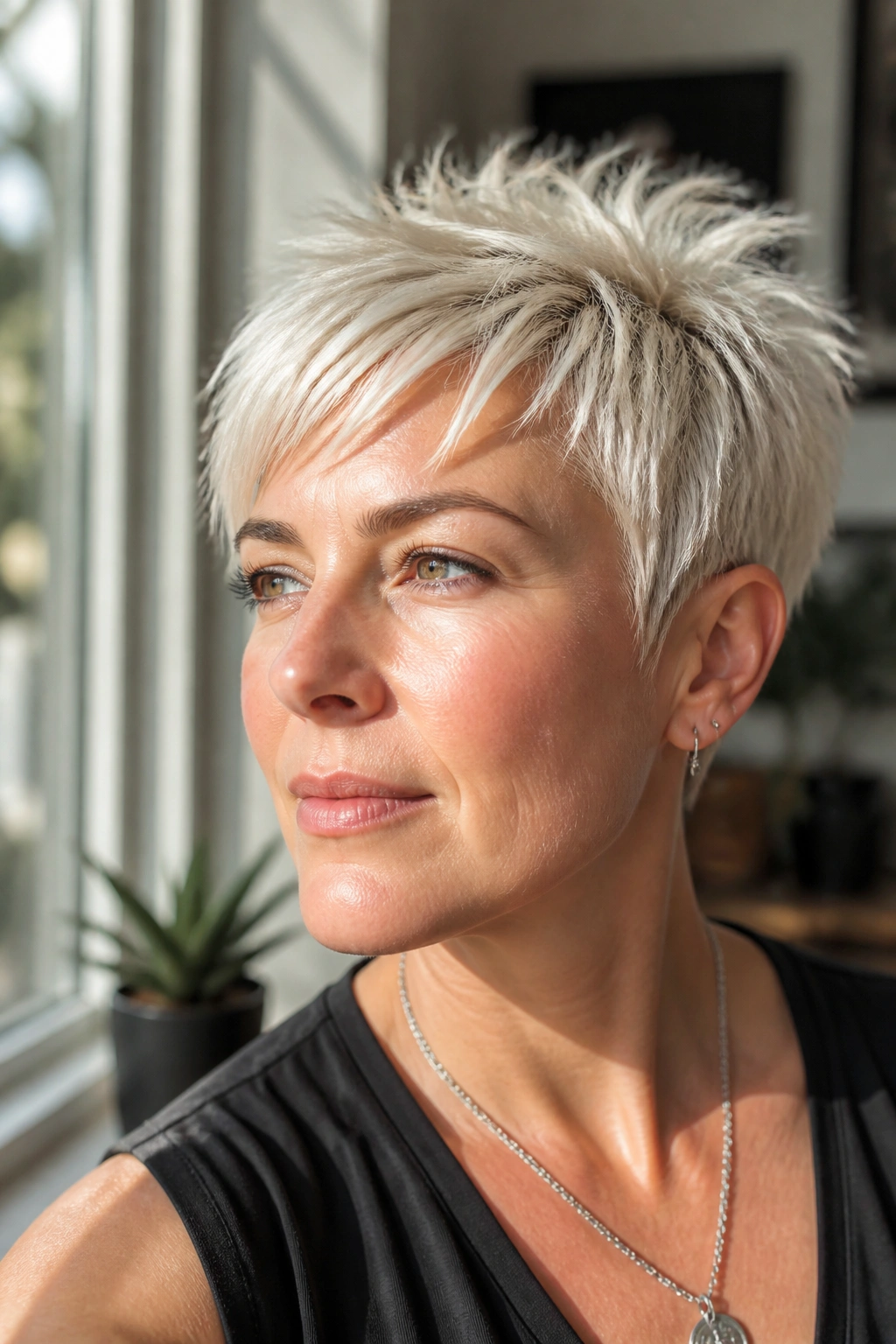
When the color is icy, the cut has to earn its keep. Platinum hair shows every line, so piecey texture keeps the shape from looking like one bright block.
This pixie works well with small disconnected sections through the top and crown. The broken texture stops the color from looking flat, and it gives the eye something to follow instead of a single smooth surface. I like this especially when the ends are clean and a little blunt. Too much thinning on platinum hair can make the tips look brittle fast.
You do need to respect the hair’s condition. Lightened hair can feel fragile, so the cut should keep enough strength at the ends to avoid that see-through look. A soft wax or styling cream is usually enough; the cut already does most of the visual work.
The color gets attention. The texture keeps it interesting.
12. Shadow-Root Pixie
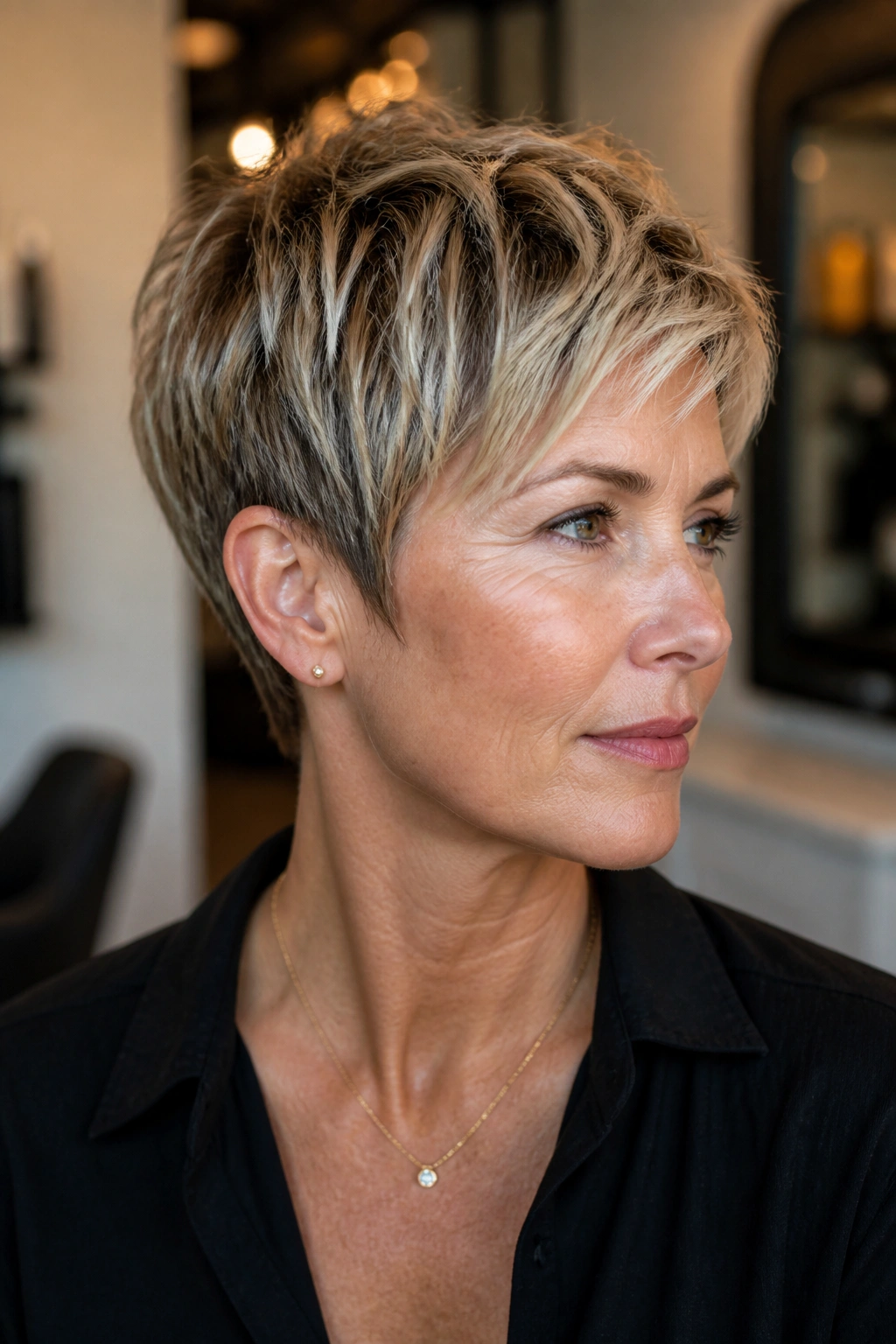
A dark root with lighter mids changes the way a pixie reads from across the room. It gives depth at the scalp and makes the texture look fuller, especially if the hair is naturally fine or a little sparse at the part.
This is the kind of pixie that can look too hard if the root is the same lightness all the way through. A shadow root keeps the base from disappearing and gives the cut a more grounded feel. Ask for a root that is one or two levels deeper than the rest of the color, not a dramatic stripe. The goal is depth, not a line.
It’s a practical choice, too. Regrowth blends in better, which means the color grows out in a calmer way. The haircut still needs to be shaped well, of course, but the darker base helps the texture stand out instead of washing out.
If your hair is light, this is one of the smartest ways to keep a pixie from looking thin.
13. Coily Tapered Pixie
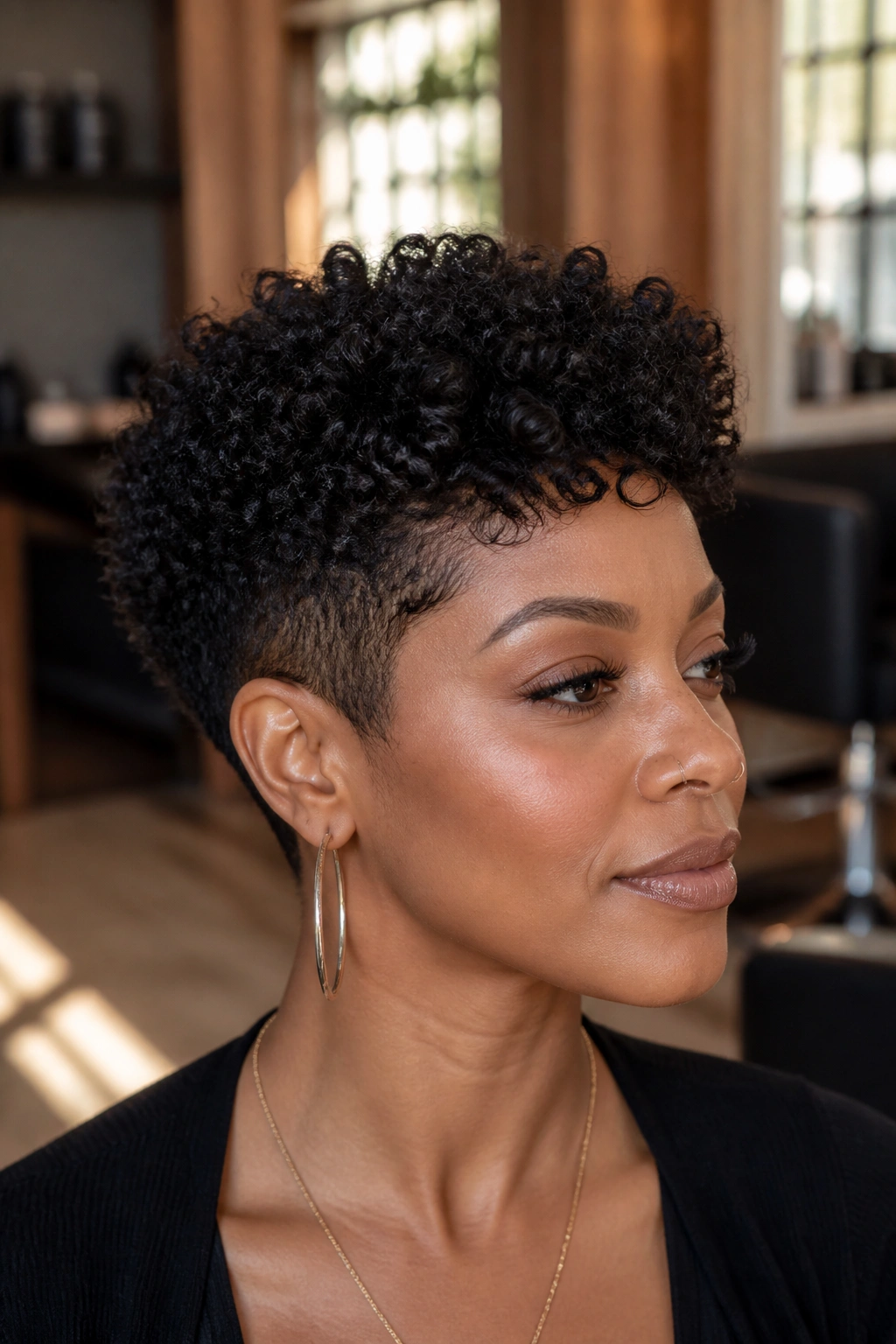
A coily pixie should keep the coil pattern alive, not flatten it into a buzzed shape. That means the top gets enough length for the curls to spring, while the sides and back stay tapered to keep the outline clean.
This cut looks best when the stylist shapes it while the hair is dry or mostly dry, because coil shrinkage can be dramatic. A tight taper around the ears and neckline lets the top stay full without turning the whole cut into a round puff. It also creates a nice frame around the face, which is useful if you want short hair but still want some structure.
How to Keep It Looking Intentional
- Use a moisturizing leave-in on damp hair.
- Define the coils with fingers or a small sponge if that suits your pattern.
- Ask for shape, not over-thinning.
- Trim the perimeter often so the taper stays crisp.
Coily texture is the cut’s best feature. Don’t hide it.
14. Thick-Hair Debulked Pixie
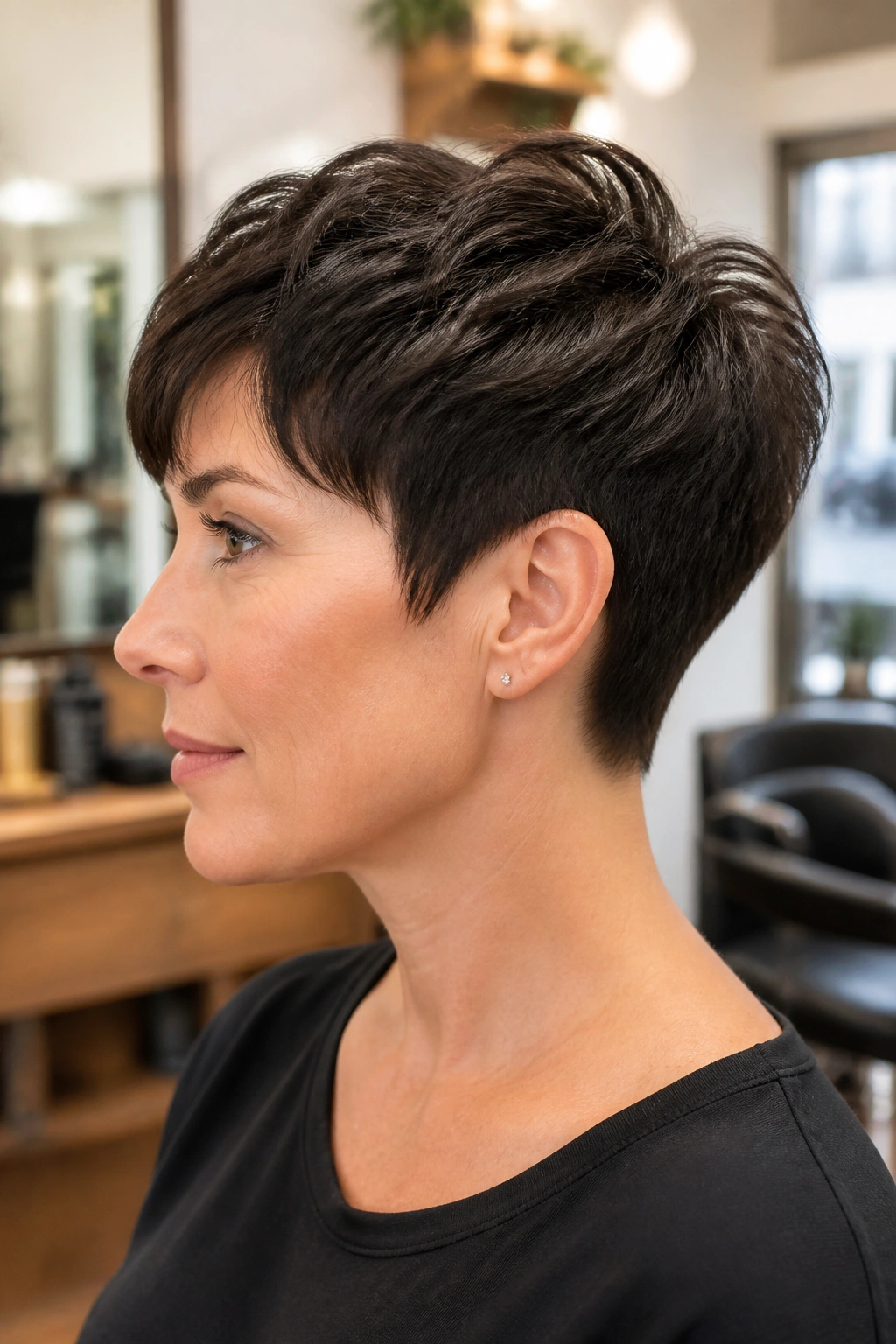
A thick pixie needs weight removed in the right places, not everywhere. That’s the difference between a flattering crop and one that feels puffy by noon.
A good debulking job happens inside the haircut. The stylist takes out volume through the interior so the outer shape stays smooth and controlled. If the hair is cut too blunt through thick areas, the top can balloon and the sides can push out. If it is thinned too much at the wrong spot, the cut starts to fray. Neither result is good.
The trick is asking for controlled removal at the densest parts, usually through the crown, occipital area, and around the ears. You still want some solidity at the edges so the hair has shape.
What to Ask For
- Internal weight removal, not aggressive texturizing everywhere.
- A clean outline at the nape.
- Enough length on top to break up bulk.
- A check at the ends so the cut doesn’t go fuzzy.
This is a workhorse cut. It behaves.
15. Fine-Hair Volume Pixie
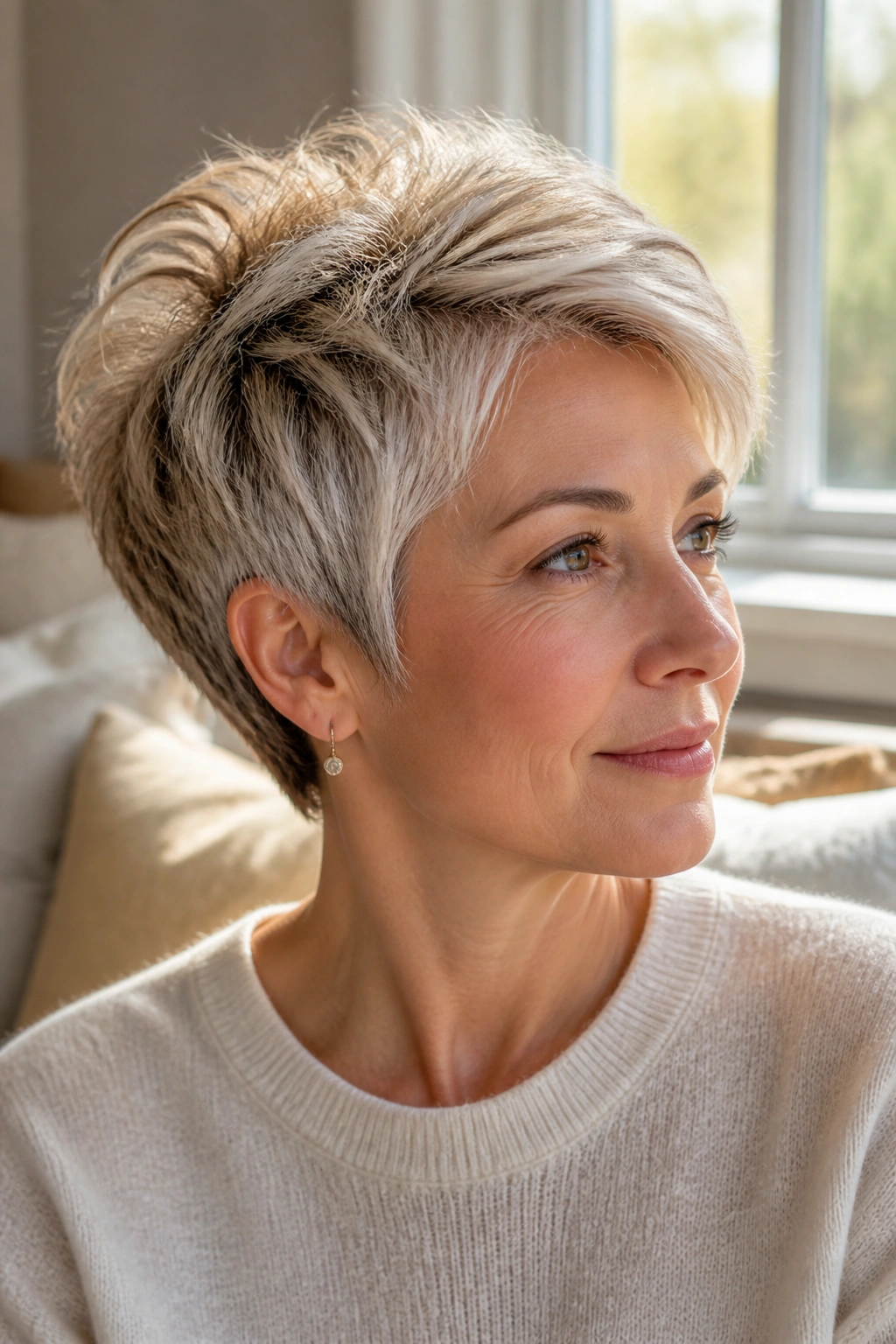
Why does fine hair need a different pixie? Because too many layers can make it look thinner, not fuller.
The best version keeps the crown a little shorter and the top just long enough to stand up with help from the roots. The sides should stay tidy so the eye goes to the lift on top, not to any see-through areas. Stacking a little shape at the back can also help, because it gives the illusion of density where the head curves.
How to Style It
Use a root spray on damp hair, then blow-dry against the natural fall for a few seconds at the crown. That tiny bit of push makes a bigger difference than another styling product ever will. A dry shampoo or texture powder at the roots can help on day two, but keep it light. Too much product clogs fine hair and drags it down.
This is one of those cuts where a smart shape beats a lot of styling effort.
16. Soft Bowl Pixie
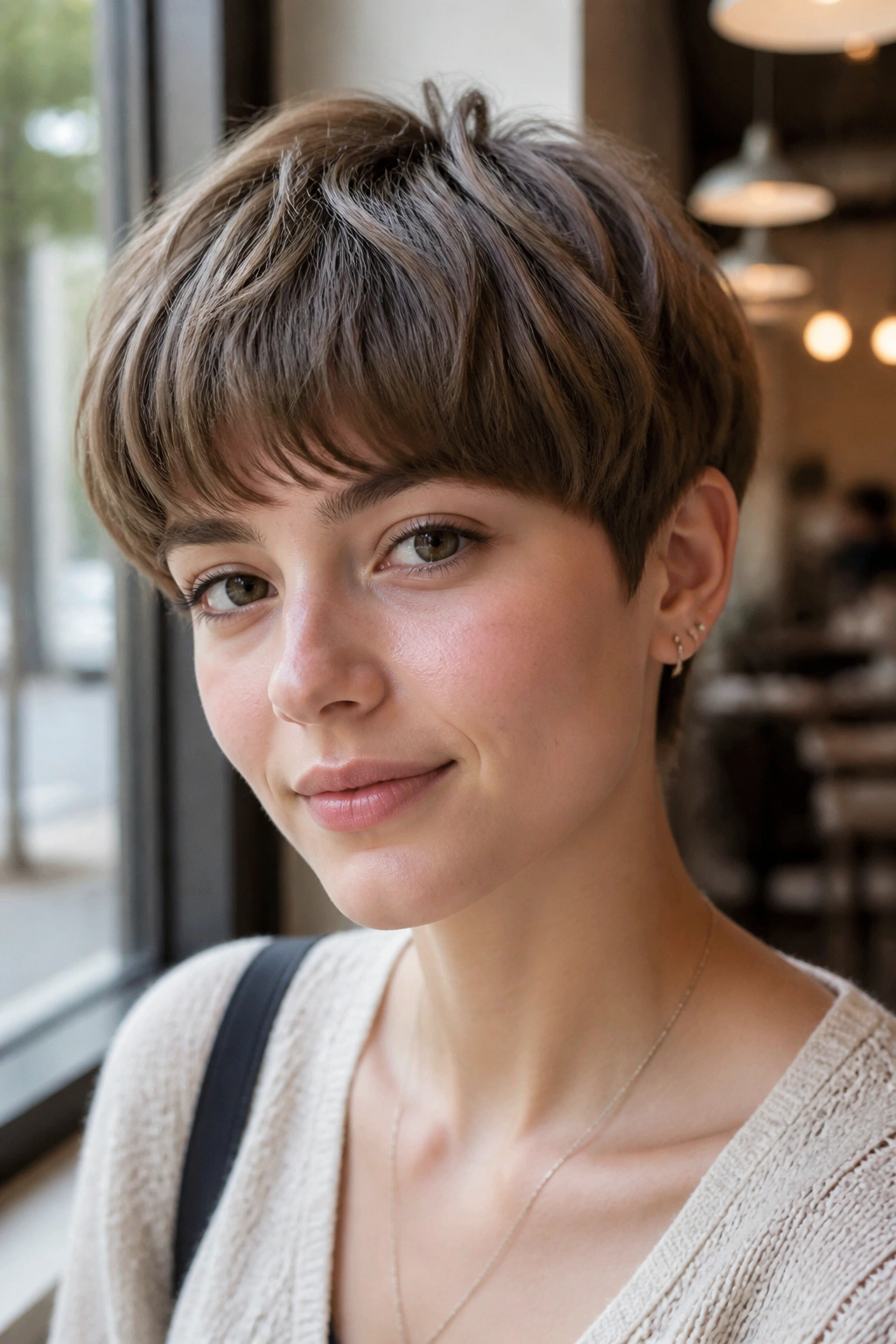
A bowl-inspired pixie sounds risky until you see it done with texture instead of a hard line. The fringe sits rounder, but the ends are broken up so it never looks like a pageboy from a school photo.
The modern version keeps the sides lighter and the top a little piecey. That softens the curve and makes the cut feel current rather than retro for the sake of retro. It works best when the line around the forehead is gentle, not heavy. You want the shape to suggest a bowl, not trap the head inside one.
Key Details
- Keep the fringe soft and slightly irregular.
- Let the sides taper toward the ear.
- Add texture through the crown so the top does not sit too still.
- Use a light paste to separate the ends.
I’m picky about this cut. If the curve is too neat, it can look stiff fast.
17. Grown-Out Pixie
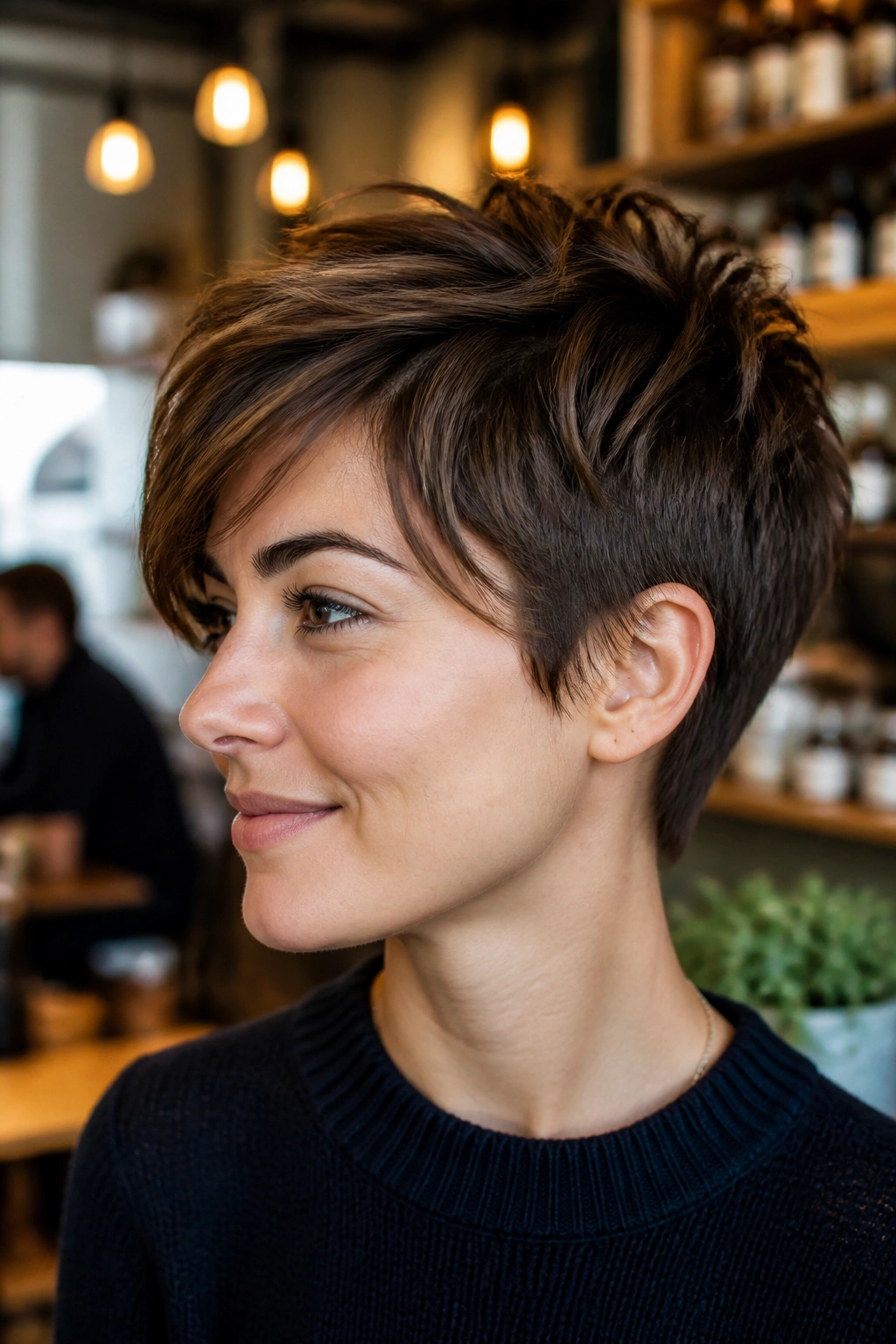
A grown-out pixie is not a compromise if the shape is intentional. It can be one of the nicest short cuts around, especially for people who want texture without a sharp maintenance schedule.
The length usually sits between a classic pixie and a short bob, with the neckline still shorter and the front a little longer. That gives the hair room to move while keeping the outline tidy enough to read as styled. I like this stage because it feels forgiving. A piece falls out of place, and the whole cut still makes sense.
The important part is the perimeter. If the edges around the ears and nape are cleaned up, the grow-out looks deliberate instead of accidental. A trim every 6 to 8 weeks usually keeps the balance in place.
This is the cut I point people toward when they want to live with short hair before deciding how short they really want to go.
18. Wet-Look Pixie
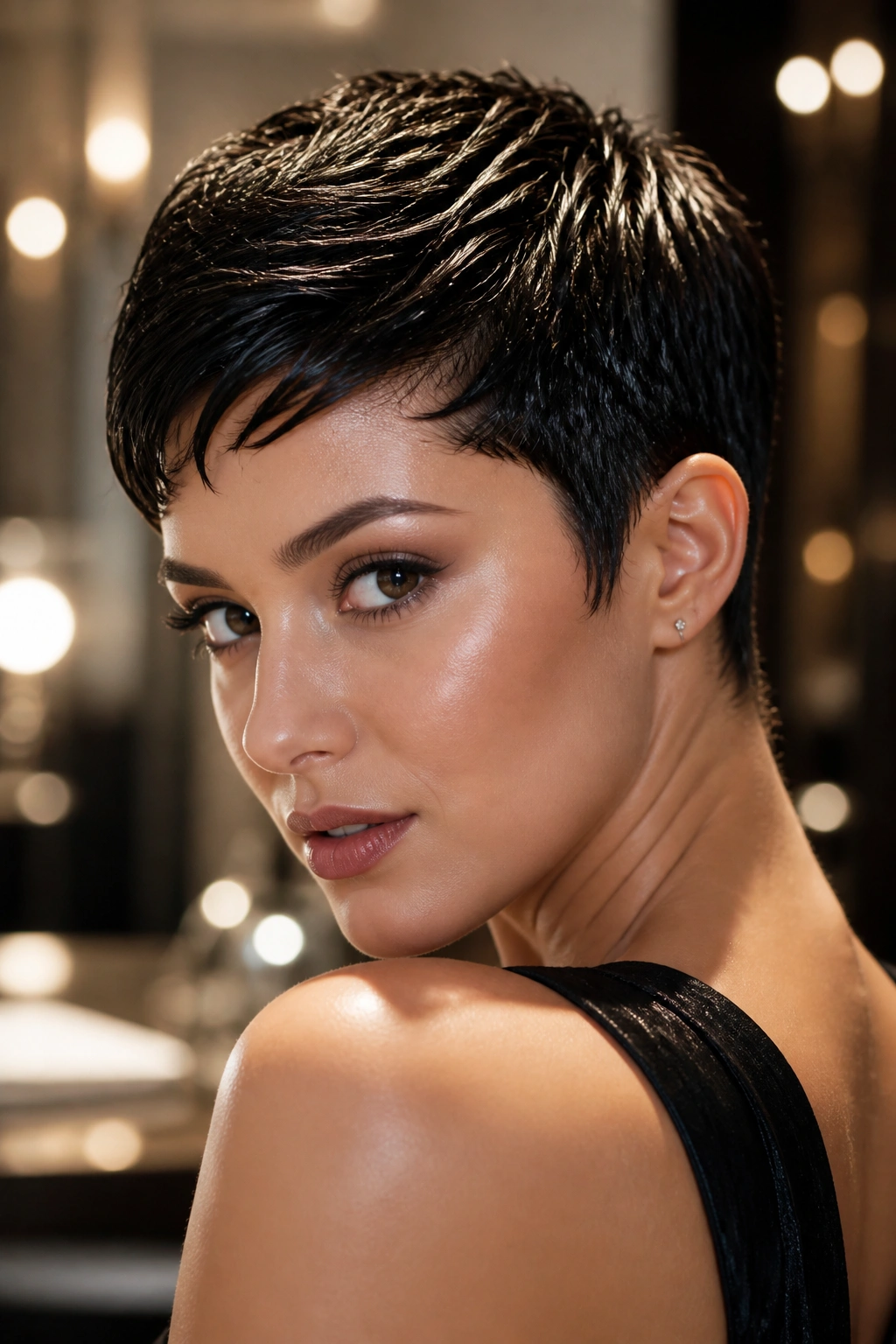
Unlike matte texture, a wet-look pixie puts every ridge on display. The shine makes the cut feel sharper, and the shape has to be clean because there is nowhere to hide.
This style works best when the hair is already cut with clear movement through the top. A gel or gloss cream, worked through damp hair, defines those sections and gives the surface that slick, finished look. The line can be combed straight back for a stronger feel or pushed slightly to one side if you want it softer. Straight hair usually takes to this easily. Wavy hair can do it too, but the product has to be strong enough to hold the wave pattern without frizzing at the ends.
This is not an everyday mood for everyone. It looks especially good for evenings, sharp makeup, and simple clothes that let the haircut do the talking.
19. Silver Pixie with Airy Layers
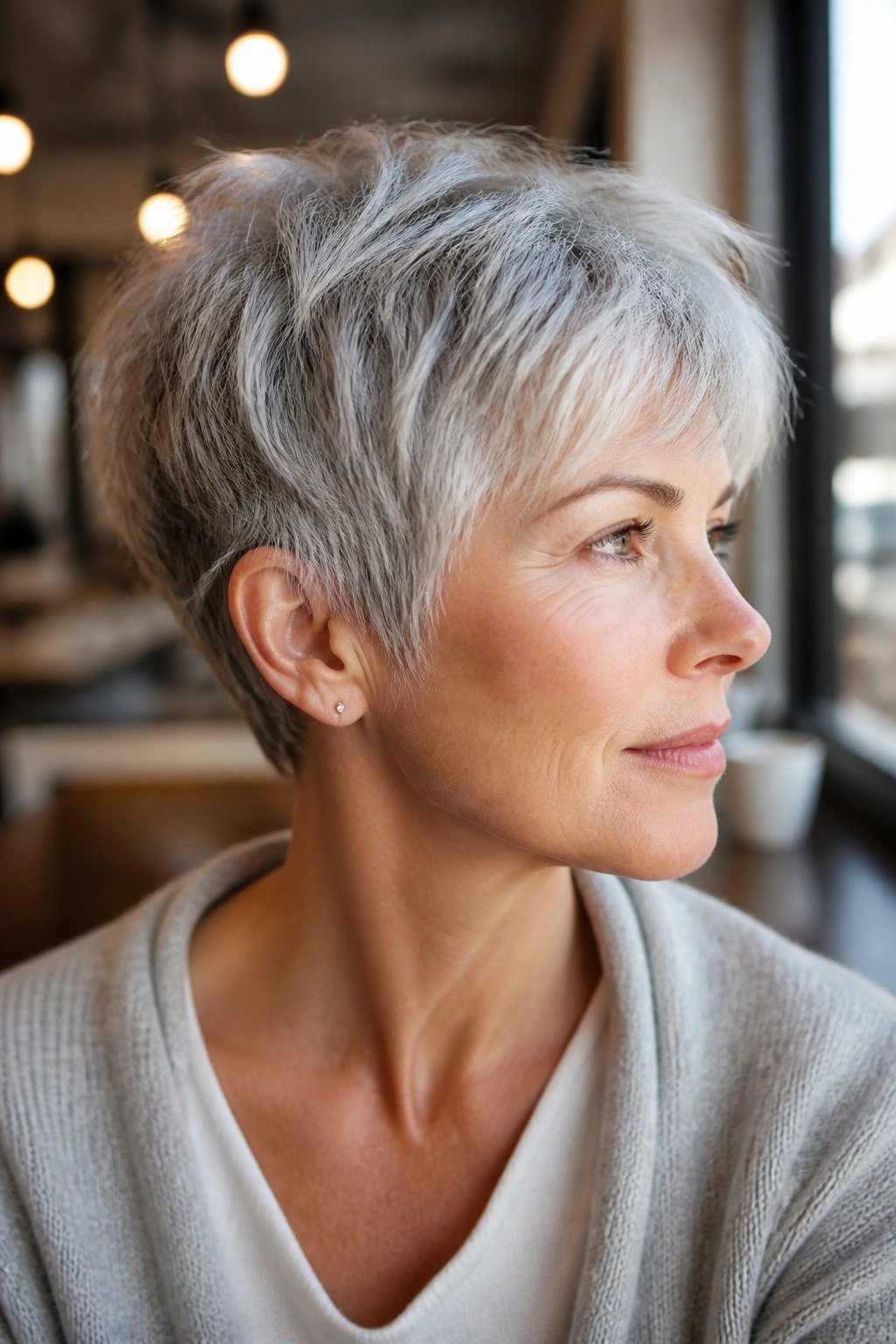
Silver hair shows every line, which is exactly why airy layers matter. If the cut is too heavy, the color can make it look blocky. If the layers are light and spaced well, the whole shape feels brighter.
The trick is to keep movement around the top and sides without carving out so much hair that the cut loses strength. Silver tones can make texture look crisp, almost sculpted, so the layers should support that instead of fighting it. A short, airy fringe can also keep the forehead from feeling too bare. That matters more than people admit, especially if the hair is naturally straight and reflective.
Where the Movement Belongs
The softest pieces usually work best around the front hairline and crown.
- Keep the nape cleaner than the top.
- Use a light styling cream, not a heavy balm.
- Let a few pieces fall forward instead of forcing every strand back.
- Trim the ends before they start to look see-through.
The color brings the drama. The layers keep it graceful.
20. Copper Pixie with Choppy Bangs
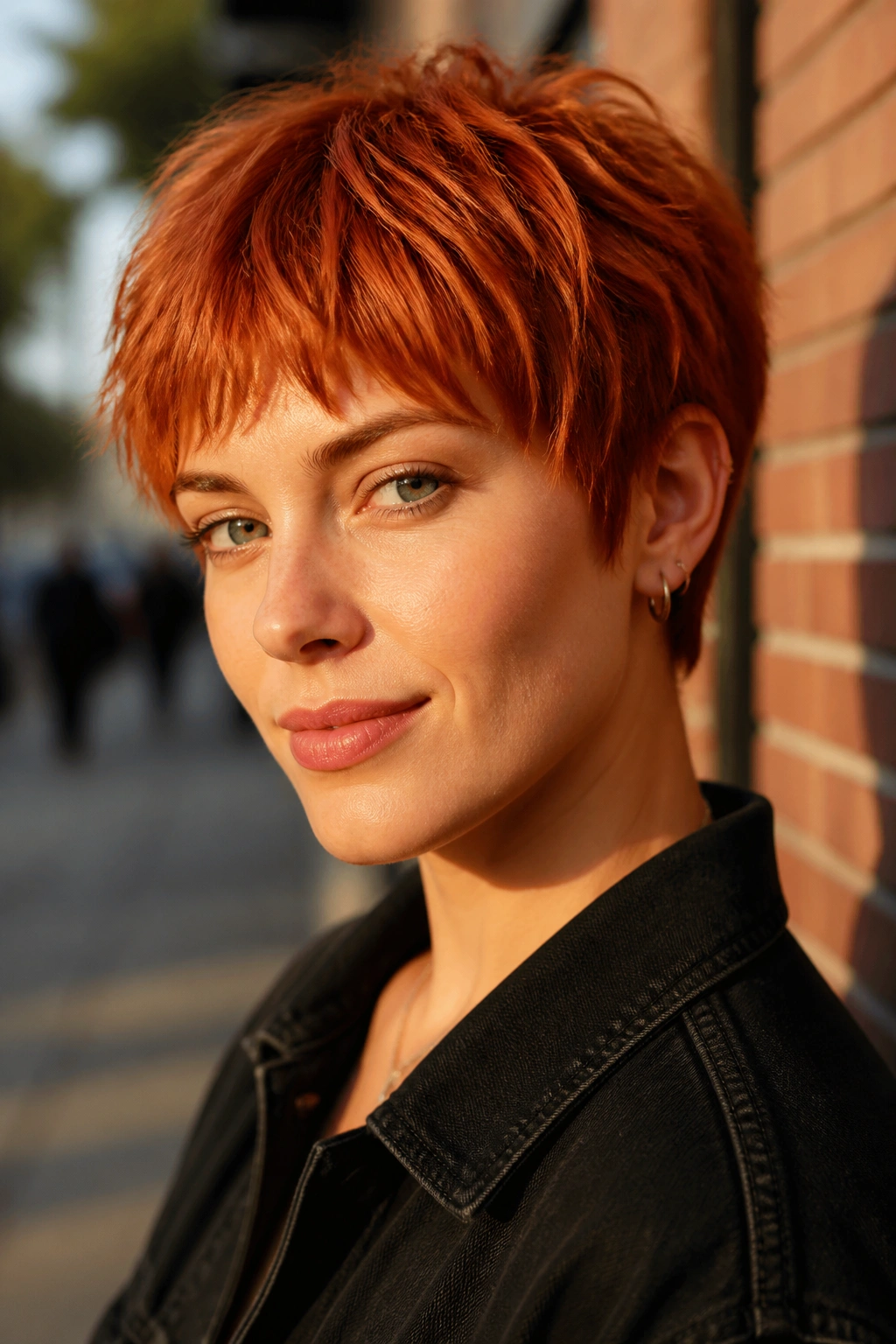
Copper color and choppy bangs are a good match because both rely on movement. The warm tone catches attention, and the broken fringe keeps the cut from feeling too neat.
This style works especially well if you want the eyes to stay the focus. The fringe can skim the brows in short pieces instead of one heavy line, which makes the face look a little more open. A strong copper shade also adds depth to the short layers, so every piece looks more deliberate. That matters with pixies, because the haircut has very little room to hide a bad shape.
If you wear bangs straight down, they need regular trimming. Choppy bangs grow fast visually, even when they are not long in actual length. A slightly off-center part can help the fringe sit easier on day two.
This one has a bit of fire in it, and that’s part of the charm.
21. Gamine Pixie with Short Fringe
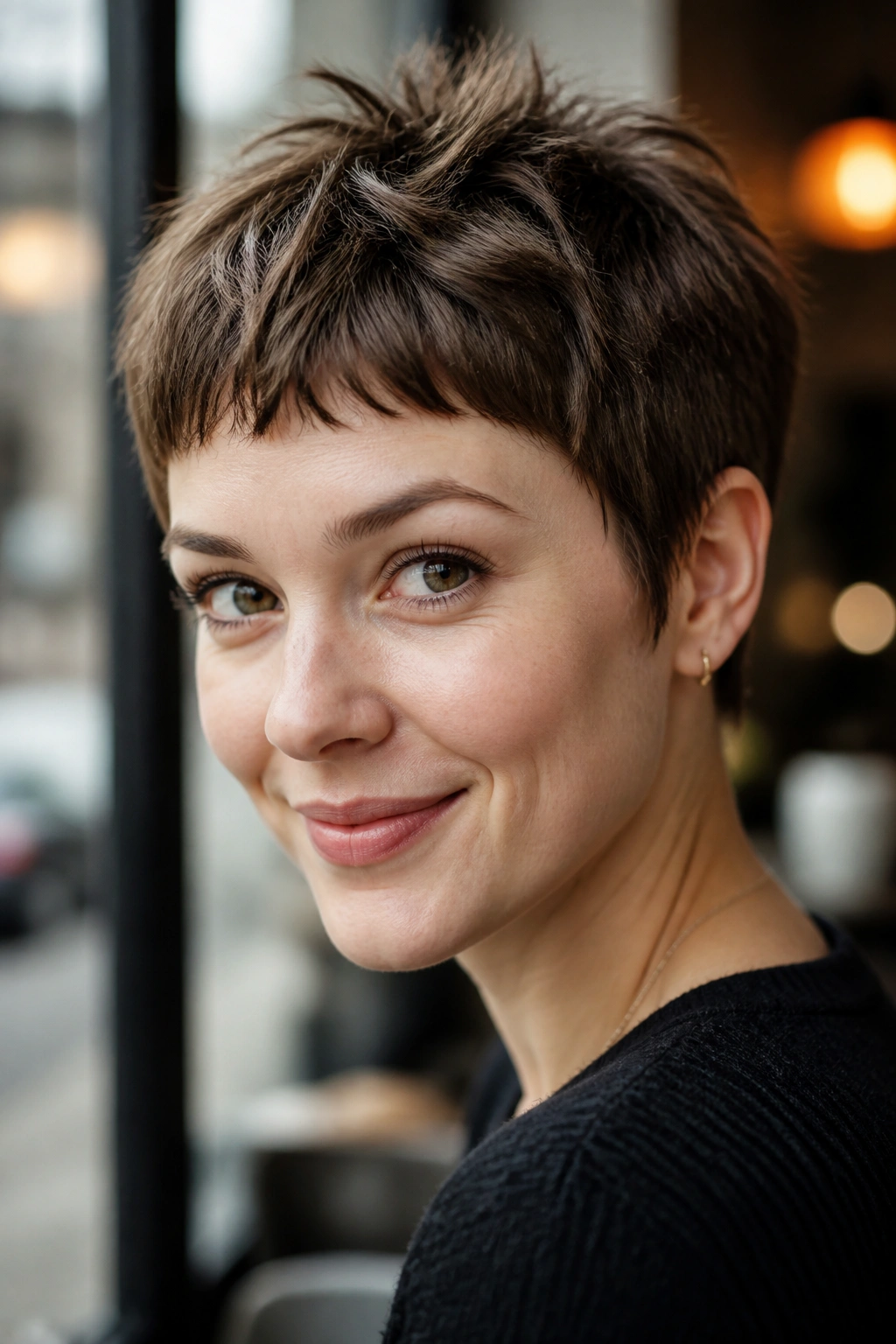
Why does a short fringe change the whole mood? Because it opens the face and makes the eyes do the work.
A gamine pixie has a little sharpness to it. The fringe is cropped short, the sides are neat, and the top has enough texture to keep the cut from looking severe. It suits straight hair especially well, but the shape can be adapted for waves if the fringe stays soft at the ends. The effect is clean, but not sterile. There’s a difference.
What to Ask Your Stylist
Tell them you want the fringe short enough to show the brow, but not so blunt that it sits like a strip. Ask for texture through the top and a clean taper around the ears. If you wear glasses, mention that too. Glasses and a short fringe need to be balanced together or the face can get crowded fast.
This cut is small, neat, and a little mischievous. I like that about it.
22. Spiky Textured Pixie
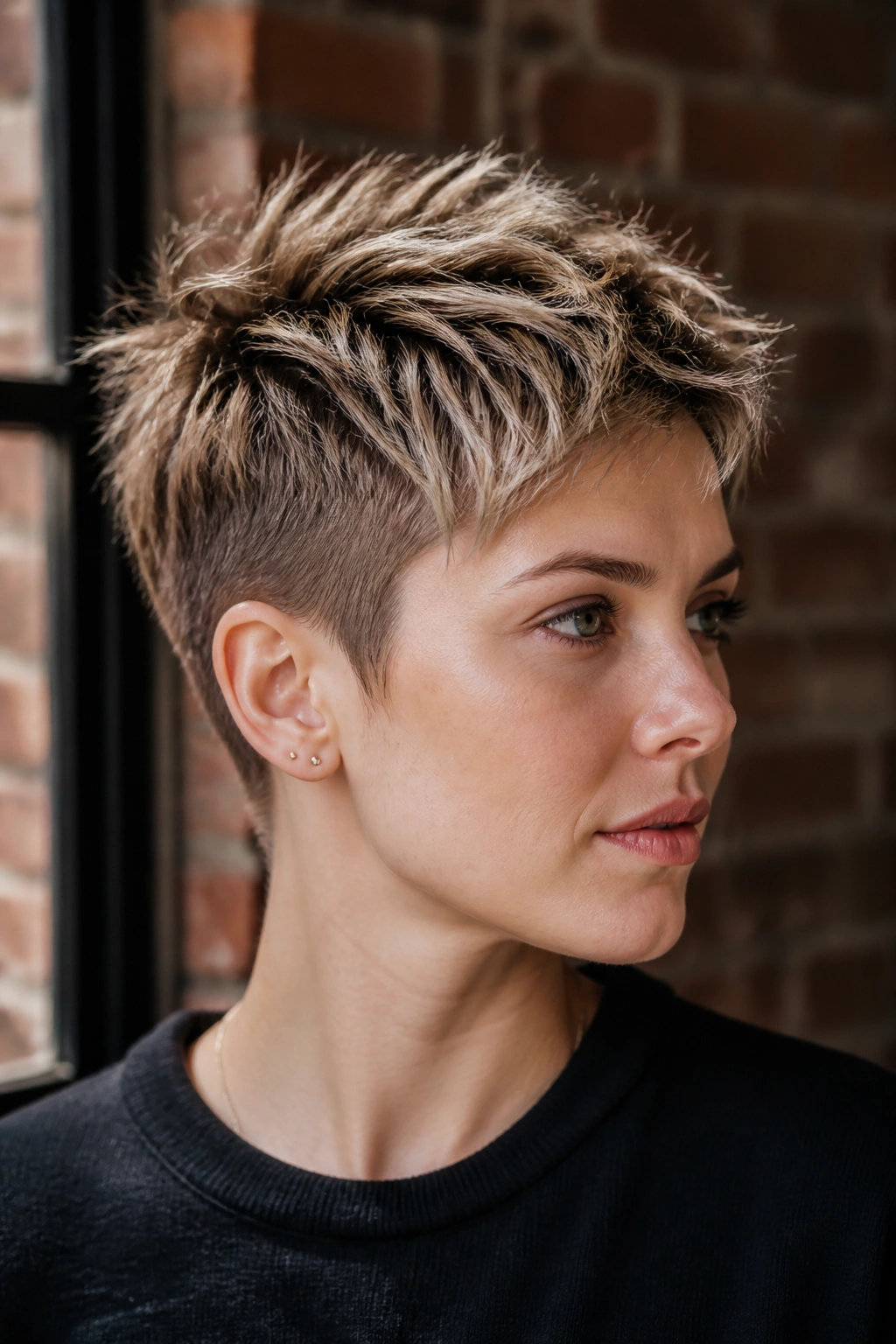
If you like a little grit, this one has it. A spiky pixie uses short, separated pieces to create lift and direction, not smoothness.
The style works best when the cut has enough internal texture to let the ends stand away from the head. That means the top is usually cut in uneven lengths, while the sides stay tighter. A wax or firm cream can then pinch the ends upward or forward. The goal is not crunchy spikes from an old dance recital. It’s touchable separation.
- Work the product into dry hair for more control.
- Focus on the crown and fringe.
- Leave a few flat pieces on purpose; too much symmetry kills the look.
- Keep the neck area tidy so the spikier top feels balanced.
This is one of the best pixies for people who want a little attitude without a full commitment to a hard undercut.
23. Ear-Tucked Pixie with Long Sideburns
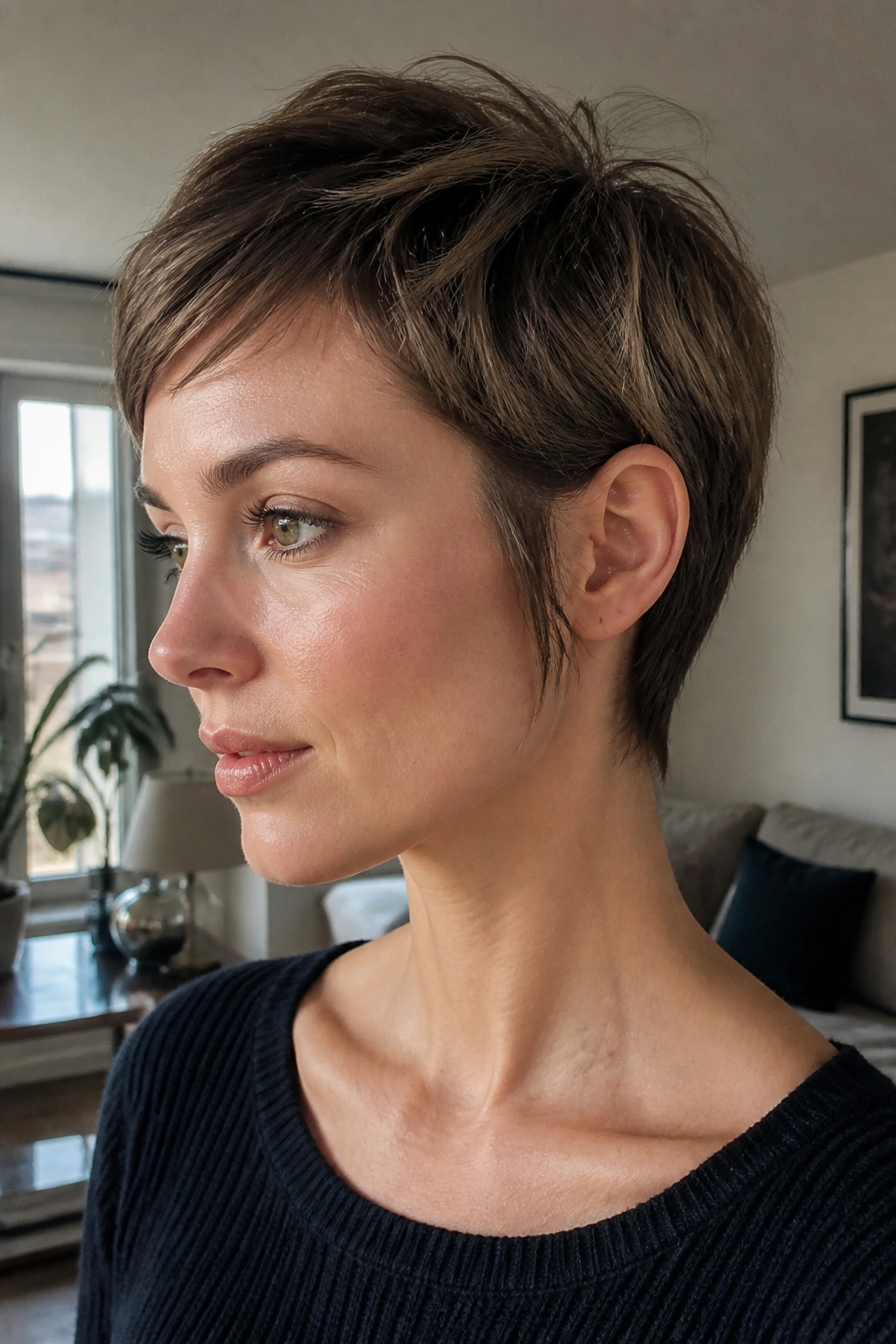
An ear-tucked pixie with longer sideburns gives you two things at once: shape and softness. You can tuck one side behind the ear and let the other pieces fall forward, which makes the haircut feel relaxed without losing structure.
The longer sideburns are the quiet hero here. They lengthen the line around the face and make short hair feel less abrupt. That can help if you are easing into a pixie for the first time or if you like short hair but still want some framing around the jaw. It also grows out well, which is not a small thing.
I like this shape on hair that has a little natural bend. Straight hair can wear it too, but it benefits from a bit of bend at the ends so the side pieces do not look stiff. A tiny bit of texturizing cream through the front is usually enough.
This is the kind of pixie that looks casual in a good way.
24. Round-Face Balancing Pixie
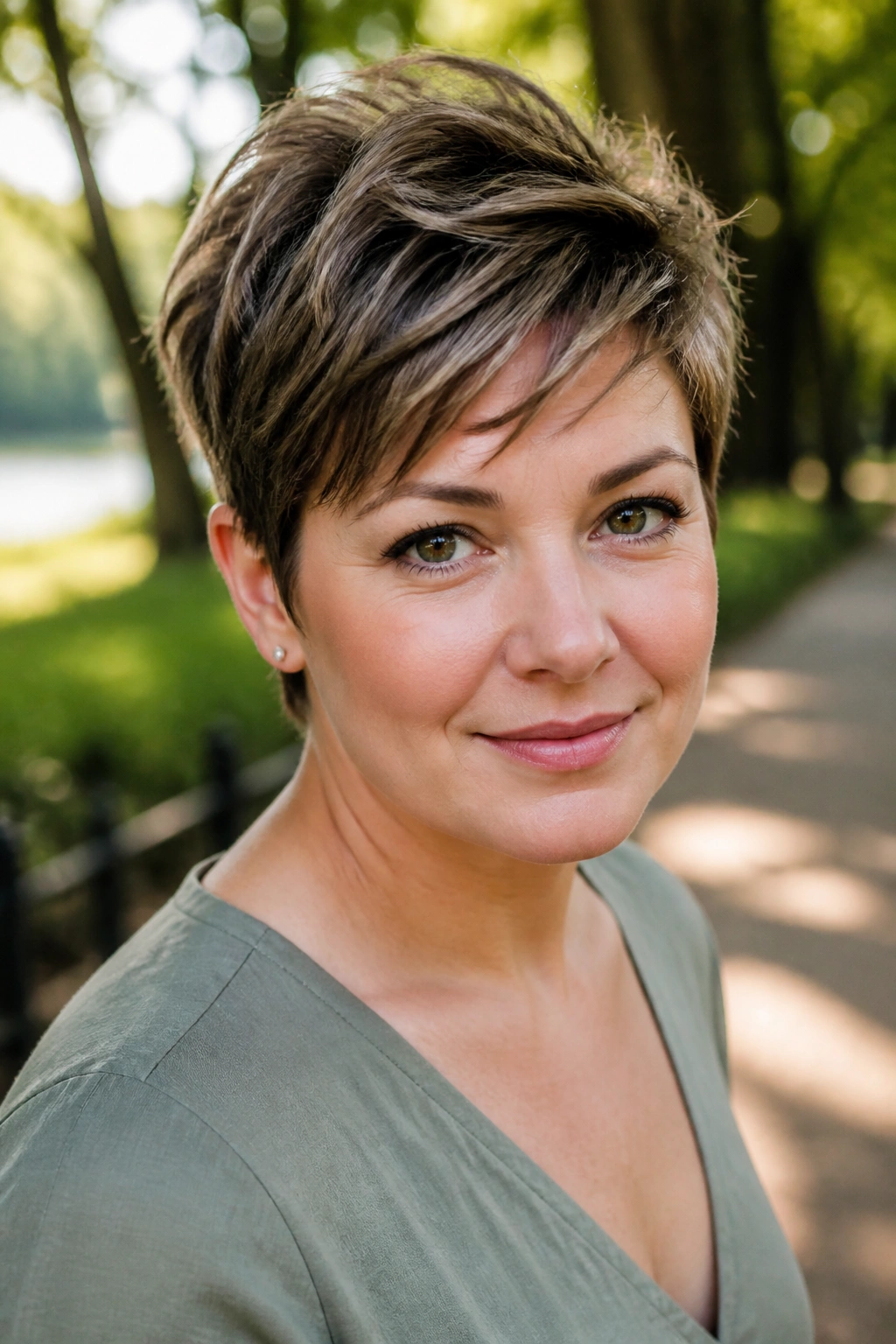
A round face does not need to be hidden. It needs height, a little diagonal movement, and sides that do not flare out.
That’s why a balancing pixie usually keeps more length on top and uses a side-swept or off-center fringe to stretch the face visually. The crown should have some lift, but not so much that it turns into a puff. The sides are better when they stay closer to the head, because width at the cheek area works against the shape. A taper at the nape helps too, since it keeps the lower silhouette slim.
This cut is often better with a textured fringe than with a blunt one. A hard horizontal line can cut the face in two. A softer, broken fringe gives the eye somewhere to travel.
If you have a round face and you like pixies, ask for vertical length, not bulk. That one distinction changes everything.
25. Soft-Edge Pixie for Easy Regrowth
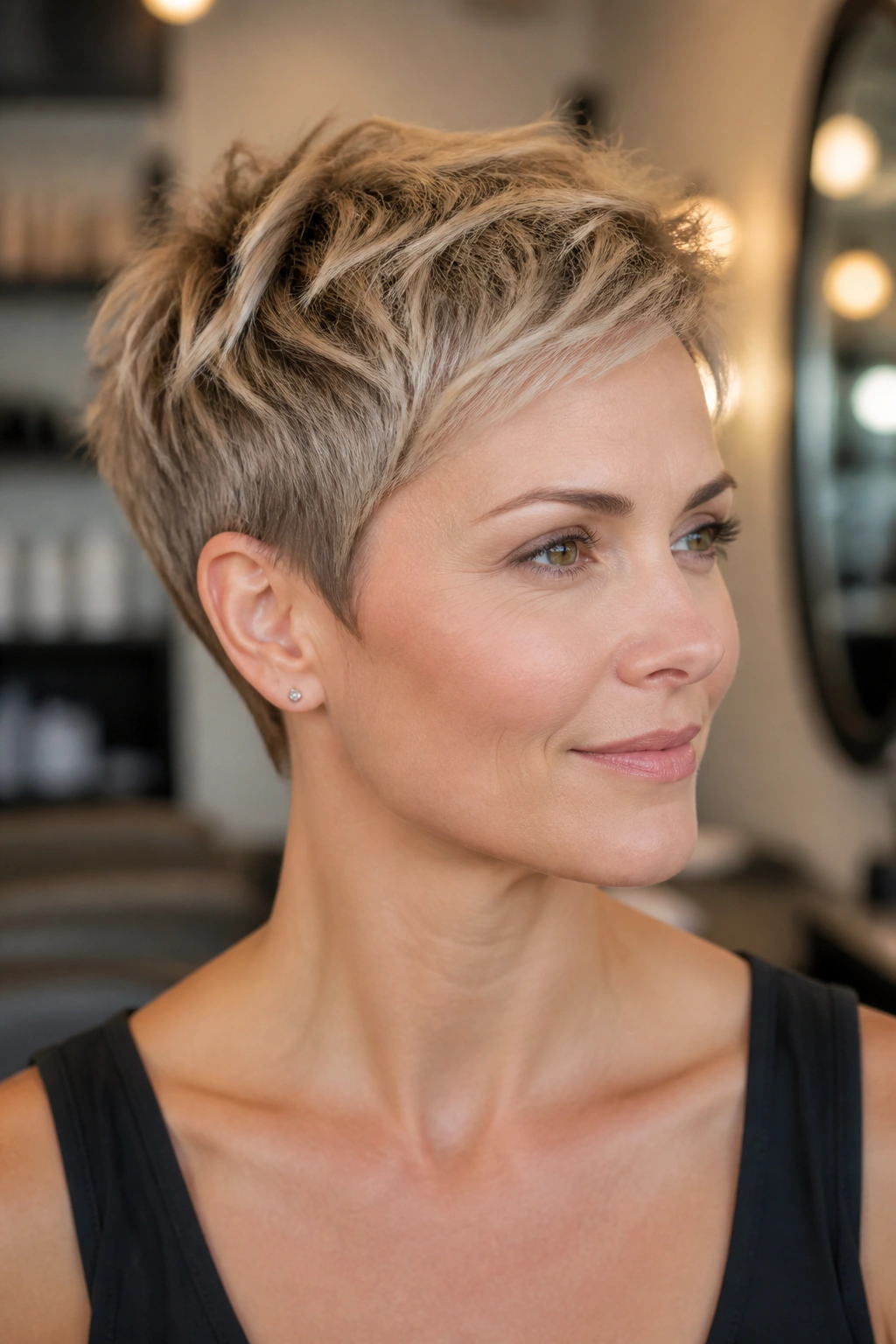
A soft-edge pixie is the one I’d point to for anyone who wants short hair but does not want to spend their life in the salon chair. The edges are gently tapered, the crown keeps enough texture to stay lively, and the cut grows out without making a sudden jump.
That matters more than people think. A lot of pixies look terrific for two weeks and then turn into a different haircut the moment the nape starts to blur. Soft edges avoid that problem. The shape stays readable as it grows, which means you can stretch the time between trims without feeling like you’re giving up on the style.
Bring your stylist a clear idea of where you want the grow-out to land. Maybe you want it to slide toward a short bob. Maybe you want to stay in the pixie zone and keep the neckline neat. Say that out loud. If you leave it vague, the cut may be cute on day one and annoying by week five.
The best short haircuts leave room for tomorrow. That is the part worth asking for.
