



A shaved undercut pixie cut can look sharper than a full buzz and softer than a classic crop, which is exactly why it keeps showing up in salons.
Short hair gets called edgy a lot, but most of the time it only looks edgy in theory. The real edge comes from contrast: a bare temple against a piecey top, a tight nape under feathered bangs, or one side that drops away while the other side stays full. A good shaved undercut pixie cut does that work without turning the whole head into one hard line.
I like this family of cuts because it solves a practical problem as often as a style one. Removing bulk around the ears and nape can make thick hair sit closer to the head, keep curls from puffing out, and let fine hair keep a little lift on top. The catch is upkeep. Clean lines at the temple and neckline grow out fast, and a #0.5 or #1 guard can start looking fuzzy after a couple of weeks if your hair grows quickly.
The right version depends on your texture, your face shape, and how much time you want to spend with paste, mousse, or a quick finger-dry. Some versions want polish. Others look better a little rough. Start with the cleanest option first, then work toward the bolder shapes.
1. The Clean Temple Shave Pixie
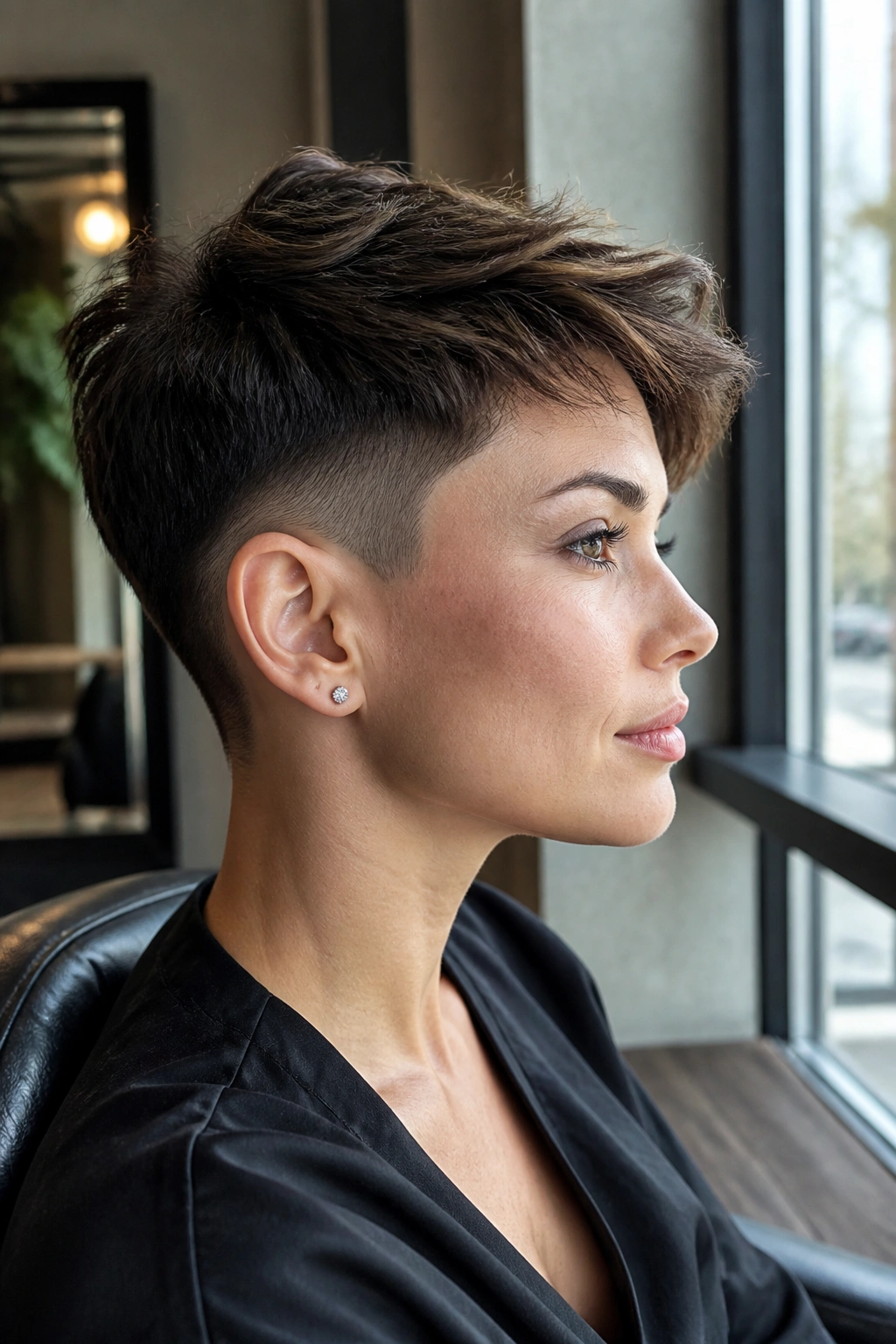
This is the version I point people to when they want edge without chaos. The temple shave creates a crisp line right where the head narrows toward the cheekbone, so the whole cut looks lighter even if the top still has enough length to sweep forward or tuck back. It’s sharp, but not aggressive in a costume-y way.
Why it works
The temple is one of those tiny spots that changes the whole silhouette. Take away a sliver of hair there, and the top suddenly looks more deliberate. Keep the crown at about 2 to 3 inches, and the cut still feels soft enough to brush around with your fingers.
It suits oval, heart, and angular face shapes especially well, because the shaved area frames the face instead of hiding it. If your hair is thick near the ears, this is also the fastest way to remove some of that helmet effect people complain about with short cuts.
What to ask for at the chair:
- A clean temple shave on one or both sides, usually with a #1 guard or clipper-over-comb
- 2 to 3 inches left on top, with texture cut in
- Soft blending near the sideburn so the grow-out does not look harsh
- A matte finish on top, not a stiff shell
Best styling move: rub a pea-sized bit of matte paste between your palms, then push the top forward and slightly off-center. It should look touchable, not glued.
2. The Asymmetrical Pixie With One Shaved Side
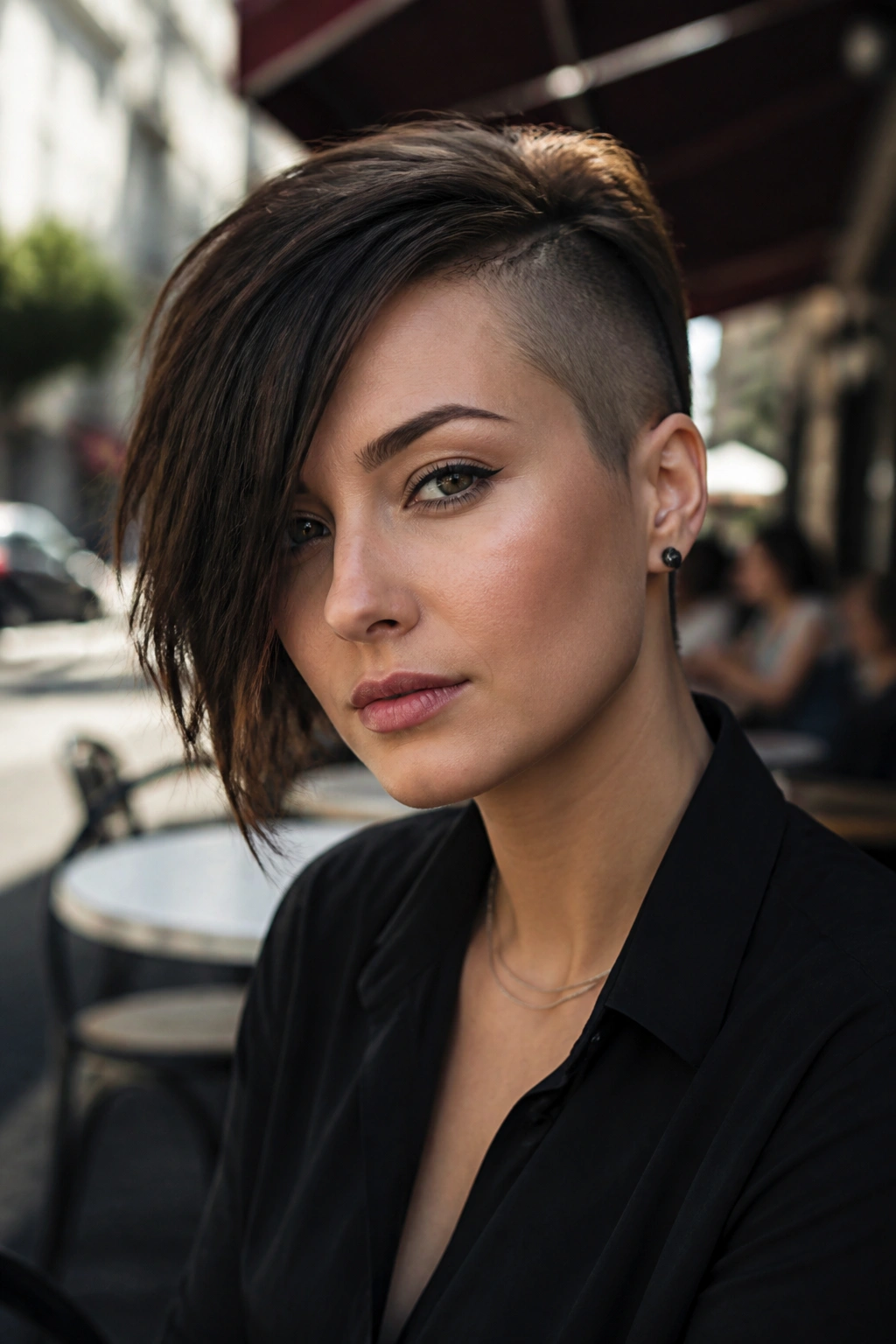
Why does one shaved side look so much more interesting than a fully even cut? Because the eye loves imbalance when it still feels controlled. A single shaved side turns the pixie into something with movement built in, and that movement is what keeps it from reading like a basic crop.
This version is strong on people who tuck one side behind the ear all day or naturally part their hair to one side anyway. The longer side can fall across the forehead, skim the eyebrow, or swing just below the cheekbone while the shaved side opens up the face. That contrast does a lot of the work.
How to wear it
You do not need heavy styling here. In fact, too much product makes the asymmetry feel fussy instead of cool. A light cream or soft wax is enough to separate the longer side and keep the top from collapsing.
If your face is round, keep the longer side slightly below the eye line. If your face is more angular, a shorter fringe can look cleaner and make the whole cut feel sharper. Either way, the haircut should look like it belongs on your head, not like it was pasted there from a mood board.
A side-shaved pixie gets boring only when both sides are cut too close to the same length. Let one side carry the drama. That’s the point.
3. The Curly Top Pixie With Cropped Sides
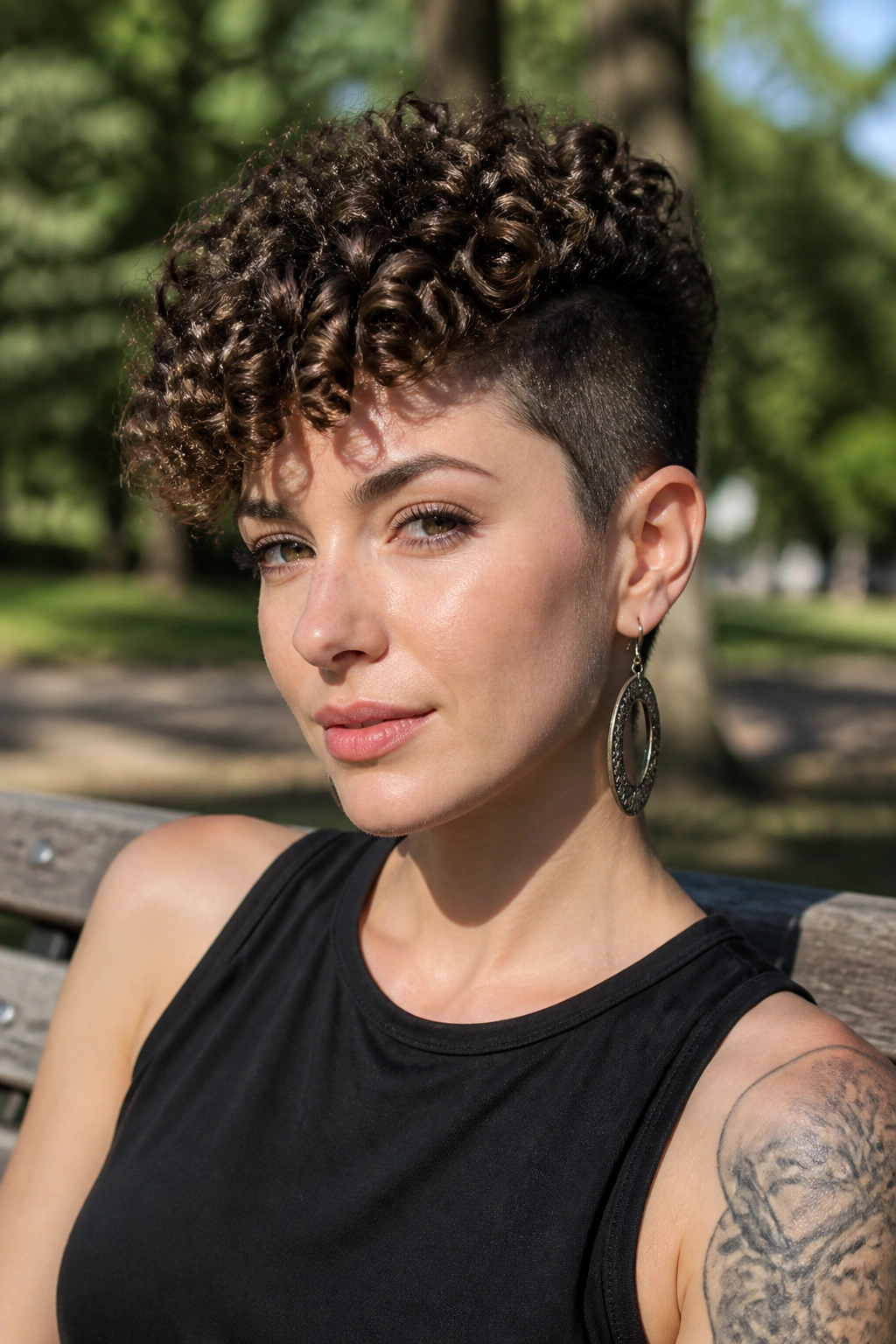
Picture tight curls sitting high on top while the sides stay close and neat. That’s the beauty of a curly pixie with a shaved undercut: it gives curls room where they need it and takes away bulk where they do not. The result is shape, not puff.
This cut is a gift for curly hair that tends to widen at the sides. Instead of letting the curl pattern flare out around the ears and jaw, the undercut keeps the profile narrow. The top can be left longer — often 3 to 4 inches, depending on shrinkage — so the curl pattern has enough room to spring without turning into a triangle.
Dry cutting makes a big difference here. Curls sit differently when wet, and a stylist who cuts only on wet hair can easily leave you with a shape that disappears once it dries. Ask for the outline to be checked dry if possible. That part matters.
I also like this cut with a light curl cream and a diffuser on low heat. Scrunch, then stop touching it. The more you rake through it, the flatter the top gets and the more the sides start to matter again. A good curly pixie should look airy on top and tidy around the edges.
4. The Platinum Pixie With a Buzzed Nape
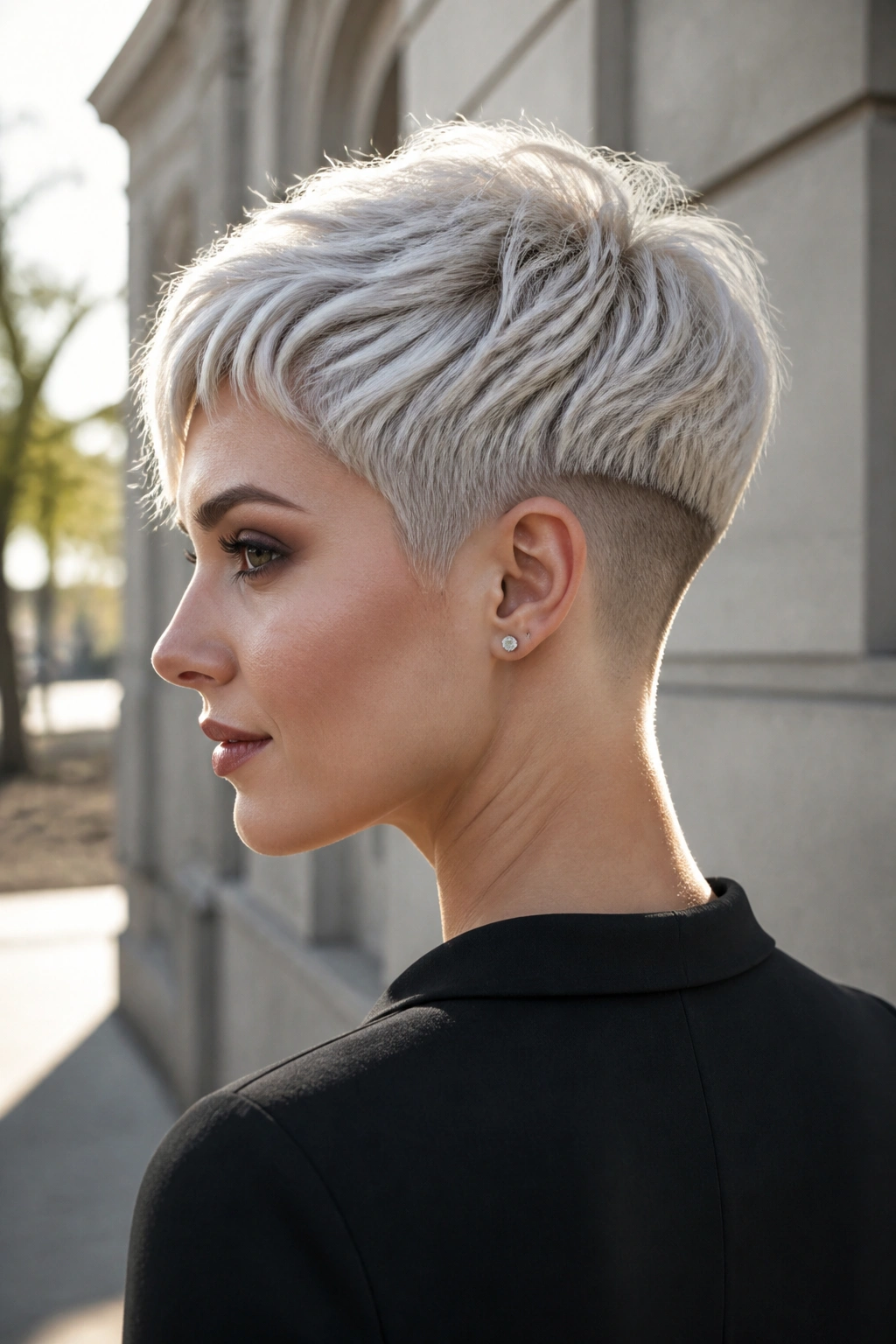
Platinum does not make this cut edgy. The buzzed nape does.
That sounds blunt, but it’s true. Bleach gets attention, sure, yet the nape is what keeps the style from looking sweet or expected. A tight back line under a pale, cropped top gives the haircut real bite, especially when the neckline is cut close and clean instead of left fuzzy.
What makes it different
Platinum hair needs care, and anyone pretending otherwise is selling fantasy. The color can look dry fast if the cut is too layered and the ends are left to fray. A buzzed nape solves part of that problem because it removes the oldest, most fragile hair at the bottom of the head.
- Keep the top soft and slightly longer so the pale color has movement
- Ask for the nape to be faded down to skin or kept at a very short guard
- Use a purple shampoo sparingly, not every wash
- Follow with a moisture mask once a week if the ends start feeling squeaky or rough
This cut is strongest when the color looks intentional, not over-processed. Root shadow can help. A tiny bit of darker root at the scalp often gives the white-blond top more depth and keeps the whole thing from looking flat.
5. The Choppy Pixie With Micro Bangs
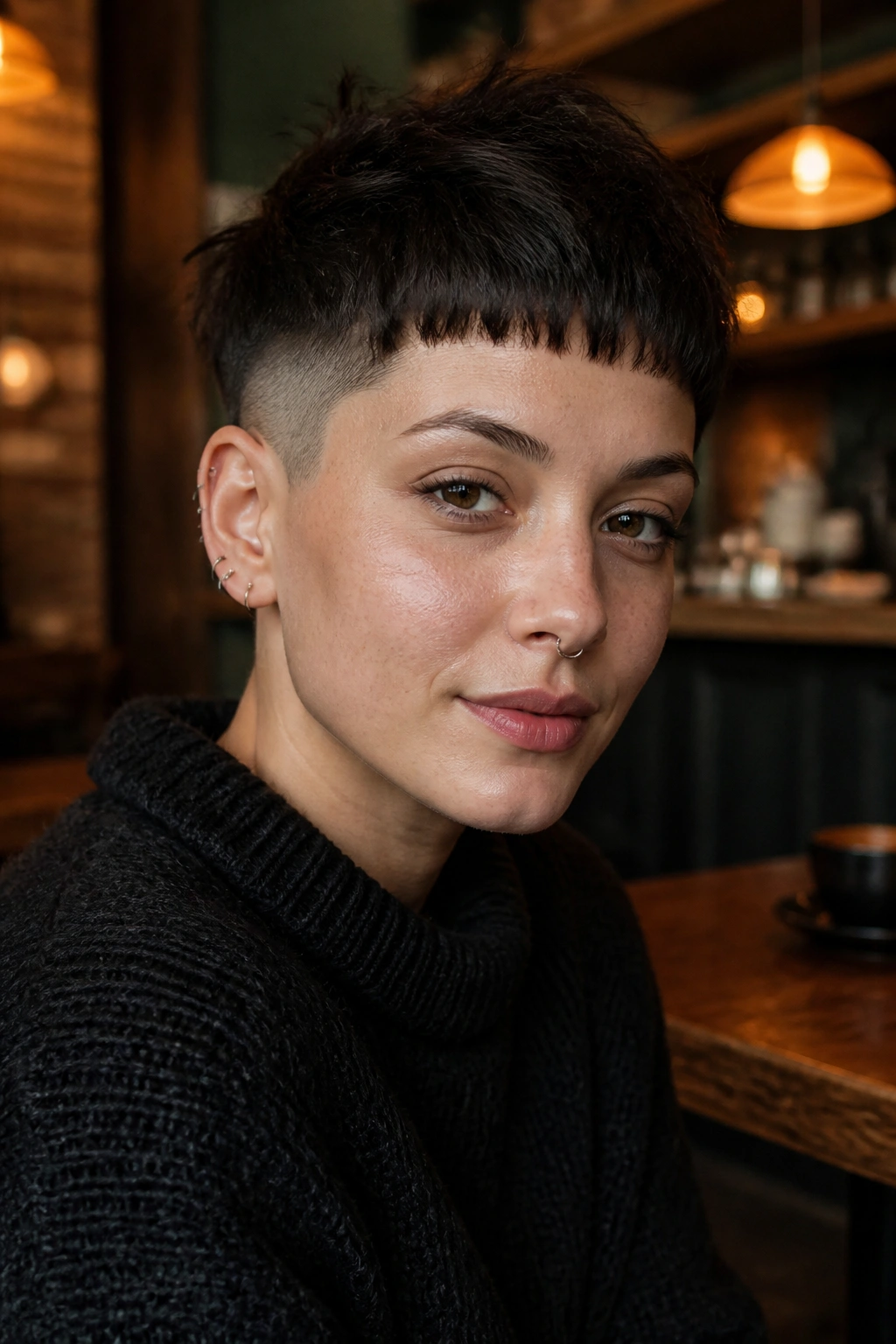
The first thing you notice is the fringe. Tiny bangs sitting high on the forehead change the whole mood of a pixie, especially when the top is cut in choppy pieces that move instead of lying in one flat sheet. It feels a little sharp, a little cheeky.
Micro bangs are not forgiving in the casual sense. They show your eyebrow shape, your forehead, and every weird little cowlick near the front. That is why they look so good when the rest of the cut has texture. The uneven top softens the hard line of the fringe, and the undercut keeps the sides from getting bulky.
What to watch for
This cut works best when the bangs are cut with intention, not hacked off in one straight row. Ask for them to sit just above the brow, then be softened a touch so they can be worn forward or slightly piecey.
A dry styling cream or matte powder helps here. You want separation, not helmet hair. If your hair is fine, this cut can give the top a lot of visual lift. If it is thick, the undercut stops the sides from swelling outward and swallowing the face.
There’s a real attitude to this one. Not loud. Just certain.
6. The Slicked-Back Pixie With a Hard Part
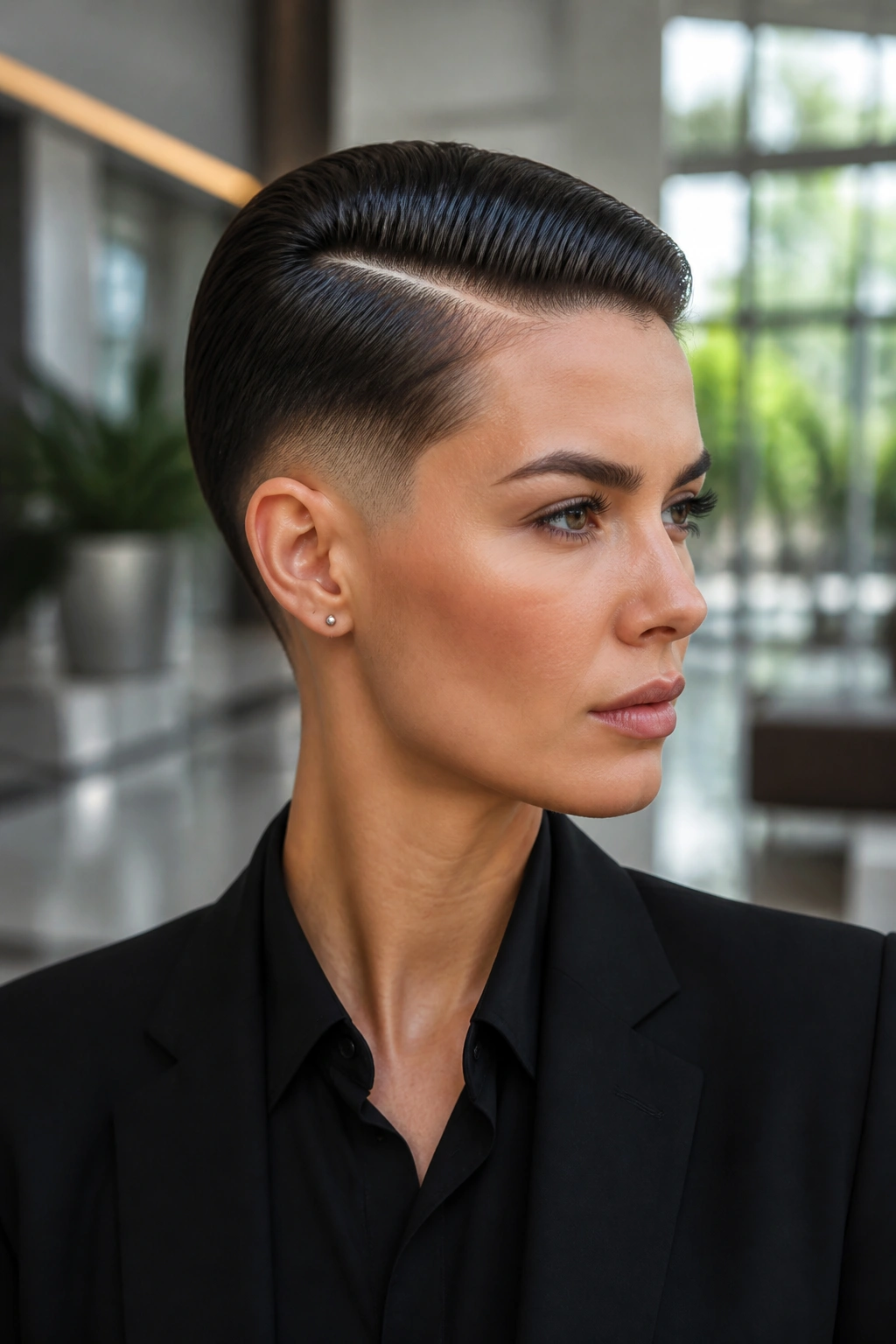
Hard part. Wet shine. Clean neck.
That combination says everything. A slicked-back pixie with a shaved undercut is one of the most structured versions on the list, and it works because the styling is as precise as the cut itself. You comb the top back, define a part, and let the sides stay tight enough that the whole shape reads like a clean line drawing.
This is the version I like for straight hair or hair that already falls close to the head. It also plays well with glasses, sharp collars, and clothes with clean lines. The haircut does not need softness to look good. It needs control.
How to get the most from it
A strong hold gel or styling cream is the obvious product choice, but don’t pile it on. Start with a small amount, work it through damp hair, then comb the part before the product sets. If you wait too long, the part starts to look stamped on.
The shaved side should be crisp but not bare to the point of looking unfinished. A #1 or #2 guard near the temple usually keeps it neat without making the scalp the whole story. And if your hairline is naturally uneven, let it be a little uneven. Perfect symmetry can make this cut look stiff in a bad way.
This is not a soft pixie. That’s the charm.
7. The Wavy Pixie With a Hidden Undercut
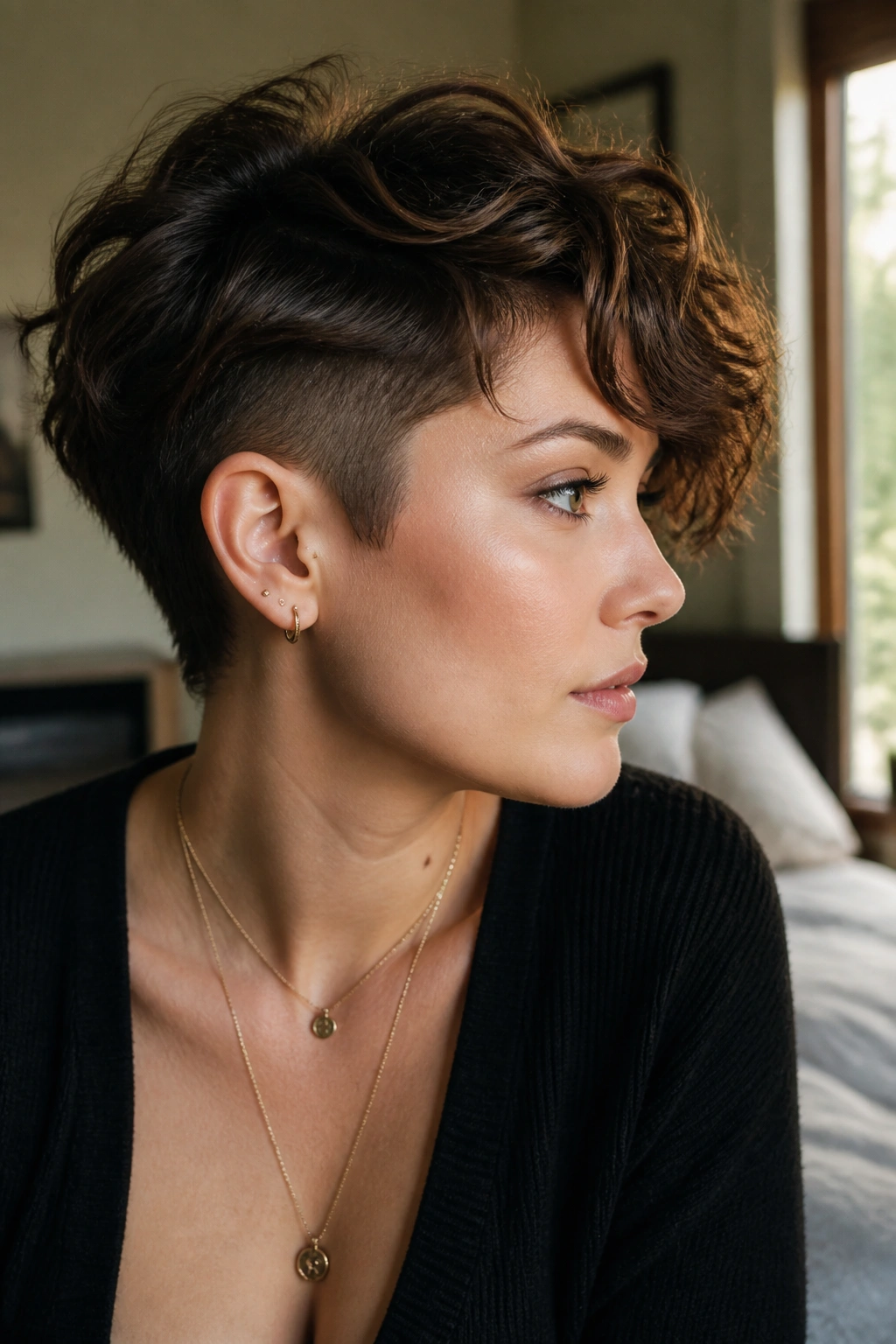
I like the hidden version when someone wants edge but hates the idea of walking around with an obvious clipper line. The shave sits under the surface, tucked around the nape or below the top layer near the sides, so the haircut can look plain from one angle and sharp from another.
Waves make this cut a little deceptive. Loose texture hides the undercut until you tuck the hair behind the ear or push it up off the neck. Then the whole thing changes. That little reveal is half the fun.
If your hair is thick, a hidden undercut can take out a surprising amount of bulk without making the top look thin. If your hair is fine, it can still help the top sit higher because the shorter lower layers do not drag everything down.
A sea salt spray or light mousse gives the waves enough grip to separate. Blow-dry with your fingers, not a brush, if you want the texture to stay loose. And if the undercut starts peeking through in a messy way rather than a clean one, that usually means the grow-out is due. The haircut will tell on itself.
8. The Bowl-ish Pixie With Shaved Sides
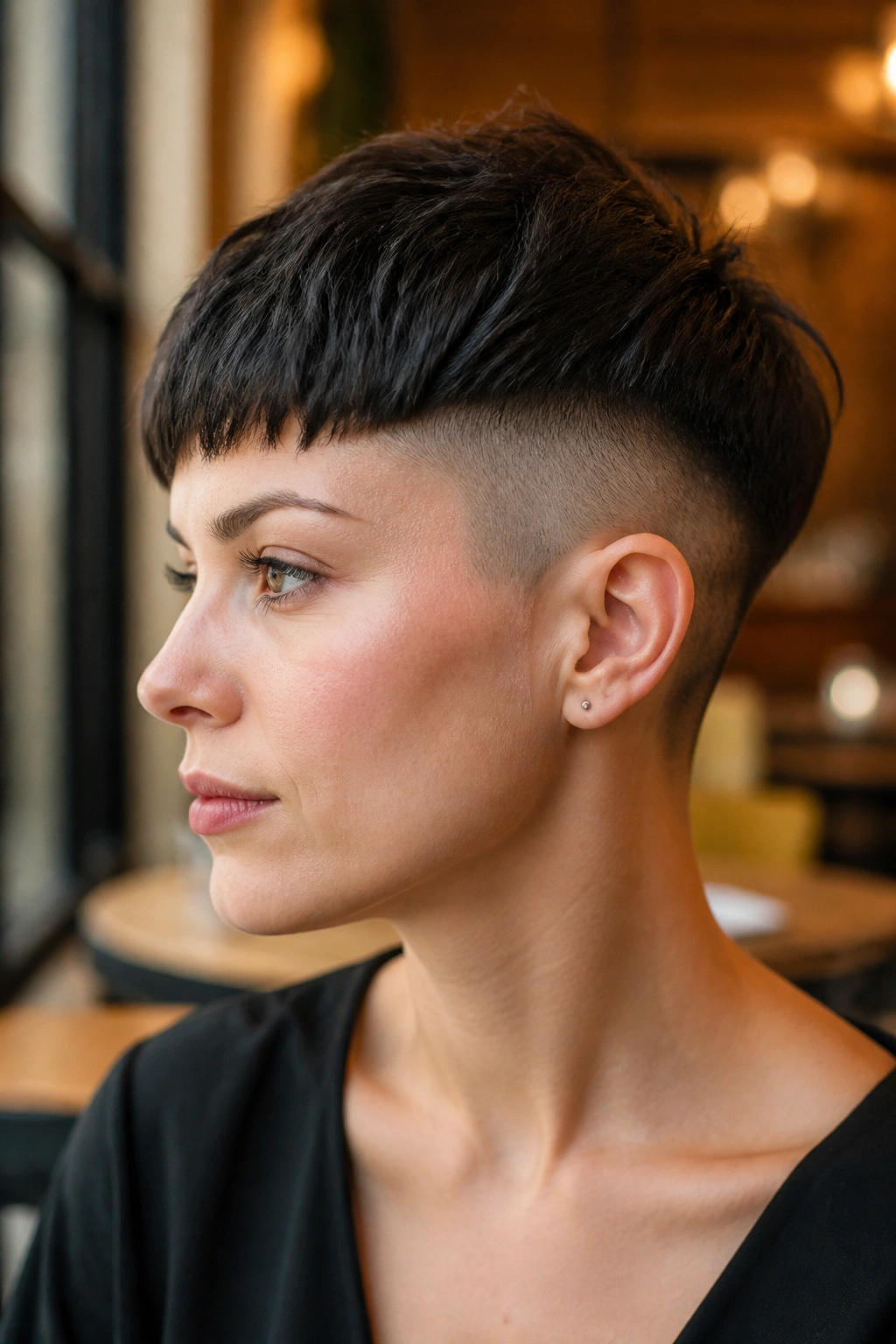
Unlike a true bowl cut, this version earns its shape.
That sounds rude to bowl cuts, and maybe it is, but there’s a reason this shape keeps coming back in slightly sharper clothing. The rounded top gives the pixie a graphic outline, while the shaved sides remove the bulk that makes old-school bowl shapes feel heavy and childlike. You get a clean curve, not a mushroom.
What makes it different
The trick is keeping the top rounded enough to feel intentional while the sides stay lean. The silhouette should read as sculpted, not accidental. A little height at the crown helps too, especially if your face is round and you want some vertical lift.
- Ask for the fringe to follow the curve of the head
- Keep the sides clipped close, but blended softly into the top
- Avoid over-texturizing the perimeter, or the shape loses its graphic line
- Use a light styling cream if you want the edge to stay smooth, not spiky
This is a strong choice if you like fashion-forward cuts and you are not afraid of people noticing the shape first. The outline does the talking. You do not need much else.
9. The Longer Top Pixie With a Tapered Fade
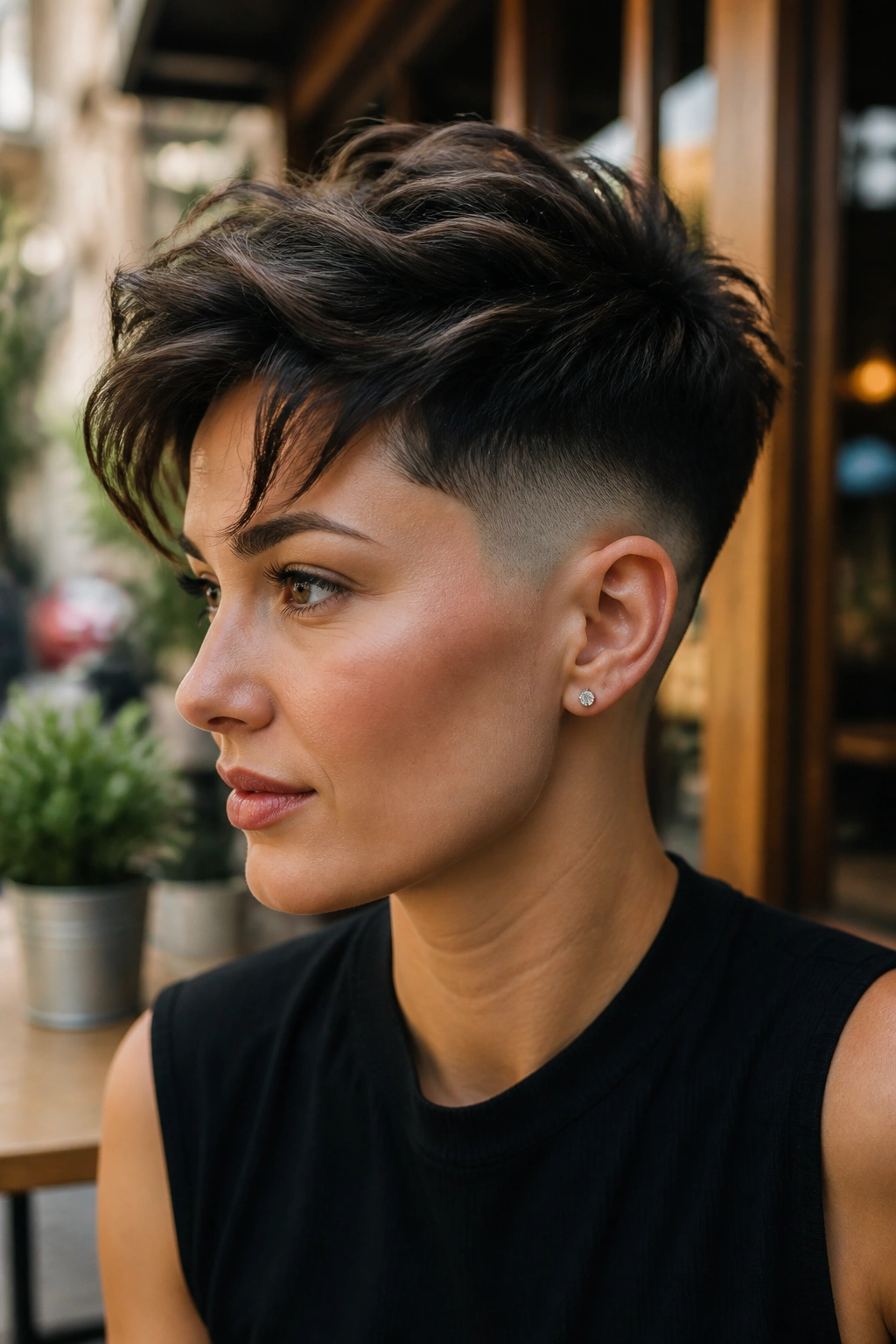
What if you want enough length to sweep, clip back, or curl with a small iron? Then keep the top long and let the sides fade down cleanly. A tapered fade gives the haircut a softer finish than a hard shave, which makes this one easier to live with if you are new to shaved undercut pixie cuts.
The top should stay long enough to move in at least two directions. Think 3 to 5 inches, depending on your density and how much volume you want. Shorter than that, and you lose the shape-shifting part of the cut. Longer than that, and it starts edging toward a short shag instead of a pixie.
How to style it
A blow-dry with a small round brush gives the top a bend that feels polished without looking too round. If that sounds like too much effort, a bit of mousse at the roots and a rough dry with your fingers works fine. The fade underneath keeps the whole thing neat even when the top goes a little loose.
This version is a good bridge cut. It gives you enough edge to feel modern, but it also leaves room for ponytail clips, barrettes, or a tucked-back side on days when you want less hair around your face.
10. The Dark-Rooted Pixie With Bleached Ends
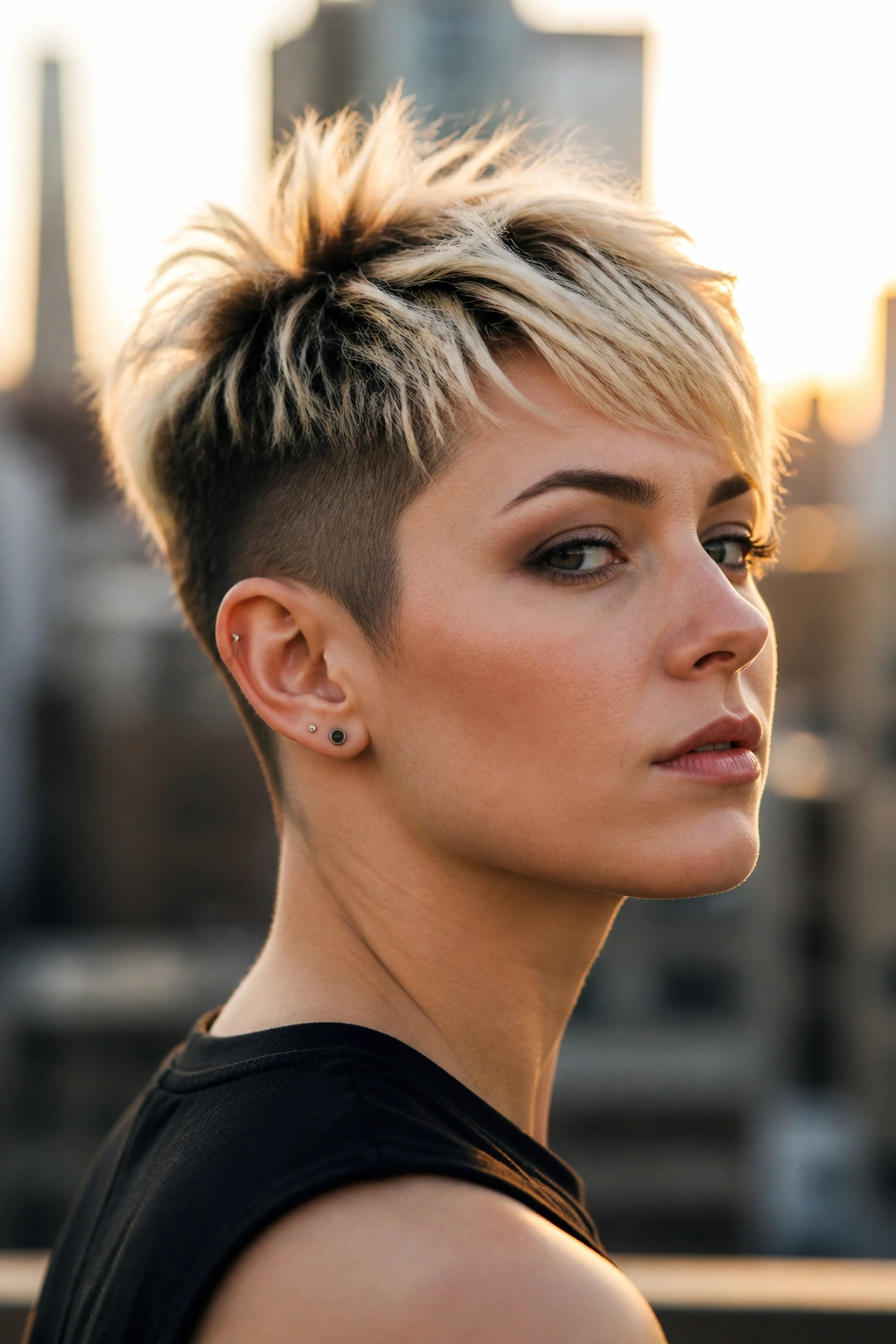
A two-tone pixie looks loud only if the cut is timid. When the shape is strong — especially with a shaved undercut — the color contrast starts making sense. Dark roots ground the cut at the scalp, while bleached ends bring light to the top and fringe.
That contrast is useful on short hair because the eye reads the haircut faster. You notice the shape, then the color, then the texture. If the ends are all one tone, a short cut can flatten out in bad lighting. A shadow root fixes that problem without making the style feel heavy.
Color and care notes
Bleached ends need moisture. Dry, fluffy ends can ruin the whole effect because they separate in a frizzy way instead of a piecey one. A leave-in conditioner or light mask helps keep the top soft enough to style.
- Keep the dark root soft, not stripey
- Tone the blonde when it starts to yellow
- Use heat protectant if you flat-iron the fringe
- Trim the ends before they split, because short bleach damage shows fast
I prefer this on people who like contrast and can handle a little maintenance. If you want low fuss, skip the bright ends. If you want the haircut to shout a bit more, this is one of the cleanest ways to do it.
11. The Feathered Pixie With a Shaved Ear Area
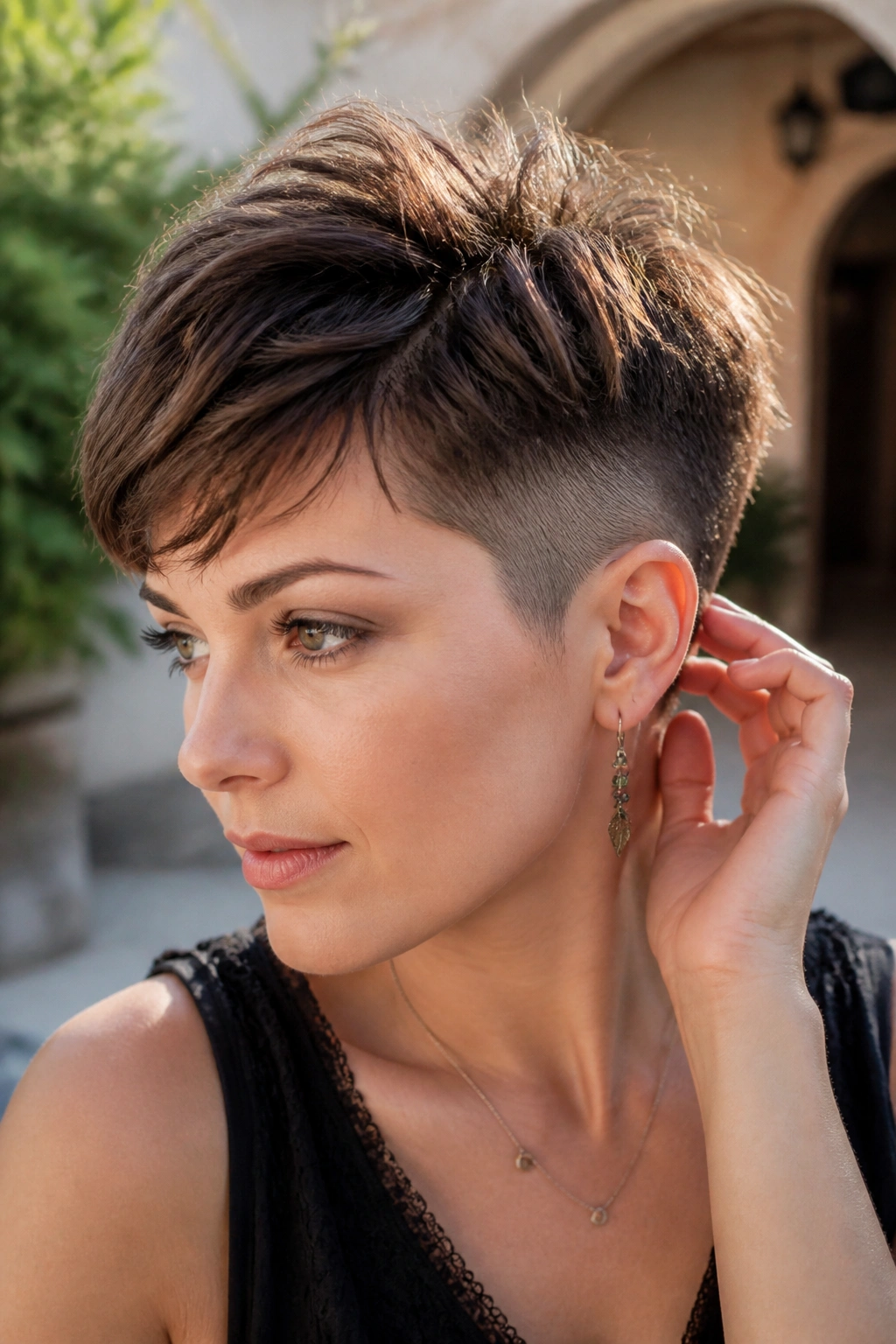
You tuck one side behind the ear and suddenly the whole cut changes. That is the appeal here. The feathered top keeps the shape soft and movable, while the shaved area near the ear gives it a sneaky edge that only shows when the hair shifts.
This style has a gentler mood than a hard undercut. The feathering matters. You want the top layers cut so they flutter slightly when you move, not sit in blunt chunks. That softness makes the shaved spot feel even sharper by comparison.
Why it flatters
The exposed ear area opens up the cheek and jaw. It also helps if you wear earrings, because the shorter side gives them a place to show instead of disappearing into the hair. Small hoops, studs, and ear cuffs work especially well here.
If your hair has some natural bend, this cut is easy to coax into place with a small amount of cream. If it is straight, use a blow-dryer and fingers to keep the feathering from collapsing. The whole point is that the top should look feathered, not feathered after too much product.
This one feels almost quiet from the front and much bolder from the side. I like that contrast a lot.
12. The Spiky 90s-Inspired Pixie
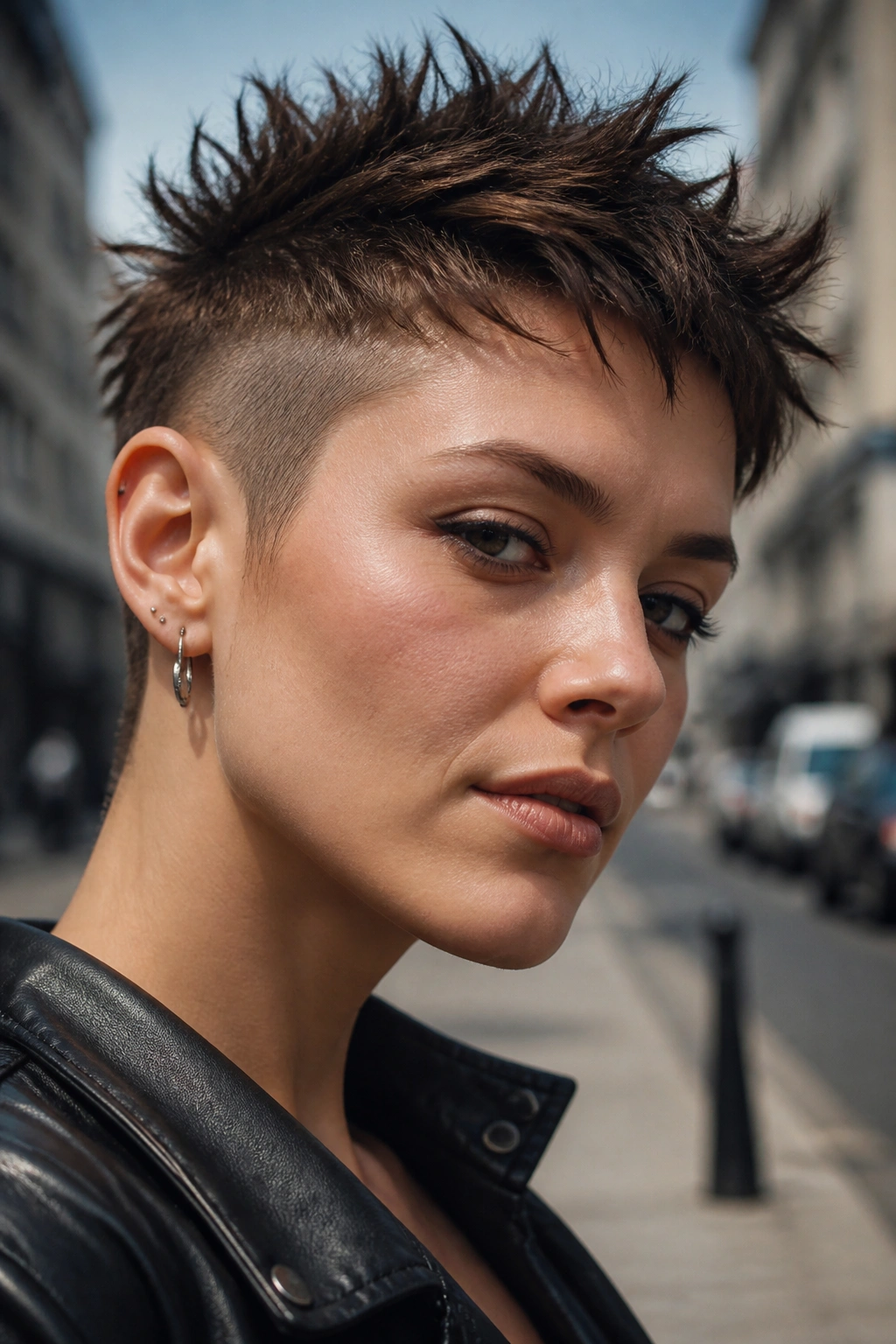
Want your pixie to look a little bratty in the best way? Go spiky.
The 90s inspiration here is plain to see: short sides, a bit of height on top, and ends that stand away from the scalp instead of lying flat. It’s playful, a little stubborn, and much easier to wear than people think. The trick is not to make every strand identical. Spikes should look broken up, not stiff.
A small dab of matte clay or wax is enough for most hair types. Warm it between your fingers, pinch the top in sections, and leave the ends slightly uneven. If the hair starts looking crunchy, you used too much. Pull some product off with dry hands before it sets.
This cut is especially good if your hair is straight or has just enough wave to hold shape. On curls, it can work too, but the result is different — less spiky, more separated. Either way, the undercut gives the top room to stand up instead of ballooning out at the sides.
It’s a lively cut. That’s the whole point.
13. The Side-Swept Pixie With a Neck Undercut
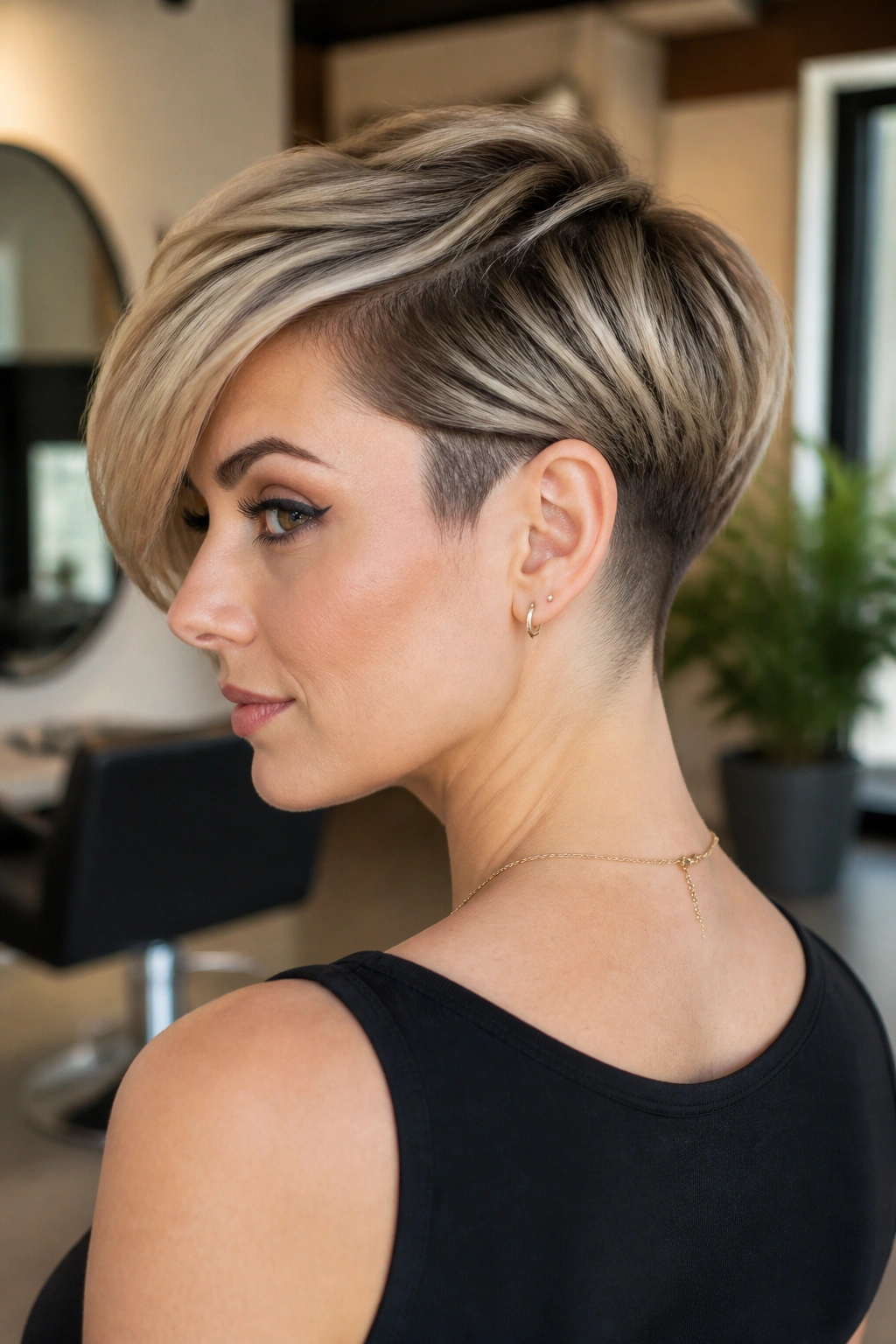
A long side sweep can hide a thousand sins — a cowlick, a flat crown, a forehead you want softened, even a grow-out that needs a little patience. Pair that sweep with a neck undercut, and the cut becomes smoother from the front while staying neat at the back.
The neck undercut is the part people don’t always notice first. That’s what makes it useful. It keeps the nape clean, prevents a heavy shelf of hair from building up under the top layers, and lets the side sweep fall without fighting the shape below it.
How to keep it from going limp
Blow-dry the top in the direction you want it to fall, but lift the roots at the same time. A paddle brush or small vent brush helps. Once it’s dry, push a small amount of styling cream through the ends so the sweep stays soft and moveable.
This cut is a good fit if you like one side to feel covered and the back to stay lean. It also grows out well, which matters more than people admit. A lot of pixies look cute on day one and awkward two weeks later. This one tends to keep its shape longer because the undercut is hiding where it matters.
The result is not loud. It’s tidy with an attitude.
14. The Grown-Out Pixie With Soft Edge
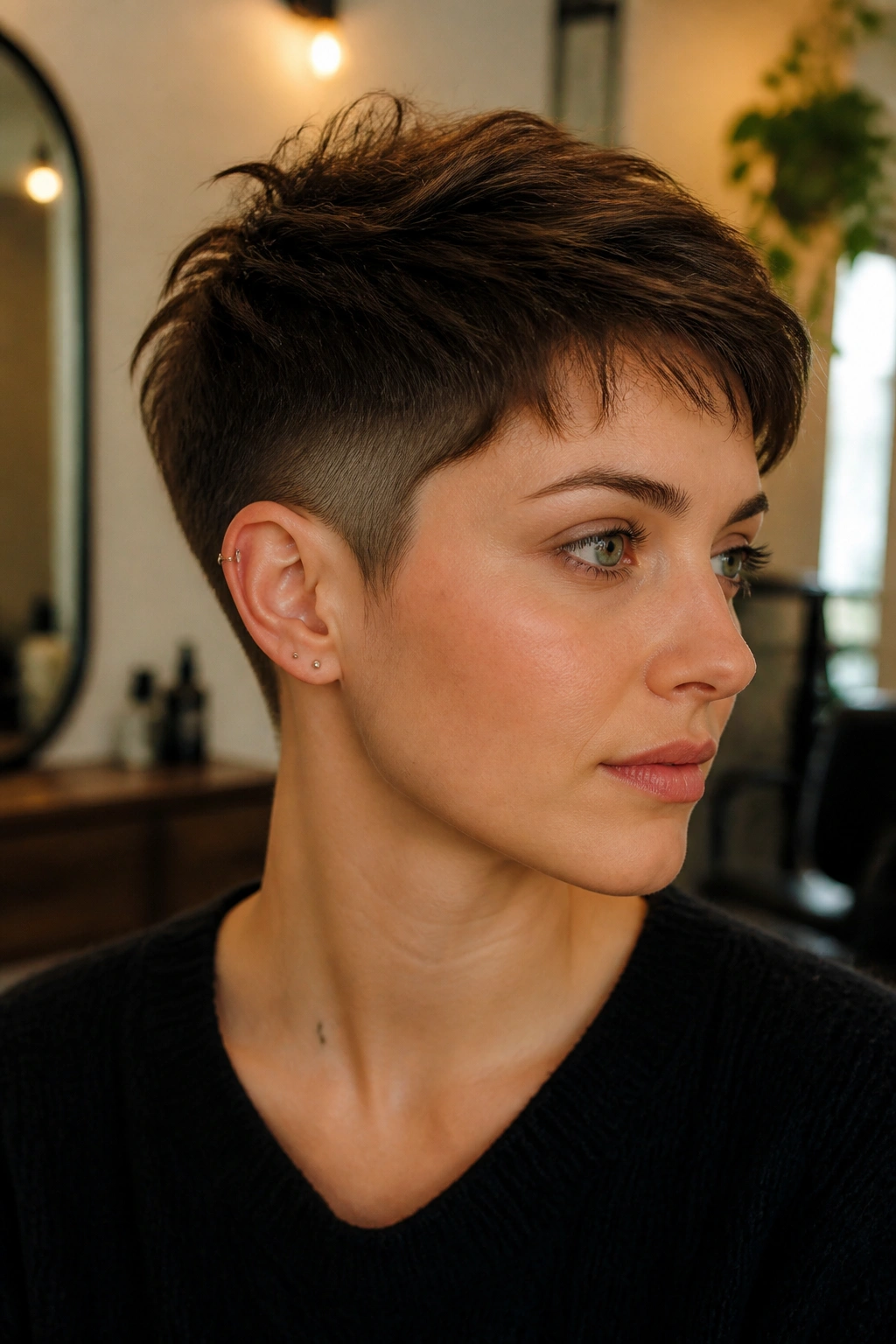
A grown-out pixie isn’t a failed haircut.
That’s the first thing to say, because people act as if any extra length means the shape is gone. It doesn’t have to be. If the ears and nape stay cleaned up while the top and crown soften out, the cut can look even better in that in-between stage than it did on day one. The edge is still there. It just feels less strict.
This version is for people who want some freedom between salon visits. Let the top get a little shaggy, keep the sideburns tidy, and ask for the neckline to be cleaned before it turns fuzzy. A few scissor snips around the perimeter can keep the whole thing looking intentional while the rest grows.
What to protect during grow-out
- The neckline, because it goes stale fastest
- The area around the ears, where bulk piles up
- The fringe, if it starts falling into the eyes in a heavy sheet
- The crown, if it gets too flat and stops reading as a pixie at all
I prefer this stage when the cut has a bit of softness in the texture. Too much layering can turn the grow-out into a mullet before you notice. Keep the outline calm, and the haircut stays wearable for far longer than people expect.
15. The Close-Cropped Pixie
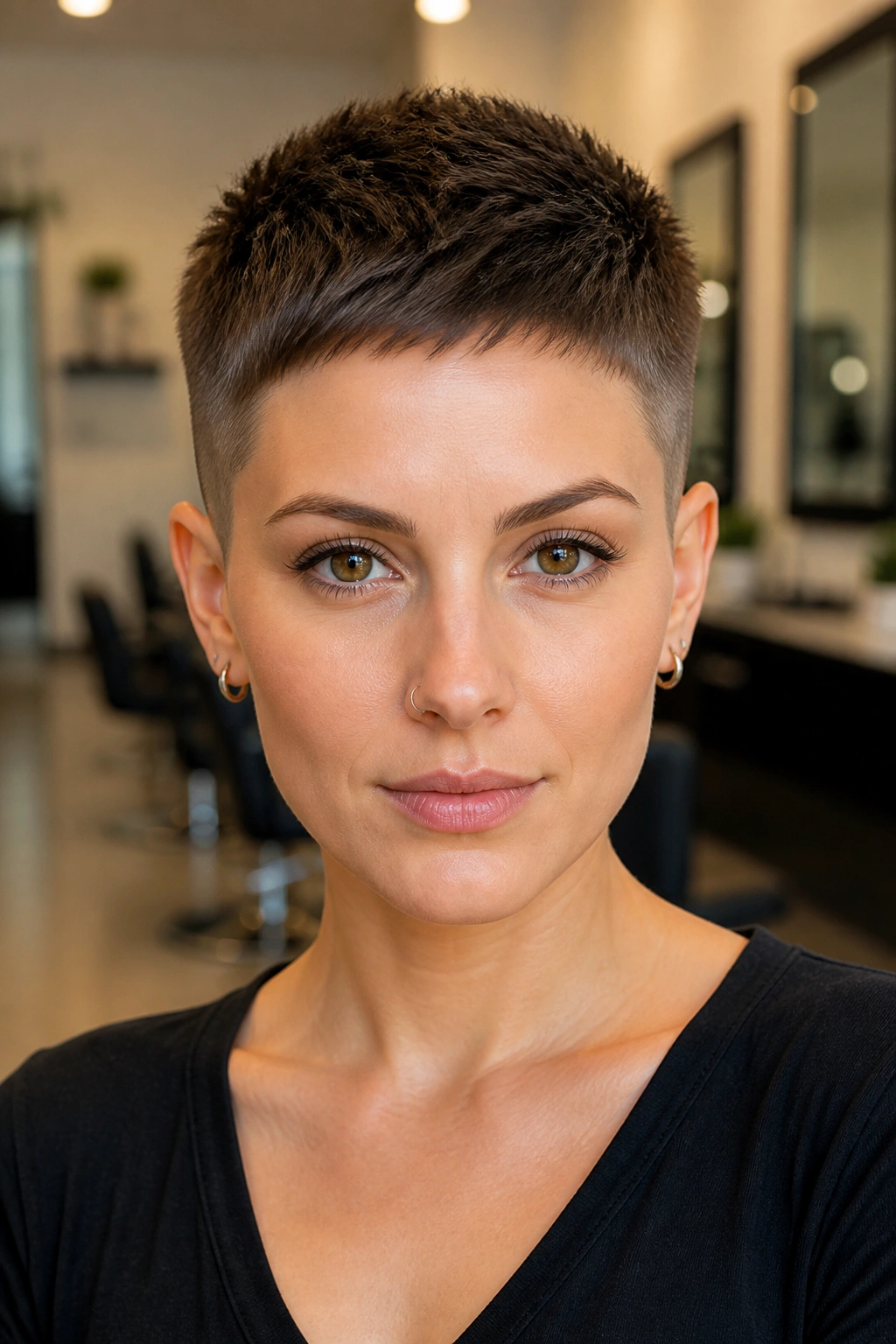
If you want the least fussy version, this is the one. A close-cropped pixie with a shaved undercut gives you edge, but it also takes most of the daily work off your plate. Towel-dry it, rub in a tiny bit of paste or cream, and go.
The beauty of this cut is that it puts shape ahead of styling. The clipper work around the sides and nape creates a frame for the face, while the top stays short enough to behave. No round brush. No long blow-dry. No wrestling with a cowlick for fifteen minutes before you leave the house.
It works especially well if your hair is dense, coarse, or grows fast at the back. The shorter shape stops the bulk from building up in all the wrong places. It also suits people who want their jewelry, makeup, or brows to do more of the visual work, because the haircut clears the stage.
If you ask me, this is the sharpest answer for anyone who wants shaved undercut pixie cuts for edge without turning hair into a daily project. Clean at the base, short on top, done. There’s a reason this version keeps coming back in one form or another. It gets the job done and still looks like a choice.
