



A shaved pixie cut changes the mood of a haircut faster than almost anything else. One clean clipper line near the temple or nape, and the whole thing goes from sweet to sharp.
The best shaved pixie cuts rely on contrast, not noise. A close side or back, a top with movement, and enough shape around the face to keep the cut from looking accidental—that is the whole trick.
And the details matter more than people think. A #1 buzz feels tougher than a #3, a deep side part can make the crown look fuller, and a little extra length at the fringe can soften a strong jaw without taking the edge away.
If you have ever looked at a pixie and thought, “Nice, but it needs more attitude,” the answer usually is not more product. It is better placement, better balance, and a cut that works with your texture instead of fighting it.
1. Side-Shaved Pixie With a Longer Top
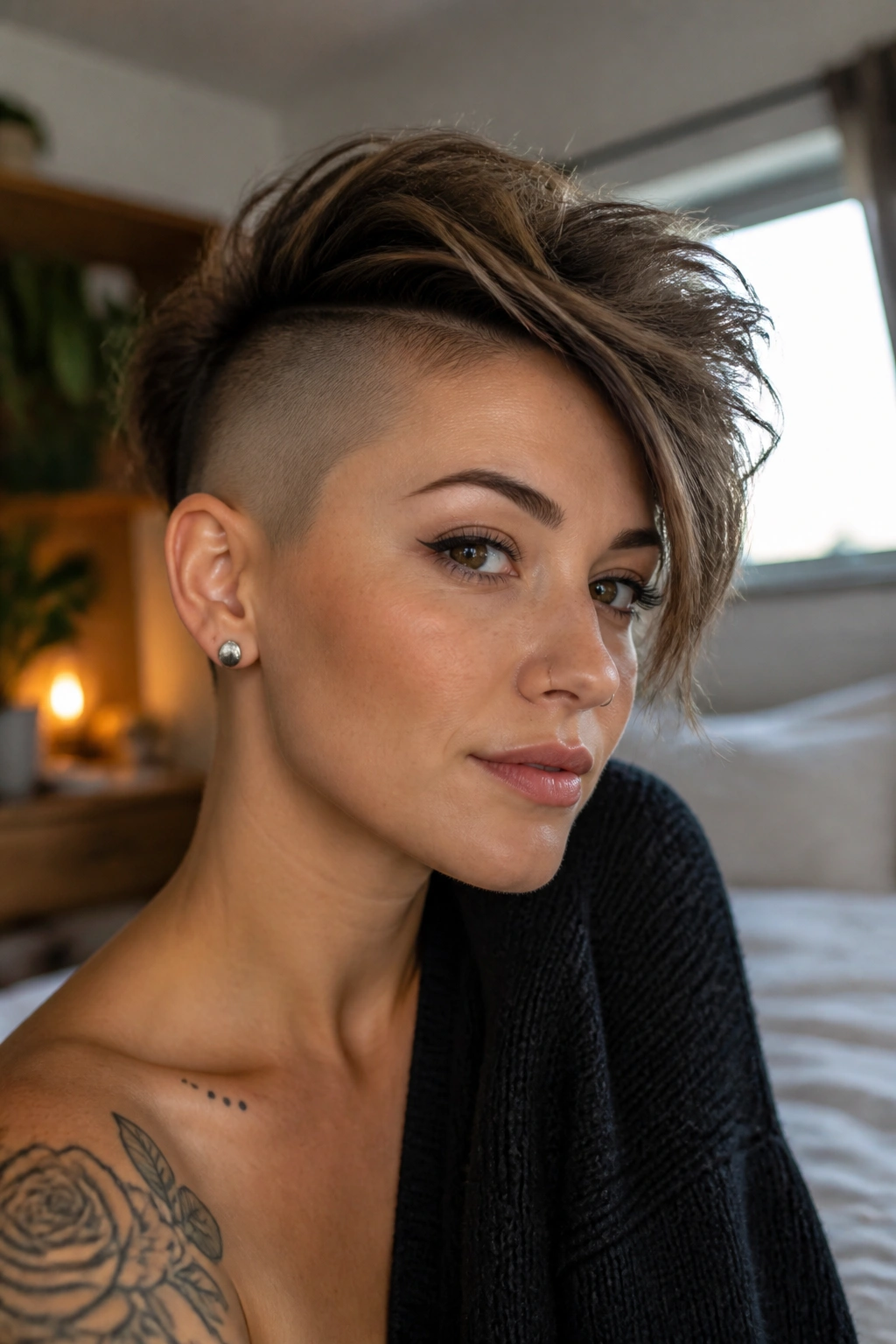
The side-shaved pixie is the easiest place to start if you want edge without going full revolt. One temple or one side gets clipped down close, while the top stays long enough to sweep, spike, or tuck behind the ear. That contrast does most of the work for you.
Why the side shave works
It gives you shape on purpose. A longer top keeps the cut soft enough to style in a few different ways, and the shaved side stops it from sliding into “just short hair.” I like this version for people who want a haircut that looks deliberate even on lazy mornings.
- Ask for a #1 or #2 clipper guard on the shaved side if you want a clean but not skin-tight finish.
- Keep 3 to 5 inches on top so you can flip the part around.
- Use a matte paste or cream if you want movement without shine.
- Tuck the longer side behind one ear when you want the shaved section to show off.
Small tip: keep the edge around the sideburn soft if your hair grows fast. The grow-out looks less blunt that way.
2. Curly Shaved Pixie With a Temple Fade
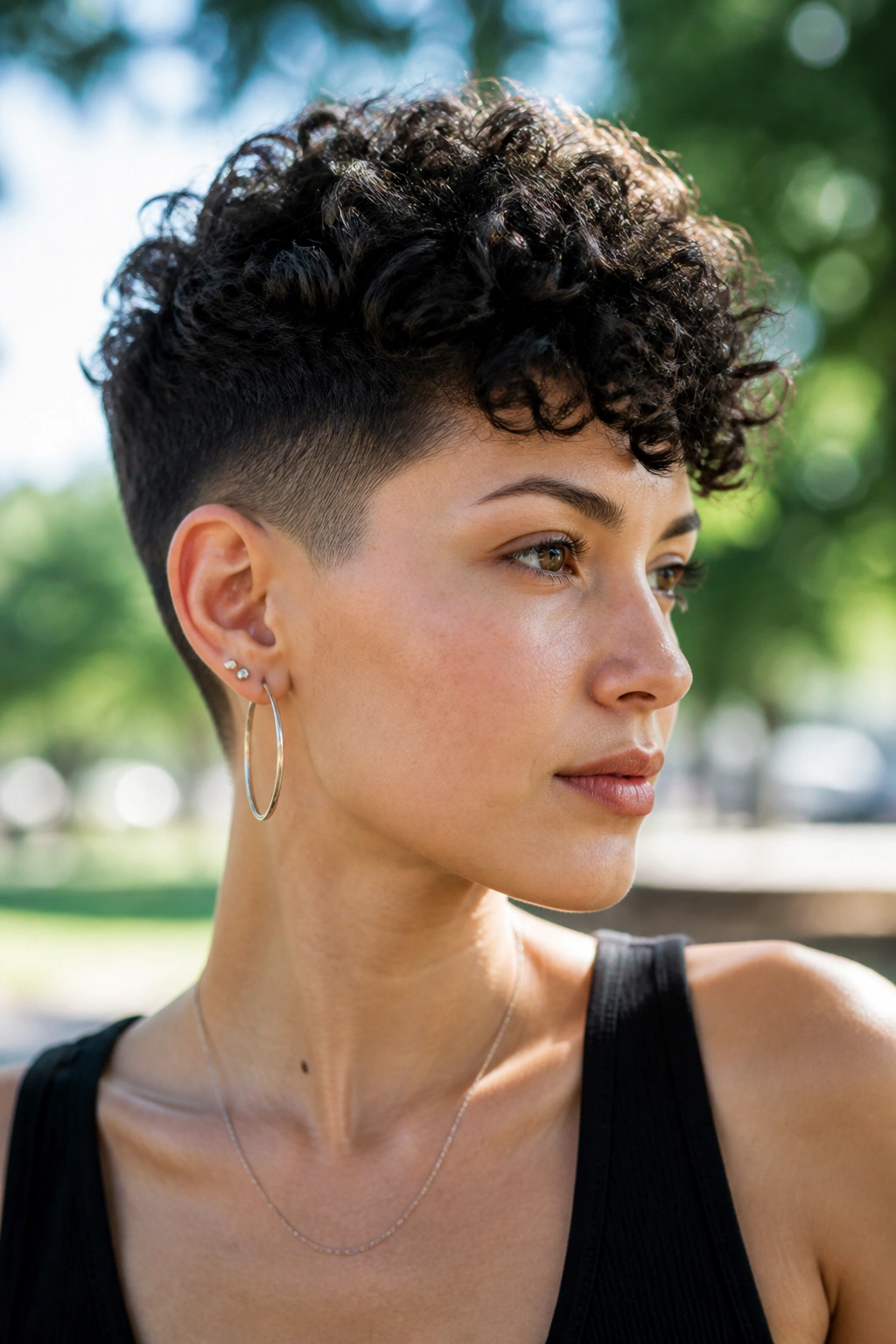
Curly hair and a temple fade make a nicer pair than people expect. The curl gives the top shape and body, while the shaved temple keeps the whole style from getting puffy around the sides. That’s the magic here. It looks styled even when you barely touch it.
A lot of curly clients worry that shaving one side will make the cut too severe. It usually does the opposite. The curls bring softness, and the fade gives them a frame, so the whole haircut reads as balanced instead of bulky. If your curls are tight, loose, or somewhere in between, this version keeps the silhouette tidy.
The key is not to flatten the top into submission. Let the curl pattern breathe, and use a cream that defines without turning the hair stiff. A diffuser helps, but you do not need to hover over the dryer forever. Low heat, gentle scrunching, and a clean temple line are enough.
3. Platinum Pixie With a Clean Buzzed Side
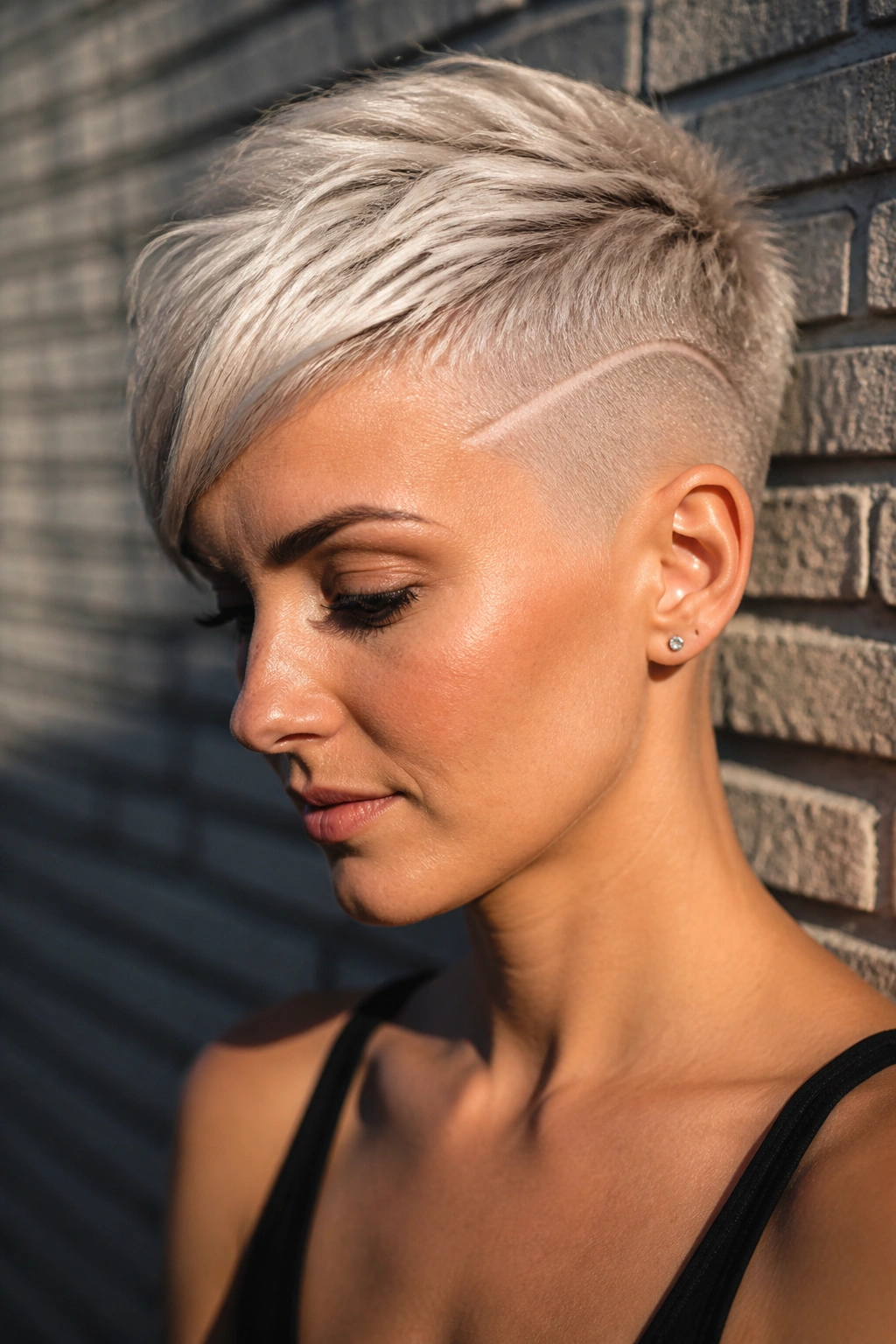
Why does platinum feel tougher the second one side is buzzed? Because the color already has high contrast, and the shaved section gives it a hard edge that makes the whole cut look graphic.
A platinum pixie can go sweet or sharp depending on the shape around it. Add a close buzz on one side and it stops reading as delicate. The light color hits the skin, the clipper line shows, and suddenly the haircut has a little bite. I especially like this when the top is kept airy rather than helmet-flat.
How to wear it well
Keep the crown piecey, not packed down. A tiny amount of matte paste at the roots gives the hair lift, and a soft side sweep keeps the cut from looking frozen in place. If brassiness shows up in the blonde, a toning shampoo once a week helps, but don’t overdo it or the tone can go dull and gray in a bad way.
Platinum also asks for a little honesty. The grow-out will show faster than darker shades, and the shaved side needs more frequent cleaning to stay crisp. If you like a haircut that looks freshly cut even when it has a bit of mess in it, this one lands.
4. Nape-Shaved Pixie With Tapered Layers
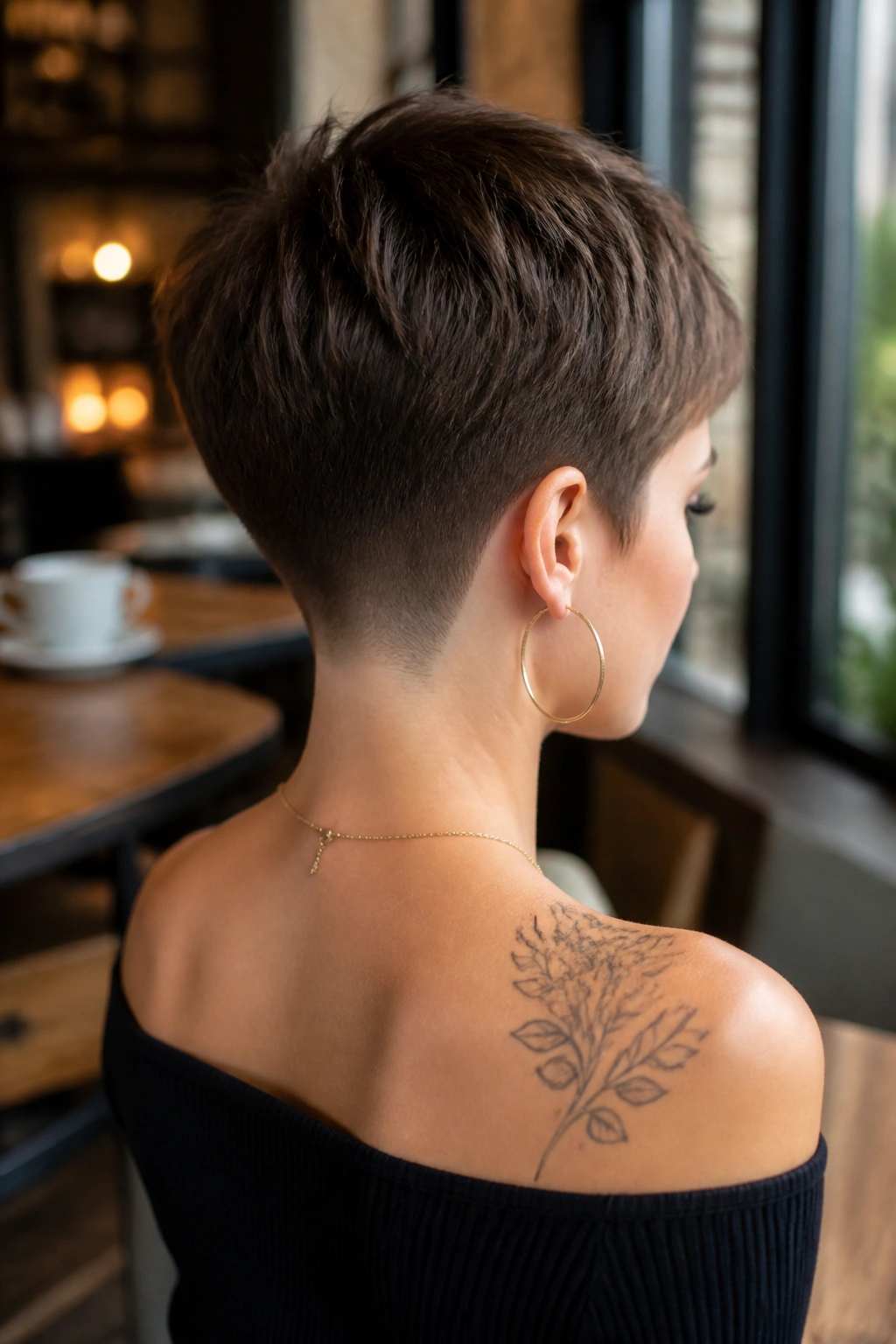
Picture this: you turn your head, tuck your hair into a coat collar, and a slim slice of shaved nape shows for half a second. That is the charm of a nape-shaved pixie. It is hidden enough for work, but it has enough edge to make people look twice.
The tapered layers on top keep this version from feeling boxy. Hair at the crown stays slightly longer, then narrows as it falls toward the neck. That shape matters. Without it, the shaved nape can feel like an afterthought instead of a design choice.
- Ask for a soft taper into the neckline so the grow-out isn’t harsh.
- Keep the top choppy, not blunt, for movement.
- Plan on a cleanup every 3 to 4 weeks if you want the nape line neat.
- Leave a little length around the ears if you wear glasses or statement earrings.
A nape shave is one of those details people catch only when you move. That’s the fun part.
5. Asymmetrical Pixie With a Heavy Side Part
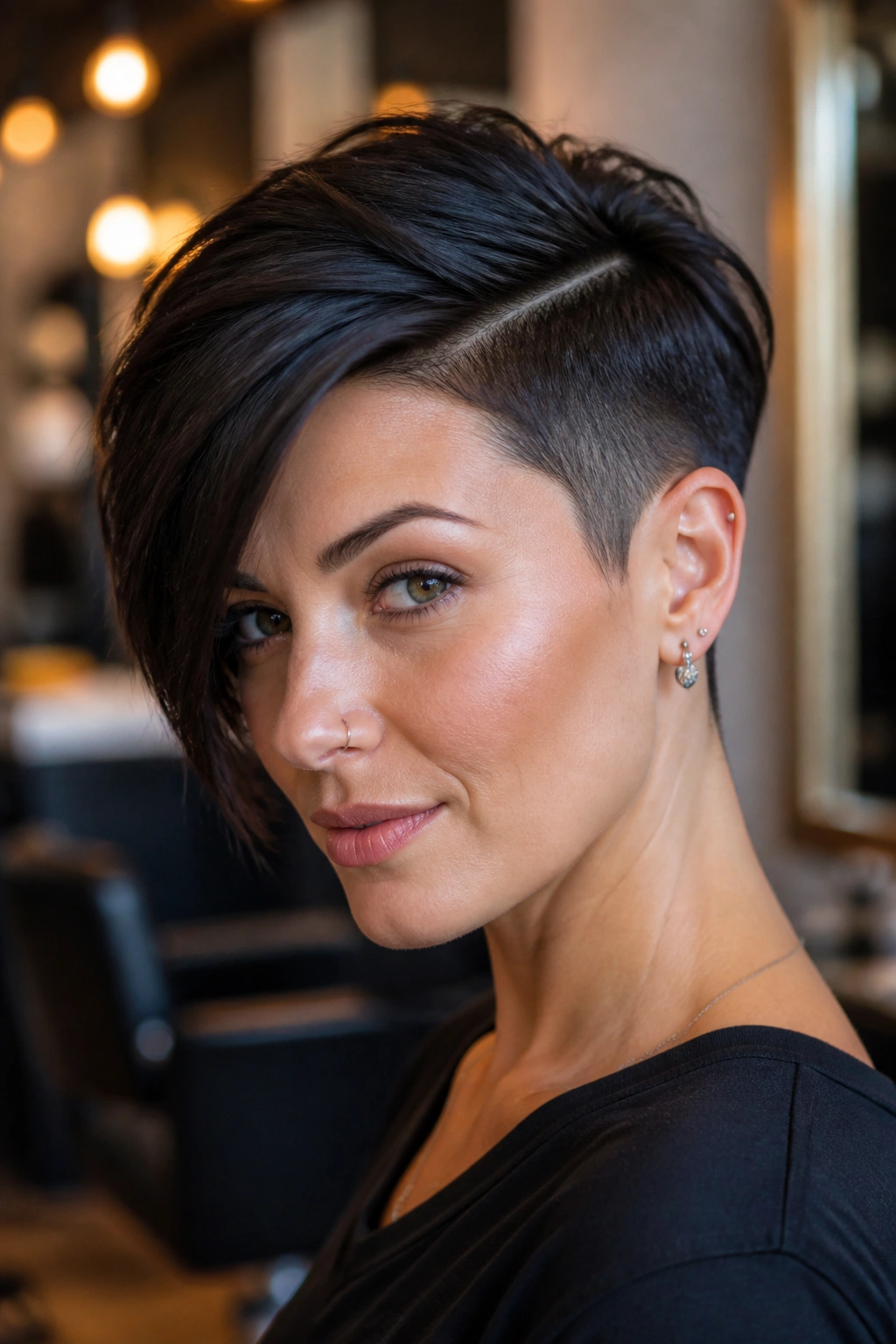
The asymmetrical pixie works because it refuses to be polite. One side falls longer across the forehead, the other gets cropped close, and the whole thing leans into imbalance in a way that feels sharp rather than messy.
I like this cut on people who want their hair to do some of the talking for them. It can soften a round face by building length across one side, and it can make a strong jawline look even cleaner by clearing the opposite side. The heavy side part is doing more than organizing the hair; it changes how the face reads.
A good stylist will keep the long side mobile, not glued down. You want a bend, a little lift, and a clean line where the shorter side meets the temple. If the top is cut too heavy, the style turns into a helmet. If it is too thin, it loses the whole point. That narrow middle ground is what makes it work.
6. Disconnected Pixie With a Hidden Undercut
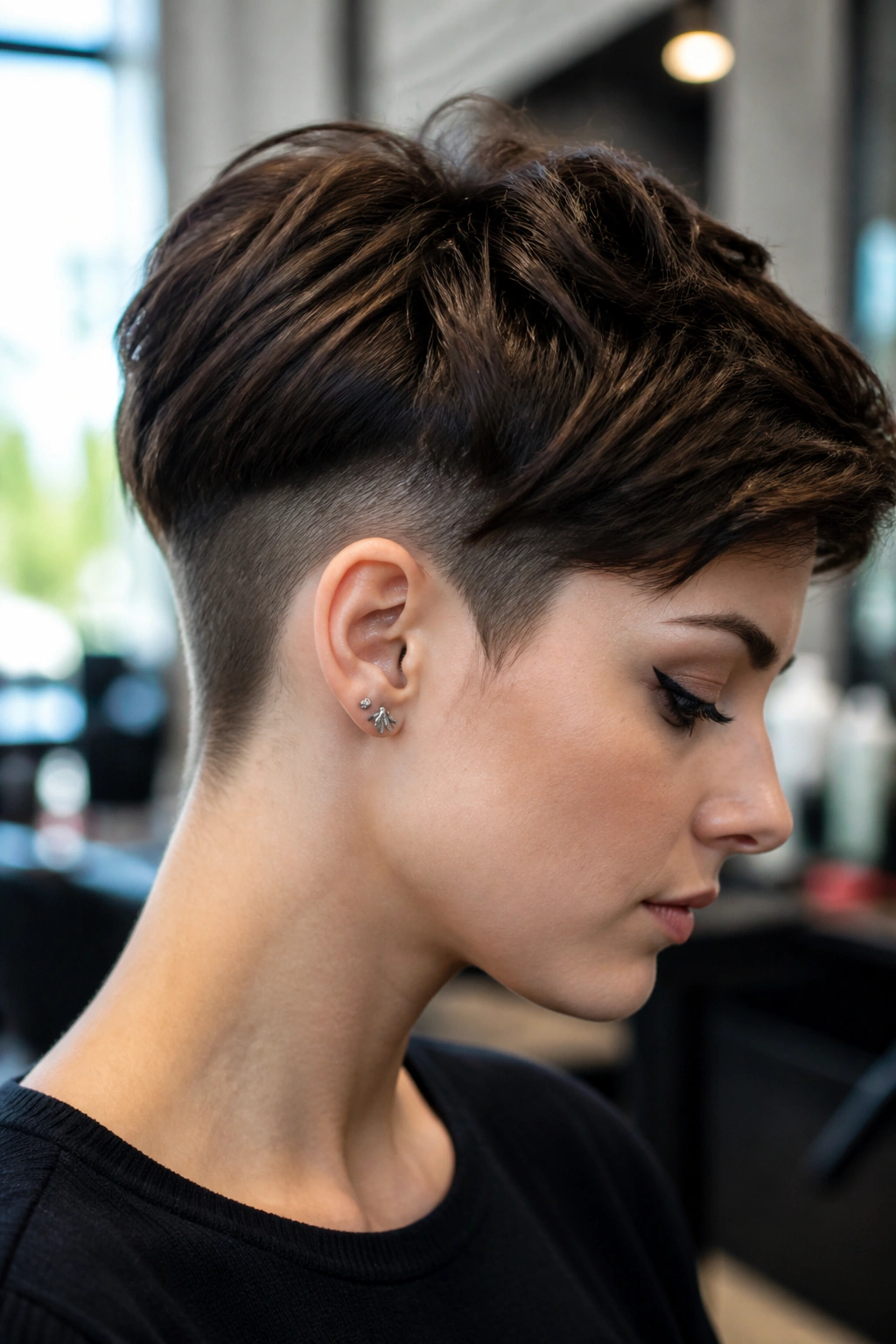
Unlike a full shave, a hidden undercut keeps the surprise tucked away until you move the hair up or back. That makes this pixie feel a little more secretive, which I think is part of its appeal. It is edgy, but it doesn’t shout from across the room.
This cut is a smart pick if your hair is thick or stubborn. Removing bulk underneath helps the top sit better, especially around the crown and behind the ears. You get a cleaner shape, less puff at the sides, and a lot less time spent wrestling with a blow dryer.
The disconnect between the longer top and the shorter underside is what gives it energy. You can wear it smooth one day, then push it up and show the shaved section the next. If you want flexibility but still want that crisp undercut feel, this is one of the better options on the list.
7. Silver Pixie With Sharp Temples
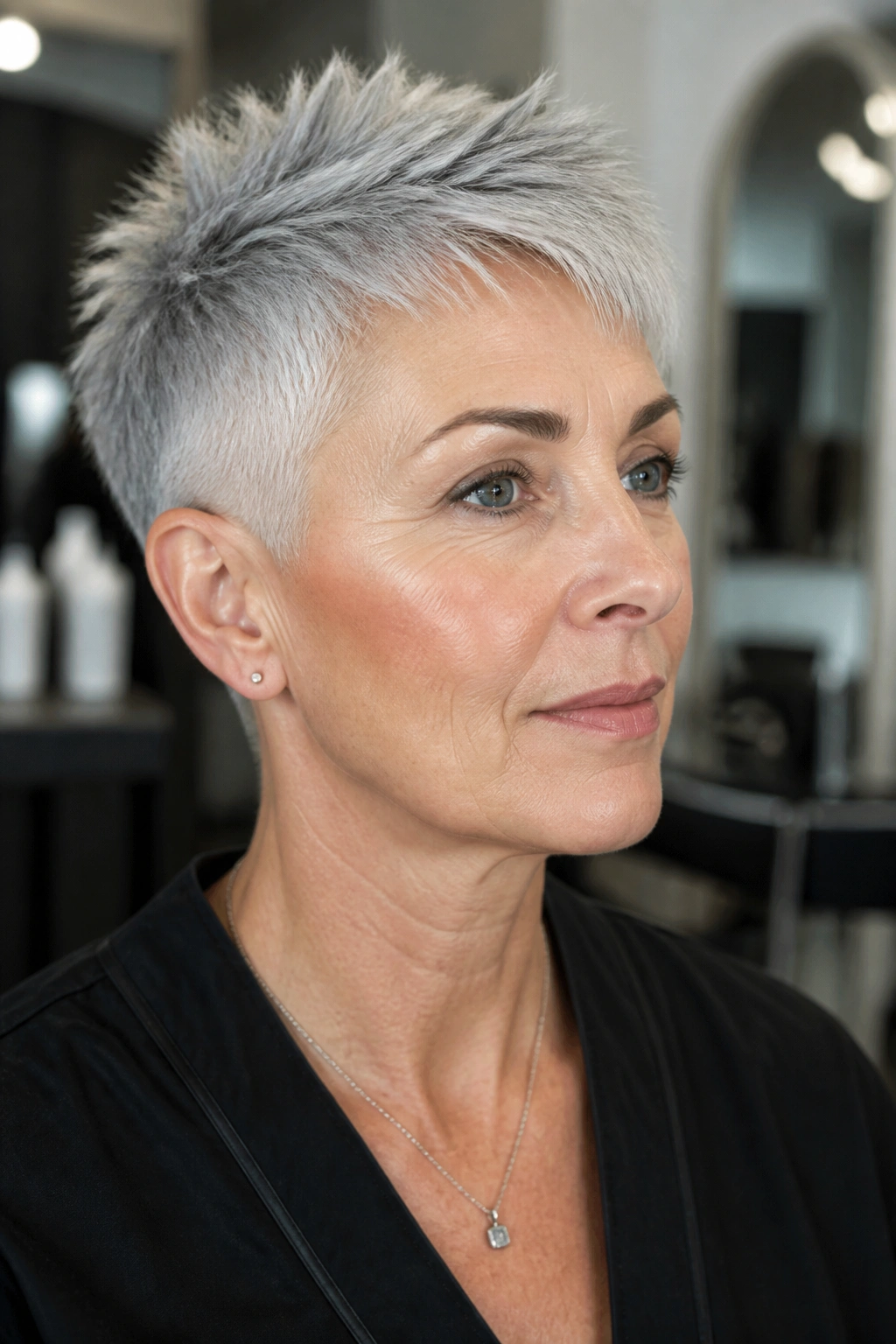
Silver hair looks almost metallic when the temples are clipped clean. The color catches the light, the cutline sharpens it, and the whole style takes on a cooler, harder mood without needing much styling at all.
What to ask for at the chair matters here.
What to ask for at the chair
- Keep the crown long enough to piece out with your fingers.
- Ask for a tight temple fade or a clean buzz at the sides.
- Leave a little softness at the hairline if you do not want the cut to feel severe.
- Use purple shampoo only when the tone turns yellow; too much can make silver hair look flat.
Silver and shaved edges can be unforgiving if the shape is sloppy. The good news is that they also look expensive when the cut is clean. A matte styling cream on top keeps the hair from separating into odd spikes, and a touch of shine spray on the longer pieces can make the finish look polished without turning oily.
8. Cropped Pixie With a Piecey Fringe
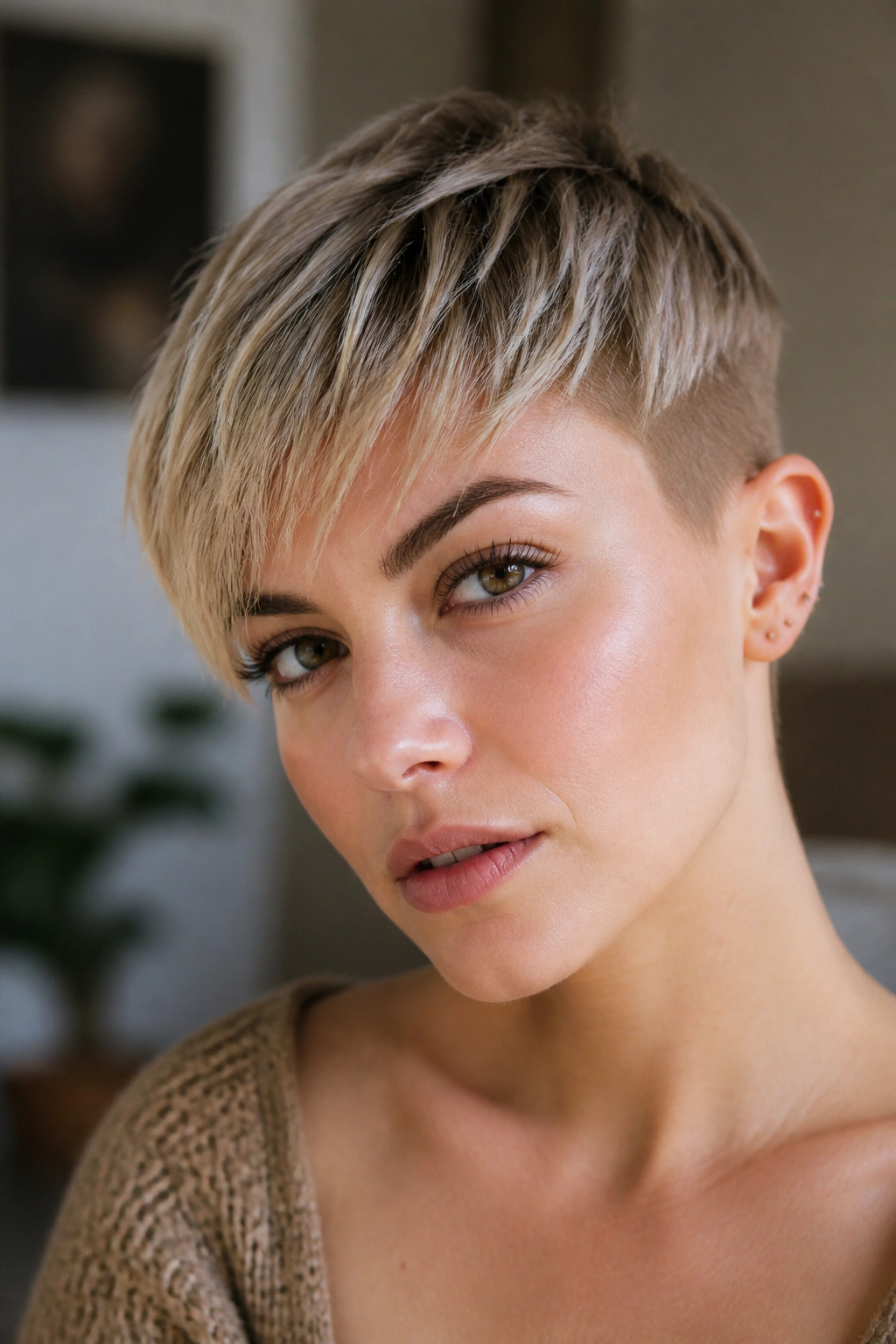
A piecey fringe is the easiest way to keep a shaved pixie from feeling too hard. The bangs break up the shape, soften the forehead, and give the cut a little movement around the eyes. That matters more than people admit.
This version looks especially good when the fringe is cut into small, uneven sections rather than one blunt strip. The shorter pieces keep the front light, while the shaved side gives the haircut its edge. It is a nice balance. Not soft, not severe.
- Use a pea-size amount of matte paste on dry hair.
- Push the fringe slightly diagonal, not straight down.
- If your forehead is short, keep the pieces above the brows.
- If your forehead is longer, let the fringe graze the brow line.
A cropped fringe also buys you some flexibility on busy mornings. You can scrunch it forward, sweep it over, or separate it with your fingertips. The cut does half the styling before you even touch it.
9. Mohawk-Inspired Pixie With Faded Sides

How far can you push a pixie before it starts feeling like a tiny mohawk? Pretty far, actually, if you keep the top narrow and the sides faded clean.
This version is for people who want visible attitude. The center strip stays longer through the crown, while the sides drop tight and neat. It has a little punk energy, but not the costume version of punk that can feel dated fast. The shape is what makes it work.
How to wear it without going too far
- Keep the center section about 2 to 4 inches long.
- Ask for a low or mid fade on the sides so the cut stays blended.
- Blow-dry the top up and slightly forward for lift.
- Finish with light gel at the roots and a small amount of paste through the ends.
This cut looks especially good with strong brows, clean earrings, and a neckline that is either very bare or very sharp. It does not need extra decoration. The haircut is already doing plenty.
10. Wavy Pixie With a Soft Shave
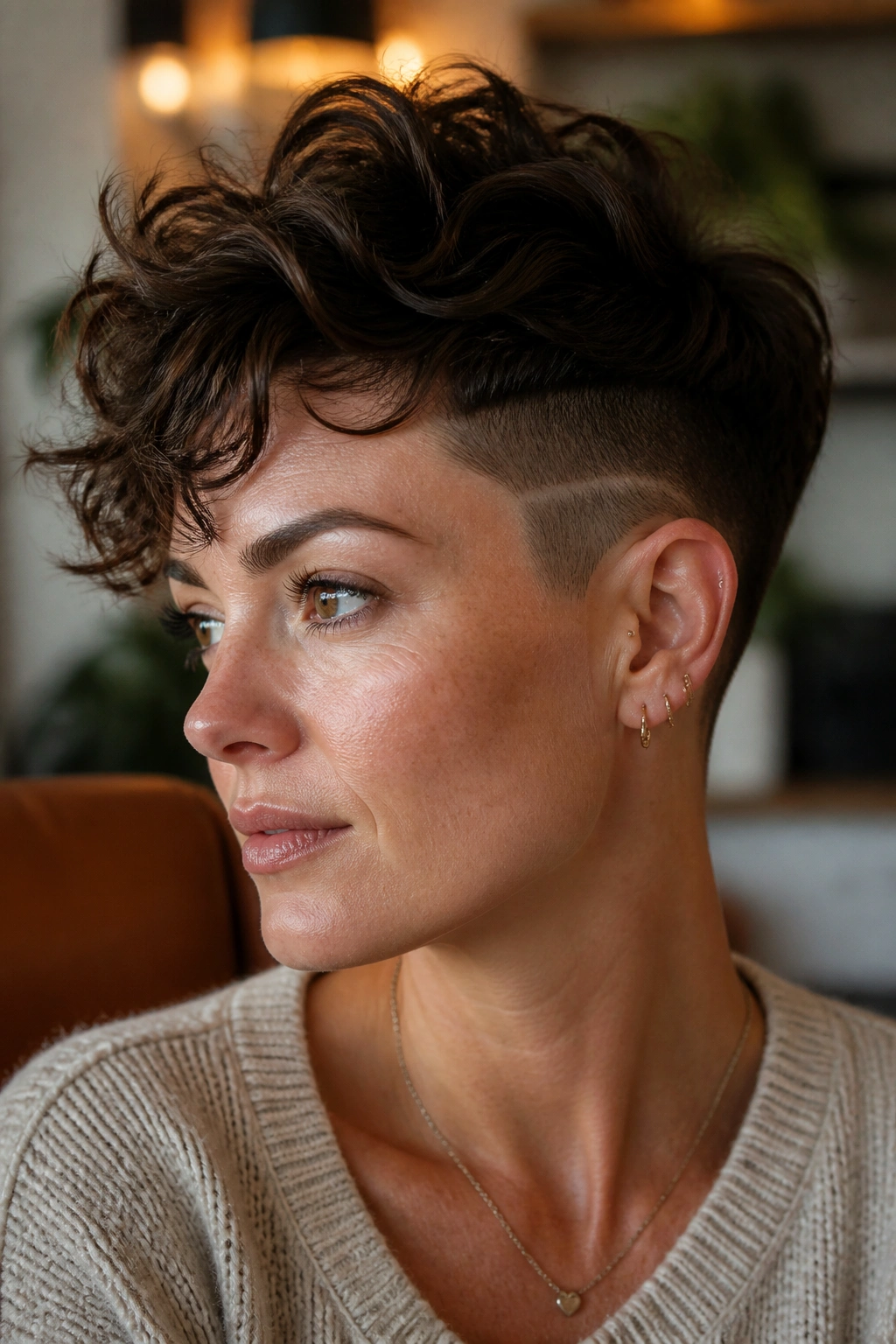
Waves make a shave feel less blunt. That is the whole reason this cut works. The texture on top bends and moves, while the shaved area undercuts all that softness with a clean line that shows up whenever the hair shifts.
This is a good choice if you like short hair but do not want the feel of a clipped military finish. The wave pattern keeps the top loose, and a soft shave at the temple or nape keeps the outline neat. The result looks lived-in, not stiff.
A little sea salt spray can help, but don’t drown the hair in product. Wavy pixies get heavy fast when the roots are overloaded. I would rather see a clean air-dry with a bit of bend than a crunchy, overworked shape that fights the hair all day.
11. Two-Tone Pixie With a Color Panel
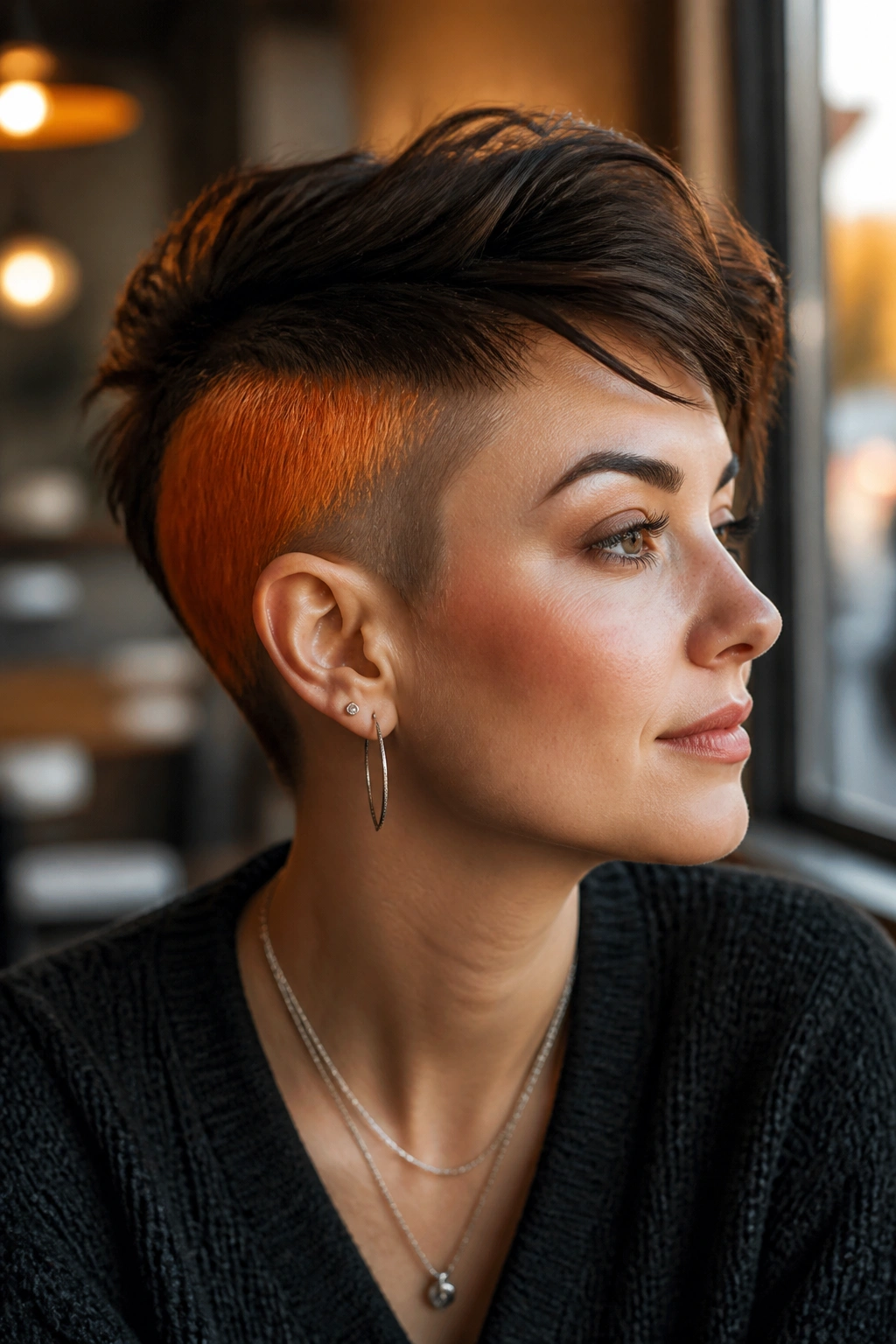
A two-tone pixie gets edge from color as much as from the shave itself. Put a brighter panel near the shaved side, and the haircut suddenly has another layer of contrast. The shape reads faster, and the whole cut looks more intentional.
Unlike all-over color, a single panel keeps maintenance a little easier. You can place copper against dark brown, platinum against black, or even a muted pastel against silver hair. The trick is that the color should live where the eye already goes—the shaved side, the temple, or the front fringe.
This version suits people who like a little drama but don’t want to repaint their whole head every few weeks. The grow-out is easier to manage, and the cut still looks sharp even when the color starts to soften. If you want a shaved pixie that feels graphic without needing constant upkeep, this is a smart lane.
12. Feathered Pixie With a Close Crop
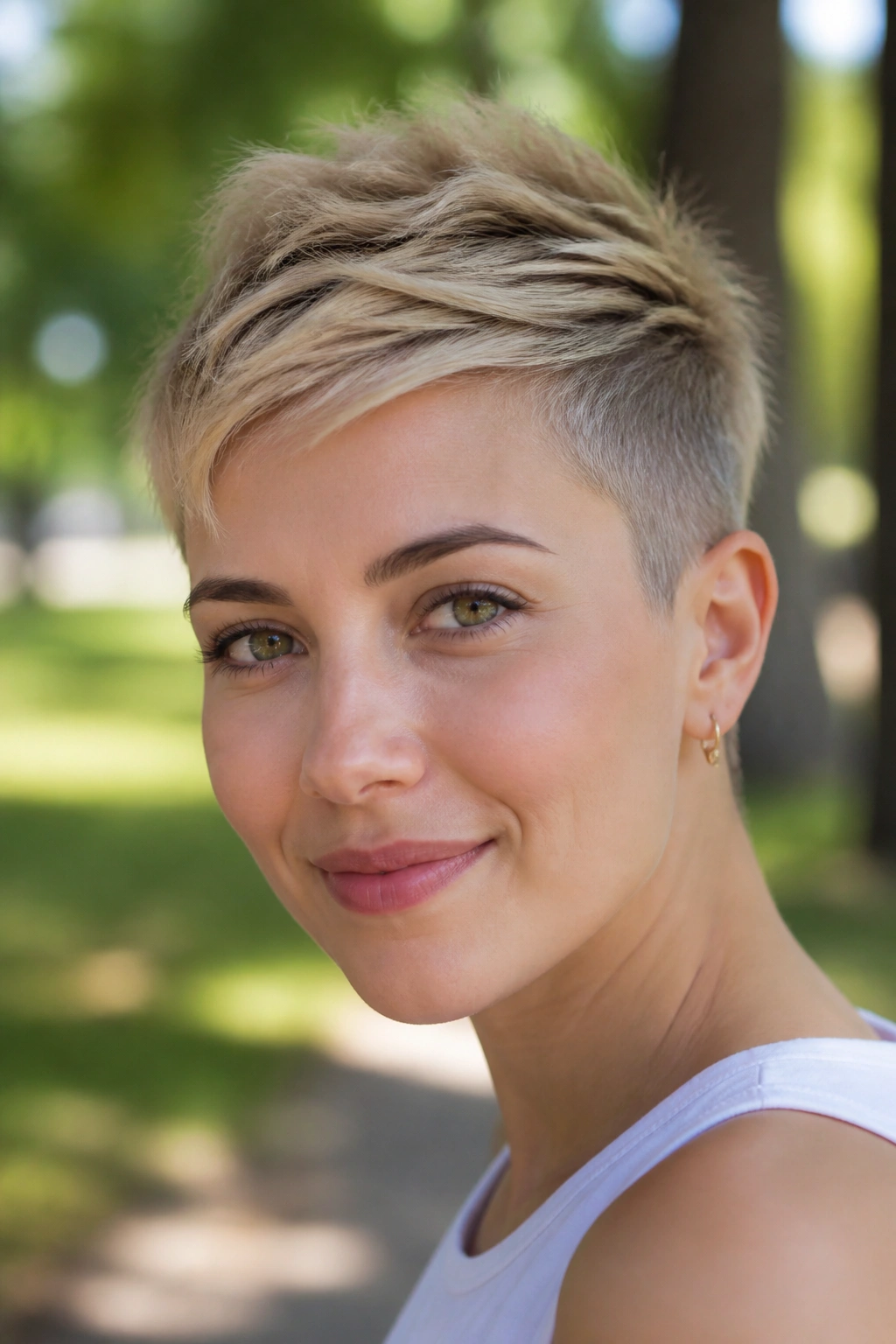
Feathered layers do something useful on short hair: they keep it from feeling heavy. When the sides are cropped close and the top is cut with soft, airy texture, the whole pixie moves better. It also grows out in a nicer shape, which matters more than people think.
I’m fond of this version for finer hair. The feathering creates lift at the crown without forcing a lot of product into the roots, and the close crop around the sides gives the haircut a neat frame. If your hair tends to lie flat by lunchtime, this shape gives it a little life.
The important part is restraint. Heavy wax kills feathered texture fast. A light mousse at the roots, a quick blow-dry with your fingers, and a touch of paste only at the ends will keep the layers visible. If the haircut starts to look fuzzy instead of airy, there is too much product in it.
13. Full Undercut Pixie With a Long Crown
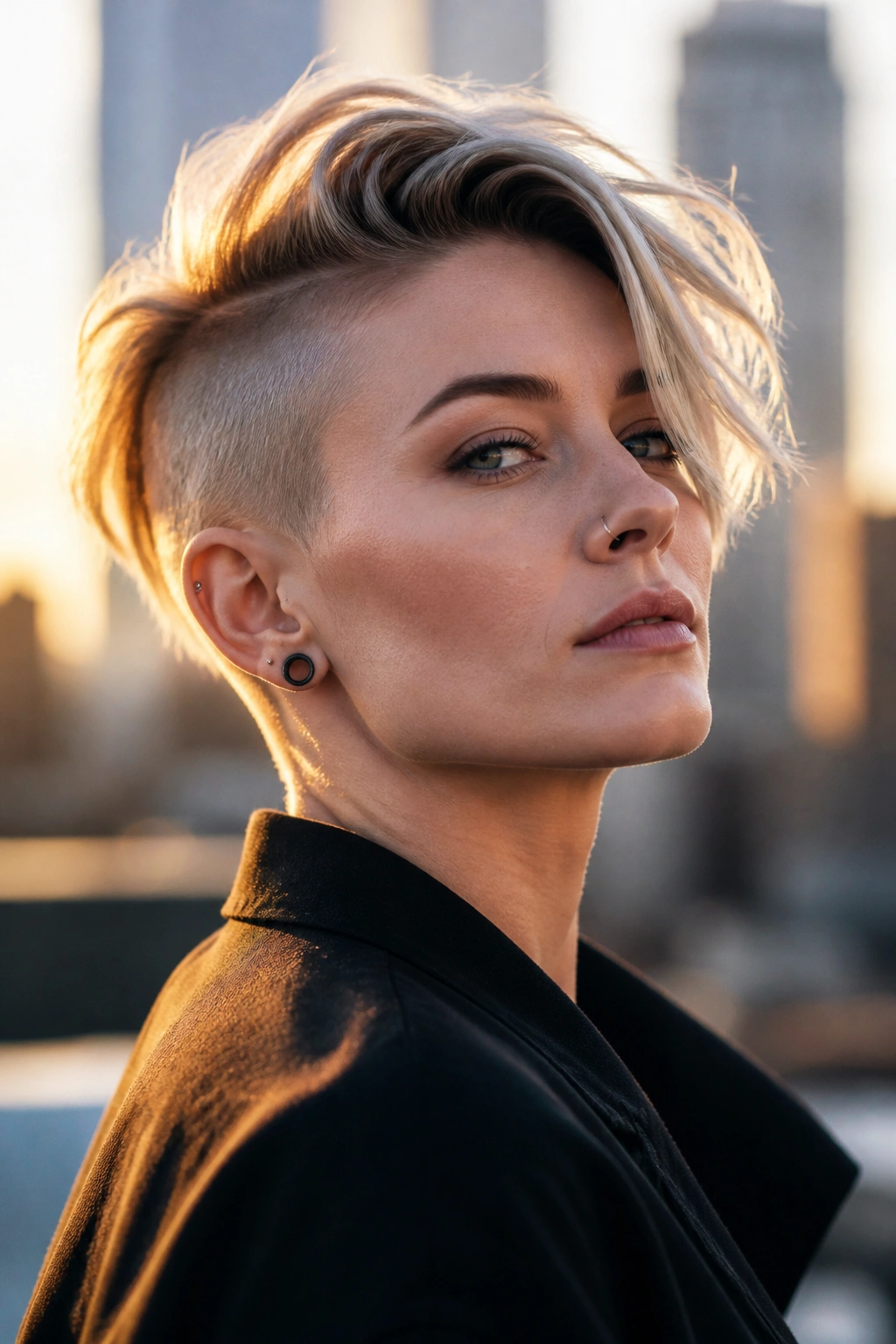
A full undercut pixie is the boldest version on this list, and it knows it. The sides and back get cut much shorter, sometimes to a #1 guard or even closer, while the crown stays long enough to fall, sweep, or spike.
This cut is not shy. That is the point. When the top lifts away from the undercut, you get a strong shape from every angle, and the neck line looks clean even when the hair is a little messy. If you like changing your styling mood from sleek to rough in under five minutes, it gives you room to play.
Who this cut suits best
- People with thick hair who want less bulk.
- Anyone who likes dramatic contrast between long top and short sides.
- Wearers who do not mind regular clipper cleanups every 2 to 3 weeks.
- People who enjoy styling with pomade, paste, or a small round brush.
A full undercut does demand upkeep. Skip that, and it grows out into an awkward shelf faster than a softer pixie does. If you’re fine with maintenance, though, the payoff is strong.
14. Micro-Bang Pixie With Shaved Sides
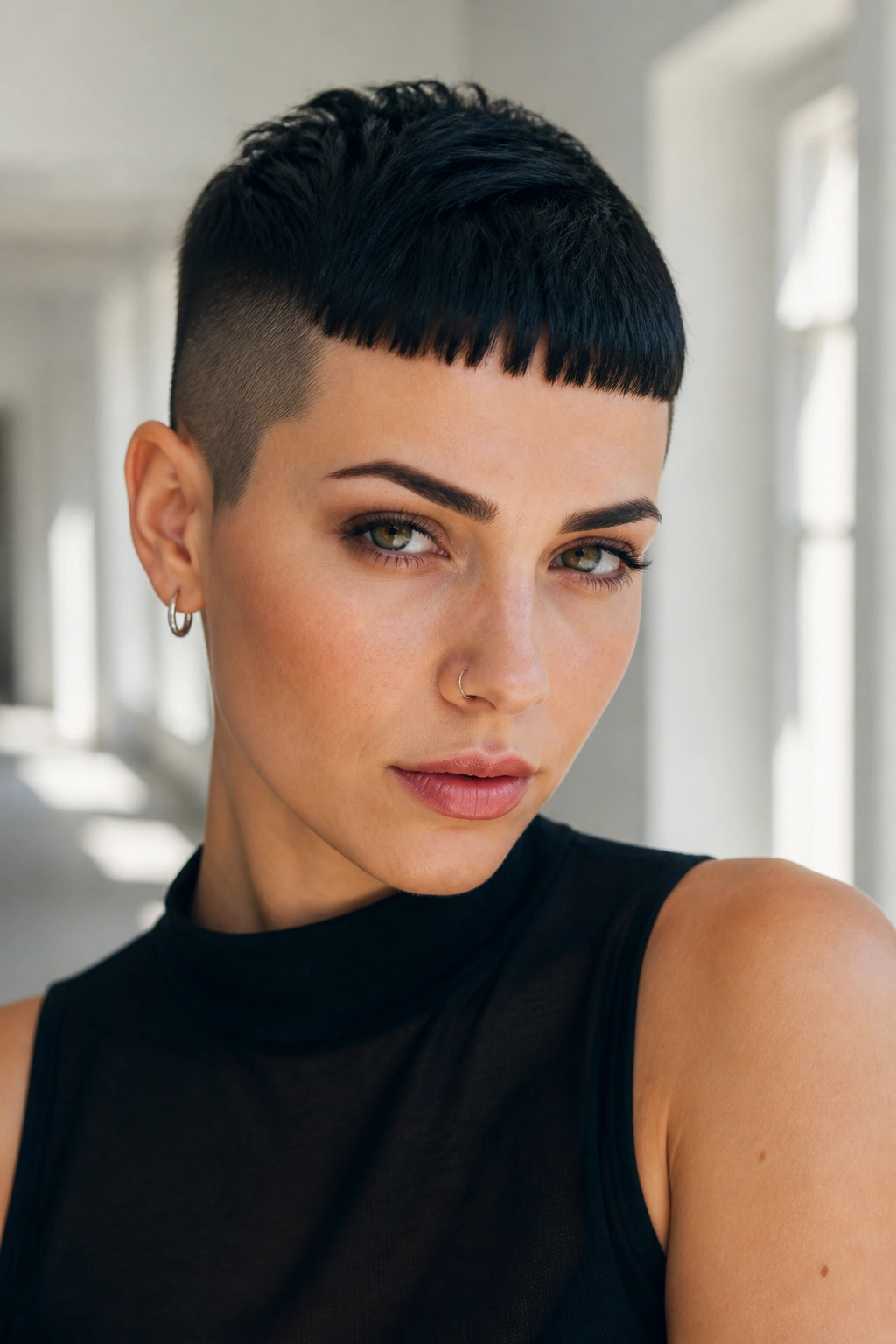
Can a micro-bang pixie look wearable and not costume-y? Yes, if the balance is right. The short fringe gives the face a crisp, editorial line, and the shaved sides keep the top from looking too heavy.
This is one of those cuts that either looks fantastic or very strange, and the difference usually comes down to proportion. The bangs should be blunt enough to matter, but not so short that they look like an afterthought. The sides need to be tight so the front has room to stand out.
How to keep it from feeling harsh
- Keep the micro bangs clean and straight, not wispy.
- Leave a little softness near the temples so the face is framed.
- Use a flat iron pass only if the fringe bends awkwardly.
- Finish with a light mist, not a crunchy spray.
This cut looks especially sharp on straight hair and on anyone who likes a strong brow line. If you want a pixie that feels fashion-forward without relying on color or heavy styling, this is a strong pick.
15. Razor-Cut Pixie With Choppy Texture
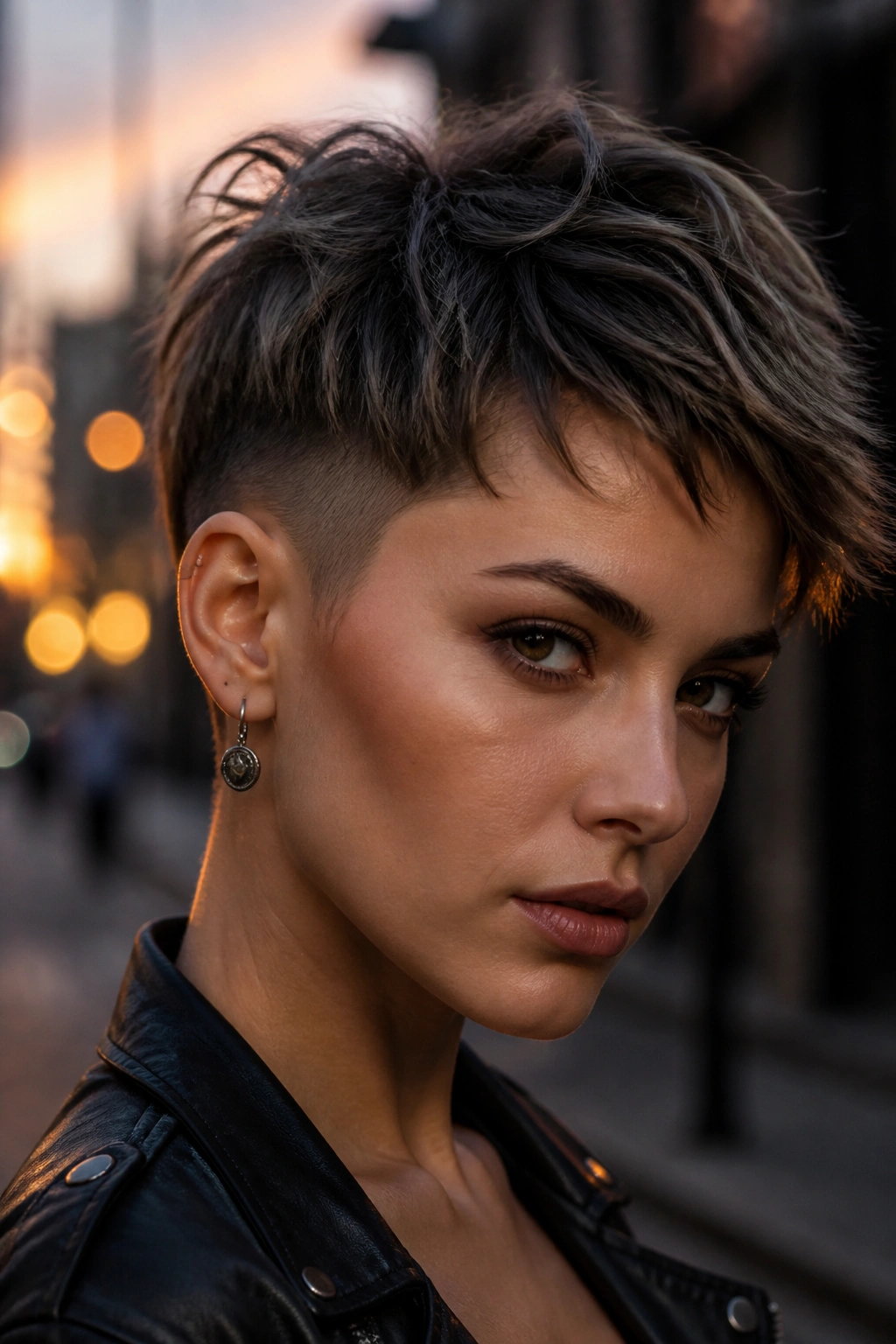
The razor-cut pixie is the one I’d choose if I wanted movement first and edge second. The razor work takes out weight, leaves softer ends, and gives the top a choppy finish that pairs nicely with a shaved side or nape. It looks lived-in from day one.
That texture makes the haircut more forgiving. A blunt pixie can show every bad styling day. A razor-cut version has a little mess built into it, which is useful if you don’t want to spend ten minutes fighting your hair every morning. The shaved section still gives you that hard line, but the top stays loose enough to bend with your fingers.
It also grows out better than many people expect. The texture blurs the line between fresh-cut and grown-in, so the style keeps some shape even after a few weeks. That is a practical win, not a flashy one, and I always trust practical wins.
If you want one shaved pixie that can tilt edgy, soft, sharp, or undone depending on how you style it, this is the one that gives you the most room. A little matte cream, a quick squeeze at the crown, and you are done. No drama. Just a clean cut with some bite.
A shaved pixie does not need to be loud to read as edgy. Sometimes the smallest change—the tighter temple, the cleaner nape, the longer fringe against bare skin—does most of the work.
Pick the version that matches your hair texture and your tolerance for upkeep. That part matters more than the trend, and it is the difference between a cut you keep styling and one you keep fixing.
