



Edgy pixie cuts are not trying to be polite, and that’s exactly why they work. A good one can make your cheekbones look sharper, your neck look longer, and your whole face look more awake before you’ve even done your makeup.
The trick is never just “short hair.” Short hair on its own can be sweet, neat, and forgettable. The cut gets its attitude from contrast: a sliced fringe against a soft crown, a tight nape under a messy top, a hard side part next to choppy ends, or a punchy color that makes the shape feel even bolder.
What I love about a strong pixie is that it does not need to be precious. It can be glossy and polished, dry and piecey, curly and wild, or shaved down almost to the skin in one place and left longer somewhere else. The best versions feel tailored to the person wearing them, not copied from a mood board.
1. Micro-Bang Rebel Pixie
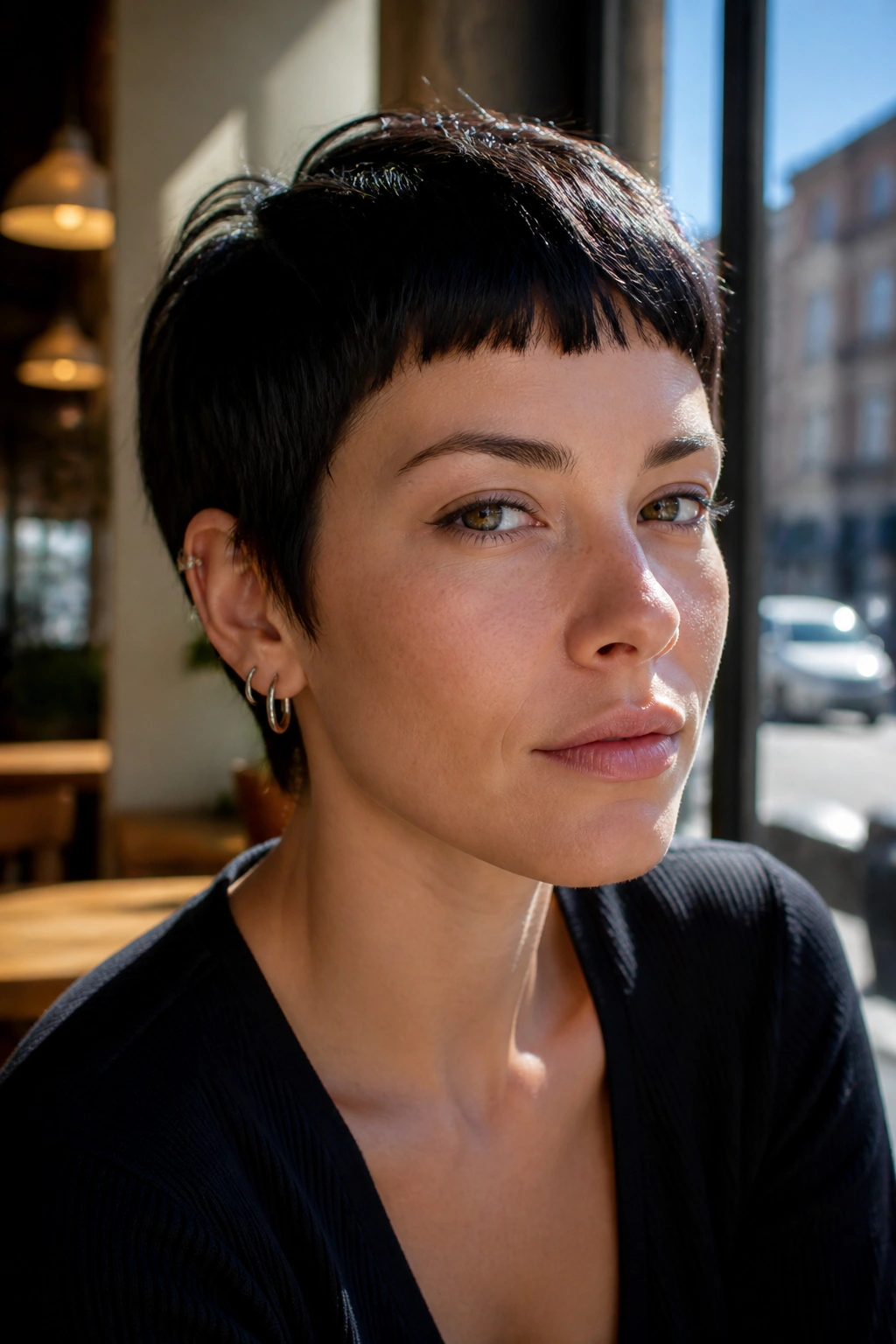
A micro-bang pixie is for anyone who wants their haircut to say something before they do. The tiny fringe, usually cut well above the brows, makes the face look sharper and more graphic. It has a little punk energy, but not the costume-y kind.
Why It Looks So Sharp
The magic is in the proportion. When the bangs stop around the middle of the forehead, the eyes take over, and that gives the whole cut a more dramatic edge.
This shape is especially good if you like strong brows, high cheekbones, or a forehead you do not want to hide behind a curtain of hair. It also plays nicely with straight to slightly wavy hair, because the fringe stays cleaner and reads as deliberate instead of accidental.
- Keep the fringe about half an inch to 1 inch above the brows for that crisp effect.
- Ask for point-cut ends so the bangs do not look like a solid block.
- Trim it every 3 to 4 weeks or it starts sliding into “grown-out” instead of “sharp.”
- A pea-size amount of matte paste is usually enough for the crown.
My take: if you want bold without going full shaved head, this is one of the smartest places to start.
2. Disconnected Undercut Pixie
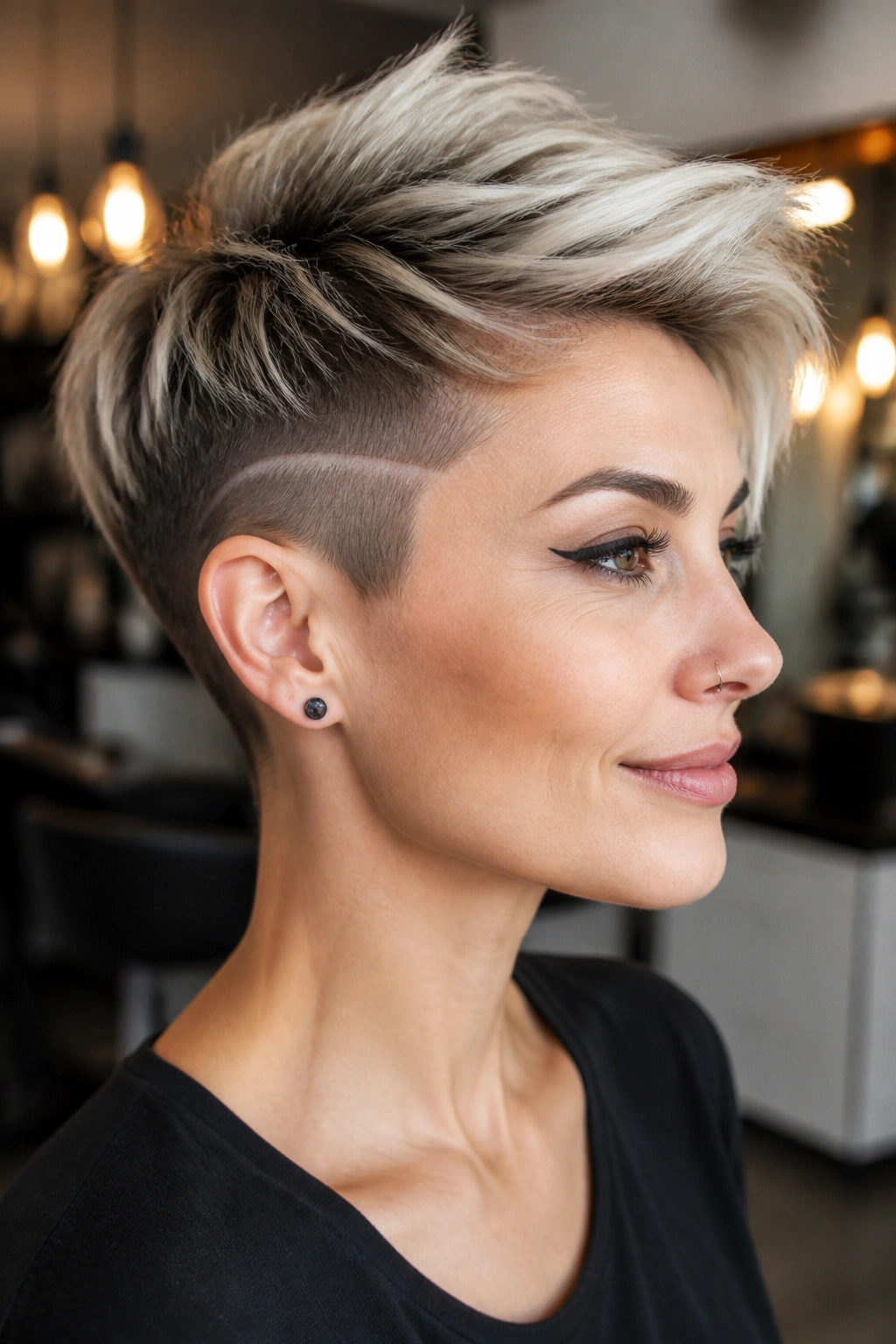
This one has attitude built right into the cut line. A disconnected undercut pixie keeps the top noticeably longer than the sides, so the contrast does the heavy lifting. It looks clean, but not safe. That’s the whole appeal.
A good version usually leaves 2 to 4 inches on top and takes the sides down close with clippers, sometimes even all the way into a subtle fade. The separation between the top and the sides gives the haircut a little drama even when you do almost nothing to style it.
It’s a strong choice for thick hair, because removing weight at the sides keeps the shape from puffing out. It also works well if your hair grows fast and you hate the feeling of a bulky silhouette around your ears and neck. The one catch: it needs upkeep. If the undercut grows out too far, the contrast disappears and the whole thing loses its bite.
3. Asymmetrical Side-Swept Pixie
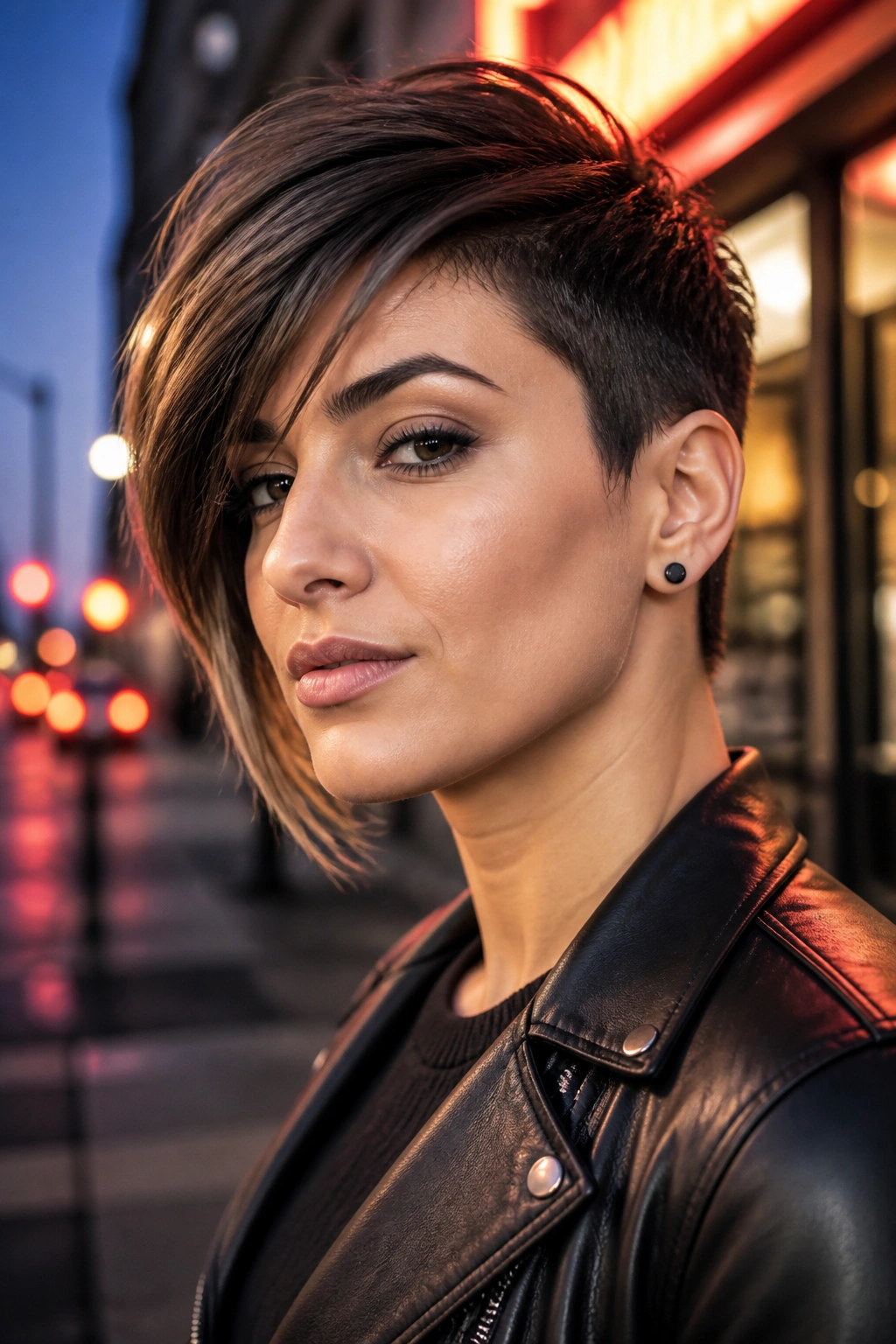
Why does one longer side change everything? Because the eye follows the line of the hair, and an asymmetrical pixie creates a diagonal that feels instantly more dynamic than a balanced shape.
This cut usually keeps one side longer across the cheekbone or jawline while the other side stays tighter and shorter. That unevenness is what gives it edge, but it can also be flattering in a sneaky way. The longer side can soften a strong jaw, narrow a wide forehead, or bring attention to one eye.
How to Style It
A deep side part helps the shape stay obvious, and a small round brush can lift the roots if your hair tends to fall flat. If you want a cleaner finish, use a touch of smoothing cream on the longer side and tuck the shorter side behind one ear.
This is one of those cuts that can look polished at work and a little dangerous at night. Same haircut, different mood. That’s a win.
4. Spiky Textured Crop
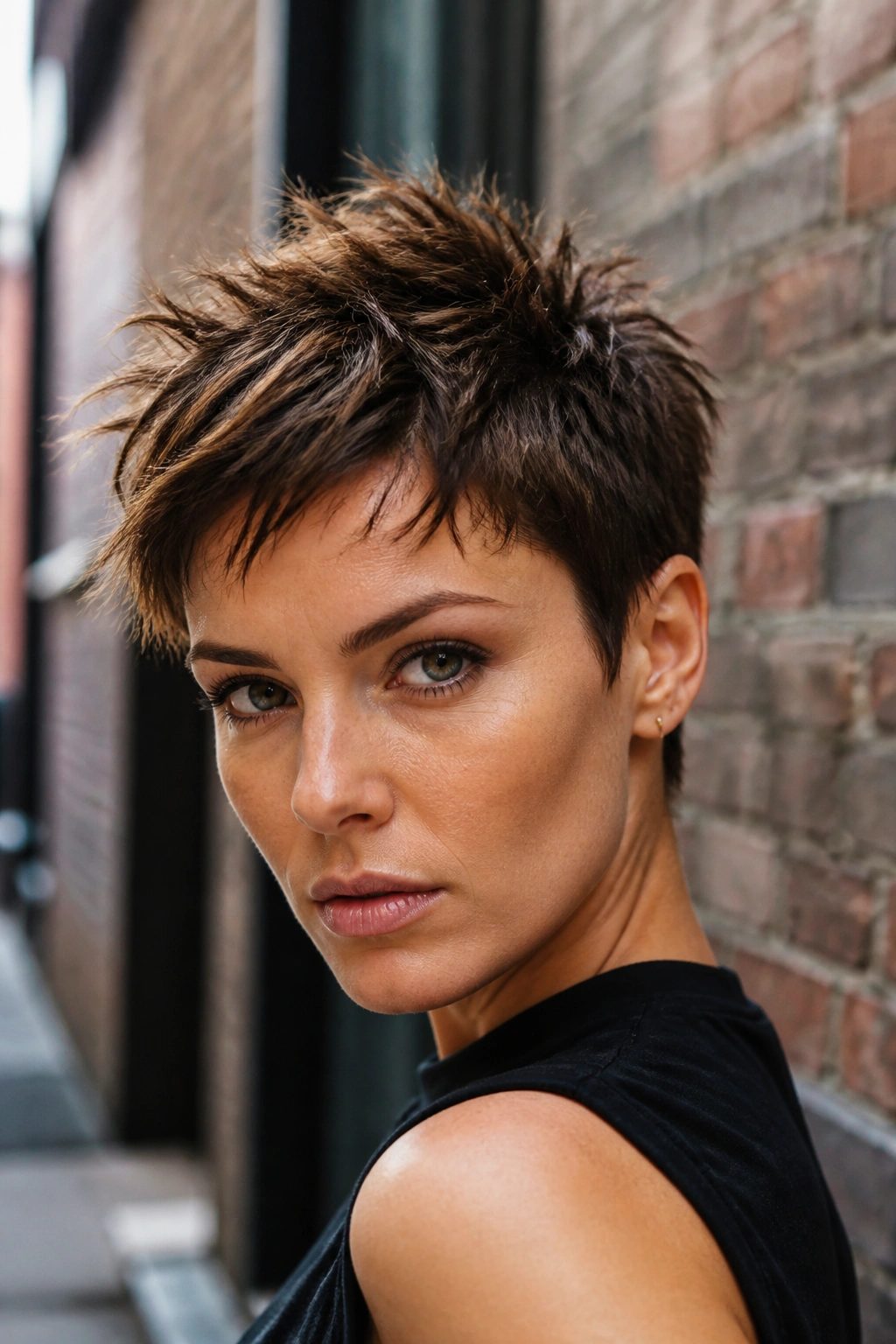
If your hair goes flat by noon, this is the one that fights back. A spiky textured crop has a rough, lifted surface that makes the haircut feel alive instead of controlled.
The key is short, uneven layers through the crown, usually cut with point cutting so the ends do not sit in a neat row. You want movement, not helmet hair. A little grit paste or fiber cream gives the pieces some hold, and a quick pinch at the roots can make the whole style stand up in a more deliberate way.
- Best for fine to medium hair that needs visible body.
- Works well with a short crown and tapered sides.
- Style on dry hair for more separation and less softness.
- Use less product than you think; too much turns spikes limp and shiny in the wrong way.
There’s something pleasingly blunt about this cut. It does not whisper.
5. Platinum Ice Pixie
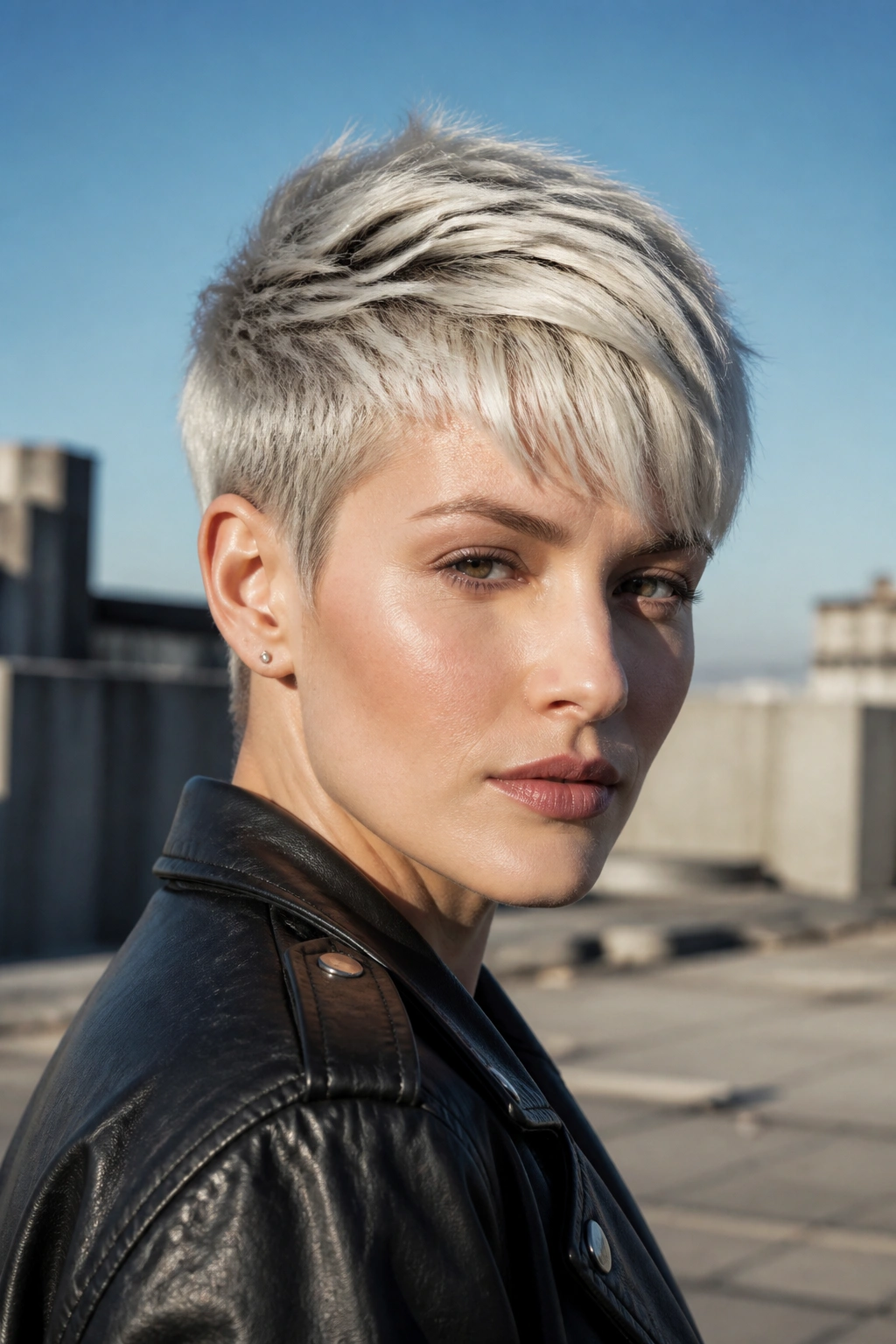
Platinum changes the mood of a pixie fast. A short cut in icy blonde can look almost architectural, especially when the roots are kept slightly deeper for contrast. That little bit of shadow makes the shape feel less washed out and a lot more intentional.
The best version is not a flat all-over bleach job. A root shadow of about ½ inch to 1 inch keeps the color from looking harsh as it grows, and it gives the haircut more depth near the scalp. If you want the finish to feel crisp instead of brassy, a violet shampoo once a week is usually enough to keep warmth under control.
This cut is a good match for people who like a sharp wardrobe, strong eyeliner, silver jewelry, or anything with black-and-white contrast. It can be demanding if your hair is fragile, though. Bleach on very short hair still needs care, because breakage on a pixie shows fast. There’s nowhere to hide it.
6. Curly Shag Pixie
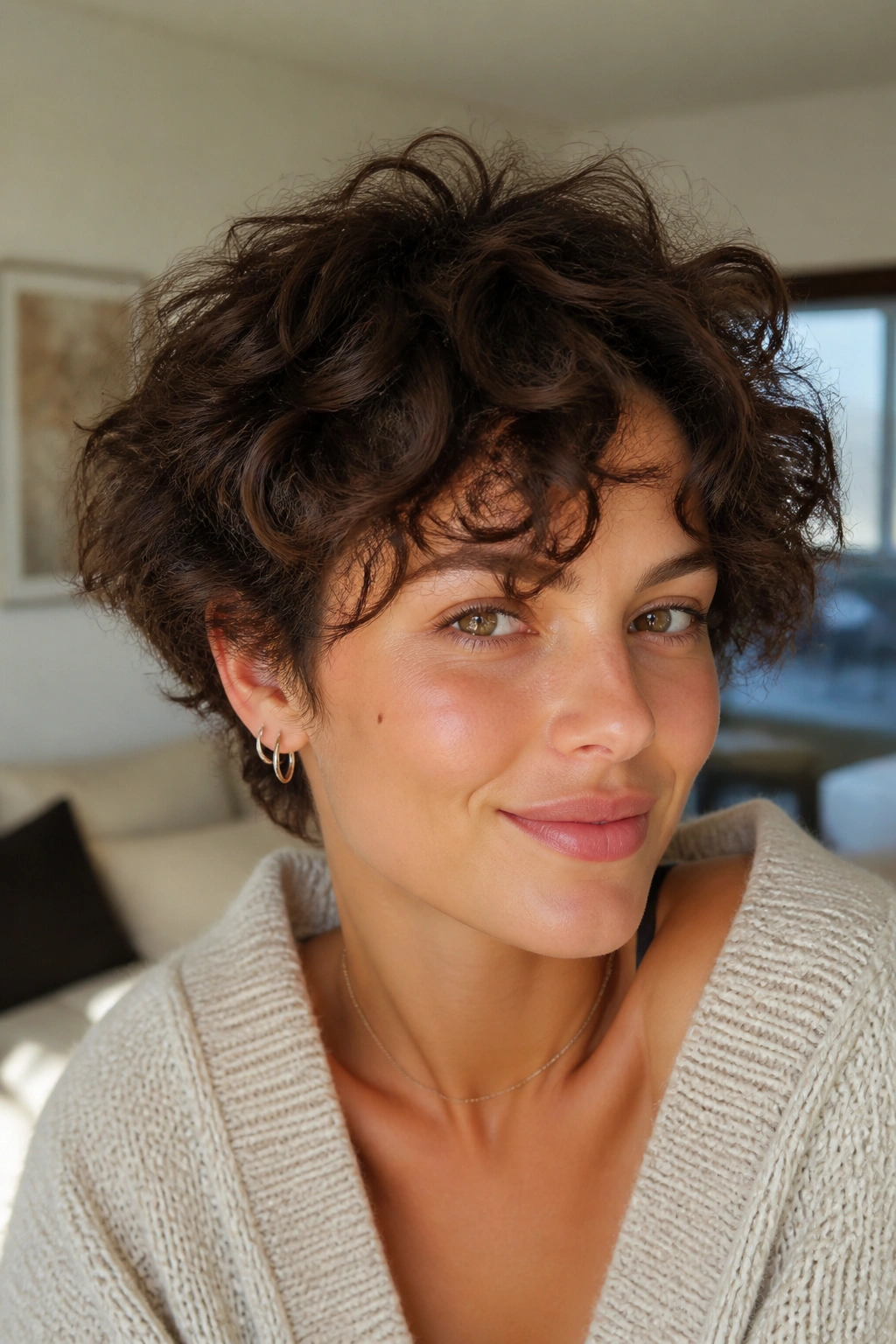
A curly pixie should never be cut like straight hair with curls dropped on top. That is how you get a mushroom shape. A curly shag pixie keeps the texture in mind from the beginning, which means the cut feels airy, loose, and a little wild in the best way.
The appeal is in the movement. Curls around the forehead, a soft bend at the temples, and a slightly longer top can make the whole cut feel alive every time you turn your head. I like this version best when it’s cut dry or at least with the curl pattern visible, because wet curls lie.
A light curl cream and a diffuser on low heat are usually enough to shape it. And no, it does not need to be “perfect.” If a few pieces spring different ways, that’s part of the charm. A curly pixie should look like it has opinions.
7. Feathered Razor Pixie
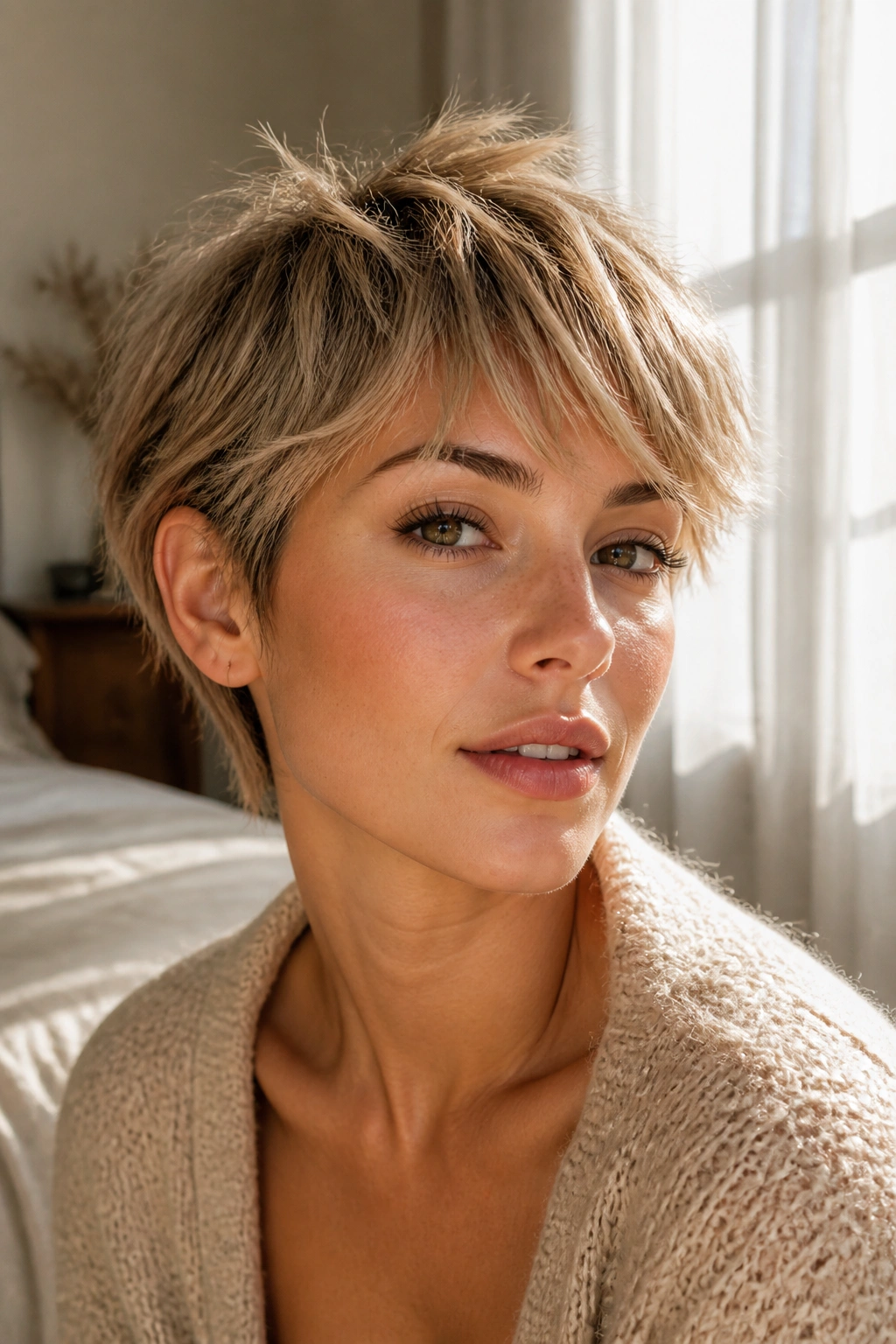
A razor-cut pixie has a little swing to it that blunt scissors cannot fake. The feathered ends soften the shape without making it weak, which is a tricky balance and the reason this cut can look so good on straight or fine hair.
What to Ask For
Tell your stylist you want soft movement through the top and sides, not thin wisps everywhere. That matters. A razor can remove weight fast, and if it’s overdone, the haircut starts to look see-through in a bad way.
- Ask for feathered ends around the fringe and crown.
- Keep some length at the top so the shape has lift.
- Avoid over-thinning the back if your hair is already fine.
- Use a light styling cream rather than a heavy wax.
The best feathered pixies have a kind of restless motion. They do not sit stiffly on the head. They move when you laugh, tilt your chin, or shove your hair back with your fingers.
8. Blunt Fringe Pixie
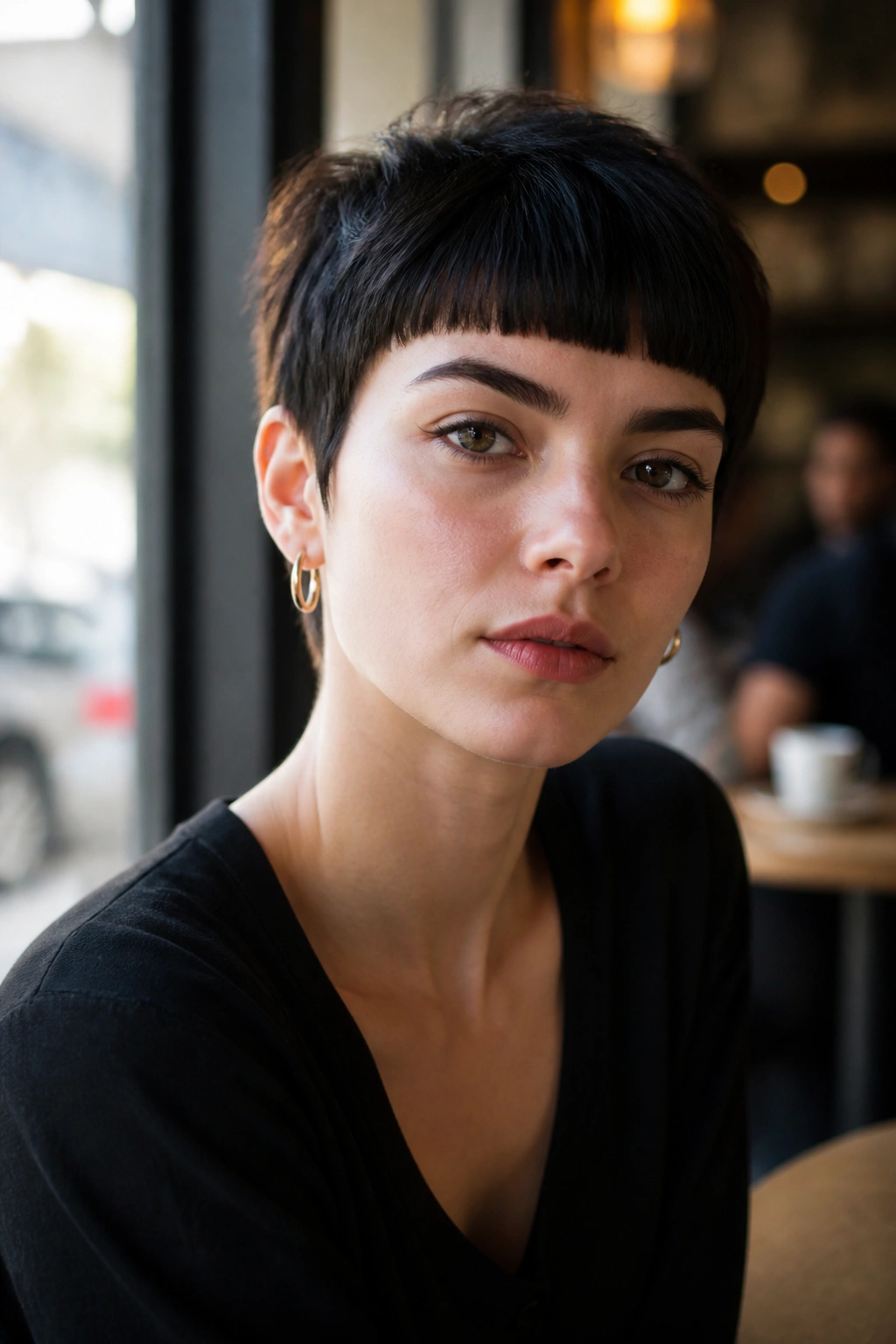
Can a pixie still feel severe if it has a fringe? Absolutely. A blunt fringe pixie proves the point by bringing one hard, straight line right across the forehead and letting the rest of the cut stay short and compact.
The fringe usually lands at or just above the brows, and the line across the front gives the haircut a strong frame. It can look almost architectural on straight hair, especially if the sides are close and the crown is lightly textured. The energy is less playful and more deliberate.
This cut tends to flatter people who like graphic shapes and do not mind a little maintenance. The fringe wants regular trimming, because once it gets too long, the entire point of the style gets muddy. I also think it looks especially striking with sharp eyeliner or a bare face and strong brows. Either way works. The hair does the talking.
9. Faux-Hawk Pixie
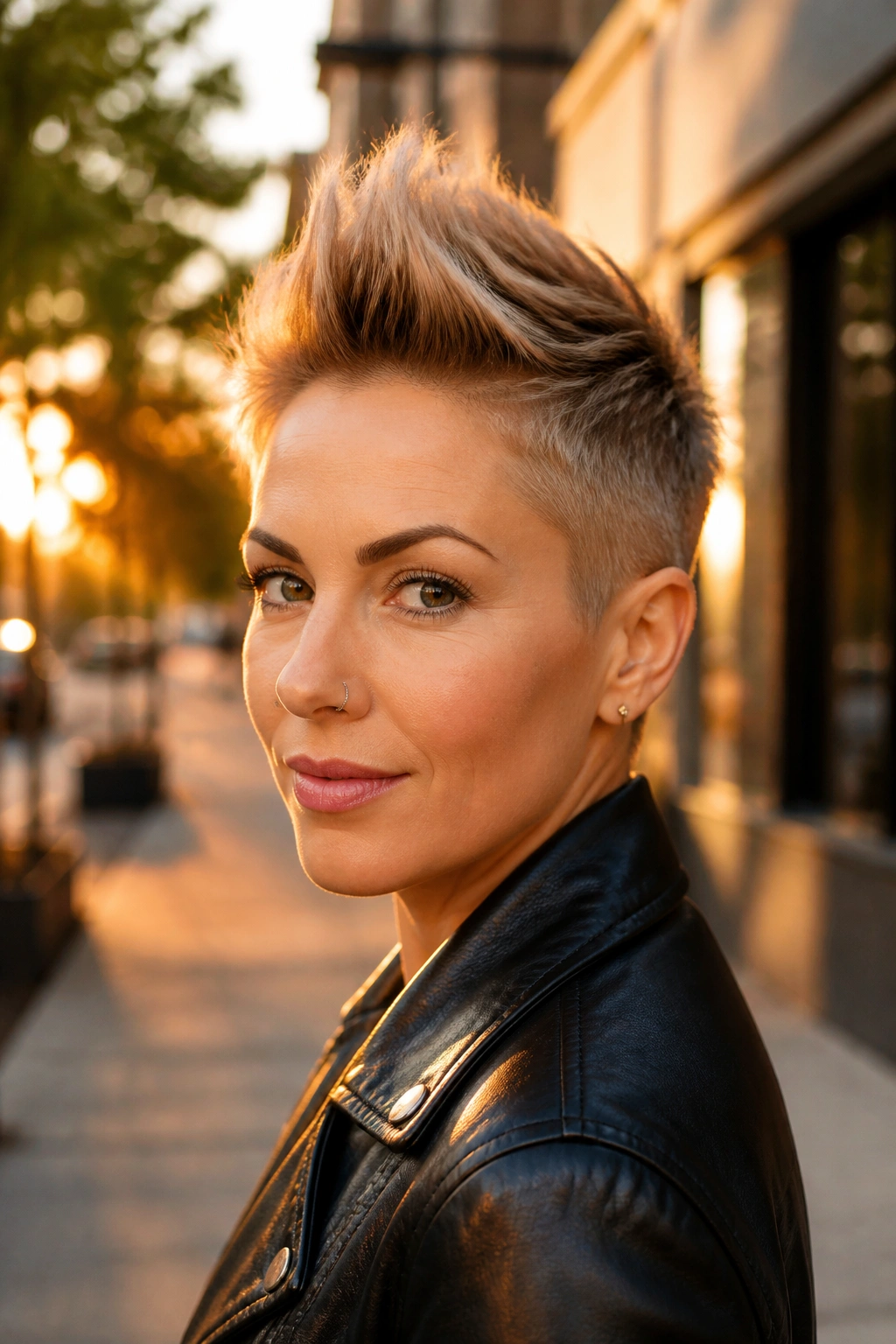
If you want height without committing to a full mohawk, this is the sweet spot. A faux-hawk pixie keeps the sides short and lifts the center section just enough to create a ridge down the top of the head.
The shape can be dramatic or subtle depending on how much length you leave through the middle. I usually think 1 to 2 inches of extra height is plenty for everyday wear, because once you go much taller, the style starts to feel less wearable and more stage-ready.
The Parts That Matter
- Keep the sides tapered tight so the center stands out.
- Use a strong-hold paste or gel at the roots.
- Blow-dry the top upward with your fingers for lift.
- If your hair is thick, ask for internal debulking so the middle does not puff out like a triangle.
This cut suits people who like motion, motorcycles, heavy boots, or simply a little defiance with breakfast.
10. Wet-Look Slicked Pixie
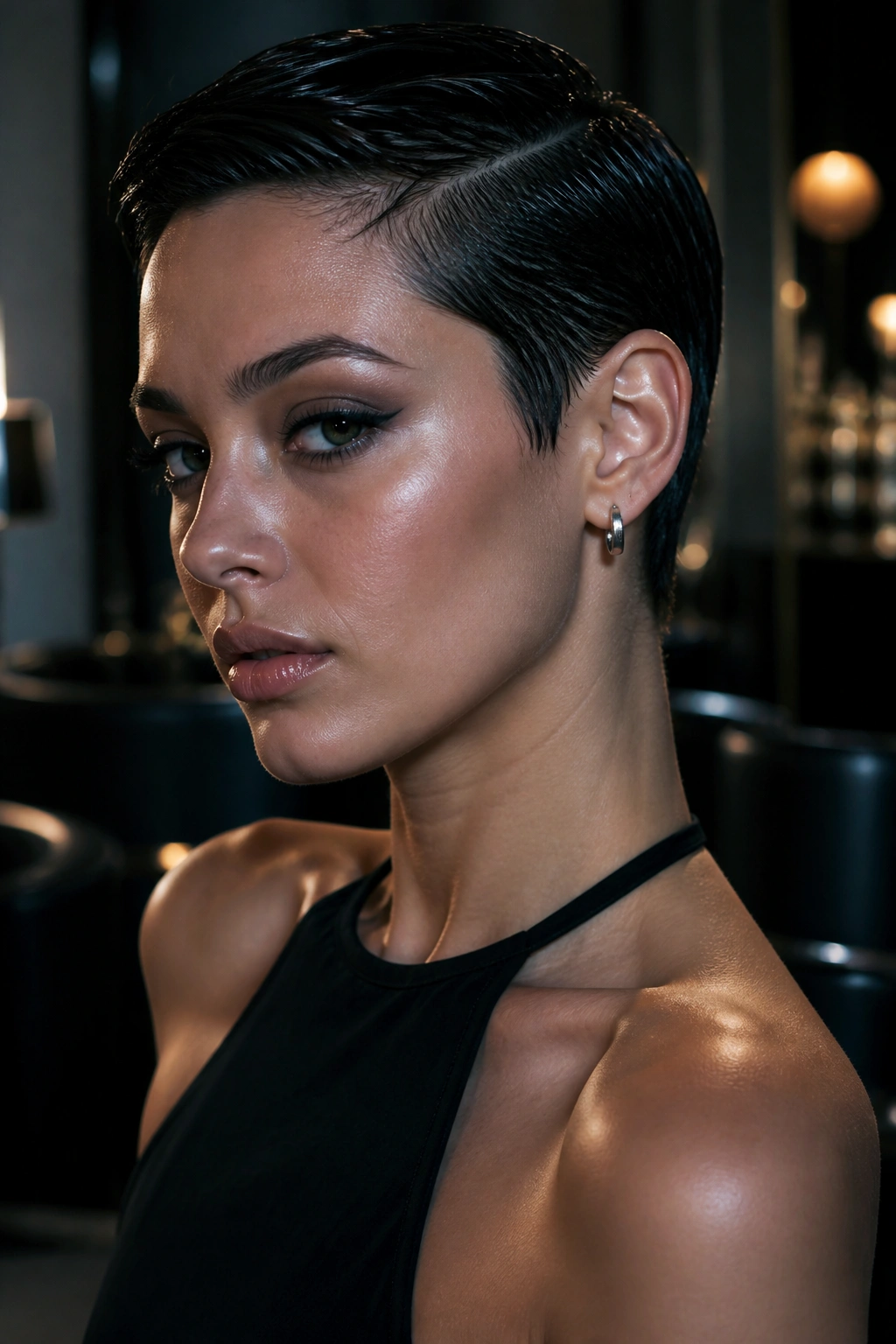
A wet-look pixie has a polished edge that feels almost severe, in a good way. It is the kind of style that makes bone structure look more pronounced because the hair is swept close to the head and the shine draws attention to every line.
The trick is to start with damp hair and use a gel or glossy cream that has enough hold to keep the strands in place without turning them crunchy. Comb it back, or rake it to one side if you want a harder part. Then leave it alone. Touching it too much while it dries is where the shape starts to break.
I like this look for nights out, formal events, or any day when you want the haircut to look intentional from the first glance. It can also be a smart fix for humid weather, since smooth, wet styling often behaves better than airy volume when the air gets sticky. But here’s the catch: too much product can flake. Less is safer.
11. Mullet-Inspired Pixie
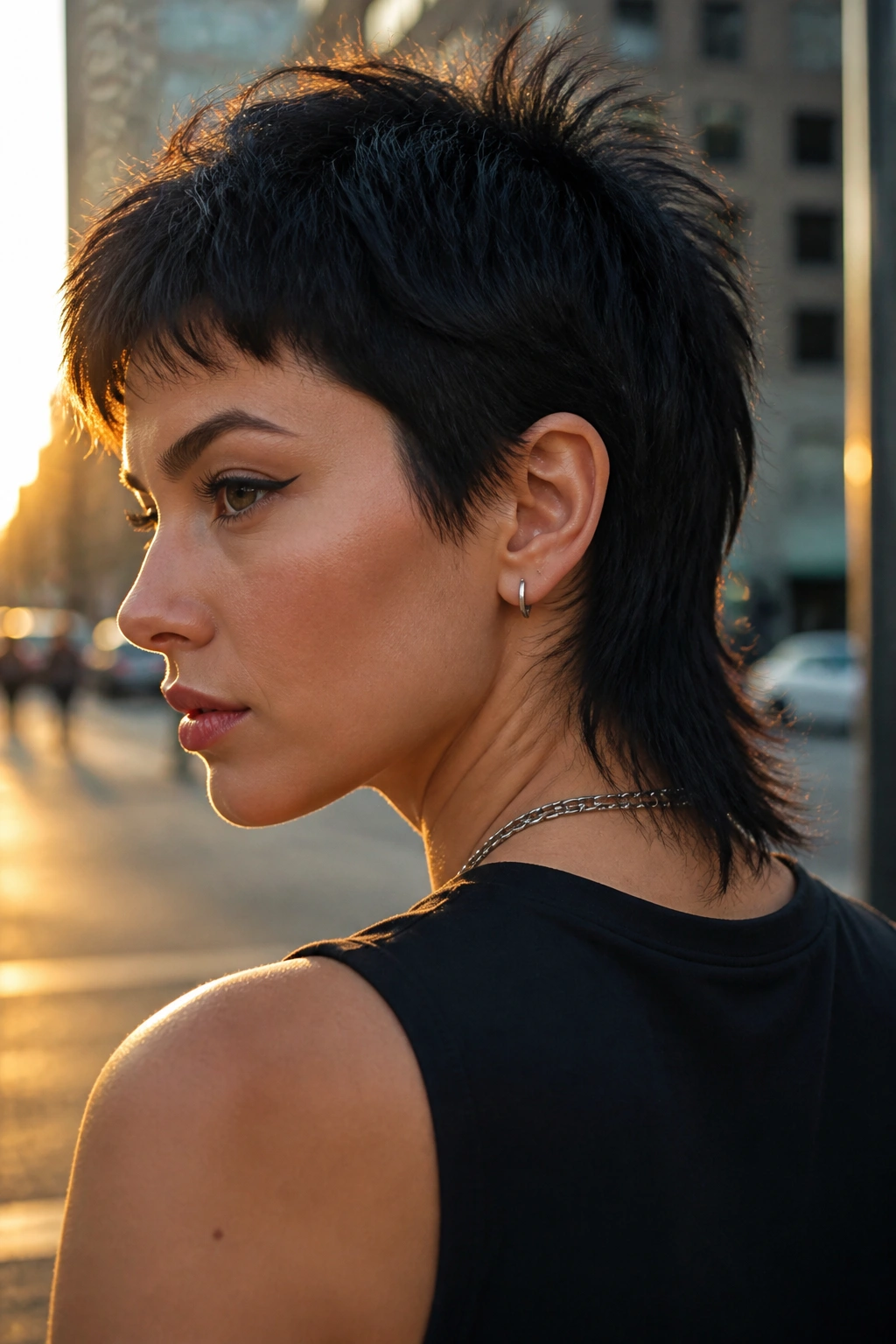
A mullet-inspired pixie sounds like a dare, and honestly, a little bit of one. The front and sides stay short and sharp, while the back holds onto extra length just enough to create that kicked-up shape at the nape.
It works because the haircut does not try to hide its own unevenness. That’s the point. The back can skim the neckline with soft layers, while the crown stays choppy and the fringe remains short or piecey. The result feels modern when the transitions are clean.
Why It Works
The best version is not shaggy in every direction. It has a clear plan.
- Keep the nape slightly longer than a classic pixie.
- Ask for layers that kick out around the ears.
- Pair it with texture, not bulk.
- It suits wavy and thick hair especially well.
If you like haircuts that look a little rebellious from the side profile, this one has real personality. If you want something tidy and sweet, skip it.
12. Tapered Natural-Texture Pixie
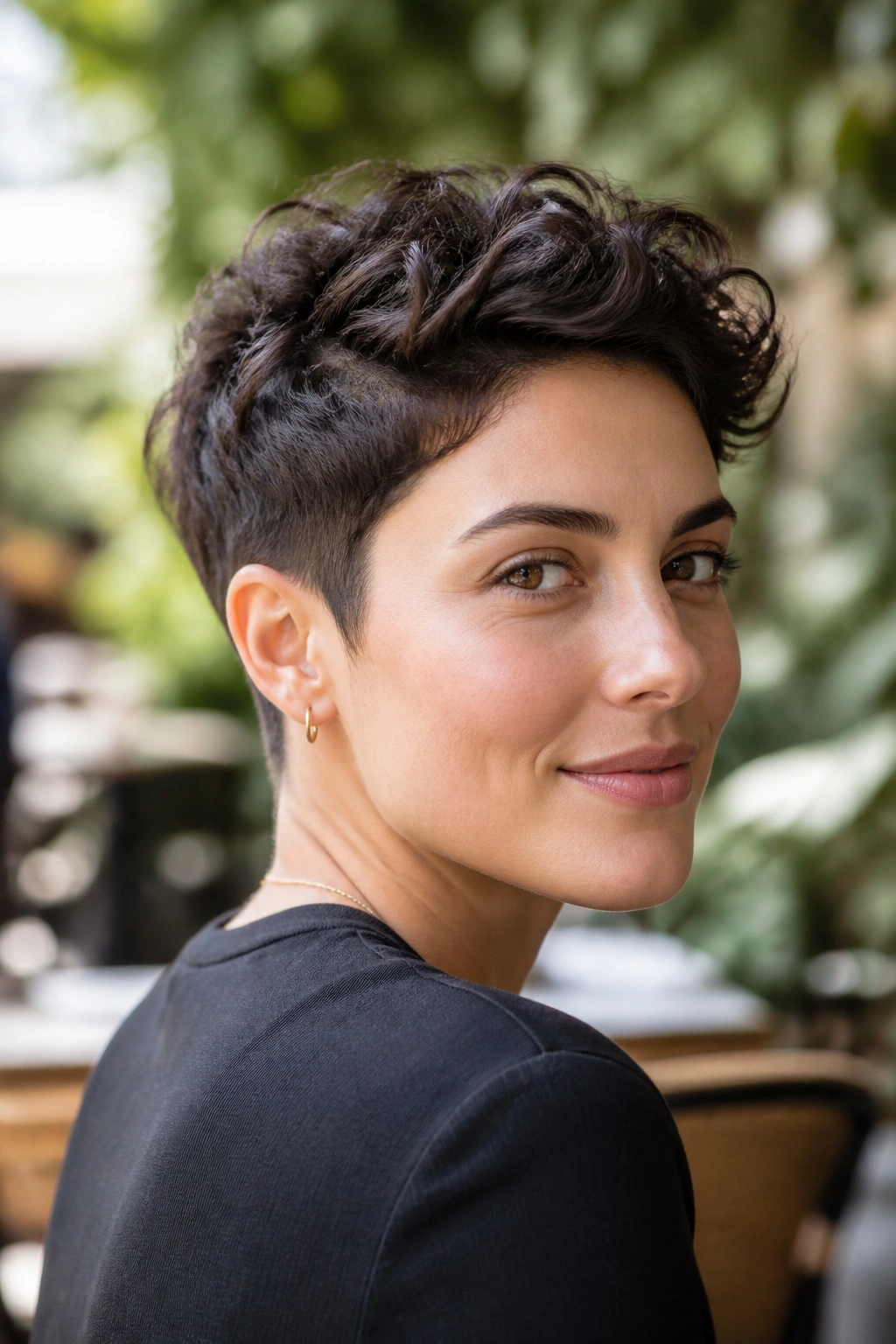
A tapered natural-texture pixie is one of my favorite shapes for curls and coils, because it respects the way the hair actually grows. The sides and back stay neat and close, while the top keeps enough length for the texture to spring up instead of being flattened down.
The silhouette follows the head, which makes the cut feel clean even when the hair itself is full of movement. On tighter curl patterns, that taper around the ears and neckline can be the difference between “styled” and “scruffy.” It gives the curls a frame.
A leave-in conditioner, a curl cream, and a little edge control at the hairline are usually enough. Nothing fussy. The beauty of this cut is that it looks good with minimal effort, but only if the taper is shaped well. A weak taper just looks unfinished.
13. Two-Tone Color-Block Pixie
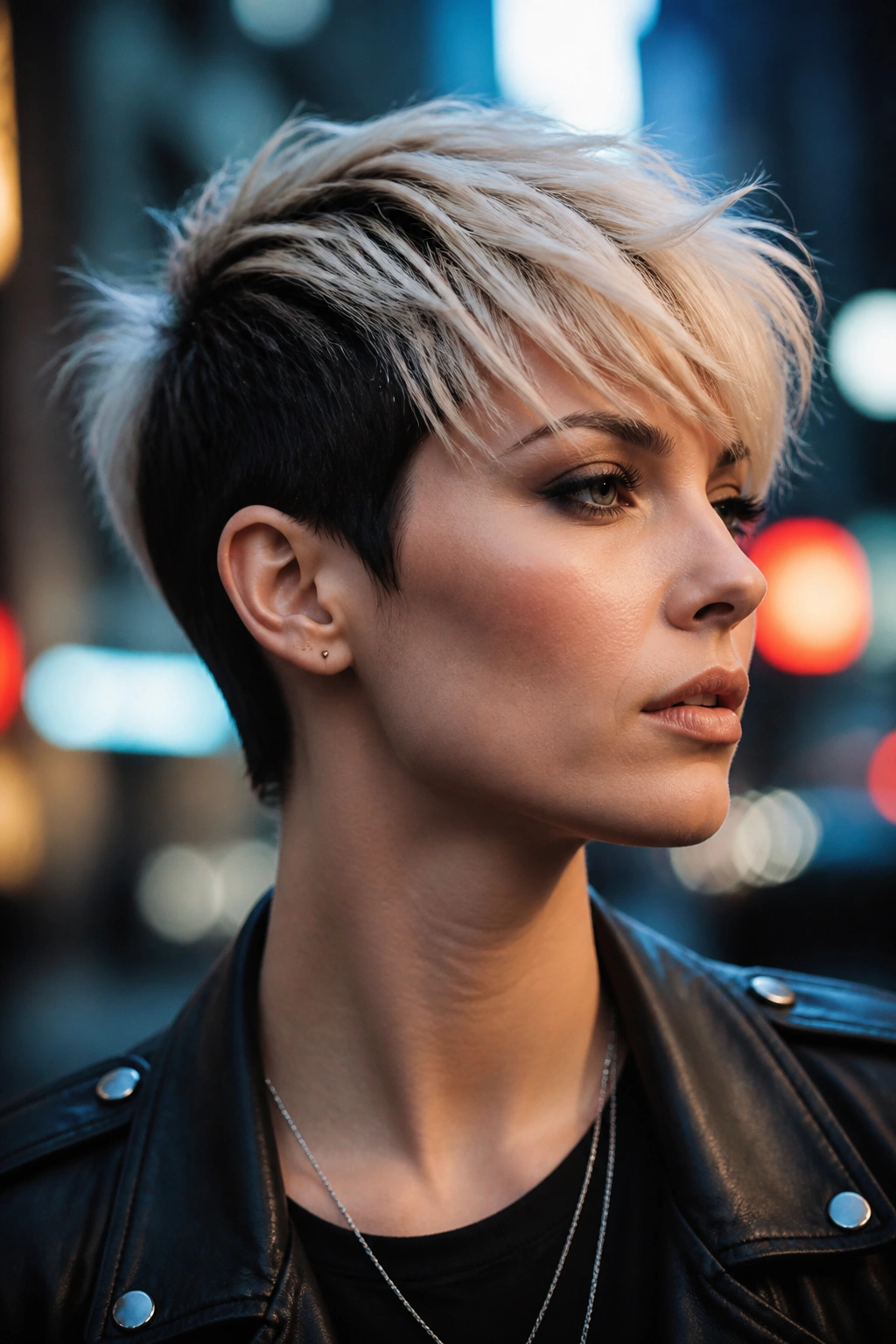
A two-tone pixie is proof that edge does not always come from the cut alone. Sometimes it comes from color doing the heavy lifting, and I love that because it gives the haircut a second layer of personality.
Think dark roots with a bright front panel, a platinum top over a deeper underlayer, or even a hidden color slice that shows only when the hair moves. The contrast makes the texture read more clearly and turns a simple pixie into something more graphic.
Where to Put the Contrast
- Front streaks frame the eyes and draw attention upward.
- A hidden underlayer gives a flash of color when the hair lifts.
- A split-tone side part looks especially bold on asymmetrical cuts.
The best part is that you can choose how loud you want it. A subtle two-tone effect can stay office-friendly. A more obvious block of color can feel downright theatrical. Both count.
14. Long-Top Short-Sides Pixie
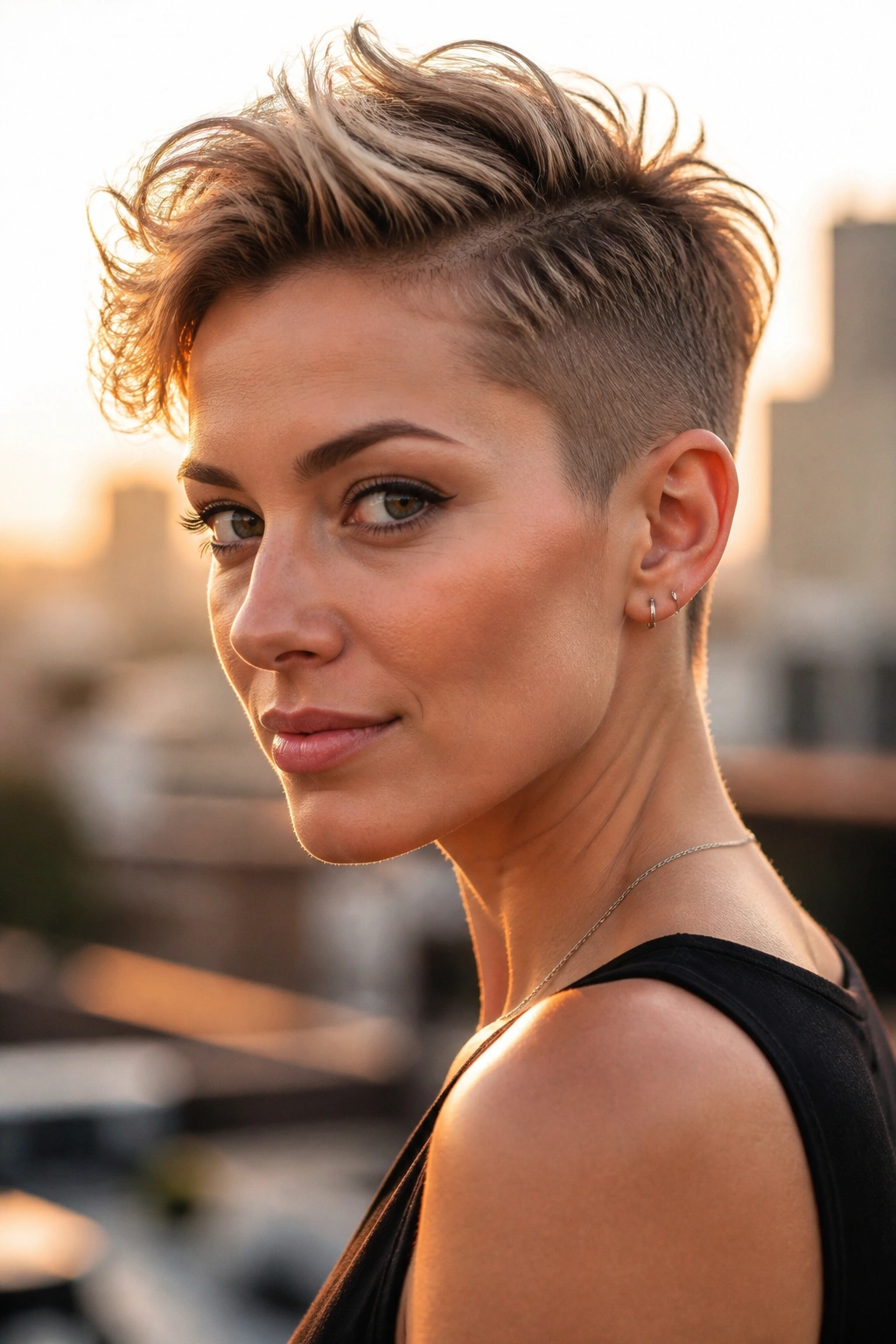
Unlike the classic all-over pixie, this version gives you room to play. The top stays long enough to tuck, flip, slick back, or sweep over, while the sides and nape stay clipped close so the shape never feels bulky.
That extra length on top usually runs around 4 to 6 inches, which is enough to style without turning the haircut into a bob. It’s a good choice if you want options. Some mornings you can wear it flat and neat. Other days, push the top up and out with a blow-dryer and a round brush, and it reads almost like a mini pompadour.
This cut works well for thick hair because it keeps the sides from puffing out. It also gives round faces a little more vertical line, which can be useful if you like the idea of a stronger profile. The only downside is that the long top can get lazy if you skip styling entirely. It wants at least a minute of attention.
15. Bowl-Inspired Pixie
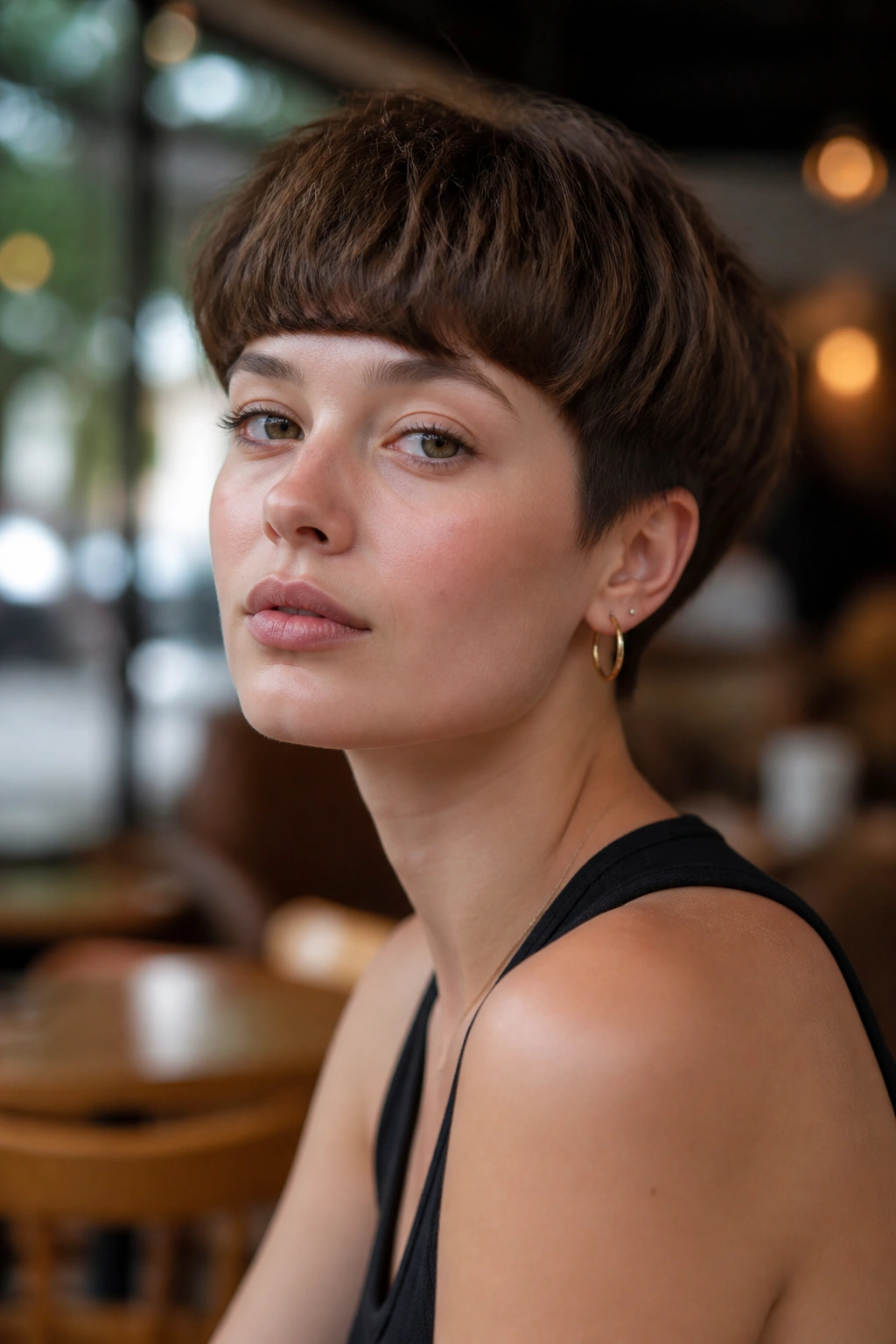
A bowl-inspired pixie can sound old-school until you see it with the right texture and the right attitude. Then it becomes something sharper: rounded, precise, and slightly strange in a way that feels stylish instead of nostalgic.
The modern version usually has a compact fringe, a curved outline around the head, and a tighter nape so the shape does not balloon out. That rounded silhouette can be gorgeous on straight hair because the line stays clean. On very thick hair, it needs careful debulking or it can look too heavy.
How It Avoids Looking Flat
The difference is in the edges. Soft internal texture keeps the cut from looking like a helmet, while a little break at the ends gives the shape some life.
This style is for someone who likes strong design. It is not a background haircut.
16. Shaved-Temple Pixie
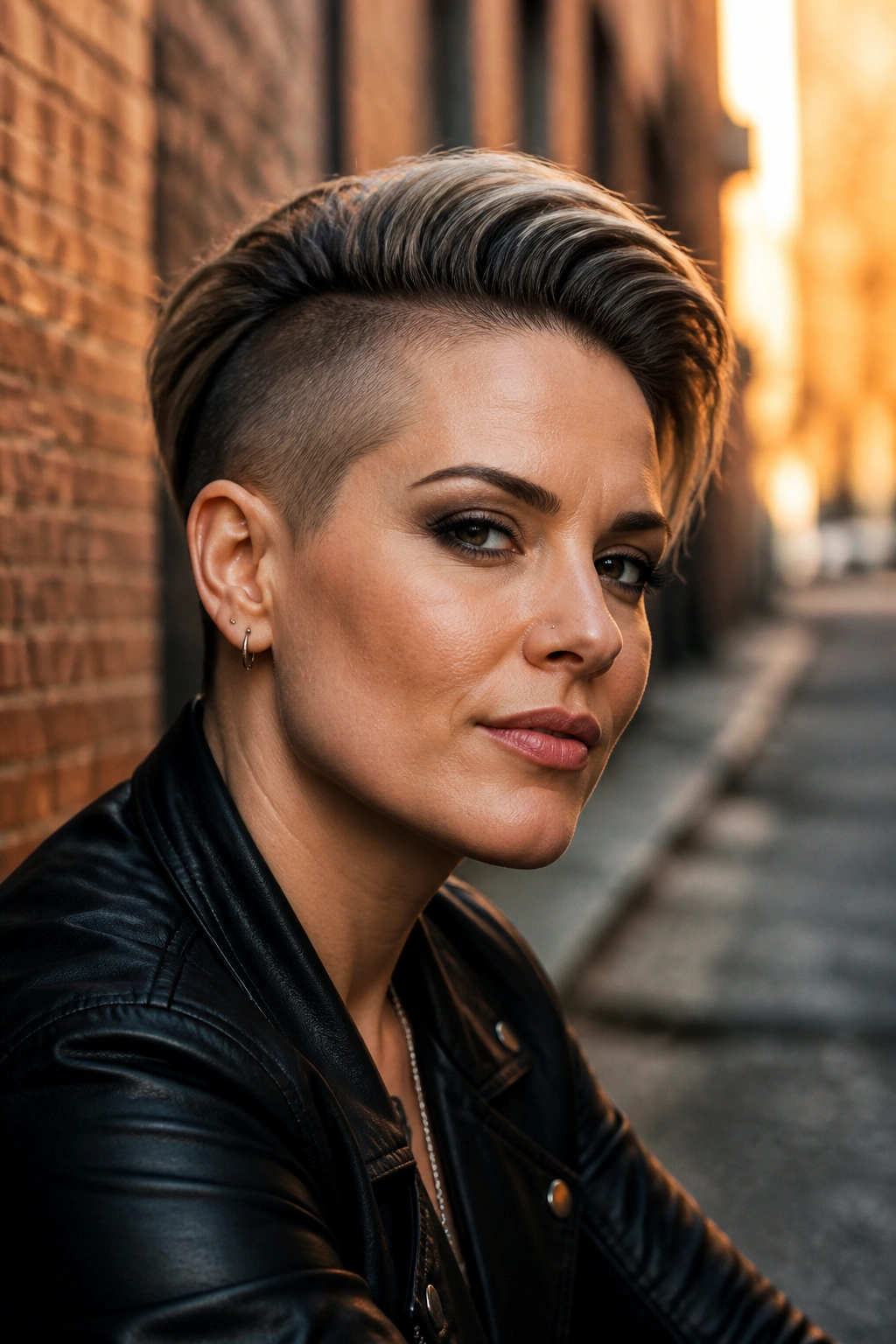
Why shave just the temple? Because a small dose of contrast can change the whole haircut without turning it into a full undercut. A shaved-temple pixie gives you edge in one clean move, and that single detail can make the rest of the hair look longer and more dramatic.
It’s a good choice if you want the option to wear the cut in a softer way too. The longer hair can fall over the shaved spot when you want it hidden, or you can tuck it back and let the short section show. I like that flexibility. It feels less locked-in than a more extreme cut.
This style works especially well with earrings, side parts, and strong cheekbones. It does need regular upkeep around the temple if you want the shave to stay crisp, usually every few weeks. That tiny section grows fast. Faster than people expect.
17. Gothic Fringe Pixie
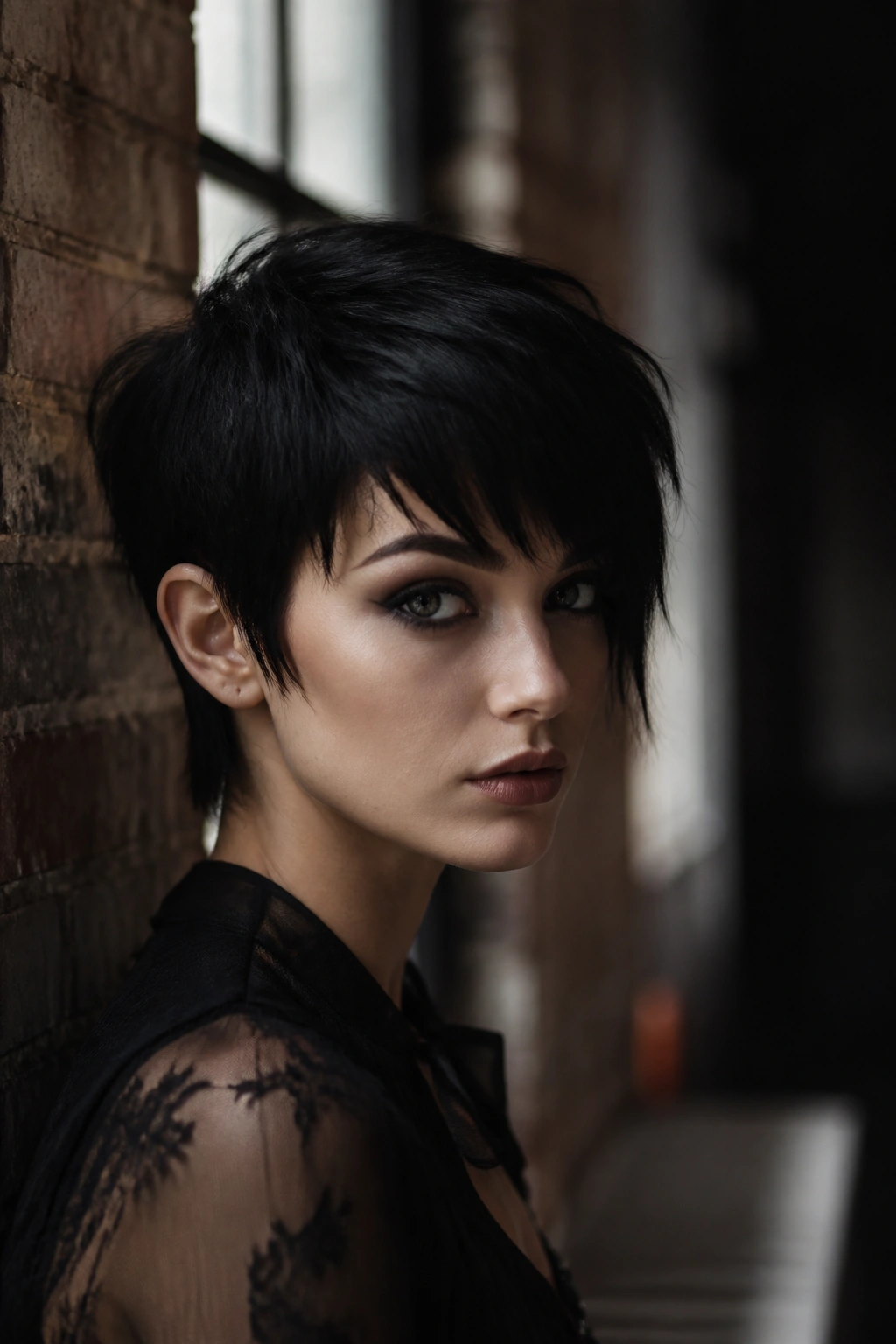
A heavy fringe can change the whole mood of a pixie. Add a deep side part, a little texture through the ends, and a dark, inky silhouette, and the cut starts to feel moody in the best possible way.
The fringe usually sits lower than a micro-bang but heavier than a wispy side sweep, so it skims the lashes or just brushes the brow line. That weight in front pulls the eye straight to the face, which is why this cut looks so strong with bold makeup or even a bare face and clean skin. It makes the eyes the center of the image.
A gothic fringe pixie should not be too polished. A small bend, a broken piece at the temple, or a slightly uneven edge helps it feel lived-in instead of formal. If you have straight hair, a flat iron on the fringe alone can sharpen the line. If your hair waves, let a little texture stay. That roughness is part of the charm.
18. Grown-Out Rebel Pixie
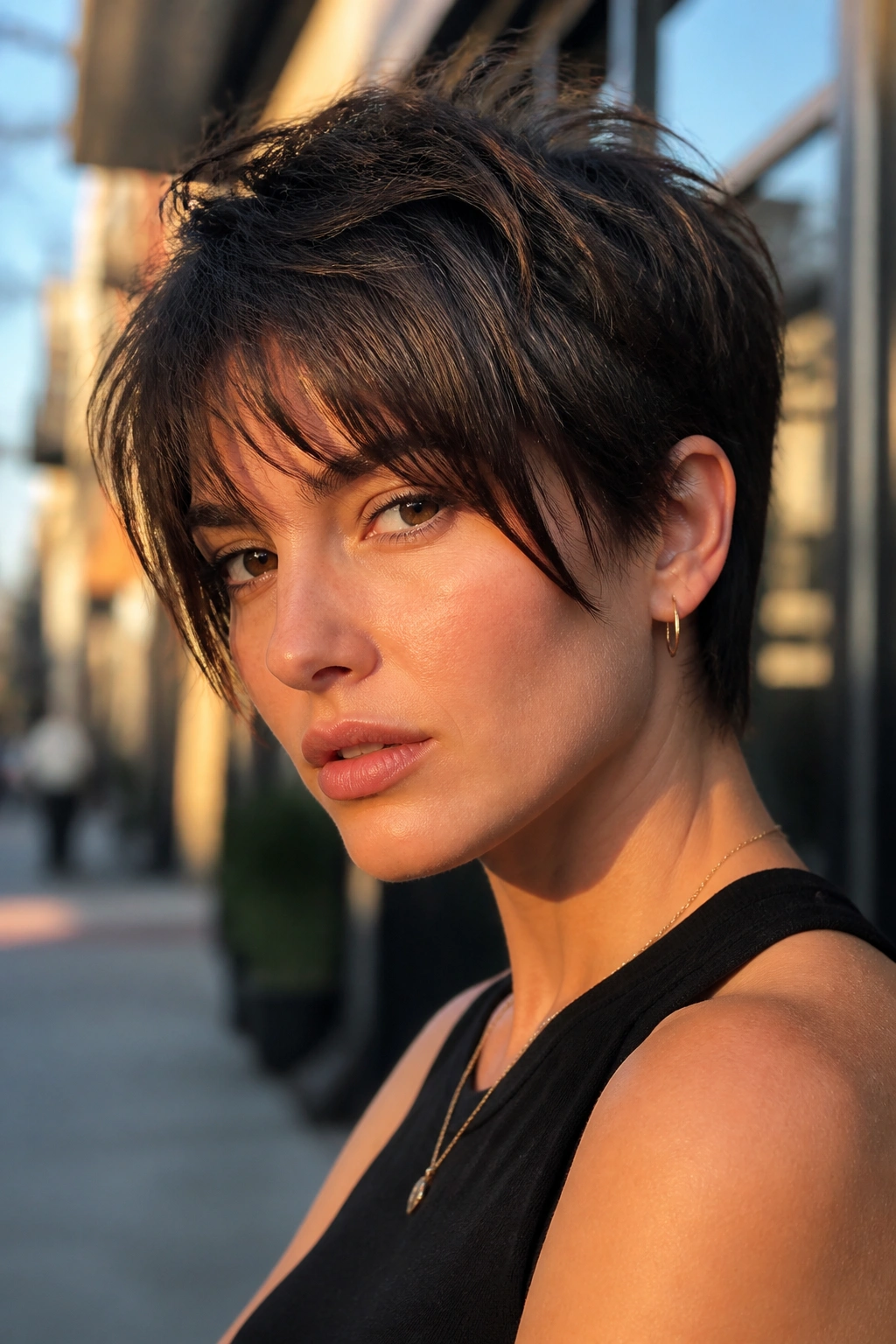
A grown-out pixie can look better than the neat version if the shape is still being cared for. That sounds backward, but it happens all the time. The extra length softens the edges while the shorter nape and tucked sides keep the haircut from losing its structure.
This is the pixie for people who do not want to live in the salon. The top can drift into a shaggy, layered shape, the fringe can graze the cheekbones, and the back can stay clean enough that the whole thing still reads as deliberate. If you like a haircut that looks a little less strict every month, this is the sweet spot.
It also gives you room to change your mind. You can push it into a side part, slick it back, or let it fall forward when you want a more face-framing shape. That flexibility is worth more than most people admit. Some cuts are all attitude and no range. This one has both.
Final Thoughts
The strongest edgy pixie cuts share one thing: they commit. A little contrast goes a long way, whether that comes from a hard undercut, a blunt fringe, a shaved temple, or a shape that feels slightly off-balance on purpose.
Pick the version that matches your hair texture and your patience. If you hate styling, choose a cut that does the shape work for you. If you love product and a mirror session, go sharper and more sculpted.
And if you’re stuck between two options, choose the one that makes you sit up a little straighter when you imagine wearing it. That reaction is usually telling you something.
