



Fall bridesmaid updo hairstyles have one job that sounds easy and never is: survive wind, hugs, lipstick transfers, veil changes, and a long reception while still looking soft in photos.
Cooler air helps a little. Then somebody pulls on a coat, steps into heated rooms, and suddenly the hair at the nape starts shifting, frizzing, or collapsing in that annoying way that only shows up after the first toast.
The styles that work best for fall usually sit low, hold with pins instead of tons of spray, and leave a little movement around the face. That matters when bridesmaids are wearing satin, velvet, chiffon, or dresses with higher necklines, because hard shell hair next to heavy fabric looks out of place fast. I’m also a fan of styles that can be tightened five minutes before the ceremony, because somebody’s curl pattern always has opinions of its own.
If you’re choosing for a group, think in terms of shape, neckline, and hair texture more than strict sameness. One person may need a braid to keep layers from escaping, another may need extra volume at the crown, and someone with shorter hair might need a little padding hidden under the bun. The first style I’d reach for is a low twisted chignon with face-framing pieces.
1. Low Twisted Chignon with Face-Framing Pieces
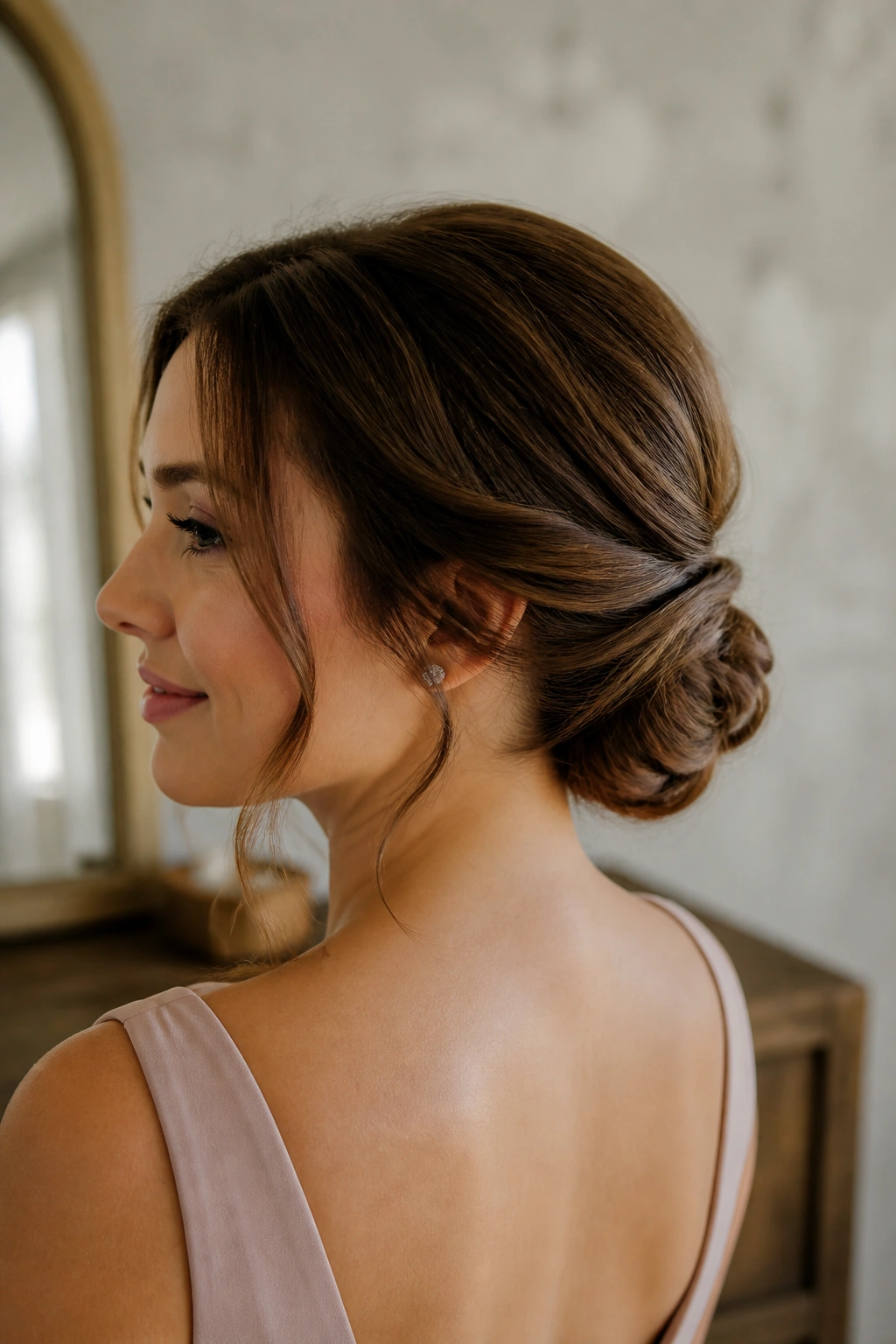
This is the style I recommend when the dress is elegant and you do not want the hair competing with it. A low twisted chignon sits at the nape, so it feels calm, tidy, and formal without looking stiff.
The trick is in the front. Leave two slim pieces out near the cheekbones, then twist the rest of the hair back in sections so the bun has a bit of texture instead of looking like one blunt knot. That soft edge is what keeps it from feeling severe. It also plays nicely with square necklines, bateau necks, and dresses with covered shoulders.
Why it works so well for fall weddings
The low placement keeps the style stable when the weather shifts from cool outside to warm indoors. It also leaves room for earrings, which is useful if the bridesmaid dresses are already doing a lot visually.
A tiny detail makes a big difference here. Lightly bend the face-framing pieces with a 1-inch curling iron so they don’t hang dead straight. You want movement, not ringlets. The style should look touched, not overworked.
2. Braided Halo Bun
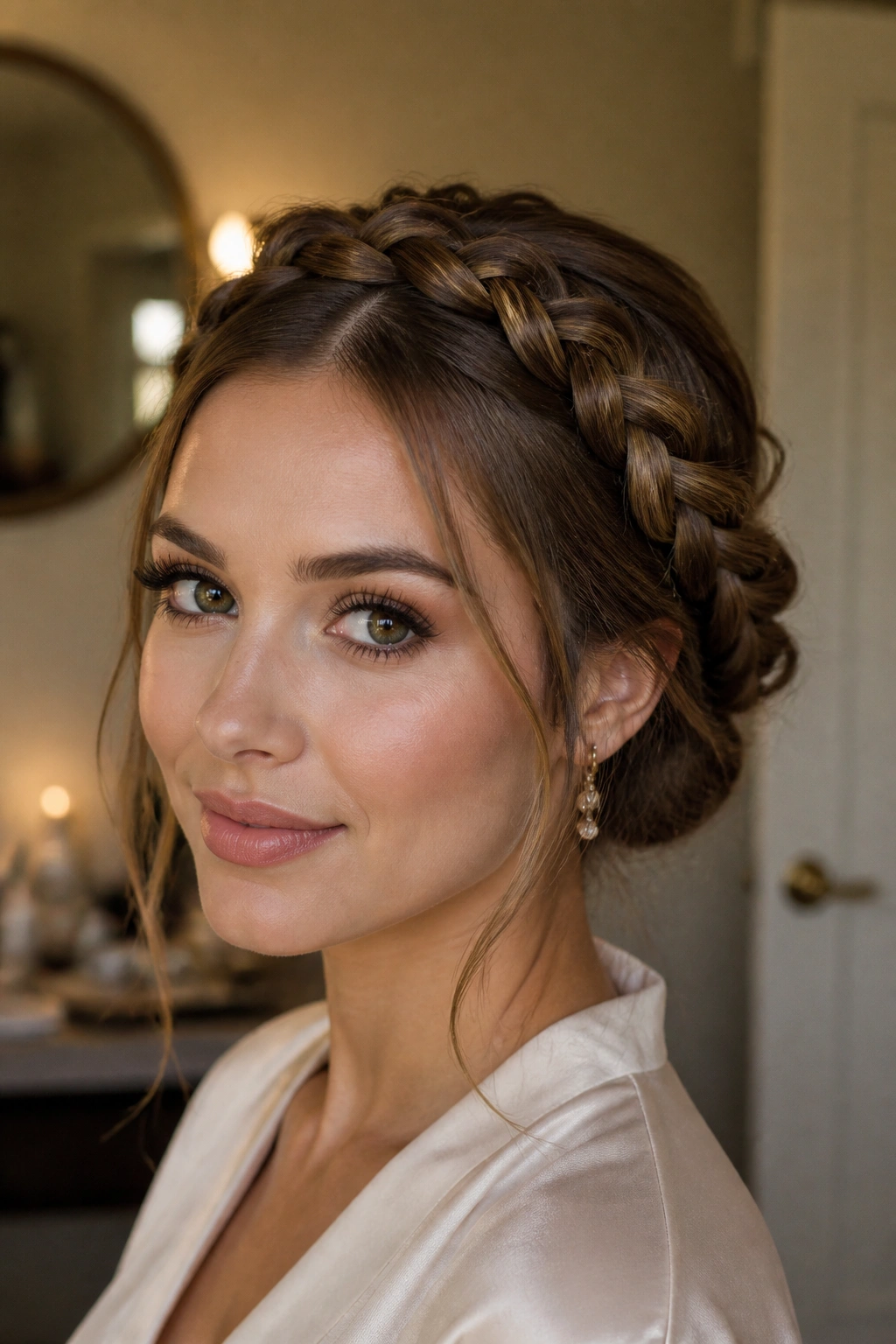
Want hair that stays put even after a packed dance floor and a stack of group photos? A braided halo bun is one of the safest bets. It gives structure around the hairline, then gathers the ends into a tidy bun at the back or side.
The braid acts like a frame, which is useful if the bridesmaid has fine hair that tends to slip out of clips. It also gives the style a little more visual weight, so the updo does not vanish next to a fuller dress or a dramatic bouquet. I like this one with deep jewel tones and soft makeup.
What to tell the stylist
- Keep the braid snug, but not tight enough to pull at the temples.
- Leave the bun low enough to sit under a collar or wrap.
- Add 3 to 5 small pins along the braid so it does not loosen halfway through dinner.
- Tuck one tiny tendril near the ear if you want the style to feel less formal.
Best for: medium to long hair, especially if the wedding has a polished, classic look.
3. Sleek Center-Part Low Bun

A sleek low bun can look almost severe in the wrong hands. Done well, it looks expensive in the plainest, best sense of the word.
The center part is doing a lot here. It creates symmetry, which helps the whole group read clean in photos, and it gives the style a modern line that works with high necklines and simple slip dresses. Keep the crown smooth with a little lightweight cream, then gather the hair low and wrap it into a compact bun.
One thing I like about this style: it gives earrings their moment. If the bridesmaid is wearing pearl drops, tiny gold hoops, or a hairpin at the base of the bun, the clean shape makes those details show up instead of fighting them. Don’t load the top with too much spray. A shellacked finish can look flat under reception lights.
The best version feels crisp at the top and soft at the edges. That’s the whole game.
4. Textured French Twist
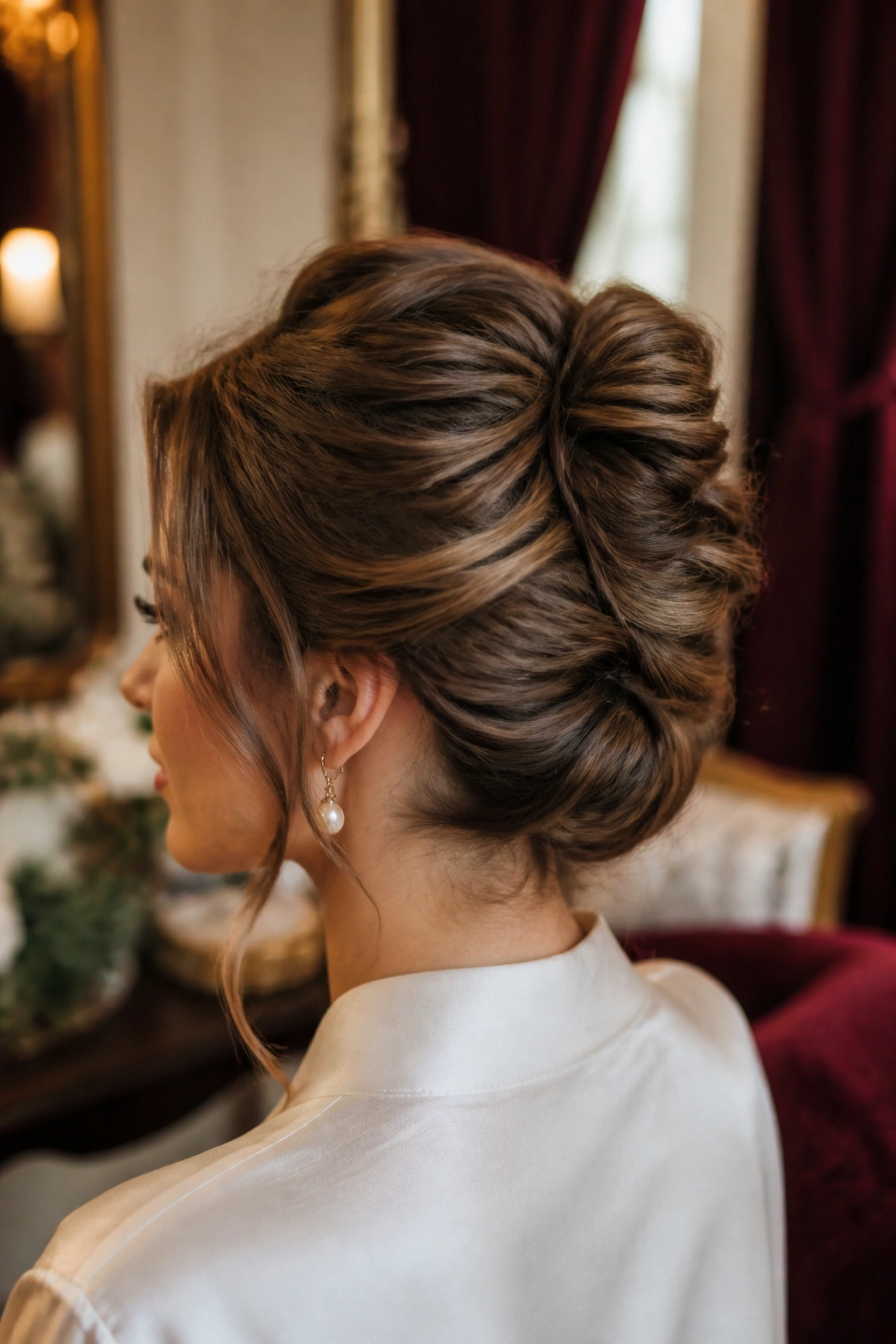
Unlike the stiff French twists people remember from old formal photos, this version can feel airy and a little undone. The shape still climbs up the back of the head, but the loops and pins show just enough to give the style life.
That makes it useful for fall bridesmaid looks, especially when the dresses are rich and textured. Velvet, jacquard, even matte crepe — all of that likes a hairstyle with a bit of dimension. The twist also lifts hair off the neck, which is a relief under a fitted bodice or during a warm indoor reception.
What makes this one hold
- Work with dry hair that has a bit of grip, not freshly washed slippery hair.
- Backcomb the crown lightly before twisting.
- Pin the twist vertically, then cross a few pins low near the base for strength.
- Pull the top section gently after pinning so it doesn’t sit too flat.
It’s a little old-school. That is part of the charm.
5. Side-Swept Knot with One Braid
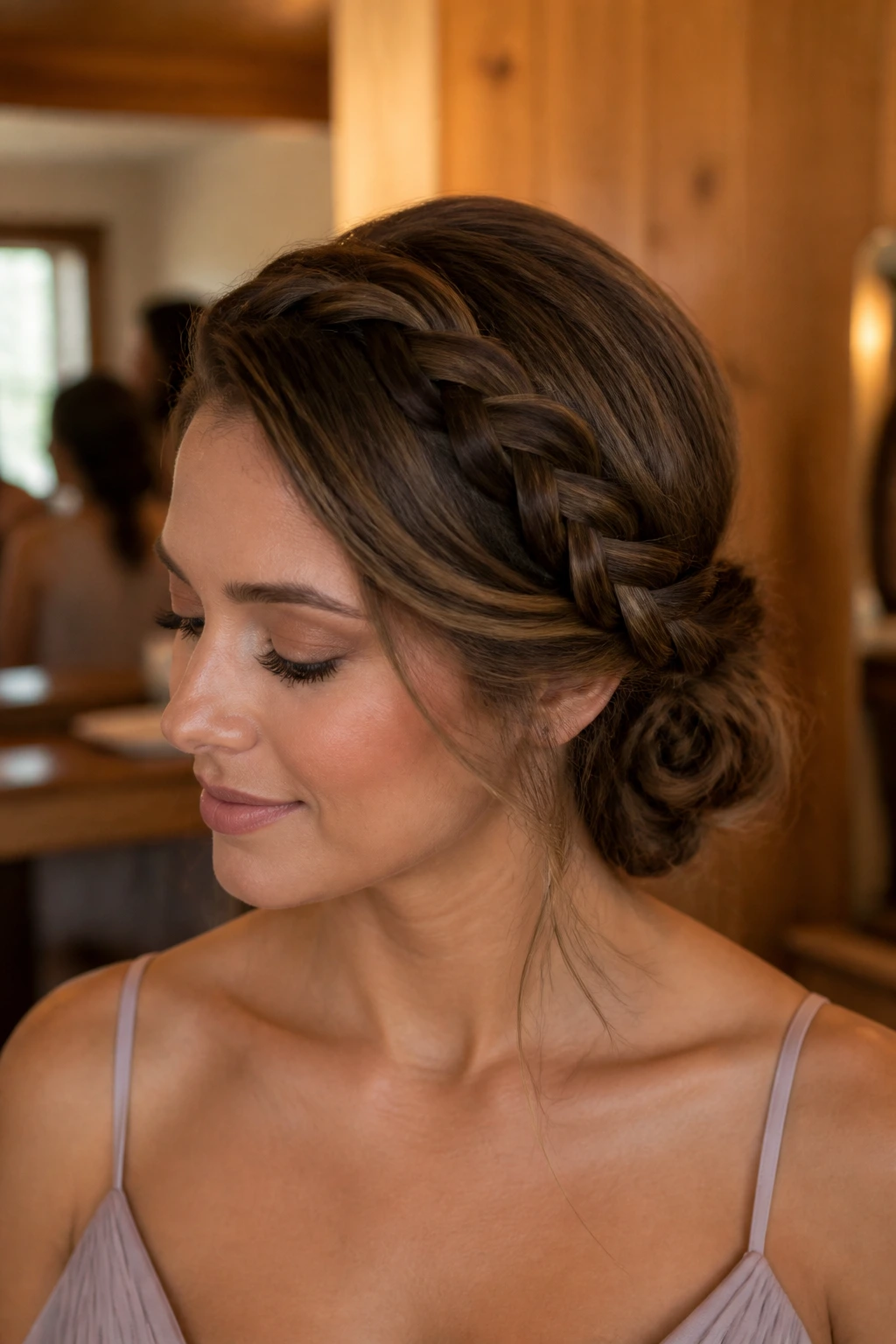
A side-swept knot is a good answer when the dress has one shoulder, a sharp neckline, or a bit of asymmetry that needs balancing. The side part softens the face, and the single braid feeding into the knot gives the style one obvious visual line.
I like this for bridesmaids who do not want a fussy look but still need more than a plain bun. The braid can start at the temple or just above the ear, then run low toward the nape before disappearing into the knot. You get shape without clutter.
It is also forgiving. If one side has shorter layers, the braid helps corral them. If the hair is thicker, the knot can be a little larger and still feel balanced. Don’t overdo the volume at the crown, though. The whole point is movement that feels intentional, not a hairstyle trying too hard.
A single braid is enough. More would crowd it.
6. Curly Pinned Updo with Soft Tendrils

Curly hair should not be forced into a flat, obedient shape just because the occasion is formal. The smartest updos for curls usually work with the curl pattern instead of fighting it.
This style keeps curls visible around the crown and sides, then pins the rest into a loose shape at the back. A few tendrils at the temples and near the ears keep the look soft, which matters when the bridesmaid dress is structured or the neckline sits high. I think this one looks especially good in fall because the texture echoes heavier fabrics and richer makeup.
The real trick is to stop handling the curls once they’ve been placed. Too much brushing turns them puffy. Too much spray turns them crunchy. Use pins to anchor the shape, then let the curls sit where they want to sit.
If the bride wants a cohesive bridal party look, this style can still fit in. The outline stays similar while each person’s curl pattern does its own thing.
7. Velvet-Ribbon Wrapped Bun
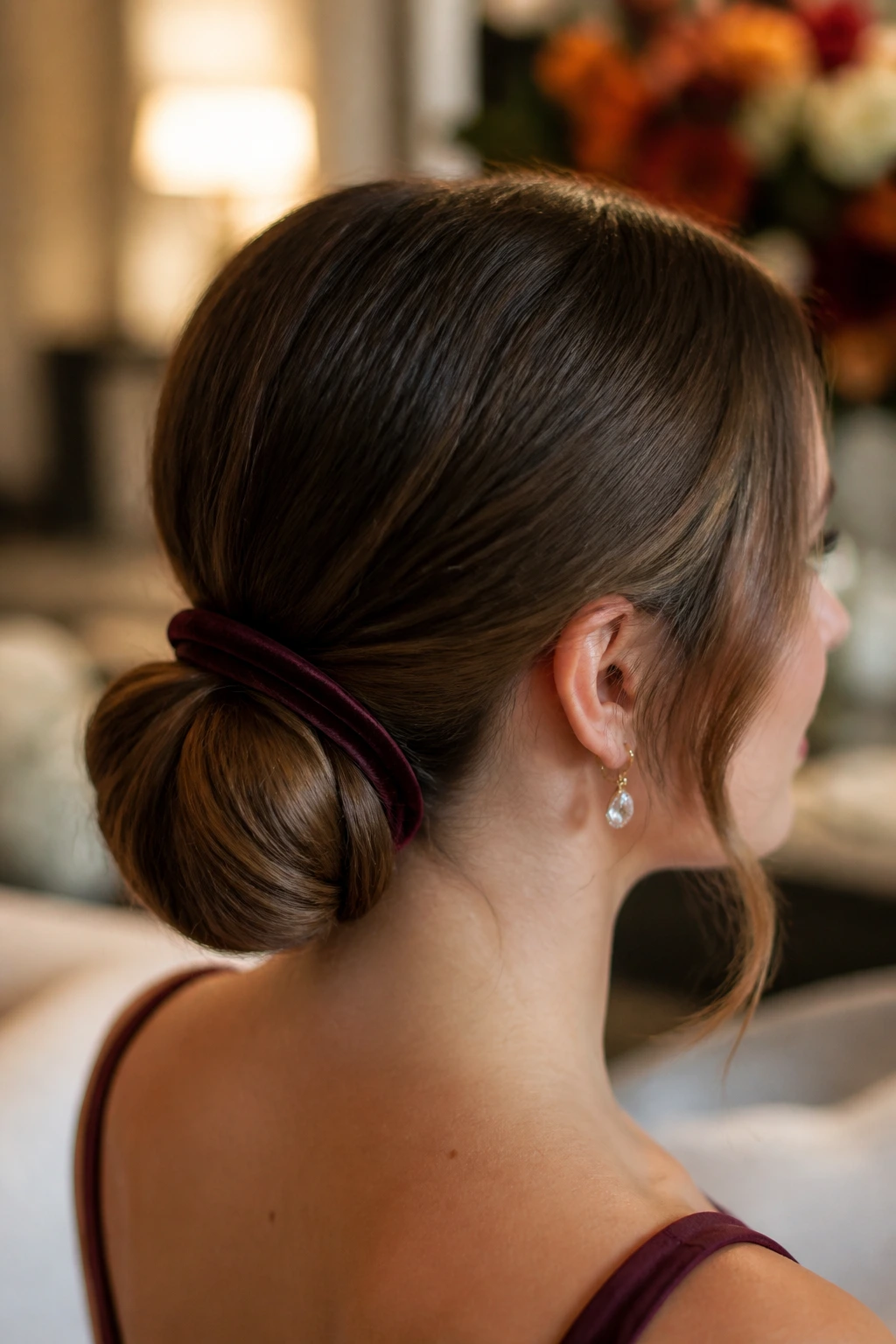
Need one detail that makes a simple bun feel more considered? Add a ribbon, but choose it with restraint.
A velvet ribbon wrapped around a low bun is one of those touches that reads fall instantly without looking costume-like. Burgundy, dark green, aubergine, navy, and black all work well. Keep the ribbon narrow — about 1/2 inch to 1 inch wide is enough — so it outlines the bun instead of burying it.
Where the ribbon should go
Wrap it around the bun once or twice, then secure the end underneath with a hidden pin. If the hair is very fine, place the ribbon after the bun is already pinned, not before. That keeps the ribbon from sliding while you’re shaping the knot.
This style is lovely with simple dresses, because the ribbon becomes the small, deliberate detail that the camera notices. It is not the right choice if the gown already has heavy beading or a busy neckline. In that case, the ribbon competes, and there is no need for that.
8. Crown Braid Tucked into a Low Knot

A crown braid does a lot of quiet work. It keeps the hairline neat, adds shape around the face, and gives the whole updo a more finished look before the knot even starts.
The braid can begin at one temple, travel across the top or around the side, and feed into a low knot at the back. That makes it especially useful for bridesmaids with fine hair or layered cuts, because the braid gives the style something to hold onto. It also looks good from the side, which matters in ceremony photos when people are turned at different angles.
I like this option when the bride wants the party to feel coordinated but not cloned. One person can wear a fuller braid, another a tighter one, and the overall effect still makes sense. A few small pearl pins tucked where the braid meets the knot can tie it to the rest of the wedding details without shouting.
Honestly, this is one of the most useful styles in the whole group.
9. Knotted Bun with Hidden Pins
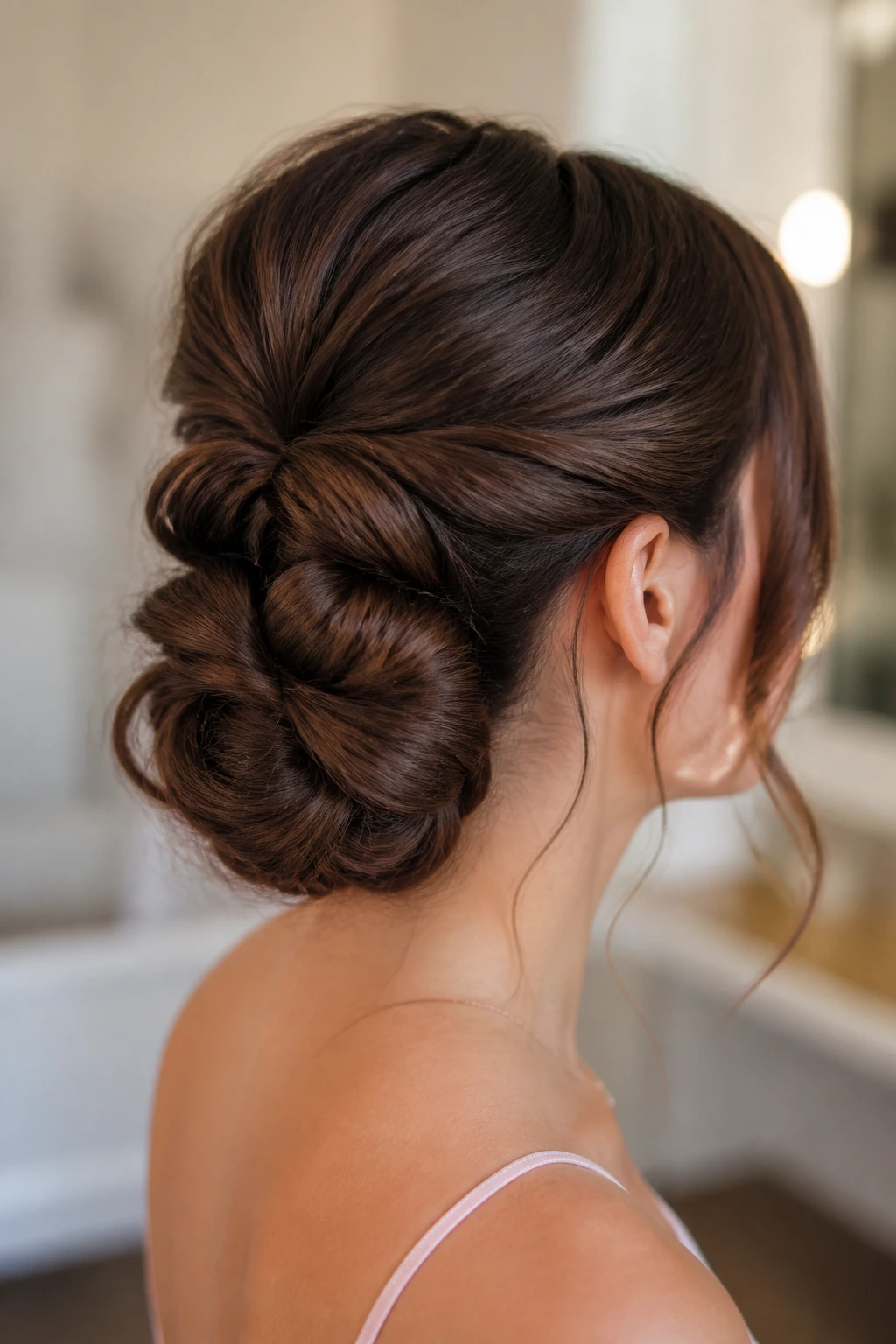
This one looks more complicated than it is, which is exactly why I like it. A knotted bun uses two or three loose knots stacked and pinned into place so the finished shape looks woven rather than rolled.
The best version has some separation between the pieces. You want to see the knotting, not just a lump of hair at the back of the head. That tiny bit of separation adds depth, especially in soft indoor light where flat styles can disappear.
How to keep it from loosening
- Build the first knot close to the nape.
- Pin each knot before moving on to the next section.
- Use 1-inch sections of hair so the structure stays controlled.
- Finish with a mist of flexible spray, not a hard shell of lacquer.
This works for straight, wavy, or lightly curled hair. It’s also a good option when the bridesmaid dress has a clean silhouette and you want the hair to echo that neat shape.
10. Gibson Tuck for Medium-Length Hair

A Gibson tuck is old-fashioned in a way I mean as a compliment. It has a rolled, tucked shape that feels polished, and it’s one of the better choices for medium-length hair that doesn’t quite want to make a big bun.
The hair is rolled upward and tucked into itself, usually low at the back, with a little softness left at the crown. That makes it a smart pick for bridesmaids whose hair falls just past the shoulders. It can handle loose waves, straight hair, or a bit of curl at the ends.
Why shorter lengths like it
The tuck hides ends that would otherwise poke out of a bun. It also keeps the silhouette neat without needing a lot of padding. If the wedding party has matching dresses with fine straps or a low back, the Gibson tuck sits nicely and doesn’t crowd the neckline.
I’d call this a quietly useful style. It doesn’t scream for attention, and that is exactly why it photographs well in groups.
11. Braided Bun for Thick Hair
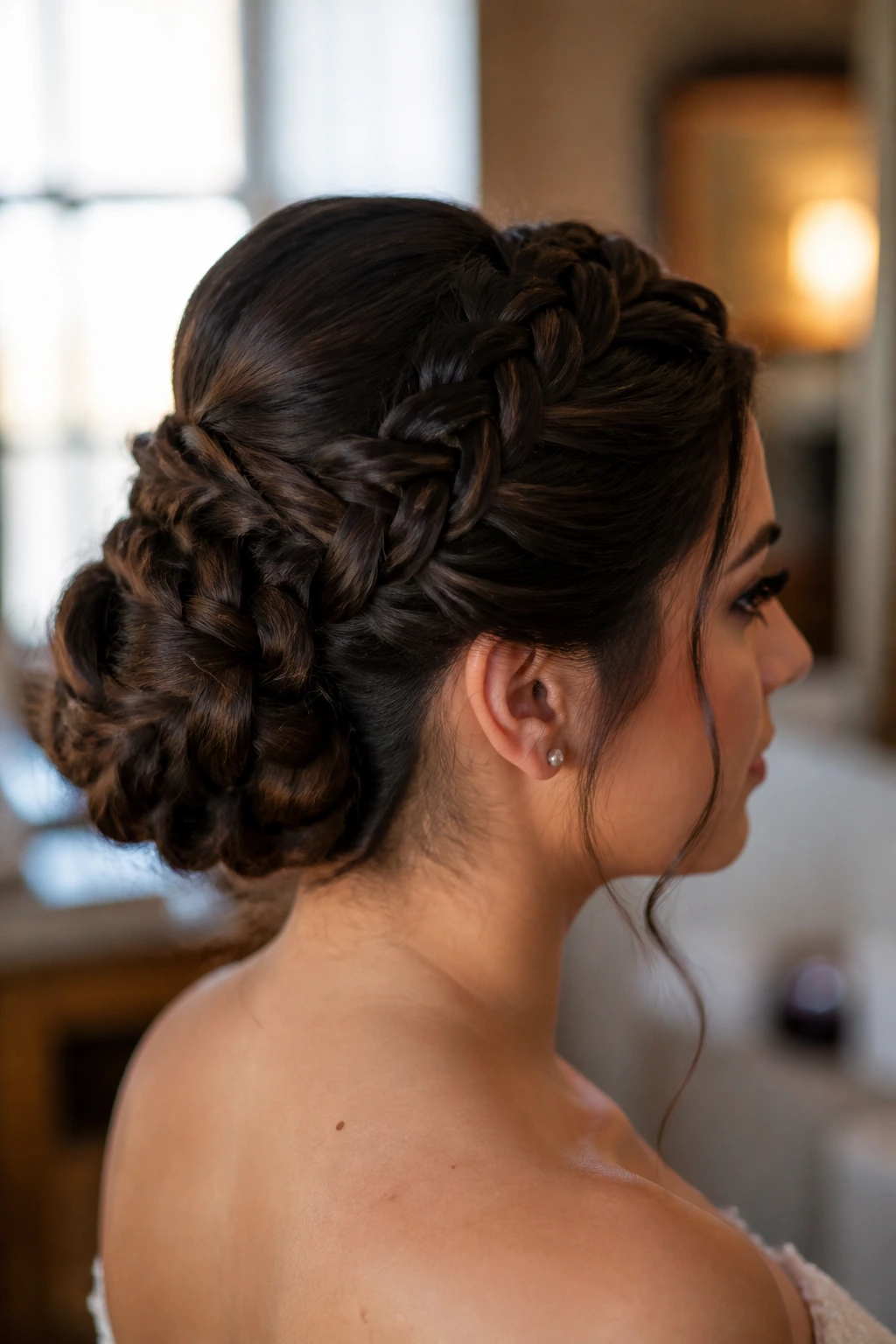
Thick hair needs control, not more product. A braided bun gives the hair a shape it can actually stay in, instead of trying to force heavy lengths into a compact knot and hoping for the best.
A single braid can be wrapped into a bun, but for dense hair I often prefer two braids twisted together. That spreads the weight and keeps the bun from ballooning out in the wrong places. If the hair is very long, pin the braid at two points before wrapping it so the base doesn’t slide.
You’ll want strong bobby pins here, not the flimsy kind that bend if you look at them wrong. Spray each section lightly as you go. A little control at the start saves you from fixing the bun every hour.
This is the style I choose when somebody says, “My hair does not stay.” Fine. Then give it structure. That usually solves the problem.
12. Woven Updo with Pearl Pins
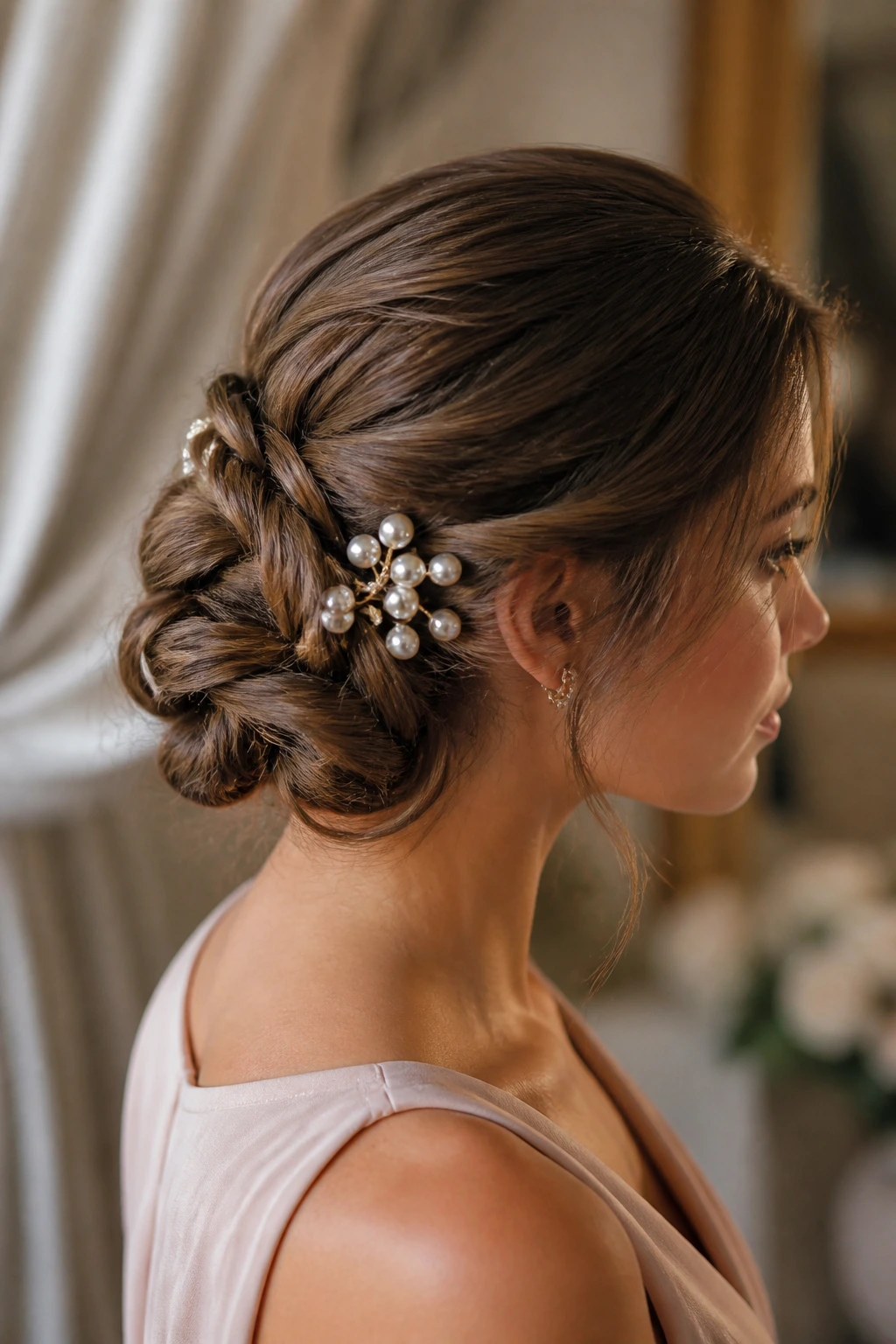
A woven updo has that hand-made, layered look that feels right next to satin dresses and pearl details. The strands cross over one another in small loops, then disappear into a low shape at the back, while pearl pins finish the edges.
The pearls should be used with restraint. Three or four small pins can look elegant; a dozen starts to feel busy. I like them clustered near one side of the bun or scattered in a small arc where the hair bends. That gives the eye a place to land without turning the style into a jewelry display.
It’s also a good choice when the bridesmaid dress is plain and the bouquet is rich with texture. The hair can carry a little of the visual interest so the overall look doesn’t feel flat. If the gown already has sequins, beading, or a strong neckline, keep the pins smaller and fewer.
There’s a delicate look to this one, but the structure underneath should still be solid. Pretty and secure. Both matter.
13. Loose Ballerina Bun with Soft Volume

What if you want something neat but not severe? A loose ballerina bun handles that middle ground better than most styles.
The shape sits low or mid-height, with enough volume at the crown to keep it from looking scraped back. The bun itself is smooth but not tiny, and a few softened edges around the face stop it from feeling too formal. It’s a dependable bridesmaid choice because it works with almost any neckline, from high halters to off-the-shoulder dresses.
The key is restraint. Don’t tease the crown into a hill. Don’t build the bun so high that it starts looking like a performance piece. Just enough lift to keep the profile elegant, then a bun that feels rounded and secure.
I like this style on mixed hair textures because it can be adapted without changing the overall shape. One bridesmaid can wear more polished smoothness, another can keep a little wave, and the line still reads the same in photos.
14. Double Twist Updo for Shoulder-Length Hair

Shoulder-length hair can be the hardest to pin up cleanly. It’s too short for some buns, too long for others, and layers love to escape at the worst moment.
A double twist solves a lot of that. Start with one twist from each temple or side, bring them toward the center back, then cross and pin them into a low shape. The twists create their own grip, which helps the shorter lengths stay in place without a lot of padding or filler.
The part that makes it work
- Keep the twists tight enough to hold, but not so tight that they flatten the sides.
- Use hidden U-pins at the crossing point.
- Curl the ends lightly if the hair needs help blending into the tucked section.
- Leave the outer surface a little textured so the style doesn’t read as flat from the back.
This is a smart bridesmaid option when the party has mixed lengths. It gives structure, stays comfortable, and does not require everyone to have the same hair density.
15. Polished Minimal Knot
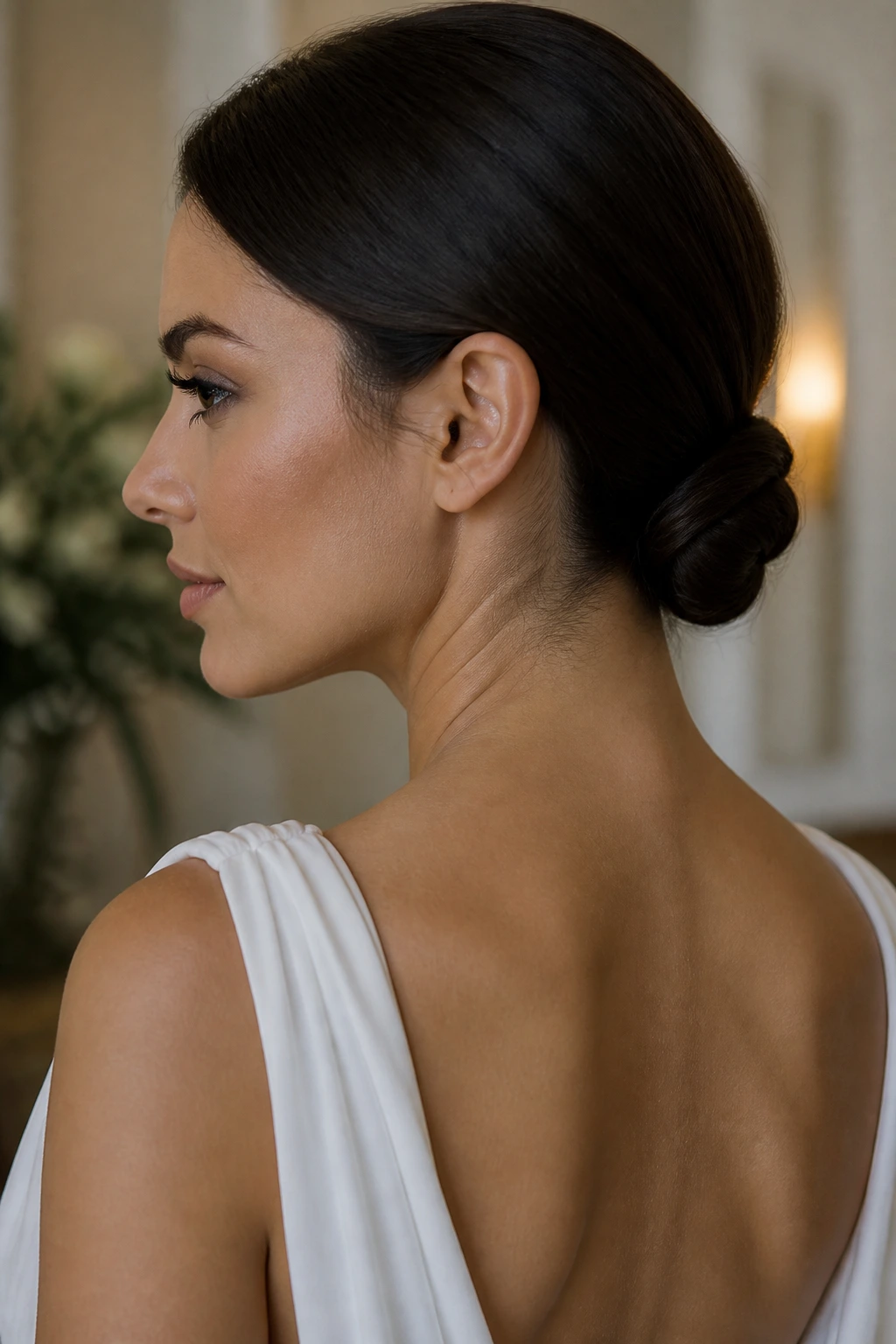
Not every wedding updo needs braid work, ribbon, or extra shape. Sometimes the best answer is a clean knot with a mirror-smooth finish and one strong silhouette.
This style suits bridesmaid dresses with dramatic necklines, strong earrings, or a lot of detail at the bodice. The hair stays quiet so the rest of the outfit gets room. Keep the knot low and compact, then smooth the surface with a light cream or serum before pinning it in place.
If you want a group look that feels modern and a little spare, this is one of the easiest ways to get there. Everyone can wear the same shape, but a few subtle changes — a side part on one person, a center part on another — keep it from feeling rigid.
When I’d pick it
- The dresses already have texture or embellishment.
- The bride wants hair that will not compete with the veil.
- The bridal party needs something that stays neat through a long dinner.
- The photos are formal and close-up.
Simple does not mean boring. Not here.
16. Romantic Low Roll with a Side Part
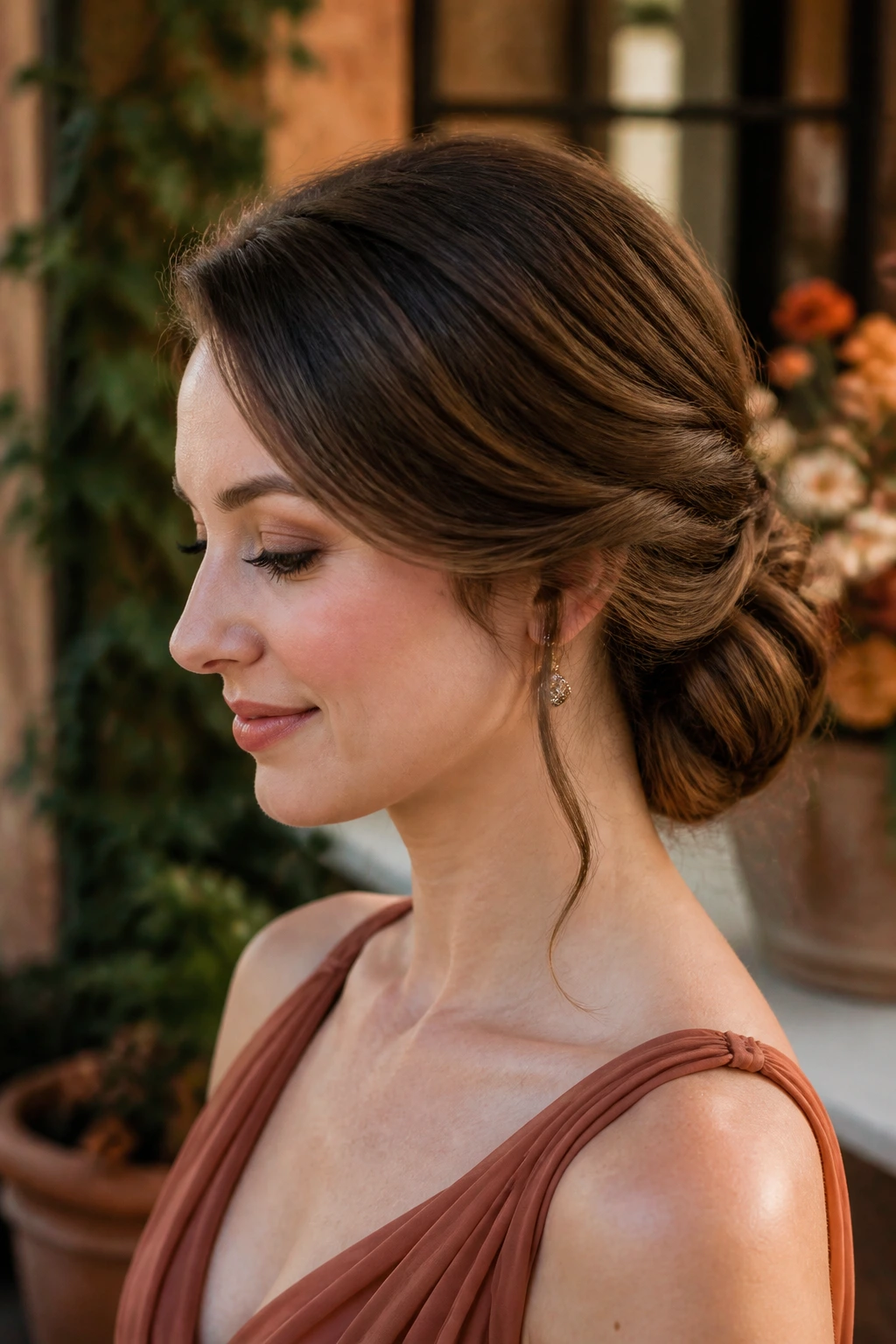
A side part changes the whole mood. It softens the face, breaks up the symmetry, and gives the updo a little movement before the roll even begins.
In a low roll, the hair sweeps from one side into a rounded shape at the nape, often with the ends tucked under so the finish looks smooth but not pasted down. It’s a good option for bridesmaids wearing dresses with softer lines, draped sleeves, or flowing skirts. The hairstyle echoes that gentler shape and keeps the look cohesive.
I especially like this for fall because it pairs well with makeup that leans warm and a little earthy. The side part can also help if one side of the face photographs better, which sounds vain until you look at the pictures later and realize everybody does it.
The style should feel deliberate, not formal in a stiff way. There’s a difference, and the camera catches it fast.
17. Braided Updo for Short Layers

Short layers and fine ends are where a lot of styles fall apart. The hair slips, the pins show, and the bun starts looking patched together halfway through the reception.
A braided updo gives those shorter pieces somewhere to go. Small braids along the sides or crown feed into a tucked shape at the back, which keeps the loose ends from drifting out. If the hair stops right around the shoulders, this is one of the easiest ways to make the style look complete.
The trick with shorter pieces
Start with a texturizing spray on dry hair so the braid has a little grip. Then secure each braid as soon as it’s finished instead of waiting until the whole shape is done. That prevents the ends from unraveling while you work.
This style is useful for bridesmaid groups because it can be scaled. One person can wear a full braided crown, another can use just two side braids, and the result still feels connected. It’s practical hair, which is maybe not a glamorous phrase, but it does the job better than a dozen fussy styles that won’t last.
18. Structured Chignon with a Statement Comb
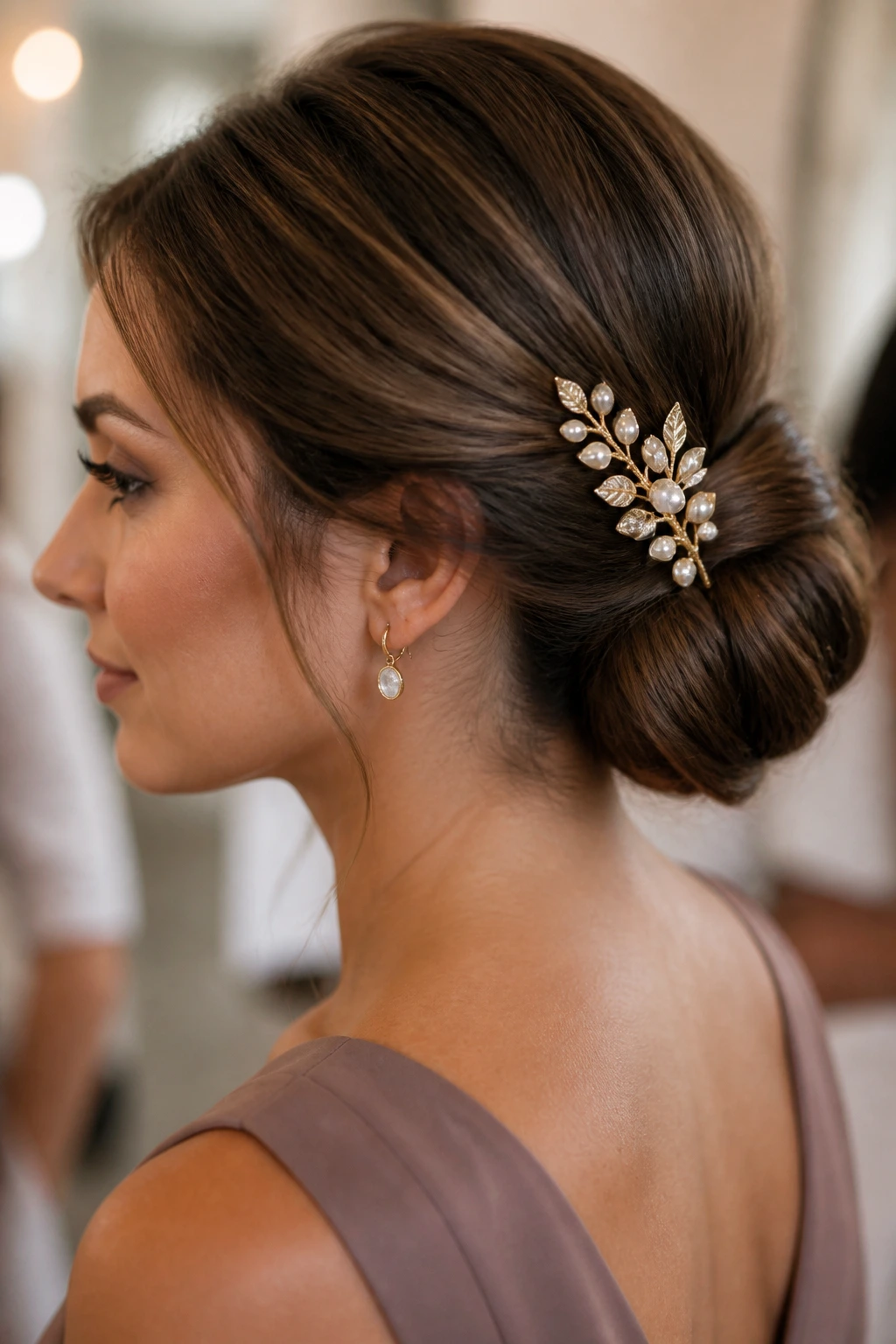
Save one strong accessory for the last look. A structured chignon paired with a statement comb is a clean answer when the dress is simple and the bridesmaid wants the hair to feel finished without extra fluff.
The chignon itself should be low, neat, and anchored well at the nape. Then one comb — gold, pearl, leaf-shaped, or mother-of-pearl — slides into one side or sits just above the bun. That one piece can carry a lot of the style, which is useful when the bridal party wants a unified look but still needs a little individuality.
This is the version I’d choose if the bouquets are loose and the dresses are plain, because the comb adds a focal point without taking over. Keep the rest of the hair smooth and let the accessory do the talking. If the gown already has heavy detailing, choose a smaller comb with fewer stones.
By the end of a long wedding day, that kind of restraint usually looks smartest.
