



A formal hairstyle has to survive more than a mirror check. It has to sit through photos, a long dinner, a warm room, and at least one enthusiastic hug without sagging into a limp shape by the time dessert shows up.
That is where elegant hairstyles for special occasions earn their keep. The good ones are never just “pretty.” They hold a shape, keep the face open, and look intentional from the front and the back, which is harder than people think. A style can be soft and romantic, but it still needs a backbone.
I keep coming back to the same truth: the neckline matters almost as much as the hair itself. A clean bun can make a high collar look sleek. Loose waves can soften a sharp satin dress. The best choice is usually the one that works with the clothes instead of fighting them.
1. Sleek Low Chignon for Special Occasions
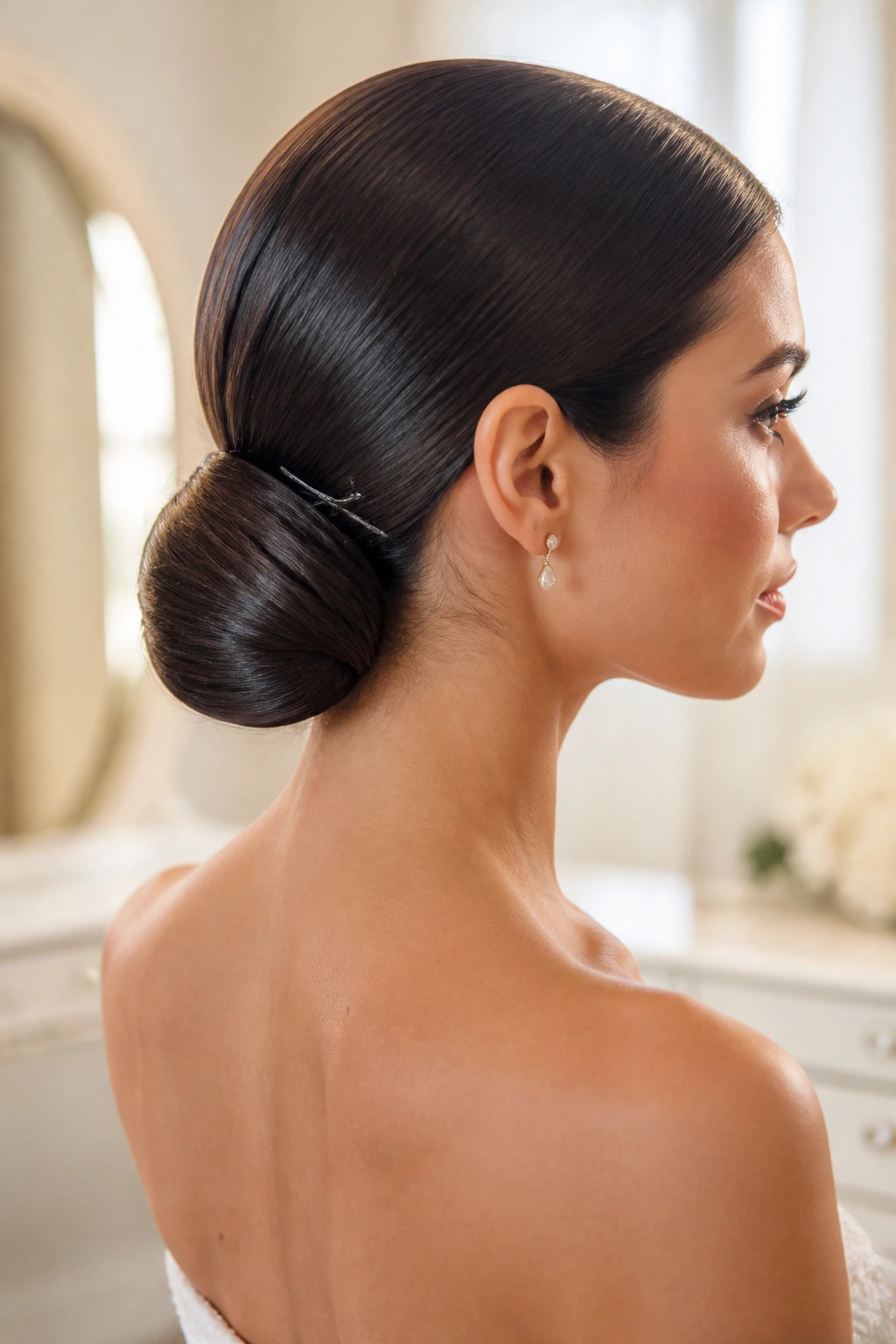
A sleek low chignon is what I’d call the quiet authority of formal hair. It doesn’t need decoration to look finished, and that’s exactly why it works so well for weddings, galas, and black-tie dinners.
Why It Works So Well
The shape sits low at the nape, which keeps the profile elegant and the neck long. If your dress has a dramatic back, a clean chignon leaves room for it. If your outfit is simple, the hairstyle adds polish without stealing the scene.
The trick is in the prep. Smooth the hair with a blow dryer and a paddle brush first, then gather it low and tight before twisting it into a knot or roll. A tiny amount of shine cream along the surface keeps flyaways down without making the hair greasy.
- Best for medium to long hair
- Works especially well with center parts or deep side parts
- Holds up best when pinned with crossed bobby pins instead of one oversized clip
- Looks strongest on straight to slightly wavy hair
Pro tip: Finish with a light mist of flexible hairspray from about 10 inches away. Too much spray makes the bun stiff, and stiff hair tends to look less expensive in photos.
2. French Twist With Clean Vertical Lines
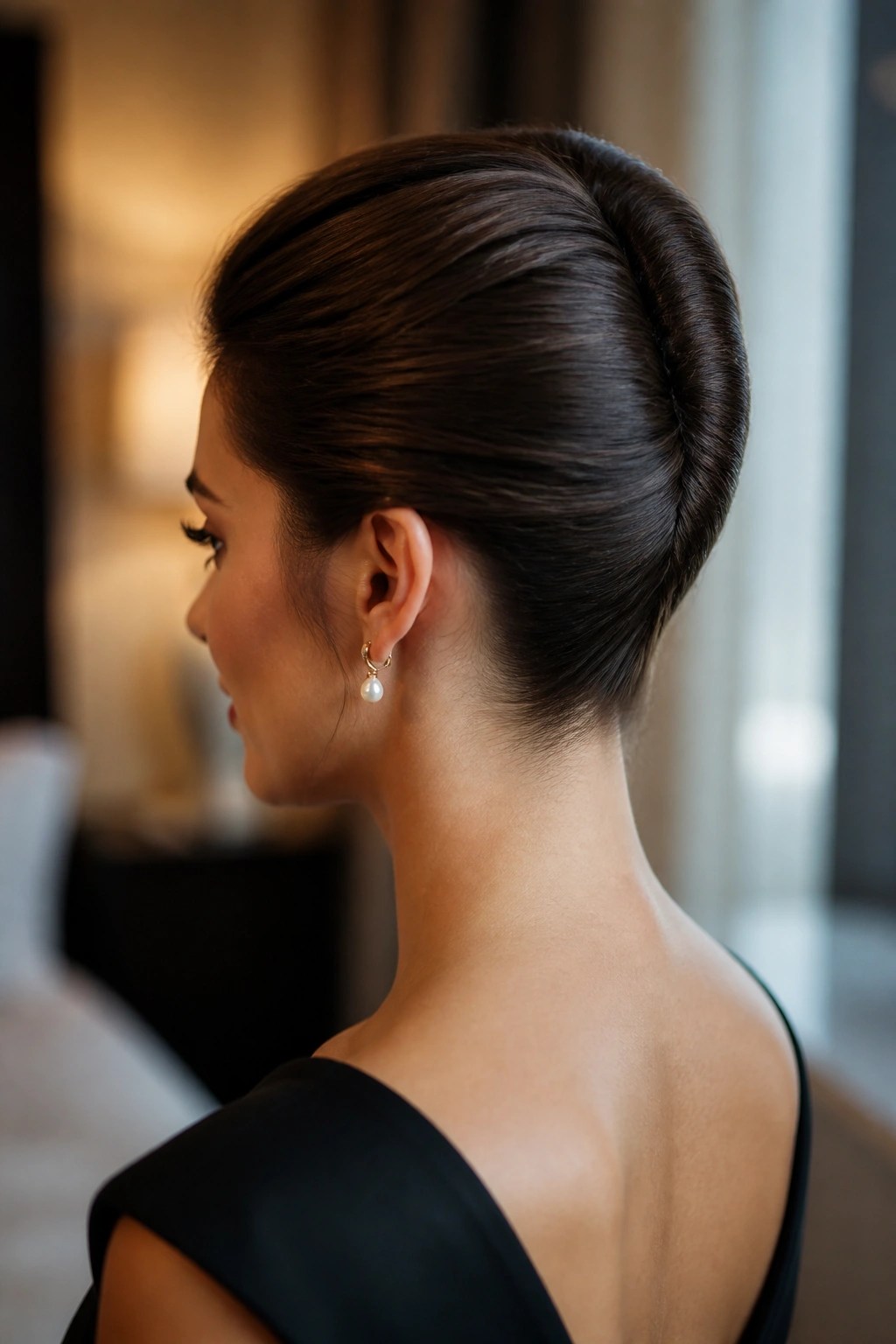
A French twist has a way of making a room feel more formal the second you walk in. It is sharp, upright, and a little old-school in the best possible way.
What I like about it most is the silhouette. The hair folds inward instead of spreading out, so it gives height without looking bulky. That makes it especially useful when the dress already has volume at the shoulders or skirt. The style reads polished from every angle, and it stays close to the head, which means fewer loose pieces fighting your lipstick later.
The French twist does take a steady hand. You want the hair smoothed back, gathered in one motion, and pinned from the inside so the seam disappears. A few stylists tease the crown first for lift, and that helps if your hair is fine or flat. But don’t go wild with the teasing. A little support is enough. A lot of teasing turns into a lumpy mess.
This is the style I’d choose for a formal evening when you want control, clean lines, and a face-framing shape that does not wander.
3. Old Hollywood Waves With a Deep Side Part
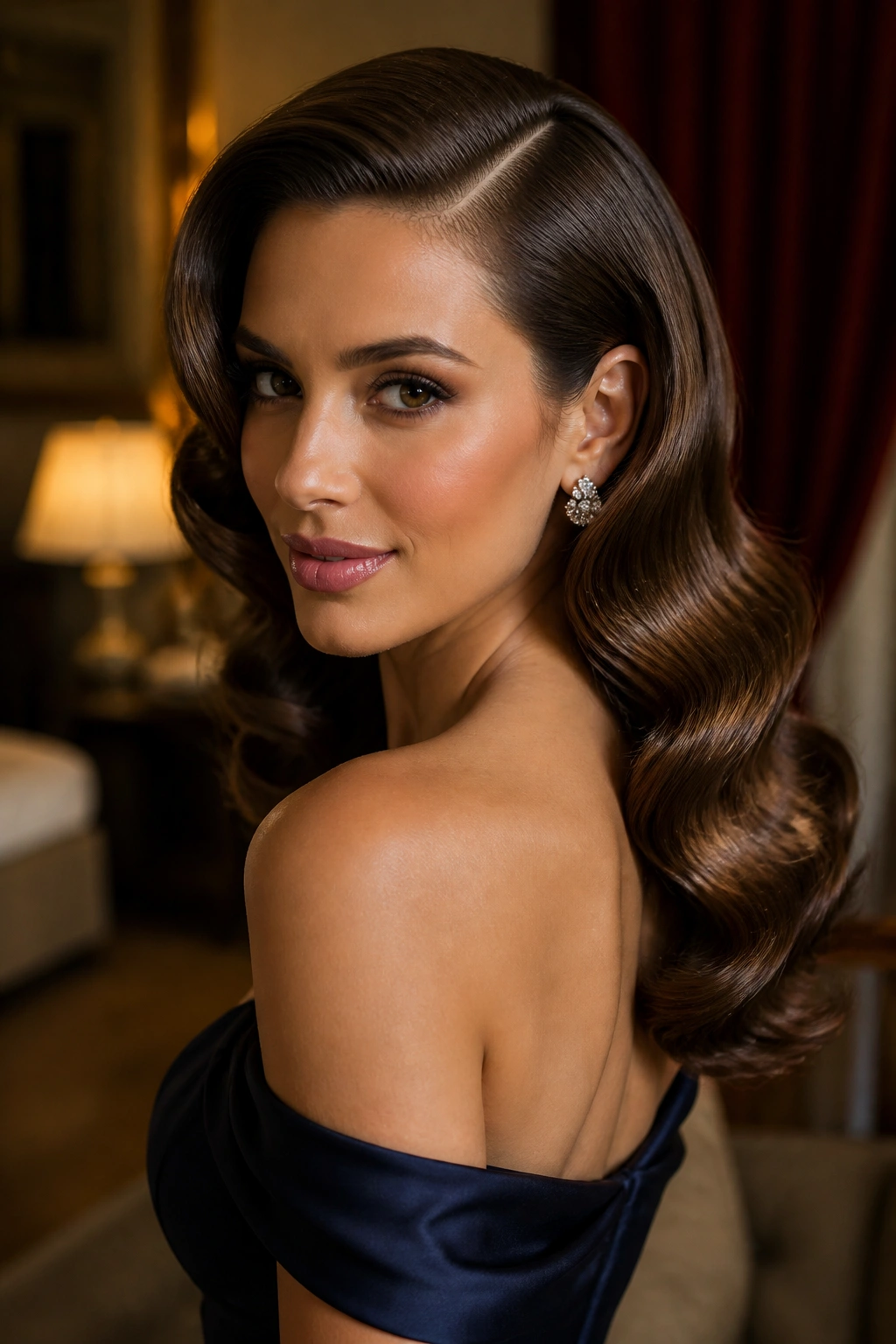
Why do Old Hollywood waves still look expensive? Because they understand restraint. The wave pattern is soft, but the direction is deliberate, and that contrast gives the style its formal edge.
The best version starts with a deep side part and large, even curls made with a 1.25-inch curling iron or a hot roller set. Once the curls cool, brush them out gently until the pieces merge into one smooth wave pattern. That brush-out matters. Without it, the style can look like ordinary curls instead of a true vintage wave.
How to Style It
Work in small sections, then clip each curl to cool in place if your hair falls quickly. After unclipping, brush from ends to roots in long strokes. A light mist of shine spray helps the wave line stay glossy, but keep it away from the roots or the whole thing can collapse.
Old Hollywood waves look especially good with one shoulder showing. They also flatter anyone who wants softness around the face without giving up structure. The shape is glamorous, yes, but it is also practical. It moves, it photographs cleanly, and it does not demand a ton of ornament to feel complete.
4. Soft Half-Up Twist With Loose Ends

Picture this: you want your hair down, but you also want it to look dressed up enough for a ceremony or a formal dinner. That is where the soft half-up twist steps in and saves the day.
The top section is gathered and twisted back, then pinned low enough that the front still has movement. The rest of the hair falls loose in gentle bends, which keeps the style from feeling too severe. I like this one for medium-length hair because it gives shape without taking away length.
Small Details That Make It Better
- Curl the ends in loose 1-inch sections for soft movement
- Leave a few face pieces out only if your makeup and dress can handle it
- Use two pins crossed at the twist for better hold
- Add a pearl or crystal pin if the outfit is plain
The real charm here is balance. It feels styled, but not overworked. It is also forgiving if your hair texture is a little uneven, because the top twist distracts from everything below it. That’s useful. Not every elegant style needs to be severe.
5. Polished High Bun With a Wrapped Base for Special Occasions

A polished high bun has a very specific energy: neat, confident, and a touch dramatic. I usually think of it as the hairstyle equivalent of a tailored jacket.
The height lifts the face, which can be flattering if you want cheekbones and earrings to do more work. It also clears the neck and shoulders, so it is a smart match for halter necks, strapless dresses, and gowns with strong collar details. The bun itself should look smooth around the base, then tucked and wrapped so the ends disappear cleanly.
One thing people get wrong is size. A bun that is too large can look costume-like. A bun that is too tight can pull the face in a way that feels harsh. Aim for contained volume. That middle ground is where the style looks expensive.
I also like this shape for humid rooms because the hair is secured high and compact. If you have fine hair, a small bun pad or a little padding around the bun can help it look fuller without turning it into a helmet. Keep the finish satin-smooth, not shellacked. There is a difference, and the second one is not doing you any favors.
6. Side-Swept Low Bun With a Strong Part
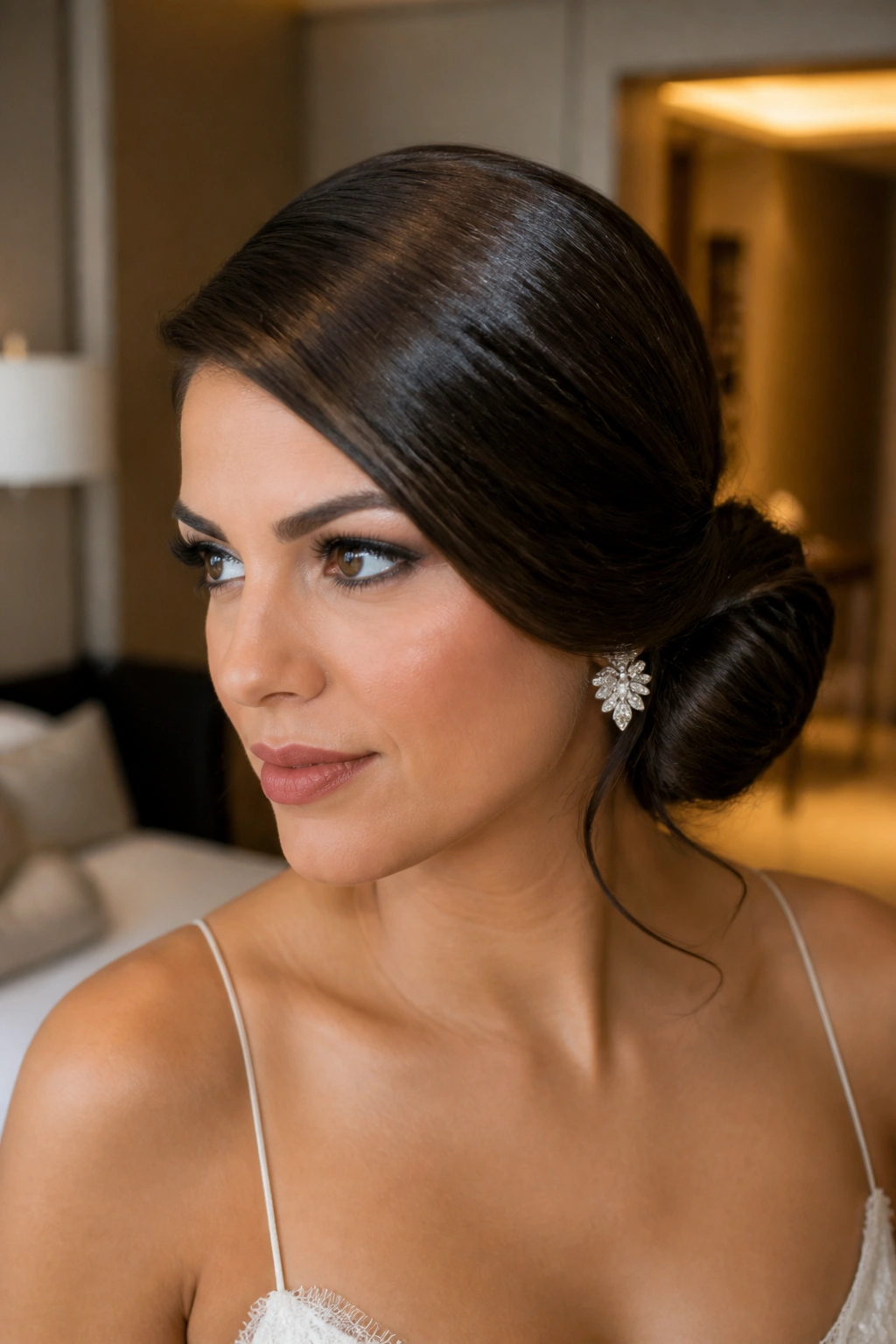
The side-swept low bun is the answer when a center part feels too strict and a full updo feels too formal. It sits in that sweet spot between easy and dressy, which is why I reach for it more than I probably should.
Unlike a centered bun, this one starts with a clear side part and a soft sweep across the forehead before the hair is gathered low. That tiny shift changes the whole mood. The face looks a little softer, the jawline gets a gentler frame, and the style works especially well with asymmetrical necklines or one-shoulder dresses.
It is also kinder to hair that has a little natural texture. The side sweep hides minor flyaways near the front, and the low placement means you do not need to chase perfection at the crown. That matters when you are getting ready in a hurry and do not want to fight your own hair for 40 minutes.
If you want it to read more formal, keep the bun compact and smooth. If you want a slightly softer finish, leave the outer sweep loose and make the bun a touch more relaxed. Either version works. The difference is in the mood.
7. Braided Crown Updo

A braided crown updo has a way of making hair look intentionally arranged, almost like it was designed around the head instead of placed on it. That is a nice trick for special occasions because it gives detail without a lot of fuss.
What Makes It Stand Out
The braid wraps around the head like a halo, then folds into a pinned finish at the back or nape. It feels romantic, but it also has enough structure to read formal. I especially like it for outdoor events because the braid keeps the hair in place better than loose curls do.
You can build it from a Dutch braid, a French braid, or two smaller braids joined together. The bigger the braid sections, the softer the look. Smaller sections create a finer, more intricate finish. Both can work. It depends on how much detail you want the hair to show in photos.
- Best on medium and long hair
- Looks fuller when the braid is gently pulled apart after setting
- Works with pins, small flowers, or a single comb
- Handles windy conditions better than most down styles
One warning: do not pancake the braid so much that it loses its shape. A little widening is enough. Too much and the braid starts looking frayed instead of soft.
8. Glossy Blowout With Tucked Ends
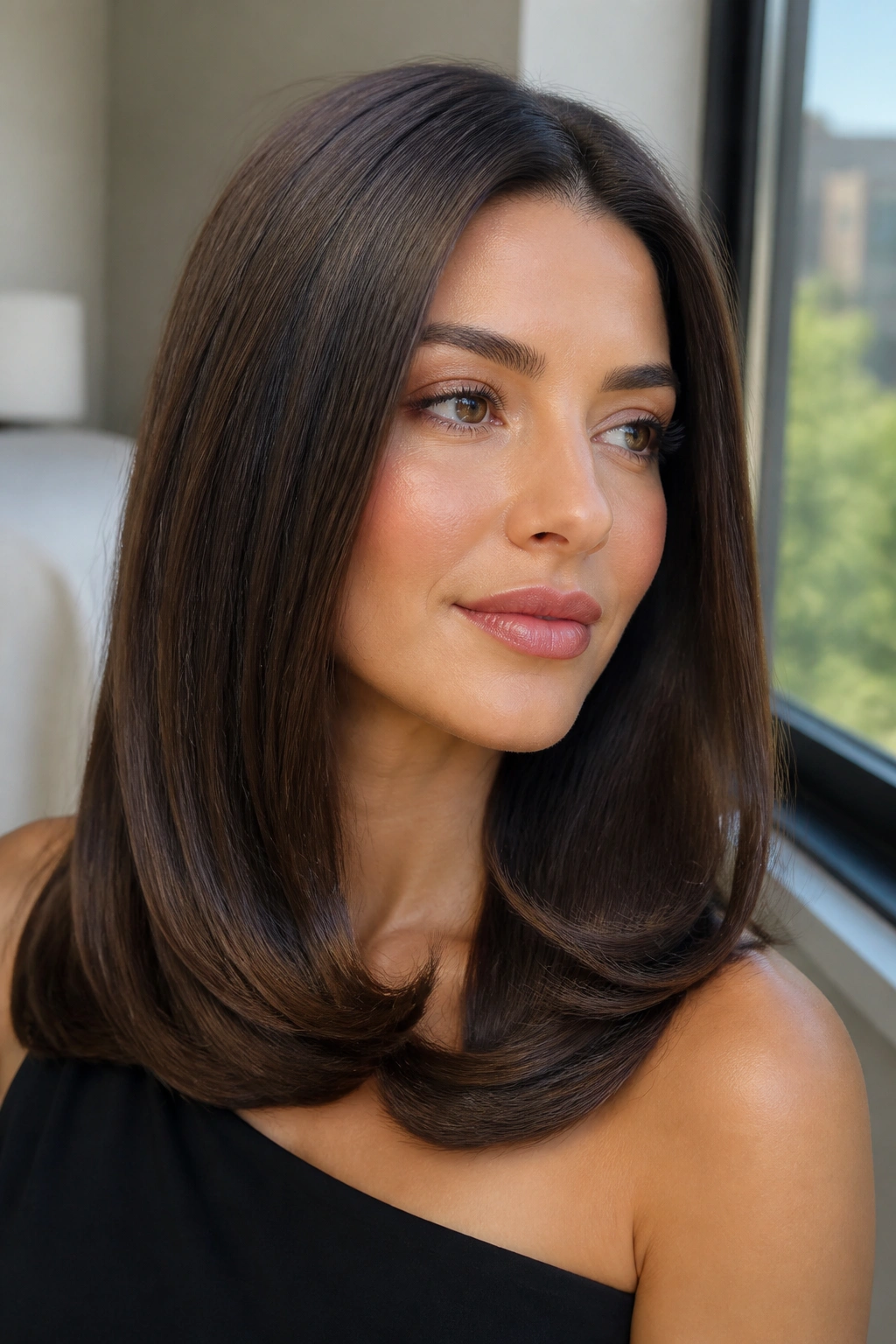
A glossy blowout can absolutely count as formal hair when it is done with intention. The key is shape. The ends should curve in or out on purpose, not flick every direction like they lost a fight with the humidity.
This style is one of my favorites for someone who wants movement rather than an updo. The hair stays down, but it looks finished because the volume sits in the right places: a little lift at the roots, smooth lengths through the midsection, and controlled ends. It is especially useful if your dress has clean lines and you want the hair to echo that simplicity.
The easiest way to get there is with a round brush and a medium heat setting. Dry the hair in sections, pulling each one taut so the cuticle lies flatter. Then tuck the ends under with a large barrel brush or a blow-dry brush for that soft bend. If your hair tends to collapse, set the front pieces in velcro rollers while you finish makeup. Old trick. Still works.
This style does not shout. That’s the point. It looks polished in daylight and even better under evening light, which is exactly where it tends to be photographed.
9. Bubble Ponytail With Satin Bands

Can a ponytail look elegant? Yes, if it is built with care instead of thrown together in three seconds before you leave the house.
The bubble ponytail has a clean, sculpted shape that feels modern but still formal enough for special occasions. You create a sleek base, then add evenly spaced elastic bands down the length of the ponytail and gently pull each section outward to form soft “bubbles.” Satin or wrapped bands keep the look refined. Tiny clear elastics are fine under the surface, but they are not the whole look.
This one works best when the crown is smooth and the bubbles are evenly sized. Uneven spacing makes the ponytail look accidental, and that is not the mood we’re after. I also like it for long hair because it gives the length a point of focus instead of letting it hang there without shape.
If you want it to feel more formal, wrap a strand of hair around the top elastic and pin it underneath. That small move changes everything. The style goes from sporty to evening-ready fast.
10. Textured Ballerina Bun for Special Occasions
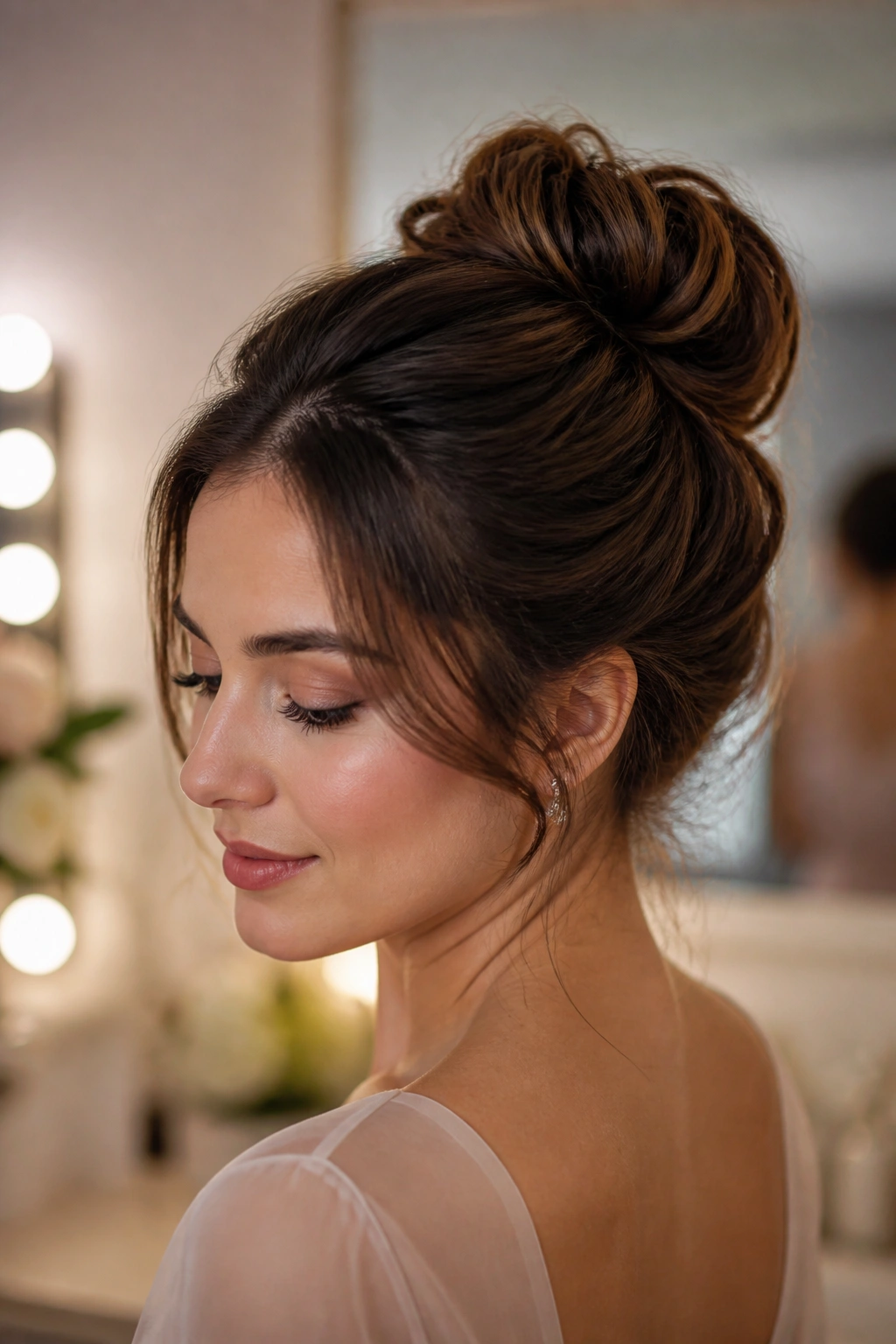
A ballerina bun sounds strict, but the textured version has a softer side. It still sits high or mid-height and keeps the hair tidy, yet the finish has enough movement to avoid looking severe.
The secret is leaving a little texture in the hair before gathering it. A flat ironed, ultra-sleek bun can be stunning, but it also shows every flaw in the shape. Texture gives you forgiveness. It lets the bun look full without needing a giant amount of hair, and it keeps the style from feeling too controlled.
How to Keep It Graceful
- Prep dry hair with a light mousse or texture spray.
- Pull it into a secure ponytail at the crown or slightly lower.
- Twist the length into a coil, then wrap it into the bun.
- Pin in a circle so the base feels stable, not lopsided.
- Tug a few pieces at the crown for softness, then stop. That last step is where many people overdo it.
A ballerina bun looks especially nice with statement earrings. The face is open, the neckline stays clear, and the bun gives the whole outfit a clean finish that feels purposeful.
11. Halo Braid Into a Low Knot
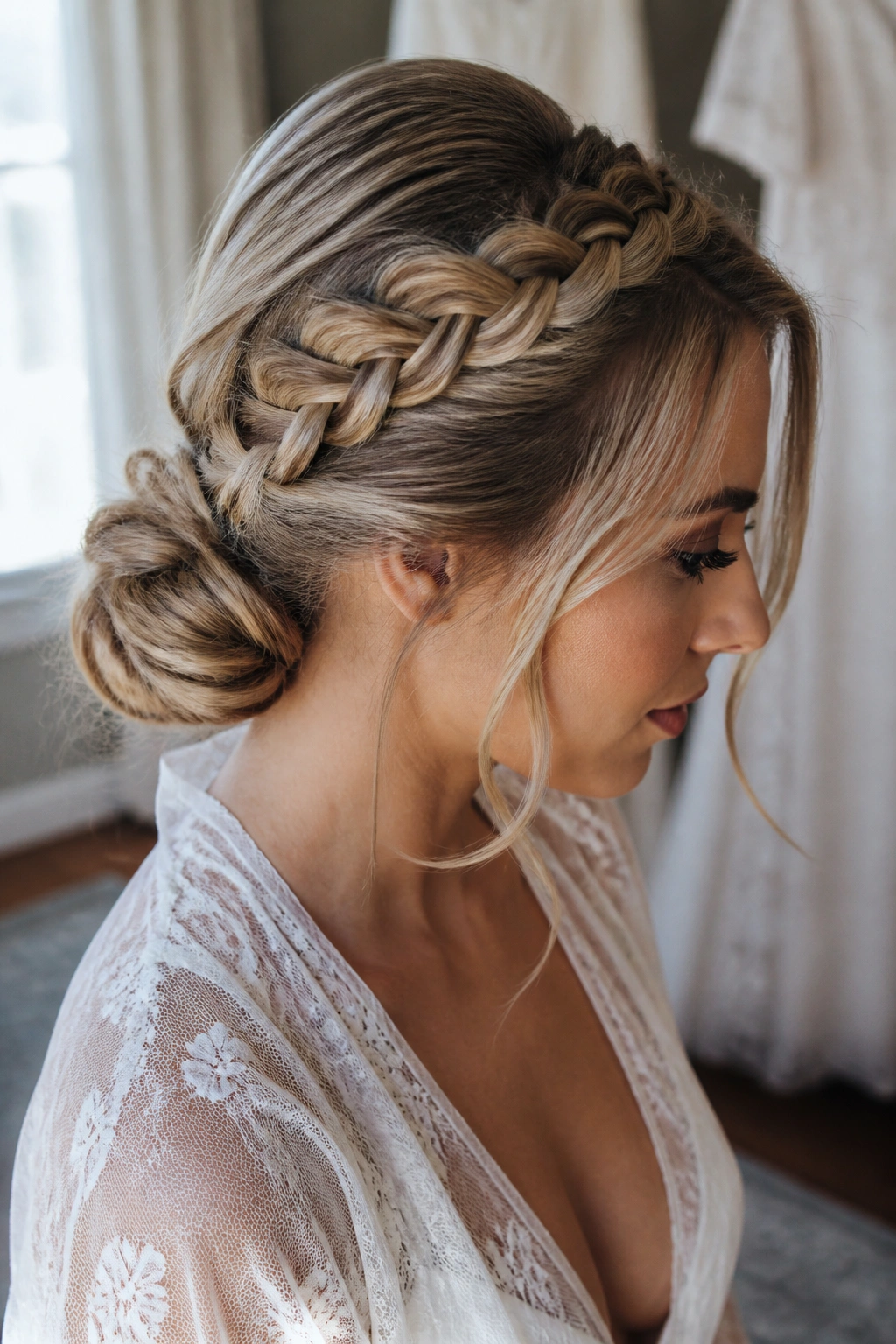
The halo braid into a low knot is one of those styles that looks like it took forever, even when the structure is surprisingly logical. That makes it useful for formal events where people tend to notice details.
The braid frames the crown or hairline, then disappears into a knot at the nape. So you get two visual levels at once: detail up top and a grounded finish at the bottom. That gives the style a lot of presence without making it bulky.
It works best when the braid is anchored tightly at the start and then relaxed a touch as it wraps around. If the top is too loose, the whole thing can slip. If it is too tight, the braid loses the soft, woven look that makes it elegant in the first place. A little tension. Not a wrestling match.
I think this style is especially strong for dresses with delicate straps or lace because it adds texture without cluttering the shoulder line. It also wears well over long events, which is more useful than it sounds. Fancy hair that falls apart before the cake is served is not my idea of fancy.
12. Finger Waves on Short Hair

Short hair can be formal. It just needs shape, shine, and a little nerve.
Finger waves are the classic answer when a bob or cropped cut needs to feel dressed up. The style creates sculpted bends close to the head, which gives short hair a sense of direction that curls alone sometimes miss. It also looks excellent with a strong lip or a dramatic earring because the hair stays close and lets the rest of the look speak.
Unlike loose waves, finger waves require a more deliberate set. You section the hair, apply a styling lotion or mousse, and shape the wave with a comb and fingers before pinning or clipping it to set. It is slower than tossing a curling iron through the hair, but the payoff is worth it. The finish looks tailored, not casual.
Best Uses
- Cocktail dresses with sharp lines
- Satin or velvet outfits that need a little vintage echo
- Short bobs, lobs, and cropped cuts
- Events where you want a polished look that stays close to the head
This is not the style for someone who wants fast and easy. It rewards patience. A lot.
13. Side Braid With Pearls or Pins

A side braid can be very formal if the braid itself is neat and the accessories are chosen with restraint. The problem is that a lot of side braids look too loose or too beachy. That is not the version I mean here.
The braid should start low, sit over one shoulder, and be woven with enough tension to hold its line. Then you add detail. Pearl pins tucked into the outer edge, a few metallic hair combs, or a small ribbon at the end can turn the whole style into something ceremony-ready. The braid becomes the base; the accessories do the storytelling.
I like this option for long hair because the braid creates a visible shape in photos. It also works nicely if you want to wear one statement earring and keep the other side quieter. The asymmetry feels deliberate, not random.
What matters most is the braid’s surface. If it is too loose, the pins sink in and vanish. If it is too tight, the braid loses softness. Aim for a braid that looks woven and tidy, then add one accent, not five. Too much sparkle can crowd the braid. One good pin is often enough.
14. Low Ponytail With a Wrapped Base

The low ponytail gets dismissed too quickly. That’s a mistake.
A smooth low ponytail with a wrapped base is one of the cleanest special-occasion styles because it gives you shape without fuss. The hair is brushed low at the nape, secured tightly, and then a section of hair wraps around the elastic so the base disappears. That single move makes the ponytail read far more finished than a bare elastic ever could.
This style is especially useful when the dress has a strong back or when you want the jewelry to stay visible. It also photographs well from the side, which is one reason stylists keep returning to it. You can make it sleek and glossy, or leave a little softness at the front with a side part and a tucked wave.
The best version has one subtle bend in the tail itself. Not a crimp. Not beach texture. Just a smooth, controlled curve that keeps the length from hanging limp. A little understructure matters. Always has.
If you need something elegant that will not fight you for hours, this is a strong place to start.
15. Pinned-Back Volume at the Crown for Special Occasions

Sometimes the best choice is not a full updo at all. Sometimes it is just enough lift at the crown to make the whole head look more formal.
Pinned-back crown volume gives you that shape without taking the rest of the hair away. The front and top sections are lifted, lightly backcombed if needed, and pinned so the hair has height where it counts. The lengths can stay down, softly curled, or straightened. That flexibility is the whole appeal.
Why It Reads Formal
Because the crown changes the proportions. A little height can make earrings stand out, soften a round face, and give a gown or suit jacket more presence. It also helps the style stay visible in profile, which matters more in photos than people expect.
- Works well on medium to long hair
- Needs support at the roots if the hair is fine
- Can be paired with loose curls or smooth ends
- Looks best when the front is brushed, not stiffly frozen
I like this option for events where you want to feel dressed up but not trapped in a rigid style. It’s a nice middle ground. Not boring. Not fussy either.
16. Twisted Low Knot

A twisted low knot has a softer feel than a classic bun, and that looseness is its charm. It looks like hair that was arranged with care rather than forced into a shape.
The style starts with two or more sections twisted back toward the nape, then folded into a knot and pinned. Because the hair is twisted before it is wrapped, the surface gets subtle texture and dimension without needing braids or curls. That makes it appealing if you want detail but don’t want the hairstyle to dominate the outfit.
I find this one works especially well when the dress has drape — silk, crepe, satin, anything that moves a little. The knot echoes that soft line. It also holds up nicely on hair that is not perfectly smooth, which is a quiet blessing on a long day.
If you want it sharper, keep the twists tight and polished. If you want it softer, leave the front a touch looser and let a few pieces bend around the cheekbones. Both versions feel dressed up. The difference is mostly about mood.
17. Curled Pixie With a Decorative Pin
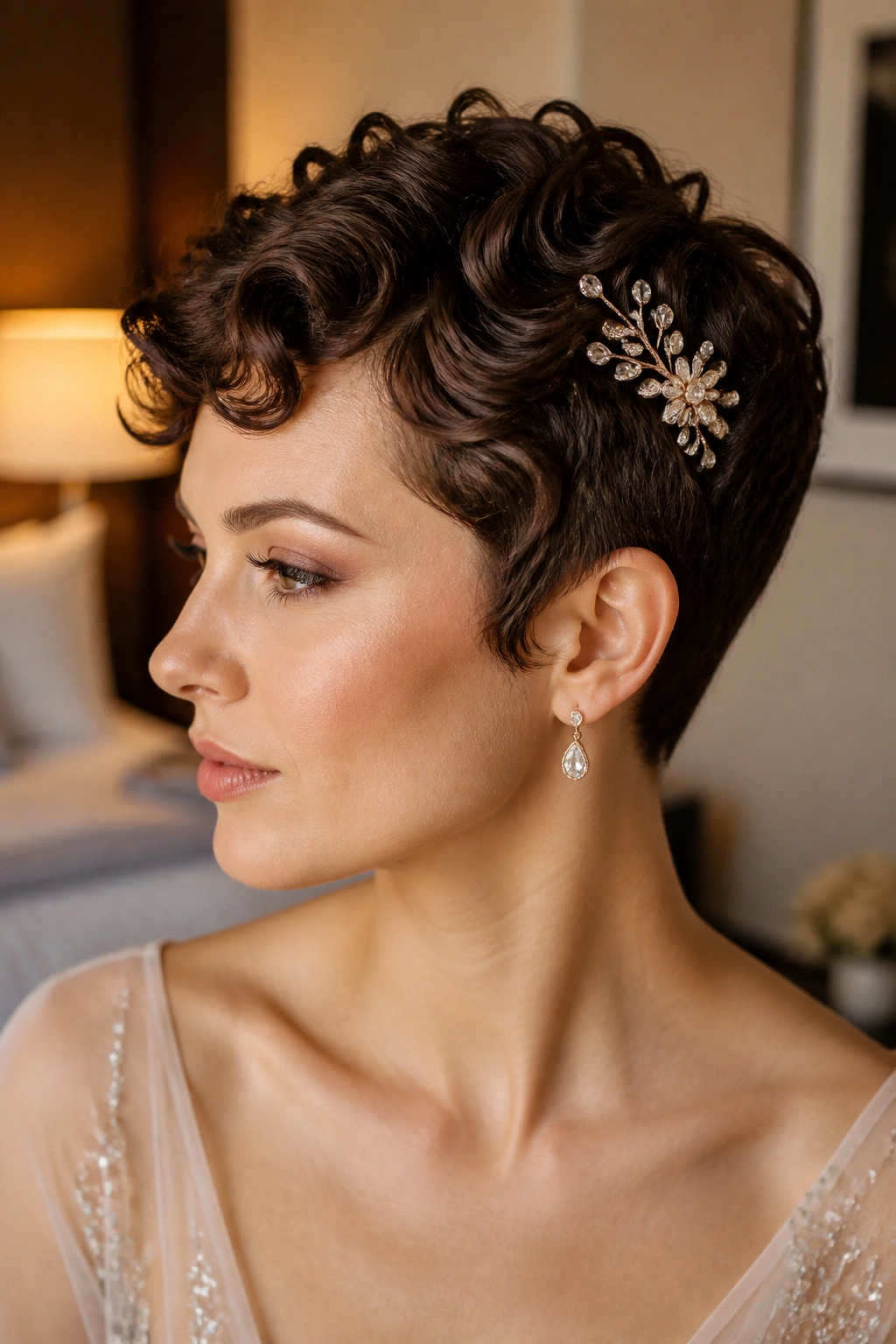
Short hair can be glamorous. A curled pixie proves it every time.
The key is not trying to make short hair behave like long hair. That rarely ends well. Instead, work with the cut you have and add shape through soft curls, finger shaping, or a smooth bend at the front. A decorative pin near the temple or above the ear gives the style one clear focal point, which is enough when the haircut already has personality.
What makes this formal is the finish. The hair should look clean at the roots, with the texture directed on purpose, not left to flop around. A light styling cream can define the ends, while a small amount of pomade controls the fringe. If the hair is too fluffy, the pin gets lost. If it is too slick, the cut can look flat. There is a middle zone, and that’s where the style shines.
This is the sort of look that pairs well with sharp tailoring or minimalist dresses. It is precise. It has edge. And it does not need length to feel special.
18. Braided Chignon With Soft Face Framing

The braided chignon is one of the few updos that manages to feel ornate without looking fussy. The braid gives the shape texture, then the chignon anchors it low and neat.
Unlike a plain bun, this style carries visible pattern. The braid can begin at the side, across the back, or from a center section that is later folded into the knot. That choice changes the whole feel. A side braid gives more movement. A center braid looks cleaner. Both can be elegant, depending on the outfit.
I like this one for people who want the hair to feel handcrafted. It has that slightly tactile look that plain smooth styles do not always have. A few soft pieces at the temples can keep it from feeling too formal, especially if the event is dressy but not strict.
The best version has a braid that is tidy at the start and just relaxed enough by the time it reaches the bun. Too loose and it loses definition. Too tight and it starts to look stiff. The sweet spot is a braid that still shows its pattern when you step into bright light.
19. Satin-Smooth Straight Hair With Ear Tucks

Straight hair can look every bit as formal as curls if the finish is sharp enough. In fact, I sometimes think straight styles are harder to pull off well because there is nowhere to hide a bad cut or a dull finish.
A satin-smooth blowout or flat-ironed style with the front tucked behind the ears creates a long, clean line that feels modern and calm. The ear tuck exposes jewelry and opens the face, while the straight lengths keep the outfit from feeling crowded. It is especially strong with structured dresses, strong collars, or dramatic necklaces that need breathing room.
Details That Matter
- Use a heat protectant before any heat styling
- Pass the flat iron slowly enough to smooth, not scorch
- Finish with a light gloss spray on the mid-lengths and ends
- Tuck one side or both, depending on the neckline
The style depends on sheen. Matte straight hair can look unfinished. Glossy straight hair looks intentional. That is the whole game here. A precise part, smooth roots, and a clean ear tuck do more work than people expect.
20. Waterfall Waves That Read Formal
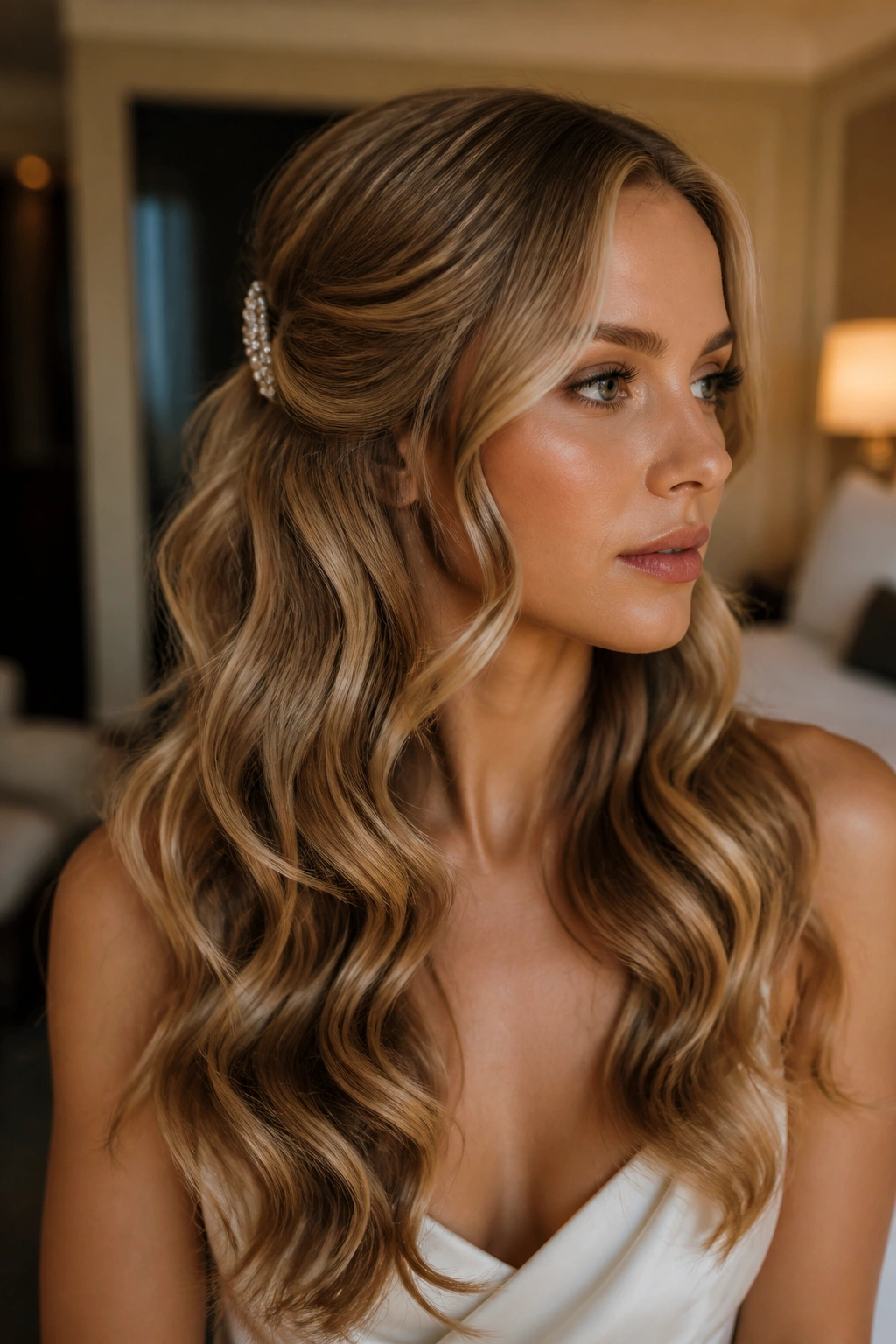
Waterfall waves sit somewhere between loose curls and sculpted old-school glam, and that middle ground is exactly why they work so well for special occasions. They have movement, but not chaos.
The pattern is built by curling the hair in sections, then letting the waves fall in a staggered, flowing shape instead of brushing them into one uniform bend. That creates a cascading effect through the lengths. I like this look for long hair because it keeps the ends visible and avoids that heavy curtain effect that sometimes happens with one-size-fits-all curls.
It helps to curl away from the face on one side and toward the face on the other, then set the front pieces so they stay defined. A large-barrel iron, a little setting spray, and patient cooling time will do more for this style than aggressive brushing ever will. Let the hair cool. Seriously. Warm curls collapse faster.
If you want the style to feel more formal, pin one side back with a jeweled clip or comb. If you want softness, leave the waves free and let the neckline do the work. That flexibility is why waterfall waves stay useful across weddings, receptions, and any event where you need the hair to look done without looking stiff.
