



The wolf cut has a reputation problem at weddings.
Give it the right finish, though, and it stops reading as rebellious and starts reading as soft, deliberate, and a little more expensive-looking than people expect. That’s the part I like. The cut already brings movement; the bridal version is mostly about deciding where that movement belongs, how much shine to keep, and which pieces should stay loose near the face.
Brides get nervous about wolf cut wedding hairstyles because the haircut can look messy if it’s treated like a standard blowout. Fair concern. The fix is not to flatten it into something it isn’t. The fix is to shape it so the layers work with the dress, the veil, and the rest of the styling instead of fighting all three at once.
A good bridal wolf cut does three things at the same time: it frames the face without swallowing it, it holds shape for hours, and it still looks like hair a human actually wore. That last part matters more than people admit. Hair that feels too stiff or over-sprayed tends to look dated in close-up, while a softer finish can still survive hugs, dancing, and a dozen photos.
1. Soft Curtain Bangs for Wolf Cut Wedding Hairstyles

If I had to point one bride toward the safest starting place, it would be this. Soft curtain bangs with blended wolf cut layers are the easiest way to make the haircut feel bridal without sanding off its personality.
The trick is in the front. Curtain bangs should open from the center and skim the cheekbones, not fall like a heavy curtain across the forehead. That little bit of lift gives the face room, which matters a lot when you’re wearing earrings, a neckline with structure, or a veil that sits near the crown.
Why it works
- The shortest face-framing pieces sit around the cheekbone or just below, so the cut reads soft instead of choppy.
- A round brush and a medium blow-dryer nozzle can give the bangs a gentle bend, not a hard curl.
- If your hair is dense, ask for the front layers to be longer and slightly feathered so the ends do not puff out around the eyes.
I like this version for brides who want movement but not drama. It feels polished in a very quiet way. Not bland. Just controlled.
One good rule: keep the shortest pieces long enough to tuck behind the ear if needed. That tiny bit of flexibility saves you when the veil comes off and you want the style to still make sense.
2. Half-Up Twists That Keep the Wolf Cut Shape
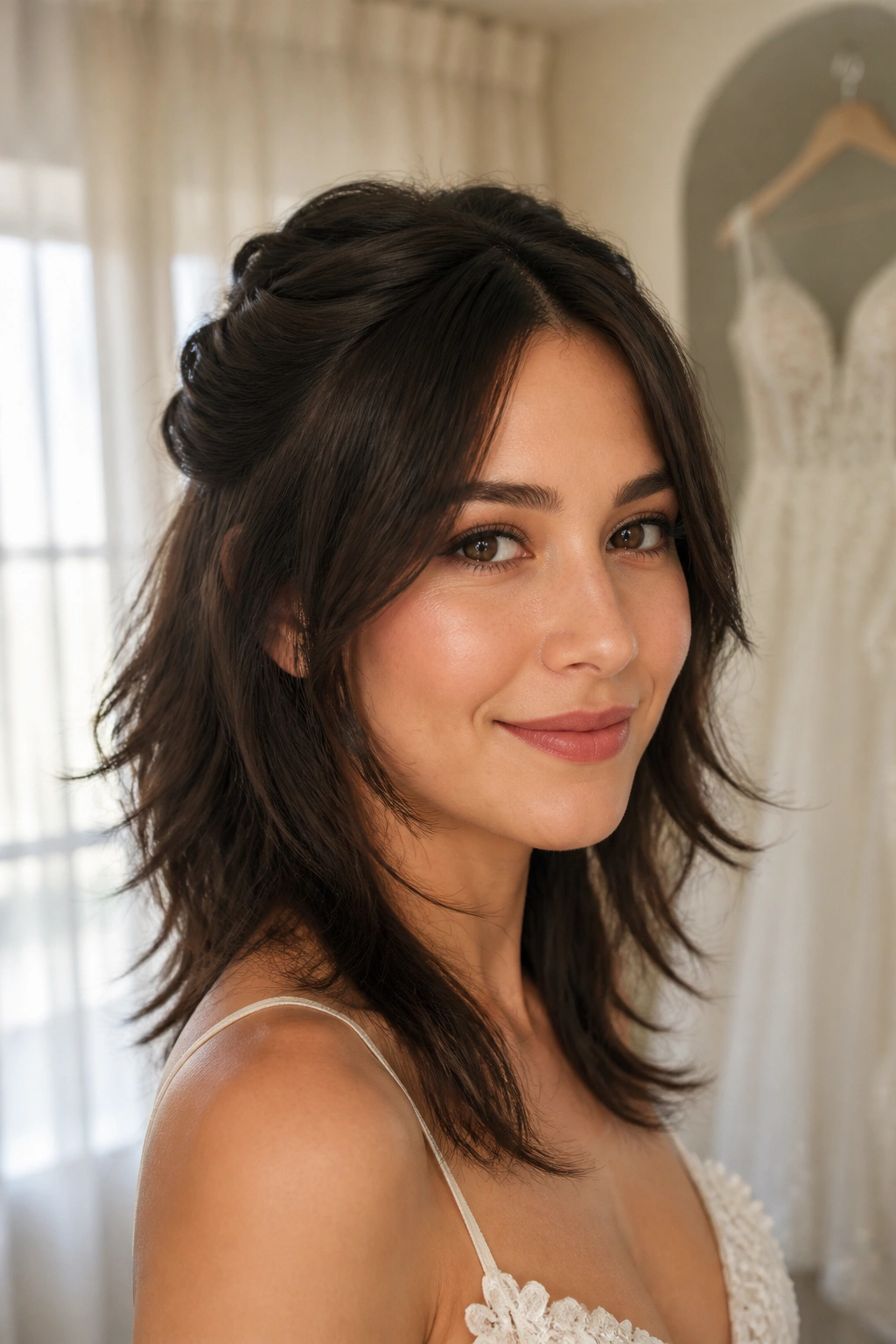
Half-up twists are where the wolf cut stops feeling like “just hair” and starts behaving like wedding hair.
This style works because it keeps the top section calm while letting the layers below stay loose and touchable. You twist each side back from the temple, meet them at the back of the head, and pin the join just under the crown. The shape stays soft, but the hair no longer falls into your face every time you turn your head.
The best part is how forgiving it is. If your layers are a little uneven, the twists help hide that. If your hair is fine, a small amount of backcombing at the roots gives the pins something to grip. If your hair is thick, the half-up shape removes enough weight to keep the style from collapsing by the second toast.
I’d pair this with a dress that has either a low back or a neckline with detail. The hair is half framed, half free, which feels right for brides who do not want the ceremony to look too formal and the reception to look too messy.
And yes, it works with a veil. A comb veil can sit just below the twist point, which keeps the whole thing tidy without hiding the haircut.
3. Sleek Wolf Cut With Polished Ends

Can a wolf cut look sleek? Absolutely. It just needs discipline.
A polished version keeps the layers, but the root area is smoother and the ends are shaped instead of puffed. Think clean part, controlled volume at the crown, and a soft bend at the ends rather than a cloud of texture. The haircut still reads as a wolf cut because the layer pattern is there. It just sounds a little more formal.
The real difference comes from product. A light smoothing cream through the mid-lengths helps the hair lie flat where it should, while a small amount of shine serum on the ends keeps the piecey sections from looking dry. If you’re using a flat iron, work in 1-inch sections and keep the pass quick. You want movement, not poker-straight hair with no life in it.
What to ask for at the trial
- A clean middle part or a very soft off-center part
- Face-framing layers that start around the jaw
- Ends that are beveled, not blunt
- Enough root lift to avoid a flat helmet look
This is the style for brides who like a sharper dress, a simple bouquet, or a very minimal gown. It’s restrained, but not boring. That’s a harder line to walk than it sounds.
4. A Romantic Low Chignon With Loose Face Framing
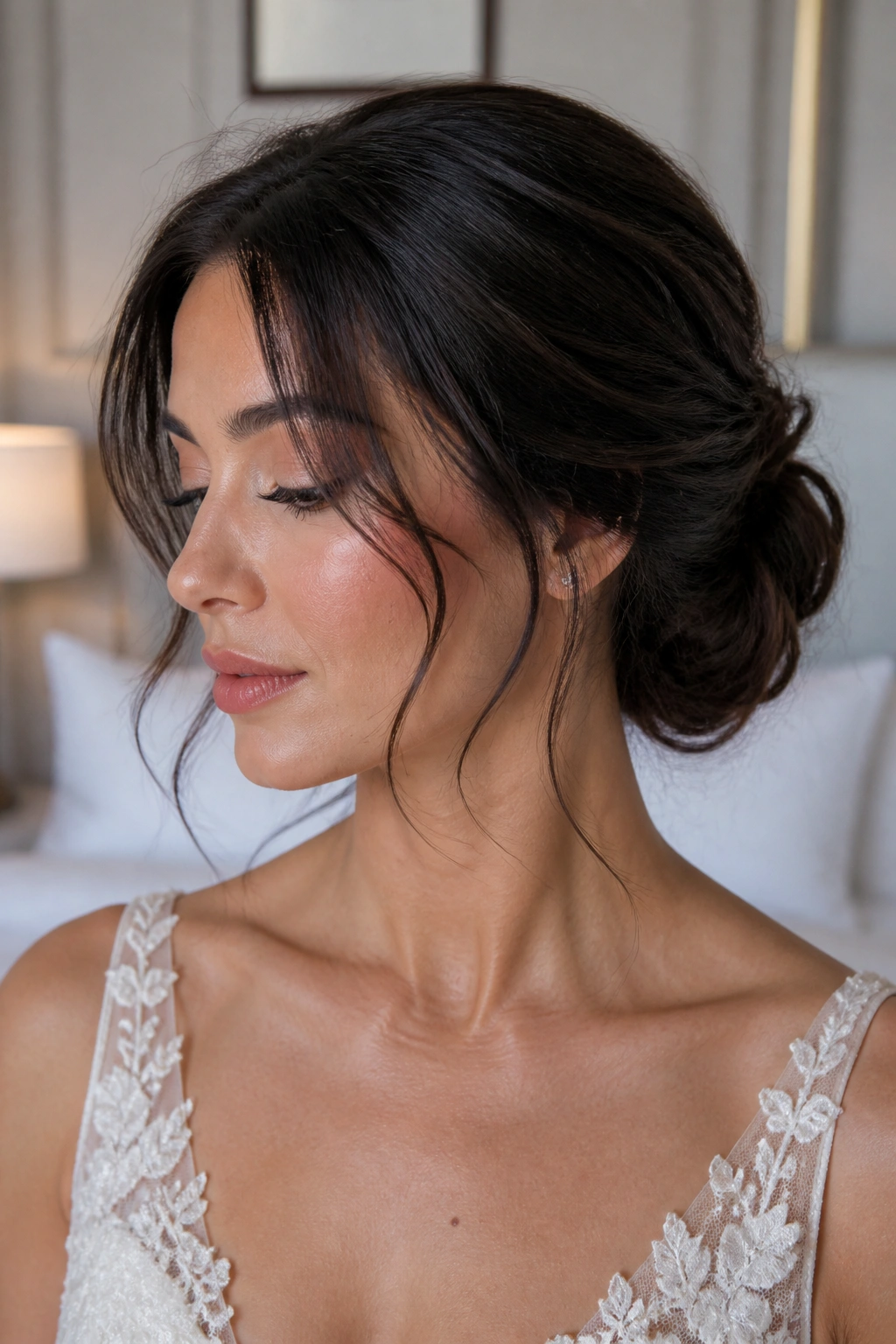
A low chignon gives a wolf cut a completely different mood. Suddenly the haircut feels less like a haircut and more like a deliberate bridal shape.
The front pieces matter here. Leave two slim sections out near the cheekbones, then gather the rest of the hair into a low twist or knot at the nape. The wolf cut layers won’t disappear; they’ll soften the bun and keep it from looking too neat. That’s the whole point.
I like this style for brides who wear square necklines, bateau necks, or structured satin. The low shape balances those crisp lines. If the gown is busy, the hair can stay simple. If the gown is plain, a chignon with a little texture gives you enough detail without needing much else.
A stylist can also work a few hidden pins into the bun and leave the top slightly airy. Don’t compress everything. A chignon that’s squashed tight can make the wolf cut feel awkward, like the haircut got edited out. Leave a little softness around the crown, and the shape looks intentional instead of forced.
If you want a clean ceremony look that can loosen a bit later, this is one of the strongest options on the list.
5. Braided Crown Details for a Soft Boho Finish
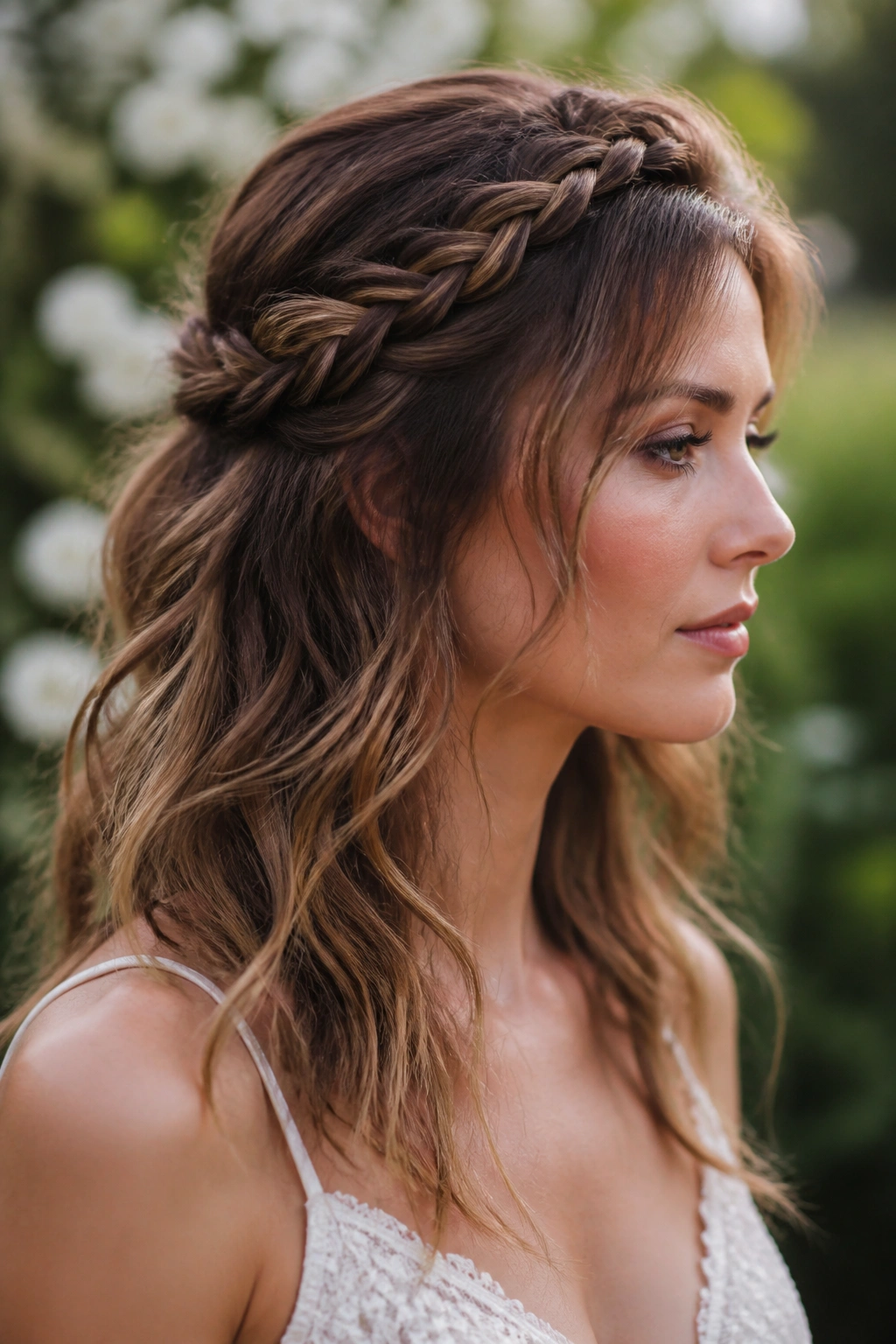
A braided crown can make a wolf cut feel calm without killing the texture. That’s why I keep coming back to it for brides who want something a little earthy, a little romantic, and not too precious.
The braid does the organizing. It pulls attention across the top of the head, which gives the layered sides a place to settle. Then the lower lengths stay loose, so the wolf cut still has movement underneath. It’s a smart trick, really. The braid carries the ceremony part, and the rest of the hair carries the personality.
The best way to wear it
- Keep the braid small and slightly loose, not tight enough to flatten the head.
- Start it near one temple and carry it across the crown, or do two smaller braids that meet at the back.
- Leave the ends of the layers soft, with a bend from a 1-inch curling iron or a thick wand.
- Use matte pins if the braid needs anchoring; shiny pins tend to look too obvious in person.
This style loves outdoor settings, but it is not limited to them. A satin dress and a braid can work together if the braid is relaxed enough. That contrast is the whole appeal.
One thing I would avoid: making the braid too perfect. A too-clean braid can fight the shaggy nature of the cut and leave the hair looking stiff at the edges. That’s a bad trade.
6. Hollywood Waves With a Wolf Cut Edge

Classic Hollywood waves are usually all about uniformity. A bridal wolf cut version is better when it keeps a little irregularity in the ends.
That difference matters more than people think. Instead of trying to force every strand into the same polished curve, you let the layers break slightly at the bottom. The wave pattern still looks smooth from a distance, but up close it has some life. It feels less costume-y, which is a word I use carefully because wedding hair can go there fast.
This style works best on medium to long hair, especially if the wolf cut has enough length through the front to support a side sweep. A 1.25-inch iron usually gives the right size wave, and a soft brush-out at the end smooths the pattern without destroying it. If the hair is very fine, a volumizing mousse at the roots helps the shape stay lifted. If the hair is coarse, a light cream through the ends keeps the wave from puffing out.
I’d choose this for brides who want a red-carpet kind of finish but still want the cut to show. It looks lovely with vintage-inspired gowns, gloves, satin, and bold earrings. It also has enough drama that you do not need much else. Good. Because over-accessorized hair is usually where the whole look starts to wobble.
7. A Messy Textured Bun That Can Handle the Whole Day
The messier bun is often the smartest choice when you need your hair to survive a long ceremony, photos, hugging, and a dance floor.
A wolf cut gives you built-in texture, which means you do not have to fight for volume before you start pinning. Gather the hair low or mid-low, twist it into a loose bun, and let some of the shorter layers escape around the ears and nape. Those pieces make the style look soft instead of scraped back.
How to keep it deliberate
- Spray texture mist through the lengths before pinning so the bun has grip.
- Use U-pins and a few hidden bobby pins rather than one giant mound of pins.
- Pull a few face-framing pieces free after the bun is secured.
- Stop before the bun gets too round; a slightly flattened shape looks more natural with a wolf cut.
This is not the bun for a ceremony where every hair needs to stay glued in place. It’s the bun for brides who want movement and accept that a few wisps will come loose. That is not a flaw. It is the reason the style works.
I also like this option when the dress has heavy detail at the neck or shoulders. The hair gets out of the way, but it does not vanish.
8. Wet-Look Styling for a Modern Bridal Finish

Can a wolf cut feel formal without losing its edge? Yes, if you keep the shine controlled and the silhouette clean.
Wet-look bridal hair sounds bold because it is. But the shape can be elegant when the product is used with a light hand. Start with damp hair, work a strong-hold gel or styling cream through the roots and top layers, then comb everything into the part you want. The ends should stay a little softer, not saturated to the point of looking greasy.
This look suits brides who like sharp tailoring, silk, metallic fabrics, or very simple dresses. The haircut itself becomes the statement. You are not hiding it at all. You are leaning into the texture and making it feel deliberate.
One caution. Product overload shows fast. A heavy gel layer can flake, and that is a miserable surprise halfway through a wedding day. Use less than you think, then smooth it down with a fine-tooth comb or a soft brush. If the hair needs extra shine, mist it with a lightweight gloss spray from about 8 inches away.
It’s a strong choice for evening receptions, especially when the dress and makeup already have a clean, modern line.
9. Loose Waves With Fresh Flowers Tucked In
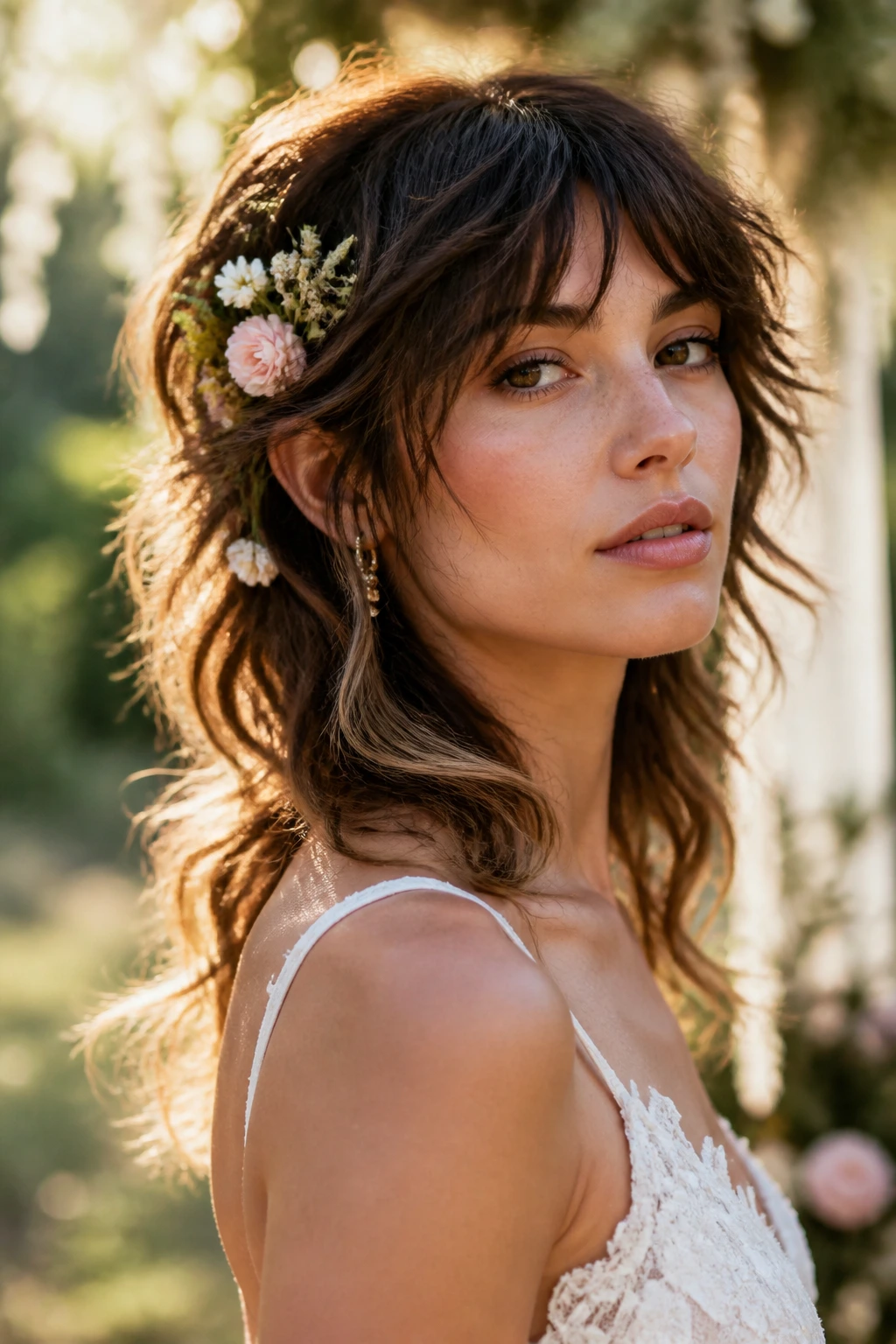
A few flowers can turn a wolf cut from pretty to fully bridal in a way that feels easy, not overworked.
The trick is placement. You don’t want a bouquet sitting in the hair. You want small blooms or greenery tucked where the layers already create shape — near the temple, behind one ear, or just above the nape. The wolf cut gives the flowers texture to sit against, which makes the whole arrangement feel less rigid.
What tends to work best
- Spray roses for softness and a small scale
- Waxflower for a lighter, airy look
- Orchids when you want one clean, sculptural bloom
- Thin wired greenery if you want the hairpiece to follow the haircut rather than sit on top of it
This style is lovely with garden weddings, but I’d use it anywhere the dress and makeup are already soft. It does not need to be boho. A pearl-drop earring and a simple bouquet are enough to keep it balanced.
The part I like most is that flowers let the haircut stay loose. You get the bridal signal without pinning the life out of the layers. And when the flowers are small, the style still works after the ceremony instead of falling apart the second you move.
10. A Deep Side Part for Soft Drama
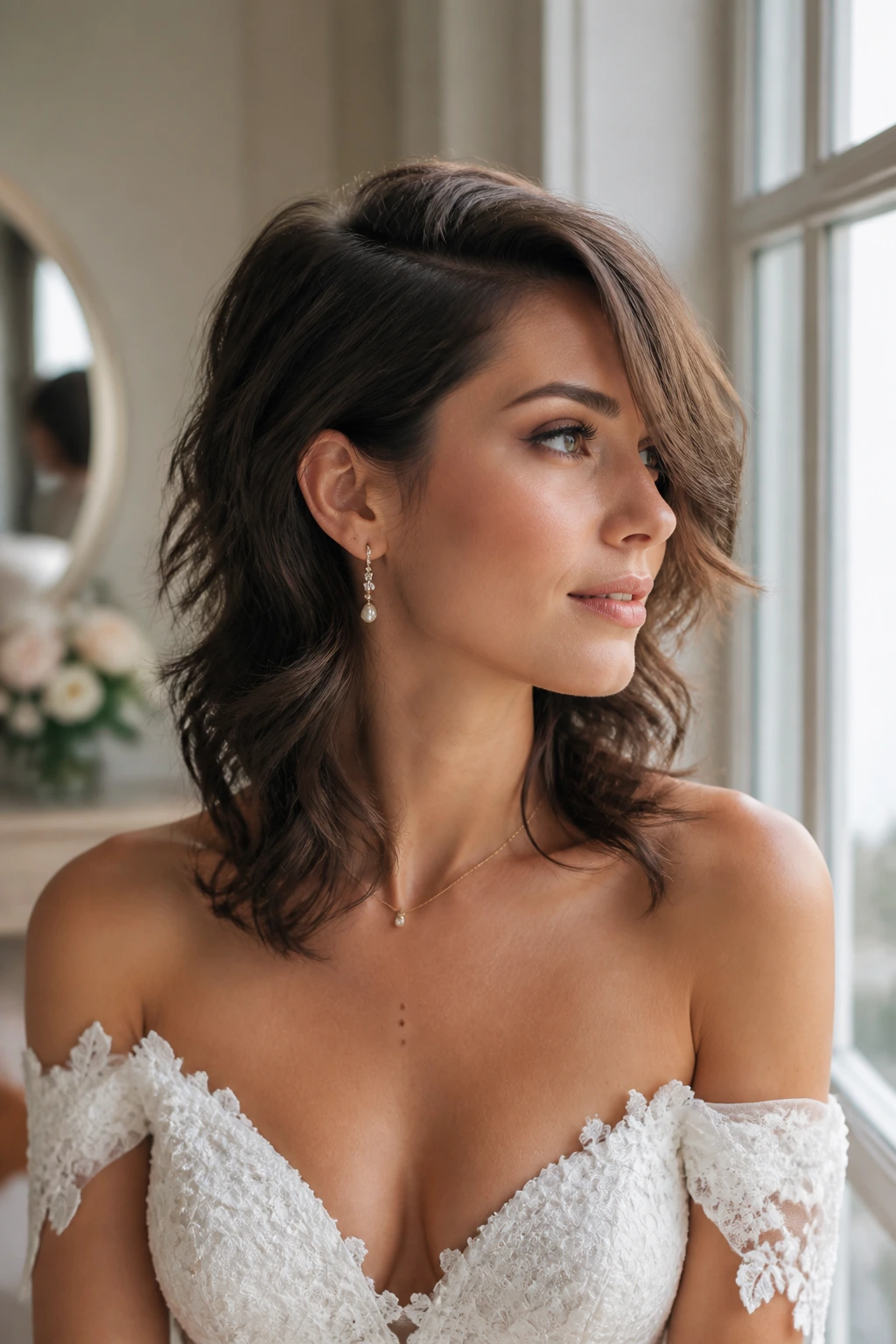
A deep side part can change the whole personality of a wolf cut. One small shift, and the haircut suddenly feels more formal.
This works because asymmetry makes the layers look intentional. Sweep the heavier side across the forehead, let the other side sit closer to the face, and pin one portion behind the ear if you want the neckline to show. The result is softer than a center part and more dramatic than a plain blowout.
The best part? It gives you options with jewelry and dress shape. A one-shoulder gown loves a deep side part. So does a dress with a strong neckline or one big earring. The hair does not need to carry the entire look, but it does need to support it. This does that cleanly.
I’d keep the roots lifted at the crown and the ends lightly beveled. If the hair is too flat, the side part can look tired instead of elegant. If it’s too puffy, the part loses its shape. Somewhere in the middle is the sweet spot, and it’s less fussy than it sounds.
A small tuck behind the ear on the heavier side often fixes the whole thing. Simple move. Big payoff.
11. A Bubble Ponytail With Soft Wolf Cut Texture
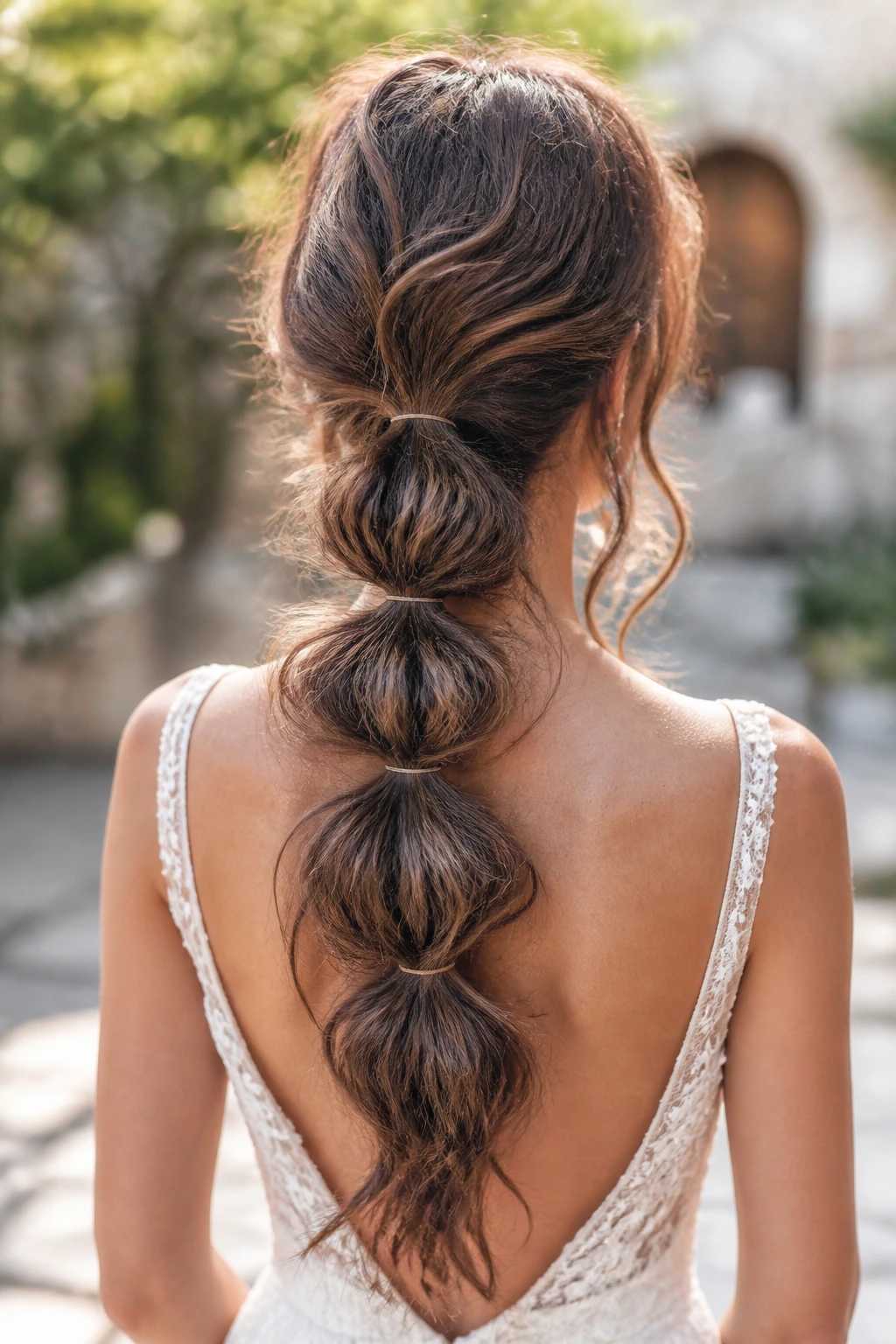
Unlike a tight ponytail, a bubble ponytail lets the wolf cut keep its shape while still feeling secure.
This is one of the more playful bridal options, and I mean that as a compliment. You pull the hair into a ponytail, then place clear elastics every 2 to 3 inches down the length, gently tugging each section so it puffs into a soft bubble. The layered ends keep the style from looking too rigid, which is exactly what makes it work with a wolf cut.
It’s a strong choice for long hair, especially if you want the back of the dress visible. It also holds up well if the reception gets active. Hair stays contained, but the texture keeps it from reading like a gym ponytail in a white dress. That distinction matters more than I wish it did.
How to make it bridal
- Wrap a small strand of hair around the first elastic to hide it.
- Leave a few face-framing pieces loose at the front.
- Keep the top smooth, but not glassy.
- Use a light spray on each bubble section so the shape lasts.
This style is especially good for brides who do not want a veil, or who plan to remove the veil early and keep the hair looking finished. It’s tidy, but it still moves.
12. A Braided Half-Crown That Shows Off the Layers
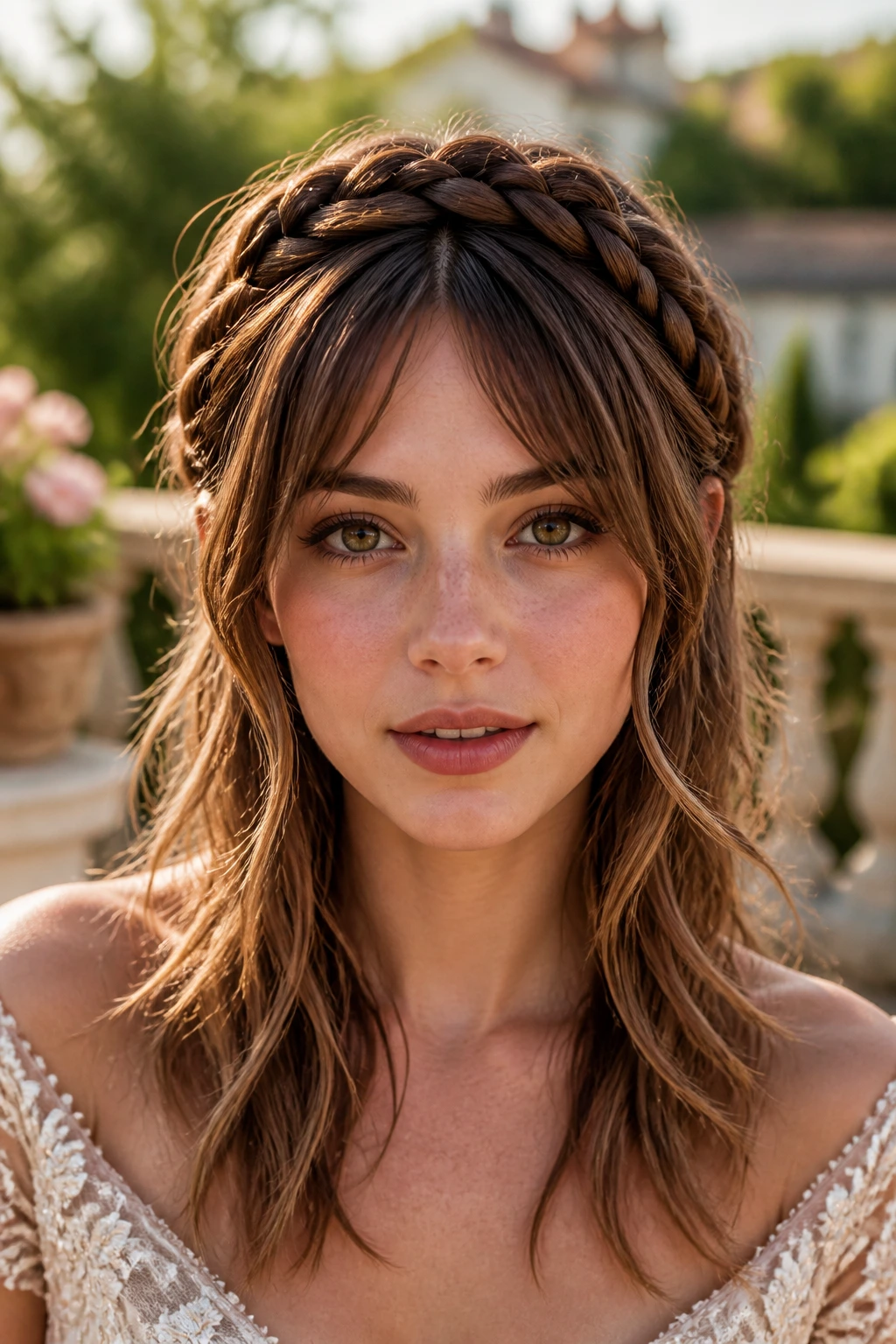
A braided half-crown is one of the easiest ways to make a wolf cut look ceremonial without hiding the haircut.
The braid gives the top of the head structure, while the lower lengths stay loose and piecey. That contrast is what makes it work. You can braid from one temple across to the other, or build two smaller braids and pin them together at the back. Either way, the front gets a clean frame and the bottom keeps its texture.
Where to stop the braid
- Stop the braid above the ear line if you want the style to feel softer.
- Go farther back if you want more coverage around the crown.
- Keep the braid a little loose, then gently widen it with your fingers after securing it.
- Let the shortest layers fall naturally instead of forcing every strand into the braid.
I like this for brides who want something that feels romantic but not sugary. There’s a slight edge to it because the wolf cut still shows through. That edge keeps the look from drifting into costume territory.
A braid that is too tight can make the hair look smaller than it is. A braid that is too loose can unravel halfway through portraits. The middle ground is where this style lives, and once it sits there, it’s one of the strongest options for long ceremonies.
13. A Short Wolf Cut Bob With a Vintage Clip
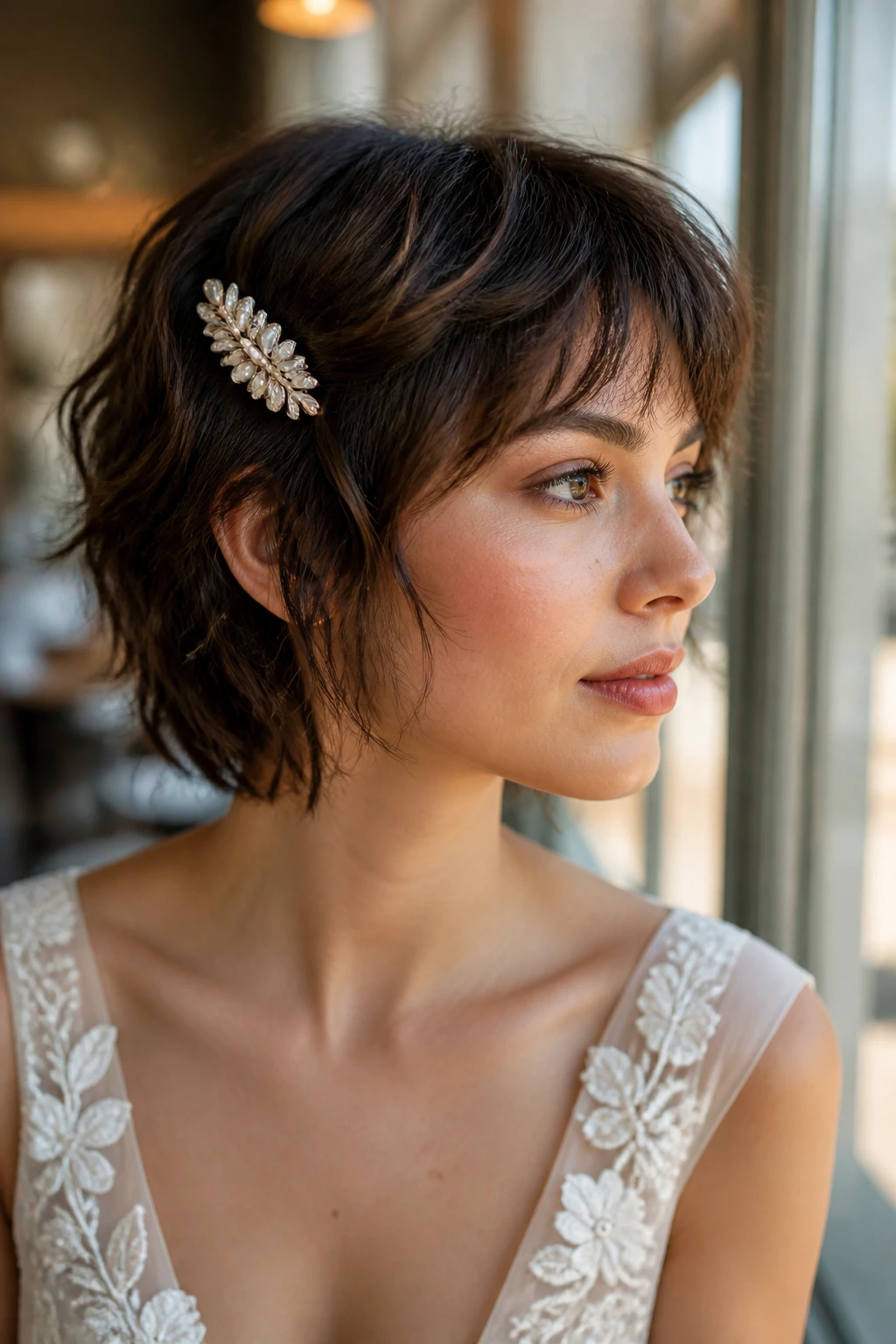
What if your wolf cut barely touches your jaw? Good. You still have options.
A short wolf cut bob can be bridal in a way that feels sharp and chic, not limited. The key is to give the front a little bend, keep the crown lifted, and place a vintage-style clip or barrette where it can do some visual work. That could be just above the ear, at the temple, or tucked slightly behind the side part.
This is the style I’d pick for a courthouse ceremony, a cocktail-style wedding, or any bride who wants the hair to feel current without becoming trendy-for-the-sake-of-it. A short cut has less surface area, so the accessories matter more. A well-made comb can do more here than a room full of hairspray ever will.
The bob version also avoids the problem of overstyling. Short hair can look overworked fast when people keep curling and recurling it. Better to keep the shape soft, add a bit of root lift, and let the clip carry the bridal note. The haircut does the rest.
If the dress is very ornate, this is a relief. The hair can stay clean and still feel special.
14. A Veil-Friendly Long Wolf Cut With Soft Volume
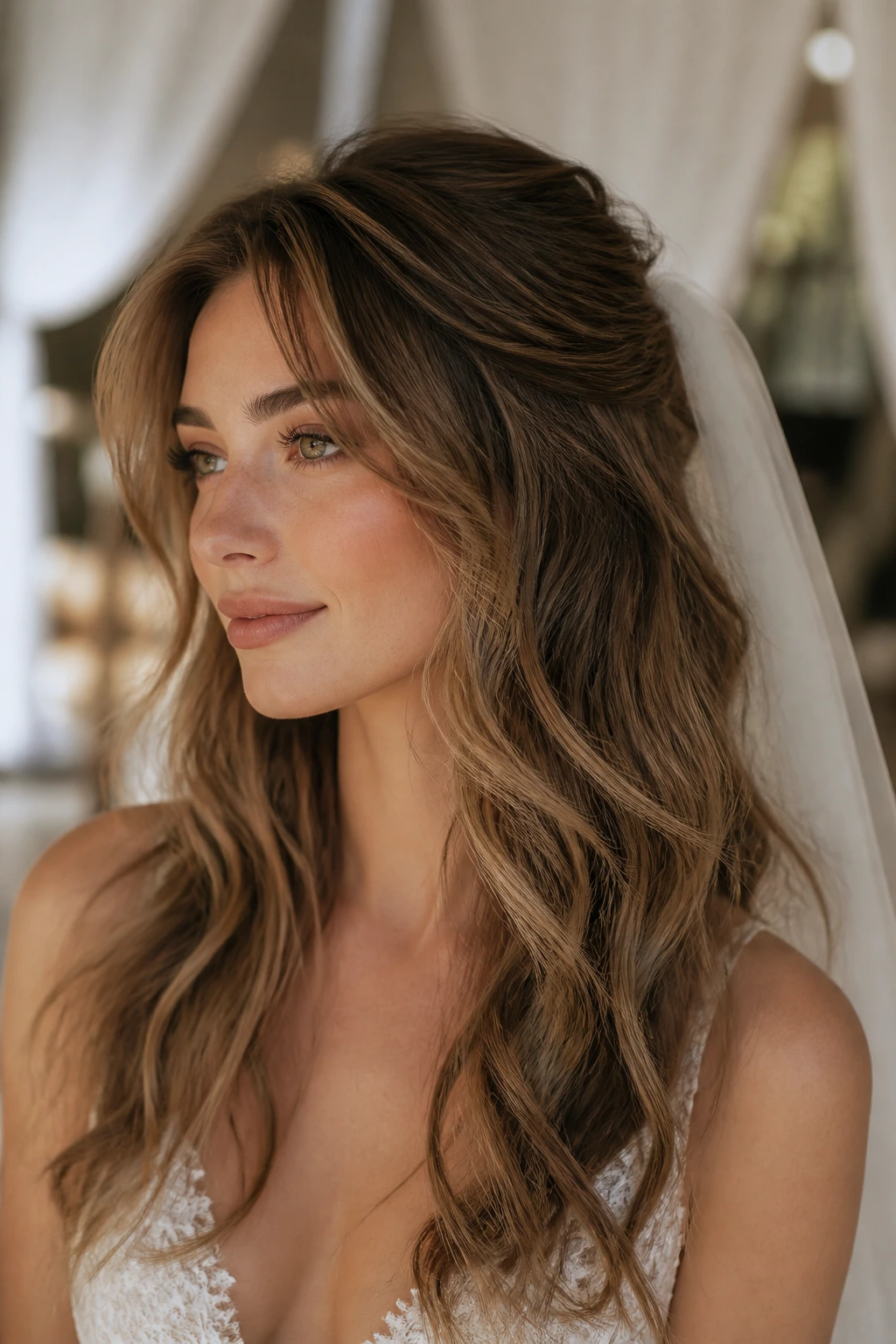
A long wolf cut can carry a veil better than people think. You just have to place the volume where the veil can live around it instead of fighting it.
I’ve seen the mistake plenty of times: too much teasing at the crown, then a veil comb shoved straight into the middle of it. The result looks bulky in a bad way. Better to keep the top softly lifted, not skyscraper-high, and anchor the veil into a lightly teased section a little behind the hairline. That gives the comb grip without flattening the front.
The layers also help here. Long face-framing pieces soften the edge of the veil, and the lower sections can stay loose beneath the comb. If you’re wearing a cathedral-length veil, that movement matters. The hair underneath should still make sense once the veil comes off.
A quick trial in the same neckline as the dress is worth doing. Not because it sounds fancy. Because the comb position can change the whole balance of the look. A veil sitting an inch too high can make the haircut disappear; one sitting too low can drag the style down and make the head look heavy.
This is one of the most practical options on the list. And practical hair, on a wedding day, is underrated.
15. Pearl Pins, Ribbon, and a Wolf Cut That Knows Its Role
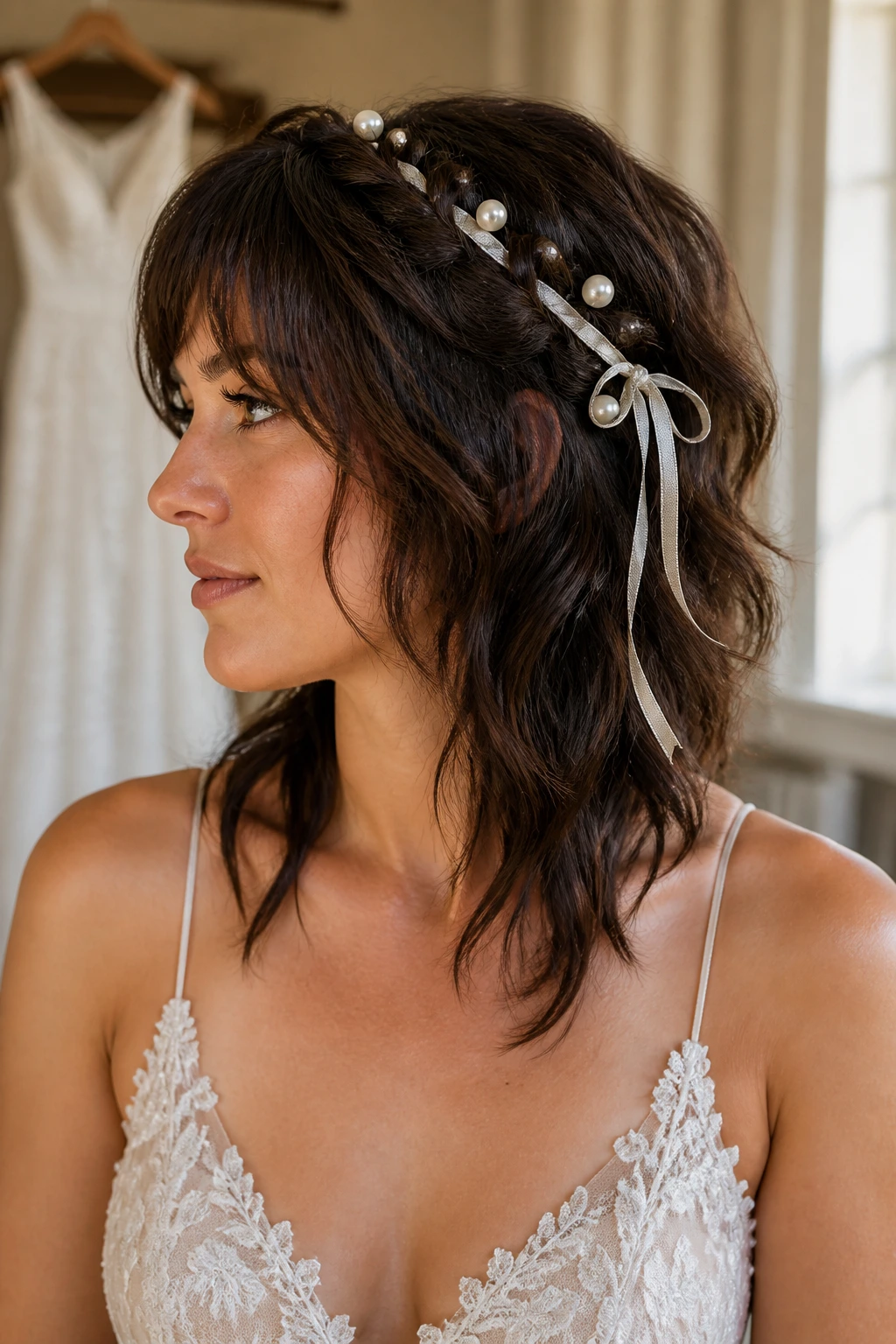
If you do not want the haircut to disappear under styling, let accessories do the heavy lifting.
Pearl pins, thin ribbon, and small crystal combs can turn a wolf cut into a bridal look without asking the hair to be something it isn’t. A few pearl pins scattered along a twist, a silk ribbon threaded through a small braid, or one comb placed where the side part opens up — that’s often enough. You do not need all three. In fact, using all three at once can make the hair look crowded.
This works best when the base shape is already good. The cut should have movement, the front should frame the face, and the finish should be touchable. Then the accessory becomes the focal point instead of a patch over a styling problem.
A simple way to choose
- Pearl pins if the gown already has beadwork or a classic feel
- Ribbon if the dress is softer, lighter, or slightly romantic
- A crystal comb if the neckline is bare and the hair needs one clean point of sparkle
I like this style for brides who want their hair to feel personal. Not generic bridal. Personal. A wolf cut with the right accessory can carry a little attitude and still look polished enough for the aisle. That combination is harder to fake than people think, which is why it tends to age well in photos.
Final Thoughts

The best wolf cut wedding hairstyles for brides do not erase the cut. They shape it. That’s the whole game. If the layers are working with your dress, your veil, and the way you move your head, the style looks intentional from the start.
A trial run matters here. Bring the veil, the earrings, and the neckline photo if you have one. Hair that looks lovely in a mirror at arm’s length can feel entirely different once the rest of the outfit is in place.
I’d trust the version that still looks like you after the ceremony, after the dance floor, and after the last hug. That’s the one that holds up.
