



A bridal updo has a hard job. It has to look calm in photos, survive a hug-heavy ceremony, stay put through a slow dance, and still feel comfortable when you finally shake out the pins hours later. That’s a tall order for a hairstyle, and it’s why the best bridal updos are never just “pretty.” They’re built.
The smart ones start with the dress, the neckline, and the hair’s own behavior. Fine hair needs a different kind of support than thick hair. A clean bun can make a dramatic gown look sharper. A softer knot can take the edge off a structured dress. And yes, the veil matters too. A low comb sitting at the nape is a very different beast from a halo of braids or a high polished knot.
I’ve always thought bridal hair looks best when it feels intentional but not stiff. A little movement helps. Too much softness, though, and the style can look unfinished by the time the receiving line is done. The sweet spot is usually somewhere in between, with enough internal structure that the style holds its shape and enough looseness that it doesn’t read like a helmet.
What follows is a mix of classic wedding updos, romantic shapes, and a few cleaner styles for brides who want something more modern. Some lean polished. Some lean airy. A few are especially kind to veils, earrings, or textured hair. And one of them may be the one that makes you stop scrolling and think, yes, that’s mine.
1. Soft Low Chignon with a Center Part

A soft low chignon is the bridal updo I recommend to brides who want elegance without looking overworked. It sits at the nape, keeps the neck open, and has enough structure to hold a veil comb or a pair of statement earrings without competing with them.
Why It Works So Well
The center part gives this style a clean line, and the low bun keeps the whole look grounded. That combination is useful when the dress already has lace, beading, or a strong neckline. You get polish, but not fuss.
This is also one of the easiest bridal hairstyles to adapt. A fine-hair bride can build it with a little padding underneath. A bride with thick hair can keep it smooth or let a few soft bends show through the bun. Either way, the shape stays readable in photos.
- Best with satin, crepe, or structured lace gowns
- Sits nicely under a veil comb placed 1 to 2 inches above the bun
- Works with middle parts, off-center parts, or a tiny side bend
- Looks especially good when the bun is pinned low and slightly tucked inward
Pro tip: leave the bun a touch narrower than you think you need. A low chignon that sits too wide can feel heavy from the back.
2. Braided Crown Updo
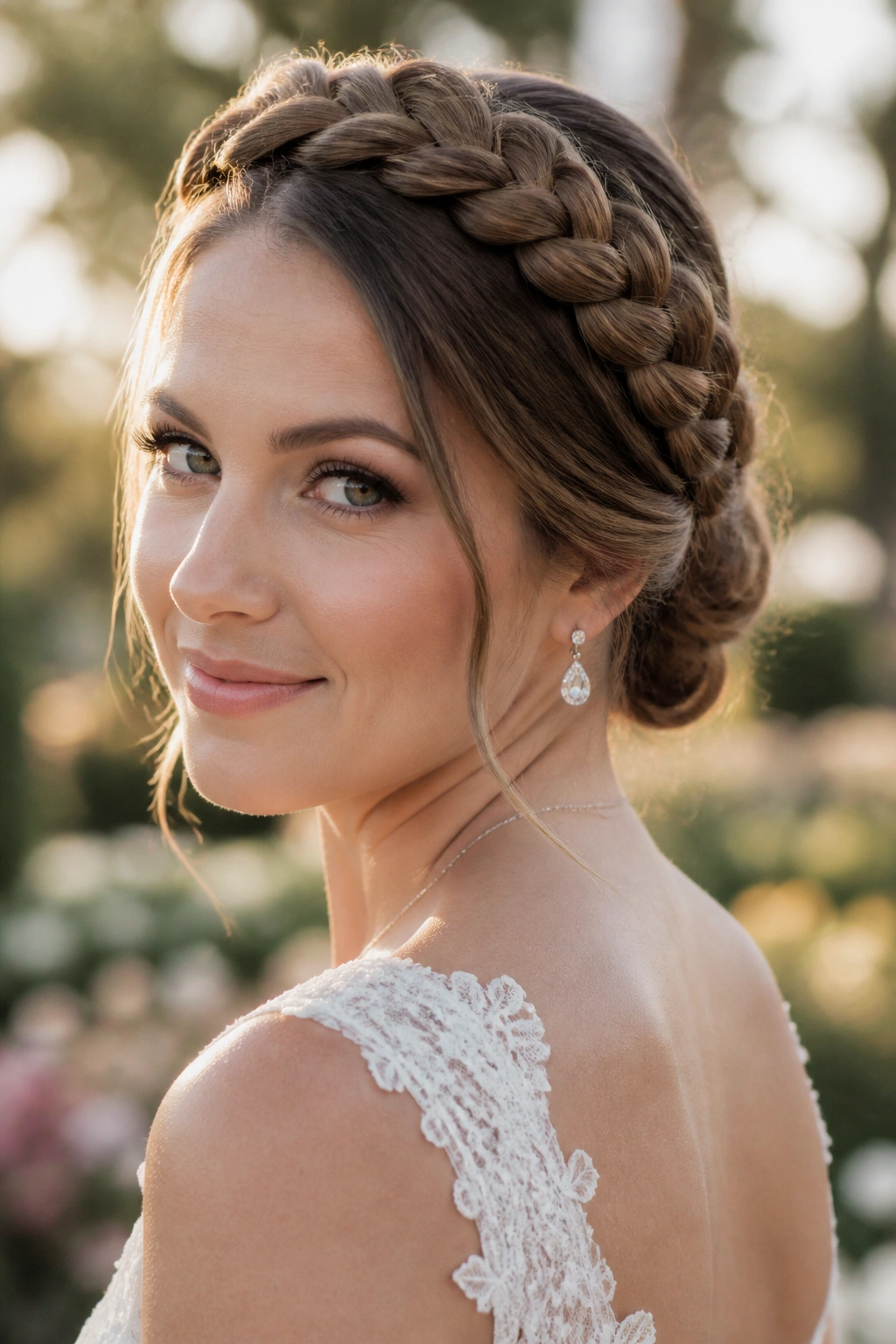
A braided crown updo gives the whole head a finished, almost halo-like frame. It’s one of those wedding updos that looks detailed even from a distance, which matters when you want the hair to register in a long aisle shot instead of disappearing behind a veil.
The braid does most of the visual work here. Once it wraps around the head, the rest of the hair can be tucked into a compact bun or twisted knot at the back. I like this style for brides who want a little romance but do not want their hair floating everywhere in the wind.
It also behaves well with flowers. Tiny buds tucked into the braid look intentional; big blooms can get heavy fast. If you’re wearing fresh florals, keep them close in color to your bouquet and stick to two or three inserts at most.
A braid like this can be loose and soft or tight and neat. The difference changes the mood more than the shape. Tight reads classic. Looser reads bohemian. Both work, but the braid should still have a defined edge.
3. Polished French Twist
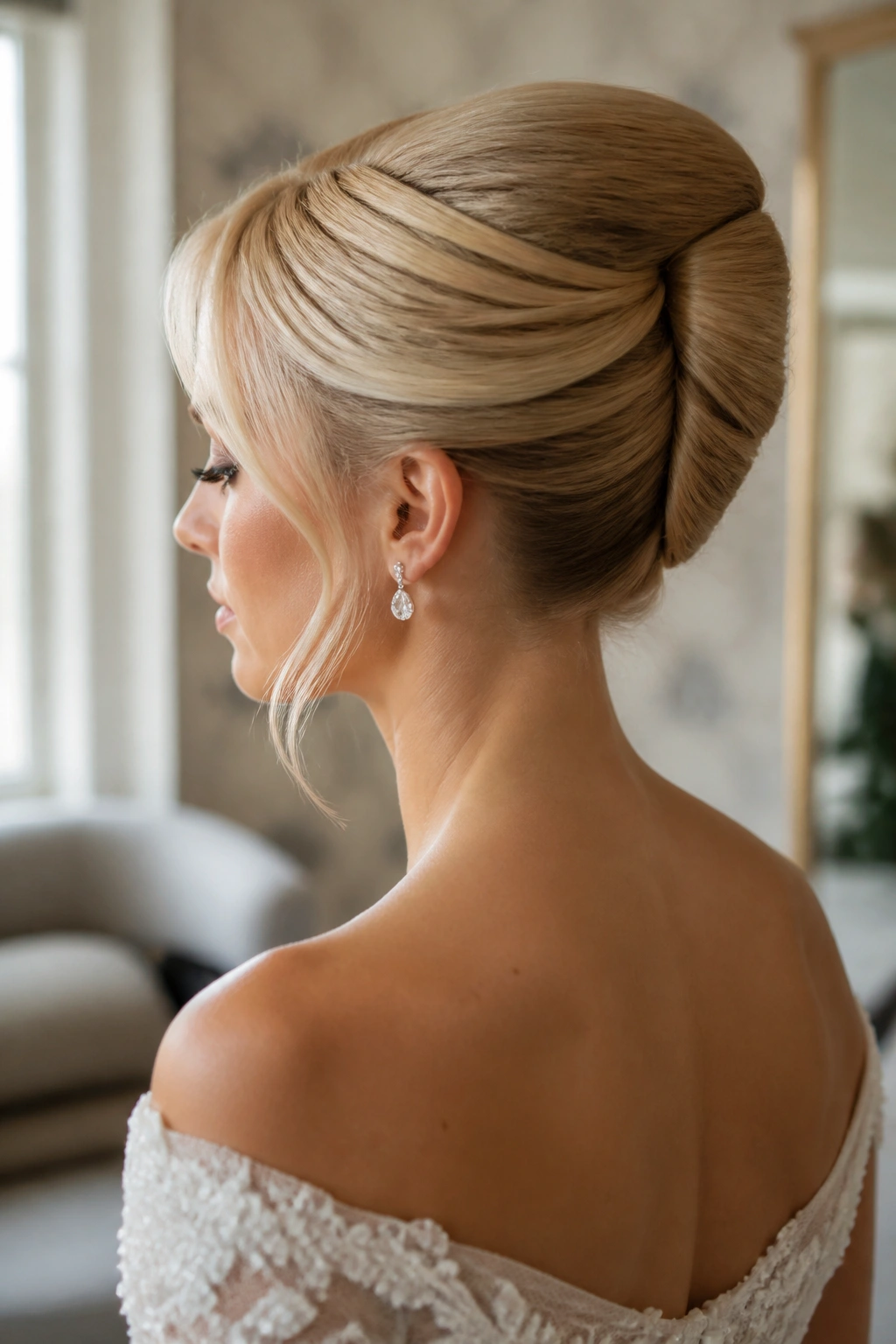
Why does the French twist keep showing up at weddings? Because it does a job no messy bun can quite manage: it makes the whole neckline look longer and the profile look clean. There’s a reason stylists keep coming back to it for brides who want something formal without extra fluff.
The best French twists are not sprayed into a shell. They have grip, a little bend, and a smooth vertical line that feels sharp from the side. That’s what makes them useful with gowns that have open backs, high necks, or strong shoulders. The hair becomes part of the architecture.
How to Wear It
If your hair is slippery, ask for a textured base first. A little grit at the roots helps the twist hold. If your hair is very layered, have the shorter pieces pinned into the seam rather than left to poke out at the sides.
A neat French twist also gives you a clean place for a comb, a row of pins, or a slim clip. Keep accessories small here. The hairstyle already has presence. It does not need much help.
4. Textured Low Bun with Face-Framing Pieces

A textured low bun is the bridal updo for anyone who wants softness around the face without losing the shape at the back. It’s especially good when the dress neckline is busy or when you want the hair to look romantic rather than strict.
This style depends on contrast. The bun itself stays low and controlled, but the crown gets a little lift and the front gets a few pieces pulled free. Not too many. Just enough to soften the cheekbones and make the style feel lived-in. A 1-inch section at each temple is usually plenty.
One thing people get wrong: they pull out the front pieces too early and then keep handling them. That’s how the strands get frizzy and dry-looking by the time the photos start. Set them last, mist them once, and stop touching them.
Good for:
- Brides with layered cuts
- Dresses with square or sweetheart necklines
- Soft, matte makeup looks
- Hair that has natural wave or takes a curl easily
The charm of this style is that it feels relaxed but still deliberate. That’s a hard line to walk. This one does it well.
5. Romantic Messy Knot

A romantic messy knot is not the same thing as a sloppy bun. That distinction matters. A good messy knot has a clear anchor point, a visible center, and a few deliberate bends that make the shape feel airy instead of flat.
It suits brides who want movement. The loose pieces around the knot catch the eye, but they should never look random. I like this style best when the texture is built first with a 1-inch curling iron or a quick bend from a flat iron, then pinned into shape after the hair cools. Cool hair holds. Warm hair collapses.
There’s also a practical side here. A messy knot can hide extension tracks, bulk up fine hair, and work with hair that isn’t freshly washed. That last part is useful. Slightly lived-in hair usually pins better than squeaky-clean hair.
This is the updo to choose if you want the back of your hair to feel light. It can be a little lower, a little fuller, or a little more collapsed on one side, and that irregularity is part of the appeal.
6. Sleek Ballet Bun

A sleek ballet bun is for brides who like a sharp line and a clean finish. No fuss. No stray texture pretending to be casual. Just a smooth, tight shape that keeps the focus on the face, the dress, and whatever earrings you’ve been saving for the big day.
Unlike softer wedding hair, this style leans into restraint. That makes it a smart match for sculptural gowns, column dresses, square necklines, and veils that already bring drama. The bun sits close to the head, so the silhouette stays neat from every angle.
The trick is balance. If the hair is pulled too tight, the style can look severe. If it’s too loose, it stops reading as sleek and starts looking unfinished. I usually like a smooth crown with a bun that’s wrapped cleanly but not puffed out. Small pins, hidden well, do the real work.
This is also one of the best choices for brides wearing a statement lip or bold earrings. The hair steps back, which is exactly the point.
7. Twisted Halo Updo
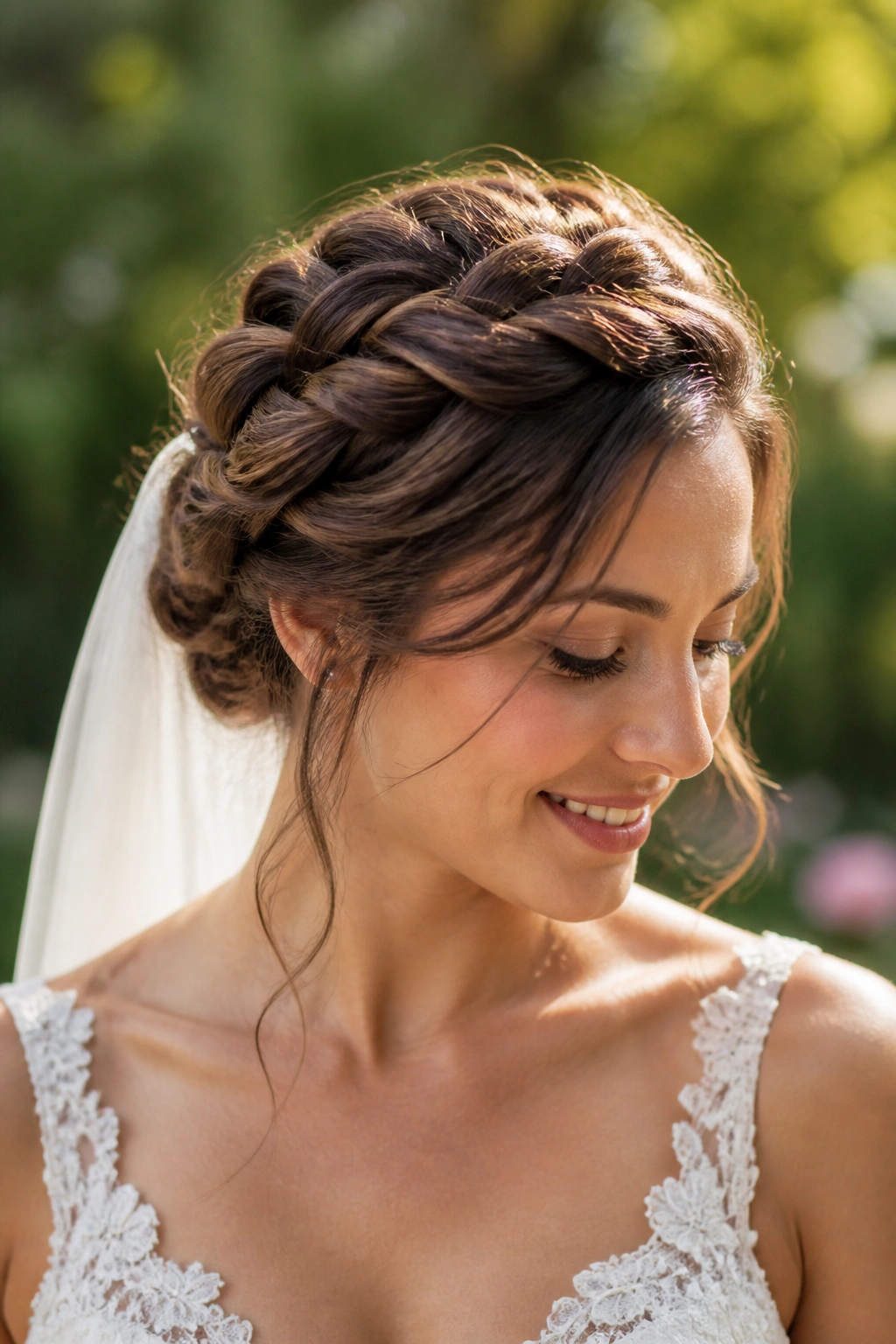
A twisted halo updo makes sense when the venue has a little breeze or when the bride wants the hair to feel wrapped and secure without looking heavy. The twists curve around the head, creating a soft frame that feels bridal from a distance and refined up close.
What Makes It Different
Instead of relying on one large bun, this style uses multiple sections twisted back from the front and sides. That gives the updo a layered look and makes it easier to build shape for medium-length hair. It also helps if the hair has a mix of textures, because each twist can hide a different section cleanly.
A style like this can hold flowers, pearls, or a veil comb tucked low at the back. Keep the accessories small if the twists are already dense. Too much ornament and the shape gets busy fast.
- Works well on shoulder-length to long hair
- Needs 6 to 10 bobby pins for a secure hold
- Looks best when the twists follow the curve of the head
- Pairs well with off-the-shoulder gowns and softer fabrics
The whole thing feels a little romantic and a little controlled. That is a useful combination.
8. Curled Bun with Hidden Ends
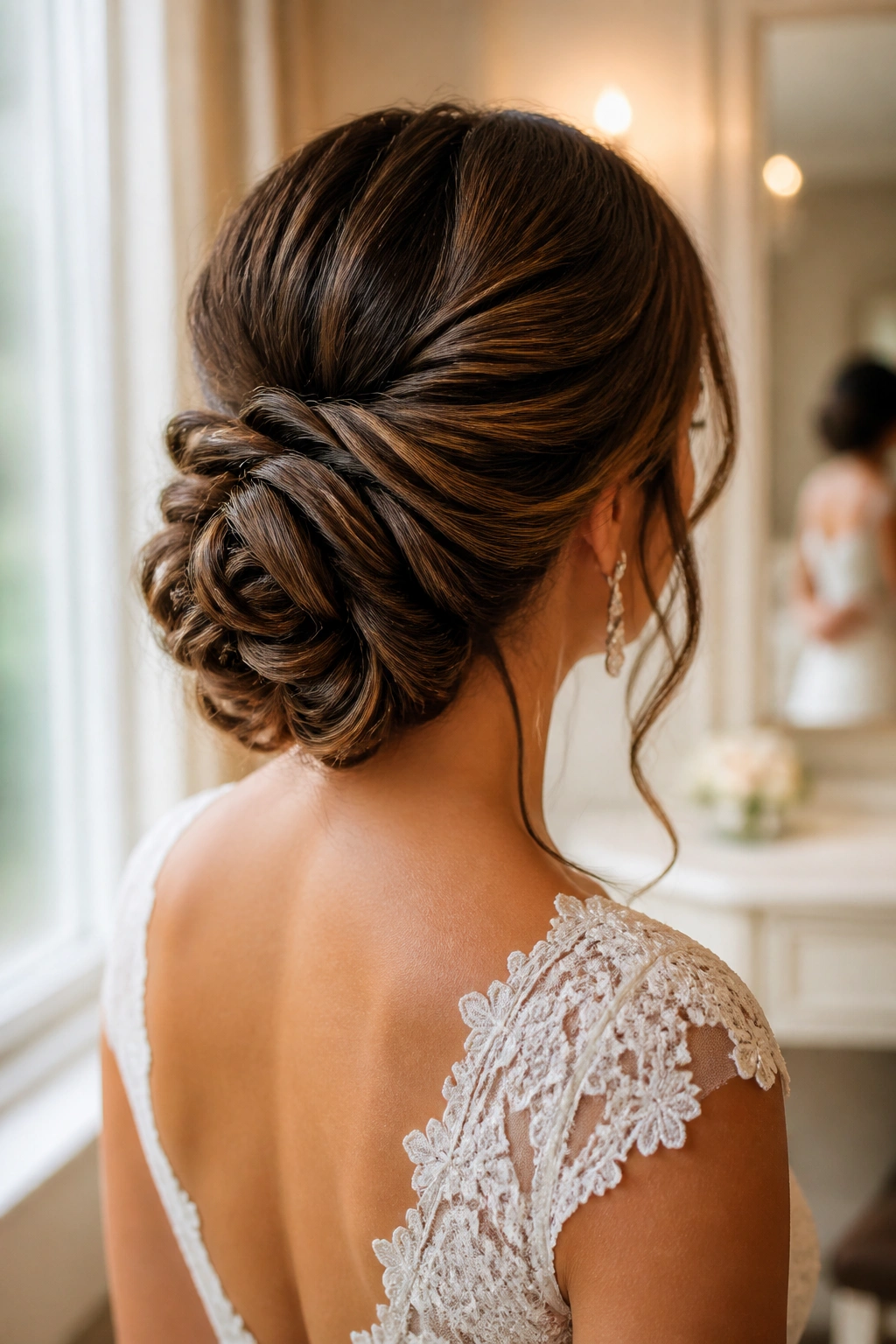
Curled buns are a favorite for brides who want texture that still looks groomed. The hair gets curled first, then pinned into a bun so the ends disappear inside the shape instead of sticking out. What you see from the outside is softness and depth, not a pile of loose pins.
This works especially well for hair that is layered or one length that needs a little visual help. The curled pieces create dimension, which matters a lot in wedding photos. Straight hair can look flat from the back if it is bundled too quickly. Curling each section first gives the bun more life.
How to Ask for It
Tell your stylist you want curled sections pinned into a low bun rather than a brushed-out knot. That one change keeps the texture visible. If you want the look to lean more polished, ask for the curls to be brushed out lightly before pinning. If you want more shape, leave them looser.
A curled bun is also easy to dress up with one comb, a few pearl pins, or a slim vine. It already has enough texture, so you do not need to pile on extras.
9. Side-Swept Low Roll

A side-swept low roll changes the whole mood of bridal hair. Instead of sitting squarely at the back, the style shifts slightly to one side, which creates a soft line that feels a little more elegant and a little less expected.
That small shift matters. It can make a high neckline look less rigid, and it can make a simple dress feel more finished. The roll itself is usually tucked at the nape, then swept toward one ear or slightly behind it. The result is graceful without getting fussy.
I like this option for brides who want the front to stay clean but do not want a centered bun. A side part on top can feed nicely into the roll, especially if the hair has a bend or wave already. If the hair is flat, a little root lift at the crown keeps the shape from collapsing toward the heavier side.
Keep the accessory placement off-center too. A single comb or pin near the sweep line looks intentional. Put it dead center, and the whole point of the style starts to blur.
10. Pearl-Pinned Braided Bun

A pearl-pinned braided bun has one job: look detailed without looking crowded. The braid gives the bun texture. The pearls give it a bridal finish. Together, they create a style that feels formal but still wearable.
This is a good choice if the dress is simple and you want the hair to do a bit more of the talking. The braid can wrap around the bun, feed into it, or sit as a visible coil above it. Pearls should be placed like punctuation marks, not confetti. Three to seven pins is usually enough.
Accessory Placement
Put the pearls where the braid changes direction or where the bun has a seam. That makes them look built in, not dropped on top. If the hairstyle is very full, choose smaller pins. Large pearls on a large bun can drift into costume territory fast.
- Best for classic or garden weddings
- Works on medium to long hair
- Needs a braid that holds its shape before pinning
- Looks clean with veils that attach below the bun
This one reads special in person. The braid gives your stylist something to shape, and the pearls catch the eye just enough.
11. Gibson Tuck
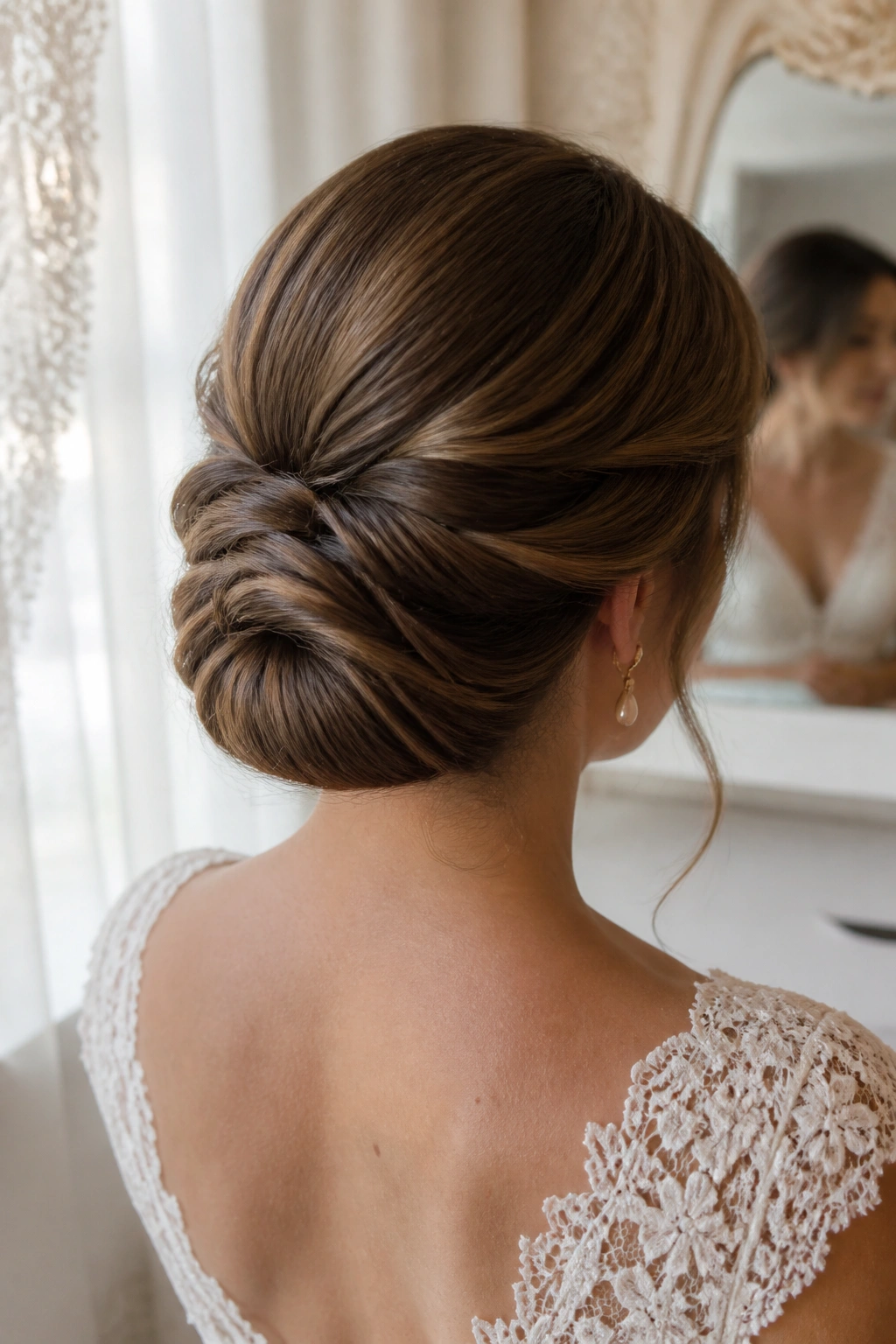
A Gibson tuck has a vintage charm that still feels fresh when it’s done cleanly. It folds the hair under itself at the back, creating a soft roll that looks more relaxed than a strict bun and more polished than loose waves.
It’s also a clever option for medium-length hair. You do not need endless length to make it work, which is a relief for brides whose hair barely reaches the shoulders or who prefer a shorter cut. The tuck uses the hair’s own weight to hold the shape, so the finished look can feel secure without a lot of bulk.
Unlike a low bun, the Gibson tuck leaves the back softer and a little more open. That makes it a nice match for lace necklines, tea-length dresses, or vintage-inspired gowns. It has personality, but not noise.
If you want it to feel more bridal, tuck a comb into the rolled edge or add a small cluster of pins just off center. Keep the details delicate. The hairstyle already carries that old-fashioned grace on its own.
12. Voluminous Top Knot
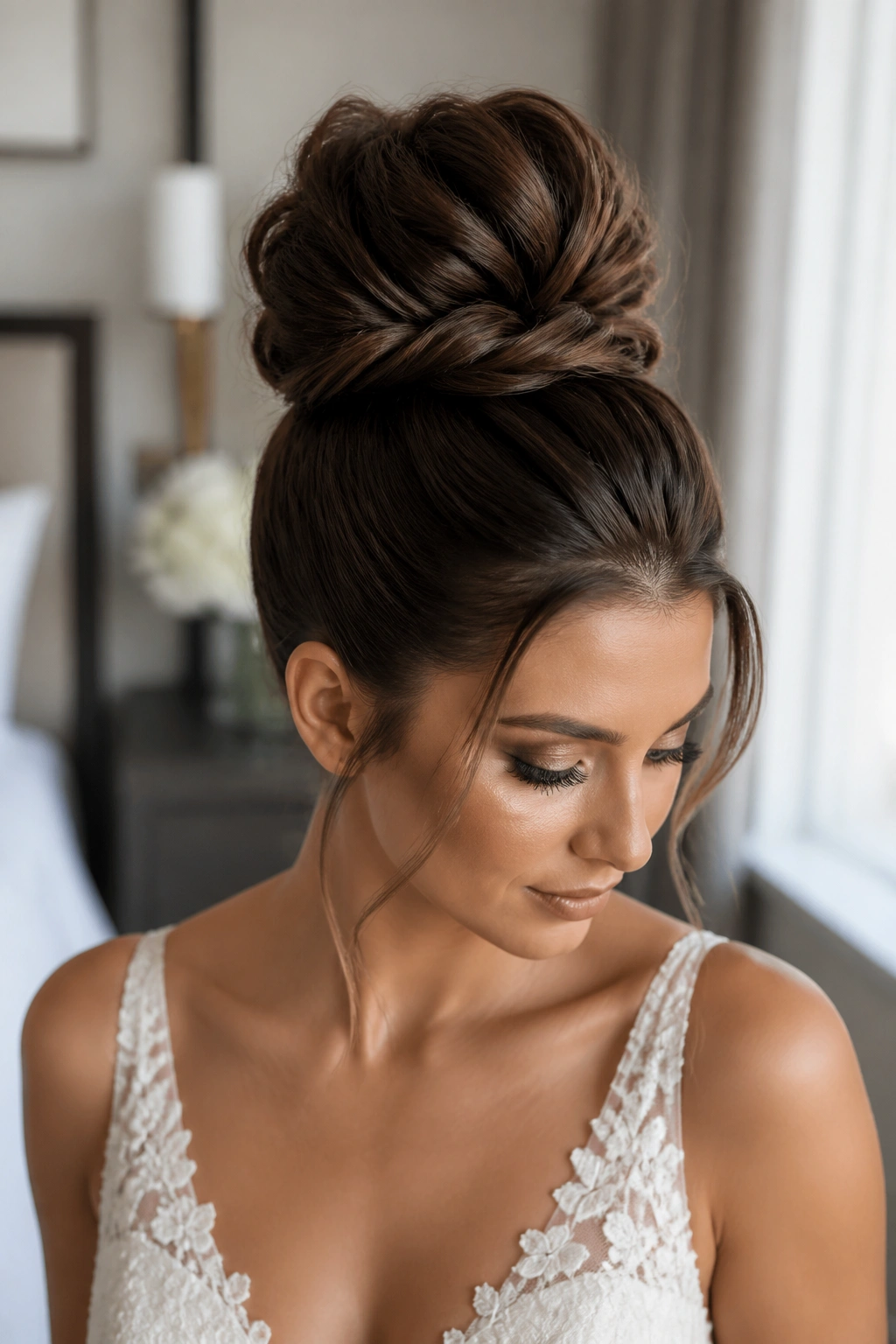
A voluminous top knot makes a strong case for height. It lifts the face, stretches the neck, and gives the whole bridal look a bit more energy. For brides in clean-lined dresses or modern silhouettes, that extra height can keep the hair from disappearing into the gown.
The key is volume at the crown, not just a ball of hair sitting on top of the head. A good top knot has support underneath and a shape that’s controlled from the sides. If it’s too tight, it looks severe. If it’s too loose, it starts to sag by mid-reception.
I like this style when the bride wants a fresh, slightly fashion-forward feel. It works especially well with bold earrings and square or off-the-shoulder necklines. A few face-framing strands can soften the edges, but they should stay intentional.
- Best built on second-day hair
- Needs root lift at the crown
- Looks cleaner when the bun is slightly narrower than the head
- Can be wrapped with a single braid for extra texture
This is not the quietest bridal updo. That’s the point.
13. Garden-Style Loose Updo
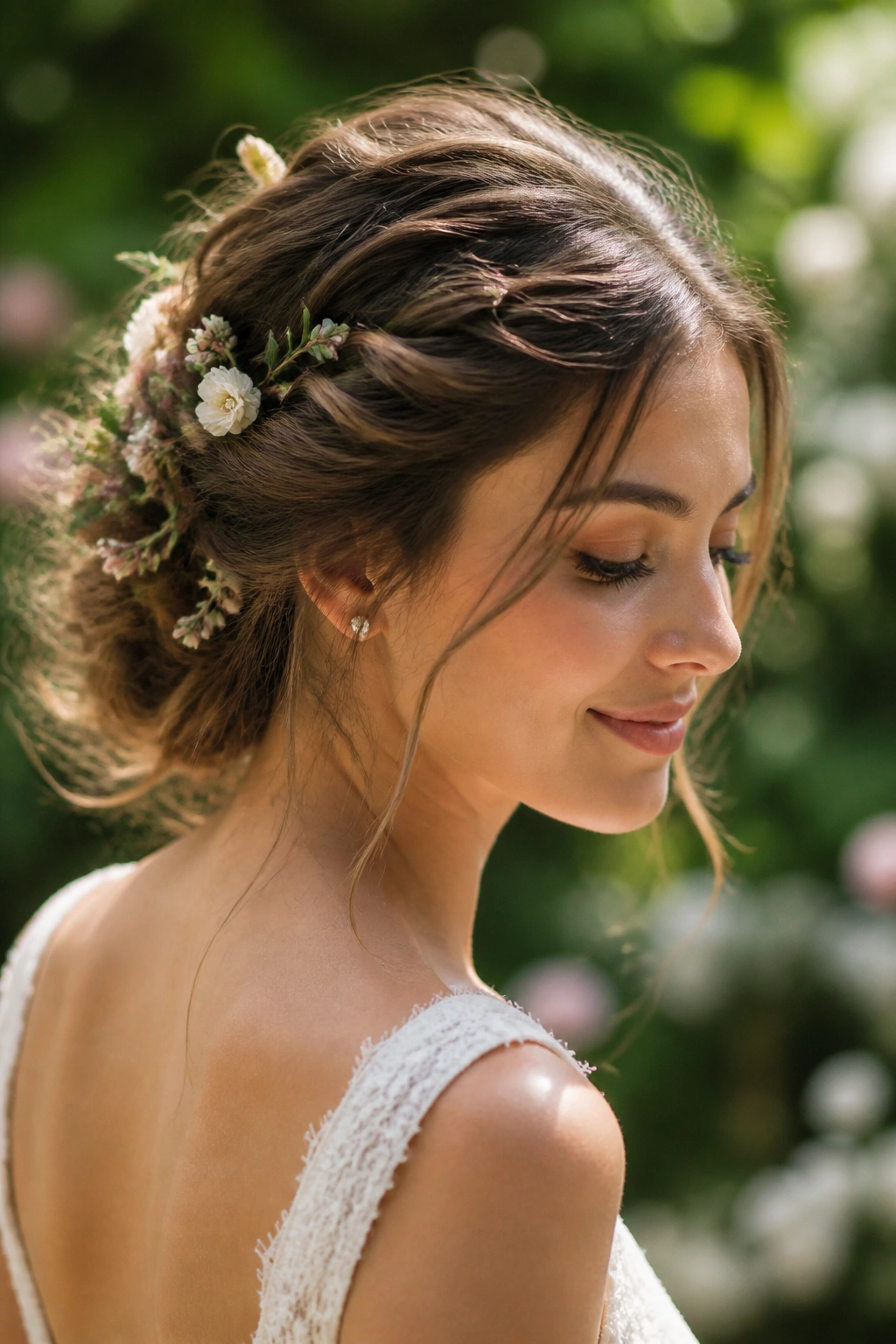
A garden-style loose updo is the one that still looks good after a long ceremony, a warm ceremony, and too many photos in direct light. It’s airy, slightly undone, and made for brides who want the hair to feel soft rather than rigid.
The shape usually starts with twisted sections pinned low, then softened at the crown so the head has some lift. Tiny tendrils around the ears and temples keep the style from looking boxy. A few fresh flowers or small buds can sit in the twists, but don’t overdo it. Two or three stems are enough. More than that, and the hairstyle starts competing with the bouquet.
This style works nicely with chiffon, tulle, and lace that has movement. It also flatters hair with natural wave because the texture gives the updo a little grip. If the hair is pin-straight, you’ll want some bend in it before pinning or the whole shape can fall flat.
The strongest version of this look feels soft but not fussy. There’s a difference. Fussy hair is easy to spot. Soft, on the other hand, looks like it belonged there from the start.
14. Rope-Braid Wrapped Bun

A rope-braid wrapped bun is one of those bridal hairstyles that looks more complicated than it is, which is useful if you want texture without a lot of bulk. The rope braid gives the bun clean lines, and those lines keep the shape from feeling mushy at the edges.
How to Build It Without Fuss
Each section is twisted in the same direction before being crossed over itself, so the braid gets that neat cord-like look. Once it’s wrapped into a bun, the texture is visible even when the hair is pinned close to the head. That makes it a strong choice for brides who want detail in photos but not a crowded finish.
It also holds well on hair that slips out of ordinary braids. The twist helps. So does a little texturizing spray at the roots before you start.
- Good for medium to thick hair
- Works with pearl pins or a slim vine
- Holds shape well in humid weather
- Best when the rope braid sits low and slightly off center
This is one of my favorite options for brides who like clean structure but do not want a plain knot. The texture does the work.
15. Sculpted Old-Hollywood Bun

A sculpted Old-Hollywood bun has presence. It feels glamorous in the old sense of the word: glossy, shaped, and a little dramatic in profile. This is the bridal updo you choose when the dress has clean lines and you want the hair to look intentionally styled from every angle.
The hair is usually set first, then brushed into a smooth curve that folds into a low bun or roll. The front can be side-parted or swept away from the face, but the surface should stay controlled. No stray frizz. No airy ends pretending to be texture.
When This Style Shines
It shines on brides with strong cheekbones, bold makeup, or gowns that already have a lot going on. The bun keeps the look refined, which helps if the dress has beading, satin sheen, or a fitted waist. It also photographs well from the side because the sculpted surface creates a clear line.
A style like this asks for patience from the stylist. It is not a rush job. The set, the brush-out, and the pinning all matter. Skip one of those, and the finish loses its shape fast.
This is the kind of bridal hair that looks like it belongs in a velvet-clad room with low light and a very good photographer.
16. Double Twist Low Updo

A double twist low updo gives you two things at once: security and softness. Two large twisted sections feed into a low knot or coil, which makes the back look layered instead of flat.
This style is especially helpful if the hair is medium length or if the bride wants a quick shape that still reads intentional. The double twist can hide a lot — layers, extensions, fine spots at the temples, even a slightly uneven cut. It’s forgiving in a way that some more polished styles are not.
The best versions keep the twists visible all the way into the bun. If the twists disappear too soon, the style loses its point. A little asymmetry is fine here. One side can sit slightly higher than the other. That unevenness often looks better than perfect symmetry, which can feel stiff on real hair.
Use pins that match the hair color and place them where the twists cross. That gives the style a cleaner finish and keeps the surface from collapsing.
17. Fishtail-Wrapped Chignon

A fishtail-wrapped chignon looks detailed even when the braid itself is narrow. That’s the advantage of a fishtail: tiny woven pieces create a much more intricate surface than a standard three-strand braid, which means the bun can stay compact and still look special.
This style is a smart pick for brides who want texture that reads clearly in photos. The fishtail can wrap around the chignon like trim, or it can form the bun’s outer layer. Either way, it keeps the eye moving around the shape. That matters when the rest of the dress is simple and the hair needs to carry a little more visual weight.
It works best on long hair, but extensions can help if the natural length is short of the nape. Keep the braid tight enough to hold its pattern, then loosen only the outer edges once it’s pinned. Pulling too much can make the braid puff out and lose definition.
This style also holds accessories well. One small comb tucked into the braid line usually does the trick. Anything larger can crowd the weave.
18. Sleek Center-Part Knot
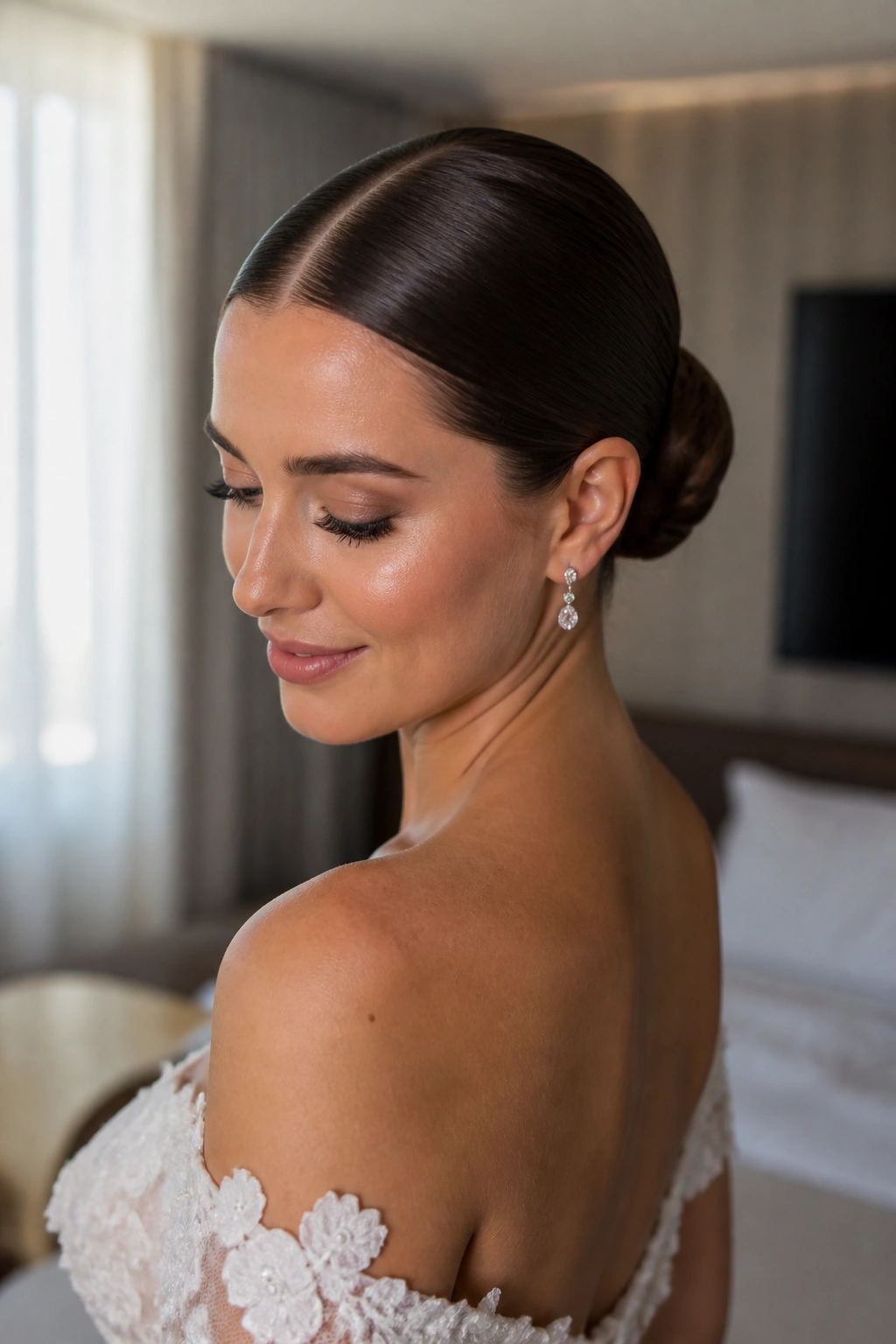
A sleek center-part knot is the cleanest option here, and maybe the most underrated. It gives you a sharp middle part, smooth sides, and a knot or bun that sits low and tidy at the back. If your dress has a dramatic neckline or a strong back detail, this style lets the gown do its job.
It’s especially good for brides who hate fuss. There’s no need to fake softness where it doesn’t belong. The shine, the line, and the symmetry are the point. For hair that frizzes easily, a light smoothing cream and a fine-tooth comb at the crown can keep everything close without making it look greasy.
This style also suits cathedral veils, clean veils, and statement earrings because the face stays open. A center part can look severe if the hair is too flat, so leave a whisper of lift at the crown. Not a bump. Just enough shape to keep the head from looking pressed down.
If you want a bridal updo that feels calm, current, and easy to live with, this one deserves a hard look. It is simple in the best possible way.
