



The best hairstyles for a professional event do one thing well: they keep your face clear while making it look as though you planned the whole outfit on purpose. That sounds obvious until you’re standing under bright lights, greeting people in a name tag, and realizing your hair has either gone limp, puffed up, or fallen into your lipstick. Hair has a sneaky way of making or breaking a polished first impression.
A professional event is its own beast. A conference needs neatness and comfort. A client dinner needs a little softness. A formal awards night can handle more drama, but not chaos. The styles that work best usually have a few things in common: a clean shape, a secure base, and enough personality that you don’t look like you borrowed a receptionist’s default setting from 1998.
There’s also the practical side nobody loves talking about. Clean hair can be slippery. Freshly washed hair may look nice for about twenty minutes and then slide out of pins like it has somewhere else to be. A little grit — day-old hair, light mousse, dry shampoo at the roots, a small amount of smoothing cream on the ends — often makes the whole thing hold better. Keep that in mind as you scroll, because the prettiest style in the room is useless if it collapses before dessert.
1. Sleek Low Bun for a Professional Event
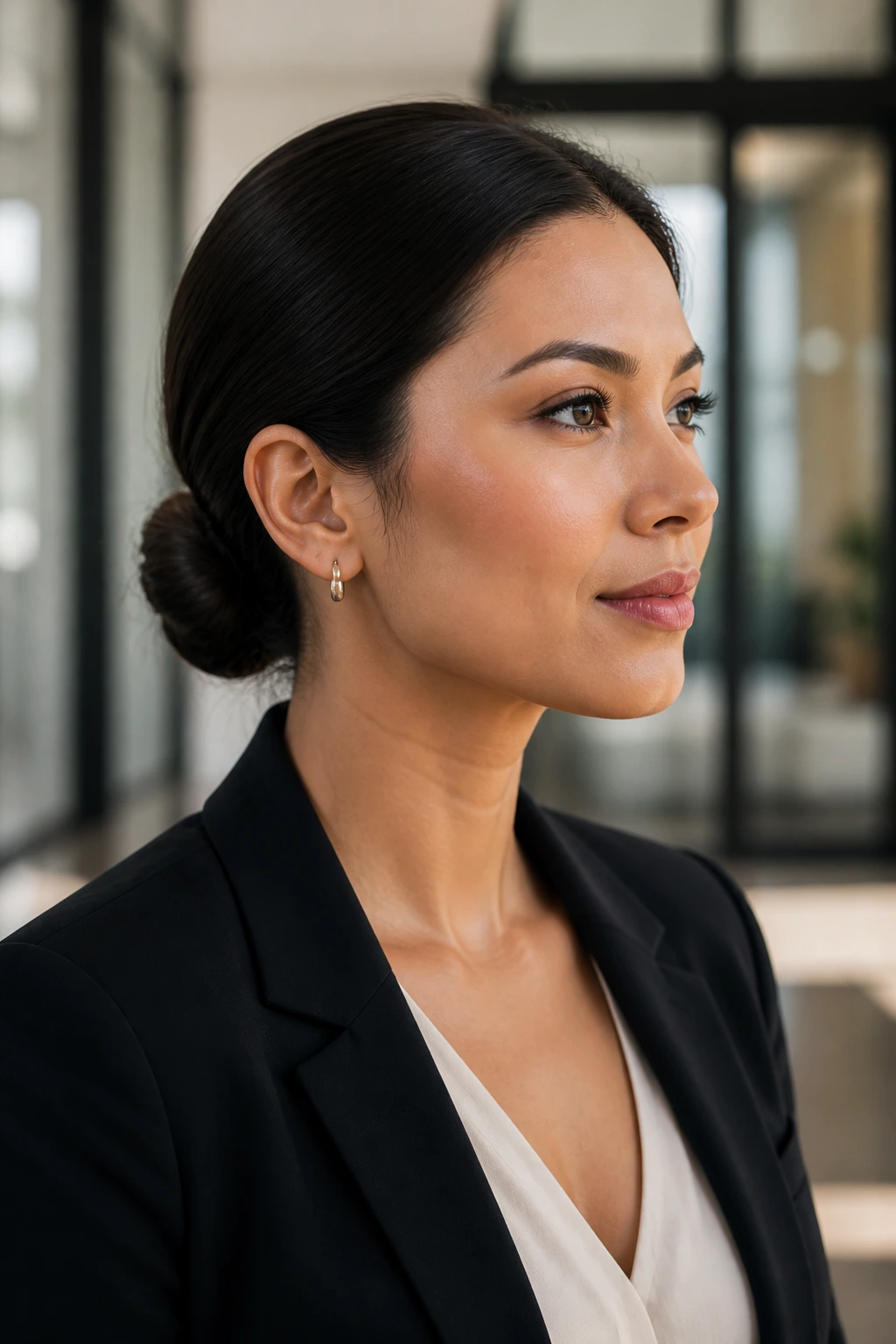
A sleek low bun is the style I reach for when the dress code is vague, the stakes feel high, and I want zero hair drama. It’s clean, it’s calm, and it says you have better things to do than fuss with your hair every twelve minutes.
Why it works
The shape sits low at the nape, which keeps the neckline neat and makes earrings or a structured collar look sharper. It also works with straight, wavy, or curly hair, though the prep changes a little depending on texture. For fine hair, a mist of dry texture spray gives grip; for thick hair, a smoothing cream keeps the surface from frizzing out.
A good low bun does not need to be perfect. It needs to be controlled. Brush the hair back with a boar-bristle brush, gather it at the nape, twist it into a coil, and pin it in place with 3 to 5 strong bobby pins. If the bun looks too small, gently tug the coil wider before pinning. That tiny move matters.
Quick tip: leave the bun slightly off-center if your face is long or narrow. It softens the whole line.
2. French Twist
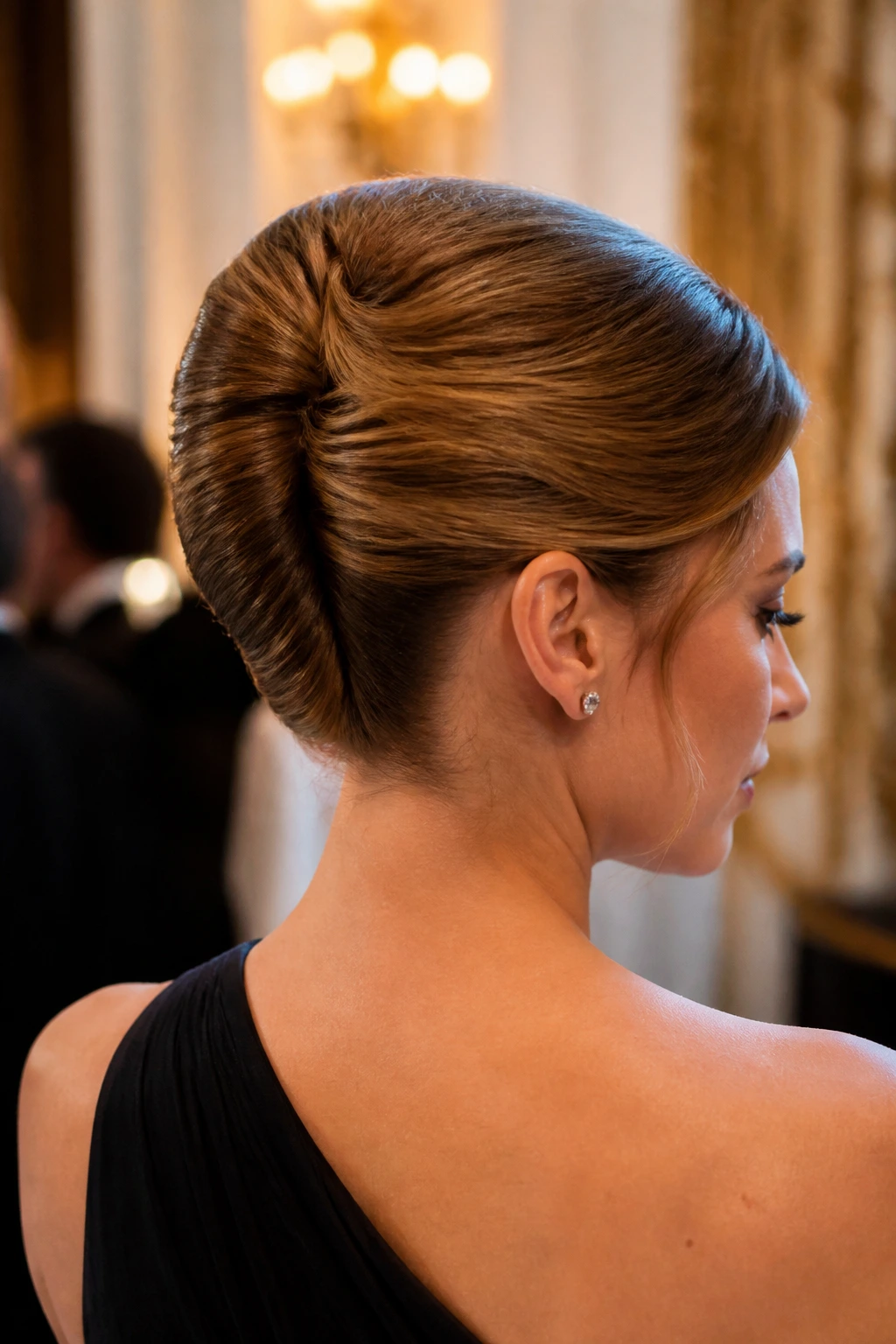
A French twist is the quiet overachiever of formal hair. It looks polished, but not stiff, and it has a way of making even a plain blazer look more intentional.
The trick is in the foundation. Start with hair that has a little grip — second-day hair, a light mousse, or a dusting of dry shampoo at the roots. Sweep the hair to one side, twist it upward, and tuck the roll into itself so the shape sits vertically along the back of the head. Secure it with 6 to 8 pins, placing them along the seam instead of stacking them in one spot.
Here’s the part that people often miss: a French twist does not need to look shellacked. A tiny bit of softness around the crown keeps it from looking severe. If the event is formal but not black-tie, let a few short layers skim the face. That keeps the style human. And a little easier to wear for six hours straight.
3. Polished Low Ponytail

Why does a low ponytail keep showing up at professional events? Because it solves a lot of problems at once. It keeps the hair contained, it reads modern without trying too hard, and it looks neat from every angle if you do the base well.
How to keep it from looking flat
Start with a clean middle part or a deep side part, depending on your face shape and the neckline of your outfit. Smooth the top with a lightweight cream, then gather the ponytail at the nape. Wrap a 1-inch section of hair around the elastic so the tie disappears. That small trick matters more than people think.
The tail itself should have some movement. A flat iron bend at the ends or a soft wave through the mid-lengths keeps the style from looking too tight. If your hair is layered, a low ponytail can get frayed fast, so mist the tail with a flexible-hold spray and tap down any pieces that stick out.
Best for: long meetings, receptions, and events where you’ll be moving around a lot.
4. Side-Part Blowout
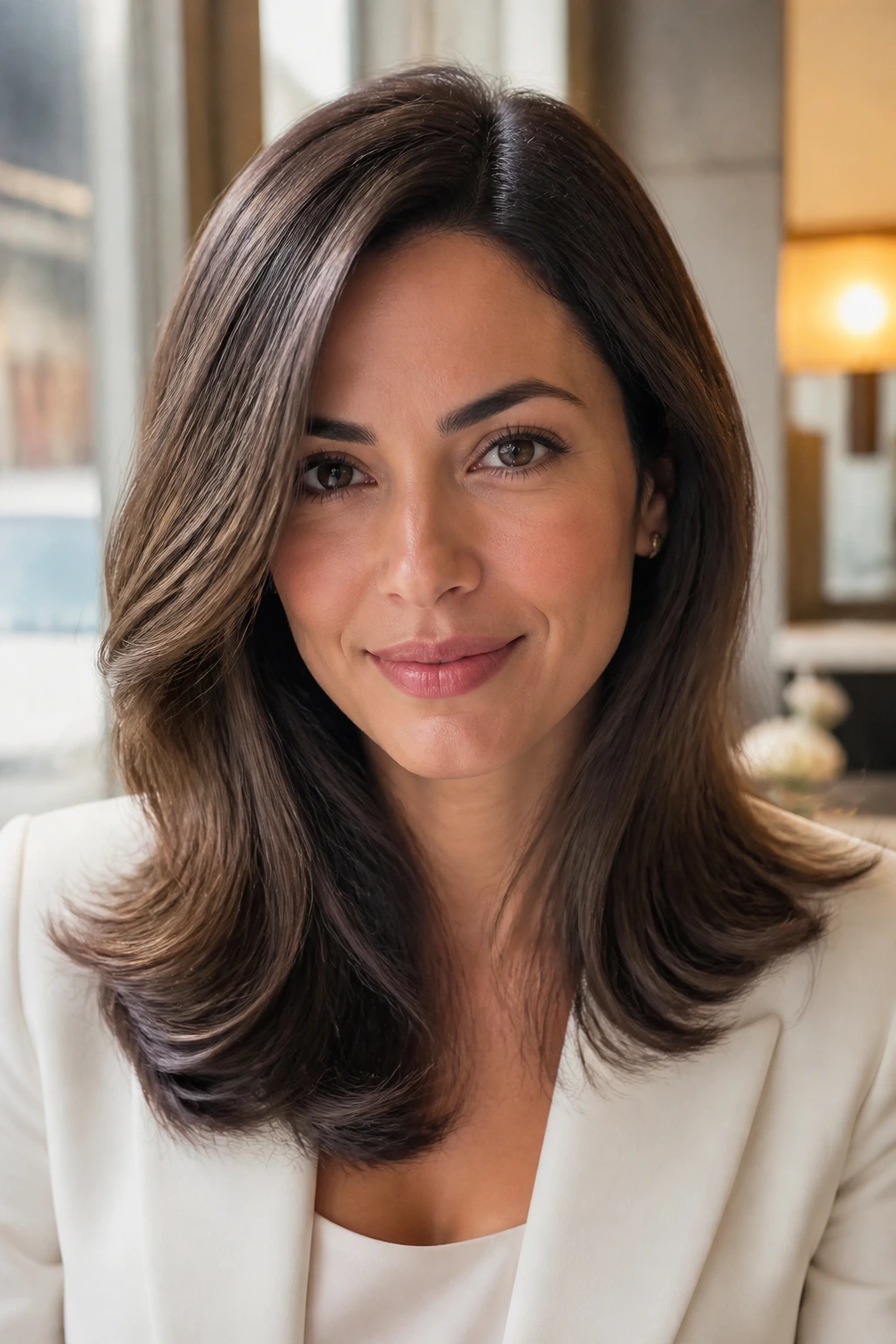
A side-part blowout gives you shape without trapping your hair in place. If you like movement and hate pins, this is a good one. It feels finished, but not formal in a heavy-handed way.
The strongest version has lift at the crown, smooth mids, and ends that curve under just a touch. Use a round brush or a large styling brush and dry the hair in 1.5-inch sections so the top layer doesn’t go fuzzy. A heat protectant is non-negotiable here. Blowouts that skip it tend to look dull by the second hour, and there’s no mystery to that.
What to watch for
- Keep the part clean and deliberate.
- Set the crown with clips while it cools.
- Use a cool shot before you touch the hair.
- Add a tiny bit of shine spray only on the mids and ends.
This style shines at networking events because it feels friendly. Not boring. Friendly.
5. Soft Hollywood Waves

Soft waves look expensive without being loud, which is why they show up so often at dinner events, charity functions, and office celebrations. The key word is soft. Tight ringlets can veer into prom territory fast. Loose, brushed-out waves feel more grown-up.
I prefer to curl the hair with a 1.25-inch curling iron, always curling away from the face at the front pieces. Once the curls cool, brush them out with a wide paddle brush so they fall into one smooth pattern. Then pin one side behind the ear or tuck one side behind the shoulder. That little asymmetry keeps the style from feeling too heavy.
The best part is how forgiving it is. If a wave drops, it usually still looks intentional. If a section frizzes, a drop of serum on the palms usually fixes it. The only real mistake is overdoing the curl. If the bend is too tight, the whole thing starts looking costume-y.
6. Braided Chignon

A braided chignon is what you wear when a plain bun feels too plain and a full updo feels like too much. The braid gives the style texture, and texture is what keeps fine hair from sliding apart by the end of the night.
Unlike a smooth bun, this one has built-in grip. That makes it a smart choice for layered hair or hair that tends to lose shape in humidity. You can start with a low braid, wrap it into a knot, and pin the ends underneath, or build the braid across the back and fold it into a tucked bun.
What makes it different
- The braid hides weaker spots in the hair.
- It gives the style a little depth from the back.
- It survives long events better than a simple twist.
- It looks deliberate even when it softens over time.
If you want one style that feels formal without looking severe, this is a strong pick. I’d choose it for a panel dinner or a wedding-adjacent business event without blinking.
7. Half-Up Twist

A half-up twist is the sweet spot between fully down and fully pinned. It keeps hair off your face, which matters when you’re shaking hands or leaning over a table, but it still leaves length visible.
This works especially well on medium-length hair that has a little wave. Take two sections from each temple, twist them back toward the center, and pin them where they meet. A small hidden clip beats a decorative one if the event leans more corporate than festive. If your hair is slippery, tease the crown gently with a fine comb before you pin. Gently. Not 2007 mall-tease gently.
Best for
- People who want softness around the face
- Medium to long hair
- Events that start formal and end with dinner or drinks
- Hair that needs some movement, not a rigid shape
It’s not the strongest choice for a strict black-tie setting. But for most professional events, it hits the mark nicely.
8. Textured Pixie With Lift

Short hair can be the sharpest look in the room. A textured pixie with lift is proof. It reads polished, modern, and very much under control, which is exactly what you want when there’s no room for hiding behind length.
The trick is to build shape at the crown and clean up the edges. Work a pea-sized amount of matte paste through dry hair, then use your fingers or a small brush to lift the top. The sides should stay smoother than the top, and the nape should look neat, not overworked. If the style feels too flat, a quick blast from the dryer at the roots changes everything.
A pixie gets its power from detail. Tame the sideburn area. Clean up the fringe. Add a touch of shine on the top layer if the event is formal. That’s it. No wrestling match. Just shape.
9. Tucked-Behind-Ear Bob With a Smooth Finish

What do you do when your hair is too short for a bun but too long to leave alone? A tucked bob solves the problem without trying to pretend it’s something else.
This style works best on chin-length to shoulder-length cuts. Use a flat iron only on the top layer if you need to smooth bends, then make a side part or center part and tuck one side behind the ear. A small clip or barrette can help hold the tuck, but keep it subtle. The goal is neat, not shiny costume jewelry on the side of your head.
The front pieces should frame the face a little, not hang in your eyes. If your bob flips outward at the ends, that can work too, as long as the curve is intentional. A touch of serum on the tips keeps the cut looking crisp.
It’s a low-effort look with a high payoff. I’m a fan.
10. Wrapped High Ponytail

A wrapped high ponytail brings energy. It has more lift than a low ponytail and a little more confidence, which can be useful when the event calls for a sharper edge.
The crown should be smooth but not pulled so tight that it looks strained. Gather the ponytail at the crown or just above it, secure it with a strong elastic, then wrap a small section of hair around the base so the tie disappears. If the tail is long, add a bend at the ends with a curling iron or a large roller. Straight ends can look unfinished here.
Key details that matter
- Keep the crown sleek.
- Use an elastic that won’t slip.
- Wrap the base with a narrow piece of hair.
- Leave the tail with movement, not stiffness.
This style goes well with high necklines, statement earrings, and outfits that need a little height on top. If you want presence without a full updo, this is a smart move.
11. Middle-Part Knot

A middle-part knot looks calm in a way that a lot of busier styles don’t. It feels deliberate. Clean. Slightly spare, in a good way.
The center part is the whole point here, so get it right. Use the end of a rat-tail comb and trace the line straight back before you gather the hair low at the nape. Twist it into a knot, pin it flat, and keep the surface smooth. If the part wanders left or right, the style loses its edge fast.
This is especially good for straight or gently wavy hair, because the shape stays neat longer. Very curly hair can wear it too, but the texture changes the mood. That can be lovely, actually. The downside is that it exposes every bump in the scalp line, so a quick check with a hand mirror helps before you leave.
12. Defined Curls Pulled to One Side

A full down-do can get chaotic at a professional event. Defined curls pulled to one side keep the texture, but control the silhouette. That balance is why this style works so well for curly and coily hair.
Pulling the curls over one shoulder creates a clean line along the neck and keeps the front pieces from drifting into your face. Pin the top section discreetly behind the ear or at the crown, then let the rest fall naturally. If your curls shrink a lot, stretch them a little while drying so the final shape doesn’t end up shorter than planned.
A curl cream or gel makes a real difference here. You want the curls defined enough that they still look separated, not puffed together into one soft cloud. If the event is long, carry a small edge brush or a few pins. Tiny repairs go a long way.
This style feels polished without flattening texture. That matters.
13. Crown Braid Into a Bun
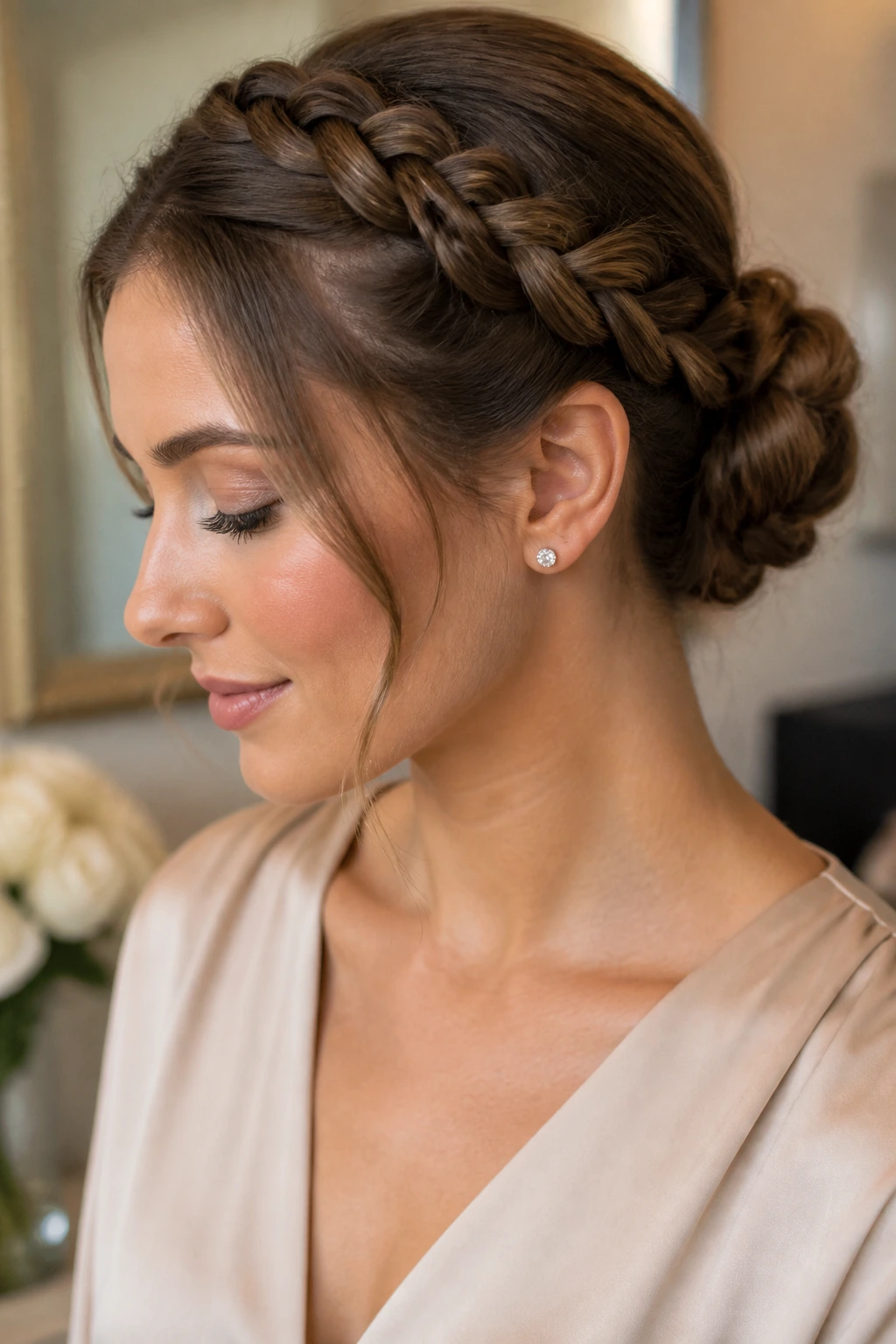
A crown braid into a bun has a little more detail than a standard updo, and that detail is the whole appeal. It frames the head beautifully, keeps the hair secure, and works especially well when you want the style to look finished from every angle.
Where to start the braid
Begin the braid near the temple or just above the ear, then work it across the crown before folding it into a low bun. Keep the braid medium-sized. If it’s too tiny, the style can look fussy. If it’s too thick, it starts to eat the whole head and feels heavy.
How to keep it from looking costume-y
Let a few hairline pieces soften the front. Use pins that match your hair color, and hide the ends of the braid under the bun instead of letting them stick out. A matte finishing spray gives more hold than a glossy one, which helps the braid stay visible without turning rigid.
This is a strong pick for long professional events because it keeps its shape for hours and still looks thoughtful in photos.
14. Natural Hair Puff or Low Bun
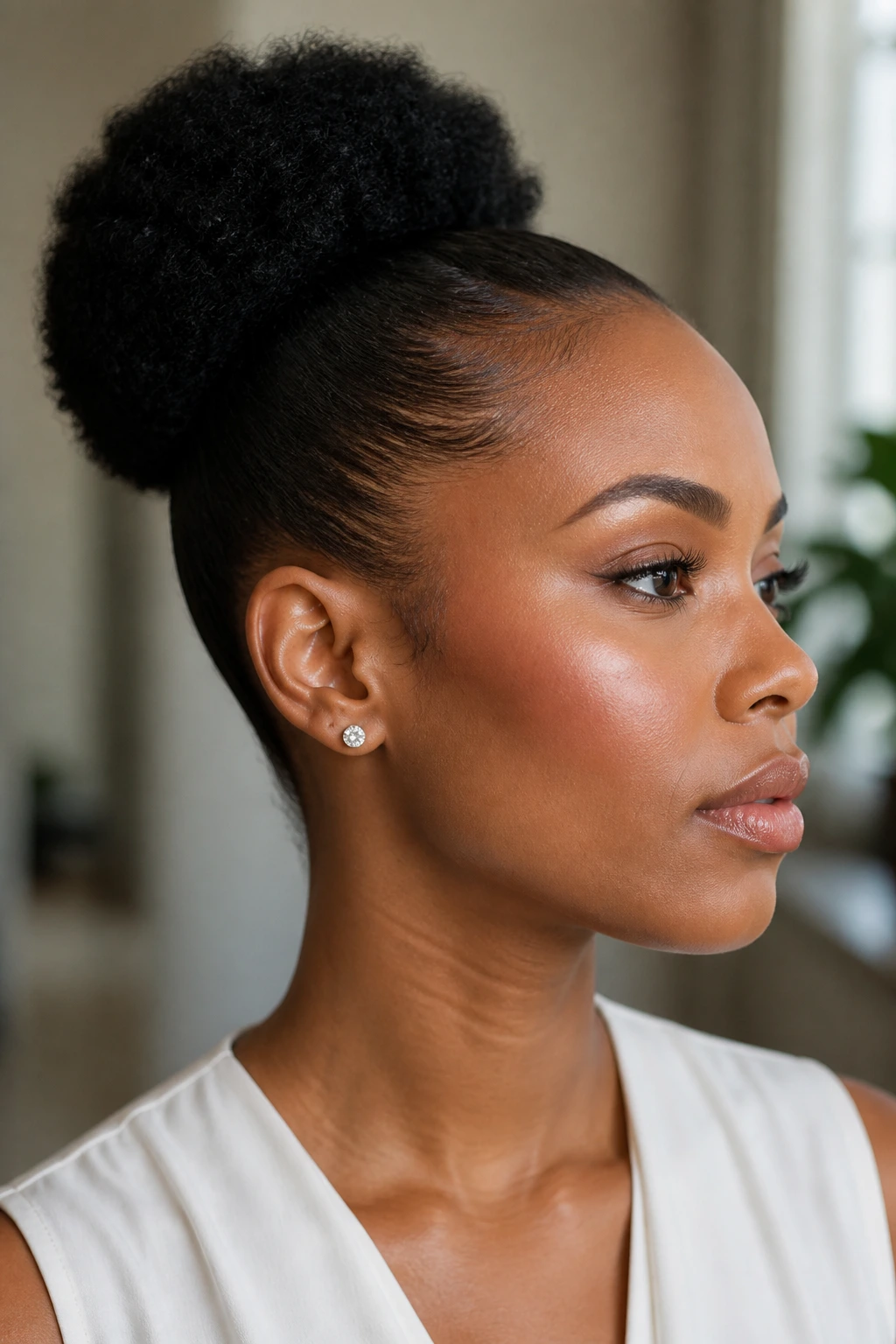
This is not the section to get timid. A clean puff, a shaped low bun, or a sculpted twist can look incredibly polished at a professional event when the shape is neat and the hair is moisturized.
The biggest mistake people make is trying to flatten natural texture into submission. That usually backfires. Instead, define the shape. Smooth the edges with a soft brush and gel, stretch the hair if needed, and let the natural body do part of the work. A silk scarf tied around the hair for 10 to 15 minutes after styling can help the surface settle.
Practical details that help
- Moisturize first, then style.
- Keep the outline clean at the hairline.
- Shape the puff or bun so it looks balanced from the side.
- Use pins to anchor the base, not to crush the texture.
If the event leans formal, a low bun often reads slightly sharper than a puff. If the event feels creative or less rigid, the puff has more personality. Both can look excellent.
15. Shell Roll
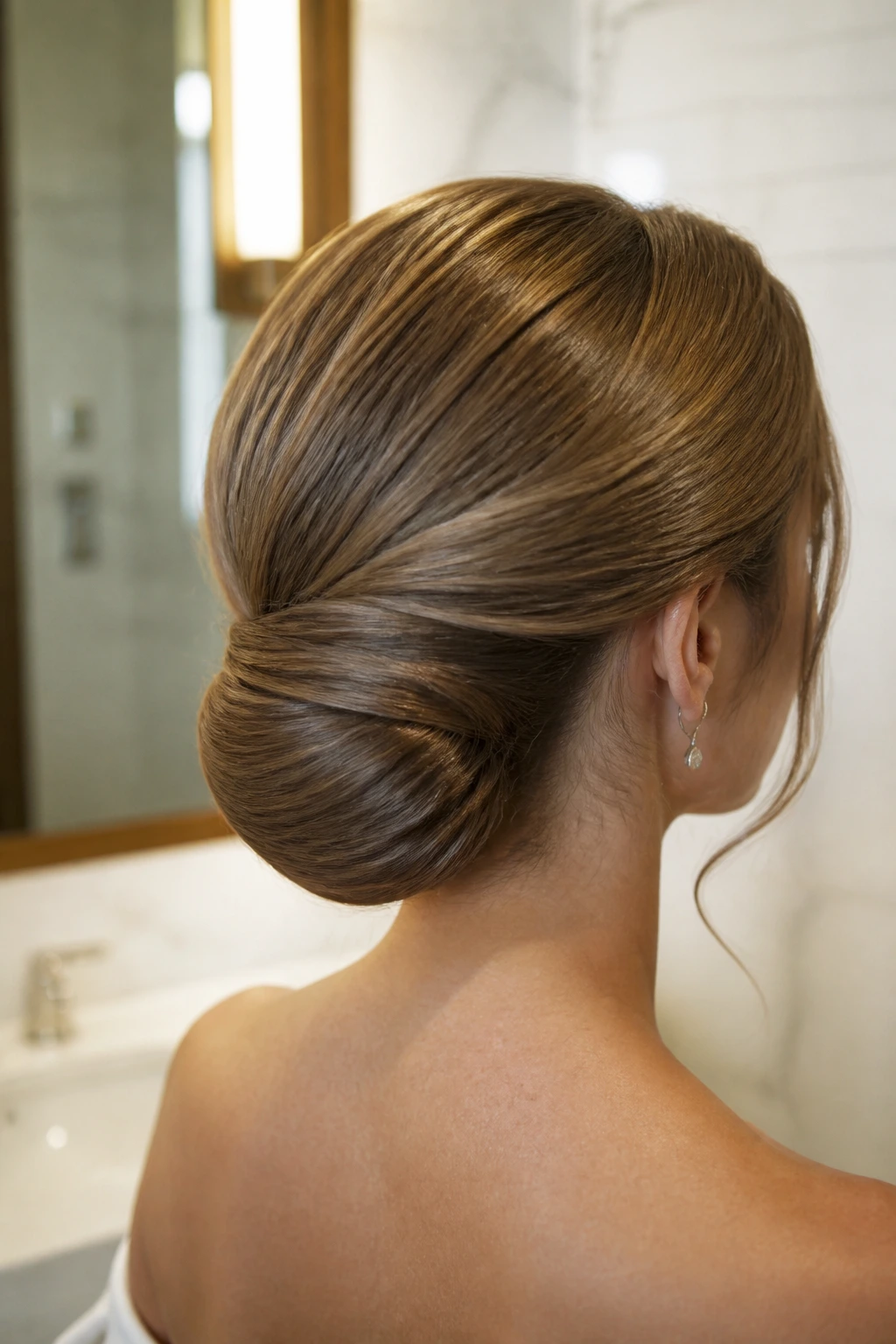
The shell roll is one of those styles that people forget about until they see it done well. Then they wonder why they do not wear it more often. It has the neatness of a twist with a softer line, which makes it a nice middle ground for dressy events.
Think of it as a low roll that hugs the back of the head rather than standing away from it. Use a rat-tail comb to gather the hair smoothly, roll it inward, and pin the shape tight against the nape. Hidden pins matter here. Visible ones ruin the effect fast.
This style is especially good when the outfit has a structured collar or a back detail you want to show off. It keeps the hair from competing with the clothes. If your hair is too silky, work in a little dry shampoo first. That extra grip is often the difference between a roll that stays put and one that slides.
16. Face-Framing Low Knot

Do you want polish but hate the look of a severe updo? A face-framing low knot gives you structure with a softer front. It’s a sensible option for long events, speaking roles, or dinners where you want to look composed without looking locked down.
The trick is to leave out two small pieces near the temples — no more than 1 inch wide on each side — and shape them with a bend, not a full curl. The rest of the hair should stay smooth and low, gathered into a knot or folded bun at the nape. Too many loose pieces and the style starts to lose its purpose. One or two is enough.
This look flatters most face shapes because it breaks up the line around the jaw without hiding the neck. It also photographs well from the side, which is worth caring about when people keep turning you toward cameras.
Not fussy. Not plain. A good in-between.
17. Blowout With Soft Ends
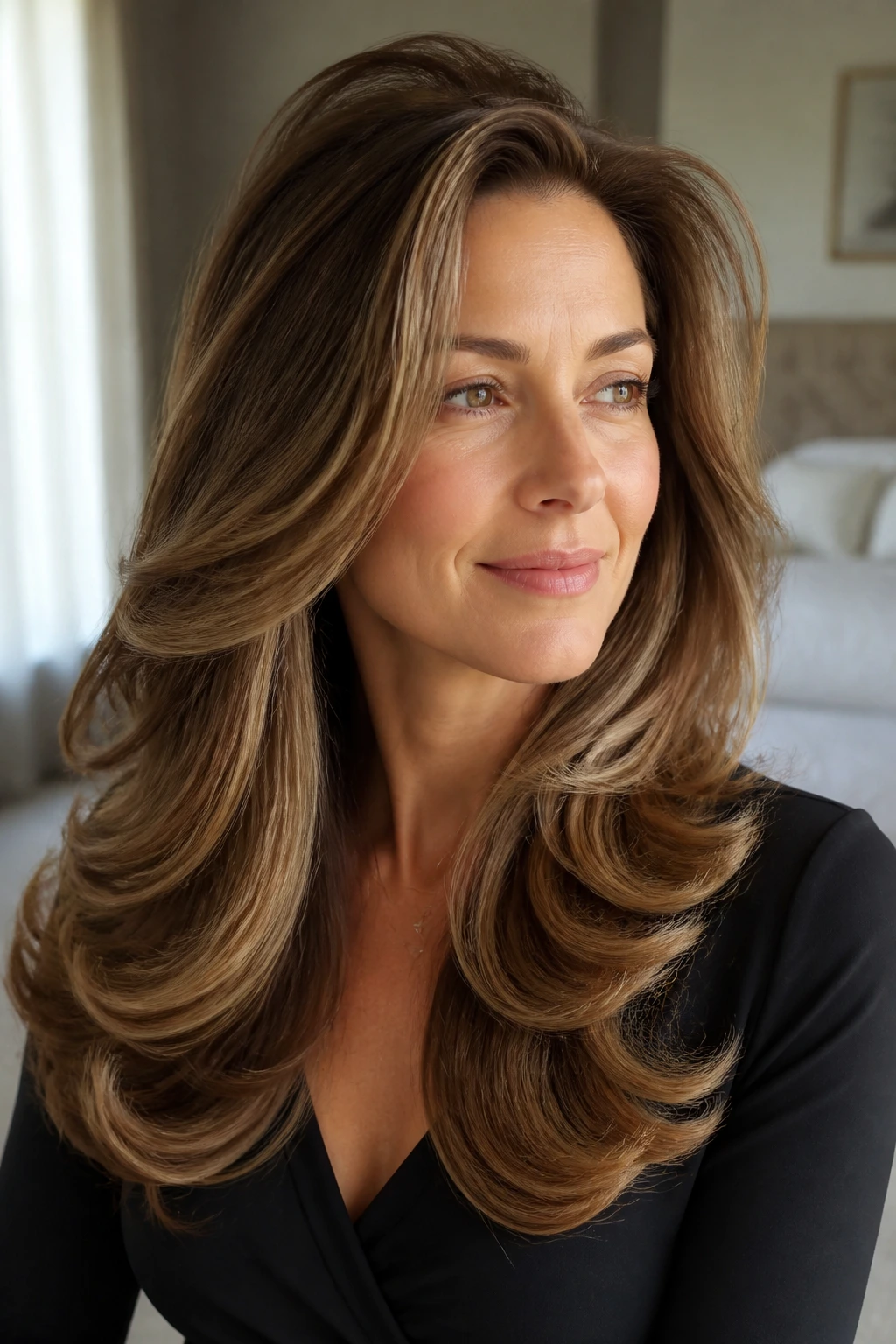
A blowout with soft ends is the style for people who want to look done, but not pinned, sprayed, and trapped. It’s probably the most flexible option in the group because it sits between business and celebration without leaning too far either way.
The base should have lift at the roots, especially around the crown and the front hairline. Then the mids and ends can curve in slightly or flick out in a controlled way. I prefer a round brush and a medium heat setting, followed by a cool shot on each section. That cooling step matters. It locks in shape far better than rushing straight to the next section.
If you’ve got layers, this style can be especially flattering because the movement shows the cut. If you’ve got thick hair, use a smoothing cream before drying so the ends do not puff out like static cling. It’s a small thing, but small things are what make a blowout look expensive instead of fluffy.
18. Classic Center-Part Chignon for a Professional Event
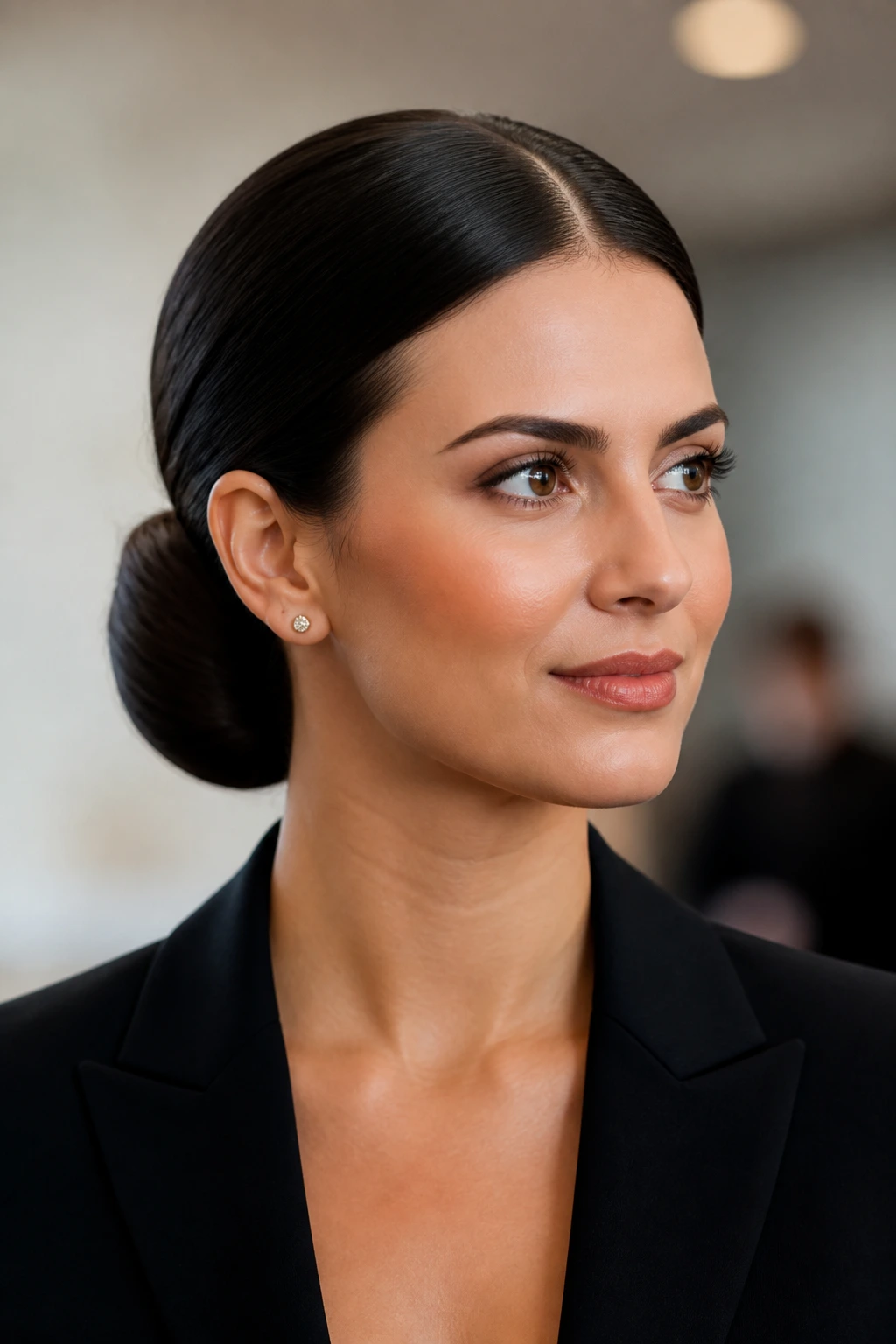
A classic center-part chignon is the cleanest, quietest answer when the dress code feels formal and you want your hair to stay out of the conversation. The center part gives it symmetry, and the low chignon keeps the silhouette tidy.
This style works best when the hair is smoothed first, then gathered low and wrapped into a compact knot. Use a touch of serum on the top layer, then brush everything back with slow, even strokes so the surface stays flat. Cross-pin the bun in two directions — one pin going up, one going across — and the shape holds better than if you stack pins in a single line.
It’s a good match for high necklines, sharp tailoring, or statement makeup. If the outfit is already doing a lot, this hairstyle steps back and lets it breathe. If your hair is very layered, a few hidden pins near the sides will stop shorter pieces from slipping loose.
A clean chignon never needs to shout. That’s the point.
Final Thoughts
The best style is the one that survives the night with its shape intact. That means thinking about the event itself, not just the mirror. A conference, a dinner, and a formal awards room ask for different levels of softness, shine, and hold.
If you’re torn between two options, pick the one that needs less rescue work. Hair that stays put for four to six hours with only a tiny touch-up is worth more than something dramatic that falls apart after the first handshake.
One last practical move: do a test run at home and wear the style for half an hour while you move around, sit down, and look at it in three mirrors. The details that bother you then are the same ones that will bother you later. Better to find them before the invitation, not during the event.
