



Thick hair and a long pixie can be a dream cut — right up until the sides puff out, the crown goes wide, and the whole thing starts looking heavier than you wanted. That’s the trap. A lot of people ask for a pixie and end up with a shape that fights their own hair density instead of using it.
Long pixie hairstyles for thick hair work best when the cut removes bulk in the right places and leaves enough length to keep the style soft. That means internal layers, a clean nape, and front pieces that can swing forward or tuck back without turning into a helmet. The magic is not in making thick hair look thinner. It’s in giving it a shape that stays sharp after a wash, a rough blow-dry, or a day of wearing a coat with a collar.
Dense hair is forgiving in one sense. It holds shape. It also tells on bad cutting fast. If the perimeter is too blunt, the style can turn boxy in a week. If the layers are too short, it can puff like a dandelion. A good long pixie lands in the middle: light where the bulk lives, longer where you want movement.
So here are 20 versions that actually make thick hair behave.
1. Feathered Long Pixie With a Soft Side Sweep
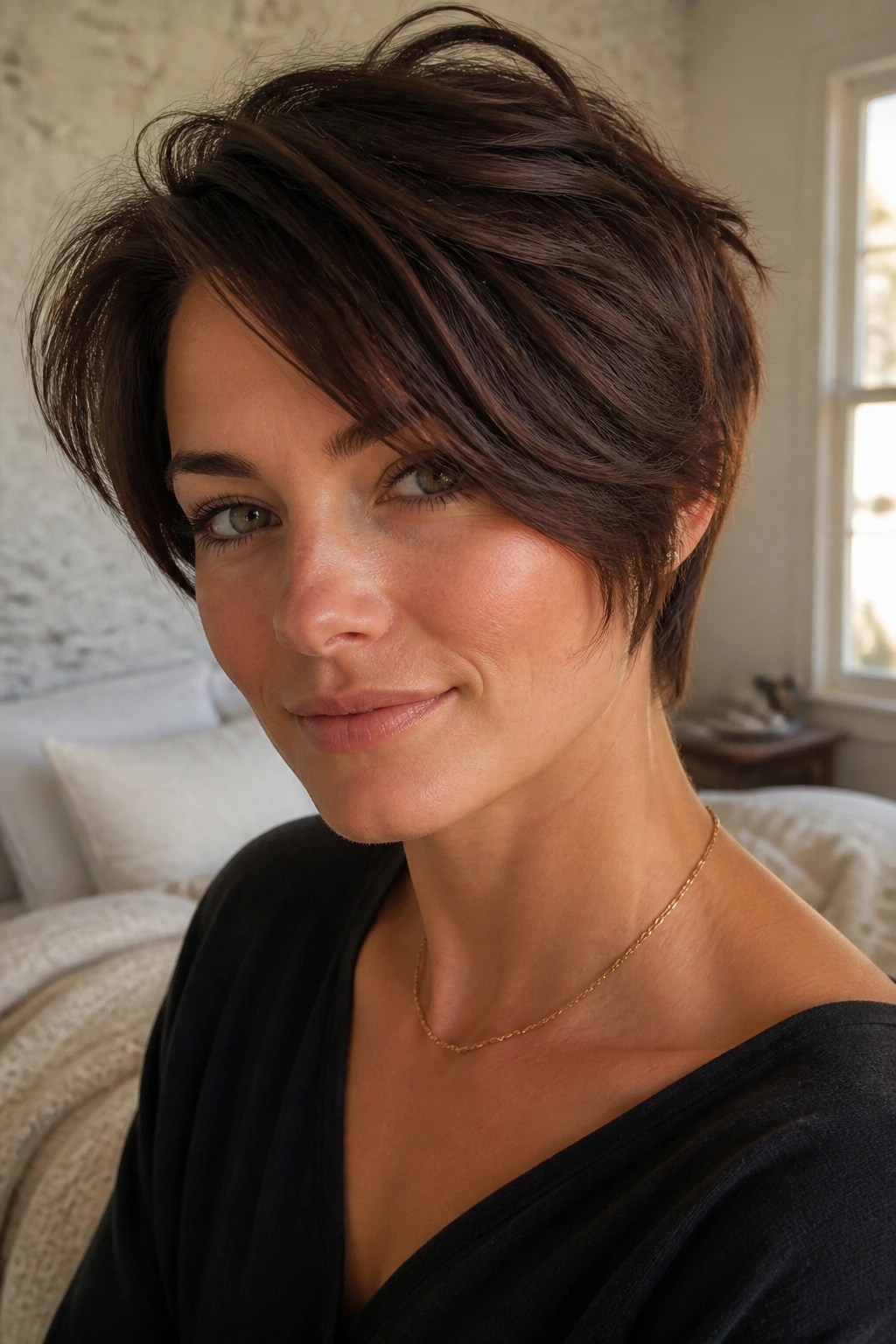
A feathered long pixie is one of the easiest wins for thick hair because it takes the edge off without making the haircut feel chopped up. The ends are softened, not hacked away, and that matters when your hair has real density. You want movement at the cheekbone and a little lift through the crown, not a blunt shelf sitting on your head.
Why the Feathering Works
Feathering breaks up the heavy line that thick hair loves to create. Ask for point-cut layers around the top and a side sweep that skims the brow or cheekbone, depending on how much face you want to show. The front should move. It should not sit there like a curtain.
A round brush and a small amount of mousse are enough to shape it. Blow-dry the fringe forward first, then sweep it across before it cools. That cooling step matters more than people think. It locks the bend in place.
- Keep the shortest crown layers around 2 to 3 inches.
- Leave the longest front pieces just below the cheekbone.
- Use a light cream on the ends only.
- Skip heavy oils near the roots.
Tip: If the feathers are cut too short, the style jumps up and looks frizzy instead of soft.
2. Choppy Long Pixie With Crown Lift
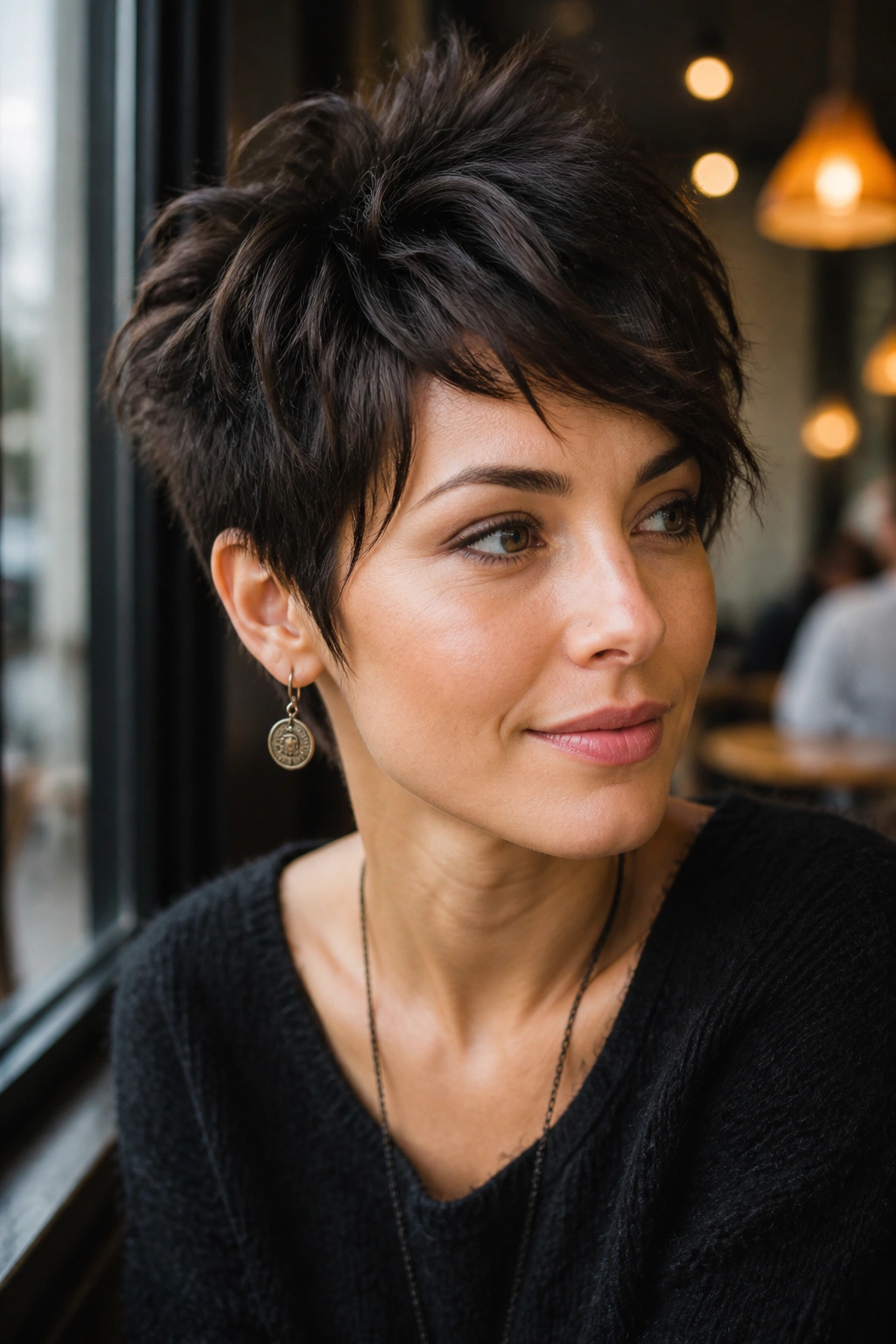
Thick hair looks sharper when the crown is shorter than the sides. That sounds backwards until you see it in the mirror. A choppy long pixie with crown lift gives dense hair a little architecture, and architecture matters when the hair wants to spread out on its own.
This version is for the person who does not want polished or precious. The texture should feel a bit broken up, almost piecey, with the top carrying the most movement. The sides stay close enough to the head to keep the silhouette neat, while the crown gets enough internal removal to avoid a helmet effect. It reads modern because it has air in it.
Work a pea-sized amount of matte paste through dry hair, then push the roots up with your fingertips. Don’t smooth everything down. The trick is to let a few pieces stand apart. A little mess is the point here, but not the kind that looks accidental.
If your hair is coarse and stubborn, this cut can be a relief. It lets thickness do something useful instead of trying to flatten it into obedience.
3. Tapered Long Pixie With a Clean Nape
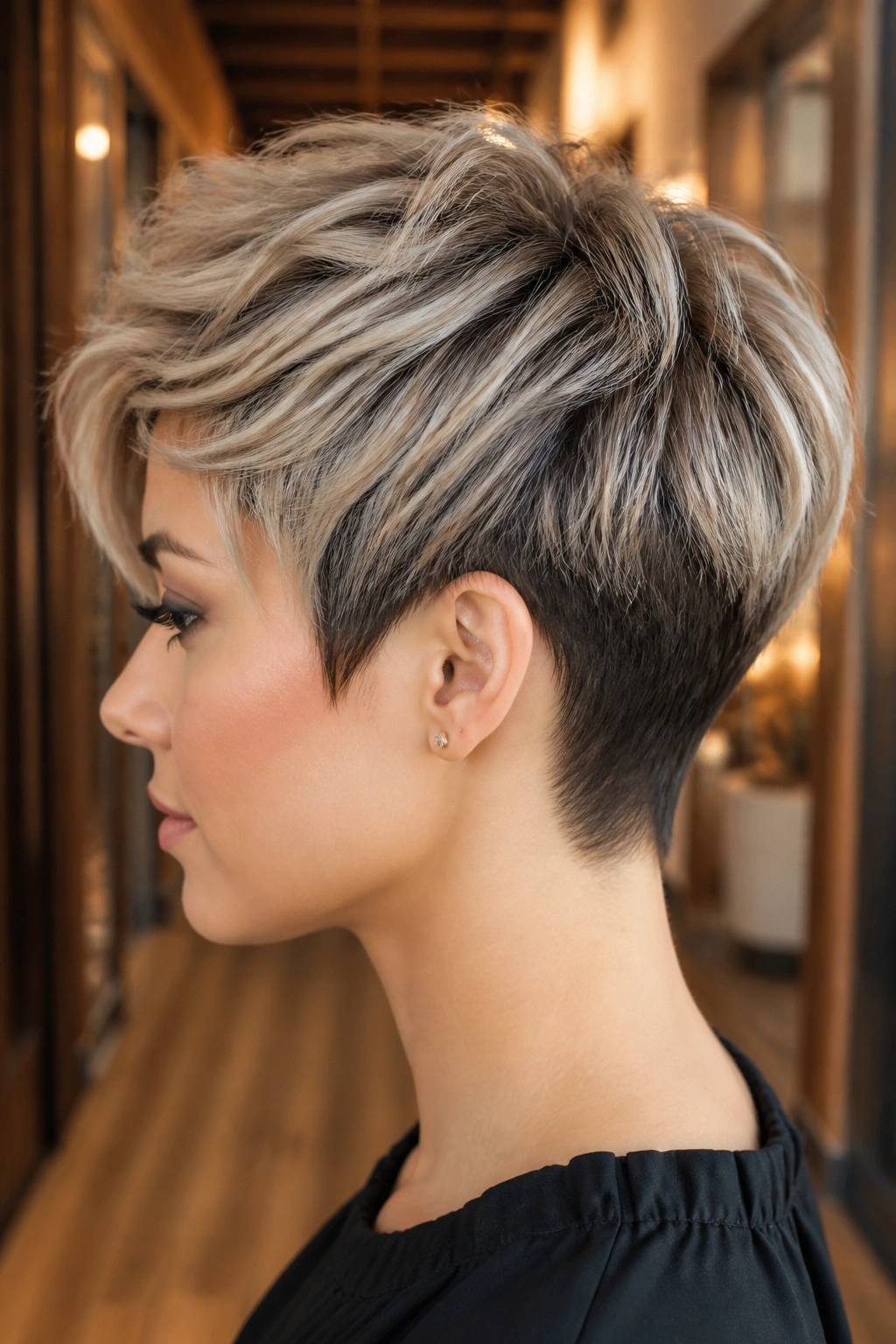
Why does the nape matter so much on thick hair? Because that tiny area decides whether the haircut looks fresh or bulky from the back. A tapered long pixie keeps the neckline close, which makes the top feel lighter and the whole shape look intentional.
How to Ask for It
Tell your stylist you want soft tapering at the nape, not a harsh fade. The hair should get shorter as it approaches the neckline, but the transition needs to feel gradual. Thick hair grows fast in the wrong direction if the nape is left heavy. A clean taper buys you a better grow-out.
The top can still stay long enough to brush forward or tuck to the side. That balance is what makes this style useful. You get the neat back of a cropped cut and the flexibility of a longer pixie on top.
- Keep the nape closely tapered to stop bulk from stacking up.
- Leave the top long enough for a 2-inch side sweep.
- Ask for soft blending behind the ears.
- Book trims every 5 to 7 weeks.
Tip: If your neck gets itchy under hair or collars, this cut feels better than a blunt one.
4. Asymmetrical Long Pixie With a Long Front Panel
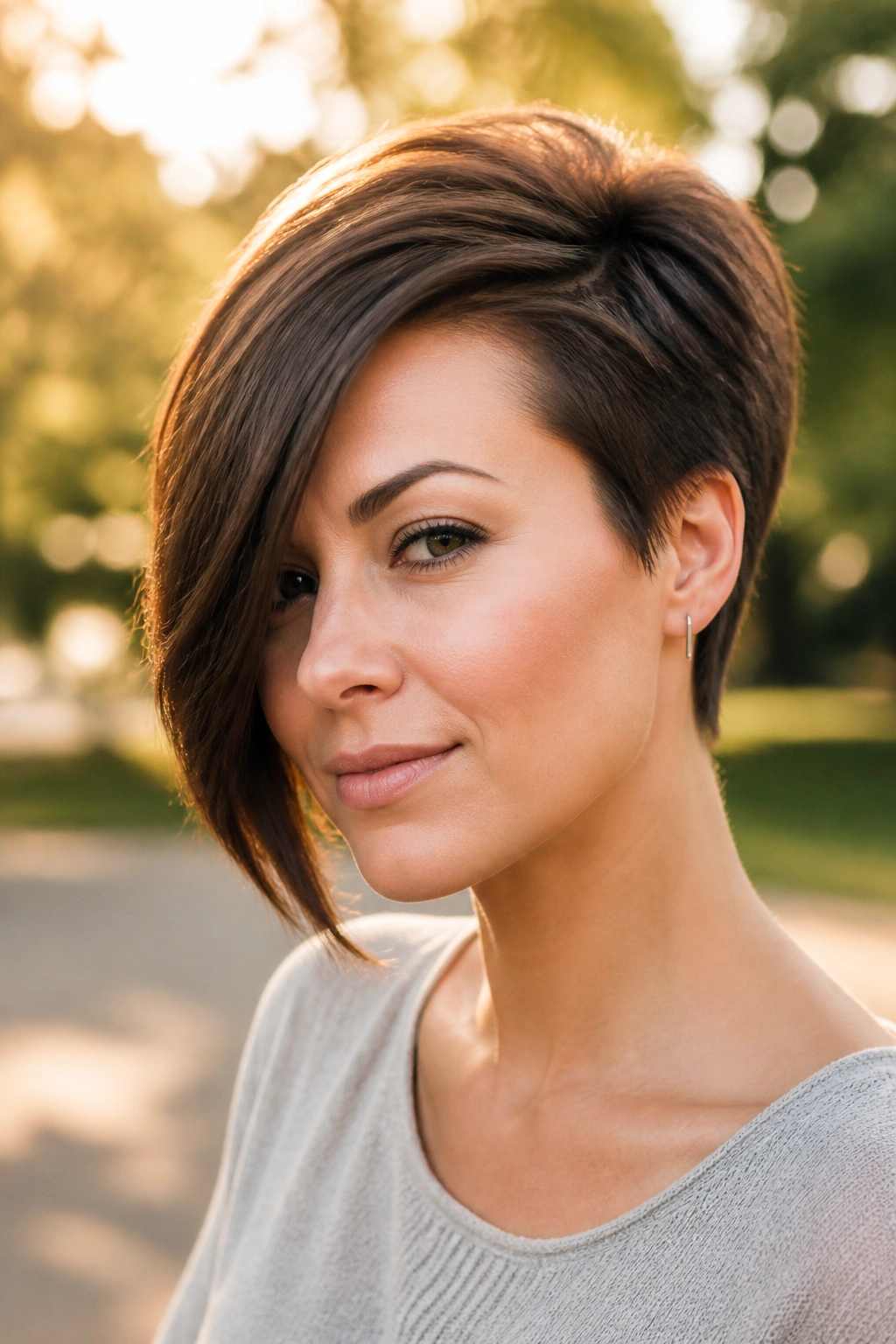
Picture one side grazing the jaw while the other stays tucked and shorter. That asymmetry is not just for drama; it’s a smart move for thick hair because it shifts weight instead of letting it sit evenly on both sides. The result is cleaner and easier to control.
The long front panel gives you styling range. You can wear it straight across the face, tuck one side behind the ear, or bend it under with a flat iron for a softer line. The shorter side keeps the cut from feeling wide, which is the problem thick hair can create when both sides are left the same length. Equal length is not always your friend here.
This style works best when the longest front section is left smooth rather than overtextured. Too much choppiness in the long side can make it stick out at odd angles. Keep the line sleek, and let the asymmetry do the work.
A strong cheekbone line helps, but honestly, the shape can be adjusted. It just needs a stylist who knows when to stop layering.
5. Shaggy Long Pixie With Wispy Ends

The shaggy version is for thick hair that likes to move in all directions anyway. Instead of fighting that, this cut leans into it. Wispy ends soften the edges, and the crown gets enough layering to keep the head shape from going square. It feels a little easier, a little less engineered.
Shaggy pixies can go wrong when the layers get too uniform. Then the haircut turns puffy at the top and narrow at the bottom, which is a strange look on anyone. The better version has unevenness on purpose. Some pieces sit close to the cheek, some lift near the temple, and a few end up feathering around the ears. It should look lived-in, not lazy.
Air-dry cream works well here. So does a quick rough-dry with your fingers if you want a less polished finish. If your hair is very coarse, keep the longest layers a touch heavier so the shape doesn’t fly away. That’s the part people miss. Too much removal can make thick hair act twice as big.
6. Curly Long Pixie With Airy Shape
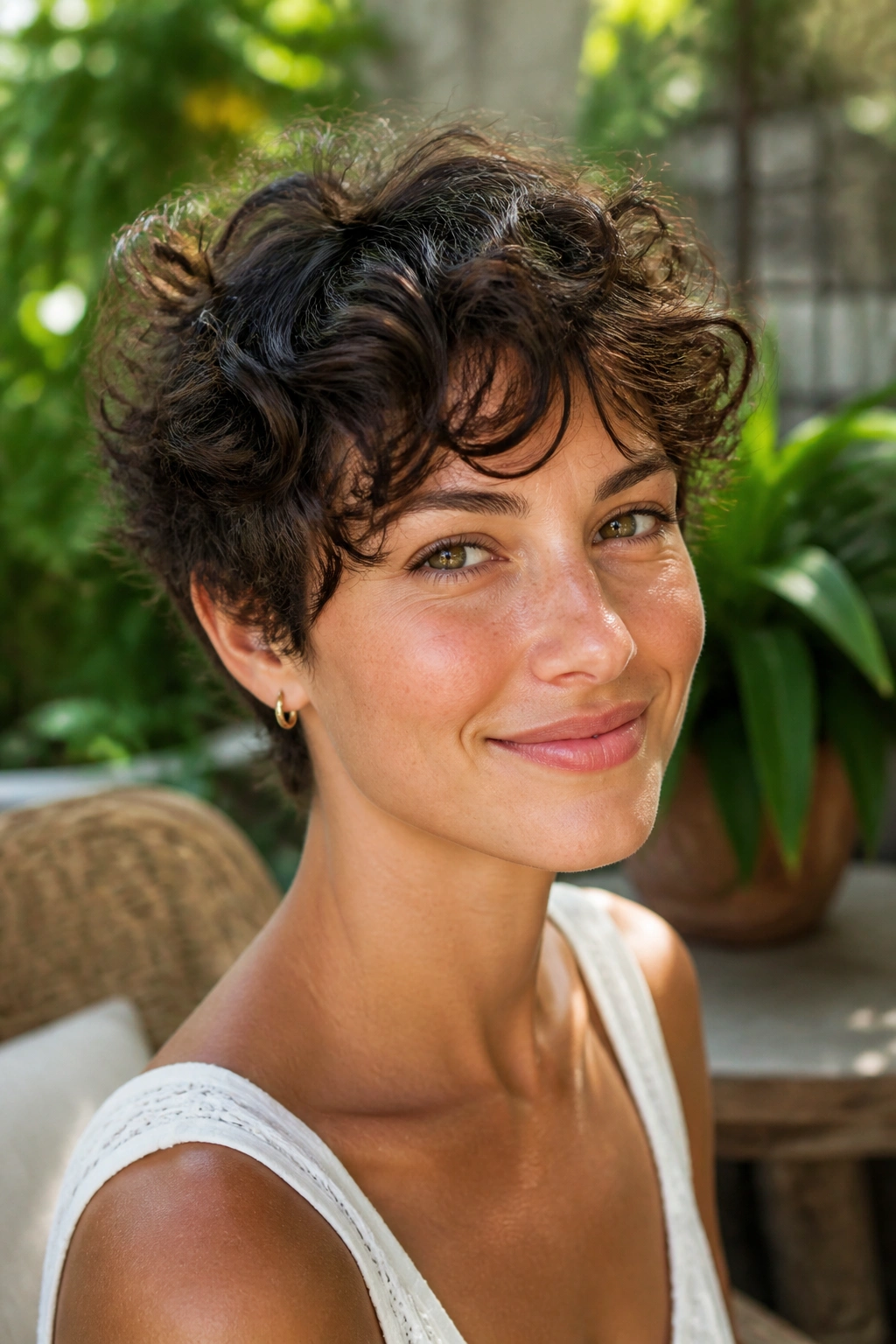
Curly thick hair does not need to be chopped into submission. It needs room. A curly long pixie with airy shape gives the curls enough length to spring, while the sides stay controlled so the outline doesn’t balloon outward. The goal is shape, not shrinkage.
Unlike straight pixies, this one has to respect curl pattern and dry time. A curl that looks tame when wet can pop up half an inch or more once it dries. Leave more length than you think you need, especially around the crown and temples. That tiny bit of extra room saves you from a cut that feels too short the first week.
A diffuser on low heat helps keep the curl clumps intact. Hands off while it dries. Seriously. Touching it too much breaks the curl pattern and makes thick hair frizz out in the spots you were trying to smooth.
Who it’s best for? Anyone with waves that lean into curls, and anyone tired of trying to force thick textured hair into a straight idea of a pixie. Let the texture be the point.
7. Sleek Long Pixie With a Deep Side Part
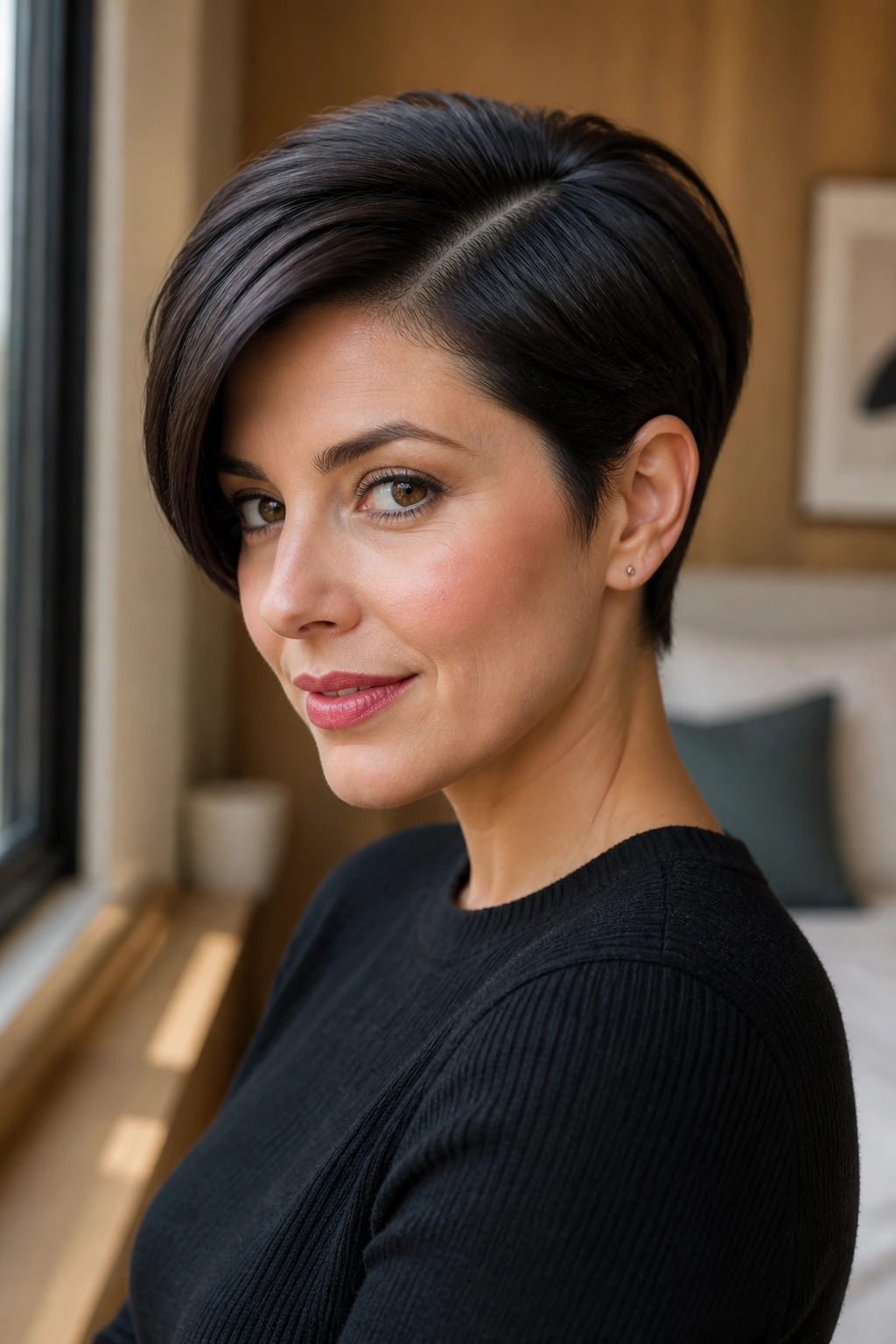
A deep part changes everything. It shifts weight, opens up one side of the face, and makes thick hair look more deliberate in about ten seconds. This version is ideal if you like a clean outline but still want the length on top to feel usable.
What Makes It Work
The part should sit about 2 to 3 inches off center. That small move creates lift at the root and helps the front fall in a way that feels controlled instead of bulky. Dry the hair in the opposite direction first, then flip it back once it’s almost dry. That’s how you get the root to stay up without teasing it to death.
A smoothing cream through the mids and ends keeps the surface from puffing. Keep product away from the scalp. Thick hair already has enough body there. What it usually needs is discipline at the ends, not more weight near the roots.
- Blow-dry with a nozzle for direction.
- Use a paddle brush for the longer front pieces.
- Tuck one side behind the ear if you want more contrast.
- Finish with a tiny touch of shine serum on the ends.
Tip: A deep side part looks best when the front piece is left long enough to skim the eyebrow or upper cheek.
8. Long Pixie With Curtain Bangs and Soft Bend
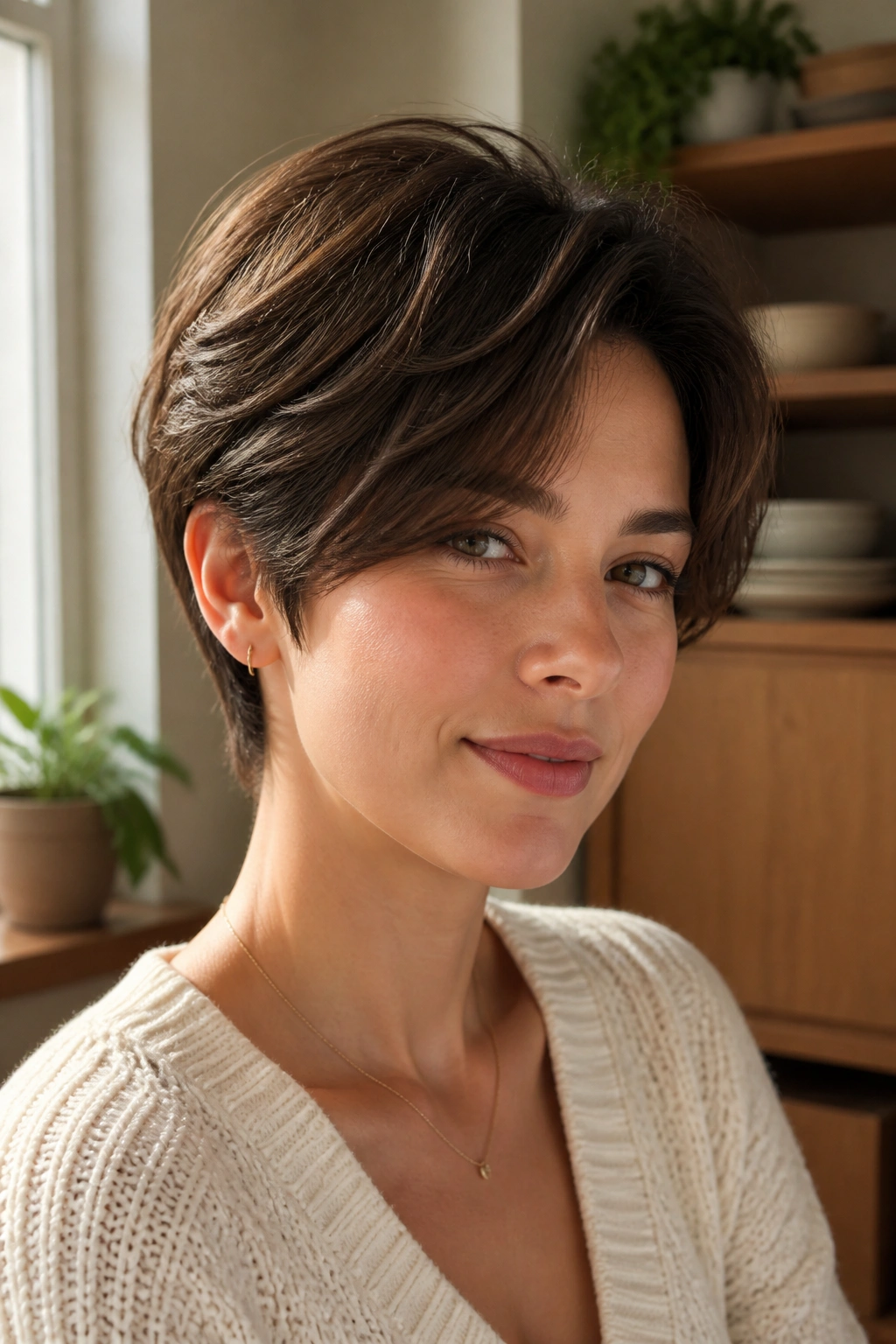
Curtain bangs can make thick hair feel lighter without stripping away its body. That’s the part people get wrong. The fringe is not there to hide the forehead; it’s there to break up the front of the haircut and give the eye a softer landing.
The best version starts a little below the brow line and opens at the center before sweeping to each side. On thick hair, those front pieces should be cut with a gentle bend in mind. Blunt bangs across the forehead can feel heavy fast, especially if the rest of the cut is already dense. Curtain bangs solve that by spreading the visual weight out.
Use a round brush or a 1-inch iron to create a soft curve away from the face. The ends do not need to curl; they just need to fold back a bit. A little heat protectant and a light flexible spray are enough.
This cut is a good match if you want your pixie to feel a little softer around the face, especially when thick hair tends to widen the cheek area.
9. Undercut Long Pixie With Hidden Weight Removal
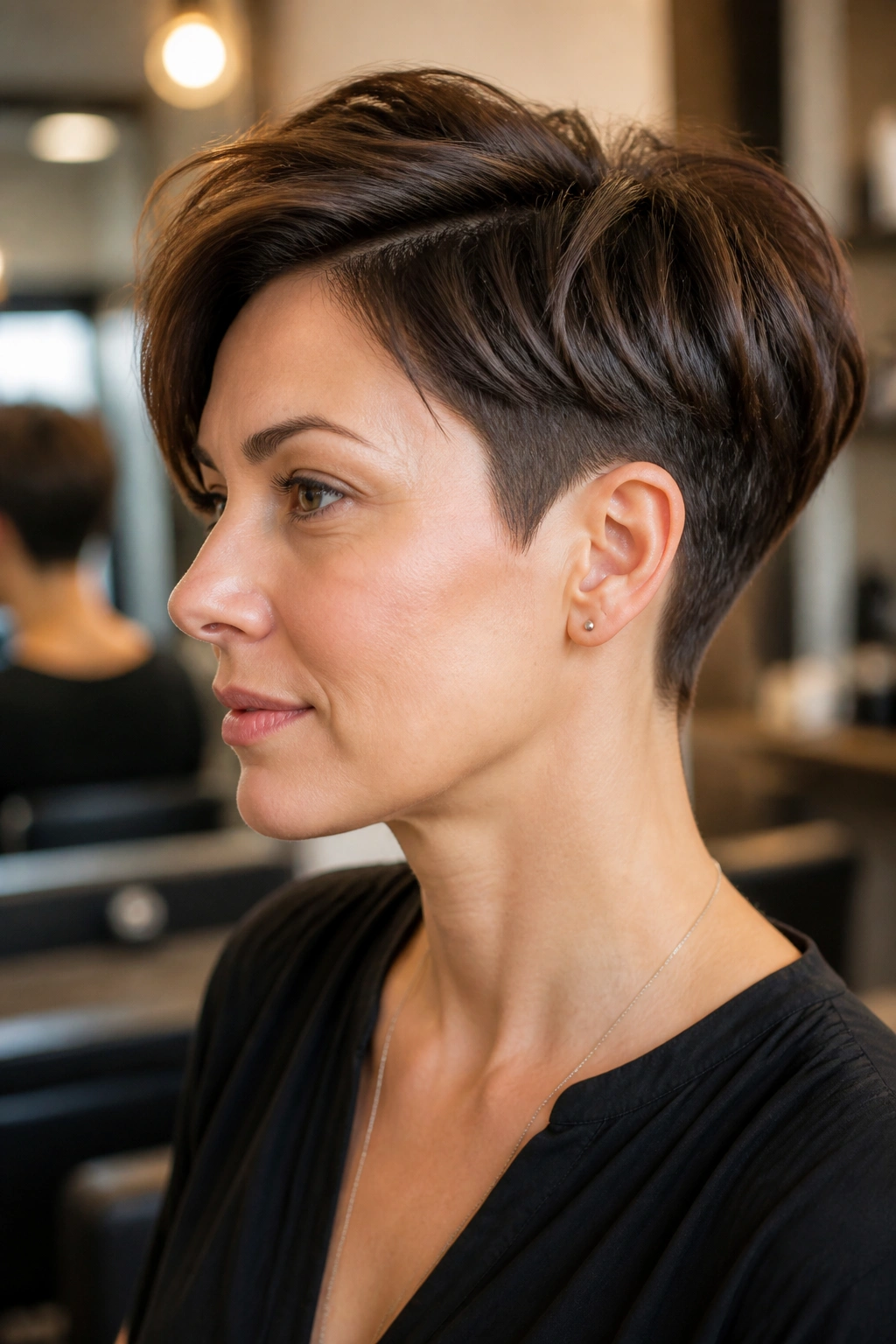
What if the real fix is underneath the hair, not on top? That’s the point of a hidden undercut. The outside still looks like a long pixie, but the layers below are carved away so thick hair doesn’t stack up at the back or behind the ears.
How to Wear It Well
The undercut should stay low enough that the top layer covers it when the hair falls naturally. You want relief, not a visible scalp strip unless that’s the look you’re after. Ask for bulk removal in the lower back and around the dense side sections. That’s where thick hair usually starts to drag the style down.
This cut feels especially good if you live with heat, wear glasses, or hate that heavy feeling behind the ears. It gives the top more freedom to move and makes styling faster. A quick blow-dry and a dab of paste can be enough on most days.
- Keep the undercut low and hidden.
- Leave enough top length to disguise the shave.
- Trim every 4 to 6 weeks if you want the shape crisp.
- Add texture only to the top, not the short areas.
Tip: If you want to keep the option of growing it out, ask for a soft undercut instead of a shaved block.
10. Piecey Long Pixie With Razor-Cut Texture
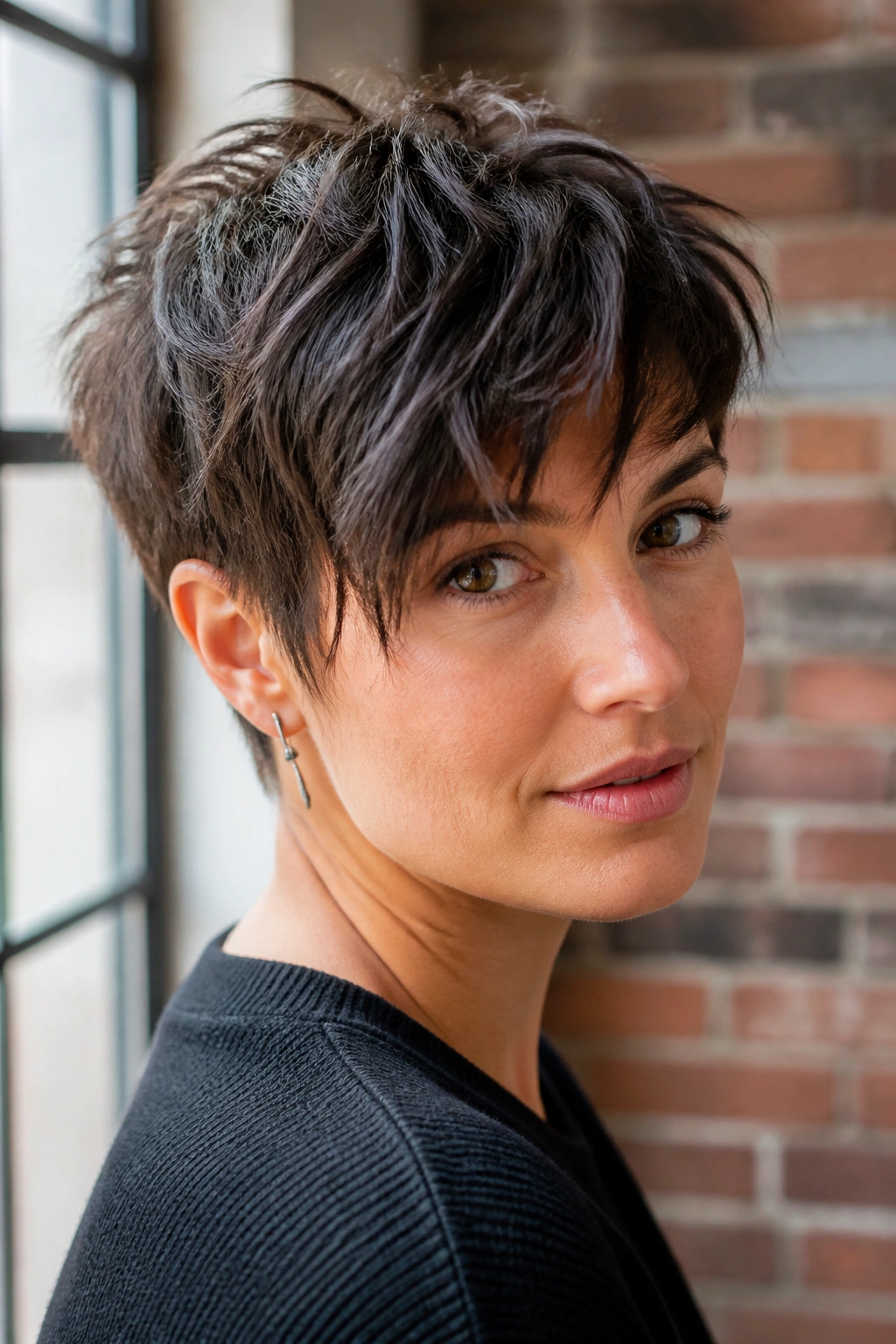
Some thick hair wants to fall into clean pieces, and a razor-cut pixie gives it exactly that. The texture is a little sharper than feathering, a little less soft than a shag. It sits in the middle, which is often the sweet spot for dense strands that need movement but not chaos.
Razor work can take away the chunky feel that thick hair sometimes has around the crown and temples. It also creates separation, so the haircut doesn’t read as one solid shape from every angle. That matters when the hair is naturally heavy and likes to close itself up.
Key Details to Watch For
- The razor should create soft, broken ends, not frayed edges.
- The top can stay longer, around 3 to 4 inches.
- The sides should be piecey enough to tuck, but not thin.
- A texture spray gives this cut the right dry finish.
Don’t overload it with cream. That kills the separation and makes the layers stick together. The whole point is to let the hair move in visible strands.
The best version looks even better on day two, when the pieces settle and the cut gets a little more grip.
11. Rounded Pixie-Bob With Longer Crown Layers
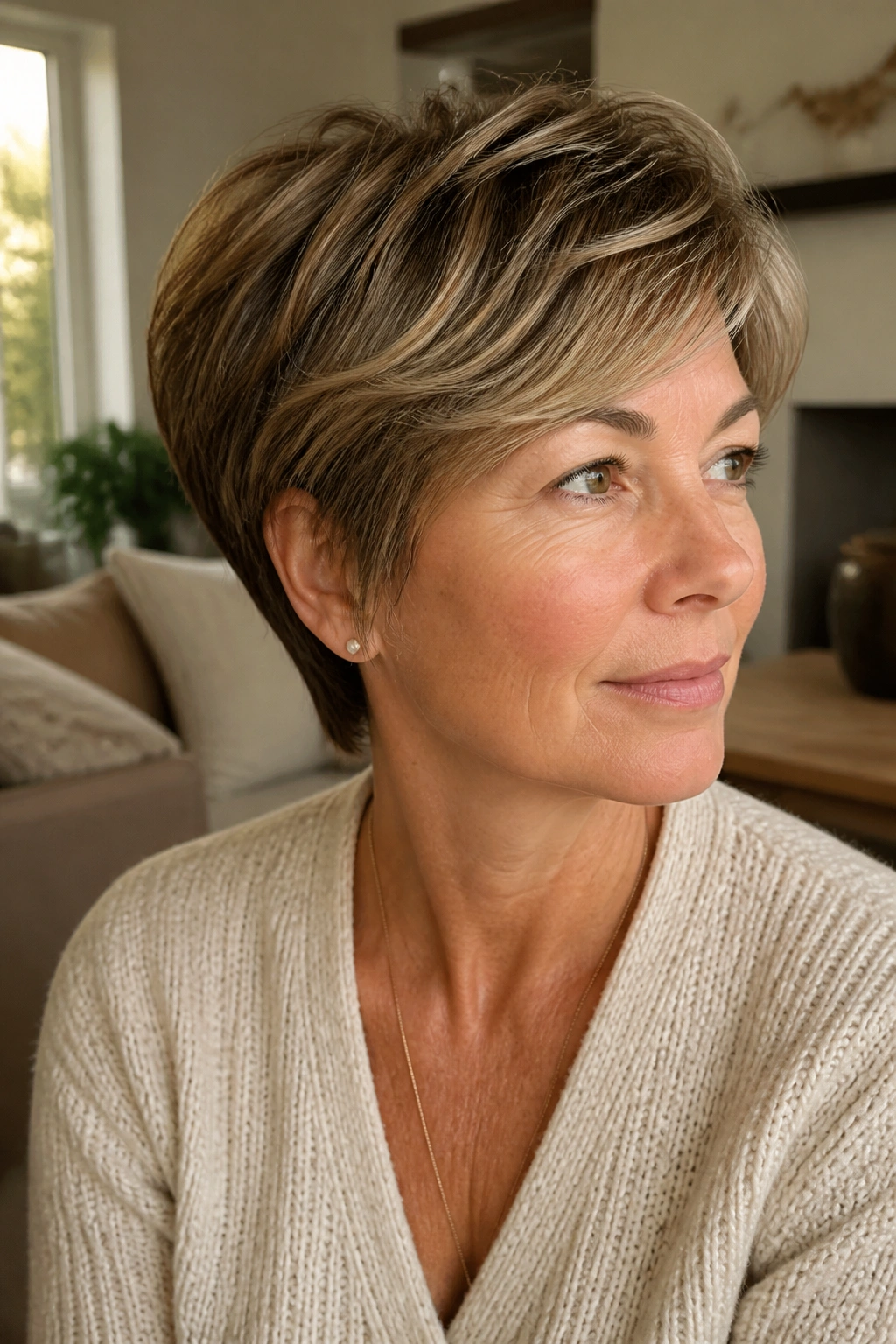
This is the style for anyone who likes the idea of a pixie but still wants a little cushion around the ears and jaw. The rounded pixie-bob hybrid keeps enough length to feel gentle, while the longer crown layers stop thick hair from turning into a mushroom shape. It’s softer than a classic cropped pixie and more controlled than a full bob.
The shape matters here. From the side, it should curve in a clean line rather than sit flat or flare out. Thick hair is good at creating its own geometry, and not always a flattering one. A rounded outline gives it somewhere to go. The crown layers add lift without forcing too much height.
This one is a good compromise if you’re nervous about going short. You can still tuck pieces behind the ear, brush the front across the forehead, and keep a bit more coverage at the neck. It does need some shaping with a round brush or a blow-dryer brush, though. If you air-dry it without help, the roundness can disappear.
It’s a calm haircut. Not boring. Just calm.
12. Long Pixie With Tucked Sides and a Low Sweep
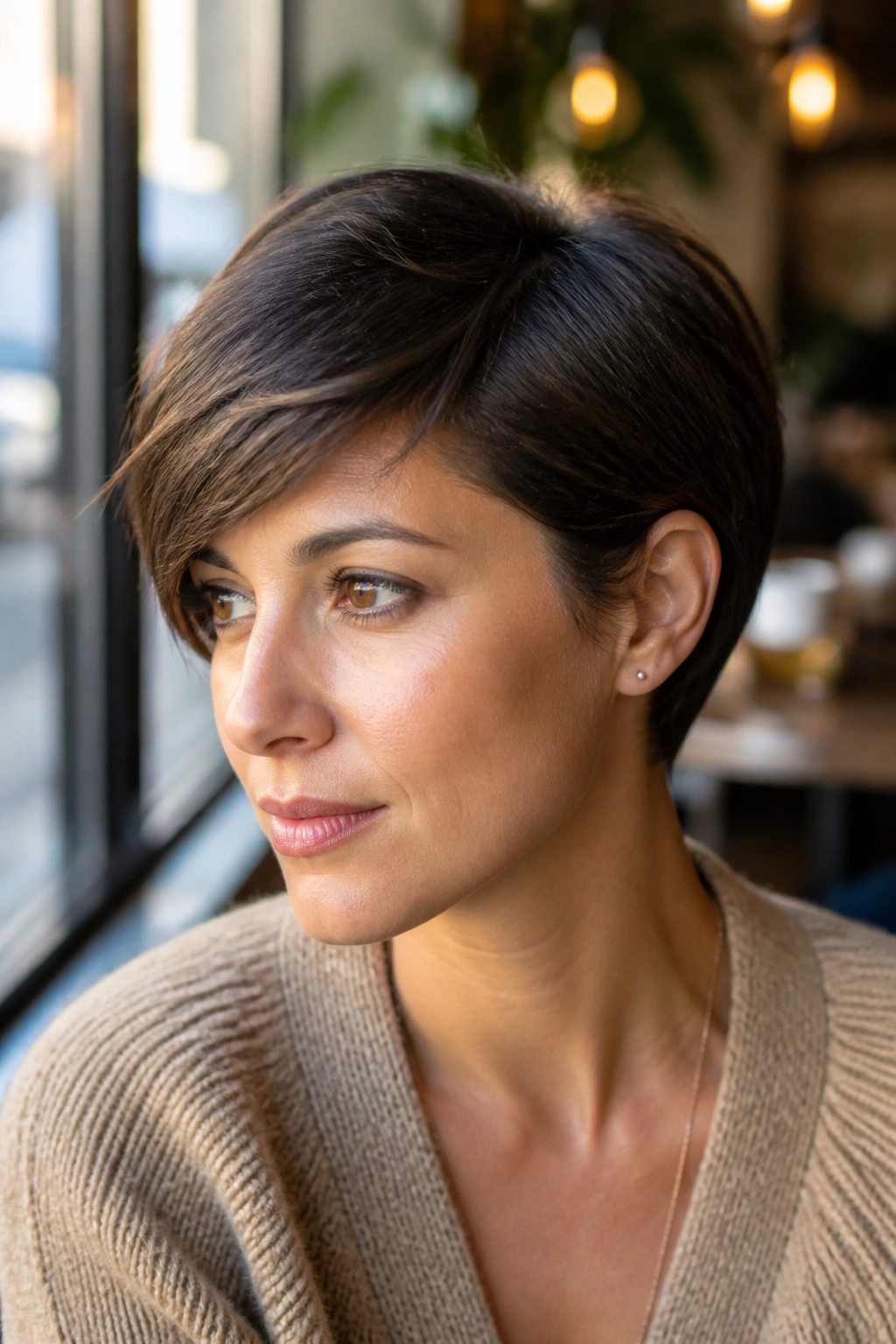
Unlike a style that pushes volume everywhere, this one keeps the sides close and lets the front do the talking. That makes it a smart choice for thick hair that gets too wide around the cheekbones or ears. The tucked sides slim the outline, and the low sweep softens the forehead area without stealing too much length.
It also plays well with earrings and glasses, which sounds small until you live with a haircut that fights both. A low sweep keeps the front pieces long enough to move across the face, but not so long that they fall in your mouth every time you turn your head. That balance is useful. Practical, even.
Ask for the side sections to be softened just enough to tuck behind the ear without bulking up. A lightweight pomade or cream helps keep them in place. If the hair around your ears is especially dense, the stylist can thin only that zone and leave the rest alone.
This cut works because it stays neat without looking severe. That is harder to get than it sounds.
13. Messy Long Pixie With Bedhead Layers
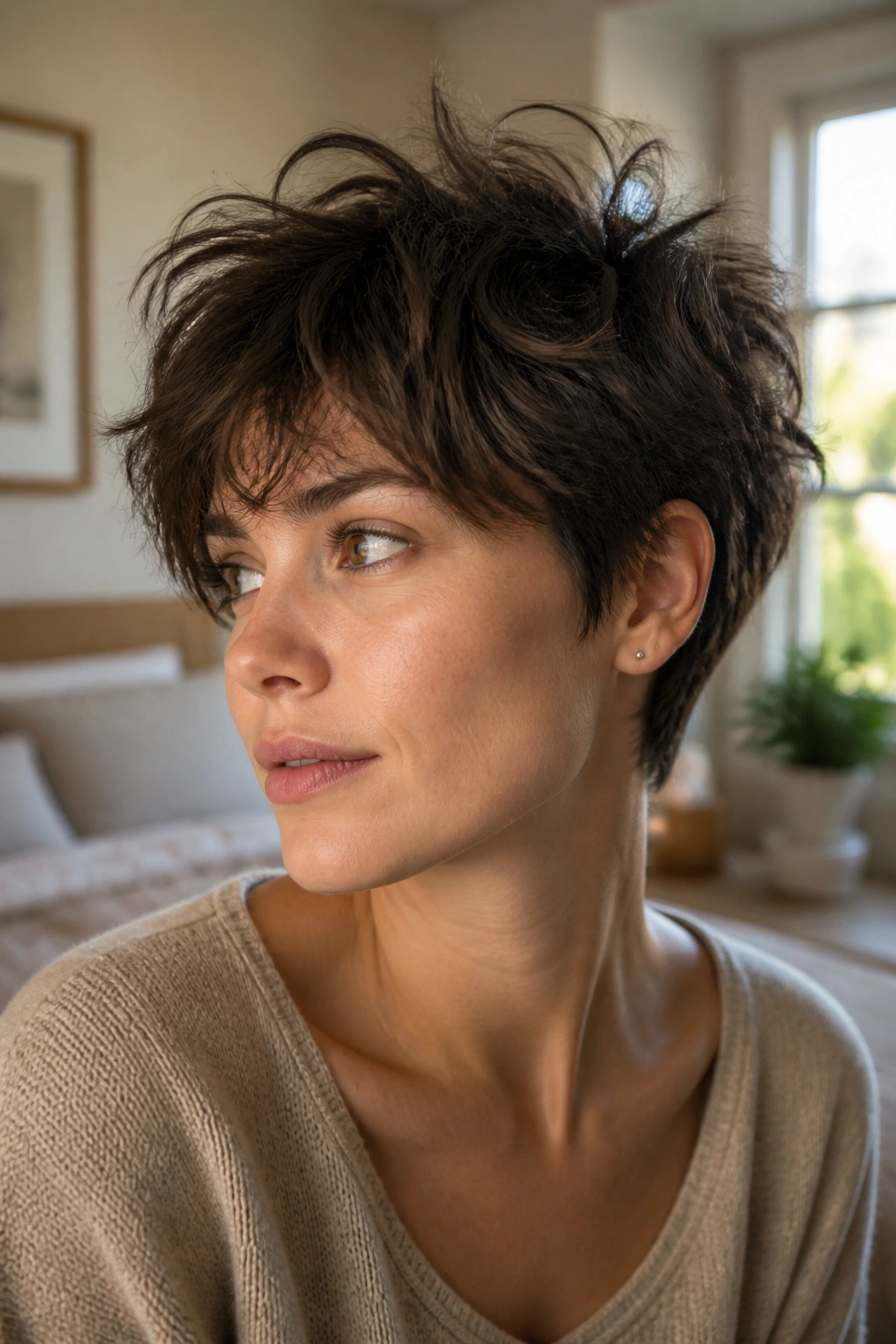
Some mornings, polished hair is a lie. A messy long pixie with bedhead layers is for thick hair that already wants to look a little undone, so you may as well make that work for you. The layers are uneven on purpose, and the ends are left soft enough to move around instead of sitting in one fixed shape.
What to Ask For
Ask for internal layers through the crown and a slightly broken outline around the temples. The nape should still be controlled, or the whole thing goes vague. Thick hair needs a border, even when the rest of the style is easygoing. Without that, the mess reads as bulk.
A salt spray on damp hair helps, but use a light hand. Too much and the hair gets stiff and dry-looking. Scrunch the top, air-dry it about 70 percent, then rough-dry the roots with your fingers. That usually gives the best balance of lift and softness.
- Keep the longest pieces around the face.
- Leave the ends slightly irregular.
- Use fingers, not a brush, for the finish.
- Work a tiny bit of paste through the front only.
Tip: If your thick hair frizzes at the slightest humidity, swap salt spray for a light mousse and skip the crunch.
14. Micro Fringe Long Pixie With Sculpted Sides
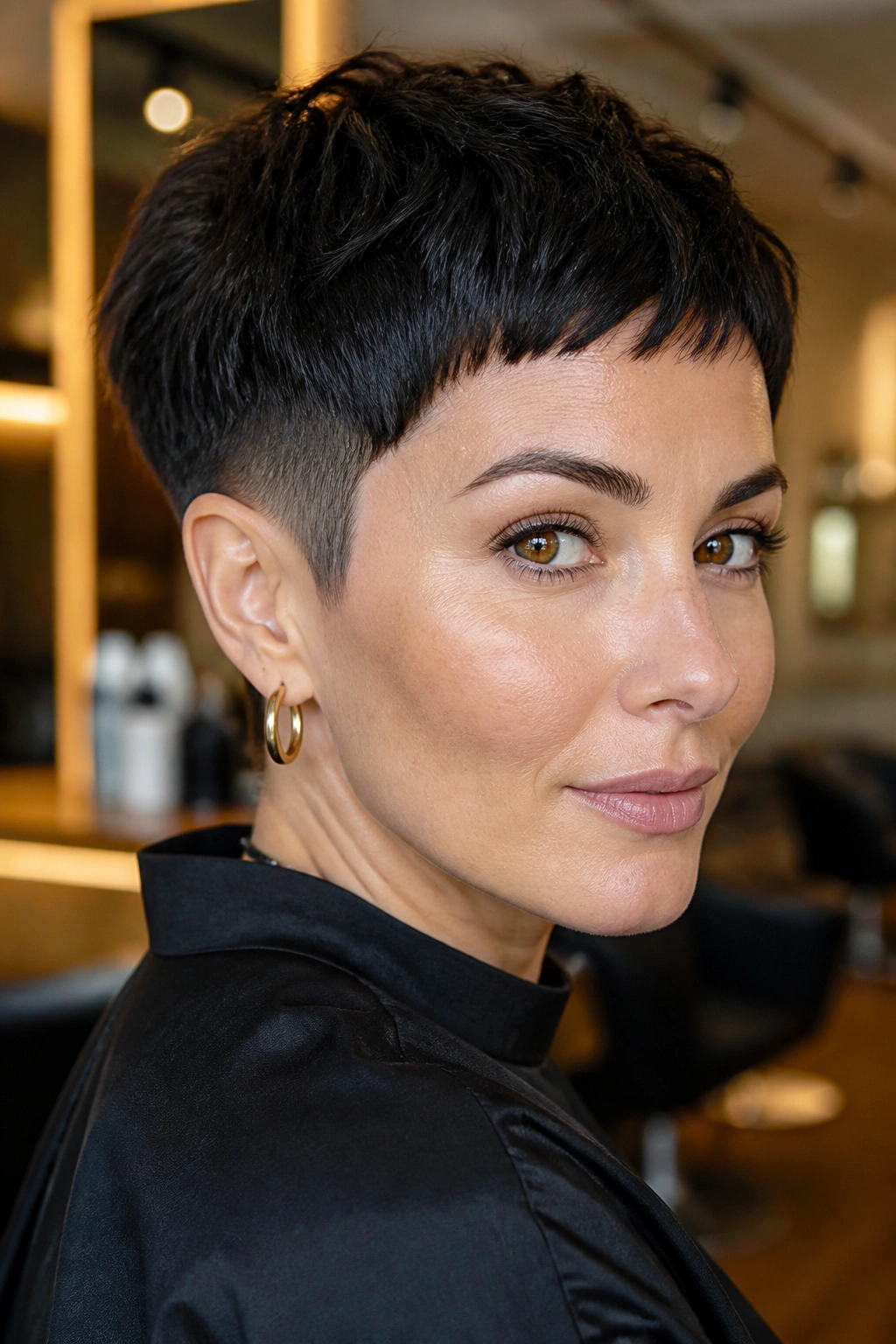
A micro fringe on thick hair is a bold move, and it works because the rest of the cut is doing the heavy lifting. The fringe stays short and narrow, while the sides are sculpted close so the haircut doesn’t explode outward. The contrast is what makes it interesting.
This style is not for someone who wants a quiet haircut. It puts the eyes first. The forehead opens up, the brow line looks sharper, and the dense hair around the rest of the head gets shaped into a cleaner outline. You need precision here, though. A micro fringe that is too thick can make the whole cut feel severe. A fringe that is too thin looks accidental.
Maintenance matters more than usual. Plan on trimming the fringe more often than the rest of the cut, because even a half-inch of growth changes the balance. The rest of the pixie can be left a bit longer, which is a nice trade-off.
If your face is longer, this cut can be especially striking. It cuts the vertical line and makes the style feel intentional from the first glance.
15. Soft-Wave Long Pixie With Face-Framing Pieces
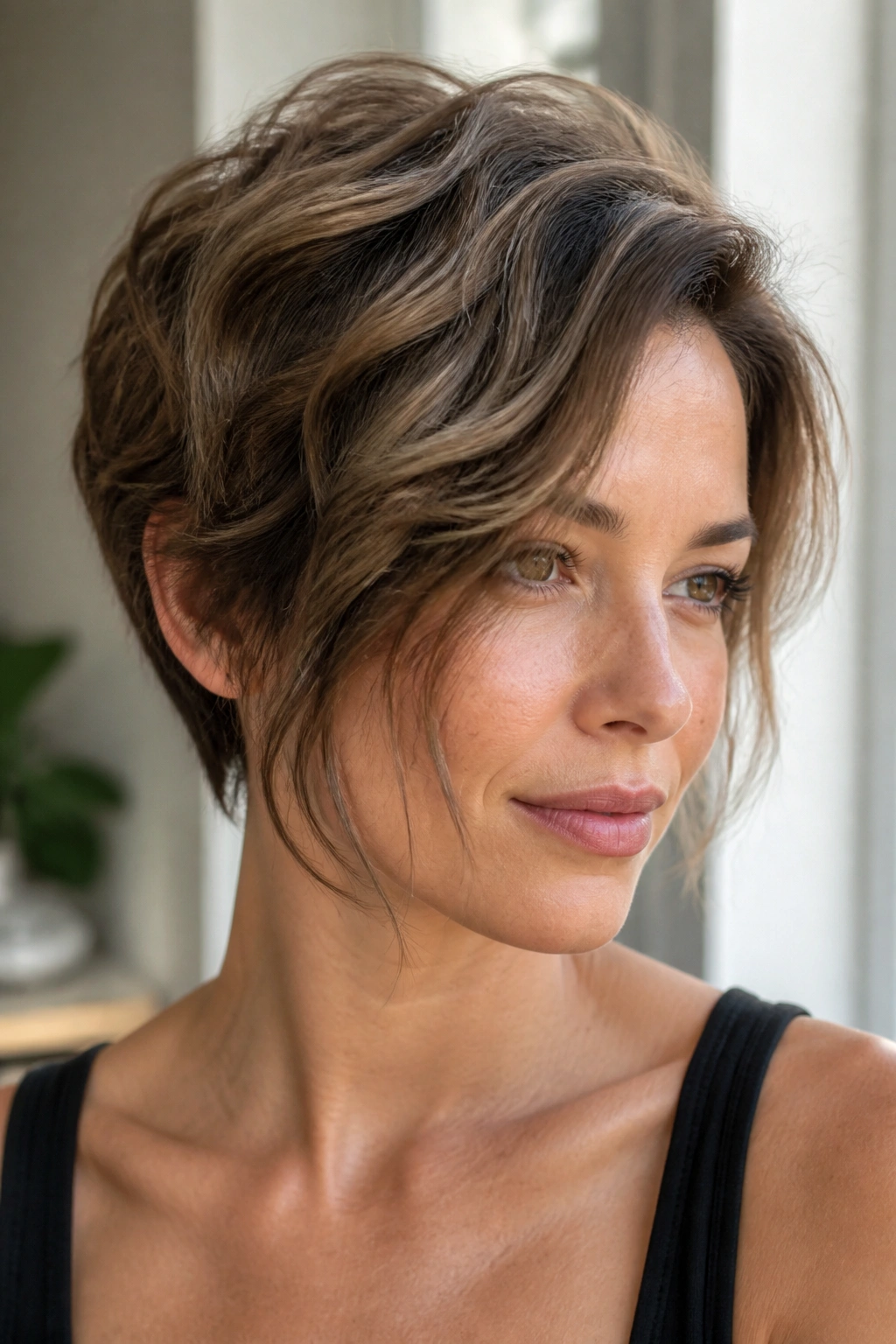
Can thick hair look soft without losing body? Yes, and this cut is proof. A soft-wave long pixie keeps the mass of the hair but breaks up the edges with gentle bends that move away from the face. The front pieces are left long enough to touch the cheek or jaw, which gives the haircut a little breathing room.
How to Style the Bend
Use a 1-inch curling iron or a small flat iron to bend sections away from the face, not into tight curls. Alternate the direction on a few pieces so the front doesn’t turn into one smooth wave. Then brush it out lightly with your fingers. That leaves the hair looking relaxed instead of styled to death.
The face-framing pieces matter here. They soften strong jawlines and keep thick hair from swallowing the lower half of the face. If the front is too short, you lose that effect and the haircut can feel abrupt. Keep those pieces long enough to move.
A flexible spray is enough. Hard hairspray makes the bend look crunchy, and that ruins the whole point. Soft movement is the job.
16. Graduated Long Pixie With a Stacked Back
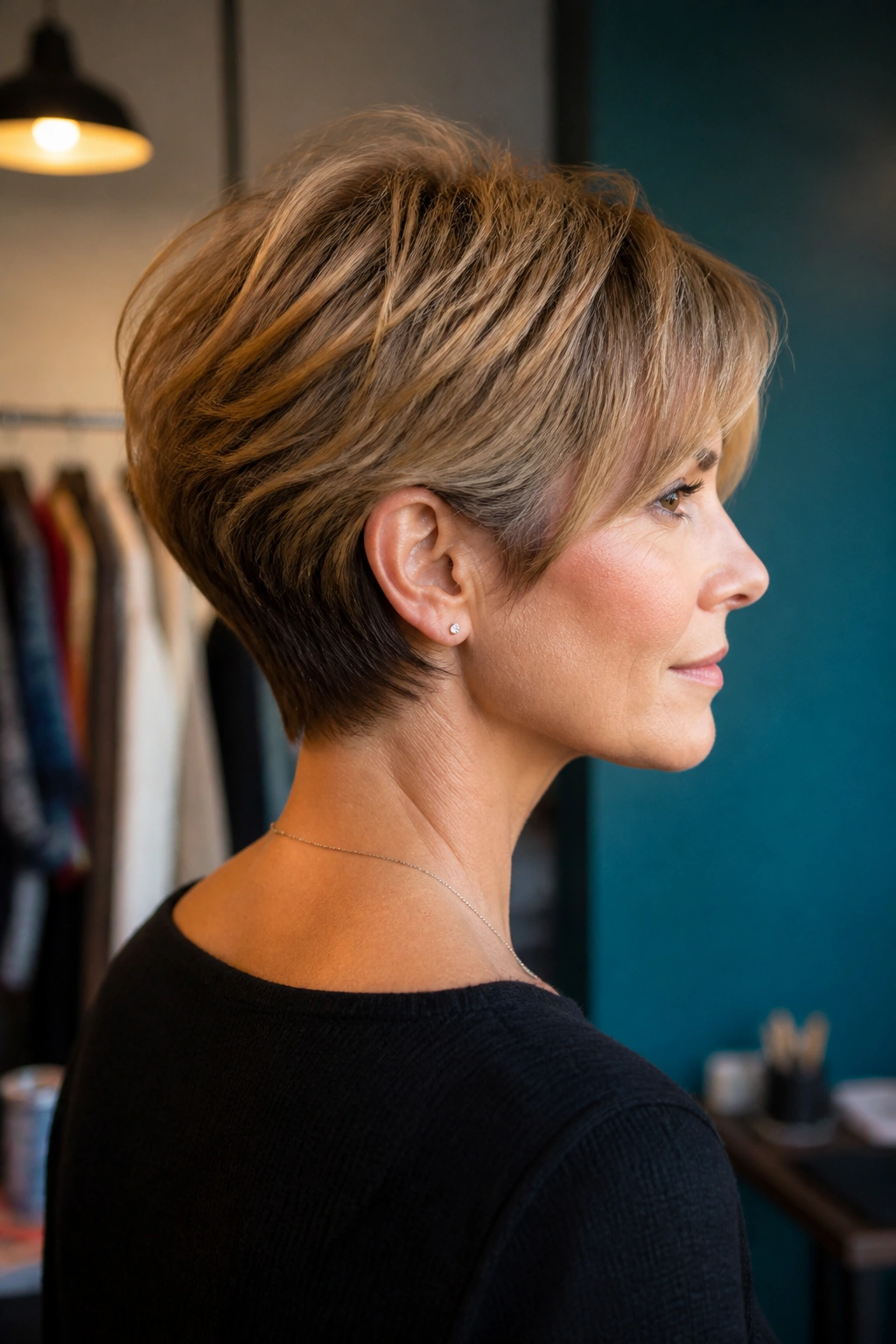
When thick hair collapses at the back, a graduated shape fixes the profile fast. The stacked back builds a little lift where the head naturally curves, so the haircut looks full without getting heavy. It’s one of those cuts that looks simple until you watch it from the side. Then the shape makes sense.
What Makes the Stack Work
The graduation should move smoothly from the nape upward, not jump suddenly into a shelf. That step is where bad versions go wrong. Thick hair already has enough mass to create a ledge if the back is cut too bluntly. Keep the transition soft, and the shape stays rounded.
This cut is a solid choice if you like a bit of structure and want the back to look tidy from every angle. It also helps if your hair tends to lie flat at the crown. The stacked layers push a little air into the silhouette.
- Ask for visible graduation, not a hard stack.
- Keep the crown long enough to blend.
- Use a round brush at the back.
- Trim every 6 to 8 weeks to keep the curve clean.
Tip: A stacked back looks best when the nape is clean and the top is not overthinned.
17. Long Pixie With Flipped-Out Ends

A flipped-out pixie has a little retro energy, but on thick hair it works because the ends do not sit still. They kick out just enough to keep the silhouette from feeling flat. The trick is to leave the perimeter soft so the flip reads airy rather than stiff.
This version needs a bit of heat shaping. A round brush can flip the ends as you dry, or a flat iron can give the front pieces a light outward bend. Don’t overdo it. If every strand flips the same way, the haircut starts looking toy-like, and nobody wants that.
Thick hair holds the flip well, which is a plus. It also means you need to watch the width at the sides. Keep the flip mainly on the longest front pieces and the top layers. The short areas near the ears should stay closer in, or the shape starts to widen too much.
A small amount of wax at the tips helps the flip stay separated. A heavy paste will drag it down. That’s the trade-off.
18. Polished Long Pixie With a Smooth Finish
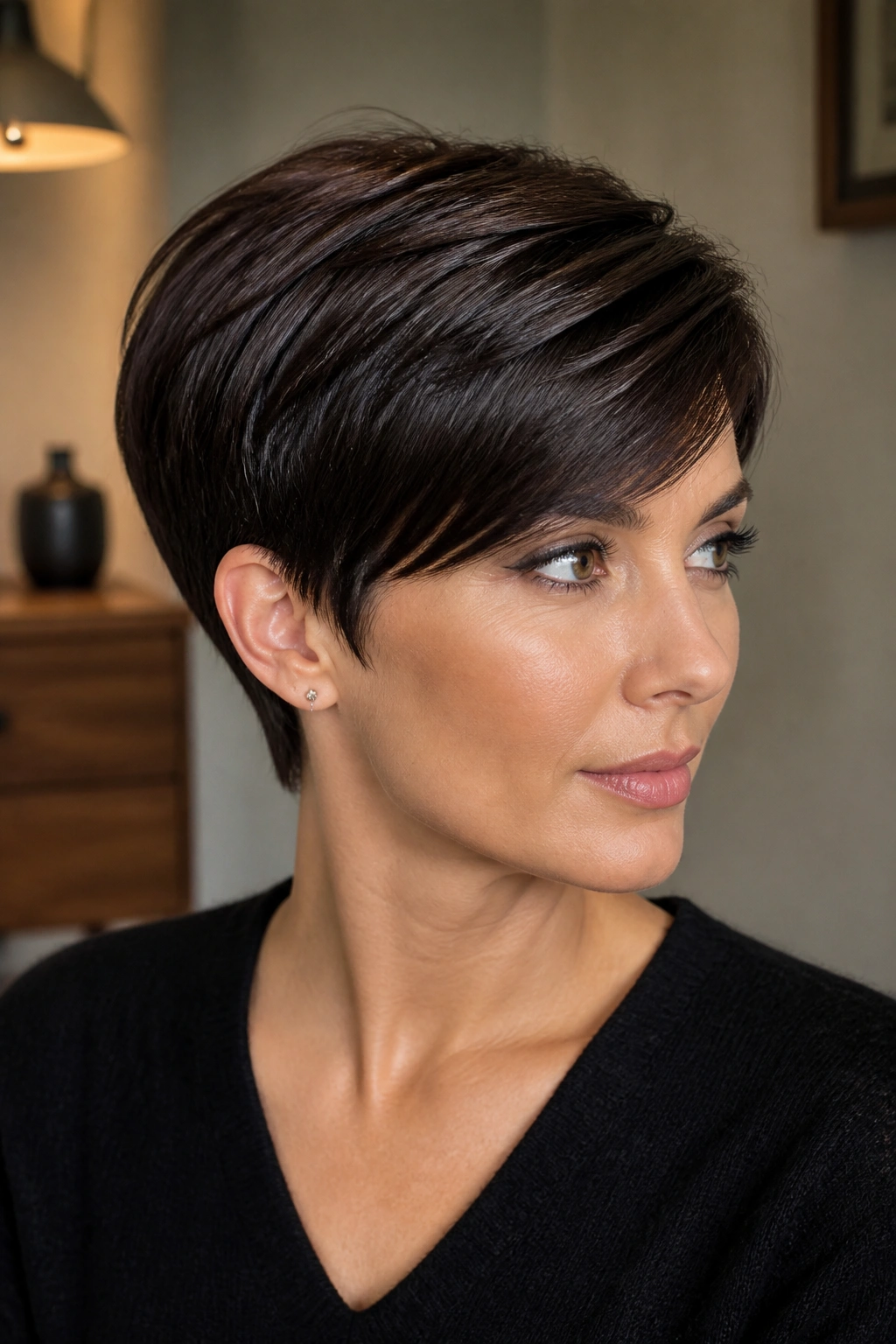
This is the version to choose when you want the haircut to look deliberate from every angle. Unlike a messy pixie, the polished finish relies on smooth lines, soft shine, and a controlled sweep around the face. Thick hair can handle that kind of structure. In fact, dense hair often looks richer when it’s shaped cleanly.
The key is not flatness. It’s control. Use a blow-dryer with a nozzle, a paddle brush, and a heat protectant that can stand up to tension. Smooth the crown first, then the sides, then finish with a slight bend at the front so the style doesn’t feel too stiff. A touch of shine cream through the mids and ends is enough.
Who it suits? People who like neat hair, office settings, dinners out, or any day when messy texture feels too casual. It also helps coarse hair look more expensive — not in a flashy way, just in a clean, cared-for way.
Do not drown it in serum. Thick hair can take product, but it will not always forgive too much of it.
19. Long Pixie With a Long Top and Short Temples
A long top and short temples is one of the smartest ways to manage thick hair because it creates height where you want it and removes bulk where you don’t. The temples are close, the crown stays longer, and the whole haircut gets a more lifted line. It looks especially good when the face needs a bit of length through the top.
Why It Flatters Dense Hair
The short temples stop the sides from spreading out near the face. That’s a small detail with a big effect. Thick hair often grows out at the temples first, and that’s where the silhouette starts to get fuzzy. Keeping that zone neat gives the cut a cleaner frame.
The top can be worn forward, up, or swept to one side. You get real options, not just one fixed style. A tiny amount of wax or cream is enough to shape the longer pieces. If you use too much, the top loses lift and the contrast disappears.
- Keep the top around 4 to 6 inches.
- Ask for the temples to stay tight and clean.
- Use your fingers to lift the crown while drying.
- Trim the sides before they start to puff.
Tip: This cut is excellent if your hair naturally expands at the temples and around the ears.
20. Glam Long Pixie With Glossy Volume
A glossy long pixie proves that short hair can still feel dressed up. Shine and volume are not enemies here. On thick hair, they can work together if the cut is shaped to control the bulk and the finish stays smooth at the surface.
This version usually has a side part, a lifted crown, and longer front pieces that curve neatly around the cheekbone. The difference from the polished style above is the finish. Here, you want a little more shine and a little more softness in the movement. Think dinner, gallery opening, black sweater, good earrings. The haircut should look intentional without looking hard.
Use a round brush for the top, then mist a light shine spray over the mids from about 8 to 10 inches away. That distance matters. Too close, and the hair gets slick. Too much shine product near the roots will flatten the whole shape in a hurry.
If your thick hair has any natural wave, this cut catches it in a flattering way. If it is pin-straight, the glam still holds, but you’ll want the front pieces polished well so the line stays clean.
Final Thoughts
Thick hair does not need to be tamed into silence. It needs a haircut that knows where to hold on and where to let go. That is the real difference between a long pixie that looks sharp and one that keeps swelling in the wrong places.
The best long pixie hairstyles for thick hair almost always do the same three things: remove bulk near the nape or temples, keep the crown from getting too heavy, and leave enough length in front to soften the face. If a cut ignores those three pieces, you usually feel the problem before you can name it.
Bring pictures from the side and back, not just the front. That tiny habit saves a lot of disappointment. And if the stylist talks only about length without mentioning internal layers or weight removal, that is your cue to keep looking.
