



There is a specific, quiet power in sitting in the braiding chair for hours, feeling the tension of each section as it transforms from loose, unmanaged strands into a tight, deliberate pattern. You know the feeling. The weight on your head isn’t just about the hair; it’s about the shift in your routine. For a few weeks, the daily battle with detangling, product buildup, and early-morning styling vanishes. You gain time. You gain a silhouette that demands attention without you having to lift a finger once you step out of the door.
Chunky braids offer something distinct from the thin, intricate styles that require twelve hours in a chair and constant scalp manipulation. They are bold. They make a visual statement immediately. But more importantly, they are often friendlier to your edges and your scalp’s baseline health. Because the sections are larger, the grip is distributed differently. There is less pulling on individual follicles, provided the braider knows how to balance weight and tension.
Choosing the right chunky style comes down to understanding your hair’s density, the weight you can comfortably carry, and how much time you want to spend maintaining the look. Some styles are meant to frame the face; others are designed for total coverage. Some thrive in the heat, while others are better suited for cooler weather when you want that extra bit of insulation. If you are looking for a style that feels intentional, substantial, and ready to go, the right choice is waiting here.
1. Jumbo Box Braids
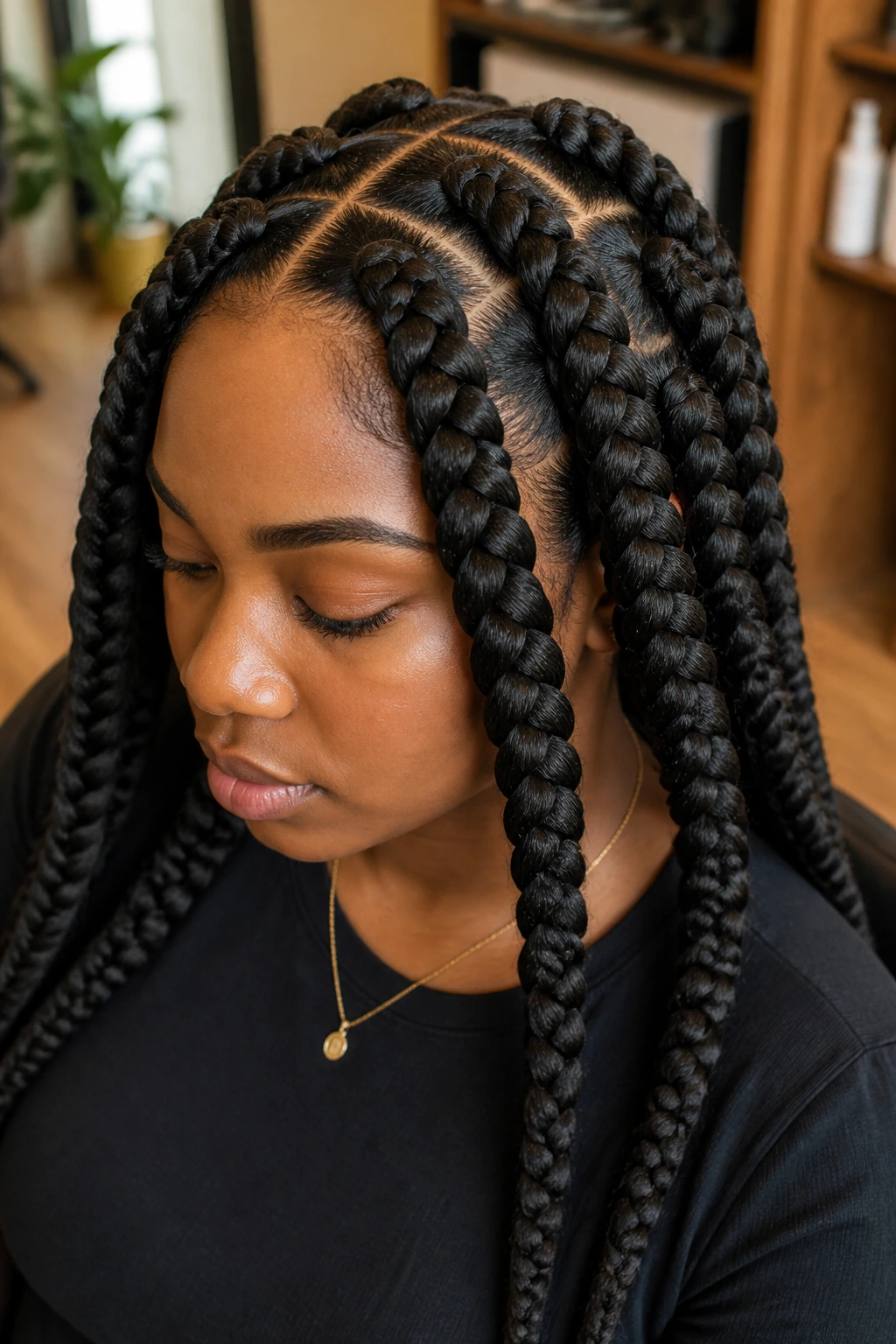
There is no substitute for the classic box braid, but scaling the size up to “jumbo” changes the entire aesthetic. Instead of hundreds of tiny braids, you are looking at perhaps thirty to forty thick, uniform sections. The process is significantly faster than standard micro-braiding, which is a massive win if your patience for sitting still is limited.
The Appeal of Large Sections
Because the sections are larger, the parting is more pronounced. You need to be aware that your scalp will be more visible. If you are someone who likes a clean, sharp part, this style is ideal because it shows off the geometric patterns of your scalp. It creates a bold, almost graphic look that feels very contemporary.
Maintaining the Look
- Weight management: Since each braid uses a larger amount of synthetic hair, the total weight can be heavy. Ask your braider to keep the length shorter—bob or shoulder length—if you are sensitive to tension.
- Nighttime care: A large silk bonnet is non-negotiable. Because the braids are thicker, they do not fold or move as easily as thin ones. A bonnet prevents the frizz that happens when these thick braids rub against cotton pillows.
2. Thick Knotless Braids
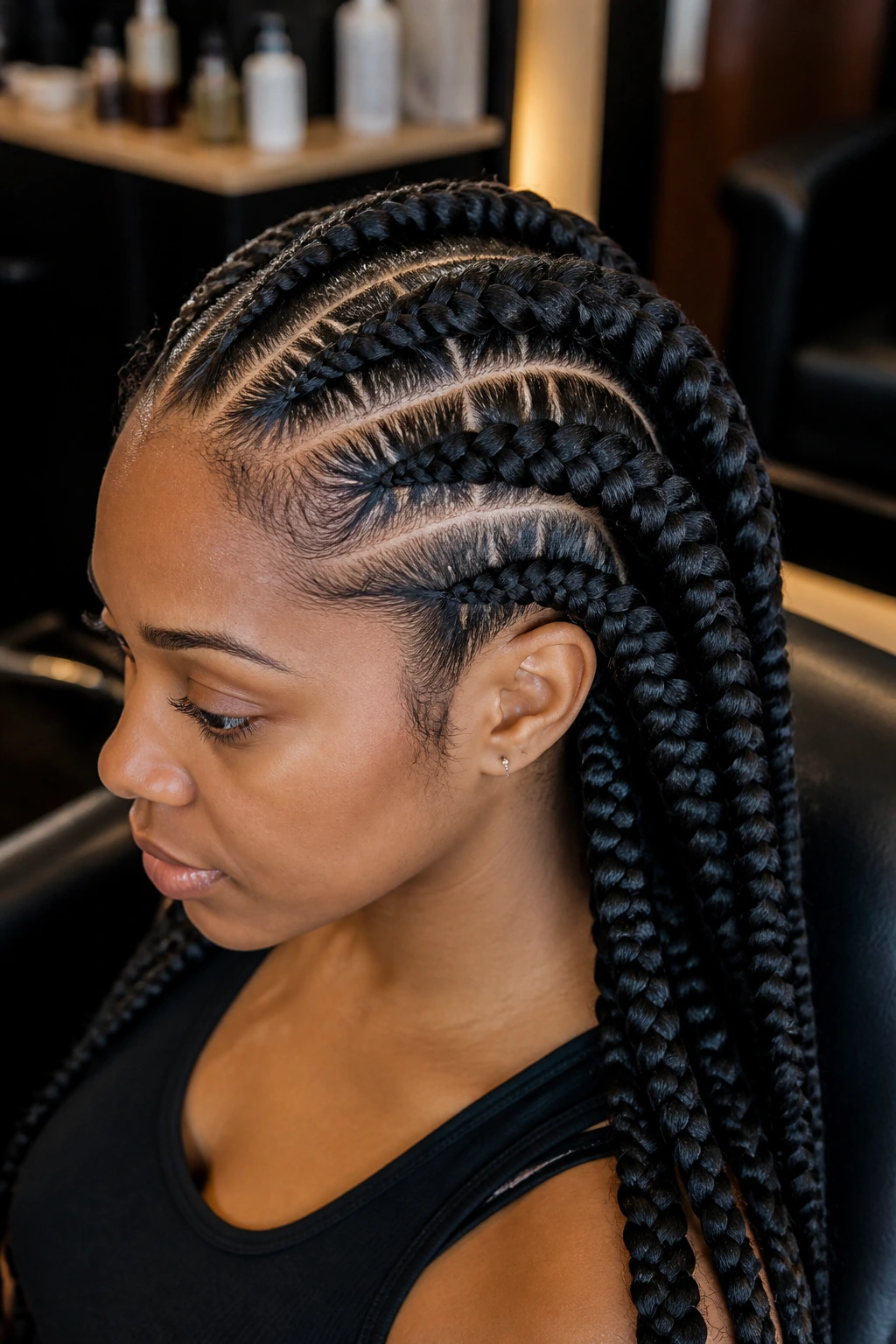
The knotless technique has changed the protective styling landscape. By braiding your natural hair for an inch or two before feeding in the synthetic extensions, the base of the braid sits flat against the scalp without that trademark “knot” lump. When you make these braids chunky, you get all the benefits of the knotless technique—less tension—with a faster installation time.
Why This Style Works for Tender Scalps
Traditional box braids often cause headaches or tension bumps because the knot pulls the hair follicle immediately. With the knotless method, that pulling is gone. The hair feels like it grew out of your scalp that way. It creates a seamless, natural look that feels lighter, even with the extra thickness of the jumbo sections.
Pro-Tip for Longevity
Do not over-moisturize the roots. It sounds counterintuitive, but if you put too much oil or cream on your scalp while your hair is in these braids, you might cause the synthetic hair to slip out. Stick to a lightweight scalp oil applied with a dropper, and keep your hands off the roots as much as possible.
3. Chunky Feed-In Ponytail
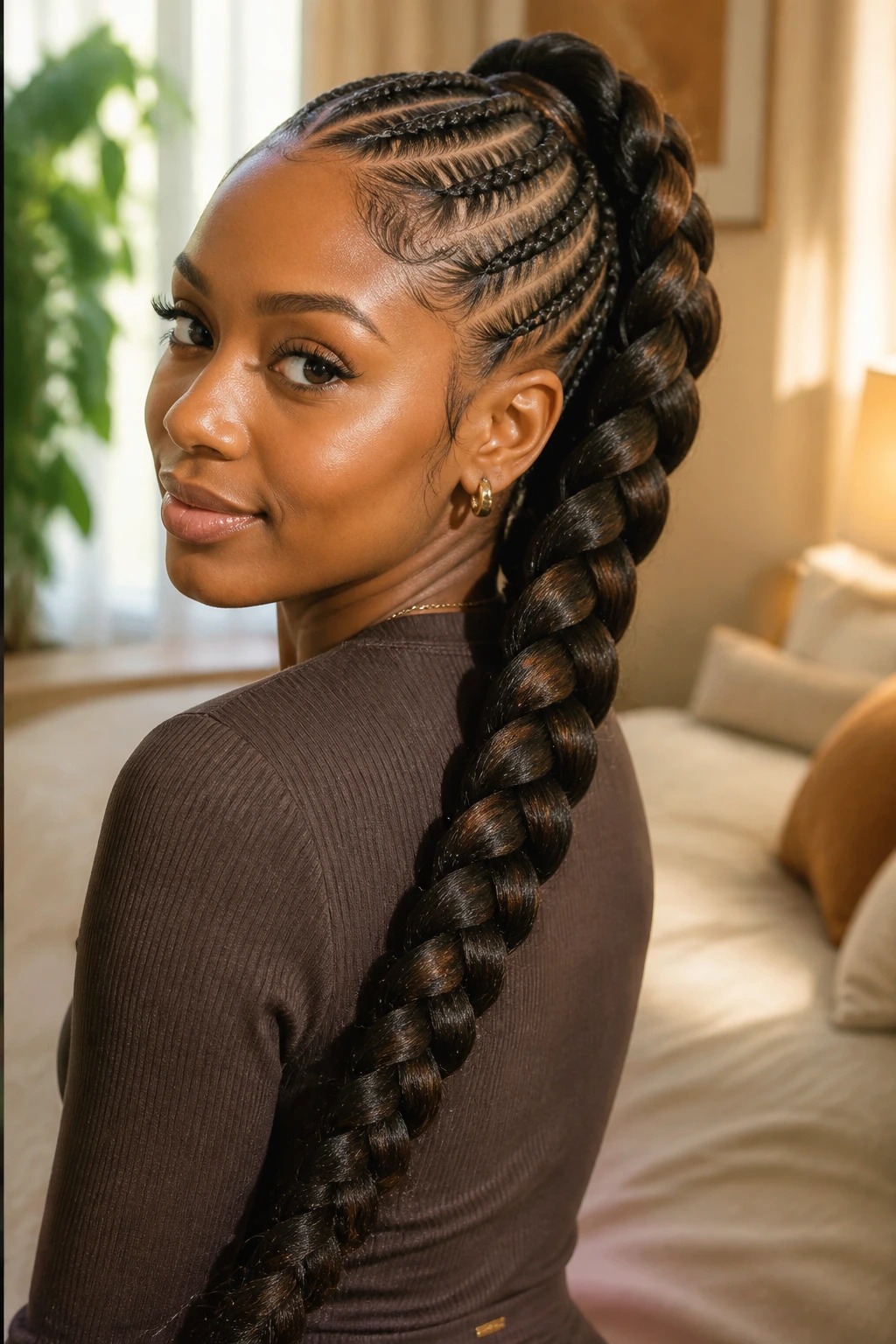
A feed-in ponytail is not just a style; it is a structural feat. By using the feed-in method, where hair is added in layers to create a gradual increase in thickness, you get a clean, polished hairline that flows seamlessly into a thick, braided pony. It is the ultimate “clean girl” aesthetic for textured hair.
The Mechanics of the Feed-In
This style relies on how the braider pulls the hair forward, upward, or backward. For a chunky look, the braider needs to add more braiding hair with each feed-in stroke. This builds the braid up quickly. You want a stylist who understands how to manage the hair weight so that it doesn’t pull on your nape—that area is notoriously sensitive.
Styling Variations
You can leave the ends loose as curly extensions, or braid them all the way down. The trend is currently leaning toward loose, deep-wave curls at the ends, which adds a bit of softness to the harsh, clean lines of the cornrows leading into the ponytail. It balances the rigidity of the braided scalp with the movement of the curls.
4. Thick Bohemian Braids
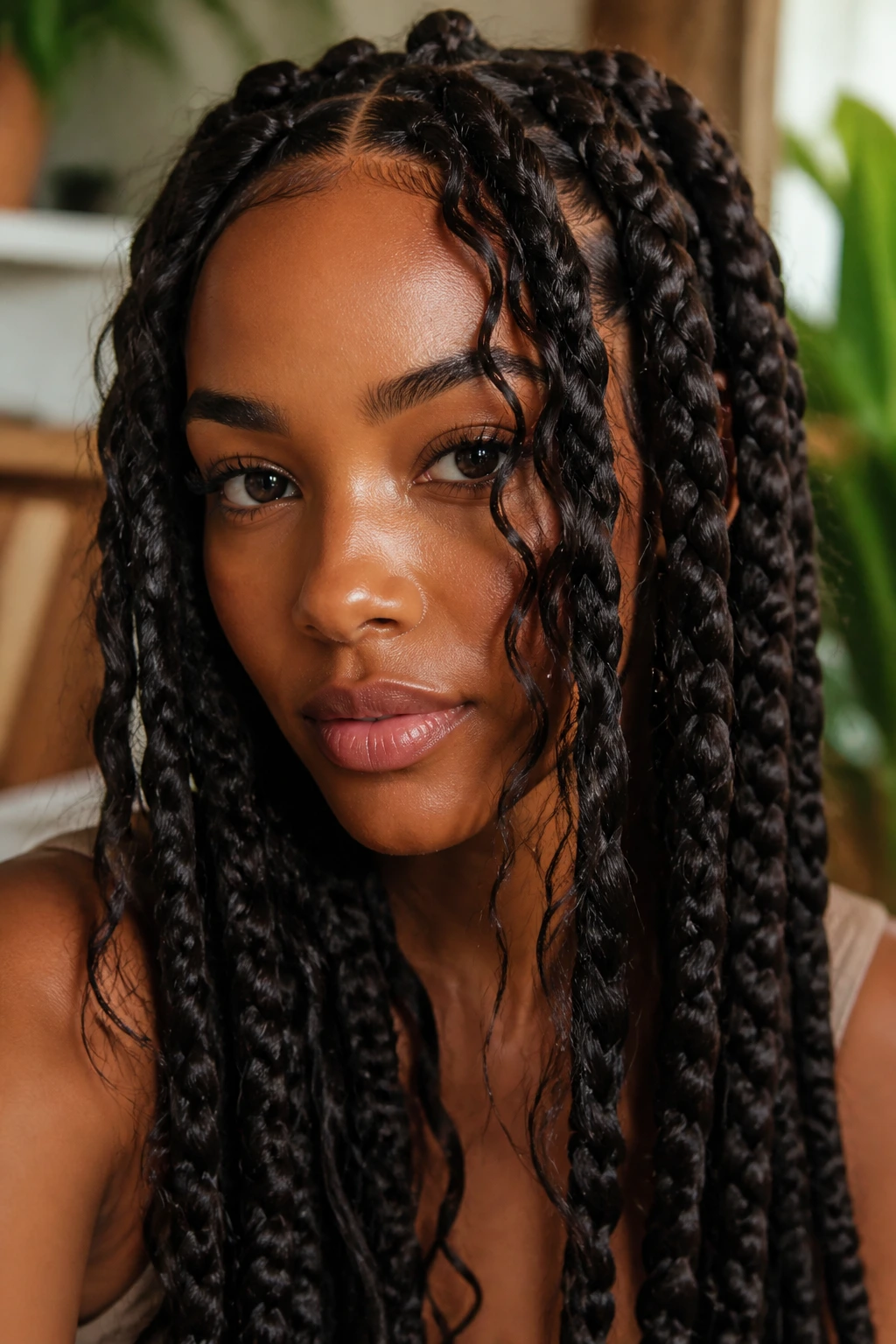
Bohemian braids—often called “boho” or “goddess” braids—are characterized by the wispy, curly strands left out throughout the length of the braid. When you do these with chunky, larger sections, the contrast between the thick, straight braided portion and the loose, curly hair is much more dramatic. It creates a romantic, lived-in feel.
Managing the Curly Texture
The biggest challenge with this style is the maintenance of the synthetic curly hair. It tangles. It tangles quickly. You need to keep a small spray bottle of water and a lightweight mousse in your bag. Every morning, spray the curly bits and gently detangle with your fingers. Do not use a comb on the synthetic curls; you will ruin the pattern.
Why It’s a Standout Look
It feels less “done” than a standard box braid. It has movement, personality, and a bit of chaos. If you are tired of stiff, straight braids, the bohemian variation gives you the best of both worlds: the protective benefits of the braid and the styling versatility of loose hair.
5. Jumbo Goddess Braids
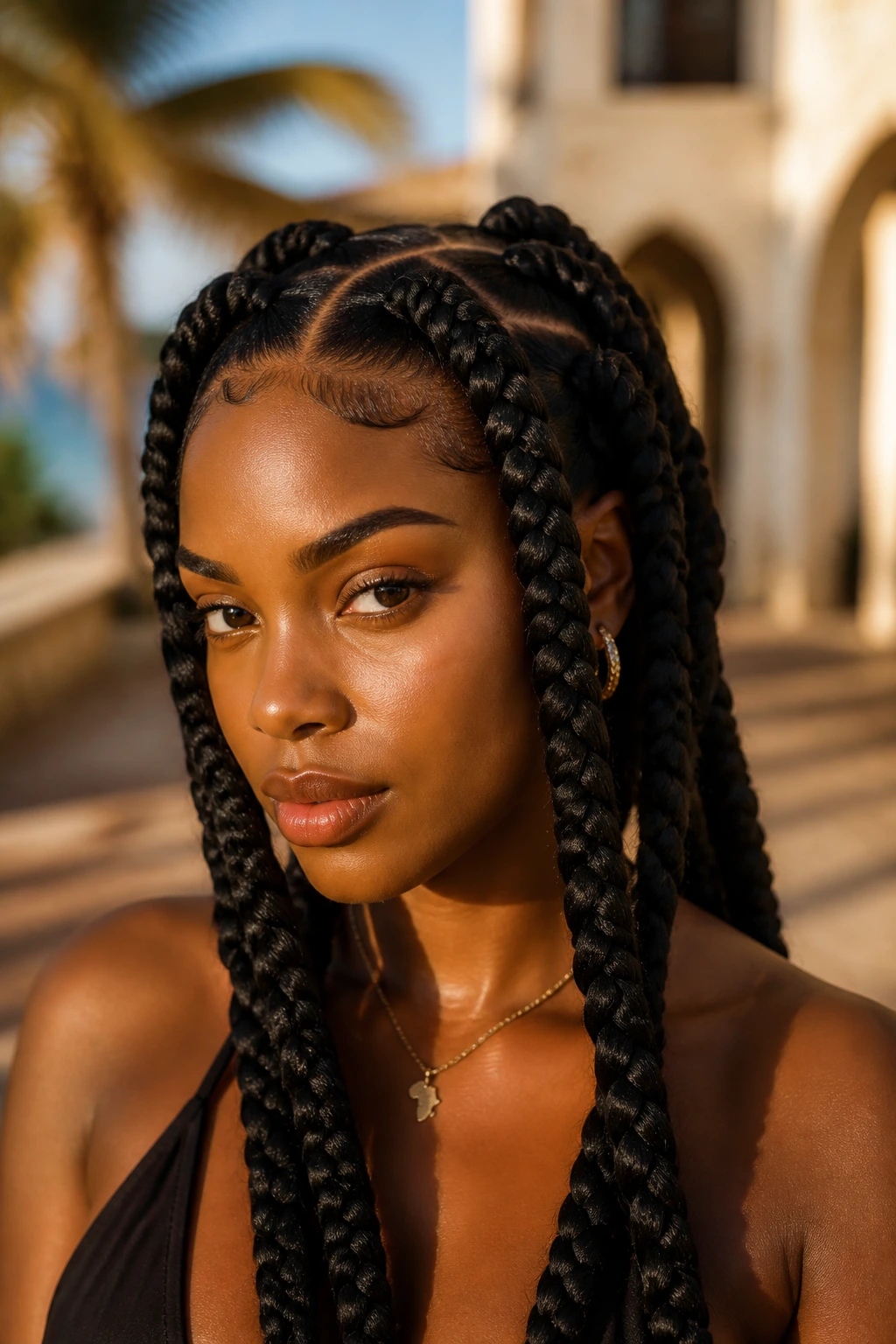
Goddess braids are usually thicker, scalp-hugging cornrows that follow the natural curvature of the head. When you opt for a “jumbo” version, you are usually looking at just four to six braids total. This is a very fast style to install and provides a very regal, elevated look.
The Power of Scalp Art
Since you only have a few braids, the parting is the most critical element. You can do curved parts, zig-zag parts, or straight back parts. The pattern is the style. Because the braids are so large, they are incredibly easy to wrap in a silk scarf at night and maintain for a long time without them getting frizzy.
When to Choose This Style
This is the ultimate vacation hair. It is sleek, it doesn’t require constant manipulation, and it looks just as good at the beach as it does at a dinner. If you are going somewhere humid, this is the style that will survive the trip without puffing up or looking messy.
6. Chunky Two-Strand Twists
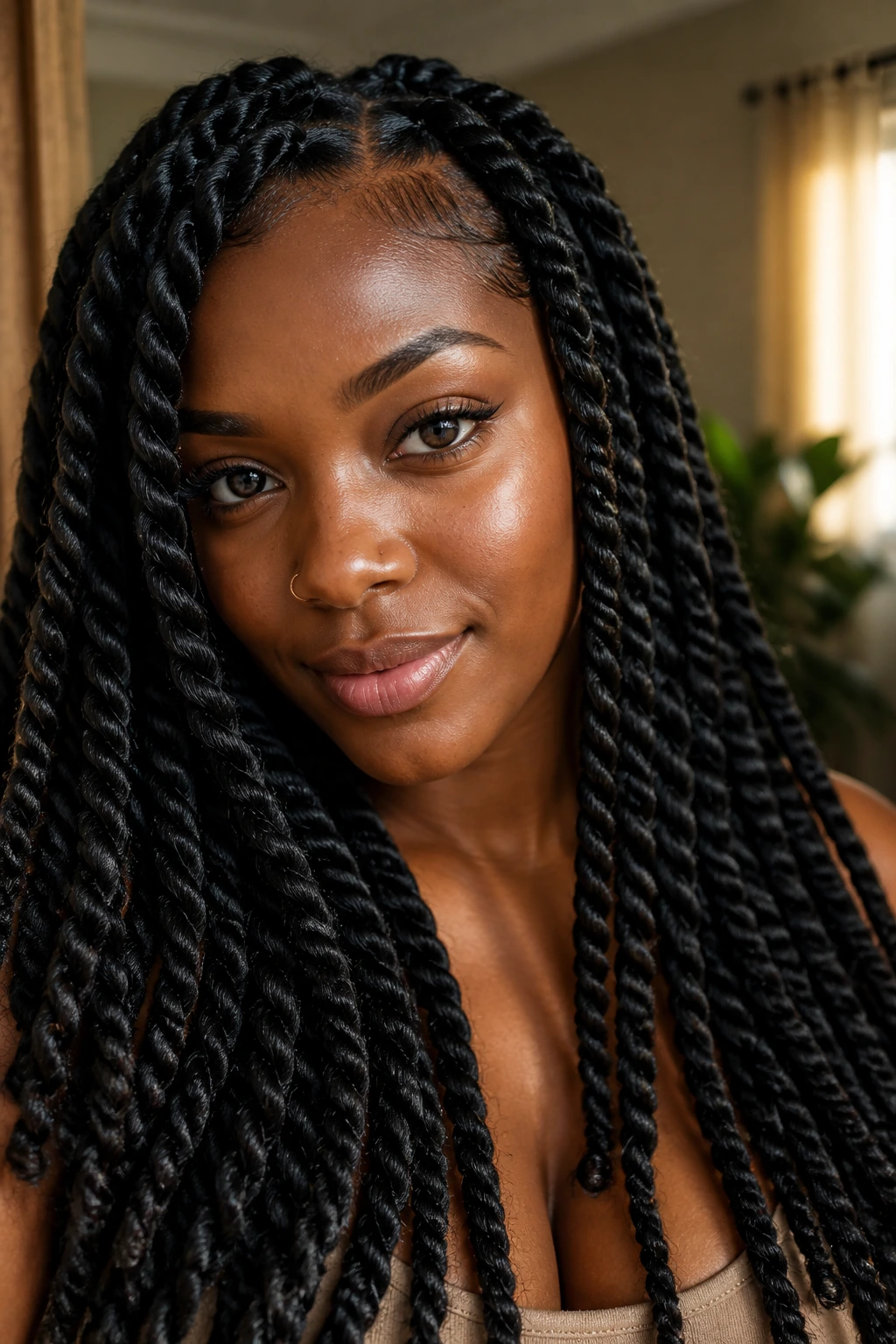
While technically a twist, these are often grouped with braids because they serve the same protective purpose. Chunky two-strand twists—specifically Senegalese twists—are heavier than braids but offer a unique, rope-like texture that braids cannot replicate.
Texture and Weight
Two-strand twists tend to be heavier than braids because of the way the hair is twisted around itself. If you want a chunky look, you have to be careful with the number of twists. Too many thick twists, and you will feel like you are wearing a weighted blanket on your head. Aim for a moderate number—not too sparse, not too dense.
Sealing the Ends
Unlike braids, which you can dip in hot water to seal, twists often require a different technique. Many braiders use boiling water, but some use small rubber bands or knot the ends. Discuss this with your braider. If the ends are not sealed correctly, the twists will unravel the moment they get wet or experience friction.
7. Thick Fulani-Inspired Cornrows
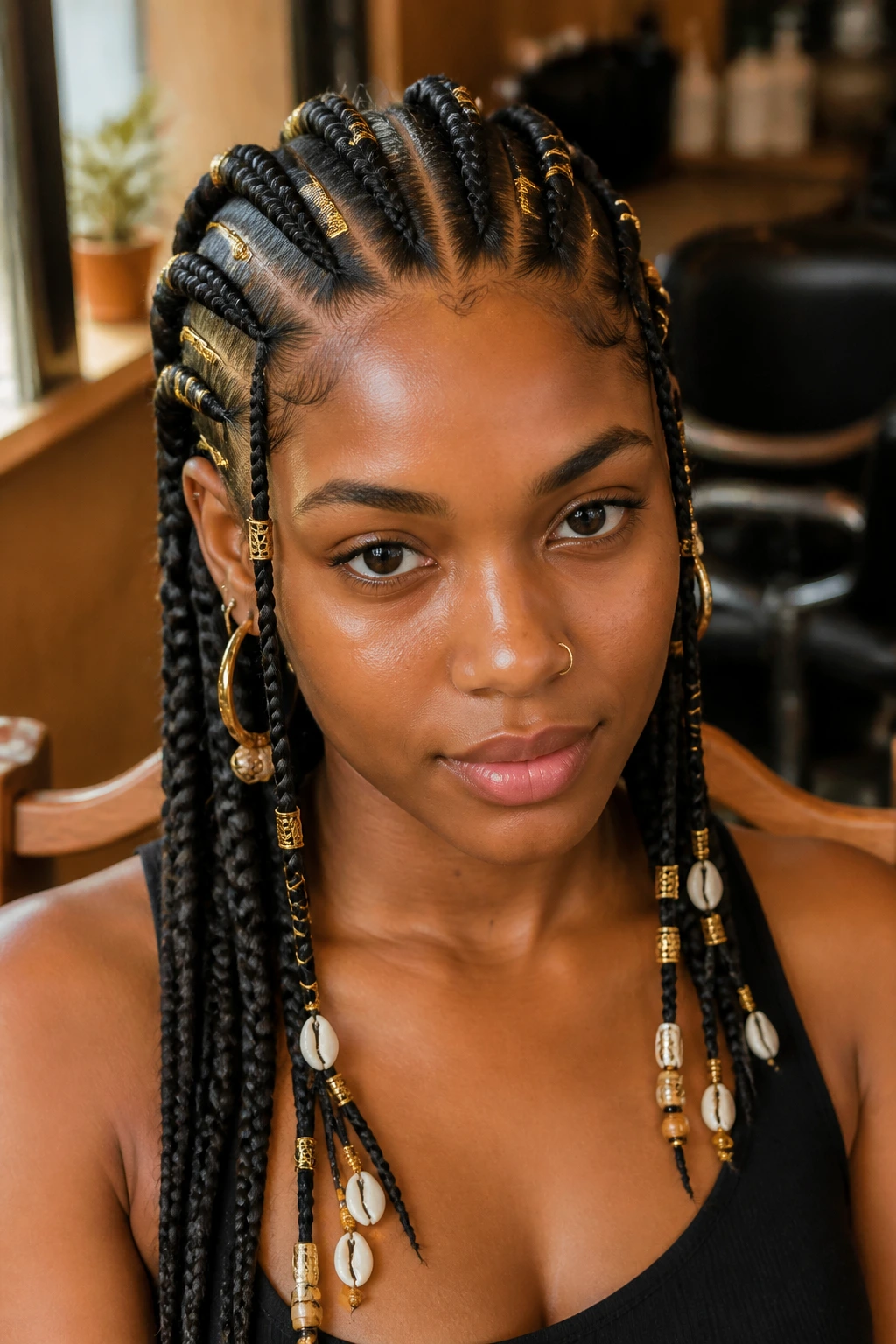
Fulani braids are iconic for the mixture of cornrows in the front—usually with a center part and a braid going down—and box braids or loose hair in the back. A chunky version takes this cultural style and scales up the cornrows.
The Focus on Accessories
This style is incomplete without accessories. Because the cornrows are large, you have plenty of room to incorporate gold cuffs, beads, or cowrie shells. The scale of the braids means the accessories won’t get lost; they become a central part of the visual aesthetic.
Precision is Key
With this style, symmetry is everything. Because the cornrows are thick, any slight misalignment in the part is immediately obvious. Ensure your braider takes their time with the sectioning. This is not a “rush job” style. It requires someone who understands how to map the scalp to ensure the braids meet up correctly in the back.
8. Jumbo Halo Braid
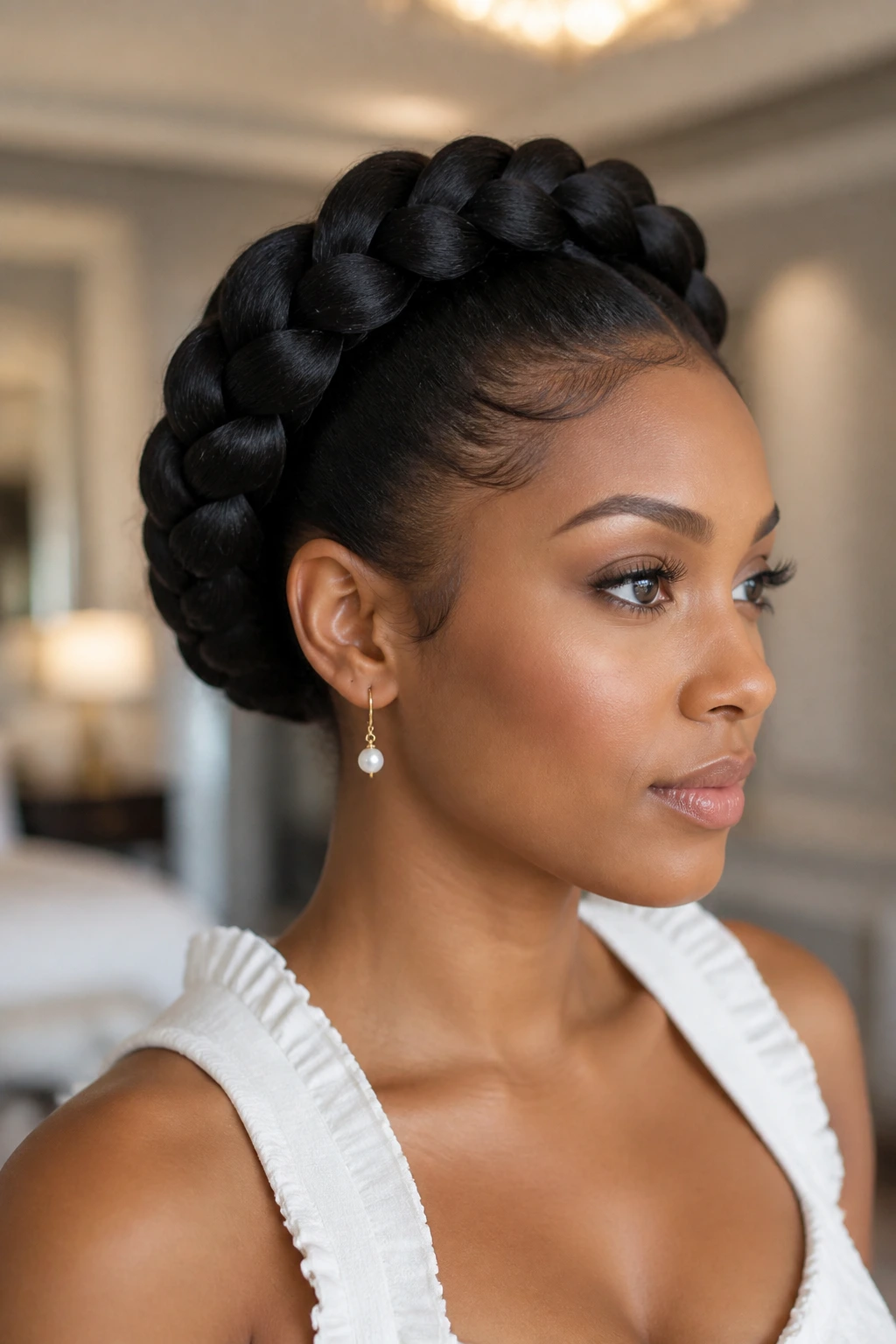
The halo braid is a singular, thick braid that wraps around the perimeter of your head. It is elegant, timeless, and completely off the neck. It is the kind of style you see at weddings or formal events, but it is also practical for daily life if you prefer your hair up.
Construction for Volume
If your natural hair is not thick enough to create a “chunky” halo, you will need to incorporate extensions. The braider will feed in hair to build the braid up as they go around the head. The result should look like a thick crown or a headband.
Maintenance Notes
The biggest issue with a halo braid is “fuzzing” along the hairline. Since the braid is tight against the scalp, you cannot easily re-do it if it gets frizzy. Use a firm-hold edge control gel and a wrap strip for fifteen minutes after the style is finished to lay the edges and the hair along the part.
9. Side-Swept Thick Cornrows

There is something inherently dramatic about side-swept hair. When you translate this into chunky cornrows, you get a style that feels like a classic Hollywood wave, just executed in braids. It is sophisticated, asymmetric, and very flattering for most face shapes.
Achieving the Flow
The key here is the direction of the parts. They should all lead toward one side of the head. As the braids reach the side, they should drape over the shoulder. This style requires a bit more length in the extensions to really get that sweeping effect across the face.
Scalp Care
Because the braids are pulled to one side, there is naturally more tension on that side of your head. Do not let the braider pull the hair too tight at the root. If it hurts while they are doing it, it is too tight. Tell them immediately. You want the style to look effortless, not painful.
10. Half-Up Half-Down Chunky Braids
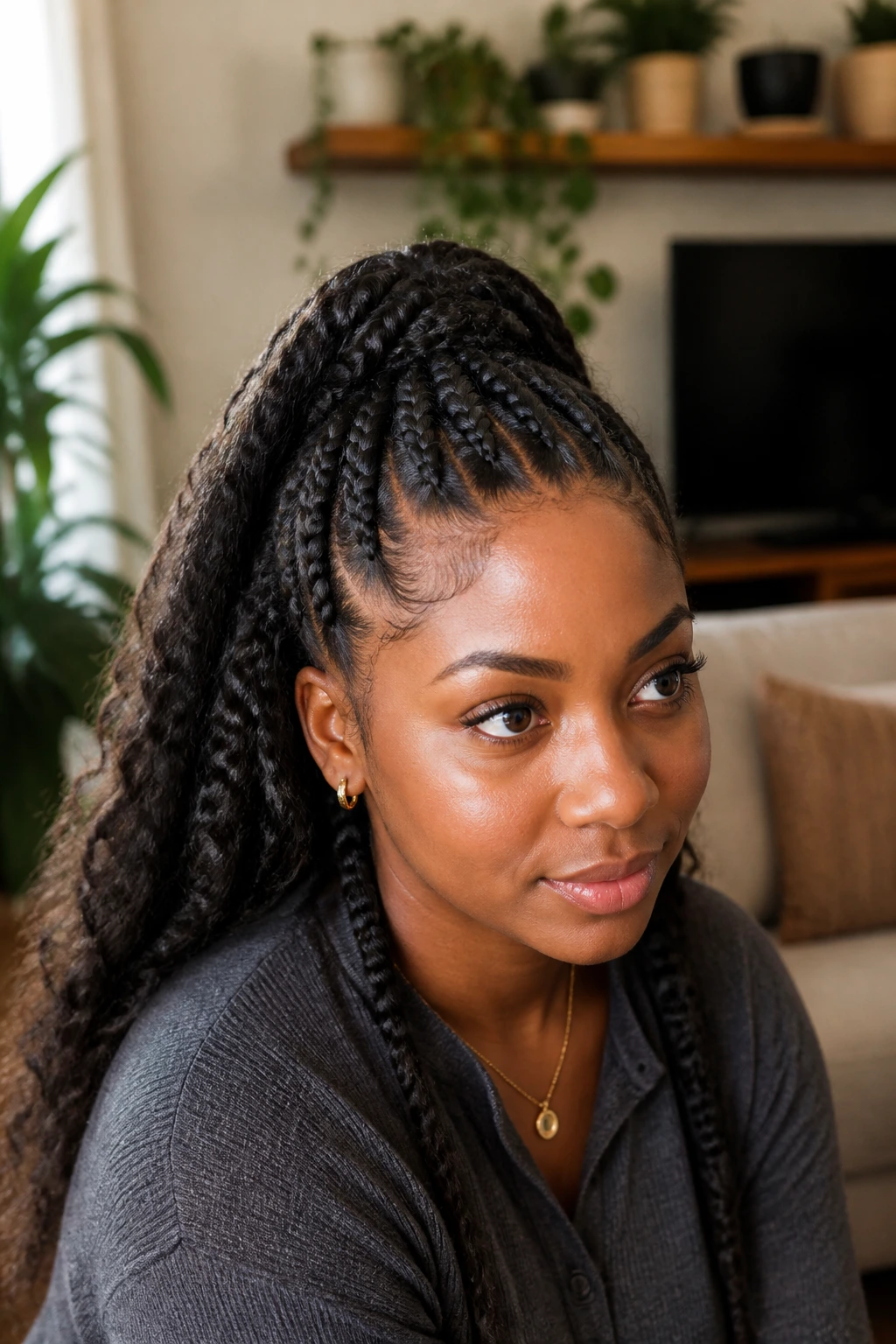
This is the ultimate hybrid style. You get the volume of loose hair or curls in the back, but the clean, structured look of chunky braids in the front. It is perfect if you struggle to commit to an all-braid or all-loose look.
Balancing the Two Textures
The transition point between the braided section and the loose hair is the focal point. You want to make sure the transition is smooth. Usually, the braider will take the braids from the front and gather them into a high ponytail or a bun at the crown, letting the rest fall free.
The “Volume” Factor
If you are doing this style, use high-quality curly braiding hair for the back. Because the braids in the front are chunky, you need the hair in the back to have enough volume to match. If you use sparse, thin extensions, the back will look stringy compared to the thick braids in the front.
11. Chunky Braided Top Knot
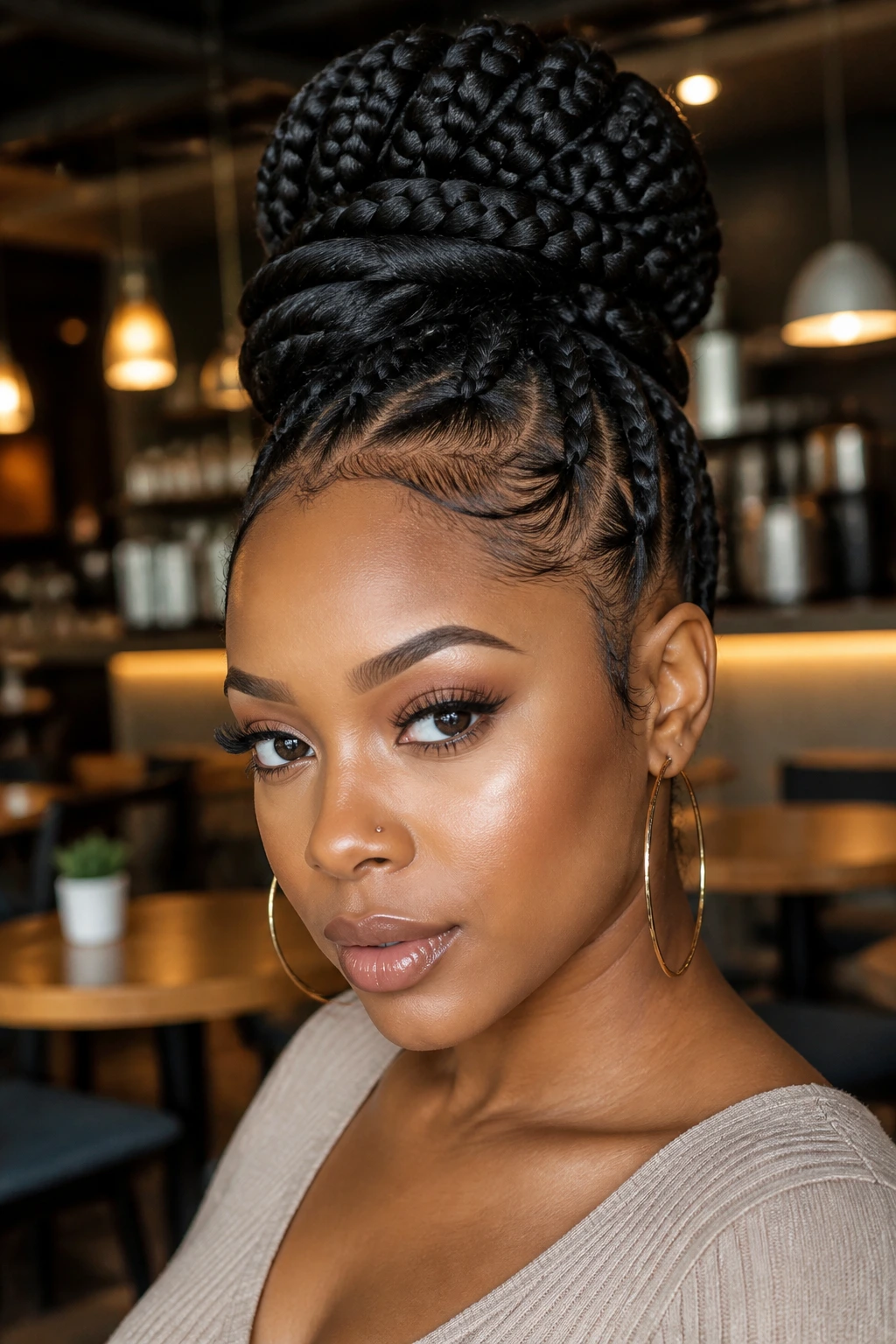
When you have thick, jumbo braids, a top knot becomes less of a “knot” and more of a “sculpture.” This is a high-impact, high-fashion look. It is bold, it removes all hair from your face, and it looks surprisingly chic with minimal accessories.
Securing the Weight
A top knot with chunky braids is heavy. You cannot just use a regular elastic hair tie; it will snap. Use a bungee hair tie—the kind with hooks on both ends. It allows you to wrap the tie around the base of the bun and secure it tightly without having to pull the thick braids through a small loop.
Aesthetic Appeal
This style is all about the line of your neck and jaw. It is very clean. If you are wearing a turtleneck or a high-collared shirt, this style balances the fabric perfectly. It is also an excellent style for hot, humid weather when you want your hair completely off your neck.
12. Jumbo Yarn Braids
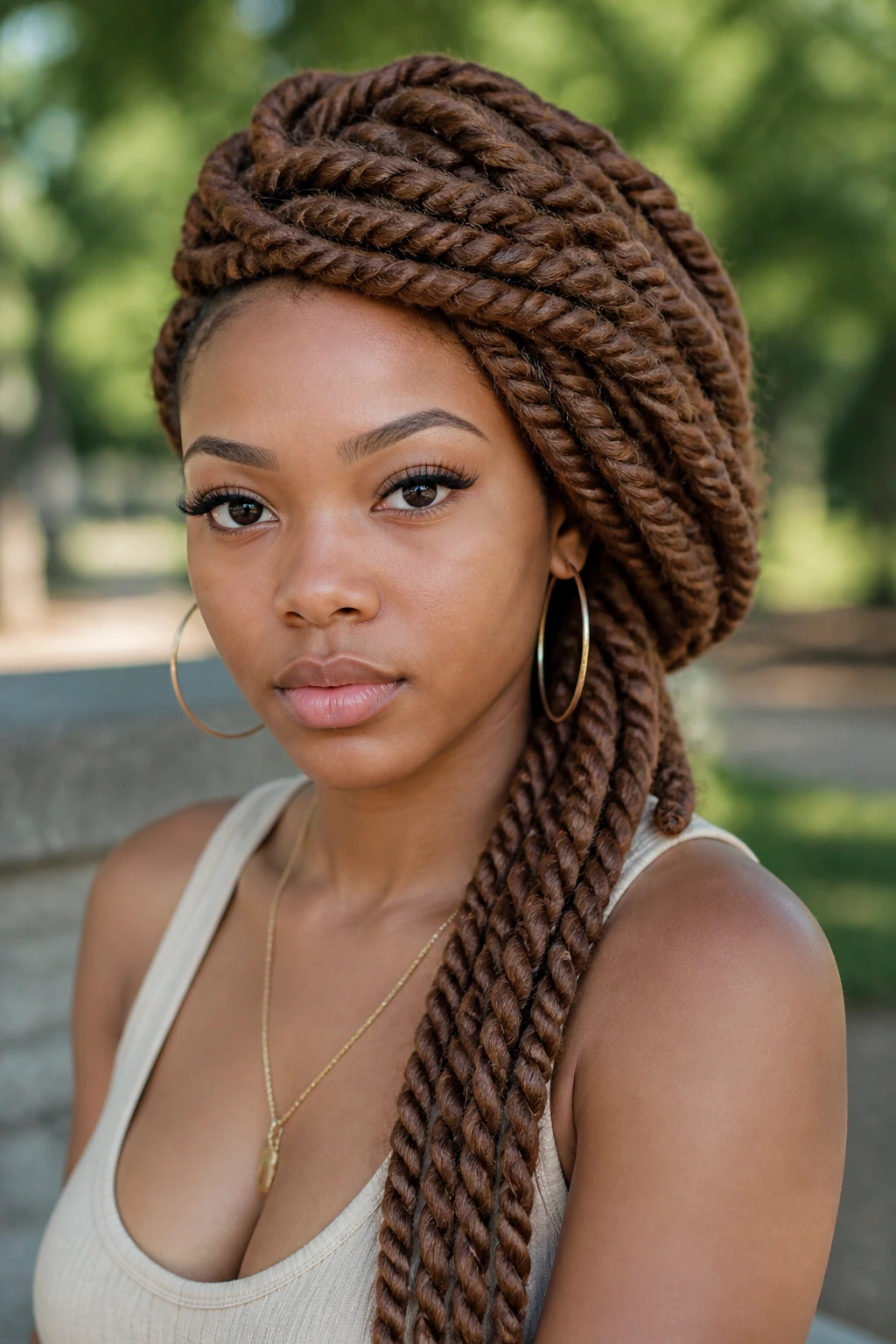
Yarn braids—or styles using wool-like synthetic fibers—have a completely different texture than standard silky braiding hair. They are matte, lightweight, and have a beautiful, earthy look. When done in chunky sizes, they look like thick, bohemian ropes.
Why Yarn is Different
Yarn braids are generally lighter than synthetic braiding hair. Even when you make them chunky, they don’t drag your head down. They have a “grippy” texture that makes them stay in place well, but they also tend to attract more lint or dust. You have to be diligent about keeping them clean.
The “Fuzz” Factor
Over time, yarn braids will get a little fuzzy. This is part of the charm—it gives them a rustic, worn-in look. If you don’t like that fuzzy appearance, you can lightly singe the flyaways with a lighter, but be extremely careful. Or, just embrace the texture. It is a style that gets better the more you live in it.
13. Thick Braided Crown
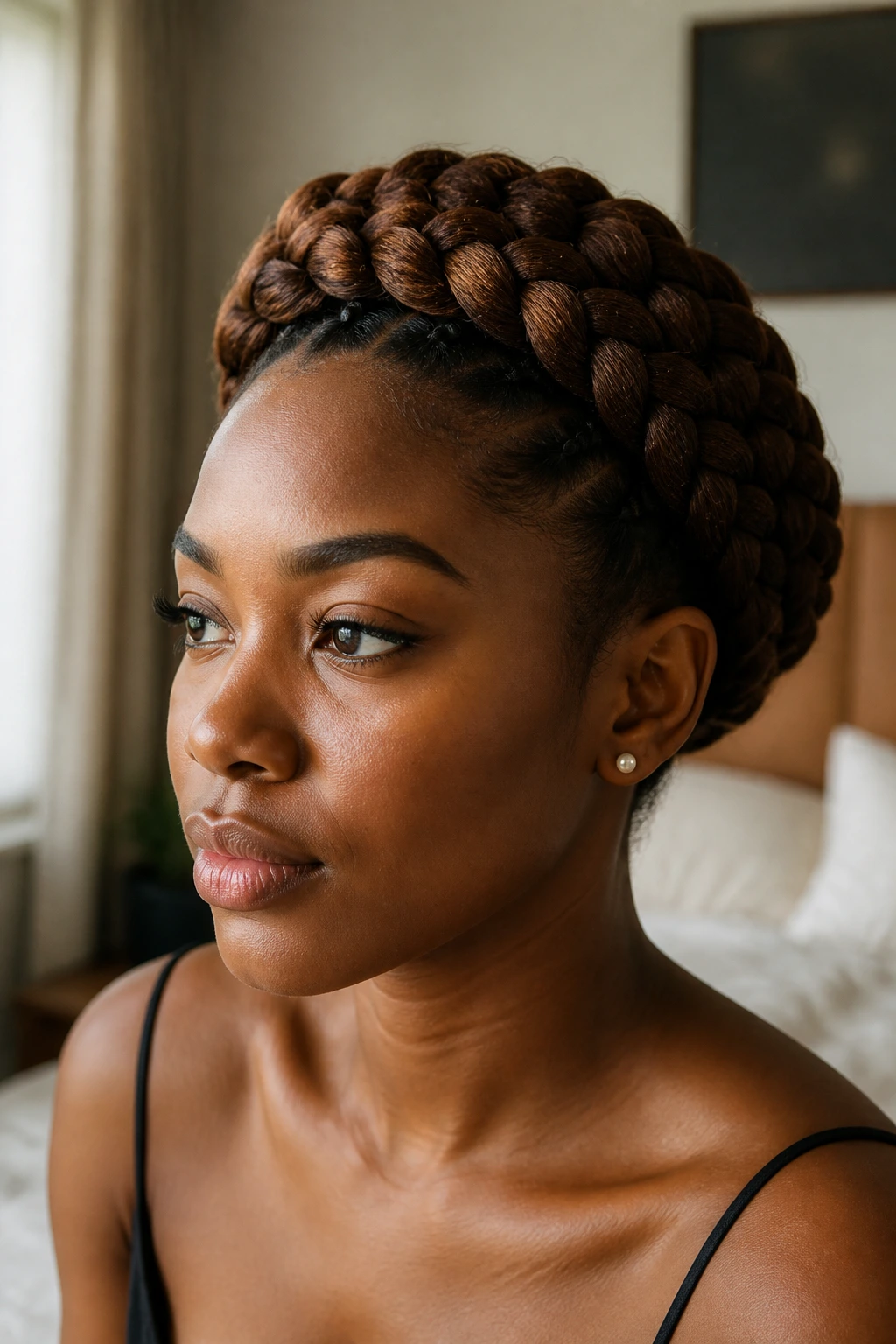
Similar to the halo braid, but usually more complex, a braided crown can involve multiple braids wrapping around the head, or one large, intricate braid that incorporates all your hair. This is the ultimate protective style for those who want to keep their ends completely tucked away.
Protecting the Ends
Since all your hair is braided up and around, your ends are not exposed to the elements, rubbing against clothes, or getting caught in zippers. This makes it a fantastic style for hair retention. If you are in a “growth phase” for your natural hair, this is the style to choose.
Styling Tip
Because this style sits flat against the scalp, you can easily wear hats, headbands, or scarves over it. It is incredibly versatile. It is the most “low-maintenance” style in this entire list because there is literally nothing to snag or get tangled.
14. Jumbo Braided Bob
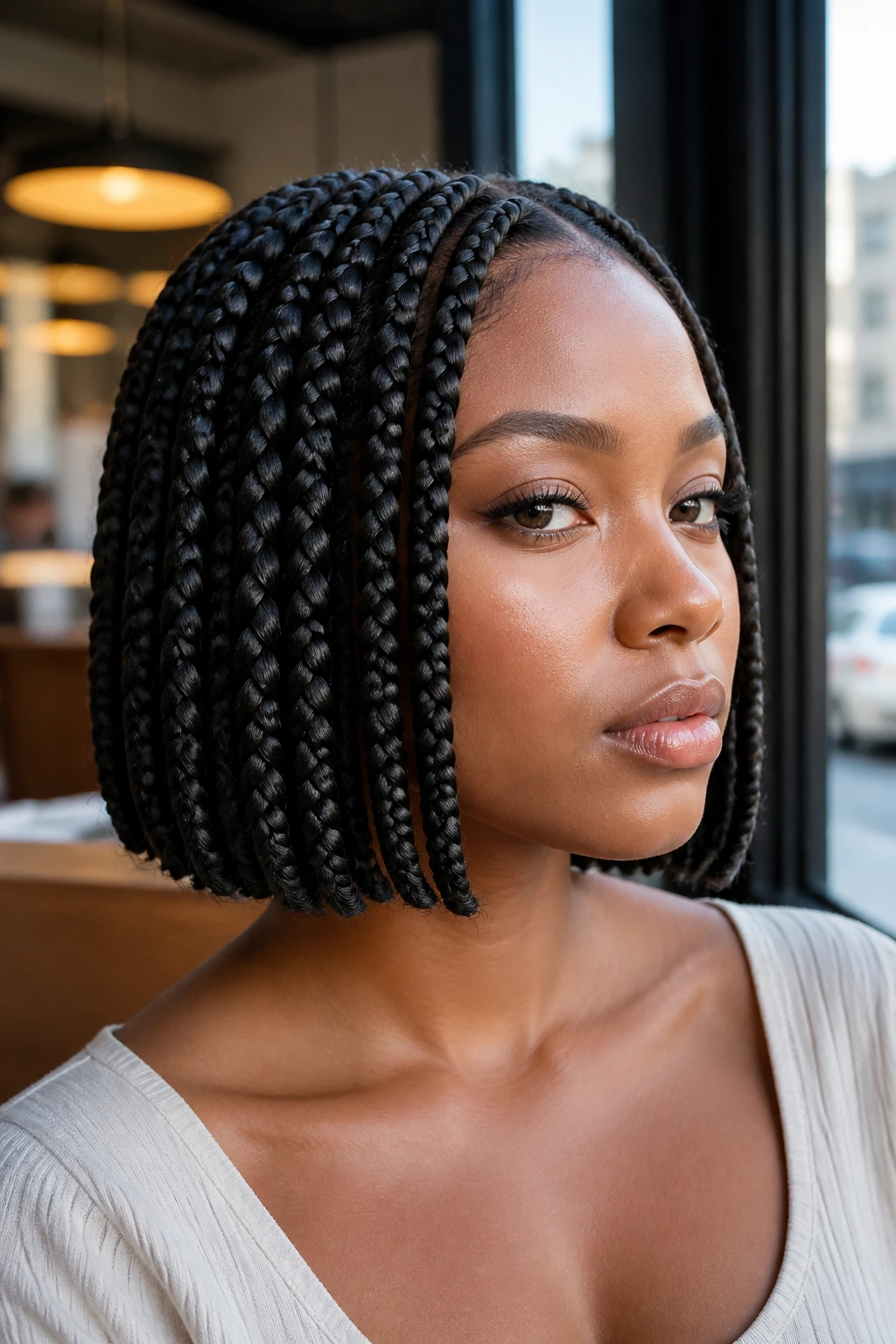
There is something undeniably cool about a braided bob. When the braids are chunky, the bob takes on a slightly edgy, geometric quality. It frames the face sharply and is incredibly easy to maintain because you aren’t dealing with long hair hitting your back.
Length Precision
The bluntness of the cut is the most important part. A “bob” means the braids should end at the same length. Ask your braider to cut and seal the ends perfectly straight. If the braids are uneven, the style loses that clean, intentional edge.
Styling Ease
You can tuck one side behind your ear for a different look, or pull the front into a small half-up ponytail. It is a very versatile length. It also requires the least amount of braiding hair, which makes the overall install faster and cheaper than waist-length styles.
15. Chunky Colored Braids
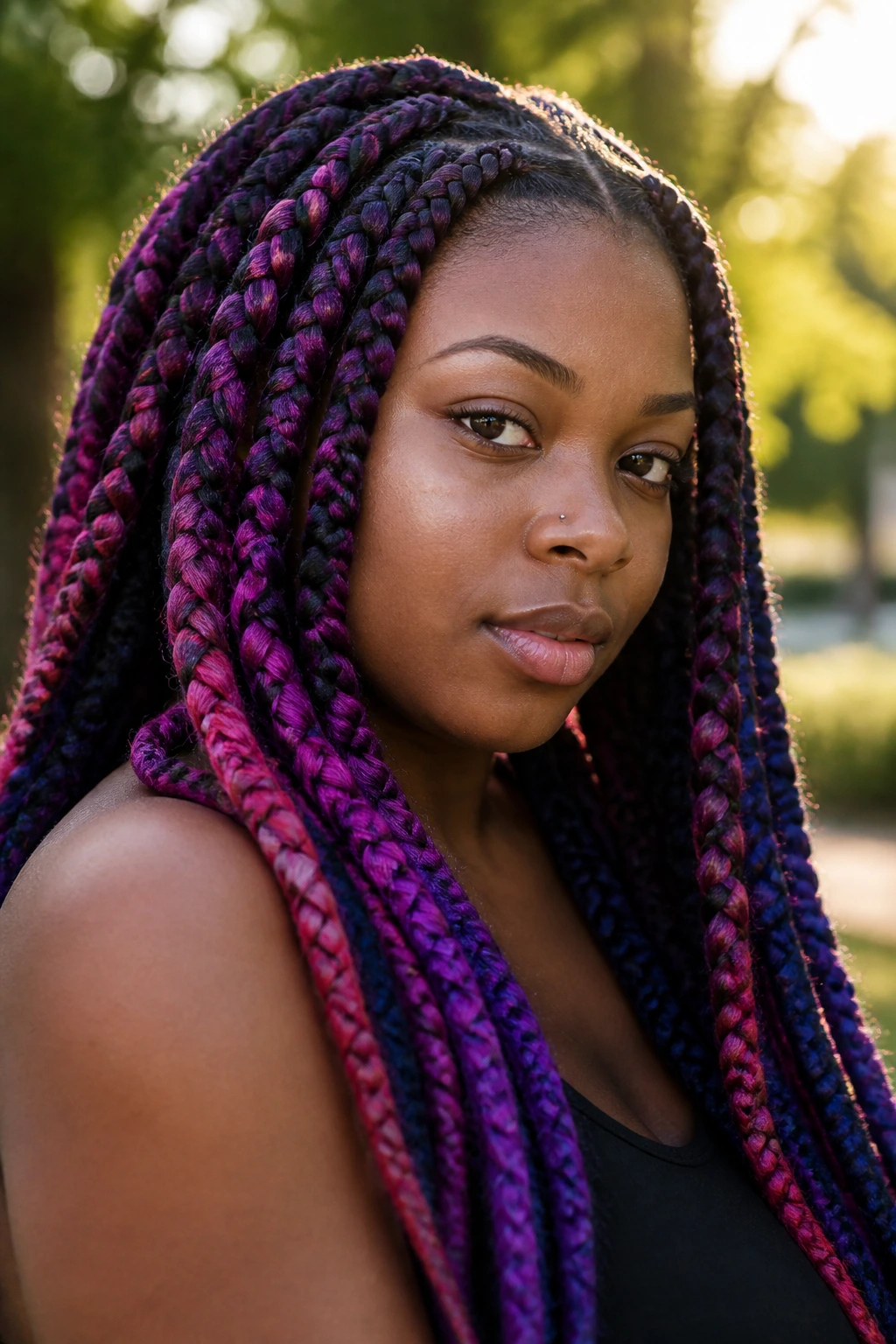
Color is the easiest way to make a basic style feel like a “look.” With chunky braids, you have two options: use pre-colored braiding hair or incorporate “peek-a-boo” color. Because the braids are so thick, any color you add will be very visible.
Choosing Your Tone
If you have dark skin, bright colors like blue, burgundy, or copper pop beautifully against your complexion. If you are nervous about committing to a full head of color, try a “money piece” where only the braids around your face are a different color.
Quality Matters
When you use colored synthetic hair, the texture is sometimes different from standard black braiding hair. It can be a bit more plastic-feeling or harder to seal. Make sure your braider is experienced with the specific brand of colored hair you are using, as some types require more boiling water to seal than others.
16. Thick Braided Space Buns
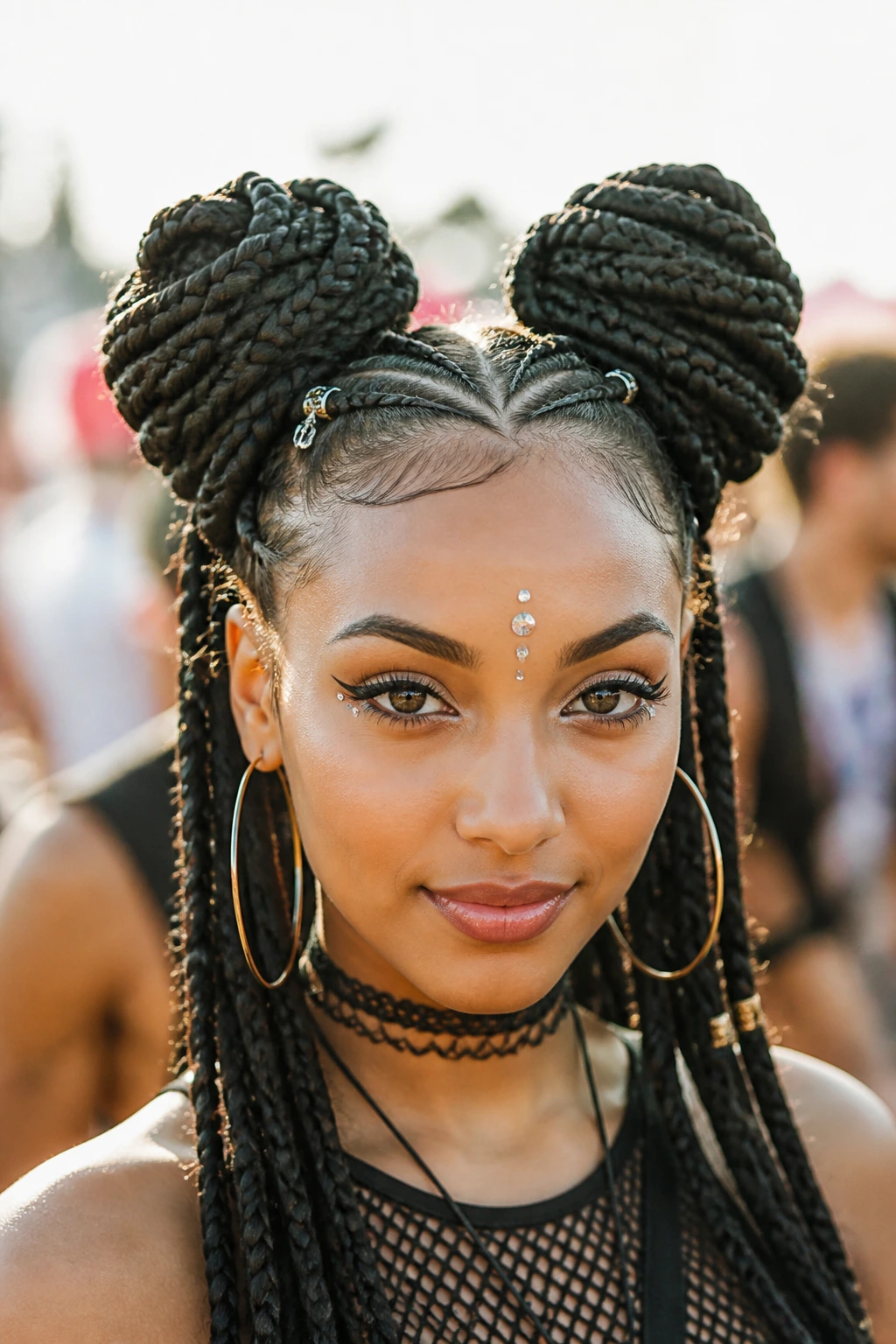
Space buns are fun, youthful, and vibrant. Making them “chunky” gives them a more mature, architectural feel. Instead of tiny, wispy buns, you get two large, thick, braided knots on the sides of your head.
Achieving the Shape
The trick to space buns is the base. You need to section your hair properly from ear to ear. If the sections are uneven, the buns will look lopsided. Use a mirror to check the back of your head while the braider is sectioning, or ask them to show you the parts before they start braiding.
Occasion-Based Styling
This isn’t a “business professional” style, but it is perfect for festivals, weekend outings, or creative work environments. It is a personality-driven look. It says you don’t take your hair—or yourself—too seriously.
17. Jumbo Braided Mohawk
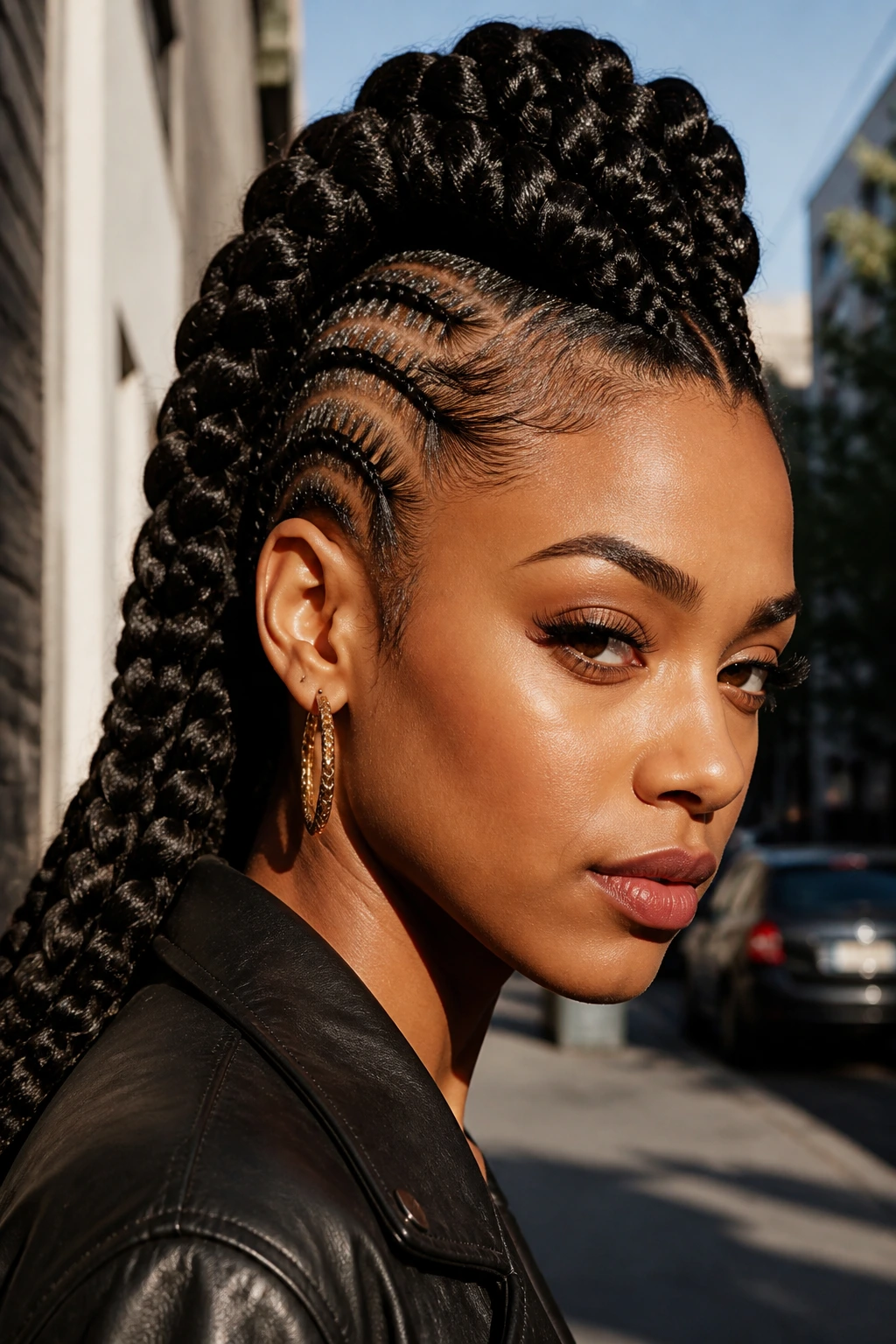
A mohawk with braids is a high-contrast style. It involves braiding the sides of the head close to the scalp and pulling the braids toward the center to create a thick, standing-up ridge of hair. It is edgy, sharp, and very flattering.
Managing the Sides
The sides need to be tight. If the sides are loose, the “mohawk” effect is lost. You want the sides to be almost skin-tight, which provides a stark contrast to the volume of the thick braids in the center.
Maintenance
This style is harder to maintain than box braids because the sides are cornrowed. Cornrows tend to get frizzy faster than individual braids. You will need to use a mousse or a light holding spray on the sides every few days to keep them looking sharp.
18. Chunky Tribal Braids
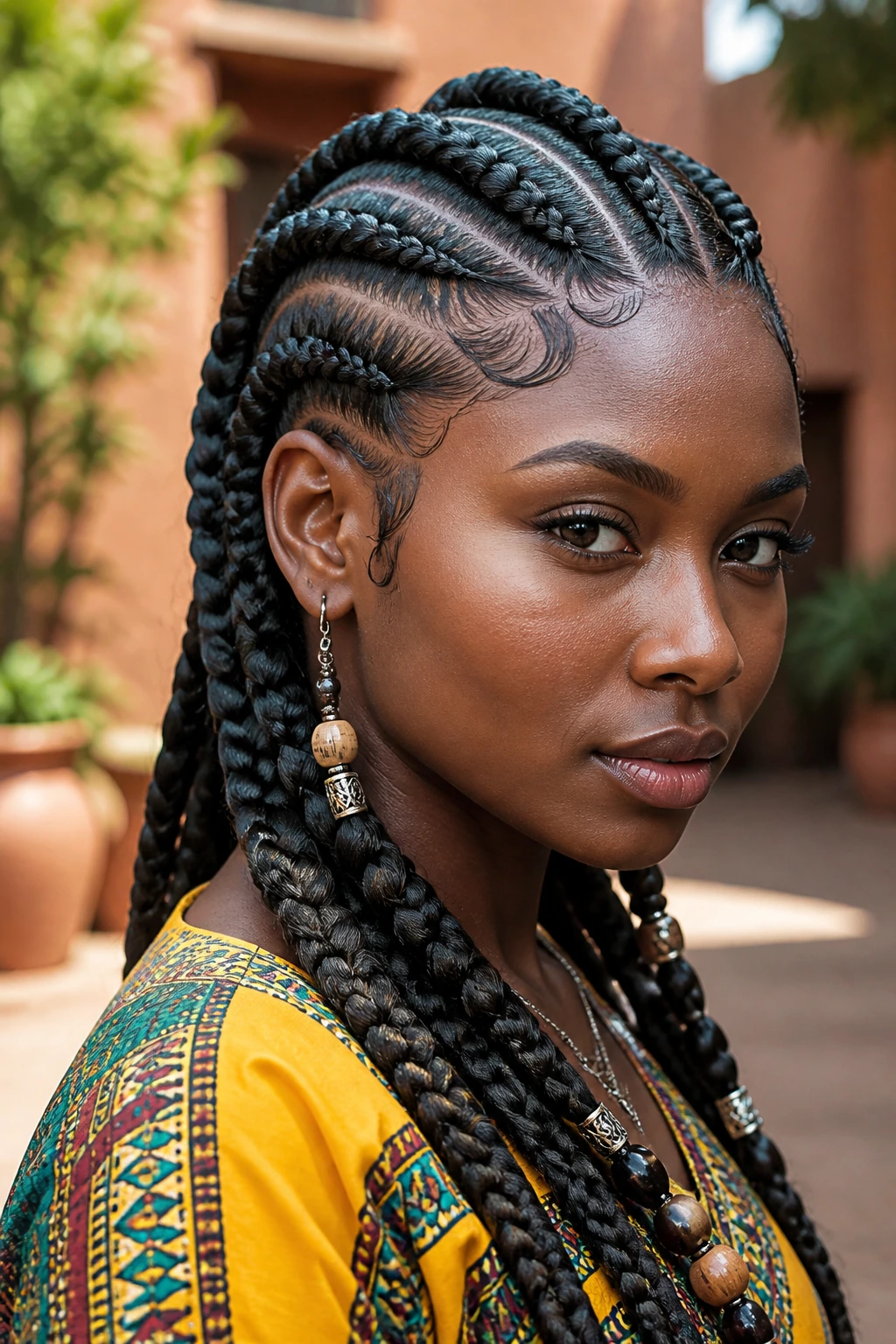
Tribal braids often involve a mix of cornrows and box braids, with a specific focus on the patterns. A chunky tribal style makes those patterns larger and more prominent. It is a celebration of the art of braiding.
The Art of the Part
The parting is the star of the show here. Whether it’s a central braid with smaller braids branching off, or a complex web of cornrows leading into jumbo box braids in the back, the skill is in the design. Choose a braider who is known for their “neat parts.” This is not a style where you want messy, zigzaggy sections.
Respecting the Heritage
These styles are deeply rooted in cultural history. Wearing them is a way to honor that tradition. Wear them with confidence. They are designed to be seen, to be noticed, and to celebrate the versatility of textured hair.
Final Thoughts
When you commit to chunky braids, you are making a choice that prioritizes both style and scalp health. The lower tension, the speed of installation, and the visual impact make these styles a favorite for anyone who values their time and their edges. But the secret to loving your braids—no matter the style—is the care you put into them during the time they are in your hair.
Do not neglect your scalp just because it is covered. Even with the thickest jumbo braids, your scalp needs to breathe and stay clean. Use a light, water-based spray to keep your natural hair hydrated inside the synthetic extensions, and never leave your hair in for longer than the recommended six to eight weeks. The best protective style is the one you treat with respect. Wear your braids proudly, give them the care they deserve, and enjoy the freedom of waking up with your hair already done.
