



A good bob for wavy hair does not fight the bend in your hair. It works with it. That’s the whole trick behind the best bob haircuts for wavy hair: they leave enough shape for the haircut to look intentional, but enough softness for the waves to move.
The wrong bob on wavy hair can puff out at the sides, flip at odd angles, or collapse into a triangle if it’s cut too bluntly in the wrong place. The right one? It lands somewhere between polished and easygoing, with texture that looks better after a little salt spray, a quick scrunch, or an air-dry that doesn’t demand a full production. That’s why bob haircuts for wavy hair women tend to love are rarely one-note. They usually have a smart length, a bit of layering, and a shape that respects how waves behave when they dry.
Length matters more than people think. A chin-length bob gives structure and a little attitude. A collarbone-length lob gives waves room to form without turning the ends into a puffball. And somewhere in the middle are all the useful variations: blunt, shaggy, angled, rounded, layered, face-framing, and the ones with bangs that don’t turn into a daily battle.
Some of these cuts are better for fine hair, some for thick hair, and some for anyone who likes to put in five minutes and walk out the door. That’s the beauty of a good bob: it can be tailored without losing its shape. And once you know which version suits your wave pattern, your hair stops feeling like a negotiation.
1. Chin-Length French Bob with Airy Waves
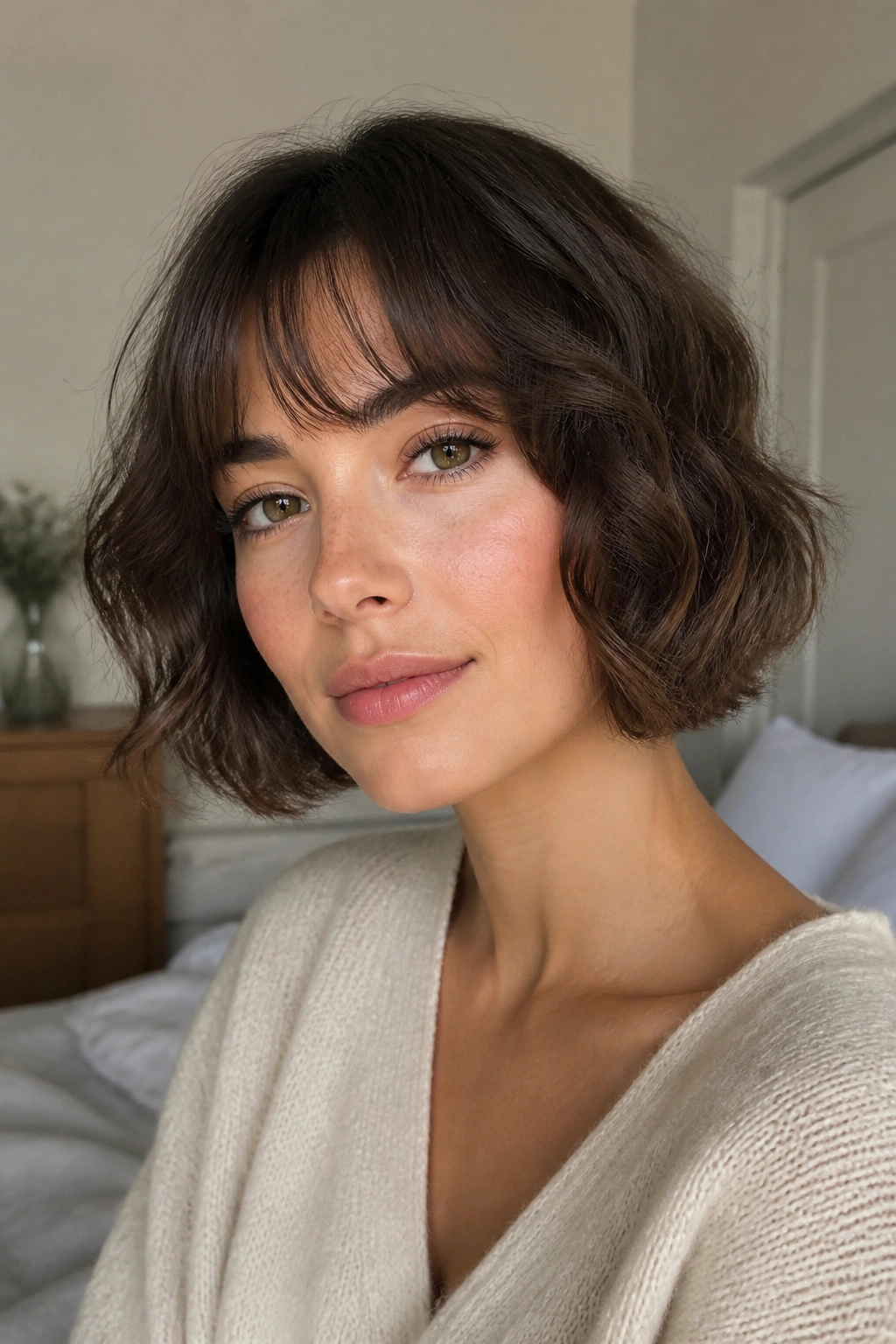
The chin-length French bob is one of those cuts that looks simple until you try it on and realize how much it does. It sits right at the jaw or just below it, which gives wavy hair a neat frame and a little lift around the face. On natural waves, it has that slightly undone feel that never looks stiff.
Why It Works for Wavy Hair
The shorter length keeps the ends from dragging the wave down, so you get shape without too much weight. If your hair tends to bend in random places, this cut can make those bends look deliberate instead of messy. It’s especially good if your hair has medium density and you like a clean outline.
What to Ask Your Stylist For
- A chin-length bob with minimal internal layering
- Soft point cutting at the ends, not harsh texturizing
- A slight forward angle around the cheekbones if you want more face framing
- Enough length to tuck one side behind the ear without losing the shape
Styling tip: Scrunch in a light mousse and let the wave pattern dry on its own. A diffuser can help, but this cut looks best when it has a little imperfect movement.
2. Jaw-Length Blunt Bob with Soft Texture
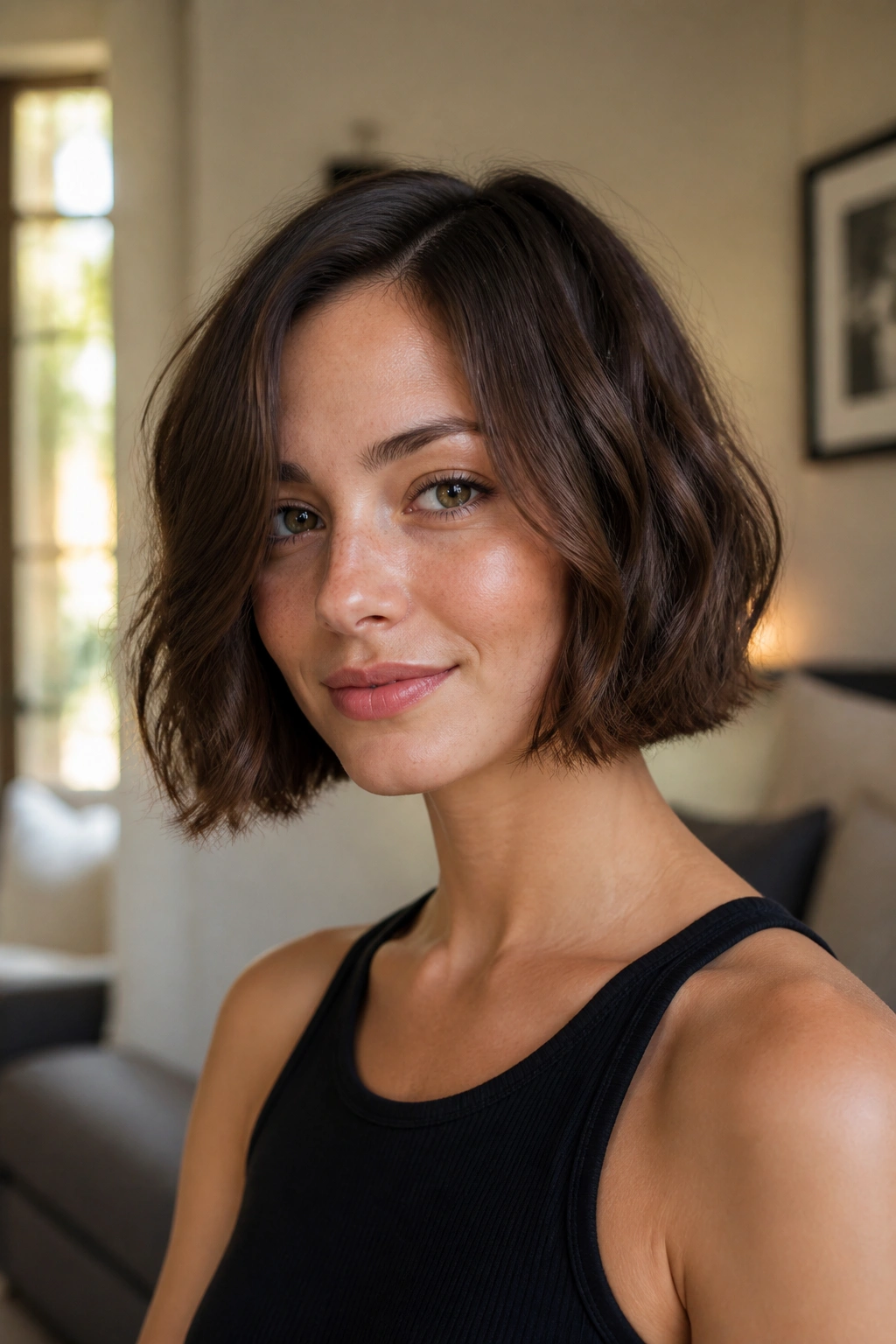
A blunt bob can sound severe, but on wavy hair it usually feels fuller and easier than people expect. The key is keeping the outline sharp while letting the texture stay soft. That contrast is what makes it interesting.
If your waves are loose and your hair is fine to medium, this is a smart choice because the blunt edge gives the illusion of thicker ends. It also looks clean when tucked behind the ear or pinned back on one side. The cut hits hardest when the line lands right at the jaw, where it defines the face without closing it in.
I like this cut on people who want something low-fuss but not boring. It grows out neatly, which matters more than people admit. A bob that turns weird after three weeks is a bad bob. This one usually behaves.
3. Collarbone Lob with Long Layers
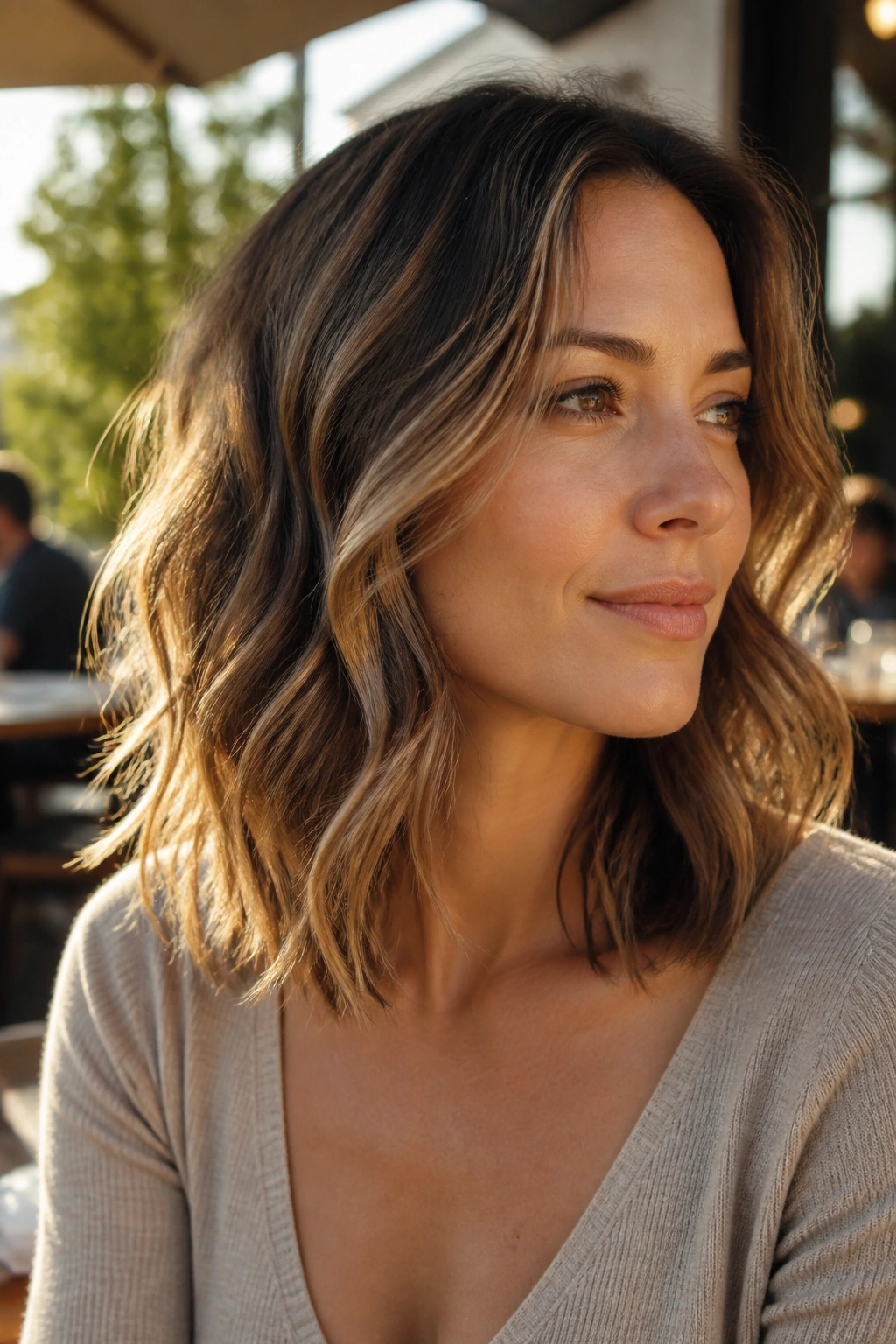
Why do so many wavy-haired women end up coming back to the lob? Because it gives you room. The collarbone length is long enough to keep the hair from springing up too short, but short enough that the shape still counts as a bob family cut.
The Shape That Makes It Work
The long layers are the point here. They stop the bottom from getting bulky and help the wave pattern fall in loose bends instead of one heavy mass. If your hair is thick, this cut removes some weight. If your hair is fine, the layers should be gentle, not sliced to bits.
Best Styling Approach
- Use a dime-sized amount of curl cream on damp hair
- Scrunch, then air-dry halfway before touching it
- If the ends flip out too much, wrap them around a round brush for 20 seconds
- Keep the front pieces a touch longer if you want a slimmer silhouette
This is a good “I want length, but I’m tired of long hair” haircut. It’s practical. It also has a habit of looking better on day two.
4. Side-Parted Bob with Lift at the Crown

A side part can change a bob faster than almost any other small tweak. On wavy hair, it creates lift at the roots and gives the style a little swing without asking for extra layering. That sounds minor. It isn’t.
When the part is deep and the bob sits somewhere between chin and cheekbone length, the whole haircut feels more dimensional. The heavier side frames the face, while the lighter side gives you that nice, soft bend that doesn’t look overworked. It’s especially good if your waves flatten at the crown and puff out at the ends.
I’d call this the easiest “I need volume without teasing” option in the bunch. A root-lifting spray, a rough blow-dry for 80 percent of the drying time, and a finger rake through the top is usually enough. No elaborate round-brush drama. Good.
5. Curved Italian Bob with Rounded Ends

The curved Italian bob has a particular kind of richness to it. The shape is fuller through the body, with ends that tuck inward a little instead of sticking out. On wavy hair, that curve softens the overall look and keeps the haircut from feeling too boxy.
It suits people who want their bob to look finished even when they do very little to it. The rounded edge gives the hair a plush shape, especially when the waves fall in loose S-shapes. Thick hair loves this cut if the interior is thinned carefully. Fine hair can wear it too, but only if the stylist avoids over-layering.
One thing I’d avoid: razor-heavy shaping at the bottom. It can make the ends fray. A cleaner line, softened by texture, usually looks better here.
6. Choppy Layered Bob with Face-Framing Pieces
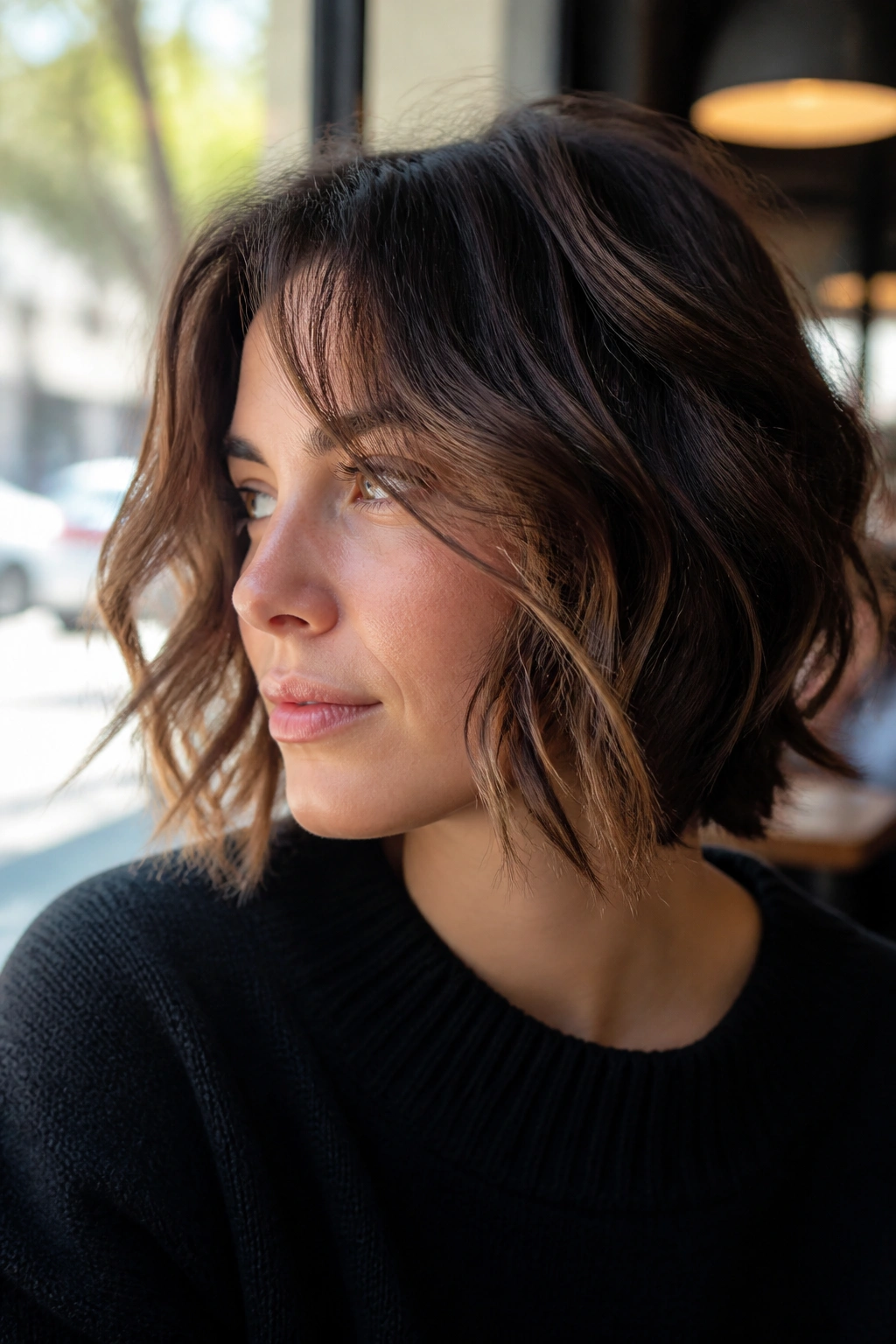
This cut has energy. It’s not the polished, glossy bob. It’s the one that looks better with a bit of grit in it.
The choppy layered bob works when you want movement first and perfection never. The layers break up bulk and keep the wave pattern from sitting in one blocky shape. Face-framing pieces around the cheekbones or lips add softness, which is useful if your waves are coarse or your hair tends to grow wide rather than down.
What Makes It Different
The layers should be deliberate, not random. You want visible separation between sections, especially through the mid-lengths, so the hair has some bounce when it moves. This is the kind of cut that pairs well with a light texturizing mist or a sea salt spray used sparingly — too much and the ends can feel dry fast.
The best part? It hides a lazy styling day. Some haircuts demand a perfect blowout. This one does not.
7. A-Line Bob with a Slight Angle
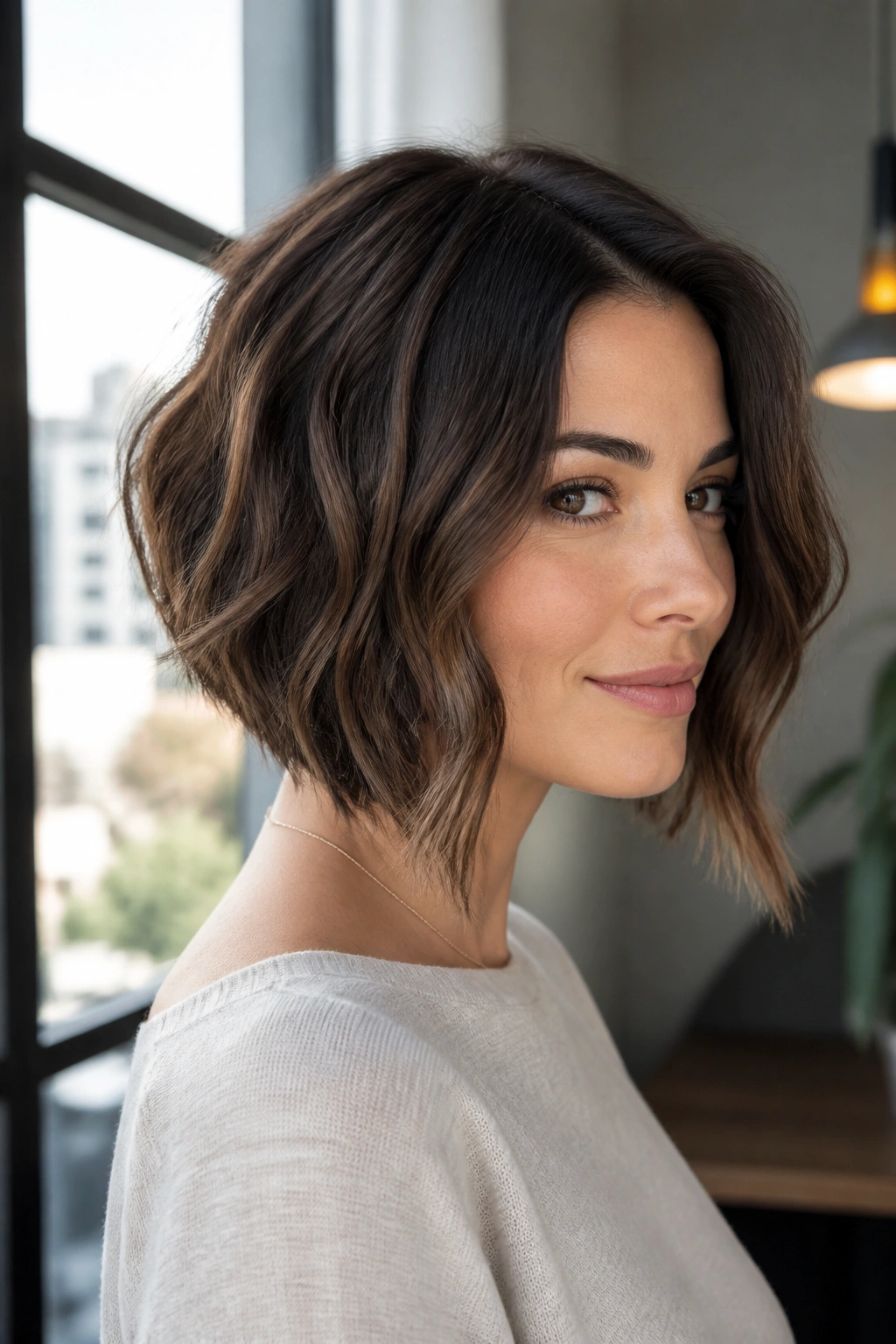
An A-line bob is shorter in back and a little longer in front, and that tiny difference changes the whole shape. On wavy hair, the angle helps guide the bend forward instead of letting it puff outward at the sides.
How the Angle Helps
The front pieces graze the jaw or collarbone while the back sits closer to the nape, which creates a clean line when the hair dries. If your waves are loose and your neck is on the shorter side, this cut can be flattering because it opens the face without taking everything up too high.
Best For
- Medium to thick hair that needs shape
- Waves that tend to widen at the sides
- People who like a slightly sharper outline
- Anyone who wants a bob that still feels feminine and soft
The angle does need a skilled cut. If the back is too short, the whole thing can jump up more than you want. Keep the difference modest. That’s the sweet spot.
8. Curtain-Bang Bob for Loose Waves
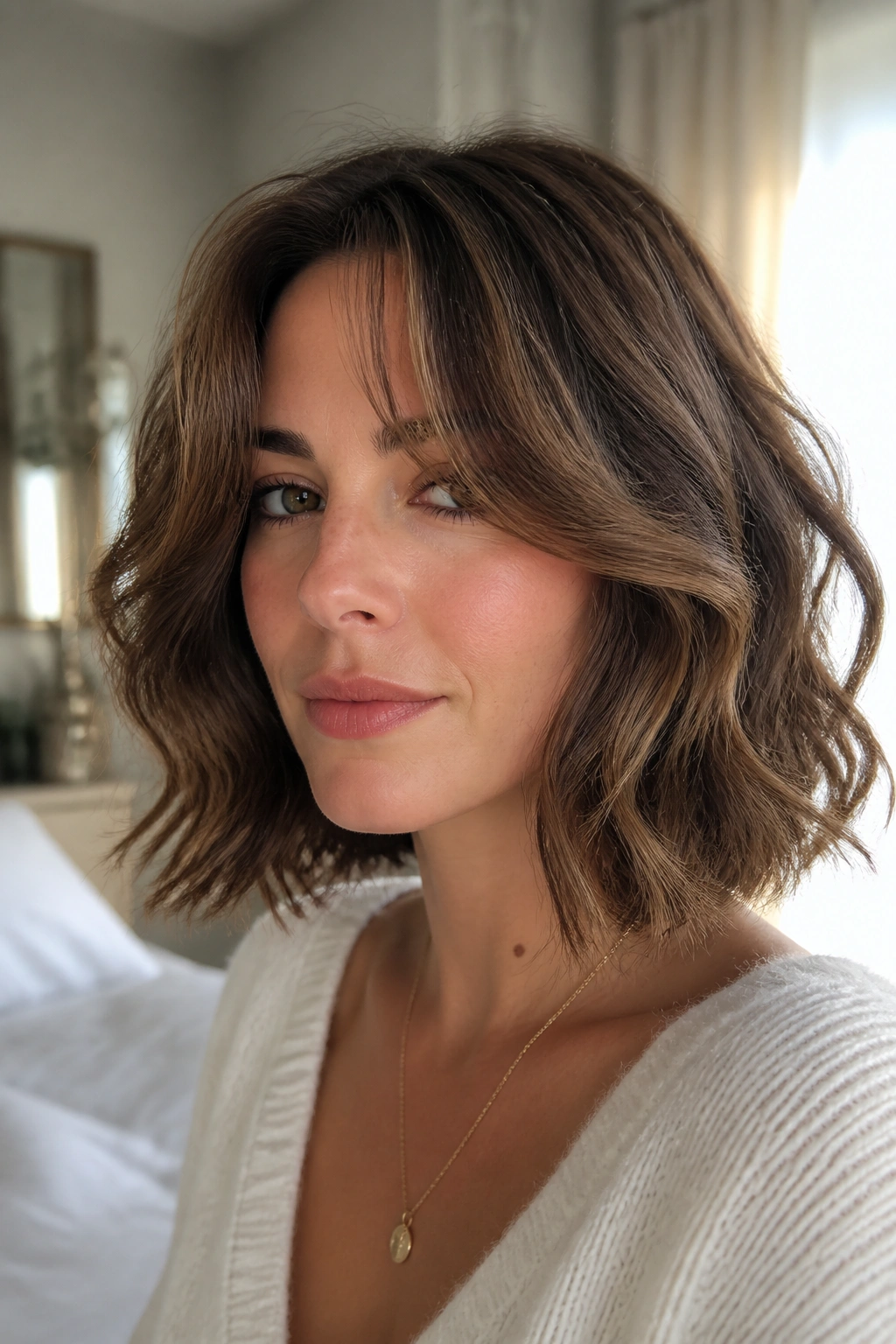
Curtain bangs are one of the easier ways to make a bob feel softer around the face. On wavy hair, they sweep apart naturally and blend into the length instead of sitting like a separate piece of hair you have to fight every morning.
The trick is balance. The bob itself should be long enough to meet the bangs without creating a hard line. Chin to collarbone length usually works best. If the bangs are cut too short, they can bounce up in a way that feels awkward with waves. If they’re too long, they vanish.
I like this style for people who want some face framing without committing to full fringe maintenance. You can blow-dry the bangs with a small round brush, or just twist them while damp and let them fall where they want. Both work. Which is rare. Bangs usually come with opinions.
9. Razor-Cut Bob with Feathery Movement
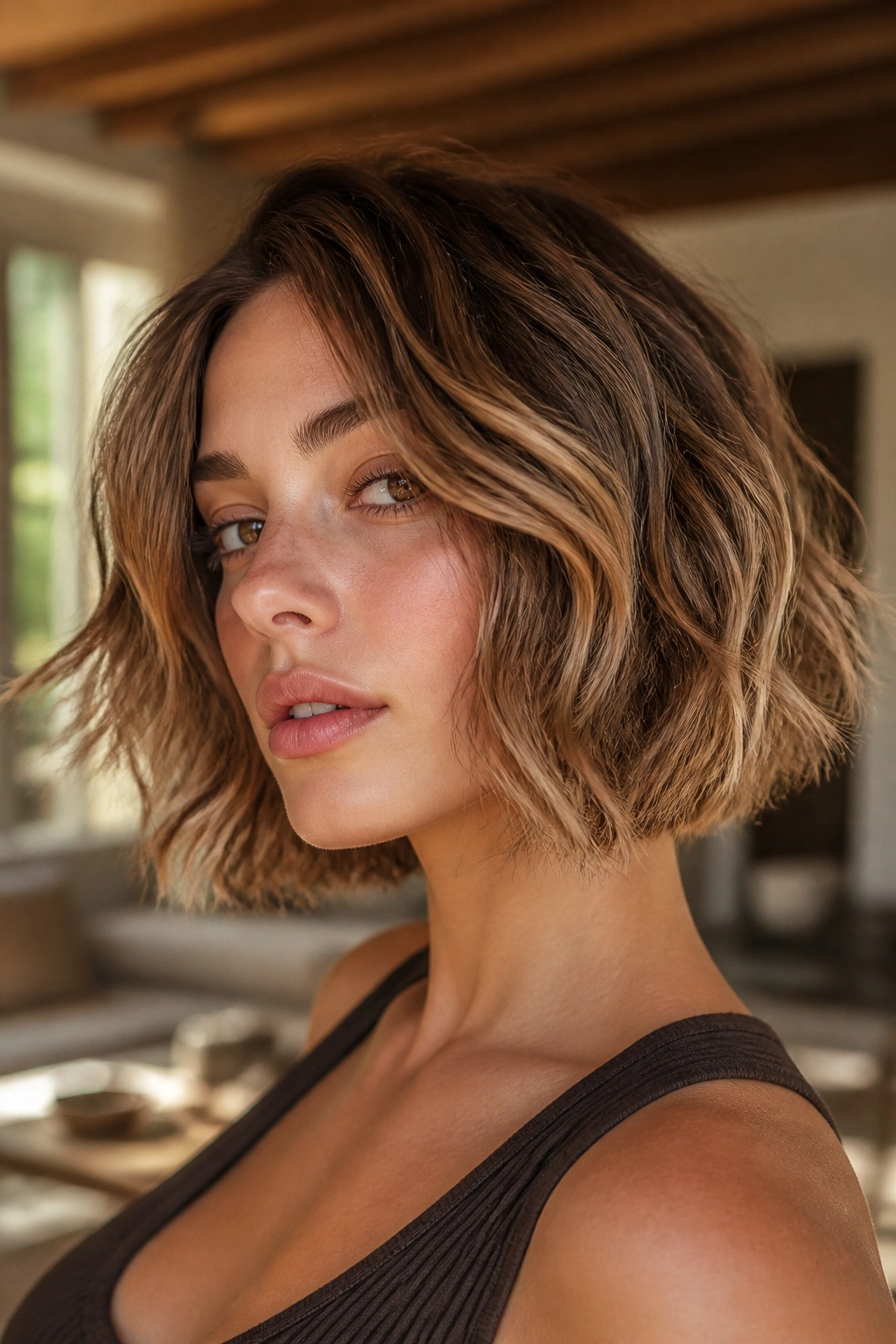
A razor-cut bob has a softer edge than a scissor-cut blunt bob, and on wavy hair that softness can be the whole point. The ends feel lighter, the shape moves more, and the haircut takes on a feathery look that suits looser wave patterns.
The risk is overdoing it. Too much razor work can make the hair look frayed, especially if it’s already dry or highlighted. So this is not the cut for every head of hair. It shines most on medium-density waves that need movement but not a ton of bulk removal.
What I like here is the way it falls when you tuck one side behind the ear. The ends fan out a little instead of sitting flat. Small detail, big payoff.
10. Micro Bob for Fine Wavy Hair

The micro bob is short. Noticeably short. It usually sits between the cheekbone and jawline, which gives fine wavy hair a lot of lift because there’s less weight pulling it down.
For hair that gets limp fast, this cut can be a small miracle. The shorter length keeps the wave pattern buoyant, and the shape can make thin ends look denser than they really are. That said, it is not a shy haircut. You wear this one on purpose.
Watch the Proportions
If your face is long, ask for a touch more length in front. If your waves are loose and your hairline is strong, you can go shorter through the nape and still keep the look balanced. A little bend from a flat iron or a diffuser helps, but the cut itself should do most of the work.
No heavy layering here. That’s how you lose the shape.
11. Asymmetrical Bob for a Sharp Edge
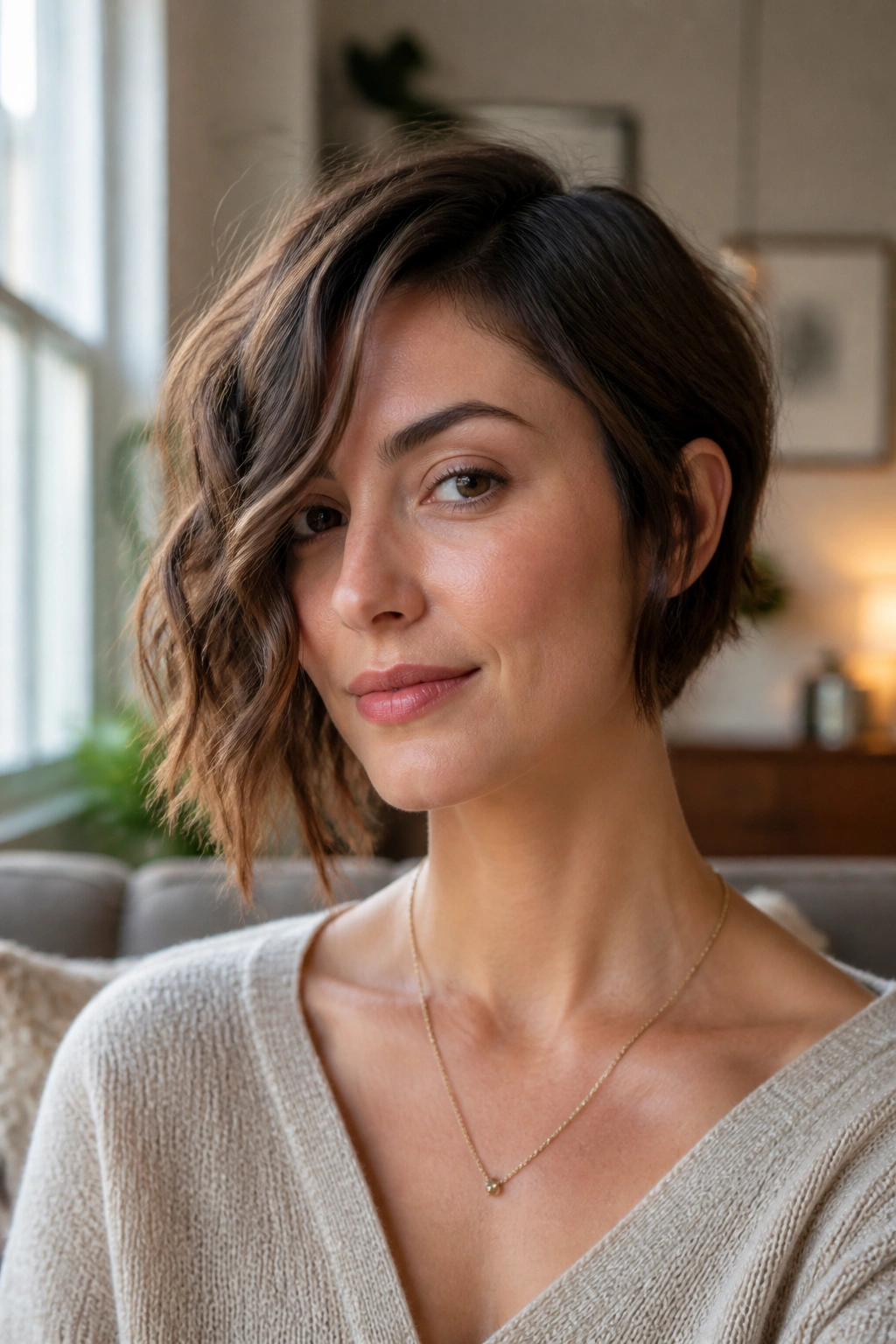
An asymmetrical bob gives one side a little more length than the other, and that uneven line brings movement to wavy hair even before you style it. It feels deliberate, which matters. Wavy hair can look accidental fast if the cut is too even and too fuzzy around the edges.
This version works best when the longer side falls somewhere between the jaw and collarbone. Shorter than that and the difference can feel abrupt. Longer than that and it starts to read less like a bob and more like a lob with a side effect.
It’s especially good if you like side parts, statement earrings, or just want a haircut that doesn’t blend into the crowd. That said, if you hate asymmetry in clothes, jewelry, or photos, you probably won’t love it on your hair either. Fair enough.
12. Shaggy Bob with Tousled Layers

This is the bob for people who do not want to babysit their hair. The shaggy bob leans into uneven texture, soft layering, and a bit of controlled mess. On wavy hair, that usually means the cut looks better the more you leave it alone.
Why It’s So Easy to Wear
The layers remove bulk from the middle and let the ends stay loose. That stops the pyramid shape that wavy hair sometimes gets when it’s cut too straight. Add a little mousse, flip your head upside down, and scrunch. Done.
Small Details That Matter
- Keep the layers soft around the crown if your waves are loose
- Ask for texturizing only where the hair feels too heavy
- Let the front pieces graze the cheekbones for shape
- Avoid over-smoothing the top, or you’ll lose the shag effect
It’s a forgiving cut, which I always appreciate. Haircuts that punish you for sleeping on them are annoying.
13. Rounded Bob with Tucked-In Ends
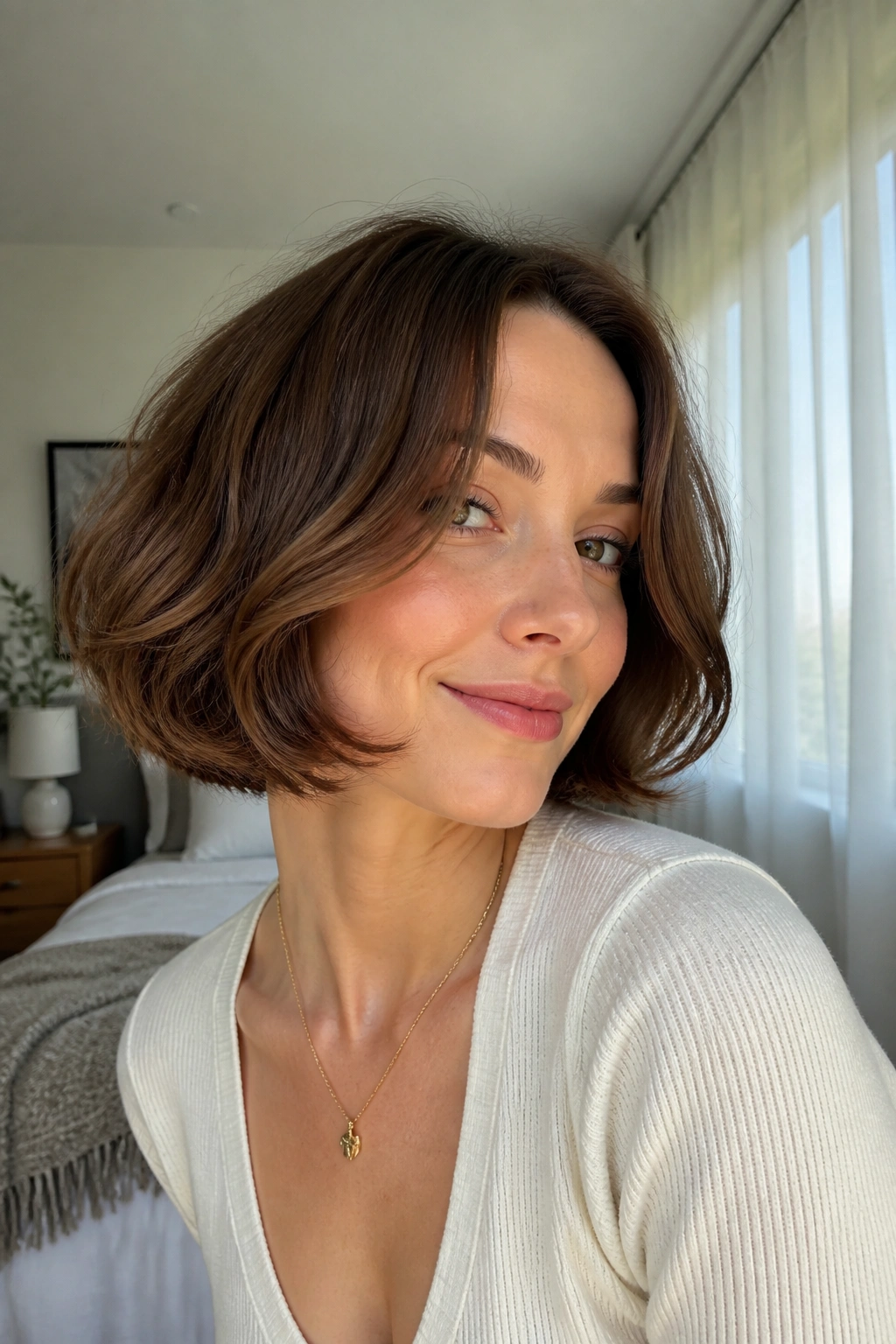
A rounded bob has a gentle curve that hugs the head a little more closely than a blunt cut. On wavy hair, that shape can look polished without feeling stiff, especially when the ends tuck inward near the jaw.
The rounded outline is nice for people whose hair tends to spread wide. It pulls the silhouette back in. If you have medium-thick hair, this can be especially flattering because the fullness stays controlled. If your hair is very fine, ask for just enough shape to create body without collapsing the sides.
There’s something old-school about this cut, but in a good way. It has manners. It doesn’t scream. It just sits there looking expensive and calm, which is a useful trait in a haircut.
14. Undercut Bob for Thick Wavy Hair
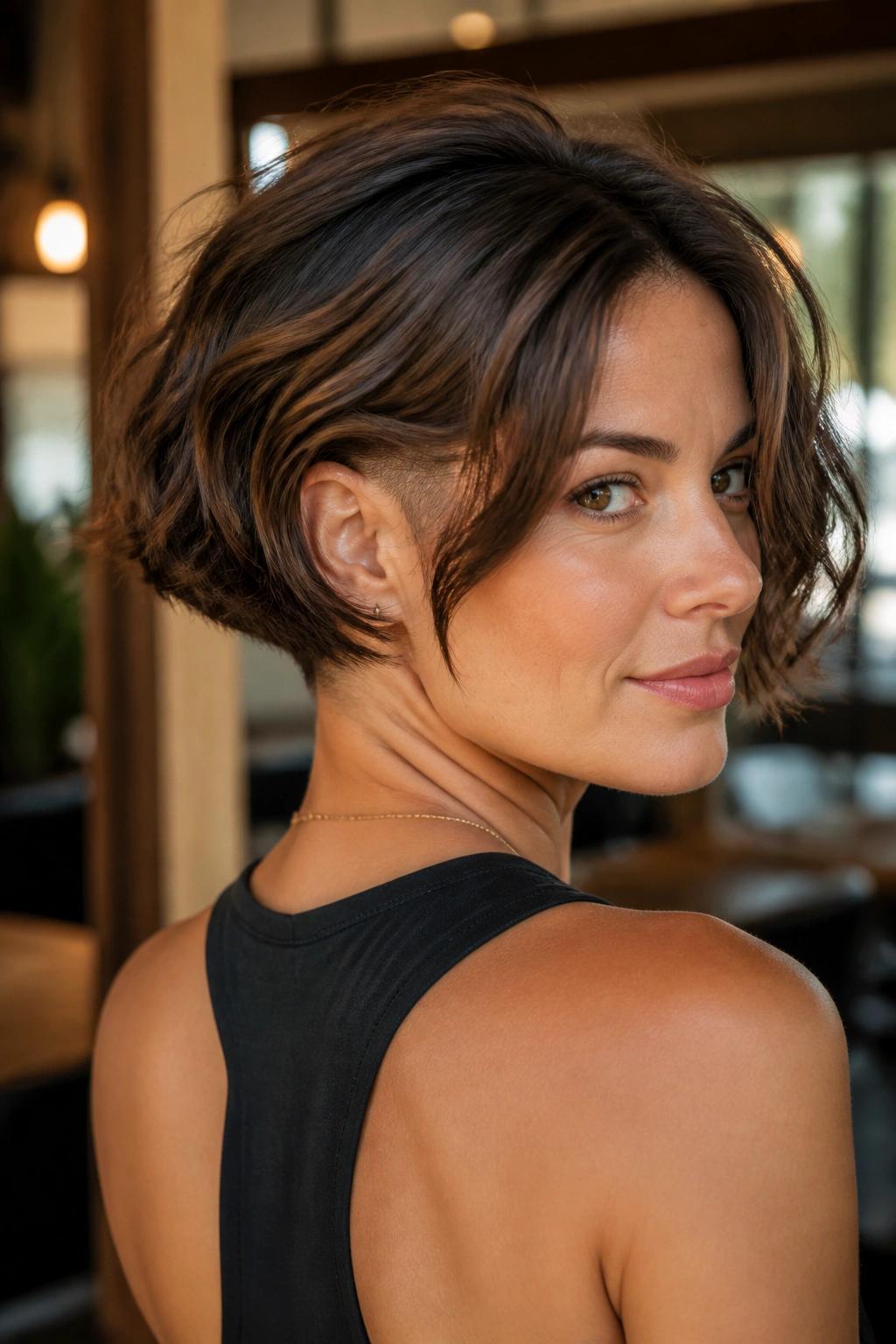
Thick, wavy hair can turn into a wrestling match if the bob is cut without any relief inside. An undercut bob solves part of that by removing some bulk underneath while keeping the surface hair intact and stylish.
That hidden removal makes the top layer fall more smoothly, especially around the nape and the back of the head. The outside still looks like a classic bob, but it feels lighter and dries faster. That matters if your hair takes forever to air-dry.
Best Scenario for This Cut
- Very dense waves
- Hair that expands outward in humidity
- People who want a neat outline without heavy thickness
- Anyone tired of a bulky neck area
You won’t always see the undercut, and that’s fine. The point is the movement it gives you. It’s one of those practical choices that sounds technical but just makes daily styling less annoying.
15. Inverted Bob with Volume in Back
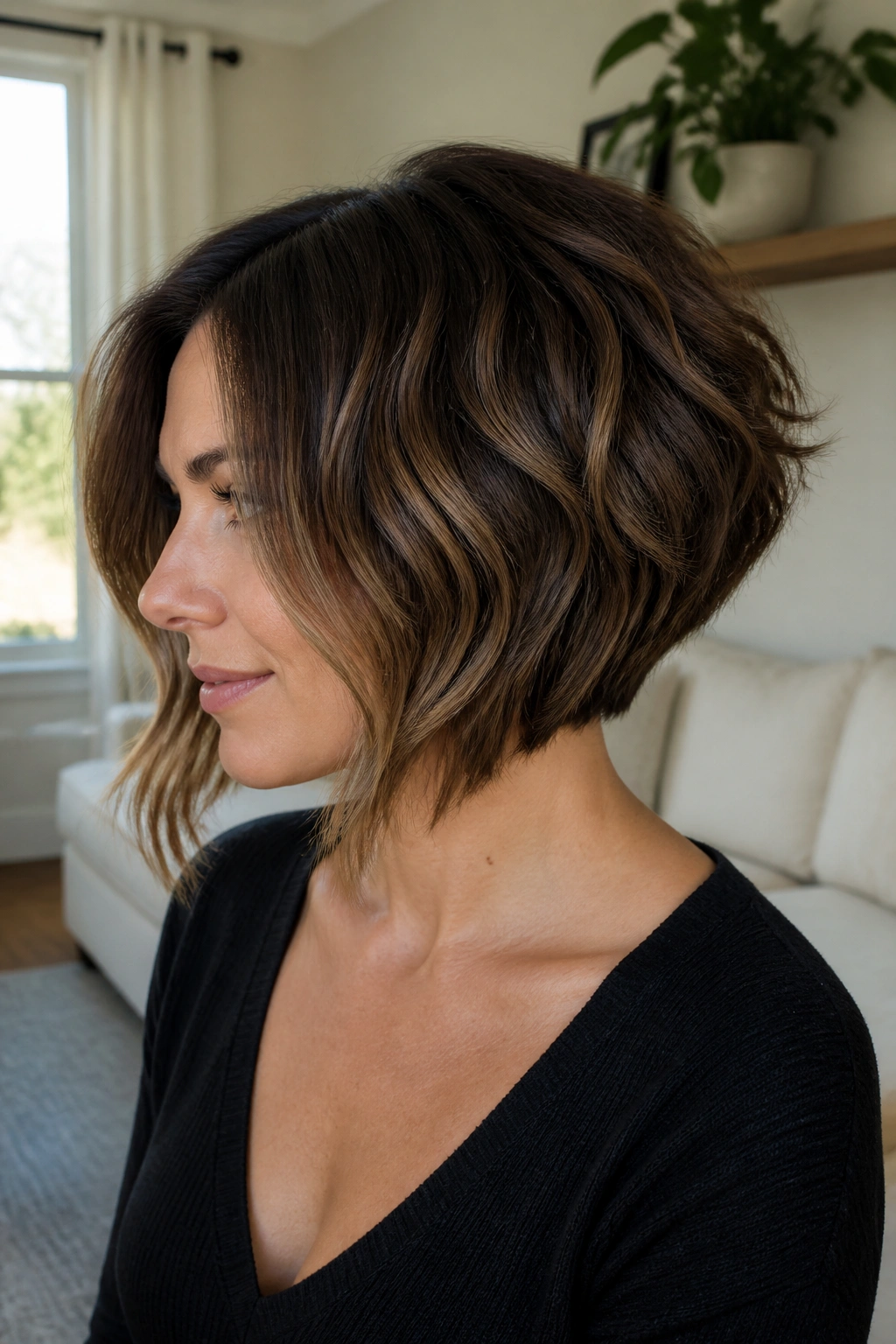
The inverted bob is a little more dramatic than the A-line. It stacks volume through the back while keeping the front longer. On wavy hair, that stack can give the cut a lifted shape that looks strong from the side.
This is a smart choice if your hair falls flat near the crown and you want the back to carry some body. It can also help if your waves need a bit of direction. Instead of hanging straight down, the haircut nudges the shape up and forward.
The line needs to be clean. If the back is too choppy, the style can get bulky fast. A good inverted bob should feel intentional, not piled up. Keep the layers controlled and the transition smooth. That’s where the nice shape lives.
16. Wavy Bob with Bottleneck Bangs

Bottleneck bangs are softer than blunt fringe and less fussy than full curtain bangs. They narrow near the center and open out around the eyes, which makes them a smart partner for a wavy bob.
The reason this combination works is simple: the bangs give you a face frame, while the bob keeps the rest of the style light. If your waves have a loose, organic pattern, the bangs blend in instead of fighting the hairline. The trick is keeping the fringe long enough to move — usually around the cheekbone area when dry.
This cut is one of my favorites for people who want to try bangs but don’t want to be trapped by them. That’s the honest upside. The downside is that bangs of any kind need trimming more often than the rest of the bob. No cheating that part.
17. Piecey Bob with a Deep Side Part
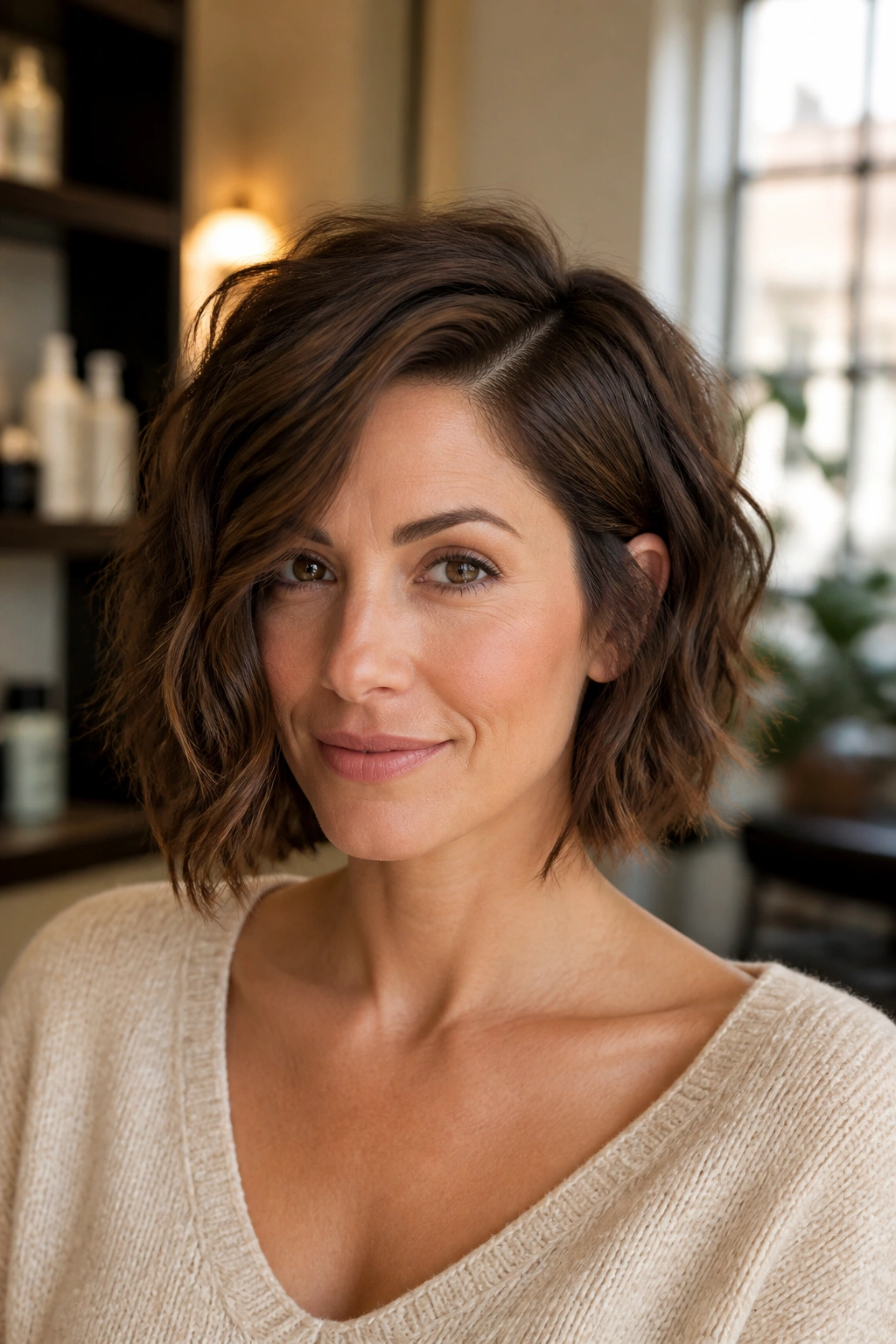
A piecey bob is all about separation. You want the waves to read as defined sections, not one smooth helmet of hair. A deep side part helps break up the shape and gives the haircut a little attitude.
The style works especially well if your waves are loose-to-medium and your hair has a bit of natural grit. If it’s too silky, the pieces may fall together and lose that airy separation. A tiny bit of styling cream on the ends can help, but don’t overload it. Heavy product kills the movement fast.
What I like here is how easy it is to refresh. A mist of water, a quick scrunch, and a little finger-twist on the front pieces is usually enough to bring it back to life. Not every haircut offers that much mercy.
18. Bob with Internal Layers for Dense Waves
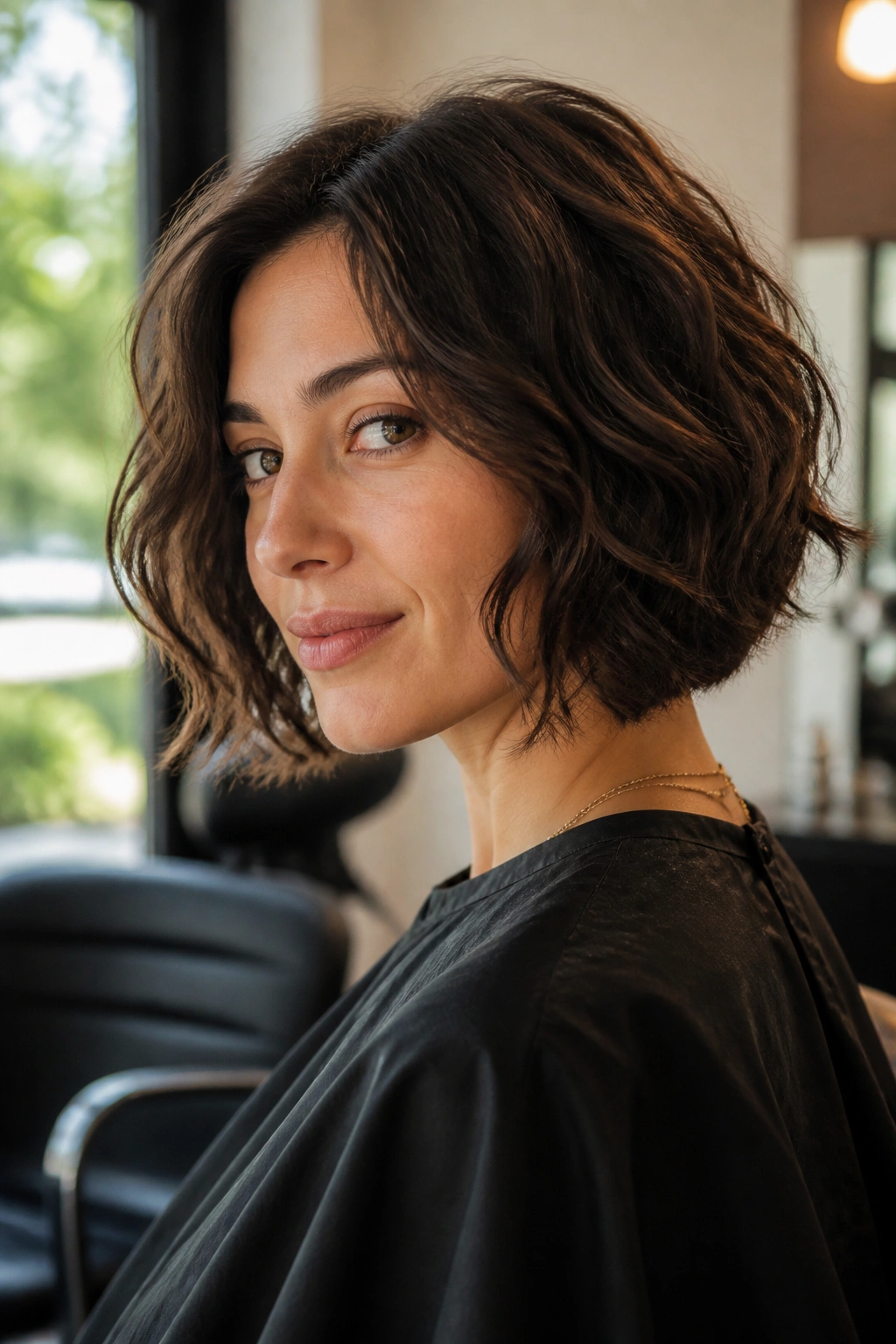
Some bob cuts look layered from the outside. This one hides the work inside. Internal layers remove weight where the hair is thickest, which lets dense waves sit flatter at the sides and move more naturally through the ends.
That hidden shaping is a big deal if your hair tends to balloon out. The outside line can stay relatively smooth while the interior keeps the bulk under control. You get shape without that chopped-up look some layered cuts can create.
What to Ask For
- Weight removal through the middle, not the perimeter
- Soft face-framing layers if you want movement near the front
- Enough length to keep the ends from springing too short
- A dry cut or curl-by-curl check if your wave pattern is uneven
This is not the flashiest bob on the list. It may be the smartest one, though. Hair that feels lighter but still looks full is usually a win.
19. Bubble Bob with Soft Curves

The bubble bob has a rounded silhouette that gives wavy hair a smooth, full shape. It sits somewhere between a classic rounded bob and a more modern soft curve, with the ends turning in just enough to create that bubble-like outline.
If your waves are loose and your hair is medium density, this can be a really flattering cut because it gives structure without making the hair look flat. The curve around the bottom keeps the shape contained, which is useful if your hair naturally spreads outward.
It also photographs well in real life, which sounds silly until you’ve had a haircut that looks good only when your head is tilted at exactly one angle. This is not that kind of cut. It holds its shape from more than one side.
20. Grow-Out Bob with Long Front Pieces
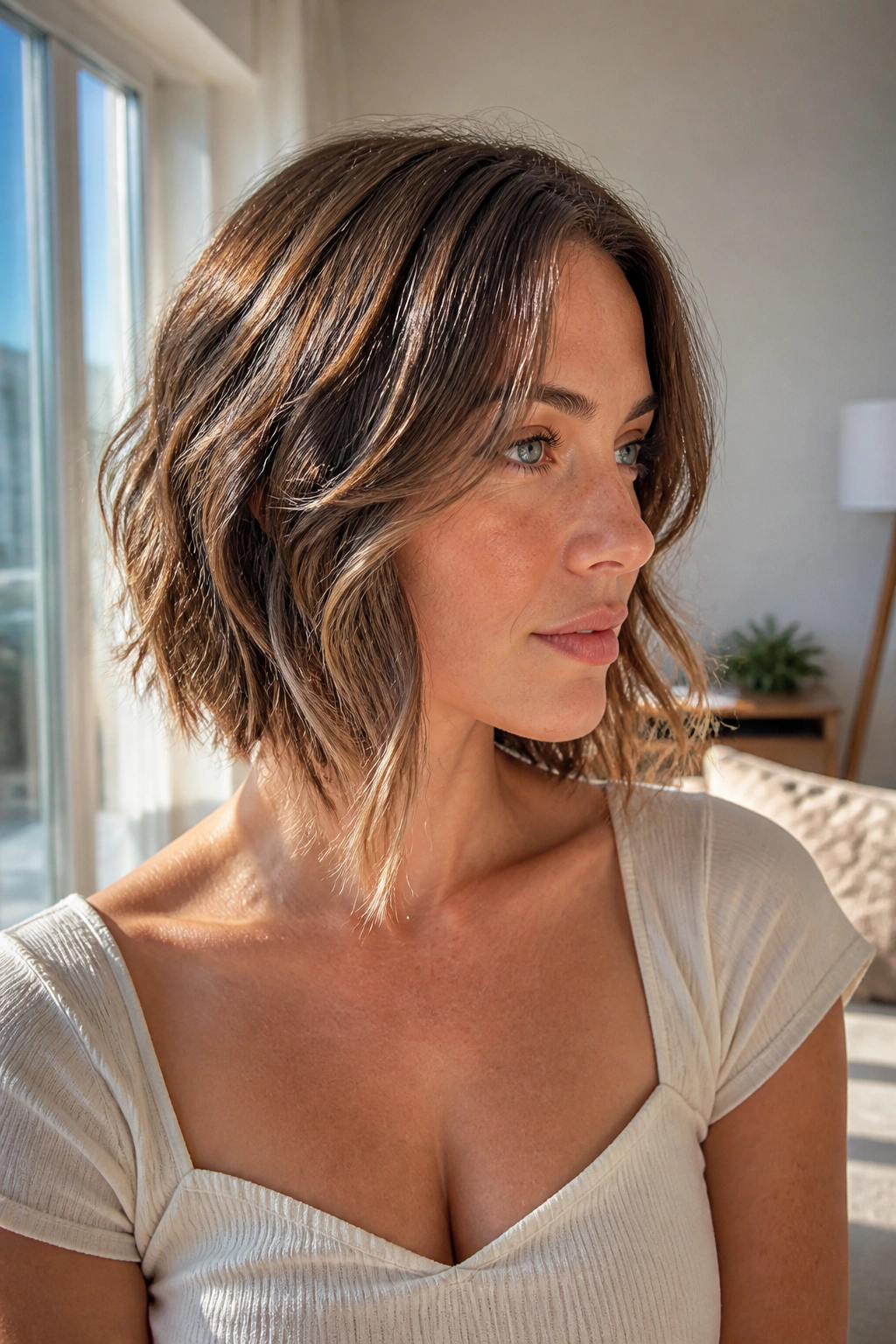
A good bob should still look decent when it grows out. That’s one reason I like a bob with longer front pieces: it buys you time. The front can skim the collarbone while the back stays a bit shorter, which keeps the shape readable even after a few weeks of growth.
For wavy hair, this kind of bob is forgiving in the nicest possible way. The longer front softens the face, while the shorter back keeps the style from turning heavy. If you’re not eager to see the salon every few weeks, this is a practical choice. If you like to wear your hair in half-up styles sometimes, it also helps.
The smartest bobs are not always the most dramatic ones. Sometimes they’re the cuts that let your hair do its own thing without falling apart. This is one of those.
