



A bob can go flat fast. The wrong layer placement turns it into a shelf; the right one makes the whole cut feel lighter, softer, and easier to wear.
That’s why fluffy layered bob haircuts are so useful when you want a soft look without giving up shape. The fluff here is not teased-up helmet hair and it is not choppy, overdone texture either. It’s a controlled kind of lift — a little bend at the roots, movement through the middle, and ends that don’t hang like they’ve given up.
The best versions do one thing well: they remove weight where hair collapses and keep enough length around the face to avoid a harsh line. Fine hair needs a different balance than thick hair. Straight hair wants a different finish than wavy hair. And if you’ve ever had a bob that looked cute for ten minutes and then sagged into a triangle, you already know why the cut matters more than the styling cream.
A round brush helps. So do mousse, root clips, and a dryer nozzle. But none of those rescue a bad shape.
1. Chin-Grazing Fluffy Layered Bob

This is the cut I reach for when a bob needs lift without looking fussy. The chin-grazing length keeps the shape compact, while soft layers around the cheeks stop the whole thing from feeling boxy. It’s one of those cuts that looks polished from the front and easy from the side, which is a nicer trick than people give it credit for.
Why It Flatters
A chin-length bob leaves enough hair to move, but not so much that it drags the face down. That makes it a smart pick if your hair tends to collapse at the jaw or stick close to the head when it’s air-dried. Ask for a rounded perimeter, then keep the interior layers soft rather than stacked.
- The shortest pieces usually skim the chin.
- Layering starts around the cheekbone or mouth.
- A 1.25-inch round brush gives the ends a gentle bend.
- A pea-sized mousse at the roots helps the crown hold.
Styling tip: Blow-dry the top section first, then flip the brush under at the last 2 inches of the ends. That small bend matters more than a lot of product.
2. Feathered French Bob with Airy Ends

Why do French bobs look soft even when they’re short? Because the shape is usually clean, but the ends are feathered just enough to keep them from feeling blunt and stiff. The result is tidy without being severe, which is a nice sweet spot if you want a bob that feels a little lived-in.
This version works especially well on straight and slightly wavy hair. The key is the perimeter: it should move when you turn your head, not sit there like a ruler line. A stylist can do that with light point-cutting at the tips and a little internal layering near the ears.
A few things make this cut easier to wear:
- Keep the length between the lip and the jaw.
- Ask for soft texture, not heavy razoring.
- Dry with a small round brush or a velcro roller set.
- Finish with a light mist of flexible spray, not sticky hairspray.
One small thing. The feathers should be subtle.
3. Collarbone Fluffy Bob with Face-Framing Layers

Picture a bob that gives you room to tuck hair behind your ears, throw it into a half-up clip, and still get that soft outline around the face. That’s the collarbone version, and it’s one of the most forgiving shapes on this list.
What to Ask For
Tell your stylist you want the length to land at the collarbone with long face-framing layers that start around the mouth or chin. That keeps the cut from looking heavy at the bottom while still leaving enough weight to create swing. If your hair is thick, this length also buys you a little control. If your hair is fine, it gives you the illusion of fullness without needing a huge amount of styling.
The face frame matters here. Too short, and the cut starts to feel dated. Too long, and you lose the softness that makes the bob feel airy. The sweet spot is somewhere around the cheek and jaw, where the pieces can fold inward or outward depending on how you blow-dry them.
This is the one I’d suggest for someone who is nervous about going short. It grows out cleanly.
4. Rounded Under Bob with Hidden Layers
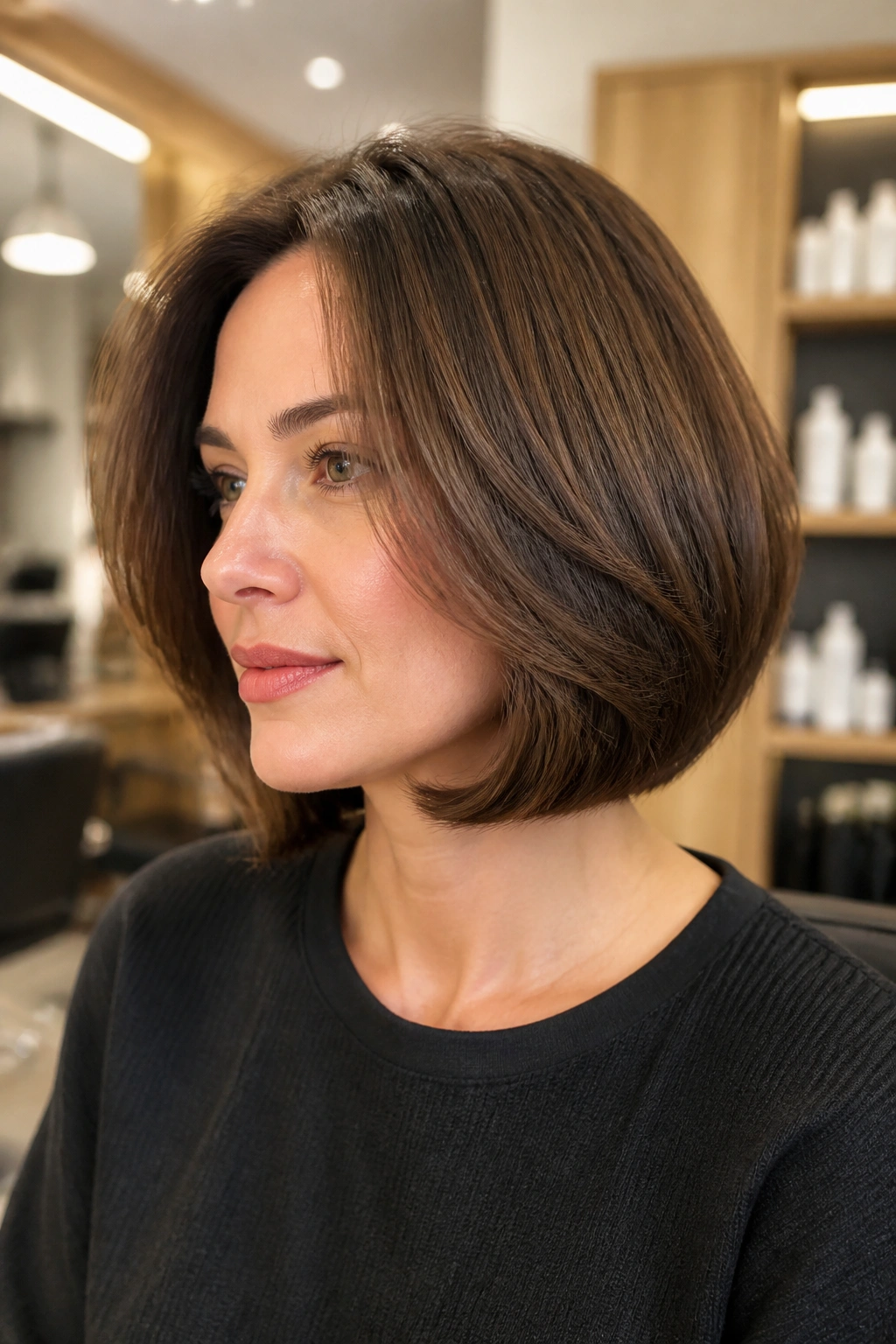
A fluffy bob does not need to look layered from across the room. Sometimes the softest shape is the least obvious one, and that is where the rounded under bob comes in. The visible outline stays smooth, while the weight is removed inside the haircut so the ends can curve under instead of puffing out.
What Makes It Work
Hidden layers are the whole point. They sit under the top surface of the hair, which means you get movement without the chopped look some people hate. Thick hair especially benefits from this, because the cut can lose bulk at the corners of the jaw and around the nape without turning frizzy at the top.
- Best length: just below the chin or right at the jaw.
- Best tool: a round brush with a medium barrel.
- Best finish: a soft undercurl, not a tight flip.
- Best warning: do not over-thin the top section or the crown can fall flat.
The shape should hug, not cling. There’s a difference.
5. Side-Part Fluffy Bob for a Gentle Sweep

A good side part changes everything. Hair that sits obediently in the middle can look a bit stiff, but a side part creates immediate movement across the forehead and cheek, which is exactly why this bob feels so soft. It also gives one side a little more lift, so the whole cut looks fuller without needing extra length.
The trick is to part the hair while it’s damp and blow-dry against the part first. That lifts the root at the base and keeps the part from collapsing in the same place every day. If your hair falls limp on top, this is a cleaner fix than piling on product.
A side-part bob also has a nice little bonus: it softens strong jawlines and gives rounder faces a more angled frame. That’s not magic. It’s just how the hair falls.
Try it with a loose bend through the ends and a touch of shine cream on the surface. Not much.
6. Curtain-Bang Layered Bob
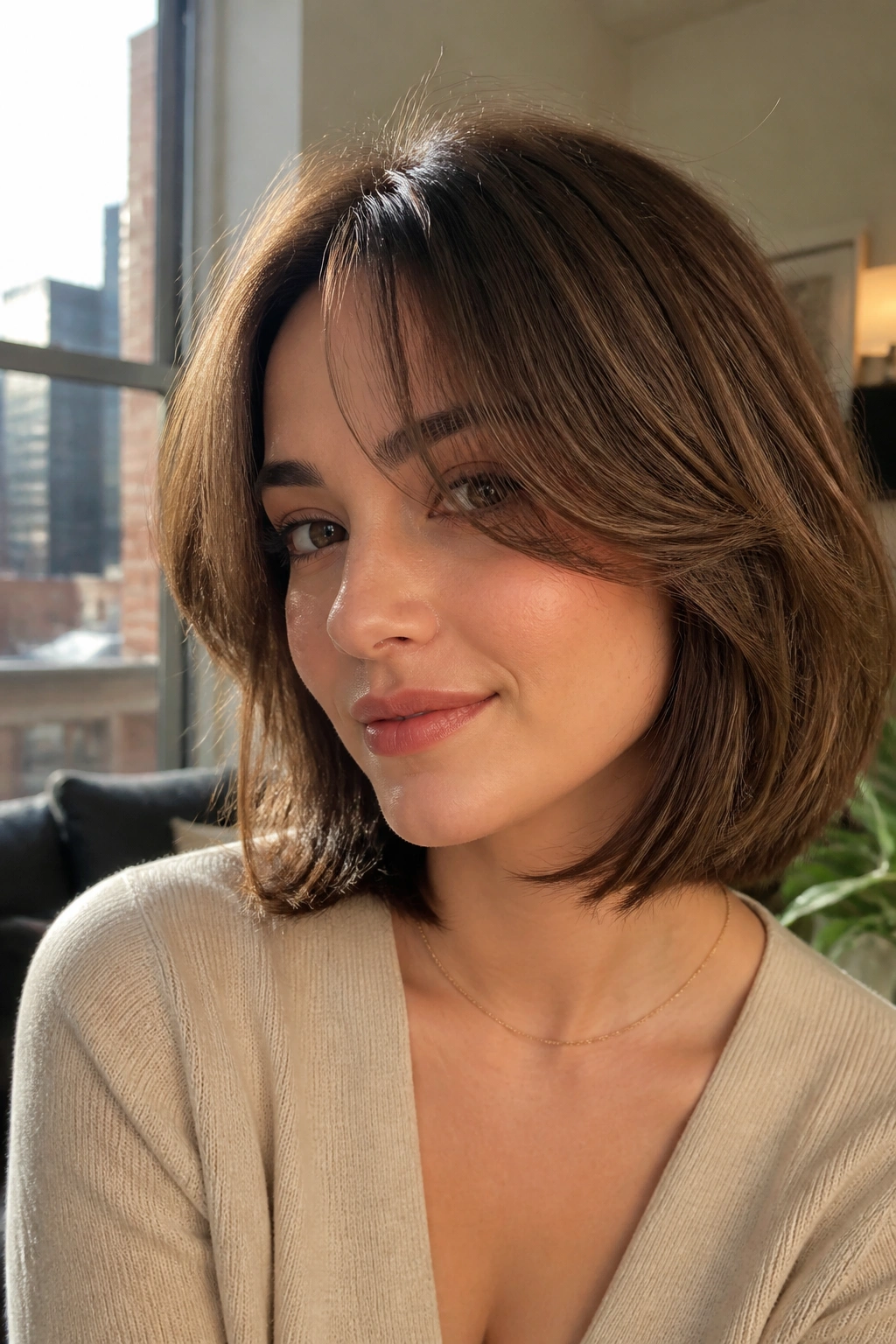
Why do curtain bangs make a bob feel softer almost instantly? Because they break up the forehead area and connect the front of the haircut to the rest of the layers instead of leaving one hard edge. The result is a bob that feels face-focused, not helmet-like.
Why Curtain Bangs Help
Curtain bangs work best when they’re long enough to split at the center and sweep into the cheekbones. If they’re cut too short, they start to fight the bob instead of blending with it. A good version should skim the brow line at the center and taper out toward the jaw.
This is one of the easiest ways to make a layered bob look less severe. You get softness without losing structure, and you can still tuck the bangs back on busy days. That flexibility matters more than people admit.
A blow-dryer and a small round brush are enough here. Wrap each side away from the face for a few seconds, then let them cool before touching them. That little cooling step keeps the bend in place.
7. Blunt-Looking Bob with Hidden Layers

Not every soft bob looks airy from the front. Some of the best ones look almost blunt until you turn your head and see the movement tucked inside the shape. That is the appeal of a hidden-layer bob: the perimeter looks neat, but the interior has enough removal to stop the cut from feeling heavy.
This is a smart choice if you like polished hair and do not want visible choppiness. The cut usually has a straight-ish line at the bottom, with subtle slicing inside the mass so the ends can bend instead of stack. It’s a very clean look, which is nice if your style leans minimal.
It also grows out better than a heavily texturized bob. The line stays readable for longer. That means fewer awkward weeks.
A good way to ask for it: “Keep the outline clean, but remove bulk inside.” Short, plain, and hard to misunderstand.
8. Shaggy Bob Hybrid with Piecey Texture
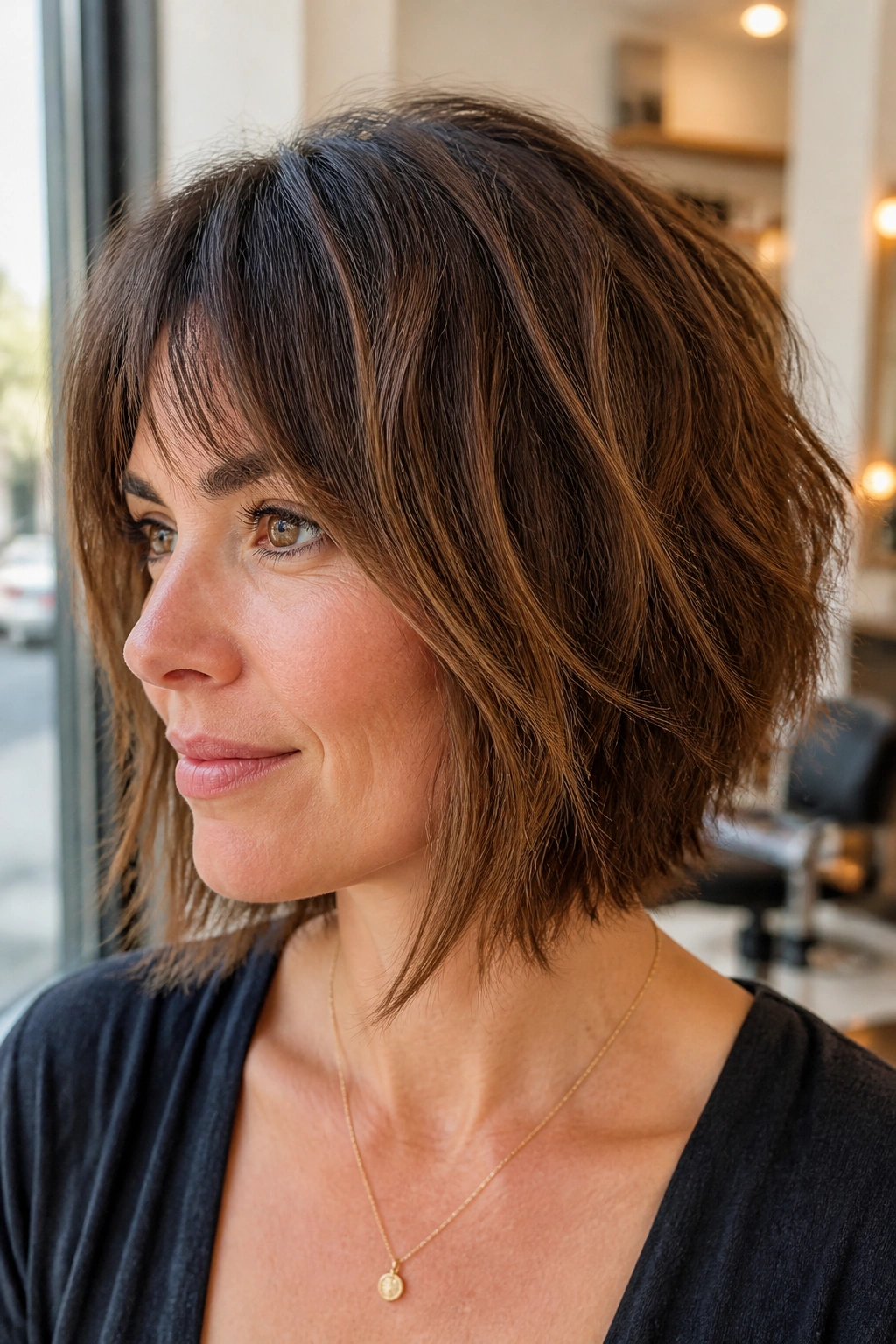
What if you want softness, but you also want a little edge? That’s where the shaggy-bob hybrid earns its place. It borrows the easy movement of a shag and keeps the shorter bob length, so the result feels relaxed instead of overly styled.
The best version is not messy. It just has a few more broken-up layers around the crown and sides, which makes the hair look lifted and light. The ends should be point-cut rather than sliced into sharp little chunks. Too much texturizing and you end up with frizz, not fluff.
Key Details to Ask For
- Keep the shape between the cheekbone and jaw.
- Add soft, broken layers around the top half.
- Leave enough length in front to frame the face.
- Finish with a cream or light spray, not heavy oil.
This is a good cut if your hair likes to move. It’s also the one I’d suggest if you hate spending ten minutes making every strand sit perfectly.
9. Chin-Length Bounce Bob for Natural Volume
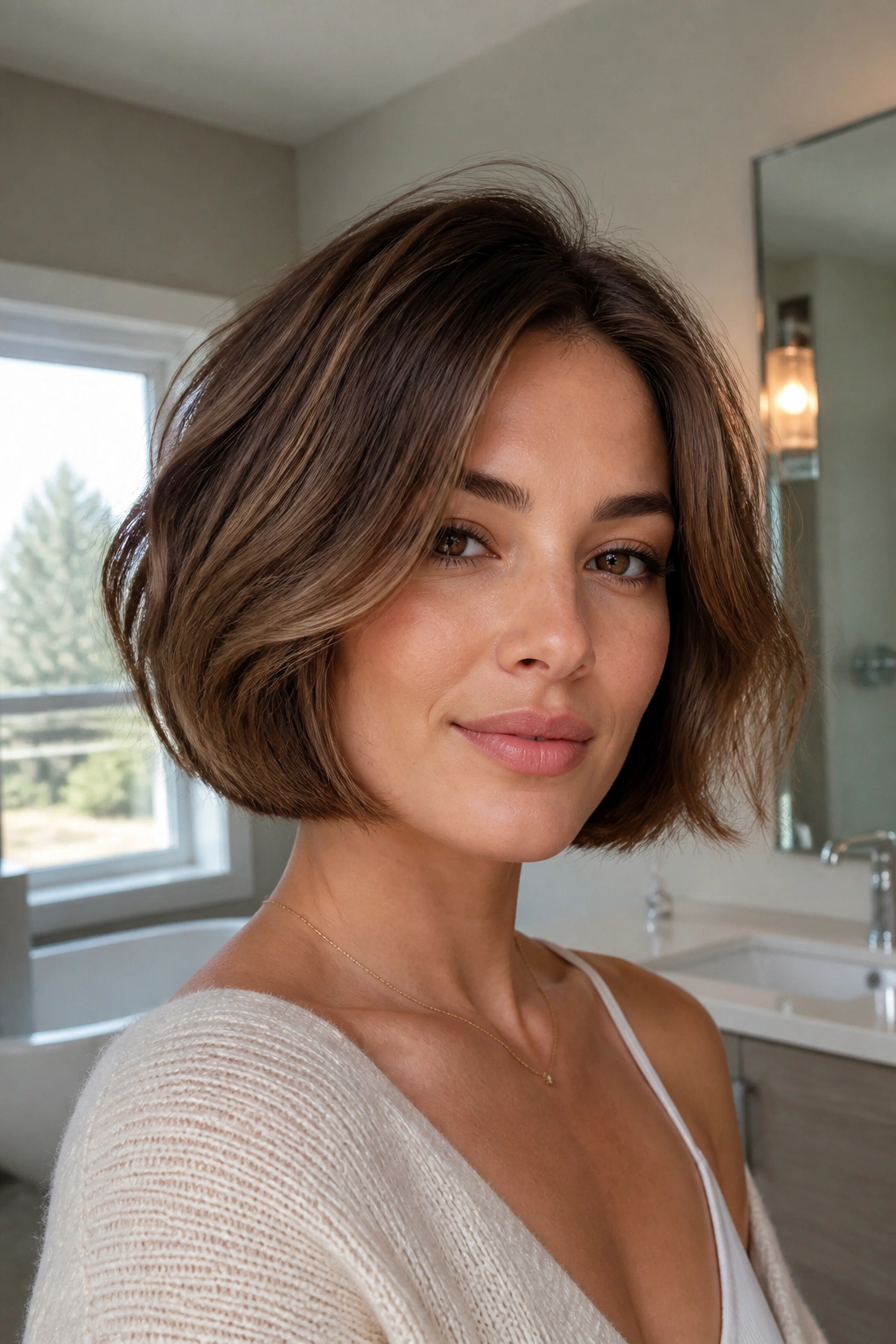
If your hair tends to lie close to the scalp, this length is the sweet spot. A chin-length bounce bob uses the shortest workable shape to create lift, and the soft layering keeps it from turning into a flat little block. It gives the hair room to spring.
The best versions often have a slightly fuller back and a little more lightness around the sides. That shape helps the bob curve inward when you blow it dry, especially if you use a medium round brush and direct the air down the hair shaft first. Finish by rolling the ends under for a few seconds and letting them cool.
This is one of the few cuts that can look like you have more hair than you do. That’s the real selling point. Not the trend part. The illusion part.
If you like a bob that feels neat but not stiff, this is an easy place to land.
10. Swoopy Layered Bob with Long Front Pieces

The long front pieces are what make this one feel soft instead of severe. They sweep away from the face in a gentle curve, which gives the haircut motion even when the rest of the shape stays fairly simple. The front does a lot of the visual work here.
The Swoop Matters
A swoopy bob is especially useful if you want your haircut to feel feminine and fluid without piling on volume everywhere. The front pieces can be cut longer than the back, then blended into the rest of the bob so the transition doesn’t look abrupt. Think of it as a soft diagonal, not a dramatic angle.
- Longest pieces usually sit at the collarbone or just above it.
- The back stays shorter and lighter.
- A side-swept blow-dry makes the swoop show up.
- A touch of smoothing cream keeps the front pieces from splitting.
This is a flattering choice for anyone who likes to tuck one side back. It gives the haircut a bit of movement even on low-effort days.
11. Air-Dried Textured Bob with Soft Separation

A bob that air-dries well is not accidental. The cut has to be built for it, or you end up with strange flips at the ends and a puffed-up crown that looks half-finished. The air-dried textured bob works because the layers are placed to fall naturally into each other.
The styling is simple, but the haircut has to do the work. Start with a light leave-in cream, then scrunch a pea-sized amount of mousse through the mid-lengths. Let the hair dry until it’s about 80 percent done, then twist a few front pieces with your fingers to keep them separated. If you use too much product, the softness disappears fast.
This shape is best for wavy hair or straight hair with a bit of bend. Very coarse hair can do it too, but the cut needs more internal weight removal. Otherwise the bottom puffs out.
A good air-dried bob feels relaxed, not accidental. That’s the difference.
12. Tucked-Behind-the-Ear Bob with Feathered Sides

The best thing about this bob is the little shift you get when one side is tucked behind the ear. Suddenly the cut opens up, the cheekbone shows, and the whole shape feels lighter. It also works beautifully with glasses, hoops, or anything else that sits near the face.
A Few Details That Help
Ask for feathered side sections that are long enough to tuck without sticking out. If the pieces end too high on the cheek, they tend to pop free and make the cut look choppy. A slightly off-center part helps too, since it gives the hair a softer fall before you tuck it back.
- Keep the tucked side a little longer than you think.
- Ask for soft ends around the ears.
- Use a light mist of spray, not gel.
- Tuck only one side if you want asymmetry.
This is a surprisingly good choice for workdays. It looks tidy in a quick way.
13. Round-Brush Blowout Bob

This is the version that looks like you spent a little more time, even when you didn’t. A round-brush blowout bob relies on shape, not curl, so the finish stays soft and airy rather than full of hard bends. It’s one of those cuts that feels polished without losing movement.
Tools That Matter
A medium-barrel round brush, a dryer with a nozzle, and a couple of clips are enough. Rough-dry the roots first until the hair is mostly dry, then section it and bend each piece around the brush away from the face. Hold the brush for a few seconds at the ends, let the section cool, and move on.
The cut itself should support that finish. If the layers are too blunt, the blowout falls into a helmet shape. If they’re too choppy, the style loses its softness. You want a middle ground: enough internal layer to keep the roots lifted and enough weight at the perimeter to keep the bob smooth.
A little shine spray on the final pass helps, but the hair should still move. If it looks lacquered, back off.
14. Fluffy Bob for Thick Hair with Weight Removal

Thick hair needs a different kind of fluffy bob. Too many short layers and the top balloons. Too little removal and the whole cut sits like a brick. The sweet spot is controlled weight reduction through the lower half and nape, with the outline kept soft and readable.
Ask your stylist to keep the layers long enough to avoid a mushroom shape. That means preserving some heft around the perimeter while easing bulk under the surface. If the hair is very dense, a little internal debulking near the back of the head can help the shape fall better without making the ends wispy.
A few rules save a lot of regret:
- Avoid severe razoring near the crown.
- Keep the shortest layers below the ear on most thick hair.
- Blow-dry in sections so the roots do not puff unevenly.
- Finish with a cream that smooths, not a heavy balm that drags.
Thick hair can make a fluffy bob look expensive. It just needs a shape that knows what to do with all that density.
15. Fluffy Bob for Fine Hair with Soft Crown Lift
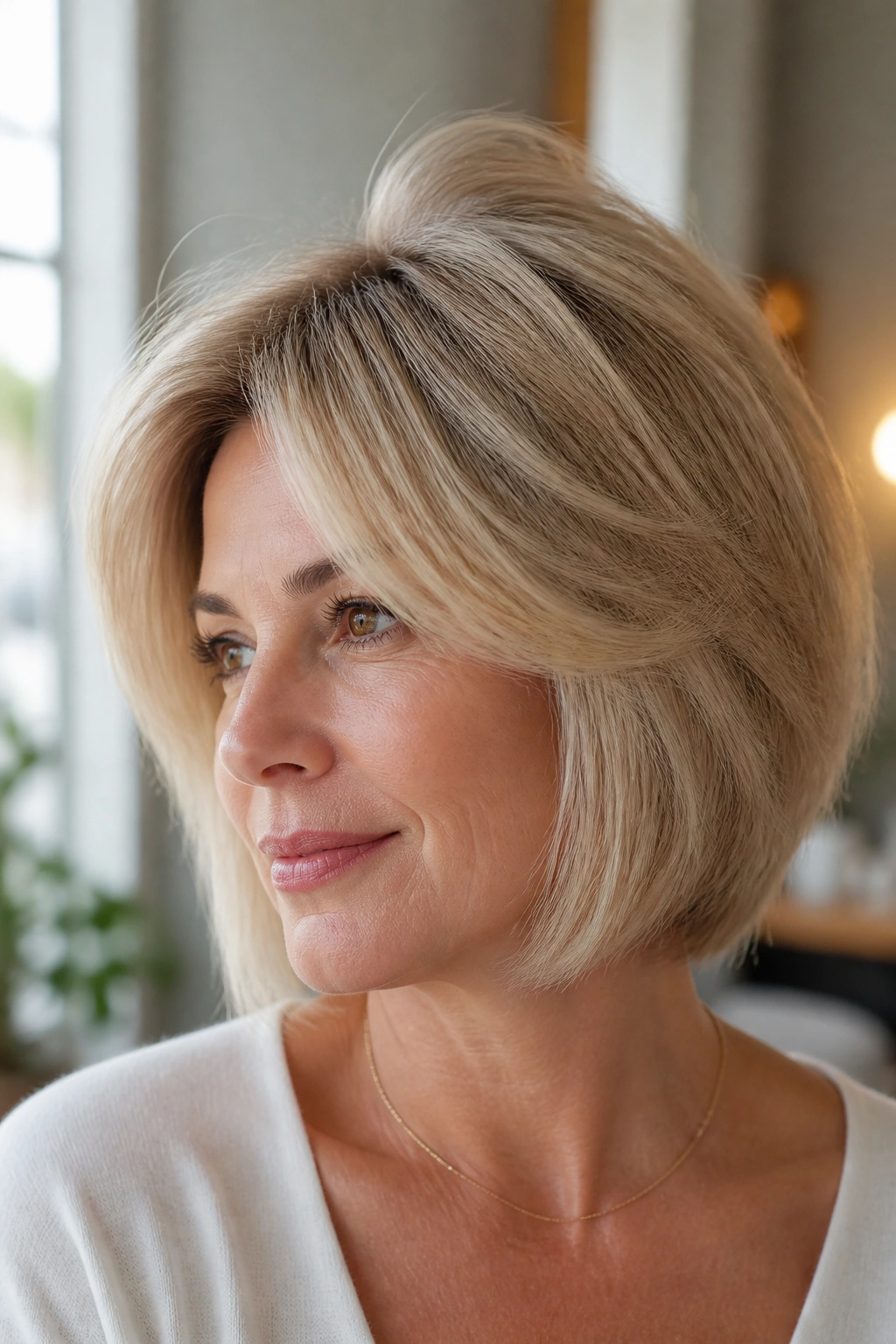
Fine hair asks for a lighter hand. You do not want a cut that shreds the ends or removes so much weight that the bob goes see-through at the bottom. What you want is a soft crown lift, a clean outline, and a few well-placed layers that make the hair look fuller than it really is.
This is where people often overdo it. They ask for texture because they want movement, and then the ends get wispy and weak. A better move is to keep the perimeter solid while lifting the roots at the crown and adding a little face frame. That gives the eye enough shape to read as full hair.
Compared with thick hair, fine hair usually needs less layering and more precision. A root-lifting mousse, blow-drying upside down for a minute, and a couple of velcro rollers at the top can help, but the cut still has to support volume.
If you have fine hair, ask for softness, not thinning.
16. Layered Bob with Micro-Bangs

A micro-bang bob sounds bold, and it is, but the softness comes from keeping the rest of the cut light and rounded. The fringe is short and small, while the bob around it stays airy enough to keep the look from turning severe. It’s a neat contrast.
This cut works best when the bangs are wispy rather than dense. If they’re too thick, they pull too much attention to the forehead and make the bob feel heavy below. The side layers should blend into the fringe area so the whole haircut reads as one shape, not two separate ideas.
A few things to think about:
- Keep the bangs soft at the edges.
- Let the bob hit the jaw or just under it.
- Style the fringe first, before the rest of the hair.
- Do not cut the bangs too short if your hairline is uneven or your cowlick is strong.
It’s playful, a little sharp, and still softer than people expect.
17. Inverted Fluffy Bob with a Soft Nape
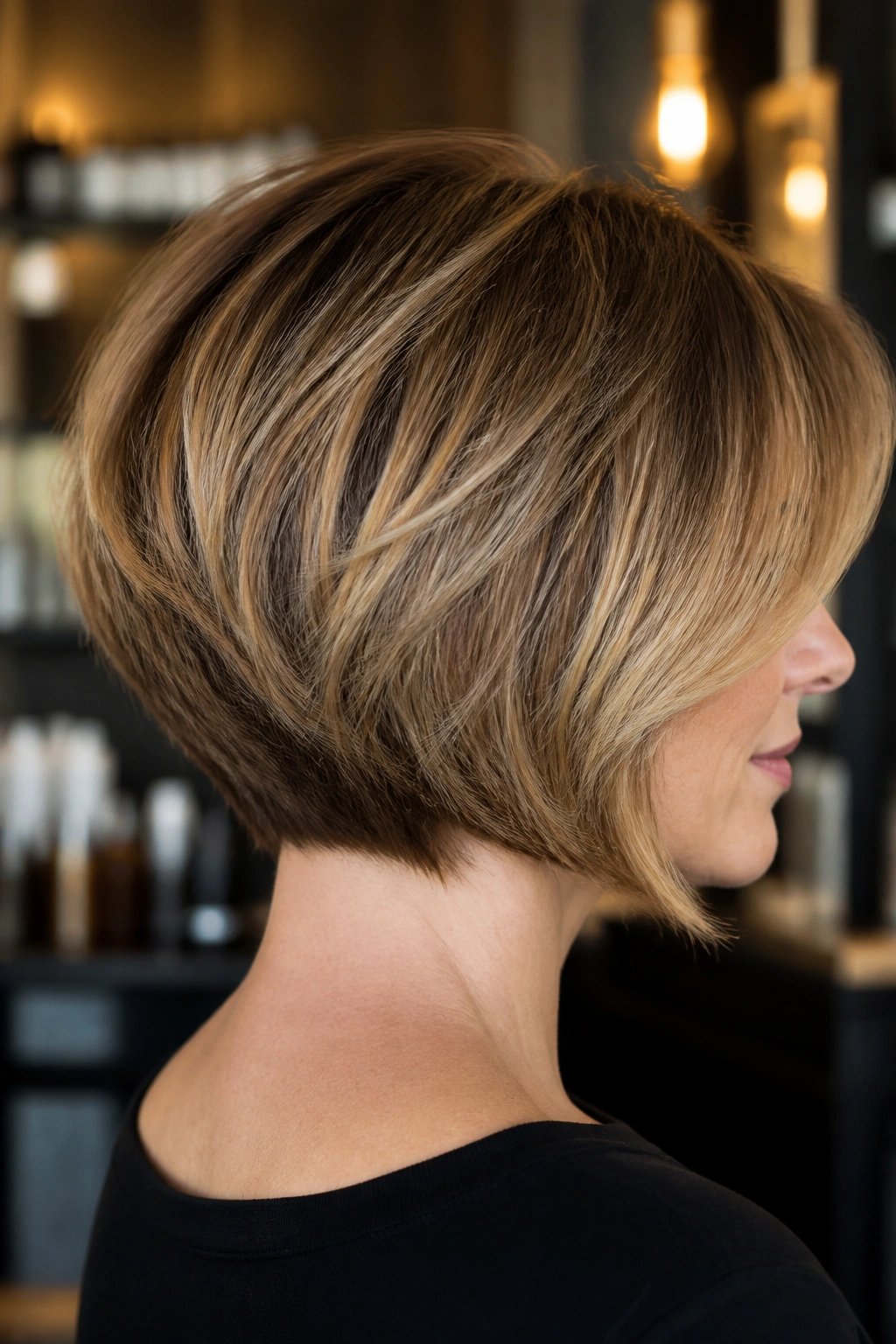
Short at the back, longer in the front, but not severe. That is the version that works here. An inverted fluffy bob lifts the nape just enough to build shape, then lets the front pieces drift longer so the haircut stays gentle instead of angular.
The back should be stacked lightly, not carved into a hard wedge. That keeps the shape from looking dated or too rigid. The front can graze the jaw or collarbone, depending on how much length you want to keep around the face. When the transition between back and front is blurred with soft layers, the whole cut feels easier.
This is a nice option if you like the neck-opening effect of a shorter bob but do not want the front to feel severe. It also works well with earrings, because the line of the haircut leaves room for them to show.
A clean neckline and a soft front can coexist. They should.
18. Wavy Bob with Broken-Up Ends
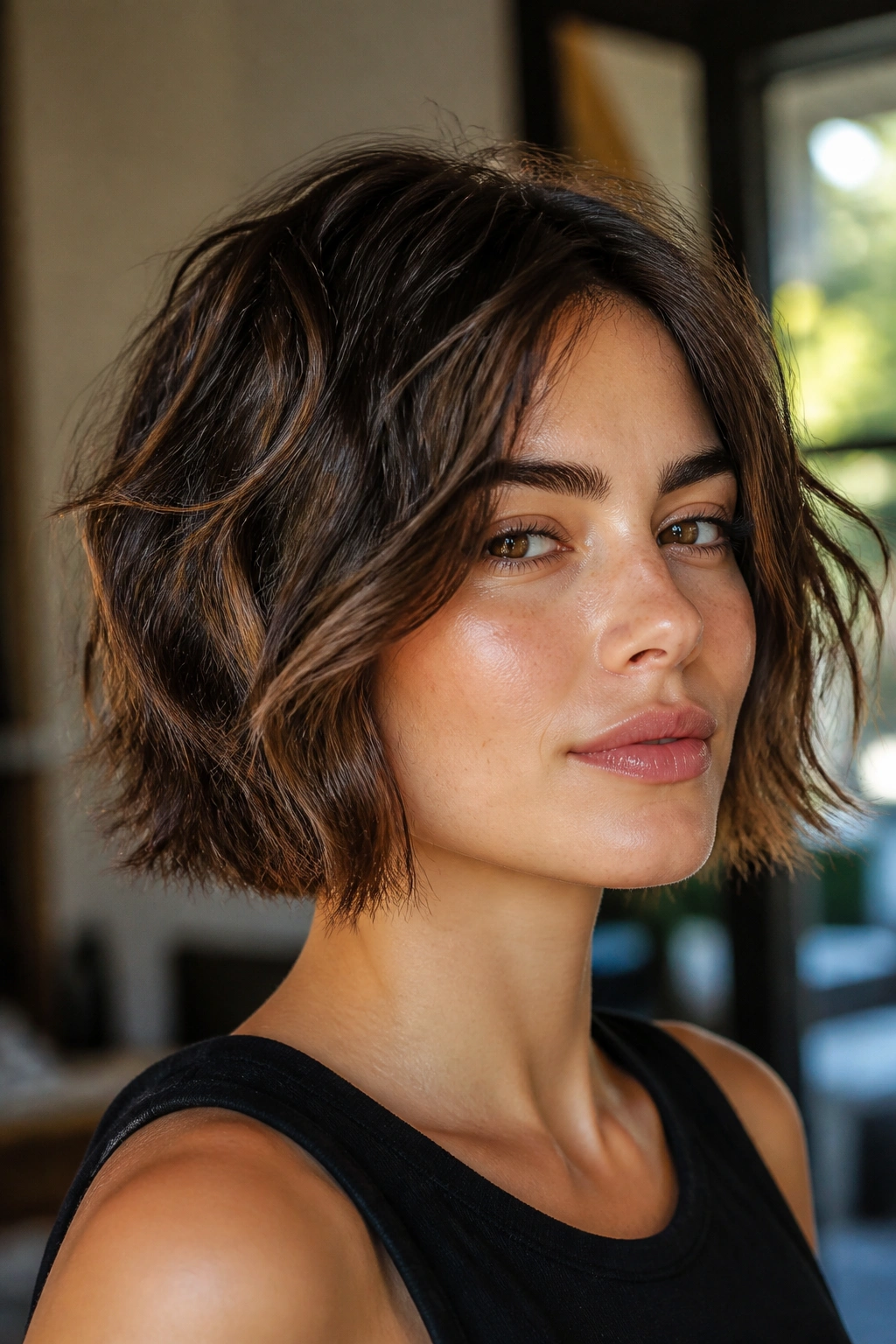
What happens when natural waves meet a blunt bob? Often, triangle hair. That is exactly why the wavy bob with broken-up ends makes so much sense. The layers lighten the lower half of the haircut, so the waves can fall in loose curves instead of bulking out at the bottom.
The ends should be softened with careful point-cutting rather than overlayered. Wavy hair needs space, but it also needs enough weight to keep the curl pattern from scattering. A diffuser helps, sure, but the cut is what keeps the shape from getting bulky at the sides.
If your waves are loose, a small amount of cream is enough. If they’re tighter, a light gel can help the pattern set before you scrunch out the crunch. Either way, the bob should look touchable, not crunchy or stiff.
This is one of the easiest soft-looking bobs to wear if your natural texture already does half the work.
19. Soft Razored Bob with Wispy Perimeter

A razor cut sounds aggressive, but it does not have to be. Used lightly, it can create a softer edge than scissors alone, especially on medium hair that wants movement without bulk. The trick is keeping the perimeter wispy, not frayed.
The Catch
Razor work can go wrong fast if the stylist gets too enthusiastic. Over-razored ends can look fuzzy in dry weather and split-looking under strong light. You want soft edges, not shredded ones.
That makes communication important. Ask for a light razor finish, then keep the shape controlled around the bottom line. The top should still have enough structure to hold the bob’s form. If the whole haircut gets too airy, you lose the softness you were trying to get in the first place.
- Best on medium-density hair.
- Best with a little natural bend.
- Best when the perimeter stays visible.
- Worst when the ends are thinned into nothing.
Used well, this version looks easy and modern without screaming for attention.
20. Petal-Soft Bob with Rounded Layers
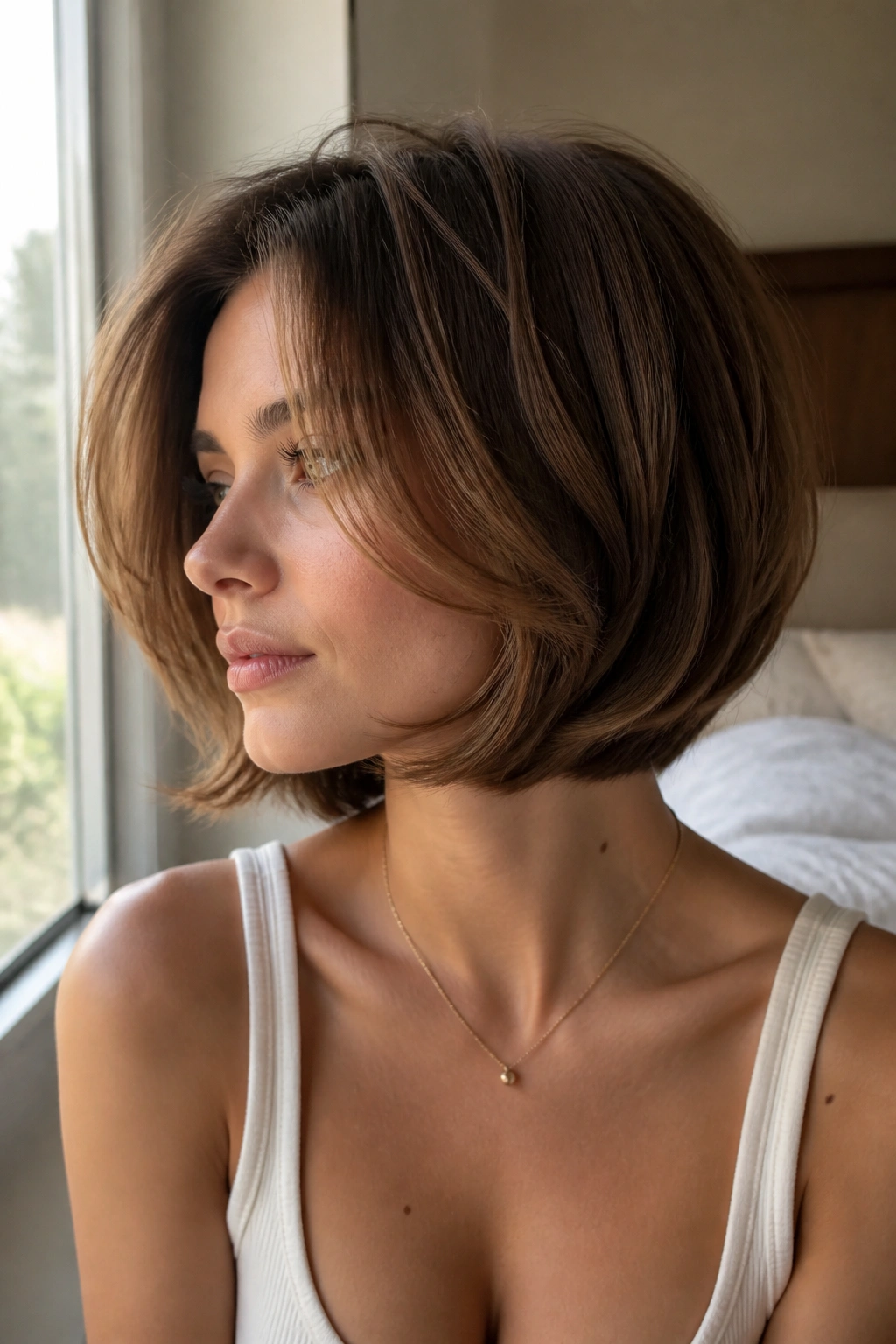
If you want the safest soft bob of the whole bunch, start here. The petal-soft bob uses rounded layers that curve around the cheek, jaw, and nape like a loose frame, so the haircut feels gentle from every angle. There is structure, but no hard edge.
This is the cut I’d hand to someone who wants movement without drama. The layers are subtle, the outline stays soft, and the shape grows out without turning awkward. You can wear it blown smooth, air-dried, or tucked behind one ear and it still keeps its shape.
One practical tip makes a big difference: bring photos that show the front, side, and back. A bob lives or dies on profile, and stylists need that second angle to understand where the layers should sit. A single front photo usually is not enough.
A good fluffy layered bob does not shout. It bends, lifts, and settles in a way that feels easy to wear, which is probably why people keep coming back to it.
